



Abstract
Objective
Oxidative stress results in neuronal degeneration leading to cognitive decline. Microglia in brain tissue produces reactive oxygen species (ROS), which modulate synaptic communication between neurons. ROS can lead to neuroinflammation, which can cause neurodegeneration and memory loss. Talinum triangulare was investigated for its cognitive, anti-oxidative and anti-inflammatory potentials in male wistar rats.
Materials and methods
25 adult female rats weighing between 150 g–200 g were grouped (n = 5) into Group 1 (control group) received 1 mL/kg of distilled water, group 2–5 were administered with 100 mg/kg, 200 mg/kg and 400 mg/kg T. triangulare methanol extract and 2.5 mg/kg donepezil, 100 mg/kg cadmium respectively via oral gavage. The administration lasted for 21 days and neurobehavioural parameters, biochemical and histological analysis of the hippocampus were evaluated. The assessment of spatial learning and memory was evaluated using Classic labyrinth task.
Results
There was significantly (p < 0.05) reduced escape time latency and increased time latency in the probe trial in Morris water maze; and reduced time latency in the labyrinth by T. triangulare methanol extract (100, 200 and 400 mg/kg) compared with the control and cadmium treated groups. T. triangulare methanol extract and donepezil significantly (p < 0.05) reduced acetylcholinesterase (AChE), tissue necrosis factor-α (TNF-α), interleukin-6 (IL-6) activities and significantly (p < 0.05) increased gluthathione peroxidase activity (GPx) and catalase (CAT) respectively.
Conclusion
These findings revealed that T. triangulare methanol extract enhanced cognitive function and exhibited anti-oxidative and anti-inflammatory potentials.
Introduction
Cognitive function is the intrinsic ability of the brain to remember and use information to deal with everyday problems.1,2 The accumulation of oxidative stress-related damage, such as glycated products, oxidized proteins, and lipid peroxidation, results in neuronal degeneration and is especially observed in disorders of the brain. 3 Conversely, vascular lesions are the pathological hallmark of cerebrovascular disorders, which are linked to age-related cognitive decline and dementia. 4 Furthermore, microglia and astrocytes in brain tissue produce reactive oxygen species (ROS), which appear to regulate synaptic and nonsynaptic communication between neurons and glia. ROS can also result in neuroinflammation and cell death, which can cause neurodegeneration and memory loss. 3
Several dietary plants rich in antioxidants are helpful in preventing progressive neurological diseases like Parkinson's disease and Alzheimer's disease.5,6 Reactive nitrogen species (RNS) and reactive oxygen species (ROS) are removed from the body by the abundant antioxidants found in plants. 7 The phytochemical components of plants are the primary precursors of some neurotransmitters that the central nervous system needs to transport chemical signals along neural pathways, such as dopamine and serotonin.1,8 Studies have shown that leaves of T. triangulare contains substantial amount of bioactive compounds like flavonoids, alkaloids, saponins, among others. Therefore, T. triangulare can contribute significantly in managing health. 9
Talinum triangulare, is a weed that may be found almost everywhere in the tropics. Although some species of water leaf can be found in Africa, it is thought that water leaf originated in South America. Waterleaf shown in Figure 1 is an edible vegetable that is primarily consumed all through the tropics particularly in Africa.11,12Talinum triangulare was selected due to extensive hypotheses about its neurological potential. 13 Studies have shown that water leaf is a rich source of vitamin C, vitamin E, Omega-3 fatty acids, potassium, calcium, magnesium, β-carotene, pectin, proteins and dietary fibre.14–16 The purpose of this study was to provide scientific data on the potential impact of Talinum triangulare methanol leaf extract on cognitive processes as well as data on the nutritional, therapeutic, and pharmacological uses of Talinum triangulare methanol leaf extract. A study of the effects of Talinum triangulare methanol leaf extract on the cognitive functions of wistar rats becomes crucial in light of the prevalence of neurological disorders in the general public. Male animals were used in this study because female animals are prone to biases due to hormonal differences. 11
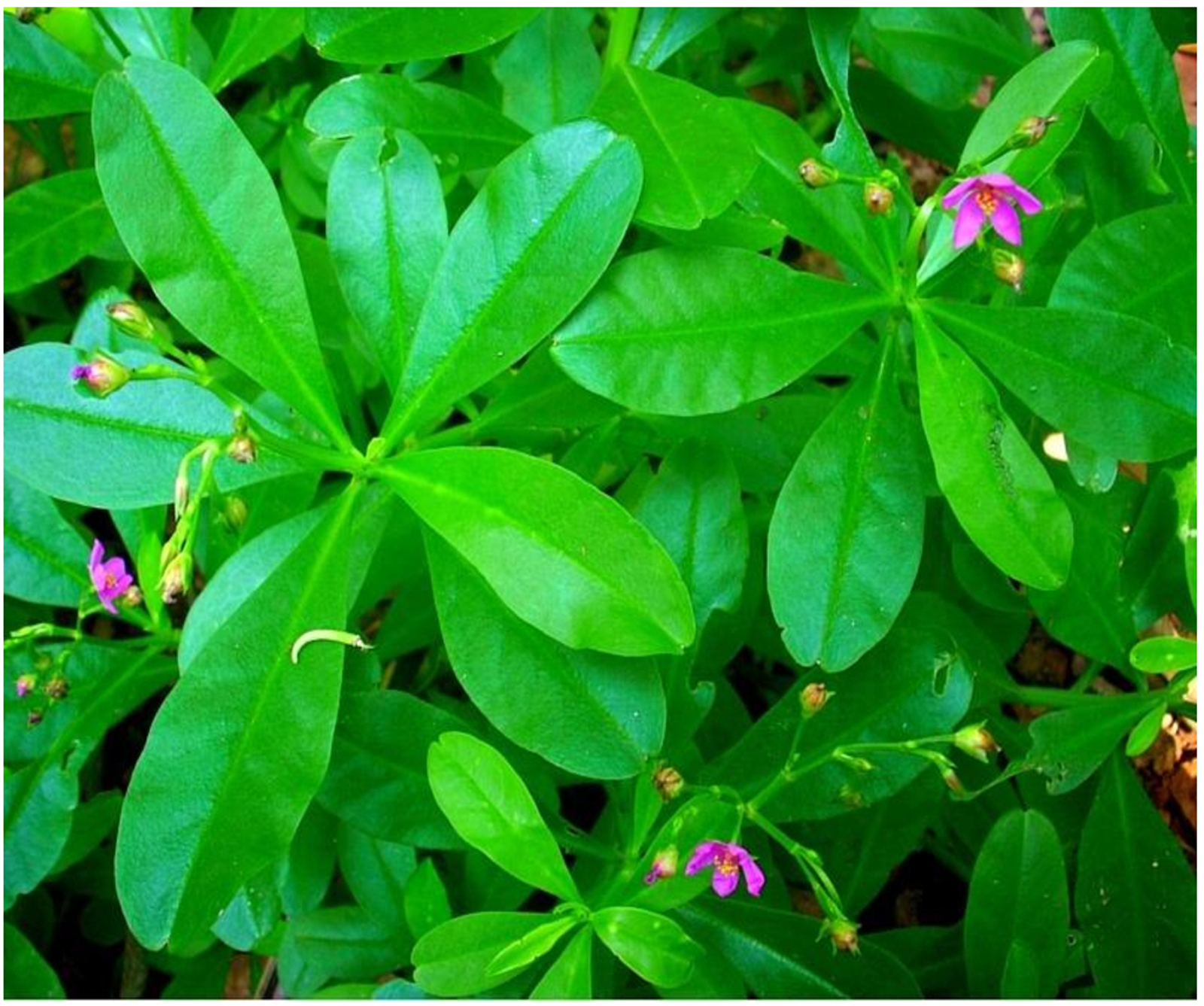
Picture of T. triangulare plant. 10 .
Materials and Methods
Drugs and Chemicals
Donepezil and Acetylcholinesterase enzyme (AChE) were obtained from (Sigma-Aldrich Cooperation, USA). In this study, only analytical grade pharmaceutical chemicals were used.
Animals
Twenty five (25) adult male rats (6 months of age) weighing 150 g - 200 g were obtained from the animal house of Human Physiology Department, University of Port Harcourt, Choba, Nigeria. The animals were kept in standard conditions, given two weeks to acclimatize, and then divided at random into five groups. The animals were cared for under standard laboratory conditions of room temperature (23 ± 2 °C), relative humidity of 50 ± 5% and 12 h light and dark cycle. The animals had access to food (raw chow, Vital feeds Nigeria Ltd, Jos) and water ad libitum. The National Institutes of Health's rules for the care and use of laboratory animals were meticulously followed when handling the animals.
6
The ethical approval for this investigation numbered
Extraction of Plant Material
The plant was taken from the garden of pharmacognosy at University of Port Harcourt, Faculty of Pharmacy, Port Harcourt, and Rivers State, Nigeria. A taxonomist from the Department of Plant Science and Biotechnology, University of Port Harcourt identified the plant. A voucher specimen number:
Gas Chromatography–Mass Spectroscopy (GC–MS) Analysis of the Extract
The phytochemicals present in the methanol leaf extract of Talium triangulare were determined using GC–MS (Model: QP2010 plus Shimadzu, Japan) as previously done 17 consisting of an AOC-20i auto-sampler and gas chromatograph that is interfaced to a mass spectrometer (GC–MS). The mass spectrum was interpreted using the National Institute of Standards and Technology (NIST) database, which contains over 62,000 patterns. The unknown components’ fragmentation pattern spectra were compared to those of known components stored in the NIST library (NIST 11). Each of the phytochemical compounds relative percentage was calculated by comparing its average peak area to the total area. The name, molecular weight, and structure of the components of the test materials were also determined.
Experimental Design
Twenty five (25) rats were equally divided into five groups (n = 5), and were orally administered with T. triangulare methanol extract and dopamine intraperitoneally daily for three weeks (21 days). The grouping and the design were as follows:
Group 1 (Normal control): rats were administered with 20 mL/kg of distilled water daily for 21 days. Group 2: rats were administered with 100 mg/kg T. triangulare methanol extract for 21 days. Group 3: rats were administered with 200 mg/kg T. triangulare methanol extract for 21 days. Group 4: rats were administered with 400 mg/kg T. triangulare methanol extract for 21 days. Group 5: rats were administered with 2.5 mg/kg of a standard drug donepezil. Group 6: rats were administered with 100 mg/kg cadmium (cd)
The dose was selected base on a previous study.18,19 After 21 days of oral administration of extract and donepezil the rats were subjected to neurobehavioural experiments in Morris water maze and the Classic labyrinth maze. Following the neurobehavioural experiments, the rats were immediately sacrificed by cervical dislocation. The brains were carefully removed from the skull, weighed and homogenized. 0.1 M phosphate buffer, pH 7.4, at 4 °C, was used to prepare 10% (w/v) tissue homogenate. The homogenates were centrifuged for 10 min at 3000 rpm to separate the supernatants, which were then used to conduct biochemical tests on glutathione peroxidase (GPx), catalase (CAT) and acetyl cholinesterase (AChE) activities. Tissue necrosis factor-alpha (TNF-α) and interleukin-6 (IL-6) activities were also examined in whole brain tissue. A histological study of the hippocampus region of the brain was also carried out.
The Classic Labyrinth Test (CLT)
The classic labyrinth test (CLT) was done 24 h following the last administrations. The labyrinth was housed in a behavioral test room with a low-intensity light source, and it had square corners with start and finish points. The rats were trained to freely explore the labyrinth for 10 min. Every rat underwent five trials: in the first four trials, rats were trained to go toward the goal in exchange for a reward (peanut). However, no such award was permitted on the test day. 4 The time latency required for the rat to travel from the start location to the end (arrival time) was recorded with stop watch.
Morris Water Maze
The MWM test was used to assess the learning and memory of the animals. 20 It is a swimming based experiment where rodents learn to escape on to a hidden platform. It is made up of a large circular pool (120 cm in diameter, 50 cm in height, filled to a depth of 30 cm with water maintained at 26 ± 2 °C). White colour non-toxic dye was used to make the water opaque. The tank was divided into four equal quadrants with the help of two threads which were fixed at right angles to each other on the rim of the pool. A submerged platform (10 cm2 ), was placed inside a target quadrants of this pool, which was 1 cm below the surface of the water. The position of platform was kept unchanged throughout the training session. From day 1 to day 5, each animal was subjected to four consecutive training trails on each day with an inter trial gap of 5 min, the trials were conducted after 10 min of drugs administration for all the four consecutive days. The rat was gently placed in the water between quadrants, facing the wall of pool with the drop location changing for each trial, and allowed 90 s to locate submerged platform. Day 4 escape latency time (ELT) to locate the hidden platform in water maze was noted as an index of acquisition or learning.
During Probe trial on day 5, the platform was removed and each rat was allowed to explore the pool for 60 s. The mean time spent in all four quadrants was noted. The mean time spent by the animal in the target quadrant searching for the hidden platform was noted as an index of retrieval or memory.
Biochemical Analysis
The acetylcholinesterase (AChE), catalase (CAT) and glutathione peroxidase (GPx) activities of the brain were measured using the Ellman 21 and Flohe and Gunzler, 15 methods, respectively. The brain's level of tissue necrosis factor- α (TNF-α) and interleukin-6 levels were determined by ELISA using Quantikine Immunoassay kits according to the manufacturer's instructions.
Statistical Analysis
Graph Pad prism (version 8) software was used for the statistical analysis. At a probability level of p < 0.05 one-way analysis of variance (ANOVA) and Turkey multiple comparisms post hoc test were carried out and was presented as mean ± standard error of mean (SEM).
Results
GC–MS Analysis of Methanol Leaf of Extract of Talinum triangulare
The bioactive compounds found in Musa sapientum extract from GC-SM instruments are listed in table 1. The bioactive compounds are represented by the various peaks. The table shows the retention times of 7 bioactive compounds, molecular formula, molecular formula, percentage composition. The retention time ranged from 20.07 to 39.573. Phytol has the highest retention time.
GC–MS Analysis of Methonol Leaf of Extract of Talinum triangulare.

Assessment of the Classic Labyrinth Maze Test
The latency of the rat to complete CLT is presented in Figure 2. The results showed that at 400 mg/kg T. triangulare methanol extract treated group spent significantly (p < 0.05) less time to complete the CLT compared with the control group and cadmium treated group. The groups treated with T. triangulare methanol extract (100 mg/kg and 200 mg/kg) spent less time to complete the CLT compared with the control group and cadmium treated groups.
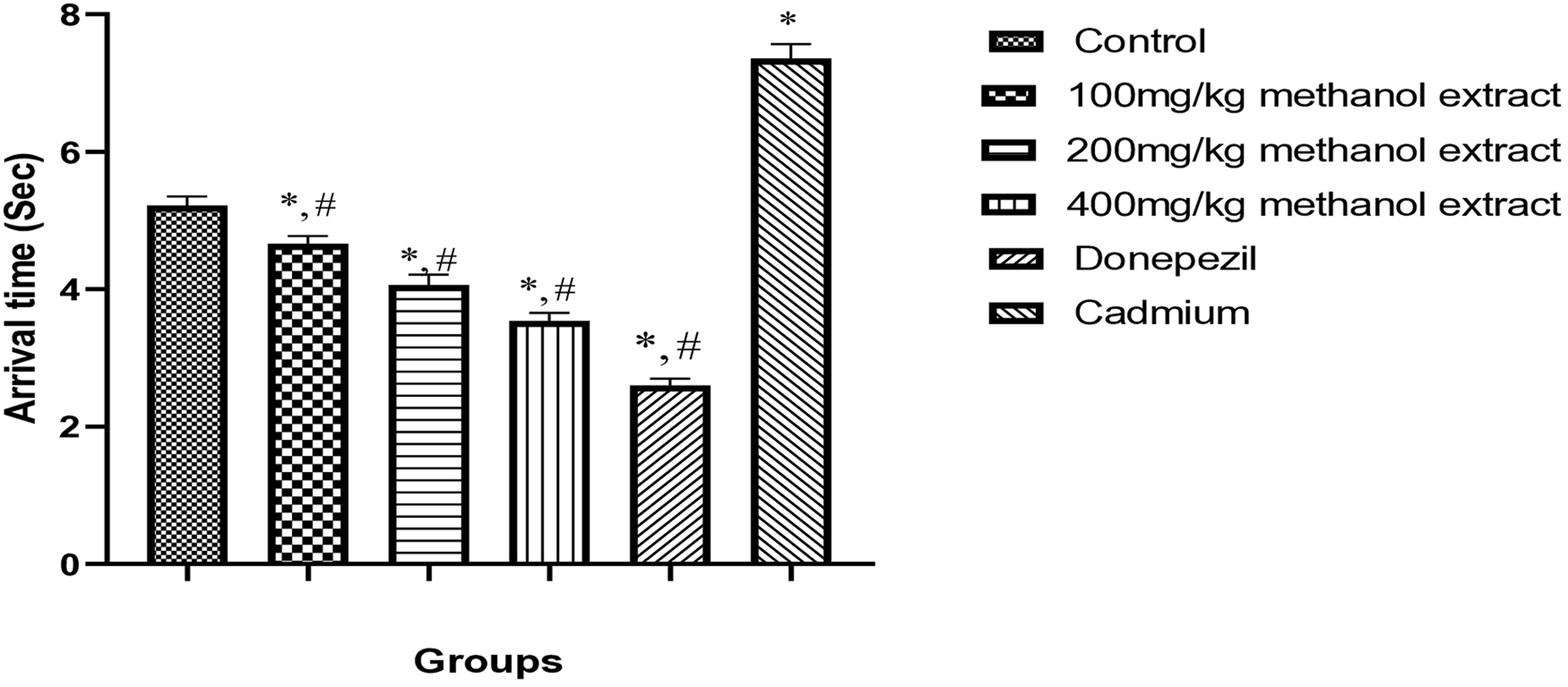
The latency to complete the classic labyrinth test. Data presented as mean ± SEM; (n = 5); (*p < 0.05 with control, #p < 0.05 with cadmium group).
Evaluation of the Morris Water Maze
Escape Time Latency
Escape time latency for acquisition training was investigated and the result is shown in Figure 3. The result revealed that cadmium treated group had a significant (P < 0.05) increase in escape time latency compared with the control group. Also, at 400 mg/kg T. triangulare methanol extract treated group had a significant (P < 0.05) decreased in escape time latency compared with the control group and cadmium treated group. The groups treated with T. triangulare methanol extract (100 mg/kg and 200 mg/kg) had significantly (P < 0.05) reduced escape time latency when compared with the control group and cadmium treated groups.
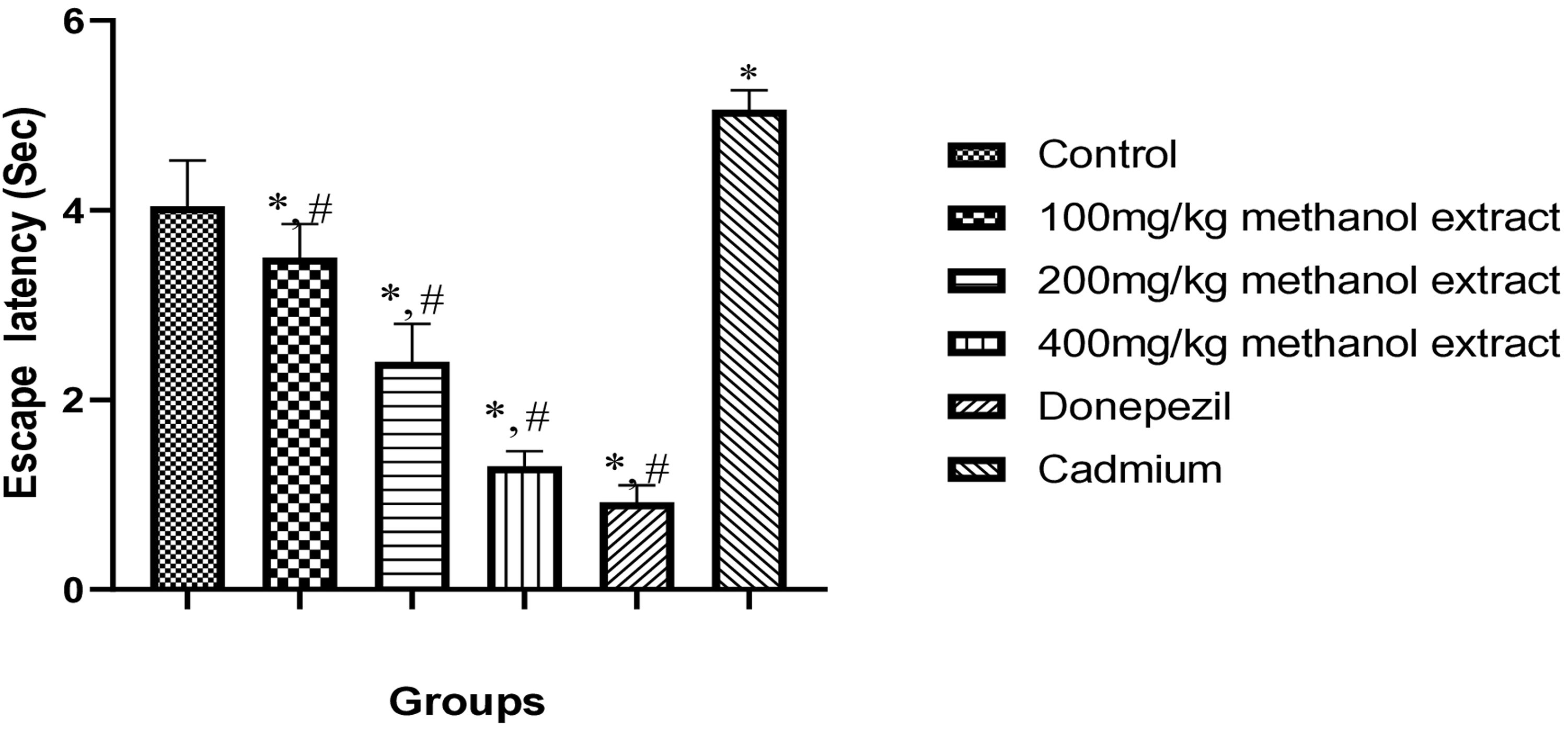
The escape time latency during acquisition training. Data presented as mean ± SEM; (n = 5); (*p < 0.05 with control, #p < 0.05 with cadmium group).
Probe Trial
The time latency in the quadrant where the hidden platform was initially located is reported in Figure 4. The result revealed that cadmium treated group had a significant (P < 0.05) decrease in the time latency in the probe trial compared with the control group. The results also revealed that at 400 mg/kg, T. triangulare methanol extract treated group had a significantly (P < 0.05) increased time latency in the probe trial compared with the control group and cadmium treated group. The groups treated with T. triangulare methanol extract (100 mg/kg and 200 mg/kg) had increased escape time latency compared with cadmium treated groups.
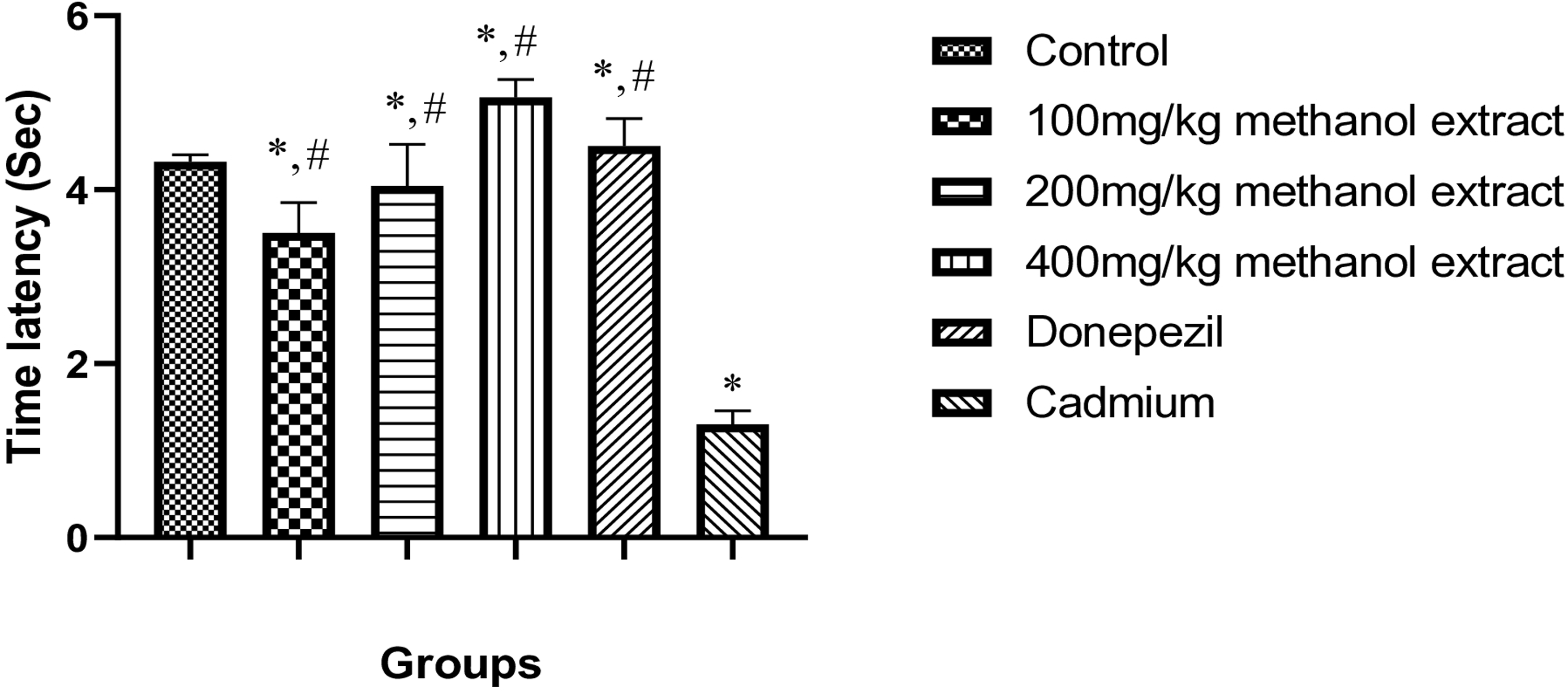
The escape time latency during the probe trial. Data presented as mean ± SEM; (n = 5); (*p < 0.05 with control, #p < 0.05 with cadmium group).
Assessment of the Acetylcholinesterase Activity
The effect of T. triangulare methanol extract on AChE activity is presented in Figure 5. The results showed that at 400 mg/kg T. triangulare methanol extract treated group had a significantly (p < 0.05) reduced AChE activity compared with the control group. The donepezil group, had a significantly (p < 0.05) reduced AChE activity compared with the control group. The groups treated with T. triangulare methanol extract (100 mg/kg and 200 mg/kg) group also had significantly (p < 0.05) reduced AChE activity compared with the control group and cadmium treated group. The result also revealed that cadmium treated group had a significantly (p < 0.05) increased AChE activity compared with the control group.

The effect of methanol T. triangulare extract on brain's AChE activity in treated rats. Data presented as mean ± SEM; (n = 5); (*p < 0.05 with control, #p < 0.05 with cadmium group).
Assessment of the Gluthathione Peroxidase Activity
The effect of T. triangulare methanol extract on gluthathione peroxidase (GPx) activity is presented in Figure 6. The results showed that at 400 mg/kg T. triangulare methanol extract treated group had significantly (p < 0.05) elevated GPx activity compared with the control group. The groups treated with T. triangulare methanol extract (100 mg/kg and 200 mg/kg) group had significantly (p < 0.05) increased GPx activity compared with the control group and cadmium treated group. Comparing cadmium treated group with the control group, there was a significant (p < 0.05) decreased in AChE.
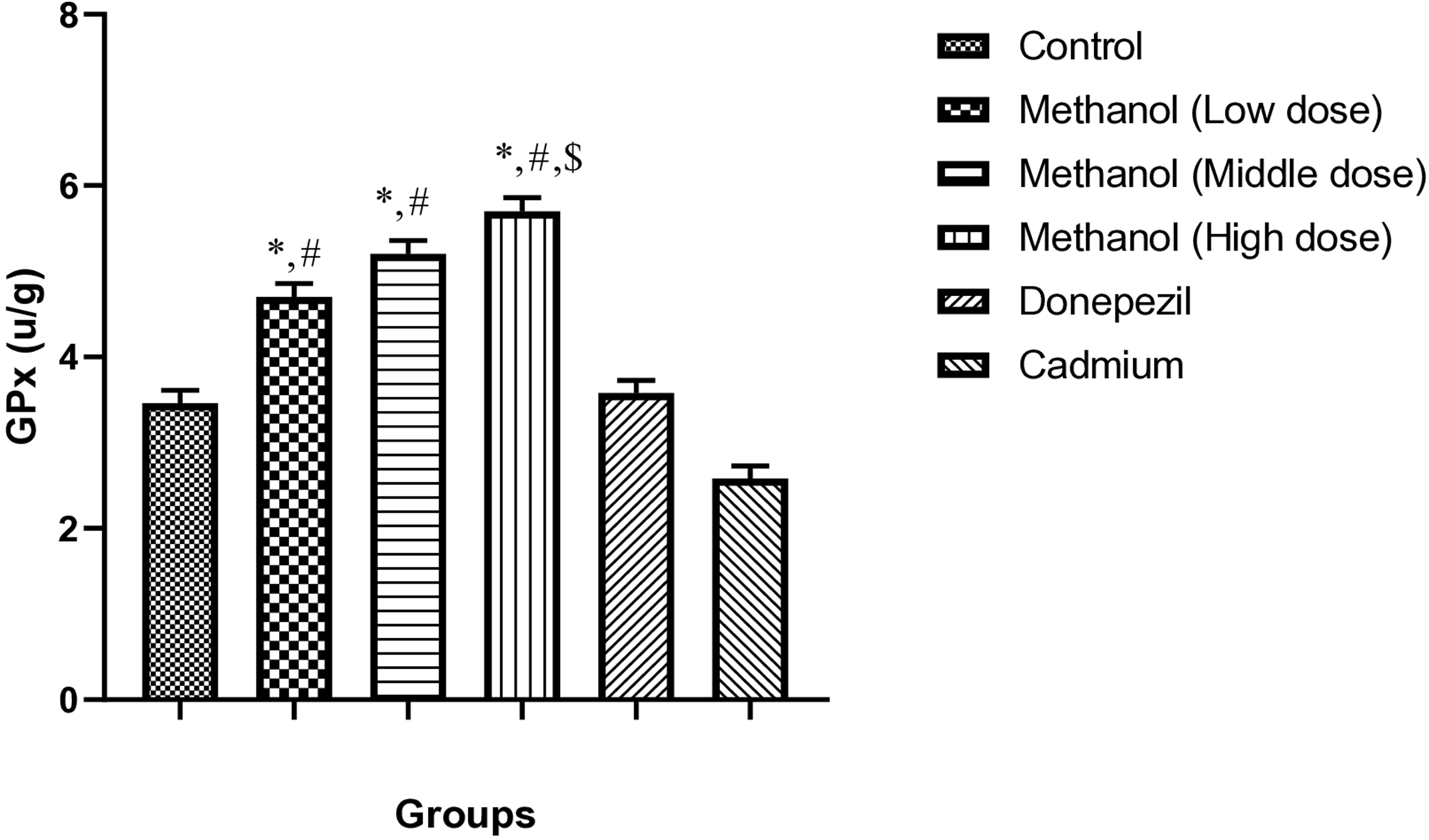
The effect of methanol T. triangulare extract on brain's gluthathione peroxidase activity in treated rats. Data presented as mean ± SEM; (n = 5); (*p < 0.05 with control, #p < 0.05 with cadmium group, $p < 0.05 with cadmium group).
Assessment of the Catalase Activity
The effect of T. triangulare methanol extract on catalase (CAT) activity is presented in Figure 7. The results showed that at 400 mg/kg T. triangulare methanol extract treated group had significantly (p < 0.05) elevated CAT activity compared with the control group. The groups treated with T. triangulare methanol extract (100 mg/kg and 200 mg/kg) group had significantly (p < 0.05) elevated CAT activity compared with the control group and cadmium treated group. Comparing cadmium treated group with the control group, there was a significant (p < 0.05) decreased in CAT activity.

The effect of methanol T. triangulare extract on brain's catalase activity in treated rats. Data presented as mean ± SEM; (n = 5); (*p < 0.05 with control, #p < 0.05 with cadmium group).
Assessment of the Interleukin-6 Activity
The effect of T. triangulare methanol extract on Interleukin-6 (IL-6) activity is presented in Figure 8. The results showed that at 400 mg/kg T. triangulare methanol extract treated group had significantly (p < 0.05) reduced IL-6 activity compared with the control group. The groups treated with T. triangulare methanol extract (100 mg/kg and 200 mg/kg) group had significantly (p < 0.05) reduced IL-6 activity compared with the control group and cadmium treated group.

The effect of methanol T. triangulare extract on brain's IL-6 activity in treated rats. Data presented as mean ± SEM; (n = 5), (*p < 0.05 with control, #p < 0.05 with cadmium group).
Assessment of the Tissue Necrotic Factor (TNF-α) Activity
The effect of T. triangulare methanol extract on tissue necrotic Factor (TNF-α) activity is presented in Figure 9. The results showed that at 400 mg/kg T. triangulare methanol extract treated group had significantly (p < 0.05) reduced TNF-α activity compared with the control group. The groups treated with T. triangulare methanol extract (100 mg/kg and 200 mg/kg) group had significantly (p < 0.05) reduced TNF-α activity compared with the control group and cadmium treated group.

The effect of methanol T. triangulare extract on brain's TNF-α activity in treated rats. Data presented as mean ± SEM; (n = 5), (*p < 0.05 with control, #p < 0.05 with cadmium group).
Discussion
The brain is a metabolically active organ and the seat of cognitive function in many animals.22,23 Cognitive function is the ability of the brain to recall and utilize information to deal with our daily task.1,2 The study was designed to investigate the cognitive functions of Talinum triangulare methanol leaf extract on male wistar rats. This work further identifies seven phytochemicals using Gas Chromatography-Mass Spectrometry (GC–MS) that could be advantageous in the treatment of degenerative diseases because of their anti-oxidant and anti-inflammatory action. One such vital bioactive molecule is tetradecamethyl cycloheptansiloxane which is noted to be naturally present in medicinal plants, and has been recognized for its numerous bioactivities including antioxidant and anti-inflammatory activities. Also, 6,10, 14-Trimethyl-2-pentadecanone (hexahydrofarnesyl acetone), serves as a significant constituent, and exhibits anti-inflammatory properties. In addition, pentadecanoic acid, 14-methyl-methylester has garnered attention for its antioxidant and pharmacological attributes. 17
The assessment of the effect of T. triangulare on spatial learning and memory was evaluated using CLT and Morris water maze. Talinum triangulare methanol extract reduced the arrival time of the rats in the labyrinth maze which signifies a significant enhancement of spatial learning and memory functions. Consuming waterleaf may have positive effects on the cerebral cortex's neurons and may improve the brain's cognitive function. 19 It has been reported by other workers that Talinum triangulare has been shown to have an ameliorative effect on cognitive impairment. 1 According to some researchers, Talinum triangulare's high antioxidant content may have a neuroprotective impact, which could explain why it improves cognitive performance.1,2 The donepezil group also spent less time to complete the CLT. The dopamine system is thought to influence memory functions through involving in processing rewards. 24 These results indicate that Talinum triangulare, may possess neuroprotective properties which could be as a result of the memory enhancing tendencies of the phytochemicals in T. triangulare and is consistent with other studies.25,26 In the Morris water maze experiment, the cadmium treated group had a significant increase in escape time latency during the acquisition training and also a significant decrease in time latency in the probe trial when compared with the control group. But the extract treated groups showed a reversal of that effect. A previous study, reported that aluminium treated rats displayed behavioural alterations, which are consistent with the report of this study. In the study, AlCl3 treatment resulted in behavioural changes such as spatial memory deficit, indicated by increased escape latency, northwest latency, and decreased percentage of time spent in North West zone. 27 It was also reported by Kim et al 28 that scopolamine-treated mice took a longer time to find the platform than the sham control group, and FGE or 6-gingerol and scopolamine-treated group in combination easily found the location of the hidden platform.
In this study, AChE activity was reduced by T. triangulare. Reducing the activity of the acetylcholinesterase enzyme suggest that acetylcholine level would be upregulated. Acetylcholine is essential for the modulation of learning and memory, the activity of acetylcholinesterase has been reported to be inhibited by certain plant extracts. 29 This acetylcholinesterase enzyme, by degrading acetylcholine is strongly linked to cognitive impairment and the etiology of Alzheimer's disease (AD). GPx activity and CAT were found to be elevated by T. triangulare indicating its potency in mitigating reactive oxygen species (ROS) in the brain. Reactive oxygen species (ROS), are produced in the body by the oxidation of dietary components and other chemical processes within the cells and have been suggested to cause damage to brain cells. 26 The body has numerous antioxidant defense systems, including superoxide dismutase (SOD), catalase (CAT), glutathione peroxidase (GPx), and glutathione-S-transferase (GST) enzymes, to combat the harmful effects of these reactive oxygen species (ROS).3,8,30 Studies have shown that inflammation has been implicated in the development of AD. In this study, TNF-α and IL-6 activities were reduced by T. triangulare. TNF-α and IL-6 are linked to a detrimental amyloid-induced function in the onset of learning and memory deficits as well as synaptic processing pathways in AD.3,12,31 According to studies, TNF-signaling compromises the longevity and viability of neurons.12,31 Additionally, it has been established that vitamins C, E, beta-carotene, and a few crucial minerals significantly contribute to the greatly raised antioxidant values and biological potentials of T. triangulare. 32 Knowing that the body produces fewer antioxidants as it ages, which necessitates the use of nutritional supplements is fundamental to health.19,33 According to this study, waterleaf consumption might be advised as a food supplement to protect the neurons and bring other wonderful benefits to the body. Vegetables high in polyphenols can help prevent age-related neurological problems, according to previous studies.34–37
Conclusion
In conclusion, the study suggests that Talinum triangulare enhanced cognitive functions by its robust anti-oxidative and anti-inflammatory properties and may possibly protect the brain from the activities of free radicals that could be deleterious to the brain.
Limitation of the Study
This study is limited to small sample size, animal models, neurobehavioural studies, histological studies and biochemical parameters.
Footnotes
Abbreviations
Acknowledgements
The authors are grateful to the academic and technical staff of the Department of Human Physiology, Faculty of Basic Medical Sciences, University of Port Harcourt for their technical support.
Author's Contributions
The study was conceived and designed by Uduak Anthony Inwang, Ekementeabasi Aniebo Umoh, Azibuike Raphael, Nwaji Onwe Uchewa performed experiment. The original draft was written by Uduak Anthony Inwang and Emmanuel Onyi Nwuzor analyzed and interpreted the data.
Declaration of Conflicting Interests
The authors declared no potential conflicts of interest with respect to the research, authorship, and/or publication of this article.
Funding
The authors disclosed receipt of the following financial support for the research, authorship, and/or publication of this article: The authors of this manuscript self-funded the research study.
Informed Consent
There are no human subjects in this article, therefore, informed consent is not applicable.
Statement of Animal Right
All the experimental procedures involving rats were conducted in accordance to National Institutes of Health's rules for the care and use of laboratory animals. The ethical approval for this investigation numbered
