



Abstract
Background/Objective
Plant-based products and their isolated compounds have been utilized in traditional medicine since early times. In folk medicine, Stixis suaveolens (Roxb.) Pierre has been used to treat painful tendons and bones, rheumatism, eye infections, cough, malaria, asthma, and cardiovascular diseases. This study aims to summarize up-to-date botany, ethnomedicine, phytochemical components, pharmacological effects, and toxicology.
Methods
Information on S. suaveolens was collected from databases such as the Web of Science, Scopus, Google Scholar, PubMed, Science Direct, Springer, and others.
Results
S. suaveolens has been demonstrated to possess various pharmacological effects, including antioxidant, antimicrobial, anti-inflammatory, antidiabetic, antidepressant, antidiarrheal, hepatoprotective, analgesic, antihemolytic, and thrombolytic activities. Phytochemical studies of this species have revealed the presence of secondary metabolites, including lignans, phenolics, alkaloids, and volatile components.
Conclusion
The pharmacological effects of the extracts and bioactive compounds resulting from the experimental studies in the review support the traditional uses of S. suaveolens. They could be useful in developing novel pharmacological applications in the treatment of various acute and chronic human ailments. The efficacy, safety, and toxicity of S. suaveolens plant in enhancing therapeutic efficacy should be investigated widely in further studies.
Introduction
Stixis Lour. is recognized as an important genus due to its use in traditional medicine, comprising up to 12 species. 1 In particular, Stixis suaveolens (Roxb.) Pierre species and approximately 10 other species and 2 subspecies belong to the Stixis Lour. genus within the Stixaceae family and is indigenous to South and Southeast Asia. 2 Since ancient times, medicinal herbs have been used with a wide range of potential applications in the manufacture of nutraceuticals, new drugs, and other healthcare products. 3 The previous study revealed that medicinal herbs in the Stixis species are rich in phytochemicals and mineral content. The medicinal plants of the Stixis genus include a variety of biologically active phytochemicals that have been used to treat various ailments, such as Stixis scandens Lour. and S. suaveolens (Roxb.) Pierre. The different parts of Stixis species are used in folk medicine to treat rheumatism, arthralgia, and eye diseases.4,5 In previous studies, isolated compounds, including alkaloids, 6 L-stachydrine, flavonoids, lignans, phenolic amides, 7 glucosinolates, 8 and other compounds, were found in Stixis species. Recently, modern pharmacological reports showed that extracts and phytocompounds of Stixis species exhibited various pharmacological effects such as anti-inflammatory, 7 antiviral effects, 9 etc.
The plant S. suaveolens (Roxb.) Pierre, named “Trứng Quốc” in Vietnam,4,5 “Ban Guo Teng” (斑果藤) in China, 10 “Madhabilata” in India, 11 or “Modhumaloti” in Bangladesh, 12 is a climbing shrub that primarily grows in the wet tropical biome. Its distribution encompasses China, India, Bangladesh, Bhutan, Myanmar, Nepal, Thailand, Cambodia, Laos, and Vietnam.1,4-10,13 S. suaveolens is a medicinal plant used traditionally to treat various diseases, including arthritis, tendon pain, eye problems, coughs, malaria, asthma, cardiovascular diseases, and so on.4,5,11,12,14,15 In addition to their medicinal effects, their fruits are also known to be used as edible fruits for daily consumption in the regions where they grow. Investigations into the chemical compounds and pharmacological effects of S. suaveolens have been performed by various researchers to provide scientific proof for the traditional use of this plant. Many secondary metabolites have been determined so far. Regarding their components, multiple parts of S. suaveolens are mostly composed of lignans, phenolics, and their glycoside derivatives, alkaloids, fatty acids, nutrient minerals, and volatile components.14,16 Of these, lignans are the most predominant.
Numerous studies have focused on the phytochemical components and pharmacological activities of S. suaveolens in recent years. However, the investigation results for S. suaveolens have not been reviewed so far. This article aims to provide a review of the phytochemistry, pharmacological activity, and toxicology of S. suaveolens to promote further research on this species and develop health-beneficial drug resources for use in the treatment of various ailments in humans.
Materials and Methods
A detailed bibliographic analysis was conducted, including publications released from 1950 to 2023. Several databases were utilized to gather information on this species, including Web of Science, Scopus, Google Scholar, PubMed, Science Direct, Springer, and other scientific databases. Additionally, various books and abstracts were consulted. The keywords were the scientific name, synonym, botany, ethnomedicine, phytochemistry, pharmacology, and toxicology of S. suaveolens.
The scientific names of S. suaveolens and its synonyms were validated using an online database, such as https://powo.science.kew.org/; http://www.efloras.org/; http://www.theplantlist.org/; https://search.worldcat.org/; https://www.worldplants.de/; and https://www.catalogueoflife.org/. The chemical structures were checked and compared using PubChem (https://pubchem.ncbi.nlm.nih.gov/).
Botany
Scientific Classification
The genus Stixis Lour., once classified under the families Capparaceae and Resedaceae, has been relocated from these families to a newly designated family known as Stixaceae Doweld.1,17
The S. suaveolens (Roxb.) Pierre species belongs to the Tracheophyta phylum, Magnoliopsida class, Brassicales order, Stixaceae family, and Stixis genus. Its binominal name is S. suaveolens (Roxb.) Pierre [or S. suaveolens (Roxb.) Baill.].1,10,13 The synonyms of S. suaveolens are Roydsia suaveolens Roxb., S. suaveolens var. cochinsinensis Pierre.1,13,17
Morphological Features and Geographical Distribution
The Stixaceae family consists of 4 genera: Forchhammeria Liebm., Neothorelia Gagnep., Stixis Lour., and Tirania Pierre, with more than 26 accepted species. Among these, Stixis Lour. is recognized as one of the essential genera due to its use in traditional medicine, comprising 10 accepted species and 2 accepted subspecies.1,17
S. suaveolens (Roxb.) Pierre, a species belonging to the Stixis Lour., is commonly known as “Trứng Cuốc”, “Trứng Quốc”, “Tôn Nấm”, “Tiết Xích”, “Mác Nam Ngoa” (Tày), “Co Sáy Tấu” (Thái), Day Con Go (Thổ), or “Ban Quả Đắng” in Vietnam,4,5 or “Ban Guo Teng” (斑果藤) in China, 10 or “Madhabilata”, “Mooni”, “Majeelota”, 11 or “Stixis” in India,18,19 or “Hamvuthilota”, “Modhumaloti” in Bangladesh. 12
It is a liana, or climbing shrub, and is mostly found in a wet tropical habitat. The primary distribution of S. suaveolens species includes China (Guangdong, West Guangxi, Hainan, South Xizang, South Yunnan, and Southwest Yunnan), Northeast India, Bangladesh, Bhutan, Myanmar, Nepal, North and Northeast Thailand, Cambodia, Laos, and Northwest Vietnam (Lai Chau, Son La, and Ha Giang).4-10,18,19
Morphologically, the woody vines of S. suaveolens are 1.0 to 15.0 m tall. Twigs are stout, terete, light red, and have smooth hair. When dried, twigs take on a pale brown color. The length of the internodes varies, reaching up to 5.0 cm or longer. Stout petiole, measuring (1–)2–3(–5) cm. The leaf blade is elliptic, oblong, or oblong-lanceolate, broadest at the middle but occasionally slightly basally or apically, measuring (10–)15–28[–40] × (3.5–)4–10 cm. Both surfaces are glabrous and reticulate veins are visible. Additionally, the leaf blade is leathery, with a base that is cuneate to nearly rounded, an apex that is nearly rounded to ± acuminate, and a 5–12 mm tip. Axillary racemes, or occasionally branching or panicle-forming inflorescences, measure 15–25 cm, initially upright before drooping. Bracts have similar trichomes on the axis of inflorescences, linear to ovate, 3.0–6.0 mm. The stout pedicel is approximately 2.0–4.0 mm. The sepals consist of 5 or 6, pale yellow, oblong elliptical, (4–)5–6(–9) × 2.0–3.0 mm, erect or continuously spread, with dense pubescence on both sides, acuted to obtuse at the apex. Androgynophore is about 2.0 mm, glabrous. Stamens number approximately (27–)40–80. Filaments are pubescent, about 4.0–6(–11) mm. Anthers are about 0.5 to 0.7 mm. Gynophore has a dense tan pubescence, about 7 to 10 mm. The ovary is elliptical, 1.7 to 2.5 mm, glabrous, or sometimes has trichomes at the base. The stigma is absent. Mature fruit is orange, elliptical, 3.0–5.0 × 2.5–4.0 cm, with thin yellow verrucose flecks on the surface. Seeds are elliptical, about 1.8 to 2.0 cm in size. The flowering season is from April to May, and the fruit season is from August to October.4-10,20,21
Ethnotraditional Uses
Various species of Stixis Lour., including S. suaveolens and S. scandens Lour. (Syn., Stixis elongata Baill., Stixis flavescens Baill., Stixis manipurensis Deb & Rout, Stixis parviflora (Griff.) Baill.), Stixis hookeri Baill., Stixis obtusifolia (Hook.f. & Thomson) Baill., Stixis ovata (Korth.) Hallier f., Stixis scortechinii (King) M.Jacobs, Stixis philippinensis (Turcz.) Merr., Stixis villiflora J.Y.Shen, Landrein, W.G.Wang & X.D.Ma, and Stixis yingjiangensis J.Y.Shen have been recorded worldwide.2,22,23 Among them, 2 common species, namely S. suaveolens and S. scandens, have been reported to be used to treat various diseases in traditional medicine in some countries like Vietnam, Bangladesh, and India.4,5,7,9,24,25
All parts of herb plants can be used medicinally, and they have a long tradition of alternative medicine for various ailments. Due to the potential benefits of the phytomedicines from S. suaveolens, different parts of this species, including roots, stem bark, leaves, and fruits, are used in traditional systems of medicine in India, Bangladesh, and Vietnam for countless ailments. In Vietnam, the root, stem bark, and leaves of S. suaveolens are prescribed for painful tendons and bones, rheumatism, and eye infections.4,5,12,26 Traditionally, the water decoctions of S. suaveolens roots, stem bark, leaves, and fruits are consumed. In India, the fruit is being used to treat cough and malaria by the Phom tribe of Nagaland.27,28 In contrast, the whole fruit, for its anti-inflammatory and antiarthritic properties, has been used by the communities in Tripura.11,15 In Bangladesh, its fruit is prescribed by folk medicine practitioners (Kabirajes) to treat chronic diseases, such as asthma and cardiovascular ailments.11,15 Table 1 summarizes that various parts of S. suaveolens are used for many different diseases by the indigenous people.
Ethnotraditional Uses of Stixis suaveolens.

Phytochemical Compositions
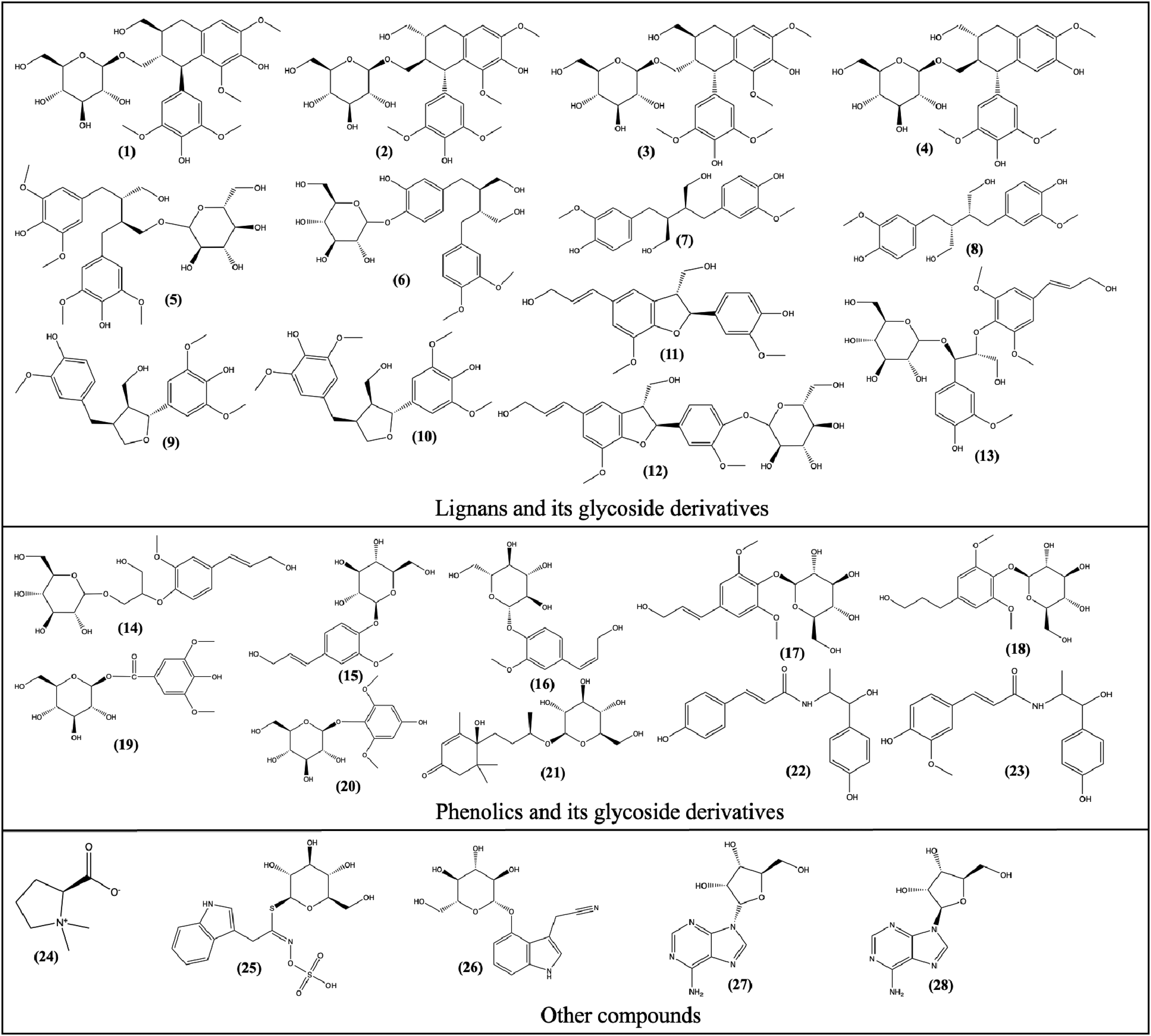
Various extraction, separation, and characterization methods were utilized to purify and identify the phytochemical metabolites from S. suaveolens. Many compounds of S. suaveolens have been isolated from the leaves and fruits of this plant, including lignan and its glycoside derivatives, phenolics and phenolic glycosides, alkaloids, and volatile components.6,14,16,26,29,30 S. suaveolens leaves and fruits contain various phytochemicals and nutrients, which differ in their composition, phytochemical structures, molecular weight, polarity, and other characteristics. A total of 73 phytocompounds have been determined and characterized. These metabolites mainly include lignans, phenolics, their glycoside derivatives, alkaloids, volatile components, and other compounds. These constituents are listed and presented in Table 2, Figures 1 and 2.

The chemical structures of the volatile compounds from Stixis suaveolens leaves. 16
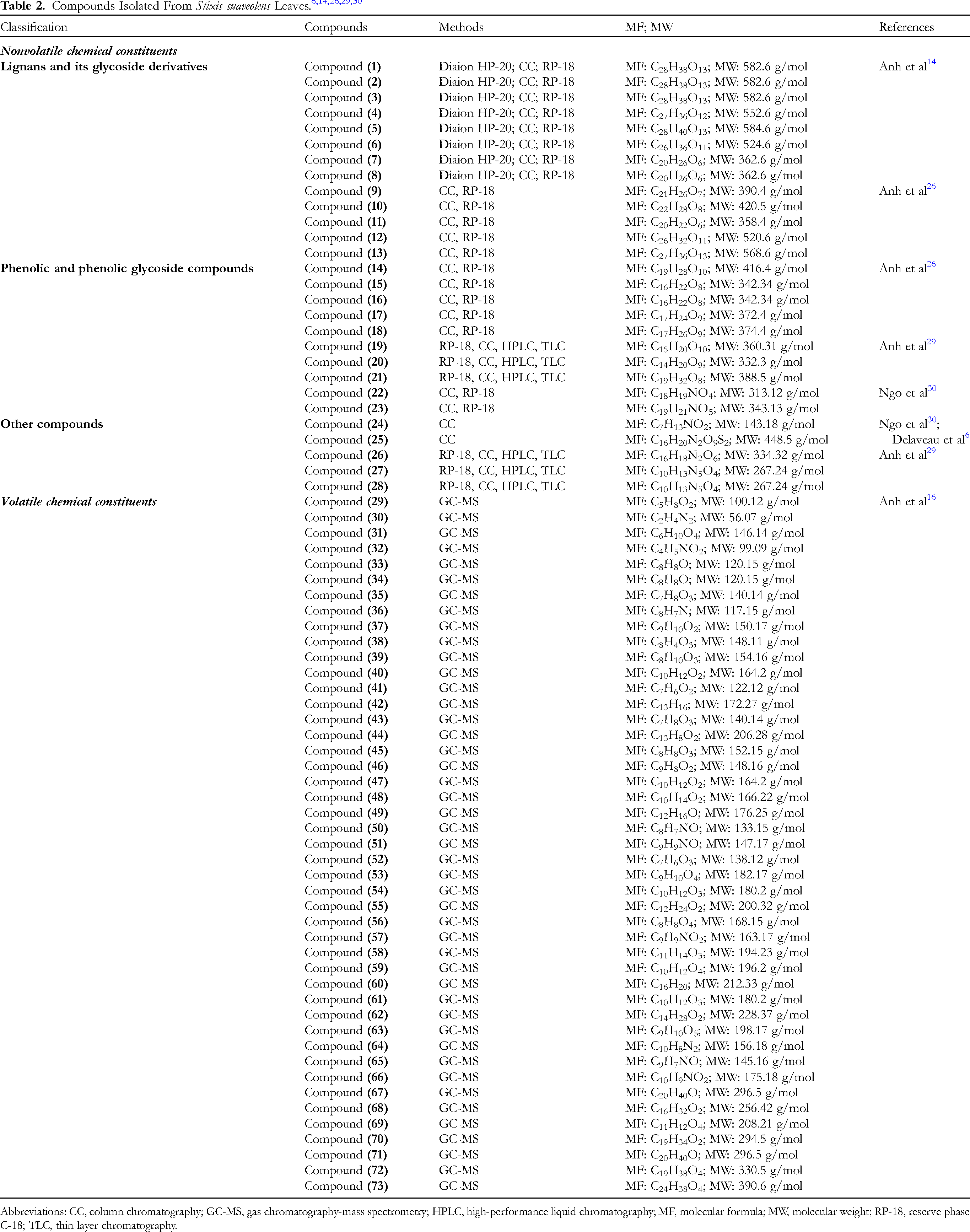
Abbreviations: CC, column chromatography; GC-MS, gas chromatography-mass spectrometry; HPLC, high-performance liquid chromatography; MF, molecular formula; MW, molecular weight; RP-18, reserve phase C-18; TLC, thin layer chromatography.
Nonvolatile Chemical Constituents of Stixis suaveolens
Lignan and Lignan Glycoside Compounds
The lignans are commonly known as a large group of natural compounds found in plants, which have also been obtained from the Stixaceae family, especially the S. suaveolens plant. Plant lignans are typically derived from phenylpropanoids by dimerization of substituted cinnamic alcohols, a process regulated by dirigent proteins and catalyzed by oxidative enzymes. 31 In previous investigations of plant lignan composition from S. suaveolens, it was demonstrated that lignan aglycone and lignan glycoside were both found in S. suaveolens.14,26 These compounds were purified, and their structures were determined using a mass spectrometer (MS) and nuclear magnetic resonance (NMR) spectroscopy techniques.
In a previous study by Anh et al,
14
the methanolic extract from S. suaveolens leaves was suspended in water and partitioned with dichloromethane and ethyl acetate (EA) solvents, respectively. The aqueous fraction was subjected to Diaion HP-20 column chromatography, followed by silica gel column chromatography (CC), and was continued to separate by reserve phase C-18 (RP-18). As a result, 7 phytochemical compounds were isolated and determined, namely (+)-lyoniresinol 3α-O-β-D-glucopyranoside
Lignans, a group of secondary metabolites resulting from the oxidative dimerization of 2 or more phenylpropanoid units, are present in numerous plant families and everyday dietary items, including grains, nuts, seeds, vegetables, and drinks such as tea, coffee, or wine.32,33 In plants, these compounds contribute to growth and development. Furthermore, it also provides strength, rigidity, and protection for the plant. 34 Besides their role in plant structure, lignans have gained attention for their diverse beneficial physiological functions, potentially positively effecting human health. 1 These steroid-like chemical structures are defined as phytoestrogens, exhibiting various antioxidant, anti-inflammatory, antitumor, and estrogenic properties, making them potentially valuable for human wellbeing. 35 Barley, buckwheat, flax, millet, oats, rye, sesame seeds, and wheat contain fairly high levels of lignans in the human diet. 36 One notable aspect of lignans is that the human gut microbiota can convert these compounds into active compounds, such as enterolignans (eg, enterolactone and enterodiol). These substances have anti-inflammatory and antioxidant properties, activate estrogen receptors, and modulate gene expression or enzyme activity. Dietary interventions incorporating lignan-enriched foods have shown positive and protective effects against various human conditions, including colorectal and breast cancer, as well as cardiovascular diseases.37-39 Because of their diverse characteristics, lignans have captured significant interest, particularly in nutrition, and medicine. Several studies have examined lignan compounds to explore their potential effects on cardiovascular health and possible anticancer properties. Additionally, numerous studies have explored the lignan compounds in plants, identifying potential compounds, including those in the Stixis genus within the Stixaceae family. Furthermore, antioxidant, hepatoprotective, antimicrobial, antidiabetic, anti-inflammatory, analgesic, antidepressant, antidiarrheal, antihemolytic, and thrombolytic activities have been reported.12,15,24
Phenolic and Phenolic Glycoside Compounds
In a previous study by Anh et al,
14
a silica gel column chromatography technique was carried out to isolate the significant compounds after the EA fraction was obtained by reversed-phase column chromatography (RP-18 column) from the crude methanolic extract. Ten phytocompounds, including 3-hydroxy-2{4-[(1E)-3-hydroxyprop-1-en-1-yl]-2methoxyphenoxy}propyl β-D-glucopyranoside
In another study, from the aqueous fraction obtained in the methanol extract of the S. suaveolens leaves, Anh et al
14
isolated and elucidated the chemical structures of 6 compounds by using various chromatographic methods (RP-18, CC, high-performance liquid chromatography [HPLC], and thin layer chromatography [TLC]). These phytochemical structures were elucidated by HRESI-MS and NMR spectra, namely 1-O-syrinoyl-β-D-glucopyranoside
Recently, Ngo et al
30
used different chromatography techniques and isolated 2 new phenolic amide compounds from the ethyl acetate extract of S. suaveolens leaves. As a result of this study elucidated the chemical structures of stixilamide A
Other Compounds
Two major alkaloid compounds, L-stachydrine
The chemical structures of the nonvolatile constituents are presented in Figure 1.
Volatile Composition of Stixis suaveolens
Gas chromatography-mass spectrometry analysis (GC-MS) identified 45 volatile constituents also determined in the EA extract of S. suaveolens leaves via a study by Anh et al.
16
These volatile components, named 3-methyl-3-butenoic acid
Based on the PubChem database from the US National Library of Medicine, the identified compounds from S. suaveolens extract have been classified. The 46 detected compounds consist of subgroups such as fatty acids, esters, aldehydes, ketones, alcohols, heterocyclic compounds, aromatic compounds, and others. Free acids and their esters represent the major components among natural volatile compounds in the study of Anh et al. 16 Most naturally occurring fatty acids exist as esters or are metabolized to alcohols, aldehydes, olefins, hydrocarbons, and other secondary metabolites. 16 So, GC and GC-MS techniques have indicated the occurrence of coniferol (11.39%), followed by coumaran (9.44%), diazoethane (9.34%), 2-methoxy-4-vinylphenol (9.30%), indole (8.38%), syringol (3.24%), phytol (3.12%), and acetophenone (2.71%) as the main components of Vientnamese S. suaveolens leaf extract. 16
Nutrient Composition of the Stixis suaveolens Fruits
From nutritional and economic points of view, comprehending the nutritional values of plants is crucial since these components constitute a significant percentage of our diet. Nutrition not only supplies necessary nutrients but also fosters health and prevents illness. Therefore, essential nutrients are necessary for our overall wellness.40,41 Among wild fruits, S. suaveolens has been used in many countries as a potential nutritious food source.10,42 Particularly, the nutritional composition analysis of S. suaveolens fruits, including moisture, ash, total soluble solids, lipid content, amino acid content, fiber content, and protein content, as well as mineral nutrient contents [potassium (K), sodium (Na), calcium (Ca), phosphorus (P), iron (Fe), magnesium (Mg), zinc (Zn), nickel (Ni), copper (Cu), cobalt (Co), manganese (Mn), chromium (Cr), cadmium (Cd), and lead (Pb)], sugar contents (total sugar, reducing sugar, and nonreducing sugar), and ascorbic acid content, was reported by previously conducted studies.19,42
In 2016, a study by Konsam et al evaluated the nutritional content of S. suaveolens collected from Senapati District, Manipur, India. The results indicate that the proximate composition (ie, nutritional content) determined in the fruit pulp (FP) and epicarp (EP) of S. suaveolens (Urirei) includes total sugar (9.75% in FP, 59.0% in EP), total free amino acids (2.25% in FP, 4.87% in EP), total soluble protein (2.65% in FP, 5.0% in EP), crude lipid (1.20% in FP, 0.41% in EP), crude fiber (14.63% in FP, 9.23% in EP), and crude protein (4.38% in FP, 7.53% in EP). Additionally, mineral contents of S. suaveolens fruit pulp and epicarp, including P (40 mg/100 g in FP and 10 mg/100 g in EP), Ca (487.5 and 486.0 mg/100 g), Mg (187.0 and 148.5 mg/100 g), Fe (66.5 and 84.5 mg/100 g), Mn (2.5 and 2.0 mg/100 g), Zn (76.5 and 54.5 mg/100 g), Cu (1.5 and 24.0 mg/100 g), and Co (1.0 and 2.0 mg/100 g), respectively, were also reported in this study. 42
On the other hand, a previous study by Biswas et al 19 demonstrated that S. suaveolens (Madhabilata) fruit is rich in nutritional value. The results of the study showed that the contents of moisture, ash, total soluble solids, protein, total sugar, reducing sugar, nonreducing sugar, ascorbic acid, and energy were 73.26 ± 3.69%, 3.9 ± 1.12%, 96.1 ± 5.62%, 0.744 ± 0.04%, 2.99 ± 1.06%, 1.23 ± 0.36%, 1.76 ± 0.32%, 15.35 ± 2.13%, and 88.91 ± 5.24 Kcal, respectively. Whereas, mineral nutrient contents, including Na, K, Mg, Zn, Cu, Ni, Co, Mn, Cr, Hg, and Pb, were identified in S. suaveolens fruits with mineral contents (mg/100 g) of 201.26 ± 19.45, 69.32 ± 4.23, 7.35 ± 1.65, 7.46 ± 1.46, 5.93 ± 1.25, 3.41 ± 1.04, 0.86 ± 0.01, 2.49 ± 0.95, 13.59 ± 1.89, 0.042 ± 0.001, and 3.69 ± 1.42, respectively. 19
S. suaveolens fruits are rich in macronutrients (sugars, protein, and fat), micronutrients (K, Na, Ca, P, Fe, Mg, Zn, Ni, Cu, Co, Mn, Cr, Cd, and Pb), dietary fiber, amino acids, and ascorbic acid. Reportedly, S. suaveolens fruit is an energy-dense fruit due to its high sugar, protein, and fat contents and, hence, might contribute to daily energy intake and micronutrient supplementation for the human body. Additionally, the study highlighted the nutritional profile of this edible wild fruit, enhancing its market value and improving the livelihoods of tribal communities. The findings also suggest the potential use of S. suaveolens fruit in preventing malnutrition-related diseases. Furthermore, this research encourages the entire community to participate in biodiversity conservation as well as the cultivation of edible wild fruits, promoting a source of sustainable economic development in the medical sector.
Pharmacological Activities
Recently, numerous scientists have conducted studies on the pharmacological effects of S. suaveolens. Various compounds and extracts from different parts of S. suaveolens have demonstrated significant pharmacological effects and multiple health benefits. These include antioxidant,19,24 antimicrobial, 24 antihyperglycemic,12,43 anti-inflammatory, 30 antidepressant, 43 antidiarrheal, 15 hepatoprotective, 44 and analgesic activities,12,43 as well as other bioactivities. This review provides a comprehensive summary of the biological activities, which are presented below (Table 3).
Pharmacological Effects of Plant Extracts and Isolated Compounds From Stixis suaveolens.

Abbreviations: Aq, aqueous; AST, aspartate aminotransferase; b.w., body weight; DCM, dichloromethane; DPPH, 2,2-diphenyl-1-picrylhydrazyl; EA, ethyl acetate; GAE, gallic acid equivalents; IFN, interferon; MCC, metal chelating capacity; MDA, malondialdehyde; Me, methanol; PE, petroleum ether; p.o., per os (by mouth or orally); TFC, total flavonoid content; TNF-α, Tumor necrosis factor-α; TPC, total phenolic content.
Antioxidant Activity
Antioxidants are crucial in protecting cells from injury induced by free radicals. They act by donating an electron to neutralize rampaging free radicals. This action has been shown to slow down or prevent oxidative damage. Antioxidants can terminate chain reactions and inhibit oxidation reactions by eliminating radical intermediates and undergoing oxidation themselves. Consequently, they prevent further cellular and tissue damage.45,46 Antioxidants are available from both internal and external sources. Numerous potent antioxidants have been identified in plants, including polyphenols, minerals, and essential vitamins such as A, E, and C. Many more antioxidants are yet to be uncovered within the plant kingdom, including S. suaveolens.46,47
The antioxidant capacity of S. suaveolens fruit is attributed to its components, such as phenolic compounds present in different fractionated extracts. The total phenolic content and IC50 values for antioxidant activity varied across petroleum ether (PE), dichloromethane (DCM), ethyl acetate (EA), methanol (Me), and aqueous (Aq) fractions, ranging from 4.94 (mg GAE/g) to 70.13 (mg GAE/g) for total phenol content and from 75.67 to 5634.00 μg/mL for 2,2-diphenyl-1-picrylhydrazyl (DPPH) scavenging in S. suaveolens fruit extracts. 24 The highest phenolic content and antioxidant activity were found in the DCM fraction (70.13 mg GAE/g, IC50 = 75.67 μg/mL), followed by the EA fraction (53.75 mg GAE/g, IC50 = 120.66 μg/mL), Me fraction (46.44 mg GAE/g, IC50 = 1065.88 μg/mL), PE fraction (37.44 mg GAE/g, IC50 = 2613.54 μg/mL), and Aq fraction (4.94 mg GAE/g, IC50 = 5634.00 μg/mL), as compared to ascorbic acid and butylated hydroxytoluene (BHT) were 3.05 and 16.44 μg/mL, respectively. 24 These results highlight a strong correlation between total phenol content and antioxidant capacity, as demonstrated by DPPH free radical scavenging in the fruit fractionated extracts.
In another study, Madhabilata (S. suaveolens), a wild edible fruit from Tripura in Northeast India, was evaluated for its DPPH radical scavenging activity, metal chelating capacity (MCC), total phenolic content (TPC), and total flavonoid content (TFC). The fruit extract showed strong scavenging activities against DPPH radicals, with an IC50 value of 57.26 ± 3.86 μg/mL. The MCC, TPC, and TFC values from the fruit extract were found to be 26.96 ± 2.49 (mg/mL), 29.63 ± 2.91 (mg GAE/g), and 25.65 ± 2.49 (µg/mL), respectively. 19 The remarkable antioxidant activity of the S. suaveolens fruit extract, along with the identified phenolic contents, suggests a helpful starting point for the creation of various biological activities associated with the traditional uses of this plant, including antioxidant, antimicrobial, anti-inflammatory, hypoglycemia, analgesic effects, etc.
Antiinflammatory Activity
Inflammation, an immune system's biological reaction triggered by various factors like pathogens, damaged cells, and toxic compounds, 48 can induce acute and/or chronic inflammatory responses in numerous organs, potentially leading to tissue damage or disease. 48 Studies have explored various plants to discover compounds with anti-inflammatory properties. 49
In a study by Ngo et al,
30
the inhibitory activities of stixilamide A
Antimicrobial Activity
Infections caused by microbes and their resulting complications are increasing globally, mainly due to the growing resistance of microbes to mainstream antimicrobial medications. 50 This leads to a demand for novel antimicrobial agents capable of combating these resistant microbes. Plant materials have emerged as highly promising reservoirs for such agents. Additionally, antimicrobials derived from plants are considered safer alternatives to synthetic compounds due to their natural origins.51,52
S. suaveolens possesses antimicrobial activity as revealed by its antibacterial and antifungal effects against the Gram-positive, Gram-negative, and fungi strains. The fractions from the fruit extract of this plant were investigated for antimicrobial activity by the disc diffusion method. However, the fractions, including PE, DCM, EA, Me, and Aq, did not exhibit any antimicrobial activity against the Gram-negative strains (Escherichia coli, Pseudomonas aeruginosa, Salmonella paratyphi, Salmonella typhi, Shigella boydii, Shigella dysenteriae, Vibrio mimicus, and Vibrio parahaemolyticus), the Gram-positive strains (Staphylococcus aureus, Bacillus subtilis, Bacillus cereus, Bacillus megaterium, and Sarcina lutea), as well as antifungal activity against Aspergillus niger, Candida albicans, and Sacharomyces cerevisiae. The standard ciprofloxacin exhibited significant inhibition against the tested microbial strain, with zone diameters ranging from 30 to 50 mm. 24 Thus, based on the findings reported by Islam et al, 24 the S. suaveolens fruit extract did not demonstrate antibacterial activity against the tested microorganism strains.
Antidiabetic Activity
Diabetes mellitus is a group of metabolic diseases characterized by hyperglycemia resulting from defects in insulin secretion, insulin action, or both. The disease is one of the most common endocrine metabolic disorders and has caused significant morbidity and mortality.53,54
According to reports by Islam et al 12 and Akhter et al, 43 the methanol extract of S. suaveolens fruit exhibited a significant antihyperglycemic effect in Swiss albino mice in vivo. Mice receiving fruit extract (at doses of 200 and 400 mg/kg) via oral administration showed a significant reduction in hyperglycemia after 60 min (P < .05). Furthermore, at 120 min, mice administered extracts at 200 and 400 mg/kg showed percentage inhibitions of hyperglycemia at 34.90% and 39.60%, respectively (P < .001). While at a dose of 5.0 mg/kg, the standard drug, namely glibenclamide, reduced blood glucose by 46.83% at 120 min (P < .001).12,43
The results of these studies suggest that S. suaveolens fruits are valuable and effective as a promising adjunctive and alternative therapy for treatmenting diabetes mellitus.
Analgesic Activity
Pain and inflammation are common nonspecific symptoms in various conditions. The pharmacological approach to managing them involves using drugs such as nonsteroidal anti-inflammatory drugs (NSAIDs) and opiates. However, these medications can have adverse effects like gastrointestinal issues, kidney problems, breathing difficulties, constipation, and even dependency that can cause harm. In recent years, there's been growing interest in discovering alternative anti-inflammatory and pain-relieving medications derived from natural sources and medicinal plants, possibly with fewer side effects.55,56
Islam et al 12 investigated the analgesic effect of the methanol extract from S. suaveolens fruits using the tail-flick assay and the acetic acid-induced writhing test in S. albino mice (with 200 and 400 mg/kg body weight [b.w.] as dose levels). The analgesic effect of the above 2 experimental models was compared with the corresponding standard drugs, morphine (2.0 mg/kg b.w.) and diclofenac sodium (50 mg/kg b.w.), respectively. 12
Both doses of the methanol extract and morphine displayed the first signs of effect after 30 min, continuing for a total of 90 min. At a dose of 200 mg/kg, the extract effectively prolonged the response for heating from 111.9% (30 min) to 238.1% (90 min) (P < .001). However, the percentage elongation of the response at the 400 mg/kg dose was not different from the 200 mg/kg dose at 60 and 90 min. At the same time, morphine had a percent response elongation of 189.1% (30 min) and increased to 403.9% after drug administration (90 min) (P < .001). Using the writhing test, the methanol extracts at 200 and 400 mg/kg inhibited the acetic acid-induced writhing response by 46.7% and 70.7%, respectively (P < .001). In contrast, 72.0% inhibition of writhing was noted for diclofenac sodium (P < .001). Moreover, the methanol extract at 400 mg/kg dose also exhibited significant peripheral analgesic activity comparable to diclofenac sodium (50 mg/kg). 12
In an additional study, the analgesic activity of S. suaveolens fruit was also observed in an in vivo S. albino mice model. 43 The findings suggest that S. suaveolens fruit extract has a significant analgesic effect, confirming the indigenous value of S. suaveolens for analgesic activities and inflammatory ailments.
Antidepressant Activity
Depressive disorder, commonly known as depression, is a mental health condition characterized by symptoms such as anhedonia, sleep disturbances, difficulty concentrating, feelings of worthlessness, and suicidal thoughts. 57 The etiology of this disorder involves the stimulation of monoamine oxidase A (MAO-A), as well as the inhibition of noradrenergic (NA) and 5-hydroxytryptamine (5-HT). 58 Throughout history, numerous plants have been utilized in traditional folk medicine for generations to address depression. Various plant extracts and natural compounds have been analyzed as potential antidepressants, utilizing validated animal models to test for their antidepressant-like effects. 59
Akhter et al 43 investigated the antidepressant potential of the methanolic extract obtained from S. suaveolens fruits using a S. albino mice model. The antidepressant activity of the methanol extract was assessed through the phenobarbitone-induced sleeping time test.
At doses of 200 and 400 mg/kg b.w., S. suaveolens fruit extract dose-dependently increased sleep onset time by 138.2 and 156.4 min, respectively (P < .01), while 91.6 min were observed in the control group. Similarly, the animals in the control group slept for 148.4 ± 6.22 min, whereas both extract doses (200 and 400 mg/kg) significantly reduced the total sleeping time to 101.8 ± 11.62 and 83.6 ± 14.58 min, respectively (P < .01). 43 The extract of S. suaveolens fruit may also play an important role in the significant CNS stimulant or antidepressant activity related to the development of depression.
Antidiarrheal Activity
Diarrhea is a gastrointestinal ailment that is characterized by a disturbance in the digestive system, with an increase in stool frequency and changes in consistency. 60 The prevalence of gastrointestinal disorders, particularly diarrhea, presents significant challenges in developing countries, where untreated cases can lead to elevated mortality rates, especially among children under 5 years old.60-62 In combating this health challenge, medicinal plants are a potential source for developting antidiarrheal drugs. 63
The in vivo antidiarrheal activity of the methanol extract from S. suaveolens fruits was determined using the castor oil-induced diarrhea method in S. albino mice. 15 Four groups of animals (Groups I, II, III, and IV) were designed for the above experiment. Groups I and II served as negative and positive controls, respectively. Groups III and IV received methanol extract at doses of 200 and 400 mg/kg b.w. (p.o.), respectively. After 4 h of oral diarrhea treatment, the corresponding number of diarrhea stools was 9.33 ± 0.24, 3.33 ± 0.24, 5.67 ± 0.47, and 2.67 ± 0.24 for Groups I (negative control), II (standard loperamide or positive control), III (200 mg/kg b.w.), and IV (400 mg/kg b.w.). The study results showed that the average amount of diarrhea feces was significantly reduced at a dose of 400 mg/kg (P < .01), and the antidiarrheal results were equivalent to loperamide at a dose of 2.0 mg/kg. 15
Hepatoprotective Activity
The liver is a vital organ that regulates multiple physiological processes, including metabolism, secretion, and storage, to maintain homeostasis. It plays a crucial role in detoxification and eliminating various exogenous and endogenous substances. However, its metabolic activities also make it susceptible to adverse effects induced by drug-induced injury. 64 Compromising liver function can lead to functional decline and result in organ dysfunction. 65 Diseases of the liver, largely attributable to complications of cirrhosis and hepatocellular carcinoma, represent a significant public health challenge and are prominent contributors to global morbidity and mortality rates.66,67 Traditional treatments for liver ailments often produce limited results and may be accompanied by unwanted side effects. Consequently, there is growing interest in exploring complementary and alternative herbal medicines as potential hepatoprotective agents capable of ameliorating or reversing liver injury with minimal side effects. 64
In a previous study, Tung et al 44 investigated the hepatoprotective effects of the aqueous extract formulation from the aerial parts of S. suaveolens and Pandanus tonkinensis in male C57BL/6J mice with liver injury using biochemical parameters, including alanine aminotransferase (ALT) and aspartate aminotransferase (AST) enzymes. Moreover, the hepatoprotective effect was assessed by lipid peroxidation in liver tissue through malondialdehyde (MDA) levels, and the role of tumor necrosis factor-α (TNF-α) and interferon gamma (IFN-γ) as mediators in inflammation. 44
Administration of acetaminophen elicits liver injury in mice, which notably upregulates the transaminase enzymes (AST, ALT), MDA, TNF-α, and IFN-γ levels. The aqueous extract formulation of these herbs significantly lowered the levels of all transaminase enzymes, and reduced TNF-α and IFN-γ levels during the inflammatory process when mice are intoxicated with high doses of acetaminophen (Table 3). Additionally, a dose of 100 μg/mL of fraction (F8) from the aqueous extract formulation significantly protected the hepatic cells from CCl4-induced toxicity in HepG2 cells, with 59.59% viability of the cell as compared with quercetin (93.95% at the same concentration). This result confirms the hepatoprotective activity of S. suaveolens. 44
Antihemolytic and Thrombolytic Activities
Plant-derived compounds such as alkaloids, anthraquinones, coumarins, flavonoids, xanthones, lignans, saponins, stilbenes, etc were found to affect platelet aggregation activity. 68
Islam et al 24 investigated the antihemolytic potential of fractions (PE, DCM, EA, Me, and Aq) from the methanol extract of S. suaveolens fruits at concentrations of 2.0 mg/mL using hypotonic solution-induced hemolysis and heat-induced hemolysis of erythrocyte membrane assays. The percentages of inhibition on hypotonic solution-induced hemolysis of erythrocyte membrane assay for the PE, DCM, EA, Me, and Aq fractions were found to be 5.86%, 7.92%, 9.16%, 8.84%, and 11.06%, respectively. These fractions also showed percent inhibitory effects on heat-induced hemolysis assay (PE = 26.62%, DCM = 71.53%, EA = 42.44%, Me = 21.30%, and Aq = 21.19%). Standard aspirine (acetylsalicylic acid) at 0.10 mg/mL concentrations showed 61.90% and 42.00% inhibition of hemolysis effects, respectively. This study has proven the effectiveness of the membrane-stabilizing activity of the tested extracts, which could lead to further studies in relation to obtaining new antihemolysis agents from S. suaveolens. 24
Similarly, in this study, the PE, DCM, EA, Me, and Aq fractions exhibited thrombolytic activity with percentage inhibitions of 6.76%, 8.34%, 18.82%, 26.85%, and 15.73%, respectively. From this work, it can be concluded that the fractionated extract from S. suaveolens fruits showed moderate clot lysis efficiency compared to the streptokinase standard (with an inhibition rate of 65.62%). 24
Safety Evaluation
In pharmacological studies, all plant extracts should be subjected to toxicological studies to determine the toxicant concentration of the tested sample. Different concentrations of the test samples may exhibit varying mortality rates. 69 The median lethal concentration (LC50) was recorded for the test samples from the plots.
In a study by Islam et al, 24 the different fractions from the methanol extract of S. suaveolens fruits were evaluated for the lethality of the test extracts to brine shrimp through the LD50 value after 24 h. Among the fractionated extracts of S. suaveolens fruits, the EA fraction exhibited the highest brine shrimp lethality (LD50 = 0.99 μg/mL), followed by the PE fraction (LD50 = 1.10 μg/mL), the DCM fraction (LD50 = 4.77 μg/mL), the Me fraction (LD50 = 8.37 μg/mL), and the Aq fraction (LD50 = 24.26 μg/mL). This study also showed that the PE fraction had medium lethality potential, whereas the Me and EA fractions showed mild lethality potential compared to vincristine sulfate (LD50 = 0.451 μg/mL). 24 However, additional in vivo studies should be performed to demonstrate the toxicity of S. suaveolens, thereby providing solid scientific data for the future clinical use of this medicinal species.
A diagram summarizing the traditional uses, biologically active compounds, and typical pharmacological effects of S. suaveolens is presented in Figure 3.
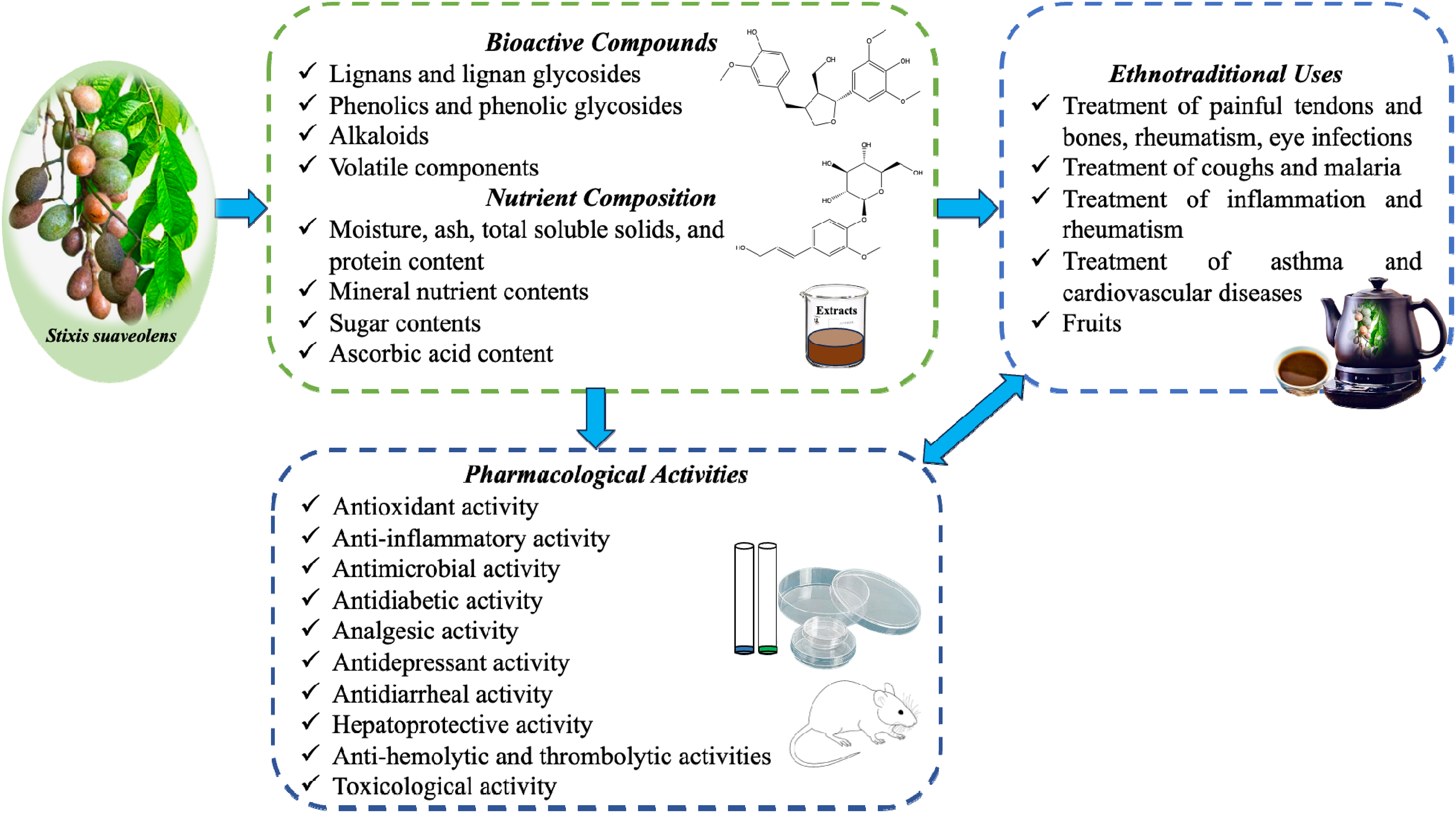
Diagram summarizing the traditional uses, bioactive compounds, and representative pharmacological activities of Stixis suaveolens.
Relationship Between Ethnopharmacology and Phytochemistry, as Well as the Pharmacological Potential of Isolated Compounds
Research on the chemical composition of the S. suaveolens fruit is still limited, covering only common groups of volatile compositions, but numerous pharmacological properties have been widely reported in previous related studies. Among these volatile ingredients, many compounds with many biological effects have been previously reported, such as antibacterial (eg, lauric acid70,71 and isoeugenol72,73), antifungal (eg, sinapaldehyde 74 and vanillin 75 ), anti-inflammatory (eg, phytol,76,77 lauric acid, 78 sinapaldehyde, 79 syringaldehyde, 80 myristic acid, 81 and 2-methoxy-4-vinylphenol82,83), anticancer (eg, phytol, 84 sinapaldehyde, 85 and 2-methoxy-4-vinylphenol 86 ), antioxidant (eg, vanillin, 87 isoeugenol,72,88 and syringaldehyde 80 ), anticonvulsant (eg, succinimide 89 and vanillin 90 ), hypoglycemic (eg, syringaldehyde 91 and phytol 92 ) effects, as well as a flavor source (eg, myristic acid, 93 trans-cinnamic acid, 94 vanillin, 95 isoeugenol, 96 syringol, 97 and ethyl maltol 98 ), etc. Previous reports have shown that the compounds found in S. suaveolens extract are associated with many promising biological effects. This suggests that S. suaveolens is a promising herbal source for application in many fields of cosmetics and the pharmaceutical industry in the future.
In a previous study, Wen et al
99
demonstrated that (+)-lyoniresinol 3α-O-β-D-glucopyranoside
Dehydrodiconiferyl alcohol
As reported by Asikin et al,
103
(+)-dehydrodiconiferyl alcohol-4-O-β-D-glucoside
In a study by Liu et al,
104
the effect of syringin
Numerous phytochemical compounds present in S. suaveolens may be responsible for its pharmacological effects in various experiments. Related studies have reported that the abovementioned isolated compounds have many pharmacological activities related to antioxidant and anti-inflammatory properties, for example. These pharmacological effects can explain this plant's use in folk medicine to treat arthritis and eye infections. However, further research is required to identify the bioactive ingredients responsible for the biological effects of this hopeful herbal plant.
Discussion and Future Perspective
Numerous medication discoveries have contributed to the use of plant-derived compounds. Among Stixis species, S. suaveolens has been a subject of particular interest. S. suaveolens has a history of use as a remedy for various conditions, including painful tendons and bones, rheumatism, eye infections, coughs, malaria, asthma, and cardiovascular diseases. This review presents updated information on botany, ethnomedicine, phytochemistry, pharmacology, as well as toxicology of S. suaveolens for the first time.
A total of 73 phytochemical components, including lignans and their glycoside derivatives, phenolics and phenolic glycosides, alkaloids, volatile components, and other compounds, have been identified using different chromatographic techniques. However, several active substances have not been identified, indicating the need for more systematic phytochemical research. In the current article, lignans and their glycoside derivatives are the predominant constituents isolated from S. suaveolens leaves. Additionally, the crude extracts from the leaves and fruits of this species have been indicated to exert a wide spectrum of in vitro and in vivo biological activities, including antioxidant, hepatoprotective, antimicrobial, antidiabetic, anti-inflammatory, analgesic, antidepressant, antidiarrheal, antihemolytic, and thrombolytic effects.
Although traditional medicine has utilized this species as a remedy to combat various inflammation-related ailments, such as rheumatism, scientific evidence supporting its ethnobotanical use is still lacking. Results from in vitro and in vivo research have not been reported. Through literature screening, our review only identified one study evaluating the anti-inflammatory effects of compounds isolated from the leaves of this plant species. This warrants further research to explore the anti-inflammatory properties of the leaves as well as other parts of S. suaveolens used in folk medicine. Additionally, to give more evidence, this review mentions some isolated compounds related to anti-inflammatory activity in other reports also presented in this review.
In particular, the nutritional components of S. suaveolens fruits were analyzed. Many dietary components from fruits, including nutrient content (moisture, ash, total soluble solids, lipid content, amino acid content, fiber content, and protein content), mineral nutrient contents (K, Na, Ca, P, Fe, Mg, Zn, Ni, Cu, Co, Mn, Cr, Cd, and Pb), sugar contents (total sugar, reducing sugar, and nonreducing sugar), and ascorbic acid content, have been reported. This evidence enhances the market value of S. suaveolens and suggests their potential use in preventing malnutrition-related diseases. Additionally, although some studies have been published on S. suaveolens fruit, which contains many health-benefit nutrients, including the major elements and trace elements, the bioavailability, safety, and pharmacological toxicity have not been investigated. Therefore, studies should also focus on the possible health risks that may arise from S. suaveolens fruit consumption and the amount consumed that leads to detrimental effects.
Although substantial studies have been conducted on S. suaveolens, many unknown elements in S. suaveolens remain. In terms of its phytochemical compositions, no research has been conducted to isolate biological compounds from this plant's roots, stem bark, and fruits. This has led to insufficient scientific information proving the therapeutic effects of using those parts in folk medicine. In other words, there is limited scientific evidence on the relationship between biological compounds and pharmacological effects, as well as ethnomedicine. Studies on acute and chronic toxicity, as well as safety data on the use of this herb, are also still limited. Therefore, further in-depth studies, namely clinical trials, are needed to evaluate the toxic response of S. suaveolens. The present study aims to renew scientists’ interest in deepening the general knowledge of the biological potentials of S. suaveolens extracts and pure compounds, particularly their minor constituents, as well as the plant's toxicity. Thereby further enhancing the significance of S. suaveolens in modern study and providing new directions for future research.
Finally, based on the medicinal importance of this plant and its uses in traditional medicinal systems, further phytochemical analysis, elucidation of mechanisms of action, in vitro and in vivo evaluation, and its safety, need to be further conducted.
Taken together, S. suaveolens may be a potential source of plant-based therapeutic phytocompounds, which justify its uses in folk and traditional medicine.
Conclusion
S. suaveolens is a plant used in traditional systems of medicine in India, Bangladesh, and Vietnam that occupies an extremely important position in the medicine theory of these countries. This study comprehensively summarizes relevant literature on ethnobotany, phytochemistry, evidence-based pharmacology, and toxicology of S. suaveolens for the first time. S. suaveolens is of considerable importance because it possesses a broad range of pharmacological effects, including antioxidant, hepatoprotective, antimicrobial, antidiabetic, anti-inflammatory, analgesic, antidepressant, antidiarrheal, antihemolytic, and thrombolytic activities, which are associated with its diverse phytochemical components, such as lignans, phenolics and their glycoside derivatives, alkaloids, fatty acids, proteins, vitamins, minerals, and volatile components. The use of S. suaveolens extracts and their active compounds in different folk remedies and herbal formulations demonstrates this plant's medicinal value. Due to the promising therapeutic role of different parts of S. suaveolens, our further studies will focus on developing new multifunctional drugs with the required safety and describing their bioavailability and pharmacokinetics. Moreover, for the benefit of future generations’ health, it is also crucial to preserve this valuable medicinal plant.
Footnotes
Abbreviations
Acknowledgment
We would like to thank Dr Nguyen Van Thanh Tien (National Kaohsiung University of Science and Technology, Taiwan; Industrial University of Ho Chi Minh City, Vietnam) for his comments and corrections to this manuscript.
Authors’ Contributions
TVC provided the research idea. Literature overview and manuscript preparation were done by TVC. NTN performed manuscript preparation. The manuscript was read and revised by TVC and NTTH. All authors read and approved the final manuscript.
Declaration of Conflicting Interests
The authors declared no potential conflicts of interest with respect to the research, authorship, and/or publication of this article.
Funding
The authors received no financial support for the research, authorship, and/or publication of this article.
