



Abstract
Objectives
The objective of this study was to analyze the fatty acid content, antioxidant, and antimicrobial activities of Argemone mexicana seed oil growing wild in north East Ethiopia.
Materials and Methods
Oils of A mexicana L. were obtained by means of Screw press from seeds. Methyl esters were derived from the oily mixtures by trans-esterification process and were analyzed by GC/FID and GC/MS systems. This oil was investigated for antioxidant activity using a DPPH radical-scavenging assay and was also tested against a panel of microorganisms.
Results
Linolenic acid (49.00%) and oleic acid (28.91%) were the most abundant fatty acids in leaves and stems, respectively. The oil showed moderate to highest antimicrobial activity against Bacillus subtilis, Candida albicans, Shigella dysentery, Staphylococcus aureus, Pseudomonas aeroginosa, and Escherichia coli. The oil also demonstrated the highest antioxidant activity with the percentage of inhibition of 92.5% at a concentration of 1.5 mg/mL, and its IC50 and AAI were 22.4 µg/mL and 4.93 µg/mL, respectively.
Conclusion
The results obtained from the present study indicated that the oil of A mexicana seed oil contained a high source of polyunsaturated fatty acids. These results also showed that the extracted oil from this plant has significant antimicrobial and antioxidant activities.
Introduction
Argemone mexicana L. (A mexicana) (Papaveraceae), also known as the Mexican prickly poppy or Mexican poppy, grows in tropical and subtropical regions globally. A mexicana L. is mainly found in Mexico but it is now widely distributed across many parts of the world, including India, Bangladesh, the United States, and Ethiopia.1,2 A mexicana, a globally used medicinal plant, serves as a source of many alternative medicines. The herbs/shrubs and many trees present in the wild state possess a huge number of novel phytochemicals of medicinal significance. Studies on the wild species of certain weeds have been considered of great importance for the treatment of various diseases. 3 The yellow exudate of A mexicana has been used to treat dropsy, jaundice, scabies, and skin diseases.4,5 The flowers, leaves, and seeds of this plant have been used to treat diverse diseases including dysentery, ulcers, cough, and hypertension.5,6 A mexicana also exhibits hepatoprotective, anticancer, anti-HIV, antiproliferative, antiinflammatory, antibacterial, antidiabetic, antifertility, antiallergic, nematocidal, and antioxidant activities.7,8 The leaves and stems of A mexicana are employed to treat malaria and dropsy. They possess antianalgesic, antispasmodic, antiparasitic, and narcotic properties with antifungal, hepatoprotective, larvicidal, and chemosterilant activities.9,10 The leaf extract has been used as a disinfectant, whereas the seed extract has been employed for the treatment of leprosy, warts, skin diseases, and insect bites. These activities are attributed to secondary metabolites and protein hydrolyzing substances.1,11
The extracts of different parts of A mexicana are used in different forms. For example, the root paste is used to treat insect and scorpion bites, etc, in the form of ointment for external use for the treatment of wound healing. For constipation and bloating, the root powder is used orally at a dose of 1-2 g/day. The fruit extracts of A mexicana have been used as intraperitoneal injections in anticancer studies in mice. 12 The latex from A mexicana is useful to treat conjunctivitis, while the oil from the seeds is used to treat asthma, dysentery, ulcers, etc. 13
The secondary metabolites of A mexicana such as flavonoids, polyphenols, phenols, alkaloids, saponins, and tannins, have been shown to be responsible for exhibiting medicinal properties. These secondary metabolites isolated from different parts of A mexicana contain antimicrobial activities against different species of fungal, bacterial, and viral pathogens.6,14
The biomedical properties of A mexicana have not been properly studied. In view of this background and the traditional uses of A mexicana as a medicinal plant, the aim of this study was to determine the fatty acid profile and antimicrobial and antioxidant properties of A mexicana seed oil.
Materials and Methods
Plant Material
The seeds of A mexicana, also known as “Koshashile” in Amharic, were gathered from their native habitat in the area of Jamma Woreda, Ethiopia, in South Wollo, Ethiopia. Taxonomists from Debre Tabor University's Department of Biology, College of Natural Sciences and Computational Science, recognized and verified the plant, and the specimens were placed under the voucher number TM002/2022 for future use.
Microorganisms
The test organisms were bacterial and fungus isolates obtained from the government hospital in Akesta. They were isolated from clinical samples submitted by patients with suspected urinary tract and pus infections. The antimicrobial assay was performed using the following standard microorganisms: Bacillus subtilis (G+ve), Staphylococcus aureus (G+ve), Pseudomonas aeroginosa (G−ve), Escherichia coli (G−ve), Shigella dysentery (G−ve), and Candida albicans (fungus), which are commonly involved in urinary tract infections and diarrheal diseases, which are one of the main causes of death in infants.
Extraction of Oil
There are various methods used to extract oil from seeds, such as mechanical, solvent, and enzymatic extraction. For this study, it was preferred to extract oil through the mechanical extraction method as it is cheap, easy to handle, and can extract bulk quantities of seeds. For this reason, the researcher used a mechanical screw press oil expeller (made in Germany) for this work.
First of all, the seeds were washed with pure water to remove impurities and then dried in sunlight for 3 days. After that, the seeds were dried at 105 °C for 2 h in the laboratory oven for moisture removal. Then, these were sieved to remove discards and stored in plastic bottles. The processing capacity of this screw expeller was 50 kg/h, with two different compression sections. Different rotational speeds, such as low, medium, and high, were used during operation, and two heaters were installed for heating large amounts of seeds. Finally, the dried seeds were fed into a mechanical screw press for the extraction of crude oil through compression force. After compression, the crude oil and press cake were separated from each other. The press cake was recycled two times in the hopper to extract the maximum oil contents. 15 The crude oil was refined by adding a small amount of caustic soda, then filtered and stored in a glass bottle. It was kept in the fridge at 4 °C for further work, as shown in Figure 1.

Experimental set up for the extraction of Argemone mexicana oil through mechanical screw oil expeller.
GC-MS Analysis
The fatty acid profile of A mexicana seed oil was determined by gas chromatography (model GC-6890N) coupled with a mass spectrometer (model MS-5973 MSD) (mass selective detector). Separation was performed on a capillary column DB-5MS (30 m × 0.32 mm, 0.25 µm of film thickness). Helium was used as a carrier gas with a flow rate of 1.5 mL/min, and the column temperature was adjusted from 120 °C to 300 °C at a rate of 10 °C/min. A 0.1 µL argemone oil in chloroform was injected using a split mode with a split ratio of 1:10. The mass spectrophotometer was adjusted to scan in the range of m/z 50-550 with the electron impact (EI) mode of ionization.
Evaluation of Bioactive Properties
Antibacterial Activity
The inhibition zone produced by the oil samples was determined and compared with that of a standard such as ciprofloxacin by the disc diffusion method as described by Asamenew et al. 16 Two sets of dilutions of 200 μg/mL each of the oil samples were dissolved with dimethyl sulfoxide (DMSO), and ciprofloxacin, which is used as a positive control, was dissolved in distilled water and prepared in sterile McCartney bottles. Any contamination was checked by preparing serial nutrient agar plates and incubating at 37 °C for 24 h. Sterile filter paper discs (Whatman no. 1) of 6 mm diameter were soaked in stock solution (200 μg/mL) of oil samples and placed in an appropriate position on the surface of the flooded plate seeded with 24 h old culture grown on nutrient broth, marked as quadrants on the rear of the Petri dishes. The Petri dishes were then incubated at 37 °C for 24 h, and the zones of inhibition were measured in mm. A similar procedure was adopted for the standard, and the corresponding diameter of the zone of inhibition was recorded and compared with the sample. DMSO was used as a negative control. 17
Antifungal Activity
The antifungal potential of the oil samples (2000 μg/mL) was evaluated by using the disc diffusion method (as described for the determination of antibacterial activity) on Saborauds dextrose media. The Petri dishes were incubated at room temperature for 3 days, and the zone of inhibition was measured in mm. Clotrimazole was used as a reference standard. 17
Determination of Minimum Inhibitory Concentrations (MICs)
The MICs of argemone oil were determined using the method described by Dekić et al. 18 Saborauds dextrose agar and nutrient agar were used for fungal and bacterial growth, respectively. The broth was prepared, containing various concentrations of the oil samples ranging from 30 to 150 μg/mL, for antibacterial and antifungal activity testing. Dimethyl sulfoxide (DMSO) was used to dissolve the oil. A sterility control and a growth control containing nutrient broth plus DMSO without antimicrobial substances were also carried out. Each test and growth control well was incubated at 37 °C (for bacteria) and 25 °C (for fungus). 17
Antioxidant Activity
The antioxidative property of A mexicana seed oil was estimated by the DPPH test for the determination of free radical-scavenging ability. In brief, 0.05 g of DPPH was added to a 30 mL volumetric flask, dissolved with a sufficient amount of absolute methanol to form 4.2 mM DPPH, and then sonicated. 1 mL of A mexicana seed oil was diluted by 110 mL of 80% methanol to prepare a stock solution. This stock standard solution was then sonicated for 5 min to form a homogenous solution. The argemone oil and DPPH solution were kept in a 4 °C chiller in a dark condition to avoid exposure to light, which may lead to the decomposition of chemicals. Test solutions were prepared through serial dilutions of master stock at volumes of 5, 10, 20, 40, 50, 75, and 100 µL, followed by the addition of 2 mL of 4.2 mM DPPH solution and 3 µL of 80% methanol, respectively, to have a volume of 5 mL solutions. Ascorbic acid was used as a positive control in this assay, while a DPPH solution in methanol without a test sample was used as a negative control. The test tubes were immediately wrapped with aluminum foil to avoid solvent evaporation; the mixtures were vigorously shaken in a sonicator and incubated for 30 min. The absorbance of the solution in each test tube was measured at 517 nm using absolute methanol with DPPH as a blank. The assay was performed in triplicate, and the average absorbance for each concentration was noted.19,20 Finally, the percentage inhibition rates of the test compound were calculated using the following equation:

Antioxidant Activity Index (AAI)
The antioxidant activity index (AAI) of argemone oil with DPPH was determined by the method developed by Rodrigo Scherer and Helena Teixeira Godoy. According to these researchers, the antioxidant activity of the oil was expressed as the antioxidant activity index (AAI), which is calculated as follows21,22:

Results and Discussion
Fatty Acid Profile of A mexicana Seed Oil
Identification of the fatty acids was done by comparing the mass spectra of each component with the database on Mass Hunter in the Library of NIST14.L. Then the compositions of the oil were identified with a quality of comparison of about 98%-99% match.
constituent of the oil extracted from A mexicana seeds collected from Woreilu Woreda, Southern Zone of Wollo, and Amhara Region, Ethiopia. Accordingly, a total of 12 compounds were identified from the extracted oil, amounting to 99.88% of the total oil. Moreover, the nonedible oil showed a high content of polyunsaturated fatty acids (49.00%), monounsaturated fatty acids (32.76%), and saturated fatty acids (18.12%). From the 12 fatty acids identified, the 5 most abundant fatty acids were listed in order: linoleic acid (49%), oleic acid (28.91%), palmitic acid (11.22%), stearic acid (6.44%), elaidic acid (3.25%), and linoleic acid. Oleic acid and palmitic acid are the major constituents of the oil because their percentage composition is greater than 10%, and the rest are considered minor constituents 23 (Table 1). The result showed that the unsaturated fatty acid contents were higher than saturated ones in both tested extracts. Polyunsaturated fatty acids are considered valuable compounds in the human diet because of their effect on human health.24,25 Therefore, increased consumption of monounsaturated fatty acids and polyunsaturated fatty acids and decreased consumption of saturated fatty acids are linked to positive health outcomes. According to these results, the oil of A mexicana L. may be a good source of polyunsaturated fatty acids.
Fatty Acids Composition of Argemone mexicana Seed Oil.

Vegetable oils containing the most common essential fatty acids have more unsaturated fatty acids such as linoleic acid and α-linolenic acid are more desirable as foods and are found to lower blood serum cholesterol. 26 In addition, since the oil contains a high percentage of linoleic acid, as seen in Table 2, which is one of the most important essential polyunsaturated fatty acids in human food, its presence in the body prevents distinct heart and vascular diseases in the body. 27 The high level of linoleic acid in A mexicana seed oil also signifies its potential use in cosmetic products as a skin moisturizer, to aid in the healing process of dermatoses and sunburns, in the treatment of acne vulgaris, and as a vehicle for topical delivery of pharmaceutical agents.
Comparison of the Chemical Composition of Argemone mexicana Seed Oil With Other Reported Values of the Same Species.

The chemical compositions of the A mexicana seed oil obtained from the current study were compared with those of the same species (or species belonging to the same family) found in Sudan. 28 As we observed from Table 2, 12 compounds with a percentage yield of 49.13 and the major compounds linoleic acid, oleic acid, and palmitic acid were identified from the nonedible oil of A mexicana seeds, which are completely different from those reported by the author mentioned in the above country. This variation in composition and yield of the oil could be due to factors such as plant age, plant part, development stage, growing place, harvesting period, method of extraction, and principally chemo-type since they influence the plant biosynthetic pathways and consequently the relative proportion of the main characteristic compounds. 20
Bioactive Properties of A mexicana Seed Oil
Antimicrobial Activity
The antimicrobial (antibacterial and antifungal) activities of the A mexicana seed oil were carried out by evaluating both the bactericidal and fungicidal effect and minimum inhibitory concentration (MIC) on selected bacteria and fungi using the filter paper disc and disc diffusion method. Accordingly, the antibacterial and antifungal activities of the oil were determined by the disc diffusion method against the panel of 6 microorganisms, and their potency was assessed qualitatively and quantitatively by the presence or absence and by measuring the inhibition zones and zone diameters. Thus, the results of the analysis showed that the pure oil has substantial antimicrobial activity against all the bacteria and yeast tested. The values of the microbial growth inhibition zone showed the highest to moderate sensitivity toward the oil. Accordingly, S dysentery, S aureus, P aeroginosa, and E coli were classified as extremely sensitive (+++) to the oil, with a growth of zone of inhibition corresponding to 22.8 ± 0.22, 20.7 ± 0.13, 21.5 ± 0.32 and 21.9 ± 0.51 mm, respectively, whereas, B subtilis and C albicans with a halo of inhibition of 17.4 ± 0.03 and 16.7 ± 0. 05 mm, respectively, correspond to a sensitivity classified as very sensitive (++) 29 (Table 3).
Inhibition Diameters (mm) of the Oil (100 µg/mL).

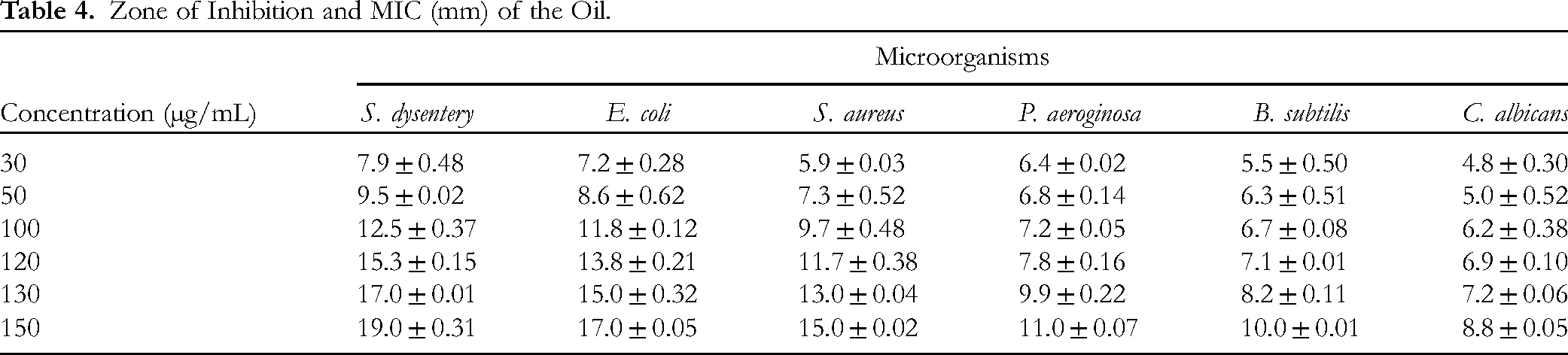
The MIC is the lowest concentration of oil required to prevent visible growth of the tested microorganisms around the disc measured by assessing the zone of inhibition. 29 Experimental findings showed that the results of MIC are considered as strong when MIC ≤ 1000 µg/mL, moderate when MIC is between 1000 and 4900 µg/mL and weak when the MIC is ≥5000 µg/mL.29,30 The A mexicana oil was found to exhibit strong activity (MIC ≤ 1000 µg/mL) against the tested microorganisms observed to have 30, 50, 100, 120, 130, and 150 µg/mL for S dysentery, E coli, S aureus, P aeroginosa, B subtilis, and C albicans respectively (Table 4). Therefore, the MIC results of A mexicana oil showed an appreciable spectrum of antimicrobial activity against the entire selected gram-positive and gram-negative bacteria as well as the fungus species this is due to the presence of polyunsaturated fatty acid which is in line with Akbas et al. 31 They explained that antimicrobial activities of plant seed oil are highly related to their high content of polyunsaturated fatty acids (especially linoleic acid) as this fatty acid function as the key ingredients of antimicrobial food additives which inhibit the growth of unwanted microorganisms. In addition, linoleic and oleic acids are antibacterial components in the herbs (Helichrysum pedunculatum and Schotia brachypetala) used for dressing wounds during male circumcision rituals in South Africa. Fixed oils from Thymus maroccanus and Thymus broussonetii are able to disrupt the biomass and inhibit the metabolic activity of preformed biofilms of distinct Candida spp. and nosocomial infections acquired from hospital settings. 32
Zone of Inhibition and MIC (mm) of the Oil.
It was also reported that chloroform extract of A mexicana seeds at a dose of 500 mg/mL shows significant antimicrobial activity against both gram-positive and gram-negative microorganisms such as E coli, P aeroginosa, Enterococcus sp., Salmonella typhi, and S aureus with MIC values in the range of 2-5 mg/mL. 33
Generally, gram-negative bacteria are more resistant to antimicrobial agents compared with gram-positive bacteria as they are covered with a phospholipid membrane carrying the structural lipopolysaccharide component that makes their cell wall impermeable to antimicrobial substances.34,35 However, it is not uncommon for natural products to be more potent against gram-negative bacteria. 36 A possible explanation for this could be that the major component of the oil may cause the dissolution of the fatty layer of the gram-negative microbes or drug-resistant plasmids may be present in the tested gram-positive strains but not in the gram-negative bacteria.
The potent action of the A mexicana seed oil against gram-negative bacteria such as Shigella spp. is highly significant since these are among the most dangerous bacterial strains that are associated with diseases that frequently cause severe diarrhea in both men and animals. The fact that the oil showed comparable in vitro activity with that of ciprofloxacin against the above bacterial strains cannot be overemphasized when it is well known that currently, ciprofloxacin is the drug of choice for travelers’ diarrhea and shigellosis. Despite being a normal inhabitant of the human gastrointestinal tract, E coli is one of the most prominent bacteria frequently reported to have developed multidrug resistance to many of the antibiotics currently available in the market.37,38 Hence, the activity observed against this pathogenic microorganism is equally significant.
Antioxidant Capacity
The A mexicana seed oil containing a high concentration of polyunsaturated fatty acid has attracted great interest in recent years due to its potential health-promoting effects. The unsaturated fatty acids, particularly in the oil, have been identified as an important source of antioxidants that delay or inhibit various diseases, including Alzheimer's and cardiovascular disease.29,39 In the current study, the antioxidant properties of the A mexicana seed oil were investigated using DPPH free radical-scavenging method. The antioxidant in the oil reduced the DPPH radical to a yellow compound, diphenylpicryl hydrazine, and the reaction depends on the hydrogen-donating ability of the antioxidant. Reduction of DPPH by an antioxidant can simply be shown as follows:
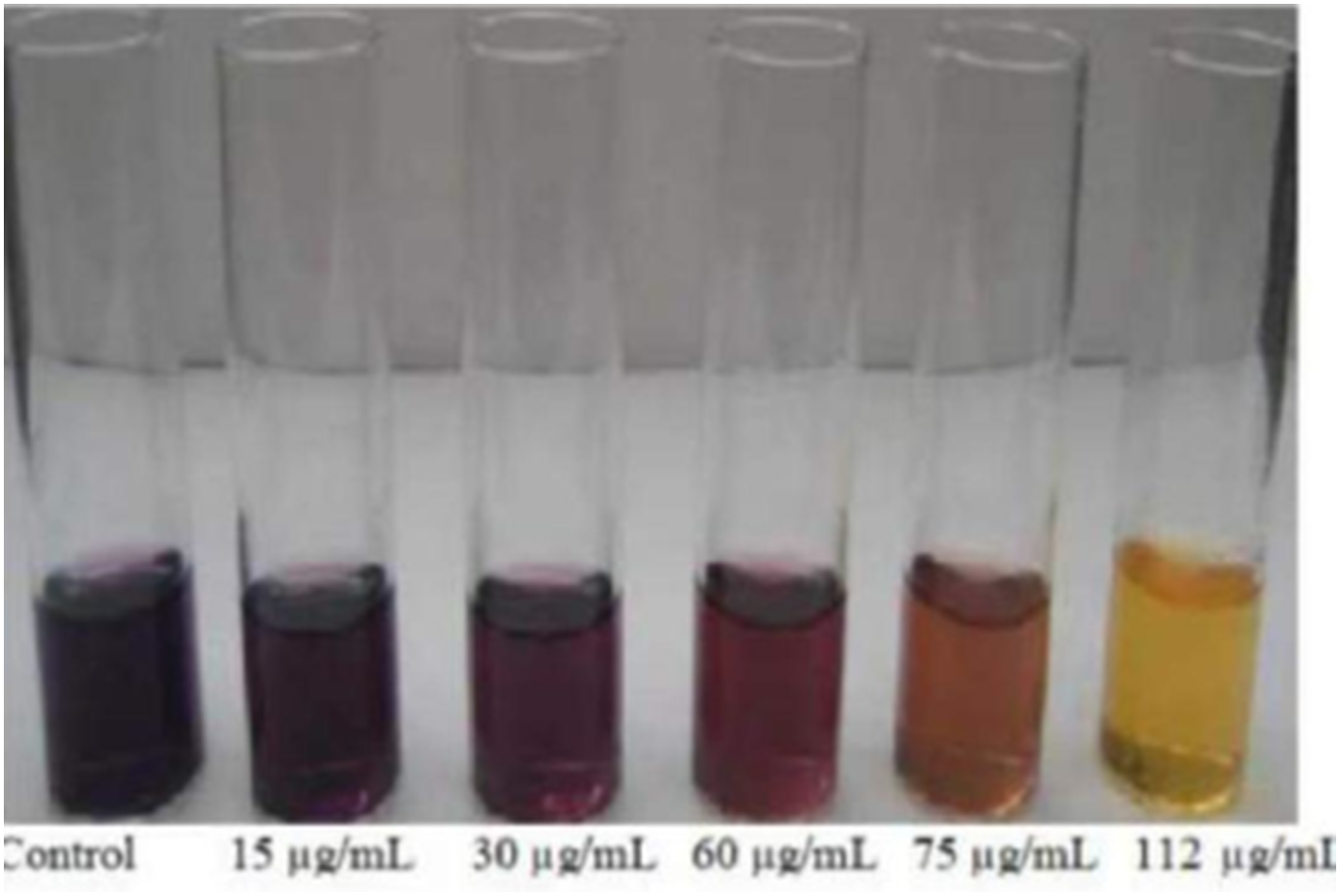
The photograph of DPPH—Argemone mexicana seed oil solutions at various concentrations.
The DPPH also acts as an indicator to allow clear observation. When DPPH reacts with antioxidants, it is reduced, resulting in a decrease in absorbance at 517 nm. The IC50 is defined as the concentration of the oil that required inhibiting 50% of DPPH radical-scavenging activity. Therefore, the lower the IC50 value obtained, the stronger the antioxidant activity. IC50 values were determined from the graph of the percent inhibition rate against the concentration of the sample as shown in Figure 2. In general, any sample possessing inhibition at 5 mg/mL (5000 ppm) is considered as active. 30 and with IC50 values more than 240 μg/mL in DPPH assay is assumed to show negative results. 40 Experimental findings showed that the results of the percentage scavenging activities of DPPH radical in the test solution at 5 mg/mL were strong when the percentage of scavenging is between 71 and 100, moderate when the percentage scavenging activity is between 41 and 70, and weak when the scavenging activities are ≤40. 30
At the concentration of 1.5 mg/mL (1490.1 µg/mL) (Table 5), the A mexicana seed oil exhibited the highest percentage inhibition (92.5%) as compared to the range given in the literature. 30 The A mexicana seed oil also gave strong antioxidant activities in the DPPH radical-scavenging test, with its IC50 value was 22.4 µg/mL (Table 5) and showed comparable antioxidant potential as compared to ascorbic acid. Ascorbic acid showed a percentage inhibition of 96.03% (IC50: 14.8 µg/mL) which serves as a standard. 30 The highest antioxidant activities of A mexicana seed oil were due to the presence of polyunsaturated acid and linoleic acid. The result was in agreement with Richard et al 41 who stated that the presence of polyunsaturated fatty acids, specifically linoleic acid in plant seed oil, exhibits indirect antioxidant capabilities in vascular endothelial cells, lowering inflammation, atherosclerosis, and cardiovascular disease risk. Khadhr et al 42 found that seed oil has a strong antioxidant and antiinflammatory effect due to the presence of bioactive chemicals and polyunsaturated fatty acids such as linoleic acid. Omega fatty acids, particularly omega 9 (oleic acid), omega 3 (alpha-linoleic acid), and omega 6 (linoleic acid), have effects such as catalyzing brain development, supporting the immune system, and preventing coronary heart diseases. 43
Antioxidant Activity of Argemone mexicana Oil at a Concentration of 1.5 mg/mL.

Antioxidant Activity Index (AAI)
The antioxidant activity index was determined by considering the mass of DPPH and the mass of the oil in the reaction, which is constant for each compound used and independent of the concentration of DPPH and oil tested. Rodrigo Scherer and Helena Teixeira Godoy considered argemone oil to show poor antioxidant activity when AAI < 0.5, moderate antioxidant activity when AAI is between 0.5 and 1.0, strong antioxidant activity when AAI is between 1.0 and 2.0, and very strong when AAI > 2.0.22,29 Final DPPH concentration was calculated by conversion factors from its initial value, 4.2 mM, molar mass 394 g/mol, initial and final volume 30 and 2 mL, respectively, gives a concentration of 110.32 µg/mL DPPH solutions. Hence, using the formula stated in the section Antioxidant Activity Index (AAI), the AAI of A mexicana oil is calculated as follows:
A limitation of this particular study is that only the seed of the plant was sampled from one geographical location. Further research is needed to examine additional individuals from other locations. In addition, research on other Argemone species is needed to help characterize the components and biological activities of this genus. Moreover, further studies are required to know the effect of seasons, plant parts, extraction methods, environmental location, and plant growth stages on yields, chemical composition, and biological activities of A mexicana seed oil. Besides, it needs further investigation and bioassay-guided isolation and characterization of pure active compounds from A mexicana seed oil. It would be interesting in future work to make a more detailed study about the seed oil of A mexicana, particularly on the identification of the molecules present in the oil using different chromatographic techniques, and it is evident that future research needs to include toxicity studies to determine the safety of the oil.
Conclusion
Based on current investigations, it is concluded that A mexicana has potential antibacterial activity that may be boosted by enhancing oil concentration. The use of potentially harmful chemically synthesized antibacterial agents can be reduced by using extracts from the plant A mexicana, which has greater antimicrobial potential than several commercially available antibiotics. This oil can be used as an effective therapeutic agent against strains of B subtilis, S aureus, P aeroginosa, E coli, S dysentery, and C albicans epidermis and diseases that arise from them. In addition, this study showed that the oil of A mexicana is a potential source of natural antioxidants to be used as a lipid oxidation inhibitor in the food industry.
Footnotes
Acknowledgments
We acknowledge the support of the Department of Chemistry, Mkdela Amba University for providing the research facilities.
Data Availability
The data used to support the findings of this study are included in the article.
Declaration of Conflicting Interests
The authors declared no potential conflicts of interest with respect to the research, authorship, and/or publication of this article.
Ethical Approval
Ethical Approval is not applicable to this article.
Funding
The authors received no financial support for the research, authorship, and/or publication of this article.
Statement of Informed Consent
There are no human subjects in this article and informed consent is not applicable.
Statement of Human and Animal Rights
This article does not contain any studies with human or animal subjects.
