



Abstract
Bergamot (Citrus bergamia Rutaceae) is widely utilized in the food, traditional medicine, and health product industries. Bergamot, with an essential oil content of up to 1.6%, is a valuable high-end fragrance ingredient. Its essential oil (BEO), the most significant bioactive derivative, contains volatile components such as monoterpenes and sesquiterpenes accounting for 93%–96% of the total volume, along with non-volatile components such as coumarins. Given the limitations of synthetic drugs, natural products like BEO are increasingly regarded as valuable complementary and alternative therapeutic agents. Modern pharmacological research has demonstrated BEO's potential in managing a range of conditions, such as neurodegenerative diseases, cancer, inflammation, and diabetes. Notably, beyond its well-documented use in aromatherapy for anxiety relief, evidence suggests that BEO may serve as an adjunctive treatment for neurodegenerative disorders by modulating neurotransmitter activity. This review systematically evaluates the impact of botanical sources, extraction techniques, and processing methods on the chemical composition of BEO, highlighting its therapeutic promise and providing a scientific basis for its further development in pharmaceuticals, functional foods, and cosmetics.
Keywords
Introduction
Citrus species (Rutaceae) are ancient plants, with documented health benefits dating back to 2100 BC. This genus comprises a wide variety of fruits, including: sweet orange (C. sinensis), bitter orange (C. aurantium), neroli (C. aurantium bigarade), orange petitgrain (C. aurantium), mandarin (C. reticulata), lemon (C. limon), lime (C. aurantifolia), grapefruit (C. paradisi), bergamot, yuzu (Citrus medica L.), and kumquat (C. japonica). These fruits are rich sources of vitamins, d-limonene, flavonoids, dietary fibers, and essential oils. Among the valuable products derived from citrus processing, essential oil (EO) is one of the most significant. In bergamot, EOs are particularly predominant, constituting 93% to 96% of its total volatile content. 1 Studies have demonstrated that bergamot essential oil (BEO) possesses a highly diverse chemical profile, comprising compounds categorized into several classes, including alcohols, ketones, esters, terpenoids, monoterpenes, and sesquiterpenes. These bioactive constituents underlie BEO's broad therapeutic potential, indicating applications in the management of depression,2,3 inflammation,4,5 diabetes, 6 cancer, Alzheimer's disease and so on. In light of this, BEO is utilized not merely in air fresheners, household cleaning products, and perfumes but is also recognized in Tradition Traditional Chinese Medicine (TCM) for its potential to lower the risk of various common diseases. Its unique chemical composition, diverse bioactivities, and substantial economic prospects underscore the need for further detailed characterization.
Citrus bergamia Risso & Poiteau, commonly designated as bergamot, is the member of the Rutaceae originating from genetic admixture between bitter orange and lemon. 7 The bergamot tree has dark green lemon-like ovate leaves, star-shaped white blossoms, and round yellow fruits on its branches. 8 Bergamot has long been known to contain many important nutritional components such as essential oils, flavonoids, polysaccharides, amino acids, minerals, polyphenols, proteins, vitamins and Monoterpenes, which are recognized as potent antioxidants. However, the EO has been confirmed the main components of the bergamot, the fruit leaf oil is quilt similar to the BEO. The fruit EO contains D-limonene and γ-terpinene as major components and the leaves is rich in D-limonene, cis-citral, and vanillin. 9 The EO of fruit and leaf have high medicinal value. The BEO is screened against cancer cells and can be used to inhabit bacterial reproduction and keep calm. The leaf has several phytochemicals with antibacterial qualities and can stop Hep3B cancer cells9,10 from growing. Furthermore, BEO is used as natural preservatives due to their broad spectrum of biological activities including antimicrobial and antioxidant effects.
Nonetheless, the identity of the precise constituents responsible for its other pharmacological effects remains to be elucidated. Presently, the fields of food preservation and cosmetics represent the primary domains of BEO application and commercial development. For instance, in aromatherapy, BEO is commonly employed to alleviate stress-related symptoms and improve mood. 11 However, its applications in medicine and health care remain relatively underexplored. Therefore, this review aims to systematically summarize the effects of geographical origin, extraction methods, and processing techniques on the chemical composition of BEO, with a particular focus on its pharmacological activities. We seek to provide a theoretical foundation and novel perspectives for the advanced development and application of BEO in TCM and health-related fields, including pharmaceuticals, nutraceuticals, and cosmetics.
History Background
Citrus bergamia Risso & Poiteau (bergamot) is believed to have originated in the vicinity of Berga, Spain, and was subsequently introduced to Calabria in southern Italy, where its cultivation was further developed. 12 Scientific studies recognize bergamot as one of the most important Citrus species. Its complete taxonomic classification is Kingdom Plantae, Subkingdom Tracheobionta, Division Magnoliophyta, Class Magnoliopsida, Subclass Rosidae, Order Sapindales, Family Rutaceae, and Genus Citrus. For detailed information, please refer to Figure 1.

(A) Distribution of chemical components of BEO in the producing areas (B) For the main chemical constituents of BEO (C)ancient Chinese medical books of bergamot.
BEO is obtained by mechanically rasping the fruit peel followed by cold-pressing, yielding a volatile liquid characterized by a rich aromatic profile and a color spectrum from pale green to dark brown. Throughout Italy's history, BEO has been historically employed in traditional medicine for the treatment of parasitic diseases, fever, and infections affecting the skin, respiratory tract, urinary system, and oral cavity. It has also been utilized against conditions such as tonsillitis, leukorrhea, vaginal pruritus, sore throat, and gonococcal infections. 13
The medicinal use of bergamot is also chronicled in classical Chinese medical texts. Its leaves, flowers, and fruits are attributed with properties such as resolving phlegm to relieve cough, regulating “qi” to alleviate vomiting, and dispersing stagnant liver-“qi” to harmonize the stomach. 14 Bergamot, with its sweet and slightly spicy taste, is warm in nature, according to the “Southern Materia Medica,” “targeting the liver and stomach meridians, nourishing the liver and warming the stomach, stopping vomiting, dissolving cold phlegm in the stomach, treating stomach pain, easing facial cold pain, harmonizing the middle, and regulating qi. 1 ” The golden-yellow rind of bergamot has a pleasant scent making it both aesthetically pleasing and highly valuable medicinally. Additionally, according to the Compendium of Materia Medica, “Boil the soup with the bergamot to relieve heartburn 15 and drink the brewed citron wine to treat cough and phlegm.” This suggests that it can reduce coughing and dry out moisture. As evidenced above, the traditional use of bergamot in ancient times focused on harmonizing liver-stomach function, with functions encompassing “qi” regulation, vomiting cessation, spleen invigoration, dampness drying, phlegm resolution, and pain relief.
In contrast to bergamot fruit essential oil, the development of bergamot leaf oil has gained increasing attention in recent years. Xian et al 16 employed solid-phase microextraction to analyze the volatile components of bergamot leaves and fruits. Their study revealed that the chemical composition of the leaves is dominated by alcohols and alkenes, with (-)-4-terpineol as the most abundant compound at 33.1%. In comparison, D-limonene, the predominant component in the fruit oil at 53.00%, constitutes only 7.31% of the volatile fraction in the leaves. The fruit oil consists mainly of alkene compounds. These findings indicate that alcoholic compounds play a significant role in defining the aromatic profile of bergamot leaf oil. Furthermore, research has demonstrated that these aromatic components possess notable antioxidant, antibacterial, and anti-inflammatory properties. For example, (-)-4-terpineol, a primary component in Houttuynia cordata injection, exhibits potent anti-inflammatory effects. These studies provide valuable insights for the comprehensive utilization and development of bergamot plant resources.
Major Chemical Composition
The chemical composition of bergamot fruits is significantly influenced by multiple factors, including genotypic variation, pre-harvest climatic conditions, cultural practices, fruit maturity, and harvesting methods. Notably, genetic factors are considered the primary determinant of major differences in nutritional and phytochemical profiles. 12 Climatic conditions and cultivation practices significantly impact bergamot fruit quality. Premature or delayed harvesting generally leads to a reduction in bioactive compounds. Previous studies have identified BEO as the principal pharmacological component of the fruit. Chemically, BEO comprises both volatile and non-volatile constituents. The volatile fraction consists predominantly of monoterpenes and sesquiterpenes, with monoterpene hydrocarbons—including limonene, γ-terpinene, and β-pinene—as well as oxygenated monoterpenes such as linalool (an alcohol) and linalyl acetate (an ester), collectively accounting for over 90% of the total oil. The non-volatile fraction is composed mainly of coumarin derivatives.
Variations in the geographical origin of bergamot and extraction methods lead to differences in the composition of its essential oil; however, limonene remains the predominant component in many extraction techniques, while γ-terpinene is generally identified as the second major chemical constituent. Du et al, 17 using supercritical fluid extraction coupled with GC–MS, reported that the main components of bergamot essential oil are D-limonene (81.2%), γ-terpinene (11.1%), α-pinene (1.8%), β-pinene (1.4%), and 2-carene (0.5%). In contrast, Jin et al, 18 employing organic solvent extraction combined with gas chromatography–mass spectrometry, identified D-limonene (39.6%), γ-terpinene (24.0%), 5,7-dimethoxycoumarin (14.0%), α-pinene (3.0%), and β-pinene (2.9%) as the principal constituents. Most studies indicate that aside from limonene, γ-terpinene is the second most abundant major component identified. However, Jin et al, 19 who extracted volatile oil from fresh bergamot using steam distillation and analyzed its composition, reported limonene (48.4%), 1-methyl-2-(1-methylethyl) benzene (30.8%), α-pinene (4.4%), β-pinene (3.3%), and β-myrcene (or β-myrcene, 1.5%) as the primary components. Therefore, while limonene is consistently the major chemical component of bergamot essential oil, the identity of the second most abundant component can vary due to factors such as bergamot cultivar, growing conditions, pretreatment methods, as well as differences in separation, extraction techniques, and analytical methodologies. Table 1 shows the main chemical components of BEO. Limonene has been shown strong anti-inflammatory,19–21 antiviral,22,23 and immunomodulatory effects. 24 According to the latest research, it may be used therapeutically to combat COVID-19.25–27 And γ - terpinene is also a high content substance in the BEO, and is one of the main substances that exert important pharmacological effects in BEO.
The Main Chemical Components of BEO.

Limonene
Rutaceae species rank among the plant taxa with the highest EO content, with limonene constituting a ubiquitous natural monoterpene across this family. This compound frequently serves as the principal active mediator of Rutaceae EOs’ pharmacological effects. 46 Limonene (C₁₀H₁₆), systematically named 4-isopropenyl-1-methylcyclohexene, is extracted as a major component from citrus peels. Characterized by a molar mass of 136.23 g/mol, this colorless liquid exhibits two optical isomeric configurations (D-limonene and L-limonene) alongside the racemic dipentene mixture. Industrial extraction methods for this monoterpene include mechanical rasping, cold-pressing, and distillation techniques. For bergamot specifically, conventional limonene isolation employs simple distillation or steam distillation of fruit peels.
Limonene exhibits broad-spectrum antibacterial activity, effectively inhibiting the growth and reproduction of several common bacterial strains. As an agricultural pesticide, it demonstrates a wide insecticidal spectrum, high efficacy, low toxicity, and is considered safe for humans and livestock. Additionally, limonene imparts a natural lemon-like aroma to food products, rendering it suitable as a flavoring agent in various processed foods, including fruit juices, carbonated and sweetened beverages, ready-to-drink shakes, ice cream, sorbet, candies, and confectionery items. 47 Limonene serves as an alternative solvent for the chemical synthesis of various valuable intermediates in organic chemistry and industrial applications, owing to its cost-effectiveness, biodegradability, and non-toxic nature—except in oxidation processes. Furthermore, limonene demonstrates considerable potential owing to its diverse health benefits.
Limonene demonstrates effective antioxidant activity against DPPH free radicals within a concentration range of 2.00–6.00 g/L, while also exhibiting potential for scavenging free radicals in biological systems. 48 Studies have indicated that limonene can inhibit cancer development by suppressing the production of pro-inflammatory cytokines, which are key signaling molecules in the pathway linking chronic inflammation to cancer. 49 Limonene acts on the respiratory mucosa to stimulate mucus secretion and alleviate bronchial spasms, thereby effectively relieving cough and reducing phlegm.50,51 Limonene exhibits analgesic properties that are effective in alleviating headaches, stomach aches, tonsillar swelling, and sore throat. Additionally, it contributes to the management of gallbladder disorders associated with hypercholesterolemia. Table 2 shows the biological activity and mechanism of limonene.
The Characteristics and Mechanism of Limonene.

γ- Terpinene
Gamma-terpinene, a common monoterpene found in citrus EO, exhibits high solubility in ethanol and most non-polar oils but is insoluble in water. It has a boiling point of 182 °C (at 760 mm Hg), a melting point of −59 °C, and a density of 0.85 g/cm3.
In modern industrialized society, traditional foods are increasingly being replaced by their synthetic counterparts, whose excessive consumption may pose health risks due to potential toxicity. Notably, natural compounds with antioxidant properties offer a safe and promising alternative. For instance, Gan et al demonstrated that γ-terpinene can scavenge free radicals and reactive oxygen species (ROS) in cells. This activity inhibits the oxidation of DCFH to DCF, thereby reducing fluorescence intensity and conferring an antioxidant effect. Thus, natural products and their extracts hold significant potential and application value for the research and development of safe antioxidants. 65
Chemical Composition Analysis of BEO
It has been confirmed that the main components of BEO are volatile compounds, constituting 93% to 96% of the total content. These include monoterpene and sesquiterpene hydrocarbons (eg, limonene, γ-terpinene, α- and β-pinene) and their oxygenated derivatives (eg, linalool, linalyl acetate, nerolidol, geranial). The remaining 4% to 7% consists of non-volatile compounds, primarily coumarins and lactones such as bergamot lactone. 1 Of these, BEO is the most important component. 66 Currently, more than 60 chemical constituents have been identified in BEO. Significant compounds among them include cymophenol, bergamot lactones, limonene, γ-terpinene, α-pinene, and β-pinene. 67
The pharmacological effects of plant essential oils exhibit variability depending on factors such as the place of origin, harvesting time, 14 extraction method, and processing techniques, which ultimately lead to compositional differences. Similar to other beneficial fruits, bergamot contains a wide spectrum of bioactive compounds. Among these, limonene and terpinene have garnered particularly research interest. The presence of these significant bioactive compounds contributes to the high therapeutic value of bergamot compared to other notable fruits.
Analysis of Chemical Composition in BEO from Different Producing Areas
Bergamot is extensively cultivated worldwide, with Italy, Spain and China serving as the primary producers. Notably, it has been utilized as a medicinal herb in China for nearly a millennium for disease prevention and treatment, mainly cultivated in Zhejiang, Guangdong, Sichuan, Fujian, and Yunnan provinces. Summarizing the common constituents of EOs from these diverse regions not only aids in chemical characterization but also establishes a foundational fingerprint for BEO quality control. Further details are provided in Table 3.
Analysis of the Chemical Composition of the Essential oil of Bergamot from Different Origins.

In summary, the essential composition and content of bergamot exhibit considerable variation among different varieties, with BEO also displaying distinct chemical profiles contingent upon geographical origin. Consequently, the selection of appropriate production regions based on targeted active ingredients is crucial for the optimized development and utilization of bergamot resources. Furthermore, given the well-established link between the quality of TCM materials and their ecological environment, future research should prioritize elucidating the correlation between medicinal quality and specific producing areas, along with the underlying formation mechanisms.
Analysis of Chemical Composition in BEO from Different Extraction Methods
The composition of BEO, particularly the levels of major components beyond d-limonene and γ-terpinene, is significantly influenced by the extraction method. Conventional techniques such as steam distillation, pressing, and supercritical CO₂ extraction have been widely used. With technological advancements, innovations like subcritical water extraction, ultrasound-assisted steam distillation, and molecular distillation have been developed. These improved methods enhance BEO yield, shorten extraction time, and reduce operational costs. Notably, studies indicate that extracts obtained via subcritical water extraction exhibit superior antioxidant activity. Further details are provided in Table 4.
Analysis of the Chemical Composition of the Essential oil of Bergamot from Different Extraction Methods.

Steam Distillation
Bouzouita et al 76 employed steam distillation to extract BEO, reporting an extraction yield of 9.7%. The resulting EO was composed of approximately 15 constituents, with limonene, linalool, and linalyl acetate being the most abundant.
Headspace Injection Method
Chen Fei et al 77 extracted EO from fresh Jinhua bergamot fruits using both steam distillation and headspace sampling. Although the major components obtained by the two methods were similar in content, the headspace method detected a greater variety of constituents. The headspace-extracted EO contained limonene (54.85%), γ-terpinene (25.78%), α-pinene (2.40%), and β-pinene (2.13%), among others. In comparison, the steam-distilled EO was primarily composed of limonene (51.64%) and γ-terpinene (25.81%). This indicates that the non-thermal headspace method can better preserve the complete profile of thermally labile and highly volatile active components, which makes it possible to obtain essential oil products with a broader spectrum of bioactivities and higher efficacy potential.
Supercritical CO2 Extraction Method
Wang Li-Ming et al 78 extracted the essential oil from Auricularia auricula using supercritical CO₂ extraction, identifying major components such as β-stigmasterol (10.20%), α-stigmasterol (9.30%), γ-pinene (8.81%), eucalyptol (8.44%), caryophyllene (8.11%), and limonene (5.60%). These compositional profiles differ from those reported by Kim et al 79 for the same species extracted via supercritical CO₂ technology. The notable discrepancies in EO composition may be attributed to the ongoing optimization of supercritical CO₂ extraction methodologies.
Low Temperature Continuous Phase Change Extraction Method
Yang Hui et al 80 76 isolated essential oil from Jinhua bergamot, identifying linoleic acid (18.14%), limonene (12.97%), terpinene (9.24%), diisobutyl phthalate (6.12%), and stearic acid (3.36%) as its major constituents, with an overall essential oil yield of 9.25%.
Other New Extraction Methods
Wang et al 81 employed cellulase-assisted steam distillation to extract essential oil from bergamot peel. GC-MS analysis identified 42 constituent compounds, with the predominant ones being linalyl acetate (14.72%), D-limonene (14.58%), and linalool (8.89%). Zhang Bin et al 82 employed an ultrasound-assisted extraction technique using bergamot fruit as the raw material. The average yield of essential oil reached 9.46%. Furthermore, the sodium nitrite scavenging assay demonstrated a potent scavenging capacity of the obtained BEO, with a maximum scavenging rate of 74.3%. Hu Anfu et al 83 employed molecular distillation to purify limonene, the principal component of BEO. Under the newly updated conditions, the limonene content was significantly enriched from 44.2% to 75.3%.
In summary, each extraction technique presents distinct advantages and limitations. For practical applications, the selection of an appropriate method should be based on comprehensive consideration of available equipment, with the potential for combining multiple techniques to enhance extraction efficiency while preserving bioactive integrity.
Analysis of Chemical Composition in BEO from Different Processing Method
The standard commercial form of bergamot available on the market is typically the fresh fruit. However, to improve storability and enhance its suitability for medicinal applications, the fruit is frequently subjected to drying or pickling. Despite these preservation treatments, comparative analyses reveal notable divergences in both the compositional profile and relative abundance of the principal components within the essential oils derived from fresh and processed materials. A comparative analysis of essential oils extracted from raw and processed Guangdong bergamot via steam distillation was conducted by Luo Dosheng et al 84 The raw material yielded 0.68% essential oil, with limonene (12.23%), geraniol (12.36%), nerolidol (8.53%), and 2,3-butanediol (8.69%) identified as the predominant constituents. Conversely, the processing procedure resulted in a substantially reduced extraction yield (0.35%) and a markedly altered chemical profile, characterized by a significant increase in 2,3-butanediol (12.06%) alongside decreased geraniol (3.87%) and the emergence of new components such as 2-ethoxybutane (2.83%). Similarly, a comparative analysis by Yan Zankai et al 85 using hydro-distillation revealed a notable compositional shift between fresh and pickled bergamot. The essential oil from fresh samples was predominantly composed of limonene (61.43%) and γ-terpinene (18.43%). In contrast, the pickled counterpart exhibited a markedly different profile, characterized by the dominance of 5,7-dimethoxycoumarin (32.78%) and α-terpineol (11.09%). A comparative analysis of fresh and dried BEO was conducted by Shi Changchun et al 86 The fresh material yielded 0.60% essential oil, with limonene (40.02%) and (+)-2-carene (21.35%) identified as the predominant constituents. Although the dried samples exhibited a slightly reduced yield of 0.50%, they notably retained the major components of the fresh oil, albeit at altered proportions: limonene (38.63%), (+)-2-carene (18.17%), alongside observable changes in the relative contents of α-pinene, β-pinene, and other monoterpenes. This not only indicates that processing techniques can fundamentally alter the chemical fingerprint of BEO, but also implies that its core biological efficacy may shift from the “anti-inflammatory and antioxidant” properties of the fresh fruit to entirely new directions, such as “cardiovascular, cerebrovascular, and neuromodulator” effects in preserved products, thereby significantly expanding its medicinal potential. For detailed information, please refer to Table 5.
Analysis of Chemical Components in Bergamot Essential Oil from Processed via Different Methods.

In conclusion, the composition of BEO is significantly influenced by its geographical origin, extraction methodology, and post-harvest processing. Among the identified constituents, limonene serves as a characteristic and predominant component. Modern extraction techniques generally yield oils with enhanced chemical complexity compared to conventional steam distillation. Furthermore, fresh bergamot samples are superior to their processed counterparts in both extraction yield and compositional diversity, consistently exhibiting higher relative concentrations of limonene. Notably, existing literature pays insufficient attention to the bioactivity of trace components (eg, those below 0.1%) in bergamot essential oil, which may play key synergistic roles. Furthermore, while modern gentle extraction techniques and the use of fresh fruit help maximize the retention of thermosensitive active ingredients such as linalyl acetate—thereby enhancing antimicrobial and anti-inflammatory potential—this advantage also introduces chemical instability. High levels of monoterpenes like limonene are highly susceptible to light, heat, and oxygen, leading to degradation, aroma deterioration, loss of activity, and potential formation of new compounds. Therefore, balancing extraction technology with raw material selection is crucial. The use of fresh materials combined with gentle extraction must be accompanied by strict storage measures, such as inert gas filling, low temperature, and light protection. Finally, findings from this lab-scale study necessitate further evaluation for industrial application, where factors such as extraction cost, equipment feasibility, and sensory stability may constrain the adoption of certain high-efficiency techniques.
Pharmacological Effects of BEO
Bergamot is considered as good source of bioactive compounds which have anti-inflammatory, anti-anxiety, 87 antioxidant,19–21 antiviral,22,23 anti-tumor, 88 immune regulation, and antibacterial 89 effects. The presence and relative abundance of these distinct compounds underpin the differential defense responses and protective mechanisms observed. The bergamot fruits are known to have a large variety of secondary metabolites for example β-pinene, α-terpinene, Linalool which are proved to anti-tumor, 90 anti-inflammatory effects, 91 anti-inflammatory, anti-depressant, 92 antibacterial, 93 antioxidant effects, 94 antiepileptic, antianxiety, 95 analgesic, 96 and so on. The mechanisms of action of the active constituents in BEO are illustrated in Figure 2.

Pharmacological mechanism map of limonene (primary component of BEO).
Neuroprotective and Psychotropic Activities
Modern research has confirmed that limonene, 97 linalool, 98 and pinene, 99 which are the main components of BEO, can significantly alleviate depression like and anxiety like behaviors in animals, and has a certain therapeutic effect on anxiety, depression, and other mild mental disorders in humans. The efficacy of BEO arises from a combination of psychological odor perception and physiological responses to its inhaled components. Although the complete mechanistic basis requires further elucidation, accumulating in vivo and in vitro evidence indicates that BEO can modulate fundamental processes regulating synaptic plasticity. These effects are mediated through key limbic structures—including the hippocampus, hypothalamus, and piriform cortex—under both physiological and pathological conditions. Gao et al 100 investigated the antidepressant potential of BEO in a rat model of chronic mild unpredictable stress. Their findings demonstrated that BEO administration alleviated depression-like behaviors, as indicated by improved performance in sucrose preference tests and other behavioral indices. These effects were mediated through the normalization of serum corticosterone (CORT) levels and the upregulation of hippocampal brain-derived neurotrophic factor (BDNF) expression. Furthermore, the study established that BEO exerts anxiolytic-like effects via a neural circuit connecting the anterior olfactory nucleus (AON) to the anterior cingulate cortex (ACC). Following systemic administration at increasing doses (100, 250, or 500 μl/kg, i.p.), BEO induced dose-dependent sequences of sedative and excitatory behaviors, which were accompanied by increased spectral power in specific electroencephalogram frequency bands. 101 By analyzing the relationship between brain waves and rat behavior, it was found that BEO modulates synaptic concentrations of key neurotransmitters, involving the norepinephrine, 5-hydroxytryptamine, cholinergic, and histaminergic systems, thereby producing anti-anxiety and antidepressant effects.
A study on forced swimming behavior in rats demonstrated that BEO exerts anti-anxiety effects by acting on 5-HT receptors and increasing hippocampal GABA levels under stress, while also reducing plasma corticosterone concentrations. In contrast to benzodiazepines like diazepam, BEO exhibits superior efficacy. Given that chemical anti-anxiety drugs are associated with various side effects—such as diarrhea, skin infections, weight gain, nausea, respiratory infections, and hepatic or renal impairment—herbal alternatives like BEO represent promising therapeutic options due to their natural healing properties.102–104 Clinical trials have demonstrated that BEO aromatherapy significantly alleviates depressive symptoms and improves sleep quality in women with postpartum depression, additionally enhancing positive emotional states during treatment interventions.104,105
The pathogenesis of depression is complex and remains incompletely elucidated. Among recent advances, the “neuroplasticity theory” represents a groundbreaking development in the field. Research indicates that the effects of BEO on behavior and electroencephalogram (EEG) spectral power are closely associated with the exocytosis and carrier-mediated release of specific neurotransmitter amino acids in the mammalian hippocampus, thereby supporting the inference that BEO can modulate both normal and pathological synaptic plasticity. 106 The “impaired hippocampal neuroplasticity in depression” hypothesis proposes that the onset and severity of depression are linked to deficits in neuroplasticity. For detailed information, please refer to Figure 3 and Table 6.

Traditional Chinese medicine theory and mechanism hypothesis of depression.
Experimental Study on BEO for Anti-Depression.

In recent years, NMDA receptors have emerged as promising therapeutic targets for several CNS disorders, including stroke, pain, and depression. Although the monoaminergic system is well-established in the pathophysiology and treatment of mood disorders, other neurotransmitters that regulate synaptic plasticity, such as glutamate, are increasingly recognized for their important roles in the neurobiology of depression. The interaction between PSD-95 and neuronal nitric oxide synthase, commonly known as nNOS or NOS-1, was first identified over a decade ago. Subsequent research has established that this protein complex plays a critical role in synaptic plasticity and CNS pathophysiology. Its formation is triggered by NMDA receptor activation, which induces calcium influx and recruits downstream signaling pathways involving nNOS. The activation of neuronal nitric oxide synthase via NMDA receptors critically depends on its interaction with the scaffold protein PSD-95, postsynaptic density protein 95 kDa, to form the NMDAR/PSD-95/nNOS complex. By regulating the PSD-95/nNOS interaction, nNOS can be uncoupled from NMDA receptors, thereby altering glutamatergic signaling to produce stress resilience and rapid antidepressant effects with minimal side effects. These lead compounds thus offer significant advantages as potential candidate drugs for depression treatment. Studies have demonstrated that BEO nebulization inhalation significantly elevates serum 5-HT levels, as well as IGF-1 content in both serum and cerebrospinal fluid, in a rat model of depression. Furthermore, research on hippocampal synaptic plasticity markers revealed that the expression of PSD-95 and SYP, which was notably reduced in depressed rats, was effectively restored following BEO intervention. These findings indicate that BEO promotes hippocampal neural plasticity in depression model rats. 110
Physiological and pharmacological investigations, supported by phytochemical profiling, reveal that multiple essential oils produce distinct effects on the central nervous system. 111 Through multi-neurotransmitter regulation, BEO aromatherapy is effective in lowering behavioral and psychological symptoms of dementia (BPSDs) associated with Alzheimer's disease.112,113 Clinical research demonstrates that a nano-cream enriched with BEO successfully reduces severe BPSDs in senior dementia patients. 114 In a mouse model of D-gal/AlCl3-induced Alzheimer's-like neurofunctional decline, inhalation of 75% diluted Bergamot essential oil reversed the impairment via multiple mechanisms, including antioxidant activity, acetylcholinesterase inhibition, and direct neuroprotection. 115 A solid lipid nanoparticle cream formulated from Bergamotene-removed BEO demonstrated potent efficacy against both acute and neuropathic pain in mice. This effect, which was devoid of phototoxicity, was confirmed across a range of behavioral models, including capsaicin and formalin tests, partial sciatic nerve ligation, and itching assays modeling Alzheimer's-related pain. 30
Molecular docking 116 studies on achiral components in BEO revealed that Bergamottin possesses a highly specific active site and selective inhibitory activity against hMAO-B. These findings are further confirmed by molecular dynamics simulations, which showed consistent target recognition patterns. This suggests the therapeutic potential of BEO for treating MAO-related neurological conditions, including depression, Parkinson's disease, and Alzheimer's disease. For detailed information, please refer to Figure 4.
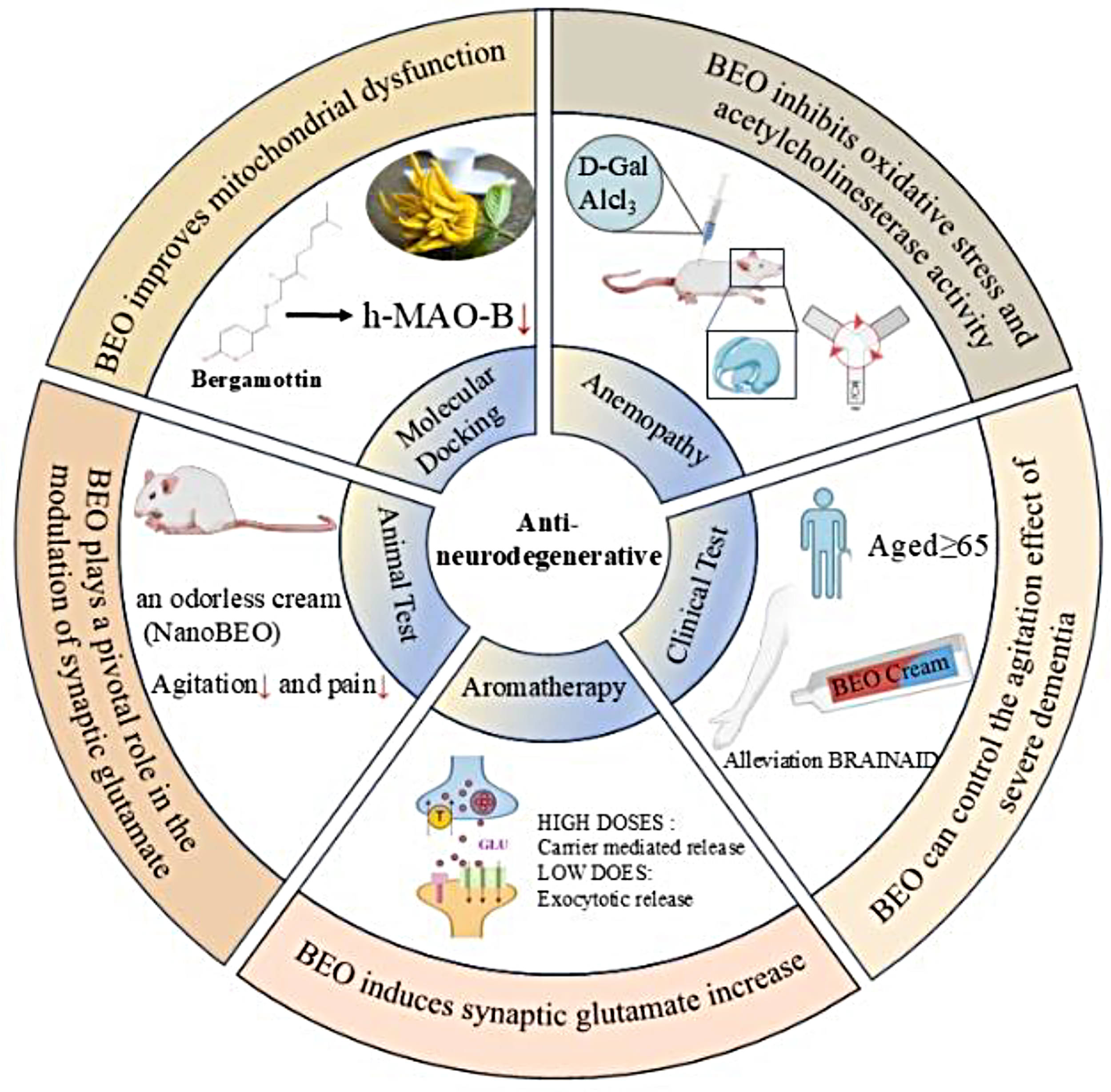
Pharmacological action diagram of BEO against neurodegenerative diseases.
Analgesic Effect
Opioid analgesics are a class of drugs that act on the central nervous system by stimulating or partially stimulating opioid receptors in the body, thereby alleviating or eliminating pain. Based on their mechanisms of action, they are categorized into full μ-opioid receptor agonists, partial agonists, mixed agonist–antagonists, and compound opioid analgesics. Opioid receptors belong to the G protein–coupled receptor (GPCR) family. When receptor activators bind to opioid receptors, they trigger the G protein-coupled receptor (GPCR) signaling pathway. This activation inhibits adenylate cyclase activity, leading to reduced intracellular cyclic adenosine monophosphate (cAMP) levels. Concurrently, inward rectifying potassium channels are opened, while voltage-dependent calcium channels are suppressed, resulting in cellular hyperpolarization. These changes decrease neuronal excitability and help maintain neurons in a resting state, thereby attenuating the generation and propagation of nerve impulses. As a consequence, the ascending transmission of pain signals within the central nervous system is suppressed, ultimately reducing the intensity of pain signals reaching the cerebral cortex or filtering them out entirely. This series of mechanisms underlies the reduction or elimination of pain perception, achieving an analgesic effect. Research has shown that linalool and linalool acetic acid are the main components of the volatile analgesic effect of BEO. For detailed information, please refer to Figure 5.

Pharmacological action diagram of BEO analgesic.
In a capsaicin-induced pain model where mice received plantar injections and exhibited transient licking and biting behaviors, locally administered BEO was found to inhibit these nociceptive responses in a dose-dependent manner. However, the analgesic effect of BEO was significantly reversed by both intraperitoneal and plantar injection of clonazepam, an opioid receptor antagonist. Similarly, methylmorphine methyl ester, a selective peripheral μ-opioid receptor antagonist, also markedly antagonized the analgesic effect. In contrast, BEO injection enhanced the analgesia induced by intraperitoneal morphine. Collectively, these results demonstrate that the analgesic mechanism of BEO is mediated through the opioid receptor pathway.36,117
In a mouse model of partial sciatic nerve ligation, a single local injection of BEO significantly alleviated neuropathic pain. The anti-hyperalgesia effect of BEO, assessed using the von Frey test, was significantly reversed by local administration of the peripheral μ-opioid receptor antagonist naloxone methyl iodide and the selective μ-opioid receptor antagonist β-funaltrexamine(β-FNA) hydrochloride, as well as by β-endorphin antiserum. In contrast, the non-selective opioid receptor antagonist naltrexone and the selective κ-opioid receptor antagonist nor-binaltorphimine did not produce such reversal. These results indicate that BEO-induced analgesia is mediated primarily through the peripheral μ-opioid receptor pathway. 118
Western blot analysis revealed that BEO injection significantly suppressed the spinal ERK activation induced by partial sciatic nerve ligation. This suggests that intramuscular administration of BEO alleviates mechanical hyperalgesia by attenuating spinal ERK phosphorylation. 119 Furthermore, in vitro studies using isolated rat intestine demonstrated that BEO inhibits contractions mediated by both cholinergic and non-cholinergic pathways. 120 BEO alleviates primary dysmenorrhea in rats through a dose-dependent modulation of oxidative stress markers. Specifically, it enhances uterine antioxidant capacity by elevating the activities of total antioxidant capacity, superoxide dismutase, catalase, and glutathione. Concurrently, BEO suppresses the increase in the PGF2α/PGE2 ratio, reduces malondialdehyde accumulation, and inhibits inducible nitric oxide synthase release. 121
Hypoglycemic and Hyperlipidemic Effects
In recent years, nutraceuticals and functional foods have gained recognition as effective adjuncts for lowering low-density lipoprotein cholesterol, particularly in patients with mild to moderate hyperlipidemia who do not require pharmacotherapy, as well as in those intolerant to statins or other lipid-lowering agents. Similar to acarbose, bergamot essential oil inhibits Saccharomyces cerevisiae α-glucosidase. Moreover, when used in combination, the two agents exhibit additive to synergistic inhibitory effects. 122 Furthermore, BEO administration reduced body weight in T2DM rats, while also enhancing insulin secretion and lowering blood glucose levels. 123 The oil's terpenoid components reduce postprandial hyperglycemia by delaying the absorption of glucose. 124
These findings highlight the potential of BEO as a hypoglycemic component in anti-diabetic formulations designed to modulate postprandial blood glucose. The lipid-lowering benefits of bergamot extract were further supported by a clinical trial 125 involving 1709 participants, in which daily oral doses ranging from 150 mg to 1000 mg were administered. As evidenced by the aforementioned research, BEO shows considerable promise for development into therapeutic agents targeting both hyperglycemia and hyperlipidemia. It may thus be incorporated into anti-diabetic and anti-hyperlipidemic formulations to help manage postprandial glucose and lipid levels.
Antitumor Effects
BEO targets the VEGF/VEGFR signaling system and has potent inhibitory effects on the growth of tumor cells U87, MCF-7, A549, and HepG2. For detailed information, please refer to Figure 6. Among the cell lines tested, human glioblastoma U87 cells exhibited the highest sensitivity. 126 It induces apoptosis in U87 cells by regulating Bcl-2/Bax protein expression. 127 The BEO leaves can induce apoptosis in HeLa cells, and high doses can even induce HeLa cell necrosis. 128 The BEO can also enhance the antioxidant capacity of the liver in female tumor bearing mice, and has a significant anti-tumor effect, with an inhibition rate of 47.2%. 129 Additionally, it prevents MDA-MB-435 human breast cancer cells from proliferating in vitro. 130 Low and medium concentrations of BEO induce apoptosis and cause cell cycle arrest at the S and G2/M phases, while high concentrations primarily lead to necrosis. Furthermore, BEO enhances chemosensitivity in the drug-resistant human breast cancer cell line MCF-7/ADR through inhibition of the PI3 K/AKT signaling pathway. 131

BEO inhibits tumor angiogenesis through the VEGF pathway and controls mitochondrial permeability through the Bcl-2/Bax pathway to regulate tumor cell apoptosis.
Other Roles
The essential oil also demonstrates anti-asthmatic, anti-acne, and vasoregulatory properties. Shi Changchun et al 132 demonstrated that the essential oil of Jinhua bergamot exhibits anti-asthmatic effects by significantly attenuating eosinophil (EOS) infiltration in lung tissues and reducing EOS counts in both peripheral blood and bronchoalveolar lavage fluid of asthmatic mice, thereby suppressing pulmonary inflammation. Feng 5 et al demonstrated through in vivo experiments that BEO effectively ameliorated ovalbumin-induced peribronchial inflammation in mice by reducing the expression levels of asthma-related cytokines IL-4, IL-5, and IL-13. Based on these findings, they postulated that BEO's anti-asthmatic effect might be mediated through the downregulation of the MAPK and JAK-STAT signaling pathways, as well as key genes such as PPARA and PTGS2. Additionally, in an oleic acid-induced rabbit ear acne model, BEO was found to enhance antioxidant content, decrease levels of inflammatory cytokines, triglycerides, and malondialdehyde, thereby significantly improving acne severity. 133 It also ameliorates acne vulgaris by suppressing sebaceous spot formation, inhibiting triglyceride (TG) accumulation, reducing the release of pro-inflammatory cytokines (especially IL-1α), promoting sebaceous gland cell death, and lowering the testosterone-to-estradiol (T/E2) ratio. 134 The essential oil mitigates endothelial dysfunction, a key factor in cardiovascular diseases, by inducing aortic vessel relaxation in mice. This vasorelaxant effect is mediated through the inhibition of Ca2⁺ influx into vascular endothelial cells and the activation of K⁺ channels, which collectively regulate calcium homeostasis in both vascular endothelial and smooth muscle cells.135,136 Moreover, it confers neuroprotection, effectively counteracting damage to the central nervous system resulting from exposure to titanium dioxide nanoparticles. 137
The EO also exhibits antioxidant activity 80 which can produce scavenging ability against DPPH free radicals in the range of 45–70 mg/ml, 138 nitrite ion removal capacity, 139 and anti-gallstone effects. Additionally, nanostructured liposomes derived from bergamot essential oil show potential for vitiligo photodynamic therapy. 140
Current status of Product Development
Development of TCM Health Products
With a tradition of being processed into various medicinal foods, teas, and drinks for healthcare, bergamot has been increasingly utilized in deep-processed products in recent years, owing to its advantage as a medicine-food homologous plant. Its documented auxiliary benefits in protecting the gastric mucosa and improving sleep are exemplified by products like bergamot porridge, preserves, compound capsules, and health drinks including honey bergamot tea, fermented wine, and compound oral liquids.
Aromatic Properties and Cosmetic Development
Bergamot, with its striking golden hues and lingering musky fragrance, holds a unique place among ornamental potted plants. As the predominant component in the extract, BEO-rich in sesquiterpenes and aromatic hydrocarbons, is extensively utilized in cosmetics, perfumes, and daily care products. BEO occupies a growing niche in the domestic market, particularly in skincare cosmetics designed for cleansing, moisturizing, acne treatment, and sun protection. Recognized as a “plant hormone,” its aromatherapeutic properties are widely utilized to alleviate mood disorders, reduce mild stress-induced anxiety, and improve sleep quality. The oil's distinctive fruity-floral aroma further establishes it as a premium natural ingredient in perfumery. Moreover, its demonstrated antioxidant, anti-inflammatory, and antibacterial activities have spurred preliminary applications in cosmetic and cosmeceutical products. It should be noted, however, that certain formulations require additional processing to remove photosensitive components prior to safe use. However, it is important to note that BEO exhibits phototoxicity. Direct application of this photosensitive oil to sensitive skin, followed by exposure to ultraviolet radiation or sunlight, can induce phototoxic contact dermatitis, hyperpigmentation, and in severe cases, may increase the risk of skin cancer. 141
Development of Complementary Medicine
BEO demonstrates therapeutic effects on chronic nociceptive pain and neuropathic pain by modulating pain sensitivity perception.117,142,143 Through inhibition of extracellular signal-regulated kinase (ERK) phosphorylation in the spinal cord, it induces anti-allodynic effects in murine models.142,144,145 Experimental evidence further indicates BEO's wound healing enhancement properties. 145 Evaluated via beta-carotene bleaching assay, the essential oil exhibits potent free radical scavenging activity, 144 suggesting its critical role in maintaining physiological homeostasis and protecting cellular systems from oxidative damage.
Discussion
Although studies on BEO have primarily concentrated on elucidating its chemical composition and pharmacological activities, the translation of these insights into practical medicinal applications is still in its nascent stages. Discrepancies in compositional data across studies can be attributed to a range of variables, such as extraction techniques, genetic differences, geographical growing conditions, and harvesting periods. The ongoing progress in extraction and analytical detection techniques is steadily enhancing extraction efficiency and oil quality, leading to the discovery of more components and offering promising avenues for future research and development.
The accelerating pace of modern life has led to increased stress levels, resulting in widespread psychological issues such as emotional anxiety and depression, with a noticeable rise in prevalence among younger populations. This has highlighted the value of BEO, which a growing body of research indicates possesses positive effects in alleviating depression and regulating anxiety. Preclinical studies, utilizing both injection and aromatherapy, have established the efficacy of BEO in managing depression, anxiety, and neurodegenerative disorders. These findings are further supported by clinical evidence, which points to its promising potential in alleviating postpartum depression, modulating anxiety, and improving manic symptoms in patients with Alzheimer's disease. The reliability of BEO in treating nervous system disorders has been substantiated through molecular docking and molecular dynamics simulations. These advances position BEO as a promising candidate for mood regulation, particularly when developed into accessible formats such as aromatherapy products or dietary supplements, thereby enhancing its potential for innovative application and commercial development.
It is crucial to objectively recognize the current limitations in research, especially regarding aromatherapy applications. Safety concerns cannot be overlooked, as the phototoxicity of furanocoumarins in BEO significantly restricts its use in skincare and topical formulations; moreover, removing these components may alter its overall bioactivity profile. Furthermore, a clear dose-response relationship has not been established, and aromatherapy practices remain largely experience-based, lacking a pharmacokinetically supported dosing system, which challenges the consistent reproduction of therapeutic effects. Finally, much of the clinical evidence supporting its psychomodulatory effects originates from small-sample or open-label trials, underscoring the need for large-scale, randomized, double-blind, placebo-controlled studies to elevate the evidence quality. Therefore, future efforts must focus on systematic work encompassing rigorous safety assessment, dose standardization, and methodological strengthening in clinical research.
In China, research on BEO has primarily centered on its antitumor potential, though such studies remain relatively limited. A deeper exploration of its antitumor mechanisms could support the development of novel therapeutic strategies for cancer. Internationally, studies in the context of hypoglycemic effects have shown that BEO significantly inhibits α-glucosidase activity and exhibits a synergistic effect with acarbose—a commonly used postprandial glucose regulator—suggesting its potential for managing postprandial hyperglycemia. Nevertheless, research on its modulatory effects on signaling pathways associated with glucose and lipid metabolic disorders is still scarce. Overall, developing BEO into natural hypoglycemic agents or adjunctive health products represents a promising direction, warranting further in-depth investigation and innovation.
BEO is already widely used in cosmetics and fruit preservation, with its anti-inflammatory, antioxidant, and antibacterial properties demonstrating significant potential. This includes applications in managing skin conditions such as acne, serving as a photodynamic adjuvant in dermatological therapies, and functioning as an antibacterial coating for food preservation. However, the photosensitivity toxicity caused by its furanocoumarin components must be addressed during product development. How to fully leverage its functional characteristics while overcoming this challenge remains a critical issue worthy of attention in the innovative development of the cosmetics, pharmaceutical, and food industries.
Conclusions
To summarize, with the growing recognition of the concepts that “medicine and food share common origins” and “natural and green products,” bergamot, as a natural medicinal herb with dual applications in both medicine and food, demonstrates considerable potential for development in pharmaceuticals, health products, and cosmetics. The market prospects for health products derived from bergamot essential oil are highly promising. We anticipate further research to elucidate the phytochemical mechanisms and therapeutic potential of BEO, which will facilitate its broader application.
Footnotes
Abbreviations
Ethical Approval
Ethical Approval is not applicable for this article.
Statement of Informed Consent
There are no human subjects in this article and informed consent is not applicable.
Author Contributions
All authors contributed to the study's conception and design. Material preparation, data collection, and analysis were performed by Lu Li. The first draft of the manuscript was written by Haoru Guan, and all authors commented on previous versions of the manuscript. All authors read and approved the final manuscript. Lu Li and Haoru Guan contributed equally to this work and should be considered co-first authors.
Funding
The authors disclosed receipt of the following financial support for the research, authorship, and/or publication of this article: This work was supported by the Science and Technology Program Project of Zhejiang Province in China, The Key Technologies Research and Development Program, National Natural Science Foundation of China, The Key Laboratory Project of Zhejiang Province, (grant number 2025C02183, No.2017YFC1702200, 82274134, 2012E1002).
Declaration of Conflicting Interests
The authors declared no potential conflicts of interest with respect to the research, authorship, and/or publication of this article.
Declaration of Originality
The authors confirm that all figures and tables in this manuscript are original creations by the authors, and the underlying data are authentic and reliable.
Statement of Human and Animal Rights
This article does not contain any studies with human or animal subjects.
