



Abstract
Background
Antidesma is a large genus consisting of around 100 species, which are widely distributed in the tropics and subtropics of Asia, some species can be found in Africa, the Pacific islands, and Australia. The uses of Antidesma plants range from food (for juice, jam, and red wine production) to medicinal purposes (for treatment of indigestion, pneumonia, menstrual regulation, and osteoarthritis).
Methods
The review was conducted by gathering relevant literature from secondary databases, including Web of Science, Google Scholar, and PubMed, as well as specialized books and websites.
Results
There have been more than 140 compounds reported as chemical constituents of the genus Antidesma, which mainly belonged to alkaloid, phenolic, flavonoid, lignan, and terpenoid classes. The high content of phenolic compounds was found in A. bunius and A. thwaitesianum fruits, which also correlates with the potential anti-oxidant activities of respective plants. Besides that, the antibiotic, antifungal, and anti-inflammatory activities, as well as effects on metabolism were also investigated and reported.
Conclusion
The plants of the Antidesma genus have a wide range of applications in food and medicine. The published results have shown that the genus is a precious source of bioactive natural compounds, which was shown beneficial for preventive medicine. Further research is required to promote the application in the healthcare system.
Introduction
The genus Antidesma consists of about 100 species that are mainly found in the tropical and subtropical areas of Asia. Some species can be found in Africa (8 species), the Pacific islands (5-8 species), and Australia (5-7 species).1–3 Plant parts of the Antidesma genus have been used for both food and medicinal purposes. In Thailand, different cultivars of Mao-Luang (A. bunius and A. thwaitesianum) have been widely cultivated in the Phu Phan mountains for red wine production. 4 Meanwhile, Vietnamese people have long used many species from Antidesma genus for treating a wide range of diseases and medical conditions, such as rheumatism, pneumonia, indigestion, and menstrual regulation. 5 Other ethnic communities in Bangladesh, Mauritius, and China also have their own ways to use these plants as traditional medicine. 6
From 1980 to 2021, there have been a large number of phytochemical investigations on different species from the Antidesma genus, which resulted in the purification and structural elucidation of a total of 141 compounds with a high diversity of structures. The structures can be classified into nitrogen-containing compounds, phenolics, and terpenoids. Besides common backbones for natural products, such as simple phenolic, flavonoid, coumarin, lignan, and tannin, phytochemists have also identified the presence of aristolochic acids, cyclopeptides, coumarinolignans, and unusual triterpenoid backbones like tirucallane and friedelane. Noticeably, a structurally unique quinoline-type alkaloid with 2 α, β-unsaturated carbonyl groups, and an alkyl side chain was isolated and trivially named antidesmone. Preliminary pharmacological studies revealed that the alkaloid exhibited potential anti-trypanosomal, 7 anti-fungal,8,9 and anti-inflammatory activities. 10 Crude extracts of A. bunius and A. thwaitesianum fruits were also extensively studied for their anti-oxidant,11,12 anti-microbial,13,14 anti-cancer, and effects on metabolic processes.15–17
In this paper, a comprehensive review on traditional usage, chemical composition, and pharmacological activities of Antidesma plants was described. The review is expected to provide an overview of current Antidesma research and encourage researchers in the field to explore further the medicinal values of plants from the genus.
Data Sources and Search Strategy
The literature search was conducted using reliable databases, including Web of Science (Clarivate Analytics), PubMed (United States National Library of Medicine), Google Scholar, and reference books with relevant topics. The results were obtained by using specific keywords, such as “Antidesma genus,”, “Antidesma and phytochemistry,” and “Antidesma and pharmacology.” The article titles and abstracts were scrutinized to select relevant publications of chemical analysis, phytochemistry, and pharmacology of the species from the Antidesma genus. After that, the shortlisted publications and books were categorized and arranged in order.
Ethnopharmacology
Antidesma species can be found in many places in the world and they have been long used for a variety of diseases and medical conditions (Table 1). In Vietnam, plants from the Antidesma genus share the same name “Chòi mòi” and their plant parts have been used to treat bone-and-joint-related diseases, such as rheumatism and osteoarthritis (ie, A. bunius, A. fordii, A. ghaesembilla, and A. japonicum), menstrual regulation for women (ie, A. bunius and A. ghaesembilla), for alleviating pneumonia or coughing (ie, A. ghaesembilla and A. japonicum), and other medical conditions. 5 In Northeast Thailand, A. bunius and A. thwaitesianum fruits (Maoberry or Mao Luang fruits) are ingredients for red wine and juice production. In Thai traditional medicine, ripe fruits are also used for alleviating digestive and metabolic problems. 12 Bangladeshis have utilized A. bunius plant parts for different purposes, specifically for the treatment of indigestion, cough, and stomachache (roots and leaves) and for the elimination of roundworms and threadworms (seeds). 18 The main method of extraction is decoction, which is performed by boiling plant materials in water to dissolve chemical constituents into solvent.
Plants From the Antidesma Genus With Local Names and Their Traditional Uses.

It can be observed that Antidesma plants have been widely used in traditional medicine from many countries in Asia, Europe, and Africa for a wide range of indications. A firm scientific foundation should be laid out in order to explain the traditional uses by modern pharmacological testing, as well as identify the responsible active chemical constituents for quality control.
Phytochemistry
Nitrogen-Containing Compounds
There have been a number of publications reporting the natural occurrence of nitrogen-containing compounds from Antidesma species. They can be mainly categorized into antidesmone derivatives (
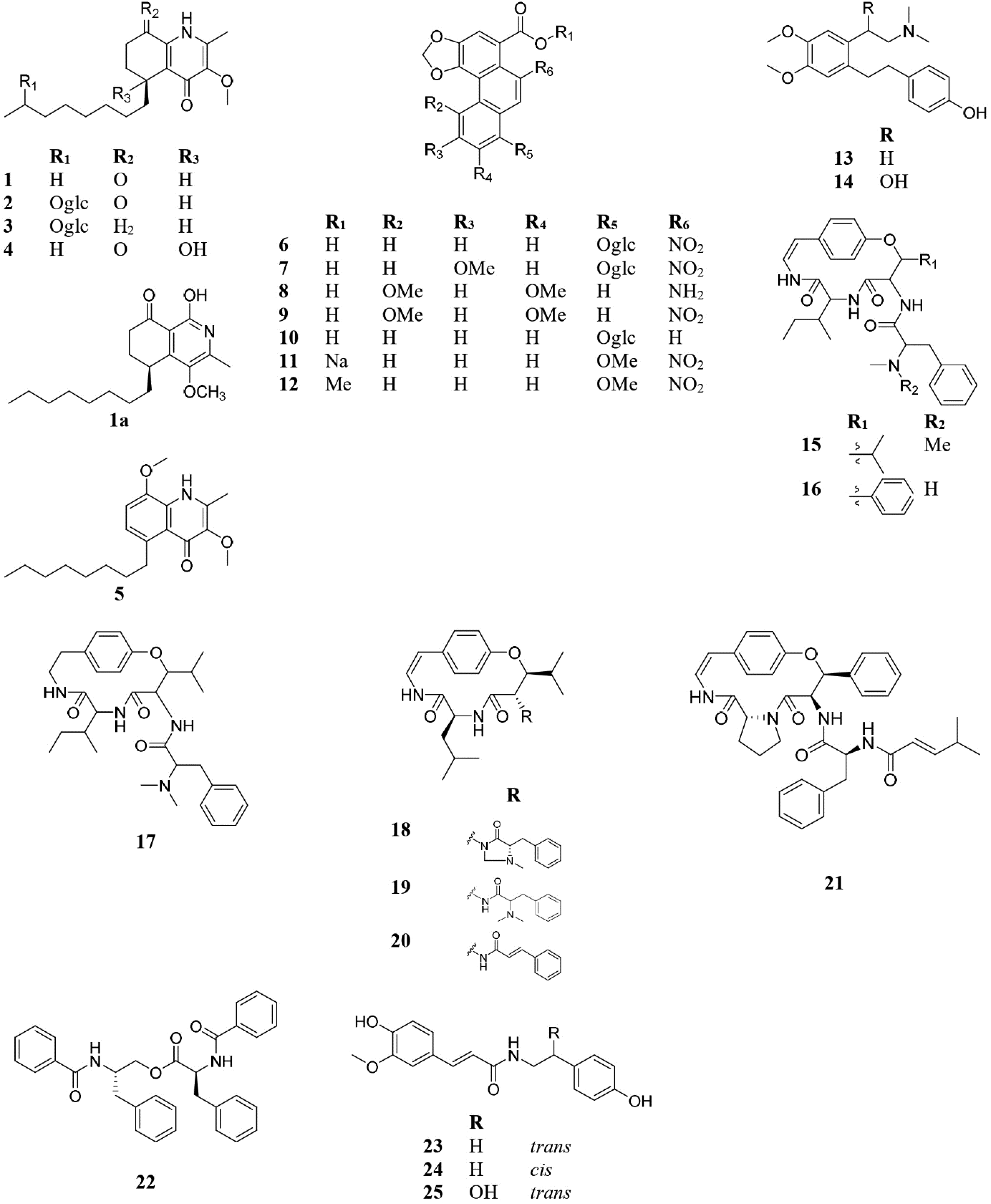
Structures of nitrogen-containing compounds from Antidesma species.
Antidesmone (
Notably, aristolochic acids can also be found in Antidesma species with 1 or 2 methoxy substitutions, and some compounds contain a glucosidic moiety at C-8 (
Simple Phenolics
Simple phenolics from Antidesma plants (

Structures of simple phenolics from Antidesma species.
Flavonoids
Ubiquitous flavonoids, such as taxifolin (

Structures of flavonoids from Antidesma species.
Lignans
Lignans are natural products that consist of 2 phenylpropanoid units in their structure. The class of compounds is biosynthesized from cinnamic acid derivatives, for example, coniferyl alcohol, 4-hydroxycinnamyl alcohol, and sinapyl alcohol. Different oxidation degrees, radical pairing, and cyclization generate the high diversity of lignan in nature. The lignans from Antidesma genus mainly possess an aryltetralin scaffold (

Structures of lignans from Antidesma species.
Coumarins
The term “coumarin” originates from “coumarou” tree in Guyana (Latin name: Dipteryx odorata; a.k.a tonka bean). The class of compounds has a benzo α-pyrone core, which is biosynthesized via trans-cis isomerization and lactone formation process of 2-coumaric acid. The characteristic feature of Antidesma coumarins is the 1,1-dimethylallyl substitution at C-3 position (

Structures of coumarins from Antidesma species.
Tannins
Tannins are natural polyphenols that can be found in different parts of plant species. Tannins have been long used for tanning animal hides (converting animal skin into leather). Tannins can be categorized into condensed tannin and hydrolyzable tannin. Tannins from Antidesma plants are of hydrolyzable type with 1 or 2 glucopyranose molecules linking with galloyl, valoneoyl (hexahydroxydiphenoyl), and dehydrohexahydroxydiphenoyl moieties (
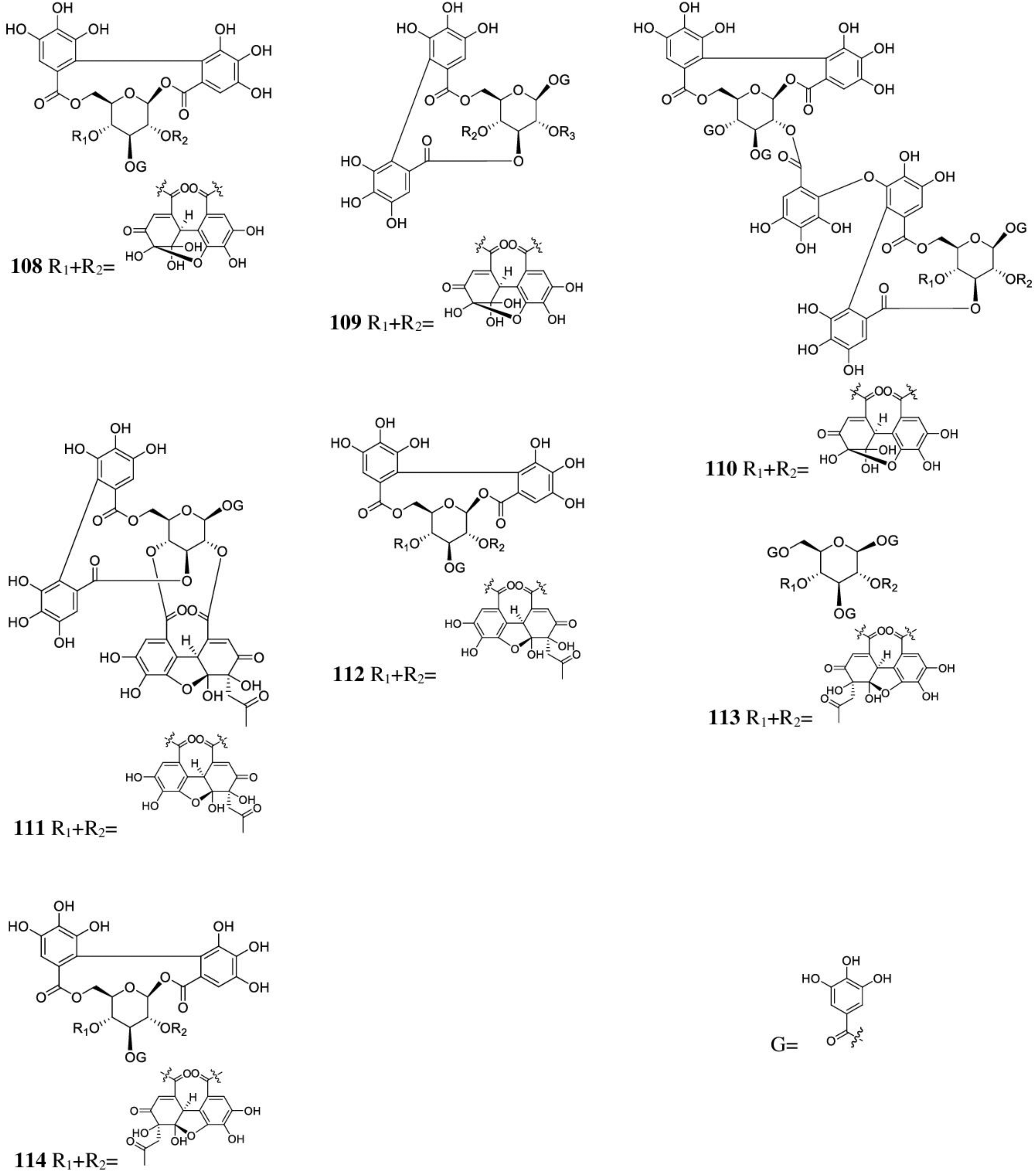
Structures of tannins from Antidesma species.
Other Phenolics
In addition to common phenolic classes, other phenolic types were identified, including benzopyranones (

Structures of other phenolic compounds from Antidesma species.
Terpenoids
A number of terpenoids have been isolated and identified from plants of Antidesma genus. They can be mainly classified into megastimane and triterpenoid types.
Megastigmane Scaffold
Megastigmane is a common sesquiterpenoid scaffold that can be widely found in plant kingdom. Megastigmane compound bear a 13-carbon backbone, which is believed to originate from abscisic acid, a norsesquiterpenoid. Phytochemical investigation on different Antidesma species has led to the isolation of 15 megastigmane derivatives (

Structures of megastigmane-type terpenoids from Antidesma species.
Triterpenoid Scaffold
Isolated triterpenoids from Antidesma plants can be classified into common sub-classes, including ursane (
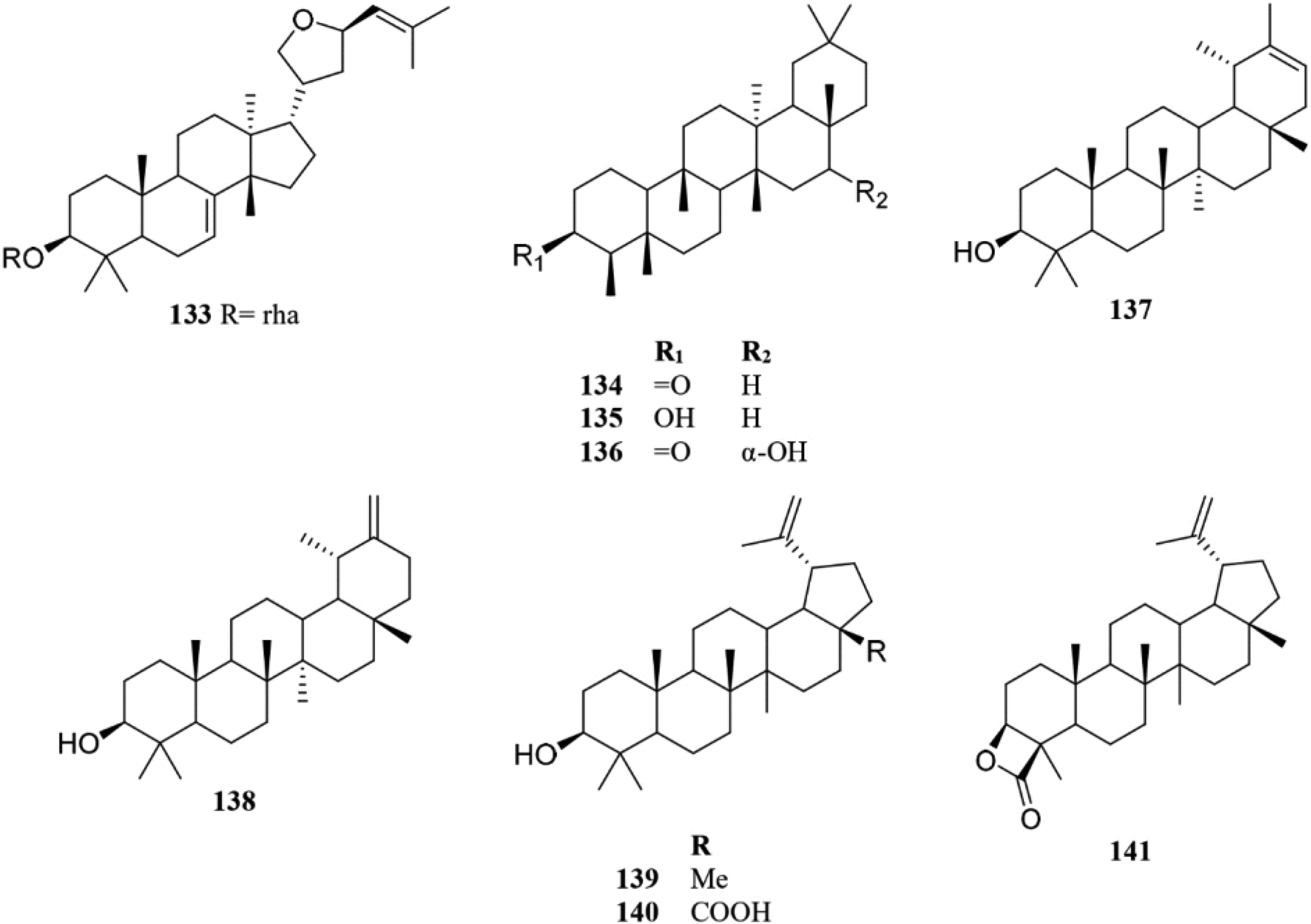
Structures of triterpenoids from Antidesma species.
List of compound name, plant of origin, and reference is described in Table 2.
List of Isolated Compounds From Different Species From Antidesma Genus.

Phytochemical Analysis
Natural Occurrence of Antidesmone From Different Antidesma Species
Buske's group (2002) reported the identification of antidesmone (
Studies on Quantification of Phenolic Compounds From Antidesma Plant
A. bunius fruit (or Mao Luang in the Thai language), when riped, has a deep purple color, indicating that the fruit contains a large amount of natural colorants, such as anthocyanin. Krongyut's group reported the main phytochemical contents of the fruit by HPLC analysis, specifically gallic acid (0.26 ± 0.01 mg/g extract), catechin (2.26 ± 0.61 mg/g extract), cyanidin-3-glucoside (13.38 ± 0.72 mg/g extract), and protocatechuic acid (0.24 ± 0.01 mg/g extract) while the contents of total phenolics, total flavonoids, and total anthocyanins were determined as 11.57 ± 1.13 mg GAE/g extract, 0.30 ± 0.00 mg QE/g extract, and 3.76 ± 0.19 mg CGE/g extract, respectively. 12 In an analytical study conducted by Jorjong's group, different cultivars of A. bunius ripe fruits were investigated concerning total phenolic, total flavonoid, and major compound content. The average total phenolic and total flavonoid contents were determined to be 310.91 mg GAE/100 g DW and 201.69 mg CE/100 g DW, respectively. Of which, flavan-3-ol derivatives were the most abundant (686.8 mg/100 g DW) while hydroxybenzoic acids were the major phenolic acids (339.22 mg/100 g DW) in fruit extract according to HPLC analytical results. 4 Fruit ripeness is also an indicator of phenolic content. Pongnaratorn's study indicated that green fruit had the most phenolic content (32.3 ± 0.59 mg GAE/g), followed by red (25.70 ± 0.51 mg GAE/g) and black fruits (24.20 ± 0.33 mg GAE/g). 13 The same conclusion was also drawn from the studies conducted on A. bunius varieties (common and Kalabaw), which showed the significant differences in total phenolic, flavonoid, and anthocyanin contents between unripe, half-ripe, and fully ripe states, as well as in the antioxidant capacities.51,52 Phenolic profiles of A. bunius fruits were also dependent on ripeness. The content of anthocyanins, catechins, rutin, and trans-resveratrol was found to increase along with fruit ripening while other phenolic acids like gallic acids, caffeic acids, and ellagic acids were on a decrease. 53
For A. bunius leaves, the quantitative determination of total phenolic, total flavonoid, tannin, and steroid by colorimetric analysis was conducted on the methanolic extract, which showed that the methanolic extract contained phenolics (102.0 mg GAE/100 g), tannins (33.5 mg TAE/100 g), flavonoids (66.0 mg QE/100 g), and steroids (24.0 mg CLE/100 g). 54 As for volatile components, GC-MS analysis also revealed that 5-hydroxymethylfurfural (5-HMF) was found to be dominant, occupying 47.07% of total volatile content. 5-HMF can be naturally found in fruit juice, milk, and honey and the compound has a wide range of applications in the food, polymer, and pharmaceutical industry. 55
For A. thwaitesianum, different fruit cultivars were also investigated for their phenolic profiles. The results showed that gallic acid, cinnamic acid, quercetin were compounds that can be found in almost all cultivars while some compounds, for example vanillic acid, chlorogenic acid, and sinapinic acid, were only detected in some varieties. The average total phenolic, total flavonoid contents of 15 cultivars were determined 183.1 mg GAE/100 g DW and 272.5 mg CE/100 g DW, respectively. 56 The leaf part was found to contain much higher amount of phenolics (274.4 mg GAE/g), and flavonoid content (22.2 mg QE/g) than those of fruits. 11 Waste products, including seed and marc, from mao wine industry were also shown to contain significant amount of polyphenolic compounds (130.2 and 128.5 mg GAE/g, respectively. 24
Extraction and Storage Studies of Antidesma Fruits
A. bunius and A. thwaitesianum fruits have been used in food industry, such as juice, red wine, and fruit powder. Hence, there have been a number of studies in extraction, storage, and preparation with the purpose of maintaining the highest anthocyanin and phenolic content. In terms of extraction, total phenolic content can be enhanced by employing ultrasound-assisted extraction, which proved to be a more effective way to prepare polyphenol-rich extracts than conventional ways.57,58 Green-chemistry approach was also investigated to produce safer and environmental-friendlier A. thwaitesianum fruit extracts. A study conducted by Poontawee and colleagues describes the utilization of supercritical carbon dioxide (SC-CO2) extraction and its advantages against conventional methods using organic solvents. The results were shown that the total phenolic, total flavonoid, and total proanthocyanidin contents produced by SC-CO2 method were 1.5 to 3.0 times higher than those of ethanol and water extraction. 59 The reasons are due to unique characteristics of supercritical fluid, such as high diffusivity, low density, and low viscosity, combined with customized ratio with small amount of organic solvents like ethanol. Chaikham's study in 2015 focused on processing techniques for preparing berry juice from A. thwaitesianum fruits. High pressure (400-600 MPa/25 °C/10 min) and thermal processing (90 °C/min) were shown to eliminate general microbes, inhibit polyphenol oxidase activity from the juices. The polyphenolic content was also preserved when compared to fresh juice, which was evaluated by color parameters and common anti-oxidant bioassays. 60
As for stability of fruit products, the storage condition of A. bunius fruit extract was also investigated, indicating that pH and temperature are the most important factors to total antioxidant compound content. The best conditions to produce the highest content were pH 9 for phenolics and pH 3 to 5 for anthocyanins.61,62 As for preparation, freeze drying is the most widely used method to produce fruit powder for industry while maintaining flavonoid content. Suravanichnirachorn et al (2018) reported that addition of maltodextrin at 35% as drying agent can improve the physical quality of fruit powder while the anthocyanin content was still kept at high concentration. 63
Pharmacological Studies
Anti-Oxidant Activity
Phytochemical screening revealed that the main chemical composition of Antidesma plants is of phenolic types, especially tannins and anthocyanins. A number of studies were conducted to evaluate potential anti-oxidant of different plant parts from Antidesma species. Typical bioassays for anti-oxidant evaluation were used, including DPPH radical scavenging, ABTS scavenging, and FRAP bioassays. The extracts prepared from A. bunius and A. thwaitesianum showed potent anti-oxidant effects, which were comparable to those of positive controls (Table 3).11,12,24,56,64 A. bunius fruits showed potential anti-oxidative capacity in various bioassays. The anti-oxidant activity was also found to be dependent on cultivars, specifically IC50 values of 28.80 to 103.04 mmol VCEAC/g in DPPH assay, 20.68 to 46.37 mmol TEAC/g in ABTS assay, and 14.93 to 35.35 mmol Fe2+/g in FRAP assay, which indicated the utmost importance of choosing the right cultivar and optimizing cultivation conditions. 4 Marcs and seeds are byproducts of juice and wine industry, but the high content of polyphenols and strong antioxidant capacity indicated the high value of the waste products, which deserves more attention for future application, such as functional food or dietary supplement. 24 Besides fruits, leaves from A. thwaitesianum also contains large amount of phenolic compounds, typically caffeic derivatives and flavonoids, which were then shown to possess cellular anti-oxidant activities.11,56 A. thwaitesianum juice had radical scavenging activity against both DPPH radicals with EC50 value of 72.18 μg/ml and ABTS + radicals with EC50 value of 76.95 μg/ml. The FRAP value was 184.59 mg Fe2+/g. 65
Anti-Oxidant Capacity of Different Plant Parts From Antidesma Species.

Abbreviations: LE.W, leaf water extract; LE.M, leaf methanol extract; SME, proanthocyanidin-enriched fractions from seed and marc; FE.E, fruit ethanol extract; FE.M, fruit methanol extract; VCEAC, vitamin C equivalent antioxidant capacity; TEAC, Trolox equivalent antioxidative capacity; N/A, not applicable.
The anti-oxidant activities are usually believed to correlate with total phenolic or flavonoid compounds. However, the study by Jorjong's group indicated that there was no correlation between anti-oxidant capacity and total flavonoid, implying that flavonoids might not be mainly responsible compound class for anti-oxidant effects. Jorjong also suggested the correlation between other phenolic compounds gallic acid, ferulic acid, and cyanidin-3-O-glucoside and anti-oxidant capacity. 4
There have been a number of studies conducted on anti-oxidant activities of Antidesma plants using typical bioassays, such as DPPH, ABTS, and FRAP. It is noted that FRAP and ABTS methods should be used in evaluation of hydrophilic compounds (aqueous or low alcohol extract) while DPPH is more suitable for extracts that contain both hydrophilic and hydrophobic compounds. 66 Anti-oxidants are of important part in modern preventive medicine. They can protect the cells against oxidative cell damage from free radicals that can lead to a wide range of diseases or conditions, such as cancer, cardiovascular diseases, chronic inflammation, and neurodegenerative diseases. The potential anti-oxidant effects and high content of phenolics in Antidesma fruits strongly support the uses of Antidesma wine and juice products for tonifying body functions in South East Asian countries. Further pharmacological investigations should be performed to exploit the capacities of Antidesma plants in prevention of non-communicable chronic diseases.
Anti-Cancer Activities
Kaennakam and colleagues published a study on chemical constituents of A. acidum roots and their cytotoxicity against HeLa and KB cancer cell lines. Of which, compounds
To date, the number of publications on anti-cancer activities of Antidesma extracts is very limited. Hence, it is too soon to jump to any conclusions related to anti-cancer activities of crude extracts or isolated compounds from Antidesma species. However, the preliminary data showed promising results on cytotoxicity and interesting molecular mechanism of natural products from the genus.
Effects on Metabolism
There have been a number of publications on effects of A. bunius on glucose and fat metabolism. In db/db diabetic male mice model, A. bunius fruit's fresh and alcoholic extracts were shown to lower blood glucose level by 79.0 and 66.5% in 29 days of experiment, respectively. 68 The A. bunius anthocyanin-enriched fraction of fruit extract also inhibited carbohydrate digestive enzymatic activities, including intestinal maltase and sucrase with IC50 values of 0.76 ± 0.02 and 1.33 ± 0.03 mg/mL, respectively. 69 The fruit extract was also capable of lowering blood triglyceride levels in high-fat diet rats at different concentrations (0.38, 0.76, 1.52 g/kg/day; 15-17% reduction), which was comparable to that of simvastatin (10 mg/kg/day) in 12 weeks. In addition, the biochemical analysis revealed that the extracts also increased the ratio of HDL- and LDL-cholesterol at high concentration (from 2.88 to 3.63). 17 In another study, the anti-adipogenic activity of the fruit extract was also investigated. Specifically, at concentrations of 500 and 1000 μg/mL, the extracts were found to inhibit the differentiation of adipocytes and lipid accumulation. 12 As for non-alcoholic fatty liver disease, the fruit extracts were shown to reduce levels of liver triglyceride and liver enzyme (AST, ALT) levels, as well as fat droplets accumulation in 12 weeks on Sprague-Dawley rat model. 16
The oral administration of A. bunius leaves also showed anti-diabetic effects in alloxan-induced diabetic rat model. The extract was found to recover body weight of diabetic rats, compared to normal ones after the treatment course of 28 days. The serum glucose, insulin, liver glycogen, carbohydrate metabolism enzyme, and liver enzyme levels were improved significantly, which was comparable to those of insulin treatment. Furthermore, histopathological examination showed recovered physiological features of pancreatic islets in extract-treatment group, while the atrophy of pancreatic islets and fatty acini cells were observed in untreated group. 54
Besides fruits and leaf extracts, the A. bunius seed extract also reduced blood glucose and lipid levels in rats. Specifically, in a pharmacological experiment on streptozotocin-induced diabetic rats for 6 weeks, the oral administration (250 mg/kg) of A. bunius seed extracts was shown to lower the fasting blood glucose (FBG) level by nearly 40%, compared to diabetic control group. The seed extract-treated rat group also had lower cholesterol, triglyceride, and LDL levels (43.2, 30.3, and 27.7% reduction, respectively), compared to diabetic control group. In terms of HDL level, normal rats fed with seed extract were observed to have significantly higher HDL level while a downward trend was witnessed in extract-treated diabetic group, compared to diabetic control group. 68
Pomace (solid remains of fruits) of A. thwaitesianum exhibited hypoglycemic activities with respect to FBG and oral glucose tolerance. Oral treatment of A. thwaitesianum pomace extract (250, 500, and 1000 mg/kg) was shown to remarkably decrease FBG by 24.8, 30.2, and 54.2%, respectively in streptozotocin-induced diabetic rats. In addition, the basal insulin level was significantly lowered and the insulin resistance was also improved. The underlying mechanism was determined via upregulation of PPAR-γ gene and stimulation of adiponectin secretion. 15
Aqueous extract of A. madagascariense leaves was evaluated for its effects on the uptake, tissue accumulation, and transportation of ᴅ-glucose, fluid, and electrolytes in rat everted intestinal sacs model. As a result, the indices of mucosal disappearance, gut wall content, and serosal appearance for ᴅ-glucose and fluid transport were significantly enhanced when A. madagascariense extracts were added to the medium and noticeably, the magnitude of activity was comparable to that of insulin, implying its potential role in diabetes type-2 treatment. 70
Ethanolic extract of A. celebicum leaves has been proven to have effects on hyperglycemia and hyperlipidemia in rats. Oral administration of leaves extract (200 and 400 mg/kg) for 28 days drastically reduced blood glucose level compared to the diabetic control group, and this reduction in FBG level was similar to the acarbose-treated group. In addition, A. celebicum could normalize cholesterol, LDL, and triglyceride levels similar to acarbose treatment. 71
Previous studies indicated the effects of different Antidesma species on carbohydrate and lipid metabolism with respect to inhibition of digestive enzymes, lowering FBG and cholesterol/triglyceride levels, as well as modulating HDL/LDL-cholesterol ratio in enzymatic and animal models. The pharmacological evidences partly explained the uses of Antidesma plants in herbal practices of treating indigestion, lack of appetite, and other metabolic problems. However, those studies were only conducted on crude extracts and bioactivity-responsible compounds have not been identified yet. Moreover, studies of molecular mechanism are still needed to clarify the modes of action of both extracts and isolated compounds.
Antibiotic Effects
The antibacterial activities of A. bunius fruit extract were evaluated by disc diffusion method using tetracycline as positive control. Only green and red fruits showed measurable inhibition zones against dental caries bacteria, including Streptococcus mutans, Staphylococcus aureus, and Streptococcus pyogenes. The minimum inhibitory concentration (MIC) and minimum bactericidal concentration of fruit extracts were in the range of 0.0125 to 0.05 mg/mL with the most sensitive strain being S. pyogenes. 13
Acetone and aqueous extracts of A. madagascariense leaves were tested against several Gram-positive and Gram-negative bacteria. The MIC range was determined 0.25 to 4.00 mg/mL, specifically, the acetone extract was capable of inhibiting the growth of S. aureus and Enterococcus faecalis at 0.25 mg/mL. At the same concentration, decoction extract exhibited inhibitory effects against Acinetobacter spp. The crude acetone extract was then fractionated by flash chromatography with different solvents (F1: n-hexane, F2: DCM, F3: DCM/MeOH = 95:5, F4: DCM/MeOH = 90:10, F5: DCM/MeOH = 85:15, F6: DCM/MeOH = 80:20). Each fraction showed different activities against bacterial strains. Fractions F3-6 were shown to inhibit S. aureus, Pseudomonas aeruginosa, Klesiella spp. with MIC values of 0.03, 1.00, and 0.50 mg/mL, respectively. As for methicillin-resistant S. aureus, fractions F4 and F6 were the most active with MIC value of 0.50 mg/mL. The research group also tested the synergism of acetone crude extract and other well-known antibiotics. For P. aeruginosa strain, all examined combination ratio between the extract and antibiotics had FICI (fractional inhibitory concentration index) < 0.2, which indicated the synergistic interaction against the bacterial strain. The opposite phenomenon was observed in S. aureus tests since the values of FICI were in the range of 0.65 to 2.50, in which only chloramphenicol combination showed additive interaction (FICI 0.65-0.85) while 2 other antibiotics (ciprofloxacin and streptomycin) displayed subtractive interaction with the crude extract (FICI 1.55-2.50). For Escherichia coli, the synergistic effects can be observed, except for the combination of acetone extract/ciprofloxacin (50:50) and acetone extract/chloramphenicol (50:50). 14
The antimicrobial activities of A. thwaitesianum juice were tested against different food spoilage organisms and foodborne pathogens by method using the agar well diffusion. A. thwaitesianum had antibacterial activity against all bacterial strains, namely, 3 strains of Gram-positive (B. cereus, S. aureus, and L. monocytogenes) and 3 strains of Gram-negative (S. Typhimurium, P. aeruginosa, and E. coli). L. monocytogenes was the most sensitive to the A. thwaitesianum juice with an inhibition zone of 26.97 mm. The MIC for L. monocytogenes was 25 mg/mL with a higher MIC of 50 mg/mL for B. cereus, S. aureus, S. typhimurium, and E. coli. 65
Although there have been a limited number of studies conducted on anti-microbial activities of Antidesma plants, the potent activity and antibiotics-potentiation should be paid more attention. Further phytochemical studies should be performed to identify the responsible compounds for these anti-microbial activities, and their contents in plant materials.
Other Bioactivities
Antidesmone (
A. thwaitesianum pomace extract exerted anti-hypertensive effects in ʟ–NAME-induced hypertensive rat model. Three-week oral administration of the extract (100 and 300 mg/kg) significantly improved blood pressure indices of hypertensive rats without changing their hemodynamic parameters. The mechanism of action can be explained via the suppression of superoxide formation in rat carotid arteries, prevention of lipid peroxidation and protein oxidation, and restoration of eNOS protein expression. 73 In terms of cellular protection, pre-treatment of A. thwaitesianum seed and marc extracts was shown to display cellular protective activities against H2O2-induced apoptosis and TPA-induced inflammation in MCF10A cells. Molecular mechanistic study indicated that the extracts inhibited the cleavage of PARP/caspase-3 and upregulated the ratio of Bcl-2 and Bax apoptosis-related proteins, leading to the apoptotic repression. Moreover, the extracts also displayed the anti-inflammatory effects by inhibiting COX-2 and NF-κB via the activation of ERK, 74 and its leaves extract was also effective in reducing carrageenan-stimulated rat paw edema at the dose of 200 mg/kg. 75 A. bunius extracts also possess potential as an organic biopesticide against various crops pests, including lady bird beetle (Epilachna spp. causing heavy damage to red wine industry) 76 and rice black bugs (Scotinophara coarctata causing diseases to rice crops). 77 In food industry, the fruit extract of A. bunius also showed potential as natural colorant and preservative.62,78
Although antidesmone is a minor compound from Antidesma genus, but the alkaloid possesses an unprecedented structure with tetrahydroquinoline core, which has drawn attention of medicinal chemists. The potent activity and unique structure have made antidesmone a novel lead in anti-fungal substance discovery. Therefore, the potential of the compound should be exploited further in future chemical and biological research. Besides that, scattered studies on other bioactivities of Antidesma extracts, such as anti-hypertension and cellular protection, indicated a vast land for pharmacological research in the future.
In short, the majority of pharmacological research of Antidesma species was on the crude extracts with the highlights of anti-oxidant and metabolism effects. The number of pharmacological studies on isolated pure compounds was very limited, which demonstrated the need for further research, in order to discover the bioactive compounds from Antidesma species.
Toxicity and Safety
There have been a few of toxicological studies on extracts of Antidesma species. In an acute toxicity study, the ethanolic extracts of A. bunius fruits showed relatively safe for laboratory mice with no observed mortality or adverse reactions, as well as no changes in internal organs and neurological activities at the dose of 2000 mg/kg. 79 Similar studies were also performed on A. acidum roots, revealing that the extracts at the high doses (5000 mg/kg) showed no acute toxicity on general behaviors and mortality in male and female rats. A subacute toxicity test at 1000 mg/kg also yielded the same conclusion, which included normal biochemical parameters in rat blood and histological structure of internal organs. 80 Recent evidences supported the safe use of respective Antidesma species. However, since many Antidesma species were found to contain antidesmone-type alkaloids and aristolochic acid derivatives, further toxicological studies should be performed to clarify the safety of using these medicinal plants clinically.
Conclusions and Future Perspectives
The review summarizes the ethnopharmacology, phytochemistry, and pharmacology of Antidesma species and their individual compounds. It can be observed that the genus contains a very high diversity of chemical constituents, from alkaloids, aromatic amides, simple phenolics, flavonoids, lignans, and tannins to different scaffolds of terpenoid. Over 140 compounds were identified and structurally determined by extensive analyses of spectroscopic and spectrometric methods. From plants of Antidesma genus, compounds with unusual scaffolds were isolated, for example, cyclopeptides, coumarinolignans, aristolochic acid derivatives, and antidesmone-type alkaloids. These structures should receive more attention from chemists for further structural analysis and total synthesis. In the case of antidesmone, the unique and simple features of tetrahydroquinoline core facilitate the modification, derivatization, and total synthesis, in order to discover new chemical entities with potent bioactivities. The promising results from novel fungicide and bactericide discovery with antidesmone as a lead have implied the great potential of the natural substance in drug discovery.
Schäfer and colleagues reported the natural occurrence of aristolochic acids (
Although quite a large number of compounds were isolated, their respective contents have not been determined yet. To date, there were only quantitative studies on total phenolic, total flavonoid, or total anthocyanin using colorimetric methods, which can only provide an overview of chemical profile of samples, but not the exact content of individual compounds. Furthermore, most of analytical studies focused on only A. bunius and A. thwaitesianum fruits since the fruits have been extensively harvested for food and wine industry. Future studies should pay more attention to other species of the genus, as well as other plant parts, such as leaves, stems, or roots.
As for bioactivities, previous studies confirmed the high content of anti-oxidants in A. bunius and A. thwaitesianum fruits, indicating their application in dietary supplements. However, most of studies only revolve around A. bunius and A. thwaitesianum fruits and their anti-oxidant and effects on metabolic conditions (eg, anti-diabetic and anti-hyperlipidemic effects), which strongly supported the treatment of indigestion and metabolic conditions in traditional medicine, as well as the industrial application in wine and juice production. Although there were a number of isolated compounds with interesting structures, their respective pharmacological activities have not been discovered yet. Scattered studies on anti-microbial, synergism with antibiotics, or anti-hypertensive activities have indicated that there are great opportunities for researchers to discover novel leads with potent bioactivity from Antidesma species. With aforementioned updated study results, the review hopes to summarize the current status of the genus Antidesma research and encourage further efforts in studying phytochemical and biological properties of these plants for future applications in both food and pharmaceutical industry.
Footnotes
Abbreviations
Declaration of Conflicting Interests
The authors declared no potential conflicts of interest with respect to the research, authorship, and/or publication of this article.
Funding
The authors received no financial support for the research, authorship, and/or publication of this article.
