



Abstract
Hedysari Radix (Hong Qi) is a commonly substituted material with similar functions to Astragali Radix (Huang Qi). However, it is still misused as Huang Qi, even though people know they are different species. This study aims to find evidence that Hong Qi can replace Huang Qi in traditional Chinese medicine (TCM) formulas used for immunomodulation. Therefore, we evaluated the immunomodulatory effects of both medicines on dendritic cells. The water extract of Hong Qi showed a more substantial immunomodulatory effect on dendritic cells in 500 μg/mL concentration compared to Huang Qi in the same dosage. Furthermore, we selected the 23 TCM formulas to investigate their immunomodulatory function when Huang Qi and Hong Qi alternated within a formula. Among them, 6 formulas containing Hong Qi demonstrated a better immunomodulatory effect on the dendritic cells than those containing Huang Qi. The other formulas containing Hong Qi showed an insignificantly different physiological impact from the original formulation. Therefore, based on the TCM theory and our experimental results, replacing Huang Qi with Hong Qi for a formula could be more suitable when the immunomodulatory effect or nourishing Qi is required.
Introduction
Astragali Radix (Huang Qi), the roots of either Astragalus membranaceus (Fisch.) Bge. or A. membranaceus (Fisch.) Bge. var. mongholicus (Bge.) Hsiao (Leguminosae) is one of the most important Qi tonifying adaptogenic medicinal materials in traditional Chinese medicine (TCM) 1 with efficacies of warm properties, benefiting vital Qi energy, tonifying spleen, and lung, stabilizing exterior, promoting pus discharge and tissue regeneration, promoting urination, and prolonging life.2,3 Previous phytochemical investigation revealed that triterpenoid saponins, flavonoids, and polysaccharides are the major constituents of Huang Qi, such as astragaloside I to VIII, soyasaponins, genistein, formononetin, calycosin and its glucoside, isomucronulatol and its glucoside, and methylnissolin and its glucoside.4,5 In addition, Huang Qi was reported to possess anti-aging, antioxidant, anti-inflammatory, immune-stimulating, anticancer, hypolipidemic, antihyperglycemic, hepatoprotective, expectorant, and diuretic activities.4,6‐10
Hedysari Radix (Hong Qi) is the root of Hedysarum polybotrys Hand.-Mazz. (Leguminosae) with a red colored bark. 11 Phytochemical analysis of Hong Qi resulted in the isolation of flavonoids, triterpenes and triterpenoid saponins, coumarins, polyphenols, organic acids, and polysaccharides.12‐15 Genistein, calycosin-7-O-β-D-glucoside, 3-hydroxy-9,10-dimethoxypterocarpane, liquiritigenin, isoliquiritigenin, formononetin, and formononetin-7-O-β-D-glucoside, having antioxidant, antiviral, and antithrombogenic properties, are commonly considered as the important compounds in Hong Qi. Hong Qi is thought to show similar pharmacological effects to Huang Qi, such as antioxidant, anti-aging, antitumor, immune system regulatory, and antidiabetic activities,9,16‐18 even though it is considered the misused material for Huang Qi. The appearance comparison of raw medicinal materials of Huang Qi and Hong Qi is presented in Figure 1.

The raw materials of (A) Huang Qi (Astragali Radix) and (B) Hong Qi (Hedysari Radix).
Before the 1970s, Hong Qi was regarded either as a substitute or adulterant for Huang Qi. 16 The primary function of both is with respect to invigorate-Qi and defend-Qi, which are considered to be related to the immune system. 5 However, Hong Qi has been separated from Huang Qi into different items with different origins, varieties, macroscopic identifications, chemical examinations, and medicinal processing since 1985 19 ; therefore, Hong Qi is no longer obfuscated with Huang Qi.1,19 Nevertheless, Hong Qi is still a commonly misused medicinal material for Huang Qi in Taiwan, China, and other regions because of the highly similar descriptions of nature and flavors, channel entry, functions, indications, and administration dosage of both materials in the Pharmacopoeia.1,11,19 Does it mean that these two medicines can be used interchangeably? Furthermore, does Hong Qi have the same efficacy as Huang Qi when applied to formula combinations in the clinic? Consequently, we wanted to investigate the efficacy of Hong Qi on immunomodulation in TCM formulas to demonstrate the pharmacological effect of Hong Qi and gain evidence for whether Hong Qi can be substituted for Huang Qi.
The prescription of the formula is the principal means for clinical applications in TCM. The ingredients in the formula have synergistic functions to treat the imbalance and disorders of the human body. However, there have been only a few studies on immunomodulation when Hong Qi replaced Huang Qi in a formula. For example, Y.C. Bao illustrated that Yu Ping Feng San containing either Hong Qi or Huang Qi showed a modulatory effect on total superoxide dismutase (T-SOD), malondialdehyde, and intracellular reactive oxygen species in spleen lymphocytes. Impressively, Yu Ping Feng San containing Hong Qi highly increased the spleen cell proliferation ability, enhanced T-SOD activity, and reduced the aging cell number more than the formula having Huang Qi. 20 Gui et al also evaluated the effect of immunomodulation of Bu Zhong Yi Qi Tang containing either Huang Qi or Hong Qi. Both enhanced the immune function in mice, but without a statistically significant difference between the two groups.21,22
Dendritic cells (DCs), the professional antigen-presenting cells, play a critical role in controlling adaptive immune responses. 23 DCs are generated in an immature form and reside in the peripheral tissues. Upon activation by contact with the pathogen, immature DCs undergo maturation and migrate to adjacent lymph organs to regulate various lymphatic cells. This process is accompanied by the upregulation of the expression of pro-inflammatory cytokines, such as tumor necrosis factor α (TNF-α), interleukin 6 (IL-6), and interleukin 12 (IL-12), as well as several co-stimulatory molecules, such as the cluster of differentiation 80 (CD80), 86 (CD86), and 40 (CD40) on the surface of cells.24,25 Therefore, DCs can be an advantageous target for the investigation of immunomodulation. 26
In order to understand the difference between Huang Qi and Hong Qi applications in immunomodulated-function formulas in TCM, as well as to develop the medicinal resources and clinical applications for Hong Qi, the 23 formulas, which were collected from the 200 standard formulas certified by the Ministry of Health and Welfare (MOHW) in Taiwan, 1 have been investigated and evaluated for their immunomodulation effect using a DCs assay system with Huang Qi and Hong Qi alternating within a formula. The results will be helpful for the improvement of the medicinal value and development of Hong Qi in clinical applications and to realize the possibility of providing a solution for the problem of insufficient sources of Huang Qi.
Results and Discussion
The Selection of TCM Formulas
The composition of TCM formulas must be under the principle of combination with “Jun (Emperor), Chen (Minister), Zuo (Assistant), or Shi (Envoy).” Jun medicine plays the main role in a formula and is used to treat the main symptom. 27 Chen medicine is used to enhance the efficacies of Jun medicine. Zuo medicine is used to exhibit the activities of Jun medicine to treat accompanying symptoms, inhibit toxicities of Jun medicine, improve the taste of a formula, or be an antidrug for side effects. Shi medicine is utilized to guide each ingredient in the formula to act on the target meridian, or area of the body, or harmonize and integrate the effects of each medicine.2,3 Twenty-three formulas (Table 1) containing Huang Qi were selected from 200 standard TCM formulas provided by MOHW Taiwan. Based on the principle of combination in a formula for Huang Qi, the 23 formulas were divided into 2 catalogs, the Emperor-Minister role (Jun-Chen group) formulas and the non-Emperor-Minister role (non-Jun-Chen group) formulas. These classifications would help the comparison of the immunomodulatory effect of those TCM formulas containing either Huang Qi or Hong Qi. The functions and compositions of the 23 formulas are listed in the Supplemental Table S1. In this study, the Huang Qi formulas formed the Y group. In addition, in these 23 formulas Huang Qi was replaced with the same amount of Hong Qi (R group) according to folk habits and actual usage conditions for investigating the difference in the effects on DCs between the Y and R groups.
The 23 Traditional Chinese Medicine Formulas Dividing into the Emperor-Minister Role Group and the Non-Emperor-Minister Role Group.

Extraction of the TCM Formulas
In order to be consistent with the chemical and activity data and clinical applications, the formulas (Table 1) and single material of Huang Qi (Y0) / Hong Qi (R0) were extracted following conventional decoction methods. After extraction, concentration, and lyophilization, the extraction ratio of each formula was calculated from 14.39% to 25.88% and is recorded in the Supplemental material (Table S1).
1H-NMR Spectra of Huang Qi and Hong Qi Extracts
The 1H-NMR (nuclear magnetic resonance) signals of the internal standard 3-(trimethylsilyl) propionic-d4 acid sodium salt (TSP), deuterium methanol (CD3OD), and deuterium oxide (D2O) were calibrated at δH 0.00, 3.32, and 4.81, respectively. Their signal peaks had been removed from the spectra to avoid analysis interferences. Both Huang Qi (Y0) and Hong Qi (R0) NMR spectra (δH 0.00∼10.00) showed a high similarity (Figure 2A). Further, the spectra were divided into 3 regions: the chemical shifts in the high-magnetic field region (δH 0.50∼3.00) were identified as the signals of amino acids, organic acids, terpenoids, and long-chain compounds (Figure 2B); in the mid-magnetic field region (δH 3.01∼5.40), the signals of carbohydrates and glycosides could be recognized clearly (Figure 2C); the signals in the low-magnetic field (δH 5.41∼10.00) indicated the presence of alkaloids, flavonoids, phenolic compounds, and other substances (Figure 2D). 28 In addition, many peaks showed in the low-magnetic field of the 1H-NMR spectrum of Y0, demonstrating the diverse and low amount of flavonoids or phenolic compounds in the Huang Qi water extract. Two specific peaks at δH 7.30 and 8.40 in the 1H-NMR spectrum of R0 might reveal that the extract contained a higher amount, but relatively similar flavonoids or phenolic ingredients as in the Huang Qi water extract. Furthermore, the high-intensity and characteristic patterns of the signals in the mid-magnetic field region indicated that carbohydrates and glycosides were the significant components in both the Huang Qi and Hong Qi water extracts.
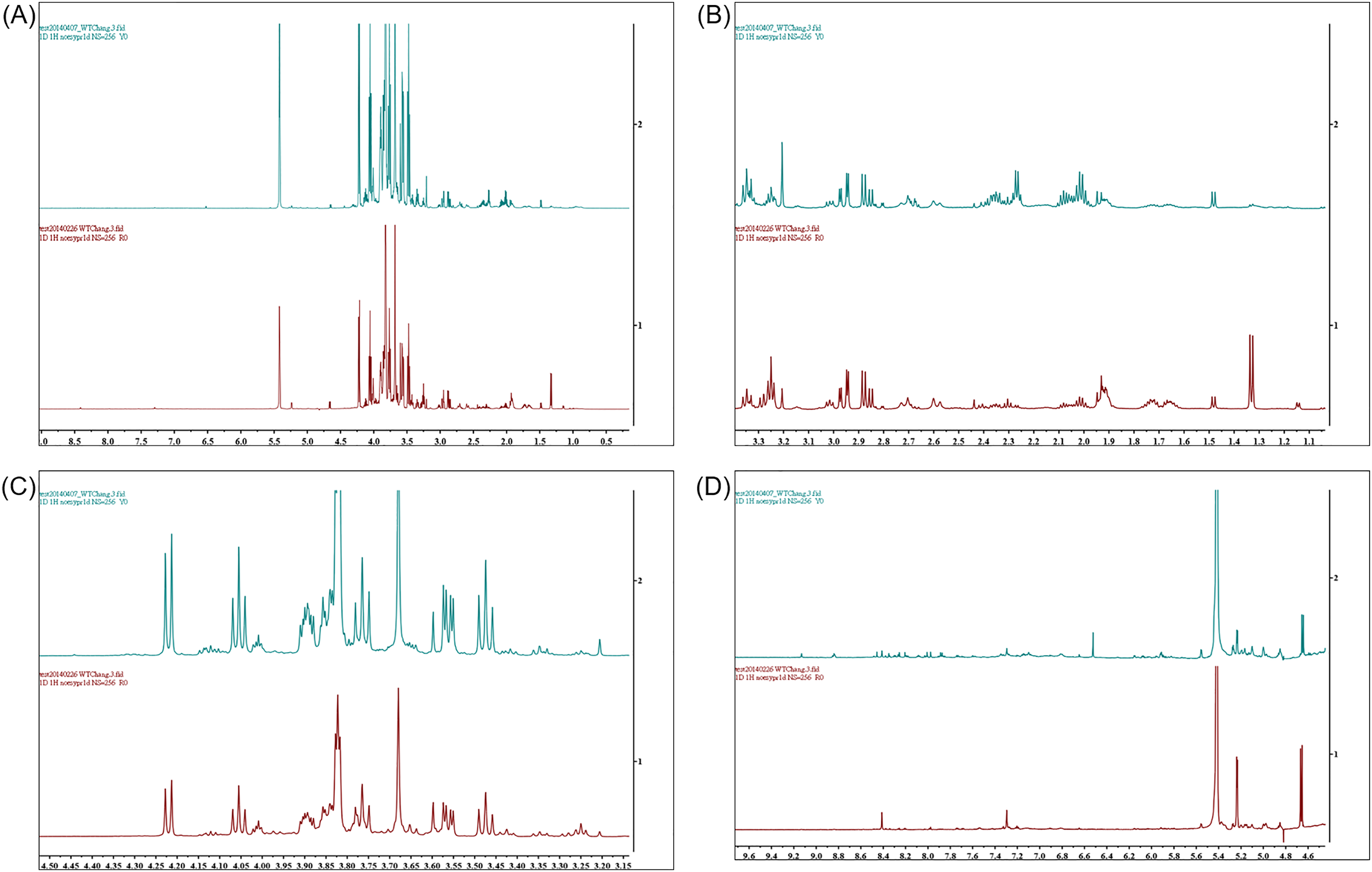
The 1H-NMR spectra of Huang Qi (Y0, green line) and Hong Qi (R0, red line) water extracts. (A) The full 1H-NMR spectra (δH 0.00∼10.00) of Y0 and R0; (B) The high-magnetic field region (δH 0.50∼3.00) in the 1H-NMR spectra of Y0 and R0; (C) The mid-magnetic field region (δH 3.01∼5.40) in the 1H-NMR spectra of Y0 and R0; and (D) The low-magnetic field region (δH 5.41∼10.00) in the 1H-NMR spectra of Y0 and R0. Abbreviation: NMR, nuclear magnetic resonance.
Immunomodulatory Effect of Huang Qi and Hong Qi Extracts on DCs
To understand the difference between the immunomodulatory activity of Huang Qi and Hong Qi, we evaluated the TNF-α responses on DCs with the administration of both material extracts. TNF-α production was induced significantly in DCs after cultivation for 6 h in a concentration of 500 μg/mL of Huang Qi (Y0) and Hong Qi (R0) water extracts (Figure 3). R0 demonstrated the most influential ability that showed 2.5 times more activity than the positive control (lipopolysaccharide, LPS; 100 ng/mL). Y0 also exhibited a higher TNF-α induction value than the blank control.

The ability of Huang Qi (Y0) and Hong Qi (R0) water extracts for induction of TNF-α production on DCs. The blank control was treated with sterile purified water. The positive control was treated with LPS at 100 ng/mL. The Y0 and R0 testing groups were administered with the extracts at a concentration of 500 μg/mL. Abbreviations: BMDC, bone marrow-derived dendritic cell; DCs, dendritic cells; LPS, lipopolysaccharide; TNF-α, tumor necrosis factor α.
Six Formulas Containing Hong Qi Showed Advantageous Immunomodulatory Effects in Comparison With the Formulas Containing Huang Qi
Compared with the original standard formulas containing Huang Qi, the formulas containing Hong Qi, including Huang Qi Wu Wu Tang (No. 7), Juan Bu Tang (No. 9), Dang Gui Liu Huang Tang (No. 13), Sheng Yu Tang (No. 14), Dang Gui Bu Xie Tang (No. 19), and Tuo Li Xiao Du San (No. 23), showed an advantageous immunomodulatory effect on DCs (Figure 4). Among them, formulas 7, 9, 19, and 23 containing Hong Qi showed the most significant activity. The production of TNF-α induced by No. 7 containing Huang Qi (Y7) was comparable to that of the positive control LPS; moreover, the influence of No. 7 containing Hong Qi (R7) was 2 times more than that of either Y7 or LPS (Figure 4A). Besides, the ability of the formulas 14, 19, and 23 containing Huang Qi (Y14, Y19, and Y23) for inducing TNF-α production were worse than that of the positive control; however, those formulas containing Hong Qi (R14, R19, and R23) demonstrated a more significant effect than Y14, Y19, and Y23, and also better than the positive control (Figure 4D-F). The above results revealed that formulas 7, 9, 13, 14, 19, and 23 containing Hong Qi exhibited a more significant immunomodulatory effect than those containing Huang Qi. Therefore, Hong Qi was considered as an alternative for Huang Qi in formulas 7, 9, 13, 14, 19, and 23. Furthermore, formula 14 containing Hong Qi showed 8 times more activity than the formula containing Huang Qi, indicating that the application of Hong Qi for Shen Yu Tang composition can improve the immunomodulatory effect advantageously.

The ability of Huang Qi Wu Wu Tang (No. 7), Juan Bu Tang (No. 9), Dang Gui Liu Huang Tang (No. 13), Sheng Yu Tang (No. 14), Dang Gui Bu Xie Tang (No. 19), and Tuo Li Xiao Du San (No. 23) for induction of TNF-α production in DCs. (A). No. 7 containing either Huang Qi (Y7) or Hong Qi (R7); (B) No. 9 containing either Huang Qi (Y9) or Hong Qi (R9); (C) No. 13 containing either Huang Qi (Y13) or Hong Qi (R13); (D) No. 14 containing either Huang Qi (Y14) or Hong Qi (R14); (E) No. 19 containing either Huang Qi (Y19) or Hong Qi (R19); and (F) No. 23 containing either Huang Qi (Y23) or Hong Qi (R23). Abbreviations: BMDC, bone marrow-derived dendritic cell; DCs, dendritic cells; LPS, lipopolysaccharide; TNF-α, tumor necrosis factor α.
Eleven Formulas Containing Huang Qi Showed Advantageous Immunomodulatory Effects in Comparison With the Formulas Containing Hong Qi
The formulas containing Huang Qi showed an advantageous immunomodulatory effect on DCs (Figure 5), including Bu Zhong Yi Qi Tang (No. 1), Gui Pi Tang (No. 2), Yi Qi Cong Ming Tang (No. 5), Bu Yang Huan Wu Tang (No. 8), San Bi Tang (No. 10), Qing Shu Yi Qi Tang (No. 11), Qing Xin Lian Zi Yin (No. 12), Ban Xia Tian Ma Bai Zhu Tang (No. 16), Yu Quan Wan (No. 18), Zai Zao San (No. 20), and Dan Gui Yin Zi (No. 22). The Huang Qi and Hong Qi containing formulas were demonstrated to stimulate the immunomodulatory effect on DCs compared to the blank control group (Figure 5). Especially the activity of formula 12 containing Huang Qi (Y12) was 7 times higher than that of the Hong Qi group (R12) (Figure 5g). However, it is worth mentioning that formula No. 1, belonging to the Emperor-Minister role group, did not show the expected significant immunomodulatory effect on DCs regardless of containing either Huang Qi or Hong Qi (Figure 5a). Additionally, formulas 1, 2, 5, 10, 11, and 12 were not as effective as the LPS group on DCs; formulas 8, 16, 18, 20, and 22 showed better effects than the LPS group. The activity of formulas 8 and 20 containing Huang Qi (Y8 and Y20) was more significant than that of the Hong Qi groups (R8 and R20) (Figure 5D and J). The activity of formula 22 containing either Huang Qi (Y22) or Hong Qi (R22) was not much different. Among formulas 8, 16, 18, 20, and 22, Huang Qi was not in the role of a Jun medicine in the prescriptions except for the compositions of No. 8 and 20. This demonstrated that other materials in the TCM standard formulas also showed an immunomodulatory effect on DCs, or some certain chemical reactions between the medicinal materials were generated to achieve a synergistic effect during the decoction process.

The ability of Bu Zhong Yi Qi Tang (No. 1), Gui Pi Tang (No. 2), Yi Qi Cong Ming Tang (No. 5), Bu Yang Hai Wu Tang (No. 8), San Bi Tang (No. 10), Qing Shu Yi Qi Tang (No. 11), Qing Xin Lian Zi Yin (No. 12), Ban Xia Tian Ma Bai Zhu Tang (No. 16), Yu Quan Wan (No. 18), Zai Zao San (No. 20), and Dan Gui Yin Zi (No. 22) for induction of TNF-α production on DCs. (A) No. 1 containing either Huang Qi (Y1) or Hong Qi (R1); (B) No. 2 containing either Huang Qi (Y2) or Hong Qi (R2); (C) No. 5 containing either Huang Qi (Y5) or Hong Qi (R5); (D) No. 8 containing either Huang Qi (Y8) or Hong Qi (R8); (E) No. 10 containing either Huang Qi (Y10) or Hong Qi (R10); (F) No. 11 containing either Huang Qi (Y11) or Hong Qi (R11); (G) No. 12 containing either Huang Qi (Y12) or Hong Qi (R12); (H) No. 16 containing either Huang Qi (Y16) or Hong Qi (R16); (I) No. 18 containing either Huang Qi (Y18) or Hong Qi (R18); (J) No. 20 containing either Huang Qi (Y20) or Hong Qi (R20); and (K) No. 22 containing either Huang Qi (Y22) or Hong Qi (R22). Abbreviations: BMDC, bone marrow-derived dendritic cell; DCs, dendritic cells; LPS, lipopolysaccharide; TNF-α, tumor necrosis factor α.
Six Formulas Containing Either Huang Qi or Hong Qi Showed an Insignificant Difference in Their Immunomodulatory Effect
The formulas containing either Huang Qi or Hong Qi showed an insignificant difference in their immunomodulatory effect, including Yang Xi Tang (No. 3), Ren Seng Yang Rong Tang (No. 4), Shi Quan Da Bu Tang (No. 6), Huang Qi Jian Zhong Tang (No. 15), Yu Ping Feng San (No. 17), and Bao Chan Wu You Fang (No. 21) (Figure 6). Formulas 3 and 15 showed similar activity to the LPS group. No. 21 demonstrated a better effect than the LPS group. However, Huang Qi in formulas 15 and 21 belonged to the non-Emperor-Minister role group, unlike Huang Qi in No. 3, which had the role of Jun medicine. Moreover, No. 3, 15, and 21 did not significantly differ in TNF-α levels on DCs containing either Huang Qi or Hong Qi. Moreover, the various medicinal materials in these prescriptions may also have an immunomodulatory effect. In addition, some ingredients may interact during the decoction process leading to a synergistic effect.

The ability of Yang Xi Tang (No. 3), Ren Seng Yang Rong Tang (No. 4), Shi Quan Da Bu Tang (No. 6), Huang Qi Jian Zhong Tang (No. 15), Yu Ping Feng San (No. 17), and Bao Chan Wu You Fang (No.21) for induction of TNF-α production in DCs. (A) No. 3 containing either Huang Qi (Y3) or Hong Qi (R3); (B) No. 4 containing either Huang Qi (Y4) or Hong Qi (R4); (C) No. 6 containing either Huang Qi (Y6) or Hong Qi (R6); (D) No. 15 containing either Huang Qi (Y15) or Hong Qi (R15); (E) No. 17 containing either Huang Qi (Y17) or Hong Qi (R17); and (F) No. 21 containing either Huang Qi (Y21) or Hong Qi (R21). Abbreviations: BMDC, bone marrow-derived dendritic cell; DCs, dendritic cells; LPS, lipopolysaccharide; TNF-α, tumor necrosis factor α.
Maturation Analysis for Dendritic Cells by Flow Cytometry
In order to confirm the effect of DCs activation, flow cytometry was used to analyze the expression of DC surface molecules to be the supporting evidence of DCs maturation. The single materials of Huang Qi and Hong Qi, and formulas Yang Xi Tang (No. 3), Bu Yang Hai Wu Tang (No. 8), San Bi Tang (No. 10), Qing Xin Lian Zi Yin (No. 12), Dang Gui Liu Huang Tang (No. 13), Sheng Yu Tang (No. 14), Huang Qi Jian Zhong Tang (No. 15), and Bao Chan Wu You Fang (No. 21) were selected to evaluate their inducible ability for the maturation of DCs (Figure 7). For instance, the water extracts of Huang Qi (Y0) and Hong Qi (R0) induced 20.9% and 35.5% maturation of DCs, respectively. Similarly, the ability of R0 to induce TNF-α induction was better than that of Y0 (Figure 3), indicating that the immunomodulatory activity of a single material of Hong Qi exceeded that of Huang Qi. No. 13 and 14 containing Hong Qi (R13 and R14) induced a higher maturation ratio of DCs than those containing Huang Qi (Y13 and Y14); the TNF-α values induced by R13 and R14 were also higher than those by Y13 and Y14, respectively (Figure 4). Formulas 8, 10, and 12 containing Huang Qi (Y8, Y10, and Y12) exhibited a higher ratio of DCs than those formulas containing Hong Qi (R8, R10, and R12), separately. The TNF-α production induced by Y8, Y10, and Y12 increased more than that by R8, R10, and R12. Formulas 3, 15, and 21 showed an insignificant difference in the maturation ratio of DCs between those containing Huang Qi or Hong Qi; also, they did not show the ability to induce the differences in TNF-α values between Y and R groups.
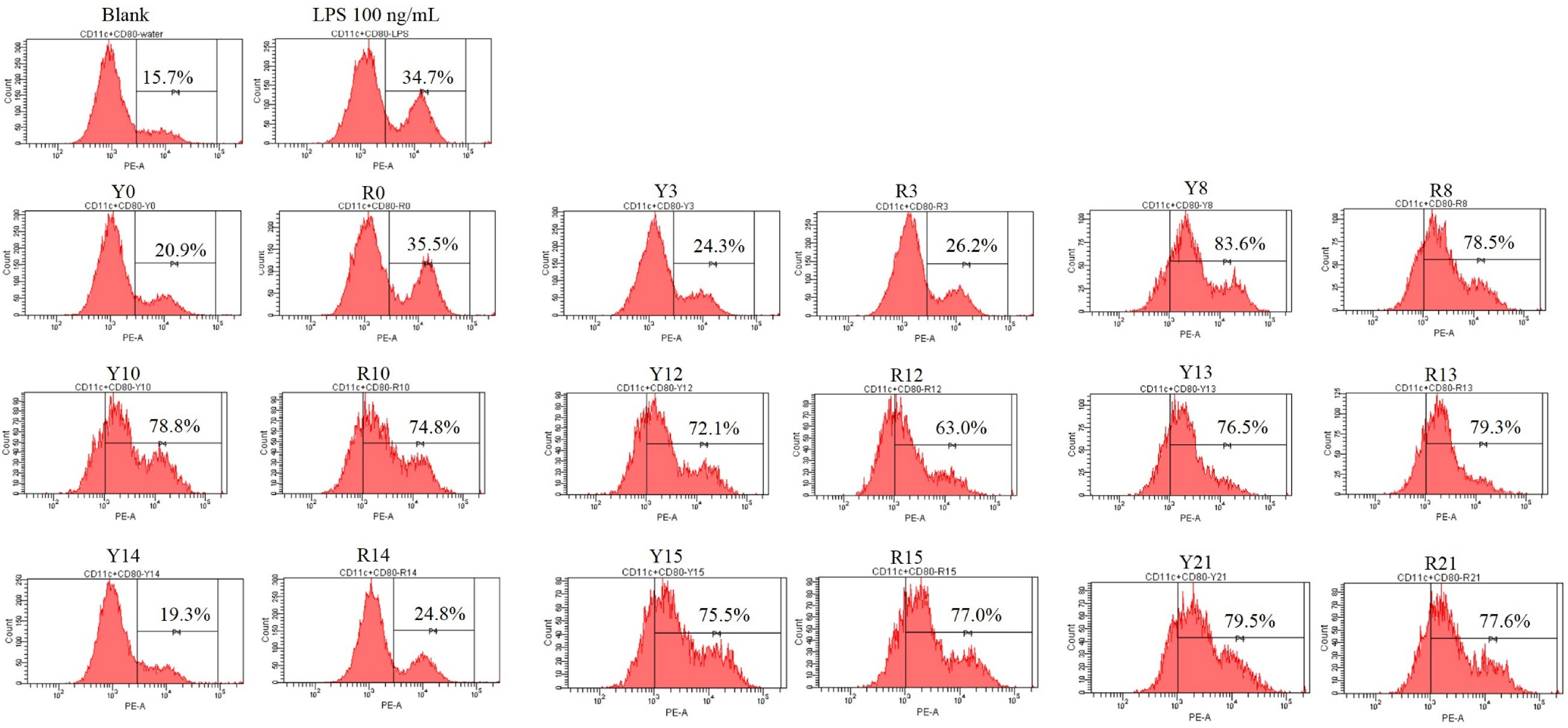
The maturation analysis for DCs by the single material of Huang Qi and Hong Qi, and formulas Yang Xi Tang (No. 3), Bu Yang Huan Wu Tang (No. 8), San Bi Tang (No. 10), Qing Xin Lian Zi Yin (No. 12), Dang Gui Liu Huang Tang (No. 13), Sheng Yu Tang (No. 14), Huang Qi Jian Zhong Tang (No. 15), and Bao Chan Wu You Fang (No. 21). The blank control was treated with sterile purified water. The positive control was treated with LPS at 100 ng/mL. All the samples were administered at a concentration of 500 μg/mL. Abbreviations: DCs, dendritic cells; LPS, lipopolysaccharide.
Discussion
In this study, water extracts of both Huang Qi and Hong Qi in a concentration of 500 μg/mL demonstrated an activation effect on DCs. The impact of Hong Qi was more significant than that of Huang Qi. The 1H-NMR spectra of Huang Qi and Hong Qi water extracts showed high similarity; only chemical shifts at δH 1.15, 1.32, 7.30, and 8.40 presented the differences in minor constitutions in both extracts. This might indicate that there are more flavonoid components in Hong Qi.
The primary function of Huang Qi and Hong Qi is with respect to invigorate-Qi and defend-Qi, which is related to regulating the immune system. 5 Therefore, the compatibility principle of Huang Qi’s role in the original prescriptions, Jun, Chen, Zuo, and Shi, may illustrate the differences in immunomodulatory effect for a formula. The 23 formulas were divided into the Emperor-Minister and the non-Emperor-Minister role groups. Some of them containing either Huang Qi or Hong Qi did not show significant differences when evaluated for their immunomodulatory effect on DCs. However, on the other hand, some formulas containing Hong Qi, such as Sheng Yu Tang (No. 14), demonstrated more effective immunomodulation than those containing Huang Qi. The experimental results of the TNF-α expression on DCs were irregular, regardless of which group.
For example, Dang Gui Bu Xie Tang (No. 19), which belongs to the Emperor-Minister role group, containing Hong Qi demonstrated a better effect than that containing Huang Qi on DCs. Another formula belonging to the Emperor-Minister role group, Bu Yang Huan Wu Tang (No. 8), containing Huang Qi, showed more effectiveness than Hong Qi. Furthermore, both No. 8 and 19 have Huang Qi in 83.33%. No. 8 can regulate blood, replenish Qi, activate blood, and dredge collaterals, and Huang Qi composed in its prescription can make Qi vigorous to promote blood circulation. In addition, No. 19 is a nourishing formula comprised of Radix Angelicae Sinensis (Dang Gui) and Huang Qi only. It strengthens the Qi by Huang Qi and then uses Dang Gui to replenish the blood. Therefore, based on the experimental results, Huang Qi is recommended as an ingredient of Bu Yang Huan Wu Tang (No. 8) when the therapeutic effect of replenishing Qi and activating blood is needed. If the effect of tonifying blood and nourishing Qi is required, it is more suitable to replace Huang Qi with Hong Qi for Dang Gui Bu Xie Tang (No. 19). Similarly, Seng Yu Tang (No. 14) is a typical formula for deficiency of Qi and blood based on the composition of Dang Gui, Chuanxiong Rhizome (Chuan Xiong), Rehmanniae Radix (Di Huang), Paeoniae Alba Radix (Bai Shao), ginseng, and Huang Qi with efficacy of nourishing blood, nourishing yin, and replenishing Qi.1,29 The experimental result also showed that No. 14 with Hong Qi demonstrated more effective immunomodulation than that containing Huang Qi.
Experimental
Chemicals and Materials
The deuterated solvents CD3OD (99.8%) and D2O (99.8%) were purchased from Sigma-Aldrich, Inc., the internal standard TSP (98%) from Sigma-Aldrich, Inc., and granulocyte-macrophage colony-stimulating factor (GM-CSF) (Pepro Tech), IL-4 (Pepro Tech), Roswell Park Memorial Institute (RPMI)-1640 culture fluid (containing 10% fetal bovine serum, 2 mM L-glutamine, nonessential amino acids, sodium pyruvate, 2-[4-(2-hydroxyethyl) piperazin-1-yl]ethanesulfonic acid [HEPES], antibiotic, β-mercaptoethanol) from Sigma-Aldrich, Inc. TNF-α enzyme-linked immunosorbent assay (ELISA) kit (e-Bioscience), LPS (from Escherichia coli; Sigma-Aldrich), 0.1 M phosphate buffer (phosphate buffer saline, PBS), trypan blue (Gibco), 1% or 0.1% bovine serum albumin (BSA) in PBS, Ficoll-Paque Plus (density = 1.077 ± 0.001 g/mL; Cytiva), CD11c antibody (e-Bioscience), CD80 antibody (e-Bioscience), and TrypLE (Gibco) were used for the DC molecular pharmacology experiment. Water for chromatographic separation was purified using a Milli-Q water advantage A 10 water system (Merck Millipore, CA). Astragali Radix (Huang Qi) and Hedysari Radix (Hong Qi) were purchased from Healthy Beautiful Biotech Co., Ltd, Taiwan, and were identified by a specialist in Chinese herbal medicine, Prof. Chao-Lin Kuo. The voucher specimens of Astragali Radix (AR001) and Hedysari Radix (HR001) were deposited at the Department of Chinese Pharmaceutical Sciences and Chinese Medicine Resources, China Medical University, Taiwan. The TCM formulas Bu Zhong Yi Qi Tang, Gui Pi Tang, Yang Xi Tang, Ren Seng Yang Rong Tang, Yi Qi Cong Ming Tang, Shi Quan Da Bu Tang, Huang Qi Wu Wu Tang, Bu Yang Huan Wu Tang, Juan Bu Tang, San Bi Tang, Qing Shu Yi Chi Tang, Qing Xin Lian Zi Yin, Dang Gui Liu Huang Tang, Sheng Yu Tang, Huang Qi Jian Zhong Tang, Ban Xia Tian Ma Bai Zhu Tang, Yu Ping Feng San, Yu Quan Wan, Dang Gui Bu Xie Tang, Zai Zao San, Bao Chan Wu You Fang, Dan Gui Yin Zi, and Tuo Li Xiao Du San were purchased (collected) from Healthy Beautiful Biotech Co., Ltd, Taiwan.
Instruments
TCM material and formulas were extracted using a HS-32 Decoction Pot (Kuai Yi Pao, Taiwan). 1H-NMR spectra were recorded on a Brucker AV-400 NMR spectrometer (Bruker Instruments, MA). Chemical shifts are reported in parts per million (δ). Flow cytometry was performed on a BD FACSCanto II and was analyzed by BD FACSDiva™ Software (BD Biosciences, CA).
Extraction
Huang Qi and Hong Qi were soaked in pure water (600 mL) at room temperature for 20 min and extracted using the Decoction Pot by boiling for 20 min. The filtrate was collected and transferred into 50 mL tubes to centrifuge at 4°C at 3000 rpm for 10 min. The supernatant was concentrated under reduced pressure at 40°C to 45°C, and the concentrated extract was dried by lyophilization. Furthermore, seeds and easily dispersible ingredients in a TCM formula should be put into a small cloth bag to avoid scattering before decocting. Then, the procedures described above should be repeated to obtain the TCM formula extracts.
Samples Preparation for NMR Analysis
Dried powder of Huang Qi and Hong Qi extracts (50 mg) were placed into 15 mL centrifuge tubes, respectively. To these 2 mL CD3OD and 2 mL D2O were added. The tubes were vortexed for 3 min, then subjected to ultrasound vibration for 30 min, and centrifuged at 3000 rpm for 30 min. The supernatant (1 mL) was transferred to an NMR tube for examination. The 1H-NMR spectrum (δ in ppm) for each sample was recorded by 128 scans. TSP (0.1% w/v) was used as an internal standard, and the chemical shift of TSP was calibrated at δH 0.00 ppm.
Preparation of Dendritic Cells
The method for bone marrow-derived DC preparation was described previously and slightly modified.30,31 CL57B/6 mice at the age of 4 to 8 weeks were purchased from the LASO Biotechnology Company, Taiwan. Their bone marrow was isolated from the thigh and calf bones. The bone marrow cells were cultivated with 4 mL of RPMI-1640 medium containing 10 ng/mL GM-CSF and 10 ng/mL IL-4 (consisting of 10% fetal bovine serum, 2 mM L-glutamine, nonessential amino acids, sodium pyruvate, HEPES, antibiotic, β-mercaptoethanol) on a 6-well cell culture dish for the first day. On days 3 and 5, to every dish was added 2 mL of 10 ng/mL GM-CSF and 10 ng/mL IL-4. On day 7, the semisuspended cells were collected, recalculated, and diluted to 1 × 10⁶ cells/mL in the culture medium and were placed and cultivated overnight in either a 6-well cell culture dish (2 mL per well) or 24-well cell culture dish (1 mL per well) for further experiments.
Evaluation of TNF-α Production on Dendritic Cells
To stimulate the activation of DCs, extracts, LPS (positive control, 100 ng/L32,33; from E. coli, Sigma-Aldrich), or sterilized water (blank control) were added to the DCs. After 6 h of cultivation, the culture medium supernatant and the DCs after 24 h of treatment were collected and analyzed by ELISA and flow cytometer, respectively. ELISA was utilized for cytokine analysis, and the procedure followed the manual of the TNF-α ELISA kit (e-Bioscience). A flow cytometer was used to analyze the maturation of DCs. The DCs were rinsed with 0.1 M PBS and TrypLE before loading into a BD Falcon tube and centrifuged at 1250 rpm for 5 min. After washing the cells with 0.1% BSA in PBS, antibodies solution (CD11c-FITC and CD80-PE, diluted to a ratio of 1:50 in PBS) was added for staining at 4°C for 45 min in a dark environment. Then, the cells were washed with 0.1% BSA in PBS. Next, the cells were analyzed using BD FACSCanto II, and the data were analyzed by BD FACSDiva™ Software.
Conclusions
In summary, the single Hong Qi material had a more immunomodulatory effect on DCs than Huang Qi. Twenty-three standard TCM formulas were selected from the 200 standard TCMs certified by MOHW in Taiwan to investigate the efficacy differences in TNF-α generation on DCs between formulas containing either Huang Qi or Hong Qi in vitro. Among them, formulas No. 7, 9, 13, 14, 19, and 23 containing Hong Qi showed an advantageous immunomodulatory effect over Huang Qi. On the other hand, No. 1, 2, 5, 8, 10, 11, 12, 16, 18, 20, and 22 containing Huang Qi were more suitable for treating Qi deficiency than those containing Hong Qi. This brief conclusion can be a good indication for TCM practitioners when treating patients for such problems in the clinic.
Supplemental Material
sj-docx-1-npx-10.1177_1934578X221142797 - Supplemental material for Comparison of the Immunomodulatory Effect of TCM Formulas Containing Either Astragali Radix or With This Replaced by Hedysari Radix
Supplemental material, sj-docx-1-npx-10.1177_1934578X221142797 for Comparison of the Immunomodulatory Effect of TCM Formulas Containing Either Astragali Radix or With This Replaced by Hedysari Radix by Yu-Chi Tsai, Ming-Kuem Lin, Wen-Huang Peng, Chih-Kai Tseng, Meng-Shiou Lee, Bo-Cheng Yang and Wen-Te Chang in Natural Product Communications
Footnotes
Abbreviations
Acknowledgements
The authors acknowledge the Office of Research & Development at China Medical University, Taiwan, for NMR spectroscopic measurement. The authors appreciate the editorial assistance and comments of the editor and reviewers.
Declaration of Conflicting Interests
The author(s) declared no potential conflicts of interest with respect to the research, authorship, and/or publication of this article.
Ethical Approval
This study was approved by the Institutional Animal Care and Use Committee of China Medical University, Taichung, Taiwan.
Funding
The author(s) disclosed receipt of the following financial support for the research, authorship, and/or publication of this article: This work was supported by the Committee on Chinese Medicine and Pharmacy, Taiwan (grant number CCMP102-CP-014).
Statement of Human and Animal Rights
All procedures in this study were conducted in accordance with institutional animal care guidelines of the Animal Center, China Medical University, Taichung, Taiwan, and approved by the Institutional Animal Care and Use Committee of China Medical University, Taichung, Taiwan (103-156-N).
Statement of Informed Consent
There are no human subjects in this article, and informed consent is not applicable.

Supplemental Material
Supplemental material for this article is available online.
References
Supplementary Material
Please find the following supplemental material available below.
For Open Access articles published under a Creative Commons License, all supplemental material carries the same license as the article it is associated with.
For non-Open Access articles published, all supplemental material carries a non-exclusive license, and permission requests for re-use of supplemental material or any part of supplemental material shall be sent directly to the copyright owner as specified in the copyright notice associated with the article.
