



Abstract
Xuebijing injection (XBJ), one of the classical prescriptions for treating inflammation-related diseases, has been used to chronic obstructive pulmonary disease (COPD) in clinical practice. However, its molecular mechanism is still unclear. Network pharmacology combined with Affymetrix arrays and molecular docking techniques were applied to explore the molecular mechanism of XBJ for COPD. Predictive analysis of 728 active compounds in XBJ and 6 sets of Affymetrix arrays expression data resulted in 106 potential therapeutic targets. Next, based on the active compound-co-target network topology analysis, most of these targets were found to be modulated by quercetin, myricetin, and ellagic acid. Furthermore, protein–protein interaction (PPI) analysis revealed that the key targets may be EGFR, STAT3, AKT1, CCND1, MMP9, AR, ESR1, and PTGS2. Then, by constructing a component-target-pathway network, we found that XBJ was a multi-pathway, multi-target, multi-compound synergistic therapy for COPD, and four key targets were involved in the FoxO signaling pathway. Luteolin and salvianolic acid b had the optimal binding ability to several key proteins. Therefore, we hypothesize that quercetin, myricetin, ellagic acid, luteolin, and salvianolic acid b mainly contribute to the therapeutic effect of XBJ on COPD by modulating the FoxO signaling pathway by regulating EGFR, STAT3, AKT1, and CCND1. XBJ exerts anti-inflammatory and antioxidative stress effects through the PI3K/Akt/FoxO axis combined with MMP9, AR, ESR1, and PTGS2 to regulate other signaling pathways.
Introduction
Chronic respiratory diseases account for 4.7% of the global disability-adjusted life years, with asthma and chronic obstructive pulmonary disease (COPD) most common; 13.7% of people over 40 years of age have COPD, which is now the top disease burden. 1 COPD is a common preventable and untreatable disease characterized by obstructed airflow and is currently the third leading cause of human death worldwide.2,4 COPD pathology is featured by a systemic and localized chronic inflammatory response in the lungs, with multiple inflammatory cells and inflammatory mediators involved in its pathological process, 5 leading to impaired lung tissue function, decreased immune function, and even organ failure, and finally may enter the acute exacerbation phase of COPD (AECOPD). 6
The disease was controlled with the long-term use of antimicrobial drugs, but the side effects became increasingly significant. Many clinical practices have shown that Chinese medicine plays an important role in treating COPD with fewer adverse effects. Xuebijing injection (XBJ), consisting of Carthami Flos (CF), Radix Paeoniae Rubra (RPR), Chuanxiong Rhizoma (CXR), Radix Salviae (RS), and Angelicae Sinensis Radix (ASR), has the effect of activating blood circulation and draining meridians 7 ; it was approved by the National Medical Products Administration in 2004 for the treatment of systemic inflammatory response syndrome, sepsis, and multiple organ dysfunction syndromes. A real-world study noted that the incidence of adverse reactions to XBJ in clinical practice was low (0.3%) with most adverse reactions being mild. 8 Also, XBJ aids in the treatment of COPD 9 and AECOPD10,11 due to its good effect in improving organ dysfunction and its anti-inflammatory.12,13 and immune-modulating effects,14,15 but its specific therapeutic mechanism is unclear.
Network pharmacology 16 utilizes drug, compound, gene, and disease database information to construct drug–target, target–disease, and drug–disease interaction networks to reveal the complex mechanisms of multi-target and multi-component characteristics of Chinese herbal compounds. The concept has many similarities with the holistic view of traditional Chinese medicine, which uses a systemic approach to treat complex diseases such as COPD, and others. 17 This offers a basis for the shift from empirical medicine to evidence-based medicine.
In this study, we further elucidated the pharmacological mechanism of XBJ for COPD by combining network pharmacology with Affymetrix arrays and molecular docking techniques to build a clinical theoretical basis (Figure 1).
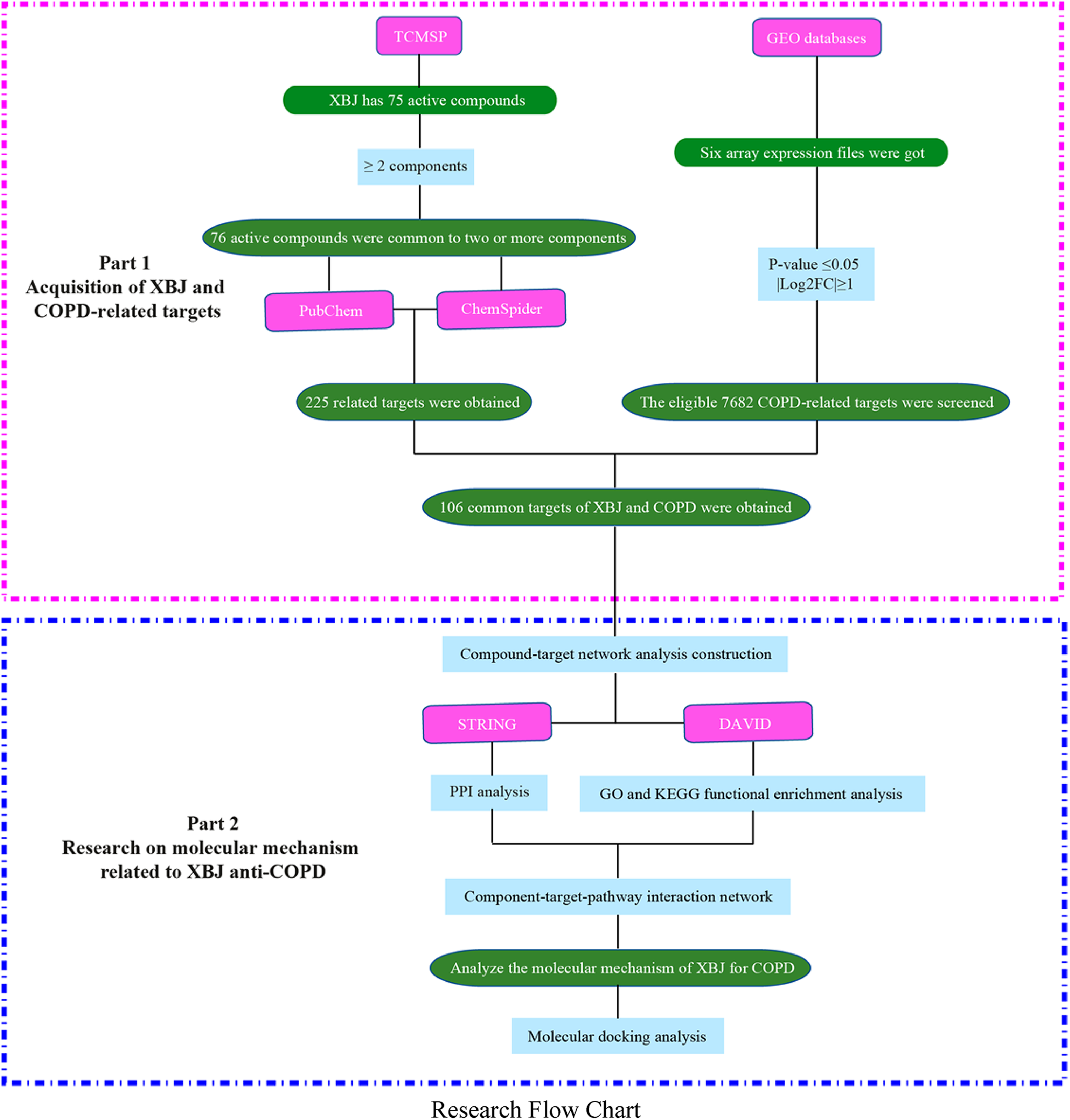
Research flow chart.
Methods
Collection of Potentially Active Compounds of XBJ
By searching the Traditional Chinese Medicine Systems Pharmacology Database and Analysis Platform (TCMSP) (http://tcmspw.com/tcmsp.php), with the keywords “Honghua”, “Chishao”, “Chuanxiong”, “Danshen”, and “Danggui”, the main compounds of CF, RPR, CXR, RS, and ASR were obtained. 18
Prediction of Potential Targets of XBJ Active Compounds
The Simplified molecular input line entry system (SMILES) format and 3D structure files of the eligible active compounds were obtained from PubChem (https://pubchem.ncbi.nlm.nih.gov/) database 19 and Chemspider database 20 (http://www.chemspider.com/). The SMILES formats of the above active compounds were entered into the SwissTargetPrediction database 21 (http://www.swisstargetprediction.ch/), using “humans” (Homo sapiens) as the studied species to obtain the potential effect targets of the compounds; the results were stored in CSV format. The criterion for target inclusion in the study was probability ≥ .5, and after compilation and removal of duplicates, the relevant targets for XBJ were obtained.
Screening of Potential Therapeutic Targets for COPD
In the GEO database 22 (https://www.ncbi.nlm.nih.gov/gds/?term = ), by entering COPD, chronic obstructive pulmonary disease, pulmonary disease, and chronic obstructive as search keywords, six expression files for Affymetrix arrays, GSE37768, GSE73395, 23 GSE103174, GSE106986, GSE112260, 23 and GSE112811 were obtained. They were sourced from human alveolar lavage fluid, macrophages, and whole blood, as well as lung tissue covering nonsmoking normal subjects, nonsmoking COPD patients, and smoking normal subjects, as well as smoking COPD patients. Differentially expressed genes (DEGs) in normal smoking subjects compared with smoking COPD patients, and nonsmoking normal subjects compared with nonsmoking COPD patients were screened for duplicates using a P value ≤ .05 and |Log2FC|≥1 as screening criteria to obtain potential therapeutic targets for COPD. Finally, the Draw Venn Diagram (http://bioinformatics.psb.ugent.be/webtools/Venn/) website was applied to analyze COPD and XBJ co-related targets.
Construction of the Compound-Target Network
The above potentially active compounds and common targets of XBJ and COPD were entered into Cytoscape software 24 (http://www.cytoscape.org, Version 3.6.0) to plot the compound-target network analysis. In this network, different nodes represent the potentially active compounds and common targets, and the edges show the relationship between these two nodes. Network topology analysis was performed using Cytoscape plugin NetworkAnalyzer, and the results were ranked according to Degree, Betweenness Centrality, and Closeness Centrality to filter key compounds.
PPI Analysis and Network Topology Analysis
The potential therapeutic targets of XBJ were entered into the STRING database 25 (https://string-db.org/), and the protein–protein interaction (PPI) data were obtained by selecting Homo sapiens as the study species and setting the parameter to 0.4 as medium confidence. Next, these data were imported into Cytoscape to draw a PPI network. NetworkAnalyzer was used for network topology analysis, and the results were ranked according to Degree, Betweenness Centrality, and Closeness Centrality to screen the core key targets.
GO and KEGG Functional Enrichment Analysis of Common Targets
XBJ and COPD common targets were analyzed by the DAVID website 26 (https://david.ncifcrf.gov/tools.jsp) for Gene Ontology (GO) and Kyoto Encyclopedia of Genes and Genomes (KEGG( functional enrichment, where GO pathways with P ≤ .05 and KEGG pathways were included in the analysis study.
Construction of the Network of Component-Target-Pathway
The 10 key targets and their related compounds, herbs, and pathways were imported into Cytoscape to build a component-target-pathway network, which was analyzed by the NetworkAnalyzer analysis algorithm.
Analysis of the Binding Activity of Compounds to key Targets by Molecular Docking
Molecular docking was performed using AutoDockTool 1.5.6 and Auto Dock vina to verify the binding activity of the active compound of XBJ to the core target protein. The 3D structures of the compounds were available in the PubChem database, and the core target proteins were accessible in the PDB database 27 (https://www.rcsb.org/). The screening criteria for the target proteins were (1) The organism was Homo sapiens. (2) The analytical method was x-ray diffraction. (3) The later the release date, the better it is. (4) Preference was given to compounds containing unique ligands. PyMOL was later applied to show the combination of the best docking scores.
Results
Collection of Active Compounds of XBJ
Through the TCMSP database, 189 active compounds were found for CF, 119 for RPR, 189 for CXR, 202 for RS, and 125 for ASR, a total of 728 compounds, of which 76 are common to 2 or more components (Supplementary Table S1 and Figure 2). These results suggest that XBJ may exert a synergistic therapeutic effect.
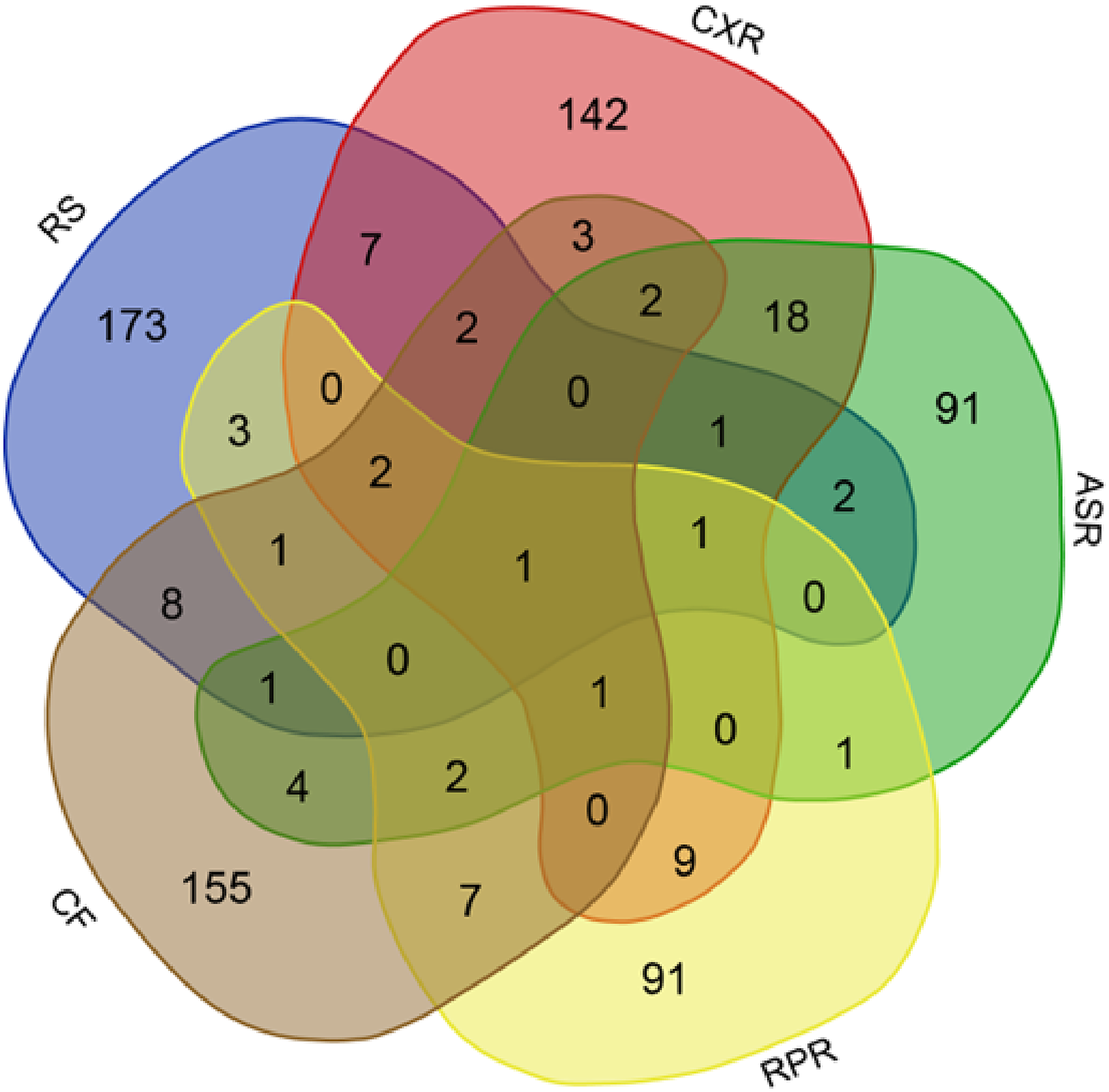
Distribution of active compounds of Xuebijing injection (XBJ) in five herbs.
Screening of Potential Targets for Active Compounds of XBJ
To obtain the potential targets of XBJ, the relevant targets corresponding to the active compounds were acquired through the SwissTargetPrediction database; duplicates were excluded and combined to obtain 225 targets (Supplementary Table S2 and Figure 3).
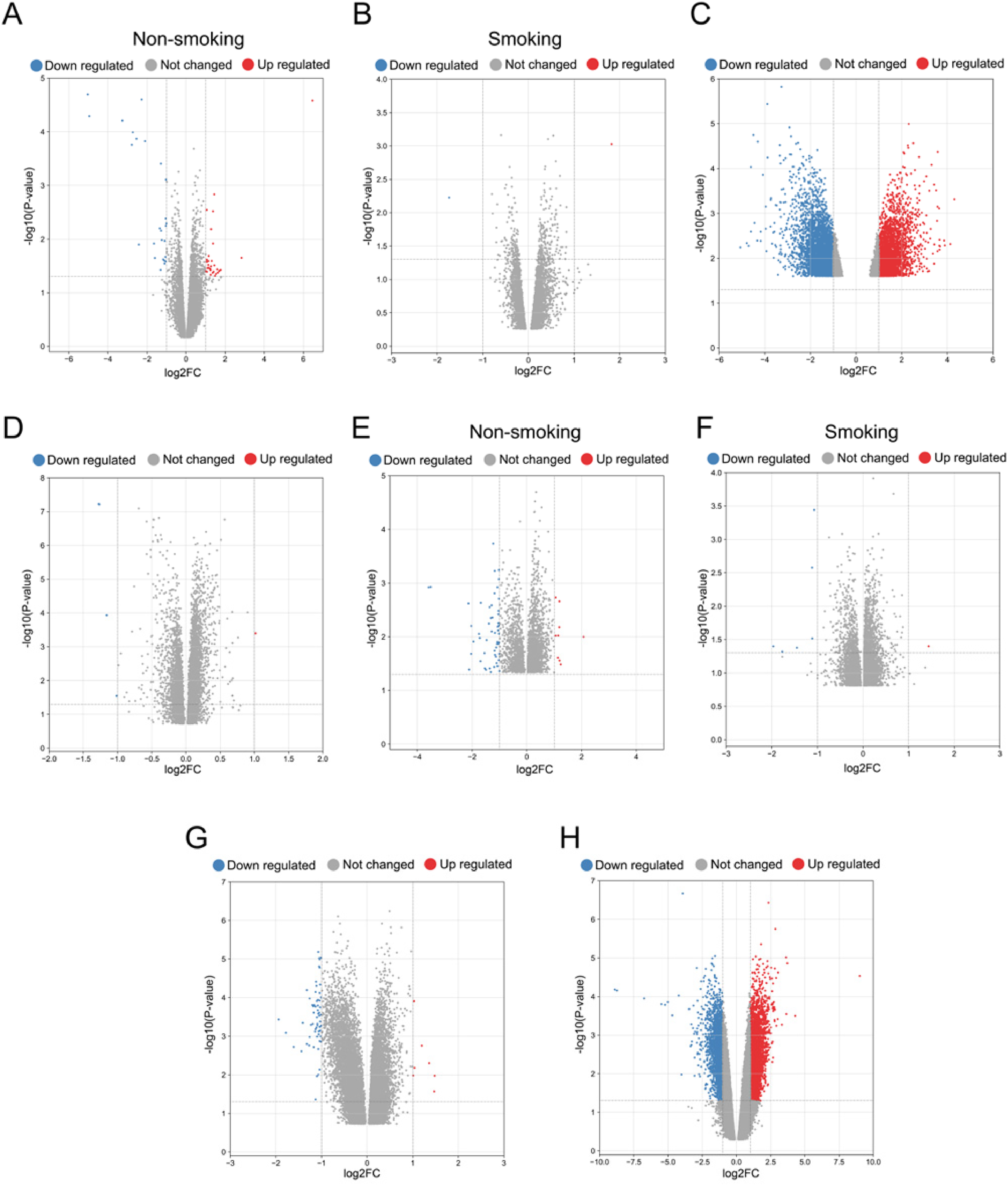
Collection of XBJ-related and COPD-related targets and screening of XBJ and COPD common targets.
Screening of COPD-Related Targets
From the six array expression files, GSE37768, GSE73395, GSE103174, GSE106986, GSE112260, and GSE112811, the eligible genes among the normal object group versus COPD patient group, nonsmoking normal group versus nonsmoking COPD patient group, and smoking normal group versus smoking COPD patient group were selected, respectively, and the 7682 COPD-related targets were screened (Figure 4A-H, Supplementary Table S3).
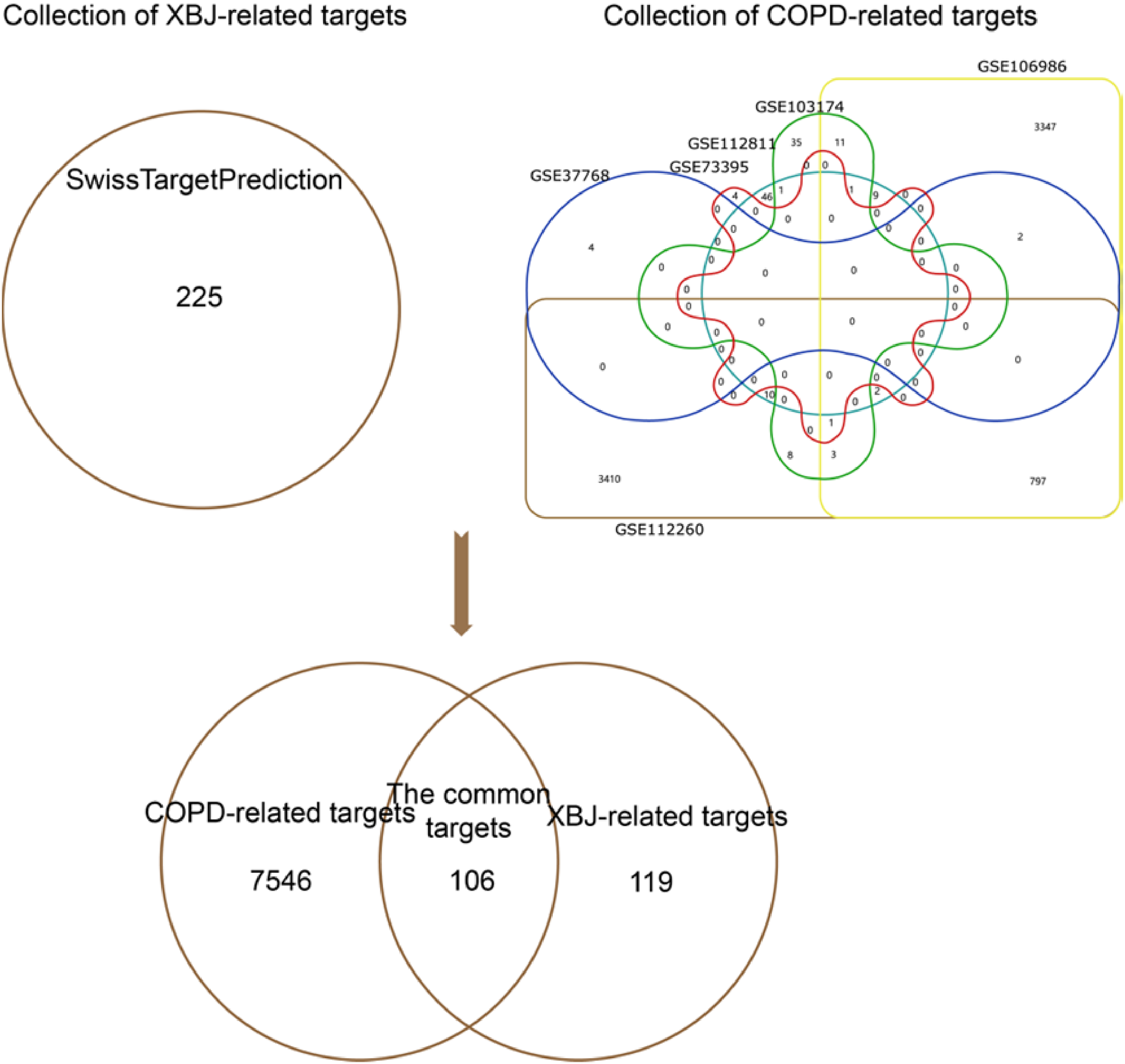
Volcano plots of six expression files by Affymetrix arrays. (A) Volcano plots of DEGs for nonsmoking normal objects group versus nonsmoking COPD patient group in GSE103174. (B) Smoking normal objects group versus smoking COPD patient group in GSE103174. (C) Normal objects group versus COPD patient group in GSE112260. (D) Normal objects group versus COPD patient group in GSE73395. (E) Nonsmoking normal objects group versus nonsmoking COPD patient group in GSE37768. (F) Smoking normal objects group versus smoking COPD patient group in GSE37768. (G) Normal objects group versus COPD patient group in GSE112811. (H) Normal objects group versus COPD patient group in GSE106986.
Compound-Target Network Analysis Construction
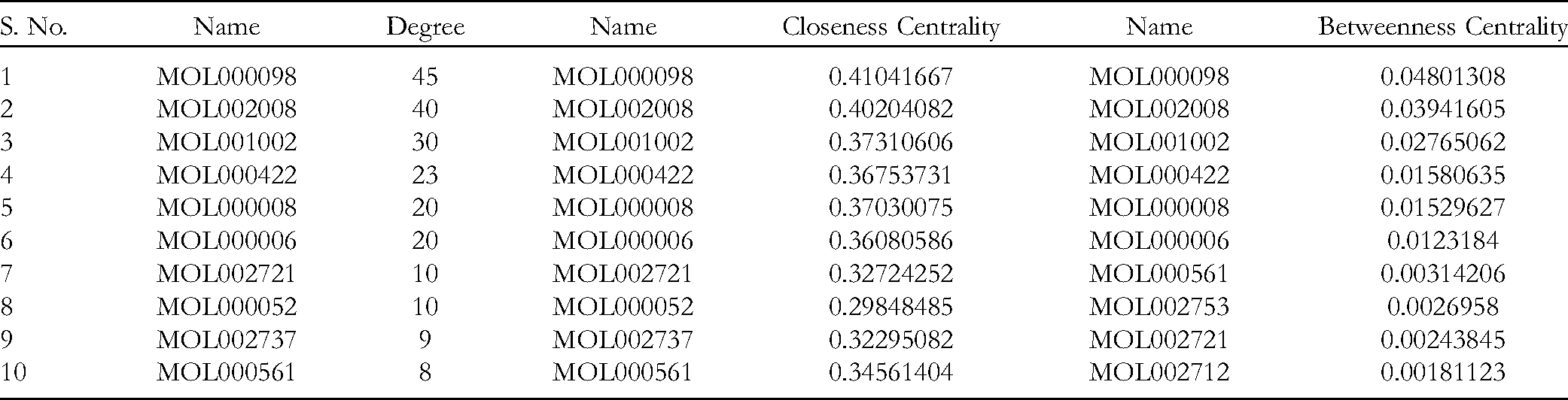
By Venn analysis, 106 common targets of XBJ and COPD were obtained based on COPD differential genes and XBJ predicted targets (Figure 3). The data were transferred to Cytoscape software to draw a “compound-target” network relationship (Figure 5). This network included 198 nodes with 439 edges, of which 92 active compounds intersected with potential therapeutic targets for COPD. To find the compounds key to XBJ for COPD (Table 1), Network Analyzer was applied to analyze this network using three centrality algorithms topologically: degree centrality, Betweenness Centrality, and Closeness Centrality. MOL000098 (quercetin), MOL002008 (myricetin), and MOL001002 (ellagic acid) were in the top three of Degree, Betweenness Centrality and Closeness Centrality algorithms, where higher Degree, Betweenness Centrality, and Closeness Centrality represent a more significant role in the network. These results suggest that quercetin, myricetin, and ellagic acid may play an essential role in treating COPD by XBJ.

Potentially active compound-potential therapeutic target network analysis. (The red squares represent the 92 potentially active components of XBJ, the pink octagons represent 106 potential therapeutic targets for COPD and the larger the node is, the higher is the degree value of the node).
Basic Information About Active Compound Network Analyzer Scoring (Higher Degree, Betweenness Centrality, and Closeness Centrality Represent a More Significant Role in the Network).
PPI Network Analysis of the Common Targets of XBJ and COPD
For exploring the key targets in XBJ for COPD, the common targets of XBJ and COPD were evaluated by the STRING database to obtain the information for the corresponding PPI and then exported to Cytoscape to build the PPI network. First, a network including 106 nodes with 347 entries was constructed (Figure 6). Then, three centrality algorithms, DegreeCentrality, BetweennessCentrality, and ClosenessCentrality, were used to analyze the topology of this network. These three algorithms analyzed the PPI network as a whole, and the top 20 potential therapeutic targets according to the algorithms are shown in Table 2. The higher the node degree is, the more significant the impact on the whole network becomes. The pink line represents protein-protein interactions. The darker color represents the higher value of Degree with Betweenness Centrality. Among the top 10 targets in the Degree algorithm: AKT1, EGFR, CCND1, PTGS2, STAT3, ESR1, MMP9, and AR were all in the top 20 of the Betweenness Centrality and Closeness Centrality algorithms, indicating that these proteins occupy a central role in the PPI network of XBJ for COPD.
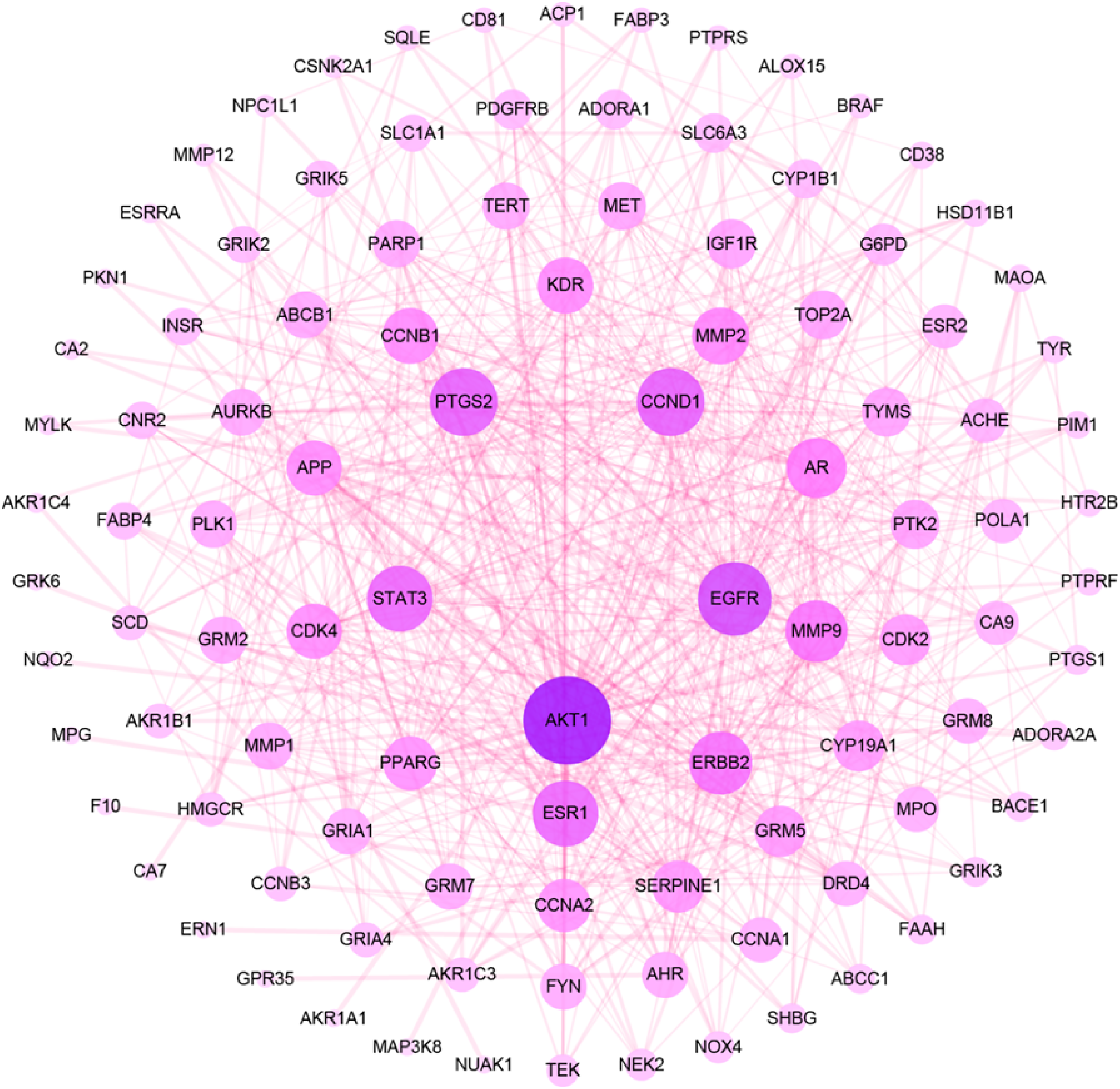
PPI network topology analysis (the larger the node is, the higher is the degree value of the node, and the darker color represents the higher value of degree).
Basic Information on the top 20 XBJ and COPD Common Targets in Each of the Three Algorithms for Network Topology Analysis (Higher Degree, Betweenness Centrality, and Closeness Centrality Represent a More Significant Role in the Network).

Abbreviations: COPD, chronic obstructive pulmonary disease; XBJ, Xuebijing injection.
Enrichment Analysis of GO Functional Terms
To investigate the molecular mechanism of XBJ for COPD treatment, GO functional enrichment analysis was conducted on 106 common targets. This analysis revealed that these targets were involved in 158 biological processes (BP), 43 cellular components (CC), and 67 molecular functions (MF). The top 10 BP terms based on significance analysis (Figure 7A) were response to drug, protein autophosphorylation, protein phosphorylation, oxidation-reduction process, negative regulation of apoptotic process, ionotropic glutamate receptor signaling pathway, cell proliferation, positive regulation of protein phosphorylation, positive regulation of ERK1 and ERK2 cascade, and positive regulation of vascular smooth muscle cell proliferation. The top 10 CC terms showed plasma membrane, integral component of plasma membrane, presynaptic membrane, apical plasma membrane, postsynaptic membrane, terminal bouton, integral component of membrane, basolateral plasma membrane, postsynaptic density, and dendrite. The top 10 MF terms resulted in enzyme binding, protein kinase activity, glutamate receptor activity, RNA polymerase II transcription factor activity, ligand-activated sequence-specific DNA binding, transmembrane receptor protein tyrosine kinase activity, protein tyrosine kinase activity, ATP binding, drug binding, carbonate dehydratase activity, and protein serine/threonine kinase activity. One of the most significant BP pathways was response to drug, which is also considered as drug sensitivity/resistance and has essential implications for COPD treatment. 28 The second was protein autophosphorylation, which initiates or inhibits downstream signaling through its metamorphosis. For example, EGFR regulates several downstream signaling pathways through its phosphorylation, and participates in the pathological process of COPD.29,30
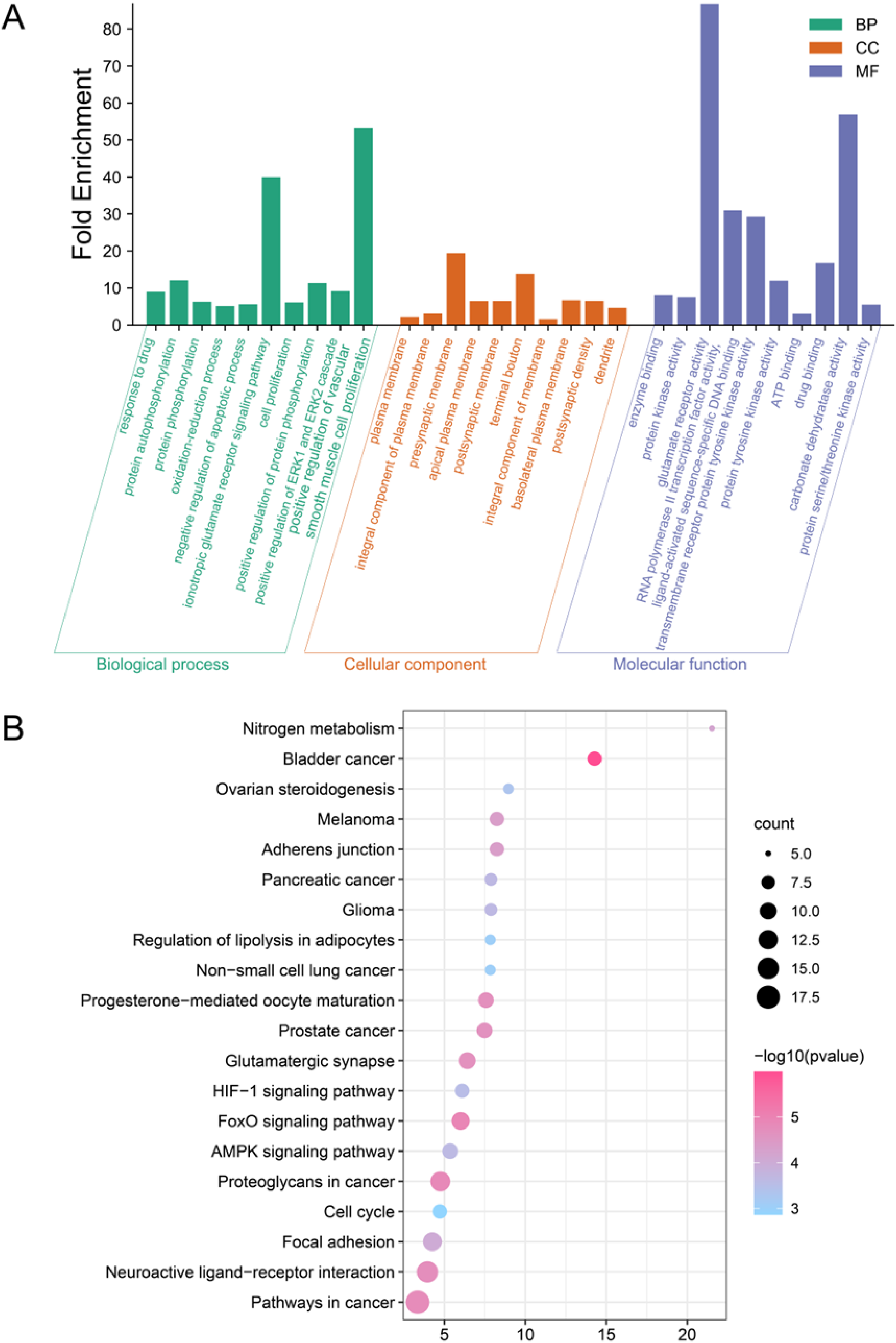
Functional enrichment analysis of common targets of XBJ and COPD. (A) GO functional enrichment analysis results (top 10 significant BP, CC, and MF) and (B) KEGG functional enrichment analysis results (top 20 significant).
KEGG Functional Enrichment Analysis Reveals key Pharmacological Mechanisms
Further, KEGG signaling pathway enrichment analysis revealed that XBJ may treat COPD through 49 KEGG pathways. Based on the significance perspective, these 106 targets were mainly involved in bladder cancer, FoxO signaling pathway, proteoglycans in cancer, pathways in cancer, neuroactive ligand–receptor interaction, progesterone-mediated oocyte maturation, glutamatergic synapse, prostate cancer, adherens junction, melanoma, nitrogen metabolism, focal adhesion, glioma, pancreatic cancer, AMPK signaling pathway, HIF-1, signaling pathway, ovarian steroidogenesis, non-small cell lung cancer, regulation of lipolysis in adipocytes, and cell cycle (Figure 7B). The most significant pathway was bladder cancer (Figure 7B), which has been associated with respiratory diseases. 31 The second was the FoxO signaling pathway, which regulates inflammatory response, 32 oxidative stress, and other functions and is associated with COPD pathology. 33
Analysis of Component-Target-Pathway Interaction Network
With the above analysis, a “Chinese medicine active component-target-pathway” network (Figure 8) was constructed to reveal their relationships. This network consisted of 58 nodes and 125 edges. There were 23 compounds of XBJ (including MOL000098 quercetin, MOL002008 myricetin and MOL001002 ellagic acid) that regulated eight key targets. These targets were engaged in almost all of the top 10 significant GO-BP, GO-MF, and KEGG pathways, suggesting that multiple active components of XBJ modulate different targets distributed in different pathways, thus exerting synergistic effects. Four core targets (eg EGFR, STAT3, CCND1, and AKT1) were involved in the Foxo signaling pathway, suggesting that this pathway may be the main molecular mechanism of XBJ for COPD treatment.

Component-compound-target-pathway network (red diamond represents the five Chinese herbs of XBJ, the light green circle the active compounds of XBJ, the yellow square the core target of XBJ, the blue hexagon the top 10 KEGG pathways of significance, the purple sagittal the top 10 GO-BPs, and the pink triangle the top 10 GO-MFs).
Molecular Docking Analysis
Molecular docking is rapidly being introduced into pharmaceutical research and development because it predicts binding affinity between small molecules and target proteins. 34 It allows for screening compounds and virtual screening of target proteins for predicting drug candidates 35 ; the calculation of the binding energy of compounds to target proteins also helps to infer their binding stability. Therefore, the eight essential proteins and their associated 19 compounds were evaluated. The molecular docking results (Table 3) show that the free binding energy of all 23 compounds was less than −5.0 (except for MOL000675 oleic acid) and over half of them were less than −7.0 with these eight proteins, indicating that they all had a good affinity and most of them had a strong stability. 36 Salvianolic acid b with AKT1, luteolin with AR, alpha-spinasterol with CCND1, salvianolic acid b with EGFR, salvianolic acid b and luteolin with ESR1, cryptotanshinone with STAT3, as well as poriferasterol with MMP9, which had the best binding activity. Figure 9A-H shows 3D plots of each protein with its optimally bound ligand separately (ESR1 only presented with luteolin). These results implied that these 23 compounds had a good activity with 8 proteins, individually, especially salvianolic acid b and luteolin, agreeing with the above results.

3D image of the compound and target binding model. (A) 3D interaction diagram of salvianolic acid b in the active site of AKT (PDB ID: 3MVH). (B) 3D interaction diagram of luteolin in the active site of AR (PDB ID: 4OJB). (C) 3D interaction diagram of alpha-spinasterol in the active site of CCND1 (PDB ID: 5VZU). (D) 3D interaction diagram of salvianolic acid b in the active site of EGFR (PDB ID: 6LUD). (E) 3D interaction diagram of luteolin in the active site of ESR1 (PDB ID: 5FQP). (F) 3D interaction diagram of poriferasterol in the active site of MMP9 (PDB ID: 5TH6). (G) 3D interaction diagram of lithospermic acid B in the active site of PTGS2 (PDB ID: 5F19). (H) 3D interaction diagram of cryptotanshinone in the active site of STAT3 (PDB ID: 6NJS).
Affinity Analysis of top 8 key Proteins and 23 Related Active Compounds.

Discussion
XBJ has long been considered to improve the prognosis of severe lung infections in China. 37 It is already used in the clinical combination therapy of COPD, especially in AECOPD, which has good efficacy in improving pulmonary dysfunction and reducing the inflammatory response. Yet, its molecular mechanism for the treatment of COPD is uncertain. Therefore, the study of the molecular mechanism of XBJ in the treatment of COPD offers a scientific and theoretical basis to guide its clinical application better.
We elucidated the pharmacological mechanisms of XBJ by a network pharmacology approach combined with Affymetrix arrays data. First, 225 XBJ-related targets were obtained by 3D structure prediction of individual compounds, and 7682 COPD-related targets were obtained by 6 sets of Affymetrix array expression data, resulting in 106 XBJ-COPD common targets. Second, quercetin, myricetin, and ellagic acid could regulate most of these targets through the compound-target network. Next, by PPI analysis, EGFR, STAT3, AKT1, CCND1, MMP9, AR, ESR1, and PTGS2 were identified as key targets in the molecular mechanism of XBJ for COPD. Then, through functional enrichment analysis, it was found that the FoxO signaling pathway should be the main pathway. Furthermore, through the construction of the component-target-pathway network, four key targets (eg EGFR, STAT3, AKT1, and CCND1) were found to be involved in the FoxO signaling pathway. Finally, applying the molecular docking technique, 8 key targets and the 23 compounds corresponding to regulating their expression were all found with good affinity. Salvianolic acid b and luteolin had the optimal binding ability to several key proteins. In summary, we speculated that the active components of XBJ on COPD were more likely to be quercetin, myricetin, ellagic acid, luteolin, and salvianolic acid b. They controlled the initiation of the FoxO signaling pathway and other pathways by regulating the expression of key targets EGFR, STAT3, AKT1, CCND1, MMP9, AR, ESR1, and PTGS2.
The main molecular mechanism was mapped based on the above results (Figure 10). EGFR activates one or more downstream effectors through receptor autophosphorylation and cytoplasmic protein binding, including the MEK/ERK, PI3K/AKT, STAT, and mTOR pathways, 38 which in turn serves as a key mediator of airway and alveolar homeostasis. Aberrant activation of one or more of its pathway components can lead to various respiratory diseases, such as COPD. Also, in COPD airway epithelial cells, the aberrant activity of EGFR increases PI3K/ Akt-mediated phosphorylation of FoxO3A, which increases the expression of chemokines and IL8. 39 PI3K agitates AKT, which in turn regulates FoxO signaling to reduce drug resistance, 40 exerts anti-apoptotic effects, 41 and regulates the cell cycle. 42 The multifunctional activity of AKT coordinates cellular mechanisms, such as oxidative stress 43 and inflammation, closely related to the destructive pathogenesis of COPD. Due to the unique properties of EGFR and AKT, they have been researched as drug targets of COPD.29,44 CCND1 (Cyclin D1) promotes cell proliferation by activating PI3K/AKT.45,46 In patients with severe COPD, STAT1 and STAT3 expressions were found to be significantly higher relative to normal individuals. Also, inhibition of inflammatory cytokine release 47 through JAK-STAT signaling with alleviation of lung tissue damage48,49 is achieved for COPD treatment. COPD patients often exhibit local inflammatory storms in lung tissue, and allergic airway inflammation can be effectively alleviated by modulating the PI3K-Akt signaling, 50 which plays an important role in COPD inflammation and oxidative stress. 51 In contrast, modulation of PI3K-Akt and HIF1 signaling can synergistically attenuate oxidative stress and inflammatory responses. 52 These arguments suggest that the pharmacological mechanism of XBJ may be through multi-pathway effects and modulation of the FoxO signaling pathway is dominant.

Elaboration of the molecular mechanism of XBJ against COPD. (Targets relevant to XBJ treatment of COPD are marked in red, while the most critical targets are marked in yellow).
Quercetin, myricetin, ellagic acid, luteolin, and salvianolic acid b in XBJ appear to have more potential to treat COPD. In COPD patients, quercetin treatment can restore corticosteroid sensitivity, 53 effectively attenuate the progression of rhinovirus-induced lung disease in a COPD mouse model, 54 and also prevent elastase/LPS-induced pathological changes by reducing oxidative stress, lung inflammation, and MMP9 and MMP12 expression. 55 Myricetin is a flavonoid with a variety of biological properties, including antioxidant, enhanced immunomodulatory function, inhibition of cytokine storm, and antiviral potential. 56 Its protective effects in chronic diseases may be achieved by inhibiting inflammation-triggering and related protein kinases with the potential to treat COPD. 57 In emphysema models, ellagic acid, as a natural antioxidant, has a protective effect against pulmonary hypertension and the development of lung and heart damage induced by elastase. 58 Luteolin, a natural flavonoid, can treat COPD by altering the M1/M2 polarization of macrophages, thereby exerting anti-inflammatory effects through downregulation of p-STAT3 and upregulation of p-STAT6, 59 as well as through ERK-mediated inflammation, apoptosis, and autophagy inhibition. 60 Salvianolic acid b has been investigated as an anti-emphysema agent with the ability to reverse alveolar structural damage/loss and inhibit induced lung cell death through JAK2/STAT3/VEGF-dependent stimulation of lung cell proliferation and migration.61,62
In conclusion, by combining network pharmacology with Affymetrix arrays, we found that XBJ may modulate the FoxO signaling pathway by regulating EGFR, STAT3, AKT1, and CCND1. Furthermore, the anti-inflammatory and antioxidative effects of XBJ are through the PI3K/Akt/FoxO axis combined with MMP9, AR, ESR1, and PTGS2 to regulate other signaling pathways. Quercetin, myricetin, ellagic acid, luteolin, and salvianolic acid b maybe primary therapeutic components.
Supplemental Material
sj-docx-1-npx-10.1177_1934578X221092705 - Supplemental material for Unraveling the Molecular Mechanism of Xuebijing Injection in the Treatment of Chronic Obstructive Pulmonary Disease by Combining Network Pharmacology and Affymetrix Array
Supplemental material, sj-docx-1-npx-10.1177_1934578X221092705 for Unraveling the Molecular Mechanism of Xuebijing Injection in the Treatment of Chronic Obstructive Pulmonary Disease by Combining Network Pharmacology and Affymetrix Array by Haochang Lin, Xinyue Zhang, Jiangya Li, Liju Liang, Qian Zhang, Yan Fang, Jingfeng Song, Weimin Yang and Zhiying Weng in Natural Product Communications
Footnotes
Declaration of Conflicting Interests
The author(s) declared no potential conflicts of interest with respect to the research, authorship, and/or publication of this article.
Funding
The author(s) disclosed receipt of the following financial support for the research, authorship, and/or publication of this article: This work was supported by Yang Fang, Zhiying Weng, and Weiming Yang (grant number Yunnan Provincial Science and Technology Department, National Natural Science Foundation of China (81402), National Natural Science Foundation of China (81860), National Natural Science Foundation of China (81870).
Data Availability
PubChem database: https://pubchem.ncbi.nlm.nih.gov/; ChemSpider database: http://www.chemspider.com/; TCMSP database: http://tcmspw.com/tcmsp.php; SwissTargetPredict database: http://www.swisstargetprediction.ch/; PDB database: http://www.rcsb.org/; STRING database: https://string-db.org/; GEO database: https://www.ncbi.nlm.nih.gov/gds/; DAVID database: 
Ethical Approval
Not applicable, because this article does not contain any studies with human or animal subjects.
Informed Consent
Not applicable, because this article does not contain any studies with human or animal subjects.
Trial Registration
Not applicable, because this article does not contain any clinical trials.
Supplemental Material
Supplemental material for this article is available online.
References
Supplementary Material
Please find the following supplemental material available below.
For Open Access articles published under a Creative Commons License, all supplemental material carries the same license as the article it is associated with.
For non-Open Access articles published, all supplemental material carries a non-exclusive license, and permission requests for re-use of supplemental material or any part of supplemental material shall be sent directly to the copyright owner as specified in the copyright notice associated with the article.
