



Abstract
Plant endophytic fungi are an important part of plant microecosystems and a natural resource for human survival and development. Various bioactive natural products produced by plant endophytic fungi show promising prospects in biopharmacy, agricultural production, and industrial fermentation. Terpenoids, the most numerous and structurally diverse natural products from endophytic fungi, possess a broad range of biological activities and huge potential for drug development. It is critically significant for ecological and economic benefits to develop their activities. This paper utilized literature analysis to summarize 200 terpenoids with biological activities that are derived from plant endophytic fungi in China between 2017 and 2019. Among them, sesquiterpenoids were the most important kind of terpenoids, and Trichoderma and Aspergillus species were main terpenoid-producing plant endophytic fungi. Furthermore, these terpenoids displayed multifarious biological activities, including antimicrobial, antipathogenic, and anti-inflammatory activities, as well as cytotoxicity, antitumor agents, and enzyme inhibition.
Endophytic fungi are organisms that live in healthy plants at a certain period of time, but do not cause significant infection in host plant tissues. Endophytes are an ecological concept rather than a taxonomic unit and are natural components of the plant microecosystem. Since Vogl 1 isolated the first endophytic fungi from ryegrass seeds in 1898, endophytic fungi have obtained more and more attention as a new microbial resource. In 1993, an endophytic fungus named Taxomyces andreanae which could produce taxol was isolated from the phloem of Taxus brevifalia Nutt by Strobel et al, 2 and aroused great interest from scholars worldwide. Both Petrini 3 and Dreyfuss and Chapela 4 estimated that there are at least 1 million species of endophytic fungi in nature that are considered an important component of biodiversity. 5,6 China contains abundant plant resources including a huge database of endophytic fungi. Chinese researchers have isolated an abundant variety of novel secondary metabolites from endophytic fungi. The discovery of and search for new active compounds from endophytic fungi have become hot topics around the world.
Endophytic fungi have been associated with plants for over 400 million years. 7 They are ubiquitous and widely distributed in various terrestrial and aquatic plants, ie, mosses, 8 ferns, 9 grasses, 10,11 shrubs, 12 deciduous and coniferous trees, 13 -16 and lichens. 17 -19 Endophytic fungi and their host plants can co-evolve for a long time, and they have a mutually beneficial symbiosis. 20 Endophytic fungi have become an important source of structurally unique secondary metabolites such as terpenoids, polyketides, alkaloids, benzopyranones, benzoquinones, phenols, steroids, tetralones, and xanthones. Furthermore, they also show diverse potential bioactivities, ie, antifungal, antiviral, antibacterial, cytotoxic, and immunosuppressive activities, as well as wide potential for the exploration of novel therapies.
Terpenoids can also be regarded as a class of natural products linked in various ways by isoprene or isopentane. Terpenoids are widely distributed in nature and classified based on the isoprene rule, including hemiterpenoids, monoterpenoids, sesquiterpenoids, diterpenoids, sesterterpenoids, and triterpenoids. Several studies indicated that terpenoids have significant biological activity, and many terpenoids have been used clinically with great curative effects. Paclitaxel, a diterpene derivative, is isolated from the bark 21 and endophytic fungus T. andreanae 22 of Taxus brevifolia. Paclitaxel has a positive therapeutic effect on a variety of cancers such as ovarian, breast, colon, rectal, bladder, and lung cancer, as well as on rheumatoid arthritis by inhibiting microtubules depolymerization and stabilizing microtubules, thereby affecting mitosis. Terpenoids are recognized as a diverse group of natural compounds possessing a broad range of biological activities and huge potential for drug development. Therefore, it is important to study novel and active terpenoids isolated from endophytic fungi.
This paper summarized the research progress on terpenoids and biological activities from plant endophytic fungi between 2017 and 2019 through literature analysis of studies reported by Chinese researchers. A total of 200 terpenoids were obtained from the plant endophytic fungi genera Aspergillus, Trichoderma, Penicillium, Bipolaris, Phomopsis, and Paraconiothyrium, including monoterpenoids
Results and Discussion
This review summarized the remarkable findings from characteristic terpenoids and biological activities of plant endophytic fungi over a 3-year period from 2017 to 2019. All relevant databases were searched for the keywords “endophytic fungi,” “plant endophytic fungi,” and “terpenoids.” By searching through foreign language databases like PubMed, SpringerLink, and ACS publication, as well as Chinese databases like CNKI and Wanfang Data, more than 600 Chinese and English articles in total were selected and about 46 references were cited in this paper.
Monoterpenoids
Monoterpenoids consist of a 10-carbon backbone (2 isoprene units) structure and can be divided into 3 subgroups: acyclic, monocyclic, and bicyclic. Three carene-type monoterpenoids, 2-carene-5,8-diol (

Chemical structures of monoterpenoids 1-
Sesquiterpenoids
Sesquiterpenoids are the most diverse group of terpenoids derived from 3 isoprene units and exist in a wide variety of forms. According to our literature analysis, this paper summarized 145 characteristic examples of sesquiterpenoids isolated from plant endophytic fungi between 2017 and 2019, including bisabolane, cadinane, cyclonerane, guaiane, hirsutane, tremulane, protoilludane, eudesmane, illudalane, eremophilane, drimane, sativene, trichothecene, and other different types. These sesquiterpenoids exhibited a variety of biological activities such as antibacterial, antifungal, antipathogenic, antitumor, and hyperglycemic activities, as well as latent hepatic protection effects, and promotion of root growth. Moreover, Aspergillus, Trichoderma, and Penicillium species were the most important sesquiterpenoid-producing endophytic fungi.
A total of 19 bisabolane-type sesquiterpenes (
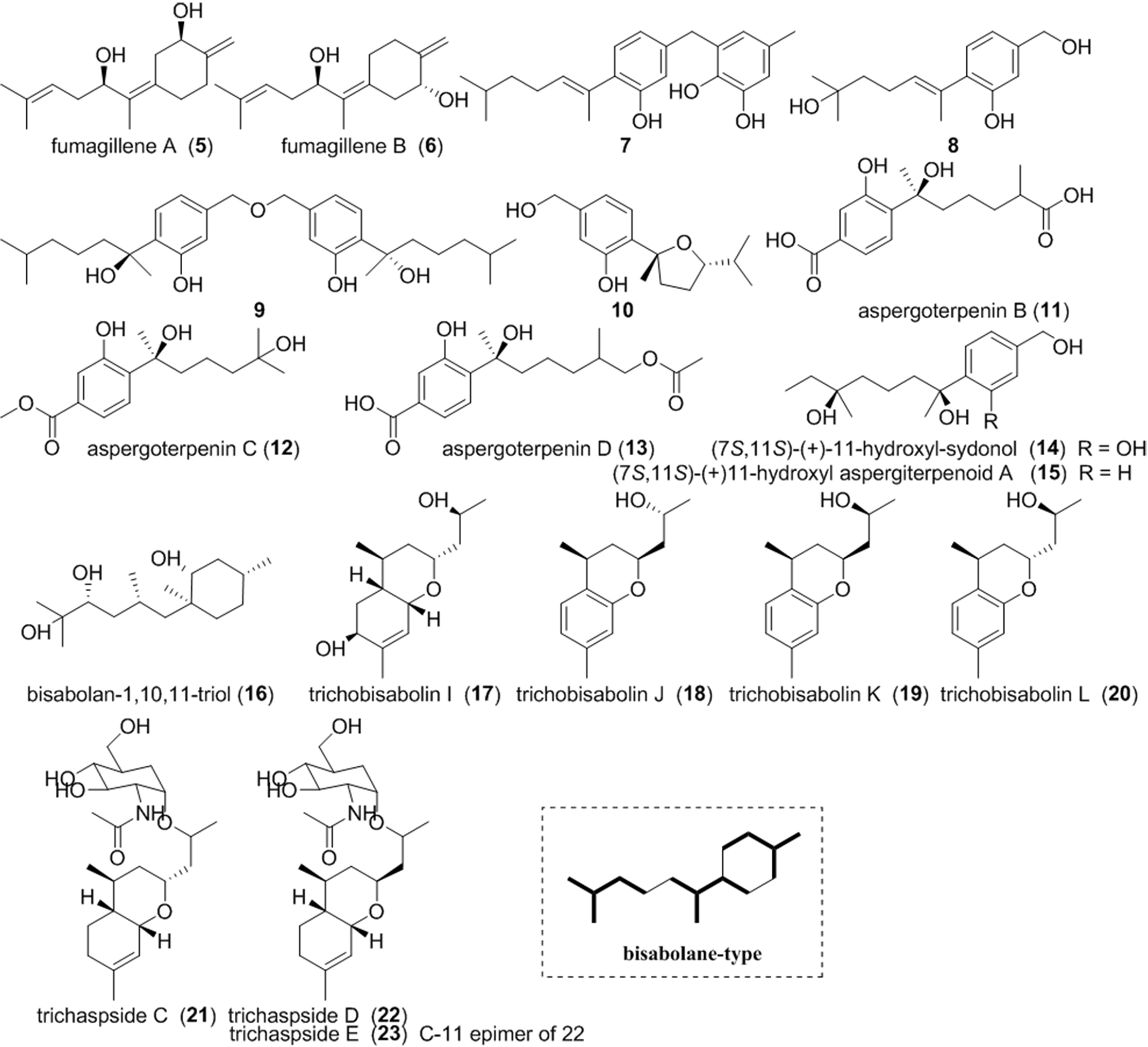
Chemical structures of bisabolane-type sesquiterpenes 5-
In addition, Trichoderma species have been an important of bisabolane sesquiterpenoid-producing fungi. Bisabolan-1,10,11-triol (
Among these sesquiterpenoids, there were 14 cyclonerane-type sesquiterpenoids (Figure 3). All of them were isolated from Trichoderma species. 9-Cycloneren-3,7,11-triol (

Chemical structures of cyclonerane-type sesquiterpenoids 24-37.
Cadinane-type sesquiterpenoids have been isolated from several Trichoderma and Aspergillus species (Figure 4). They show a broad spectrum of antibacterial activity and latent hepatic protection effects. Trichocadinins B-G (

Chemical structures of cadinane-type sesquiterpenoids 38-53.
Oxytropiols A-J (

Chemical structures of guaiane-type sesquiterpenoids 54-63.
Ten hirsutane-type sesquiterpenoids were isolated from Chondrostereum and Cerrena sp. (Figure 6), including chondroterpenes A-H (

Chemical structures of hirsutane-type sesquiterpenoids 64-
An investigation of the metabolites from different cocultures of Nigrospora oryzae and Irpex lacteus from seeds of Dendrobium officinale (collected from Wenshan City in the Yunnan Province, China) in solid medium revealed 2 tremulane sesquiterpenes, 5-demethyl conocenol C and nigrosirpexin A (
Three sesquiterpenoids with an eremophilane skeleton have also been identified from plant endophytic fungi (Figure 7). The eremophilane sesquiterpenoid leptosphins A (
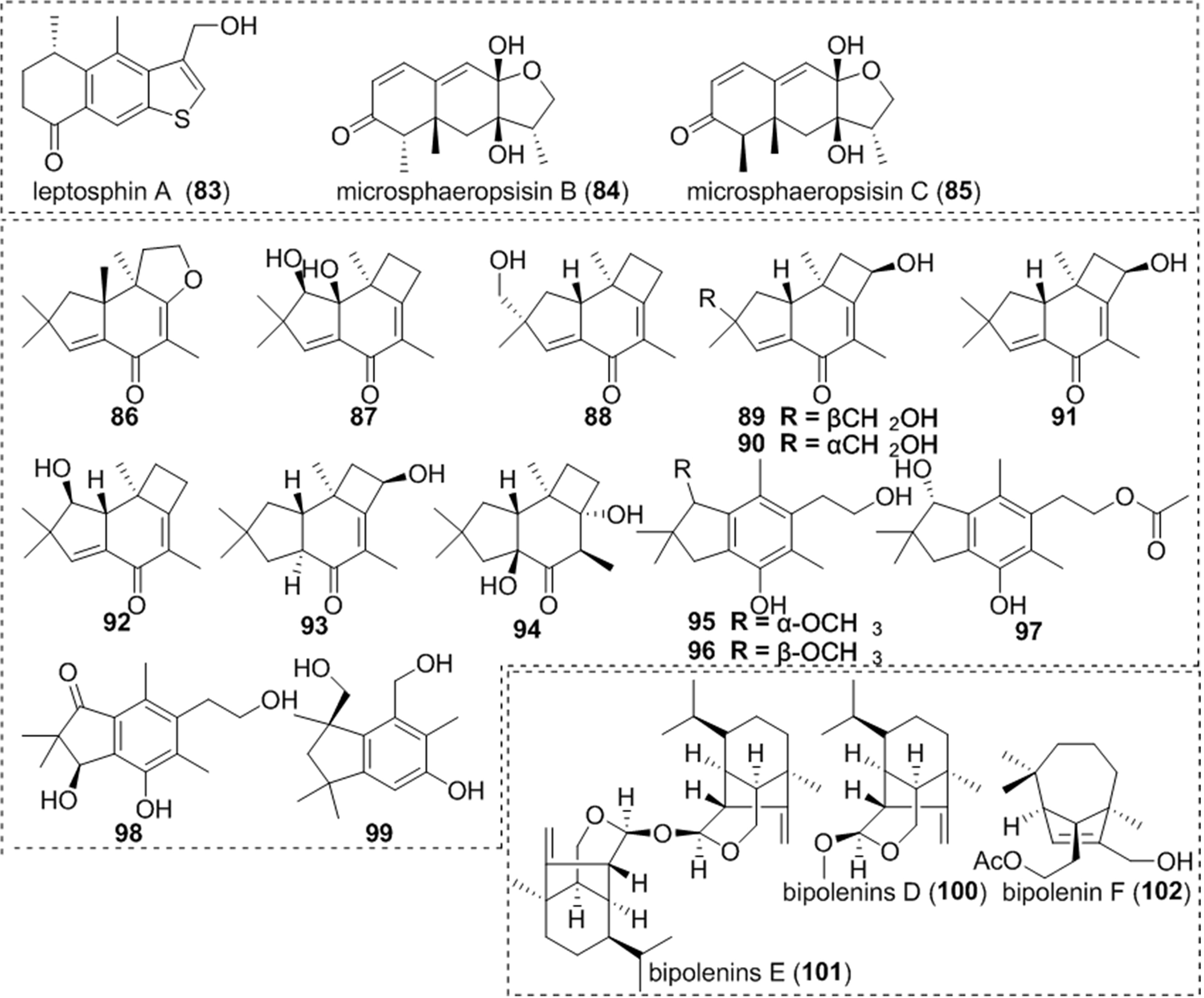
Chemical structures of sesquiterpenoids 83-102.
Many different types of sesquiterpenoids have been identified in the same fungi. For instance
Two drimane-type sesquiterpenoids have been isolated from Phoma and Trichoderma species (Figure 8). One rare 14-nordrimane-type sesquiterpenoid, named phomanolide (
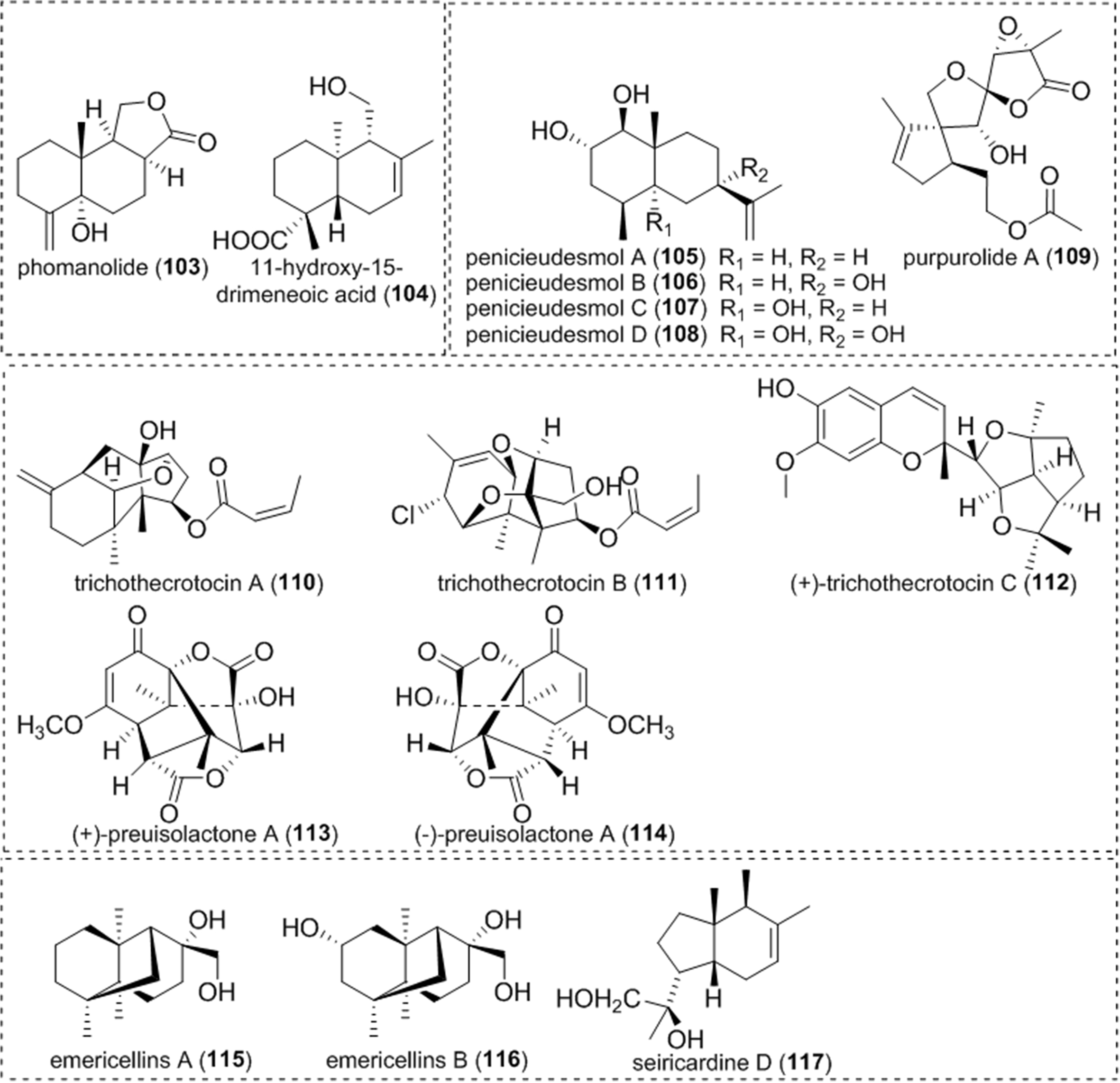
Chemical structures of sesquiterpenoids 103-117.
Eudesmane and bergamotane sesquiterpenoids have been identified from Penicillium sp. and are displayed in Figure 8. Penicieudesmols A-D (
Some sesquiterpenoids exhibited potent antibacterial and antipathogenic effects. Two trichothecene sesquiterpenoids, trichothecrotocins A and B (
Diterpenoids
Diterpenoids are a group of natural products that contain 20 atoms of carbon derived from the condensation of 4 isoprenyl units. Diterpenoids have attracted increasing attention from chemists because of their diversified structures and potent biological activities. A total of 14 diterpenoids isolated from plant endophytic fungi between 2017 and 2019 were collected in this paper, including isopimarane, abietane, harziane, and cyclopiane types. They exhibited antibacterial, cytotoxic, and quinone reductase-inducing activities. Furthermore, Trichoderma species were the most important diterpenoid-producing endophytic fungi.
A number of diterpenoids showed outstanding biological activities. Koninginols A-C (

Chemical structures of diterpenoids 118-131.
Several different types of diterpenoids, including abietane, harziane, proharziane, and cyclopiane, were separated from plant endophytic fungi (Figure 9). One abietane-type diterpenoid, hydroxyldecandrin G (
Sesterterpenoids
Almost all sesterterpenoids isolated from plant endophytic fungi evaluated in this paper were ophiobolin-type derivatives (Figure 10). A total of 28 sesterterpenoids were obtained from Aspergillus and Bipolaris species. Ophiobolin-type derivatives are a group of structurally irregular and tricarbocyclic natural products belonging to the sesterterpenoid family whose structures contain a tricyclic 5-8-5 carbotricyclic skeleton derived from the condensation of 5 isoprenyl units. These ophiobolin-type sesterterpenoids showed diverse biological activities.

Chemical structures of ophiobolin-type sesterterpenoids 132-159.
Eleven ophiobolin-type sesterterpenoids, asperophiobolins A-K (
Triterpenoids
Triterpenoids are common terpenoids with a 30-carbon skeleton based on 6 isoprene units. Triterpenes have attracted attention for development as pharmaceuticals.
In this paper, we summarized 11 triterpenoids isolated from endophytic fungi (Figure 11). Nine triterpenoids, kadhenrischinins A-H (

Chemical structures of triterpenoids 160-170.
Meroterpenoids
Meroterpenoids have received much attention from chemists for their remarkable structural diversity and widespread biological activities. Meroterpenoids are hybrid terpenoids derived from a mixed-biosynthetic pathway, which is composed of the terpenoid pathway and nonterpenoid pathway. Based on their different biosynthetic origins, meroterpenoids can be grouped into 2 major classes: polyketide-terpenoids and nonpolyketide-terpenoids. The main species of meroterpenoid-producing endophytic fungi were Talaromyces, Aspergillus, Bipolaris, and Penicillium.
Six meroterpenoids (

Chemical structures of terpene-polyketide hybrid meroterpenoids 171-192.
Cochlioquinones are 6/6/6/6-tetracyclic meroterpenoids that consist of a sesquiterpenoid and a polyketide. The endophytic fungus Bipolaris sp. L1-2 from Lycium barbarum afforded 11 cochlioquinone derivatives (
Two terpene-polyketide hybrid terpenoids (
Polyketide-terpenoids have also been identified in Penicillium (Figure 12). Isopenicins A-C (
Additionally, 8 guignardone-type nonpolyketide-terpenoids have been obtained from plant endophytic fungi (Figure 13). Chemical investigation of a TCM (Traditional Chinese Medicine) endophytic fungal strain of Phyllosticta sp. J13-2-12Y from the leaves of Acorus tatarinowii resulted in the isolation of 3 unusual meroterpenoids, phyllomeroterpenoids A-C (

Chemical structures of guignardone-type nonpolyketide-terpenoids 193-200.
Conclusion
This paper summarizes the chemical structure types and related biological activities of terpenoids isolated from plant endophytic fungi in China between 2017 and 2019 by reviewing research progress in the relevant literature (Table 1). This paper exhibited 200 terpenoids, mainly from the plant endophytic fungi species Trichoderma, Aspergillus, Bipolaris, Penicillium, Phomopsis, and Alternaria, including monoterpenoids
Summary of Terpenoids 1-
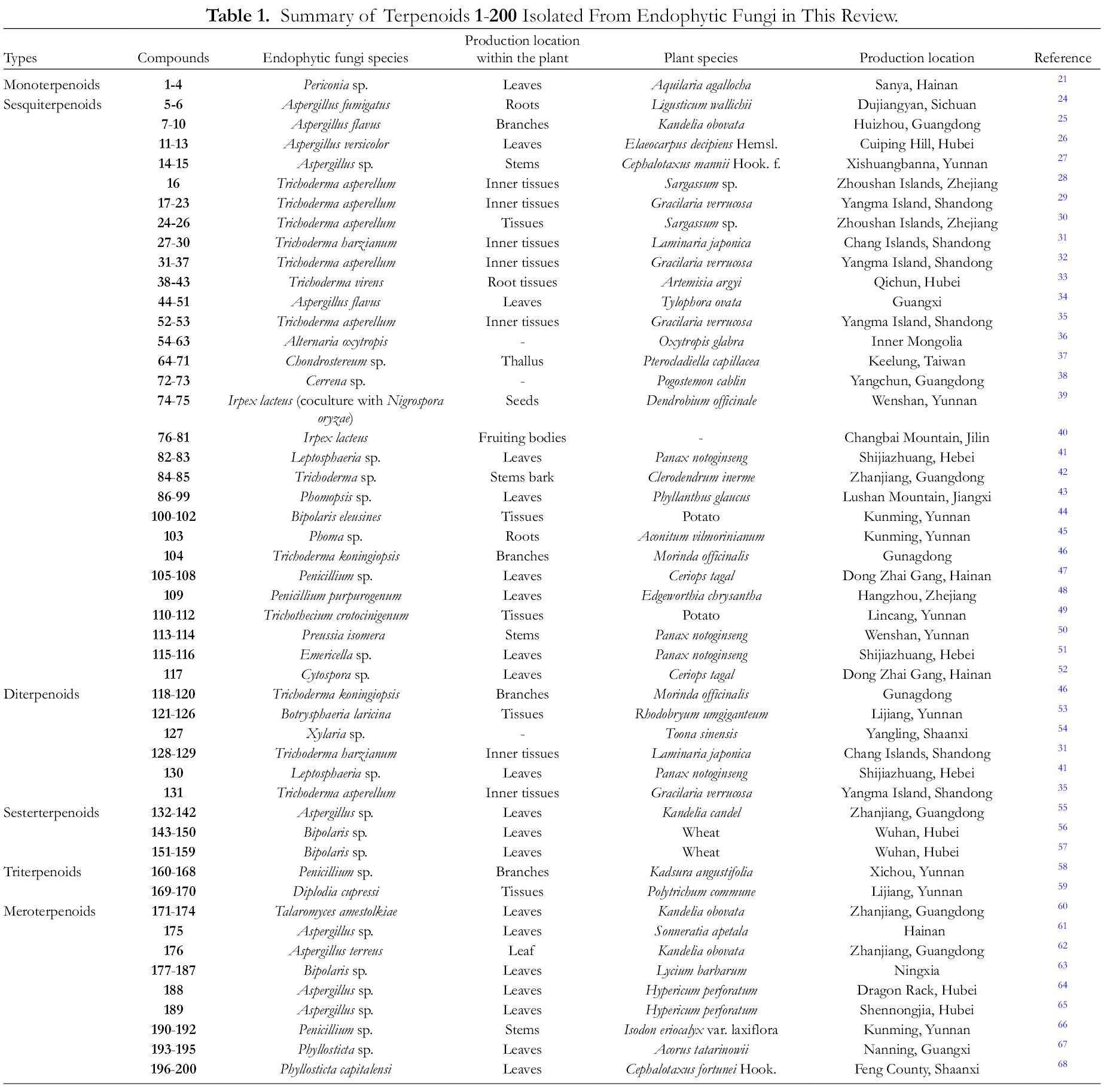
A total of 200 terpenoids were isolated from plant endophytic fungi in China between 2017 and 2019. Among these 200 compounds, 113 and 30 natural products from plant endophytic fungi were sesquiterpenoids and meroterpenoids, respectively (Figure 14(A)). According to the above analysis, we concluded that sesquiterpenoids were the most important kind of terpenoids and meroterpenoids were the second most important ones. After analyzing 113 characteristic sesquiterpenoids isolated from plant endophytic fungi, we found that sesquiterpenoids consisted of different types (such as bisabolane, cadinane, cyclonerane, guaiane, hirsutane, tremulane, protoilludane, edudesmane, illudalane, and eremophilane) and the bisabolane-type was the main class of sesquiterpenoids (Figure 14(B)). Meanwhile, Trichoderma and Aspergillus species were the main terpenoid-producing plant endophytic fungi (Figure 14(C); Table 1). The data in Table 1 reveal that endophytic fungi producing terpenoids were mainly isolated from the leaves and tissues of plants, which were widely distributed in southern China.

(A) The number of terpenoids reviewed in this paper (including monoterpenoids, sesquiterpenoids, diterpenoids, sesterterpenoids, triterpenoids, and meroterpenoids); (B) the number of different sesquiterpenoid types isolated from plant endophytic fungi; and (C) the number of terpenoids produced from different endophytic fungi.
It is interesting that some terpenoids play an important biological role on the development of their plant host. For example, trichothecrotocins A and B (
In conclusion, this paper provides a research foundation for excavating the diverse structure and activity of terpenoids from plant endophytic fungi. The data analysis indicated that plant endophytic fungi are a momentous source of novel and active terpenoids. This paper proposed the future development direction of research on endophytic fungi and active substances and provided references for future research. It has been recognized that the abundant plant endophytic fungi resources have great ecological significance and economic value for the development and utilization of their active substances.
Footnotes
Declaration of Conflicting Interests
The author(s) declared no potential conflicts of interest with respect to the research, authorship, and/or publication of this article.
Funding
The author(s) disclosed receipt of the following financial support for the research, authorship, and/or publication of this article: This work was supported in part by Shandong Administration of Traditional Chinese Medicine (2019-0989) and the National Natural Science Foundation of China Youth Project (81903479).
