



Abstract
Cucurbita species (Cucurbita moschata and Cucurbita maxima) are rich sources of nutrients, especially carotenoids and carbohydrates. Metabolites in pulps of C. moschata and C. maxima lines were examined by high-performance liquid chromatography and gas chromatography–mass spectrometry. Our results revealed that glucose and sucrose were the dominant sugars in C. maxima and C. moschata, respectively. A correlation was found between Brix percentage and sucrose levels as compared with glucose and fructose. A greater amount of myo-inositol had accumulated in C. moschata lines compared with C. maxima. Conversely, total carotenoids and antioxidant activity were found to be higher in C. maxima lines than in C. moschata. A strong correlation of glucose, fructose, and sucrose with β-carotene and violaxanthin revealed that it will be difficult to develop pumpkin cultivars with both high inositol and carotenoid levels. In conclusion, the composition of carbohydrates and carotenoids was more diverse in C. moschata lines than in C. maxima lines. Our results will contribute to a better understanding of metabolite changes in the fruits of these as well as other pumpkin species.
The Cucurbita genus is composed of 5 major species including C. pepo, C. moschata, C. maxima, C. argyrosperma, and C. ficifolia. Pumpkin species, C. moschata (butternut squash) and C. maxima, are important vegetables widely cultivated in various parts of the world. Pumpkin fruits, shoots, and seeds are rich sources of nutrients that offer multiple human health benefits. 1 -3 Biologically active substances isolated from pumpkins have been used to treat several ailments due to their antidiabetic, antihypertensive, antitumor, antioxidant, immunomodulation, antibacterial, antihypercholesterolemia, intestinal antiparasites, anti-inflammation, and antiallergic activities. 4 The fruit flesh is rich in carotenoids, tocopherols, polysaccharides, carbohydrates, pectin, inositol, and minerals. In addition, an extraordinary trait of the fruit is its low caloric value with merely 15-25 kcal/100 g. 5 The most frequently consumed Cucurbita species in China is C. moschata. However, cultivars of C. maxima are growing in popularity and are appreciated by Chinese consumers for their high carotenoid contents. Even though it is important to produce a good tasting, attractive cultivars with high nutritional value, limited reports are available that analyze the metabolite contents of the fruit flesh of different pumpkin species to evaluate their nutritional quality.
Pumpkins are a good vegetable source for carotenoids,
6
as their flesh colors vary from yellow to orange which is associated with different carotenoid compositions.
7
As the precursors for vitamin A,
8
carotenoids are essential components of the human diet and play a significant role in reducing cancer risk and in stimulating the immune system. Carotenoids are efficient antioxidants to protect cells from the damage by free radicals and singlet oxygen.
9
-11
Particularly, the intake of carotenoids from the pumpkin is an important supplement to the diet of a population where vitamin A deficiency is a serious concern. On the other hand, studies also showed that consumption of pumpkin powder, with or without its sugar removed, resulted in an increase of plasma insulin content leading to a reduction of blood glucose.
4
It was demonstrated that the presence of inositol, polysaccharides, and pectin in fruit serves to lower the glucose level in blood.
12
Inositol is a vitamin-like metabolite belonging to the vitamin B family and is present in all animal tissues. Abnormalities in inositol metabolism cause myo-inositol (MI) deficiency in human organs, which contributes to the development or aggravation of complications of diabetes.
13,14
MI, together with
According to previous reports, lutein and β-carotene were found to be the principal carotenoids that accumulated in different cultivars of C. pepo. 17 Inositol was first reported to be present abundantly in C. ficifolia, and the hypoglycemic activity of its fruit was studied. 18 -20 Nutritional metabolites from C. moschata also displayed glucose-lowering activity. 21 The changes in metabolites during the developmental and postharvest stages of squash have been studied using gas chromatography–mass spectroscopy (GC-MS) metabolite profiling. 22 GC-MS was also used to analyze fruit and seed chemicals of C. pepo. 23,24 Characterization of composition traits relevant to organoleptic properties like carotenoids, inositol, and sugars is therefore of interest to consumers.
The objective of the present study was to improve our knowledge of the composition of carotenoids and low molecular weight metabolites including sugar and inositol in lines of C. moschata and C. maxima. We also evaluated the quality attributes, antioxidant activity, and the major phytochemical differences of selected lines.
Materials and Methods
Plant Materials
In this study, 10 lines each from C. moschata and C. maxima were considered for analysis. The pumpkin plants were cultivated at the Research station of Guangdong Academy of Agricultural Sciences, Guangzhou, China. Four-weeks-old seedlings were planted in February 2015 and fruits were harvested in July 2015. One fruit was saved from each plant and fully ripened fruits were selected. Three naturally ripened fruits, representing 3 replicates, were used for analysis. Each pumpkin fruit was divided into quarters by 2 longitudinal cuts. Two different parts without peels and seeds were used for analysis and were fragmented and placed in a blender (Philips HR7628/00) to obtain a homogeneous mass (60 g). The fruit samples were then freeze dried to remove water. The dried fruit samples were ground to a fine powder and stored at −80°C.
Determination of Brix, pH, and Dry Matter Contents
The homogeneous mass of fruit flesh was ground and filtered by plastic gauze to produce juice. Brix percentage (total soluble solids) was measured with an Atago Pocket PAL-1 (Tokyo, Japan) refractometer. A few drops of juice were placed onto the meter with deionized water used as blank. The pH was measured by a Metrohm 836 Titrando in 10 ml juice. The dry matter contents were determined by drying the samples to constant mass.
GC-MS Assay
GC-MS analysis was performed according to the method described by Donahue.
25
Freeze-dried samples were ground and mixed with 70% methanol.
Pigment Extraction and Analysis by HPLC
Pigments were extracted and analyzed by high-performance liquid chromatography (HPLC) according to the method described by Zhong. 26 To quantify the carotenoid content of pumpkin fruits, 50 mg of freeze-dried fruit sample was ground in the presence of acetone and liquid nitrogen until the cell debris were almost colorless. The combined acetone extracts were pooled and centrifuged at 15000× g for 20 minutes to remove particulate matters and then brought to dryness under a stream of nitrogen to get their dried pellets. The dried pellets were redissolved in acetone to get a 20 µL volume of each extract, which were separated by ultra-performance liquid chromatography on a Waters Spherisorb (ThermoFisher Scientific Inc, Waltham, MA, USA) using a modified method previously described. 26 Pigments were eluted at a flow rate of 1.2 mL/min with a linear gradient from 100% solvent A (acetonitrile/methanol/0.1M Tris–HCl [pH 8.0], 84:2:14, v/v/v) to 100% solvent B (methanol/ethyl acetate, 68:32, v/v) over a 15-minute period, followed by 10 minutes of 100% solvent B. Pigments were identified on the basis of their absorption spectra and retention times relative to standard compounds. Pigments were quantified by integrating the peak areas at 450 nm and converting them to concentrations by comparison with authentic standards purchased from Sigma (St Louis, MO, USA).
Free Radical Scavenging Activity by DPPH Assay
Freeze-dried samples were extracted twice with acetone. 2,2-Diphenyl-1-picrylhydrazyl (DPPH) radical scavenging activity was determined according to a previously published method. 27 Equal volumes (1 mL) of extract and DPPH solution (0.2 mM in ethanol) were mixed and kept at room temperature for 30 minutes before the decrease of the absorbance of the solution was measured at 517 nm. The percentage of inhibition was calculated as follows:
% inhibition = [1 − (absorbance of the solution with extracts/ absorbance of the solution without extracts)] × 100.
Data Analysis
Three replicates were used for the analyses and results were represented as averages ± standard error. The data analysis was performed by paired-samples t-test by SPSS 25 (IBM Corp. Released 2017. IBM SPSS Statistics for Windows, Version 25.0. Armonk, NY, USA: IBM Corp.). The dendrogram was constructed using SPSS 25 following Ward’s method, and principal components analysis (PCA), which has been widely used to correlate sets of chemical compounds, was performed by SPSS 25 for standardized composition data using pairwise Euclidean distances among line means.
Results and Discussion
Fruit Characterization and Soluble Solid Content Analysis
We selected 10 highly self-hybridized lines each of C. moschata and C. maxima with obvious differences in fruit phenotypes. The peel colors of the fully ripened fruits were significantly different. Fully ripened fruits of C. moschata lines exhibited orange color and most of them were striped, while C. maxima lines showed various colors including nearly white, light pink, pink, green, and red (Table 1). Furthermore, the fruit shape and weight of the C. moschata lines analyzed in this study were more diverse than those of C. maxima, as the fruit shapes of the C. moschata lines ranged from round to took and the weight ranged from 1 to 3 kg, while fruit shapes of most of the C. maxima lines were near round or flat round and the weight ranged from 1 to 1.50 kg (Table 1). Soluble solid contents ranged from 6.70 to 8.80 for C. maxima lines and from 7.30 to 10.90 for C. moschata lines. It revealed that C. moschata lines reserved more soluble contents compared with C. maxima. From our results, it has been observed that soluble solid contents were directly correlated with the contents of sucrose in C. moschata and C. maxima (Tables 1 and 2). In previous studies, similar results were obtained for Brix comparisons of C. maxima, C. pepo, and C. moschata cultivars. Butternut exhibited the highest range (11.9) of soluble contents. 28 There was a slight difference between the pH of C. moschata and C. maxima lines with values ranging from 6.49 to 7.8. According to the present results, randomly 6 lines of C. moschata were slightly acidic in nature (Table 1). Dry matter contents of C. maxima (6.66-14.45) lines were lower as compared with C. moschata (11.42-16.86) (Table 1).
Cucurbita Lines Used in This Study and Phenotype of the Fruits.

Data are the average values from 3 individual fruits ± standard error of mean. Z: C. moschata; Y: C. maxima.
Sugar Composition of the Fully Ripened Fruits of 20 Cucurbita Lines From This Study Analyzed by Gas Chromatography–Mass Spectrometry.
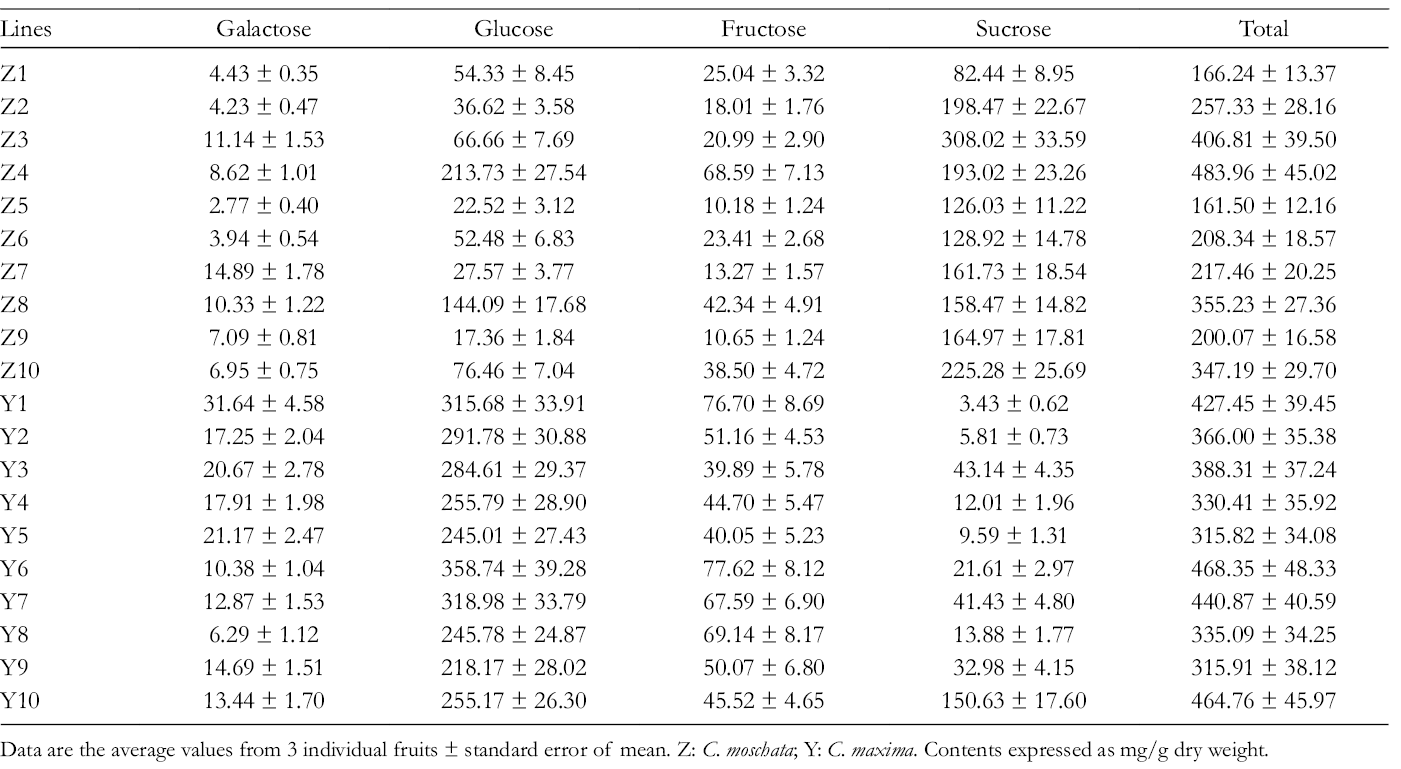
Data are the average values from 3 individual fruits ± standard error of mean. Z: C. moschata; Y: C. maxima. Contents expressed as mg/g dry weight.
Compound Identification and Analysis by GC-MS
In order to analyze the low molecular weight metabolites, GC-MS was performed, and 14 peaks were identified in the total ion chromatogram by comparing with respective standards or mass spectra in the library (Figure 1; Table S1). The dominant compounds were 3 monosaccharides including fructose, glucose, and galactose and 1 disaccharide, sucrose. In addition, 2 isomers of inositol, MI and DCI, and 3 acids including butanedioic acid, hexadecanoic acid, and octadecanoic acid were also detected in the pumpkin fruits. The phytochemicals including monosaccharides and disaccharides, inositol and acids that were simultaneously identified in Cucurbita fruits have been rarely reported.

Total ion chromatogram of cyclitol and sugar profile of Cucurbita moschata. 1, Butanedioic acid; 2,
In the fruit of C. moschata, we found sucrose to be the major sugar followed by glucose and fructose, with a low content of galactose, while in C. maxima, glucose was the main sugar followed by sucrose, fructose, and galactose. The sucrose content in C. moschata ranged from 82.44 to 308.02 mg/g dry weight (DW), while in C. maxima, the sucrose content ranged from 3.43 to 150.63 mg/g DW (Table 2). Glucose content in C. maxima ranged from 218.17 to 358.74 mg/g DW, while in C. moschata glucose content ranged from 17.36 to 213.73 mg/g DW. Fructose accumulated to higher levels in C. maxima (40.05-77.62 mg/g DW) compared with C. moschata (10.18-68.59 mg/g DW). The total soluble sugar contents exhibited a narrower range in C. maxima (315.82-468.35 mg/g DW) compared with C. moschata (161.5-483.96 mg/g DW). Despite the fact that C. maxima contained higher or equal amounts of total soluble sugar contents compared with C. moschata, the soluble solid and sucrose contents in most of the C. moschata fruits were higher (Tables 1 and 2) or of better quality than C. maxima and this phenomenon might be helpful to explain the fact that glucose was the major component in C. maxima instead of sucrose. The higher concentration of sucrose correlated with high contents of Brix, which leads to good sensory qualities (Table 3).
Pearson’s Correlation Coefficient (R) Among Carotenoids, Inositol and Other Quality Traits of Cucurbita Fruits.

DCI,
Significance:***P < 0.001; **P < 0.01; *P < 0.05.
As shown in Table 4, MI contents were significantly higher in C. moschata lines (7.73-25.95 mg/g DW) compared with C. maxima (3.07-7.41 mg/g DW). DCI contents in these 2 species were significantly lower than the contents of MI. Our results are similar to previous findings revealing that in C. ficifolia DCI content was lower than MI content (2.90 mg/g DW vs 7.80 mg/g DW, respectively). 20 The differences in the composition of inositol in different Cucurbita species might be due to the molecular regulation of inositol synthesis, as MI is a precursor of DCI. 15 Cucurbita ficifolia is the most studied Cucurbita species due to its efficient potential activity against diabetes. 29,30 In our study, C. moschata, recognized as a traditional medicine in China for diabetes, accumulated higher MI contents than C. maxima and C. ficifolia. This novel finding of a possible association between the high MI content of C. moschata and its antidiabetic activities warrants further study. MI plays an important role in plant biochemistry and physiology as a significant intermediate for inositol metabolism. 31 Free MI is generally regarded as a universal constituent in fruit from different species. According to previous research, MI levels in Actinidia arguta (hardy kiwi) were 20%-60% of its total soluble sugars in half ripened fruit but had fallen to 1%-2% in fully ripened fruit. 31 -33 MI has been reported to be one of the factors related to the quality of different fruits and their positive physiological effects on human health. 34 In our study, we found that free MI accumulated in fruits of C. moschata lines (25 mg/g DW), reaching up to 12.50% of total soluble sugars. These results indicated that C. moschata lines could serve as a major future source of MI. Minor components, including butanedioic acid, hexadecanoic acid, and octadecanoic acid, were found in similar amounts in C. moschata and C. maxima lines (Table 4).
The Inositol and Acid Compositions of the Fully Ripened Fruits of 20 Cucurbita Lines From This Study Analyzed by Gas Chromatography–Mass Spectrometry.
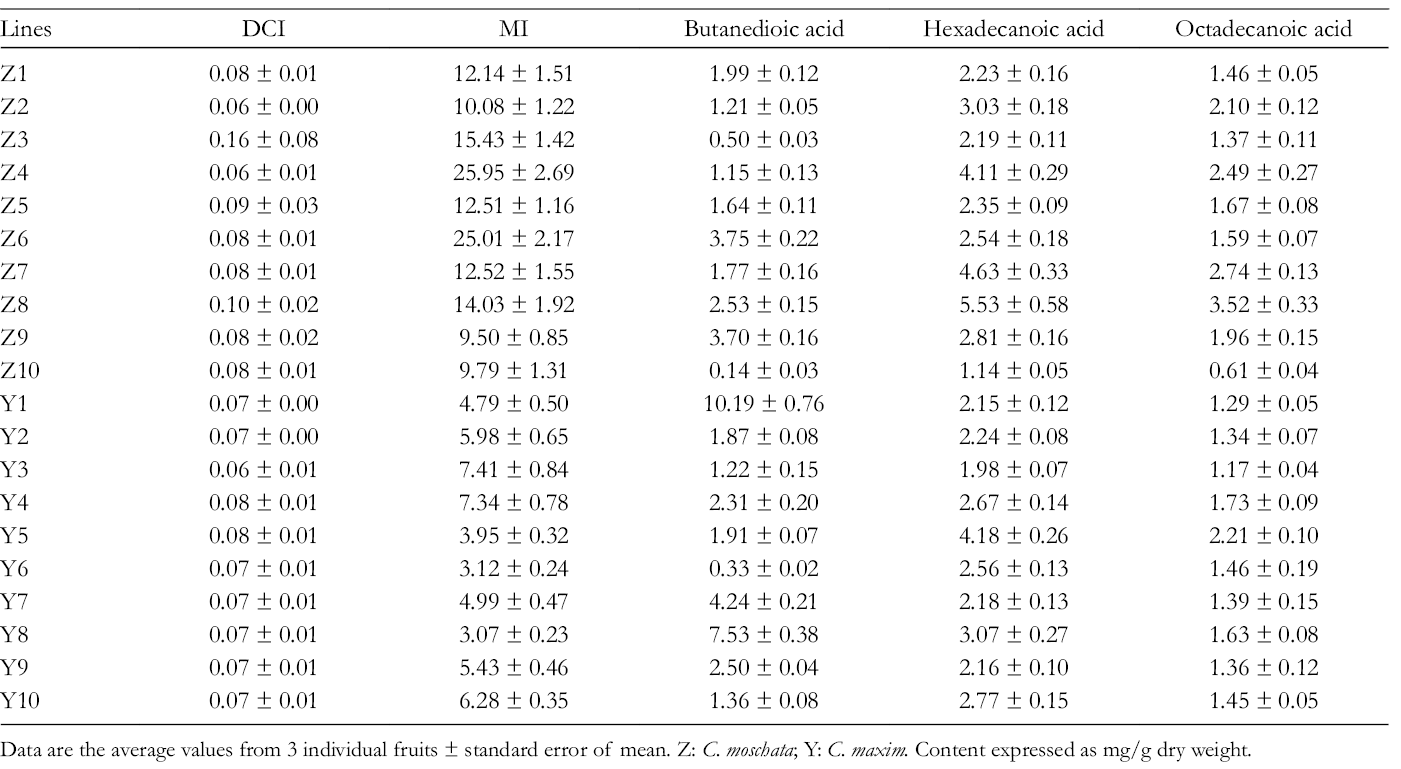
Data are the average values from 3 individual fruits ± standard error of mean. Z: C. moschata; Y: C. maxim. Content expressed as mg/g dry weight.
Analysis of Carotenoid Content and Antioxidant Activity
The principal carotenoids accumulating in C. moschata lines were violaxanthin, lutein, α-carotene, and β-carotene, whereas in C. maxima they were violaxanthin, lutein, and β-carotene (Table 5). The carotenoid composition of these 2 species was consistent with previous studies. 35 -38 Total carotenoid contents in C. moschata lines ranged from 172.63 to 690.39 µg/g DW, while in C. maxima it ranged from 358.04 to 1691.03 µg/g DW (Table 5). The lines of C. maxima displayed diverse fruit pericarp colors ranging from orange, green to almost white, while, on the other hand, the pericarp color of C. moschata was mostly the same. It is speculated here that the pericarp color of C. maxima has a direct connection with the carotenoid contents, as lines with a deep orange pericarp exhibited the highest amounts of total carotenoids (Table 5). Conversely, 1 C. maxima line (Y8) with almost white flesh exhibited the lowest carotenoid content (Tables 1 and 5). From these results, it can be deduced that carotenoid content in different C. maxima lines is correlated with the pericarp color. According to previous reports, carotenoid contents in C. moschata range from 234.21 to 404.98 µg/g, 36 while in our study, carotenoid contents of up to 600 µg/g DW were detected in C. moschata lines.
The Carotenoid Compositions of the Fully Ripened Fruits of 20 Cucurbita Lines From This Study Analyzed by High-Performance Liquid Chromatography.

DPPH, 2,2-diphenyl-1-picrylhydrazyl; DW, dry weight; ND, Not detected.
Data are the average values from 3 individual fruits ± standard error of mean. Z: C. moschata; Y: C. maxima.
aExpressed as antioxidant activity (%).
We assessed in vitro antioxidant activity by DPPH assay. This method is based on the scavenging of DPPH radicals by antioxidants and is the most frequently used among the various assays measuring antioxidant activity. All lines of C. moschata and C. maxima tested had the ability to reduce the stable, purple-colored DPPH radicals, as shown in Table 5. Antioxidant activity in C. moschata lines ranged from 14.41% to 17.27%, while in C. maxima lines, it ranged from 15.89% to 25.24% (Table 5). Flours of C. moschata have been reported to have DPPH scavenging activity. 39 In this study, we confirmed the antioxidant activity of these 2 species and we also found that DPPH scavenging activity was higher in C. maxima than in C. moschata. DPPH was the key factor to estimate metabolic contents due to its close correlation with a total of 8 metabolic factors (neoxanthin, violaxanthin, lutein, β-Carotene, MI, galactose, glucose, sucrose, Brix, and dry matter contents). An inverse relationship was found between antioxidant activity and MI, sucrose, and Brix. In contrast, an increase in antioxidant activity was significantly correlated with elevated contents of neoxanthin, violaxanthin, lutein, β-carotene, galactose, glucose, and dry matter contents. In previous studies, similar results were also observed during the analysis of the storage quality of C. maxima . 22
PCA and Correlation Between Variable Compounds
In order to get an overview of correlation networks of the fruit quality factors analyzed in this study, a PCA was performed using 18 parameters (Figure 2). Each factor was subjected to PCA and PC1 accounted for 49% while PC2 accounted for 13% of the total variability. PC1 mainly reflected in carotenoids and sugar compositions in different lines. By PC1 analysis, 4 carotenoids, 3 sugars, and antioxidant activity were separated from others. Sucrose, Brix, MI, and dry weight were highly correlated in the division of PC1. Three sugars (glucose, fructose, and galactose) were strongly correlated among themselves and also with 4 carotenoids and with antioxidant activity. Correlation analysis of metabolic compounds proved to be an effective method in grouping accessories that may facilitate utilization in crop-breeding programs. The correlation coefficients of the 18 parameters measured are shown in Table 3. In our study, we detected a negative correlation of MI with glucose (r = −0.55, P < 0.05) and a positive correlation of MI with sucrose (r = 0.62, P < 0.01). From the inositol biosynthesis pathway,

Principal component analysis (PCA) performed on the composition of 18 quality parameters in the 20 Cucurbita lines from this study. The figure represents the first 2 PCs.
By using lines as variables, C. moschata and C. maxima lines were separately grouped and divided by PC2 (Figure 3). The classification of groups revealed that the fruit quality was different between C. moschata and C. maxima lines. Moreover, the lines of C. moschata were more diverse than those of C. maxima as revealed by the chemical composition analysis.
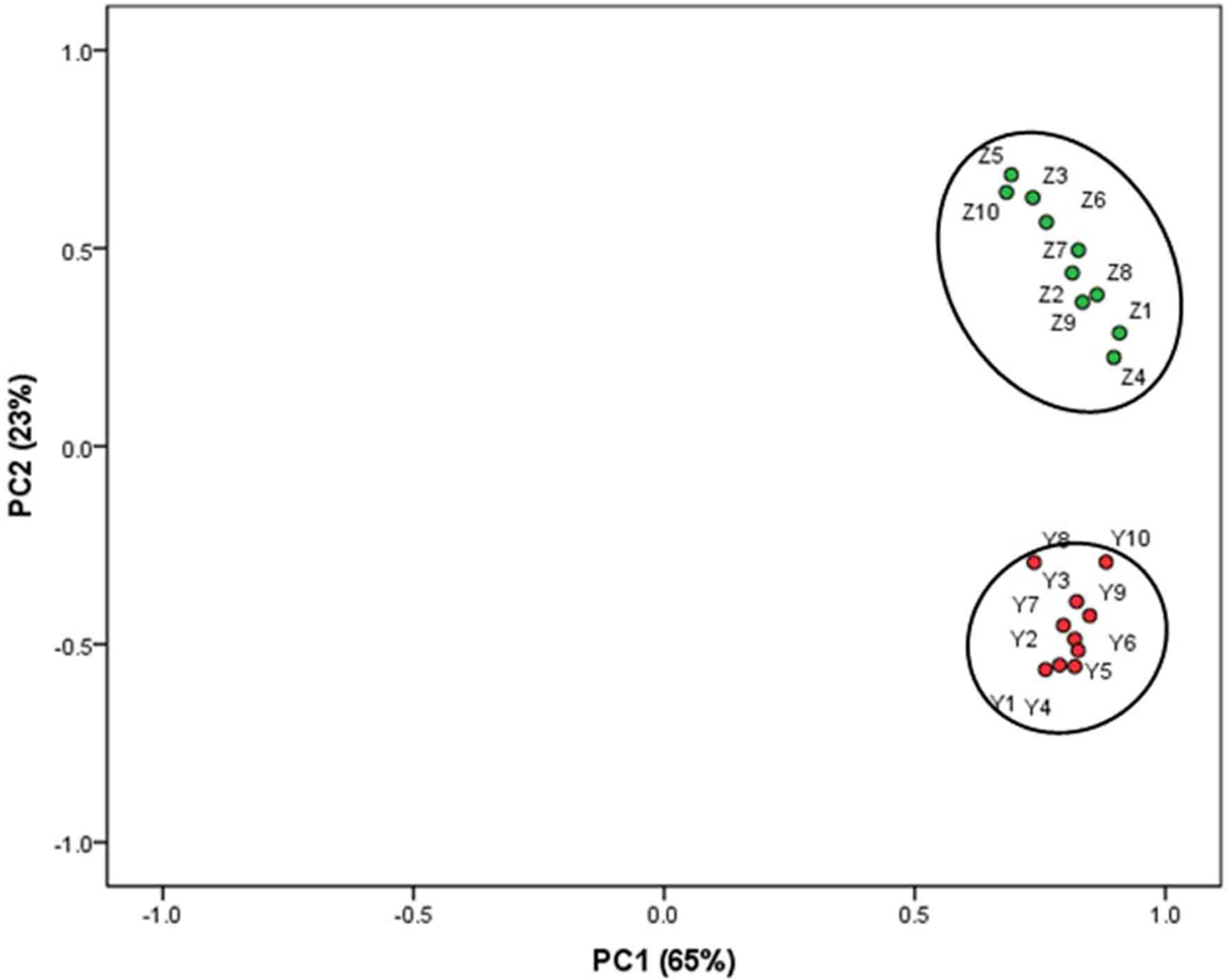
Principal component analysis (PCA) performed on the 20 Cucurbita lines from this study using the chemical composition data. Green points represent the C. moschata lines, and red points represent the C. maxima lines.
Conclusion
Two platforms (HPLC and GC-MS) were used to determine the composition in soluble sugars, inositol, and carotenoids of different lines of C. moschata and C. maxima. Sucrose, Brix, and MI were found to be dominant in C. moschata, while in C. maxima, glucose and carotenoids were dominant. Most of the quality parameters analyzed exhibited a significant correlation with each other. Interestingly, glucose, fructose, and galactose exhibited a positive correlation with β-carotene, lutein, and violaxanthin. Our findings provide valuable information for consumer guidance and selection toward improved fruit quality and health benefits.
Supplemental Material
Supplementary material - Supplemental material for Evaluation of Metabolites and Antioxidant Activity in Pumpkin Species
Supplemental material, Supplementary material, for Evaluation of Metabolites and Antioxidant Activity in Pumpkin Species by Hafiz Muhammad Khalid Abbas, He-Xun Huang, Wen-Jie Huang, Shu-Dan Xue, Shi-Juan Yan, Ting-Quan Wu, Jun-Xing Li and Yu-Juan Zhong in Natural Product Communications
Footnotes
Acknowledgments
We would like to thank Agro-biological Gene Research Center in Guangdong Academy of Agricultural Sciences who provided the GC-MS and HPLC for chemical analysis.
Declaration of Conflicting Interests
The author(s) declared no potential conflicts of interest with respect to the research, authorship, and/or publication of this article.
Funding
The author(s) disclosed receipt of the following financial support for the research, authorship, and/or publication of this article: Thanks to the Projects Supported by the Guangzhou Science and Technology Foundation (201904020012), National Key Research and Development Project (2018YFD0100706), Modern Agricultural technology system in Guangdong Province (2019KJ117) and Scientific Innovation Strategy-Construction of High-Level Academy of Agriculture Science (R2017PY-QY002, R2018QD-045, BZ201905).

References
Supplementary Material
Please find the following supplemental material available below.
For Open Access articles published under a Creative Commons License, all supplemental material carries the same license as the article it is associated with.
For non-Open Access articles published, all supplemental material carries a non-exclusive license, and permission requests for re-use of supplemental material or any part of supplemental material shall be sent directly to the copyright owner as specified in the copyright notice associated with the article.
