




Abstract
Background:
The use of tube-free insulin pumps is increasing. To protect the environment, the use of resources and the amount of emissions into the environment should be kept as low as possible when designing these systems. In addition to basic waste avoidance, the composition of the waste produced must be considered.
Methods:
To compare current tube-free pumps from an ecological standpoint, a tube-free insulin pump with a modular design and two non-modular tube-free pumps were subjected to manual separation, manual sorting, characterization, and mass determination. The annual waste volume of a user was measured, and the recyclability was assessed. The global warming potential (GWP) resulting from extraction of raw materials, energetic utilization of waste, and landfill of the incineration residues was balanced.
Results:
For the modular tube-free pump, a total waste volume of 5.5 kg/a (recycling percentage 44.3%) was determined. The non-modular systems generated 4.9 kg/a (recycling percentage 14.6%) and 5.1 kg/a (recycling percentage 16.0%) waste. The product-specific GWP of the modular system was approximately 50% lower than that of the non-modular systems; the packaging-specific GWP was 2.5 times higher. In total, a GWP of 13.6 kg CO2-equivalent per year could be determined for the modular system and a GWP of 15.5 kg CO2-equivalent per year for the non-modular systems.
Conclusions:
Although the modular micropump has a higher total waste volume, a greater ecological potential can be attributed to it. This is based on the recyclability of the system due to its modularity and the possible reduction of packaging waste.
Introduction
The use of medical products is often accompanied by an increase in waste accumulation. Among other things, this is due to the strict hygiene regulations for such products. Also, with the increasing use of tube-free insulin pumps in insulin therapy, such an increased volume of waste can be observed in comparison to insulin pump therapy CSII (continuous subcutaneous insulin infusion) with durable pumps, 1 since the pumps have a limited period of use, which is determined by technical as well as hygienic reasons.
With regard to the protection of the environment, both the use of resources and the amount of emissions into the environment should be kept as low as possible when developing medical products. In this context, the primary objective should be to avoid waste as far as possible. However, the composition of the resulting waste is also of relevance.
There are numerous parameters for measuring the use of resources and the cause of emissions. Within the scope of the investigations, the focus was placed on the waste volume, recyclability of the materials used, and the associated loss of resources. Furthermore, the CO2-equivalent emissions were determined, which arise during the extraction of the raw materials and the incineration and landfilling of the non-recyclable portion.
The aim of this analysis was to compare a tube-free insulin pump system with a modular design to two other tube-free insulin pump systems. The analysis included the abovementioned ecological factors by determining the amount of waste produced by the application of the systems and the related environmental impact.
Methods
The analyses related to the Accu-Chek Solo insulin micropump system (Roche Diabetes Care GmbH; Sandhofer Straße 116, 68305 Mannheim, Germany) and the Omnipod and Omnipod DASH systems (Insulet Corporation 600 Technology Park Drive, Suite 200, Billerica, MA 01821 USA). In the following, these are called System 1 (Accu-Chek Solo), System 2 (Omnipod), and System 3 (Omnipod DASH). Both the products and their packaging were considered, including the proportion of multipacks and enclosed operating instructions. In the case of System 1, the overall system considered included the components insertion device, pump base, reservoir, pump holder, and cannula unit. System 2 and System 3 consisted of pod and syringe, respectively. The diabetes managers, electronic remote controls that are used to program and control the pumps, were excluded from the analysis because their period of use exceeded the assumed period of analysis of one year.
To investigate the material composition of the systems, the individual components and their packaging were disassembled in a manual separation process (Figure 1) and sorted manually according to the fractions plastics, metals, paper and board, textiles, rubber, and composites. Near-infrared spectroscopy 2 and X-ray fluorescence analysis 3 were used to further characterize the plastics and metals and their composites. The composition of the button cell batteries contained was determined on the basis of literature references.4,5 After sorting and characterization, all particles were weighed with a high-precision balance to determine the existing material masses. In order to obtain data that were more representative, three products and three packages of each system component were disassembled, sorted, characterized, and weighed. Finally, a mean value could be calculated from the weighing results. An exception was the insertion device of System 1, of which only one product was available for investigation.
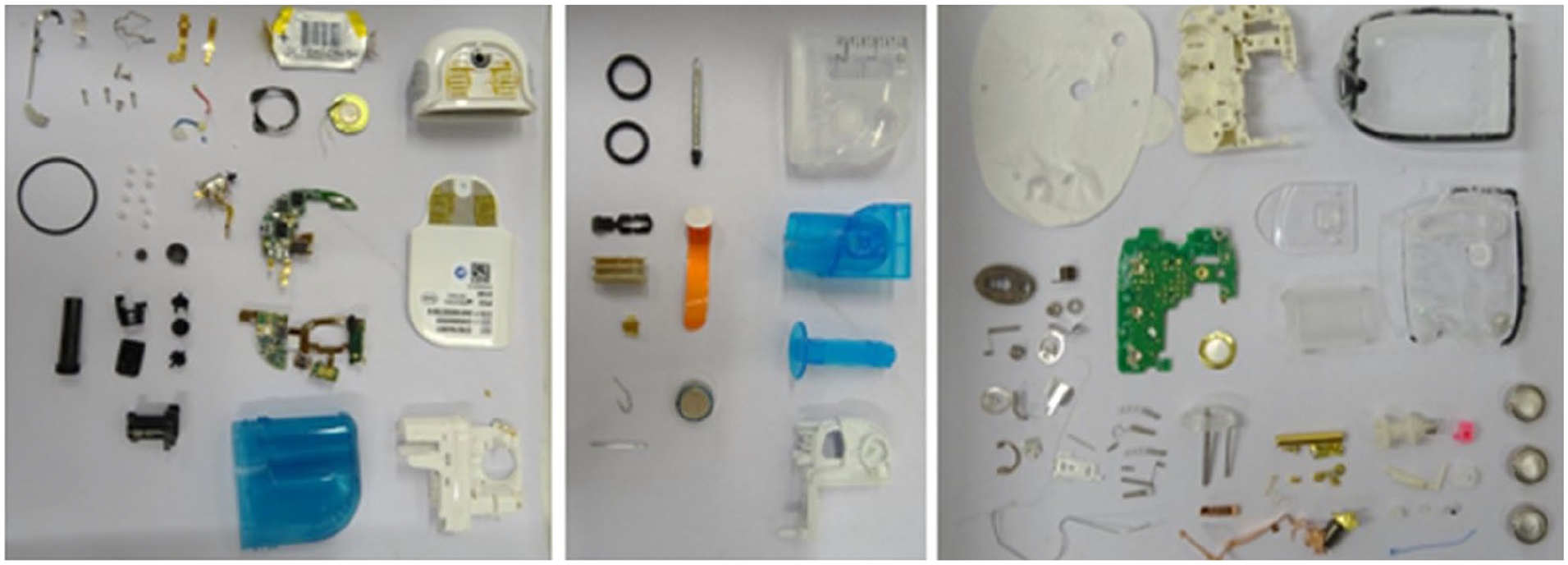
Pump base and reservoir of System 1 (left/middle) and pod of System 2 (right) after manual separation.
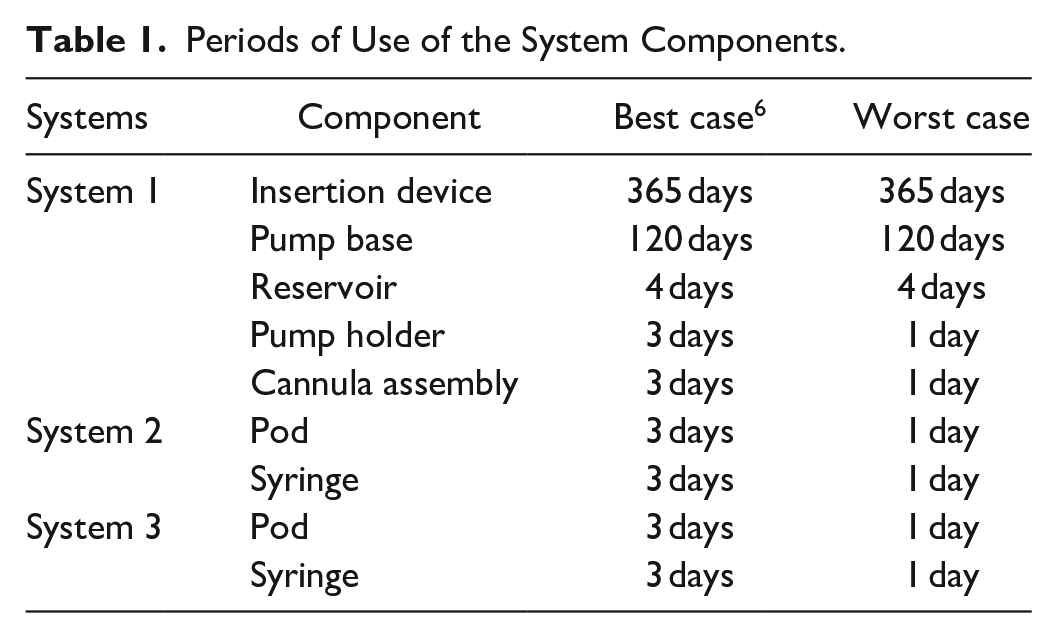
The determination of the waste volume referred to the observation period of one year when a user would apply one of the three systems. Both the best case, which reflects the application with periods of use according to the manufacturer’s specifications, and the worst case, in which a daily change of system components in contact with the body is assumed, were considered. The periods of use of the various system components for the best case and the worst case are listed in Table 1.
Periods of Use of the System Components.
In order to determine the recyclability of the tube-free insulin pump systems, it was necessary to consider the disposal routes of the waste fractions produced first. Since the scope of the investigations was limited to the application of the systems within Germany, these fractions were: wastepaper, light-weight plastic packaging, waste of electrical and electronic equipment (WEEE), and residual waste. The analysis was based on the assumption that the wastepaper, light-weight plastic packaging and WEEE fractions undergo a recycling process, while the residual waste is sent for incineration in a waste incineration plant (WIP). Due to the small particle size of the metals contained in the residual waste, recovery from the incineration residue cannot be assumed. The metal recycling rate from the residual waste was therefore set at 0%. The recycling rates of the remaining waste fractions depend on the separation behavior of the user and the efficiency of the recycling plants. In order to be able to compare the theoretically possible recycling share of the pump systems with a practice-oriented recycling share, average collection rates and losses during the recycling processes were determined for the respective waste fractions from the relevant literature.7-11
The determination of the emissions into the environment caused by the respective system was based on the global warming potential (GWP). This describes the “potential contribution of a substance to the greenhouse effect” 12 and is expressed in CO2-equivalents. The balancing of the three pump systems was limited to the extraction of raw materials and the process of incineration in the waste incineration plant, including the landfill of the combustion residues.
By using the energy generated during incineration, fossil fuels, the use of which would lead to emissions, can be saved. Therefore, the waste is given a credit note, which is taken into account when balancing the CO2-equivalent emissions. The balancing of the GWP was limited to the main components plastic, metal, and paper and board, since the textile and rubber fractions accounted for <2.5% of the total waste volume of the three pump systems and thus had little influence on the GWP. The raw material extraction balance sheet was based on data records for the production of plastic granulate, raw metal, and sulphate pulp as raw material for paper. These were taken from the ProBas and ecoinvent databases13,14 In addition, the CO2-equivalent emissions for the combustion of plastics were calculated using reaction equations. The GWP for the incineration of paper and board within a waste incineration plant and the GWP for the landfilling of metal residues were again taken from the databases. The influence of the separation behavior of the user was not taken into account in the balance, so that the calculations are based on a collection rate of 100%. Any losses during the recycling processes, on the other hand, were taken into account in accordance with the practical assumptions contained in Table 2.
Collection Rates of Waste Fractions and Losses During the Recycling Processes.
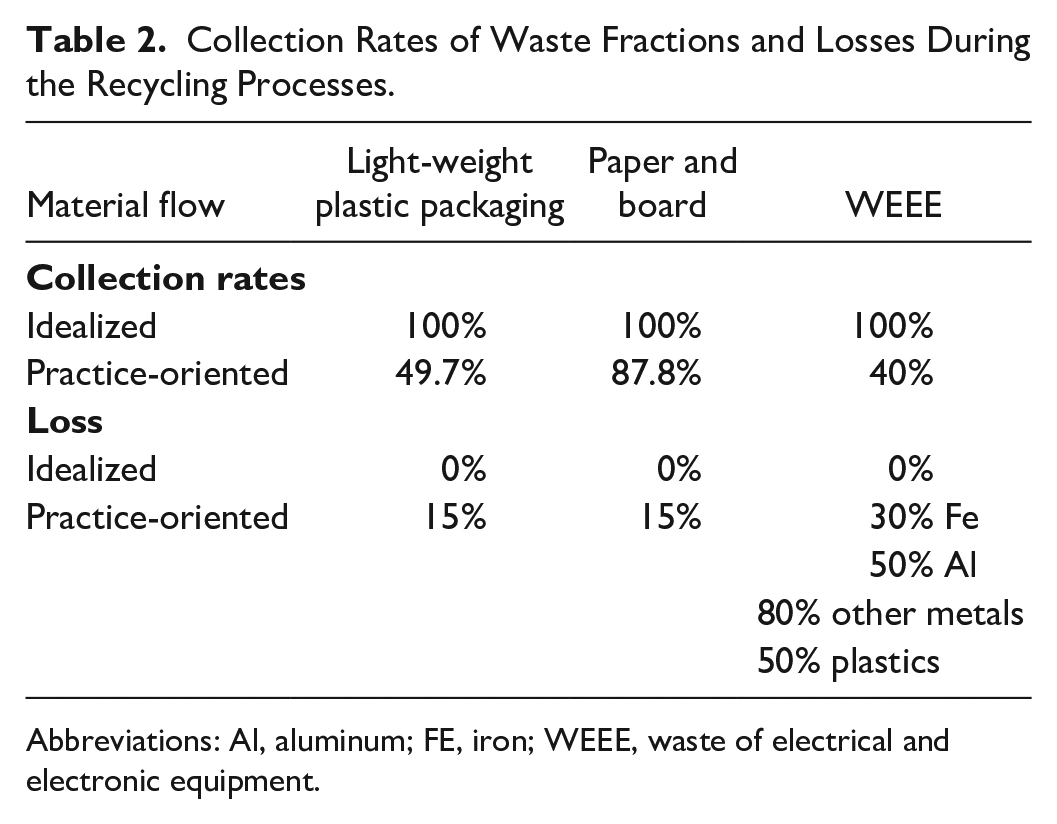
Abbreviations: Al, aluminum; FE, iron; WEEE, waste of electrical and electronic equipment.
Results
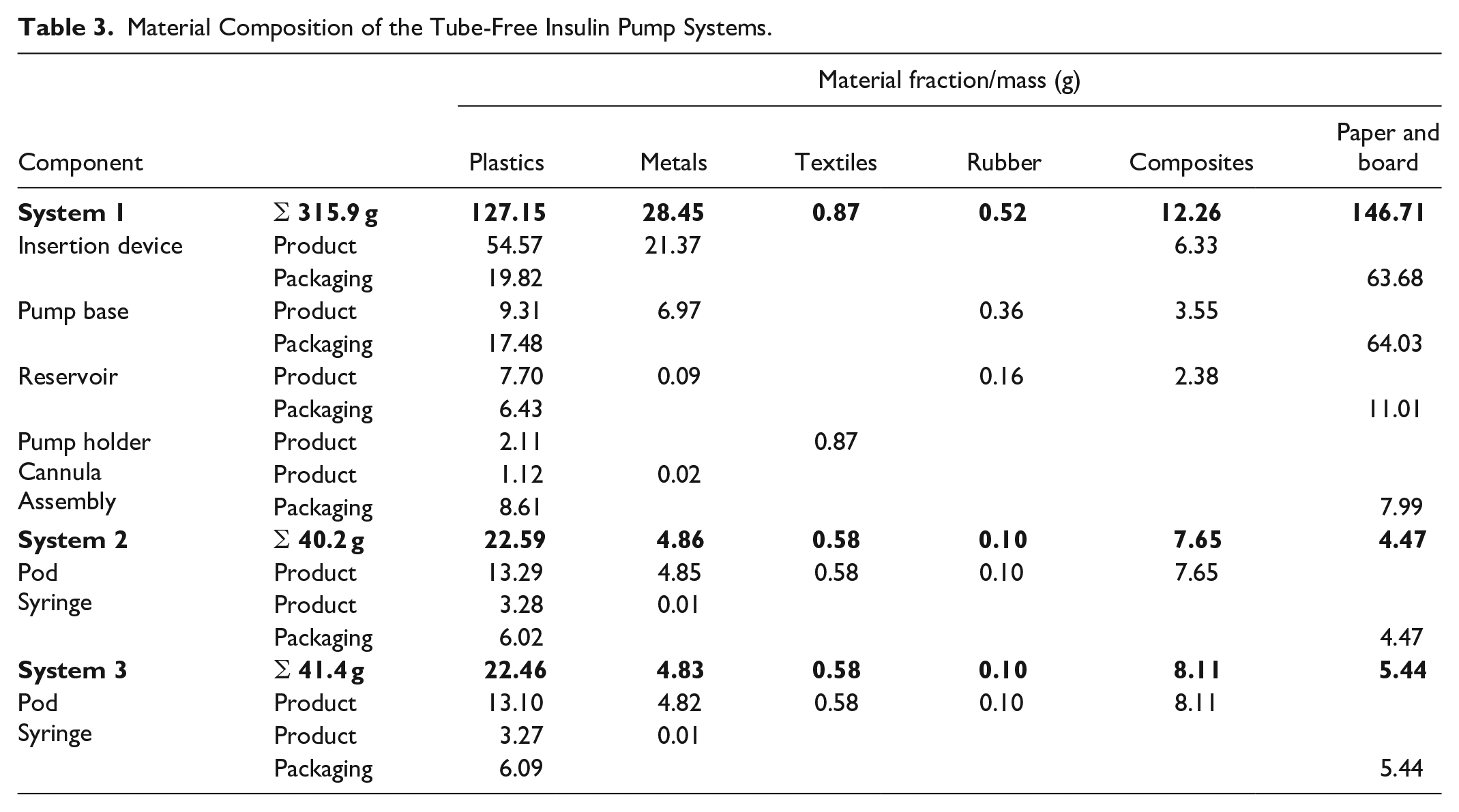
The material distribution of the three insulin pump systems studied is shown in Table 3. It provides information on the occurrence of material masses within the individual system components and their respective packaging, without taking into account their periods of use. The textile fraction refers to the patches used to attach the systems to the skin. The composites include batteries and circuit boards. The paper and board fraction consists of paper, cardboard, and paperboard that are part of the packaging. It can be seen that System 1, regardless of the periods of use, has a higher total volume of material than System 2 and 3, which is mainly determined by the insertion device. There is hardly any difference between System 2 and System 3 with regard to the material distribution of the products, as they have a similar structure. Only with regard to packaging a significant difference in the paper and board fraction can be seen. The shares of packaging in the total volume of the various systems are 26% for System 2, 28% for System 3, and approximately 63% for System 1. This is related to the number of individual system components that are packaged individually. Overall, System 1 has a total material mass of 315.9 g (116.9 g product; 199 g packaging), System 2 40.2 g (29.7 g product; 10.5 g packaging), and System 3 41.4 g (29.9 g product; 11.5 g packaging).
Material Composition of the Tube-Free Insulin Pump Systems.
The further characterization of the plastics served to determine the different types of plastics. A distinction was made between polyethylene (PE), polypropylene (PP), polystyrene (PS), polyethylene terephthalate (PET), other plastic mixtures, and black plastics. The investigation of pump systems including packaging showed the plastic distributions presented in Table 4.
Distribution of Plastic and Metal Types.
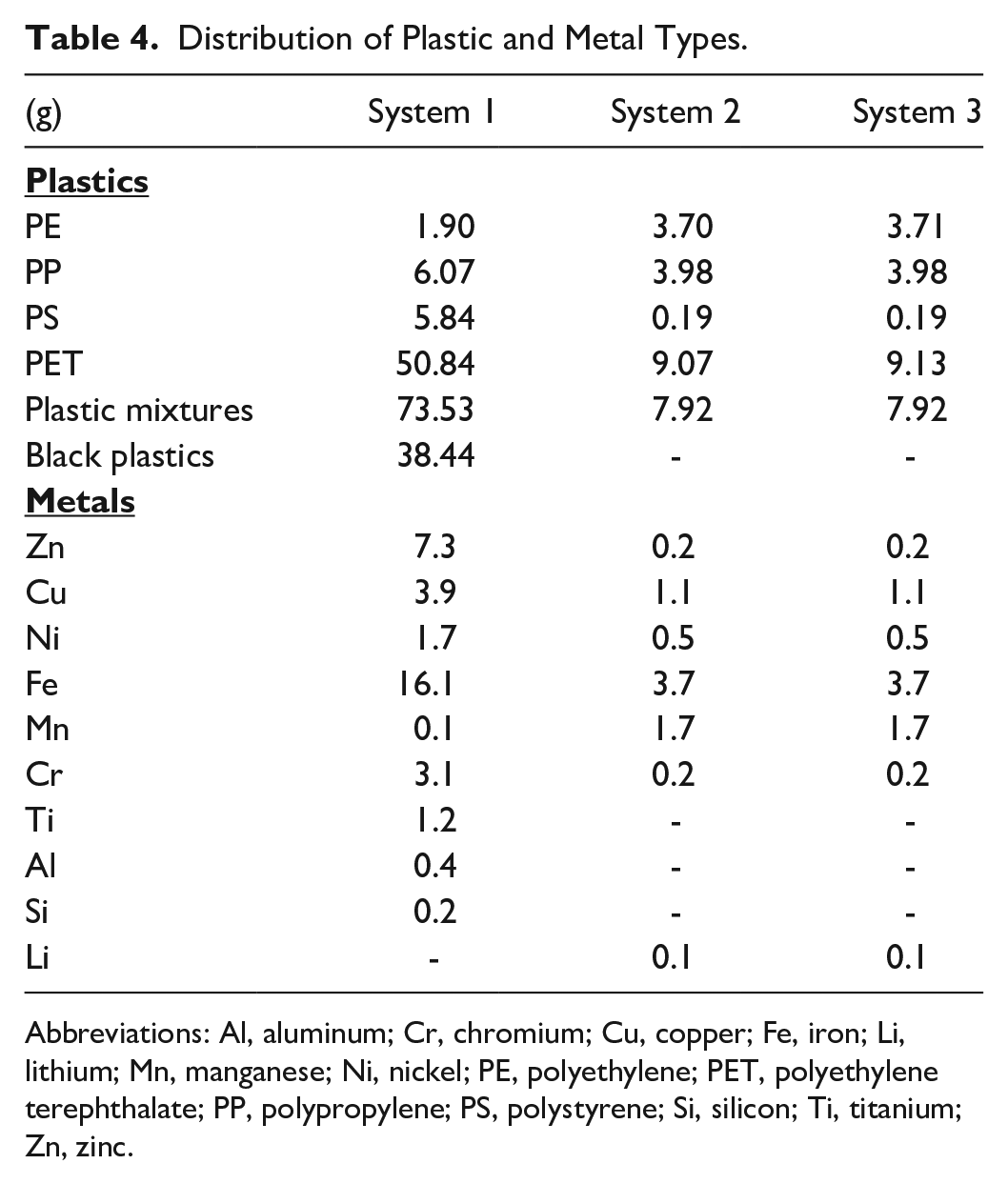
Abbreviations: Al, aluminum; Cr, chromium; Cu, copper; Fe, iron; Li, lithium; Mn, manganese; Ni, nickel; PE, polyethylene; PET, polyethylene terephthalate; PP, polypropylene; PS, polystyrene; Si, silicon; Ti, titanium; Zn, zinc.
In the course of the characterization of the metals, the metals iron (Fe), copper (Cu), nickel (Ni), zinc (Zn), manganese (Mn), chromium (Cr), titanium (Ti), aluminum (Al), silicon (Si), and lithium (Li) were detected within the three different systems. Due to their small particle size or their inclusion in a compound, approximately 10% by weight of the metals could not be determined by the measurement technology used. This also included the metal components that were used in the circuit boards. Taking into account the proportions from the button cell batteries, the metal distributions shown in Table 4 could be determined.
Based on the periods of use of the individual system components, the waste volume of a user using the analyzed systems could thus be forecast for a period of one year. This forecast for a defined period is necessary, as the individual time of usage between each system and its components is different. Since the periods of use can vary depending on the user and everyday situation, a best case and a worst-case scenario were considered. The best-case scenario included the time of usage for each system component as described in the manufacturers manual; the worst-case scenario took into account a daily change of the non-reusable system components (Figures 2 and 3). The best-case scenario shows a total waste volume of 5.5 kg/a for System 1 compared to 4.9 kg/a for System 2 and 5.1 kg/a for System 3. This is mainly determined by the material fractions plastic and paper and board, which are mainly packaging waste.
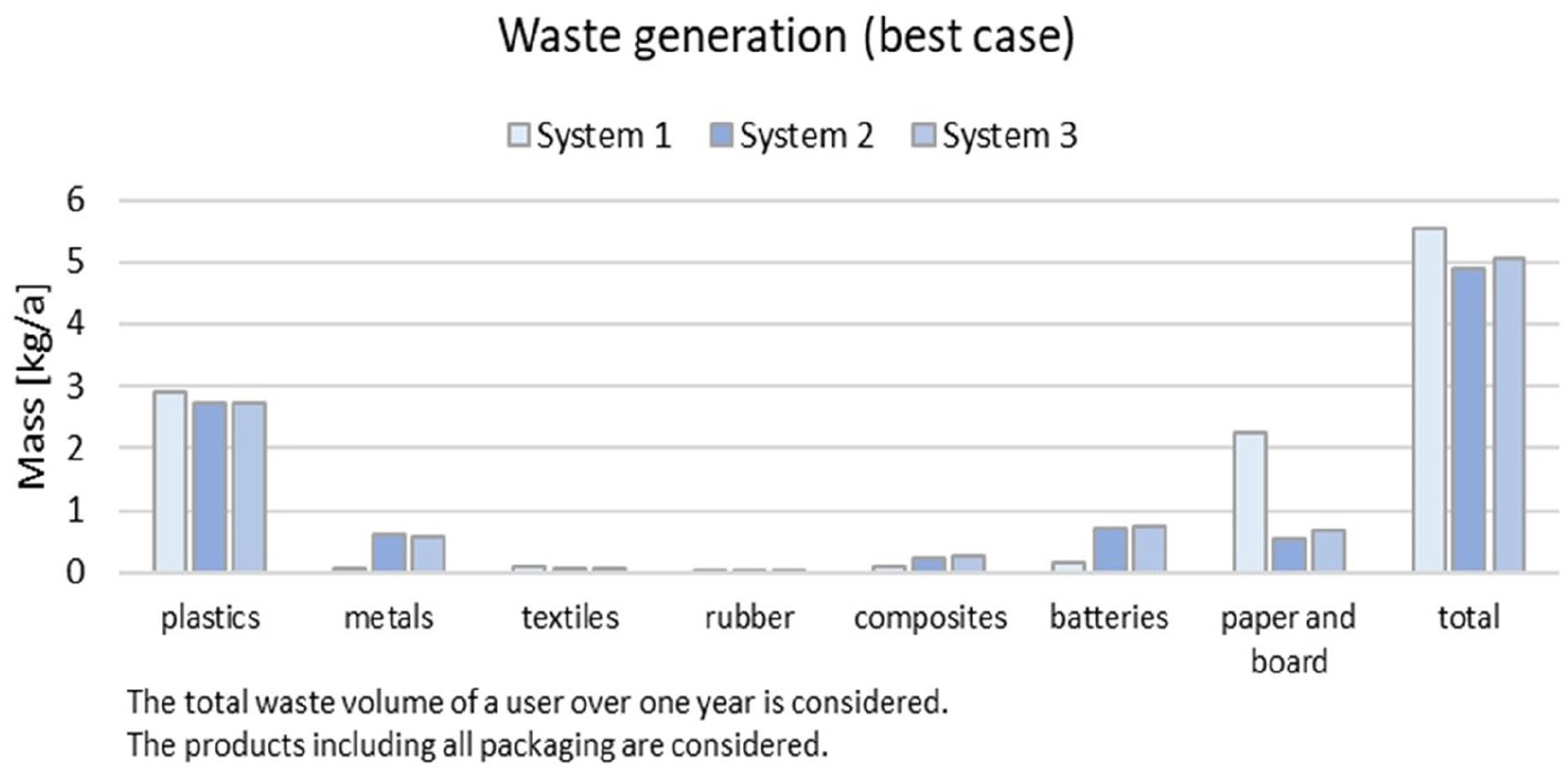
Waste generation in the best case.
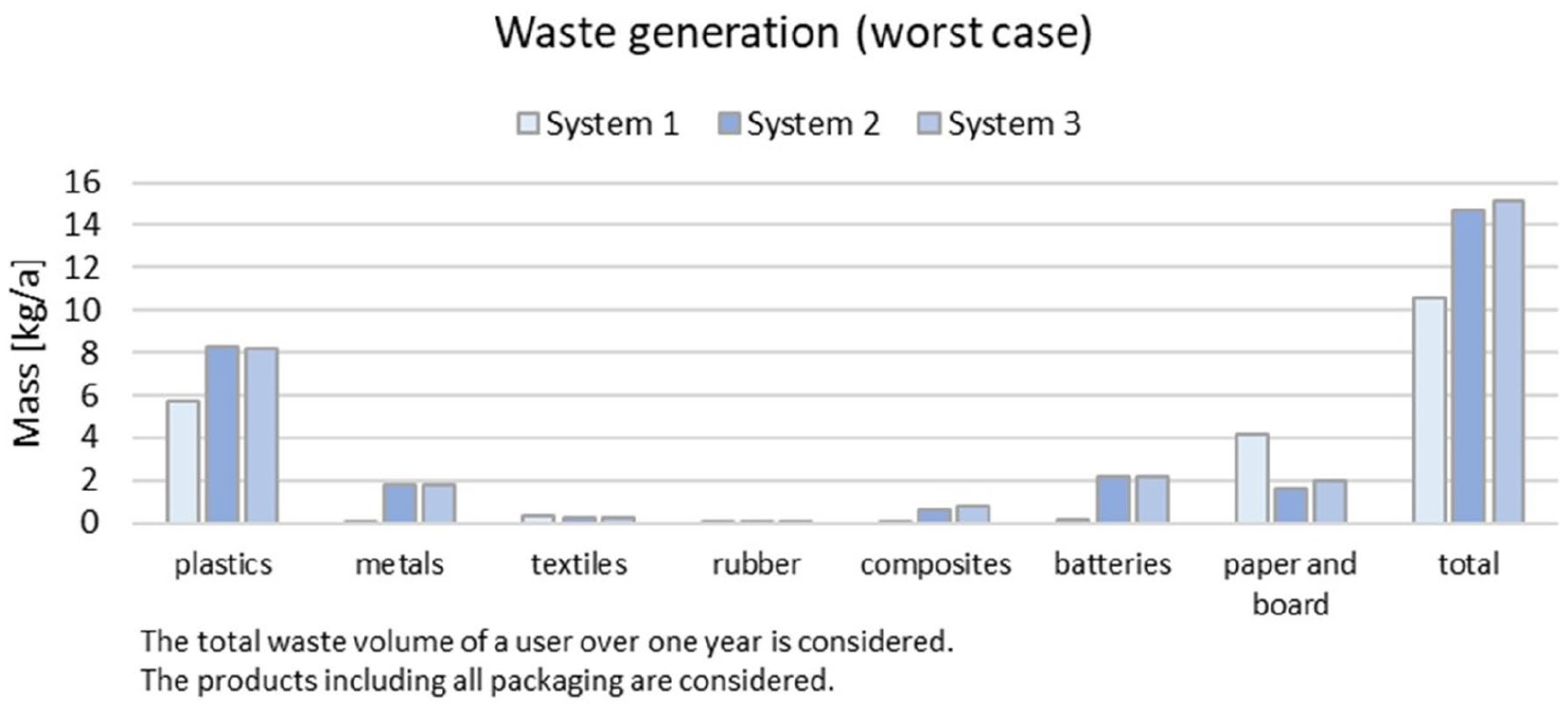
Waste generation in the worst case.
System 1 is powered by a single battery that is located in the reservoir, whereas Systems 2 and 3 each contain three batteries inside the pod. Assuming the best-case scenario, Systems 2 and 3 consume 365 batteries, while System 1 would consume 92 batteries in the same period. This means that in terms of quantity, System 1 produces 75% less battery waste. When comparing the mass of battery waste, System 1 has up to 81% less weight-related battery waste. The difference between amount of batteries and weight-related battery waste can be explained by the different battery types for System 1 (zinc-air) and Systems 2 and 3 (lithium-ion).
System 1 also produces up to 91% less metal waste than Systems 2 and 3.
Looking at the worst-case scenario, a different distribution of the total waste volume can be observed. Overall, this increases for all three pump systems, but System 1, at 10.6 kg/a, is now well below System 2 at 14.7 kg/a and System 3 at 15.2 kg/a. Due to the modular design of System 1, many system components (insertion device, pump base, and reservoir) can be reused and must not be thrown away after a single use.
If the tube-free insulin pump systems are used in practice, it can be assumed that the periods of use and the associated waste volume will vary between the best case and the worst case. However, as no realistic numbers regarding the actual period of use could be determined, for further analysis and comparison the best-case scenario was taken into account. Figure 4 shows the shares of treatment processes in the waste volume under idealized and practice-oriented conditions. The idealized conditions require a complete collection and recycling of the recyclable parts. The practice-oriented conditions take into account the possible faulty separation behavior of users and losses in the recycling processes. In relation to the total waste volume of a year, System 1 has a recycling share of 74.5% (4.1 kg) under idealized conditions, compared with System 2 with 26.0% (1.27 kg) and System 3 with 27.7% (1.36 kg).
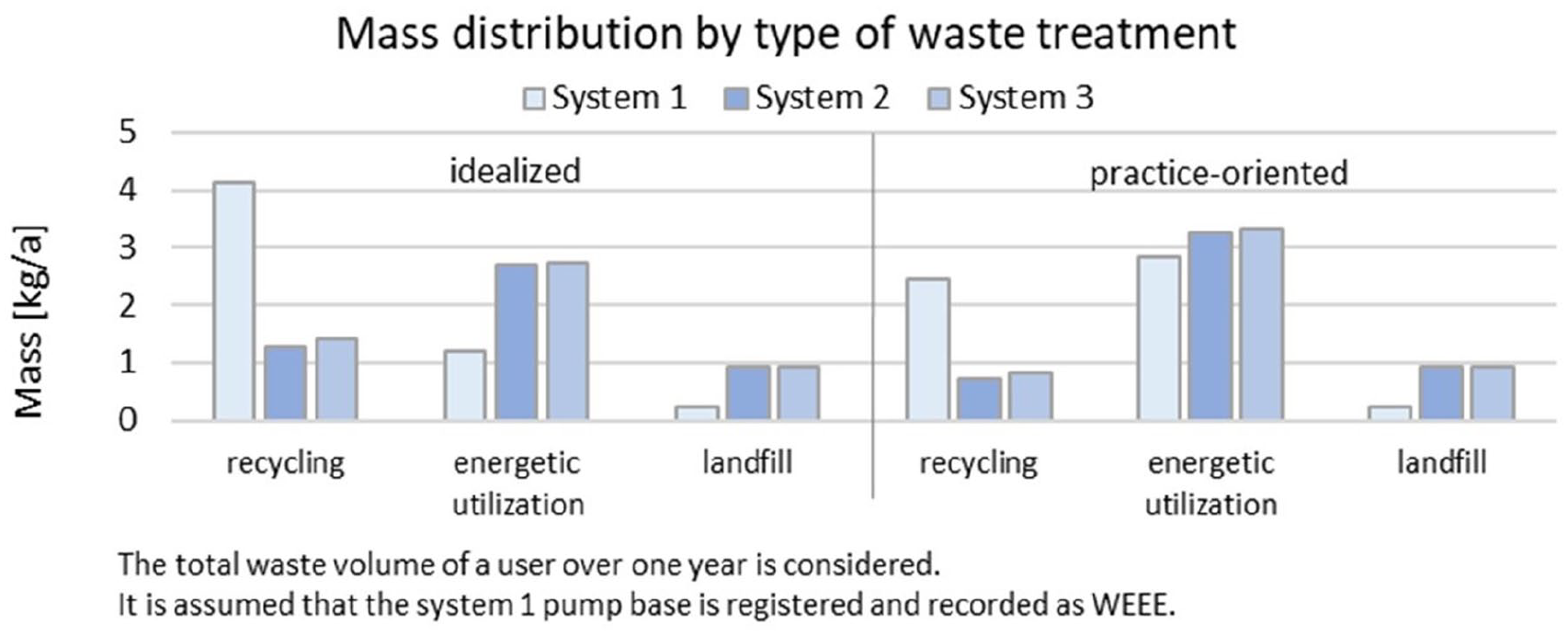
Mass distribution by type of waste treatment under idealized and practice-oriented conditions.
However, if the collection rates and losses within the recycling processes are taken into account, these percentages fall to 44.3% (2.44 kg) for System 1, 14.6% (0.72 kg) for System 2, and 16.0% (0.78 kg) for System 3. Looking at these data under idealized conditions, System 1 has a three times higher share of recyclable parts compared to the other two systems under investigation. The ratio is also comparable when looking at the practice-oriented values. The main influence on these recycling rates is determined by the amount of packaging.
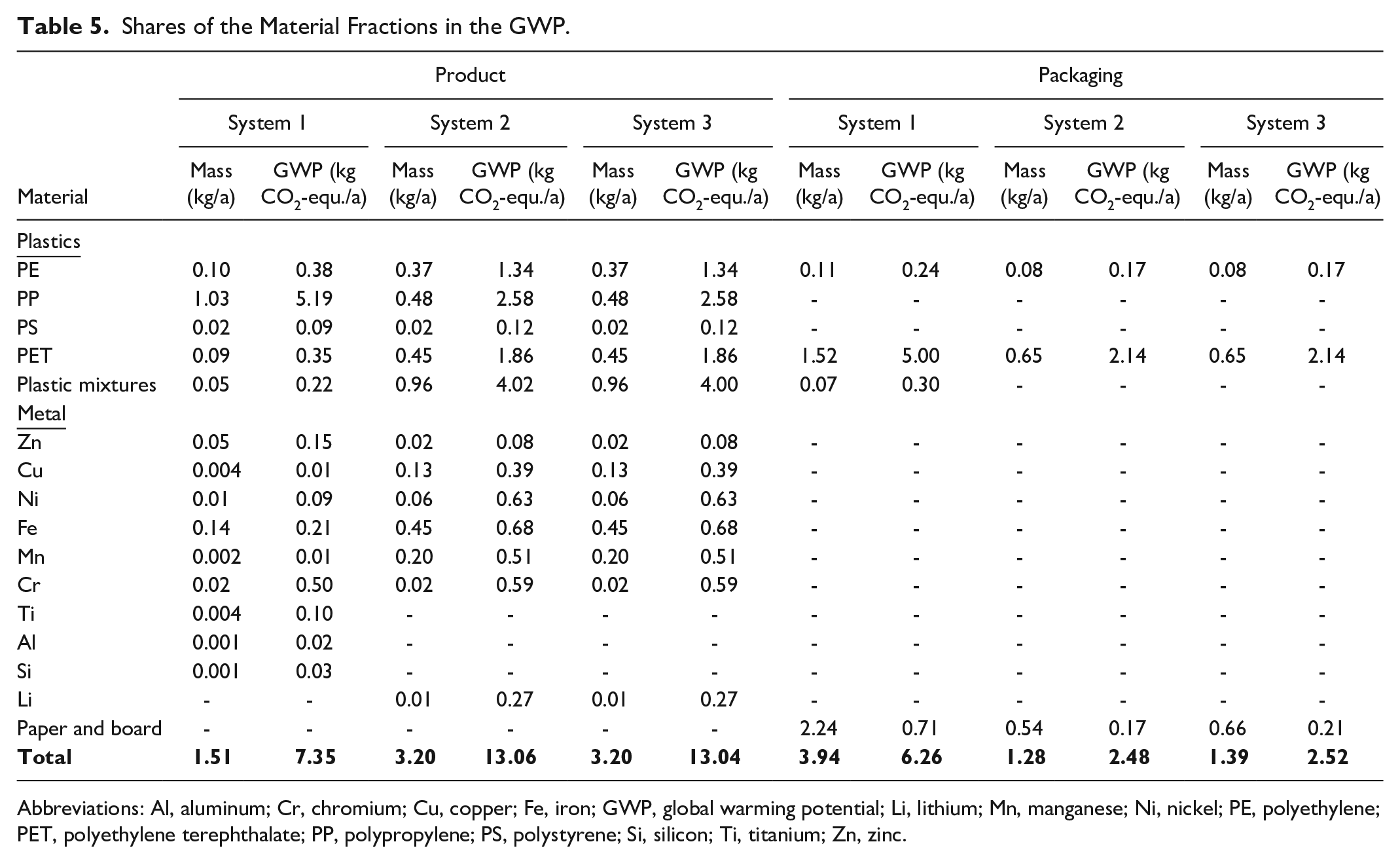
The balance of the annual GWP showed significant differences in the impact of the products and the packaging. Table 5 shows the shares of the different material fractions in the GWP in relation to their mass. For all three pump systems, a high influence of the plastics can be observed due to the material volume. Despite the low occurrence of metals, chromium in particular has a significant influence on the GWP. Corresponding to the mass, which is about 50% lower for the sum of the products of System 1, the CO2-equivalent emissions are also lower compared to Systems 2 and 3. The situation is different when considering the packaging.
Shares of the Material Fractions in the GWP.
Abbreviations: Al, aluminum; Cr, chromium; Cu, copper; Fe, iron; GWP, global warming potential; Li, lithium; Mn, manganese; Ni, nickel; PE, polyethylene; PET, polyethylene terephthalate; PP, polypropylene; PS, polystyrene; Si, silicon; Ti, titanium; Zn, zinc.
The high volume of packaging material in System 1 leads to a higher GWP compared to Systems 2 and 3 in this context, whereas the level of CO2-equivalent emissions is largely determined by the occurrence of PET. In total, a GWP of 13.6 kg CO2-equivalent emissions per year is therefore recorded for System 1. Systems 2 and 3 are slightly higher at 15.5 kg/a each. In this context, System 1 causes 12% less CO2-equivalent emissions than Systems 2 and 3.
Discussion
The use of the medical devices under consideration is inevitably associated with the generation of waste. When looking at the plain scope of material, a higher volume is caused by System 1, which is related to its modular design. However, the amount of waste is not only determined by its volume, but by the periods of use of the individual system components. The investigation has shown that the micropump with its modular design favors the length of the periods of use of individual system components and reduces the waste volume of the products over a longer period of observation. Nevertheless, using more components increases the amount of packaging waste generated by this system due to the individual packaging.
This comparatively high proportion of packaging material that was recorded for System 1 led to an overall higher waste volume in the annual balance sheet compared to Systems 2 and 3. The investigations showed, however, that an optimized dimensioning of the packaging compared to Systems 2 and 3 with composite structure would lead to an overall lower waste volume.
In addition to the amount of waste generated when a medical device is used, it is also important to determine the type of waste and its impact on the environment. In this context, the recyclability of the waste is a key factor. With regard to the recycling of the waste produced, the theoretically possible proportion differs greatly from the recycling proportion actually achievable in practice, as it is subject to the influence of the separation behavior of the users and the efficiency of the recycling plants. Current industrial recycling plants are not capable of effectively capturing black plastics. Therefore, the occurrence of black plastics, as is the case with System 1, reduces the recycling rate. Despite these conditions, System 1 has a higher recycling rate than Systems 2 and 3. The losses due to landfilling are exclusively metals and are higher in Systems 2 and 3. Due to the subdivision of System 1 into several system components, it is theoretically possible for the pump base to be collected with the waste electrical equipment, which means that it can be partially recycled. However, the investigations showed that this would only increase the recycling share by approx. 0.1%.
With regard to the environmental impact, the GWP of the systems was also examined. The balancing of the GWP showed that System 1 causes a lower level of CO2-equivalent emissions compared to Systems 2 and 3. Compared to one another, Systems 2 and 3 have the same level of CO2-equivalent emissions, as the structure of the systems hardly differs. Although 10% by weight of the metals (including the proportions of printed circuit boards) were not included in the balance, it can be assumed that the ratio of CO2-equivalent emissions stays the same, since all three systems faced these conditions.
The average annual total volume of CO2-equivalent emissions of a person living in Germany is about 11, 610 kg, 15 to which each pump system contributes with approximately 1%. Overall, System 1 offers the greatest ecological potential due to its subdivision into individual system components and the high rate of recyclable parts compared to the Systems 2 and 3. However, a reduction of the packaging material would further reduce the overall GWP considerably. In terms of the recycled content and the GWP, System 1 was found to be more environmentally friendly than the other two systems in this assessment. Nevertheless, an optimization should also be sought for this system.
In general, all systems should aim to replace plastic mixtures with single-variety plastics within the framework of technical feasibility. The same applies to the reduction of CO2-intensive metals such as chrome. In addition, black plastics that are currently found in the packaging of the insertion device, pump base, and inside of the pump should be avoided in System 1. Finally, the establishment of a separate collection system with a treatment system adapted to the pump systems could reduce material loss to a minimum.
Conclusion
In summary, it can be said that if the optimization approaches are implemented for all pump systems, higher recycling percentages and lower ecological effects can be achieved in principle. However, a modular design of tube-free insulin pumps, as it is the case with System 1, can be considered more ecologically valuable overall. Furthermore, System 1 offers a higher ecological potential when the packaging is kept to a minimum. In principle, it should be noted that not only the design of the pump system but also the attitude of the users plays an important role, as their behavior during the collection of the waste produced has a significant influence on the subsequent waste treatment.
Footnotes
Acknowledgements
This research was supported by IWARU, Institute for Infrastructure Water Resources Environment at the Münster University of Applied Sciences, Germany. We are thankful that they provided expertise that greatly assisted the research.
Abbreviations
Al, aluminum; Cr, chromium; CSII, continuous subcutaneous insulin infusion; Cu, copper; Fe, iron; GWP, global warming potential; Li, lithium; Mn, manganese; Ni, nickel; PE, polyethylene; PET, polyethylene terephthalate; PP, polypropylene; PS, polystyrene; Si, silicon; Ti, titanium; WEEE, waste of electrical and electronic equipment; WIP, waste incineration plant; Zn, zinc.
Declaration of Conflicting Interests
The author(s) declared the following potential conflicts of interest with respect to the research, authorship, and/or publication of this article: Jana Winkelkötter is a master student at the department of civil engineering at Münster University of Applied Sciences; Thore Reitz is a fulltime employee at Use-Lab GmbH.
Funding
The author(s) disclosed receipt of the following financial support for the research, authorship, and/or publication of this article: This work was funded on an unrestricted educational grant by Roche Diabetes Care Germany.
