




Abstract
Background:
Video games are interactive technologies able to support children in health promotion, behavior changes, and chronic disease self-management. The use of health behavior change determinants in video game design can increase its effectiveness. This study describes the process of designing a video game for Brazilian children with T1D clarifying the use of health behavior change determinants that may influence self-management behaviors.
Methods:
This was a methodological study based on health behavior change theories and the user-centered design approach. The results of a qualitative study conducted with children aged 7 to 12 years identified learning needs about knowledge on diabetes and self-care tasks which contribute to inappropriate behaviors. A Behavioral Diagnosis presented health behavior change determinants, capable of influencing children’s learning needs and behaviors, that were considered to design The Heroes of Diabetes—the power of knowledge.
Results:
The results presented the process of designing 4 mini games with its description and theory foundation to reach children’s lack of understanding about T1D, insulin’s role, SMBG requirements, food groups and physical activity’s role in glycemic control. Knowledge, goal settings, extrinsic and intrinsic motivation determinants were related with video games design features.
Conclusions:
The findings support the use of health behavior change determinants into video game design as a guide to achieve children learning needs and that might influence self-management behaviors.
Keywords
Introduction
Type 1 diabetes mellitus (T1D) is a chronic disease that affects thousands of children who are under the age of 20 years worldwide.1,2 The management of this disease is especially difficult for young children due to their cognitive, behavioral, and social-emotional development.3,4 Children with T1D face daily challenges in disease knowledge and self-care tasks that result in difficulties on psychosocial and symptom control issues.4,5
Interactive technologies such as video games, mobile apps, text-based interventions and online social networks are emerging as successful pathways for supporting children and adolescents with T1D in overcoming difficulties by encouraging behavior changes and promoting disease self-management and health maintenance.6,7 Several studies have presented positive outcomes from using video games for children with T1D.8-10 They describe the decreasing number of emergency room visits and improving self-efficacy,11-13 diabetes knowledge,11,13,14 and self-care10,11 such as healthy eating choices and regular exercise habits. 15 Effective communication about T1D among families and peers is also related to improved outcomes. 12 However, neither of these video games were developed in Portuguese or targeted to Brazilian T1D children’s needs such as knowledge about the disease and self-care tasks.16,17
The involvement of future users throughout the game development process considering their needs and opinions18-20 and a design based on behavioral theories and its determinants of change11,21-23 are recommended in the literature to increase effectiveness in the proposed technology in order to achieve positive changes in behaviors and promote health. The video game The Heroes of Diabetes—the power of knowledge is being developed for Brazilian children aged 7 to 12 years with T1D. Results of the qualitative research and of the conceptual framework designed to guide video game development have been previously published.17,24 Enhancing the children’s knowledge about the disease and self-care tasks are the positive changes proposed in the video game by integrating theory and users’ needs. 25 The purpose of this paper is to describe the process of designing a video game for Brazilian T1D children clarifying the use of health behavior change determinants that may influence self-management behaviors of children.
Methods
Theory
There are unclear presentations about how theoretical techniques might be applied to address studies’ goals or how health behavior change determinants can be effectively included to promote behavior changes.21,26-30 The Social Cognitive Theory (SCT) 31 and Self-Determination Theory (SDT) 32 were selected to guide the theoretical framework of the video game. According to SCT, the behavior change is made from an individual sense of control regulated by forethought. Knowledge, goal setting and social support were determinants that might influence children’s behaviors causing them to change or overcome the barriers.33,34 It has been the most used theory to promote behavior change through videogames. 35 In the SDT, the human behavior is guided for 2 determinants: the intrinsic and extrinsic motivation. The intrinsic motivation is about the inherent inclination of an individual to look forward to newness and challenges, to practice their own capabilities, explore and to learn. 36 Diabetes management requires the child to change habits into those that are not interesting or pleasant, leading to non-compliant behaviors, in this way the intrinsic and extrinsic motivation are capable of influencing behaviors. The intrinsic motivation can be increased by feelings of competence, autonomy and relatedness. 32 The extrinsic motivation is important to video game strategy to start motivating the child who presents low levels of intrinsic motivation. However, through the interventions, the child will present intrinsic factors that can lead to valuing adequate and safe self-care tasks 32 preventing the decrease of gradual intrinsic interest due to excess of game elements. 37 These concepts were implemented in the video game tasks in order to achieve video game goals.
Procedures
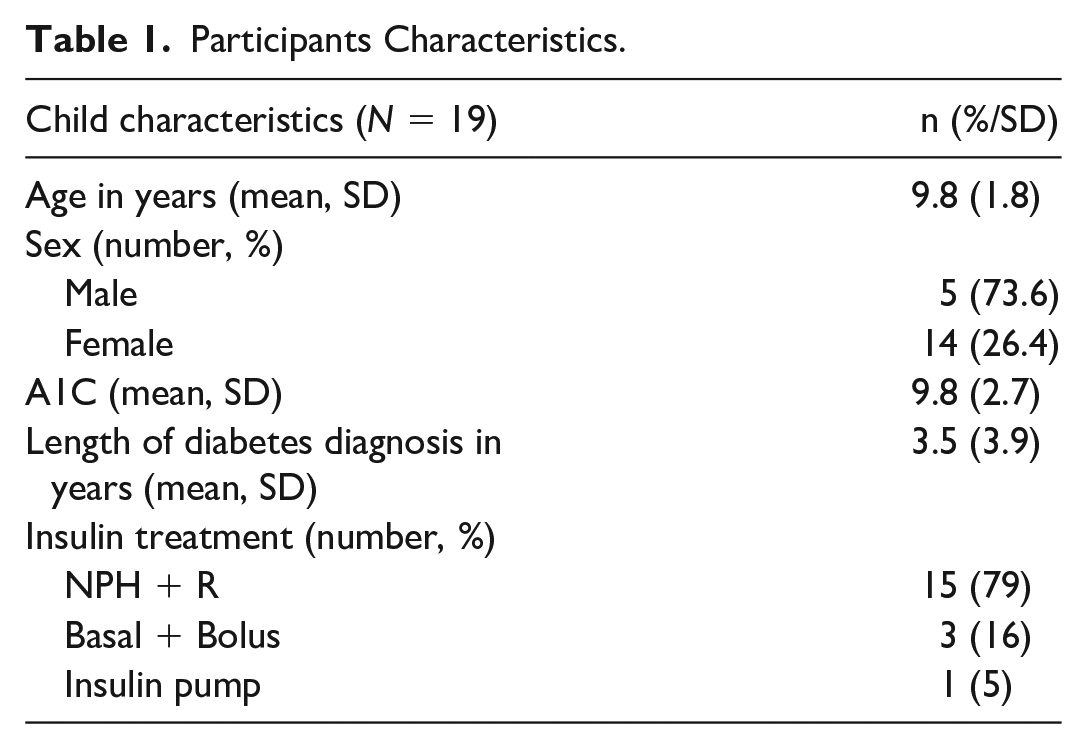
To accomplish UCD approach focus groups (FGs) 17 were conducted with T1D 19 children. Table 1 presents the participants’ characteristics.
Participants Characteristics.
Children were recruited at the Endocrinology and Childhood Diabetes Outpatient Clinic from Sao Paulo, Brazil. 25
The FGs goals were to promote interaction and discussion about their learning needs related to T1D understanding and self-care tasks. The content analysis identified several behaviors of nonadherence to treatment or failure to perform self-care tasks. From these data, the researchers performed a behavioral diagnosis 29 that comprised an in-depth study of health behavior change theories and its determinants culminated with the analysis of health behavior change determinants capable of influencing children’s behaviors related to lack of knowledge. The Figure 1 illustrates the study design procedures.
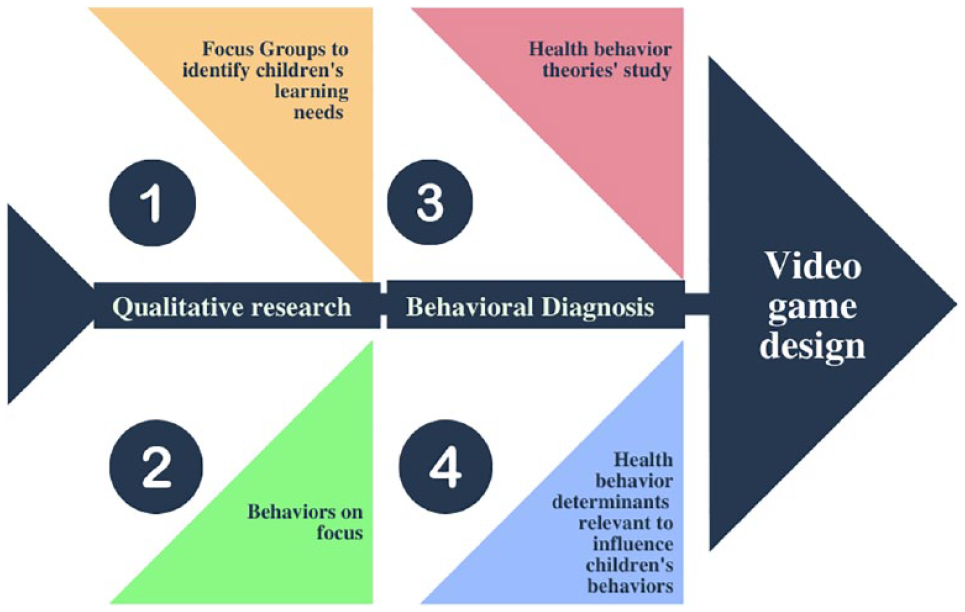
Study procedures in view of children’s needs identification and behavioral diagnosis.
Game Design
In order to develop the game, the lead investigator held a series of face-to-face and virtual meetings with the game design team. Furthermore, the main researcher engaged in studies on health behavior change theories and its determinants in partnership with experts in this field, which enhanced credibility to the design. A game design document was created with a detailed description of the game. The game design was performed through daily consultations with the lead researcher and exchange of files for reviewing and testing. The entire team played the game and discussed the points to be modified in an iterative process of testing in the face-to-face meetings.
Results
The results present the process of designing the video game with its description and theory foundation. Lack of understanding about T1D, insulin’s role, SMBG requirements, food groups and different energy contents and the role of physical activity in the glycemic control were the childrens’ learning needs 17 that might be positively influenced by the knowledge determinant. 31 Failure to perform rotation of sites for insulin injections, to monitor glucose levels as needed, nonadherence to carbohydrate counting or failure to practice physical activities as recommended are some behaviors on which to focus. 17
The social support and goal setting were chosen to strengthen the positive behavior change encouraged by intrinsic and extrinsic motivation. 32 The Figure 2 presents how behavior change determinants were included in the video game design features to influence children’s lack of knowledge.
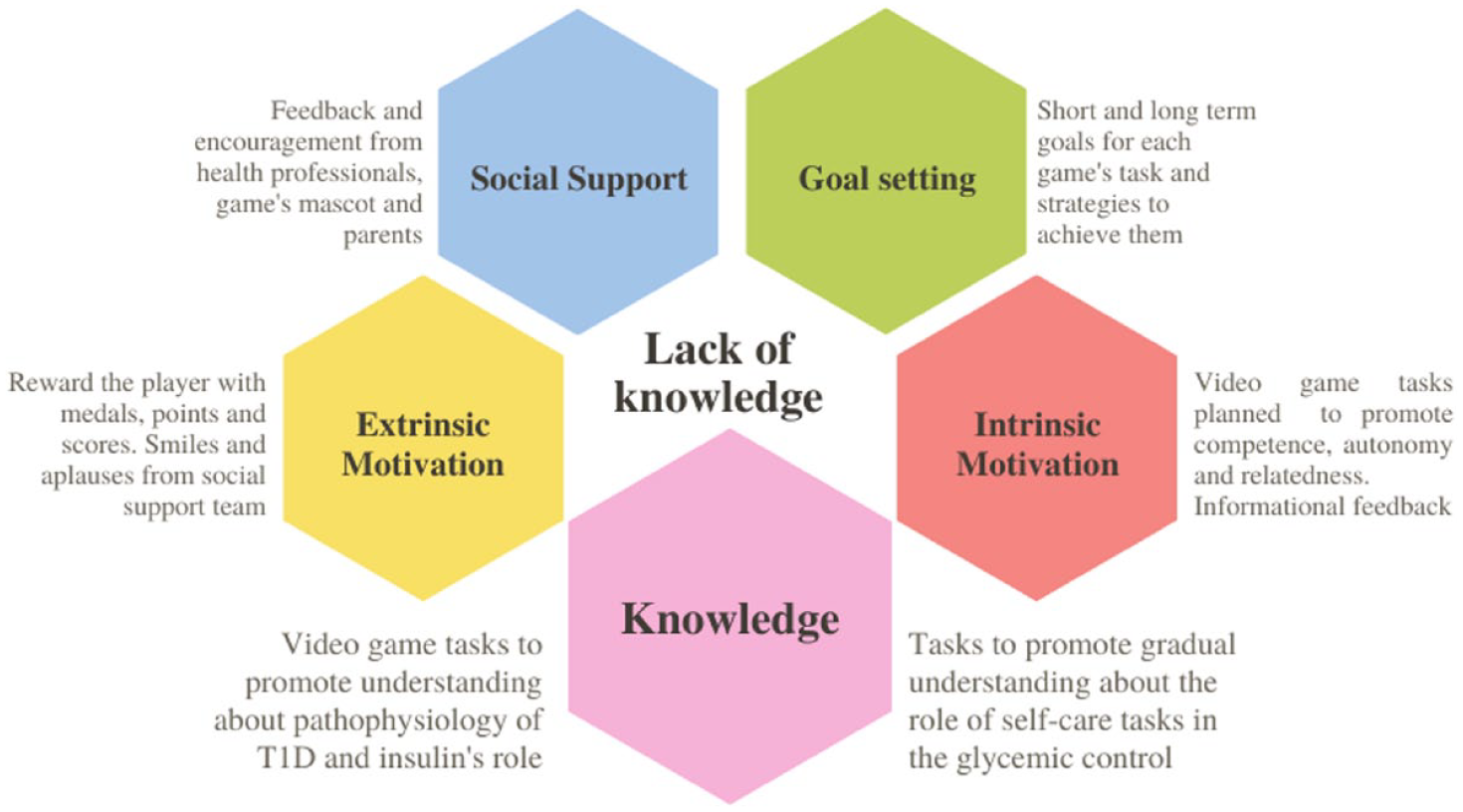
Behavior change determinants included in the video game design features.
Game Description
“The Heroes of Diabetes - the power of knowledge” was designed for Web Platform, in 2D and 3D graphics, to be played by children 7-12 years old, in first person perspective. The player will be invited to perform 3 back-to-back minigames (30-40 minutes each one), that will lead them to improve knowledge about their illness and self-care tasks. The game takes place in the “Center of Knowledge” where health care professionals and a mascot will assist the player to gain knowledge, autonomy and confidence. The player will be able to choose among 6 different characters. The figures provided represent the medium fidelity prototype version of the game.
Mini-Games
In the “Action-Reaction” mini-game, a nurse will inform the player about some lab’s machines. Throughout them, the player will have the opportunity to observe immediate changes that occur inside the character’s body after decisions related to diabetes self-care tasks (insulin injections, food intake, physical activity or SMBG). The player’s long term goal is to keep in balance with insulin and carbohydrates for most of the day. The player has full autonomy to choose what to do during 1 day including how to correct hyperglycemia or hypoglycemia episodes. Game points are attained when the player is in balance and when the SMBG is performed. 36 The score reached will help the character to unlock a skating activity and to earn devices to the next mini-game. According to character reactions, the player receives positive and informative feedback from a health professional 36 to support the learning and motivation. Figure 3 illustrates the mini-game.
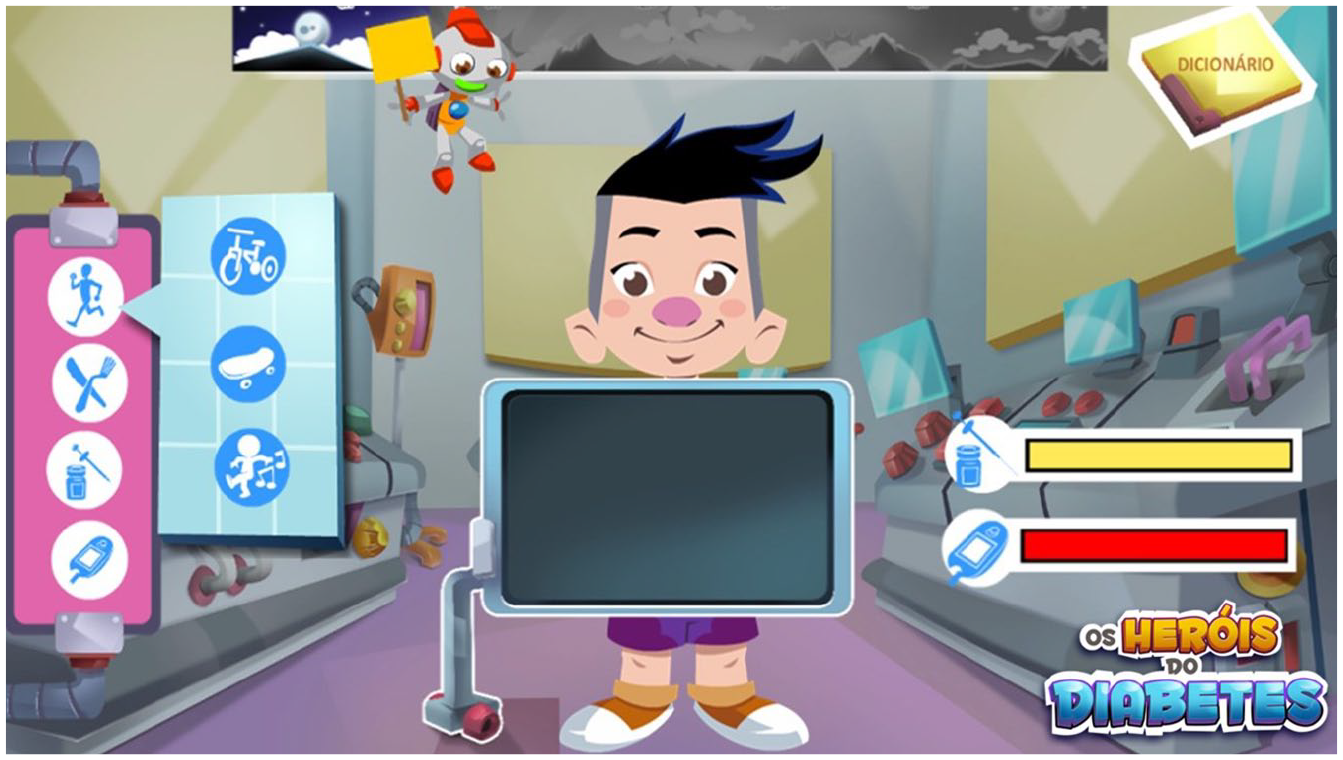
“Action-Reaction” mini-game.
In the “Food’s Groups” mini-game, the nutritionist asks the players for help in sorting out mixed up foods in the kitchen into 4 main food groups. The player has the option to choose which food group they’d like to sort out each time it is played. The wrong choices are identified by the game mascot using positive reinforcement. Points and insignias will motivate the player to try to improve their performance. To complete the mission, the player is invited to assemble a plate, making connections between the knowledge acquired and the daily task of assembling a healthy meal. Figure 4 illustrates the scenario.
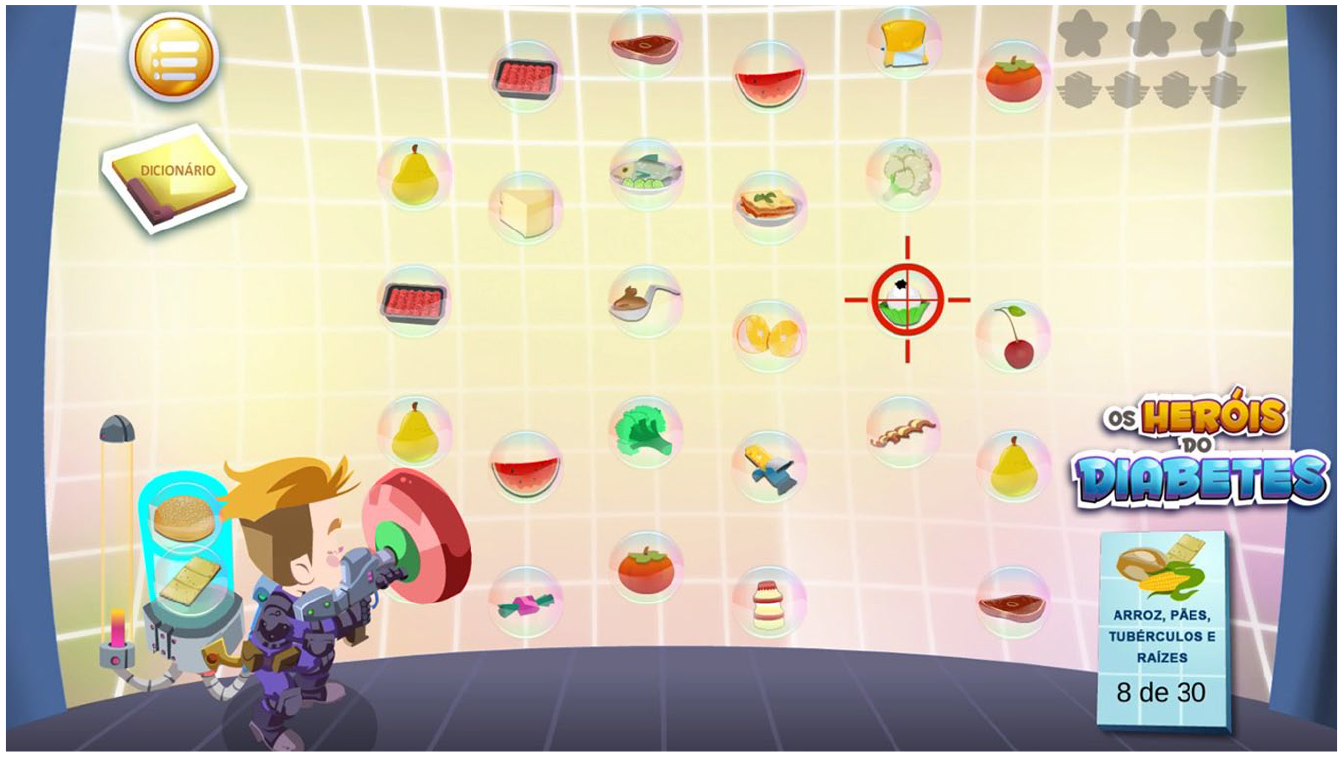
“Food Groups” mini-game.
In the last mini-game, “Travel inside the body,” a doctor invites the player to travel in an aircraft inside the character’s body. The player can invite another person to play with. The pair will work together, assuming different tasks such as controlling the aircraft, firing the shots or answering key questions. As short-term goals, the player must travel along the food pathway through the gastrointestinal tract helping to break food down into the bloodstream using the aircraft weapons. Once glucose and insulin particles are in the bloodstream, the player should pair them in enough amounts to reduce the amount of glucose in the blood. The player’s long-term goal is to carry the energy into cells, understanding the role of insulin to the body and helping the bloodstream to be free from hyperglycemia. Obstacles, scores, lives and feedback messages will motivate the player to move on and complete the mission. 33 Figure 5 illustrates the scenario.
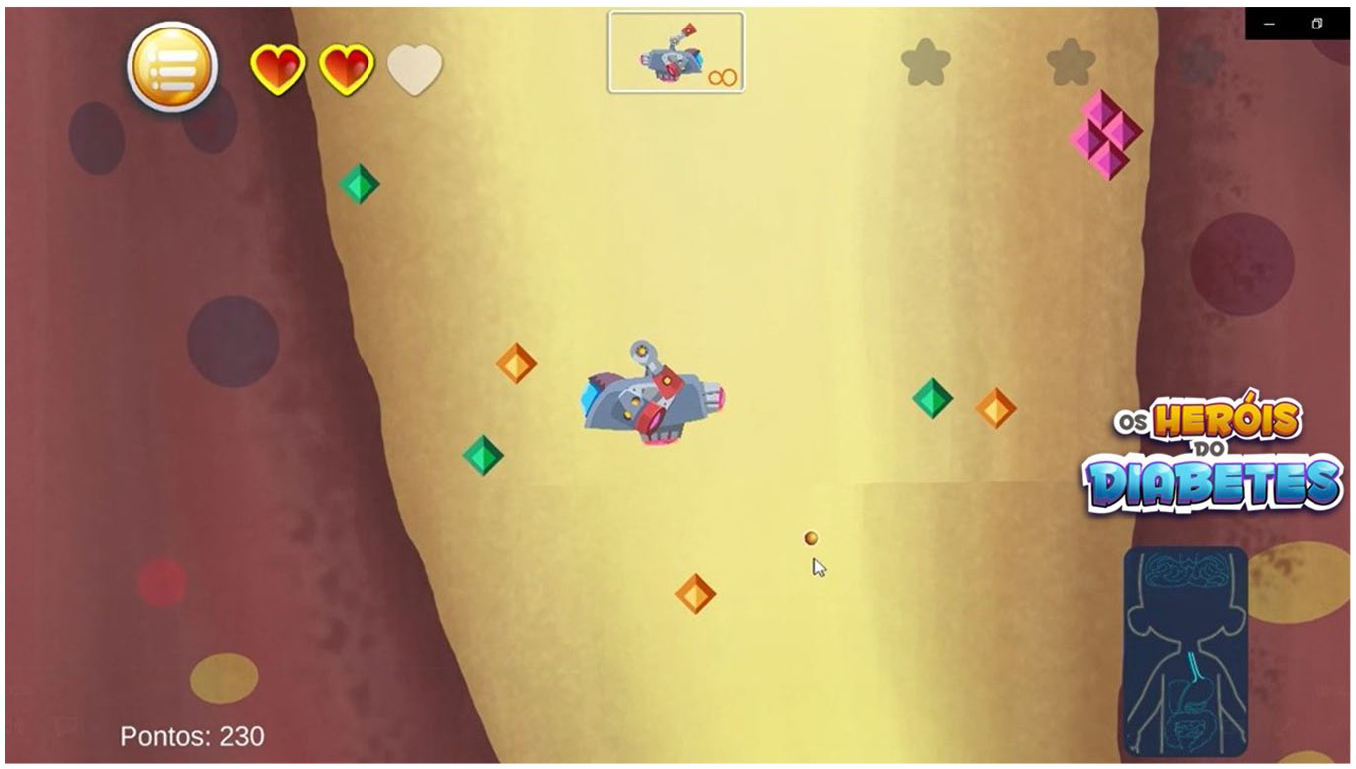
“Travel inside the body” mini-game.
Discussion
Deficits in knowledge about the disease are cited in the literature as a source of disease mismanagement.10,38,39 A better understanding of T1D should provide the child with an incentive for modifying inappropriate behaviors. 16 The missions proposed in the “Heroes of Diabetes—the power of knowledge” promote the understanding of insulin’s function in the body which is not currently well explored. Also, the missions’ tasks can help the child to properly understand the importance of adequate self-care tasks to diabetes management and can influence the child’s willingness to perform them. The lack of knowledge can increase the difficulties related to practical skills, restricting the ability of children to perform self-care tasks properly. 17 Studies have reported patients’ interest in learning more about their disease when the knowledge determinant is applied into the video game design.8,13,14,27 The findings of research that investigated the effectiveness of serious digital games on healthy lifestyle promotion outcomes, and the role of theoretical and clinical moderators, showed positive effects especially regarding knowledge of the disease. 26
The child will receive positive feedback about their achievements in the videogame, which, in turn, will reinforce the behavior change.8,12,31 For example, making appropriate food choices results in positive changes in glycemic control and achieved goals, which is an incentive to continue the behavior. The behavior change targeted can be expanded by the continuous support of a family member, health professional, or friend. 31 Players must communicate by encouraging each other and interacting to succeed and win the game8,40 which promotes pleasurable sensations, strengthening skills and expectation for good results. It has influence over a child’s decisions about whether to incorporate or avoid a particular behavior. By having social support in times of lack of knowledge the child is more likely to achieve the desired behavior.
Goal setting can drive the game character to carry out self-care tasks, and overcome difficulties. Successful completion of a short-term goal, such as recovering from an hypoglycemia episode, increases the child’s confidence so that the change might become permanent. Being capable and confident in performing some task step-by-step allows the fulfilment of the long-term goal and achieves the desired change. The goal setting can enhance personal motivation, increase self-efficacy, individual satisfaction 31 and contribute to gradual increase of knowledge.
The player is extrinsically motivated from the beginning of the video game. Strategies such as medals, levels, challenges, tests, awards, coins, and scoring points are the most common types of rewards or extrinsic motivators in games 41 mostly known as gamification. 42 However, the levels of extrinsic motivation decreases over time while the levels of intrinsic motivation increase. Strategies that promote competence, sense of autonomy, and relatedness 32 are increasingly present in the game intervention. Feedback with informational features and praise from the health professionals, mascot and family characters are more present as time progresses. Encouraging dialogues and interactions between characters and body language are ways to acknowledge a child’s positive action or behavior change at the video game.12,32
Future research might develop similar video game strategies with children with chronic disease, identifying their learning needs and behaviors on focus to change and testing the health determinants of change relationships. Emotions such as fear, insecurity, pain, desire and demotivation might be influenced by self-efficacy, children’s difficulties related to a treatment’s practical skills may be solved using self-regulatory skills strategies, 17 for example. Moreover, future research can explore adolescent’s learning needs related to diabetes self-management, which can contribute to designing educational technologies aimed at this population.
Conclusions
From this study we concluded that (1) The use of health behavior theories and its determinants of behavior change can guide the design of video game tasks to accomplish with future users’ needs. This study contributed to researchers to better understand how this process can be done; (2) The video game developed might contribute to improve the knowledge of Brazilian T1D children and to change inadequate behaviors related to disease management. Our future studies will focus on testing the video game effects on children’s knowledge about the disease and self-care.
Footnotes
Acknowledgements
none
Abbreviations
FGs, focus groups; SMBG, self-monitoring of blood glucose; SCT, social cognitive theory; SDT, self-determination theory; T1D, type 1 diabetes mellitus.
Authors Contributions
Sample CRedit author statement
Declaration of Conflicting Interests
The author(s) declared no potential conflicts of interest with respect to the research, authorship, and/or publication of this article.
Funding
The author(s) disclosed receipt of the following financial support for the research, authorship, and/or publication of this article: This research was supported in part by grants from the Coordination for the Improvement of Higher Education Personnel – CAPES [Financial code 01] the Sao Paulo Research Foundation – FAPESP [2014/0603-1], and partially by a Mary K. Iacocca Research Fellowship provided by the Iacocca Family Foundation.
