



Abstract
This study develops and validates a multicriteria decision-making framework for assessing the structure and development of academic soft skills in higher education. A total of 241 undergraduate students (104 first-year and 137 final-year) participated in the study. We operationalized soft skills—communication, creativity, and critical thinking—through 15 subcriteria derived from validated instruments, applied objective weighting methods to determine the relative importance of subcriteria, and used K-means clustering to identify structural groupings. Results indicated consistent dominance of communication-related criteria across weighting methods and increased structural differentiation of soft skills in final-year students. Clustering analysis revealed a transition from generalized skill groupings in early academic stages to more specialized and integrated clusters in later stages. The proposed framework enables systematic comparison of soft skill structures and provides a reproducible approach for analyzing their development in higher education.
Keywords
Introduction
Expectations for personal and professional performance are rapidly evolving due to digital transformation. The growing integration of artificial intelligence in the workplace is associated with the automation of routine tasks, increasing the importance of transferable competencies such as soft skills (Einola & Khoreva, 2023). Hard skills alone are no longer sufficient for success in the workplace (Khang et al., 2023). Hard skills are defined as advanced technological knowledge that is often specific to a particular industry or organization (Laukes, 2024), while the labor market continues to shift due to global changes. According to Haritha and Rao (2024), soft skills are universal competencies that can be applied across various professional settings and sectors. Soft skills are what define a modern employee's effectiveness. Understanding the elements of soft skills, their significance, and how to cultivate them is methodologically important (Van Pinxteren et al., 2020). According to Thornhill-Miller et al. (2023), soft skills are increasingly recognized as significant meta-competencies that enable workers to remain productive and adapt to a changing workplace.
These alterations encourage a reconsideration of the entire educational process. Research indicates that employers prioritize qualities that assist employees in adapting swiftly to new roles, working conditions, and organizational strategies (Hoque et al., 2023). Learning and innovation skills encompass creativity, critical thinking, communication, and teamwork. However, there is no consistent framework for analyzing the structural organization of soft skills and their subcriteria. To effectively transition into a new phase of the labor market's evolution, it is important to consider the fundamental attributes of recent secondary and university graduates (Kochenderfer et al., 2022).
Measuring Soft Skills
The concept of educational measurement is complex. There are few standardized, validated, multifaceted tools in higher education for systematically assessing and classifying soft skills. Because soft skills are complex and context-dependent, most assessment models rely on subjective single-criterion evaluations (Heckman & Kautz, 2012; Robles, 2012). Educators must evaluate multiple relationships that are often qualitative by nature. Relying on a single criterion can be inadequate because education systems are intricate and multivalued (Cantoni et al., 2025; Rear, 2019). Multicriteria decision-making (MCDM) solutions are suitable for solving educational measurement issues (Alshakhatreh et al., 2024).
Although MCDM techniques have been effectively applied in educational decision-making, their potential for assessing soft skills remains underutilized and insufficiently theorized (Kabir & Hasin, 2011; Srivastava et al., 2024). Recent studies also highlight the role of digital and AI-supported learning environments in soft skill development (Caeiro-Rodríguez et al., 2021; González-Pérez & Ramírez-Montoya, 2022). Assessing soft skills, which are inherently qualitative, situational, and multidimensional, is complex. Validated MCDM-based tools that integrate multiple indicators to systematically classify soft skills—especially across different stages of university education—remain limited. Soft skills lack standardized measurement approaches, making them difficult to quantify due to their subjective and interdisciplinary nature (Heckman & Kautz, 2012; Robles, 2012).
Applying MCDM to Soft Skills
MCDM methods provide a structured approach for integrating multiple criteria in educational evaluation (Alshakhatreh et al., 2024) and enable the assessment of soft skills through the evaluation of their relative importance and relationships (Zhang et al., 2024). These methods support the analysis of multidimensional constructs and improve comparability across complex criteria systems (Yüksel et al., 2023). Significant social and procedural advancements propel education systems to adopt a more learner-centered and holistic strategy. In this ever-changing environment, MCDM is relevant for supporting a transparent, responsive, rigorous, and contextually appropriate measurement procedure (Yüksel et al., 2023). The development and validation of MCDM-based assessment tools that can operationalize and classify soft skills—specifically, communication, creativity, and critical thinking—with clarity, consistency, and educational relevance in higher education contexts represents a significant research gap.
Data outcomes can be optimized using MCDM and by analyzing the resulting criteria network. By examining the characteristics of each criterion, we can employ the quantitative data analysis approach to define and categorize the data of the examined criteria. Establishing a hierarchical differentiation among each examined criterion is an effective way to understand their relationships. The application of MCDM methodology models and quantitative and qualitative analysis methods in the evaluation of criteria designed to enhance the effectiveness of the educational process and critical decision-making not only allows for the expansion of research areas but also anticipates opportunities to modify educational processes and model future research beyond the current problem's scope (Huang et al., 2020). Although the initial inputs are based on self-reported evaluations, the applied MCDM framework transforms these data into quantitatively derived criterion weights using objective weighting techniques, ensuring numerical comparability and analytical consistency of results.
Frameworks for Soft Skills and Advanced Academics
Cognitive flexibility and problem-solving competencies essential for success in high-achievement learning settings can be cultivated by teaching soft skills in advanced academic environments (Garcia, 2016). Advanced academic programs offer supplemental learning activities, such as research opportunities, mentoring programs, and interdisciplinary collaborations, that challenge and support diverse learners (Eugenijus, 2023). Educational institutions should develop structured approaches to enhance accessibility, bolster student adaptability, resilience, and innovative potential. This approach is vital for academic institutions to support students who demonstrate exceptional abilities or come from underrepresented backgrounds due to historical discriminatory practices. High-level educational programs incorporating soft skill training enable institutions to cultivate an equitable and rigorous educational environment, preparing students for success in the workplace, leadership roles, and lifelong learning in a complex society (Lyu & Liu, 2021).
Research findings may be difficult to compare when conceptual definitions are unclear with other research findings where the intentions of such research concepts are vague or conflicting (Sternberg, 1985). It is important to remove any ambiguity, add validity to the measurement, and make it easier to transfer the conclusions to other teaching settings. Soft skills are integrated into instruction, curriculum development and assessment design by applying to the existing conceptual learning models, including Bloom's Taxonomy and the P21 Framework. Taxonomy of Bloom presents a hierarchical concept of cognitive activities (Anderson & Krathwohl, 2001), which enables teachers to designate soft skills as tangible learning outcomes. The P21 Framework emphasizes four key elements, namely, communication, creativity, collaboration, and critical thinking, or the so-called 4Cs, that can guarantee success in the knowledge economy (Dilekci & Karatay, 2023; Thornhill-Miller et al., 2023). Systems such as P21 and Bloom provide proven ways of integrating soft skills into measurable and ordered learning objectives. These frameworks are supported by foundational work in critical thinking and creativity research (Beghetto & Kaufman, 2014; Facione, 1990; Runco & Jaeger, 2012). By aligning the definitions with these frameworks, educators and researchers can create evidence-based, goal-focused teaching and evaluation approaches and tests (Halpern, 2013). This alignment renders soft skills development meaningful, follow-up and dynamic to various learning requirements. Standardized conceptualizations enable collaborative work among educators and researchers worldwide, which is particularly relevant when disciplines and cultures do not share the same distinctions. Without clarity, efforts to develop soft skills in higher education risk becoming disjointed, incomplete, or pedagogically chaotic.
Preparing a clear conceptual understanding of the fundamental constructs of communication, creativity, and critical thought is important for establishing their specific theoretical foundations, as informed by the Framework for 21st Century Learning and Bloom's Taxonomy (see Table 1).
Conceptual Alignment of Core Academic Soft Skills With P21 Framework and Bloom's Taxonomy.
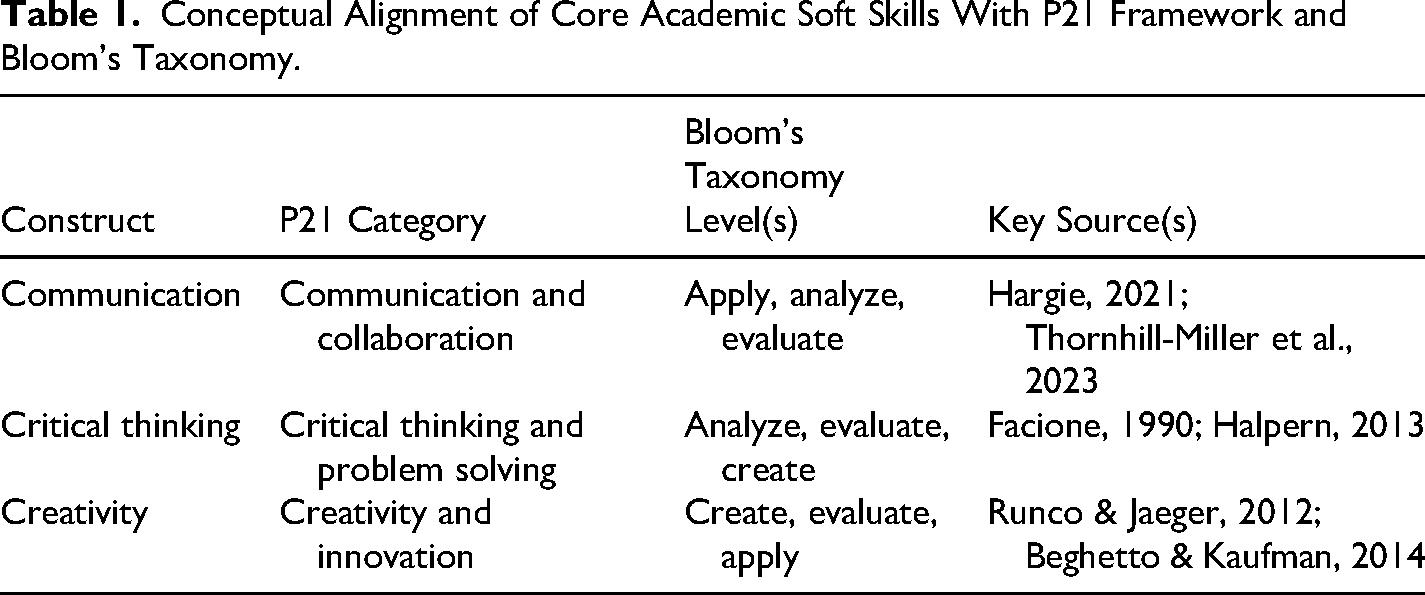
As a result, we established the following baseline definitions of core academic soft skills: Communication—the ability to effectively express their thoughts and ideas verbally, through writing, and through body language, as well as listen and collaborate with multicultural teams. Critical thinking—the ability to objectively analyse information and base decisions on sources, assumptions, arguments, and evidence. Creativity—the ability to generate new and valuable ideas using divergent thinking, extracting, and connecting unrelated thoughts.
Hurrell (2016) explored the soft skills gap in the United Kingdom through multivariate analysis. A set of resources that will aid in identifying the most crucial soft skill needs and the associated subcriteria relevant to various professional activities must be compiled. This research aimed to develop and implement MCDM-based techniques to identify and classify soft skills—creativity, critical thinking, and communication—and their subcriteria in higher education. It also aimed to understand how these skills evolve for students’ academic journey.
To achieve the aim, we posed the following questions (RQ): RQ1: How can the structural organization of soft skills be assessed using an MCDM-based framework? RQ2: How does the structural organization of soft skills differ between first-year and final-year students? Investigating the applicability of MCDM provides the basis for model validation. Following validation, the model can be applied to cross-sectional or longitudinal studies involving various student cohorts to assess skill development patterns, with descriptive and inferential statistics used for analysis. RQ3: What structural relationships exist among soft skill sub-criteria within the proposed framework? Subcriteria's weights may indicate how much of an impact they have on students’ academic and personal growth.
These questions allowed for the formulation of the following hypotheses (H): H1: The three primary soft skills and their subcriteria will exhibit logical weightings and high internal consistency in a validated MCDM-based tool. H2: Students will display more intricate soft skill structures in their final year than in their first year of study.
This study introduces an integrated analytical framework that combines objective MCDM weighting methods with clustering techniques to capture structural relationships among soft skill subcriteria. The framework enables simultaneous evaluation of relative importance and structural grouping across academic stages. Monitoring the development of students’ soft skills across university studies enables identification of interaction patterns influencing academic progression. In advanced academics, one should develop an assessment mechanism that will assist different forms of students who are superior in their academic performance despite the scarcity of resources. The findings of our research will assist in designing strategies that would be applied in implementing programs that would use mentoring to develop advanced cognitive and interpersonal skills beyond the regular education program.
Method
Participants
Among the bachelor students enrolled at Vilnius Gediminas Technical University's Faculty of Creative Industries in 2022 (study programs of Creative Industries and Entertainment Producing, and Communication Science), we selected 104 first-year students (72 female and 32 male) and 137 final-year students (111 female and 26 male). This amounted to approximately 80% of all first-year students and about 90% of final-year students. The selected individuals were aged 19.50, ±2.30 years and 22.18, ±0.58 years, respectively. Advanced students (or students who had no academic debts) participated in the study. Participation in the research was open to any students who attended the lectures. The gender split in our study matches the makeup of the Creative Industries and Entertainment Industries programs at Vilnius Gediminas Technical University. The higher number of women in both first-year and final-year groups shows our sample is like the population it's drawn from. This means our results are representative of the academic context we're studying.
Choice and Justification of Instruments for Assessing Soft Skills
Assessing soft skills in higher education requires using reliable, valid, theoretically grounded instruments consistent with educational goals and able to capture developmental differences across academic stages. The methods chosen must be appropriate for the MCDM application. MCDM techniques facilitate quantitative and qualitative analysis of communication patterns and are adaptable enough to be utilized in various learning environments. The resources selected to measure communication, creativity, and critical thinking were chosen due to the quality of psychometric properties, the appropriateness to apply in an academic setting, and the focus on the known frameworks, including Bloom's Taxonomy and 21st Century Learning Models (Anderson & Krathwohl, 2001; Stork, 2020).
HTC Indicators is a versatile tool for assessing communication ability across all areas in intrapersonal, interpersonal, verbal, and nonverbal ranges (Prajna & Prasad, 2017). All the critical areas of academic success, collaborative study, and successful interactions in the real world rely on these areas. This tool is particularly suitable for higher education because it assesses multichannel communication competence, the key element of academic discourse and professional preparation (Hargie, 2021). It conforms to the P21 framework, and according to the P21, 21st-century skills are basic skills that include communication and being a team player (Stork, 2020).
The Kaufman Domains of Creativity Scale (K-DOCS; Kaufman, 2012) is a domain-specific self-report instrument designed to measure creativity in five distinct contexts: everyday, academic, performance, scientific/mechanical, and artistic. It requires a varied perspective on the ability of students to be creative, whether in academic or other fields. The tool has strong theoretical underpinnings, as laid out by Amabile and her componential theory, as well as Gardner and his multiple intelligences. Plucker et al. (2004) state that domain specificity shows differences in the forms that creativity can take over different domains.
The Critical Thinking Questionnaire (CThQ; Kobylarek et al., 2022) is a test that measures critical thinking based on the indicators of the Bloom taxonomy of cognition, and these indicators are analyzing, evaluating, creating, remembering, understanding, and applying. The fact that it separates students with a greater experience level and those with less experience will help to record the gradual adjustment to a new set of skills (Halpern, 2013). The empirical foundation of this tool within European educational quality systems guarantees its relevance to higher education within Bologna-compliant systems.
These instruments are reliable, valid, and theoretically sound for assessing key soft skills in higher education. Their application to an MCDM-based evaluation system allows cross-cohort comparisons, subcriteria analysis, weighting, and identification of development patterns—developmentally desirable patterns necessary to succeed in school and professional activities (Yüksel et al., 2023).
Data Collection and Processing Methods
Each participant completed the self-assessment instruments and submitted their responses for analysis. To guarantee that the reliability of the study was represented equitably, we stratified the sample. Descriptive statistics were calculated using the mean (M) and standard deviation (SD).
HTC Consulting provided a communication inventory that we used to assess participants’ communication skills (Prajna & Prasad, 2017; see Table 2).
Indicators of Communication Skills Based on the HTC.
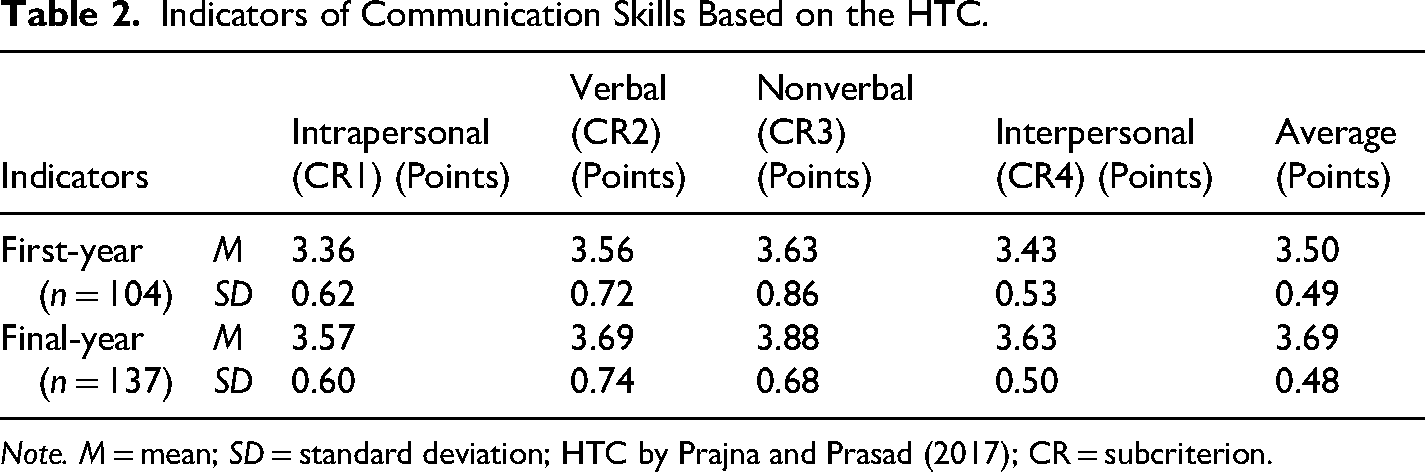
Note. M = mean; SD = standard deviation; HTC by Prajna and Prasad (2017); CR = subcriterion.
The mean scores indicate that communication subcriteria improve across academic stages (intrapersonal, verbal, nonverbal, and interpersonal) among first-year and final-year students. These indicators provide a structured basis for expert comparison and consistency checks within the MCDM framework. The observed increase in mean scores across all subcriteria suggests progressive development of communication skills throughout university studies.
To evaluate the creative abilities of the participants, we employed the Kaufman Domains of Creativity Scale, known as the K-DOCS (Kaufman, 2012; see Table 3).
Indicators of the Kaufman Domains of Creativity Scale (K-DOCS).
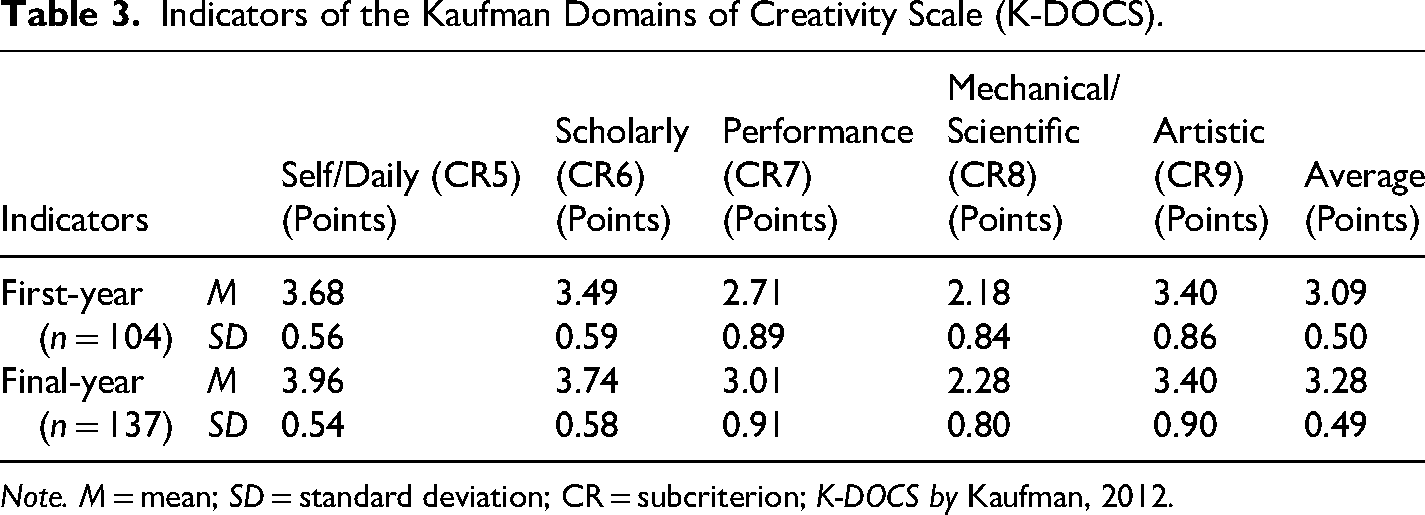
Note. M = mean; SD = standard deviation; CR = subcriterion; K-DOCS by Kaufman, 2012.
Table 3 summarizes domain-specific creativity scores for first-year and final-year students based on the K-DOCS instrument. The results indicate a modest overall increase in creativity during university studies, particularly in scholarly, performance, and self/daily domains. These quantified subcriteria can be incorporated into the MCDM framework to assign relative weights and examine developmental patterns across academic stages.
For assessing critical thinking, we employed the CThQ instrument (Kobylarek et al., 2022; see Table 4).
Indicators of the Critical Thinking Questionnaire (CThQ).
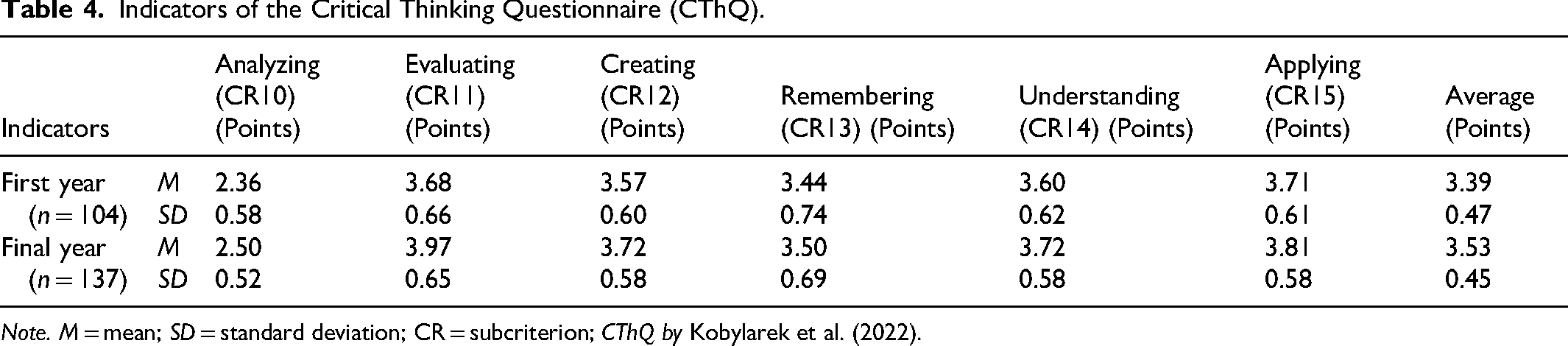
Note. M = mean; SD = standard deviation; CR = subcriterion; CThQ by Kobylarek et al. (2022).
Table 4 presents mean scores and standard deviations for six critical thinking subcriteria across first-year and final-year students. The results show consistent improvement across most dimensions, particularly in evaluating, creating, and applying. These indicators form a quantitative basis for weighting critical thinking subcriteria within the MCDM framework and for comparing developmental trends between academic stages.
As a result, we evaluate 15 subcriteria under the three soft skills criteria of critical thinking, communication, and creativity (Table 5).
Definitions of Criteria (Communication, Creativity, and Critical Thinking) and Subcriteria by HTC, K-DOCS, and CThQ Tests.
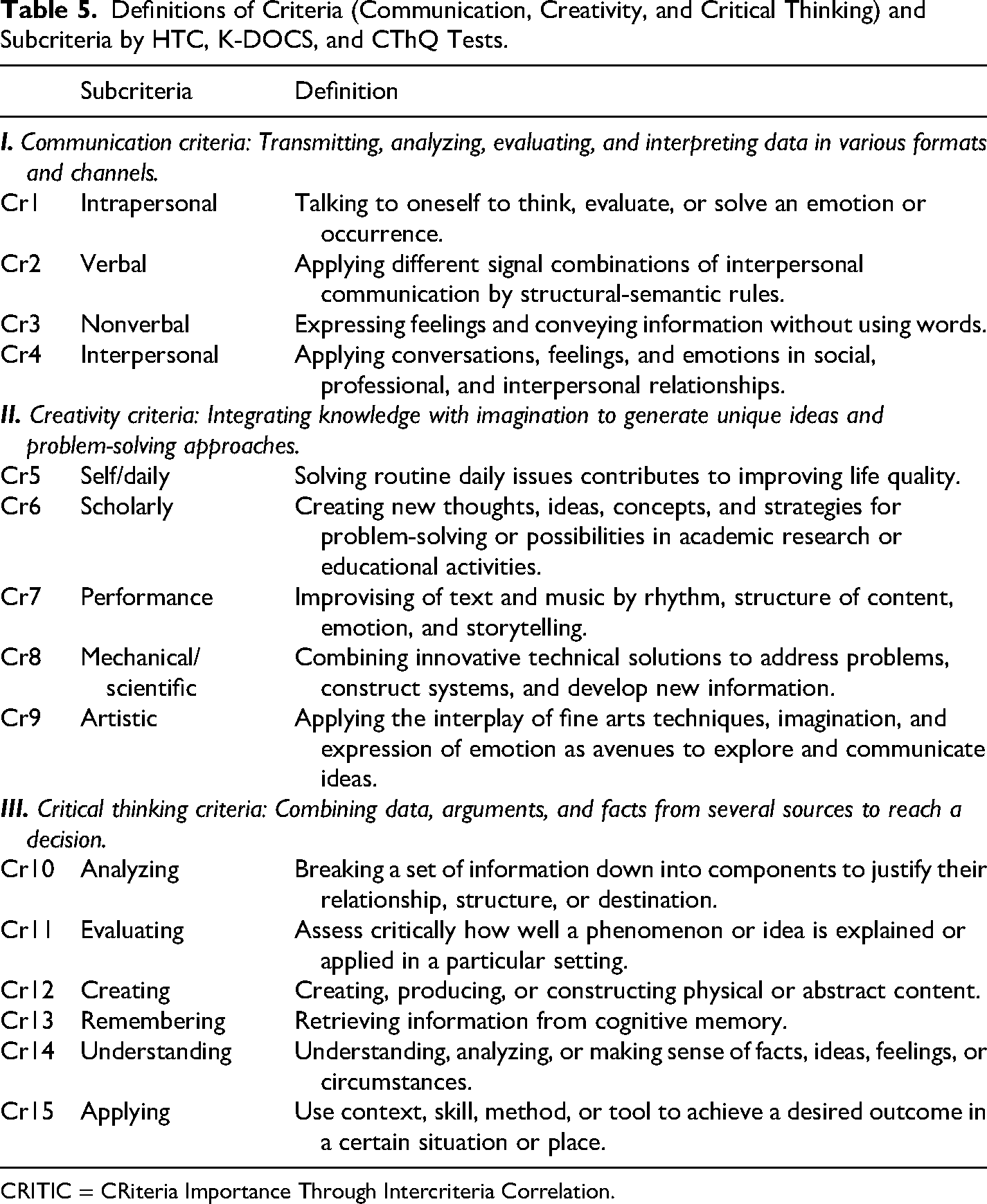
CRITIC = CRiteria Importance Through Intercriteria Correlation.
The participants needed thirty minutes to complete the anonymous self-assessment exercise. Internal consistency was acceptable, with Cronbach's alpha values of 0.821 for first-year students and 0.793 for final-year students (Cho, 2020).
In contrast to the previously described statistical procedures, objective criteria weighting methods are used to process further data collected using psychometric instruments (HTC, K-DOCS, CThQ). MCDM methods make it possible to determine the relative importance of each criterion, which can be ranked (from the highest to the lowest value). At the same time, the sum of weights within one group must equal one. It is important to emphasize that the methods are applied to each group of criteria and subcriteria, forming a hierarchy. This research examines data using several objective analysis methods: Mean, CRiteria Importance Through Intercriteria Correlation (CRITIC), SD, and Centroidous (Table 6). Their joint application is explained by the fact that each method emphasizes different properties of the data, and taken together, they provide a more stable and objective picture. According to Vinogradova et al. (2018) and Vinogradova (2019), the use of multiple methods simultaneously is a justified practice, since no single method is universal, while the combination of approaches improves the objectivity and reliability of the results.
A Mathematical Description of the Methods Used.
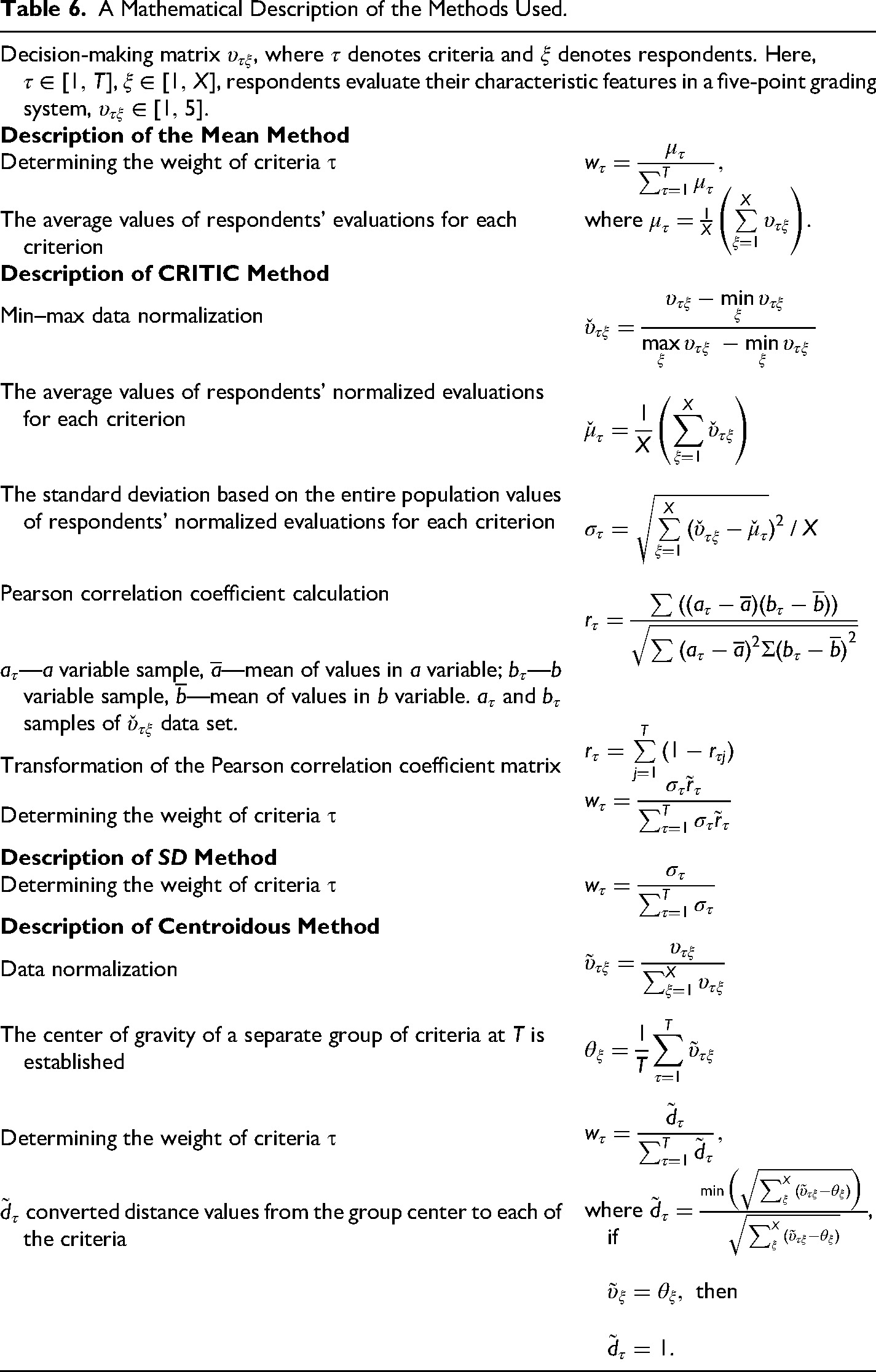
First, we applied the Mean weighting method (Xie et al., 2022), which averages the values from the matrix
Second, we used the CRITIC method (Diakoulaki et al., 1995), which derives weights from the standard deviation and correlations between criteria, capturing contrast intensity and conflict. The original data were normalized using the min–max approach. CRITIC determines the criteria weights by examining the evaluated criteria's degree of contrast (measured by the standard deviation) and the contradictory character (captured by the Pearson correlation coefficient). Higher dispersion indicates greater discriminative power of the criterion across alternatives. In turn,
Third, we employed the SD method (Diakoulaki et al., 1995), in which equals the standard deviation of criterion τ divided by the sum of standard deviations across all criteria (στ / Σστ) (Diakoulaki et al., 1995). Both CRITIC and SD methods tend to emphasize criteria with higher variability.
Finally, the Centroidous method (Vinogradova-Zinkevič, 2024) evaluates each criterion's closeness to the group's common center. In this method, each criterion τ is considered a vector of values across respondents/objects and compared with the center (centroid) of the group. The center of a group of criteria represents the average response profile across all respondents. Therefore, the Centroidous method tends to prioritize criteria that are most representative of the group’s overall response pattern. The Euclidean distance metric is used to compare each criterion with the centroid. The method originates from ideas of machine learning clustering.
We divided the criteria into three categories: Communication, Creativity, and Critical Thinking. First, we had to determine the criteria weights for each group of categories. We established them by four methods: CRITIC, SD, Mean, and Centroidous (Table 6). In addition, we established the objective weights of the categories (Wcomm, Wcreat, Wcrit) using the above-mentioned methods. Then, we used the average values of the students’ questionnaire data for this calculation.
Research Ethics
This study was conducted according to the ethical standards for educational research. Before collecting data, all participants provided their informed consent, confirming that their participation was voluntary and that they could withdraw at any time without facing repercussions. All procedures complied with the ethics guidelines set by the institutional research ethics committee, including carefully using assessment tools and protecting sensitive information as far as possible. Participation was anonymous and voluntary, and the data collection and analysis were anonymous. In line with the Declaration of Helsinki, each participant agreed to participate in the study. All procedures adhered to the ethics guidelines the faculty research ethics committee prescribed, ensuring responsibility and care in using assessment tools and safeguarding sensitive data. Efforts were made to prevent prejudice, discrimination, and misuse of assessment results, primarily as the research focused on classifying and developing soft skills. The MCDM techniques employed in this study were applied transparently and fairly, respecting the academic diversity of the student body.
Data Analysis
The weights of the first-year student criteria, which we determined using the mean, CRITIC, SD, and Centroidous methods, are shown in Table 7. The sum of the criteria of each category is equal to one. The highest-weighted criterion in the communication category was Cr3 according to the mean and SD methods. This was followed by Cr4 (Interpersonal) in the CRITIC approach and Cr1 in the Centroidous method. Through applying CRITIC and SD methods, the most relevant criteria within the creative category were Mean-Cr5, Centroidous-Cr6, and Cr7. The methods’ assessments disagreed with the most important critical thinking category criteria—Centroidous-Cr12, mean-determined-Cr10, CRITIC-Cr13, and SD-Cr11.
Indicators of the Criteria Group Weights and Their Subcriteria for the First-Year Students.
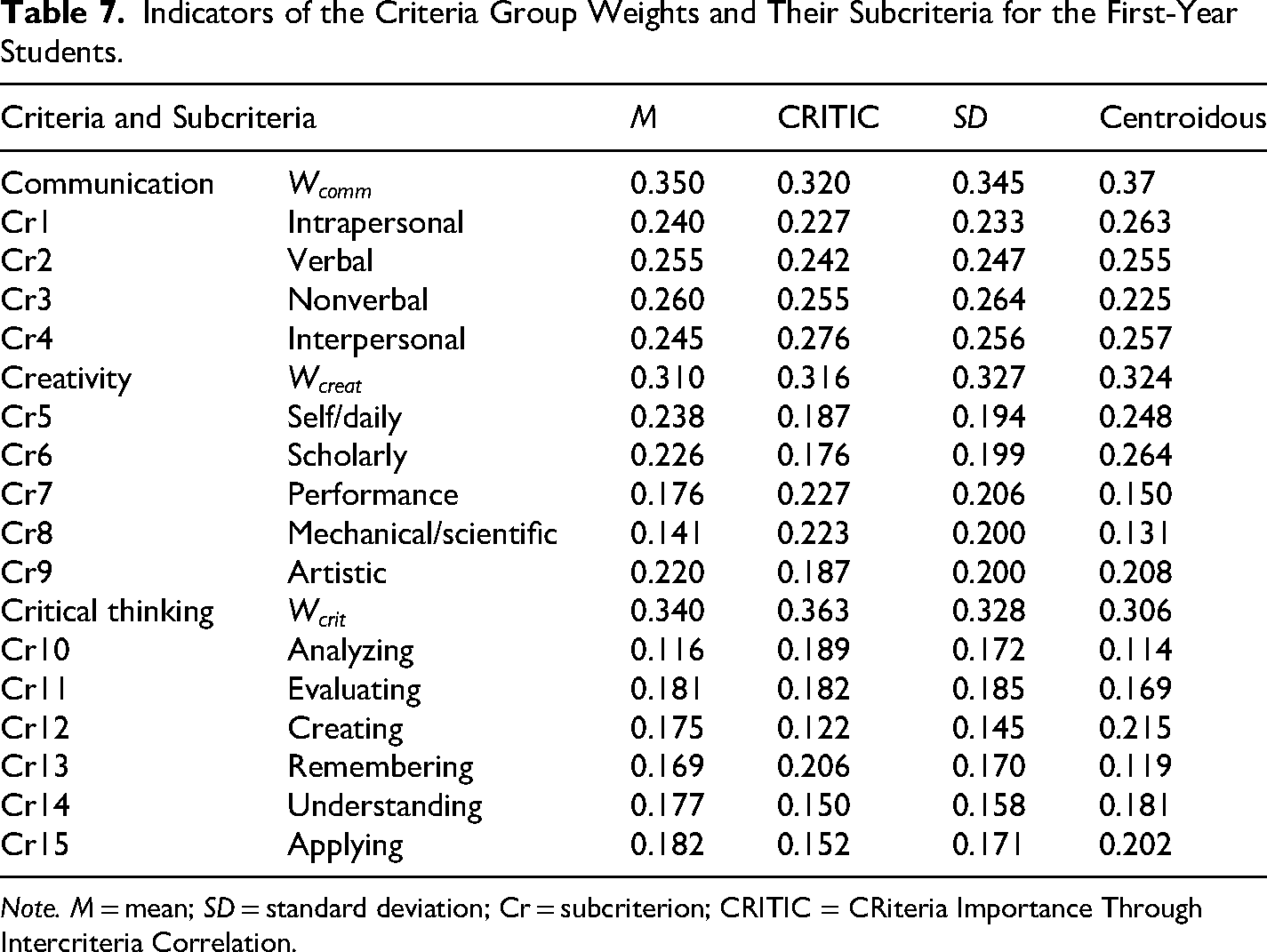
Note. M = mean; SD = standard deviation; Cr = subcriterion; CRITIC = CRiteria Importance Through Intercriteria Correlation.
Similarly, the weights were used to measure the significance of the three categories individually, totaling 1 (one). Except for the CRITIC method, most methods indicated that the communication category had the highest weight. The weight for the Critical Thinking category, Wcrit, which equals 0.363, was determined to be the most significant weight using the CRITIC method. The Centroidous approach showed the lowest value in this category, while the mean and standard deviation ranked in the second position. The weights of the criteria we used to calculate the mean, CRITIC, standard deviation, and Centroidous methods are presented in Table 8.
Final-Year Student Group Weights and Subcriteria Indicators.
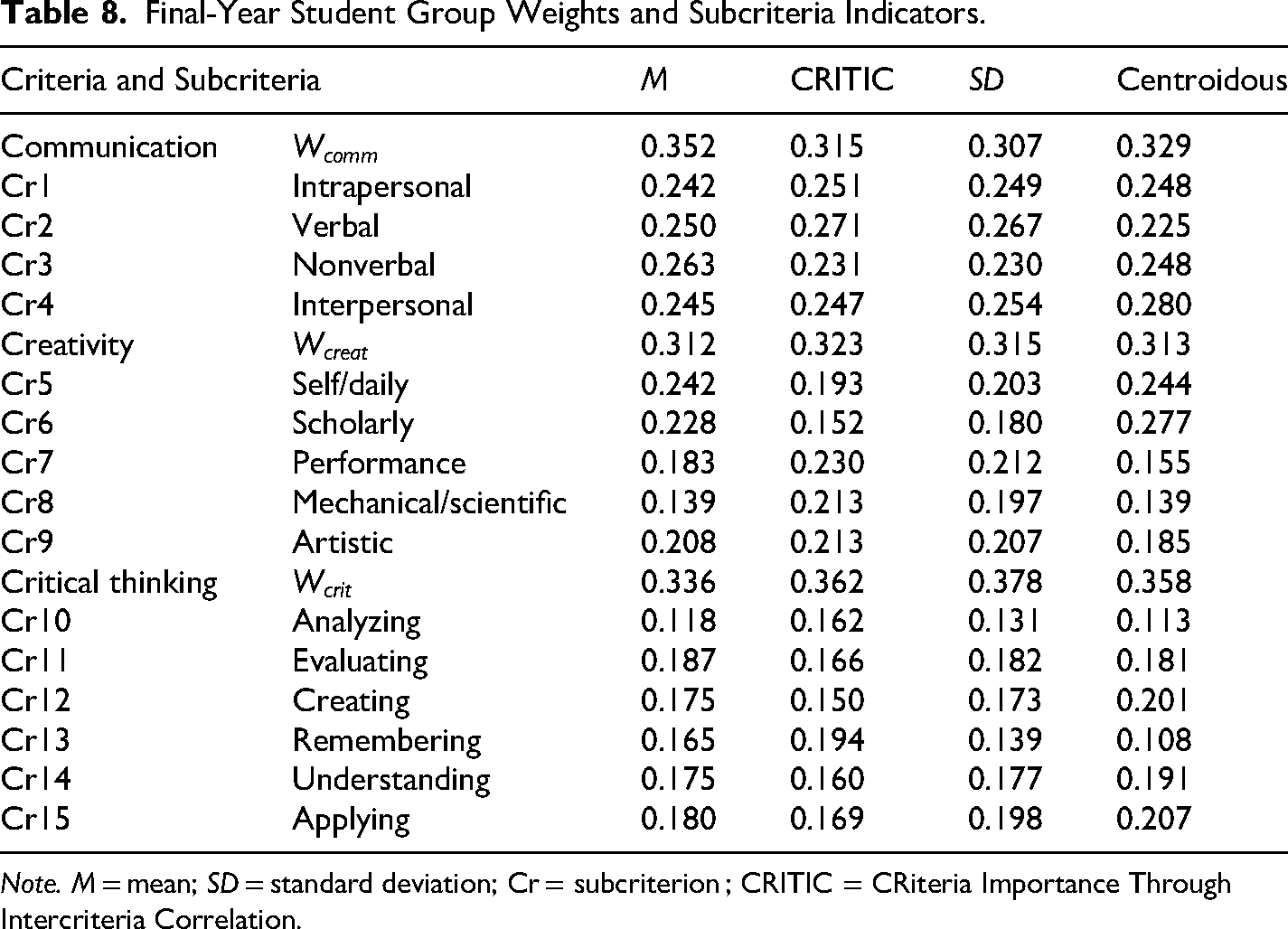
Note. M = mean; SD = standard deviation; Cr = subcriterion ; CRITIC = CRiteria Importance Through Intercriteria Correlation.
Results
The results obtained using different weighting methods revealed consistent dominance of communication-related criteria alongside method-dependent variation in their ranking. In the communication category, the CRITIC and SD methods identified Cr2 as the most significant, while the Mean method indicated Cr3 and the Centroidous method identified Cr4 as the dominant criterion. These findings show that communication-related subcriteria consistently occupy top-ranked positions across methods, although their exact ranking depends on the weighting approach.
In the creativity category, the ranking patterns were similar to those observed in first-year students, with CRITIC and SD methods emphasizing Cr7, while the Mean method highlighted Cr5 and the Centroidous method emphasized Cr6. This indicates moderate sensitivity of creativity-related subcriteria to the applied weighting method.
In the critical thinking category, the results varied more substantially across methods, with SD and Centroidous emphasizing Cr15 and Cr11, while CRITIC identified Cr13 as the most significant. These differences suggest that critical thinking subcriteria are more method-dependent compared to communication.
Comparisons between first-year and final-year students indicate that, although similar criteria remain important, the structure of their relationships becomes more differentiated in the final-year group, reflecting increased complexity of soft skill organization at advanced stages of study.
Table 9 lists the first-year criteria weights that we determined by the mean, CRITIC, SD, and Centroidous methods. The mean and SD methods ranked the Cr3 criterion highest, the CRITIC method placed it fourth, and Centroidous placed it first. The SD and Centroidous methods get the second rank for the Cr4 criterion. The rankings of the criterion vary according to the mean, CRITIC, SD, and Centroidous methods.
Ranked Outcomes of the First-Year's Student Criteria Weights, by the Mean, CRITIC, SD, and Centroidous Methods.
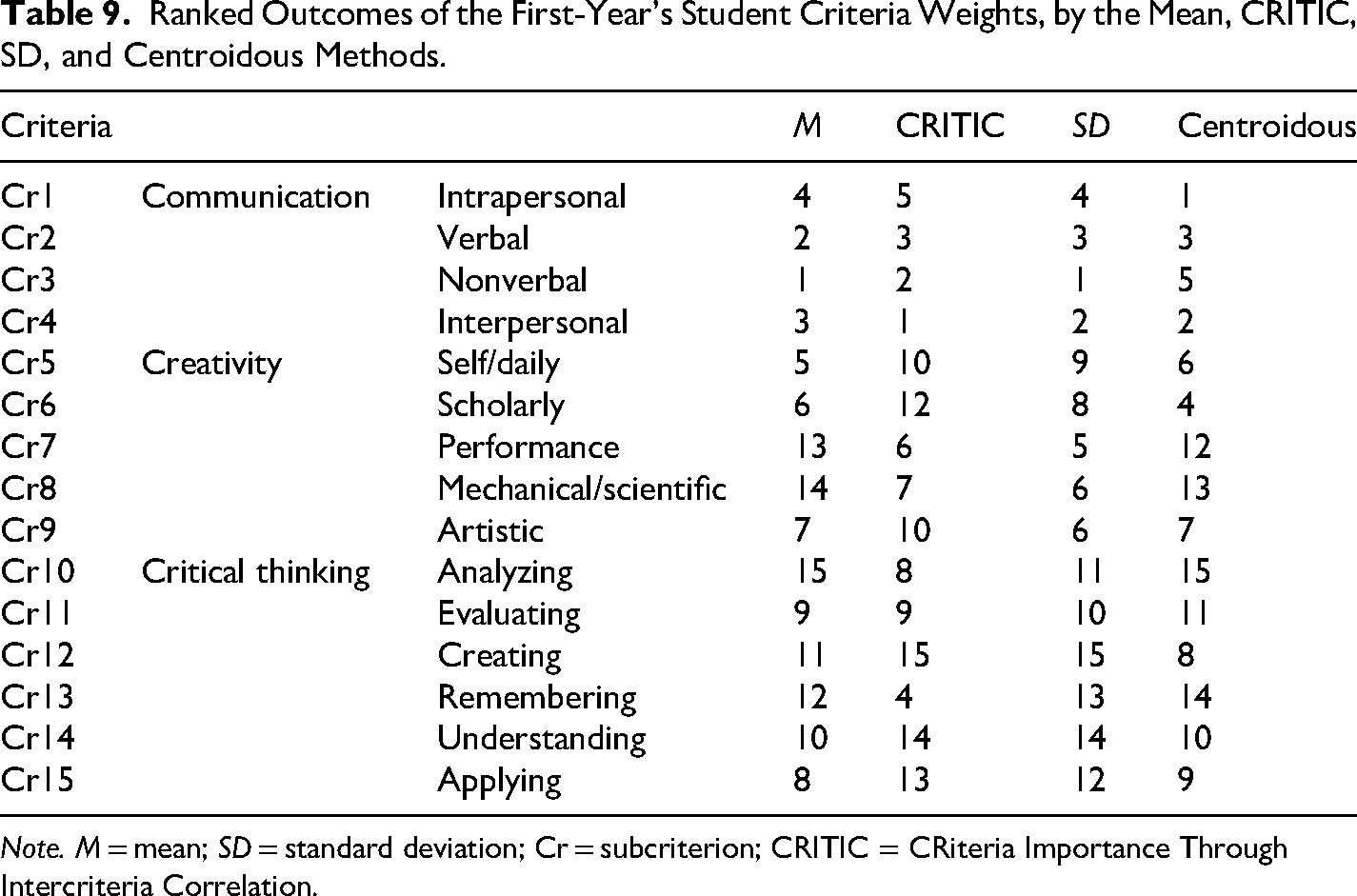
Note. M = mean; SD = standard deviation; Cr = subcriterion; CRITIC = CRiteria Importance Through Intercriteria Correlation.
The values of final-year students’ self-evaluation criteria are shown in Table 10, where they were recalculated according to the weight of each category. Greater variability is reflected in the higher standard deviation values of the criteria, which were calculated using the Mean and Centroidous approaches, which are 0.016 and 0.017, respectively. The standard deviations of the CRITIC and SD weights, which are 0.01 and 0.09, respectively, are less different. The standard deviation of the average values of the weights is 0.011.
Final Year's Student Criteria Weights, by the Mean, CRITIC, SD, Centroidous Methods, and Average Weight Values.
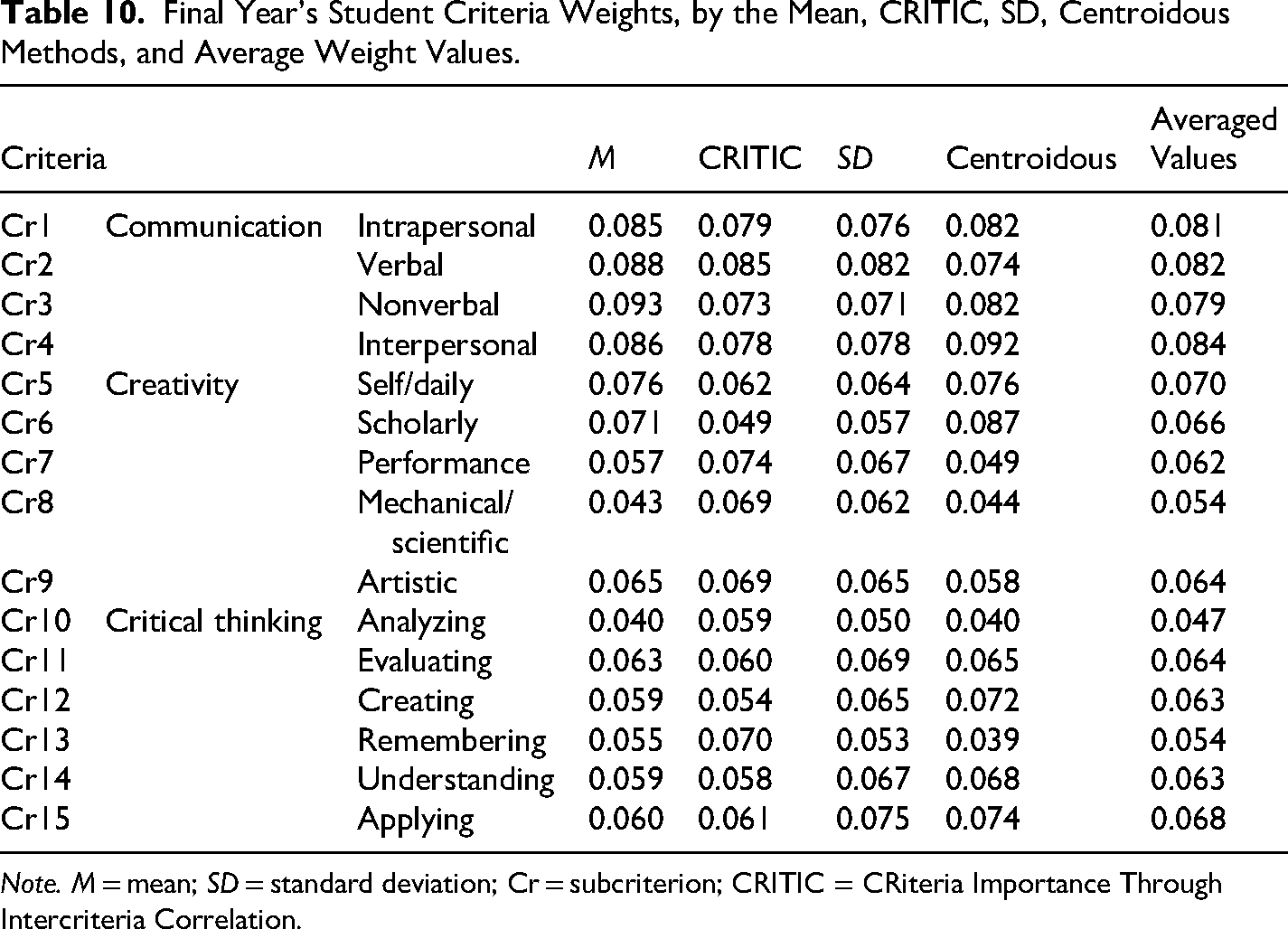
Note. M = mean; SD = standard deviation; Cr = subcriterion; CRITIC = CRiteria Importance Through Intercriteria Correlation.
The ranked results of the criteria weights, which we developed using data from a survey of final-year students, are shown in Table 11. We gathered the data using the Mean, CRITIC, SD, and Centroidous methods. While the Centroidous approach ranked Cr4 as the highest and Mean ranked Cr3, the CRITIC and SD methods chose Criterion Cr2 as the highest. The second rank for criterion Cr4 was obtained using the SD method. The rankings that are derived from various methods differ from one another.
Ranked Results of the Final Year's Criteria Weights, by the Mean, CRITIC, SD, and Centroidous Methods.
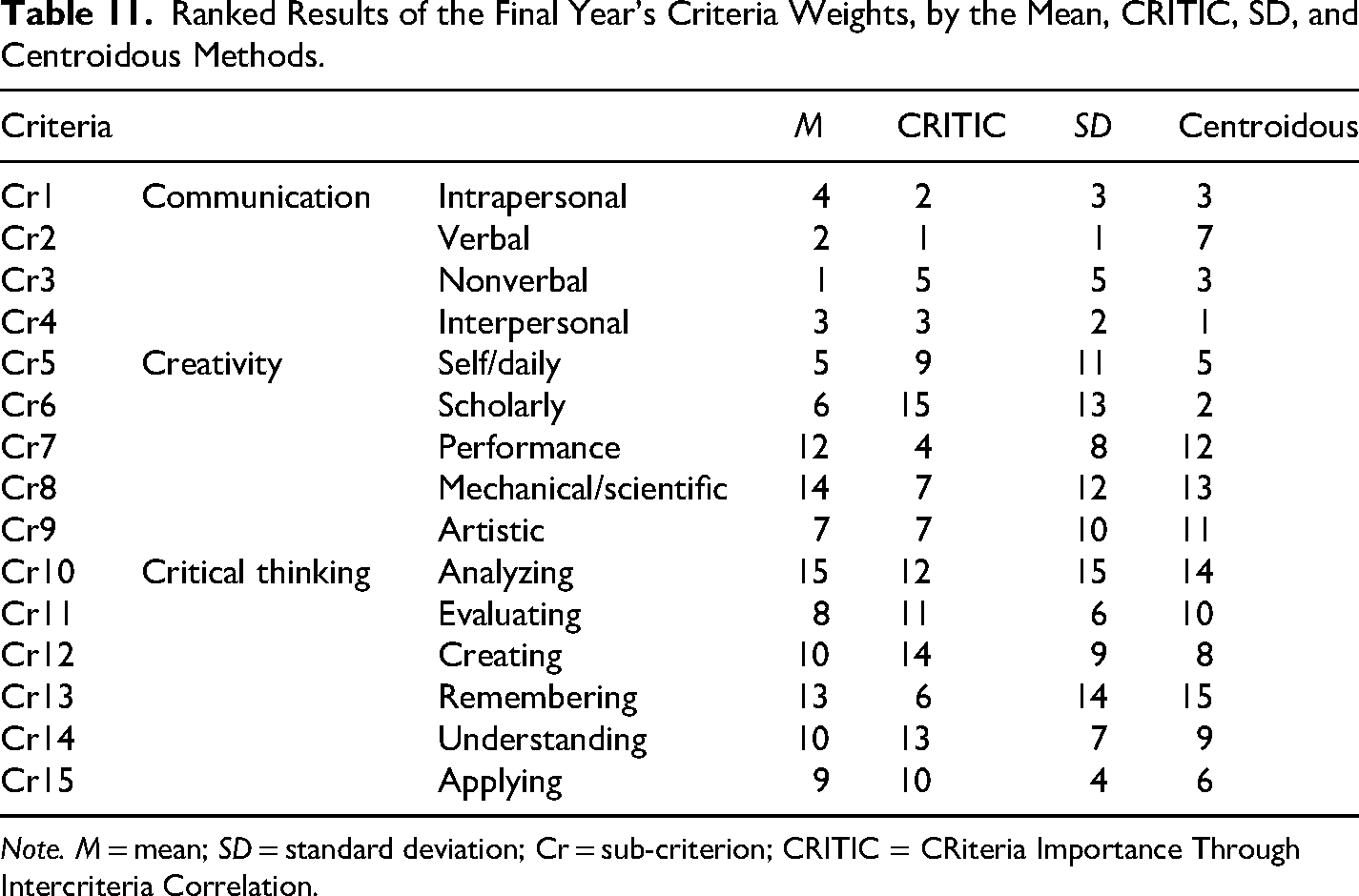
Note. M = mean; SD = standard deviation; Cr = sub-criterion; CRITIC = CRiteria Importance Through Intercriteria Correlation.
The ranked results of the weights’ average values are displayed in Table 12. First- and final-year respondents indicated that criteria Cr4 had the highest ranking, criteria Cr5 had the fifth rating, criteria Cr11 had the ninth rank, and criteria Cr10 had the fifteenth rank. The assessments are similar overall for first- and final-year students, with a one-rank difference in the criteria Cr1, Cr2, Cr6, Cr8, and Cr9. For criteria Cr7 and Cr15, a 4-unit rank difference is the largest.
First- and Final-Year Student Results Ranked Based on the Average Values of the Criteria.

The K-means machine-learning algorithm, which is also called the clustering approach, was applied to examine the data thoroughly. Mac Queen developed the K-means method (Mac Queen, 1967). In this study, we employ the Elbow technique to illustrate the distances from the number of clusters to establish the optimal number of clusters. The Within-Cluster Sum of Squares (WCSS) Inertia is a method we used to calculate the total squared deviations of all data points from the center of each cluster, taken over all clusters. As the number of WCSS clusters increases, the sum decreases as each center more accurately describes the group. The ideal cluster value is chosen from the point where the WCSS drop graph becomes less prominent. The Elbow-shaped curves for first- and final-year students are shown in Figure 1.
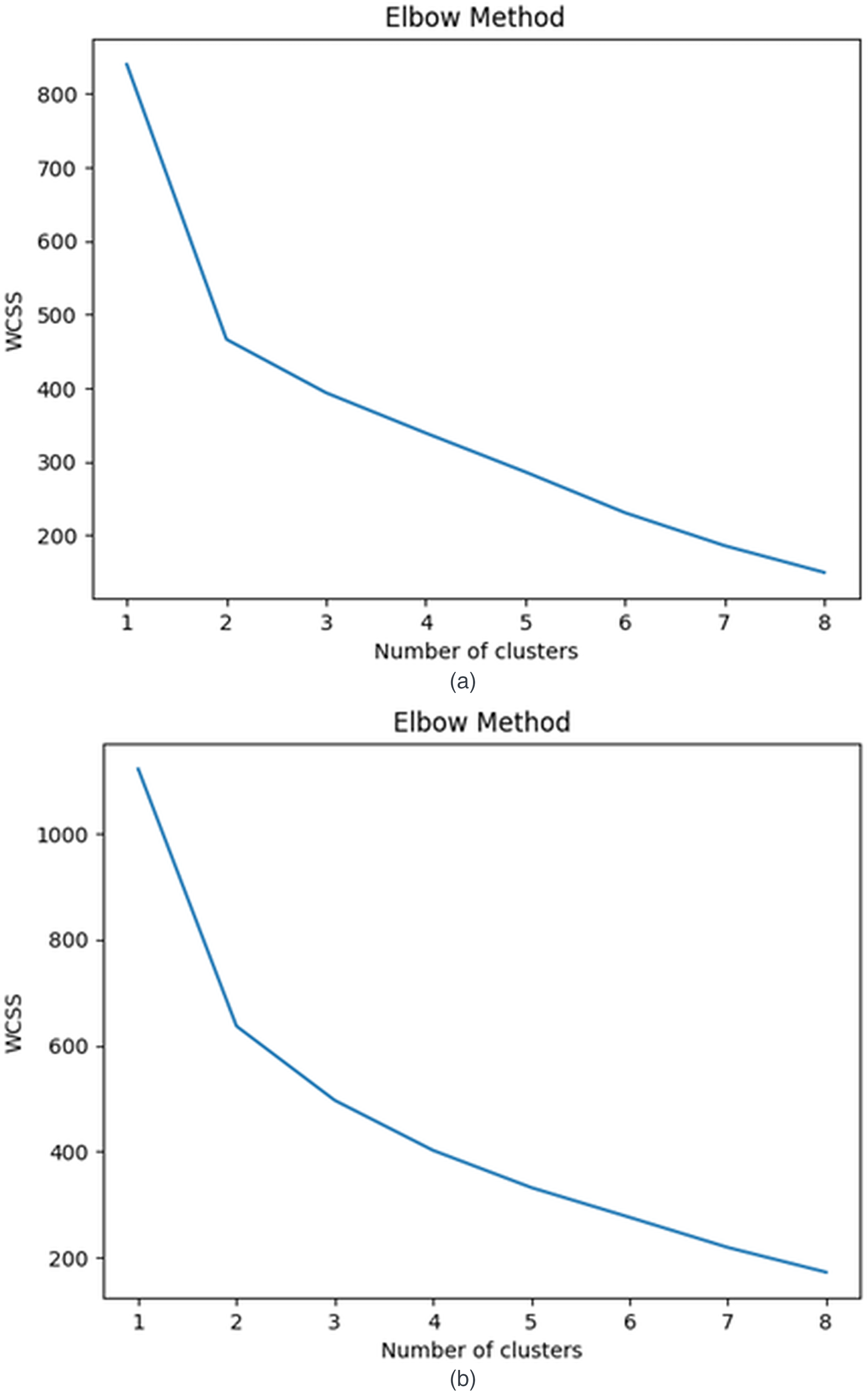
The ideal number of criteria groups determined by the elbow method.
The results on the curves obtained to determine the optimal number of criterion groups by the first- and final-year students are similar. On the first curve (Figure 1a), the optimal number of clusters is 2–3; on the second curve (Figure 1b), it is 3. Next, the criteria were grouped using K-means (K = 2, K = 3). Table 13 presents the outcomes of grouping the criteria into two and three groups.
Outcomes of Grouping Criteria Using the K-means Algorithm.
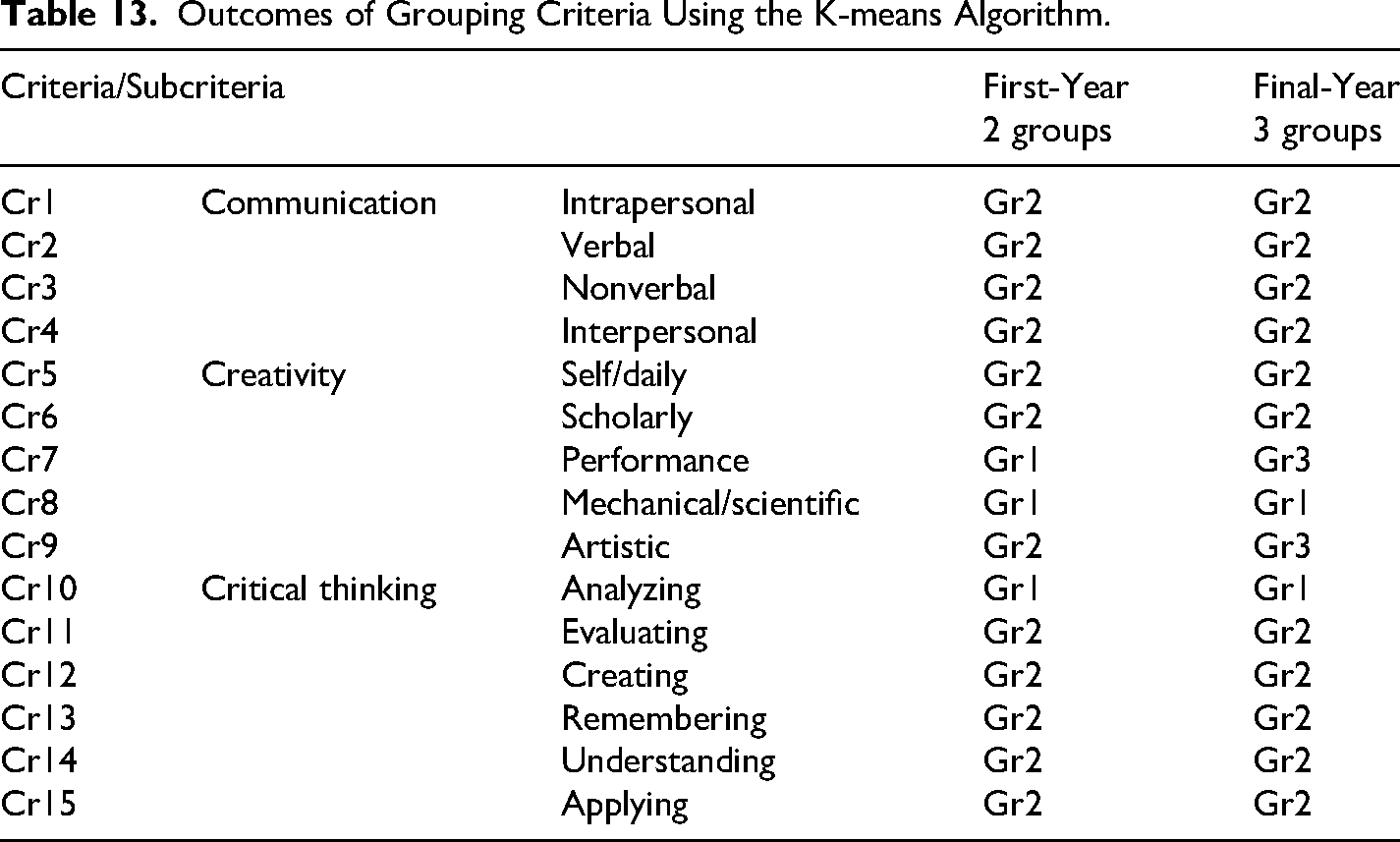
Performance, Mechanical/Scientific, and Analyzing (Gr1) were in the same group according to the results of the K-means algorithm, when analyzing the data of the first-year students. The other criteria, labeled Gr2, belonged to the second group of criteria. Based on final-year data, one group of criteria is formed by Analyzing (Cr10) and Mechanical/scientific (Cr8) (Gr1), Performance (Cr7) forms a separate group (Gr3), and the remaining criteria belong to the third group (Gr2). The obtained result of criteria clustering, according to the structural feature of the data, is different from the original grouping of criteria.
Figure 2 was created by rerunning the K-means algorithm on the smaller data set (15 rows, two columns) with K = 2 (Figure 2(a)) and K = 3 (Figure 2(b)). There is a match between the criterion numbers (Cr_nr) and the point numbers “nr” shown in Figure 1. The red dots represent the obtained cluster centers. The results shown in Figure 2 and Table 14 can differ slightly because of the n-dimensional space reduction.
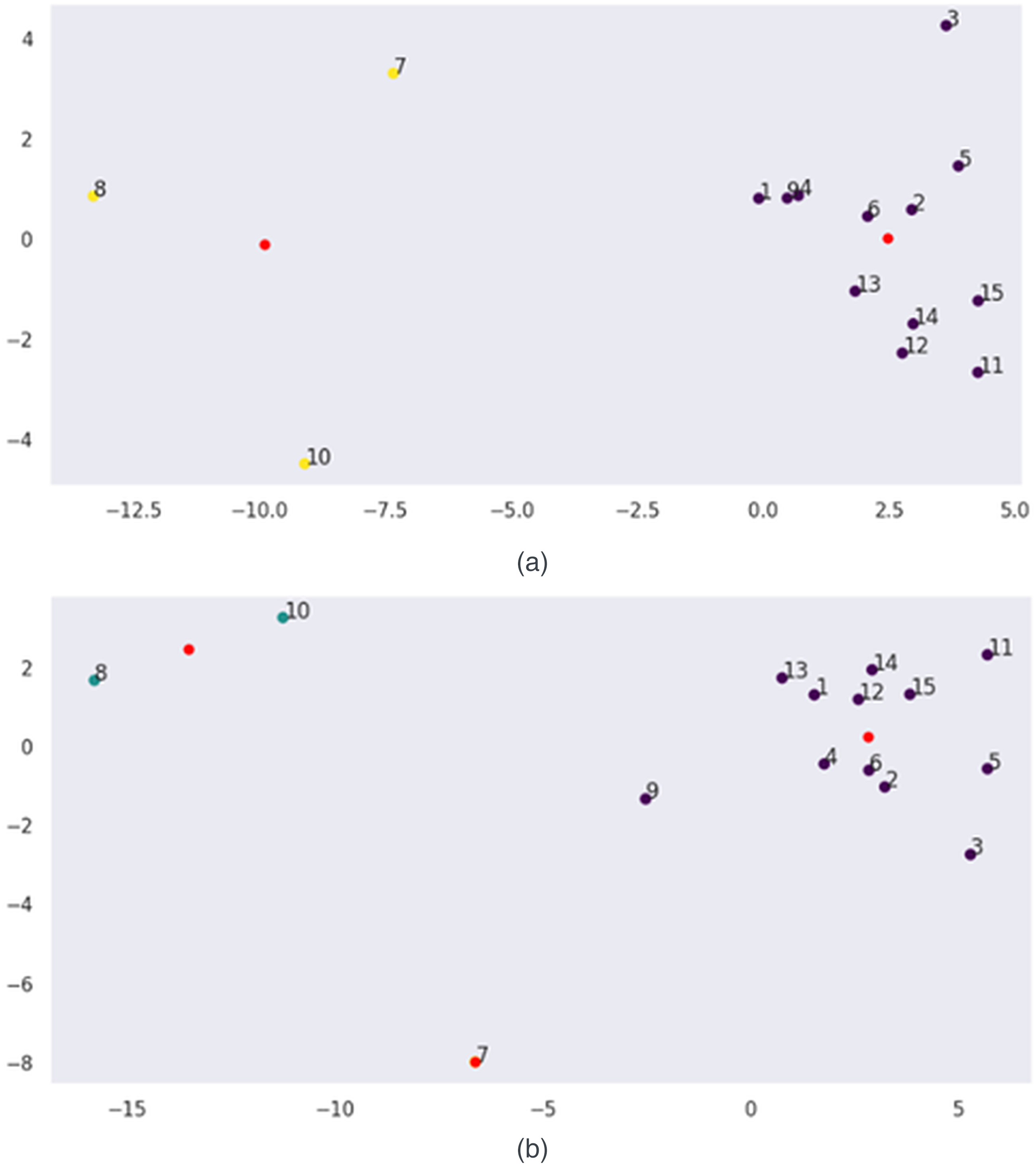
Criterion groups in two dimensions using the K-means algorithm.
Indicators of the First-Year Student Criteria Weights, by the Mean, CRITIC, SD, Centroidous Methods, and Average Weight Values.
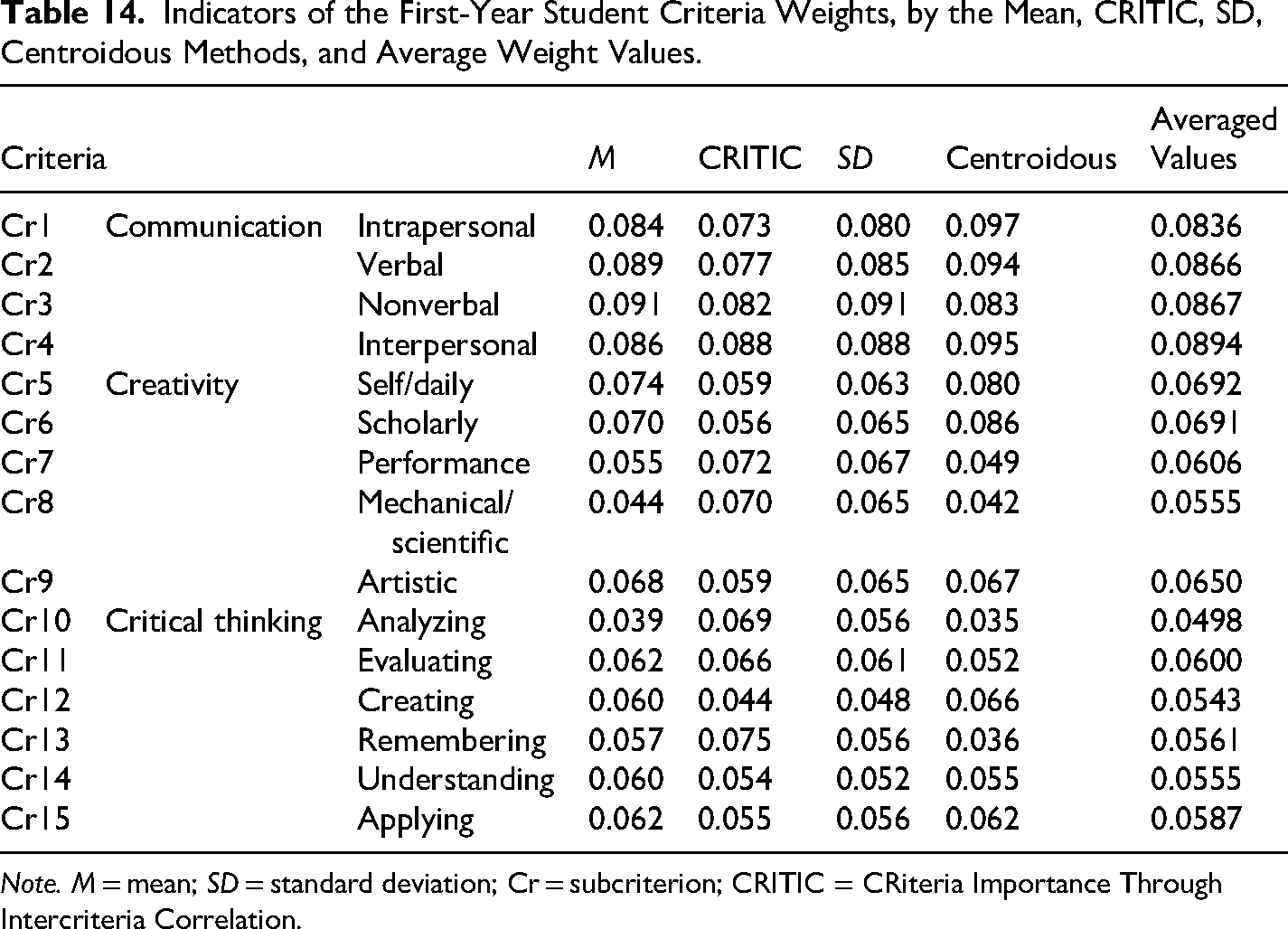
Note. M = mean; SD = standard deviation; Cr = subcriterion; CRITIC = CRiteria Importance Through Intercriteria Correlation.
From Figure 2(b), we can observe that after reducing the data to two principal components, Cr9 was added to the cluster of Gr2, though visually, the point is distant from the other criteria of this group.
Discussion
The discussion investigates the use of the MCDM methods in higher education when defining and classifying soft skills, particularly the domains of critical thinking, creativity, and communication. We examine how weighted subcriteria contribute to understanding the process of skill development, particularly in terms of methodological issues, including the importance of clusters represented through Euclidean distance-based methods. The strategy addresses the shortcomings of traditional assessment systems, which rely on single-criterion assessments, by combining statistical segmentation procedures with domain-specific weights. The discussion is structured into the following sections: (a) distance-based clustering applied for investigation of relationships and dimensions of soft skills; (b) effectiveness of soft skills subcriteria in capturing the complex nature of their interdependencies and their relative priority; (c) the formation of soft skills clusters throughout studies in the university; (d) implications of cluster patterns for soft skills (communication, critical thinking, and creativity) as integrated competencies in academic and professional settings.
Application of Multicriteria Methods
Euclidean distance clustering enables the identification of structural relationships and similarity patterns among criteria (Fernandes, 2021). The most common clustering algorithms based on Euclidean distances include k-means and hierarchical clustering (Ghazal, 2021). This method segments targeted data groups into smaller clusters. Normalizing or standardizing the dataset before applying clustering techniques is relevant for identifying specific attributes, and assigning weights to the dimensions proves beneficial (Cinelli et al., 2020). For other analyses, different distance metrics, such as Manhattan, Chebyshev, or correlation distance, can be used to evaluate similarities between objects (Cunha et al., 2022). As a result, Euclidean distance–based clustering is one of the most widely used data mining techniques for grouping similar observations. It is widely used due to its computational efficiency and interpretability in clustering applications.
Soft Skill Subcriteria Weights
College students are under a lot of professional and personal pressure that cannot be dealt with without a high-level of soft skills such as creativity, communication, and critical thinking. Traditional grading systems are inadequate for assessing these dimensions. Therefore, assessment frameworks incorporating weighted subcriteria enable a deeper and more complex understanding of soft skill development. Through MCDM, subcriteria, which are soft skills, can be judged and compared.
Communication emerges as a dominant soft skill within the analyzed framework and plays a central role in thinking and the development of creativity. Teamwork, empathy, relationship building, and information exchange are expressed through nonverbal, interpersonal, and intrapersonal communication skills (Rahman et al., 2023). Nonetheless, the communication aspects do not influence everything equally. We have found that most communication aspects demonstrate a meaningful role, with nonverbal communication showing the lowest relative importance, which was evaluated least, as in Hargie's (2021) research. Verbal communication also showed an important contribution, yet it depended on the medium, context, and purpose (Deacon et al., 2021). Despite these differences, communication functions as a central element facilitating the use of other soft skills. Contemporary learners are increasingly required to engage in complex interpersonal communication. In personal, educational, and workplace contexts, communication can be interpreted through intrapersonal encoding and nonverbal expression, according to Aji et al. (2023). This supports the activation of cognitive processes involved in decision-making and problem solving (Almeida & Morais, 2023).
Our findings suggest that societal factors encountered in many areas and at various phases of personality development impact the development of critical thinking, perhaps contributing to social group differences. According to the taxonomy developed by Bloom, the three most important subcriteria that lead to the cultivation of organized mental processes are applying, assessing, and remembering (Revati & Meera, 2017; Tawfik & Gatewood, 2022). When used together, these subcriteria form a foundational set for critical thinking, allowing individuals to evaluate complex dilemmas and generate original ideas (Mascarenhas et al., 2023). These findings indicate that critical thinking plays a significant role in cultural and educational development, fostering logical, analytical, and open-minded societies (Elder & Paul, 2020).
Creativity is considered the weakest of the three primary soft skills because it has the least weight. However, it contributes to idea generation, problem solving, and innovation, as creativity is closely related to communication and critical thinking and functions as an active attribute (Ludvik, 2023). We found two sets of creative subcriteria, which are academic and self/daily creativity and scenic and performance-based creativity. The first quality is fundamental to various settings, whereas scenic creativity trains spatial, visual, and expressive reasoning, and performance creativity stimulates the freedom of expression, speaking in front of the audience, and emotional outliving (Parry, 2022; Rousseau, 2024). Treffinger et al. (2023) also say that routine academic activities such as research, teamwork, writing, and presentations also require creativity. There should be cross-skill cognitive loops that facilitate creativity and personal development, and softness and flexibility (Kimmel & Hristova, 2021). Therefore, the subcriteria of creativity as part of the larger concept of soft skills remain undeniable in their contribution to academic and professional success, even though they cannot be directly linked.
In conclusion, the subcriteria for soft skills demonstrate the connections between communication, creativity, and critical thinking in the classroom. Communication acts as an integrating medium for expressing critical and creative abilities. Critical thinking is weighted most heavily due to its importance in academic performance. Creativity influences all aspects of problem solving and knowledge application and acts as a bridge to innovation, despite being more challenging to quantify.
Overview of Soft Skill Clusters Development
We aimed to develop an academic framework illustrating how soft skills evolve throughout university education. This principle can guide any educational setting. Differences in soft skills between first-year and final-year students reveal how active academic pursuits lead to skill divergence.
Among first-year students, two primary clusters of soft skills subcriteria were identified. Critical thinking (analysis) and creativity (performance, mechanical/scientific); the remaining subcriteria include communication, memory, application, etc. We noticed that soft skills tend to create broad groupings in younger stages of academia. This trend can be attributed to the outcomes of generalist learning in the schools with insufficient targeted research and project-based group activities. The experience of the students continues to increase as they advance to university and as their association with their co-students becomes more business-like. At the same time, analytical skills are diagnostic instruments that help in analyzing and applying knowledge (Da Silva et al., 2020). Creativity and communication are not mutually exclusive despite their critical functions. The initial clusters suggest that students should receive targeted skill-specific interventions, and systematic mentoring is necessary to close gaps and prepare learners for greater cognitive and collaborative challenges (Sharma, 2021).
There were four distinct clusters among final-year students: (a) analytical skills and mechanical/scientific creativity; (b) communication (all types), creativity (self/daily and academic), and critical thinking (remembering); (c) performance-based creative expression; (d) higher-order thinking skills (creating, evaluating, understanding, and applying). There is a greater emphasis on the final study year, specialization, and integration among graduating students.
The lists of their skill clusters signify how academic experience influences the development of specific skills: (a) the groups of analytical-mechanical skills contribute to scientific research in problem solving and innovation (Buede & Miller, 2024); (b) performance group on skills improves creativity and emotion; (c) evaluation, self-analysis and interaction are based on a communication and conceptual skills group. The final-year profiles indicate the correspondence of the academic programs to the career of the students, the overall talents being refined into the work soft skills (Caeiro-Rodriguez et al., 2021; Succi & Canovi, 2020). Moreover, this stage emphasizes the importance of social and cognitive growth as it integrates creativity, memory, and verbal and nonverbal communication. As students prepare to enter the workforce, the ability to control and connect interpersonal, expressive, and cognitive skills becomes the key to success. These findings suggest that the educational process at the university promotes specialization and integration of soft skills.
Implications for Communication
The clusters of soft skills develop through conversation, particularly among older students. For graduating students, we combined creativity and critical thinking with subcriteria of interpersonal, verbal, nonverbal, and intrapersonal soft skills. Since communication connects a person's emotions and thoughts, it enhances learning, teamwork, and self-expression (Dash & Davis, 2022). Integrating thinking and communication skills will support information sharing and cooperative problem-solving (Honeycutt & Bryan, 2011). Depending on social and academic contexts, students should understand verbal and nonverbal information that can help them make life decisions, whether performing tasks or engaging in critical thinking (Ting-Toomey & Dorjee, 2018). Generally, communication appears alone and separate during early university years, but by graduation, it combines creativity and learning, indicating that it has evolved into a broader academic skill.
Implications for Critical Thinking
Critical thinking emerged as a crucial factor of soft skills clusters among student groups in their first and final years. The ability to assess, produce, comprehend, and act is the primary component of intellectual development and the entire thought process (Mahdi et al., 2020). These components support problem-solving, theoretical, and applied learning cyclically (Gonzalez-Perez & Ramirez-Montoya, 2022). Higher-order thinking skills of final-year students were split into multiple categories, which means that critical thinking is an independent variable that stimulates independent thinking and innovativeness (Maker & Zimmerman, 2020). Particularly in technical or scientific fields where problem-solving calls for both logic and creativity, analytical abilities are also blended with mechanical/scientific inventiveness (Auzani et al., 2024). This evolution of soft skills highlights how crucial it is to incorporate critical thinking into various subject areas, as it provides the foundation for cognitive flexibility, knowledge application, and performance.
Implications for Creativity
Creativity was distributed in several clusters which indicates its wide and domain specific nature. Acknowledgment of the differences between academic and everyday creativity, scenic creativity and performance-based creativity provided a new insight into the interaction perspective of soft skills. The, creative subcriteria cluster with cognitive and communication skills demonstrates that they are an essential integrative component (Ludvik, 2023) even though they have lower total weights. Performance-based creativity makes it possible to have the expressive, spatial, or narrative thinking abilities needed to instruct, design, and lead (Parry, 2022; Rousseau, 2024). Creative potential and technical expertise enhance problem-solving abilities in an academic and real-world context. Serban et al. (2023) state that creativity is flexible to context and fosters cooperation and flexible thinking. Specifically, scenic creativity develops ideation, which is essential in adapting to learning and innovation.
Limitations
Students in various study programs should be evaluated through further research. Assumptions can only be made when analyzing the independent samples of the self-esteem data. Ignoring the concept of anonymity, additional investigation is required to explore the relationships between the traits studied and the official ratings of students. Numerous combinations of methods must be rigorously tested to assess the application of the multicriteria method, as different combinations may yield different results.
Summary and Future Research
The critical thinking, creativity, and communication show the most integrated state in the final academic stage because of a higher propensity of the three clusters of skills to integrate, be in a position of specialization, and interact with each other during higher education. Although such spheres might have been viewed as separate ones in the past of life, the intersection at graduation suggests high intellectual and social developmental rates. To empower young students, the academic curriculum must focus on creating creativity and communication among the students and enhancing critical thinking during the study period. These results endorse suggestions on curriculum design, identification of talents, and methods of instruction to produce competent and flexible graduates in soft skills. This proves the interrelatedness of soft skills and its subcriteria through their integration with each other. With communication and critical thinking emerging as the most vital pillars, creativity remains essential in shaping more adaptable, resilient, and innovative graduates. Future research should focus on developing these clusters across disciplines, validating the long-term effectiveness of MCDM assessment models, and integrating soft skill training into curriculum design.
Conclusion
Our research results support the study's underlying hypotheses about the makeup, development, and assessment of soft skills in the university education process. An MCDM-based research instrument has logical weightings and high internal consistency for the main soft skills (communication, creativity, and critical thinking) and their subcriteria (supporting H1). The conclusion shows that soft skills are measurable and structured constructs. Higher education settings not only encourage the development of technical knowledge but also encourage the acquisition of what are known as soft skills. Since the competencies classified as soft can be accurately assessed and differentiated using weighted subcriteria, it can be said that the MCDM-based model has both internal coherence and practical usefulness in tracking the development of soft skills. Compared to first-year students, final-year students exhibit more complex soft skill structures (confirms H2). Since final-year students frequently had to collaborate on academic projects and participate in multidisciplinary learning contexts, it was found that their soft skill sets were more sophisticated and cohesive. In the final year, students’ more varied soft skill profile is demonstrated by their deeper and more applicable interpersonal coordination, communication, and responsibility skills. It is also indicative of the necessity of structured teaching materials and studies on effective teaching techniques that facilitate the development of soft skills.
With the unconscious association of soft skills with personal adaptability and readiness to work on the job market, universities are supposed to utilize formal strategies, including the MCDM-based evaluation system to design, evaluate, and enhance teaching of the soft skills. The increase in higher education accessibility is linked with the spread of soft skills throughout the society, which implies that universities are not only the institutions of academic but also sociocultural power helping to build human capital. When combined, these results suggest the notion that theoretical, validated soft skill evaluation tools must be part of the curriculum to help development of different student groups in a holistic manner.
Footnotes

Funding
The authors received no financial support for the research, authorship, and/or publication of this article.
Declaration of Conflicting Interests
Generative artificial intelligence tools (ChatGPT, OpenAI) were used in an assistive capacity to support language clarity and structural refinement of the manuscript. No AI tools were used for data generation, statistical analysis, or interpretation of results. All AI-assisted outputs were reviewed, verified, and adapted by the authors, who retain full responsibility for the manuscript content. The authors reported no potential conflict of interest.