




Abstract
This study aimed to develop and validate a scale of parental competency of science-gifted students in South Korea. The parental competency of science-gifted students is constructed in three dimensions (Learner, Fosterer, Scientist) from the literature review. We in-depth-interviewed science-gifted students and parents to discover the competency behavior indicators. To confirm the content validity, 15 experts in Korea conducted a Delphi method. We were determined lifelong learning, information utilization as the sub-elements of learner, partnership, parenting attitude, empathy of fosterer, and science capability, responsibility in science, and career preparation of scientist. As a result, we developed the initial instrument with 45 items. To validate the instrument, we carried out an online survey with 512 parents. Finally, 23 items of the measurement instrument for parental competency underwent development with three dimensions and eight sub-dimensions. This study provides a reliable instrument for parental competency and contributes to its enhancement for science-gifted students.
Keywords
Students who display or have the potential to develop Science talent are considered science-gifted (Lee et al., 2017), and as science and technology increasingly shape future business models, numerous countries have enacted policies aimed at nurturing science-gifted students as a vital human resource, while also recognizing the crucial role of parents as a valuable support system, ensuring that children can fully express their talents (Hertzog & Bennett, 2004). This study emphasizes the various roles played by the parents of science-gifted students in the children's overall development, unlike previous studies that only focused on the basic nurturing role. This change aligns with previous research acknowledging parents as a key factor in the cognitive, affective, and social development of gifted children (Olszewski-Kubilius et al., 2014; Peterson, 2015; Solow, 1995). The parents of science-gifted students provide comprehensive support to their children's learning activities, leading to the manifestation of giftedness (Gagné, 1993; Malecki & Demaray, 2002; Sosniak, 2003). In recent years, several countries (e.g., the United States, United Kingdom, and Australia) have been encouraging parents’ participation in gifted students’ education by designing several parents–child activities both inside and outside the school.
Nurturing gifted students’ talent involves both effort and resources (Gagné, 1993; Harris et al., 2009). Parents are a powerful environmental factor affecting students’ giftedness. When parents do not provide adequate support, talent cannot be expressed (Olszewski-Kubilius & Lee, 2004; So et al., 2019a, 2019b). If a family is not part of the social mainstream, children experience social isolation, and their gift does not develop owing to insufficient knowledge, skills, experience, or financial resources (Olszewski-Kubilius, 2018). This suggests that a family-centered approach can help the gifted make the most of their abilities.
In the field of science, parents’ perceptions appear to have a strong influence on their children's ability development, unlike in other fields (Jacobs & Bleeker, 2004; So et al., 2019a). Parents’ influence on science-gifted students begins from early childhood (Cho & Campbell, 2010), for which parents need to possess various science-related competencies. The role of parents of science-gifted students is not simply to nurture and support them but to influence their career choice and motivate them to work on science-gifted students even after entering university. It suggests the need to expand the role of parents on science-gifted students. Parents must also have outstanding individual competency to raise gifted children in science. However, there is very little research on parental competency, support, or attitude (Leana-Tacilar et al., 2016). Most prior research has focused on the learning outcomes of gifted students based on parents’ emotional or financial support (Andrews & Wang, 2017; Bazán-Ramírez et al., 2022). This research on the parents of science-gifted students is relatively sparse. Consequently, there has been no discussion on the education that should be provided to the parents, and there are not enough programs to meet these needs (Hertzog & Bennett, 2004). Accordingly, it needs to discuss what kind of parental education should be provided based on a family's approach to supporting science-gifted students. This study contributes to the measurement of parental competence of science-gifted students. It provides future directions for educational support system and national education policy support for the parents of gifted students to nurture the children's science talent.
Theoretical Background
Parental Competency
Competency and capacity are sometimes used interchangeably (Ljungquist, 2007), but it’s crucial to understand that competence specifically refers to an individual's unique attributes and performance capabilities within a particular job or role (Kelner, 2001). Competence encompasses various elements, such as knowledge, skills, abilities, behaviors, and other distinguishing qualities that differentiate exceptional performers from average ones (Rodriguez et al., 2002). In the context of this study, the term “competency” is utilized to emphasize the exceptional qualities exhibited by outstanding parents.
Parental competency in gifted parents means having or improving their ability to raise children (Chu, 2013; Jung & Young, 2019). For gifted parents, competency building means the power to help parents relieve their child-rearing stress and secure parents’ expertise in their children's education (Cattaneo & Chapman, 2010). In particular, the existence of a parental role model not only leads to academic achievement but is also a source of pride and minimizes risk exposure in deviation (Bozoglan, 2023; Hurd et al., 2011). In raising children, parents should be aware of their responsibilities, possess wide knowledge, and provide resources and support that meet the child's needs (Leana-Tacilar et al., 2016; Morawska & Sanders, 2009). Education can enhance parental competence, which is not innate. Therefore, it is necessary to provide educational support to cultivate parental competence based on the child’s developmental stage.
Johnson et al. (2014) categorized competent parenting competency into context, foundational competencies, and functional competencies; the authors also emphasized the interaction among different forms of parental competence. Context refers to parents’ socioeconomic status, media utilization, and age. Foundational competence refers to knowledge and attitude, while functional competence refers to parents’ ability to serve as behavioral guides for the cognitive and emotional development of their children. Additionally, Maccoby (1994) emphasized parents’ role as educators, guardians, and role models; Jung and Shin (2012) proposed that parents’ coaching competency comprises action, communication, relationship, and growth. These studies emphasized parents’ efforts to be self-sufficient in supporting their children. It means that the parenting competency of gifted parents must consider the complex interdependence of various variables at the family, educational and social levels.
The family's influence is even more prominent in the case of science-gifted students (Cho & Campbell, 2010; Morawska & Sanders, 2009). A healthy family with a gifted child has apparent outcomes and behaviors, whereas, in an unhealthy family, they show more exaggeratedly problematic (Bozoglan, 2023). Parents are often the ones who decide whether their children will participate in a special program for the gifted (Dettmann & Colangelo, 1980; Worrell & Erwin, 2011). Parents of gifted students take proactive steps to create an enabling environment, for instance, by providing materials to study, limiting children's television or internet time, controlling their children's relationships, working with their children on challenging school projects and creating opportunities for extra-curricular activities (Al-Dhamit & Kreishan, 2016; Bloom & Sosniak, 1985). These students typically perform better when they receive active parental support and feedback on their future (Morawska & Sanders, 2009; Sampson, 2002). Thus, parents influence their children's attitudes, beliefs, personalities, and capability. They also affect children's attitude toward accomplishments and their aspirations (Olszewski-Kubilius, 2018). Therefore, parents of science-gifted students should have the requisite competency to support their children's professional development.
Parental Competency of Science-Gifted Students
Research on the parental competency of gifted parents has received relatively little attention. A small number of related previous studies also investigated parents’ need for gifted children's education or focused on skills such as parenting attitude and knowledge of gifted parents that can support them (Garn et al., 2010; Hertzog & Bennett, 2004; Leana-Tacilar et al., 2016; Morawska & Sanders, 2009). Generalized results also were not obtained by researching a limited number of gifted students (So et al., 2019a, 2019b). Parents who lack knowledge of parenting gifted children may hinder their abilities and potential (Bozoglan, 2023) and affect their children throughout their lives (Hurd et al., 2011; Johnson et al., 2014; Renati et al., 2023). The role of parents of gifted children is needed to expand, emphasizing only basic childrearing. The greater the positive attitude and scientific knowledge a parent possesses, science-gifted students achieve greater performance (Choi & Choi, 2012; DeWitt et al., 2013; So et al., 2019a, 2019b). Since parents recognize the characteristics and development of gifted children more accurately than anyone else by the age of 6 (Bildiren, 2018), they should find gifted children early and expand their potential by supporting related education (So et al., 2019a, 2019b). They also can have an interest in science by allowing their children to experience observation and manipulation activities that they spent with their children until middle school (Choi & Choi, 2012). Science-gifted students whose parents were science could find their interests and talents more quickly. They serve as role models, and their children can continue their interests and activities in science (Renati et al., 2023). We should distinguish parents of science-gifted students from other general students’ parents. This suggests that parents of science-gifted students should cultivate the relevant competencies because children tend to develop their giftedness based on their parents’ support and attitude.
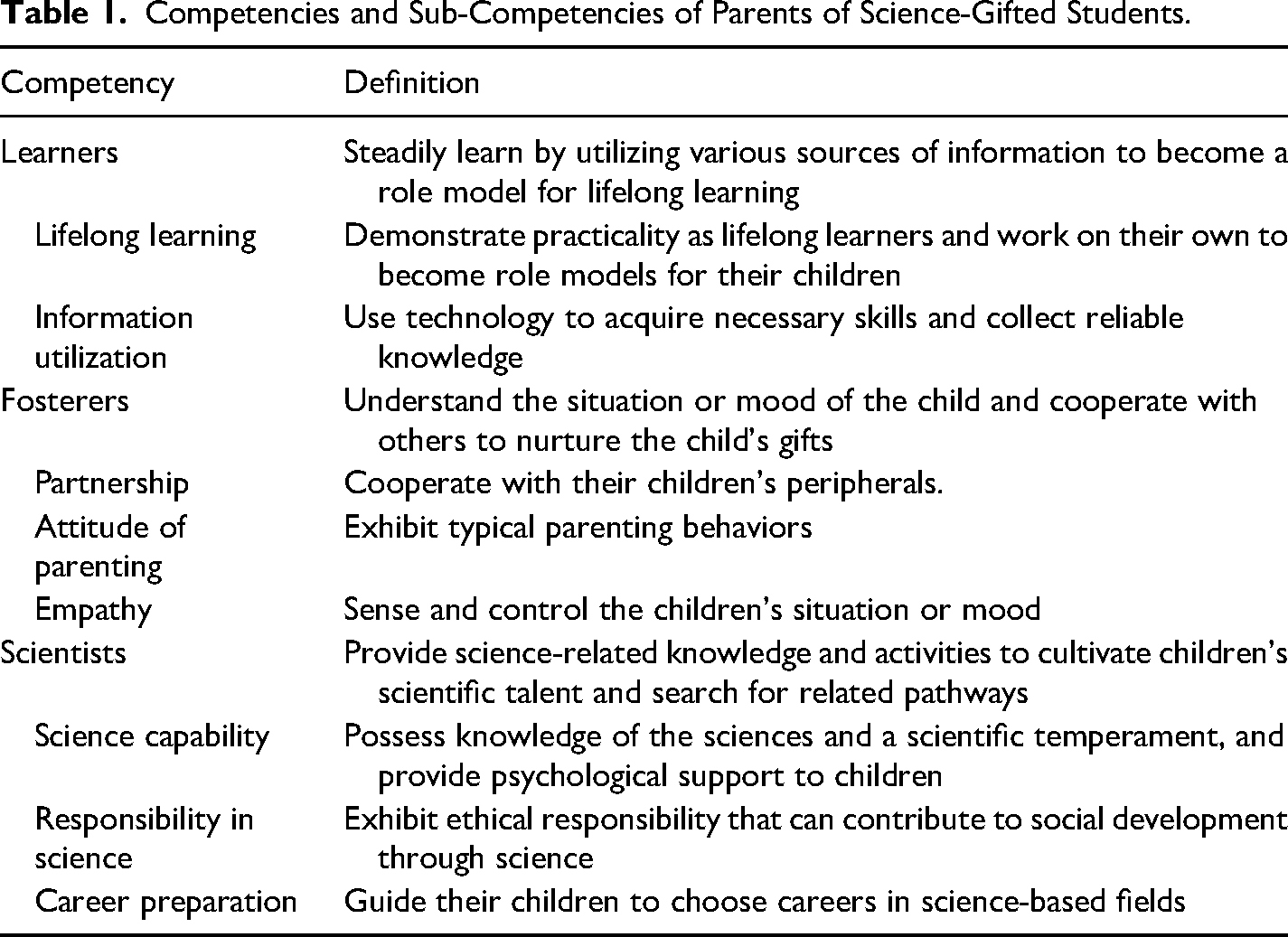
In this study, we reviewed previous research to identify various aspects of parental competence. Based on literature review, we drafted a competency model framework for modeling and defined competencies using generic model overlay method (Dubois, 1993). We then classified parental competence into three categories: learner competency, fosterer competency, and scientist competency. We selected these three competencies because: First, based on previous studies, Johnson et al. (2014) proposed parental competence as a basic competency related to parents’ self-care skills and fosterer competency. Parent behaviors such as learning, reading, and talking about knowledge promote children's learning (McWayne et al., 2004). Second, Parents not only have social responsibility for nurturing but also serve as role models throughout gifted students’ childhood. Third, some previous studies (e.g., Olszewski-Kubilius 2018; So et al., 2019a, 2019b; Sosniak, 2003) argue that science-gifted students benefit from systematic and multifaceted perspectives when their parents work in a related science field. As parents acquire more interest and expertise in science, they can provide appropriate support to their child. Therefore, in this study, parental competency comprises three dimensions, as shown in Figure 1 and Table 1.
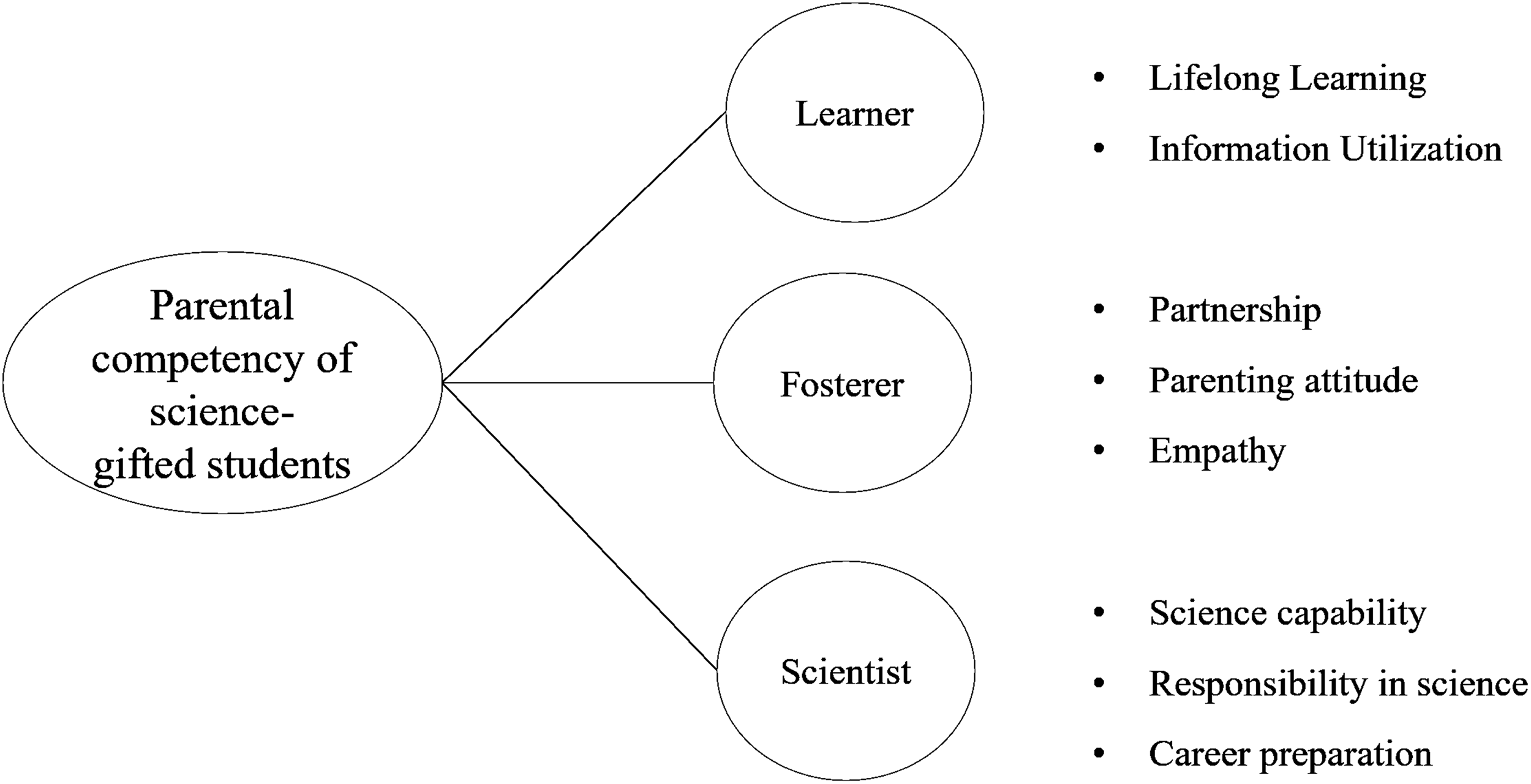
Modeling the competency of parents of science-gifted students.
Competencies and Sub-Competencies of Parents of Science-Gifted Students.
Learner Competency
Learner competency comprises lifelong learning and information utilization. When parents are a role model, students experience positive cognitive and emotional development (Coleman & Karraker, 2000; Renati et al., 2023; So et al., 2019a, 2019b; Worrell & Erwin, 2011). Guan and Benavides (2021) tracked learners who had difficulty learning through online education at home for a year due to temporary institutional closures on COVID-19. They found that most students need help to study independently, and 70% cannot follow teacher instructions provided online, resulting in late submission of assignments or blank answer. These problems were resolved when the cooperation between teachers and parents was supported and facilitated the continuous participation of learners in the learning process. Common in these studies, the more parents have expertise in the related field, the more precise the knowledge is delivered to solve the problem, and various materials such as books and the internet are used. The academic performance, occupation choice, and attitude toward life of the gifted students can change depending on whether their parents were a role model (Enquist et al., 2010). This highlights the importance of parent role models. When parents actively participate in children's curriculum, children naturally participate in learning and achieve high-quality outcomes (Deslandes & Bertrand, 2005; Enquist et al., 2010; Green et al., 2007).
Additionally, recent advances in information and communication technology have made information literacy a core skill for future human resources (UNESCO, 2014). Children who have a good relationship with their parents are more interested in new information technology and become active learning users rather than experiencing difficulties such as internet game addiction, disconnected communication, and lack of parent-child communication (Punamäki et al., 2009; Rudi et al., 2015). Marsh et al. (2017) argue that a family's digital literacy affects the child's ability to learn and use technology. Hammer et al. (2021) also found that parents who believe their children use new technologies appropriately buy new technologies, such as tablets and laptops, for their children and allow them to use them. Digital media self-efficacy was developed by encouraging children to use them for a specific time freely and to achieve meaningful learning. They found that families with higher levels of information literacy and technology acceptance naturally expose children to computers, causing the latter to acquire an interest and expertise in technology from an early age. Therefore, parents should have a learning attitude to attain a certain level of information literacy and try to use it (Küçükoba, 2023; Plowman et al., 2008).
Fosterer Competency
Fosterer competency comprises partnership, parental attitude, and empathy. Fostering is the most important skill parents must have (Braggett et al., 1983; Shklarski, 2019; Silverman, 1997). Teachers spend much time with gifted children at school and can provide high-quality professional learning only for them. Teachers select gifted children and provide them with specialized knowledge and differentiated learning experiences that enable them to realize their potential (Weber & Mofield, 2023). Parents of science-gifted students, who are competent themselves, tend to solve complex problems such as the issues related to school maladjustment and career guidance through a cooperative system involving the teachers and school staff. By doing so, these parents supported their children's school life and tried to resolve urgent problems by participating in various activities outside school despite having to incur additional expenses (Braggett et al., 1983; Choi & Choi, 2012).
Next, parents of science-gifted students face extensive difficulties and stress because their children have characteristics (e.g., perfectionism, sensitivity) different from those of other children (Hebert & Kelly, 2006). Many parents, owing to a lack of information, have difficulty in identifying their children's talent and understanding their characteristics (Altintas & Ilgün, 2015; Koshy et al., 2017). Previous studies have discussed the perceptions of the gifted children's parents, the methods and characteristics of the fosterer, difficulties in caring, and stress. Gifted parents rejoice that their children are blessed, but they have heavy responsibilities to help them develop so that they can fully express their abilities (Amend et al., 2023). Although there have been discussions on the parenting of gifted parents for decades, there needs to be more practical parenting support strategies because of the lack of a framework to understand gifted families (Cooper, 2023). Systematic strategies must be used to meet their children’s needs delicately and provide various learning experiences because gifted parents influence their children’s holistic development throughout their lives (Amend et al., 2023; Cooper, 2023).
Finally, the gifted science students were going through puberty in secondary school. Parental empathy during this time had a positive impact on the development of their self-concept and peer relationships (Cooper, 2023; Oplatka, 2017). This parental empathy influenced the students’ academic achievement and social skills (Faisal & Ghani, 2015). Thus, the parents of science-gifted students should possess the competency to support the child's interest and expertise, based on an understanding of the child's characteristics, context, and educational environment.
Scientist Competency
The scientist competency comprises science capability, responsibility in science, and career preparation. Parents’ science capability has a major influence on the scientific inclination and professional development of gifted students (Malecki & Demaray, 2002; So et al., 2019a, 2019b; Sosniak, 2003). Parents played a major role in stimulating interest in science (George, 2000). The parents of science-gifted students have a more engaged attitude toward science than other parents, and they actively support science-related activities (Lee et al., 2008). Parents with adequate knowledge and experience can support their children by providing quality education (So et al., 2019a, 2019b). Gifted children have scientific activities with their parents at home allows them to become interested in science (Solomon, 2003). The more gifted parents have scientific knowledge, the more conversations about enhancing scientific thinking and inducing gifted children to concentrate (Crowley et al., 2001). Gifted parents approach science in a fun, inquiry-centered way through various facility science programs, purchasing and renting science books, exchanging scientific opinions (listening, answering, explaining, inducing conversation), and science experiments (Barton et al., 2001).
Next, science is closely related to social and ethical issues (ACARA, 2015; Choi et al., 2011). Moreover, science teachers can of course fill this role, but parents also influence their children's attitudes, beliefs, habits, and even career goals (Olszewski-Kubilius, 2018, So et al., 2019a, 2019b). Science is value-neutral, but it causes many problems for users, so we must have morality and ethics to fulfill our role as democratic citizens (Klaver et al., 2023). Most science-gifted students decide their career path in science. They need enough time to think about science-related social and ethical issues by employing early employment from early graduation. This implies that parents must teach social responsibility to science-gifted students since their birth. That is, the parents of science-gifted students are also responsible for instilling the right ethics and citizenship behaviors in the children.
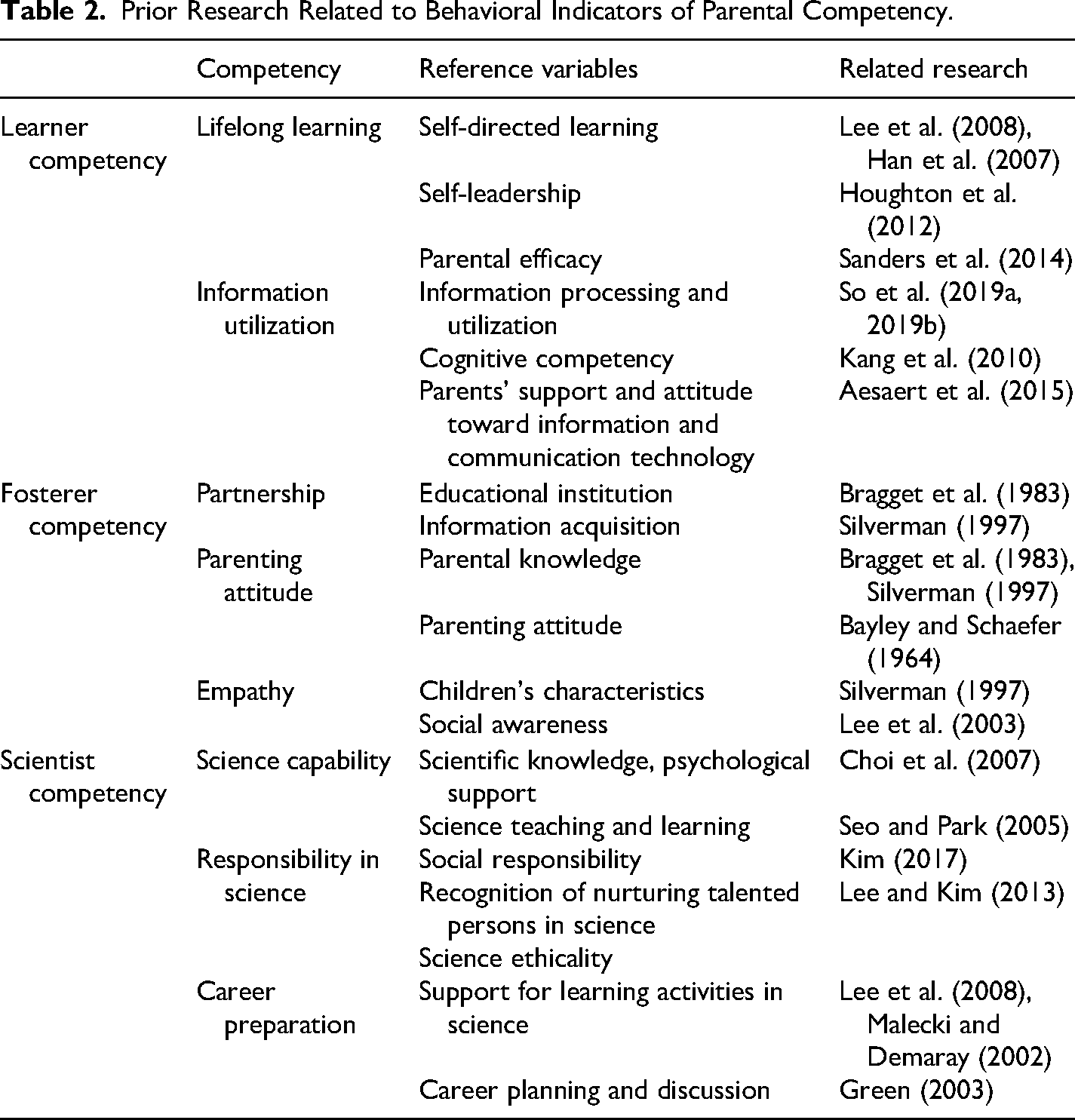
Finally, gifted students determine career paths early and have high job maturity (Olszewski-Kubilius, 2018; So et al., 2019a, 2019b). Sometimes gifted children have difficulty making career decisions on the imbalance between intellectual and social-emotional maturity (Seward & Gaesser, 2018). Parents provide early career guidance, opportunities to explore various career paths (Kelly & Colangelo, 1990) and emotional support for career planning and decision-making (Olszewski-Kubilius, 2018). Parents are exerting an absolute influence on their professional development (Miller & Cummings, 2009). Many schools provide career programs for gifted students and support after-school activities involving parents. Green (2003) discussed career counseling about gifted students’ diverse characteristics and developmental stages, he emphasized providing adequate support and in-depth consultation on careers in related fields. Accordingly, parents need to be able to explore careers in related science fields to help develop the gifted students’ careers in science. In addition, when parents are positive and encouraged to choose science careers, gifted children actively seek careers in science (Chakraverty & Tai, 2013; Leppel et al., 2001). Parents are positively associated with gifted children's belief in science, participation in science activities, and science grades that will pursue career development in science (Simpkins et al., 2005). In summary, competency definition and behavioral indicators refer to prior studies as shown in Table 2 and Appendix I.
Prior Research Related to Behavioral Indicators of Parental Competency.
Method
The purpose of this study is to develop and validate a scale for measuring the parental competency of science-gifted students. The study procedure is illustrated in Figure 2, and presented in greater detail below. As a first step, a literature analysis was conducted to develop a parent competency model, and a structure was prepared through this. In the second step, the specific behaviors of parents of gifted students for success were discovered through in-depth interviews. Third, a Delphi method was conducted to gather experts’ opinions on the developed competency model. Lastly, a survey was conducted on parents of gifted students in science to confirm the validity and reliability of the developed scales.
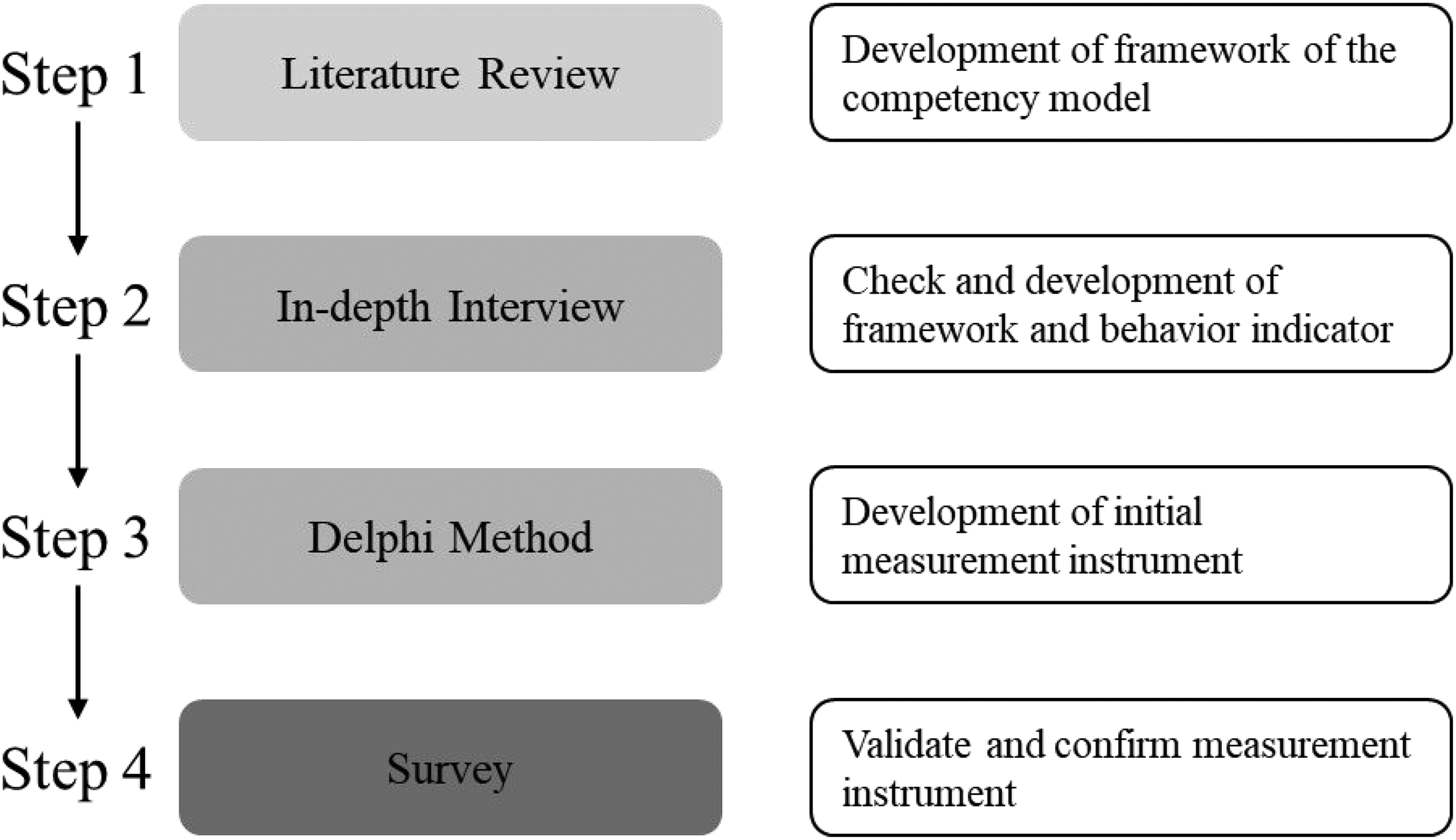
Research procedure.
In-Depth Interview
We initiated our study by conducting a comprehensive literature review to establish the foundational framework for parental competency. To validate and uncover any previously unexplored competencies within this framework, we employed in-depth interviews. In-depth interviewing, as described by Boyce and Neale (2006), is a qualitative research technique involving intensive individual interviews with a small number of respondents to capture their perspectives on ideas, programs, or situations. Specifically in the context of competency modeling, it is crucial to interview outstanding performers in the field and discern their characteristics through these interviews (Shippmann et al., 2000).
The selection of participants for competency modeling was not prescribed; however, we conducted in-depth interviews lasting one to two hours each with three gifted students, along with their respective mothers and fathers. The criteria for identifying excellent science-gifted students were as follows: firstly, they must have attended high schools specifically designed for nurturing future scientists; secondly, they should have received over 10 years of gifted education in science and pursued a science major in university; thirdly, they must be currently employed in a science-related field; and fourthly, individuals meeting these criteria were recommended by gifted education teachers. The in-depth interview questions are outlined in Table 3, and interviews were conducted with those who willingly participated from the secured lists. A participation fee was provided to the interviewees who participated. They were given consent to participate in the research.
The Core Questions of In-Depth Interview.
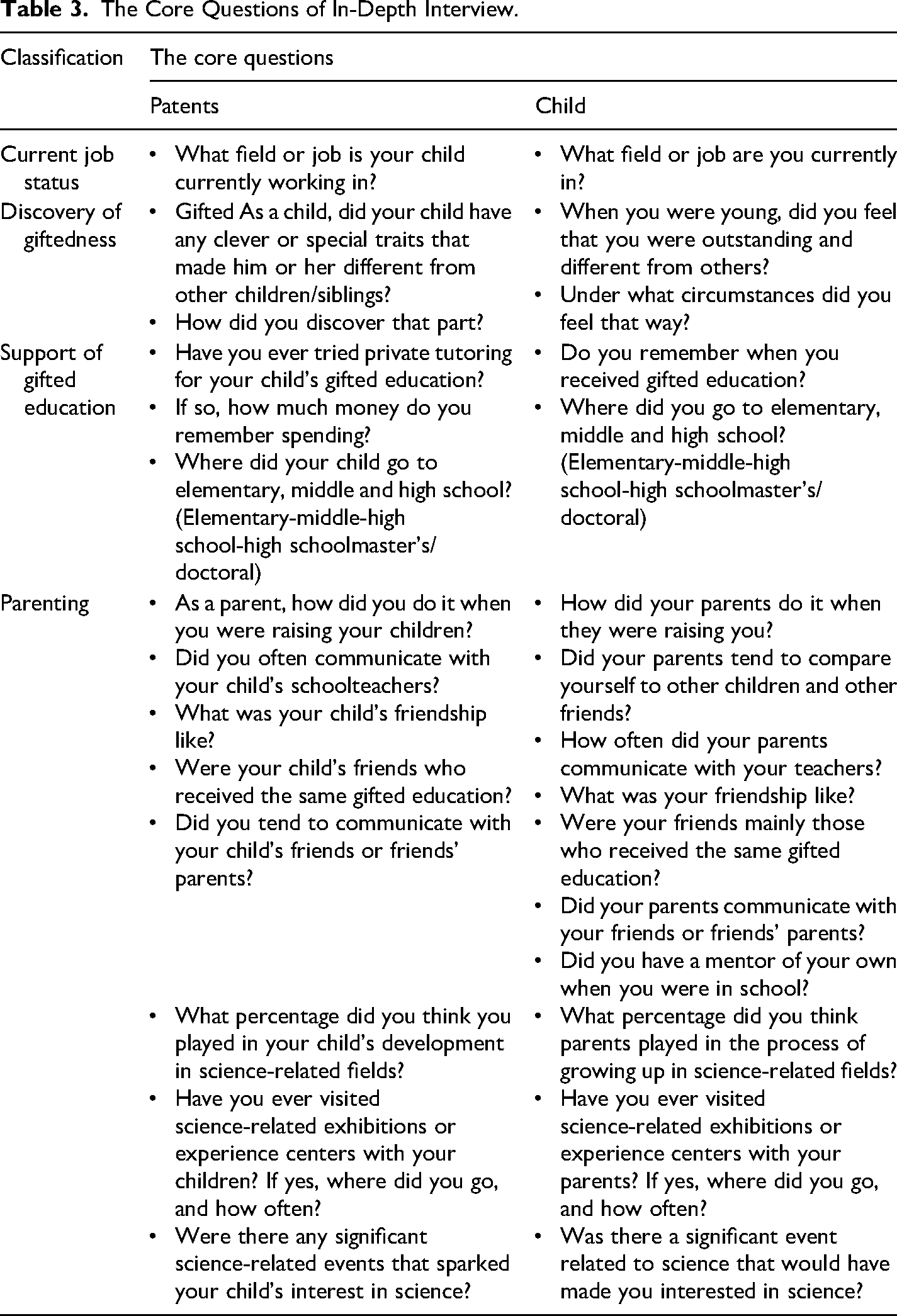
Our interviews affirmed that parental support is integral to the development of scientific giftedness in students. Parents of gifted students in science provide a variety of support to help gifted students develop their talents while maintaining a consistent interest in the field of science. Additionally, through these in-depth interviews, we identified specific behaviors related to scientific capabilities that were not discernible through literature analysis, such as supporting children in finding role models for scientific careers and engaging in discussions on ethical or value issues associated with science and technology. Although our subject matter was specific, the insights derived from the interviews with six participants proved sufficient to derive competencies.
Moving forward, we formulated the initial items through theoretical review and interviews with parents and children. During this stage, in line with Edwards’ (1983) criteria for constructing an effective scale, we ensured overall item development aligned with grammatical suitability, using simple, clear, and direct expression. We synthesized information from prior research and the outcomes of our in-depth interviews to elucidate the behavioral characteristics of exceptional science-gifted parents.
Delphi Method
Our study aimed to improve the foundational framework of competency and behavioral indicators by using a systematic and interactive forecasting method that focused on communication techniques. We also developed a scale with an expert's guidance to identify parents’ competency with science-gifted students. We used the Delphi method, which involved two rounds of online surveys, and 15 experts actively participated in the process. The experts included eight university professors specializing in education and seven school teachers with expertise in gifted education. The scale consisted of 55 comprehensive items.
During the Delphi method, the frequency, ratio, mean, standard deviation, and CVR (content validity ratio), as well as consensus and convergence were used to achieve consensus in the expert group. Based on Lawshe (1975), the CVR threshold was over .49, while that for consensus and convergence was over .75 and below .50, respectively. We confirmed CVR and correction opinions on each item in the first round. In the second round, we allowed 15 experts to check the CVR results that combined the opinions of other experts in the first round and to modify their thoughts. According to two rounds Delphi adapted these criteria and progress, some items were deleted or merged, whereas 45 items were confirmed.
Survey
This study was conducted for measuring the parental competency of science-gifted students. Science-gifted students in this study trained in institutions specifically designated by the Ministry of Education of the Republic of Korea for science-gifted students. In order to be admitted into a government-managed gifted education center, students are required to take an entrance exam in the science field. Additionally, they are evaluated based on their self-introduction and teacher recommendations. Science-gifted students are selected at a competition rate of over 5:1 and receive additional special education alongside regular classes.
To encourage participation in the survey from parents of science-gifted students, we received assistance from the Science Gifted Education Center and the Korea Foundation for the Advancement of Science and Creativity. The study conducted an online survey among the parents of science-gifted students 2019. Prior to conducting the online survey, consent for participation in the study was obtained. The response rate was 100% because the online survey did not allow participants to “submit” a questionnaire unless all questions had been answered. A total of 512 parents of gifted children participated in the survey. Parents who participated in the survey were provided with a coffee coupon. The children were from grades 4 to 12 of the K–12 program. The educational system in South Korea is divided into elementary school (1–6 grades), and secondary school (7–12 grades). Table 4 shows the demographic characteristics of the parents who participated in this survey.
Demographic Characteristics of Participants.
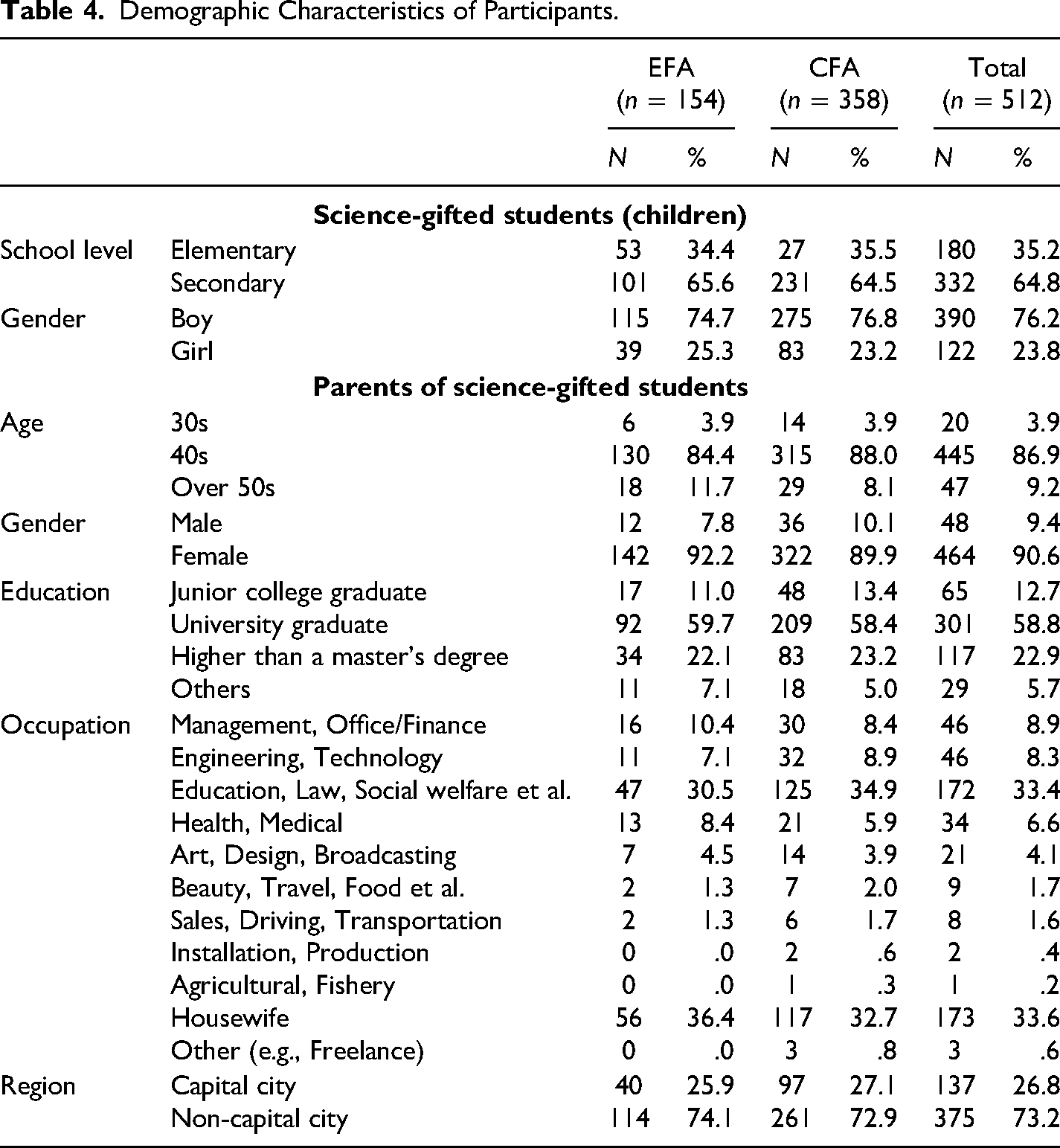
Most of the parents of 512 were female guardians (90.6%), and most of them (86.9%) were in their 40 s. 58.8% of the respondents had a university degree, 33.6% were full-time housewives, and 33.4% were engaged in education, law, and social welfare. Due to the characteristics of Korea, where a quarter of the population lives in the capital, Seoul, 26.8% of respondents are residents of Seoul. To conduct cross-validation, the survey respondents were randomly divided into two groups. Because the confirmatory factor analysis (CFA) had to include a large number of data, the groups were divided in a ratio of about 1:2. Data from 154 people for EFA and 358 people for CFA was used. As confirmed, there is little difference in the sociodemographic characteristics of these two groups.
Data Analysis
We selected the final items through cross-validation and verified the items’ content validity through consultation with three experts. We, then, tested the initial items with a five-point Likert scale (1 for strongly disagree; 5 for strongly agree) through an online survey. Based on the collected data, we used descriptive statistics and correlation analysis to delete relatively inappropriate items. In the item analysis, items were deleted considering the following criteria:
Kurtosis and skewness outside the normal range or an average that was too high or too low (DeVellis, 2016). Low average and large standard deviation, and there was below .30 or higher than .60 through item-total correlation (Cohen et al., 2013). Considering eliminated items to secure good reliability when the item total score correlation was less than .30 or Cronbach's α increased when deleting an item (Everitt, 2002)
When interpreting the correlation between the items, the items were deleted to select in consideration of the overall correlation coefficient of the derived items. After that, we comprehensively reviewed the results of the statistical analysis and the contents of the items, and finally deleted any inappropriate items.
After descriptive statistics, we carried out cross-validation to confirm construct validity. Two groups were randomly created: an exploratory factor analysis (EFA) was conducted on the responses of 154 participants and CFA on those of 358 participants. The CFA, which applies structural equation modeling, must secure a large number of participants. When analyzing the factor construction, the factor loading value was supposed to be above .40 and factor counts were based on screen graphs with Eigenvalues greater than 1.0 (Stevens, 2012). Before EFA, we calculated the descriptive statistics and conducted a correlation analysis to determine whether items should be deleted or retained for further analysis.
CFA used the maximum likelihood method and the suitability of fit indices included Chi-square, the Tucker–Lewis index (TLI), comparative fit index (CFI), standardized root mean square residual (SRMR), and root mean square error of approximation (RMSEA) (Hair et al., 2018). The CFA provided evidence of the convergent validity and discriminant validity of the theoretical construct. The average variance extracted (AVE) was at least .50 and the construct reliability (CR) was at least .70 (Hair et al., 2018). TLI and CFI were interpreted as a good fit, with values over .90 (Hair et al., 2018). RMSEA was acceptable for below .05 for a good fit (Hair et al., 2018). We then analyzed the collected data using Statistical Package for the Social Sciences (IBM SPSS Statistics) and analysis of moment structures (AMOS) and conducted tests with a significance level of .05.
Results
Item Analysis
Before EFA, we checked Cronbach's α and correlation. We deleted some learner competency items (LM1, LM2, LM3, LM9, LM10) because the item-total correlation was less than .30. The reliability was increased by deleting the LI4 item. Of the 14 items, EFA was performed on eight items (LM4, LM5, LM6, LM7, LM8, LI1, LI2, LI3) as six items were deleted. For some fosterer competency items, Cronbach's α increased when items were deleted (FP2, FE5). The items that correlated less than .30 (FE4) were deleted. Of the 15 items, EFA was performed on 12 items (FP1, FP3, FP4, FP5, FA1, FA2, FA3, FA4, FA5, FE1, FE2, FE3) as three items were deleted. For some scientist competency items, the item-total correlation was less than .30 (SK5) and Cronbach's α increased when the SR1 item was deleted. Of the 16 items, EFA was performed on 14 items (SK1, SK2, SK3, SK4, SK6, SK7, SR2, SR3, SR4, SR5, SC1, SC2, SC3, SC4) as two items were deleted.
Exploratory Factor Analysis
EFA was performed on eight items for learner competency. We deleted one item (LM6) in which factor loadings was assumed for other factors. The Kaiser–Meyer–Olkin (KMO) test of sampling adequacy and Bartlett's Test of Sphericity were conducted on the remaining seven items. KMO was .77 and the result of Bartlett's Test of Sphericity was 330.56, df = 21 (p < .05), which confirmed that EFA was appropriate for further analysis. According to the results of EFA, there were no items that hindered commonality, and Eigenvalues were supposed to be greater. The total variance accounted for 60.90%, and all factor loadings were greater than .40. The Learner competency comprises two factors: lifelong learning and information utilization (see Table 5).
Results of Exploratory Factor Analysis.
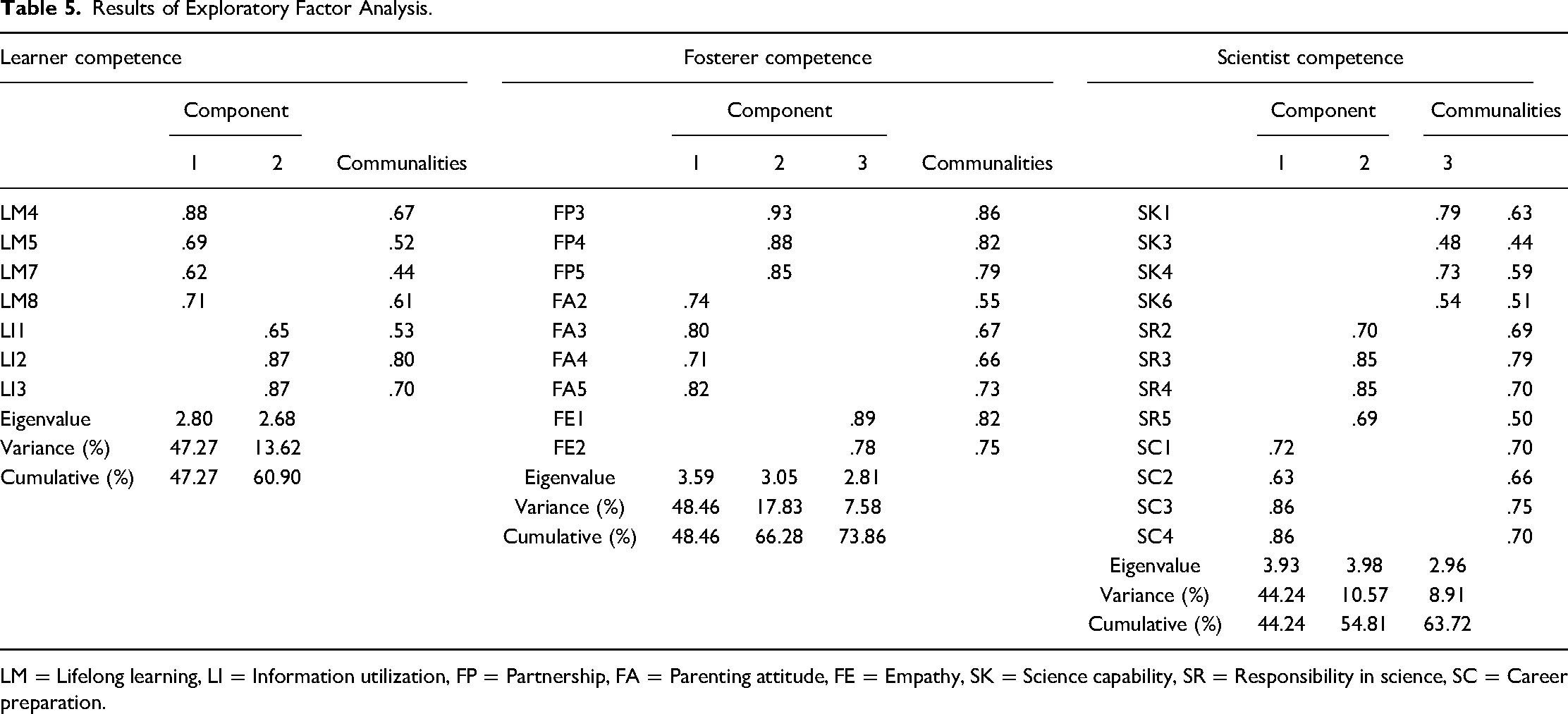
LM = Lifelong learning, LI = Information utilization, FP = Partnership, FA = Parenting attitude, FE = Empathy, SK = Science capability, SR = Responsibility in science, SC = Career preparation.
EFA was also performed on 12 items for the fosterer competency, of which three items (FA1, FP1, FS3), whose factor loadings overlapped with other factors, were deleted. The KMO test and Bartlett's Test of Sphericity were conducted on the remaining nine items. KMO was .84 and the result of Bartlett's Test of Sphericity was 670.54, df = 36 (p < .05), which confirmed that EFA was appropriate for further analysis. According to the results of the EFA, there were no items that hindered commonality, and Eigenvalues were supposed to be greater. The total variance accounted for 73.86%, and all factor loadings were greater than .40. The Fosterer competency comprised three factors: partnership, parenting attitude, and empathy (see Table 5).
EFA was performed on 14 items of the scientist competency, of which three items (SK2, SK5, SK7), whose factor loadings overlapping with other factors, were deleted. Although these questions were developed to address science capabilities, they also had a high degree of commonality in responsibility in science and career preparation. The KMO test and Bartlett's Test of Sphericity were conducted on the remaining 11 items. KMO was .84 and the result of Bartlett's Test of Sphericity was 779.01, df = 66 (p < .05), which confirmed that the EFA was appropriate for further analysis. According to the results of EFA, there were no items that hindered commonality and Eigenvalues were supposed to be greater. The total variance accounted for 63.72%, and all factor loadings were greater than .40. The Scientist competency comprised three factors: science capability, responsibility in science, and career preparation (see Table 5).
Confirmatory Factor Analysis
We conducted CFA based on the results of the EFA. Through the statistical analysis and correlation analysis of items before the CFA, we checked the mean, standard deviation, skewness, and kurtosis of each item to confirm normality. As a result of the item analysis, we used 28 items for the initial CFA.
As shown in Table 6, Χ2 = 379.63 (df = 207, p < .05); we therefore rejected the null hypothesis. It was interpreted because of the suitability of fit of the sample size and referred to other model fitness indices. As a result, we judged the initial measurement model to have a good model fit (e.g., TLI = .91, CFI = .92, RMSEA = .056). The TLI and CFI values corresponding to the incremental fit indices are higher than .90 (Kline, 2023). RMSEA values of less than .08 can be interpreted as having acceptable goodness of fit (Browne & Cudeck, 1992; Kline, 2023). However, the factor loading of measurement variable SR5 was less than .50, and the relevant item was deleted. The simpler the model, the better would be the fit model with fewer unknowns (Hair et al., 2018; Kline, 2023). Next, we selected the modified measurement model by deleting some measured variables (LM4, FA2, SK4, SC4) with a factor loading of .50 or higher but less than .70 for simplicity. The fit of the modified measurement model was Χ2 = 379.62 (df = 202, p < .05), TLI = .94, CFI = .95, and RMSEA = .050. Based on Kline (2023), we judged the fit of the model in this study to be good.
Descriptive Statistics of Confirmatory Factor Analysis Items.
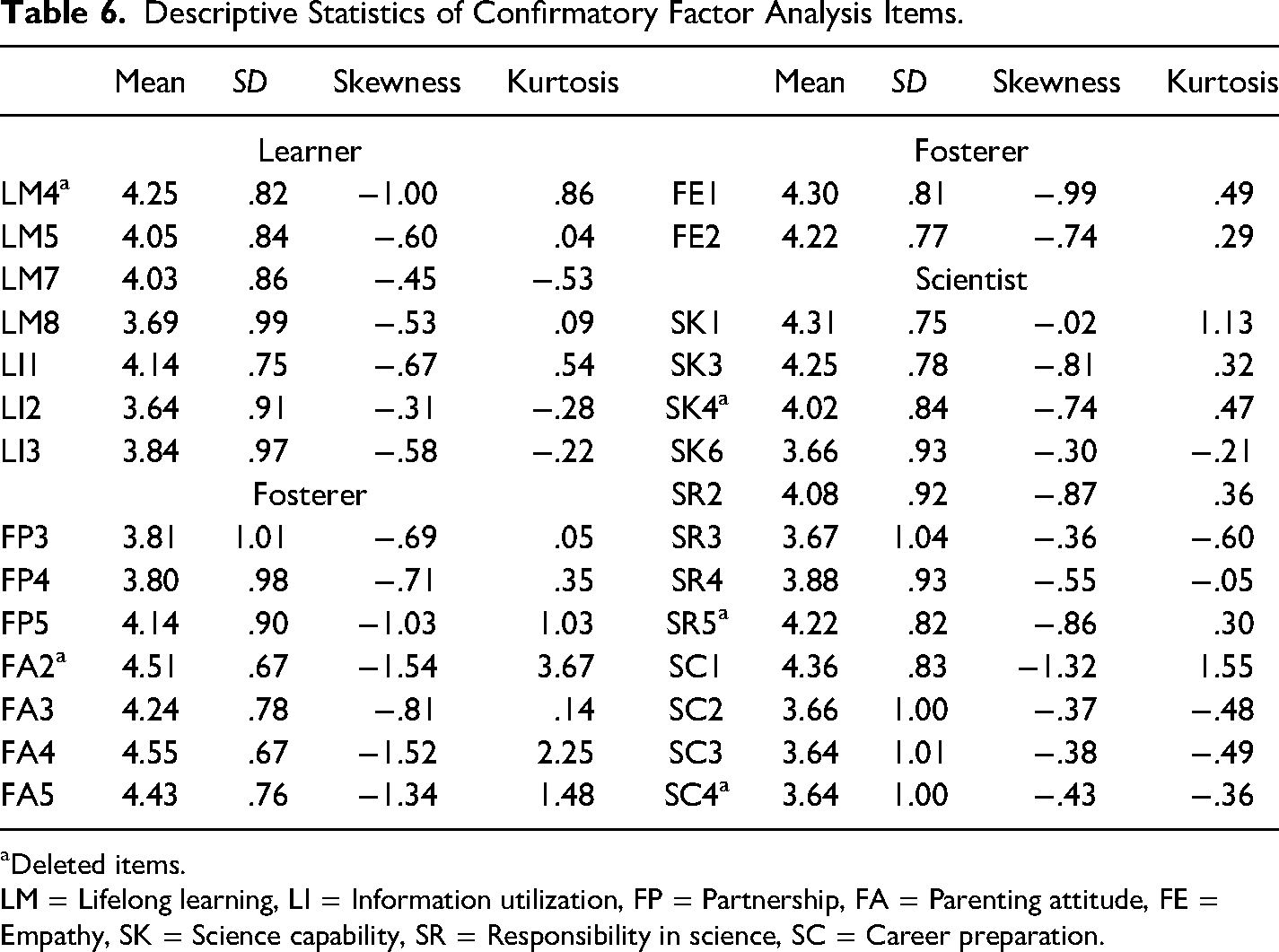
Deleted items.
LM = Lifelong learning, LI = Information utilization, FP = Partnership, FA = Parenting attitude, FE = Empathy, SK = Science capability, SR = Responsibility in science, SC = Career preparation.
Next, we verified the convergent and discriminant validity of the latent variables. Convergent validity refers to an agreement among the measurement variables and is confirmed through standard factor loading, AVE, and CR.
First, we examined the standard factor loading of each item. All items had loadings between .60 and .88, thereby confirming that the values were more than .50. Next, we identified the AVE and CR of the measurement variables for latent variables. The convergent validity of the measurement model was appropriate that indicated that AVE was over .50 and CR was over .70.
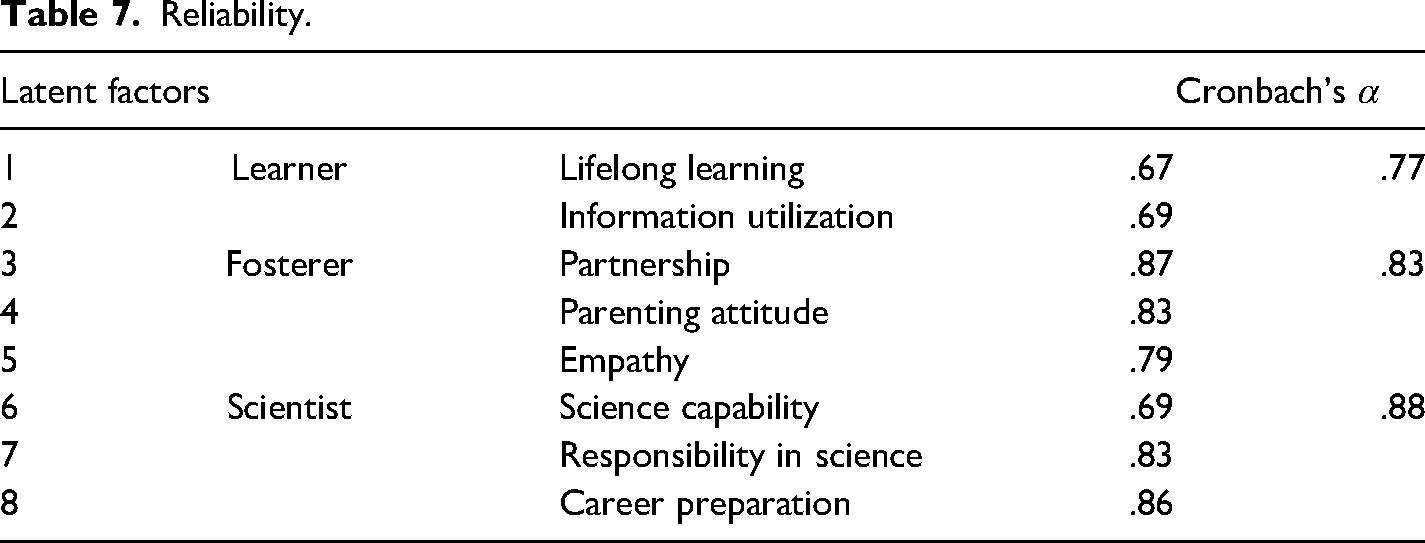
The study next established the discriminant validity of the designed scale. Discriminant validity refers to the degree of discrimination among latent variables, and comparing the square of the correlation coefficient with the AVE, it had a discriminating power when the AVE was larger than the square of the correlation coefficient (Fornell & Larcker, 1981; Kline, 2023). It is possible for the AVE to be greater than the square of the correlation coefficient between any two factors; thus, discriminant validity was established. Based on the above results, we judged that the measurement model was acceptable, and the validity of each variable was secured (see Figure 3). Finally, 23 items of the Cronbach's α were .91 (see Table 7). According to Cronbach (1951), a Cronbach's α value greater than .60 is sufficient in the field of social science research; we therefore deemed that the scale had good reliability.
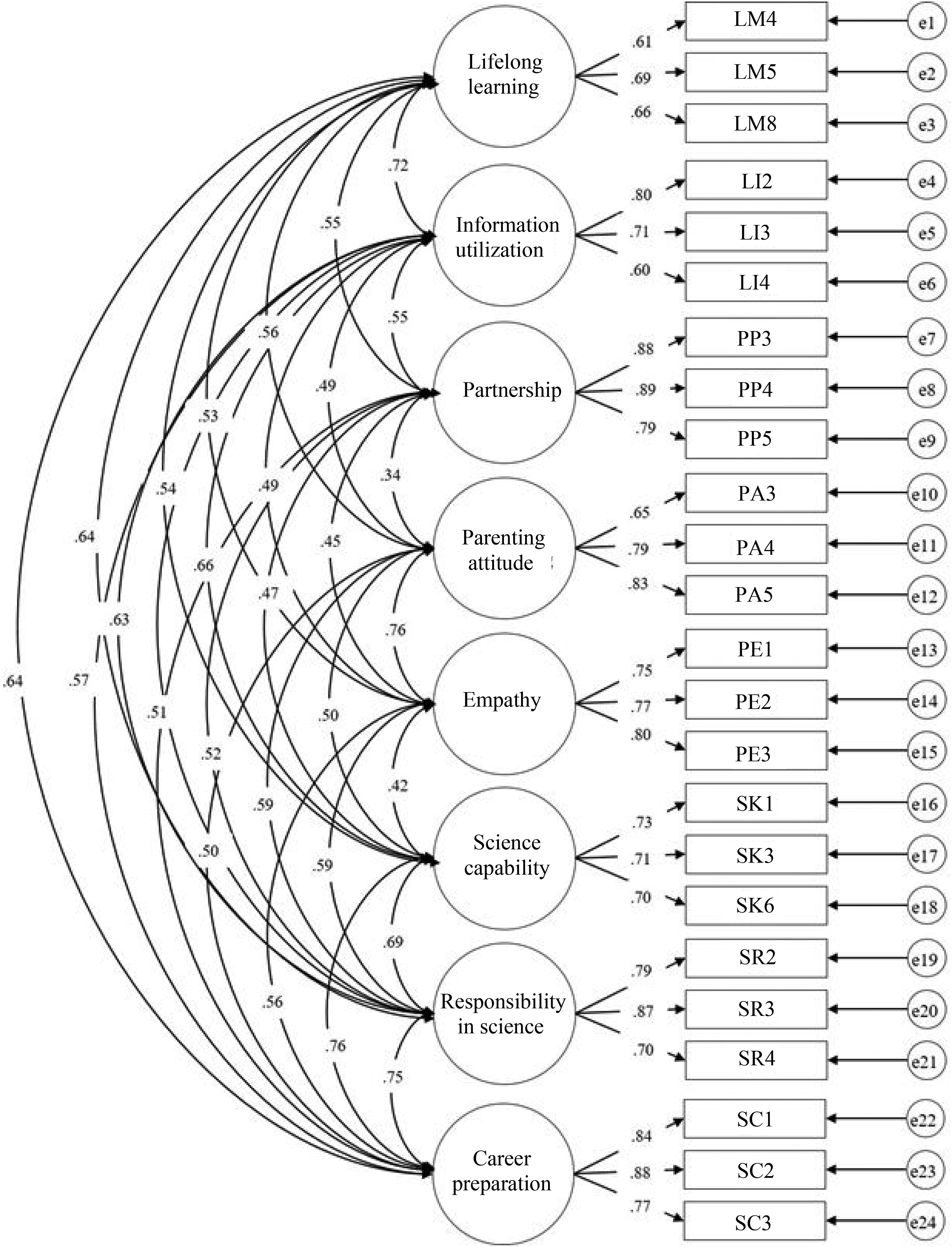
The modified measurement model.
Reliability.
Discussion and Conclusion
The parental competency of science-gifted students is important for the children to develop as global citizens and as scientists with the right ethics (Lee et al., 2008, 2013). This study defined the parental competency scale in the case of parents of science-gifted students and developed and validated measurement for related research and practice. We divided parental competencies of science-gifted students into three categories: learner (lifelong learning, information utilization), fosterer (partnership, parenting attitude, empathy), and scientist (science capability, responsibility in science, career preparation). Through a review of previous research and by implementing the Delphi method, it derived 45 items closely related to behavioral domains. Through an online survey, we selected 23 items that were statistically significant and important in content as the final items. Finally, the study confirmed the validity of the scale by examining the reliability and construct validity (see Appendix II). The validity of this tool was confirmed through EFA and CFA. Additionally, Cronbach's α was between .77 and .88, confirming this scale has reliability. In this respect, we offer a future direction of instructional design by providing a framework for the development of parental competency.
This study has established an empirical and objective basis for the systematization of parental competency. We expect that the measurement tools in this study will facilitate theoretical expansion and practical contributions. The significance of this research is threefold.
First, it recognizes the importance of parents, who have the greatest influence on children's manifestation of giftedness in science, and redefines the competency of parents using different terms and definitions. The expression of individual, national, and global talents by science-gifted students is of great significance. However, gifted parents may encounter several challenges in raising their intellectually advanced children, including the presence of high expectations, divergent learning styles, difficulties in relating, and constraints on time (Majid & Alias, 2010; Papadopoulos, 2021; Wellisch & Brown, 2012; Wood, 2010). As such, the present study aims to offer support to the parents of scientifically gifted students by providing information related to the competency model. This model can aid in enhancing intellectual development and potential for future scientific achievement in gifted students by offering valuable insight into best practices for parental support.
Second, despite numerous literature reviews of parental competency conceptual models (Leana-Tacilar et al., 2016; Olszewski-Kubilius, 2018), little research has been conducted to develop a quantitative scale that measures parental competency in supporting science-gifted students. To fill this gap, the present study proposes a classification of parents’ competency and constituent factors, utilizing various techniques to establish an empirical and objective basis for future research. This model can provide educators and professionals with a means of effectively assessing the current state of gifted parents and identifying areas where additional support is needed. By utilizing this model, targeted strategies and interventions can be developed to support gifted students’ intellectual development and future scientific achievement. Given the pivotal role parents play in shaping their gifted children's development, providing targeted support and guidance to these parents is essential for ensuring these students’ success in the science field.
Third, it provides guidelines for a systematic curriculum for parents by performing basic research on developing an instrument to measure the competency of parents of science-gifted students. Effective parent education is crucial for supporting the development of gifted children, yet individuals are left to pursue it on their own, without guidance from specific educational institutions. Furthermore, gifted parents, who face the unique challenges of raising intellectually advanced children, are not provided with a separate curriculum tailored to their needs (Alkhawaldeh et al., 2023). In Korea, however, separate education for gifted children is provided through specialized institutions, and if the science-gifted parent competency model developed in this study is used as a basis for curriculum development, a separate educational environment for gifted parents could be established. Traditionally, gifted education has focused on developing the talents of students, but it is now necessary to discuss the structures that can support gifted and talented parents as well. By providing targeted education and support to gifted parents, educators and other professionals can help to ensure the intellectual development and future scientific success of gifted students.
Establishing an empirical and objective foundation through our research contributes to the theoretical expansion and the practical utility of the measurement tools developed. Three key aspects of our study merit emphasis.
Recognition of Parental Importance
In the endeavor to define parental competency of gifted science students, our study explicitly recognizes the profound influence parents wield in shaping the manifestation of giftedness in science. By acknowledging and addressing the challenges parents of gifted children face, our study introduces a nuanced and information-rich competency model. This model serves as a strategic framework to facilitate intellectual development and cultivate future scientific achievements among gifted students.
Quantitative Measurement of Parental Competency
Our study proposes a novel scale in response to the dearth of research focused on developing a quantitative scale for gauging parental competency in supporting science-gifted students. This model provides educators and professionals with a robust tool for effectively assessing the current state of gifted parents and identifying specific areas requiring additional support. Serving as a foundational structure, the model lays the groundwork for targeted strategies and interventions geared toward promoting gifted students’ intellectual development and scientific achievement.
Guidelines for Systematic Curriculum
The study introduces guidelines for a systematic curriculum tailored specifically to parents of science-gifted students. Acknowledging the distinctive challenges faced by this demographic, our research posits that utilizing the developed competency model as a foundational framework for curriculum development could pave the way for establishing a segregated educational environment catering to the needs of these parents. This innovative approach is designed to offer targeted education and support, thereby ensuring gifted students’ intellectual development and future scientific success.
In summation, our study enriches academic discourse and provides practical insights for educators, professionals, and parents to navigate the intricate landscape of supporting science-gifted students. These aspects collectively contribute to the advancement of both theoretical understanding and practical interventions in the realm of parental competency in supporting science-gifted students.
Based on the study results, the limitations of this study and avenues for future research are as follows: First, the participant sample of this study was limited to students in, particularly parents of gifted students in South Korea, which may limit the generalizability of the study results. Also, only experts in Korea were targeted for the use of experts, including the Delphi method, to be reviewed considering the specificity of the Korean context. This is a study limitation, and experts and students from various cultures should be included for broader use. Second, we applied the cross-validation method to analyze the factor construction of the parents’ competency of science-gifted students. The validity of this competency modeling needs to be secured through criterion-related validity, which examines the degree of relevance to other variables in the future. Based on the results of this study, it is necessary to develop further studies on parents’ competency through empirical research and verification. Third, the scale for parental competency in science-gifted students developed in this study can be generalized because it was validated for large samples. However, the developed measurement should be applied to various methods and cultures to transform it into a tool with higher reliability and validity. The last, this study was conducted by a survey instrument based on self-report. The main strength of self-report surveys is that they allow participants to describe their own experiences rather than inferring this from observing participants (Jupp, 2006). However, participants may not respond truthfully because they cannot remember or wish to present themselves in a socially acceptable manner. Therefore, subsequent research will provide a more comprehensive understanding of gifted students and their parents by using quantitative measures and qualitative analysis. In addition, it is necessary to secure the validity of this scale by examining the relationships among other variables because this study only focused on parental competency.
Footnotes
Appendix I
Appendix II
Key Highlights
Author's Note
Myunghwa Lee is now affiliated with Kangnam University, Korea.
Declaration of Conflicting Interests
The authors declared no potential conflicts of interest with respect to the research, authorship, and/or publication of this article.
Ethical Approval
All procedures performed in studies involving human participants were in accordance with the ethical standards of the institutional and/or national research committee and with the 1964 Helsinki Declaration and its later amendments or comparable ethical standards. All participating parents completed informed consent before participating.
Funding
The authors disclosed receipt of the following financial support for the research, authorship, and/or publication of this article: This work was supported by the Korea Foundation for the Advancement of Science & Creativity (KOFAC) grant funded by the Korean Government (MSIT & MOEF).
Informed Consent
An informed consent was obtained from all participants or anonymous data collection was used.
