



Abstract
The purpose of this study was to investigate the emergence of Vladivostok, Russia, as a new tourism destination for Koreans from the perspective of a social construction of space. This study analyzed the process using two axes, one representing the discourse of development as a pull factor and the other representing the discourse of a region as a push factor. Vladivostok established a physical and institutional foundation to evolve into a new destination through investments by the Russian Far East development project beginning in the mid-2000s. Also pivotal were two bilateral agreements between Korea and Russia: the Open Skies Agreement (2012) and the Visa Waiver Agreement (2014). Vladivostok, with these practices, was advertised as a tourism destination through Korean travel agencies that realized the area’s potential after those changes. The promoted image of Vladivostok as “the closest European city to Korea” was reinforced socially through frequent exposure on reality television programs. By satisfying the expectations of tourists seeking new and unique places to visit, Vladivostok became a popular destination. This is how a place that was once perceived negatively develops a new image through changes in policy, institutional practices, and a revised sociocultural gaze, thereby revealing that the destination is socially constructed.
Keywords
Introduction
The Korean Peninsula is divided into south and north as a result of the Korean War, and the lingering images of anti-Communist ideology remain in South Korea (hereafter Korea). Although Korea and Russia re-established diplomatic relations in 1990, the perceptions of many Koreans regarding Russia’s role in the former Soviet Union have remained unfavorable. For the generations who experienced hostile times, Russia is often portrayed negatively. Younger generations tend to have little knowledge or remain indifferent about Russia (Choi, 2017).
A surprising reversal took place in the easternmost region of Russia. Vladivostok, the area’s largest city, saw remarkable growth in the number of Korean visitors, from roughly 20,000–30,000 visitors per year over the past decade to about 100,000 visitors in 2017, and more than 226,000 visitors in 2018. Korean tourists have become the city’s fastest growing group of foreign visitors (Shipilova & Orekhova, 2018). Considering the negative perceptions and indifference toward Russia among Koreans, the recent popularity of Vladivostok as a destination stimulates academic curiosity as an unusual social phenomenon.
Considering the findings of Simmel (1990) who saw tourism as an attraction of difference, Vladivostok had potential as a destination because of its proximity to Korea combined with its cultural differences from Korea. This study focused on the process of realizing that potential.
The attractiveness of a destination originates not only from a physical environment but also the tourists’ perception of a city as a valuable place to visit. Thus, the study tried to understand this tourism phenomenon by tracking changes in the way Vladivostok was portrayed in Korea as well as Vladivostok’s modifications to enhance its tourism sector.
Literature review
Why tourism destination image (TDI) is important in tourism?
A city is a place where various elements combine. A particular city’s image as a tourism destination is a powerful attraction. Tourists see and judge a city according to this image. Above all, the impact of typical tourist image seen by potential tourists in a target society often plays a more important role than the actual amenities of the city itself (Wang, 2000, pp. 53–54).
According to Dubinsky (1994), tourism is consistently associated with the fantasies linked to specific places. As the oriental mysticism embroidered by Marco Polo’s stories has been imprinted on American tourists for centuries (Y. Kim, 1999, p. 216), people tend to rely on the dominant popular imagery for places they have not actually visited. Therefore, if a place is to develop its tourism potential, creating an appealing destination image becomes the most important task of tourism studies.
The concept of tourism destination images (TDI) became an emerging subject in tourism studies since the 1990s (Alcañiz et al., 2009; Baloglu & McCleary, 1999; Beerli & Martín, 2004; Camprubí et al., 2013; Chen et al., 2012; Gartner, 1994; Nadeau et al., 2008; Sancho Esper & Álvarez Rateike, 2010). While its characteristics and scopes are still ambiguous (Lai & Li, 2015), the importance of these destination images is intensified with the emergence of postmodern tourists. Moreover, destination image has become a means of active use by suppliers and consumers within the market structure associated with tourism (Banyai, 2009; Chon, 1991; Echtner & Brent Ritchie, 2003; Erickson et al., 1984; Min & Kim, 2009). Continuous research is needed in this connection, especially on how people without the experience of visiting a destination form an image of the place (Crompton, 1979; San Martín & Rodríguez del Bosque, 2008; Shaw et al., 2000).
According to Gunn (1988), the accumulation of mental images for specific vacation spots related to organic and induced images can be a representative example that clearly shows how this impression shaping process works and the role-played by images. Before traveling, tourists engage in the macro process of social and cultural accumulation of images of a potential destination; this constitutes an important source of personal images about a particular place. Through this aggregate of organic images, perceptions of a destination are formed (positive or negative). Thereafter, tourists decide whether to visit or not based on these perceptions (Pearce, 1982). Even without direct experiences, images accumulated through indirect experiences can affect selection and behavior (Lawson & Baud Bovy, 1977, p. 10). In other words, while it is true that the selection of a tourist attraction is based on the unique characteristics of a place (nature, culture, historical entities, etc.), also deeply connected to the selection are the subjective attitudes of individual tourists and their existing impressions of the potential destination (Crompton, 1979; San Martín & Rodríguez del Bosque, 2008; Shaw et al., 2000). In particular, the image of international tourism is not related to reality, but to myth and fantasy (Crick, 1989).
City image tends to become much stronger when it is associated with its unique historical, social, and cultural characteristics (Seo, 2016). Although there are some cities like Rome and Athens in which the identities were naturally formed by mainly concentrating on the ancient remains and landscape, however, the cities without such a powerful image sometimes establish the identity to distinguish themselves from others (Jacobsen, 2009; Lalli, 1992). In this process, each city promotes itself actively by presenting certain factors that have been inherent in the city such as natural environment, historical features, cultural attraction, or unique identity.
A city marketing or a city branding is deemed critical in this era of globalization that commonly exhibits severe competition among cities. There are various ways of promoting to or painting a unique color on each city. Shin (2015) arranged this with five categories. The first is to utilize logos and slogans. New York, which has been one of representative cities in the United States, is a typical instance and it asserted the city identity through the branding campaign, “I♥NY.” The second category is to use the various kinds of festivals and events. The mega-events such as exhibition, international conference, or the Olympics sometimes become a means for city marketing that can enhance the city awareness in such a short period and a city branding is often accomplished naturally during this process (Deffner & Labrianidis, 2005). As an example, the 2009 United Nations Climate Change Conference(also known as the Copenhagen Summit) granted Copenhagen an image of a clean green city that considers the environment. The third is something related to the projects for vision, strategy and development (Lieutaud, 2003). In addition to the skyscrapers as a landmark, an expansion of infrastructure including airport and construction of new town become the measures that can make a city image efficiently or improve its image further (Braun, 2012; Kavaratzis, 2004). There was a huge change in perception of the Middle East nowadays from the image of untapped territory with desert, dreariness, and natural resources to the financial spot on which the wealth and capitals of the world have concentrated and the region of shopping and tourism. As the fourth category, the most fundamental natural environment, culture, and historical context, which determine the city image, are used for city branding and the last category includes city design, structures, and public design that actively are involved in the city imaging.
Like this, various cities in the world compete each other by creating unique image through own strengths and distinctions. There are various methods in branding of each city, however, it is conceived that the existing studies on the city branding have been typically weighted on tangible or “internal” element of a location. As aforementioned, tourists often project the images in mind, that is, “intangible illusion” onto a place by means of artistic works, photos, or songs. This is closely associated with not only the changes created from the city inside, but also the images formed externally. The city images established in this pattern are influenced by the mass media of society in which external tourists live. However, the existing studies on the city branding have focused on only the images that are being internally built by a city and had less interests on the formation of views from outside. Furthermore, as the city images are shared, spread, and re-created among individuals through social media recently, a claim is posed to deal social media more broadly (Paganoni, 2015; Zhou & Wang, 2014).
Explaining tourism destination from the constructive perspective
Socially constructed TDI
The Paris syndrome is a form of depression caused by a cultural shock arising from the gap between the portrayed images of Paris and the real Paris, most frequently reported by Japanese tourists about their impressions of Paris. Their experiences confirm that perceptions based on the destination images advertised in their homeland differed from the reality of the destination. In this respect, a constructivist view that regards space as a social process in a historical context can be useful for analyzing the emergence, change, and decline of a tourism destination through image changes (Cho, 2010, p. 81).
Social construction of space refers to the process in which space acquires its social meaning, and this concept is influenced by Lefebvre’s (1991) representation of space (Shim, 2000). The concept is similar to the way of seeing in cultural geography. New cultural geographers such as Cosgrove and Daniels (1988) emphasized that landscape should be explained as the way people view the world, not so much as objective reality, but instead the way the world is constructed and organized. In cultural sociology, as mentioned earlier, landscape is viewed as a represented nature and understood to be a social and historical product that is not always as it seems. Instead, it is composed according to social needs (Joo, 2003, p. 127; H. Kim, 2005, p. 131). In other words, from the perspective of social constructivism, a tourism destination is developed socially and culturally rather than naturally based on existing physical and environmental conditions.
“Social construction of space” as an analytical framework
Shields’ (1991) social spatialization is a good conceptual framework for understanding emergence and changes of a tourism destination from a constructivist point of view. Social spatialization refers to the social construction process of a destination by institutional practices and cultural discourse. Saarinen (2004) also claims that the development of tourism could be understood as part of a broader social and ideological process, and that this process produces ideas of destination, physical characteristics, and practices that occur at the destination. He conceptualized two interrelated discourses which consisted of one discourse about the development of the destination and another discourse about the region.
Discourse of development refers to the institutional practices and processes that reflect material and economic characteristics. These cause changes in physical and environmental aspects of the destination as a result of institutional practices for the development of the destination. Included are government policies for tourism development and the establishment of adequate infrastructure. Therefore, discourse of development should ultimately be understood as part of the broader social and economic structure (Saarinen, 2004, pp. 168–169). In this regard, international tourism should be considered in a comprehensive manner, including relations between countries and in terms of international order, but at the same time a domestic matter.
Discourse of region reflects the social and cultural aspects of a destination. It relates to the knowledge and meaning of region, that is, the way the destination is represented. Discourse of region forms and modifies the image of a destination by emphasizing or deleting specific impressions. For example, in literature and paintings representing the British countryside during the Romantic period, Urry (2002) noted that visually unattractive areas of the countryside were excluded, leaving only ideal pastoral imagery. Destination images are passed to tourists through the media, thus creating a tourist gaze (Urry, 2002), that is, the tourists’ perceived view of a destination. Tourist gaze is a matter of choice and preference, but it is also reasonable to consider it as a product of social construction rather than individual free will. The dominant gaze changes through transformations in social, historical, and cultural processes, and the gaze fosters discourse that dominates the society’s perceptions (Shim, 2000).
In this regard, Urry (2002) explains that non-touristic experiences through media such as commercials, television, movies, and magazines play an important role in creating impressions of destinations. Visiting places referred to as famous or must-visit by the mass media can be an example of tourist gaze formed from non-touristic, indirect experiences. Conversely, after hearing negative things about a place through the media, willingness to travel there may be reduced (Hammett, 2014). On-site, by seeing the pre-conceived images of a destination repeatedly through daily non-touristic experiences, that impression becomes engrained in our society (Ryan, 2003; Trauer, 2006).
In international tourism, discourse of development is a series of economic and political actions by representatives of the destination that serve as pull factors. Conversely, discourse of region relates to push factors caused by social and cultural changes in perception within the tourists’ country of origin.
Background and method
A Western city located in the East
This case study featured Vladivostok, the capital city of Primorsky Krai province located in the Far Eastern region of Russia. The city is much closer to Seoul, Korea and Tokyo, Japan, than it is to Russia’s capital city of Moscow (see Figure 1).
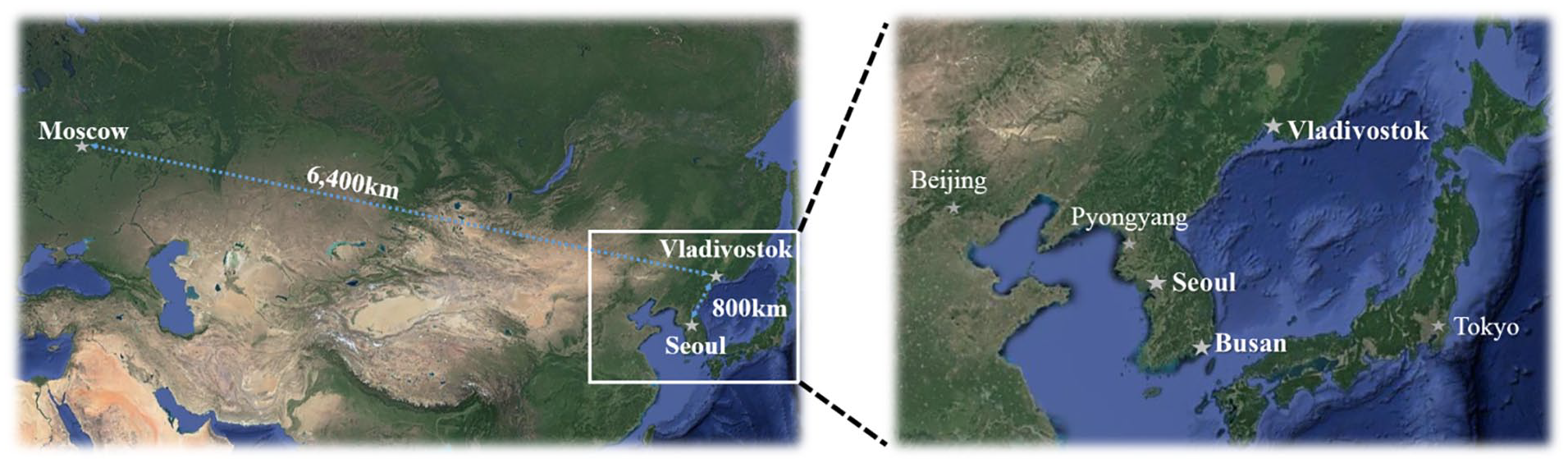
Geographical location of Vladivostok.
Whether Russia is a European country is debatable, nor would it be easy to classify Russia as an Asian country in any social or cultural context regardless of its geographical location. As the region was placed under Russian jurisdiction after the Beijing Treaty of 1860, the population of native residents from Primorsky Krai has dwindled. Currently, 92.5% of the population is composed of ethnic Russians who migrated from western regions of the country (Russian Federal State Statistics Service, 2011). Therefore, although the region is geographically closer to Northeast Asia, particularly Korea and China, Primorsky Krai has distinct social and cultural characteristics.
The city of Vladivostok was established as a military port in 1860 by the Russian Empire and designated as a fortress in 1923. It was a city closed to foreigners, and even Russians required a permit to enter. It remained a military port through the Cold War until it was finally opened in 1992 after the collapse of the Soviet Union. Since then, Vladivostok has become Russia’s principle cog for its entry into the Asia-Pacific region, thus adding economic importance to its existing military presence.
As Korea and Russia had already restored diplomatic relations in 1990, Vladivostok, the closest Russian city to Korea, naturally emerged as the center of bilateral economic cooperation. However, apart from the political and economic aspects, Koreans maintained a cold and negative impression of Vladivostok as a closed military city in terms of social and cultural characteristics. Vladivostok was never considered a popular destination for Koreans; only the occasional eccentric tourist chose the destination. In fact, less than 10,000 Koreans visited Vladivostok annually until early 2010, 20 years after the establishment of diplomatic relations in 1990.
However, the number of Koreans visiting Vladivostok in 2018 was 226,849. The number of Korean visitors to Vladivostok increased 20-ninefold in only 10 years from 7,808 in 2008 (Figure 2). This study attempted to uncover the reasons for this epochal change by exploring social, economic, and cultural phenomena in Korean and Russian societies related to tourism.
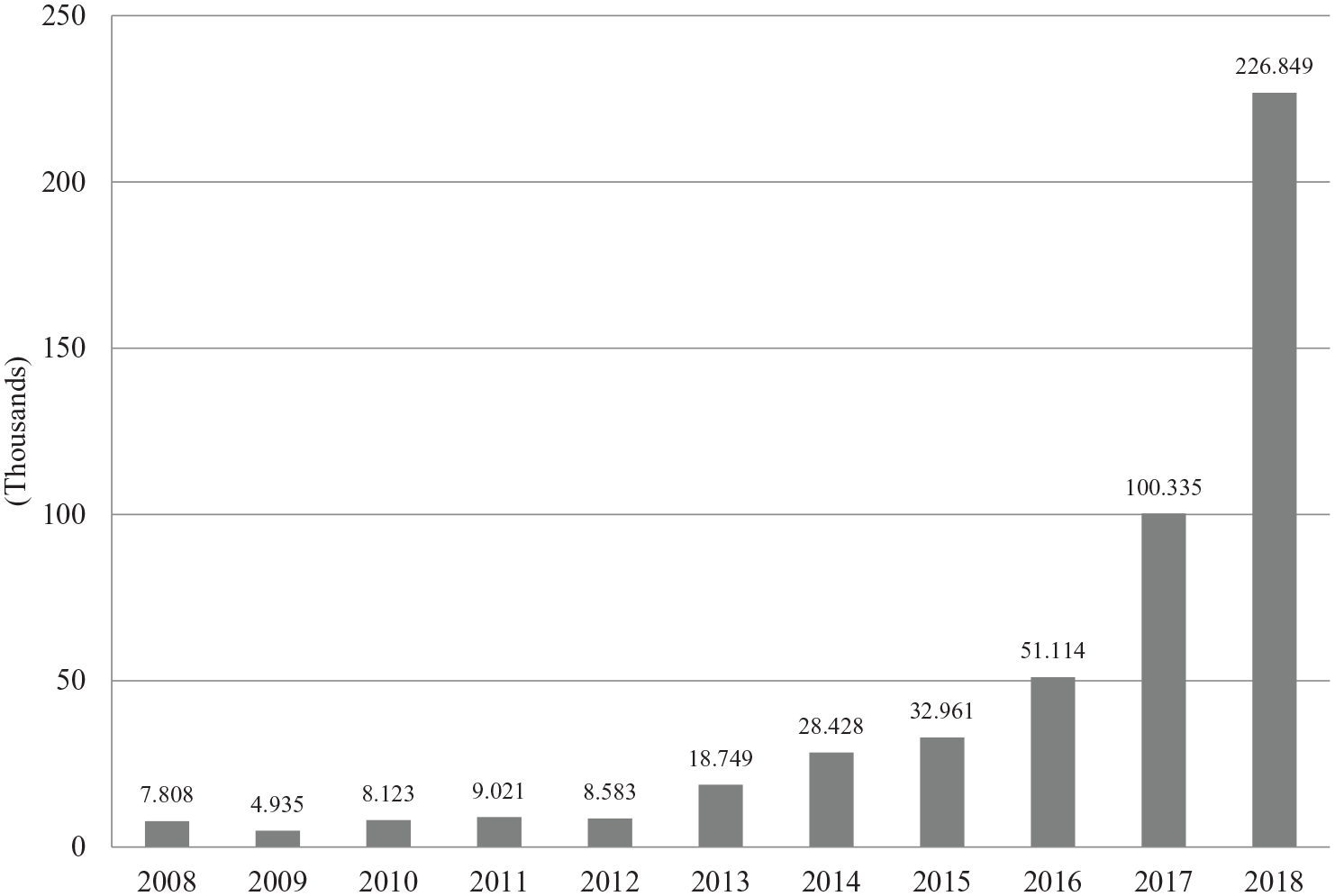
Korean visitors to Vladivostok 2008–2018 (by year).
Methodology: how to explain intangible factors in this tourism phenomenon
To understand the large increase in Korean tourists visiting Vladivostok each year, this study structured the key motivators of tourism into “pull” effects of the accommodating destination for tourists and “push” effects of marketing and social perceptions in Korea, the country of origin for potential tourists. This can be conceptualized as the nature of Saarinen’s (2004) discourse of development and discourse of region respectively. Both assume a directional nature interacting within a larger framework based on the concepts of social spatialization or spatial socialization.
First, Russia implemented projects that improved the urban environment of Vladivostok, and a series of institutional studies occurred between Korea and Russia to analyze various aspects related to discourse of development to make Vladivostok a more appealing tourism destination for Koreans. To evaluate practices and policies of the host country, data of the Russian government’s development policies for the region dating back to the mid-2000s were collected. Various implemented policies were grouped by main functions to analyze their impact on the creation of tourism-related physical and environmental infrastructure in Vladivostok. Next, a series of institutional changes agreed upon by Korea and Russia in the 2010s were traced. These bilateral institutional agreements had an important impact on tourist mobility, a factor that should not be forgotten as national governments continue to play important roles in defining international tourism. To investigate this, an analysis was conducted based on the Russian government’s immigration policies for Koreans and the aviation policies between the two countries.
Conversely, to understand the discourse of region associated with the way tourist destinations are portrayed, we need to understand the tourist gaze of how Vladivostok was perceived in Korean society, the country of origin of potential tourists for the Russian city. For those socially shaped images, it would be more appropriate to evaluate this in inductive terms by interpreting the sociocultural contexts qualitatively rather than using quantitative methods. Thus, this study was conducted through the methods of content analysis and semiotic analysis, respectively, for commercial discourse (travel advertisements) and media discourse (reality shows), both of which played an important role in the formation of a desirable destination image for Vladivostok.
By identifying the imagery that travel agencies chose not to emphasize or reveal through commercial advertising, we analyzed the impressions (De Jager, 2010) that Vladivostok intended to provide to consumers. For the content analysis of commercial advertising, after collecting advertisements for travel products of Vladivostok that were advertised online and offline, we began by separating them by period. Next, while comparing the images of Vladivostok described by travel agencies, the incorporation, and unification processes of the images starting from a specific time (2017–2018) were observed.
The media images of Vladivostok that had a large impact on the public after appearing on Korean reality shows were analyzed with their accompanying subtitles by the semiotic method to draw specific meanings. Semiotics interprets signs through a dualistic structure of signifier and signified. The signifier, as the material aspect, is a word, a picture image, a sound, and so on, while the signified refers to the mental concepts inferred by the signifier, the result of arbitrary and non-apodictic customs and culture among language-speaking groups (Cobley et al., 1997). In this study, the sentences revealed as the signifiers through subtitles were extracted, and then the signified meanings of them were derived to explore the reproduced images promoting Vladivostok as a tourism destination. Subtitles were used as the object of this study because of the nature of reality shows. Subtitles are primarily intended to assist viewers in understanding the show, but they also facilitate understanding of specific topics by visually representing what the producers or advertisers want to emphasize on the reality shows (J. Kim, 2009). Therefore, to understand the urban images of Vladivostok described in reality shows, this study focused on the introduction of the travel site presented before the reality television trip as well as the subtitles of sections expressing the feel and characteristics of the Russian city during the journey. By analyzing how Vladivostok was portrayed on Korean reality shows, it is possible to understand how Vladivostok was being spatialized ideally as a tourism destination (Figure 3).
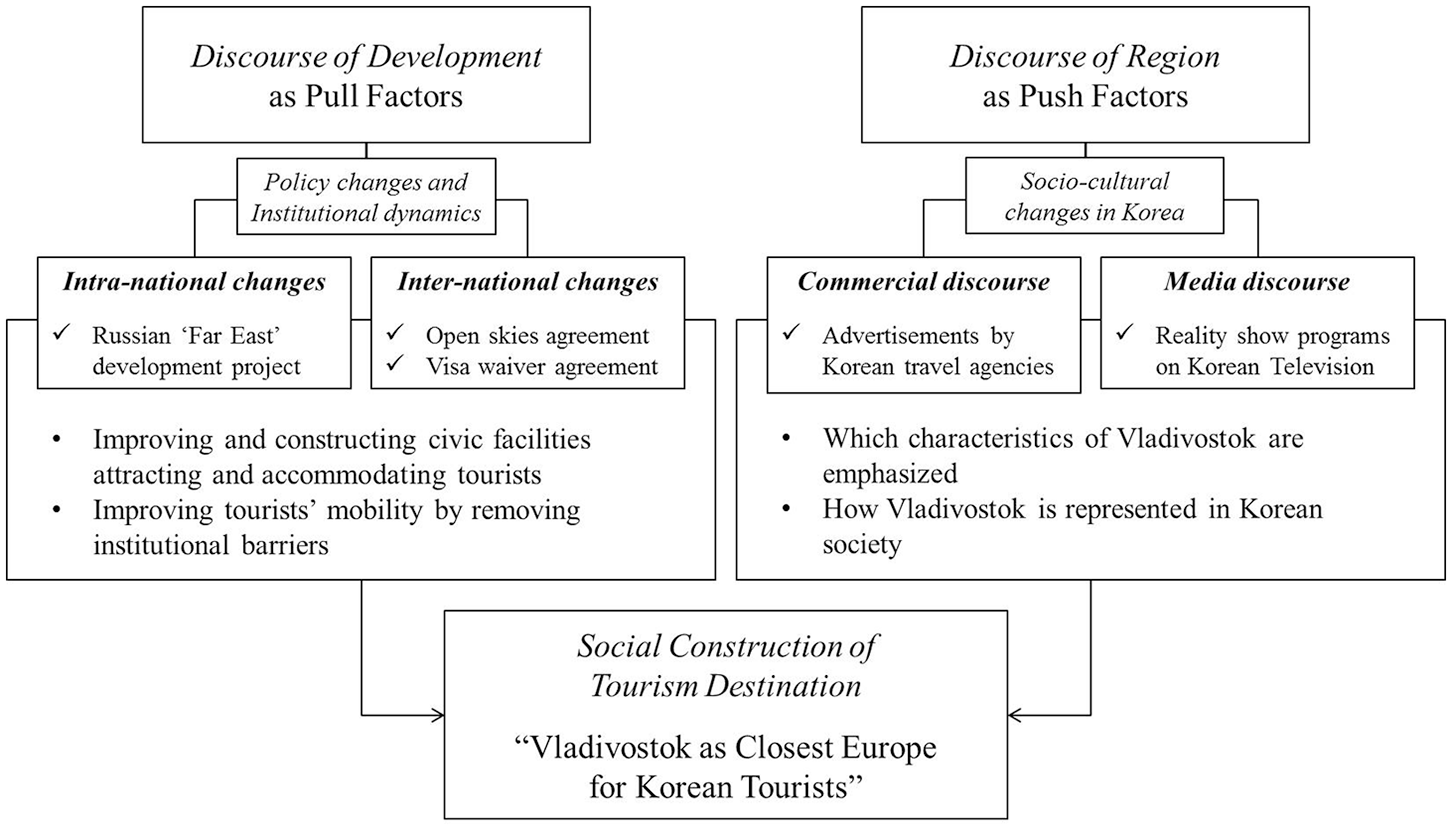
The concept of social construction of Vladivostok as a tourism destination.
Results
Pull factor: discourse of development
With tourism emerging as a new economic foundation for many cities, each city strives to improve its suitability for tourism to attract more visitors through the marketing of its best features. In terms of international tourism, the role of the central government is also very important because the central government can regulate tourism directly and indirectly through various devices (Shaw & Williams, 1994). In addition to maintaining direct control of tourists through the immigration system (passports and visas), the central government actively participates in promoting the movement of tourists by enhancing their travel conveniences through policies as well as improvements to infrastructure such as airports, harbors, roads. These include policies on mobility of capital and labor, the national image, exchange rate policies, and international relations. This section looked at the political and institutional changes at the national level in Russia by which Vladivostok was able to arrange conditions suitable for the accommodation of tourists, that is to say the urban spatial base that helped prompt Korean tourists to visit in much larger numbers.
Internal change and spatial improvement in Russia
After the collapse of the Soviet Union, the Primorsky Krai province lost some of its influence as a military port. Population decreased as a result of fewer jobs and poor residential conditions, among other factors. Recently, Russia sought to cultivate an identity as a Eurasian state spanning Asia and Europe by actively implementing Far East development to maintain balanced development between eastern and western regions while maintaining friendly relations with Asian countries. Vladivostok serves as a central base for this development project. In 2007, the Russian Federation established a project specifically responsible for Far East economic and social development with the state council as its center, and it continues to make intensive investments while regularly achieving and modifying its goals. 1
The Far East development project brought significant improvements to the urban conditions of Vladivostok. They can be viewed as physical hard development such as building urban infrastructure and an improved urban environment, and service-specific soft development such as the expansion of culture and leisure facilities.
It is necessary to highlight the modernization project of the Vladivostok international airport among the many physical projects undertaken. For years, the aging airport operated primarily for domestic flights, but in 2012, it received a complete renovation that transformed it into a modern airport capable of handling 3.5 million domestic and international passengers per year. In addition, the highway and the railway connecting from city to the airport was constructed. Through these upgrades, Vladivostok created a modern transportation hub connected with all Russian cities and major cities in neighboring countries.
Several projects for the expansion of culture and leisure facilities filled the city with tangible and intangible cultural assets. In particular, construction of the world-class performances and sports facilities including Marinsky Theater (2013), Ice Hockey Arena (Fetisov Arena, 2013), and the Ermitage Museum of Art (under construction) has led to Vladivostok’s potential as a cultural city. In terms of tourism, the expansion of these facilities was meaningful not only for the residents but also for neighboring East Asian countries who can now enjoy world-class Russian cultural, artistic, and sporting events in nearby Vladivostok rather than travel to geographically distant regions such as Moscow or St Petersburg.
These development projects were closely related to the 2012 APEC Summit held in Vladivostok as part of their eastern development strategy. Unlike capitals or major cities where is capable of hosting large-scale international events with minimal transformation, Vladivostok needed additional investment because the city was a comparatively unequipped city. Despite criticisms over the massive budget requests, the Russian federal government invested over US$20 billion to prepare Vladivostok for the APEC Summit. As the investment on urban infrastructure and environmental improvements for the international conference equalled almost 10 times the amount spent for the 2010 Vancouver Winter Olympics, it is said that urban environment of Vladivostok has improved greatly. The Far East development project played a pivotal role in various projects that improved the urban environment of Vladivostok and confirmed its role as the central city of the region. By preparing and hosting a large-scale international event such as the APEC Summit, great progress in terms of establishing modernized urban infrastructure and improving the cultural offerings in Vladivostok also occurred. Furthermore, international mega-events such as APEC were effective in building awareness and better impressions of the host city (Avraham, 2003; S. S. Kim & Morrsion, 2005; Nauright, 2004; Ritchie & Smith, 1991; Wang, 2000). The media coverage in Russia and abroad created an enhanced profile for Vladivostok and the region.
In subsequent years, the benefits of large-scale events were multiplied through sequential hosting of international events at the national level in Russia. In particular, under the motto of “New Russia” (Song, 2016), to distinguish these efforts from the former Soviet Union, Russia increased awareness and improved its image by hosting not only the 2012 APEC Summit in Vladivostok, but also the Kazan Summer Universiade (2013), the Sochi Winter Olympics (2014), as well as the 2018 FIFA World Cup.
Vladivostok, once a closed military city accessible by local people only, has a revitalized image after actively implementing development policies at the federal level. Awareness has been increased through international events that have improved the image of the city and the state. These changes not only improve the living quality of local residents, but also increase the competitiveness of Vladivostok as a tourism destination.
Change on policy between Russia and Korea
Vladivostok’s popularity as a destination in Korea after mid-2010s was possible due to policy changes between Korea and Russia. The Open skies agreement between airports in Korea and Vladivostok Airport (May 2012) and the Korea-Russia Visa waiver agreement (January 2014) made it easier for Koreans to visit Vladivostok by eliminating institutional hurdles.
Change 1: open skies agreement
All air routes between Korea and Russia have been operating with limited scope according to the outcome of bilateral agreement. 2 However, in 2012, the two countries signed an Open skies agreement that allowed airlines of both countries to operate without limits between all airports in Korea and Vladivostok. Airlines of both countries were able to increase supply with flexible schedules based on demand. This resulted in rapid growth of route services and traffic.
Before Open skies, regular traffic to Vladivostok totalled only 10 flights per week from Seoul and Busan. However, 7 years after implementing the policy (February 2019), 54 flights per week connect Vladivostok with Seoul, Busan, and Daegu. Institutional intervention has expanded the air network between Korea and Vladivostok. In turn, this resulted in greater passenger mobility (see Table 1).
Regularly scheduled flights from Korea to Vladivostok (the years 2012 and 2019).
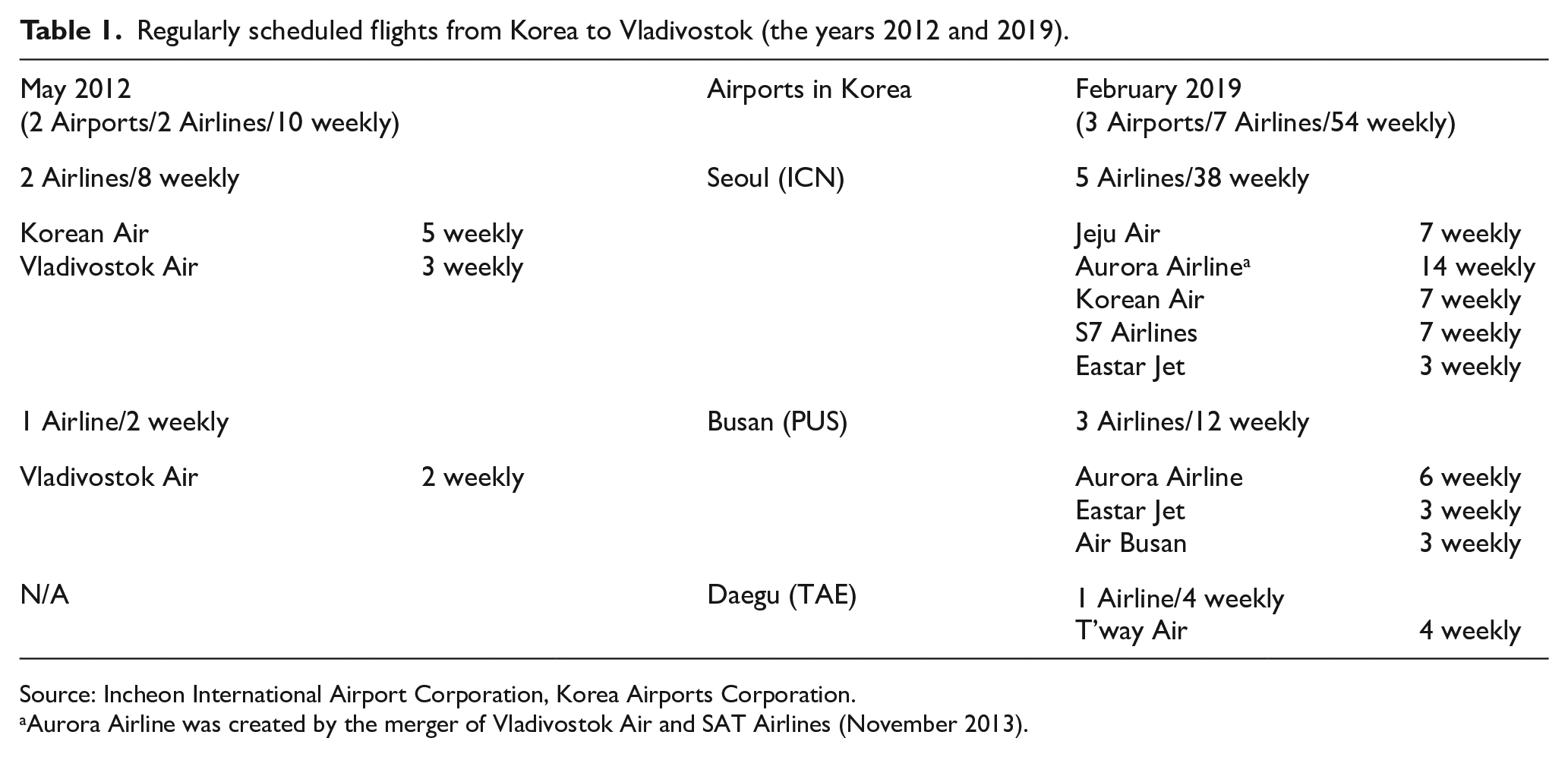
Source: Incheon International Airport Corporation, Korea Airports Corporation.
Aurora Airline was created by the merger of Vladivostok Air and SAT Airlines (November 2013).
Generally, Open skies agreements known to affect both ticket rates and traffic. Fares are lowered while flight frequency and passenger numbers increase (Goetz & Vowles, 2009). As Open skies programs enable both proactive responses to demand and an elastic increase in timely supply based on that demand, the amount of transportation between Korea and Vladivostok continues to grow. Passenger totals from Korea to Vladivostok were around 50,000 in 2010, but the volume has increased rapidly to more than 100,000 in 2013 and 330,000 in 2018.
The effect of Open skies is more evident when compared to other Russian cities that are still constrained by bilateral agreements. Over the past decade, Vladivostok’s connectivity to Korea has grown significantly in terms of both the number of passengers and the number of connected cities, while few significant changes occurred in other cities in Russia during the same period. 3 In 2018, Vladivostok became the most preferred Russian city for Koreans, replacing Moscow (see Figure 4).
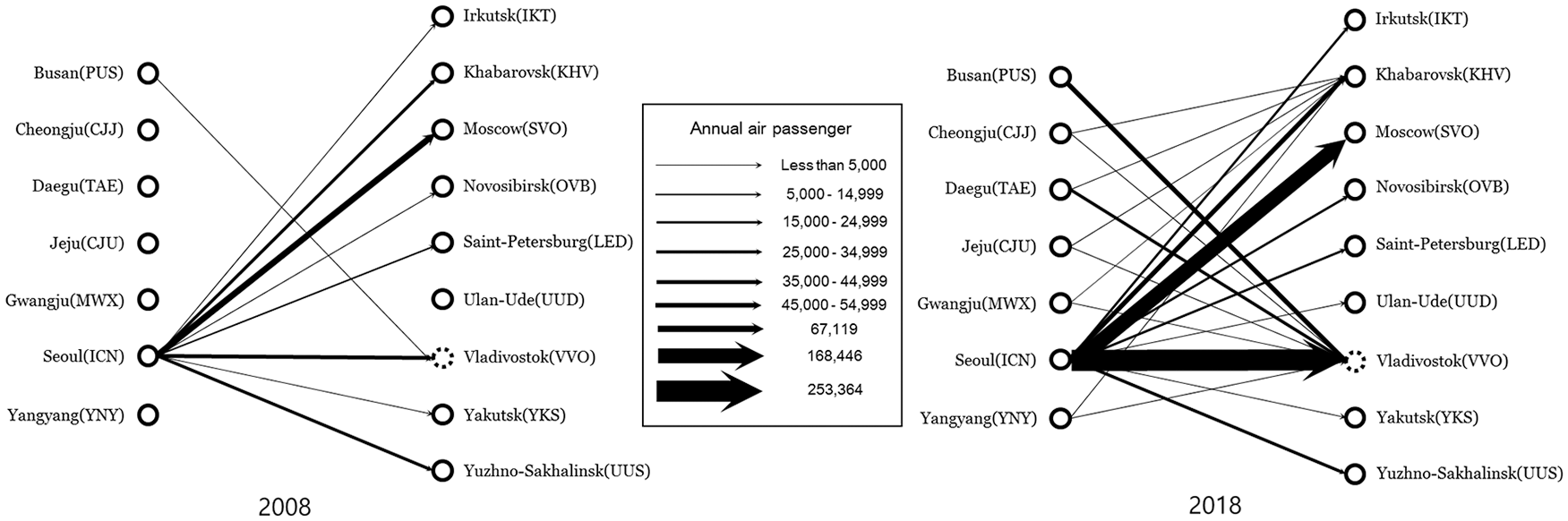
The change of air passenger traffic flows among cities of both countries (the years 2008 and 2018).
Change 2: Visa waiver
While the Open skies program liberated airline movement between the two regions, it was the Visa waiver agreement that made unrestricted passenger travel between Vladivostok and Korea possible. With many neighboring countries allowed no-visa entry, 4 it was easy to predict that there would be little interest in Russian tourism which was still restricted by visa. However, Korea and Russia signed their Visa waiver agreement to take effect on the first day of January 2014. Under the current agreement, Koreans visiting Russia for the purpose of tourism can stay in Russia for up to 90 days without a visa.
As the Visa waiver policy came into effect, the number of tourists in both directions has continued to increase. Both showed a rapid increase after the no-visa entry was implemented. The number of Russians visiting Korea temporarily decreased in 2015 while Russia suffered from an economic crisis, but the traffic between the two countries has shown unprecedented annual increases ever since (Figure 5).
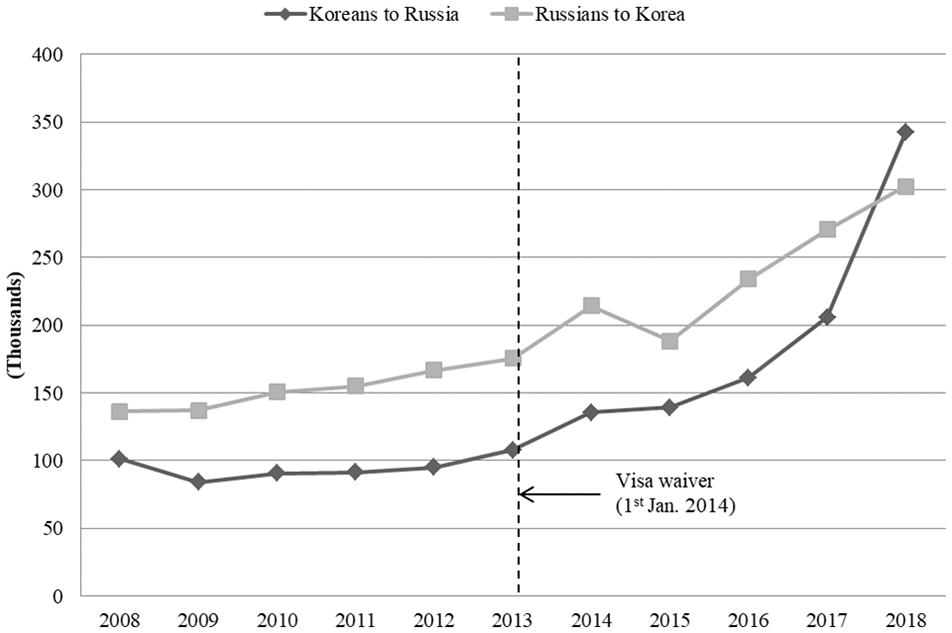
The number of Koreans and Russians entering each other’s country (by year).
With the elimination of institutional restrictions (entry visas), the potential demand from Koreans hoping to visit Russia was realized. In particular, the effects of the Visa waiver were most evident in Vladivostok with its geographical advantages. As mentioned earlier, the number of Koreans visiting Vladivostok surged from 9,021 in 2011 to 28,428 in 2014 when the Visa waiver was first implemented, and increased rapidly to 226,849 in 2018. In 2011, less than 10% of Korean visits to Russia were to Vladivostok. By 2018, Vladivostok had become the most popular Russian city in Korea by receiving 66.3% of all Korean visitors to Russia.
To summarize, the Visa waiver policy significantly reduced institutional restrictions on entry into Russia. As the closest city, Vladivostok began to be seen as the easiest place to experience Russia and the most reasonable travel alternative for short-term Korean tourists with time and cost constraints. In addition, the mobility of Koreans to Vladivostok was greatly expanded through the openness and flexibility of the Open skies agreement that allowed airlines to meet demand by increasing and decreasing flight frequency as required. This series of changes and bilateral policies between Korea and Russia in the 2010s laid the foundation for many more Koreans selecting Vladivostok as a preferred tourism destination in subsequent years.
Push factor: discourse of region
The emergence of Vladivostok as a tourism destination for Koreans was made possible after a change in Korean society’s impression (tourist gaze) of Vladivostok based first on the aforementioned policies and institutional cooperation. Next, the question arose as to how Vladivostok would satisfy the touristic expectations of Koreans. This study sought to find the answer through non-tourism experiences in Korean media including advertisements of travel agencies and television reality shows.
In this section, we analyzed how Vladivostok was represented in Korean media and then explored the sociocultural image of the city in Korean society. This study analyzes the way in which Vladivostok was portrayed in travel agency advertisements that were sensitive to changes in conditions and commercial interests, and the great influence of popular reality television shows as a platform for reaching the public.
Strategic commodification of Vladivostok by travel agencies
With the effectuation of the open skies between Vladivostok and Korea, one South Korean airline began advertising under the theme of Russia in 2012. Although this was a time when Koreans’ negative preconceptions of Russia still existed, beautiful Russian landscapes harmonizing with Tchaikovsky’s background music were depicted in a lyrical video. Some of the scenes featured in the advertisement were well-known symbols of Russia, including the most recognizable major cities of west Russia as well as historical sites. However, Russia was not a popular tourism destination in Korean society at that time, and the atmosphere for creating interest in Vladivostok on Russia’s periphery was yet to be formed.
Vladivostok had emerged geopolitically as a place of economic cooperation rather than a city noted for tourism. Vladivostok was not popular with major consumers as a travel destination, measured by the low percentage of Koreans visiting Russia, until the full Visa waiver agreement was signed between the two countries in 2014. Only after these institutional changes, was Vladivostok considered a travel product worth major promotion as a single destination and as a strategic target for Korean travel agencies. Perceptions of Vladivostok and the process of transforming Korean impressions of the city as a specific destination can be seen through sequential observation of the Vladivostok travel advertisements that were broadcasted to the Korean society at approximately the same time as the Open skies agreement and the bilateral Visa waiver between Korea and Russia.
As the closest Russian city to Korea geographically, only a small number of Koreans visited Vladivostok for specific interest tourism. Advertisements were able to be categorized into two main cases (see Figure 6). The first was to highlight historical and geographical context of Vladivostok. Vladivostok is located on the path of the journey to the divided land of North Korea, albeit in a roundabout way, Visitors also search for the territory of the ancient kingdom of Balhae which extended through the present Far East region. Headlines for those advertisements focused on the Mt. Baekdu (North Korea) tour and the Trans-Siberian train. Aside from the historical experience tour, Vladivostok also functions as the starting point for visiting Lake Baikal.
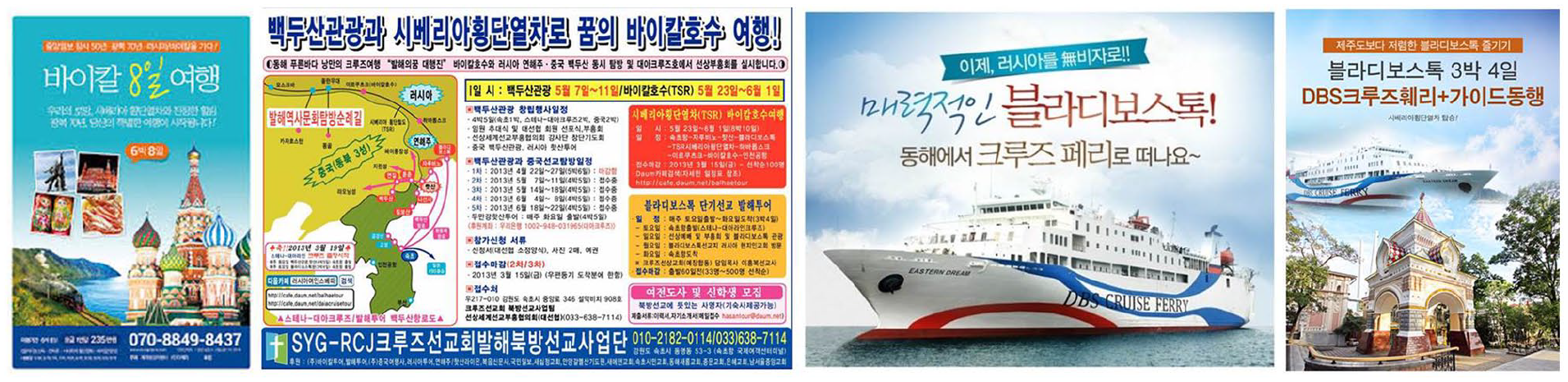
The initial phase—advertising Vladivostok in Korea (2011–2013, before the Visa waiver).
The second emphasized a novel journey that benefited from institutional changes. As previously explained, the “no-visa” 72-hr entry for tourists was allowed for Koreans entering the free port of Vladivostok through ferry. Travel agencies used this institutional favor to target Vladivostok as a niche product, but it is difficult to see that they appealed to the authenticity of the city because there was no specific advertising apart from the no-visa and the ferry-cruise offers in their advertisements as a differentiated travel product.
However, new Vladivostok tour products began to be commercialized after the Visa waiver agreement between the two countries took effect. During this period, the publicity and exposure of Vladivostok rapidly increased in volume, and tourism commercialization by travel agencies was becoming common in diversified formats. At first, Vladivostok publicity featured the city as a place where visitors could experience the atmosphere of Russia or as a cost-effective tourism destination. This was a transitional period in which the specific locational nature of Vladivostok was promoted as a benefit by and for Koreans, and travel agencies still dealt with the city as a new and economical tour product.
Vladivostok in advertisements of that period was not described as its own attraction or symbolized as an important city itself, rather it was seen as part of the Russia narrative. For example, Russian landmarks with no relation with Vladivostok, such as St Basil’s Cathedral in Moscow or St Isaac’s Cathedral in St Petersburg, were used as advertising backgrounds, and Cyrillic alphabets were sometimes placed at the center of the advertisements to emphasize typical Russian characteristics (see Figure 7). As such, Vladivostok was more likely to be promoted as a substitute for Central Russia rather than being recognized as a travel destination having its own unique advantages for Koreans. Nevertheless, it is possible to detect changes in the formation of a new Vladivostok image as the word “Europe” began to be used as a symbolic phrase to modify the perception of the city at that time.
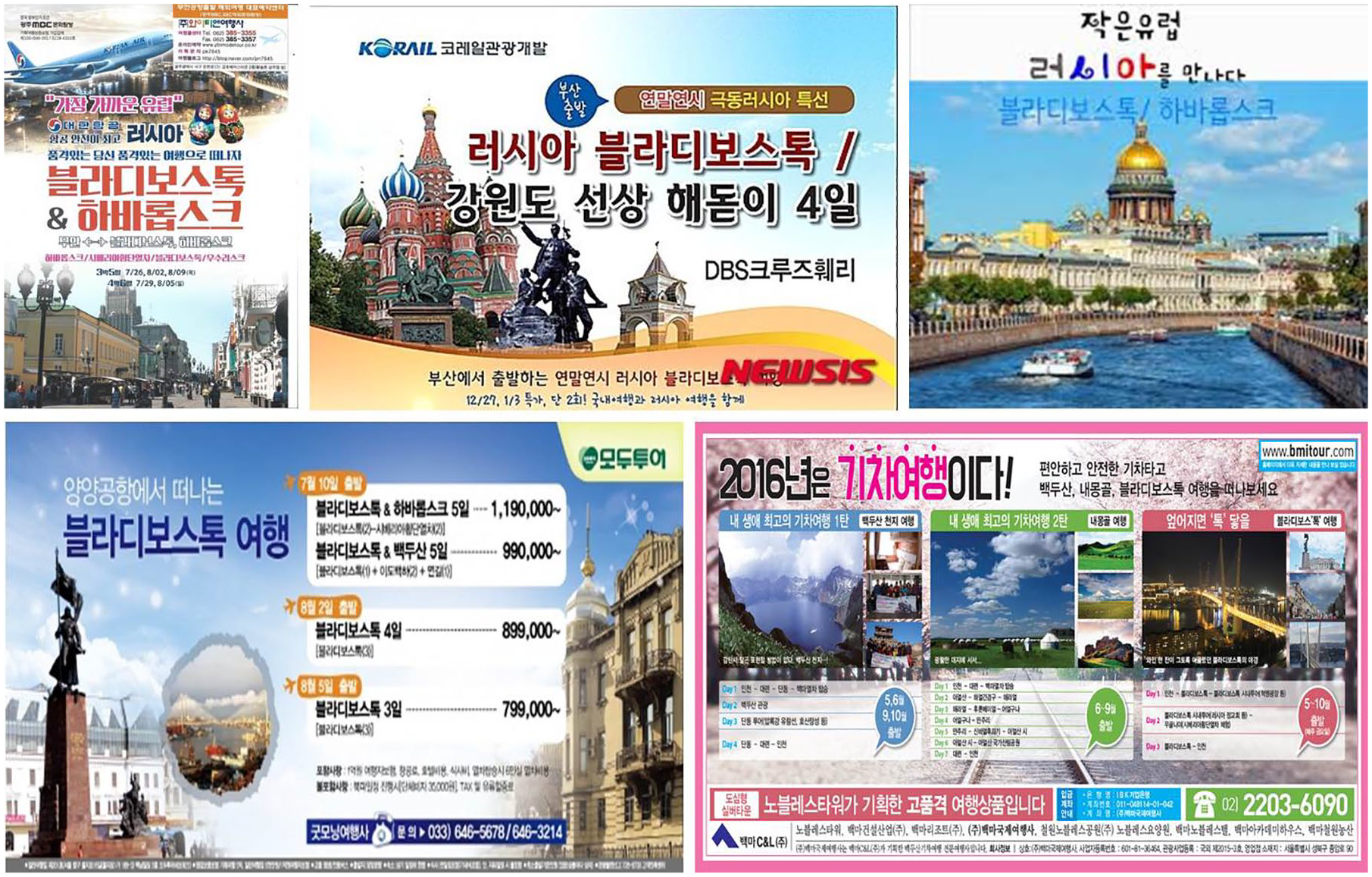
The transitional phase—advertising Vladivostok in Korea (2014–2015).
Vladivostok, more recently, in travel advertisements, was correctly portrayed with the city’s own symbols to express its unique identity (Dredge & Jenkins, 2003), and the modifying phrases became concise and specifically local. What is most visible through Figure 8 is that Vladivostok itself had become a complete destination for travel in its own right, not only as part of a package product with multiple tour phases sold in combination with other Russian or neighboring destinations near the border. Accordingly, Vladivostok in advertisements was specifically featured with larger titles. The fact that actual views of Vladivostok, its famous sites, and newly constructed landmarks 5 were being used as the visual imagery increased the accuracy of advertising and helped raise awareness among Koreans.
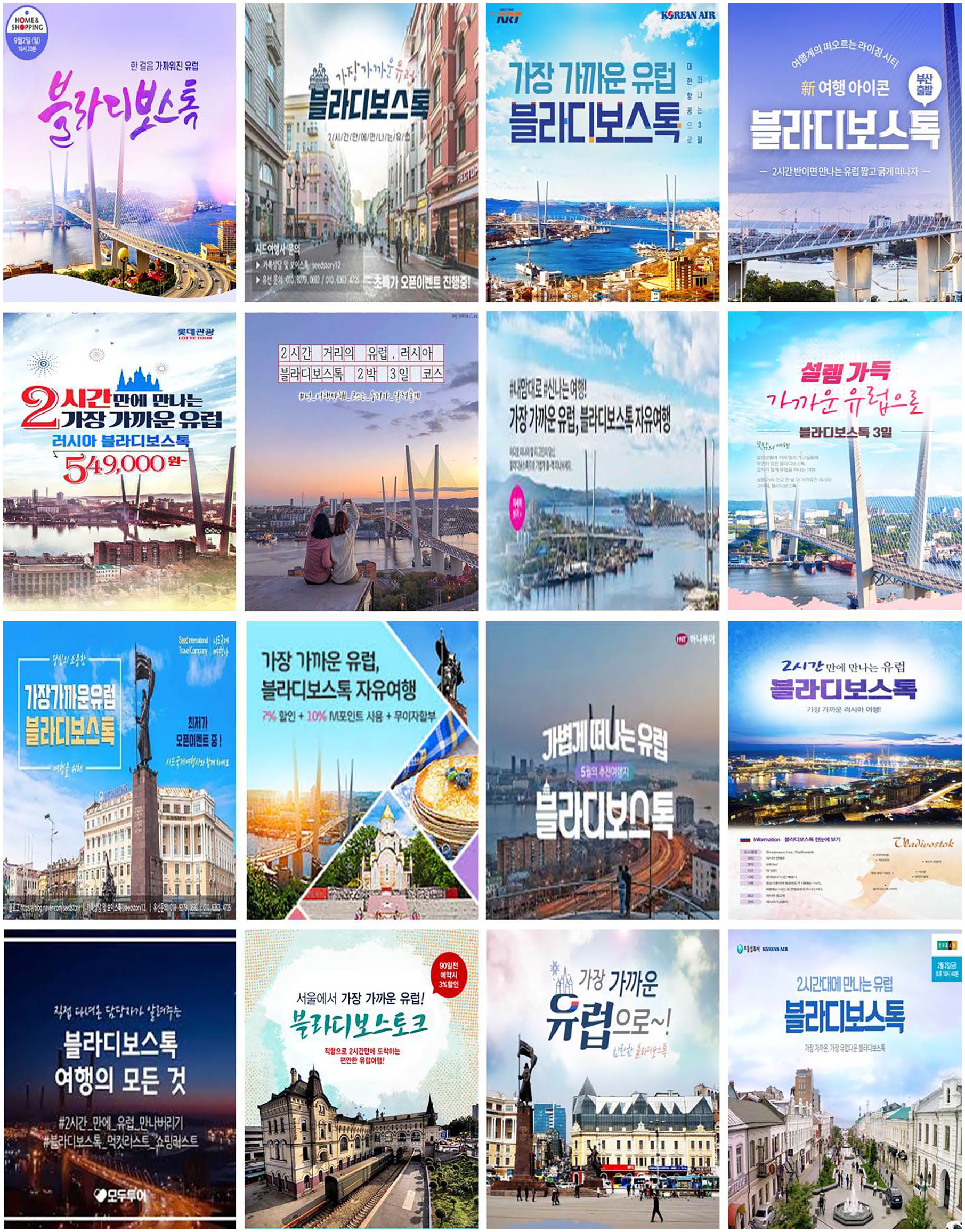
The unified phase—advertising Vladivostok in Korea (2016–2018).
However, something else of particular note began to appear in the advertisements of many travel agencies promoting Vladivostok. Unlike the past when Vladivostok had nothing to market as its own specific identity, modifiers symbolizing this city were created. In addition, the branding of Vladivostok as a tourism destination was solidified within a short period of time as most travel agencies began to use the same phrasing in unison.
Advertising phrases to project Vladivostok as a travel destination during the 2017–2018 period included “To Meet in Two Hours,” “The Nearest,” and “Europe.” These phrases focus on the locational images of Vladivostok as a genuine European destination as well as the physical sensation of proximity of Europe and Korea. Advertisements were purposely differentiated Vladivostok from familiar cultures of neighboring countries or imitation attractions. Instead, advertisements for Vladivostok delivered the visual appeal of Europe filled with Western-style landscapes. They eliminated the geographical boundaries and reserved the European cultural flavor of Vladivostok for Koreans.
Through these changes, in the Korean society, Vladivostok became recognized as the closest European city where tourists can reach in 2 hr. Korean tourists went beyond the objective substance to add Vladivostok as a potential future tourism destination, idealizing it in their imagination based on the phrases themselves. Vladivostok has become a new tourist destination, combining the reasonable flying time of “two hours” with the exoticism of “Europe.” Considering ignorance and indifference in the past, Vladivostok was introduced to Korean society as a mysterious world that suddenly appeared.
Exposure of specific images on mass media
With broad influences and large drawing power, mass media serves as a type of tour guide that affects tourists by spreading hegemonically scripted discourse (Mellinger, 1994; Shaw & Williams, 2004). In particular, travel reality programs show celebrities enjoying their trips, thereby promoting the shooting location (destination) and stimulating the tourist’s desire to emulate. In this process, the mass media inevitably highlights and omits particular parts of the destination to represent it as an ideal, romantic place to travel to (Stylianou-Lambert, 2012, p. 1819). In this section, we explored how Vladivostok was represented in Korean reality television programs through a semiotic analysis framework. As mentioned in Chapter 3 (“Methodology” section), subtitles in reality television programs make it easy to grasp the subject by presenting the emphasis visually. Therefore, in this chapter, the subtitles of reality television programs were analyzed. This allowed us to understand the social process in which Vladivostok was ideally spatialized as a destination.
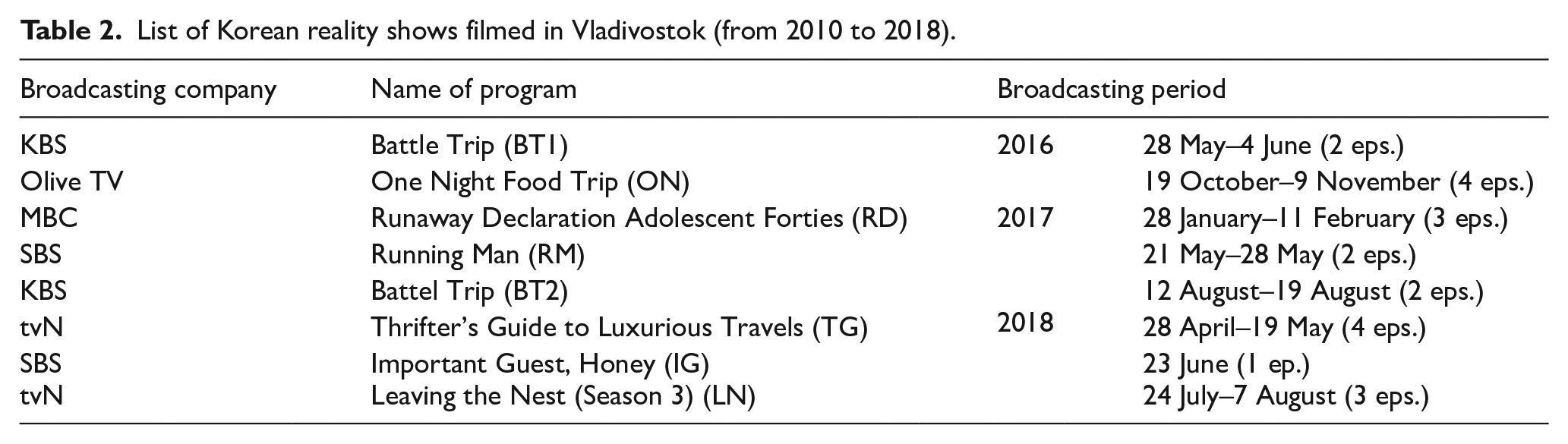
For this purpose, we collected and analyzed all Korean reality shows recorded in Vladivostok during the years 2010–2018. No known shows were filmed in Vladivostok up till 2015, so the data essentially start with the first broadcast in May 2016. Since then, a total of 24 episodes from 7 different programs featuring Vladivostok were produced in the past 2 years (Table 2). This is timetable is directly in line with the rapid increase in the number of Korean tourists visiting Vladivostok.
List of Korean reality shows filmed in Vladivostok (from 2010 to 2018).
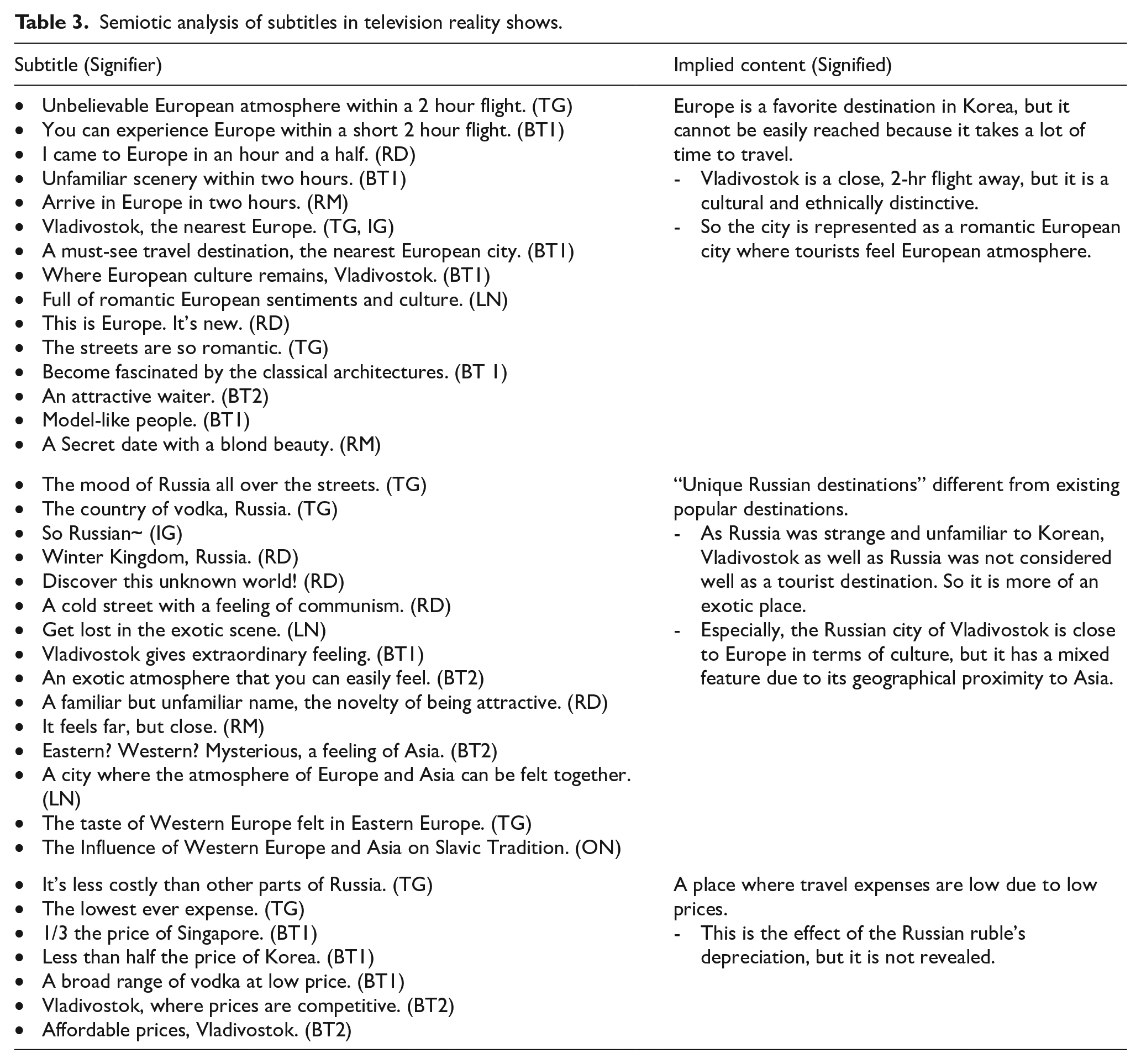
In all of these programs, Vladivostok was commonly described as a “romantic city” “featuring European culture.” Although nearby, it was still portrayed as a very exotic and romantic place where “you cannot believe that it is only a two-hr flight from Seoul” with “classic buildings,” “unfamiliar landscapes,” “model-like,” “blondes,” “handsome men, and pretty women.” While cities in other countries with comparable distances (e.g., Beijing, Tokyo, and Taipei) are similar to Korean cities in terms of race, culture, and landscape, Vladivostok was seen as a completely different space with a distinctly European culture. This image allows Vladivostok to benefit from the popularity of Europe as a destination for Koreans.
Vladivostok, meanwhile, was also portrayed as a Russian city with “a strange but charming unfamiliarity.” It was introduced as a unique destination because “Russian culture is alive and breathing,” as well as touting the “Russian atmosphere to be found everywhere along every street.” Vladivostok was viewed as a place to experience the authentic Russian culture that previously felt far away; you could choose to drink vodka with original Shashlik (grilled skewers), or relax in a Russian banya (sauna). At the same time, due to geographical proximity to Asia, Vladivostok was also portrayed as a city where you experience the mood of Europe and Asia intertwined. In these television programs, Vladivostok was described as a unique destination specifically attractive to postmodern tourists searching for new experiences.
In addition, Vladivostok was considered a “place where prices were low” compared to other destinations where tourists still feel the atmosphere of Europe. Besides traditional Russian food and vodka, the maritime city of Vladivostok was introduced as a special place to eat king crab at “less than half the prices found in Korea.”
Table 3 represents the semiotic analysis of subtitles in television reality shows.
Semiotic analysis of subtitles in television reality shows.
In short, the reality shows represented Vladivostok as the “closest European city, reachable in two hours,” where people experience exotic Russian culture at affordable prices. It maintains or rather strengthens the city stereotyped as a specific image through advertising, promoting Vladivostok as a particular way of seeing (Daye, 2005). Appearing frequently in the most influential forms of media as “a nearby, exotic, and inexpensive European city,” Vladivostok was reborn as a popular tourism destination.
Conclusion
The number of Koreans visiting Vladivostok has grown by about 100% annually over the last 3 years. This study was conducted in terms of the social construction of space, as an interpretation of the background and process of this transformation phenomenon. For this purpose, we examined the policies and institutional practices of host countries to transform the destination and the discourses that encouraged a more positive tourist gaze with respect to that destination within the tourists’ society of origin.
First, the Russian federal government’s proactive Far East development project provided the opportunities and funding for Vladivostok’s hard development (urban infrastructure, urban environment improvement) and soft development (culture and leisure facility expansion) to help redefine the city as a tourism destination. Furthermore, an important international event held in Vladivostok, followed by other major events held in rapid succession throughout Russia, improved Russia’s image in the eyes of foreigners while increasing the recognition of small and medium cities such as Vladivostok. Meanwhile, Korea and Russia removed institutional restrictions which had previously restricted travel between the two countries by signing both the Open skies and Visa waiver agreements.
Travel agencies in Korea then began to market Vladivostok in earnest as a unique destination. In particular, they promoted the image of Vladivostok as the nearest European city where you can arrive in only 2 hr. As this message was constantly repeated in mass media, its impact on the public has been huge. Vladivostok thus became an ideal and attractive tourism destination for Korean. Vladivostok proximity combined with its cultural heterogeneity earned praise as a city that could meet the demand as a new, unique destination.
As a result, the image of Vladivostok as a close but different place took hold through advertisements from travel agencies and the message then spread through popular television shows. The city soon attracted considerable interest from potential Korean tourists. Through the process of constructing a new social image, the existing perceptions of the city as dark, heavy, and unfamiliar gradually faded away. New impressions promoted Vladivostok as a place where tourists could enjoy a “true” European atmosphere.
This study applied the existing “social construction of space” to international tourism, which is rapidly increasing in the era of globalization and investigated the detailed process of construction of Vladivostok as a tourism destination to Korean tourists. Results show that the growth of tourist destinations is closely related not only to the change of the destination itself but also to the image of the destination in a society where tourists have non-touristic experiences. It means a proper understanding of tourism phenomena requires an understanding of both tourists and destination societies. Also, despite the trend of localization, regionalization as well as globalization, this study showed the role of the state through various policies is still important in international tourism.
Recently, city branding arose as a major research topic along with universalization and continuous growth of tourism. This article focuses on the mainstream research area and suggests various future challenges. In particular, the specificity of this article is to emphasize that the “consumer” (in other countries or regions) could play a role as the main agent of city branding and included various factors of media in the investigating process. Finally, in addition to traditional media such as the advertisements and television programs discussed in this study, online social media has become an important influence on the preferences of contemporary tourists. Word-of-mouth discourse is often the most definite and trustworthy but it had a small range of influence. However, personal opinions and experiences now have a much wider platform through social media. Considering the current trend of social media’s increasing impact, further research is required to study these new forms of discourse that spreads, strengthens, or renews the impressions of tourism destinations.
Footnotes
Funding
The author(s) received no financial support for the research, authorship, and/or publication of this article.
