



Abstract
In recent years, tensions in the South China Sea have intensified with overlapping claims and strategic rivalries. China's expansive nine-dash line has even led to repeated incursions into Indonesia's exclusive economic zone in the North Natuna Sea, challenging Jakarta's maritime sovereignty and non-claimant status. This article examines Indonesia's policy response during President Joko Widodo's second term in office. While structural accounts of power distribution, regional balancing, and economic interdependence help explain the strategic behaviour of middle powers amid great power competition, they do not fully capture the specificity of Indonesia's approach. Instead, this study highlights the influence of domestic politics, institutional contestation, and competing priorities among state actors. Based on fieldwork interviews with key informants, the article offers an in-depth analysis of the domestic and institutional drivers behind Jakarta's strategy in the North Natuna Sea, illustrating how Indonesian statecraft navigates complex internal dynamics and external maritime pressures in Southeast Asia.
Introduction
China, Vietnam, Philippines, Brunei, Malaysia, and Taiwan variously lay sovereign territorial claims in the South China Sea (SCS). 1 In recent years, several disputes have arisen from the overlap of these claims and contestation over trade, resource, and strategic potentials (Velasco, 2014: 79). While Indonesia remains a non-claimant state in these other overlapping claims, the extent of China's nine-dash demarcation line (9DL) has witnessed Chinese flagged vessels entering Indonesia's exclusive economic zone (EEZ) of the North Natuna Sea (Laut Natuna Utara – LNU). Located in the northern part of the Karimata Strait connecting the Java Sea with the SCS, it is home to a mini-archipelago, south of the Riau Islands and west of Kalimantan with an abundance of natural resources attractive to both domestic and international interests (see Figure 1). The area has crucial economic and strategic value to Indonesia (Qurbani et al., 2024). Firstly, its waters contain significant gas and oil reserves and fisheries. 2 Second, it is integral to Indonesia's sense of sovereign territorial integrity as part of the world's largest archipelagic state (Alverdian, 2025; Fauzan et al., 2019: 94–114; Suryadinata and Izzuddin, 2017: 7–8).
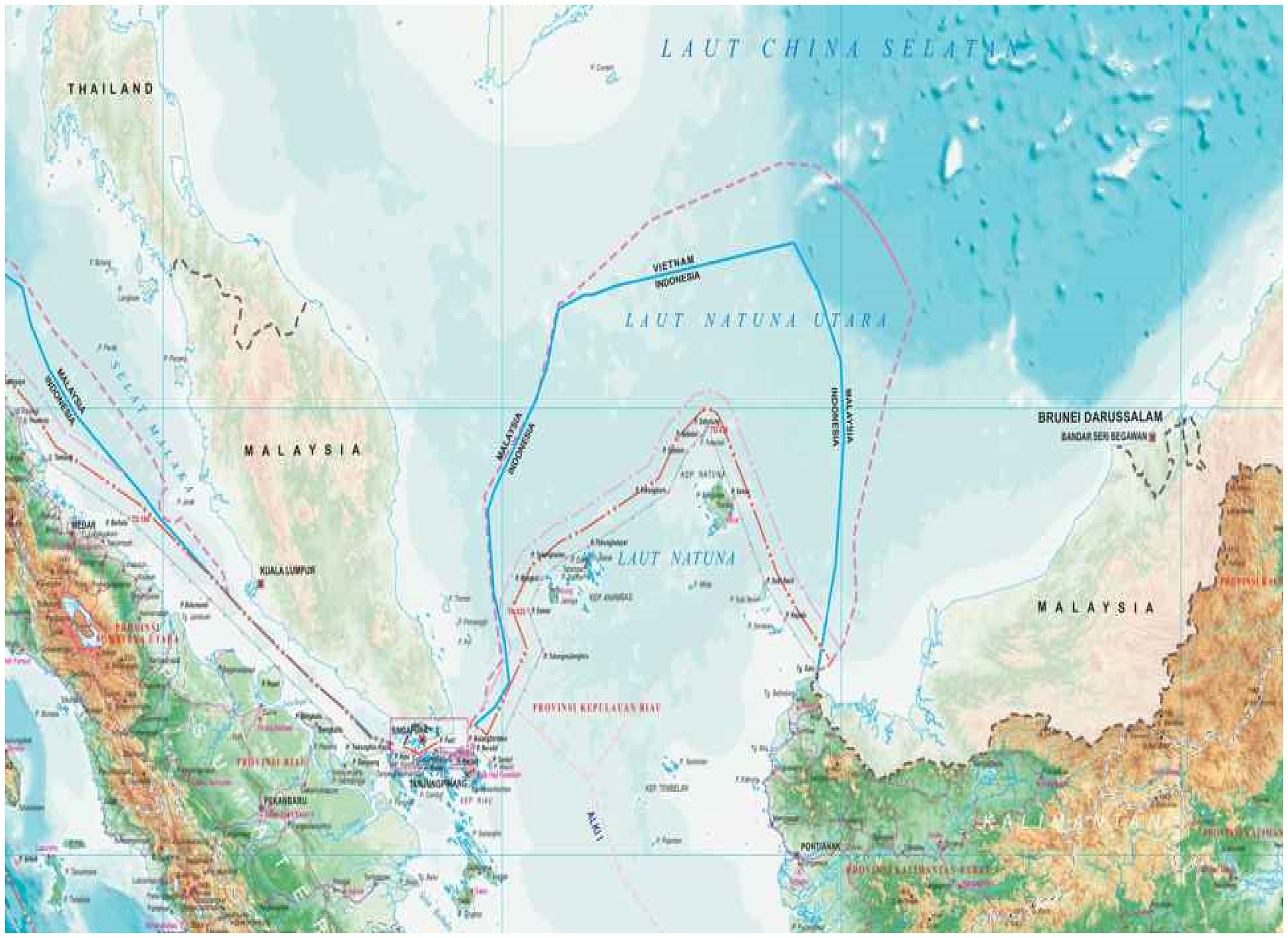
The North Natuna Sea (Laut Natuna Utara) and the Islands with Indonesia's EEZ Demarcation in red dash.
Recurring incidents of encroachment specifically around illegal, unreported, and unregulated (IUU) fishing violations in these waters have heightened state-level tensions between Indonesia and China, especially during the Presidency of Joko Widodo (Jokowi) (IOJI, 2022; Putranti, 2018: 868–877). The situation came to a head between 2016 and 2019 when personnel from the Indonesian Armed Forces (Tentara Nasional Indonesia (TNI)), the Indonesian Sea and Coastguard Unit (KPLP), and the Maritime Security Agency (BAKAMLA) apprehended Chinese vessels entering Indonesian waters. The apprehensions precipitated a counter-intervention from Chinese Coast Guard patrol boats to accompany their fishing vessels (Juanita et al., 2021). Further escalation occurred in 2020 when 50 Chinese fishing vessels escorted by two coast guard ships entered again (Agastia, 2020: 24).
Before the 2016 incidents, Indonesia and China had signed a strategic comprehensive partnership encompassing economic, political, cultural, and maritime cooperation meant to provide a basis for resolving potential conflict situations through measures such as the exchange of diplomatic notes over physical maritime confrontation (Nguyễn, 2023). This was seen as vital for maintaining the significant bilateral economic and trade relations between the two states (Sriyanto, 2018: 1–18). The Jokowi administration re-emphasised their preventative stance with the establishment of ALKI (Alur Laut Kepulauan Indonesia – Indonesian Archipelagic Sea Lane) and by increasing military base capacity on the Natuna islands (Muhaimin, 2018: 17; Sambhi, 2017).
Beijing acknowledges Indonesia's sovereignty of the Natuna Islands but they also claim their fishing vessels are on “traditional fishing grounds” that overlap with parts of the nine-dash line (Putri et al., 2020). In contrast, Jakarta insists they are IUU fishing vessels contravening Indonesia's EEZ – in keeping with the UN Convention on the Law of the Sea (UNCLOS) both ratified by Indonesia and China – that extends 200 nautical miles from the Natuna Islands (Suryadinata, 2016). The issue is further complicated by the limited consensus between ASEAN members on how to deal with disputes either as a regional body collectively or as individual claimant states (Severino, 2010: 45). It is an uncertainty reflected by the long-drawn-out process of agreeing an acceptable Code of Conduct (COC) between parties for managing and resolving SCS issues (Laksmana, 2018: 160–161). The regional context means that policies Indonesia implements on LNU have potentially wider repercussions. 3 With multiple stakeholders and interests in play, the Jokowi administration found themselves in the difficult position of trying to navigate between ensuring valuable bilateral economic relations were maintained while satisfying the domestic expectations and demands to protect the country's territorial integrity and sovereign national interest in the Natunas (Sulistiyani et al., 2021: 86).
While structural accounts of power distribution, regional balancing, and economic interdependence help explain the strategic behaviour of middle power states amidst great power competition in contested maritime spaces, they do not fully account for Indonesia's approach. Based on interview data with key informants, this article charts how the Joko Widodo administration navigated domestic expectations on sovereign territorial integrity and the maintenance of bi-lateral economic relations without resort to a coherent balancing policy to counter China's maritime assertiveness. It highlights the domestic political dynamics and bureaucratic contestation behind Jakarta's strategy in the North Natuna Sea.
Previous detailed studies have covered the Susilo Bambang Yudhoyono presidency and Joko Widodo's first term in office in more general external policy terms, but the article's primary data analysis and findings provide updated evidence on the policy calculus during Jokowi's second term in office relative to LNU and the influence of divergent perceptions of key actors with different interests acting in the name of the state. Building on existing literature, it presents a fine-grained account of Indonesian statecraft and the interplay of domestic pressures, institutional mindsets, and interests in the context of international considerations. The next section provides further context on the North Natuna Sea issue and Indonesia's broader historical bi-lateral relations with China.
Background on an Issue
The altercations in LNU have resulted in both physical and financial loss for Indonesia and China with some experts observing the strain placed on what are, historically, already complicated bilateral relations (Anwar, 2019: 1–7; Fitriani, 2018: 394–405; Santoso, 2020: 34–46). The character of which stems largely from an entangled domestic political history that influences Indonesia's international outlook and foreign policy stance.
To elaborate, Indonesia has shared state-level diplomatic ties with China since 1950 and initially developed close relations under President Sukarno. However, under the strongly anti-communist New Order regime of his successor, President Suharto, China was cast as a primary external threat to the stability and security of Indonesia – a perception that was heavily socialised domestically (Carnegie, 2006, 2010; Storey, 2000: 145–177; Suryadinata, 2003; Zhou, 2019). In fact, diplomatic relations were frozen for 23 years, from 1967 until 1990, when they were finally normalised (Pradana, 2016; Zuhri, 2015).
Given this historical background and the trajectory of Indonesia-China relations, Jakarta's policy stance towards China has been marked by ambivalence and ambiguity (Laksmana, 2011: 24–31). Chinese incursions in the North Natuna Sea raise palpable concerns for Indonesia and carry significant implications for its maritime policy in the region, a sort of ‘litmus test’ of their broader bilateral relations and ambitions to be a Global Maritime Fulcrum (Laksmana, 2018: 159; Sriyanto 2018: 1–18). While China is viewed in many elite political circles as a source of great potential economic and infrastructural benefit, upper echelons of the Indonesian military (TNI) still hold recalcitrant perceptions of China as arrogant, expansionist, and aggressive (Fitriani, 2018). Moreover, a recent Kompas Research and Development (2024) survey, indicated that nearly 80 percent of Indonesians view China's actions and presence in the SCS as a threat to Indonesia's sovereignty. In fact, Indonesia's stance and perception of China is probably best encapsulated by a sort of ‘wary ambivalence’.
The Jokowi administration certainly displays aspects of that duality. There have been differing levels of coordination among high-ranking ministry officials and varied responses to the incidents of 2016 and more recently in 2020 (Juanita and Setiani, 2022). Indonesia's first response in 2016 was to send a diplomatic note to the Chinese government and their representatives in Jakarta (Juanita et al. 2021; Sulistiyani et al. 2021). The Indonesian Foreign Affairs, Defense, and the Maritime and Fishery Ministers all summoned the Chinese ambassador to protest the involvement of the Chinese coast guard in LNU. However, Suryadinata (2016: 3–4) noted a lack of diplomatic protocol in these actions as only the Foreign Affairs Ministry is supposed to summon a foreign mission's ambassador. Four years later, verbal notes were sent in May and June 2020 to emphasise Indonesia's refusal to recognise the nine-dash line claim over LNU (Juanita et al., 2021). Further communication between Indonesian and Chinese ministries also took place in the form of public declarations on the agreement of the two states about the non-existent territorial dispute and disagreement on the existence of ‘traditional fishing grounds’ (MOFA 2023; Suryadinata and Izzuddin, 2017: 2–3). The public nature of these exchanges indicated coordination issues and internal disagreement in dealing with Chinese counterparts.
On 14 July 2017, the publication of the new map of Indonesia in which the EEZ north of Natuna Island was renamed Laut Natuna Utara also garnered international attention. The Indonesian government justified the change as a way to prevent confusion among parties exploiting the continental shelf and give clear direction to its Navy. However, Chinese officials viewed the new map unfavourably (Juanita et al., 2021). Observers noted that reaffirming international agreements on sea borders, growing concern over the Philippines-China arbitration case, and the ongoing Straits of Malacca boundary claims were contributory factors in the alteration (Ilmi, 2020: 485; Ramdhan, 2018: 17–20). The next section gives a brief literature review to situate the study in extant research on external policy decision-making and to clarify interpretative contributions and analytical parameters.
Situating the Study
In dispute scenarios, traditional realist thinking on power distribution, capabilities, balancing, and bandwagoning still retain considerable explanatory weight for state behaviour but as Schweller (2006) and Huth (2009) both note these structural accounts rest on a growing realisation that foreign policy decision-makers are fundamentally domestic political actors attuned to the internal political ramifications of their choices. Indeed, as a sub-field of international relations in the study of state behaviour, mainstream literature on foreign policy analysis now readily recognises a connection between external policy decisions and domestic politics (Fearon, 1998; Tayfur, 1994). As Clarke and White (1989) observe, foreign policy is formulated domestically but implemented by the state in its external environment. There is a significant mediating link between domestic and institutional context and international structural forces in external policy formulation (Tayfur, 1994: 120). According to Beasley et al. (2001), it is vital that the setting of the decision-making is contextualised to fully understand the decision unit's (individuals, groups, or organisation) view of the problem and the influence of both perceptual and experiential factors. Hermann (2001: 47–81) further points out the need to know who and what types of actors are making the decisions and how that is channelled through the ‘political apparatus of government’. The cognitive dimensions of such an analytical turn contrast with more rational choice-oriented models of analysis. As Stern (1999) notes, external actions are not isolated from domestic context (Stern, 1999). There is recognition of the importance of decision-makers’ perceptions of the international environment, inherited institutional memories and their affective experiential bias relative to the policy issue in question (White, 1989).
Having said that, working out the influence perceptions, motivations, and biases of leader or key decision-makers have on policy choices and outcomes is not straightforward (Mintz and DeRouen, 2010: 6). Policy choices and outcomes in disputes scenarios comprise of individual or group decisions which are often risky, high stakes, and uncertain due to limitations on available information, information screens or group think on the other actor's calculations, motives, and intentions (Renshon and Renshon, 2008). For relatively newer nations, evidence suggests that leaders often use foreign policy to create a sense of national solidarity or as a distraction from domestic issues concerning the economy and politics (Weinstein, 2007: 22–24).
A bureaucratic politics school of thought further alerts us to the fact that decisions are often byproducts of political competition and bargaining rather than a coherent rational process (Dougherty and Pfaltzgraff, 1990). As Tayfur (1994) highlights, external policy is not formulated exclusively by key decision-makers but by bureaucrats relying on specific information sources and limited by the traditional behaviours of their organisations. The matter is further complicated by actors within the ‘apparatus of government’ who try to push their agendas and interests. They tend to form coalitions which may lead to fragmented decision-making within a government. For Breuning (2007), two parts of the decision process determine an individual's interest: horizontal (role and employing agency) and vertical (place in the hierarchy). What these insights from the approaches outlined above indicate is that to avoid over-determining state behaviour in exclusively realist terms, gaining an understanding of the domestic pressures, perceptions, biases, political manoeuvres, and interactions of key actors and institutions is a crucial part of effective external policy analysis.
In the Indonesian case, there have been numerous in-depth studies of its external and maritime policy-making. 4 Many of the contemporary studies, however, primarily cover the presidency of Susilo Bambang Yudhoyono and Joko Widodo's first term in overall policy terms. While the likes Suryadinata and Izzuddin (2017), Putranti (2018), Ramdhan (2018), Santoso (2020), Wardana (2020), Adikara and Munandar (2021) and Juanita et al. (2021) have focused on the Natunas and the work of Fitriani (2021), Angguntari (2021); Sulistiyani et al. (2021), Budiana (2022), Priamarizki and Marzuki (2022), and Suhanto and Nasera Putri (2023) do take in Jokowi's second term in office, there remains limited work specifically on LNU over the second term that employs the analytical insights outlined above. Notably, the works of Syailendra (2017: 237–255) on a lack of elite consensus and Jokowi's non-balancing and Fitriani (2021: 183–202) on linking various impacts to bilateral relations do place emphasis on domestic factors, institutional perspectives, and divergent mindsets and interests for policy outcomes but their focus is more on the conduct of Indonesian foreign policy in general rather than decision-making on LNU specifically. However, combining their insights with the analytical and interpretive elaborations of the foreign policy decision-making and bureaucratic politics schools of thought provides the frame of reference for evaluating Indonesian statecraft on LNU during Jokowi's second term. It allows for the identification of relevant analytic themes to cluster the collected interview data, namely governmental institutional roles, interests, perspectives, policy environments and decision determinants, priority biases and interactions.
Having established the interpretive framework of the study, the next sections further detail the methodology of the study and present the analysis of the collected data and subsequent findings. Drawing on the collected interview data, a nuanced picture of the influence of domestic political pressures and the varied expectations, interests and institutional logics within Indonesia's bureaucratic architecture emerges.
Methodology
The interpretive framework outlined above is employed in this article to glimpse inside the ‘black box’ of Indonesian policy decision-making on LNU. Based on primary interview data and response ratings from key informants which are cross-referenced with other written and verbal sources, it seeks to understand how they ascribe meaning to policy formulation and decision-making. Given that the subject of study is a political and social phenomenon, adopting an interpretive epistemology is especially applicable for unpacking the ways in which informants make sense of actions and outcomes (Goldkuhl, 2012). Informant excerpts are employed as corroboration in the analysis. Documenting their experiences and perspectives relays the reasoning behind certain actions and behaviour, and helps reveal underlying motivations inscribed in Indonesian statecraft.
The main data collection was a series of semi-structured interviews – translated from Bahasa Indonesia – and rating responses conducted through a purposive sample of senior government employees, military officials, and academics with expertise (directly and indirectly) of LNU decision-making processes. During interviews, observation, note-taking, and voice recordings were utilised to capture detailed data for analysis and allow for the discernment of non-verbal cues, contextual factors, and participant interactions. The first author is a fully bilingual Indonesian national which meant that due care was taken in translating the interview data and every effort was made to mitigate against subjective bias and any loss of nuance or misinterpretation of responses.
Informants were coded as follows: Academia, A1, A2 etc. Naval Officers, NO1, NO2 etc. and Diplomats, D1, D2 etc. They were also asked to assign rating responses to pre-arranged terms of reference, graded from 1 (strongly agree) to 5 (strongly disagree). All interviews and data collection were carried out with university ethical committee approval and in accordance with the preservation of anonymity. While the purposive sample is not fully comprehensive of every agency or official involved in external policy-making, it is sufficiently representative to form a solid basis from which to give an effective sense of the type of interaction between domestic expectations and international pressure. It allowed us to gauge the extent to which domestic expectations, different branches of the state, and the mindsets of high-ranking officials shape policy formulation and decision-making.
Collected Data Analysis
As mentioned, Indonesia asserts its sovereign right to exploit marine resources in LNU as part of its internationally recognised EEZ. However, Chinese flagged vessel encroachment in these territorial waters prompted President Joko Widodo to strengthen Indonesia's presence there. This increased defensive posture was evidenced by the renaming and demarcation of LNU, the holding of cabinet meetings atop Indonesian warships (KRI – Kapal Perang Republik Indonesia), the building of military facilities on the Natuna Islands, exchanging diplomatic notes of protest, advocating through ASEAN for the completion of the COC, and conducting joint military exercises in the region.
The following sections present and tabulate the analysis of the primary interview data and rating responses from the key informants. It examines the motivations, aims and perspectives of political actors as policy formulators and decision-makers. Data are clustered and cross-referenced with select themes, namely the bureaucratic and cognitive dimensions of policy formulation vis-à-vis institutional roles, attitudes, interactions, priority biases and decision-making determinants. By presenting perspectives from the Joko Widodo administration and detailing institutional roles, interests and attitudes render a fine-grained account of how the interaction of domestic, bureaucratic and cognitive dimensions of policy formulation, and decision-making shape statecraft on LNU.
Informant Demographics
Informant interviews were conducted both in person and online with 10 individuals from different governmental and non-governmental institutions with levels of expertise about the decision-making process on LNU. The informants were coded as shown in Table 1.
Informant Type and Code.
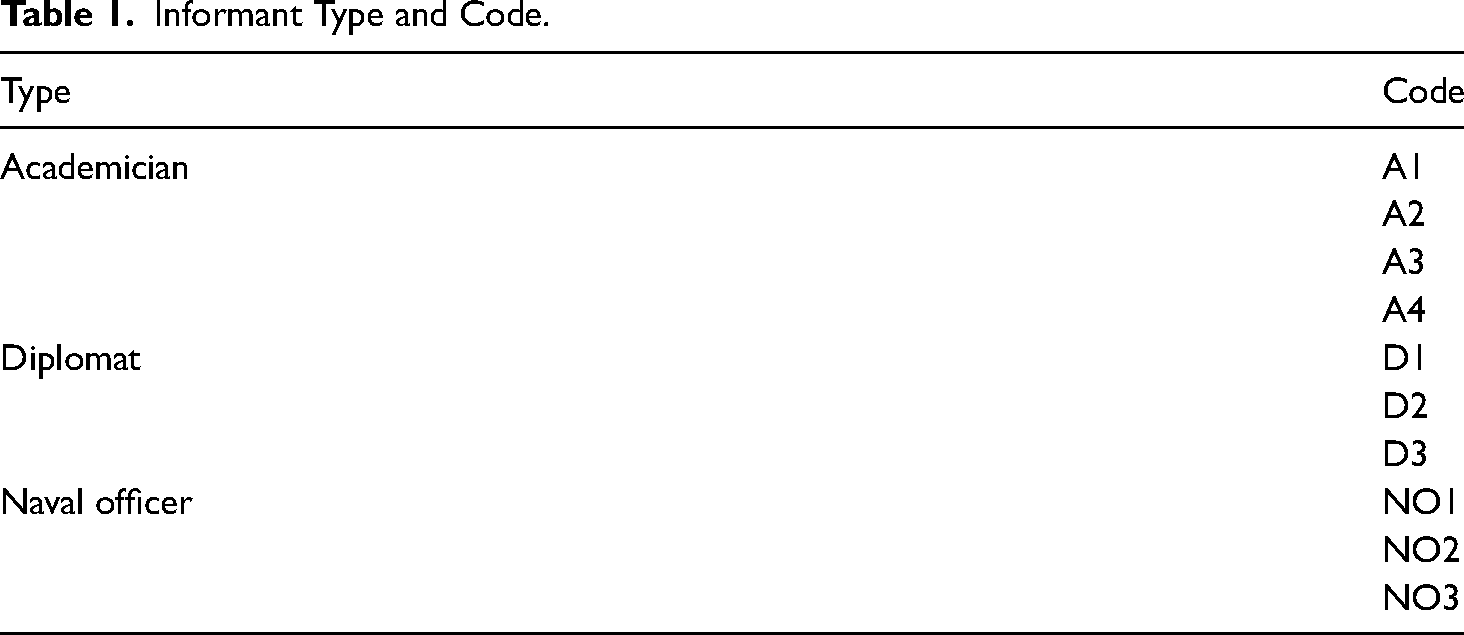
Figure 2 shows the relevant demographic information of gender, age, educational background, and working experience.
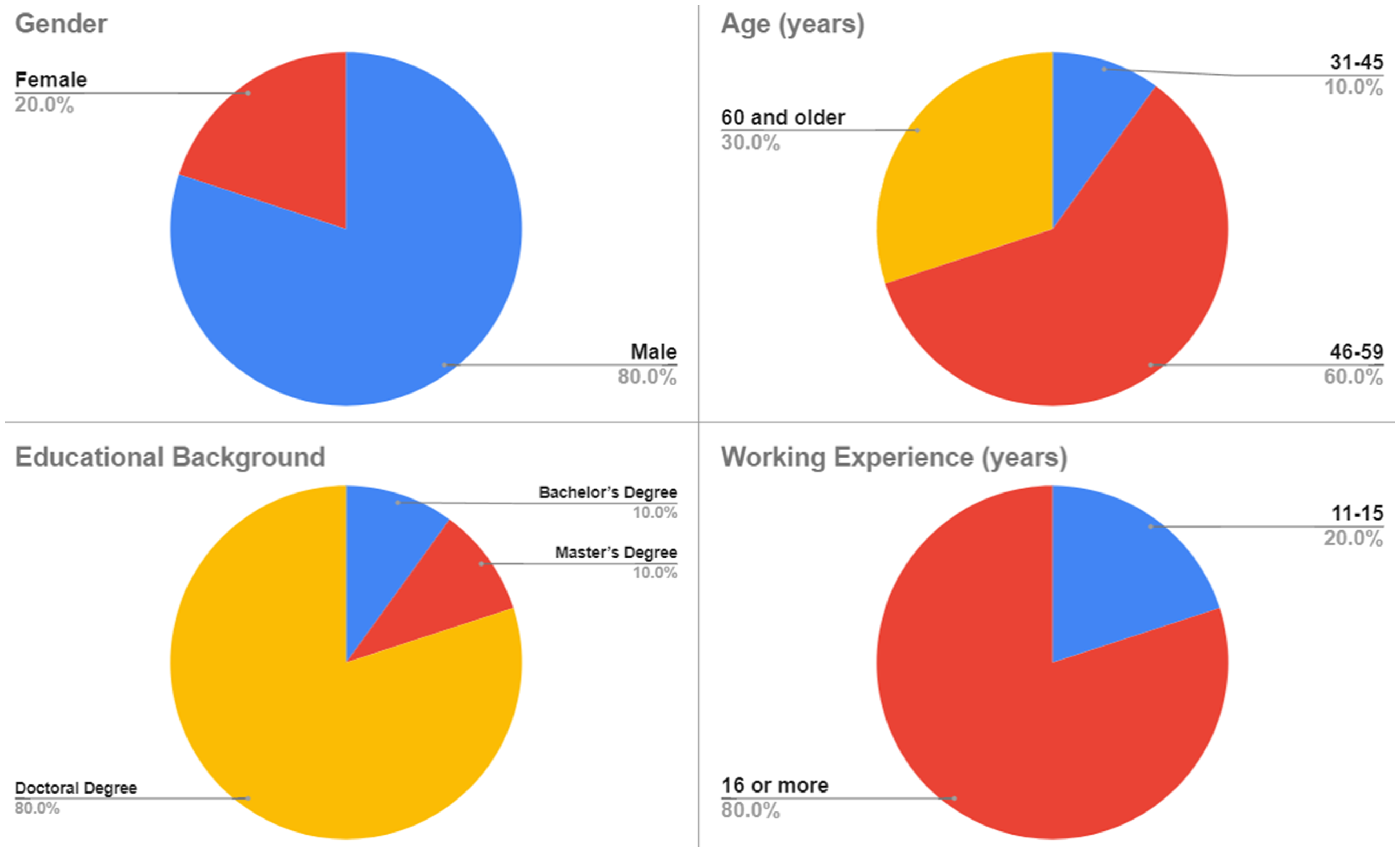
Informant Demographics.
The collected demographic data shows that the informants were predominantly males aged 40 and over with more than 10 years of work experience in their respective fields. The following sections set out the data on perceptions of the LNU issue and key considerations of Indonesia's policy environment. The data are the basis to investigate the interest contestation of policy formulation, the significance of China's influence on Indonesia's policy environment and the priorities of the Joko Widodo administration. As the perspectives and perceptions of decision-makers in the following sections show, domestic political expectations, institutional interests, mindsets, and priorities play a more significant role in shaping the administration's responses to incursions than previously assumed.
The Joko Widodo Administration: Perspectives and Differences
In Indonesia, different administrations have responded in their own way to the different actions of foreign states in the LNU and wider SCS. Their responses reflect views on threat perceptions and the exigencies of prevailing domestic and international environments. The Joko Widodo administration has chosen to enact policies which focus on appeasing domestic audiences while maintaining friendly ties with China. Data indicate that the Joko Widodo administration has cultivated an ambiguous stance towards the LNU issue. It is framed as a matter of national sovereign integrity but also a challenge to closer Indonesia-China bilateral relations. When compared with other presidential administrations, we can discern some distinct differences. In contrast to Joko Widodo's predecessor, Susilo Bambang Yudhoyono, a relatively lower level of agreement on Indonesian responses under Joko Widodo is indicated and a more neutral rating regarding responses to different incidents (see Figure 3).
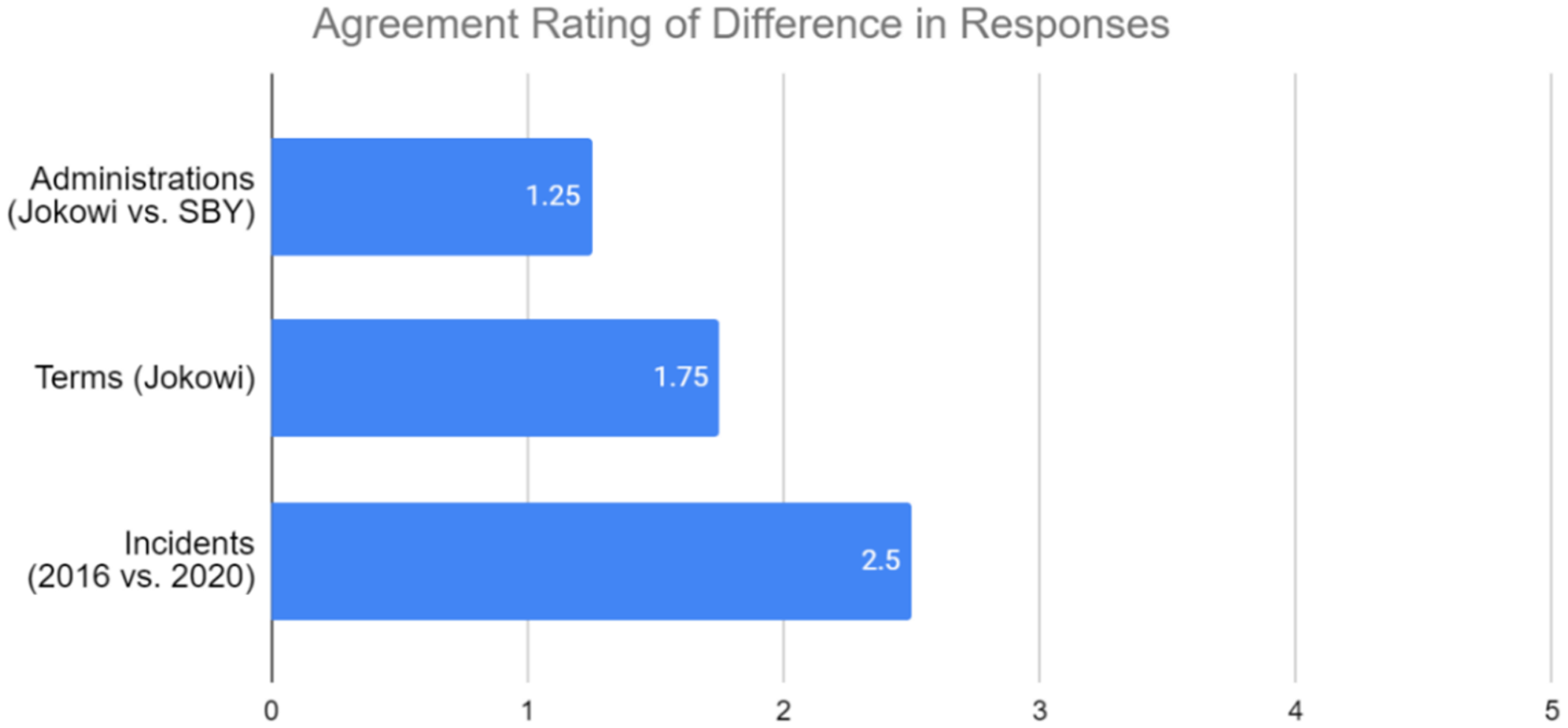
Agreement Rating on Comparison of Indonesia's Responses in the LNU. LNU=Laut Natuna Utara.
Informant A1 agreed that the two presidents took different approaches to the issue but attributed this to differences in the external environment. A1 observed: During President Susilo Bambang Yudhoyono's (SBY) period, he had the “a million friends and zero enemy” foreign policy and not many incidents occurred because China was not so aggressive at the time… but Mr SBY at that time already established Natuna as a stronghold of Indonesian defense… Now with President Joko Widodo (Jokowi), we find that the Indonesian economy is weakening at the moment so we have less capacity to defend our coastlines. This results in our EEZ being easily penetrated by Chinese vessels… we are less capable of dealing with such insurgencies and the people of Natuna Island have seen more and more Chinese vessels acting harshly towards Indonesian fishermen.
Reflecting on increased Chinese assertiveness, informants A2, NO1, and D3 noted, respectively, that Joko Widodo's stronger protective stance of interest in the LNU which indicates changed circumstances and differences in political style and intention: SBY was more hands-off in this issue… As for Jokowi, I see he is more directly involved. He was present in the cabinet meeting atop the Indonesian warship and created quite a phenomenon because he sent a strong message to China and his domestic audience on his solution to the issue and to at least show Indonesian assertiveness in defending their territory. In my observation, from the beginning of Jokowi's declaration as a presidential candidate to his early days of presidency, he showed his intentions to build a sea toll. From this plan it seems that marine security has to be strengthened, and this includes at the Natuna area. So, his vision has been geared more towards the sea. There is a difference in policy between President SBY and Jokowi. Why? The environment changed. President SBY in 2004 and 2009 then afterwards with President Jokowi There is a difference in policy where Indonesia is reaffirming their stance in the South China Sea.
While different circumstances may have led Indonesia to take a different approach in responding to incursions, Indonesia has also traditionally maintained an assertive policy in protecting its larger territorial integrity. As D1 affirmed, ‘Indonesia's security policy for all of its territory will always be done. So, there are no significant changes in policy but a strengthening of stance’.
Similarly, TNI respondent NO1 noted that Indonesia's policy and standard operating procedure (SOP) is to protect territorial waters especially outer areas such as the LNU. Chinese incursions are dealt with as part of regular patrolling activities: We have an established SOP. In my opinion, the SOP stayed the same but maybe there is a difference in quantity. So, while the quality of responses is the same, the quantity (of deployment) is larger. The technicalities (of the responses) are the same between presidential terms. We can see in the last five years that we’ve strengthened the patrols in that area. We have also involved BAKAMLA, so not only Navy ships are operating there because we see that China is also camouflaging to escort their fishermen ships and even their rigs are camouflaged by an escort of trade ships instead of military ships. So, they’re doing a sea guerilla… seeing this we don’t escort directly (our fishermen) but we patrol the waters there. We secure the waters there but we are also brave enough if Chinese ships escorted by their coast guard, to push them out of our waters but in terms of an armed conflict… we wouldn’t want to resort to that firstly because every country knows that who fires the bullet first, starts the war. We are not starting a war; we just want them out of our waters.
The above informant data indicate that the framing of Indonesia's responses is more as an act of self-defense against the intrusion of foreign ships into their waters than an aggressive posture. Figure 4 further details the reasoning behind this stance and shows a scale in the framing of the LNU issue.
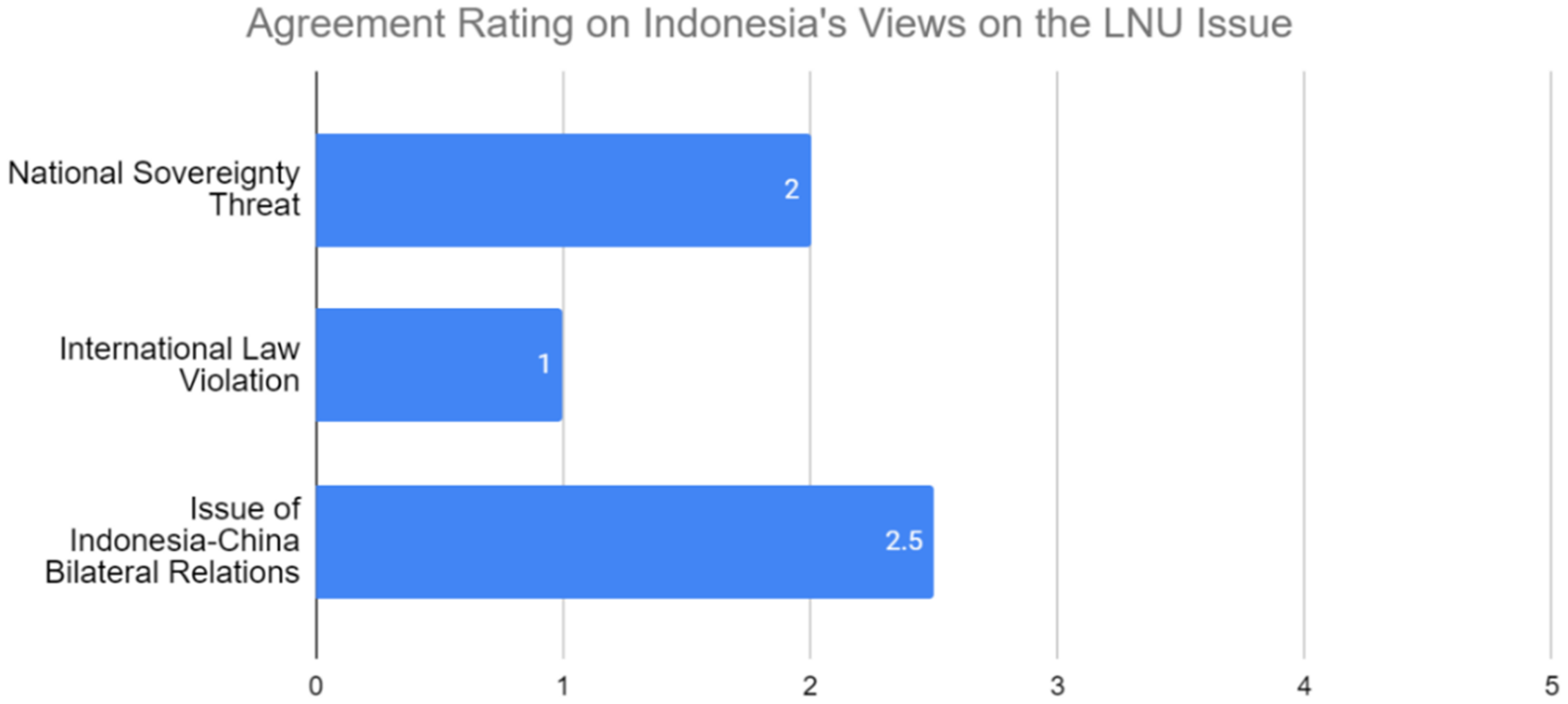
Agreement Rating on Indonesia's Views in the LNU. LNU=Laut Natuna Utara.
As mentioned, LNU is a noticeable priority for President Joko Widodo. He has taken a personal interest and role in responses to the issue. As D1 noted on the naming and demarcation LNU in 2017: The narration is that the naming of LNU is done on the basis of law. The coordinates are clearly defined meaning that the legitimacy is based on the national law of Indonesia. This means that there is responsibility of all government institutions and law enforcement to maintain Indonesia's sovereignty in the territory there. Indonesia is serious in handling the Natuna issue because according to UNCLOS, it is a part of our territory. The problem is there is an overlap with the 9DL claims but it's their (China's) national policy but internationally, UNCLOS should be followed. So, when we are talking about international law the case becomes interesting because the wider SCS issue has political, legal, and security aspects. In the EEZ, these ships have the freedom of navigation whether they are from Vietnam, Australia, or China. However, if they do activities which inhibit the sovereign rights of a coastal state, which in this case is Vietnam or Indonesia, then it is possible for the law enforcement agencies of these states to enforce their jurisdiction and their sovereign rights.
Moreover, as informant D1 asserted, Indonesia's actions in monitoring the seas in LNU are not necessarily a direct response to cases of foreign vessel intrusion but also as a way for Indonesia to uphold its legally recognised territorial sovereignty: Monitoring mechanisms of the seas is not only done physically but also virtually by several ministries and institutions. They monitor the foreign ships within Indonesian territory including those passing through ALKI which was established in accordance with UNCLOS. The key difference (between the two terms) is that Mr Jokowi's economy is weakening and at the same time China is showing greater assertiveness. We find that Indonesia has tried to behave and not challenge China head-to-head because we are quite afraid that this will affect Chinese assertiveness at another “chessboard,” this is an economic chessboard. We do not want China to flex their muscle further so, in this case, we try to express our disagreements through diplomatic means. Despite good relations with China… we can’t deny that Jokowi is quite close with President Xi Jinping, right? - But despite having good relations with China, I defend Indonesia! - He wants to leave that kind of impression to China, so China can’t just continue its aggression in the SCS because this is an issue of sovereignty. I suspect this is why he (Joko Widodo) personally came to the ship.
Interview data indicate the specificity of the Joko Widodo administration's perception of the LNU issue compared to the previous SBY administration and the weight it gives the threat to its national sovereignty, the violation of international law, and the maintenance of Indonesia-China bilateral economic relations. How these contending concerns translate into policy formulation and the decision-making process via different institutional branches of the Indonesian government is the focus of the next section.
Institutional Roles: Interests, Attitudes, and Interactions
The policy decision-making process on LNU is not concentrated within the hands of one individual or institution but instead involves multiple governmental stakeholders. However, as the agreement ratings in Figure 5 show, the contribution and influence of these stakeholders in relation to LNU is not equally apportioned.
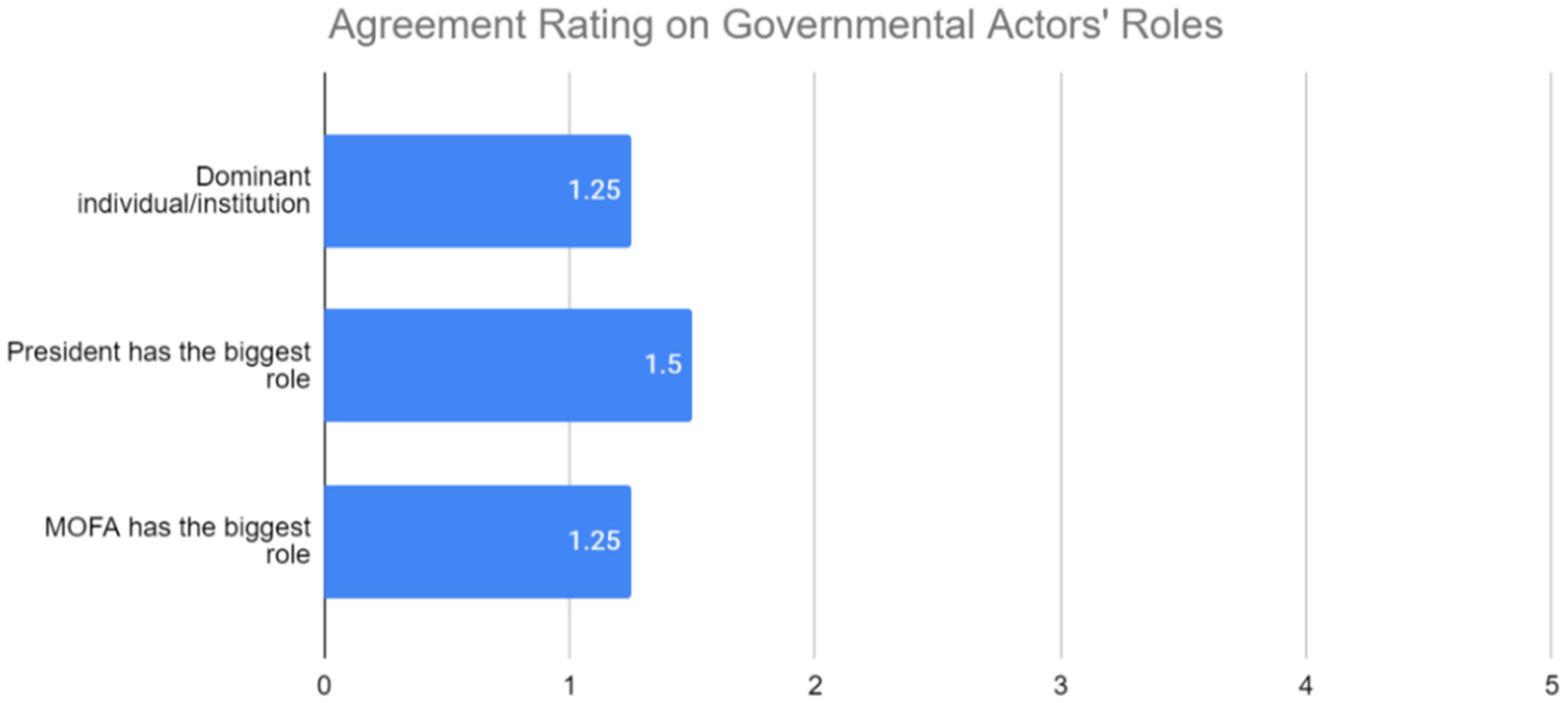
Agreement Rating on Governmental Roles in North Natuna Sea.
Follow-up questions revealed more detail on the contributory roles in policy formulation. Responses varied slightly from the previous agreement rating, placing the Foreign Affairs and Defense Ministries as dominant actors followed by the president (see Figure 6).
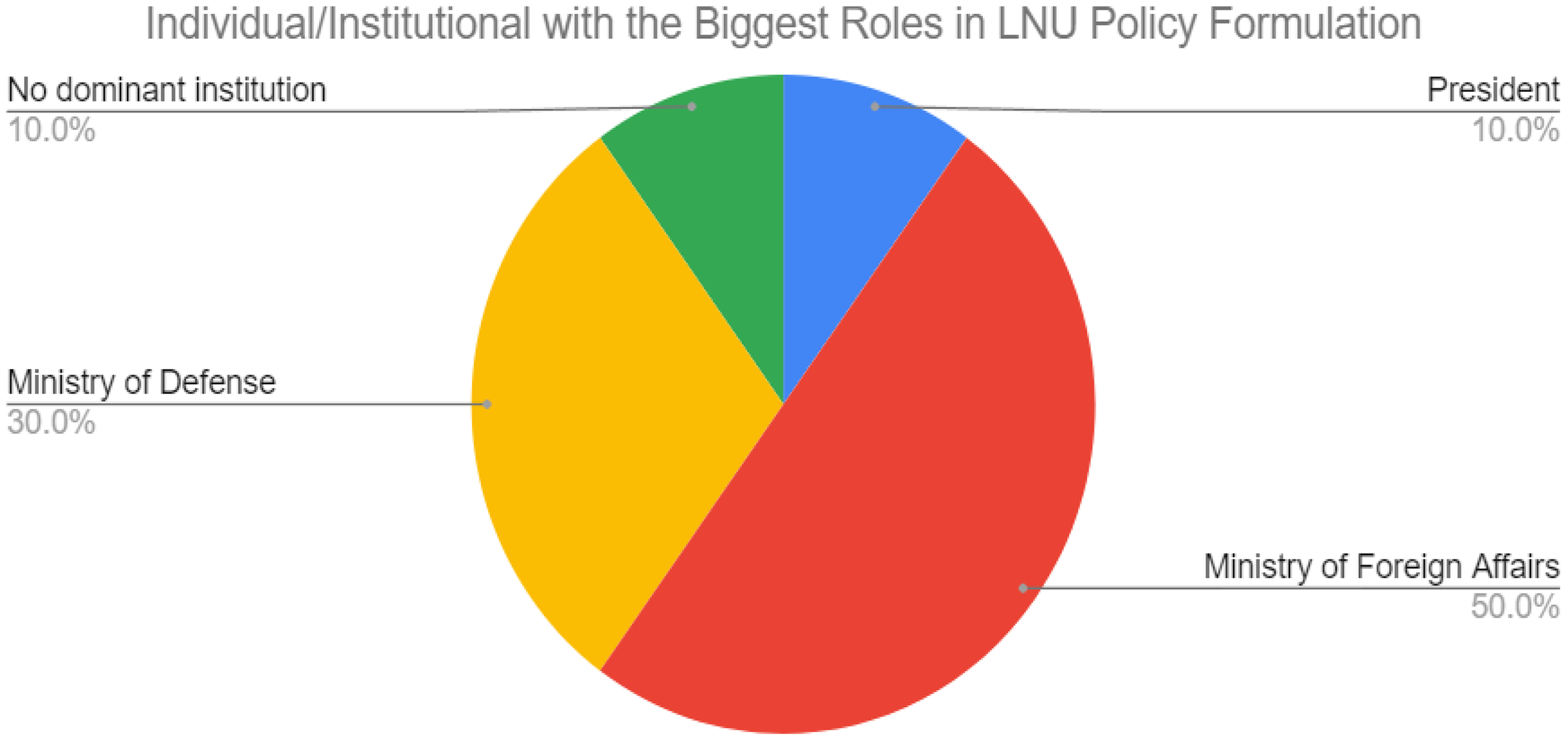
Opinions on Individual/Institution with the Biggest Role in North Natuna Sea Policy Formulation.
While there are various opinions on who has the biggest role in policy formulation, data show 50 percent preference for MoFA and 30 percent preference for Ministry of Defense. This indicates that different ministries take on select roles and bring their own institutional perspectives to bear on the process. While data suggest MoFA and to a lesser extent MoD are dominant players, they do so through different means with distinctive roles in Indonesia's response on LNU. As informant NO3 noted: The Ministry of Foreign Affairs is the leading entity that engages other ministries. Foreign policy formulation generally is under the authority of the Ministry of Foreign Affairs but in terms of its implementation, the Ministry engages all institutions in Indonesia to do their part such as the Navy; Coast Guard; and the Ministry of Political, Legal, and Security Affairs.
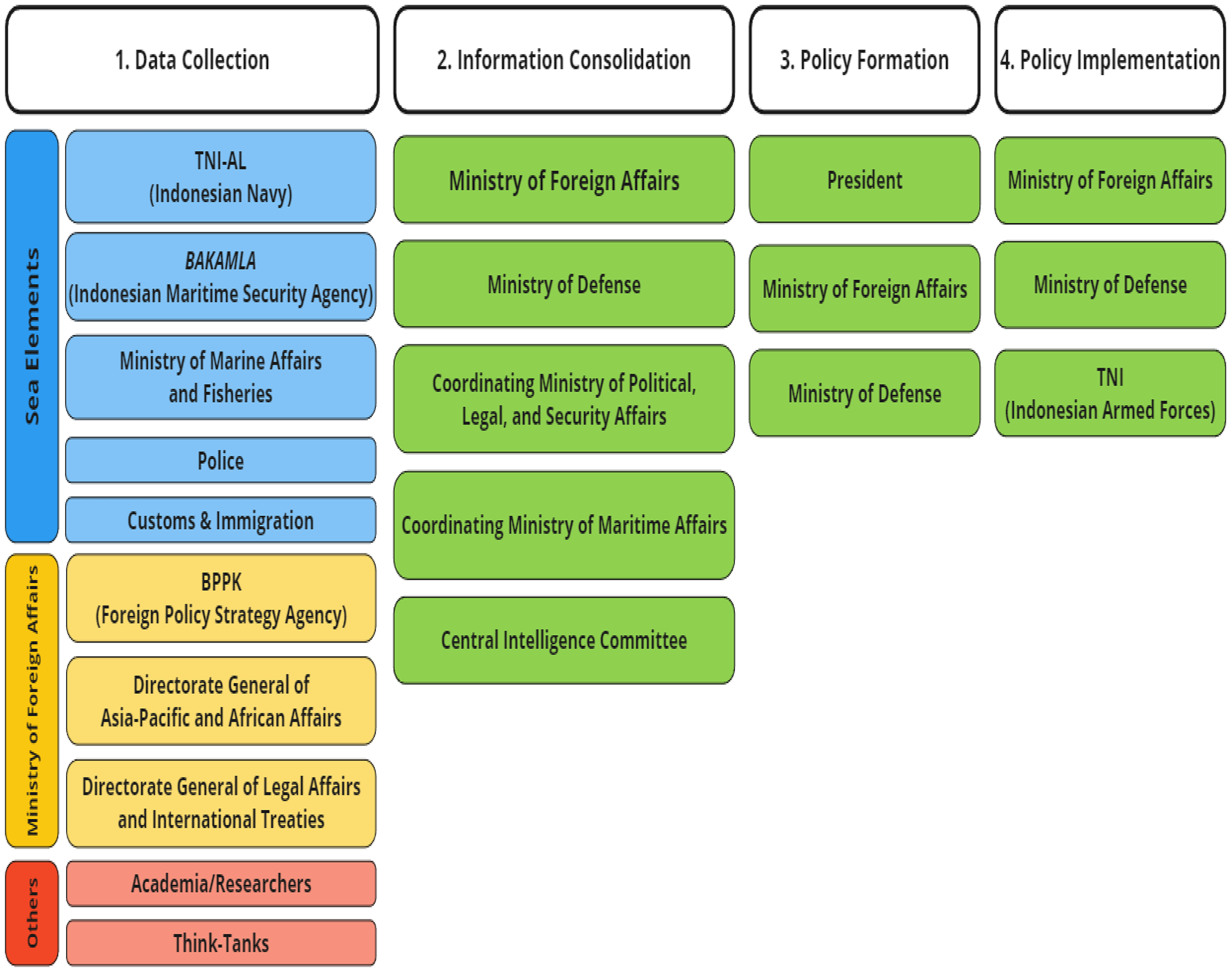
Summary of Policy Decision-Making Process and Actors.
The above figure illustrates the array of agencies and multi-phase structure of Indonesia's policy process concerning maritime issues. It is divided into four key stages: data collection of operational and field-level information; information consolidation by core ministries; policy formation at the highest levels of government and finally, policy implementation. The structure indicates a layered policy-making process involving both civilian and security institutions with overlapping competencies. Although agencies are distinct with their own autonomy, varying levels of coordination between different institutions do occur. As informant NO1, D1, and A2 noted respectively: Of course, policy can be formulated top down or bottom up. In the Natuna case specifically, it is bottom up. The input - data comes from the unsur laut (maritime elements) which comprises of the Indonesian Navy, BAKAMLA, Ministry of Marine Affairs and Fisheries, police, and customs. There is involvement from several ministries and institutions to determine the process and policies to be executed in the field. There are several forums from the Coordinating Ministry of Political, Legal, and Security Affairs; Coordinating Ministry of Maritime Affairs; as well as in the Central Intelligence Committee level that routinely have meetings which involve different ministries. They (MoFA) usually invite academic experts for certain cases to talk about policy… Firstly, I am sometimes invited to give my academic perspective and recommendations for a certain issue. Secondly, I also get asked to conduct research… Thirdly, sometimes I am directly involved in the diplomacy process. The Ministry of Foreign Affairs has a directorate which creates research focusing on the development in the region which gives recommendations and assessment for other units such as the Legal Affairs and International Treaties (HPI) and ASEAN directorates focusing on the SCS issue and coordinates with other ministries and units. The information from the Directorate of Asia Pacific and Africa is taken into consideration by those carrying out the policy in the field. There is a directorate for East Asian Affairs, ASEAN, and for Southeast Asian affairs which works on the basis of region. However, I am in a directorate working on an issue basis which is in the field of international law specifically in the aspect of territory.
This array of individuals, directorates, and institutions bring different information and perspectives to the discussion table. However, the informant data in Figure 8 reveals a median agreement rating a 2.5 out of 5 on whether or not there is notable bargaining and trade-offs between different institutions.
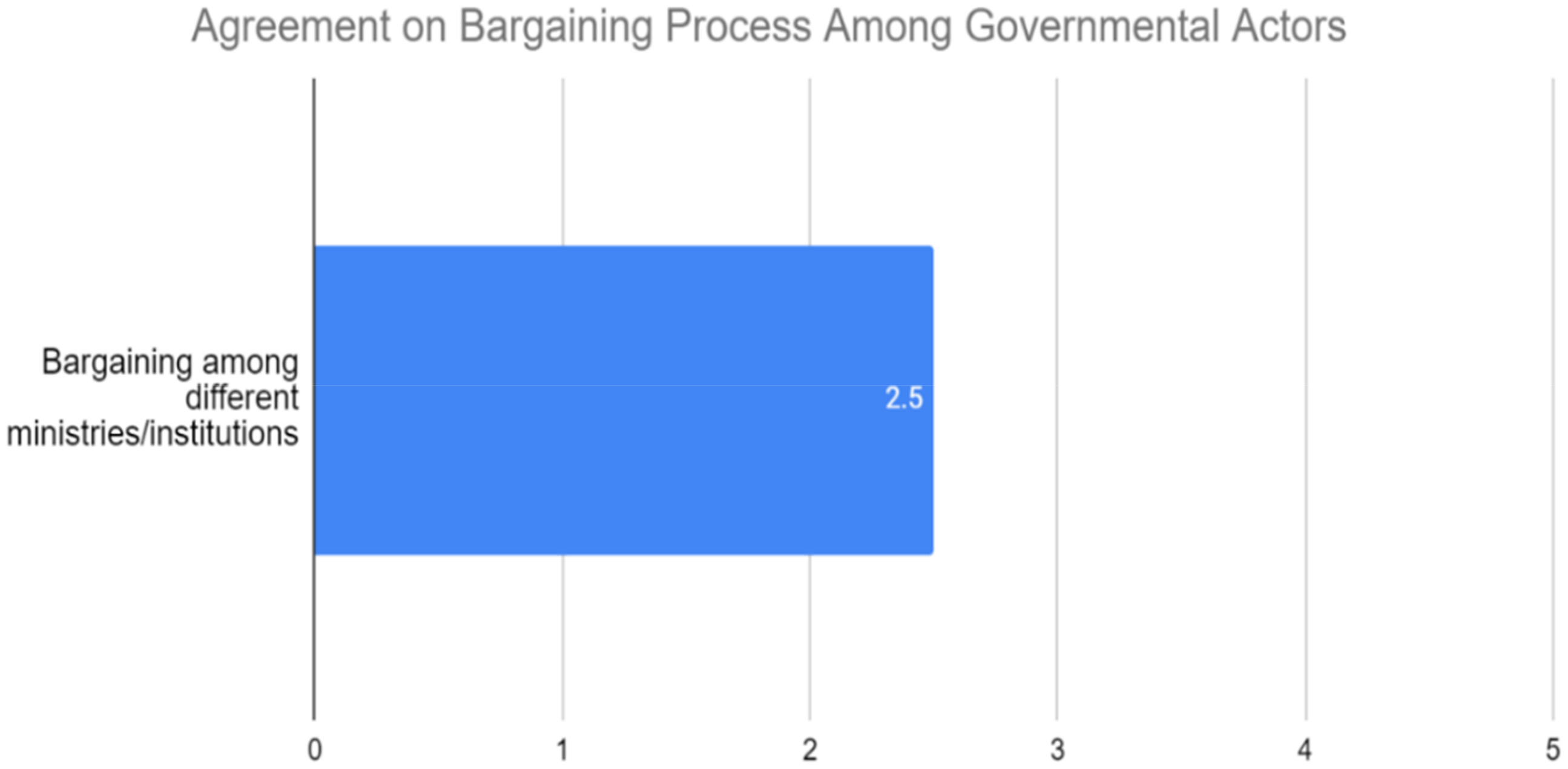
Agreement Rating on Bargaining Among Governmental Actors.
While informants are perhaps reluctant to divulge the extent of potential discord within the policy-making apparatus, the lower agreement rating on competition and trade-offs between different institutions indicated in Figure 8 may also rest on circumstance. Several informants did question the level of competition and bargaining among Indonesian institutions in the case of LNU. For A2, while trade-offs do occur due to differences in interests and operational paradigms, the institutions with the most significant roles in determining policy on LNU align when needs must. It seems unity of purpose prevails if there is an overriding national interest in play. As informant NO1 noted: In my opinion, within the higher level of government there is a common national interest. The decision that Indonesia must assert itself in Natuna is final. I don’t see the occurrence of bargaining because even President Joko Widodo asserted, we have to defend Natuna. The government, meaning the President, Navy along with all officers of the armed forces, police, and all other entities of the government, have shown their sincere efforts by going to Natuna by ship to show Indonesia's stance where Natuna is part of Indonesia's sovereign territory… which will not lessen by one inch to foreign parties claiming that territory.
Although the meeting sent a message to external actors, the Cabinet Secretariat's Communication Team for the President (2016) adopted a more measured tone on intent: The President held a meeting in the Natuna Islands because he wanted to see first-hand the conditions of the islands so that the development plans would be more focused, clear, and in line with the expected conditions.
Although there is an apparent unity of purpose, informant A2 did provide a telling appraisal of underlying competition for authority among institutions with overlapping responsibilities. There are still distinct operational paradigms in play and variations on how to best handle the issue ranging from a preference for diplomatic measures to a more kinetic approach. Because the Natuna issue is a territorial one, TNI usually insist that they must take charge meanwhile the Ministry of Foreign Affairs… they are not only dealing with the issues in the South China Sea with China, we have other issues to deal with like debt, U.S.-China rivalry, Chinese relations with ASEAN, China's support for Indonesia in the G20 and so on… So, the Ministry of Foreign Affairs are a bit “soft” … but the TNI and the Coast Guard does not consider these factors. For them, it is go in and shoot, go in and arrest.
As A2's response highlights, two institutions with large roles in the formulation of policies can have different sets of considerations and institutional logics on how to tackle the issue. It is therefore necessary to map the various institutional roles, interests, attitudes, and interactions to gain a fuller understanding of eventual outcomes.
As the presented data suggests, the MoFAs, Ministry of Defense, and the President play significant roles. Interestingly, despite the involvement of over a dozen institutions on the LNU issue, explicit levels of institutional bargaining were limited due to the issue having national sovereign territorial importance. However, data also indicated that underlying competition for authority does still occur among major institutions with overlapping responsibilities. In the following section, the specificity of the Joko Widodo administration's handling of matters is further mapped by analysing the informant data on policy environments, priority biases, and decision-making determinants.
Policy Environments: Priority Biases and Decision Determinants
As previously detailed, responses to incursions have taken various forms. Informant data reveal there are several significant determinants and factors within the policy decision-making environment which influence decision-makers. Informants were asked to rank the importance of three policy determinants relative to the LNU issue as detailed in Figure 9.
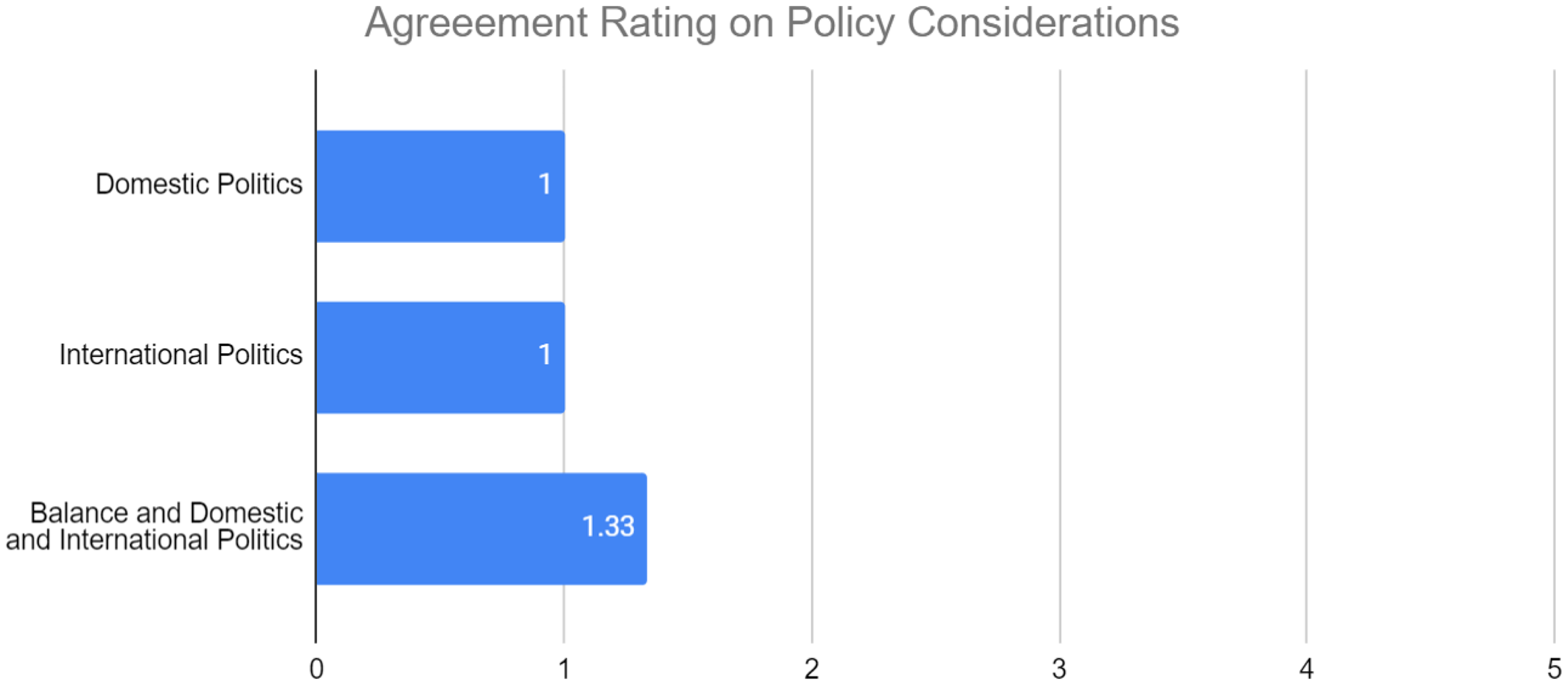
Respondent Agreement Rating on Policy Considerations.
Informants indicated a high agreement rating of 1 on both domestic political demands and international political conditions with a slightly lower 1.33 on a balance of the two as key policy considerations. Informant NO1 added: In my opinion, judging Pak Jokowi, he is more focused on the elections in 2024. In turn, he is focused on domestic politics but he is also considering the other 2 factors. The two factors are very essential in the decision-making process. This is mainly because national interest and threat perception are also very crucial in the foreign policy making process. I think all (factors) are interrelated. However, I think the largest factor is between domestic politics and Indonesia-China bilateral relations. When it comes to domestic politics, people are more concerned with their basic needs and the government seems to be more concerned with the election issues. We expect China to use this because all we could do is blame international law without actually challenging China. So, Indonesia has been learning to refrain and behave itself.
The significance of China as an actor was highlighted by several informants but as Figure 10 indicates, levels of personal and institutional biases alongside historical sentiments play a role.
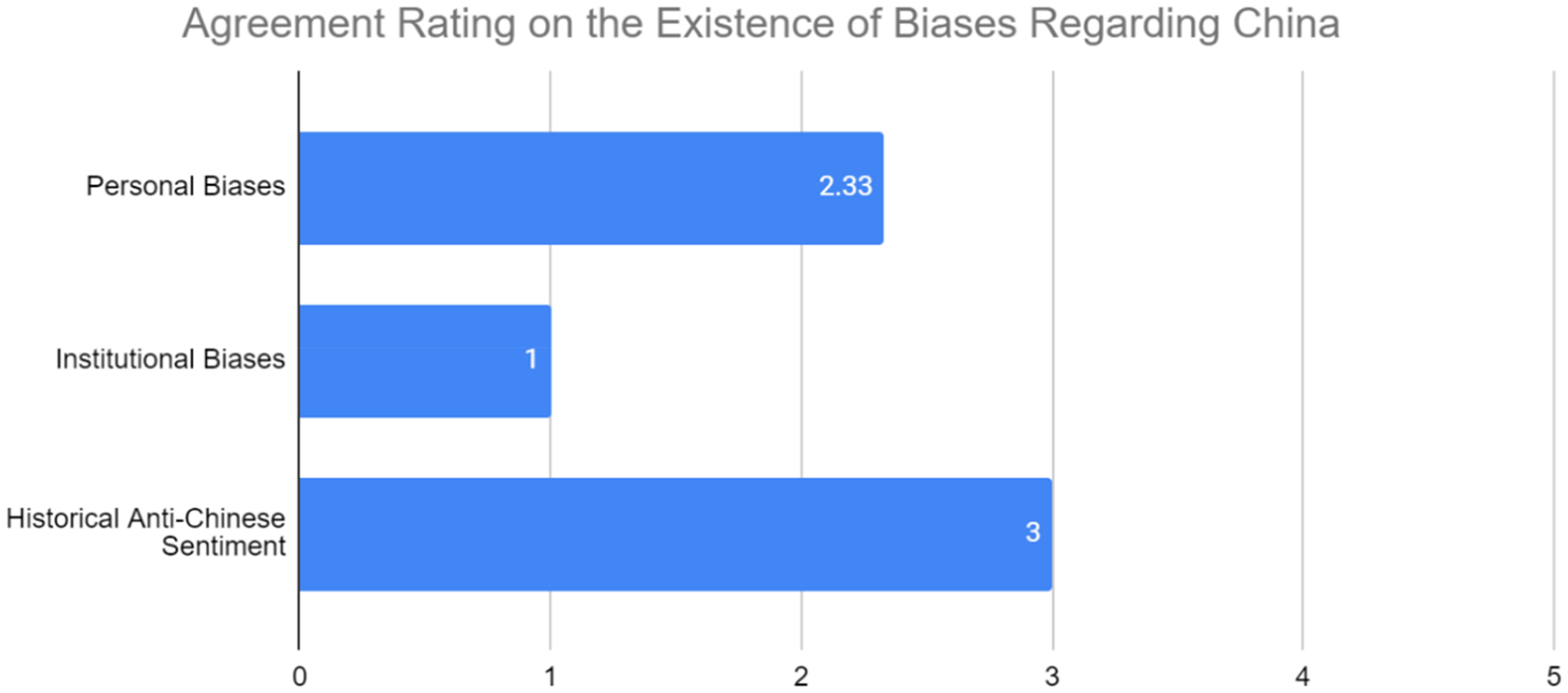
Agreement Rating on Biases Regarding China.
There is a lower agreement rating of 2.33 on personal biases compared to a rating of 1 for institutional biases. According to informant NO1: I haven’t seen that (personal bias) actually. In my opinion, it has to be like that… making decisions is supposed to not be personal. While we cannot eliminate the possibility of personal bias because we are humans, it cannot become a dominant factor. If the personal perception is considered too much then decision-making would be done for personal profit not for the nation.
In contrast, A2's insightful comment revealed how both embedded personal and institutional bias in responding to incursions expresses itself implicitly in the form of domestic political competition. I see personal and institutional bias especially with MoFA and the Navy. Between the Indonesian Armed Forces there is a competition of operations because they want to make a military base there, correct? That leads to politics over the budget which leads to bias because there is institutional interest.
Similarly, informant A1 indicated agreement for the presence of personal and institutional biases within the policy formulation process and noted differences in treatment of China: At the moment there are different kind of opinions. The Navy has a different way of thinking than MoFA. They are more aggressive when it comes to action in the field but MoFA refrains more than the Navy. Many agreements at the state, ministerial, and the professional level causing Indonesia to waste our energy to focus on China for example on increasing infrastructure. Because of this we do not want to criticise them openly.
Placing the LNU issue in the context of Indonesia-China bilateral relations and wider SCS issues, the agreement ratings in Figure 11 reveal levels of wariness from Indonesian policymakers in relation to China's increasing influence and economic leverage.
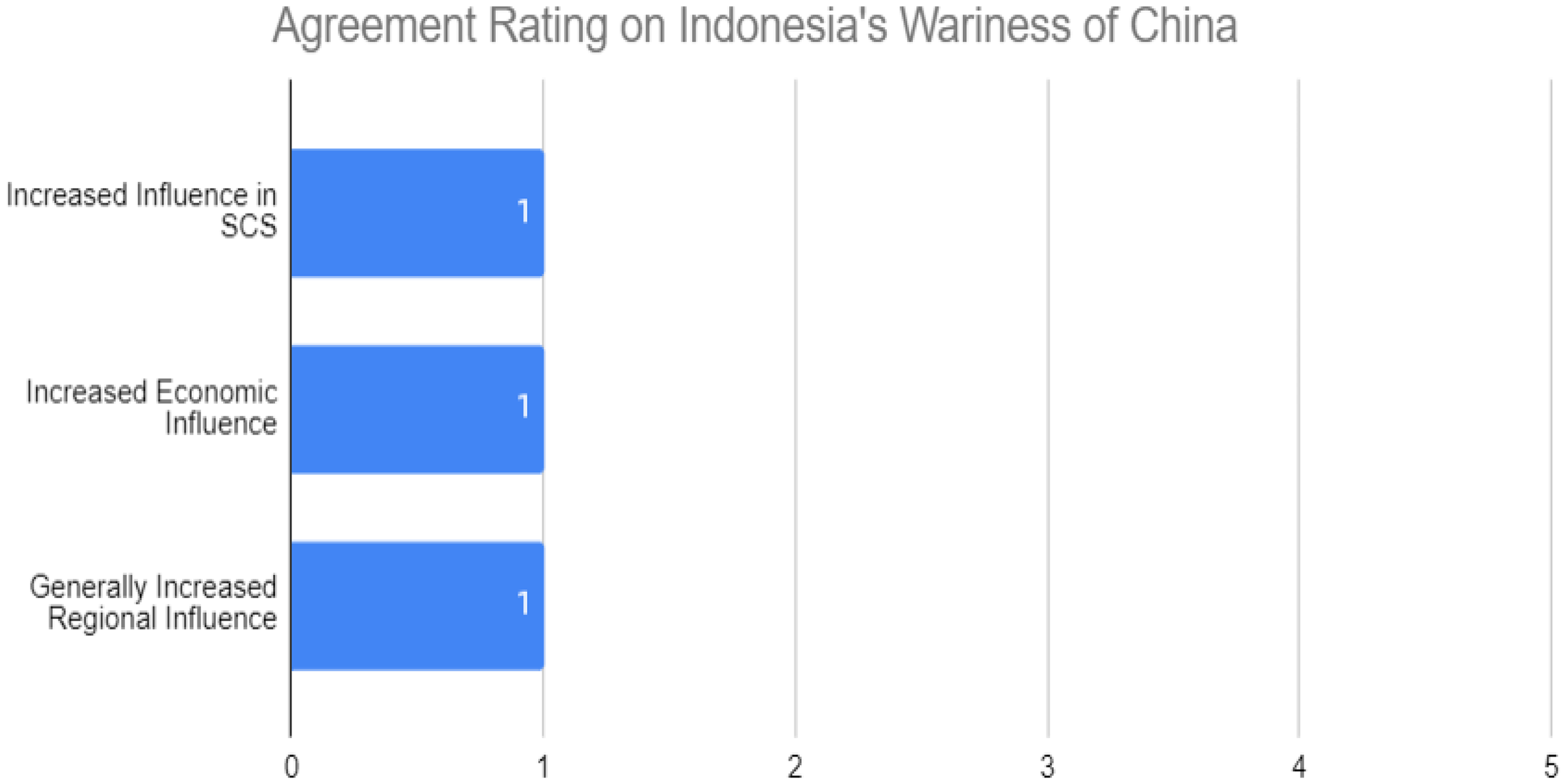
Agreement Rating on Indonesia's Wariness of China.
Triangulating the responses of informants D1, NO3, and A2 provides a composite of the concerns over China's 9DL and its actions in the SCS from a diplomatic, naval, and academic perspective: Because China has interest… China has a large ambition based on their wants… based on their map from a certain dynasty … we’re not sure of this. We are not sure of their claims because it's baseless and they really act upon this claim because they have the power of their economy and military and until now there is no one that can stop them. Based on my research, China's 9DL claims have been made since 1947. But the position of the 9DL have never been firmly stated where are these lines or where are the coordinates. Over time this results in China having a bargaining position with littoral states in that region… personally I see this as one of China's strategies to control this region and increase their influence. China purposefully does not disclose this (coordinate) information because, according to experts, they can just widen their claims further south. In the end, our outermost islands can also be claimed because without actual coordinates, China can just extend their claims.
China's increasing influence and economic leverage in Southeast Asia goes far beyond the SCS. As informant NO3 noted China displays a skilled ability to maintain good economic relations despite actions in the SCS and LNU: China is smart in the way that they can fragment between their defense, economic, and diplomatic interests. They make it seem like their interests are not related. They are firm on this and they do not only implement this to Indonesia but to states that have conflict with China.
As Figure 12 shows, this view is corroborated by data from Indonesia's Ministry of Investment on China's increasing investment in Indonesia despite the LNU incursions in 2016 and 2020. Investment in 2022 increased to over USD 8.2 billion (IDR 132.5 trillion).
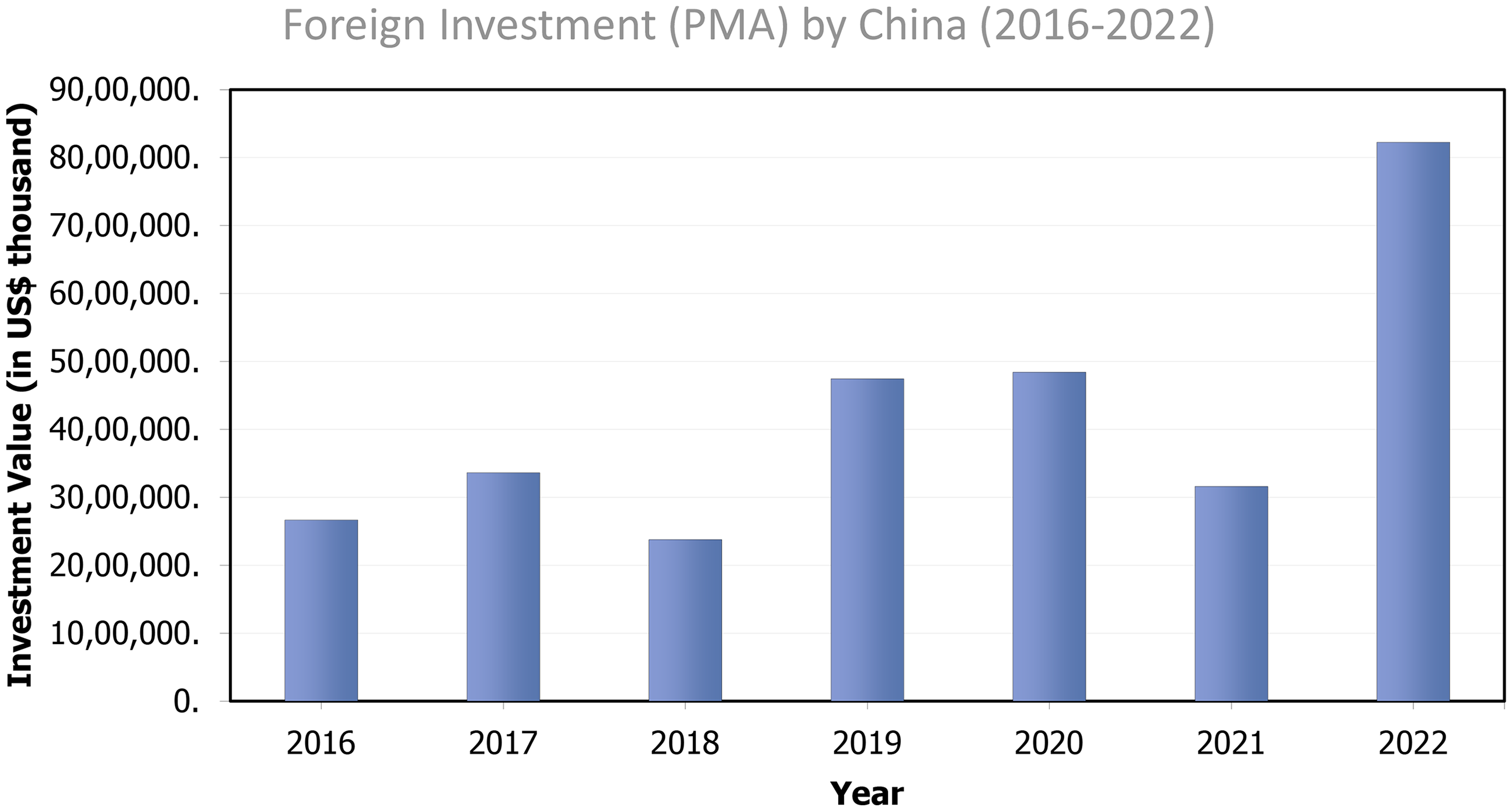
Foreign Investment (Penanaman Modal Asing) by China (2016–2022).
Informant data also suggest that the Joko Widodo administration has performed its own compartmentalisation of interests. As informant D2 commented: We have to see the opportunities. A free and active foreign policy does not mean we stand still but Indonesia is not influenced by other states. We can take advantage of one side but we also keep in mind the national interest (protecting national sovereignty). This interest, we have to push through ASEAN.
What this indicates is that while Indonesia aims to uphold its national sovereignty in LNU, Jokowi and his administration were keenly aware of the need to balance interests, and the level of statecraft required. Policymakers were alert to the wider negative consequences and costs of an overly assertive approach. Simultaneously, there is the matter of ensuring in the eyes of a domestic audience, a positive legacy for Jokowi's last term in office. As informant NO3 elaborated: Indonesians have a political culture which is different from other developed countries. We tend to not really pay attention to the international world… meaning they care more about domestic political issues. What happens outside of that like our relations with other states… maybe if there is a claim on something of ours then people will speak up. But even then, it is just an emotional response.
However, as Figure 13 shows, there is a low agreement rating of 3.6 about the contributing effect of President Joko Widodo's last term in office.
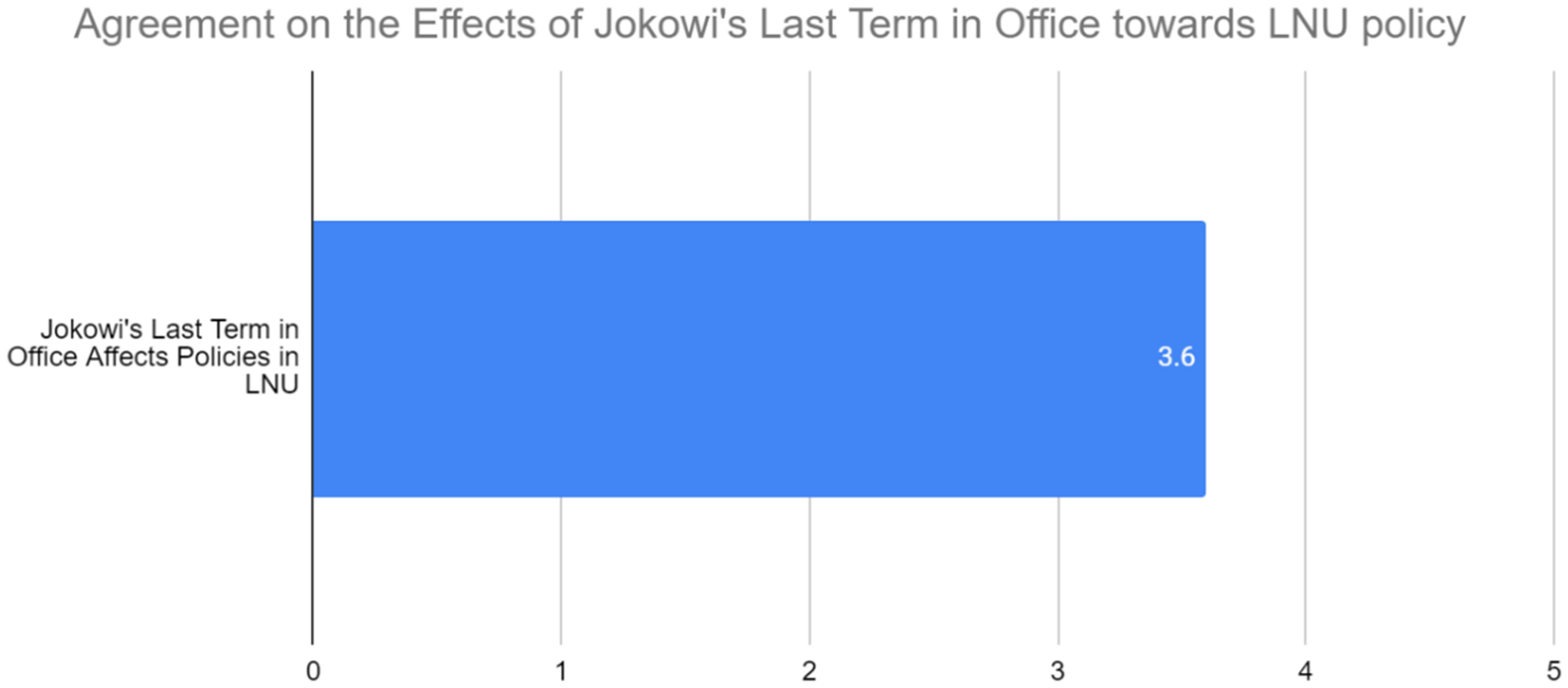
Agreement Rating on the Effects of Joko Widodo's Last Term Towards North Natuna Sea Policy.
According to informant A1: At the moment Indonesia's concentration is divided between domestic politics and the next presidential election. So, I think the responses in LNU is handled ad hoc by the Ministry of Defense, the Armed Forces, and the Ministry of Foreign Affairs because we do not have a constant response to the specific cases happening there.
The primary data analysis underscores the interplay of domestic factors, bureaucratic politics and varying perceptions in the context of international considerations. It further demonstrates the significance of domestic political legacies and the way the perceptions and the expectations of actors – with different interests acting in the name of the state – influence policy decision-making. These findings offer new and updated evidence on those policy formulation interactions and Indonesian statecraft in LNU. Despite appearances, ‘wary ambivalence’ and a more customary non-balancing characterise Jokowi's second term in office.
Conclusion
Investigating the question of how middle powers navigate great power competition in contested maritime spaces is not straightforward. Policy formulation and decision-making often unfold and translate into practice in less than predictable ways. The vital internal perspectives presented in this article provide fresh insight on the process of Indonesian statecraft in the North Natuna Sea. As shown, domestic expectations, specific individuals, institutional interests and mindsets play a significant role. Data findings indicate their influence on the Joko Widodo administration's policy responses. The handling of the issue displayed an interplay of domestic, bureaucratic, and cognitive factors in the context of international considerations. This is evidenced by the complex mixture of high and low politics. Rather than operating on a clear-cut balancing or exclusive bilateral economic calculus, Indonesia responded to Chinese vessel incursion in a manner the government perceived as appropriate to its current circumstance and in accordance with its ‘free and open’ foreign policy.
As the study data suggest, the Jokowi administration displayed a situationally adaptive non-balancing strategy rather than a more assertive or coherent balancing action. What it demonstrates is domestic bureaucratic structures, interests, cognitive perceptions, and biases interacting with the wider circumstance of Indonesia-China bilateral relations. Deciphering this calculus comes from a grasp of the configuration of individuals and institutions involved in the decision-making process at various stages of policy formulation and implementation. Although the time-frame, focus, and scale of the purposive sample place limits on generalisation, the findings indicate that Indonesian policy-making displays a strategic ambivalence. It reflects institutional perspectives, priorities, and internalised views on China. Given the latter's rising assertiveness in the SCS, for analysts seeking to understand the actions of other middle powers facing similar pressures, looking inside the state – at institutions, elites, and domestic expectations – not just at external structural power dynamics is a necessary step.
The study underscores that middle power behaviour – specifically Indonesia's in the North Natuna Sea – is shaped by a complex interplay of domestic and international factors. Instead of adopting a consistent or assertive balancing strategy against China, Indonesia under President Jokowi pursued a situationally adaptive approach to avoid escalation. Jakarta acted in a way that sought to preserve diplomatic and economic bilateral relations while simultaneously engaging in internal appeasement of domestic expectations to protect and uphold Indonesian sovereignty. This challenges the assumption that middle powers respond to great power competition with clear-cut, strategic balancing. Instead, Indonesia's case illustrates that policy responses are often ad-hoc, pragmatic, and mediated by various internal dynamics. The broader implication is that middle powers navigating contested maritime spaces should not be viewed as purely rational actors balancing between great powers. Rather, policy behaviour is also a reflection of internal contestation and institutional dynamics, characterised more by adaptive pragmatism than by coherent balancing strategies.
In sum, since 2016, Indonesia has pragmatically navigated complex geo-political realities. Looking forward, it will be interesting to see whether the Ministry of Defense takes a more assertive and prominent role towards LNU. The new President Prabowo Subianto is a renowned patriot who was a Suharto-era military commander (now an honorary four-star general) and former Minister of Defense from 2019 to 2024. With tariff impacts on the horizon, he faces the challenge of meeting domestic expectations to protect Indonesia's sovereignty and interests while managing its regional relations prudently. It is no small task of statecraft.
Footnotes
Acknowledgements
We would like to express our gratitude to all the informants for their time and insightful contributions. Much appreciation and thanks go to the three anonymous reviewers for their valuable and constructive feedback on earlier drafts.
Declaration of Conflicting Interests
The authors declared no potential conflicts of interest with respect to the research, authorship, and/or publication of this article.
Funding
The authors received no financial support for the research, authorship, and/or publication of this article.
