



Abstract
With Asia's current geopolitical rise, International Relations communities in China, Japan and India have attempted to develop indigenous theoretical approaches that attract heated scholarly debates. Little attention, however, is paid to the state of affairs in weaker states. As power today is widely diffused to various actors in the international system beyond the big powers, the power–knowledge literature should be broadened to respond to the growing multiplexity of world order and the call for diversity of International Relations knowledge. As a case in point, this study examines how Vietnam's emerging middle power status has shaped policy and scholarly discourses in the country regarding the trajectory of Vietnam's foreign policy and the burgeoning interest of its International Relations community in a Vietnamese School of Diplomacy. Such scholarly endeavour will help shed light on the heightened agency of middle powers in world politics and the prospects for a Southeast Asian contribution to global International Relations heritage.
Introduction
With the rise of Asia in the twenty-first century international political economy, there have been various attempts by Asian International Relations (IR) communities to construct some sort of indigenous theories based on the rich history, experience, and traditions of the region. While this power–knowledge nexus is often explored in the cases of Asian big powers (notably China, India, and Japan), this study posits that such a linkage can also be witnessed in the cases of weaker states in Southeast Asia.
Amitav Acharya (2018) and others (Eun et al., 2021) have argued that the world today is increasingly complicated, fluid, and interdependent that is not merely dictated by a few great powers but allows for a heightened agency of weaker states. As power nowadays is widely diffused to various actors in the international system beyond the great powers, the power–knowledge literature should also be broadened to respond to the evolving multiplexity of world order and the growing call for diversity of IR knowledge.
Against such a backdrop, this paper examines the case of Vietnam to illustrate the dynamics of the power–knowledge nexus in a Southeast Asian rising state. Based on the power–knowledge framework and middle power theory as well as survey data from forty Vietnamese IR scholars, 1 this study aims to unpack how Vietnam's emerging middlepowership has precipitated policy and scholarly discourses in the country regarding the shifting trajectory of Vietnam's foreign policy as well as the burgeoning interest of its intellectual community in a Vietnamese School of Diplomacy. Such scholarly endeavour will help enrich the existing literature on middle powers and the prospects for diversifying IR knowledge in a peripheral region such as Southeast Asia.
The Power–Knowledge Nexus and its Relevance to Asia
The power–knowledge linkage has its roots in Michel Foucault's famous claim that power stimulates and informs knowledge. Power can be said to create knowledge through “the institutions of power,” which establish the circumstances for judging the validity of scientific claims (Foucault, 1980). On the other hand, Foucault also believes that “every production of knowledge serves the interest of power” (Panneerselvam, 2000: 21).
Bringing this into the field of IR, scholars have proved how the IR discipline and its theories reflected the logic of power and domination (Hoffmann, 1977; Smith, 2002). Kenneth Waltz – the founder of structural realism – posits that a general theory of international politics should be based on and/or written in terms of the great powers of the time because “in international politics, as in any self-help system, the units of greatest capability set the scene of action for others as well as for themselves” (Waltz, 1979: 73). Peter Katzenstein (interviewed in Schouten, 2008: 6) also observes that IR is “a handmaiden of great power” and “a consolidated field related to power.”
As Acharya (2011: 625) has pointed out, there is a “close nexus” between power and knowledge as witnessed in the cases of the United States, Britain, and Europe in the past and arguably China at the moment. If it is true that power and power shifts do play a role in knowledge production, then we can assume that the rise of the rest, notably Asian powers will have some impact on knowledge production in the field. The existing literature has pointed out that surging discourses on indigenous theory building in China, Japan, and India have something to do with the rise and/or resurgence of these powers in world politics and the growing interests of the global epistemic communities in their worldviews and perspectives on IR (e.g. Do, 2015, 2020; Rösch and Watanabe, 2018; Wang, 2013; Yan, 2011). As Kristensen (2019) argues, “states of emergence” such as China and India can help produce “states of knowledge” through increased research funding, growing international attention and recognition, as well as the heightened confidence of national IR communities.
Yet, power shifts in the twenty-first century do not merely stay at power transition among the great powers. In the evolving world order, power is diffused extensively from the global scale to the regional level and from the great powers to the lower rankings of the global power structure. Since the beginning of the twenty-first century, some scholars have talked about the “rise of the middle powers” (de Swielande et al., 2018; Gilley, 2012). While this has become a global trend, it is even more obvious in East Asia. Regional middle powers have employed various instruments to cope with the uncertain US–China geopolitics and raised their own voices in regional affairs. As Downie (2017: 1494) argues, “in the transition to a multipolar environment, power is more diffuse and the attributes traditionally associated with these nations – such as convening, agenda setting, and coalition building – could, if mobilized, provide them with significant power to shape the international system.”
Therefore, recent literature has turned to investigate in what ways emerging middle powers in the Indo-Pacific individually and collectively shape the evolving regional order, and how the US–China geopolitics would affect their foreign policy behaviour (de Swielande et al., 2018: 1). As Amitav Acharya (2007: 630) argues, “regions are constructed more from within than from without” and that “power matters, but local responses to power may matter even more in the construction process of regional orders.” Middle powers can individually play the role of “swing states” in the rallies of forces of great powers and collectively they “can engage in bridging and mediation between these rivals through norm setting in regional forums” (de Swielande et al., 2018: 7). More optimistically, Spero (2009: 148) argues that “even with their frequent predicaments, such as limited resources and modest power capabilities, middle powers can influence great power security dilemmas, even reduce those dilemmas through regional and cooperative bridging alignments” as well as “reinforce great power efforts for regional growth and productive development” (Spero, 2009: 163).
How should this structural change be incorporated in existing IR theory which often views weaker states as “sub-structural units” or “a mere object shaped by power politics among great powers” (Shin, 2015)? Kenneth Waltz (1979: 73) once famously claimed that “it would be as ridiculous to construct a theory of international politics based on Malaysia and Costa Rica as it would be to construct an economic theory of oligopolistic completion based on the minor firms in a sector of an economy.” Yet, recent calls for “non-Western IR theories” believe that theory making is not the monopoly of neither the West nor the great powers (Acharya, 2011). With their material rise in the international system, lesser powers in Asia such as South Korea, Indonesia, the Philippines and Thailand have been active in introducing their own IR perspectives (e.g. Cruz and Adiong, 2020; Min, 2016; Na Thalang et al., 2018; Sudarman, 2017). There is also growing literature on Vietnam's middlepowership; yet, few of them approach the topic from the non-Western or power–knowledge lenses. This study, therefore, is innovative and relevant to the Global IR project which calls for building diversity and pluralism of IR knowledge rather than the universalism and hegemony of a single perspective (Eun et al., 2021).
Vietnam's Rise to Middle Power Status in Asia
Conceptualising Middle Power and Their Behaviours in International Politics
Under the realist lens, middle powers comprise a diverse group of states that is “in-between” great and small powers in various standards, such as geographical area, population, military, economy, weight of voice, and influence. Often, middle powers are ranked among the top twenty or thirty leading countries in the world, only after the big powers. Neorealists further posit that the structure of the international order and the location of a state in that order are the fundamental determining factors for a state's behaviour in world politics (Stairs, 1998: 270). Elaborating on this, Dong-min Shin (2015) develops a working concept: “A middle power is a state actor which has limited influence on deciding the distribution of power in a given regional system, but is capable of deploying a variety of sources of power to change the position of great powers and defend its own position on matters related to national or regional security that directly affect it.”
In raising their leverage vis-à-vis great powers and even exert systemic impact on global affairs, middle powers ought to retain a certain degree of independence from great powers, including their patron allies (Carr, 2014). Skilful strategic manoeuvre and balance of relationships among the great powers are thus seen as a top attribute of middle powers in realist views. Their unique geopolitical significance sitting between the spheres of influences of competing for great powers enables middle powers to serve as a balancer, a bridging state or a king-maker. To increase its strategic manoeuvre, a middle power should band together with “like-minded” other middle powers via networking, bridging, assuming third-party conflict mediation roles or playing as an “honest broker” in international conflict resolution.
According to the leading liberal theorist Robert Keohane (1969), middle powers will acquire additional agency when acting in concert and/or through institutions. International and regional institutions thus “provide a normative-contractual means of constraining and legitimizing unequal power” or as in the case of the Association of Southeast Asian Nations (ASEAN), help “induce the great powers to exercise self-restraint, but also to subcontract the monitoring and countervailing of multiple great powers within agreed rules and norms to these great powers themselves” (Goh, 2013: 203). Promoting multilateralism and coalition building, in this light, enables middle powers to have a collective and stronger voice internationally, put forth their interest on global agendas, build norms and shape outcomes favourable not only to them, but perceived also as critical for international peace and stability and reduce the chances for greater powers to dominate at the decision-making level, as they tend to do in asymmetrical bilateral relationships. Consequently, middle powers could play a part in maintaining peace and stability, both within their own regions and globally (Carr, 2014).
The liberal approach further emphasises the functional dimensions of middle powers through “niche diplomacy,” which means “concentrating resources in specific areas best able to generate returns worth having, rather than trying to cover the field” (Cooper et al., 1993: 25–26). It is niche diplomacy that distinguishes middle powers from both smaller states and great powers. Unlike small states, middle powers have enough resources and are willing to shoulder more obligations on global challenges but unlike great powers, they only focus on the niche areas of international politics, thus carving out a “constructive role” for themselves (Cooper, 1997: 5).
Middle powers can also be judged by a standard of behaviours in world affairs. Accordingly, a middle power should behave like other middle powers or identify itself as such. Middle powers can contribute to making the world a better place by addressing global issues and challenges that do not relate directly to their national interest. In addition, behavioural middle powers play the pivotal role as “norm entrepreneurs” in diffusing new ideas and adopting greater senses of internationalism and activism based largely on a normative foundation and morality (Emmers and Teo, 2014: 192–193).
Andrew Hurrell (2000: 1) believes that it is necessary to adopt a constructivist approach to define a middle power. Accordingly, middle power is “a self-made identity or ideology” rooted in a country's history, institutions, and politics. Middle power identity thus serves as a guiding discourse or an ideology for its foreign policy. In this light, middle power status is viewed as a constructed identity that reflects a country's aspiration for self-redefinition by employing a strategy or diplomatic policy to exert its influence in international affairs (Teo, 2018).
Recent literature on middle powers also distinguishes between traditional and emerging middle powers (Jordaan, 2003: 165). Unlike the former, emerging middle powers are often non-Western semi-periphery states whose international status has just been recently recognised with their membership in the G20 grouping. Increasingly, the literature on middle power turns eclectic upon confronting the growing diversity of middle powers. As Robert Cox (1989: 825) observes, the middle power concept “is not a fixed universal but something that has to be rethought continuously in the context of the changing state of the international system.” The traditional perspective on middle power, based on the model of behaviours and functions of Western states, “is insufficient and has become increasingly irrelevant in a transformed global environment” and thus “need revising in light of the ‘emerging middle powers’, many of which are in Asia” (de Swielande et al., 2018: foreword).
Applying an eclectic approach, this paper posits that four elements are necessary to define a middle power: (i) capability; (ii) regional and systemic impacts; (iii) behaviour and self-identification; and (iv) international and regional recognition. Based on these criteria, the following section will evaluate whether Vietnam meets such criteria for middle power status and analyse how the case of Vietnam would help enrich the existing literature on the agency of middle powers in international politics.
Vietnam's Growing National Power
Since the adoption of Doi Moi in 1986, with consistent domestic reforms and international integration, Vietnam has achieved remarkable successes in its socio-economic development. Vietnam joined the rank of middle-income countries in 2010 and was among the most successful countries in implementing the United Nations (UN) Millennium Development Goals. The inspiring journey of Vietnam from low- to middle-income status which helped lift more than 40 million Vietnamese out of poverty between 1993 and 2014 has been exemplary (The Washington Times Daily, 2021). As Ngozi Okonjo-Iweala – Director-General of the World Trade Organisation (WTO) observes, since its admission into the WTO in 2007, Vietnam has doubled its Gross Domestic Product growth, impressively reduced poverty from 14 per cent to 2 per cent and become one of the twenty largest exporting countries in the world. This is “a miracle” and a role model for many developing countries to follow (Thanh Nien, 2021).
Having a relatively cheap workforce and the third-largest population in Southeast Asia (nearly 100 million), half of which are relatively young, well-educated, and skilful is Vietnam's major asset. The drastic reform carried out by the Government to improve the business environment, promote innovation, increase labour productivity and transition into a digital economy is another important factor that has contributed to Vietnam's remarkable economic results in recent years. Despite many upheavals facing the world economy in the past decade, Vietnam retains an average growth rate of 5.9 per cent per year during the 2011–2020 period, ranking it among the best performing economies in the world.
Facing unprecedented challenges from the COVID-19 pandemic, the National Assembly and the Government of Vietnam are determined to implement the ten-year socio-economic development strategy (2021–2030) adopted at the XIII Congress of the Vietnamese Communist Party (VCP) in January 2021. The aim is to turn Vietnam into a developing country with modern industry and high middle income by 2030 and strive towards achieving high-income status by 2045 on the 100th anniversary of the establishment of the Socialist Republic of Vietnam. To realise this national aspiration, growing discourses about “a strong, prosperous Vietnam” has been aroused nationwide in the past year.
Regarding international assessment, Vietnam is enlisted in the “Next Eleven,” comprising emerging economies that have the potential to become future economic powers after Brazil–Russia–India–China–South Africa. The country is projected to be among the world's most dynamic markets by 2030 (Vietnam News, 2019). Many countries and high-tech and manufacturing companies from the US, Japan, and South Korea have increasingly shifted their investments to Vietnam in their “China plus one” strategy so as to lessen their dependence on the Chinese market and to “diversity their holdings, investment, patterns of trade in Asia” (Nikkei Asia, 2021). The latest Asia power index report conducted by the Australia-based Lowy Institute (2021) also placed Vietnam as a regional middle power (ranking twelfth among twenty-six Asian countries under survey) with good measures for its future resources, diplomatic influence and defence networks. The current trends project that it will move to No. 10 in Asia power ranking in the near future (Pham, 2019).
Thanks to its foreign policy of diversification and multilateralisation of ties, Vietnam has expanded diplomatic relations with 189 countries out of 193 member states of the UN; having economic relations with over 230 countries and territories worldwide; being parties to more than 500 multilateral agreements and seventeen free trade agreements (FTAs); recognised by seventy-one countries as a market economy; and forging a network of thirty strategic and comprehensive partners (Le M, 2021). From a centrally planning and self-reliant economy, Vietnam is now one of the most outward-looking countries with extensive economic links and trade openness.
In addition, Vietnam holds membership in important international organisations and multilateral forums. The country has successfully organised big international conferences such as Asia–Europe Meeting Summit (2004), Asia-Pacific Economic Cooperation (APEC) Summit (2006 and 2017), World Economic Forum (WEF) Summit on ASEAN (2018), and the US–North Korea Summit (2019) as well as fulfilled many international responsibilities such as non-permanent membership of the UN Security Council (UNSC) (2008–2009 and 2020–2021 terms) and ASEAN Chairmanship (in 1998, 2010, and 2020). Notably, in 2019, Vietnam was elected for a second time as a non-permanent member of the UNSC with a record number of votes in favour of UN member states (192 of 193). Given these remarkable developments, the VCP's General Secretary Nguyen Phu Trong strongly affirms that “never before has our country enjoyed such fortune, power, standing and international prestige as it does today” (Dang Cong san Viet Nam, 2021: 25–26).
Promoting soft power and national branding is part of the government-led discourse on the 2045 vision for national prosperity. The 2021 Global Soft Power Index Report by London-based Brand Finance also ranks Vietnam forty-seventh out of the 100 countries under survey for soft power, up three places from 2020 (Brand Finance, 2021). To improve the value and ranking of Vietnam's national brands, the Government has approved a National Brand Program for the period of 2020–2030 and at the same time set the goal of turning more than 1000 products into strong national brands (Table 1). In addition, the concept of “soft power” was mentioned for the first time in the documents of the XIII Party Congress. Accordingly, the VCP strongly advocates for “building an advanced Vietnamese culture imbued with national identity so that culture can truly become an endogenous force, a driving force for national development and defense” (VTV, 2021).
Key Indexes of Vietnam's Current Hard and Soft Power in Comparative Terms. 3 4
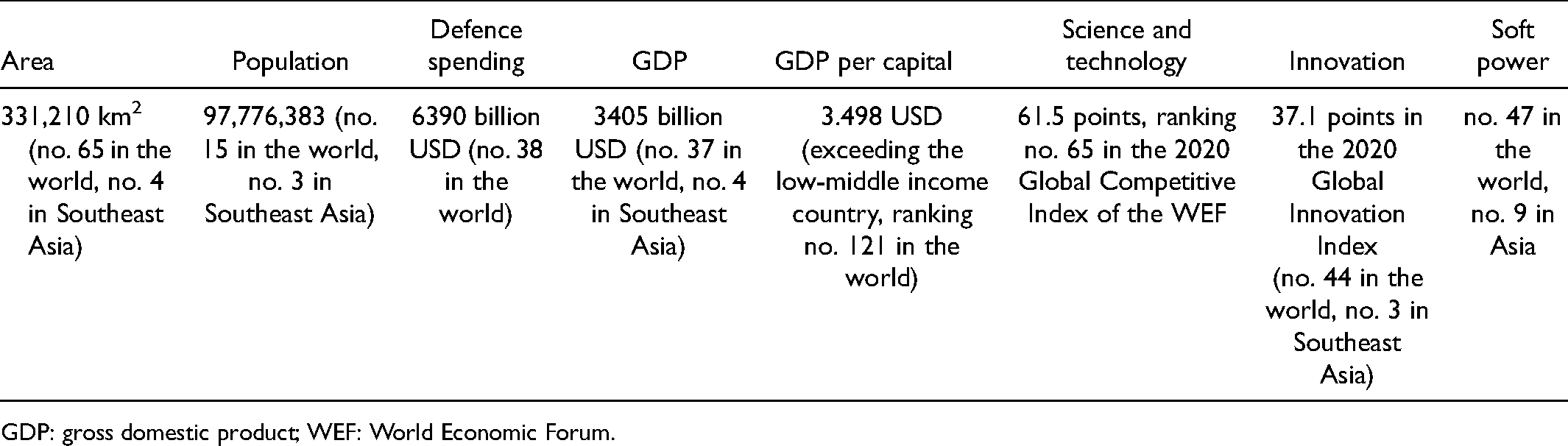
GDP: gross domestic product; WEF: World Economic Forum.
Proactivism in Niche Diplomacy
As with other middle powers, Vietnam increasingly expresses keen interest in “niche diplomacy,” although the official narratives have not referred to the term as such. Hanoi has raised issues such as climate change, plastic pollution, water security, gender equality and peacebuilding efforts at various international fora. Albeit being a developing country that only entered the industrialisation process three decades ago, Vietnam has been playing an active role in fighting climate change. Hanoi frequently brings the issue of climate change to the UN Human Rights Council, serving as part of the core group in the Council (together with Bangladesh and the Philippines) in promoting the importance of climate change in human right related issues. In addition, Vietnam together with Ecuador, Germany, Ghana co-organised the Ministerial Conference on Plastic Pollution and Ocean Waste at the WTO headquarter in early September 2021. This was an informal consultation supported by the UN Environment Program to build the momentum and political will to advance a global strategy to end plastic pollution and ocean waste for a clean ocean future. At the initiative of Vietnam, the UNSC conducted a meeting in October 2021, focusing on the topic “Sea level rise” and impacts on international peace and security.
More recently, at the COP-26 Summit in November 2021, Vietnamese Prime Minister Pham Minh Chinh called for fairness and justice in climate changes issues and more financial resources and technology transfer to “promote the transformation of development models towards a green, circular, sustainable, inclusive and humane economy” (Vietnam Net, 2021a). Also, at the COP-26 Summit, Vietnam declared its commitment to obtain net-zero emissions by 2050 (while China only sets such a goal for 2060 and India 2070). Towards this end, Vietnam will join global initiatives on forest protection, foster transition to renewable energy, as well as support local communities to adapt to climate change and methane mitigation.
Peacebuilding emerges as another important “niche” for Vietnam's diplomacy in recent years. Hanoi had provided humanitarian aid to help ease the situation in Rakhine state and, since the political upheaval in Myanmar in February 2021, played the role of bridge-building in the Myanmar issue as Vietnam was the only ASEAN state having a seat at the UNSC during the 2020–2021 period. Hanoi has also contributed to the peace process in the Korean peninsula as an “honest broker,” notably by offering good offices for the US–North Korea peace summit in February 2019. The visit to North Korea by Deputy Prime Minister and Minister of Foreign Affairs Pham Binh Minh on the eve of the Summit can be seen as an effort to help create the most favourable environment for dialogue and peace between the US and North Korea (Vu, 2020). Under Vietnam's 2020 ASEAN Chairmanship, Hanoi has been working with other Asian countries in concluding Regional Comprehensive Economic Partnership as well as promoting regional cooperation in the sub-Mekong region and stability in the South China Sea issues. As well-noted by the Washington Times Daily (2021), “Vietnam's remarkable repositioning as a middle power and evolving role as a peacebuilder, demonstrates the nation's growing confidence to play a key mediation role in the Association of Southeast Asian Nations (ASEAN) on regional security issues.”
Promotion of Multilateralism and Good International Citizenship
Vietnam consistently supports multilateralism, especially the central role of the UN in global governance, maintaining international peace and security, promoting sustainable development, ensuring human rights, and effectively responding to global challenges, especially non-traditional challenges such as climate change, epidemics, and food security. Over the past forty-five years since its admission into the UN in 1977, Vietnam has made many proactive, responsible and comprehensive contributions to UN activities and other multilateral platforms. It has managed to be part of the UN decision-making process through its membership at the UNSC, UN Economic and Social Council (ECOSOC), UN Development Programme (UNDP), UN Population Fund (UNFPA) and the Human Right Council, as well as its active participation in, among others, the Non-Aligned Movement, Francophonie and ASEAN.
Vietnam is keen on upholding multilateralism in dealing with global challenges and supporting the reform of the UN system and the revitalisation of the international trading system for sustainable development and inclusive recovery post-COVID-19. In 2020, at the initiative of Vietnam, the UN unanimously selected 27 December – the birthday of Louis Pasteur – as the International Day of Epidemic Preparedness. Speaking at the UN General Assembly in September 2021, President Nguyen Xuan Phuc posited that the world's most urgent task is to control COVID-19 and that the world cannot be safe when there are people or countries remaining unsafe from the pandemic. At the same time, he affirmed that a prerequisite for post-COVID-19 recovery and growth is to ensure a peaceful, secure and stable environment in each country, region and the world (Le M, 2021). To form a united response to the COVID-19 pandemic and call for equal access to COVID-19 vaccines and drugs to control the Covid-19 pandemic, Hanoi has pledged to donate 50,000 USD for World Health Organisation COVID-19 Solidarity Response Fund and one million USD to the COVAX Facility thus far. Under Vietnam's 2020 Chairmanship, ASEAN countries have established the COVID-19 Response Fund in 2020 and recently decided to use 10.5 million USD from this fund to buy vaccines for member countries. Hanoi has also been proactive in vaccine diplomacy which in turn helps it mobilise a large number of vaccine supply and vaccine technology transfer contracts to accelerate its national vaccination program. As Le and Vu (2021) observe, the pandemic further consolidates Vietnam's middle power status.
Vietnam increasingly affirms itself as an active and responsible member of the international community. The Documents of the XII Party Congress in 2016 emphasised the need for Vietnam to “proactively participate and promote the role at multilateral mechanisms, especially ASEAN and the UN, contributing to constructing a just and democratic international political economic order, preventing wars and conflicts, consolidating peace and strengthening mutual beneficial cooperation” (Dang Cong san Viet Nam, 2016: 35). Since 2014, about fifty-five Vietnamese peacekeeping officers have been sent to work at the UN's headquarters and missions while 189 doctors and medical workers have been dispatched to work at level-2 field hospitals in the Central African Republic and South Sudan. In particular, the Vietnamese peacekeeping force has the service of thirty-four women, accounting for more than 16 per cent of the total force, which is higher than the 10 per cent rate required by the UNSC under Resolution No. 1325 on women and peace and security (Vietnam Net, 2021b). Against the return of power politics in Asia, Hanoi is resolute in supporting a “Rules-based international order,” centring on UN Charter and international laws as well as maintaining a regional maritime order based on the 1982 UN Convention of the Law of the Sea (UNCLOS).
Notably, in August 2018, the Directive 25 of the Secretariat Committee of the VCP set the goal for Vietnam to play the core role, leader, and conciliator in multilateral forums and organisations of strategic importance to the country, in accordance with its specific capabilities and conditions. 2 Following this guidance, Vietnam has been putting many initiatives at multilateral platforms. Hanoi plays a salient role in building the APEC 2040 vision and is actively participating in the development of a plan of action to effectively implement this vision. In its dual role as ASEAN Chair and non-permanent member of UNSC in 2020, Vietnam contributed to fostering dialogues and cooperation between the UN and regional organisations such as ASEAN. As President Nguyen Xuan Phuc observes, Vietnam's multilateral diplomacy seeks to harmonise its national interests “with the international community's common aspiration for a world of sustainable peace without wars, conflicts, poverty and inequality… Joining hands with the international community today is a new Vietnam that is confident and willing to shoulder international responsibilities for peace and sustainable development” (VietnamPlus, 2021).
Strategic Leverage Among Big Powers
As I would argue, Vietnam's middle power status is most evidently exposed through its independent and self-reliant foreign policy amid heightened strategic competition among big powers in Asia, particularly US–China geopolitics. Mutual concerns about China's assertiveness in maritime issues have brought Washington and its allies closer to Hanoi in recent years. With its strategic location directly facing the South China Sea and its capable military forces, Vietnam looms large in US-led strategic initiatives such as “Pivot to Asia” and “Free and Open Indo-Pacific” (FOIP) as well as China's Belt and Road Initiative (BRI), Japan's ambition for “normal statehood” and Indian Look East Policy. Although having territorial disputes with China in the South China Sea and being sceptical of China's ambitions for historical reasons while being courted by various powers (especially the Quad) by military, diplomatic and economic means in their efforts to check China's rise, Hanoi has not joined any blocs of the balance of power against China. Instead, it has employed a “soft balancing” strategy in the South China Sea by seeking to internalise the issue through ASEAN and bringing in non-claimant powers, while still leaving the door open for bilateral settlement with Beijing (Do, 2017).
Hanoi's independent and non-aligned strategy is reflected in its Four Noes policy, namely no military alliances with a foreign country, no alignment with one country against another, no foreign military bases on Vietnamese territory and no use of force or threats in external relations. As a hedge for lacking a patron today, Hanoi has been forging a network of thirty strategic and comprehensive partnerships with important major and middle powers, including all five permanent members of the UNSC, seven leading industrialised countries (G7) and seventeen of the twenty largest economies in the world (G20). It is Hanoi's hope that by expanding the mutual interests with these partners through trade, investments and strategic cooperation, they would come to help when Vietnam is placed in a difficult situation, e.g., being bullied by China in territorial disputes.
In enhancing their leverage with great powers, Vietnam has joined hands with other ASEAN states in enhancing ASEAN centrality in the evolving regional architecture through forging a concerted ASEAN Outlook on FOIP and BRI as well as raising ASEAN's voice in addressing non-traditional security issues in the region. In addition, Hanoi is proactive in networking with other regional middle powers such as Australia, South Korea, Indonesia and Malaysia in promoting Confidence Building measures and preventive diplomacy in the East and South China Seas. It shares the same voice with these countries in building a new legal order in the maritime domain that respects UNCLOS, the freedom of navigation and aviation, sustainable access to fishing and energy resources, and the early conclusion of a Code of Conduct of Parties in the South China Sea to manage the disputes between China and ASEAN claimants.
The Prospects and Shortcomings of Vietnam's Middle Power Status
As can be seen, Vietnam has increasingly manifested attributes of a regional middle power, although it has not fully met some criteria in quantitative terms. Vietnam's middle power status is forged by its preference for multilateralism and a rule-based order, proactive international economic integration, heightened role in ASEAN, and balance of relationships among the big powers. As a scholar observes, “geopolitically, Vietnamese leadership seeks regional stability and global integration; economically it seeks new foreign investment and markets for its export industries” (Turner, 2014: 38). The recent turn towards multilateralism, meanwhile, is seen as a new tool “to advance Vietnam's national interests of defending the country's security, advancing socio-economic development, and improving its role and stance in the international community,” particularly “to avoid becoming a proxy to big power competition, to mitigate significant security challenges, and to sustain economic development” (Ha and Le, 2021).
This omnidirectional foreign policy has helped to secure a place for Vietnam in the evolving regional order and raise Hanoi's standing and leverage vis-à-vis the big powers. With its recent proactiveness in regional affairs and the success of its ASEAN Chairmanship in 2020, Hanoi has the potential to join the core group of leadership in ASEAN and have a stronger voice in ASEAN's extended mechanisms such as ADMM+, ARF, and EAS. At an event hosted by the Washington-based United States Institute of Peace in November 2021, Kurt Campbell – the former architect of the Obama administration's “Rebalancing to Asia” strategy and the current chief advisor of the Biden administration for the Indo-Pacific stated that the US “views India and Vietnam and a few others, tops the list of critical countries that will define the future of Asia.” In particular, he described Vietnam as a “critical swing state” in the Indo-Pacific, “not just strategically but commercially and technologically” (Nikkei Asia, 2021). Vietnam's “swing state” position is not merely reflected in geopolitical terms (serving as a bridge between Northeast and Southeast Asia, between Chinese and Indian civilisations, between maritime and mainland Southeast Asia) but also in a geoeconomic sense (between Washington Consensus and Beijing Consensus). That said Vietnam, albeit being a weaker state, will not be merely dictated by structural development but also has strategic room for manoeuvre in shaping the evolving regional order so that the uncertain power shift in Asia will not be at the expense of the security and prosperity of weaker states (Do, 2021b; Easley, 2012).
However, a major constraint for Vietnam in conducting middle power diplomacy is its still modest material resources and limited normative power, as compared to liberal democratic middle powers. In geoeconomic terms, the COVID-19 pandemic has significantly lowered Vietnam's economic growth rate (2.91% in 2020 and about 2.58% in 2021), not to mention concerns over the “middle-income trap” and gradually ageing population. Furthermore, the country is located in a highly dangerous surrounding environment, sitting at the overlapping spheres of influence of many big powers. Hanoi's top concern regarding its geopolitical vulnerability is the unresolved South China Sea disputes with China which may plunge it into the centre of a new “Asia's cauldron” (Kaplan, 2014). Therefore, preserving maritime security and avoiding being entrapped in great power geopolitics always present a daunting task for Hanoi. To address these challenges, Vietnam has strived to strengthen its internal strength as well as rely on multilateral platforms to enhance its aggregated power to cope with the uncertain future of China's rise. In the longer-term, institutional and structural reform of the economy should be pursued. Furthering regional integration also provides new incentives for Vietnam to adopt structural reform. Joining regional FTAs, for example, will enable Vietnam to “meet international standards for macroeconomic policies, helping Vietnam to address internal corruption and stimulating homegrown enterprises,” as well as strengthening “bilateral ties with major countries seeking ties with countries in the Asia-Pacific region” (Turner, 2014: 35).
Implications on Shaping IR Knowledge in Vietnam
Vietnamese IR Academia's Response to Power Shift
Peter Kristensen (2019: 774) rightly reminded us that “rising powers do not produce theories, scholars do.” As such, this final section will explore how Vietnam's emerging middle power status has precipitated shifting scholarly and policy discourses in the country regarding the course of Vietnam's foreign policy and the growing interest of Vietnamese intellectuals in a Vietnamese School of Diplomacy.
During the Cold War, Vietnamese IR academia predominantly focused on studying the evolving international order, particularly great power politics (the US–USSR–China triangle), Vietnam's relationships with Socialist states and Third world countries and their implications on Vietnam's struggle for national independence. The worldview of Vietnamese scholars then was ideology-driven, with Marxism and Leninism being seen as the guiding theoretical framework (Palmujoki, 2016). The tendency of attaching great importance to research on the international order and great power politics remains largely unchanged today but the focus has now shifted to China's rise, US–China geopolitics and the evolving dynamics of US–China strategic competition in Asia. Other dimensions of US–China relationships such as technological competition and trade war as well as their contest for global and regional leadership through new initiatives such as FOIP and BRI have also been closely followed. Increasingly, Western IR theories, particularly realism and liberalism, are employed by Vietnamese scholars as to the analytical framework in these studies.
However, as the aforesaid survey reveals, more than half of the Vietnamese IR community believe that the rise of China will have an impact on the local scholarly community both in terms of policy and theory. Due to the importance of China to Vietnam's development, studies on China's rise and its vision of world order (e.g. “Tianxia,” “community of shared destiny,” and “Chinese dream”), Beijing's new multilateral initiatives for regional cooperation (e.g. BRI, Lancang-Mekong Cooperation, and Asian Infrastructure Investment Bank) as well as Vietnam–China relations, particularly involving the South China Sea disputes are among the top concerns for Vietnamese IR academia. With funding from the Vietnamese government, the landmark series of the annual South China Sea Conference has been organised by the Diplomatic Academy of Vietnam in the past thirteen years, attracting great attention from the scholarly and policy circles in the region and the world. In addition, the German Konrad-Adenauer Foundation has funded a series of China Talks at the Diplomatic Academy of Vietnam, bringing in leading China experts to discuss about Chinese visions of world order, regional security architecture as well as the contemporary thinking and practice of China's foreign policy (Figure 1).
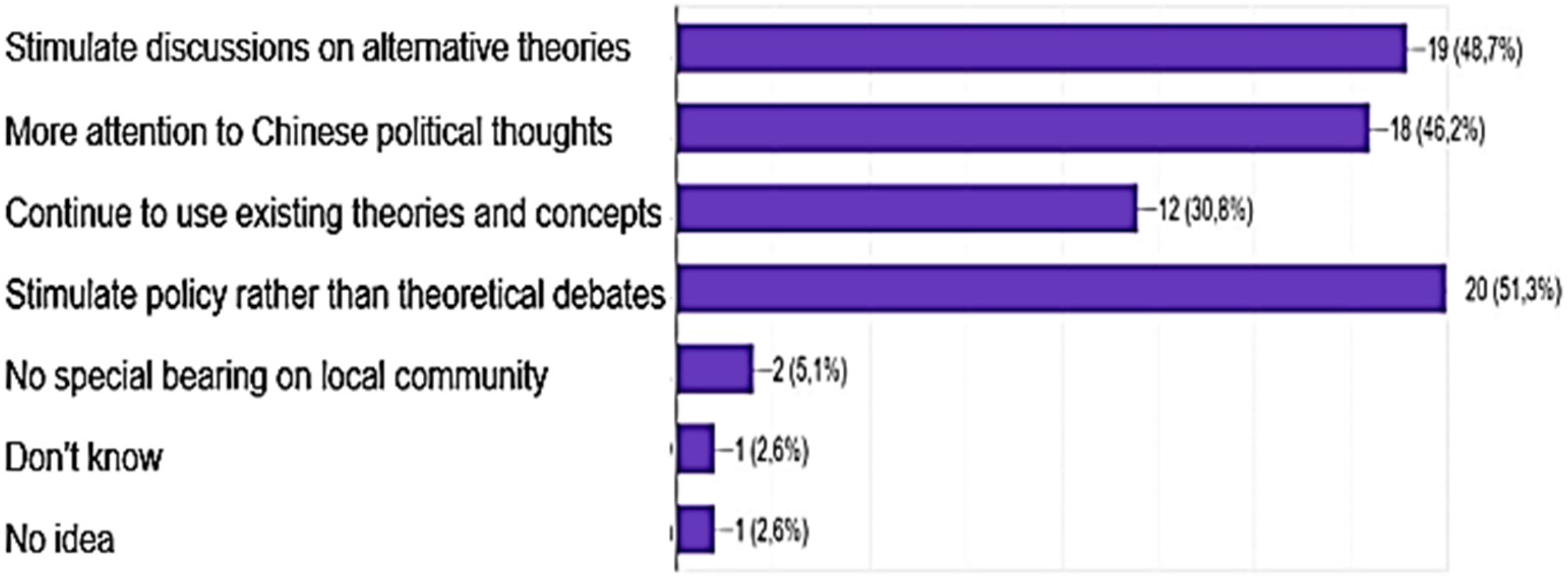
Evaluation of the impact of China’s rise on Vietnamese International Relations (IR) academia.
As Hanoi tries to enhance its international status through international integration and multilateral diplomacy, Vietnamese IR academia also turns to study new topics such as multilateralism and regionalism as well as Vietnam's potential middle power diplomacy. Increasingly, Vietnamese scholars do not merely apply and test Western theories or Chinese approaches in the case of Vietnam but attempt to provide Vietnamese perspectives on various issues of foreign affairs. In particular, funding for theoretical research by the Central Council of Theoretical Studies – the agency that advises the VCP on the issues of political theory, Marxism–Leninism, Ho Chi Minh's thought and socialism has stimulated important conceptualisation of international order, international integration, and multilateral diplomacy from a Vietnamese perspective (e.g. Bui, 2015; Dang, 2019; Pham, 2010). Although Vietnamese leadership refrains from referring to Vietnam as a middle power, Vietnamese scholars have pioneered research on Vietnam's middle power status and the prospects for Vietnam's middle power diplomacy (Do, 2021a, 2021b; Le T, 2019, 2021; Le and Vu, 2021; Vu, 2020). They argue that the existing middle power theory cannot fully capture the case of Vietnam (Do, 2021b; Le T, 2021). Thuy T. Do, in particular, provides a different conceptualisation of middle power, based on the concept of agency and Vietnamese practices. Accordingly, a middle power is a country which can exercise its agency in preserving its core national interests and identities in the areas of great significance to its security, prosperity, and influence. This agency, as in the case of Vietnam, is forged through various and often combined pathways such as historical learning from past mistakes, changing worldviews and threat perceptions in the post-Cold War order, socialization through international integration, aspirations for national development, strong will for preserving national sovereignty and independence as well as self-evaluation of the country's national power and international status. Conceptualizing middle powers in this way, rather than resorting to those terms of “liked-minded” states (commonly understood as Western or Westernised “democracies”) and “good international citizenship,” would help us broaden the landscape of middle power studies in Western-centric IR. Also, it would help us specify diverse sources of agency of weaker or middle powers and different characteristics of their diplomacy (Do, 2021b).
In addition, some scholars have started examining international experiences so as to withdraw relevant lessons for Vietnam to promote its niche diplomacy on a wide range of issues such as mediation and reconciliation in international peace-making efforts, gender equality and women's empowerment, environmental diplomacy, digital diplomacy, energy diplomacy, and water diplomacy (Do, 2021a; Vu, 2020). These emerging “niches” are also in line with the Vietnamese Government's national strategies on socio-economic development, transition to green growth, digital economy, digital society, E-government, gender equality etc. That said IR discourses on middle powers in Vietnam are both guided by and at the same time help inform the practices of Vietnam's foreign policy.
Burgeoning Interest in a Vietnamese School of Diplomacy
As Vietnam moved from an ideology-based foreign policy to an omnidirectional one since the Cold War's end, its theoretical foundation needs to be adjusted accordingly. In particular, the lesser relevance of Marxism–Leninism to the development of Vietnam today has precipitated the policy and scholarly circles in Vietnam to find an alternative theoretical foundation for the conduct of Vietnam's foreign policy (for further discussions, see Elliott, 2012; Nguyen, 2021). More than two decades ago, Carl Thayer and Ramses Amer (1999: 219) concluded in their salient volume Vietnamese Foreign Policy in Transition that “Vietnam has lost its ideological paradigm but not found another.” I argue here that Hanoi has managed to find a new paradigm for its foreign policy in the twenty-first century. This is what many Vietnamese scholars refer to as a “Vietnamese School of Diplomacy,” based on Ho Chi Minh's thought on foreign affairs as well as the profound lessons that Vietnam has withdrawn from its past conduct of foreign policy (Vo, 2010; Vu, 2009). This represents a new scholarly endeavour in developing an indigenous IR approach, whose necessity has gathered general consensus among Vietnamese IR academia (Figure 2).
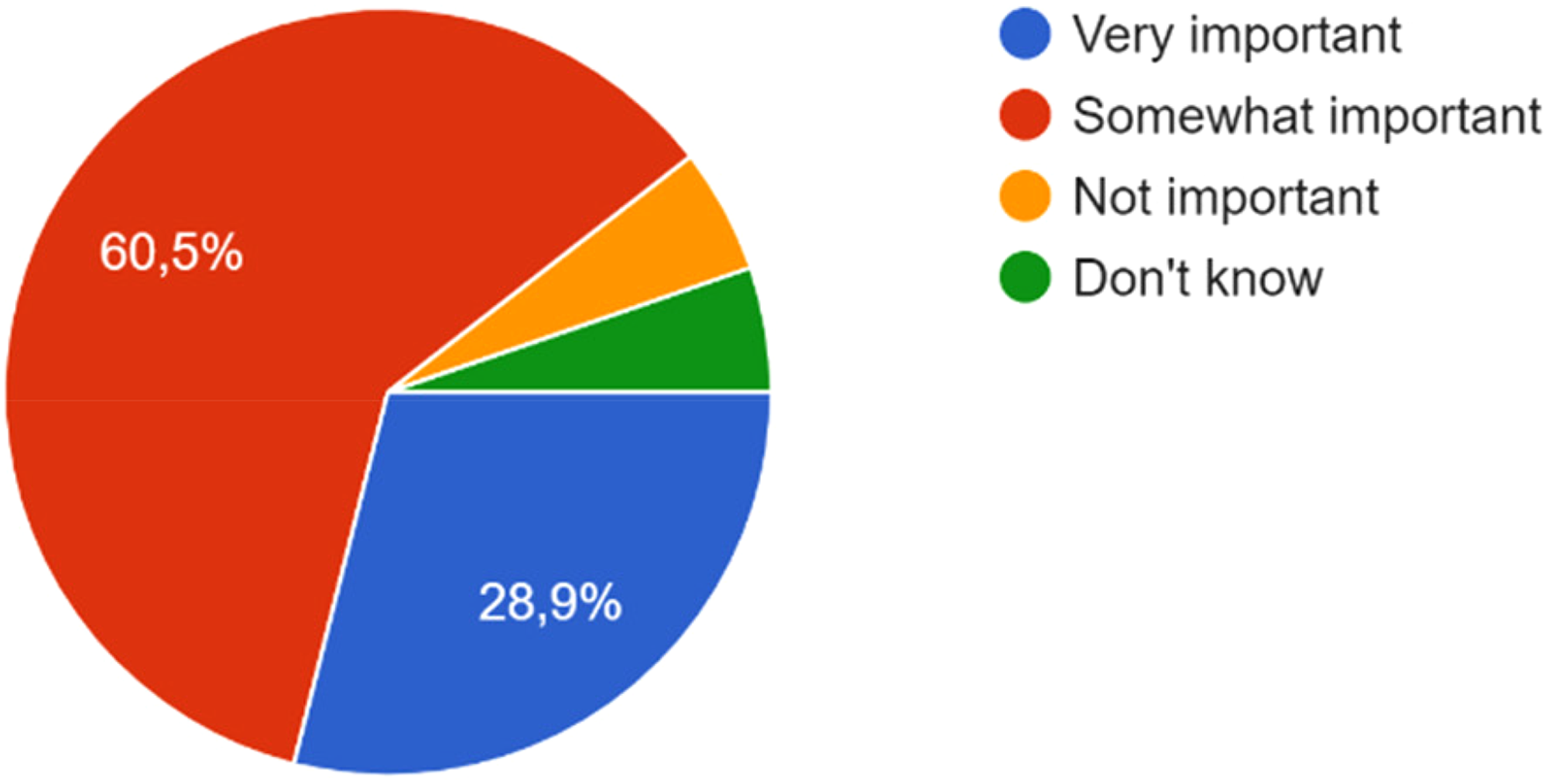
Vietnamese scholars’ perspectives on the need to develop an indigenous International Relations (IR) approach.
Ho Chi Minh's thought on foreign affairs and diplomacy serves as the cornerstone of Vietnam's foreign policy thinking today because it has a solid theoretical foundation that blends Western and Eastern philosophy with Vietnamese culture, creatively applies and localises Marxism–Leninism and other ideologies (American liberalism, French humanism, and Chinese “principles of three peoples”) into the Vietnamese context (Dang and Nguyen, 2013; Vo, 2010; Vu, 2009). It is also imbued with a national identity which is forged through Vietnam's long history of nation-building and defence, traditional diplomatic philosophies such as Ly Thuong Kiet's will of independence, Tran Hung Dao's guidelines on “keeping face” for the defeated powers, Nguyen Trai's humanism, Quang Trung's strategy of combining softness and power as well as the practices of “cooperation and struggle” in Vietnam's external relations since 1945 (Tran, 2021; Vu, 2021). In particular, Ho Chi Minh’s thought is characterised by three distinctive aspects, each of which has profound implications on the current trajectory of Vietnam's foreign policy.
First, Ho Chi Minh attaches great significance for the Vietnamese policy and scholarly circles to study in-depth new developments in the international contexts, global and regional trends, great power politics, the domestic situation and foreign policy of other countries as well as Vietnam's own strengths and weaknesses (ngũ tri). Importantly, Ho believes that every country should rely on itself and preserve its own interests. As he once eloquently put it, “the inner strength of a country is a gong and diplomacy is the sound. If the gong is big, its sound will be loud” (Ho, 2011a: 147). This thinking provides a theoretical foundation for Vietnam's independent and self-reliant foreign policy in the post-Cold War era and its changing mindset on national interests in the past decade. At the XI Party Congress in 2011, the VCP for the first time set the goal of acting “for national interests” as a guideline of foreign policy. Subsequently, since the XII Party Congress in 2016, Vietnamese leadership has repeatedly emphasised that national interests should be put forward as the guiding principle in Vietnam's foreign policy. The XIII Party Congress in 2021 further emphasises the need for Vietnam to “assure the highest interests of the nation-state, on the basis of fundamental principles of the United Nations Charter and international law, equality and mutual benefit” (Dang Cong san Viet Nam, 2021: 110).
Second, while upholding independence, self-reliance and national interests, Ho Chi Minh, well aware of Vietnam's situation as a small country engaged in many wars against great powers in history, emphasises the need for Vietnam to combine national strength with the main progressive trends in the world (kết hợp sức mạnh dân tộc và sức mạnh thời đại). Ho considers strengthening solidarity and international cooperation an issue of top strategic importance during Vietnam's struggle for national independence and unification. The aim is to gather external forces and make use of international solidarity, support and assistance for Vietnam's development as well as create favourable conditions for making positive changes in the world. Applying this to the current context, the Documents of the XIII Party Congress strongly advocate for “combining the strength of the nation with that of the times; upholding the will for independence, self-reliance, proactive integration and improvement of the efficiency of international cooperation; and bringing into full play internal forces while utilizing external ones, in which internal forces, especially human resources, are most important” (Dang Cong san Viet Nam, 2021: 110–111). Transferring this thinking into policy, Hanoi strives for realising its socio-economic development strategy for the 2021–2030 period, together with consolidating its network of strategic and comprehensive partnerships as well as utilising global and regional trends such as the industrial revolution 4.0, sustainable development, and free trade for accelerating its transition into a digital, green and inclusive economy.
Third, Ho Chi Minh's most salient imprints on Vietnam's diplomacy stays in his logic of “firm in principle, myriad in applications” (dĩ bất biến ứng vạn biến) (Ho, 2011b: 555) or put differently, “from an unchanging stance respond to ten thousand changes” (Elliott, 2012: 109). This means while being determined in preserving national interests, independence, and self-reliance, Vietnam's foreign policy can be “flexible in strategy and tactics” in dealing with the various changes and upheavals confronting the country at various points of time. This strategic thinking has profoundly shaped Vietnam's force alignment strategy, particularly with great powers. Unlike Thailand's pragmatic “bamboo diplomacy” of bending whichever way the wind blows to survive, the Vietnamese are trying to retain their independence by forging as many equidistant and mutually dependent relations as possible with all major powers without leaning too much on any one side (Do, 2017). This philosophy, in the eyes of Vietnamese policy-makers, best serves the country's interests, amid the changing geopolitical landscape in Asia stemming from the ambivalent trajectory of China's rise, the unprecedented US–China geopolitics as well as the South China Sea disputes. The logic behind, as Vu Khoan – former Deputy Prime Minister and senior Vietnamese diplomat succinctly puts it, is that “the more interdependent ties we can cultivate, the easier we can maintain our independence and self-reliance, like an ivory bamboo that will easily fall by standing alone but grow firmly in clumps” (Dan Tri, 2013). The “clumps” that Hanoi relies on for its bamboo diplomacy is its proud network of thirty strategic and comprehensive partnerships with leading major and middle powers in the UNSC, G7 and G20 groupings despite their contrasting ideologies and competing interests. This manifests middle power attribute in its own right.
Given its profound influence on Vietnam's current foreign policy thinking and practice as well as its suitability as a supplementary ideology for the VCP in the new period, Ho Chi Minh’s thought may serve as the cornerstone of an emerging Vietnamese School of Diplomacy. As Party Chief Nguyen Phu Trong eloquently put it at the first national foreign relations conference in December 2021, Over the past 90 years, under the leadership of the Party and President Ho Chi Minh, on the basis of creatively applying the fundamental principles of Marxism–Leninism, inheriting and building on the traditions and national character of foreign relations, diplomacy and culture, and selectively learning from the quintessence of world culture and the progressive philosophies of the times, we have built an outstanding and unique school of foreign relations and diplomacy of the Ho Chi Minh era, bearing the character of the Vietnamese bamboo (Nhan Dan, 2021a)... Like bamboo with strong roots, solid stems and flexible branches, Vietnamese diplomacy is soft and clever but still persistent and resolute; flexible and creative but consistent, valiant and resilient against all challenges and difficulties for the national independence and people's happiness; united and humanitarian but resolute, persistent and patient in safeguarding the national interests (Nhan Dan, 2021b).
Conclusion
As this paper argues, the power–knowledge nexus can also be observed in the cases of non-great powers. Powers with growing material capabilities and international influence often attract scholarly and policy attention on the thinking and practices of its foreign policy in the international arena. Usually, the national IR community studies the issues, regions and countries of great significance to their country's interests. In turn, rising powers will have more resources to support academic research that meet their political and ideational preferences.
In recent years, Vietnam has emerged as a potential middle power in Asia. While Vietnam is yet to meet some criteria of middle powers in the traditional Western sense (mostly in quantitative and functional terms), its strategic importance to and clever dealings with great powers as well as its fervent support for multilateralism and regionalism establishes itself as a regional middle power. Vietnam's growing power has created conditions for Vietnamese IR academia to deepen their study on various issues of strategic importance to its national development and international influence. It has also forged growing interests of Vietnamese intellectuals in developing a Vietnamese School of Diplomacy, based on Ho Chi Minh’s thought and the practices of Vietnam's foreign policy such as “bamboo diplomacy.”
The transition of Vietnam from a war-torn country and a victim of great power politics to an emerging middle power with a growing agency is an inspiring story as it is among a few post-colonial and socialist states that have been successfully incorporated into the current international system but managed to preserve its independence and identity. As a scholar observes, Vietnam's “resilience and growing leadership in the region are due to its cultural values of spirituality, the primacy of relationships, and undying love of freedom. Like bamboo, Việt Nam was forced to bend in the twentieth century. But Việt Nam's roots are so deep that it would not break, and now, in this new century, it is standing tall” (Woods, 2018: 47). Developing a Vietnamese IR perspective, in this light, maybe a great source for enhancing Vietnam's soft power. The Vietnamese experience can also help enrich IR knowledge because a true common heritage of the discipline eventually needs to incorporate the voices of all its stakeholders, be it great, middle or small.
Footnotes
Acknowledgements
The earlier draft of this paper was presented at the virtual Workshop entitled “Global IR in a Multiplex World” organised by Seoul National University on 12 November 2021. The author would like to express sincere gratitude to Eun Yong-Soo, scholars participating in the Workshop and two anonymous reviewers from the Journal of Current Southeast Asian affairs for their constructive feedback on the work. Special thanks go to all the Vietnamese colleagues who agreed to participate in the survey that provided useful data for this study. The usual disclaimer applies.
Declaration of Conflicting Interests
The author declared no potential conflicts of interest with respect to the research, authorship, and/or publication of this article.
Funding
The author disclosed receipt of the following financial support for the research, authorship, and/or publication of this article: This work was supported by The Institute for Peace and Unification Studies (IPUS) at Seoul National University (project title: “Laying the Groundwork for Peace and Unification”).
