




Abstract
Given the scarcity of women in hierarchical positions in academic institutions, it is worth asking whether a gender gap in publications precedes this issue. We examine the gender gap in publications in eight of the most important Political Science journals in Argentina. We reviewed 974 peer-reviewed articles from 144 volumes published between 2011 and 2021, focusing on three dimensions: gender gaps in authorship, co-authorship patterns, and subfield affinities. Our findings suggest that while there is a gender gap in authorship in Political Science journals, it is not as significant as the gap documented in similar studies conducted in other countries. Furthermore, we found no evidence that the gender gap is due to co-authorship patterns. Finally, in terms of subfield affinities, our results suggest that male and female political scientists in Argentina have different affinities for topics within the field, and that journals that emphasise topics favoured by men have a larger gender gap.
Introduction
In every scope of science, journal publications play a dual role. On the one hand, they represent scientific development and dissemination. Namely, journal publications serve as a factor for scientific advancement, offering a platform for researchers to present their findings and also function as a means for the dissemination of those findings. On the other hand, for researchers, publications are a prerequisite for work and professional development. This latter aspect is worthwhile for those engaged in scientific research, as well as for those working in teaching, government, and non-governmental organisations. For this group of practitioners, publishing in journals is a way to make a name for themselves in a scientific discipline and advance their careers. Consequently, journal publications become necessary for staying or being promoted in academic positions and for reaching hierarchical positions among practitioners.
In the field of Political Science in Argentina, its development and institutionalisation since the 1980s have coincided with an increase in academic journals for political scientists to publish their work (D’Alessandro and Tesio, 2020). However, an examination of the composition of the National Research Agency (CONICET, for its initials in Spanish) reveals a decline in female representation at higher hierarchical levels, dropping from 54 per cent and 63 per cent at the graduate student and postdoctoral positions, respectively, to only 32 per cent and 33 per cent for Principal and Senior Researchers, respectively (Calvo et al., 2019). At the same time, there is a gender gap in Argentina's national public administration: men hold the majority of positions overall, and their presence increases the higher up the hierarchy (Diéguez et al., 2022). Given the importance of publications for both academic and practical career advancement in this field, the declining trend of female representation in these senior roles leads to an important question: Is there a gender gap in publications within Argentine Political Science journals?
This paper aims to study the gender patterns in eight indexed Argentinian Political Science journals between 2011 and 2021, and to compare these results with the presence of women in the pool of potential Political Science authors in Argentina. Specifically, we look at the gender gap in authorship, co-authorship patterns, and gender gap in subfields in Argentine Political Science and its journals. In total, we analysed 144 volumes, 974 articles, and 1307 authors.
We show that there is no gender gap in the Argentine Political Science community (Martin, 2019), which we define as the potential authors, but we find that there are gender disparities in the authorship of the articles published by the journals that we study in this paper. Our pool of potential female authors ranges between 46.3 per cent and 50.7 per cent, and the percentage of female authors in Argentine Political Science journals is 44.5 per cent. This discrepancy does not appear to be as large as the findings in other countries (Candido et al., 2021; Fernández and de los, 2006; Teele and Thelen, 2017). However, for some journals, the percentage of female authors is as low as 29 per cent of the total. We further analyse other factors that might be influencing these gaps. First, we analyse co-authorship patterns. While it could be assumed that the gender gap in publications results from women not taking as much advantage of co-authoring as men (Djupe et al., 2019), our data indicate otherwise. Co-authorship is not a common practice in Argentine Political Science for any gender: 75 per cent of the publications in our dataset are single-authored articles. Secondly, we investigate the presence of gendered subfields. Our findings show that certain subfields are predominantly male. Moreover, we find that, for two of the most common subfields, an increase in the percentage of articles on these topics correlates with a lower percentage of women as authors.
Our study is relevant for several reasons. First, it highlights the representation and visibility of women in Political Science. By examining the main journals of a discipline in a country, we can assess the standing of the field and the extent of women's participation. Secondly, it helps to identify potential biases and barriers that women face in the early and middle stages of their careers that might impact their career progression. Third, our research offers insights into the literature on the gender gap in citations. While previous studies have shown that in Argentine Political Science, male authors are more frequently cited than female authors (González et al., 2024), our study contributes by documenting how gender-balanced the pool of citable works actually is. Finally, documenting gender disparities can provide decision-makers, such as editors or editorial boards, with relevant information about the status of the field. This information can help them to make informed decisions in relation to these inequalities.
This paper is divided into five sections. First, we analyse the existing literature on gender bias in Political Science. Second, we describe the Argentine case, and the incentives various actors have to publish in academic journals. Third, we present the gender distribution in the Argentine academy, and we discuss our methodology and our criteria for journal selection. Fourth, we present and analyse the results. Fifth, we discuss the main findings and, finally, we situate our contribution within both the Argentine and international Political Science communities.
Literature Review
Numerous studies have highlighted the marginalisation of women in the field of Political Science. These studies reveal that although the number of women has been increasing, they still tend to hold lower ranks in less prestigious institutions and face difficulties in moving up to higher hierarchical positions (Abels and Woods, 2015; Elizondo, 2015; Kantola, 2015). Moreover, women are less likely than men to pursue an academic career (Briggs and Harrison, 2015). Among those who do enter academia, they face a lower chance of achieving tenure in their institutions (Hesli et al., 2012). Furthermore, scholars have also shown that manuscripts written by female authors are less likely to be published in leading journals (Evans and Moulder, 2011; Teele and Thelen, 2017), and cited less frequently than their male colleagues (APSA, 2011; Atchison, 2018; McLaughlin Mitchell, 2013). 1
As for publications in peer-reviewed journals, a recent study analysing publications in the European Political Science Review between 2010 and 2019 has found that 71 per cent of the published articles were authored solely or primarily by men, while male co-authorship accounted for one-third of all publications (Closa et al., 2020). Also, according to Teele and Thelen (2017), there is a significant gender gap in publications in U.S. Political Science journals: women publish considerably less than men. In addition, they found that co-authorship patterns play a role in the gender gap.
Previous studies have also found that gender preferences regarding research topics and methodologies impact publication rates. Teele and Thelen (2017) suggest that this gap may also be influenced by methodological affinities, as most journals tend to publish quantitative articles, while women are more likely to use qualitative methodologies. This gender gap appears to be largely limited to journal-article submissions as opposed to other types of work in the discipline and this may be explained by a submission gap driven by quantitative/qualitative differences, as well as risk orientation toward the review process (Djupe et al., 2019). Key and Sumner (2019) have studied gendered affinities on research topics. Their findings suggest that women are more likely to be involved in research areas that are not well represented in journals, such as race, health care, narrative and discourse, and branches of government. On the other hand, men tend to focus on subfields that are more publishable, such as voting and partisanship.
Studies have also shown that inequalities between men and women in Latin American Political Science are expressed both in their professional careers and in their academic publications. According to Rocha Carpiuc (2016), there is a significant gender gap in the representation of women in high-level teaching and research positions. The study found that women make up an average of 30 per cent of lecturers, but this percentage decreases as we move up the hierarchy of positions (Rocha Carpiuc, 2016).
The gender gap is not only limited to publications and university appointments. For example, Goldfrank and Welp (2023) examine women's marginalisation in journal editorial boards in Latin American journals. They find that although the proportion of women appointed as journal editors (37 per cent) is similar to that of women as faculty members in Political Science departments (34 per cent), the rate of women on editorial boards (28 per cent), far from achieving parity, is lower.
The gender gap is also prevalent in academic publications and citations, both in journals and conference papers. Overall, in Latin American journals, only 29 per cent of articles were single female-authored, and only 36 per cent of papers were presented solely by women in the Latin American Political Science Association's (ALACIP) conference (Rocha Carpiuc, 2016). In addition, studies conducted in different countries have also highlighted this gap. For instance, a study by Candido et al. (2021) in Brazil revealed that only 30 per cent of authors in Brazilian journals of Political Science were women. The study further showed that the gender gap existed across all the journals they considered and for all research topics. Finally, a recent study on Argentina by González et al. (2024) shows that the first ten most cited authors by the CONICET community of Political Science are men.
In conclusion, the existing literature has documented the presence of a gender gap in the field of Political Science. These studies have found that women in this field face structural barriers, including lower academic ranks, challenges in attaining tenure, and underrepresentation in leading journal publications. Moreover, gendered preferences in research topics and methodologies, along with editorial biases in Political Science journals, further contribute to this disparity. Although most studies have focused on developed democracies, this phenomenon also exists in other contexts, such as Latin America. While Political Science in Latin America tends to be a younger discipline than in Europe and the U.S. (Curvale and Pérez-Arrobo, 2021), the gender disparity could be more pronounced, as evidenced by studies like Candido et al. (2021) in Brazil. Hence, extending the analysis to other countries contributes to a better understanding of the nuances and dynamics of gender disparities in Political Science. Our research aims to fill this gap by analysing the gender gap in publications within the field of Political Science in Argentina.
Potential Author Profiles in Argentine Political Science Journals
First, we define who has incentives to publish in Political Science journals in Argentina. The range of individuals who can potentially publish is not limited to university scholars or members of research agencies. In addition to full-time researchers, teaching professors, independent consultants, and public administration practitioners also have incentives to submit manuscripts to journals. Therefore, we have categorised the profiles into three groups based on their motivations and incentives to publish scholarly articles.
The first category refers to the research-track political scientists. This group includes all individuals who do research in Political Science as their main professional activity. In Argentina, most of the Political Science research is funded by public agencies such as CONICET, Agencia de Ciencia y Tecnología, and to a smaller degree, the research agencies that depend on the Universities. Researchers typically combine a full-time position at a research agency with a part-time teaching position at a university. To enter or be promoted to the research track in these agencies, applicants must apply during the academic year to the agency's calls, and publications play a significant role in this process. Publications are also a requirement for maintaining research positions and achieving promotions. Publishing in journals not only contributes to the publication record of researchers but also increases their chances of obtaining funding and advancing in their careers. 2
The second category consists of political scientists who are on the teaching track at the university level. For the university teaching track, publication is neither a central nor a primary requirement (Salatino and Gallardo, 2020). Although teaching positions in Argentina may involve full-time contracts with one university, they usually entail multiple part-time contracts with multiple universities. The main role of this position is, of course, teaching activities. Nevertheless, research committees for teaching positions consider publications a positive add-on. In addition, publications in journals serve as credentials for different funding that University instructors positions can apply for, such as grants, funds, or recognitions.
Finally, the last category includes all other part-time researchers, such as independent consultants and practitioners in public administration. These individuals carry out research even though they are not affiliated to a research organisation, dependent on research funding, or in a full-time teaching track position at a university, but still have incentives to publish in academic journals. Their motivation to publish consists of maintaining a presence in academic discussions, developing professional networks, and building a reputation among colleagues. For this last group, research is a supplementary activity that lends them prestige and enhances their reputation in their primary field of work.
Figure 1 shows data from a survey conducted by the Argentine Political Science Association (SAAP, for its initials in Spanish) during the 2017 biennial conference in Buenos Aires. The conference convened political scientists and students from across the country to present their research and attend the conference. The data collected at the conference provided credible information about the frequency of the roles we have just described in this academic discipline. Attendees were asked, “Do you conduct Political Science-related research?” Respondents were requested to select the option that best described their involvement, choosing from No Research Activity, Research Activity in Research Track, Research Activity in Teaching Track, Research Activity in Research Groups, and Independent Research Activity. To align with our categorisation, we combined Research Activity in Research Groups and Independent Research Activity under Other Part-time Researchers. Only respondents with at least a bachelor's degree were considered for Figure 1. 3
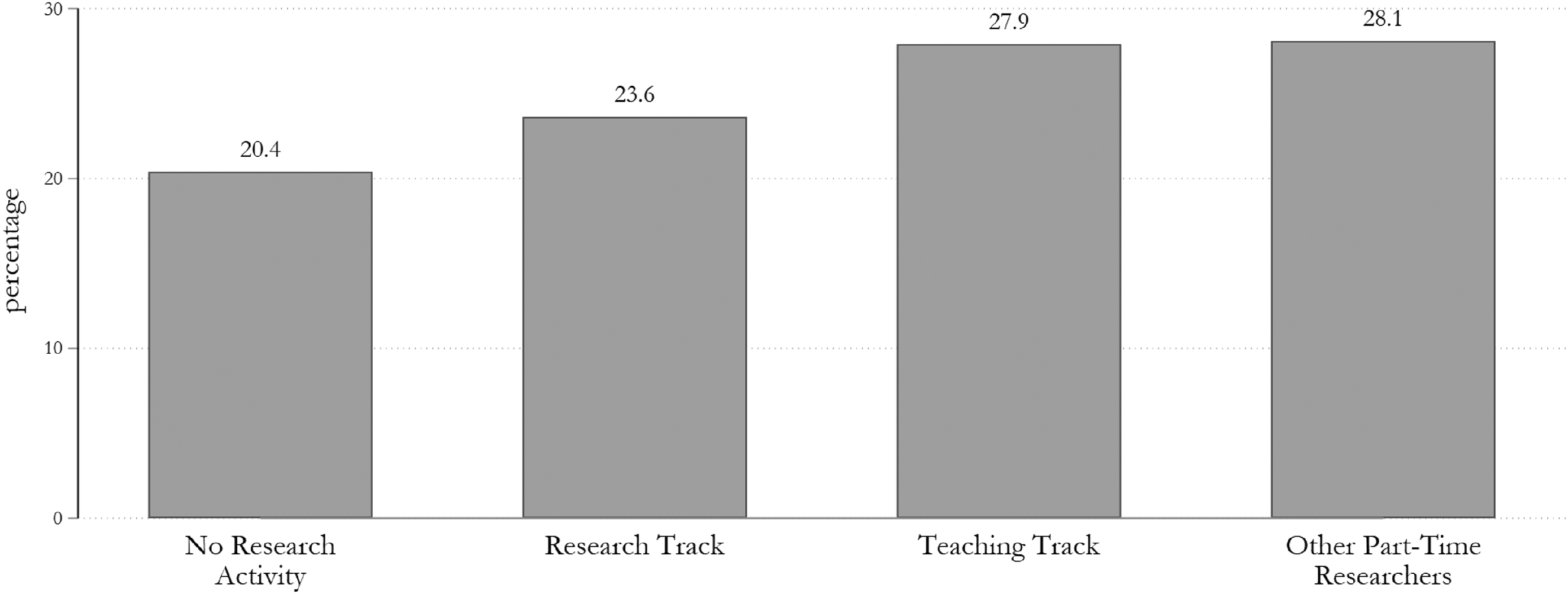
Percentage of Political Scientists by Research Role Based on the SAAP 2017 Survey. Only Presenters or Attendants with at Least a B.A. Degree Were Included in the Figure.
Almost 80 per cent of the respondents indicated that they were engaged in Political Science research activities. Among those respondents who reported conducting research in Political Science, 23.6 per cent stated they were members, either as fellows or researchers, of CONICET or another research agency. Additionally, 27.9 per cent indicated they were in the university teaching track, and 28.1 per cent responded that they conducted research in parallel with their practitioner or consultant positions or as members of a research group. Once individuals who do not engage in research are excluded from the sample, the groups with incentives to publish are almost evenly divided into thirds. About 30 per cent of the individuals who conduct research are in the Research Track, while approximately 35 per cent are in the Teaching Track, and another 35 per cent fall into the Other Part-Time Researchers category.
Analysis: Women in Political Science and Publications
Women in Argentine Political Science
For our analysis of the gender gap in publications, our first step is determining the percentage of women among the pool of political scientists with the potential to publish. We look at four metrics: (a) the respondents of the 2017 SAAP survey (Figure 2); (b) the membership of SAAP (Figure 3(a)); (c) the presenters at the National Political Science Conferences (Figure 3(b)); (d) the members of the Law, Political Science, and International Relations commission at CONICET (Figure 4). We determine the gender distribution of political scientists for each of these metrics. 4
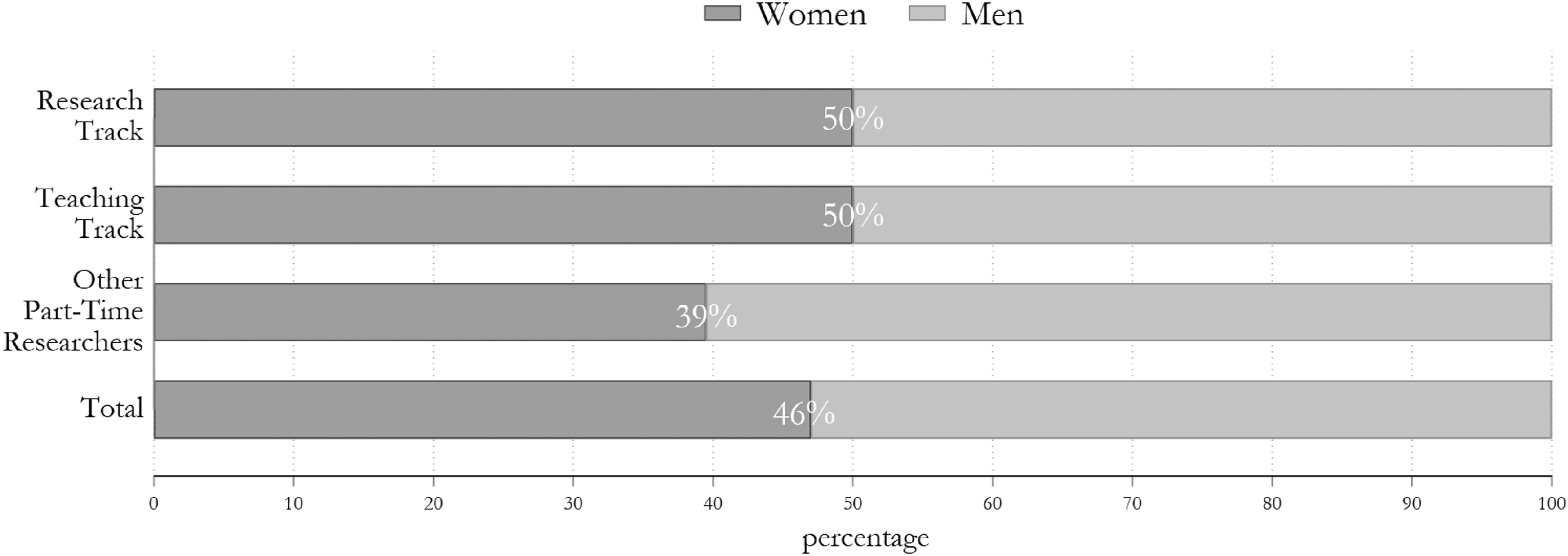
Percentage of Males/Females for Each Research Role. Individuals Who Responded that they did not do research were Excluded from this Picture. Only Presenters or Attendants with at Least a B.A. Degrees were Included.
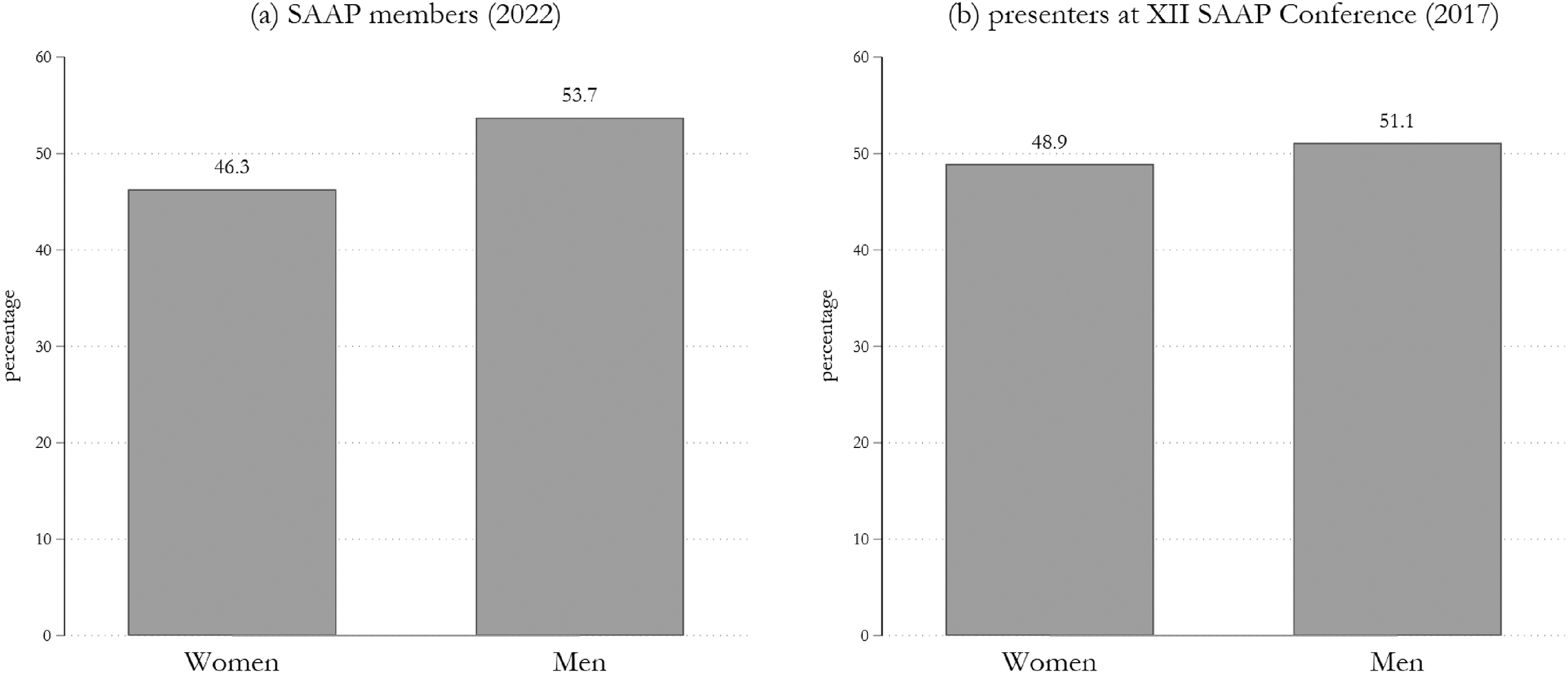
Members of SAAP by Gender (a), and Gender of the Presenters at XII SAAP Biennial Conference of 2017 (b).
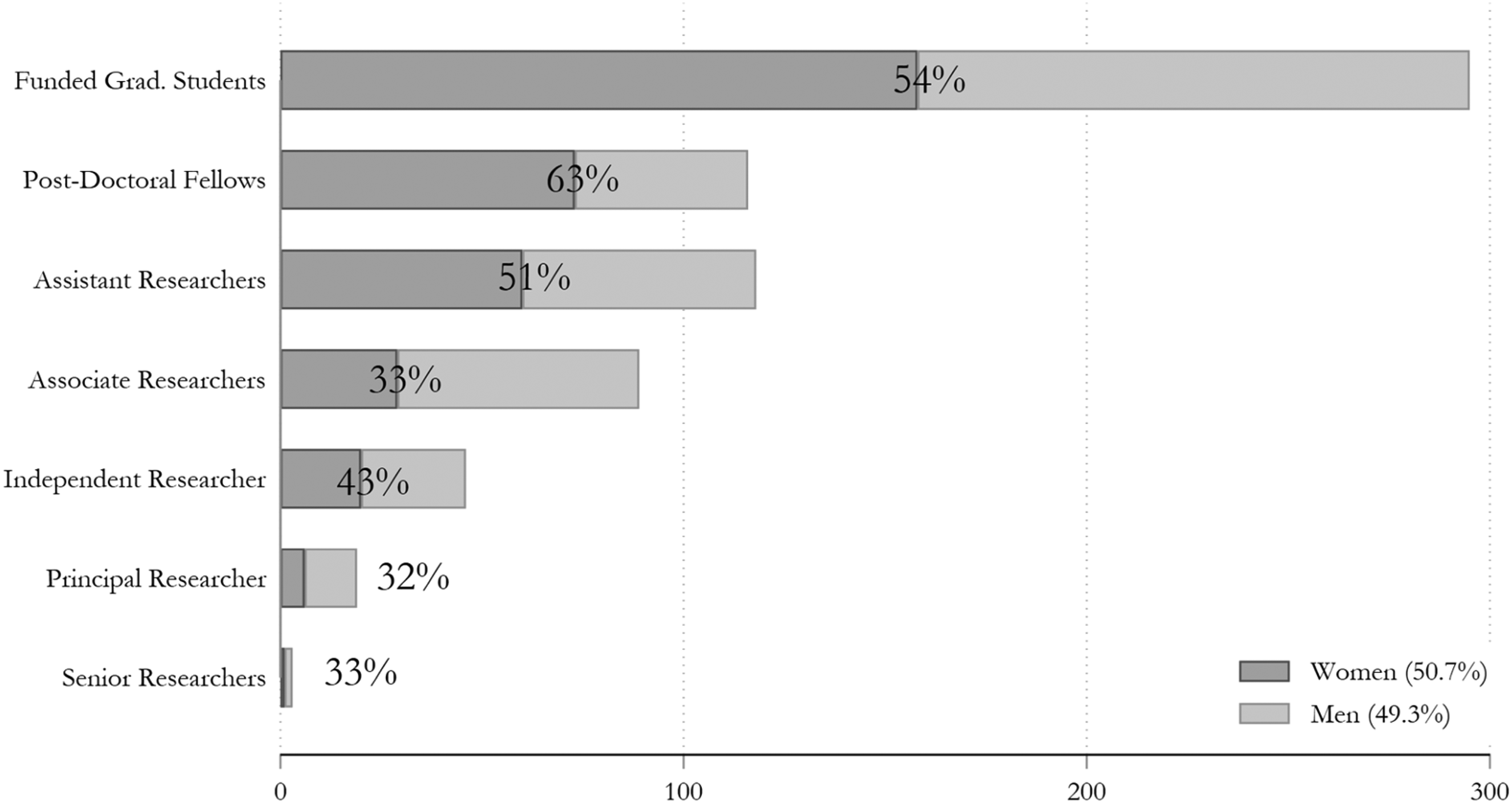
Absolute Numbers (Horizontal Axis), and Percentages (Inside Bars) of Males and Females at Each Research Category at CONICET.
Figure 2 shows the percentage of men and women involved in research by role according to the 2017 SAAP survey. 5 An exact 50 per cent of those who reported being members of CONICET or any Research Track agency are women. Overall, according to the 2017 SAAP survey, 46 per cent of the respondents who do research are women.
Figure 3(a) shows that 46.3 per cent of the SAAP members in 2022 are women, according to the information provided by the organisation itself. Regarding the presenters at SAAP conferences, we used the data from the XII Conference held in 2017 collected by Vallejo (2017). Although there were conferences in 2019 and 2021, the conference articles reviewing the events did not include gender-disaggregated data. As Figure 3(b) shows, 48.9 per cent of the presenters at the XII SAAP Conference were women.
Figure 4 shows the total number of researchers and the percentage of men and women at each rank within CONICET for the field mentioned. As the figure shows, the percentage of women varies according to the rank. In the first three categories, the percentage of women exceeds that of men. As you climb the researcher ladder, the lower the percentage of women. Overall, women make up 50.7 per cent of the political scientist at CONICET, compared to 49.3 per cent of men.
In conclusion, based on the data analysed, the percentage of women with the potential and incentives to publish in the discipline is similar to that of men. First, in the survey data of SAAP for 2017, the percentage of women among the respondents engaged in research is 46 per cent. Secondly, among the members of SAAP for 2022, the percentage of women is 46.3 per cent. Then, among the participants of the XII SAAP Conference, 48.9 per cent were women. Among the members of the CONICET in the Law, Political Science, and International Relations committee, the percentage of women is 50.7 per cent.
Basic Core of Scientific Journals
For our analysis of the gender gap in journal publications, we look at the eight Political Science journals included in the Basic Core of Scientific Journals (NBRC, for its initials in Spanish) within the Social and Human Sciences of CONICET. The use of the NBRC as a rule for the selection of journals is based on CONICET's criteria to evaluate scientific publications. 6 These journals are Revista de la Sociedad Argentina de Análisis Político (SAAP), PostData, Studia Politicae, Temas y Debates, Revista Argentina de Ciencia Política (RACP), Miríada, Colección, and Cuadernos de Política Exterior Argentina (CUPEA). Although these are not the only Argentine journals in which political scientists might choose to publish, they represent a significant portion of the Political Science publishing landscape, and most of the authors are political scientists. Unlike other journal evaluation indexes such as the Latindex catalog, the NBRC not only subjects journals to a technical evaluation based on criteria of quality and impact but also involves evaluations by members of CONICET's Scientific Advisory Committee, who in time, also evaluate the fellowship and researchers submissions. Therefore, publishing in these journals not only has an impact, but also implies a better evaluation for those seeking a research career. 7 The selection of journals is based on the fact that previous research has shown that scholars from the Global South are largely absent from Northern journals, as a result of unequal participation in social and professional networks (Montal et al., 2022) and due to different factors that influence scholars’ submission decisions, such as the country of PhD studies, the gender and theoretical approaches (Montal et al., 2024). Hence, the selection national journals for this study provides a good pool of articles authored by Argentine scholars.
Table 1 summarises the articles analysed here. We only included peer-reviewed articles. The data include 974 articles in 144 issues of eight Political Science journals that were published in Argentina between 2011 and 2021. The number of articles per journal ranges from 64 in the case of CUPEA to 191 for Temas y Debates. The average number of articles per issue is 6.9, ranging from 4.5 articles per issue in the case of Studia Politicae, to 8.7 articles in Temas y Debates. Among the 974 articles, we have documented 1307 authors in our database, ranging from 56 for RACP to 256 for Temas y Debates. Finally, the number of authors per article is 1.4. The journals with the fewest authors per article are Colección and RACP (1.2), while the journal with the highest number of authors per article is Studia Politicae (1.5). Supplementary Appendix A1 explains some decisions taken during the codification process and compares the percentage of women in the dossier and miscellaneous volumes, showing no negative differences.
Descriptive Statistics of Argentine Political Science Journals from 2011 to 2021, Showcasing the Distribution of Published Articles, Volumes Produced, Average Articles per Volume, and Authorship.
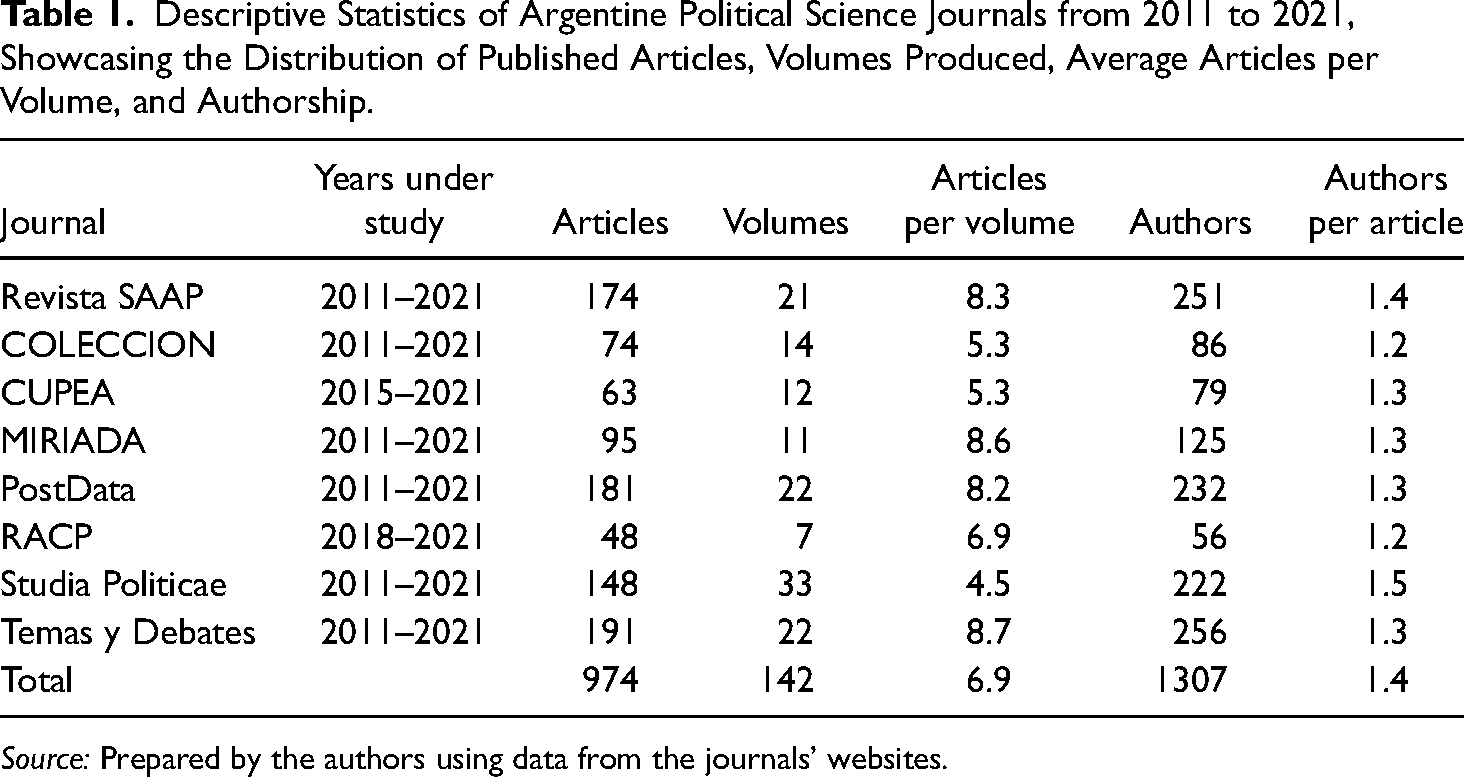
Source: Prepared by the authors using data from the journals’ websites.
Women as Authors in Journals
We now proceed to analyse the percentage of female authors in Argentine Political Science journals, to further compare them with the four measures of women's representation in the discipline. Figure 5 shows the percentage of male and female authors in each of the eight journals analysed. The total percentage of female authors in these journals is 44.5 per cent. The journals are ranked from lowest to highest percentage of female authors, with Colección having the lowest value (29.1 per cent) and Temas y Debates having the highest percentage of female authors (53.5 per cent).
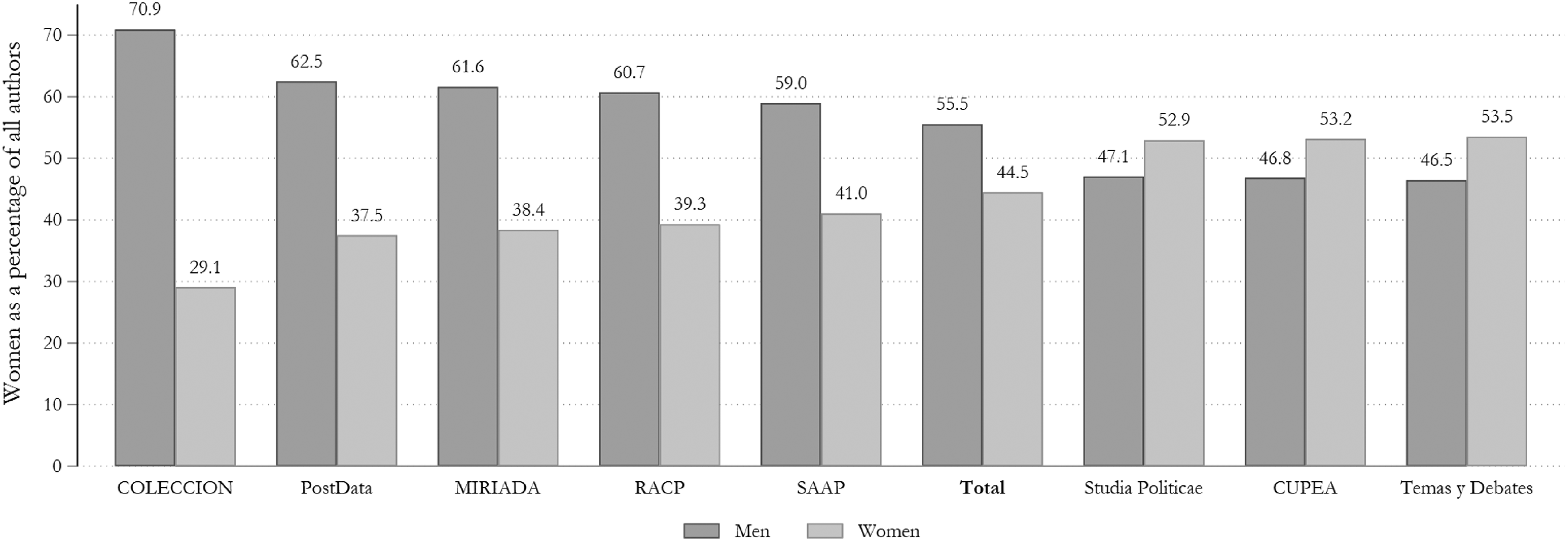
Percentage of Men and Women in Eight Political Science Journals in Argentina. Journals Sorted Left-Right from the Lowest to the Highest Presence of Female Authors. Additionally, the Total Category Represents the Mean of the Eight Journals.
Figure 6 addresses the questions of gender representation in journals in relation to the percentage of women in the discipline with publishing potential. The Y-axis shows the eight publications analysed and the corresponding percentage of women among the total number of authors.
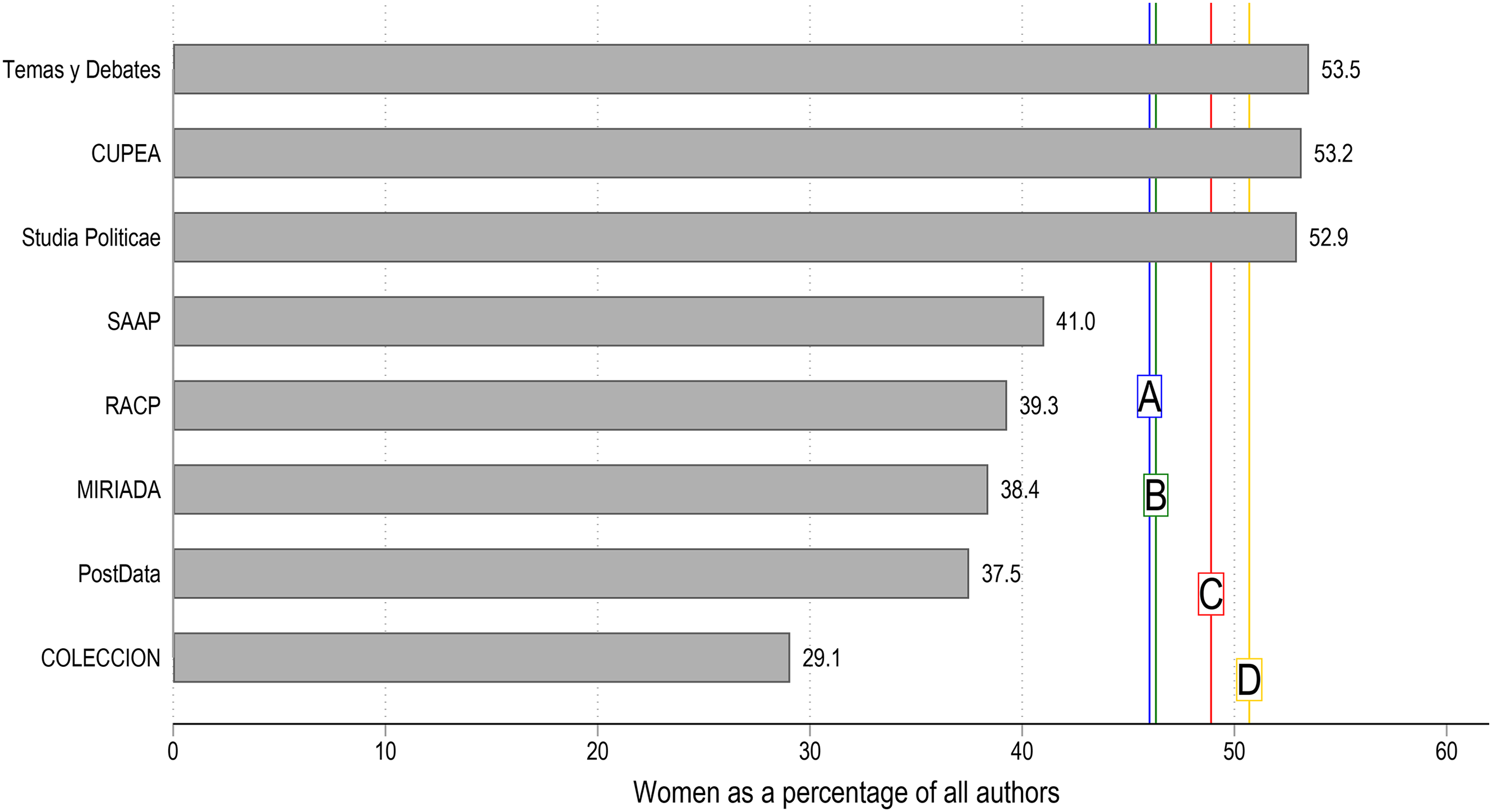
Women as Percentage of Authors in Argentine Political Science. Vertical Lines Show Four Measures of the Percentage of Women in Argentine Political Science. The A Line Indicates the Percentage of Women Who Reported Engaging in Scientific Research Related to Political Science in the Survey Conducted by SAAP at its XII Conference − 46.0 per cent. On the Other Hand, the B Line Reflects the Percentage of Women Among the Total Members of SAAP − 46.3 Percent. The C Line Accounts for the Percentage of Female Presenter Attendees at the SAAP Conference in 2017−48.9 Percent-. Finally, the D Line Represents the Percentage of Women Among the Total Members of CONICET in the Commission of Law, Political Science, and International Relations. It Includes Researchers from all Ranks and Doctoral and Postdoctoral Fellows − 50.7 Percent.
Only three out of the eight journals analysed reached any of the four proxies used in the analysis. Although on average, the gender gap in publications is not as large as documented in studies from other countries, it still exists. Moreover, if we examine each journal individually, we observe that this small gap is not uniform. In some cases, the presence of women is as low as 29 per cent.
Co-Authorship Patterns
The next step is to analyse authorship patterns that may be affecting the gender gap in authorship. There is a possibility that co-authorship could influence the gender gap in publication patterns, as documented by Teele and Thelen (2017) in the U.S. where women were not taking full advantage of co-authorship. Figure 7 shows the authorship patterns in the analysed journals according to the gender of the authors. Contrary to American trends, co-authorship is not a common practice in Argentine Political Science; solo articles are the rule. Almost half of the published articles are authored individually by men (46 per cent), while 29 per cent are authored individually by women. This reveals an interesting fact: individual authorship predominates in Argentine Political Science, accounting for 75 per cent of publications, while co-authorship accounts for only 25 per cent.
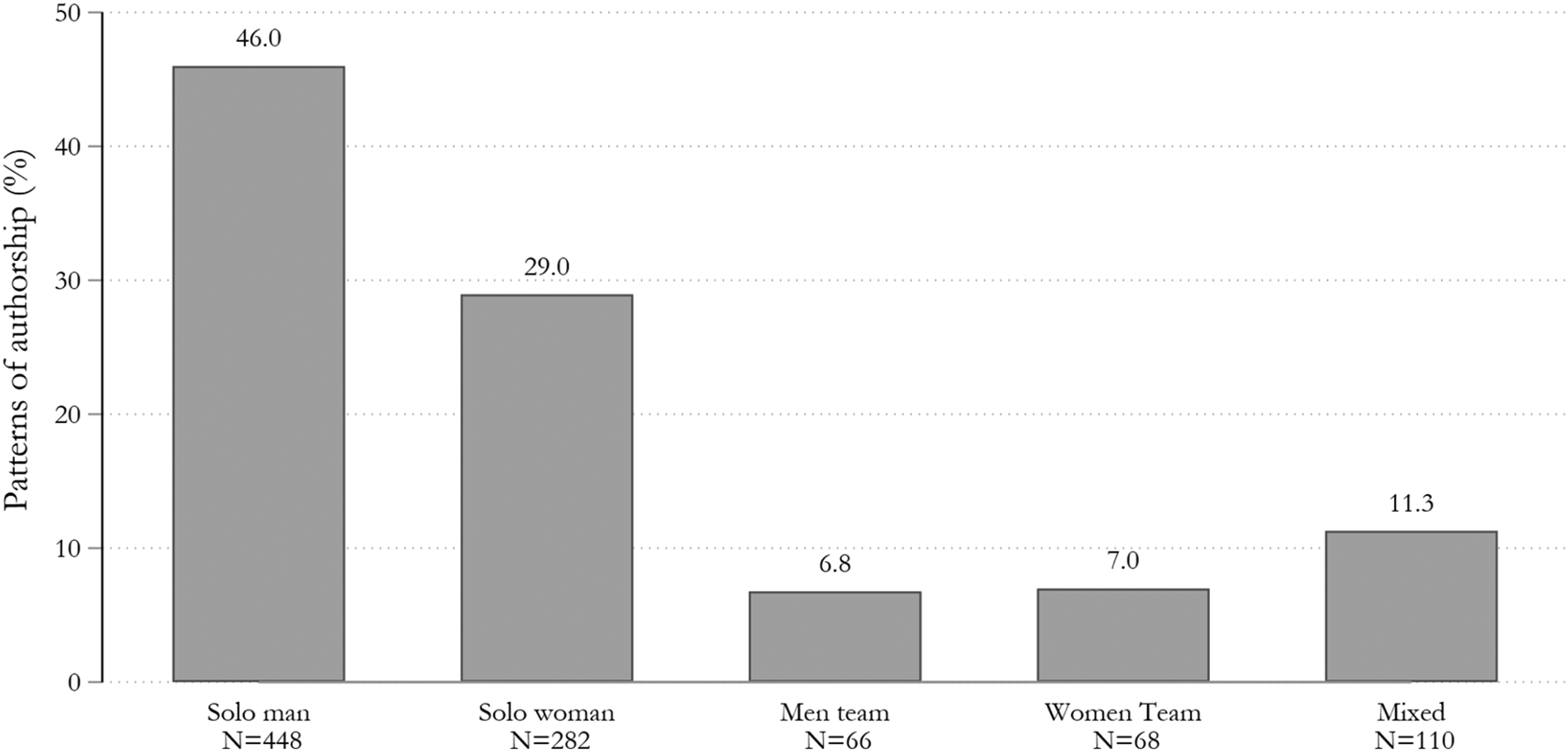
Authorship Patterns of Publications in Argentine Political Science Journals. Bars Show the Percentage of Each Category in the Analysed Sample. Additionally, Absolute Values Appear Next to Each Category.
Additionally, there are no significant differences between group articles authored exclusively by male teams and those authored exclusively by female teams. Actually, the tendency towards publishing in mixed teams is greater than in same-gender teams. Supplementary Appendixes A2.1, A2.2, and A2.3 show the pattern of authorship over time, by journal and by journal across time. Throughout the entire period, articles authored by solo men were more common than other forms of authorship, but it is not the same in all journals and across time.
Subfields
In addition to co-authorship, another element that might affect the gender gap in authorship is the gender division in the subfields studied within the discipline, as shown by Key and Sumner (2019) in the United States and Candido et al. (2021) in Brazil. This means that if one gender predominates in a particular subfield, and if journals tend to specialise in it at the expense of others, it will eventually lead to a gender bias in publications in general. We examine these patterns by analysing the 2017 SAAP survey and the authorship trends in Political Science journals. Figure 8 shows the relation between gender and subfield according to the responses in the SAAP survey of 2017 and the eight specified journals analysed in this article. Specifically, we examine whether an article's primary subfield draws from one of those established by SAAP for their conferences: International Relations, Political Theory and Philosophy, State, Administration and Public Policies, Public Opinion, Communication and Political Marketing, Comparative Politics, Political Institutions, History and Politics, Development, Teaching and Methodology of Political Science, and Gender and Politics. 8 The survey data shows the percentage of female respondents who reported conducting research in each subfield, while for journal data, the figure displays the percentage of female authors publishing in each one.
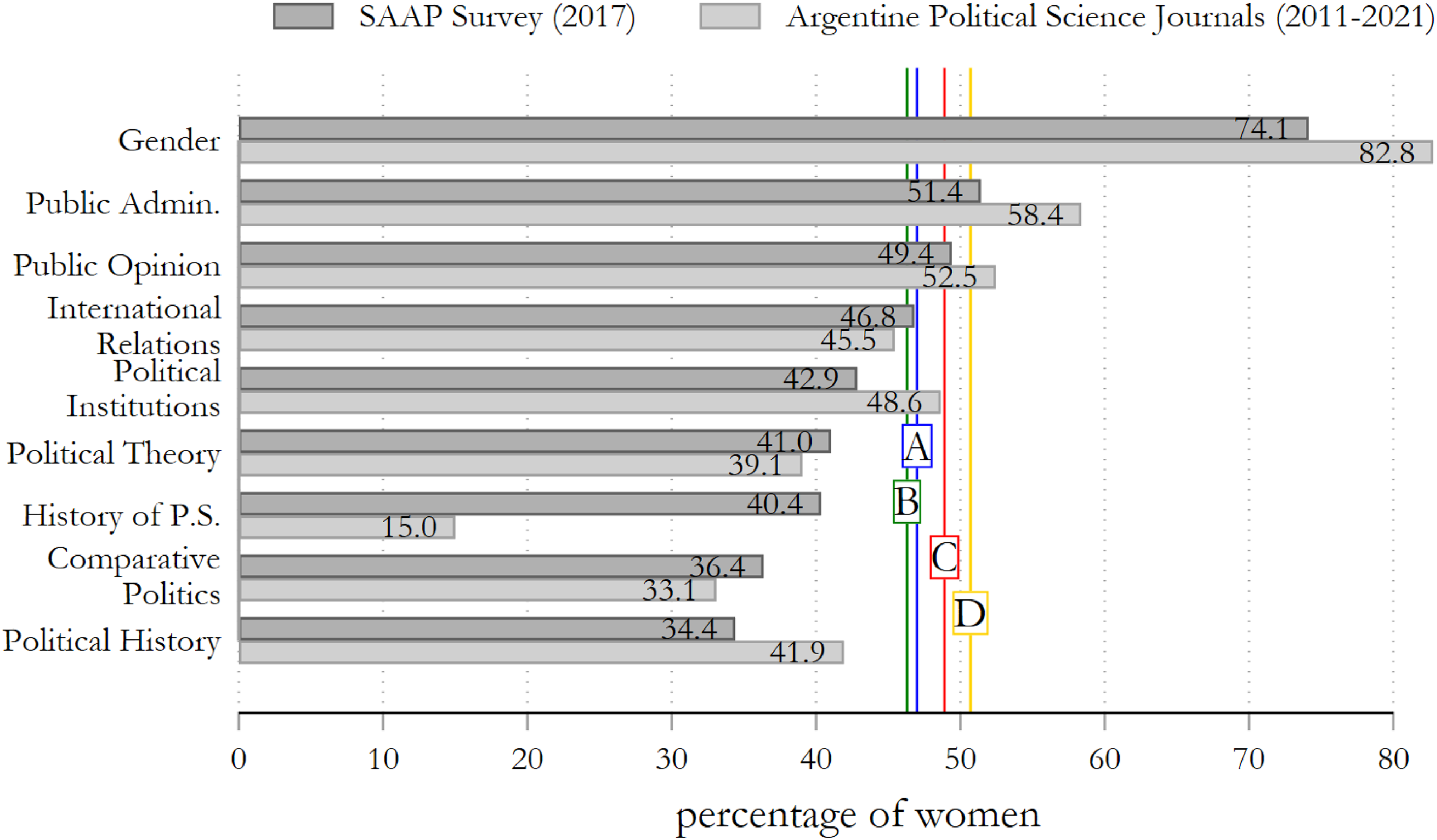
Women's Presence by Subfield of Research in Political Science (%). Data from SAAP Survey from 2017, and Argentine Journals of Political Science (2011–2021). The A line indicates the Percentage of Women Who Reported Engaging in Scientific Research Related to Political Science in the Survey Conducted by SAAP at its XII Conference − 47.0 per cent. On the Other Hand, the B Line Reflects the Percentage of Women Among the Total Members of the SAAP Conference in 2017 − 48.9 per cent. Finally, the D Line Represents the Percentage of Women Among the Total Members of CONICET in the Commission of Law, Political Science, and International Relations. It Includes Researchers from All Ranks and Doctoral and Postdoctoral Fellows − 50.7 per cent.
Figure 8 also includes the four references of the percentage of women in Argentine Political Science. 9 Overall, the survey and the authorship show similar patterns of women's presence by subfield in Political Science. We identify some salient patterns. First, women have a clear affinity for research on Gender and Politics, in both the survey and the articles.
Second, in four of the nine subfields, we do not observe any significant gender gap in the results of the survey or the published articles. Those four subfields are State, Administration and Public Policies, Public Opinion, Communication and Political Marketing, International Relations, 10 and Political Institutions. This finding contrasts with studies from other countries, such as Candido et al. (2021) for Brazil, who found that every subfield was male-dominated. Third, in the remaining four subfields, the presence of women is considerably lower than the men's in both surveys and journals. These are Political Theory and Philosophy, Development, Teaching and Methodology of Political Science, Comparative Politics, and Political History. Finally, regarding the differences between articles and survey, we found the largest gap in Development, Teaching and Methodology of Political Science.
Given the existence of subfield affinities within the discipline, which seems to be consistent in the survey and the journals’ data, it is worth asking whether the eight journals analysed specialise in a particular subfield and whether this specialisation corresponds to a subfield with a gender gap. When looking at Table 2, we see that there are only two specialised journals. First, CUPEA is specialised in the field of International Relations with 85 per cent of its articles related to this area. Second, RACP, with nearly two-thirds (63 per cent) of its articles focuses on Political Theory and Philosophy. Although the journal's website describes it as a generalist journal, it can be perceived as a Political Theory and Philosophy journal on the basis of the articles it has published and the nature of the discussions within it, and authors might consider both the topic of their article and the nature of the discussion that prevails in the journal when submitting an article. The other six journals show a more generalist approach, with a more balanced distribution of the subfields addressed by the articles.
Subfields of Articles in the Eight Journals of Argentina Political Science (%).
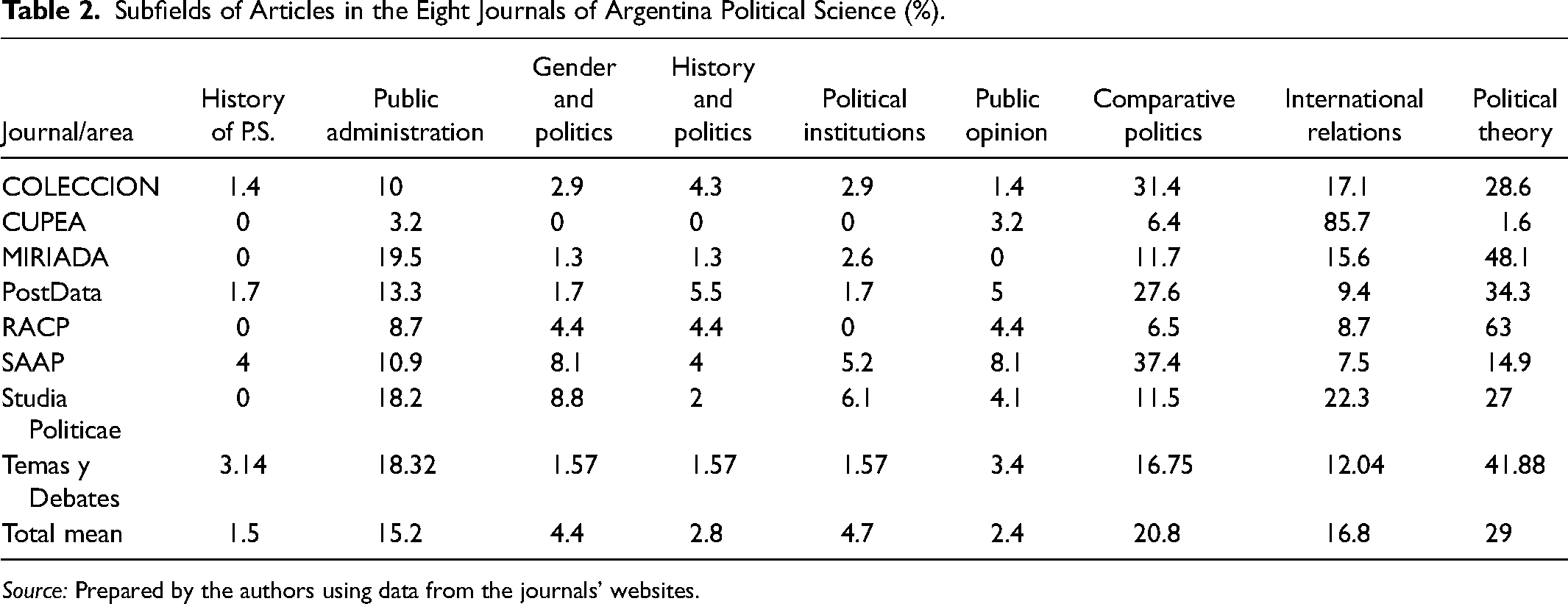
Source: Prepared by the authors using data from the journals’ websites.
Overall, most of the articles published in the Argentine journals of Political Science belong to Political Theory and Philosophy (29 per cent). The second most recurrent subfield in the articles under study is Comparative Politics (20.8 per cent), followed by International Relations (16.8 per cent), and State, Administration, and Public Policies (15.2 per cent). Each of the other subfields encompasses less than 5 per cent of the articles: articles on Political Institutions are 4.7 per cent; on Gender and Politics, 4.4 per cent; on History and Politics, 2.8 per cent; on Public Opinion, Communication and Political Marketing, 2.4 per cent; and on Development, Teaching and Methodology of Political Science, 1.5 per cent.
Putting together the information from Figure 8 and Table 2, we created Figure 9 to show the percentage of female authors and the percentage of articles from three out of the four main subfields from Table 2, by journal. 11 We observe that journals publishing the largest share of a subfield with a near-parity in gender distribution, such as State, Administration, and Public Policies (left panel), show a positive correlation with the share of female authors. In contrast, journals that publish the largest share of subfields with lesser female representation, such as Comparative Politics (middle panel) or Political Theory and Philosophy (right panel), exhibit a negative correlation with the percentage of female authors.
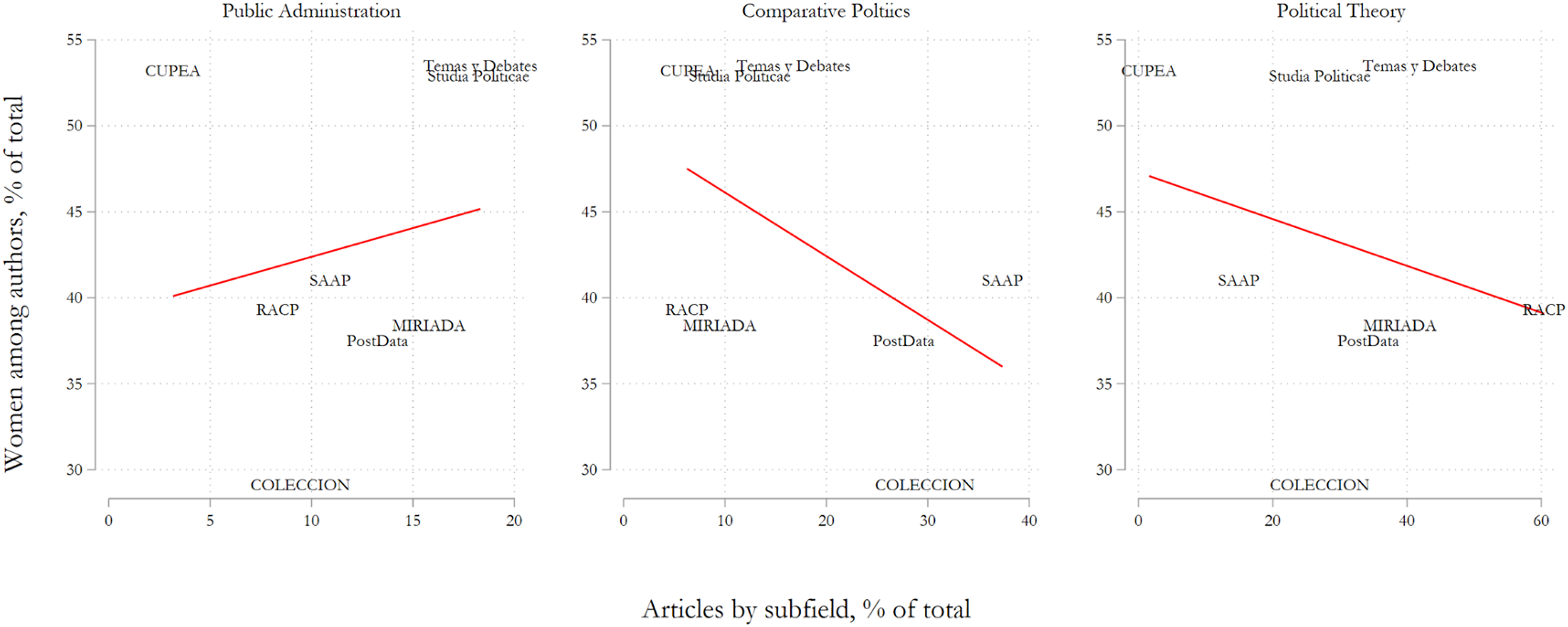
Women Among All Authors, as a Function of State, Administration and Public Policies Articles (Left), Comparative Politics Articles (Centre), or Political Theory and Philosophy Articles (Right), 2011–2021.
These findings highlight that the gender gap in publications within Political Science is not universal across all subfields. We find evidence of this through survey responses and by analysing authorship in eight Argentine journals of Political Science. However, the gender gap does exist in some of the dominant subfields of these journals. As expected, there is a negative correlation between the percentage of female authors and the percentage of articles on topics where women seem to have less affinity than men. In summary, our exploration of potential connections between Political Science subfields, gender, and publication patterns reveals a scenario that is different and more inclined towards parity than what other studies in the U.S. (Key and Sumner, 2019; Young, 1995) and in Latin America (Candido et al., 2021) have found. Specifically, we have discovered that, when examining publications by subfield, not all are dominated by men, and almost half of them tend towards parity. However, on the other hand, we found that women do not have a strong presence in many of the subfields that dominate Argentine Political Science journals.
Given that the gender gap documented is not explained by co-authorship patterns and it is not a matter of all subfields, it is worth asking about the journal prestige. Therefore, a comparison of female authorship according to the prestige of the journal is included in Supplementary Appendix A2.4, which shows that there are no significant differences in this respect. 12
Discussion and Conclusion
Publications in academic journals aim to reflect debates within the discipline, highlighting issues considered relevant to its members and stimulating debate among colleagues. They also reflect the presence – or absence – of gender gaps in the discipline. This article analyses gendered publication patterns in eight Argentine Political Science journals over 10 years. Our results document three key findings. First, we find that, overall, 55.5 per cent of the authors analysed are men, while 44.5 per cent are women. This gap is not significantly different from our estimates of female representation in the discipline. Moreover, the gap is not as pronounced as that documented in studies from other countries. However, when examining each journal individually, we found heterogeneity in the representation of women as authors.
Second, we found that the pattern of co-authorship does not explain the gender gap either. Although men publish more as sole authors than women, in Argentina, sole authorship predominates, accounting for 75 per cent of publications. Co-authorship, on the other hand, accounts for only 25 per cent, and there is virtually no difference between papers authored by male, female, or mixed teams. This highlights a characteristic of the Political Science academy in Argentina, which favours solo authors, while the trend in American and European Political Science is toward multi-authored papers.
As shown in previous research on Political Science journals in other countries (Key and Sumner, 2019), we found a gender gap in some subfields. Our results show that four out of the nine subfields in Political Science in Argentina are male-dominated. Conversely, the authors of three subfields are predominantly women. Finally, two subfields, International Relations, and Political Institutions, tend towards parity. Given these patterns, we asked whether the journals in our study tended to favour certain subfields, particularly those dominated by men, as a possible explanation for the gender gap. While six out of the eight journals analysed do not specialise in any specific subfields, articles on Political Theory and Philosophy, Comparative Politics, International Relations, and State, Administration, and Public Policy dominate the Argentine Political Science agenda. In addition, we find that journals with predominantly masculinised subfields have a lower presence of women than those that prioritise non-gendered subfields.
To better understand and improve the role of gender in Political Science, but also in many other academic fields in Argentina, journals need to collect and publish submission statistics. This includes tracking the number of articles submitted to journals, how many are initially accepted, the peer review process, the frequency and timing of publication, and the gender of authors and reviewers. This data can help to identify at what stage in the publication process women are encountering barriers to publishing their work. In addition, keeping a record of conference submissions and the gender of authors, as well as the gender of researchers of universities and within professional organisations, is crucial for a better understanding of gender patterns in the discipline. Finally, further research should also explore the presence of a gender gap in international publications among political scientists working in Argentina. While this topic exceeds the scope of our research, we believe that our findings, especially the differences in the gender gap by subfield, can shed light on this matter.
Supplemental Material
sj-docx-1-pla-10.1177_1866802X241296152 - Supplemental material for Gender Disparities in Academic Publishing in Argentina. A Review of Political Science Journals (2011–2021)
Supplemental material, sj-docx-1-pla-10.1177_1866802X241296152 for Gender Disparities in Academic Publishing in Argentina. A Review of Political Science Journals (2011–2021) by Luciana Berman, María Paula Bertino, and Agustín Vallejo in Journal of Politics in Latin America
Footnotes
Acknowledgments
The authors thank Lourdes Rodríguez Bohn and Gonzalo Kenny for research assistance; María Elena Martin, Belén Amadeo and Jarosław Szczepanski, for the comments; Ernesto Calvo, Martín D'Alessandro, Gustavo Dufour, María Laura Tagina, Esteban Iglesias, María Soledad Ferrer, Pablo Soffietti, Yanina Welp and Benjamin Golfrank for the interviews; and the two anonymous reviewers. An earlier version of this article was presented at the 27° International Political Science Association Congress.
Declaration of Conflicting Interests
The authors declared no potential conflicts of interest with respect to the research, authorship, and/or publication of this article.
Funding
The authors received no financial support for the research, authorship, and/or publication of this article.

Supplemental Material
Supplemental material for this article is available online.
Notes
Author Biographies
References
Supplementary Material
Please find the following supplemental material available below.
For Open Access articles published under a Creative Commons License, all supplemental material carries the same license as the article it is associated with.
For non-Open Access articles published, all supplemental material carries a non-exclusive license, and permission requests for re-use of supplemental material or any part of supplemental material shall be sent directly to the copyright owner as specified in the copyright notice associated with the article.
