




Abstract
Our study examines whether citizens punish political misbehavior by estimating the impact of disciplinary sanctions on the re-election of political parties in Colombian mayoral elections. Results reveal that disciplinary sanctions have no effect on the re-election of paramilitary-linked parties. However, they can have a significant negative impact on the re-election of traditional and minority parties. The lack of punishment suggests that organizations manipulate voters through persuasion mechanisms, aligned with the Schumpeterian view of political competition.
Introduction
The Schumpeterian view of political competition suggests that candidates (political parties) are enterprises selling platforms aligned with private interests, using persuasion elements like propaganda to capture voters. Under this framework, two opposite predictions emerge: candidates' misbehavior can reduce the effectiveness of electoral firms (Banerjee et al., 2010, 2012; Chong et al., 2015; Clausen et al., 2011; Ferraz and Finan, 2008, 2011; De Figueiredo et al., 2011; Humphreys and Weinstein, 2012; Morris and Klesner, 2010), while manipulation mechanisms can exploit limited rationality or clientelist networks to maintain voters for politicians with poor performance (Arias et al., 2022; Chang et al., 2010; Chong et al., 2015; Ferraz and Finan, 2011; Rundquist et al., 1977; Winters and Weitz-Shapiro, 2013).
This literature could be relevant in countries with high rates of political misconduct and irregularities in elections, such as Brazil, Honduras, Ecuador (Heinz, 2020; Lehoucq, 2007), and Colombia. However, in the latter case, the relevance increases for several reasons: (1) Firstly, unlike other Latin American democracies that have become fairer (Donno and Roussias, 2012; Foweraker and Krznaric, 2002), the Colombian democracy does not seem to improve (Duque, 2018; Zechmeister and Lupu, 2019) and is still considered weak (Duque, 2018). (2) Especially since the second half of the twentieth century, political affairs have been affected by the presence of non-state armed groups (Acemoglu et al., 2013; Dal Bó and Di Tella, 2003; Gutierrez and Barón, 2005; Rivera, 2007; Valencia, 2007) that, through power-building processes, intimidation, and other illegal practices at the local level, impact parties and voters (Duncan, 2007; Hoyos, 2009; Losada, 2006; Romero, 2003; Schedler, 2004). This phenomenon also differentiates it from other countries in the region and strengthens the creation of armed clientelism structures (Duncan, 2005; Peñate, 1999; Revelo and García, 2010) and parties linked with particular groups such as the paramilitaries (Acemoglu et al., 2013). (3) Local-level electoral irregularities have increased since 1991 when the new constitution (Constitución Política de Colombia) gave municipalities new political and fiscal attributions, positioning mayors and local administrations to be in close contact with communities and the central government – a cardinal position for national clientelist networks to build and maintain political power (Buitrago and Davila, 2010; Gutiérrez, 2007; Ocampo, 2018).
Considering the hereto mentioned issues, this study seeks to determine if political misbehavior leads to electoral punishment in Colombia or, on the contrary, the manipulation mechanisms typical of the Schumpeterian framework prevail leading to maintaining voters for politicians with poor performance. The study is conducted at the party-municipality scale differentiating parties among those associated with paramilitary groups 1 and others (traditional and minority parties) following the classification proposed by Acemoglu et al. (2013). We use a party-municipality scale because the Colombian electoral system prohibits candidates from running in consecutive elections. We also explore heterogeneous effects by levels of electoral fraud risk (ER) and electoral violence risk (VR) (information provided by the Mission of Electoral Observation or Misión de Observación Electoral [MOE] since 2007) to capture the incidence of clientelist networks, non-state armed actors, and other anomalies (some of which are particular to the country).
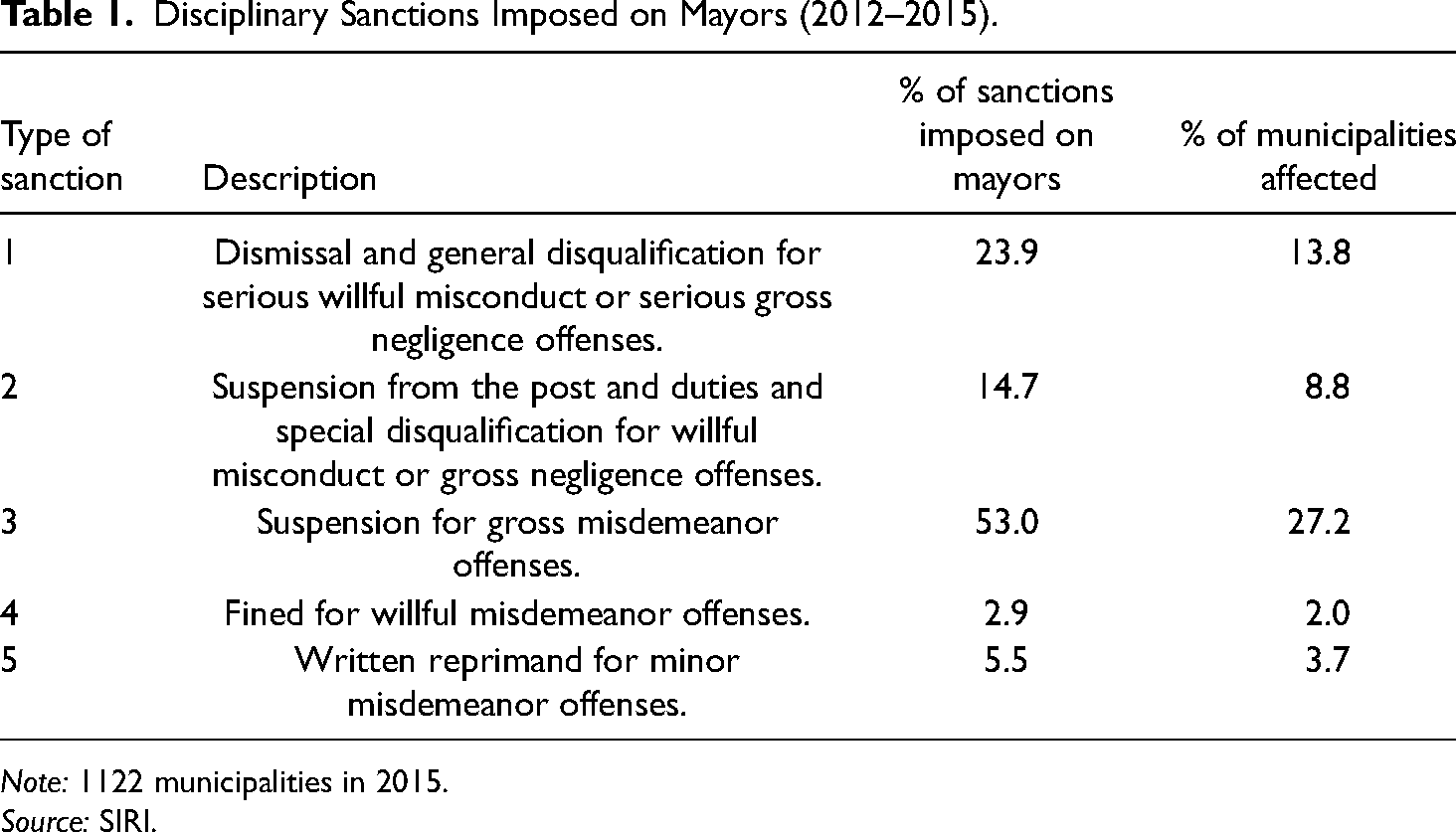
We assume that disciplinary sanctions imposed on mayors are a good proxy for political misbehavior and estimate their impact on the re-election of the political party supporting the mayor's candidacy using a difference-in-difference identification strategy. We consider that these sanctions define an exogenous treatment, as they are imposed by a central government entity, the Attorney General's Office (Procuraduría General de la Nación [PGN]), which is difficult to coerce at the local political level. We use the sanctions applied between 2012 and 2015, as this is a unique lapse that boasts publicly consolidated data and because they were important in the democratic context, affecting around 44 percent of Colombian mayors between 2012 and 2015, with nearly one-third leading to dismissal and general disqualification. As such, our study focuses on the 2011 and 2015 elections.
Our main result reveals that disciplinary sanctions have little or no effect on the re-election of political parties with misbehaving mayors. This small punishment vote effect from the Schumpeterian view suggests that political parties can counteract bad publicity generated by the misconduct of mayors with mechanisms of persuasion or manipulation, such as duress, which exploit imperfect voter information (Ferraz and Finan, 2008; Rundquist et al., 1977; Winters and Weitz-Shapiro, 2013). This phenomenon could be explained by the presence of clientelist practices at the local level typical in Colombia (Buitrago and Davila, 2010; Duncan, 2005; Gutierrez and Barón, 2005; Ocampo, 2018; Peñate, 1999).
In detail, the study shows that no type of disciplinary sanction on a mayor endorsed by paramilitary-linked parties affects the probability of re-election of these organizations. This is consistent with Valencia (2007) and Acemoglu et al. (2013)'s results and aligns with the Schumpeterian view of manipulation mechanisms, in this case, based on duress. This would reveal the power of armed clientelist structures in Colombian municipalities (Peñate, 1999; Revelo and García, 2010) to keep their political control and raise concerns about the opposition's ability to neutralize politician misconduct in the future (Chong et al., 2015; Duncan, 2005; Peñate, 1999; Revelo and García, 2010).
Our heterogeneity exercises for ER reveal that sanctions on mayors affiliated with traditional (paramilitary-linked) parties do not affect (increase) their probability of re-election in municipalities with a high intensity of this anomaly. For traditional parties, it is reasonable to assume that this is an effect of their greater experience in handling fraud through material inducement (Rundquist et al., 1977). Regarding paramilitary-linked parties, the results could reveal the capacity of clientelist armed mechanisms to lead to voter “support” for sanctioned parties (Acemoglu et al., 2013; Valencia, 2007). Both cases illustrate the incidence that manipulation instruments explained by the Schumpeterian view of political competition have.
The research indicates that disciplinary sanctions’ severity treatments effectively capture the impacts of sanctions in Colombia, a developing country with a multi-party electoral system without incumbency. This is, to our knowledge, a a novel in Colombia and Latin America. Our principal contribution is to evidence the lack of electoral punishment in Colombia and the mechanisms through which organizations and practices influence the electoral system. It reveals how violence/fraud can affect voter punishment and electoral results. This knowledge enables unbiased future analyses in democracies with established clientelist structures and helps explain the persistent flaws in their political systems.
Context
Mayoral Elections in Colombia
Colombian municipalities are autonomous entities with administrative competencies and participation in the national budget and have the ability to create financial mechanisms like taxes (Constitución Política de Colombia, Article 287). The municipality's political relevance lies in its role in the national networks of clientelism as the link between central government institutions and communities. The mayor can facilitate complex processes that allow certain sectors to exert political power through clientelist networks (Buitrago and Davila, 2010). Therefore, mayoral elections are important in strengthening political power-building processes due to local politicians obtaining access to wide competencies and having the ability to usurp government resources on an unimaginable scale (Gutierrez and Barón, 2005; Ocampo, 2018).
Mayoral elections are held every four years in 1122 municipalities by a first-past- the-post system that concur with local legislative contests. They take place in October, with mayoral terms starting on January 1 and ending on December 31 of the election year. To participate, candidates must be endorsed by a political party or movement registered with the National Electoral Committee (Consejo Nacional Electoral [CNE]) 2 or must obtain signatures from at least 20 percent of the electoral census of a municipality. The National Registry of Civil Status (Registraduría Nacional del Estado Civil [RNEC]) oversees the elections.
Candidates cannot run for two consecutive elections, but a political party or coalition can be re-elected through a different candidate. In the section “Data,” we provide information on Colombia's political structure and differentiate among paramilitary-linked, traditional, and minority parties.
Disciplinary Sanctions in Colombia
The PGN, established in 1830, is a Colombian central government institution that imposes disciplinary sanctions on public servants who commit misconduct and offenses that are indicators of their integrity (Observatorio de Transparencia y Anticorrupción, 2020). Disciplinary sanctions aim to prevent and correct governance misconduct and are determined by the severity of the offense. 3 These are recorded by the PGN in the Information System for the Registration of Sanctions and Causes of Disability (Sistema de Información para el Registro de Sanciones y Causas de Inhabilidad [SIRI]). 4 Our study focuses on disciplinary sanctions determined by the PGN, not other types of sanctions that public servers may face (e.g. criminal and administrative, among others).
The process of assigning a sanction involves a citizen's complaint, investigation, verdict, and final decision. The complaint must include identification, facts, and proof, followed by the release and final decision (confirm, revoke, modify, absolve, or nullify). Our study examines the final decisions to assign sanctions under Law 734 of 2002, despite various regulations overseeing disciplinary sanctions in Colombia. 5 Table 1 provides publicly available data about disciplinary sanctions imposed on mayors.
Disciplinary Sanctions Imposed on Mayors (2012–2015).
Note: 1122 municipalities in 2015.
Source: SIRI.
Violence: Influence of Non-State Armed Groups on Colombian Elections
Non-state armed groups have historically influenced Colombian elections, especially since the second half of the twentieth century, due to bipartisan violence (between traditional parties: liberals and conservatives) and with the rise of non-state armed groups (paramilitaries and guerrillas). Many studies have focused on the Colombian armed conflict (Gutierrez and Barón, 2005; Rivera, 2007) and its relationship with elections (Acemoglu et al., 2013; Dal Bó and Di Tella, 2003), documenting non-state actors’ power-building and political influence at local levels (Duncan, 2007; Romero, 2003).
Valencia (2007) highlights the influence of politicians and paramilitaries in electoral processes, where they alter local political power and negotiate with the central government. This has led to the detachment of traditional parties and the emergence of new ones in the 2006 elections. Hoyos (2009) claims that the paramilitaries violated two fundamental conditions of Schedler (2004)'s electoral democracy when affecting the supply of freedom by intimidating incumbents or opposition groups and impacting free demand by coercing the electorate.
Meanwhile, Losada (2006) demonstrates that non-state armed actors’ political techniques included not only coercion, fraud, and vote-buying, but that also supported a specific candidate. Peñate (1999) classified these practices as armed clientelism, which are conformed nets that capture local institutions using weapons and alliances with politicians (Revelo and García, 2010), which could be constrained to pay commission to “Lords of War” and to manage national public resources or bureaucratic assignments (Duncan, 2005).
Likewise, Acemoglu et al. (2013) demonstrate that paramilitaries influenced Colombian elections between 1991 and 2006 by capturing votes and reducing the opposition's strength. They were linked to key political influences, 6 including the Justice and Peace Law (Ley de Justicia y Paz). 7 The paramilitary-linked parties grew significantly in participation after 2001. Given the above, since 2007, the MOE has created a municipal VR indicator based on historical armed conflict factors like political violence, among others.
Electoral Fraud in Colombia
Studies suggest that Latin America's electoral processes have become fairer over the past 30 years (Donno and Roussias, 2012; Foweraker and Krznaric, 2002). However, according to the Latin American Public Opinion Project, Colombia remains the third-worst country in terms of democratic perception, with only 29.3 percent of Colombians satisfied with their democracy (Zechmeister and Lupu, 2019). 8 Colombian democracy is criticised for being weak, and deficient due to recurring acts of fraud in electoral processes (Duque, 2018). The Democracy Index calculated by The Economist suggests that poor voter turnout and political culture favor these irregularities. 9
Electoral fraud is the use of clandestine efforts to influence election results (Lehoucq, 2007). Colombia's political system is influenced by factors such as process manipulation, weak party institutionalization, clientelism, party relationships with criminal organizations, and technical deficiencies in electoral institutions (Duque, 2018). The MOE constructs an ER indicator at the municipal level, analogous to VR, considering variables such as turnout and limitations to electoral competition, among others. Between 2007 and 2011, this indicator rose by 66 percent (MOE, 2014). 10
Conceptual Framework and Literature Review
The Hotelling-Downs model of political competition suggests that when parties maximize their votes, they will converge on the median voter's preferred platform. However, scholars argue that this model is empirically empty (Green and Shapiro, 1996, Stonecash et al., 2003).
In contrast, Schumpeter (1950) viewed democratic elections as monopolistic markets where candidates and parties can manipulate voter preferences towards their political platforms (Körösényi, 2012), using propaganda to win contests, acting like firms that use publicity to persuade voters to opt for a political platform aligned with their interests. Schumpeter (1950) believes that publicity elements are the essence of political practices and allow parties to capitalise on the limited rationality of voters. These practices can be exploited by professional politicians who may organize spectacles to defend private interests and can take advantage of the weaknesses in the public mind as well as their low critical rationality.
We consider that the Schumpeterian view suggests that exposing candidates’ misbehavior can be seen as a form of propaganda that negatively affects their electoral results. For example, studies at the contest level have shown that disclosing information about candidates’ performance has a negative (De Figueiredo et al., 2011) or null effect (Banerjee et al., 2012; Humphreys and Weinstein, 2012) on voter turnout. Evidence at the candidate level is mixed, with one study showing that informing the electorate about candidates’ ethnicity and political quality reduces the percentage of votes for corrupt candidates in India (Banerjee et al., 2010). In another study, Kendall et al. (2015) demonstrate that in Italy, sending randomised messages with the candidate's ideology increases votes for the candidates in office and modifies voters’ perceptions of these candidates and their rivals. Additionally, De Figueiredo et al. (2011) and Ferraz and Finan (2011) demonstrate that voters in Brazil punish the most corrupt mayors more severely.
Other scholars suggest that candidates’ misbehavior can impact electoral results. Citizens being informed about corrupt acts can lead to an increase in votes for opposing candidates in Brazil (Ferraz and Finan, 2008), and exposing them reduces political participation by weakening trust in public institutions (Chong et al., 2015; Clausen et al., 2011), politicians, and officials (Morris and Klesner, 2010). Even exposing misbehavior can make voters question the ability of opponents to reduce corruption levels (Chong et al., 2015).
Low-income democracies often support corrupt candidates (Rundquist et al., 1977). This phenomenon is attributed to the lack of credible and accessible information (Winters and Weitz-Shapiro, 2013). Rundquist et al. (1977) argue that voter ignorance and material inducements (favors, contracts, or jobs) account for this support. The level of support that citizens give to misbehaving politicians depends on the severity of the sanction, voters’ expectations, and prior beliefs (Arias et al., 2022; Chang et al., 2010; Chong et al., 2015; Ferraz and Finan, 2011). These analyses fit in with the Schumpeterian view, revealing that politicians manipulate voters by exploiting their limited rationality or through advertising elements, resulting in electoral fraud. In the Colombian case, clientelist practices, which are discussed in the sections “Mayoral Elections in Colombia” and “Violence: Influence of Non-State Armed Groups on Colombian Elections,” involve these strategies as well as coercion to win in political competition. However, there is no research in Colombia on the impact of disciplinary sanctions on municipal political party electoral results, and existing literature at the world scale focuses on presidential or congressional elections.
Empirical Strategy
Data
At the municipality level, the RNEC provides electoral results data and the PGN compiles data on disciplinary sanctions. Our study uses the disciplinary sanctions for mayors from January 1, 2012, to October 24, 2015. Sanctions after October 25, 2015, were excluded because the 2015 elections were on that date, and we considered it the deadline for mayors to demonstrate their political and administrative quality. Table 1 in the section “Disciplinary Sanctions in Colombia” and Figure 1 show the distribution of these sanctions.
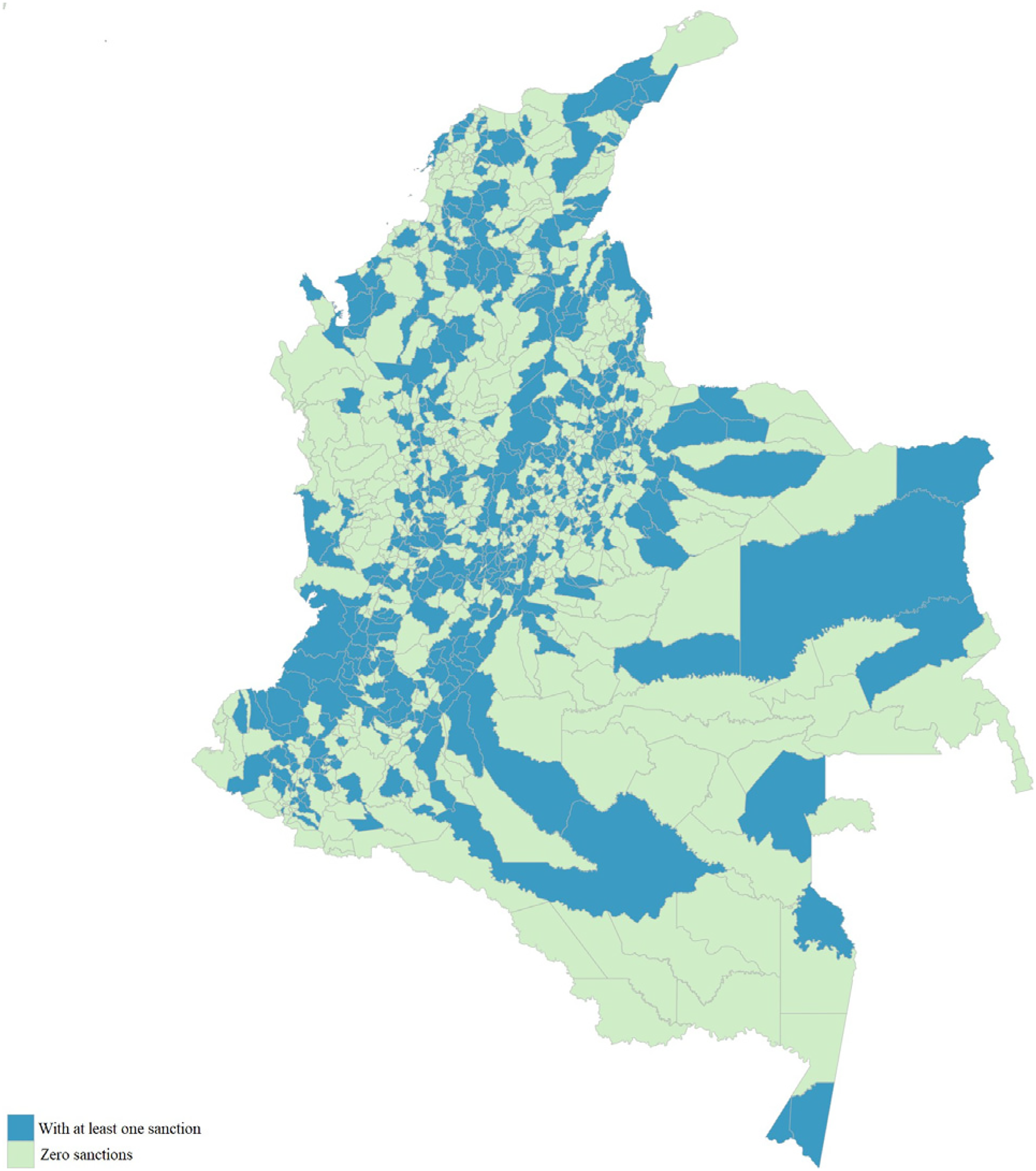
Municipalities Whose Mayors Were Elected in 2011 and Received at Least One Disciplinary Sanction Between 2012 and 2015.
We employ the information at the political party scale because the electoral system does not allow consecutive nominations of candidates, only parties. Additionally, there is no centralized database for candidate information and, although it would be ideal to have voter information for analysis, voting is confidential. We chose the municipality as our unit of analysis to ensure a large sample, to exploit the municipal measures of violence/fraud risks, and to focus on local elections, as most literature focuses on other scales (Holbrook and McClurg, 2005; Tolbert et al., 2001).
Following Acemoglu et al. (2013), we organize parties into paramilitary-linked, traditional, and minority groups The first are non-traditional parties with paramilitary connections. This classification includes coalitions between parties (see details in Table 9, Online Appendix 1). It matters for three reasons: (1) paramilitaries can significantly influence election results, making it crucial to distinguish them in estimations (Acemoglu et al., 2013; Losada, 2006; Valencia, 2007); (2) paramilitary-linked parties are newer and different from traditional parties in terms of policy outcomes and re-election chances (Galindo-Silva, 2015; Tribin, 2015), while traditional parties in Colombia have strong structures and are connected to bureaucracies and interest groups; and (3) among new successful parties, it is necessary to differentiate between those with paramilitary influence and minorities (Galindo-Silva, 2015).
Table 10 in Online Appendix 2 reveals that nearly 44 percent of municipalities had sanctions, with 43.6 percent having mayors affiliated with paramilitary-linked parties, 43.1 percent with traditional parties, and 46.5 percent with minorities. In addition, Table 11 in Online Appendix 2 shows that political organizations sanctioned in 2011 received lower vote shares in 2015 compared to those without sanctions. For instance, mayors endorsed by paramilitary-linked parties had a lower vote share in 2015 (38.4 percent) compared to those without sanctions (41.5 percent). This suggests a negative effect of the disciplinary sanctions. Also, our study examines the implications of electoral fraud and violence risk indicators on municipalities (provided by MOE), illustrating the spatial distribution of these factors in Figure 2.
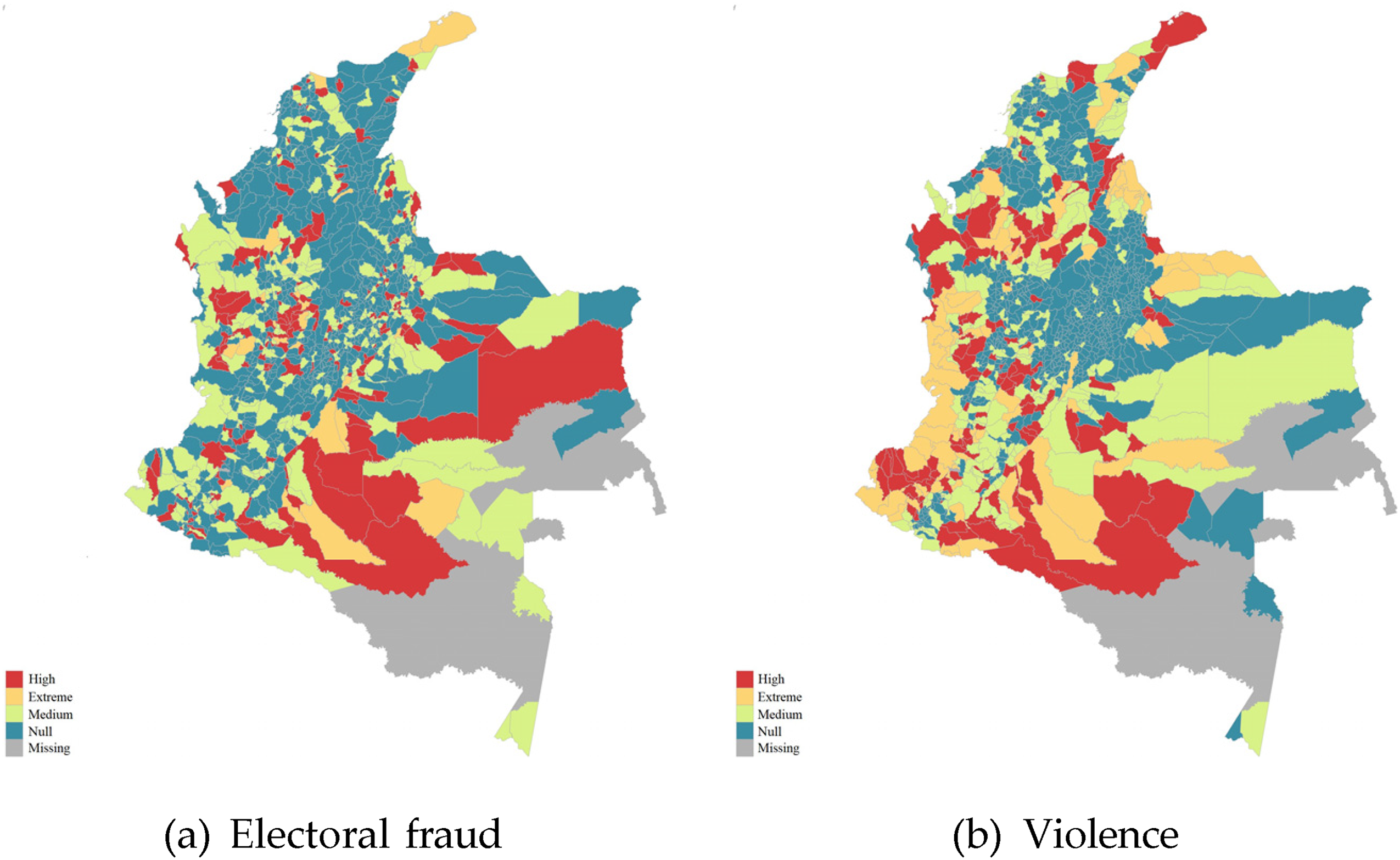
Spatial Distribution of Risk-level by Municipality.
It is important to recognise that disciplinary sanctions may exhibit internal heterogeneity. 11 Additionally, information on imposed disciplinary sanctions before 2012 is limited, only the type and date are available.
Identification Strategy
Difference-in-Difference Identification Strategy
Standard regressions of re-election against disciplinary sanctions can lead to biased estimations of the causal effect of interest due to omitted variables that affect both disciplinary sanctions and re-election simultaneously. For example, overspending on campaigns or paying bribes can increase the probability of being sanctioned and re-elected simultaneously. Additionally, the expected re-election of a specific political party may result in political competitors coercing attorneys to impose disciplinary sanctions, generating a simultaneous causality problem and biased estimation.
Our study uses disciplinary sanctions rules (see details in the section “Disciplinary Sanctions in Colombia”) and a difference-in-difference identification strategy to address these issues. Sanctions are set by the PGN, an entity of the central government that is difficult to coerce by local politicians reducing the likelihood of re-election process influences. Even if local politicians could influence disciplinary outcomes through non-observed actions that affect re-election and disciplinary sanctions simultaneously, the municipal fixed effects specified in the difference-in-difference model controls for these (and other non-observed confounders).
Our outcome variable yi, t is the re-election indicator that takes the value of 1 if the incumbent political party (paramilitary-linked, traditional or minority) during 2011 was re-elected in municipality i in year (t = 2015) and takes the value of 0 in other cases. Our research proposes four different treatment group definitions for disciplinary sanctions, categorising them based on their severity (see section “Disciplinary Sanctions in Colombia”), as detailed in Table 2.
Definition of Treatment Groups.
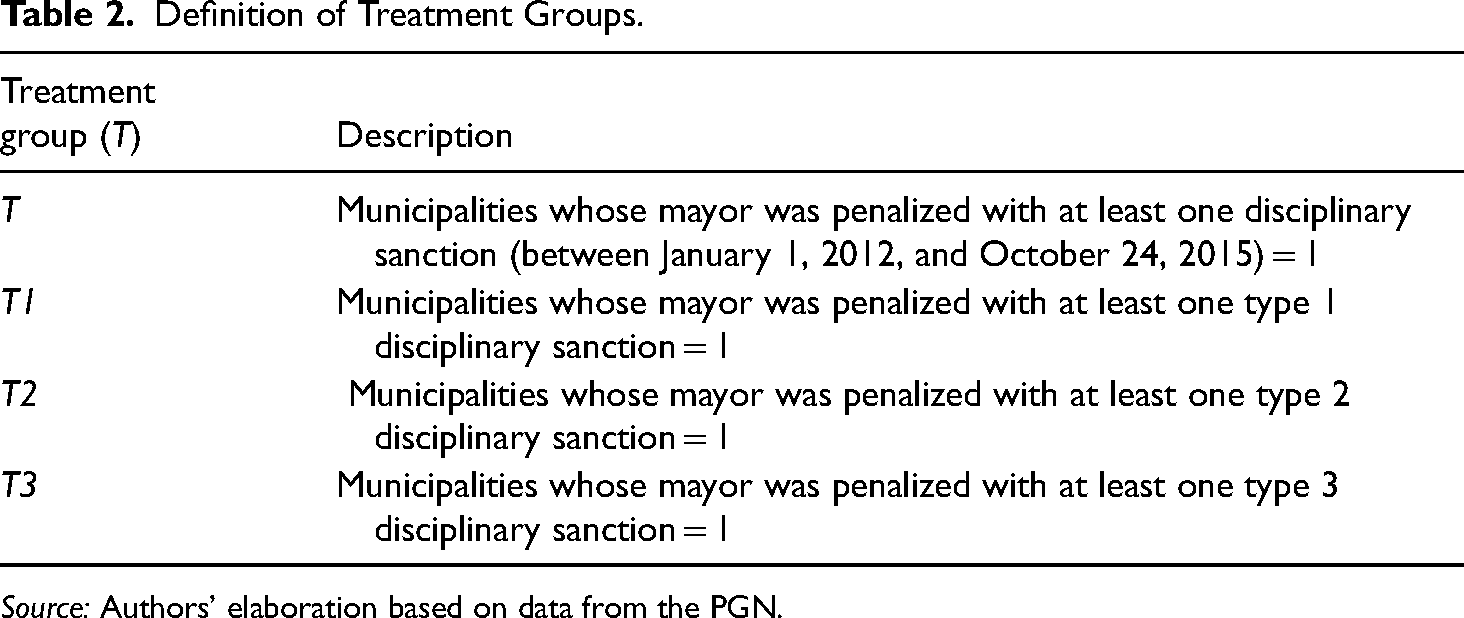
Source: Authors’ elaboration based on data from the PGN.
The difference-in-difference strategy relies on the parallel trends assumption, which can be tested using Equation 1, as suggested by Muralidharan and Prakash (2017), where the treatment (Ti) interacts with the variable Year that goes from 1997 to 2011, which increases as the treatment period is reached.
12

Testing the Parallel Trends Assumption.
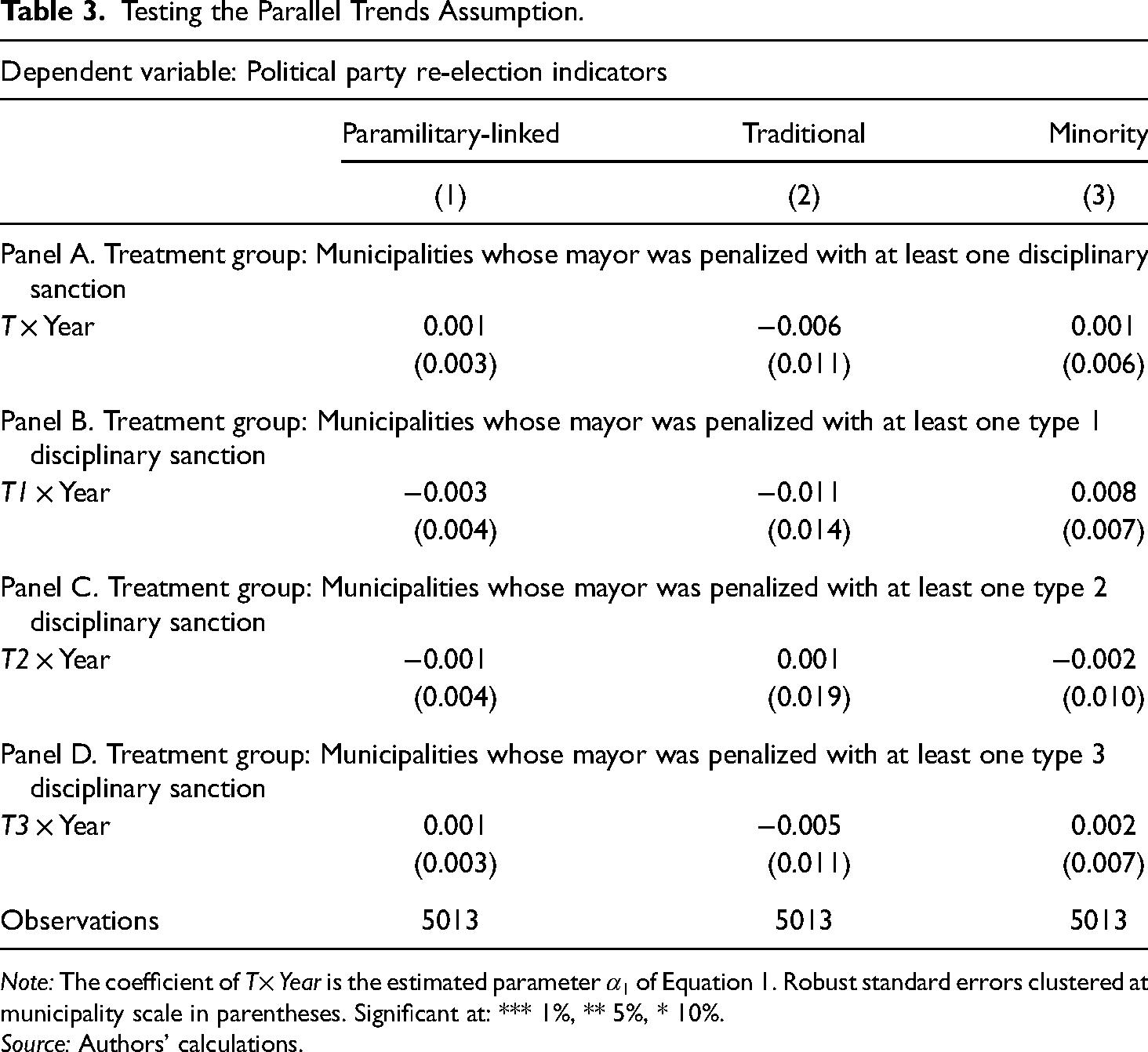
Note: The coefficient of T× Year is the estimated parameter α1 of Equation 1. Robust standard errors clustered at municipality scale in parentheses. Significant at: *** 1%, ** 5%, * 10%.
Source: Authors’ calculations.
Another important identification condition sustains that a disciplinary sanction in one municipality cannot affect the likelihood of applying the sanction in other municipalities (stable unit treatment values assumption or SUTVA condition). We calculate global Moran statistics to present indirect evidence on the fulfilment of SUTVA. Table 4 shows that the hypothesis of no spatial autocorrelation is not rejected in most cases suggesting that SUTVA is not violated in our exercise.
Testing for Spatial Autocorrelation in the Treatment Groups.
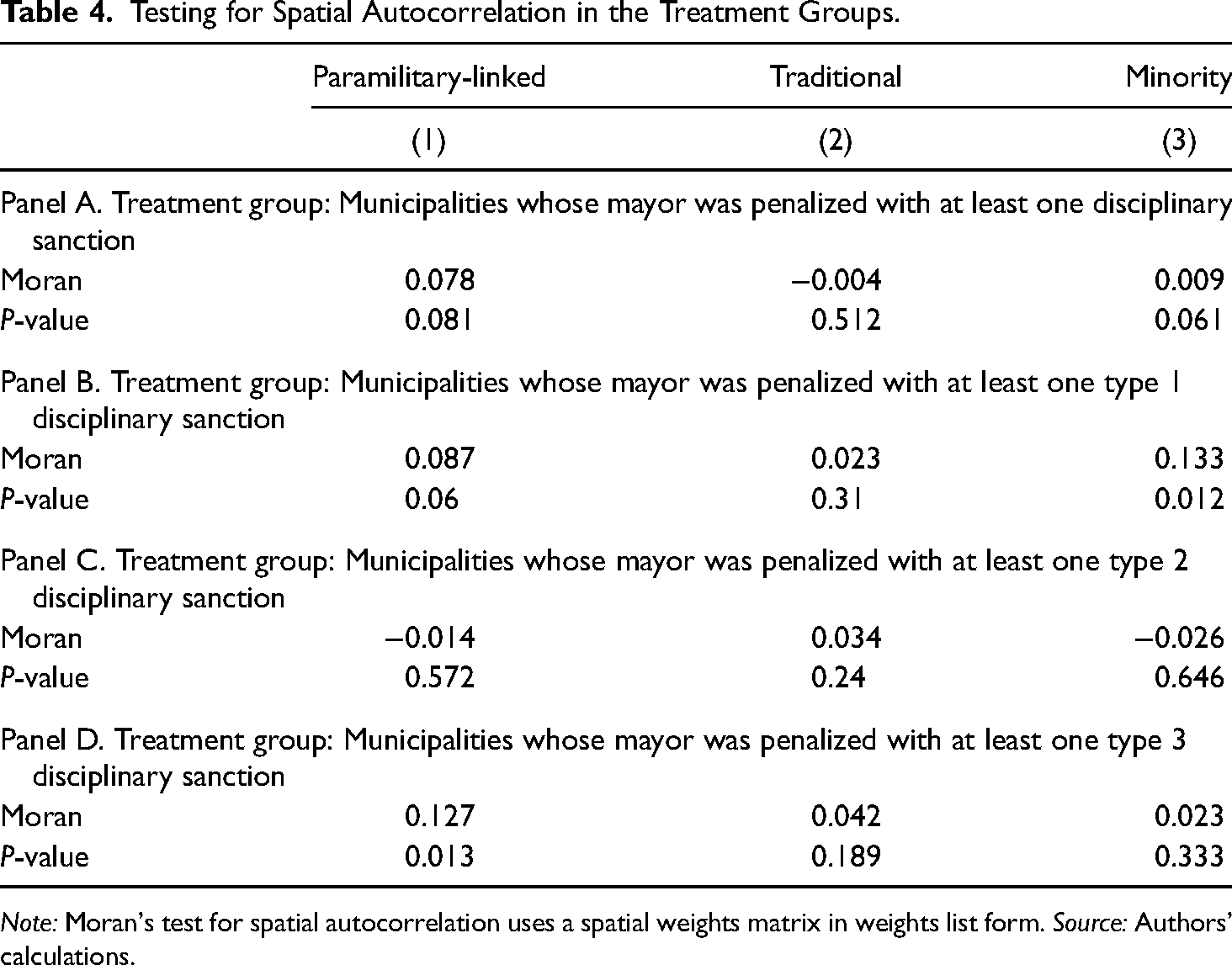
Note: Moran's test for spatial autocorrelation uses a spatial weights matrix in weights list form. Source: Authors’ calculations.
Our baseline specification is given by:
Heterogeneous Effects
This study examines the heterogeneous impact of disciplinary sanctions on different municipalities by analysing electoral fraud and violence risks, focusing on understanding the incidence of clientelist networks and non-state armed actors in local elections.
Hence, Equation 2 is extended by adding a dichotomous variable Hb, which represents the heterogeneity of interest, as well as its interactions with Ti and D2015. This variable Hb represents the level of electoral fraud risk (ERb) or the level of violence risk (VRb) and takes the value of 1 if the risk was extreme, high, or medium in either of the two elections investigated (2011 and 2015) and 0 if the risk was low in both years:
Results
Average Impact of Disciplinary Sanctions on the Probability of Being a Re-elected Political Party
Table 5 shows the estimation of Equation 2. Results suggest a minimal punishment vote driven by disciplinary sanctions. The results also coincide with the notion of support for the misbehavior of candidates (Rundquist et al., 1977; Winters and Weitz-Shapiro, 2013), highlighting the role of imperfect voter information (Ferraz and Finan, 2008) or limited rationality exploited by persuasion and manipulation mechanisms, as explained by Schumpeter (1950) and by the clientelist practices studied in the Colombian case (Buitrago and Davila, 2010; Duncan, 2005; Gutierrez and Barón, 2005; Ocampo, 2018; Peñate, 1999). 14
Impact of Disciplinary Sanctions on Political Parties’ Re-election Probability.
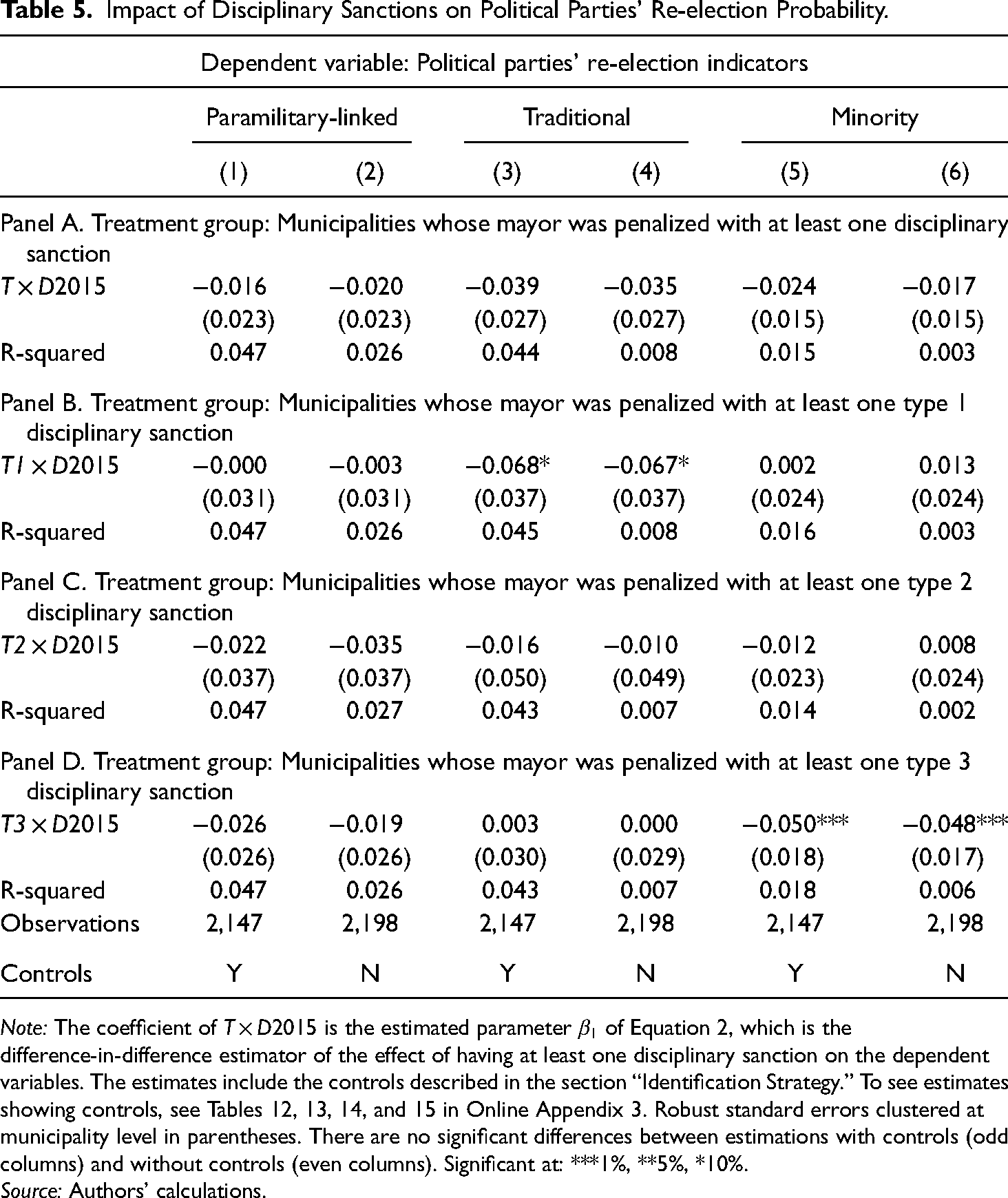
Note: The coefficient of T × D2015 is the estimated parameter β1 of Equation 2, which is the difference-in-difference estimator of the effect of having at least one disciplinary sanction on the dependent variables. The estimates include the controls described in the section “Identification Strategy.” To see estimates showing controls, see Tables 12, 13, 14, and 15 in Online Appendix 3. Robust standard errors clustered at municipality level in parentheses. There are no significant differences between estimations with controls (odd columns) and without controls (even columns). Significant at: ***1%, **5%, *10%.
Source: Authors’ calculations.
Secondly, Panels A, B, C, and D reveal that no disciplinary sanction significantly affects the likelihood of re-electing a paramilitary-linked party, indicating the presence of persuasion mechanisms based on duress (Acemoglu et al., 2013; Schumpeter, 1950; Valencia, 2007). This lack of punishment demonstrates the political influence of these groups to manipulate and coerce citizens, suggesting the presence of armed clientelist circuits (Peñate, 1999; Revelo and García, 2010) that have local power to maintain control over municipalities’ public resources (Duncan, 2005; Peñate, 1999; Revelo and García, 2010). Also, citizens in some municipalities may not significantly apply punishment votes due to doubts about the ability of other parties to reduce bad behaviour (Chong et al., 2015).
On the other hand, the study reveals that voters’ reactions to disciplinary sanctions depend on the type of party penalized and the severity of the sanction. This aligns with previous research by Chang et al. (2010), Chong et al. (2015), and Ferraz and Finan (2011), indicating that our identification strategy is successful in capturing differentiated impacts, as shown in Panels A and C, where in the cases of presenting disciplinary sanctions of any type or type 2, these do not significantly affect the probability of a political party group being re-elected.
In addition, Panel B shows that type 1 disciplinary sanctions, such as mayor dismissal and general disqualification between 2012 and 2015, reduce the probability of a traditional political party being re-elected by 6.7 percent. This sanction leads to a power vacuum in local government that could be punished by citizens even more, considering that traditional parties are historically the most experienced in the exercise of power. Type 3 disciplinary sanctions, such as gross misdemeanor offenses, reduce the probability of a minority party being re-elected by 4.8 percent. This is because citizens punish minority parties for breaching expectations and prior beliefs (Arias et al., 2022).
Heterogeneity of the Impact of Disciplinary Sanctions on the Probability of Being Re-elected
Our study also investigates the heterogeneous impact of disciplinary sanctions on the probability of re-electing traditional parties. Equation 3 includes ER or VR variables to estimate their influence on the outcome variable. Table 6 shows that the impact of type 1 disciplinary sanctions, such as dismissal and general disqualification, on the probability of re-electing traditional parties, is significant in the absence of ER, lowering the indicator by over ten percentage points (Panel B, Column 1). However, the impact is not significant when the municipality exhibits higher intensity in the presence of electoral fraud. This would reveal that this disturbance in the election neutralizes potential punishment for traditional parties, as these organizations are likely more experienced in handling fraud practices or have more effective electoral machinery, as documented in Colombia by clientelist networks.
Impact of Disciplinary Sanctions on a Re-elected Political Party's Re-Election Probability, According to Electoral Fraud Risk Level.
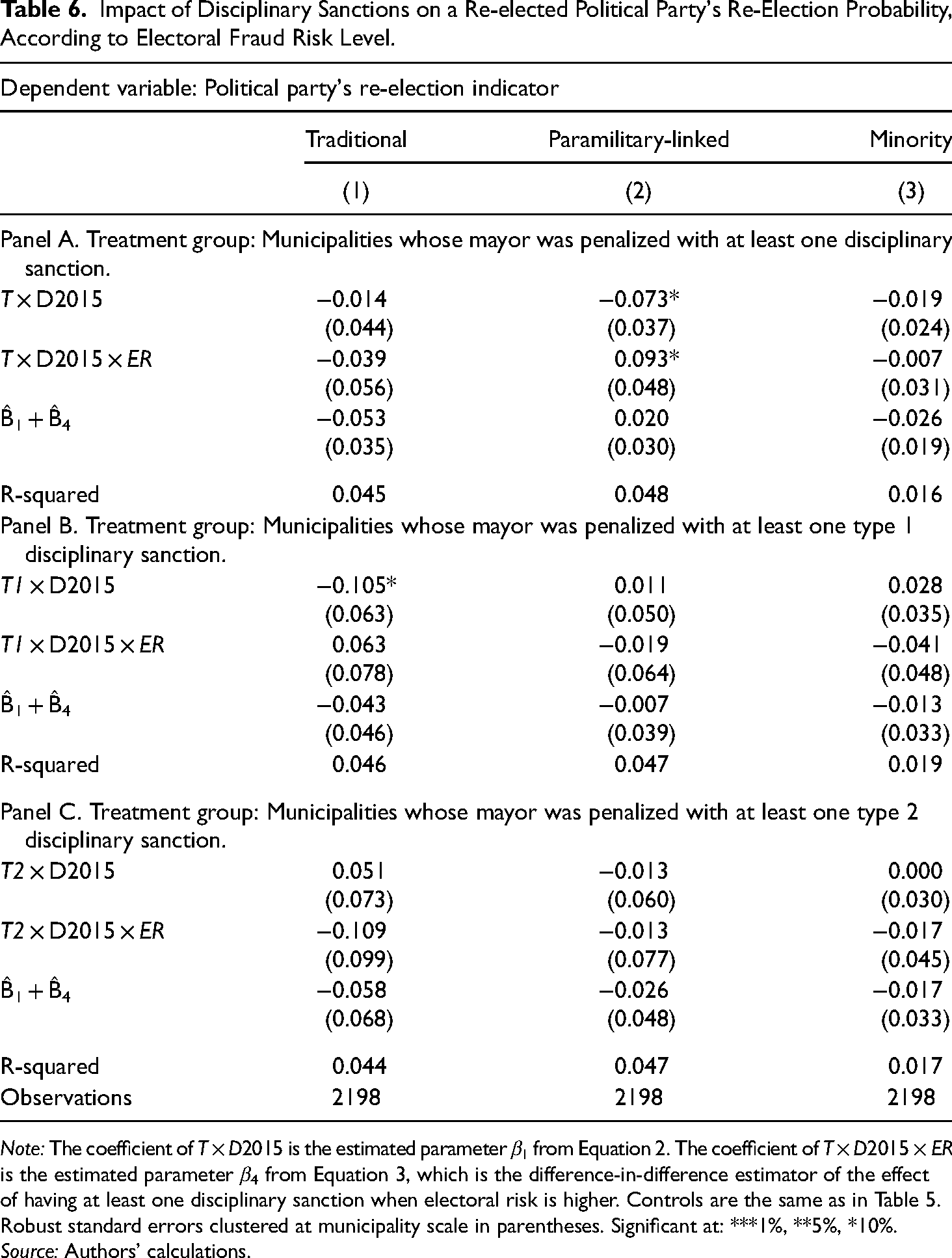
Note: The coefficient of T × D2015 is the estimated parameter β1 from Equation 2. The coefficient of T × D2015 × ER is the estimated parameter β4 from Equation 3, which is the difference-in-difference estimator of the effect of having at least one disciplinary sanction when electoral risk is higher. Controls are the same as in Table 5. Robust standard errors clustered at municipality scale in parentheses. Significant at: ***1%, **5%, *10%.
Source: Authors’ calculations.
In addition, the study reveals mixed effects on the probability of re-electing paramilitary-linked parties due to type 2 disciplinary sanctions (Panel A, column 2). In the absence of ER, there is a reduction of 7.3 percent, but in the opposite situation, it increases by 9.3 percentage points. This suggests that clientelist armed mechanisms can influence punishment votes supporting misbehaving parties. The results coincide with the results presented in the section “Average Impact of Disciplinary Sanctions on the Probability of Being a Re-elected Political Party.”
Conversely, Table 7 shows the heterogeneous effects of VR on the re-election of traditional parties, with the effect of type 1 disciplinary sanctions being non-significant (Panel B, column 2) as in Table 5, with or without such an effect. On the other side, for the minority parties with type 3 disciplinary sanctions, there is an underestimation pattern because the negative direction increases 0.4 percentage points versus that presented in Table 5, although only when the municipality did not present VR. When this phenomenon is presented, the sanction impact is not significant. Despite these results suggesting a differential effect between municipalities with and without VR, the evidence converges with the principal results.
Impact of Disciplinary Sanctions on a Political Party's Re-election Probability, According to Violence Risk Level.
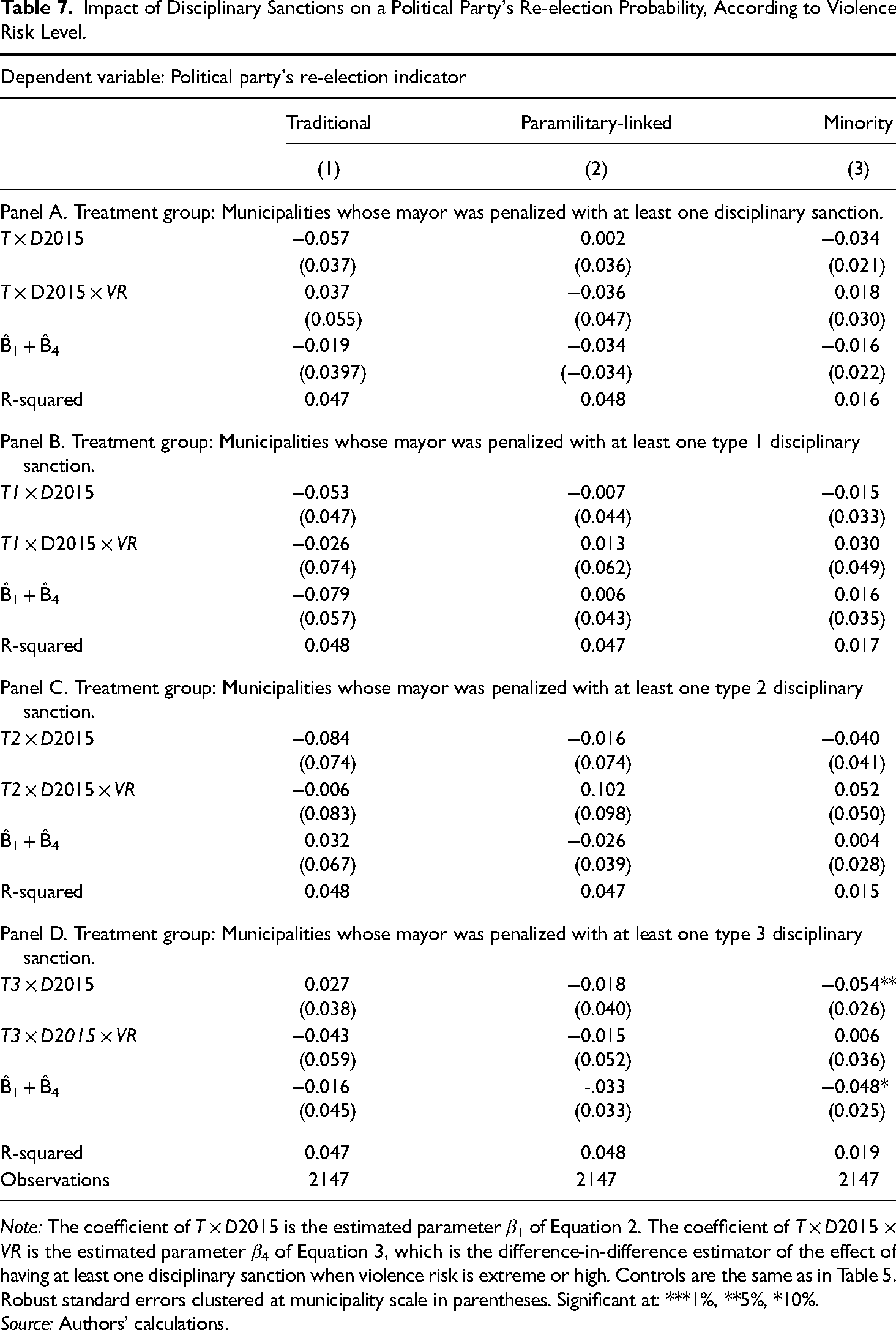
Note: The coefficient of T × D2015 is the estimated parameter β1 of Equation 2. The coefficient of T × D2015 × VR is the estimated parameter β4 of Equation 3, which is the difference-in-difference estimator of the effect of having at least one disciplinary sanction when violence risk is extreme or high. Controls are the same as in Table 5. Robust standard errors clustered at municipality scale in parentheses. Significant at: ***1%, **5%, *10%.
Source: Authors’ calculations.
Robustness Checks
Our study uses a disciplinary sanction indicator which suggests that sanctions closer to the electoral day (October 2015) have a higher effect on electoral results (see technical details in Ordoñez and Veloza (2018)). We create two new treatments: TDSI +50, which is represented by 1 when the indicator is above its 50th percentile, and TDSI +75, which is represented by 1 when the indicator is above its 75th percentile. Evidence supports the parallel trends assumption of both, which are available in Table 19 in Online Appendix 6; the difference-in-difference estimations (see Table 8) reveal no statistically significant effects of disciplinary sanctions on the probability of any party being re-elected in any of the cases as in Table 5, Panel A.
Impact of the Disciplinary Sanction Indicator on a Political Party's Re-election Probability.
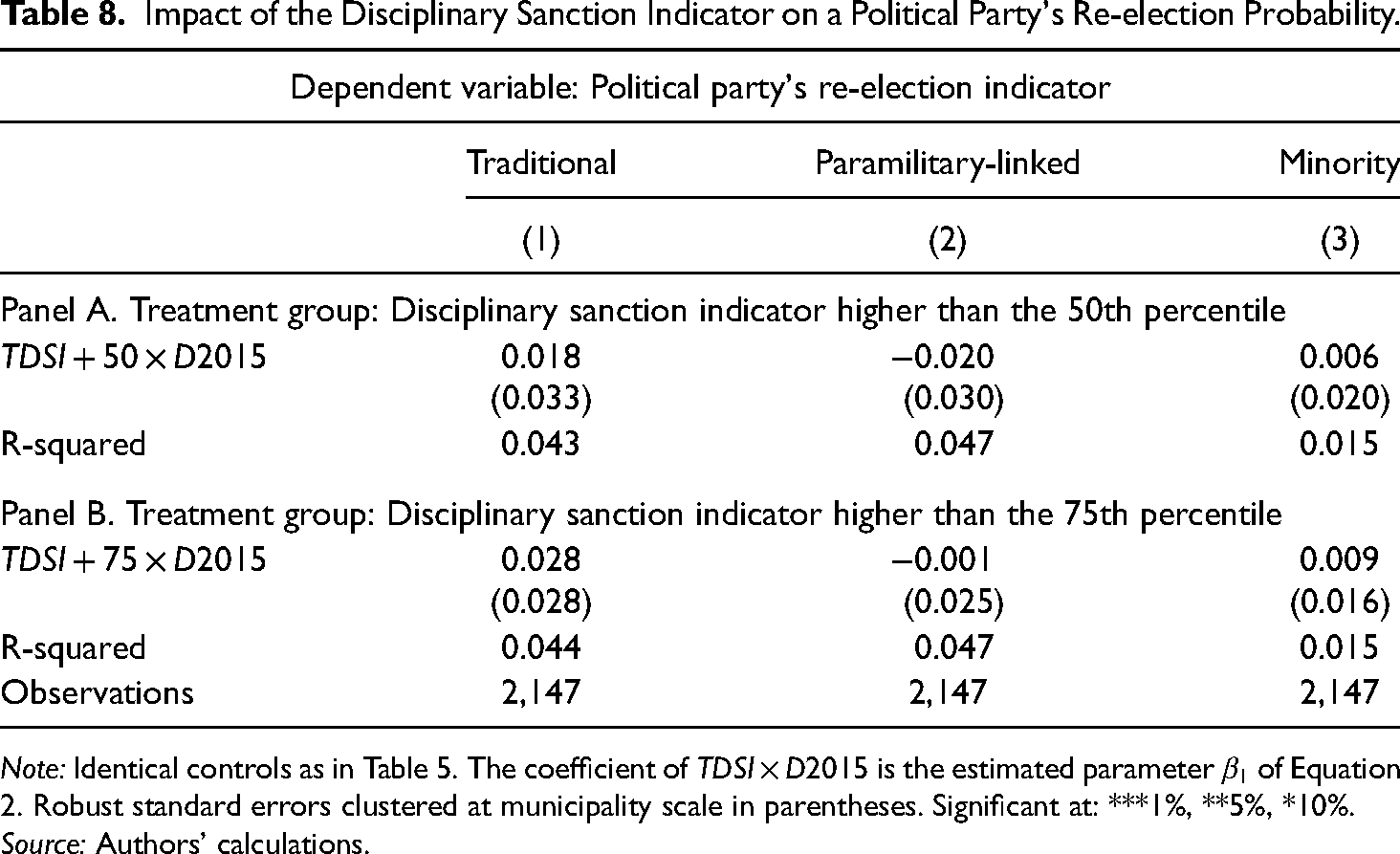
Note: Identical controls as in Table 5. The coefficient of TDSI × D2015 is the estimated parameter β1 of Equation 2. Robust standard errors clustered at municipality scale in parentheses. Significant at: ***1%, **5%, *10%.
Source: Authors’ calculations.
Additionally, we examine the impact of interest excluding major cities (municipalities: Bogotá, Medellín, and Cali) and municipalities having a mayor for each type of disciplinary sanction with at least two disciplinary sanctions, 15 and using a different definition of traditional parties, this time including minorities. However, the results are identical to the previous ones.
Discussion and Conclusions
Our study reveals that disciplinary sanctions imposed by the PGN on mayors in 2011 had little or no impact on the local re-election in 2015 of political parties that endorsed the mayor's candidacy. We find that punishment votes depend on factors such as severity of the sanction, and persuasion and duress mechanisms, which are driven by clientelist organizations, widely studied in the Colombian case and explained by the Schumpeterian view of political competition.
The study also evaluated the robustness of the results by considering electoral fraud and violence risk. In general, these coincide with the principal results, but in detail, they show mixed evidence supporting the incidence of anomalies in neutralising punishment votes, particularly for paramilitary-linked parties, which is supported by the related literature. Although the impacts are quantitatively small, we provide new insights into voter responses to politicians’ misbehavior in a developing country with a multi-party electoral system without incumbency. This suggests that the implications of electoral fraud in other Latin American countries, with similar democracies, could be explored without biased analyses to explain the persistent flaws of their political systems.
Finally, it is important to clarify that for the correct identification of the causal effect of interest, the difference-in-difference method requires that the confounders be invariant over time. However, it is possible that in our exercise some of these confounders do change over time. For example, it is possible that the complex strategic interactions among local and national actors change over time, affecting the identification of the causal effect. Still, we believe that, given the available data, our identification strategy offers useful estimates to understand how disciplinary sanctions affect re-election in Colombia.
Supplemental Material
sj-docx-1-pla-10.1177_1866802X241235676 - Supplemental material for Do Disciplinary Sanctions Affect Political Parties’ Re-election? Evidence from Colombia
Supplemental material, sj-docx-1-pla-10.1177_1866802X241235676 for Do Disciplinary Sanctions Affect Political Parties’ Re-election? Evidence from Colombia by Héctor M. Posada, Enrique Javier Burbano Valencia, and Angie Mondragón-Mayo in Journal of Politics in Latin America
Footnotes
Declaration of Conflicting Interests
The authors declared no potential conflicts of interest with respect to the research, authorship, and/or publication of this article.
Funding
The authors disclosed receipt of the following financial support for the research, authorship, and/or publication of this article: This work was supported by the Alianza EFI (grant number FP44842-220-2018).

Supplemental Material
Supplemental material for this article is available online.
Notes
Author Biographies
References
Supplementary Material
Please find the following supplemental material available below.
For Open Access articles published under a Creative Commons License, all supplemental material carries the same license as the article it is associated with.
For non-Open Access articles published, all supplemental material carries a non-exclusive license, and permission requests for re-use of supplemental material or any part of supplemental material shall be sent directly to the copyright owner as specified in the copyright notice associated with the article.
