




Abstract
The shared crisis brought on by COVID-19 offers an opportunity to study how economic elites attempt to shape policy responses. In this article, we inquire about the conditions under which economic elites shaped containment and business support measures in Latin America. We argue that wealthier and better-organised elites are more likely to shape policies because they have increased access to policymakers. To test this, we combine regression analysis with three case studies: Chile, Mexico, and Peru. Our quantitative findings align with our expectations regarding containment measures and present mixed results for pro-business policies. Case studies illustrate how elites attempted to influence policy, highlighting the centrality of access to the Executive and the importance of distinguishing between institutionalised or personalised access. The degree to which policy responses aligned with elite preferences varied according to the nature of the ties: ranging from the most alignment in Chile to the least in Peru.
Research has shown that economic elites exert influence on policymaking through various channels and with varying levels of success. In Latin America (LA), elites have often shaped the pace of public debates and the content of policies through lobbying (Bogliaccini and Luna, 2016), campaign financing (Fairfield, 2015), and by occupying governmental positions (Carnes and Lupu, 2015). However, we know less about their influence under decidedly abnormal times, like the global crisis brought by COVID-19. This article zooms in into the first wave of the COVID-19 pandemic to study how elites attempted to protect their interests.
The rapid spread of the virus imposed similar pressures globally, forcing states to respond quickly to minimise health risks and economic disruptions. Policymakers were operating under a lot of uncertainty and there was no consensus about which measures would work. In addition, and especially in the first few months, governments were operating via decrees and usual channels of influence, like lobbying, were weakened or not available. In LA, except for Nicaragua and Cuba, all governments declared a state of crisis or urgency (Declaratorias de Emergencia COVID-19, 2020).
The shared crisis offers a unique opportunity to study, how – and under what conditions – economic elites attempt to shape policy responses. Following power resource theory, we argue that wealthier and better-organised economic elites are more likely to shape policies because both resources increase access to policymakers – a key path to influence policymaking amid crises. Yet, access is highly context-dependent: it is not always available and varies in type across cases. We distinguish between two types of access: personalised ties and institutionalised ties (i.e. through business associations).
To test the empirical implications of our argument, our research design combines cross-country regressions with an in-depth comparison of Chile, Mexico, and Peru, which were hit the hardest during the first wave 1 yet showcased variation in policy responses. Our analysis is centred around containment measures (lockdowns) and the enactment of business support measures. Both policies were central in the debate on the trade-off between saving the economy and saving lives and were the source of conflict between elites and governments in many countries. The tensions were acute; while some pointed at the massive economic costs of imposing lockdowns in a context of high informality and high inequality, others advocated for prioritising lockdowns despite economic costs (Busso and Messina, 2020; Cambero, 2020).
Anecdotal evidence suggests that powerful members of the economic elite were vocal against lockdown measures. For example, Ricardo Salinas, the third richest man in Mexico, tweeted in late March that “the decision to stop a country does not produce anything positive, especially when it is based in fear and a false premise: that COVID-19 means death” (Salinas Pliego, 2020). In Chile, the president of the largest business association claimed: “believe me that if we paralyze [the country], we will become perhaps the poorest country in Latin America again” (CNN Chile, 2020a). Although most countries in the region ended up implementing stay-at-home orders, the timing at which this occurred varied significantly, as Figure 1 illustrates. The figure shows the number of days between the first case and first national stay-at-home order, according to Oxford's COVID-19 Response Tracker. Beyond the actual imposition of stay-at-home orders, countries varied in the extent to which these were enforced. Figure 1(b) illustrates country variation in the maximum decrease of mobility (according to Google Mobility data) since the first case was detected.
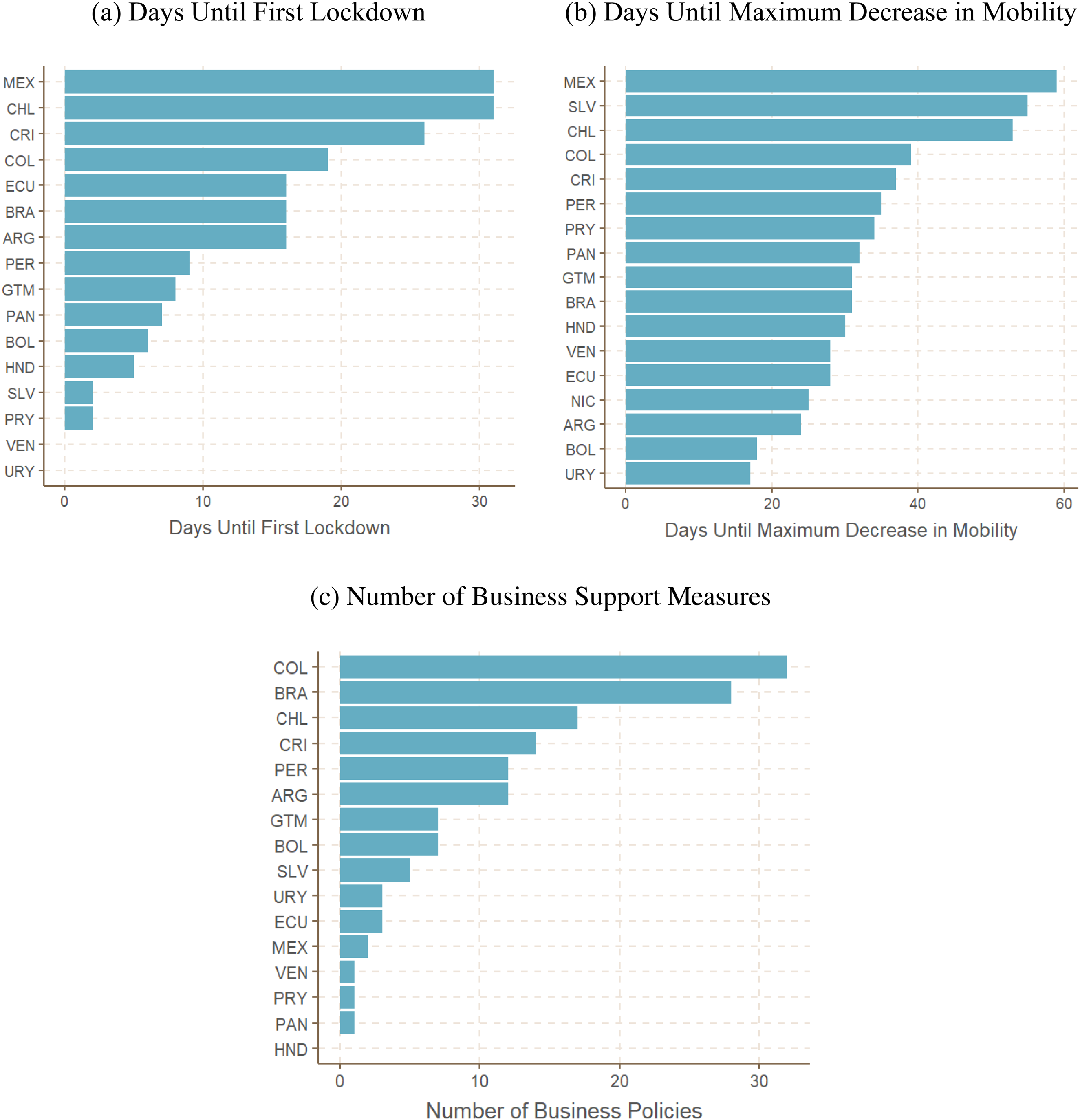
Variation in Containment Measures and Business Support Measures in Latin America. (a) Days until First Lockdown. (b) Days until Maximum Decrease in Mobility. (c) Number of Business Support Measures. Source: Own Elaboration Based on Oxford CGRT, Google Mobility Trends and ECLAC COVID Observatory.
As time passed, the question was no longer about the imposition of lockdowns but rather about how to avoid the largest economic disruptions and transition towards business reactivation. Although not as controversial as stay-at-home orders, policies directed to support businesses were a central part of the response and varied across the region. Figure 1(c) shows the variation across countries in the number of business policies implemented between March 1st and August 1st, measured by ECLAC's COVID-19 Observatory. 2
Aimed at understanding this variation, our regression analysis exploits cross-country differences in elite strength and policy responses. The statistical findings align with our theoretical expectations regarding containment measures and present mixed results for pro-business policies. Countries with wealthier and more organised elites were, on average, slower in imposing lockdown measures. This resonates with recent studies focusing on policymaking during the pandemic in Europe, which has shown that pandemic politics became the focus of intense lobbying competition, in which business groups tended to predominate (Eady and Rasmussen, 2022). As Crepaz et al., (2022) argue, because the pandemic would cause important economic disruptions, governments had reason to prioritise the mitigation of financial distress on economic groups, particularly of those with the resources to put forth their demands. Cyr et al. (2021) analyse the extent to which governments in LA collaborated with different societal groups, and – though this is not the focus of their paper – their data suggests that collaboration with corporate groups was higher than with social movements or the scientific community.
We turn to case studies to scrutinise the causal mechanisms linking elites to policy outcomes. Because most policy decisions were channelled through the Executive, we zoom in on elite–Executive relationship. We focus on a specific subset of the economic elite with the most potential to translate their economic power to political power: the richest individuals and the most connected to other members of the business community. To uncover the preferences of this subset of the elite, we conduct extensive searches on their public statements surrounding COVID policies, as well as their interactions with the government. Together, these pieces of evidence allow us to hint at elites’ preferences and trace their connections to policymakers.
Our case studies corroborate that access to the Executive is an important source of variation across cases. In Chile, this access was mostly earned through institutionalised channels, though, given the nature of Sebastian Piñera's government, personalised access likely existed as well. These multiple avenues of access explain the elite's considerable involvement in decision making, leading to delayed lockdowns and wide-ranging business support measures. In Mexico, we find evidence that the Executive maintained a close relationship with certain elites based mostly on personalised ties. Yet, it had a hostile relationship with organised business, explaining the country's lack of business support measures. Finally, in Peru, economic elites were undergoing a hostile relationship with the Executive, which blocked their access to decision making. This resulted in policy decisions that were unpopular among the elite: strict and extended lockdowns.
Our paper highlights the implications of extreme wealth concentration for policymaking in LA. As Schneider (2014) argues, political economy literature often dismisses the “disproportionate political influence” of big business. We aim to contribute to filling this gap by zooming in into how wealth interacts with political power, even in a context of crisis. By doing so, we note that the paths through which wealth transforms into political power are not homogeneous, and their availability is context dependent.
Access to Policymakers in Times of Crisis: Personalised and Institutionalised Ties
Economic elites are a small group that can canalise their resources towards shaping policymaking through various channels: lobbying, financing of public opinion and electoral campaigns, threatening to leave the economy, and directly occupying public office (Cardenas and Robles-Rivera, 2017). In addition, economic elites have disproportionate access to policymakers, resulting in opportunities to socialise and voice their positions (Domhoff, 2014).
Even though wealth and their potential to act as a collective make economic elites more powerful than other actors, they do not fully predict how and under what conditions their power can be exercised to influence policymaking. We follow others in recognising that the exercise of power is highly contextual (Fairfield, 2015). Several factors, such as political crisis, natural emergencies, and the ideology of incumbents, can impact which channels remain available and whether elites can use them.
The COVID emergency impacted the political arena by blocking some of the usual channels of influence (Edgell et al., 2020). 3 Most policy decisions were approved through emergency mechanisms and executive orders, which meant that many of the prevalent channels in “politics as usual,” like lobbying, were weakened or not available. Besides, the urgency of the crisis meant that policymakers had to “de-prioritise consulting and obtaining input from a broad range of societal interests”, and instead prioritise those groups better equipped to provide technical expertise, such as business groups (Crepaz et al., 2022). As such, access to policymakers became the central channel through which economic elites attempted to influence policy decisions. Thus, in countries where access channels were well established before the crisis, we expect economic elites to have a higher chance of influencing policy decisions.
Following the literature, we define access as two-way interactions between societal actors and policymakers. Access to policymakers is essential because it enables exchanges that can potentially lead to concessions and deals. In this article, we explicitly distinguish between institutionalised and personalised access. We conceptualise institutionalised access as one that occurs because of the leverage of the institution. That is, without the institutional affiliation, the individual representing the institution would not have access to the Executive. In contrast, personalised access does not rely on institutional affiliations. Notably, the difference does not rely on the specific channels of communication. For example, it is possible that the leader of a business association reaches out to a government official in the same way that a billionaire does, via WhatsApp or by phone, both of which seem personalistic in nature. Similarly, both a super-rich individual and the leader of a business association may have a meeting with the president in the official building, which may seem like an institutionalised tie. However, even though these actors may use the same channels of communication, we argue that the nature of the access is different: in one case, the individual is acting on their own behalf, while in the other case the individual is acting on behalf of an institution. By explicitly differentiating institutionalised and personalised access, we also allow for variation in access within the economic elite. The wealthiest economic elites are more likely to have access to policymakers via personalised channels.
Research has found that determining elites’ preferences is extremely challenging. First, these may never be made public and are not always predictable (Flores-Macías, 2014; Dorlach, 2021). Second, the variety of channels and the complexity of public policy means that elites can influence decisionmakers without making their positions visible (Broockman, 2012).
Despite difficulties associated with uncovering their preferences, researchers have found that, in general, elites have a strong conviction that economic growth is the key to a country's development; they see the state as corrupt and inefficient and have high trust in the market and the private sector (Reis and Moore, 2005). The literature has shown that while elites generally oppose market regulation (Broockman, Ferenstein and Malhotra, 2019) they think government action can help keep businesses afloat during crises (Culpepper and Reinke 2014). Thus, in the context of the COVID pandemic, we expect elites to oppose lockdown measures since they are disruptive of economic activities and prefer less intrusive policies, including subsidies to maintain workers, access to credit, or loan forgiveness.
Together, the literature on access to policymakers and elite preferences leads us to hypothesise that increased elite strength is associated with fewer and delayed containment measures and higher business support measures. However, as discussed above, preferences only matter with access. Only in contexts with access to policymakers will responses be more likely to map onto elite preferences.
Research Design
To evaluate if and how wealth concentration mattered for policy response we employ a multimethod research design. We focus on the first wave of the pandemic (March 1st to August 1st) as in other key studies on pandemic politics (Crepaz et al., 2022; Eady and Rasmussen, 2022), and zoom into containment and business support measures. First, we conduct statistical analysis to explore whether there is relationship between elite strength and policy responses. With the goal of understanding how economic elites influence policy decisions, we turn to case studies of three countries with varied policy responses: Chile, Peru, and Mexico. Peru had an early lockdown and an average number of measures to support businesses. Chile had a delayed lockdown, but nonetheless implemented many measures of business support. Lastly, Mexico had delayed lockdowns and very few support measures. In addition to varying along the main dependent variables, these three cases were hit the hardest in the initial months of the pandemic, 4 allowing us to “hold constant” a potentially important source of variation among countries.
The inclusion of in-depth case studies allows us to elucidate mechanisms sustaining empirical patterns and the causal pathways connecting elite power to policy decisions (Goertz and Mahoney, 2012). Thus, we focus on each case to understand the interaction between elites and the government during the initial months of the crisis. Having more than one case allows us to test the ways in which context shapes the channels through which power is exercised.
Data
For the quantitative component, we construct two outcome variables that capture containment efforts: (i) the number of days between the first detected case and the first national stay-at-home orders (Oxford COVID-19 Government Response Tracker) and (ii) the number of days between the first case and the day with lowest mobility (Google Mobility Trends). The third variable, business support measures, comes from ECLAC's COVID-19 observatory. It is a simple count of business measures implemented during the first wave, including those related to credits, subsidies, debt-relief, tax pardons, and stimulus packages for businesses.
We operationalise and measure two dimensions of elite strength: wealth concentration and institutionalised power of businesses associations. We operationalise wealth concentration using (i) net worth of billionaires as per cent of GDP, and (ii) wealth share of the top 1 per cent. We proxy the institutionalised power of business associations using Castañeda’s (2017) indicator of business coordination. 5
For the case studies, we zoomed into the subset of the economic elites most likely to have privileged access to policymakers. Following the resource-based (Khan, 2012) and positional approaches (Hoffmann-Lange, 2007), we list the most influential members of the economic elite in each country including: (i) ten richest individuals in each country, often billionaires, using Forbes data and local sources, (ii) ten most connected individuals in the network of boards of directors of the sixty largest companies of each country, (iii) the leaders of the most important business associations. 6
For each individual, we collect data from news outlets and social media, focusing on evidence on both their policy reactions and their access to government. We followed a search protocol using Google and Twitter with the names of these individuals, followed by several key words in both English and Spanish (see Supplemental Table A.2 for a full list of terms).
We evaluate these pieces of evidence to assess our hypothesis that elites influenced policymaking. If elites did influence policymaking, we expect to find evidence of this in (a) their reactions to pandemic policies and (b) their ties with the government. In doing so, we also elucidate which types of ties were more prevalent in each case and the implications for the types of policies. For transparency purposes, Supplemental Tables A.3-A.13 show each piece of evidence.
Evaluating the Effect of Wealth Concentration on Policy Response
We start with a descriptive quantitative analysis to test the relationship between elite strength and COVID responses during the first wave of the pandemic. First, we show simple scatter plots between our dependent and independent variables. We explore this relationship further with multivariate regression analysis. As controls we include the number of COVID cases per million people accounting for the severity of the crisis, and GDP per capita and informality – key determinants of policy decisions (Blofield, Giambruno and Filgueira, 2020) and of elite strength. Finally, we include a measure of government ideology to account for the importance of partisanship as an explanatory factor of policy adoption (Falkenbach, Bekker and Greer, 2020; González, 2021).
The upper scatter plots in Figure 2 show that as both wealth concentration and net worth of billionaires increase, so do the number of days until a stay-at-home order was implemented. Similarly, the lower panel shows that countries with high business coordination took, on average, longer to implement these orders.
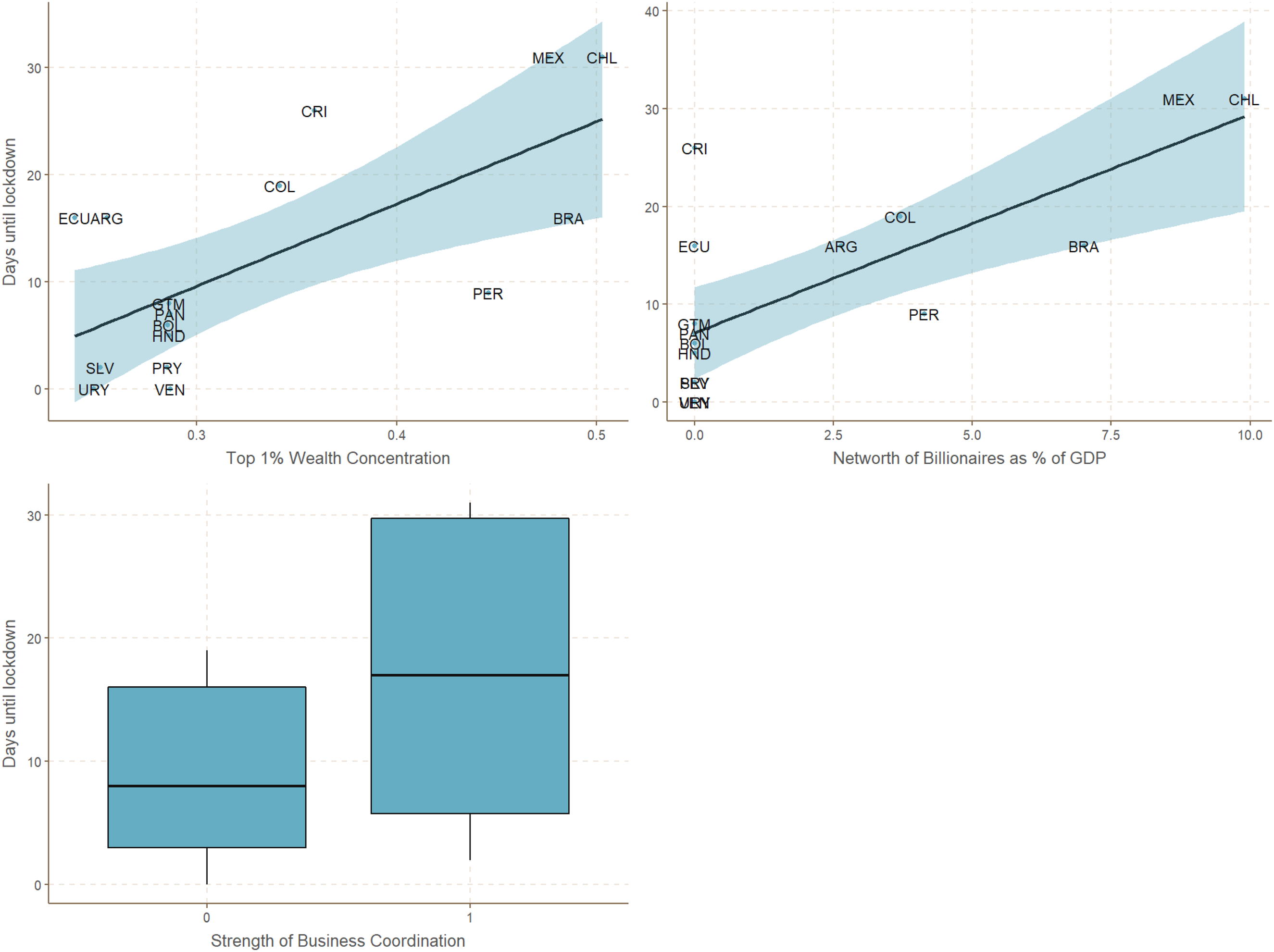
Days until Lockdown and Elite Strength. Source: Own Elaboration.
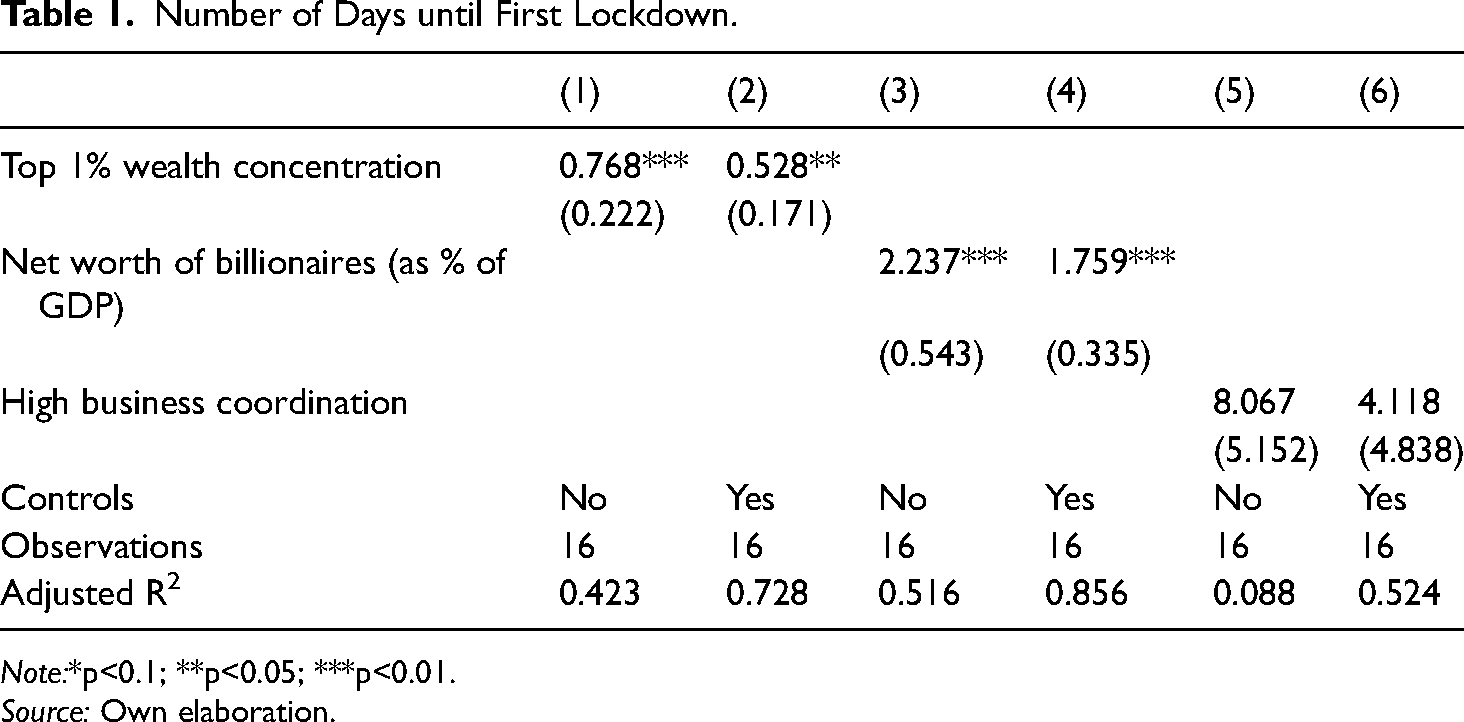
Regression analysis shows that elite strength is associated with delayed lockdowns. Because of the nature of the variables, the size of the coefficients is quite varied, yet robust to the inclusion of controls. With controls, a 1 per cent increase in top 1 per cent wealth concentration is associated to half a day delay in imposing lockdowns and of between 1.8 and 2.2 days when using the net worth of billionaires. Finally, the coefficient for High Business Coordination is large and positive, yet it fails to reach statistical significance (Table 1).
Number of Days until First Lockdown.
Note:*p<0.1; **p<0.05; ***p<0.01.
Source: Own elaboration.
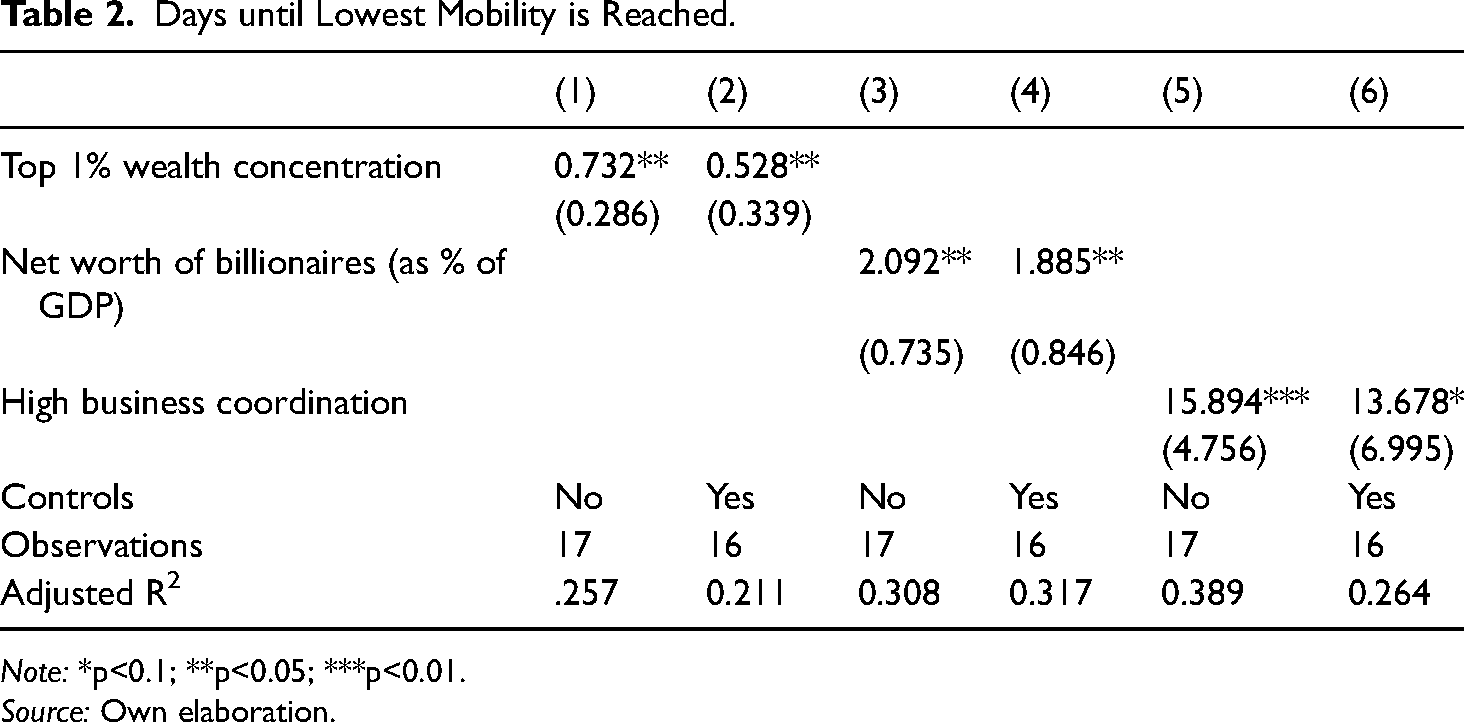
Turning to the second measure of containment, days until the lowest mobility is registered, the findings are relatively consistent with those presented in Figure 1: a strong positive correlation with all the measures of elite strength (Figure 3). The coefficients for top 1 per cent wealth concentration are practically identical to the ones above, albeit not significant when controls are added. Here too, net worth of billionaires is significantly associated with mobility: a one-percentage point increase in this variable leads to almost 2-day delay until the lowest mobility is reached. As opposed to our first dependent variable – days until lockdown is announced – the strength of business associations has a significant association with mobility trends, as well as a very large coefficient: countries with high business coordination reach their lowest mobility trends around 14 days later (Table 2).
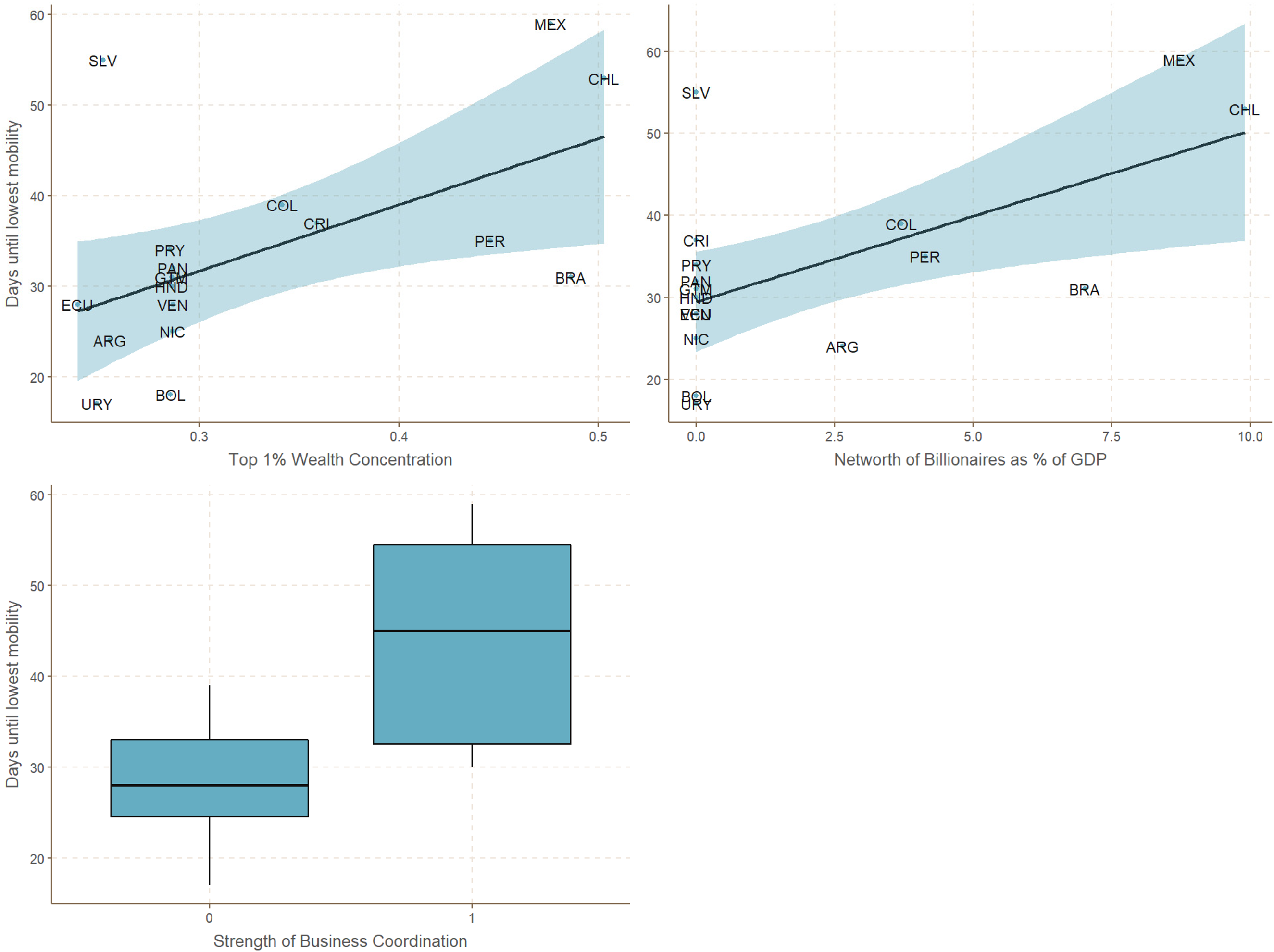
Scatter Plots with Dependent Variable: Days until Minimum Mobility. Source: Own Elaboration.
Days until Lowest Mobility is Reached.
Note: *p<0.1; **p<0.05; ***p<0.01.
Source: Own elaboration.
Why is the strength of business coordination significantly associated to mobility trends and not with the announcement of lockdown measures? As mentioned above, although these two variables are capturing similar phenomena, they are fundamentally different in one regard. The first variable, “days until lockdown” is capturing the first official announcement of a stay-at-home order. However, as was made evident in many countries, the enforcement of these measures varied widely even within countries, as there were several sectors that were exempt from the measures. Enforcement also varied across time. Thus, Google's Mobility Trends are more likely capturing de facto lockdown measures. Conceivably, business associations were most mobilised when lockdown measures were beginning to be stringently enforced or extended (i.e. less economic sectors exempted). The results suggest that countries with high business coordination were more effective in resisting enforcement of lockdown measures.
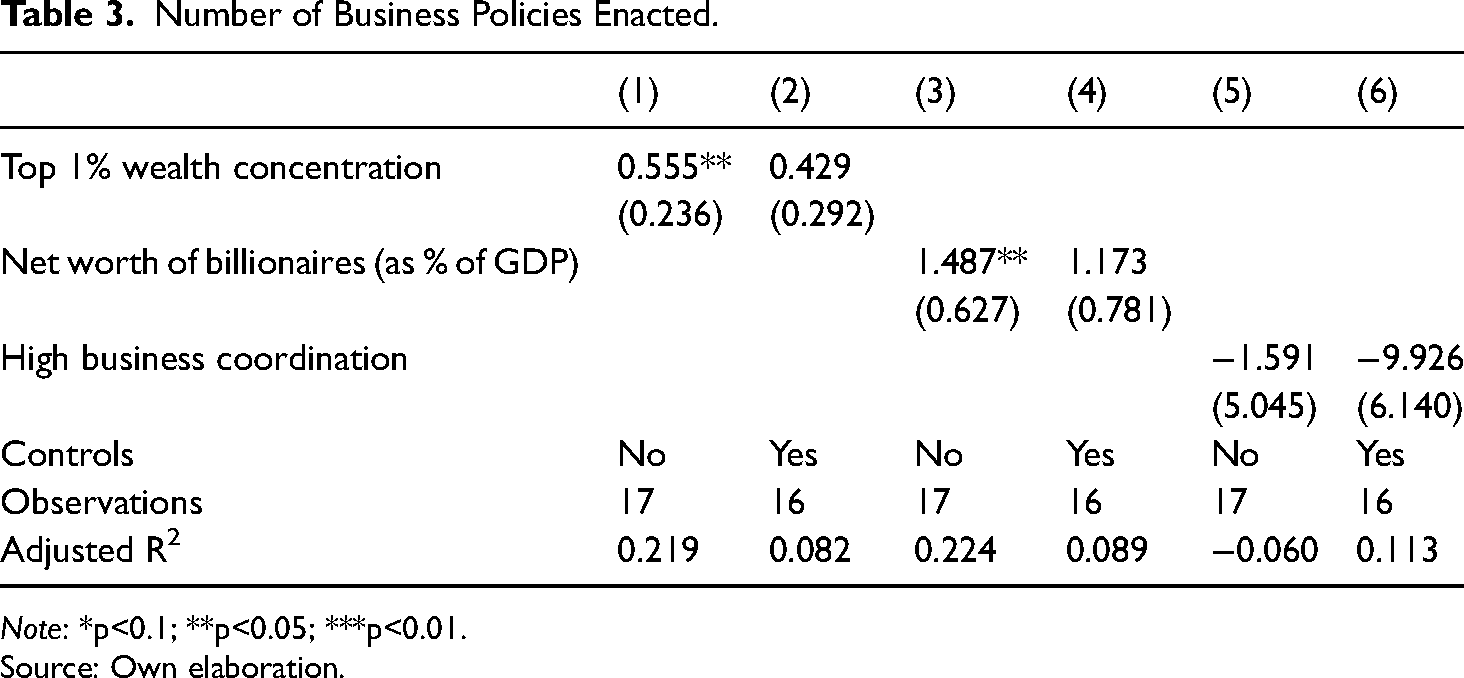
Finally, we turn to the association between elite strength and the number of business policies implemented. Although, in the first two variables, there is a positive correlation between the measures (Figure 4), this association is weaker. Top 1 per cent wealth concentration and Net worth of billionaires are both statistically significant in the bivariate model, indicating that a 1 per cent increase in these rates leads to 0.5 and 1.5 more business policies, respectively. However, they fail to reach statistical significance when controls are added. Most surprisingly, the strength of business coordination has no relationship whatsoever with the number of business policies enacted (Table 3).
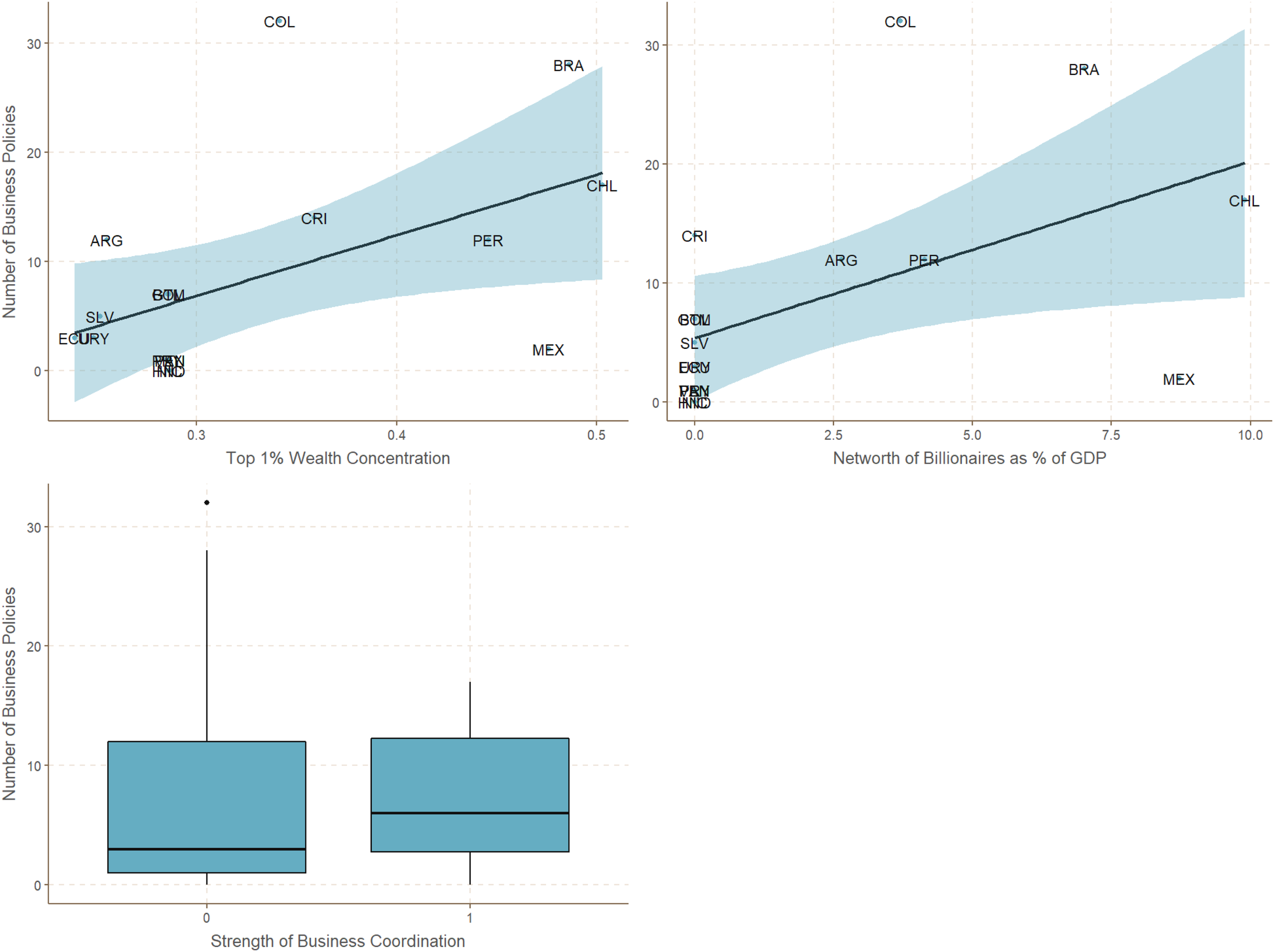
Scatter Plots with Dependent Variable: Number of Business Policies. Source: Own Elaboration.
Number of Business Policies Enacted.
Note: *p<0.1; **p<0.05; ***p<0.01.
Source: Own elaboration.
These results are unexpected since we predicted that elite strength, and particularly business association strength, would have some relation with the implementation of business support policies. Perhaps, as Castañeda (2017) suggests, high levels of business coordination are only relevant in ideologically unfavourable contexts. In other words, if the government is already pro-business, there is less need for business associations to push for their preferences. Another reason may lie in the nature of the dependent variable. This measure of business support policies is diverse, including loan forgiveness and tax credits to large, medium or small businesses, monetary support to keep employees, and even bundles of policies including several of these items. In contrast to lockdown measures, narrower in definition, business support measures varied in degree of complexity and in who they would benefit. Second, this is a count of policies and it is plausible that some governments implemented few, yet very impactful measures.
In sum, this exploratory analysis provides some suggestive evidence that elite strength was associated with policies surrounding stay-at-home orders. Where elites are stronger or more coordinated, governments took longer to implement and enforce lockdown measures. To understand the mechanism through which this might have occurred, we zoom into three cases and explore how elites attempted to influence policymaking during the first wave of the pandemic.
Chile: Resistance to National Lockdowns and Institutionalised Ties
Chile's first official COVID patient was detected on March 3rd. However, the government was slow in implementing restrictions, and these were less severe than in neighbouring countries. The Executive was reluctant to close economic activities and was adamant in dismissing the pressures from mayors of many cities requesting stricter measures (NPR, 2020). During the last week of March, the government turned to an intermediate posture and lockdowns were implemented gradually and in specific areas. However, by late April, the government suggested partial re-openings to reactivate the economy. The measures were taken even after the health experts and COVID policy recommendation groups categorised these decisions as premature and irresponsible (Paul, 2020).
On the other hand, Chile implemented a series of policies to support businesses, ranging from flexibility in access to credit to tax measures to improve liquidity. The “Ley de Protección de Empleo” (Employment Protection Law), was one of the most important policies in this domain. The proposal allowed businesses to suspend labour contracts either because of shutdowns or based on an agreement with the employee.
Historic Ties
Chile has been signalled as having a “cohesive and well organised” business sector (Dorlach, 2021) with the capacity to influence policymaking (Schneider, 2004; Fairfield, 2015). Throughout the twentieth century, they had strong ties to political parties (Luna, 2014) and direct appointments to government. In addition, in 1935 they formed a peak encompassing association – Confederación de la Produccion y el Comercio (CPC) – with a disproportionate weight of big business (Bril-Mascarenhas and Madariaga, 2019). As a former president of the CPC put it: “Businesspeople in Chile are absolutely united. We may dispute thousands of things, but when it comes to taking action in complex situations, business has a single voice” (quoted in Fairfield, 2015, p. 73). In addition, Chile has strong sectoral associations, particularly SOFOFA (industry), whose executives have direct access to government (Silva, 1997, p. 173). Besides these channels of influence, the prevalence of the “revolving door” phenomenon has led to a heightened ability to participate in policymaking (Nercesian and Mendoza, 2021). Elites have been able to push for their preferences in many key areas, such as in industrial policy, pension, and fiscal reforms (Fairfield, 2015; Bril-Mascarenhas and Maillet, 2018; Bril-Mascarenhas and Madariaga, 2019).
Pandemic Times
In contrast to Mexico and Peru, Piñera's government, in power when the crisis started, was explicitly right-wing. In addition, Piñera is among the five richest individuals in Chile (Forbes Ranking, 2021). Re-elected in 2018, he led a coalition composed of a handful of parties representing the ideological right and cabinet members had important connections to the business world.
Importantly, when COVID hit, the country was going through one of the most contentious periods in its recent history. In October 2019, a social crisis erupted after thousands took to the streets to demand structural changes towards a more equitable society. This deep social conflict put both the government and economic elites in the spotlight. 7
Policy Reactions
Income inequality was a central aspect of these protests, and protesters saw the close ties between the government and business interests as a key driver of said inequality. Likely because elites’ images were so tarnished during these months, they appeared to be socially more sensitive and recognised their role in building a new social consensus. This meant highlighting their philanthropic efforts and portraying their businesses as being responsible and complying with sanitary measures. For instance, Andronico Luksic, the wealthiest man in Chile, promised his companies would not fire anyone (El Mostrador, 2020b) and called for unity to combat the virus: “Let's be conscious that to fight this crisis we need to all be responsible and caring” (El Mostrador, 2020c). In a similar tone, Bernardo Larrain Matte, a member of Chile's wealthiest families and the president of SOFOFA, called for business responsibility in preserving jobs (El Mostrador, 2020a).
Beyond this image of socially responsible businesspeople, powerful members of the economic elite aligned with the government regarding the lack of strict lockdowns. For instance, Luksic proudly emphasised that his companies would stay open to contribute to the country's economy (El Mostrador, 2020b). Likewise, Luis Felipe Gatizua, president of a large conglomerate, stated that the country did not only have to survive a pandemic but also “revive economic growth and provide stability and jobs” (Valparaiso Noticias, 2020). Others were more explicit about their opposition to lockdowns, such as Hernán Büchi Buc, who emphasised that Chile had to follow countries without strict lockdowns and learn how to “live with the virus” (Buchi Buc, 2020).
The presidents of the two largest business associations (CPC and SOFOFA), were vocal with their opinions, generally emphasising economic reactivation. In an April interview, Larrain Matte claimed “[it is] simplistic to oppose the sanitary objective with the economic one. Keeping employment and salaries is also an ethical imperative to prevent a social emergency” (Hopenhayn, 2020). Juan Sutil, president of the CPC, was forthright against shutdowns, claiming these would lead to dramatic consequences (CNN Chile, 2020a) and openly supported the reopening response (Segovia, 2020). For instance, when mayors were implementing lockdowns, he recommended they back-off from these decisions (Tele13 on Twitter, 2020). When the government announced its reopening plans in May, he expressed being “very pleased” with the decisions that “[picked] up the proposal we made” (CNN Chile, 2020b).
Access to the Executive
The evidence suggests that elites’ access to government tended to be of an institutionalised nature. The CPC had a clear participation in decision making. Its president made declarations during the government's press conference announcing business reopening plans and was even present when the government announced the reopening of pre-schools. 8
Regarding business policies, criticism erupted when it was made public that some large corporations were making use of the Employment Protection Law, which allowed for the suspension of workers (El Economista America, 2020). As officials stated, they were relying on companies’ “good faith” since there were no mechanisms to check whether the pandemic actually affected the company (Molina, 2020). It should be noted, though, that most companies that used this law were indeed micro, small, and medium sized.
Nevertheless, the “good faith” component was seen on other occasions, as when health insurance companies (Isapres) announced an increase in their rates. Although the government had the power to enforce a stop to all price increases, 9 they opted instead for a direct, friendly, negotiation with Isapres (Pierola, Román and Sanhueza, 2020). This pattern was seen again in the government's early decisions on closures. While mayors were attempting to close shopping malls in their districts, the government announced that the decision would be made in conversation with business associations and not imposed through official regulations (Ministerio de Economía, Fomento y Turismo, 2020).
In Sum
The collection of evidence suggests that elites were an important part of the decision-making process mainly through institutionalised access to the government. This is consistent with how other authors have described elite-state relationships in Chile, whose main business associations have been typically present in policy-making decisions. Even though we did not find evidence of this, it is plausible that personalised ties existed as well, given the direct link that both Piñera and key officials have with the business sector. In all, we believe that the inclusion of business associations in policy discussions explains the presence of extensive business support measures as well as the timid and delayed impositions of national lockdowns and quick reopening attempts. At the same time, however, the recency of the social conflict likely forced the government to avoid an exclusively pro-business stance, which is why we observe business support measure to be far-reaching (i.e. available to micro and small businesses as well). 10
Mexico: Feeble Response and Strong Personalised Ties
Mexico was one of the first countries in LA with confirmed COVID cases, on January 14th. Nevertheless, the government waited until the end of March to take measures, did not provide clear guidance on enforcement, and included a large list of exceptions (Felbab-Brown, 2020). The government insisted on not punishing non-compliers and relying on individual responsibility (Sheridan, 2021). Faced with this inaction at the national level, some state and local governments implemented more severe restrictions.
In early April, the government announced economic measures to confront the crisis. As with the lockdown response, this too was notoriously weak compared to other countries. The central component of the economic package focused on reducing government expenditure and, except for a limited initiative to give loans to small and medium businesses and a provision that prohibited unjustified layoffs, little was done to help businesses. In addition, the government refused to implement tax credits or subsidies to support companies in financial distress.
Historic Ties
Mexican economic elites have historically been powerful actors, though their relationship with the state has been marked by ups and downs. In fact, during the twentieth century the PRI party made efforts to prevent political organisation of economic elites. This resulted in more personalised and informal interactions between elites and the state, often through the Consejo Mexicano de Negocios (CMN) (Schneider, 2002). Born in 1962, the CMN (a club, not a business association) brought together around 30 of the wealthiest businessmen of the country to facilitate reaching the highest spheres of government (Ortiz Rivera, 2002). Since its inception, CMN had systematic access to policymakers and members express the enormous value of having “high-level access” to the Executive (Schneider, 2002).
In 1975, the CMN created the Consejo Coordinador Empresarial (CCE), a more institutionalised organisation (Schneider, 2002). While the CMN has remained discreet and mostly expressed their opinions behind closed doors, the CCE has been present in public opinion debates. Although the level of business-friendliness varied across governments, the business sector has always been “intensely involved” in policymaking (Ondetti, 2017). Around the 1990s, the political sphere began opening to other actors and elites formed ties with other parties, particularly the PAN (Alba Vega, 2006). In addition, elites have created additional paths of influence through congressional lobbying (Alba Vega, 2006).
Pandemic Times
Andrés Manuel López Obrador (AMLO) was elected for the Presidency of Mexico in 2018. His electoral victory was the first major triumph of the left in Mexico in many decades and was celebrated by progressive forces in LA (Martinez-Velasquez, 2018). AMLO's campaign rhetoric emphasised the gap between “el pueblo” and elites, insisting that Mexico had been ruled for decades by “the mafia of power,” which included several prominent businessmen.
Once AMLO took office, though, he toned down the anti-elite rhetoric and his relationship with the economic elite became ambiguous. AMLO recognised the importance of private investment and boasted about his positive relationship with business actors. In response, he received the endorsement of those that he had fiercely criticised before, including the largest fortunes in Mexico (El Economista, 2018).
Soon after, AMLO created the Consejo Asesor Empresarial, a counselling group composed of many of the richest individuals in the country, with whom he would meet every few months to discuss Mexico's economic opportunities (Animal Politico, 2020). Importantly, members of the Consejo are not “representatives of the business sector but rather the truly influential businessmen in the Mexican Stock Market” (Zepeda, 2020). Six months into his presidency, AMLO shared dinner at the home of one of the richest men in Mexico along with other elite members (El Heraldo de Mexico, 2019). In the following months during his presidency, several instances proved the existence of a tight relationship between the government and top elites (Infobae, 2020a).
AMLO's actions became more contradictory during the pandemic illustrating a peculiar “love–hate” relationship (Maldonado, 2019) with the elite. While justifying austerity by claiming that stimulus packages would only favour big conglomerates and continuing to confront institutionalised business associations (Rios, 2020), he kept a close relationship and affinity with the wealthiest of the wealthy.
Policy Reactions
The elite seemed to agree with the meager enforcement of lockdowns. For example, a group of the 10 richest businessmen from Monterrey – also among the richest in the country – publicly requested the president to ensure a policy of zero business closures (Herrera, 2020). Ricardo Salinas, the second richest, frequently minimised the disease's severity and emphasised economic losses. By late March, he argued that “the decision to stop a country does not produce anything positive” (Salinas Pliego, 2020). Salinas also refused to comply with lockdown measures and kept his retail stores open without facing sanctions (Animal Politico, 2020).
The mining company owned by German Larrea had a similar conflict, as the mine initially remained open despite governor's orders declaring it a non-essential business. In a tweet, the company praised the “brave measures” taken by the governor but noted that they would “continue its operations in Sonora and all of Mexico, rigorously complying with the sanitary measures and protecting the Mexican economy” (Gomez Lima, 2020).
When exploring policy reactions from the largest business associations, we note that most made public announcements focusing on economic issues. As illustrated by the Concamin's letter to AMLO, “the first thing is to keep the economy running, ensure its continuity” (Vanguardia MX, 2020). The CCE offered recommendations that included increasing public debt to fund rescue package to companies at risk of bankruptcy, yet they did not include suggestions to impose strict lockdowns (Grillo, 2020). 11 Other associations, such as Canacintra, Canaco, and Comce, were similarly aligned in their proposals (Canacintra, 2020; Flores, 2020; Saavedra, 2020).
Access to the Executive
By the time the pandemic hit, AMLO had frequent meetings with elites, mostly of personalised nature. During the crisis, AMLO met multiple times with some of the richest individuals and expressed gratitude and admiration for their support. For example, when announcing the economic plan, AMLO bragged about the support of three of the richest men in Mexico. He noted that “these three businessmen are willing to help in whatever the government asks of them” (Rodriguez Garcia, 2020).
The ambiguity of AMLO's discourse towards the elite grew, he confronted business groups and did not grant space to institutionalised paths of influence. For example, in early April of 2020, AMLO publicly opposed a series of recommendations presented by the CCE, stating that businesses’ financial troubles pre-dated the COVID crisis (Fernandez-Vega, 2020). This prompted counter-reactions from many smaller business associations that were openly upset about the lack of help from the government (Balderas Serrato, 2020). For instance, the president of COMCE expressed his frustration with the lack of access: “some business leaders, as individuals, obtain access, but we are still trying to dialogue with him, it is a problem” (Infobae, 2020b).
In Sum
For the first time in many decades, there was a leftist government whose president had a confrontational discourse with what he called the “oligarchic and corrupt” elites. Yet, his anti-business rhetoric was partial. While the super-wealthy had considerable access during the pandemic, institutionalised business did not, explaining the lack of pro-business policies. Indeed, this was the main policy demand from several business chambers, who complained their demands were being ignored. This resonates with what researchers have described in other historical periods when institutionalised access was limited, forcing elites to turn to these rather informal and personalised channels instead.
Peru: Strict Lockdowns, Political Crisis, and Weak Ties
The response of the Peruvian Government to COVID crisis contrasts sharply with other countries in the region. It was one of the first to declare a stay-at-home order, including complete closure of borders and economic activities (Lerner, 2020). The Government was also strict when it came to enforcing the lockdown: by July of 2020, the authorities had detained 52,000 people for disobeying the lockdown (Diario Correo, 2020). To support businesses and workers in the formal sector, the government launched two major programmes: a loan programme (Reactiva Peru) and a programme that regulated layoffs of workers (Suspensión Perfecta). In addition, it implemented a specific fund for micro, small, and medium businesses.
Historic Ties
The literature on the historical ties between Peruvian economic elites has some discrepancies. Some authors argue that the Peruvian state has been “captured” by economic elites (see, for instance Durand, 2006, 2016) emphasising the multiple pressure points of elites, including their direct participation in the Ministry of Economy (Crabtree and Durand, 2017). Although most authors agree that bureaucrats in this ministry have close ties to business, they question the degree to which business interests have been unduly influential (Cotler, 2000; Vergara, 2012). Dargent (2015), for instance, recognises that these ties exist, but that “it is overreaching to call such proximity subordination” (p. 33). Similarly, Vásquez (2000) concludes that “[t]he literature has overestimated [economic groups’] influence over decision making” (p. 383).
In fact, Confiep – the largest business association – stands out as being historically weaker compared to its parallel associations in Mexico and Chile. It was only created in 1984 and suffered important ruptures as the “winners” and “losers” of economic reforms changed (Tanaka, 2002), varying its power across governments (Cotler, 2000; Vásquez, 2000). Finally, as opposed to Chile and Mexico, the Peruvian party system is extremely weak and volatile (Levitsky, 2018), meaning business had little chance to form strong relationships with a political party.
Pandemic Times
When the COVID pandemic hit, Peru was submerged in a political crisis. Pedro Pablo Kuczynski (PPK), who was elected president in 2016, resigned in March 2018 after being linked to the corruption scandal of Odebrecht. 12 This scandal not only involved politicians, but also economic elites, tarnishing their image and legitimacy (Salazar-Vega, 2020). Indeed, 74 per cent of individuals thought both politicians and business people were equally guilty of the corruption schemes (Proetica, 2019). Some notorious individuals involved included Dionisio Romero, Vito Rodriguez, and Roque Benavides, among the richest and most influential individuals in the country (Gestión Perú, 2019b).
Martin Vizcarra, the vice president, was sworn in after PPK's resignation. Unlike PPK, Vizcarra was seen as an outsider to the corruption scandal. He had been governor of a small province in Peru but did not have strong ties with any political party or economic elites (Gestión Perú, 2018). As congressman Carlos Bruce mentioned, Vizcarra was originally placed on the ticket because the party was “too white” and needed someone from the provinces (Gestión Perú, 2019a). Once in power, Vizcarra benefited from strong popular support. Besides, he did not appear to have a friendly relationship with the business world.
As a journalist suggested, Vizcarra's distance from the business elites can partly be explained by the need to preserve his anti-corruption image (Tafur, 2020). Indeed, in the years preceding the pandemic, Vizcarra had several clashes with economic and business elites, particularly with Confiep. 13 When Vizcarra was asked in an interview about his relationship with the business sector, he responded: “one thing is to have the trust of the business sector and another is to have the trust of Confiep (…). By the business sector, I’m not talking only about the large businesses, but also medium and small ones: they do trust the government” (Campos, 2019).
Policy Reactions
Elites were generally against the idea of lockdowns, particularly of its duration. By the end of April, the President of the Confiep – María Isabel León – suggested that Peruvians “can't spend [their] whole lives under lockdown” (Rey, 2020). She argued that the government should trust in people's own ability of self-care and reduce their intervention. Though with a more empathetic tone towards the government's efforts, Eduardo Hochschild (among the richest in Peru) argued that the country had to reactivate the economy to prevent hunger (Álvarez Rodrich, 2020).
By mid-April, Roque Benavides, ex-president of Confiep and among the richest in the country, claimed that the “medieval lockdown” led the country to “an economic crisis without precedent,” which could have been prevented with smarter sanitary protocols for reopening. In addition, he attributed these decisions to ideological biases from the President against free market “with the excuse that this would prevent contagion” (Belling, 2020). The president of the Lima Chamber of Commerce also manifested the need to reopen the economy “as soon as possible” and for “bureaucracy to stop delaying this process” (La Cámara, 2020).
Responses to Suspensión Perfecta provide further evidence of Vizcarra's relative autonomy vis-à-vis the business sector. The programme was structured so that the suspension should only occur once all other options had been discarded (e.g. working from home), and the Labor Ministry had to approve each use of the regulation. León, the President of Confiep, complained that the process was too bureaucratic (Confiep, 2020) and that the government had implemented a series of “excessive regulations (…) that require serious revisions” (Confiep, 2020b).
Access to the Executive
The few instances in which we could identify press coverage of meetings, businesses were represented by Confiep and they were mostly with other cabinet members, not with Vizcarra. León stated that “[Confiep] would have liked that the President take the private sector into account more. (…). From the beginning of the crisis, the private sector could have articulated directly with the executive power in a quicker way” (Rey, 2020). Eduardo Hochschild agreed and admitted that “it would have been great if there were more fluid mechanisms of interaction” (Álvarez Rodrich, 2020). Roque Benavides complained that Vizcarra had not reached out to the private sector and had a hostile attitude towards them: “It is evident that [the government] does not trust the private sector. There is a clear anti-business bias, and the results show that” (Instituto de Ingenieros de Minas Del Peru, 2020). Vizcarra and Confiep finally met in mid-June, to which Confiep declared be glad for the “change in attitude” (Prialé, 2020). Yet, only a few days after that meeting, both parties clashed again after Vizcarra threatened to nationalise clinics if these did not lower their costs for patients with COVID.
Despite the overall lack of communication between the elites and the government, one exception stands out: that of the mining sector. Following complaints from Confiep, the Executive considered it an essential sector, exempt from lockdown measures (Gestión Perú, 2020). This illustrates that paths of influence are not uniformly open across sectors. Indeed, mining elites have been particularly powerful in Peruvian history (Cotler, 2005).
In Sum
The lack of evidence of elites influencing Peru's response speaks to the complex political moment that coincided with the COVID crisis. A combination of President Vizcarra's unique trajectory and a legitimacy crisis that spilled over to the business world resulted in a weakened elite-government relationship. Together, these factors contributed to the closure of important channels of influence, as evidenced by the multiple complaints on both the strictness of lockdowns as well as the lack of access to decision making.
Conclusion
Containment measures and business support policies were controversial during the first wave of the pandemic: they mapped directly onto the trade-off between keeping the economy running and preventing the spread of the virus. As we document in this article, governments in the region varied in the timing and enforcement of containment measures and the nature of business support measures.
Our quantitative analysis shows that elite strength explains part of the variance in these policy dimensions, particularly regarding lockdowns. Where elites are wealthier or where business elites are more cohesive, we observe more delayed stay-at-home orders. Importantly, because this is a multi-causal phenomenon, further research is needed to measure and isolate the causal effect of elites in shaping policy decisions.
Our paper advances in this direction by utilising in-depth case studies, which allows us to understand the mechanisms through which economic elites attempted to influence policy and the importance of access. In Chile, elites made use of pre-existing ties with the State, mainly of institutionalised nature, as evidenced by the active participation of business associations in pandemic responses. Elites’ wide access to the Executive facilitated their ability to influence decision making, leading to relatively delayed lockdowns and generous business support measures. By contrast, the state-elite relationship in Mexico was ambivalent. While the wealthiest had personalised access to the Executive and appeared to agree with the approach of meager lockdowns, organised businesses did not, and their multiple demands for business support measures were ignored. Finally, the political crisis in Peru closed off elite's access to the Executive. Against their preferences, the government maintained strict lockdowns for an extended period, and though they also implemented business support measures, these were mostly targeted at smaller businesses.
This article demonstrates that a fruitful avenue to understand elite influence is to investigate decisions made amid shared junctures on concrete policy responses. By putting similar pressures on the State, the COVID crisis offers a unique opportunity to understand how economic elites influence policy decisions and how this varies across countries. More broadly, our article contributes to the literature on how economic power leads to political power during times of crisis. We show that, because decisions are often taken swiftly, and without much deliberation, access to the Executive is a central resource for actors attempting to influence policy outcomes. By distinguishing between personalised and institutionalised access, our article further contributes to our understanding of elite's paths of influence. Although economic elites are generally better positioned to access decisionmakers, our findings build on previous literature on elite influence by arguing that such access is contingent on specific contextual factors, such as incumbent ideology or political crises, as was the case in Mexico and Peru, respectively.
Our article opens questions about differences in how the State interacts with economic elites and other societal actors. Future research should explore how governments prioritise certain groups over others when conflicting preferences arise. Despite the difficulties in measuring actual influence, investigating scenarios of conflicting interests among different social groups could result in a better understanding of the conditions under which the preferences of economic elites outweigh those of other actors. Along these same lines, future research should use newly available data on public policy indicators beyond containment measures and business support policies. For instance, investigating to what extent societal actors were involved in decision making around cash transfers and other poverty-relief efforts.
Supplemental Material
sj-docx-1-pla-10.1177_1866802X231180897 - Supplemental material for From Economic to Political Power: Economic Elites and Policymaking During Times of Crisis
Supplemental material, sj-docx-1-pla-10.1177_1866802X231180897 for From Economic to Political Power: Economic Elites and Policymaking During Times of Crisis by Laura García-Montoya and Pilar Manzi in Journal of Politics in Latin America
Footnotes
Author's note
Laura García-Montoya is also affiliated at Facultad de Economía, Universidad del Rosario, Bogotá, Colombia.
Declaration of Conflicting Interests
The authors declared no potential conflicts of interest with respect to the research, authorship, and/or publication of this article.
Funding
The authors received no financial support for the research, authorship, and/or publication of this article.

Supplemental Material
Supplemental material for this article is available online.
Notes
Author Biographies
Email: pilar.manzi@u.northwestern.edu
Email:
References
Supplementary Material
Please find the following supplemental material available below.
For Open Access articles published under a Creative Commons License, all supplemental material carries the same license as the article it is associated with.
For non-Open Access articles published, all supplemental material carries a non-exclusive license, and permission requests for re-use of supplemental material or any part of supplemental material shall be sent directly to the copyright owner as specified in the copyright notice associated with the article.
