




Abstract
In federations and other regionalised arrangements, the search for co-operation may lead to a hierarchical alignment where the centre concentrates policy decision-making power. The use of conditional grants to build this kind of co-ordination can disguise its rather coercive character when opt-out clauses are counteracted by fiscal constraints that virtually force subnational adherence. Previous accounts on recentralisation in Latin America have overlooked this feature, particularly by mistakenly identifying the transfer of fiscal resources and responsibilities with authority over policies. The article adopts a configurational approach, focused on mechanisms, to reassess two Brazilian programmes redesigned in the 1990s and 2000s – the Fundamental Education Fund (Fundef) and the Basic Health Care Programme (Programa de Atenção Básica, PAB). Our evidence shows that both reforms followed hierarchical paths and received massive adherence of municipalities. We discuss how this kind of coercion in disguise is especially concerning in settings where some retrenchment of social expenditure is expected.
Introduction
In federations and other regionalised institutional arrangements, the complexity of administration invites the multiple levels of governments to work together to optimise the complementary deliverance of services and public goods. It is not uncommon that the need for co-operation ends up with a hierarchical alignment where the central government prevails in terms of policy decision-making, defining policy goals and design, as well as supervising subnational units responsible for the effective provision of policies. One path to this outcome is through conditional grants offered to subnational units willing to comply with policy rules defined at the centre.
Under the appearance of co-operation, this kind of arrangement may rather resemble what was termed “coercive federalism” (Kincaid, 1990, Kincaid, 2015), in settings where fiscal constraint virtually forces adherence by subnational governments. In this article, we refer to it as “coercion in disguise”: a whole subnational level is virtually constrained into a course of action that each unit would not take otherwise, in such a subtle manner that it may appear as a harmless co-ordination effort. We argue that this configuration adds a further variation to the menu of “invisible” recentralisation schemes in post-decentralisation Latin America presented by Dickovick (2011) and Dickovick and Eaton (2013).
Despite its relevance and potential occurrence in multi-level arrangements as diverse as those found in Brazil, the United Kingdom, and the USA, this kind of coercion disguised as co-operation has been largely overlooked by recent studies. Influential accounts of decentralisation and recentralisation in Latin American countries since the 1980s have failed to differentiate the transfer of fiscal resources and responsibilities from the actual move of the power to decide over policies promoted by budgetary incentives. In the case of Brazil, several studies have highlighted how PSDB (1995–2002) and PT administrations (2003–2016) 1 efficiently explored the potential of these incentives to forge co-operation. When mentioned, the consequent imbalance in decision-making power has usually been framed as the inoffensive primacy of the centre or a minor side-effect of a successful co-ordination effort.
Recent developments in comparative research have explored the mechanisms that create and recreate federal structures (Bednar, 2009; Behnke et al., 2019; Benz and Broschek, 2013). Some of these studies have stressed the perils of opportunistic shifts in the location of authority. In dialogue with this strand of literature, we reassess the relative consensus on Brazilian education and health reforms: were they really driven by co-operation or by coercion in disguise? Our intention, expressed as a question, is to propose an interpretation different from the prevailing one.
To this end, we shed new light on these issues by investigating reforms in Brazilian education and health policies in the 1990s and 2000s, with a focus on municipalities. Both reforms – the creation of the Fundamental Education Fund (Fundo de Manutenção e Desenvolvimento do Ensino Fundamental e de Valorização do Magistério) and the new division of the Unified Health System (Sistema Único de Saúde, SUS) – have attracted special attention from comparative studies, as they were the pioneering institutional mechanisms developed to co-ordinate policy deliverance after the 1988 Constitution. Our main aim is to investigate whether each reform mobilised predominantly co-operative or coercive mechanisms to reach co-ordination. We intend to make room for a reinterpretation of the cases studied rather than presenting definitive conclusions.
First, we describe the central features of the programmes and evaluate levels of municipal adhesion, in terms of expanding enrolment figures in education and engaging in different stages of health services integration. Extreme rates of adhesion will indicate that opt-out clauses in practice were not feasible for local authorities. To corroborate the argument, we recover in the analysis cases of municipalities that filed lawsuits against their compulsory inclusion in Fundef or tried to structure their health systems outside SUS. Second, we analyse constitutional amendments, federal regulation, and grant schemes involved, in order to trace back the influence that subnational actors may have had in formulating and managing these nationally led reforms. In this article, we do not contend that the fiscal constraint is the single or main cause for adhesion, but we scrutinise the context and gather evidence to discuss the role it played in aligning subnational governments to national goals.
Our analysis indicates that opt-out clauses were virtually useless for local policymakers, in a setting where fiscal constraints led almost the totality of the subnational units – regardless of economic performance or population size – to join the initiatives. In terms of available resources, both reforms showed remarkable gains regarding equality among local governments with the new funding schemes. Although the latter finding may be welcomed in a territorially unequal country such as Brazil, we must not underestimate local policymakers’ loss of autonomy.
Other features of the broader Brazilian institutional context contributed to these outcomes and their character. Both programmes were centrally designed and developed simultaneously. In terms of decision-making, Fundef depended on a constitutional amendment passed in Congress under the supremacy of the Federal Executive; the health reform was created through ministerial rules, using federal fiscal resources not shared with subnational governments, as stipulated in the 1988 Constitution. Both programmes were developed when municipalities were already under a hard budget constraint, which was consolidated with the Fiscal Responsibility Law, in 2000. Additionally, threefold commissions in charge of the new policy systems management tended to be dominated by the centre. Combined, these mechanisms composed a longer causal chain that may characterise coercion in disguise.
In addition to this brief introduction, this article has four sections. The next section addresses conceptual issues regarding co-operation, introducing our notion of coercion in disguise and drawing attention to the amplified risks that come along with surreptitious hierarchical co-ordination schemes. The second section describes the two observed programmes, applying a mixed-method approach and presenting their main outcomes. In the third section, we focus on the budget constraints affecting municipalities and the broader decision-making process involved in reform implementation and administration. A short discussion closes the article, drawing attention to the amplified perils of budgetary incentives to forge co-operation when applied to social policies.
The Conceptual Features of Disguised Coercion
Understood as the alignment of structures and activities to pursue common policy goals, co-operation cannot be taken for granted in multi-level arrangements. Whether intergovernmental relations will be marked by conflict or co-operation depends on a broad range of factors, including officials’ ideological and partisan stances. These relations may become a matter of politics rather than policy, as governments of each level seek to pursue their political agenda and want to be seen as the prime providers of public services by their respective electorates. No less important is the question of who is paying. Part of the credit-claiming game has to do with the budgetary origins of resources deployed to provide goods and services, especially in settings where the shared responsibilities for a policy field compel different levels of government to work together (Hueglin and Fenna, 2015; Obinger et al., 2005; Pierson, 1996). Co-ordination challenges also apply to unitary countries and the classical assumption that federations imply less central supervision and broad decision autonomy to subnational governments has been at stake for more than a decade (Sellers and Lidstrom, 2007; Stegarescu, 2005).
The need for policy co-ordination is a function of the autonomy of each tier’s administration and the extent of competence sharing, amongst other factors. Different accounts suggest that multi-level arrangements can be located on a continuum with a dual administrative structure, at one extreme, and a marble-cake design, with comprehensive shared competences among tiers, at the other extreme (Obinger et al., 2005; United States/ACIR, 1981). The USA and Germany can illustrate each pole. At the same time, co-ordination can be sought and eventually obtained by a vast array of means and institutional frameworks. At one extreme, there would be the “unilateral emulation” that leads European countries to the voluntary adoption of measures observed in other jurisdictions (Bolleyer and Börzel, 2014: 391). At the other extreme, one could locate centralised schemes of vertical co-ordination through formal authority, legally binding and with no opt-out, such as those related to the decisions of the European Commission or constitutional rules in federations organised according to a legal hierarchical structure.
In this article, we develop a deeper look at the space closer to (1) the marble-cake pole, in terms of shared competences, and (2) the hierarchical alignment, in terms of co-ordination mechanisms. We call attention to a rather hybrid form of co-ordination, which involves a search for co-operation and virtual opt-out schemes, but in such a hierarchical manner that comes close to what has been described as “coercive federalism” (Kincaid, 1990, 2015).
Traditional co-operation implies the maintenance of subunit autonomy, the latter’s participation in policy formulation, and the possibility of non-adherence to the implementation of federal programmes. Coercive induction implies a loss of subunit authority to a dramatic degree and compliance with rules enforced in a top-down fashion. Our conceptual proposal is based on the idea of coercion but highlights the disguised manner in which this imbalance is established. In this sense, it differs from the dynamics described by Kincaid (1990). According to his first conceptualisation, coercive federalism was characterised when the American Federal Government substituted fiscal tools to stimulate intergovernmental policy co-operation and increased its reliance on regulatory tools to ensure supremacy of federal policy guidelines (Kincaid, 1990: 139). The notion that no other course of action is available for subnational authorities brings together coercive federalism and the concept advanced in this article.
The possible existence of disguised coercion schemes has been overlooked in recent research, despite the perils it poses to the balance of power in multi-level arrangements and, in a broader sense, to democratic governance itself. Influential studies of the decentralisation of Latin American countries since the 1980s and on the subsequent recentralisation reforms exemplify this trend. Falleti (2005, 2010) has claimed that, despite the widespread assumption that decentralisation always empowers subnational political players, it can actually decrease the authority of subnational governments. Conceptually, she has assumed the power to make decisions over policies as a crucial dimension to be observed when analysing (de)centralisation. Nevertheless, she has identified the transfer of policy provision as decentralisation if it is accompanied by the respective fiscal resources (Falleti, 2010: 17). 2 It follows that budgetary incentives to forge co-ordination at lower levels of the federation have been portrayed simply as decentralisation. Falleti (2010: 187) account of the Brazilian reforms illustrates the point, mentioning a supposed transfer of authority:
As Abrucio (2005: 54) argues, by stabilizing the economy, the fiscal reforms of the “Era Real” allowed for the negotiation of funded administrative decentralization programs in a planned and coordinated manner. In education, health, and poverty alleviation, decentralization programs transferred significant (and increasing!) amounts of resources, authority, and responsibilities to subnational governments, while at the same time prioritizing civil society participation in local and sectoral councils.
Thus, these schemes have remained outside of her centralisation radar, regardless of the shifts in the control over policy decisions they may represent.
Another influential account of Latin American reforms missed the point in a different fashion. Dickovick (2011) posited that the late 1990s recentralisation move that took place in the region also promoted institutional changes through a process of layering: new rules co-existed with the distribution of competences defined in the decentralisation process, without a redistribution of political authority, fiscal resources, and competences in public policies provision. Although independent local elections, administrative competences, and subnational participation in tax revenue and public spending were preserved, the recentralisation process was implemented by a new institutional layering. In his view, the best examples of these new schemes appeared in the education and health reforms: “The main tactics used were institutional layering through the creation of new funds that methodically carved out space for the central government in the intergovernmental dispensation” (Dickovick, 2011).
We understand that the notion of layering can be detailed and improved, particularly by drawing attention to some concealed methods and consequences. In relation to the effectiveness of the recentralisation process in Brazil, Dickovick (2011: 9) stated that “the well-structured incentives in the programmes facilitated uptake by municipalities.” We are in total agreement with this point. However, we understand that local governments have not been as strong players as assumed by the author. In the first place, we question that “the Brazilian president faces a robust form of federalism in which SNG [subnational governments] elected politicians maintain tight links to national legislators, and the latter have often done the bidding of the former in an attempt to appeal to local or state constituencies” (Dickovick, 2011: 6). As Cheibub et al. (2009) demonstrated, national party interests and the alignment to the federal government matter more than regional and local influences on deputies voting in Congress – a decisive arena for the reforms, as we will discuss below.
The second point of disagreement refers to the author’s assessment that “attempts to recentralise can expect to meet stiff resistance from subnational officials, who have vested interests in the perpetuation of SNG power and resources” (Dickovick, 2011: 5). The Brazilian case shows that financing concerns can prevail over claims for more fiscal or administrative autonomy.
Finally, another aggravating circumstance attributable to disguised coercion is the mild image it may project despite the virtual encroachment of subnational powers it may entail. Politicians, scholars, journalists, and the general public can be expected to underestimate what is at stake in such settings, as illustrated by the Brazilian case. The country is marked by stark economic territorial inequalities with impacts on policy delivery. Since the democratisation of the 1980s, after the Military Dictatorship (1964–1985), the central government has had a consistent redistributive role in territorial terms (Arretche, 2015). The hierarchical dominance of the central government is usually kept in the shade, even when it is mentioned in academic research. Expressions such as “unbalanced cooperation” (Abrucio, 2005), “circumscribed autonomy” (Almeida, 2005), “federal supremacy” (Arretche, 2015), and “features of centralised federalism” (Machado and Palotti, 2015) have been used to describe the kind of intergovernmental dynamics we are investigating.
The authors of this study have been among these analysts, having referred to “the efficiency of federal regulation in garnering the support of municipal governments,” when analysing decentralised policies (Vazquez, 2014: 1004), and “moderate authority,” when describing the influence of constituent units over decision-making issues in the Brazilian federation (Schlegel, 2018: 255). Only recently has the possible coercive character of Brazilian intergovernmental relations started being explored, notably in the field of law-making (Couto and Absher-Bellon, 2018).
We believe that questioning the prevailing image of the reforms adds relevance to the discussion of coercion-in-disguise schemes. Building on game theory, Bednar (2004) has demonstrated how public debate about the ideal distribution of authority contributes to regulating the efficiency of federations. Interpretations matter.
Reinterpreting the Brazilian Federation: An Analysis of Two Pioneer Social Programmes
We compare two Brazilian programmes developed in the late 1990s and the following decade under federal co-ordination, both with some kind of opt-out clauses – at least when taken at face value. The Fundamental Education Fund (Fundef) was designed by federal policymakers to organise the provision of primary schooling (first to eighth grades). Following the creation of Fundef, states and municipalities started to make a mandatory contribution to an encompassing fund, whose total amount would be redistributed according to the participation of each unit in the direct provision of educational services, accounted for in terms of enrolment. The second observed initiative is the Basic Health Care Programme (PAB), a scheme to consolidate SUS decentralisation, aimed at providing primary care and other basic health services. States and municipalities interested in joining the programme would be rewarded by conditional transfers, according to the size of their population and the extension of the health services provided. Both programmes were chosen for analysis because they were pioneers and have completed their entire policy cycles. After being in place for ten years, they inspired other federally led reforms.
Brazil is a privileged case to observe issues related to co-operation because of the prevailing marble-cake character of the federation. The 1988 Constitution defined competences shared among the Union, the states, and the local governments in many areas, including social policies – understood as those related to education, health, and social assistance. At first, the federal Constitution did not state clearly what responsibilities would be attributed to each tier, and the principle of decentralised services provision was not workable, that is, it was necessary to introduce new rules to encourage decentralisation and induce municipalities to assume and expand the decentralised provision of social policies (Lobo, 1995).
Successive presidents of the democratic era – particularly Cardoso and Lula – successfully sponsored constitutional amendments and institutional shifts that, in general, allowed the federal government to offset the revenue losses it faced in the constitutional process, transferred policy-making responsibilities towards subnational governments, and narrowed subnational autonomy over their own policies and expenditures (Arretche, 2015). As a whole, the reforms of the 1990s and 2000s have boosted federal regulatory mechanisms that disciplined the allocation of resources and the provision of certain policies. Confronted with similar challenges faced by Germany, where marble-cake style federalism also posed major co-operation problems, Brazilian governance was steered in quite a different way. While in Germany stepwise reforms worked in favour of the disentanglement of competences, with limited results (Kropp and Behnke, 2016), in Brazil more efficient co-ordination schemes have been sought through the dominance of the federal government.
One major challenge for the reform agenda involved the establishment of federal co-ordination mechanisms, including those related to funding and to defining national performance standards capable of reducing inequalities in policy resources and outcomes. Various institutional shifts were introduced to produce co-operation incentives for state and local governments. Regarding social policies, four mechanisms prevailed: changes in constitutional and infra-constitutional legislation; incentives via conditional transfers; shared decision-making in federative commissions; and horizontal partnerships (Machado and Palotti, 2015; Vazquez, 2012).
Considering our research goals, transfers deserve a closer look. Regarding social policies, between 1995 and 2008, unconditional transfers from the federal government to states and municipalities increased sevenfold, whereas transfers related to policy implementation grew fifteen times (Machado and Palotti, 2015). On average, for the period 2005–2008, the so-called “fund-to-fund” transfers – federal transfers to cover subnational costs of specific policies – represented 95 per cent of the total discretionary federal transfers in health, 52 per cent in education, and 71 per cent in social assistance (Machado, 2011).
Our research design has focused on municipalities as a way to capture most of the complexity involved in the interplay among the three levels of Brazilian governments. We are aware that implementation involves, to some extent, policy decision-making, and this holds in general for public policies in Brazil and in particular for the implementation of social policies at the local level (Bichir et al., 2017).
The relationship between the central government and municipalities is key for those interested in understanding the way the federation has been evolving. Fenwick (2010) concluded that municipalities can facilitate the central government’s ability to carry out its desired policy goals, particularly in social areas. Within some institutional configurations, the centre may seek uniformity of outcome by trying to circumvent governors and/or regional intermediation and thus forge a direct relationship with municipalities. The fact that states and local governments have the formal right to disagree with the central government is often mobilised to establish the difference between co-ordination and encroachment of subnational powers. For this reason, this article focuses primarily on the validity of opt-out clauses in the observed co-ordination schemes. The fundamental difference between co-operation and coercion, whether disguised or not, is that the former involves a consistent alternative of not joining federal initiatives.
Concentrating on municipalities has also allowed us to develop a twofold quantitative analysis: assessment of the rate of adherence to the observed programmes among thousands of municipalities, and assessment of the equalisation of expenditures promoted by each initiative, expressed by Gini co-efficient calculations. Focusing on the municipal level may reveal the scope of federal co-ordination mechanisms, since some case-by-case bargaining can be expected with officials from the largest municipalities, but not with all or a majority of the units, due to the demanded effort scale.
Our focus on mechanisms seeks to adjust the perspective of observation to the aims of the article. We understand a mechanism as the causal chain or process by which an effect is produced or a purpose is accomplished; in terms of federal dynamics, this refers to more immediate causes of reorganisation, in opposition to sources of change – more foundational factors that stimulate evolution, such as shifts in demographics (Benz and Broschek, 2013: 8)
As we are dealing with dynamics characterised by intergovernmental interactions and specific institutional changes, we pay close attention to the paths followed to complete each policy reform. We are interested in the configurations of actors, constitutional competences, legal changes, budgetary incentives, and policy designs that were manoeuvred by the Federal Executive to produce a certain outcome. Simultaneously, this approach circumvents the challenges posed by fixing a single threshold as the limit between co-operation and coercion. What is and what is not acceptable regarding the (re)distribution of power in a federation is contingent on historic and contextual factors. The discussion about where to locate these boundaries has barely begun (Braun, 2011: 36), and one of the rare studies on the issue have conceded there is not a single limit, but a range of points, dependent on the polity’s “federal culture” (Bednar, 2004: 407).
In the case of the two Brazilian programmes reassessed in this article, we define the unavoidable adhesion to budgetary incentives as the main feature to characterise “coercion in disguise.” There are other components, which include centralised formulation, decision-making concentrated in arenas dominated by the Federal Executive, and hard budget constraints on municipalities. To provide a clearer description, each subsection will focus on one programme at a time.
Design of Programmes
We start by analysing the creation of the programmes. The first step taken by the federal policymakers involved in both programmes was to define broader strategies, beginning with the legal changes required by the new regulatory framework. Constitutional Amendments were necessary to create Fundef and to assign revenue for basic health financing, because (1) policy funding schemes are thoroughly described in the Brazilian Constitution and (2) funding was of paramount relevance as incentives to subnational governments. This effort involved earmarking of budget resources, creation of specific funds (“fund-to-fund” policy), and improvement of conditional transfers (Vazquez, 2012).
Education Reform Design
Fundef was created in 1996 by Constitutional Amendment 14. Previously, the funding and the provision of primary and lower secondary education were predominantly carried out in a decentralised manner. Since 1983, the educational area of the three tiers of government had earmarked resources in their respective annual budgets, which were confirmed and amplified by the 1988 Constitution. States and municipalities were obliged to spend at least 25 per cent of their tax revenues on education, while the federal government had to spend 18 per cent. Constitutional Amendment 14 stipulated more detailed minimal mandatory expenditure, such as 15 per cent of the earmarked total on the first eight grades and 60 per cent on teachers’ wages. This meant that states and municipalities were obliged to prioritise this educational level, regardless of their population profile or policy priorities.
Its aim was to curb territorial inequalities in resource distribution. The redistribution of revenues was done according to enrolment partition. Hence, some municipalities became net donors and the remainder became net beneficiaries of the fund, depending on the balance among local and state education systems in the provision of primary schooling. In contrast, the Union’s fund contribution was virtually irrelevant, supplementing regional funds when the earmarked revenues were not enough to ensure minimum expenditures defined by the Federal Executive.
The only way a municipality could offset a deficit was by providing schooling for a greater proportion of its inhabitants and expanding its education system – by building new schools or attracting children that were out of school. As primary schooling remained a concurrent competence of both states and municipalities, there were incentives to local governments to increase the provision of education, but these also applied to state governments. At the same time, enrolment expansion did not mean benefits only. Management costs, fiscal concerns, new demands stimulated by the services provided, and the expected electoral rewards, among other factors, would also be considered. As a whole, the impact of the new legislation was to encourage the municipalisation of the lower grades, even in the absence of a direct legal mandate (Gomes, 2009).
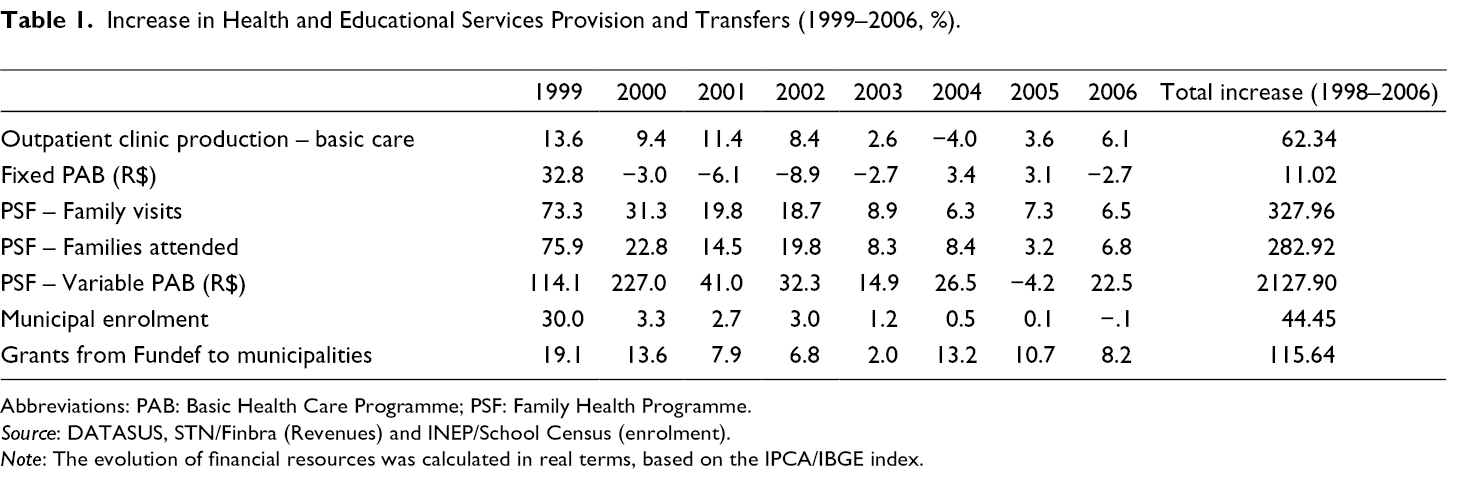
As other studies have noticed, Fundef was established through regulations with immediate – and mandatory – effects and also through the adhesion of subnational governments (Gomes, 2009). Regarding municipalities’ adhesion, Table 1 gives the absolute figures and the annual increase rate in service provision and transfers between 1998 and 2006 for Fundef. The table also shows data from the health reform to allow a comparison of the pace of each simultaneous policy change.
Increase in Health and Educational Services Provision and Transfers (1999–2006, %).
Abbreviations: PAB: Basic Health Care Programme; PSF: Family Health Programme.
Source: DATASUS, STN/Finbra (Revenues) and INEP/School Census (enrolment).
Note: The evolution of financial resources was calculated in real terms, based on the IPCA/IBGE index.
The data indicate a stark expansion in local education systems in the first two years under Fundef, expressed by a rise in the proportion of enrolment (30 per cent in 1999 and 3.3 per cent in 2000) and in the proportion of transfers to municipal funds (19.1 per cent and 13.6 per cent, respectively). Through Fundef, states transferred R$ 423 million to municipalities in 1998 and 1,750 million in 2000 (Semeghini, 2001).
After this marked decentralisation, transfers and registrations grew steadily for years, but at a slower pace. During the validity of Fundef, enrolment in the municipal systems increased by 44.5 per cent and transfers to municipal funds rose by 115.6 per cent. When Fundef was replaced by Fundeb 3 in 2006, states and municipalities had exchanged places in terms of their participation in the provision of fundamental education, with local governments rising from 37 to 60 per cent of enrolment (Gomes, 2009).
In the first year of Fundef’s operation, 2,803 municipalities (51 per cent of the total) had financial losses (Ministério da Educação [MEC], 2002). Five municipalities 4 managed to obtain court injunctions to not take part in Fundef, alleging violation of local autonomy guaranteed by the Constitution (Gomes, 2009). These units remained outside Fundef until it ended in 2006. If there were in fact opt-out clauses, would more than half of the mayors have chosen to co-operate with revenue losses? Rather than questioning the redistributive effects of Fundef, our intention at this point is to draw attention to how voluntary enrolment expansion was. It is relevant to note that 1,933 municipalities – more than one out of three – still registered a deficit in their fund participation in 2001 (MEC, 2002).
Health Reform Design
The municipalisation of basic health services went through various phases, starting with the Organic Health Law in 1990 (Levcovitz et al., 2001). Taking into account the focus of this research, we highlight shifts that have taken place since 1993, when the “fund-to-fund” transfer mechanism was created. The scheme was first established by NOB 1/1993 – like most federal guidelines involved in the health reform, this was an regulation from the Ministry of Health (a Basic Operational Norm, or NOB).
The strategy was to ensure stable funding to cover state and local health services. Complementary rules established that transfers could be made without any formal direct agreement between federal and local governments. However, at this point, transfers still rewarded municipalities according to service provision, regardless of their population or needs. At first, the uncertainty regarding funding mechanisms and the Ministry of Health’s budget prevented municipalities from assuming responsibilities that would require significant additional expenses. To overcome these obstacles, the federal administration established a new form of financing that foresaw the creation of exclusive funds for health financing at the three levels of government. Thus, combined with a National Health Fund (Fundo Nacional de Saúde), each state and municipality could have its own health fund, depending on its adherence to the national system.
It was only with NOB 01/1996 that transfers for primary care began to be made ex-ante, subject to ex-post supplementation according to the extent of health actions run by the municipalities. For local governments, there were two possibilities of engagement with the national system at this point: Primary Care (Atenção Básica) and Full Health Care (Gestão Plena). Each category had precise rules and values for transfers related to hospital and outpatient care, sanitation, epidemiology, and disease control. Issued in November 1996, this NOB was only implemented at the beginning of 1998, with a series of modifications introduced by other ministerial regulations.
With the new regulations, transfers for primary care were based on a fundamental financial benchmark, the Basic Care Value (Piso de Atenção Básica), which was subdivided into two parts: (1) fixed PAB, to be used to fund primary care specialties and calculated based on a per capita value, that is, resources were proportional to the population; (2) variable PAB, with special financial incentives for priority programmes defined by the federal government, such as the Family Health Programme (Programa Saúde da Família), the Community Health Agents Programme (Agentes Comunitários de Saúde), the Basic Pharmacy Programme, and a programme to curb endemic diseases.
Before funding this policy, the federal government had created in 1996 a 0.38 per cent levy on all financial transactions, such as depositing a check or withdrawing cash at an ATM. This was a federal government levy that was not subject to unconditional sharing with subnational governments, unlike other major taxes which represented contributions to social welfare funding. This mechanism, enshrined in the 1988 Constitution, allowed budgetary space for the following reform.
Moreover, in 2000, the area of health came to count on a minimum proportion of resources defined in the annual budget of all levels of government. Constitutional Amendment 29 forced municipalities to assign 7 per cent of tax revenues in the first year to health, increasing this proportion to at least 15 per cent of the tax revenues by 2004. This same obligation affected states, with the final requirement to allocate 12 per cent of revenues to health.
Local engagement in the health co-ordination effort was slower than that of Fundef, but it was also concentrated in the initial years following the completion of the reform in 1998. As shown in Table 1, services provided to outpatients grew year after year between 1998 and 2003. The per capita fixed value used as a benchmark to transfers regarding basic care reached its peak in 1999 and decreased after that (updated by inflation). Services provided as part of the Family Health Programme rose in the first four years, particularly because it was a new initiative. The financial rewards of this programme depended on the number of active teams in a given municipality (variable PAB) generating a tighter association between the increase in transfers and the provision of services.
The massive adherence to the national system can also be demonstrated by the Ministry of Health’s data on “fund-to-fund” transfers (Figure 1). During the creation of the financial machinery aimed at fostering co-ordination, less than 3 per cent of the municipalities were engaged in the decentralisation of health services. Nevertheless, at the end of 1998 more than 90 per cent of local governments had joined the scheme. Two years later, 5,450 municipalities had engaged, representing 99.7 per cent of the Brazilian population.
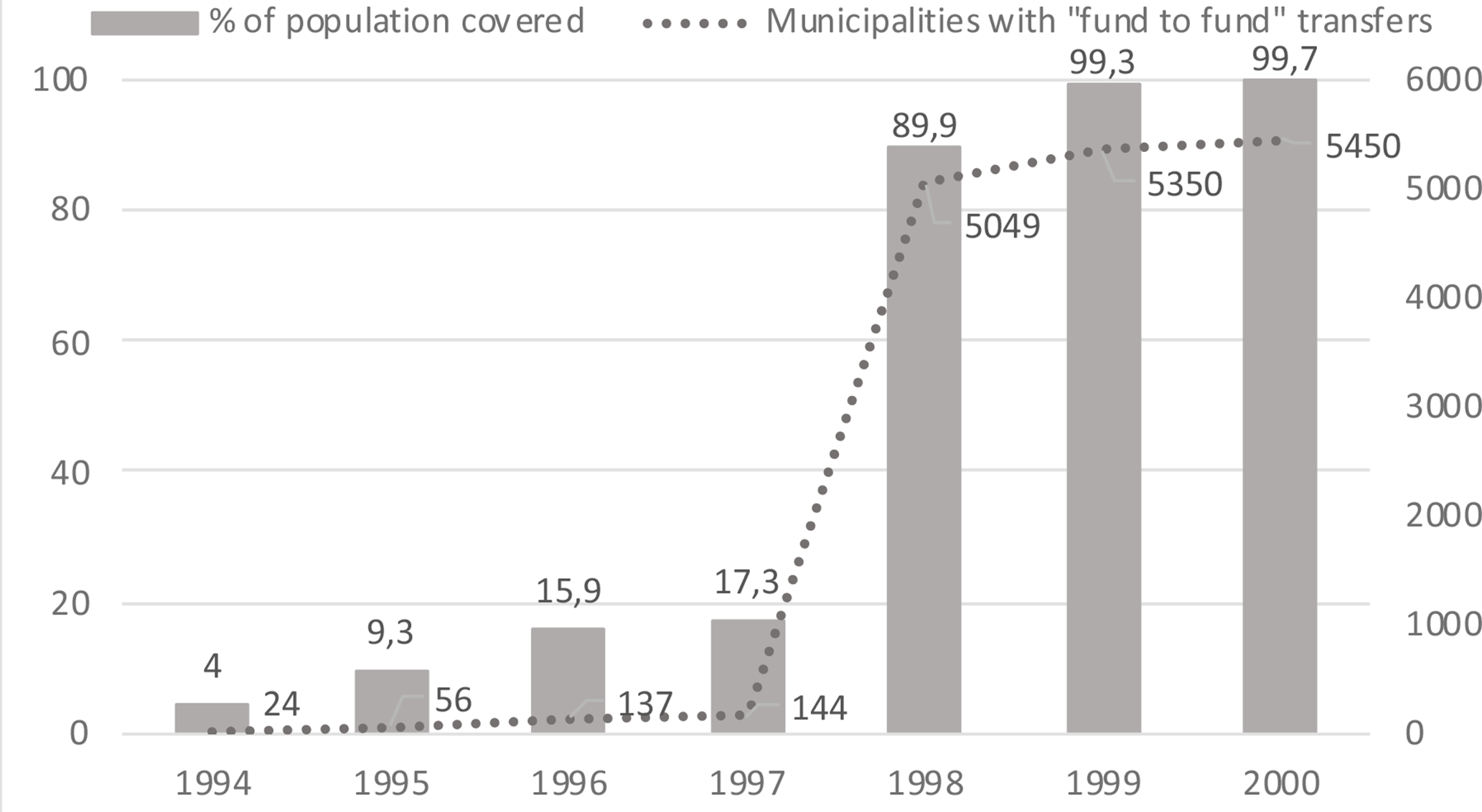
Adhesion to the Unified Health System by Municipalities (1994–2000).
The most remarkable attempt to avoid engaging in SUS was the Health Assistance Plan (Plano de Atendimento à Saúde, PAS) created by the Municipality of São Paulo, the richest and most populated Brazilian city. PAS involved a public–private partnership in health management, with public funding and the provision of services carried out by private medical co-operatives (Elias, 1999). Despite pleading for transfers from SUS since 1997, the municipality was not included in any of the management models defined by NOB 1/1996. The local system lasted for four years, until a candidate from a different party won the election for mayor, and during this period it failed to receive federal and state resources related to SUS (Duarte, 2009). Far from being exemplary, taking into account suspicions of corruption linked to the initiative, PAS demonstrated that even the municipality with the greatest financial and administrative capacities was unable to support an alternative outside the centralised co-ordination scheme.
This does not mean that the federal government did not adapt the programmes to meet municipal needs. In the case of the basic health programme, the issuing of successive NOBs, up to the point where the rules had become attractive to local governments, points to some bargaining regarding intergovernmental relations. However, the overwhelming proportion of adherence indicates that there has been a definitively narrower – if any – margin for those willing to stay out of the pact.
Horizontal Equalisation of Resources
Regarding outcomes, another dimension to be assessed is the horizontal redistribution of resources among municipalities due to the two programmes. It may confirm their loss of autonomy because the convergence of expenditure prevails over the priorities of polities and officials, but it may also help to explain the smooth way in which local governments engaged in the co-ordination schemes.
The resources of the educational fund and the conditional transfers of SUS started to be based on criteria that were independent of the fiscal capacity of each municipality – enrolment and population, respectively. The case of Fundef illustrates the redistributive impacts that reform represented to local budgets. In the first year of the programme, 49 per cent of municipalities, encompassing 81 per cent of students, increased their educational budgets. In 2000, 62 per cent of the municipalities were net recipients of the fund, representing 87 per cent of students (Semeghini, 2001). Thus, the equalisation of per capita expenditures could be an expected outcome in both reforms, a trend we have verified. We have calculated Gini co-efficients for per capita available resources per municipality in both sectors.
For Fundef’s impacts, we use the local finances database called Finance of Brazil (FINBRA), provided by the National Treasury. First, we calculated the minimum revenue linked to the maintenance and development of education for each municipality, composed by revenues transferred from Fundef, added to other revenues for education. 5 This amount was divided by the total enrolment in each public-school system. Thus, it was possible to obtain the average expenditure per student per year in each municipality. 6 Another exercise was performed excluding the transfers related to Fundef from the calculation and adding the contribution of each municipality to the fund, while keeping the previous denominator. The resulting value represents a simulation of per capita resources for education had Fundef not existed.
For PAB, the methodology is straightforward. The data have been disaggregated into two types of expenditure: with and without PAB transfers. The figures come from a Ministry of Health monitoring system (SIOPS/DATASUS), which provides information on SUS transfers and expenditures by each tier of the federation.
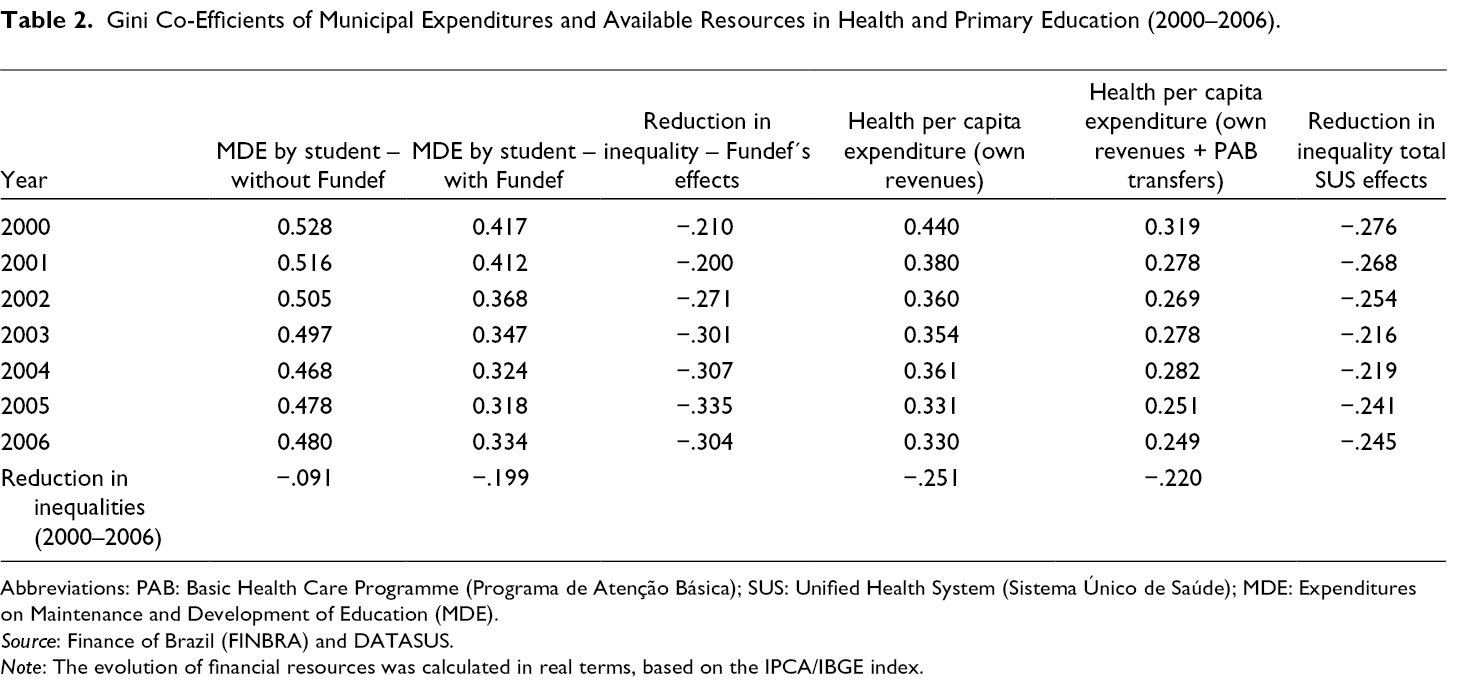
Table 2 shows the Gini co-efficients calculated for each year of the analysed period (2000–2006). 7 Resources for financing elementary education were better distributed among municipalities after the reforms that created Fundef. Considering all 5,500 Brazilian municipalities, in 2000 the Gini co-efficient of per capita expenditures per municipality was 0.417; without Fundef, it would have been 0.528. Similar figures were obtained for the other years being compared . At the end of the programme’s period of implementation, in 2006, the figures were 0.334 and 0.480, respectively. These results confirm that the kind of co-ordination promoted by Fundef reduced horizontal inequalities. It is remarkable that even without Fundef, the inequality among municipalities would have decreased significantly during the observed period (by almost 10 per cent), which suggests that the tax base that made up the fund also became less unequal.
Gini Co-Efficients of Municipal Expenditures and Available Resources in Health and Primary Education (2000–2006).
Abbreviations: PAB: Basic Health Care Programme (Programa de Atenção Básica); SUS: Unified Health System (Sistema Único de Saúde); MDE: Expenditures on Maintenance and Development of Education (MDE).
Source: Finance of Brazil (FINBRA) and DATASUS.
Note: The evolution of financial resources was calculated in real terms, based on the IPCA/IBGE index.
As for basic health, the comparison between per capita expenditures with and without PAB rewards for local provision revealed differences, ranging from 21.6 to 27.6 per cent during these seven years. Again, the inequality would have decreased even without considering PAB transfers, by a proportion larger than that observed in education (over 25 per cent). Two trends seem to be at play here. The decline in inequality is related to federal regulation on municipal spending decisions, a consequence of local revenue earmarking for health. The equalisation of own spending in the years of implementation (especially before 2003) increased expenditure in municipalities that had previously been under the minimum earmarked level.
In addition, the minimum mandatory percentage assigned to health may have served as a reference for municipalities, despite the freedom allowed to governments to allocate larger portions of their budgets to this function. Thus, inequalities in municipal spending on health became better explained by the differences in the municipalities’ fiscal capacity than by policymakers’ spending decisions.
If these forms of co-ordination contributed to territorial redistribution, this can be portrayed as a positive outcome of the programmes, particularly relevant in a country with significant geographic wealth imbalances such as Brazil. Although a desirable outcome at face value, this homogenisation can also indicate that local governments have lost power to make decisions on the allocation of their budgetary resources, with expenditures converging over time, despite the features of their municipalities and the preferences of their polities.
The expansion and equalisation of available resources may have played a role in explaining why reforms that reduced the autonomy of subnational actors run smoothly, despite their potential to create federative conflict. However, if tackling inequality was on the agenda of PSDB’s and PT’s administrations, one must not rule out that the same institutional tools may be used for other purposes. What would it be like if a far-right government used these instruments of federal regulation to implement its programmes? How would we evaluate a government with an authoritarian profile redirecting already decentralised resources or conditional grants to the execution of programmes under centrally defined guidelines? During an economic crisis like the one Brazil is currently undergoing, would the Federal Government be able to obtain the adhesion of subnational governments even more easily? Do these answers suggest co-operation, or coercion in disguise?
Fiscal Constraints and the Decision-Making Process
Other factors contributed to the success of the reforms in terms of co-ordination, apart from mandatory factors and ineffectual opt-out clauses. As part of our proposal for observing broader causal chains, we have drawn attention to the fiscal constraints and the decision-making process involved.
From a mayor’s viewpoint, Fundef involved losing control of 15 per cent of tax revenue, prioritising primary schools regardless of the profile of the population, and left little room for claiming credit for a centrally planned and nationally developed programme. If the mayor came from a town or a state poorer than the average, he/she would have a good chance of counting on supplementary funds, depending on the enrolment figures of his/her local education system. But what if the mayor came from an economically dynamic area? The same question applies to governors. Why would all the subnational officials consent to the programme?
The choice for a constitutional amendment to create Fundef can be interpreted as a way of offseting the power of subnational governments, and thus overcoming possible objections to the reform. Previous research has shown that subnational authorities, governors included, have limited influence within the Brazilian Congress under coalition presidentialism (Cheibub et al., 2009). This holds even when federative issues are at stake. Arretche (2012) analysed votes on federative matters from 1989 to 2006 and gathered evidence that, despite the imposition of losses in states and municipalities that prevailed in the Congress’ agenda during the period, the federal advantage was twofold: in general, state caucuses did not vote with cohesion, and individual votes were more influenced by the position of the representative towards the president’s party. Executive initiatives did not have difficulties in obtaining three-fifths of the votes in both legislative chambers, in two sessions, to change the Constitution. At that time, there was no other veto point or arena for proposals that were shifting the federation balance of power (Arretche, 2015).
This held true for the education reform. Our analysis of the roll call vote for the constitutional amendment which created Fundef reveals the government versus opposition cleavage organized the stance taken by individual representatives.. Territorial attachment hardly influenced the choices. In the Chamber of Deputies, 308 votes were required to pass the proposal. In the first round, there were 350 votes in favour, with eighty-four out of ninety-five votes against Fundef coming from opposition parties. In the second round, 358 representatives voted for the amendment, and seventy-three out of eighty-two “no” votes came from the opposition (Cebrap, Brazilian Center of Analysis and Planning, 2020). The Senate did not change the text passed in the lower house, and the proposal easily surpassed the forty-nine votes required. One senator voted against the amendment in the first round and another in the second – both part of the government coalition, but one from Minas Gerais and the other from Bahia, states with divergent sociodemographic features (Brazilian Federal Senate, 1996). As for the health reform, as previously stated, most of the rules were defined by the Ministry of Health.
Another topic we have addressed regards the decision-making process during the regular operation of Fundef and PAB. We have relied on previous studies to analyse this. In terms of power to decide over policies, previous empirical works suggest that, after the reforms of the 1990s and 2000s, co-operation may not be the best way to characterise the prevailing forms of intergovernmental co-ordination (Machado and Palotti, 2015). This holds even in areas supposedly regulated by threefold commissions, joined by representatives of the central government, states, and municipalities.
As for social policies, the federal government has had the final word regarding design and policy goals that have been simply implemented by subnational governments, “organising and giving consistency” to governmental initiatives, according to Machado and Palotti (2015). After analysing official agreements among the three levels of government between 2000 and 2011, the authors concluded that they were limited and focused on financial matters rather than on the substance of the policies.
In health, half of the pacts referred to financial issues. According to these authors, “despite the balanced composition [among tiers of government] and the need to decide by consensus, it seems troublesome to identify intergovernmental decision arenas, at least in the health and in the social assistance fields, as operating by cooperative federalism standards.” Moreover, they also state, “There is evidence, particularly in the outcomes of the [threefold] commissions, of features of centralised federalism” (Machado and Palotti, 2015: 73). In education, all the six agreements observed in the period involved rules on how to spend federal grants; shared decisions were limited to the discussion on how to weigh financially different types of enrolment (e.g. differentiating those in kindergarten from those in the final years of the basic educational cycle).
Last but not least, we now arrive at an essential point of our argument: the crucial role played by fiscal constraints at the local level. At the end of the 1990s, the states underwent a fiscal adjustment that has been comprehensively scrutinised on previous works on subnational finances (e.g. Falleti, 2010). A similar adjustment was to be held by municipalities, which were struggling with unbalanced budgets and unpayable debts. The federal government refinanced local government’ debts for thirty years through legally binding bilateral agreements, to be honoured by future subnational revenues. In 2000, the Fiscal Responsibility Law reinforced the fiscal restrictions, through the definition of sanctions for government officials who breached the clauses or spending limits already defined in the debt agreements and in previous legislation, such as ceilings on public sector payrolls and the prohibition of other federal bailouts. Mayors who fail to comply would face criminal prosecution.
The first year in which Fundef and PAB were fully implemented coincided with the last year in which local governments as a whole had a primary deficit. In 1999, they reached zero deficit, and in the following years they registered surpluses, 2003 aside (Figure 2).
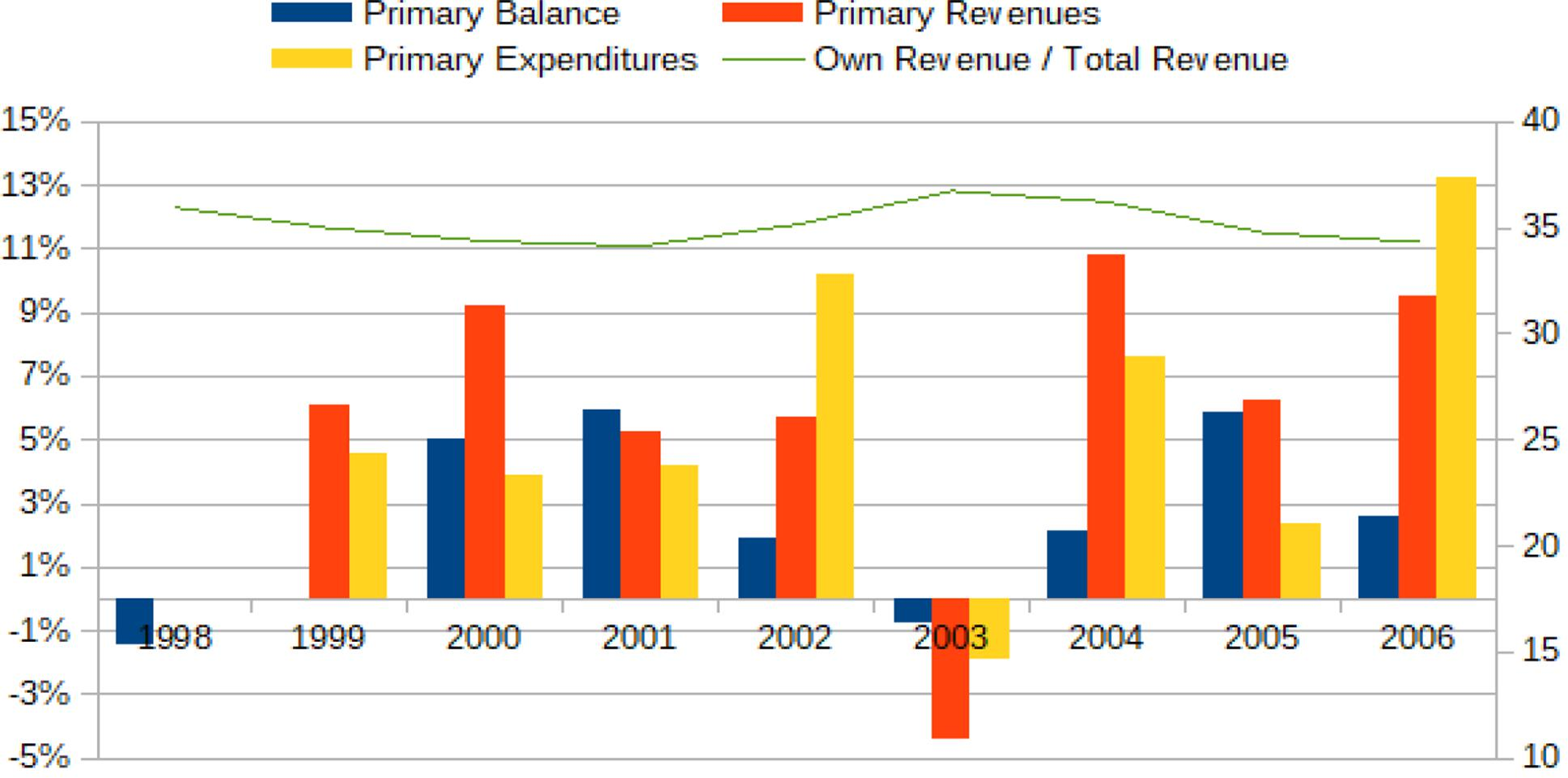
Municipal Finances (1998–2006).
In general, the adjustment was attributable to increases in revenue greater than in expenditure (1999–2001; 2004–2005). The increase in transfers from the centre was the single main factor to explain the first years of adjustment, as revealed by the steady drop in the proportion of municipalities’ own revenues between 1998 and 2001. In some municipalities, with lower tax capacity and with large enrolment in the local system, Fundef alone represented 40 per cent of the total available revenue, especially in the north-eastern cities of Brazil. This trend was interpreted as a consequence of “incentives for abrupt municipalization through fiscal constraints” (Castro, 2001: 19).
Vazquez (2012) disaggregated municipal fiscal results by groups according to GDP and population size and demonstrated that this kind of adjustment, with revenue growth (as compared to expenses) and a decline in the share of own revenues, was even more intense in richer and more populous municipalities. In other words, it seems to be a widespread movement, reaching units potentially less dependent on federal resources and with a broader technical capacity to autonomously develop policies.
We have mentioned above some cases that sought ways of not joining Fundef or SUS. They are a few exceptions. We have asked if it is possible to assume that the high adherence to the two programmes was a generalised search for co-operation, regardless of municipal size, fiscal capacity, and political affiliation, or was raising federal funds the only existing alternative to raise federal funds to finance these policies. It is important to note that no alternative budgetary reinforcement was offered, based on unconditional transfers, even in lower levels. This would have represented the possibility of choosing between adhering to centrally designed programmes or developing their own policies, even if the latter implied giving up ministerial technical support or a larger share of extra revenue. If the existing alternative was to lose revenue (in Fundef’s case) or to not access federal resources (linked to SUS), can we assume that high adherence rates are the result of good policy design by the central level or intergovernmental co-operation? If the only option is to take it or leave it, is it not coercive? Our understanding is that joining policy initiatives controlled by the federal government was a condition for accessing extra financial resources exactly at the moment municipalities faced a hard budget constraint. So, is it co-operation, or coercion in disguise?
Conclusion
More than a few authors have pointed to the potential risks of encroachment involved in co-operation schemes. Elazar (1987) warned that co-operation must not be understood as peace, but as a “cooperative antagonism” that involves bargaining and negotiation, both intrinsic to co-operative federalism. Agranoff (2001) warned that even technical supervision may reinforce the original centralisation of powers provided by federal hierarchy. Braun (2011) considered that co-operative federalism is neither a necessary nor a sufficient condition to “over-centralization,” but the lack of co-decision-making rights may be a causal variable to this outcome. Our analysis draws attention to the expanded perils posed by co-operation schemes based on budgetary incentives, in settings where fiscal constraint virtually forces subnational governments to adhere to national policy guidelines.
Our study has focused on mechanisms mobilised in the Brazilian education and health reforms in the 1990s and 2000s. The prevailing interpretation in comparative research portrays these moves as successful co-operative initiatives. Some studies have highlighted the resulting centralisation (e.g. Dickovick, 2011), but they have failed to explore the idea of coercion to address the consequent subnational autonomy loss. This article has revisited evidence and brought about new data to reassess the current perspective.
In a setting of hard budget constraint for municipalities, we propose to understand coercion primarily as the exchange of federal policy guidelines for budgetary incentives that virtually could not be refused. Actually, in the late 1990s and early 2000s, they were not. In the case of Fundef, local governments increased their enrolment figures in primary education by 44.5 per cent in order to receive returns of a fund whose contribution was mandatory. Health reform led to an integration of municipalities into the national system that virtually covered the whole population within two years.
Extreme rates of adherence can express well-designed federal policies or the success of a bargaining process involving the centre and the subnational levels. For this reason, we have also investigated strategies and tools used by the federal government at other points during the reforms to reach these levels of co-ordination. There is evidence that factors related to constitutional design, to politics, and to policies have combined to produce this outcome.
Both programmes were formulated at the centre and developed simultaneously. In terms of decision-making, Fundef was created through a constitutional amendment passed in a Congress dominated by the Federal Executive. The health reform was primarily established through the Ministry’s ordinances, counting on extra contributions levied by the federal level, which provided enough financial resources to offer budgetary incentives impossible to reject. Additionally, other studies have shown that threefold commissions responsible for managing the new policy systems tend to be dominated by federal officers. Combined, mechanisms such as these may well characterise coercion.
If coercion, why is it in disguise? The long causal chain observed in the two Brazilian reforms may have contributed to conceal their underlying character. Among the recentralisation strategies described in Latin America was the creation of new institutional layers capable of shrinking subnational autonomy. What has not been highlighted in the case of the Brazilian reforms is how far along this road a skilful combination of centralisation mechanisms can get. Our study suggests that mechanisms that seem to offer opt-out alternatives or optional adherence to local policymakers cannot be taken at face value. In this scenario, coercion is established in a hidden manner, through relations among levels of government that only appear to have been negotiated, but actually are not far from encroachment by the centre.
Previous studies suggest that the impact of these hidden mechanisms can go beyond the democratic deficits generated by the alienation of regional and local governments from effective policy decision-making and the transformation of these tiers into simple agents of a central government principal. When applied to welfare initiatives, the arrangements that are allegedly co-operative but coercive tend to make social policies the first to be shrunk in times of retrenchment. The visibility of cutbacks and of the identity of officials willing to make them is one of the key dimensions in curbing welfare policy retrenchment (Campbell, 2015; Pierson, 1996). There are reasons to believe that the disguised mechanisms of this coercive federalism may result in an optimal case for retrenchment: concentrated power over policy design and indistinguishable blame for cuts.
Due to the Brazilian institutional features described in this article, different federal administrations may be equally successful in indirectly curbing subnational autonomy, but with less beneficial outcomes to social policies. This concern with the use of budgetary incentives to forge co-operation employing ingredients of coercion in disguise is all the more dramatic in the presence of an extreme-right president, like Jair Bolsonaro, and in the context of an enduring economic crisis, as Brazil has undergone for the last number of years.
Footnotes
Acknowledgements
Thanks to Danilo Buscatto Medeiros and CEBRAP for granting access to data on Fundef’s roll call votes in the Chamber of Deputies, and to Jorge Gordin and two anonymous reviewers for their helpful comments.
Declaration of Conflicting Interests
The authors declared no potential conflicts of interest with respect to the research, authorship, and/or publication of this article.
Funding
The authors disclosed receipt of the following financial support for the research, authorship, and publication of this article: São Paulo Research Foundation – FAPESP, grants 2018/10358-3 (Schlegel R) and 2017/12677-6 (Vazquez DA).
Notes
Author Biographies
Email:
Email: