



Abstract
This article examines the issue of democratic deterioration by revisiting the Venezuelan case (1974–1998). Using sequence elaboration and alternative case-focused theories, it tests and confirms the hypothesis that presidential partyarchy was the main contextual explanatory factor behind the crisis that led to Venezuela's democratic deterioration. Building on elite conflict theory, it also aims to integrate previous studies’ insights and better explain the timing of factors to illustrate how economic presidentialism (the highly autonomous executive control of a state-controlled economy) was the main mechanism leading to democratic deterioration.
Introduction
Venezuela was once a relatively well-established democratic regime, labeled “exceptional” by politicians and scholars of Latin American politics (Smith and McCoy 1995). So how did this country with general elections dominated by a bipartisan system, steady economic growth, and independent public powers come to be a delegitimized regime with a declining economy, with an unreliable bureaucracy, and where the common citizen rejected political parties and even democracy itself? In this article 1 I examine the case of Venezuela's democratic deterioration. In spite of the depth and breadth of literature addressing this democratic deterioration, there is little consensus in terms of an explanation; this is partly down to the scale of intellectual diversity that has sought to tackle the issue and also partly the result of the lack of any explicit assessments.
I would like to thank anonymous reviewers of the Journal of Politics in Latin America, for their valuable insights. Any flaws herein are my sole responsibility.
One exception is the work of Coppedge (2005), who concludes that partyarchy was central to bringing about Venezuela's democratic deterioration. Using sequence elaboration (Mahoney, Kimball, and Koivu 2008), I test this finding and indeed conclude that Coppedge's (1994) model of presidential partyarchy and factionalism better explicates what occurred in Venezuela. However, the model falls short of explaining the timing of democratic deterioration in Venezuela. To address this shortcoming, I build on elite conflict theory (Lachmann 2000, 2009) and identify economic presidentialism (i.e., the highly autonomous presidential control of a state-controlled economy) as the key mechanism behind the crises that prompted the severe challenge to and public scrutiny of Venezuela's once model (liberal) democracy.
The Venezuelan Crises and Democratic Deterioration
Scholars agree that a series of acute crises were responsible for Venezuela's democratic deterioration (Hellinger 1996; Romero 1997; Caballero 1998; Crisp and Levine 1998). In 1995 around 60 percent of Venezuelans were “not very satisfied” or “not at all satisfied” with democracy, while only 11 percent were “completely satisfied” (Latinobarómetro). It is hard to deny that something was afoot in a society that went from having a single-digit voter abstention rate from the beginning of the democratic period up to 1973 to having a rate close to 40 percent in 1993 (Consejo Nacional Electoral, National Electoral Council). Voter turnout did not recover until 2006.
During the 1950s and 1960s, Venezuela had one of the world's most successful economies (Naím 1993: 19): compounded annual growth averaged a remarkable 6 percent, inflation remained relatively low, and GDP showed steady growth from 1943 to 1977 (Naím 1993: 19). But from the mid-1970s, problems began to accumulate: the economy shrank for a period of eight consecutive years (1978–1985), real income per capita in 1985 was almost 15 percent lower than in 1973, foreign debt increased from USD 2 billion in 1973 to over USD 35 billion in 1982, and almost 70 percent of export revenues were devoted to the servicing of foreign debt by the mid-1980s (Naím 1993: 24–25). What is more, between 1981 and 1997, unemployment rose from 6.6 percent to 15.4 percent, “the income share of the poorest 40 percent of the population fell from 19.1 percent […] to 14.7 percent,” and the income share of “the wealthier decile increased from 21.8 to 32.8 percent” (Roberts 2003: 59–60).
This period of economic hardship was followed by a social crisis. On the morning of 27 February 1989, about two weeks after the inauguration of Carlos Andrés Pérez as president, public transportation drivers and owners ignored an agreed 30 percent fare rise, which had been due to come into effect two days later, and imposed an immediate 100 percent fare rise. Complaints turned into demonstrations, with riots spreading across Caracas and other cities. For two days, turmoil ruled the city and parts of the countryside, violent military repression tempered the situation. Some NGOs estimated that over 400 people were killed and a further 1,500 injured during the two days of rioting.
On 4 February 1992 Venezuela was caught unawares by an unsuccessful military coup. Coup leader Hugo Chávez and his coconspirators were jailed and released two years later in 1994. (A second failed coup was carried out by some of Chávez's allies on 27 November 1992.) In 1993 President Pérez was impeached for embezzlement and finally removed from office. The ensuing years saw those behind the attempted coups form the Fifth Republic Movement (MVR) party (formally established in 1997) and Chávez run for and easily win the presidency in 1998. Given this replacement of the country's political elite and the continual overturning of state policies, especially those associated with neoliberalism, the Chávez movement's coming to office effectively signaled the death of the liberal regime that had been established in 1958 (McCoy, 1999). How can this process of democratic deterioration be explained?
Explaining Democratic Deterioration
Coppedge's (2005) nested inference analysis, which uses a large sample to test general theories with the potential to explain democratic deterioration, puts the Venezuelan case in perspective. Given that there are “too many hypotheses on democratization,” Coppedge limits his analysis to strands of the general hypothesis that wealthier countries tend to be more democratic. He finds that,
After 1992, Venezuela's level of democracy declined to levels well below the range predicted by economic theories, but this change was not predicted by the economic theories alone. Some other reason must be sought (Coppedge 2005: 301; original emphasis).
The best-fitting explanatory factor for the pattern of the residuals is the strength of the social democratic Acción Democrática (Democratic Action, AD) and the Christian democratic Comité de Organización Política Electoral Independiente (Independent Political Electoral Organization Committee, COPEI) – the two main parties associated with founding the 1958 democratic regime. According to the author, the moral outrage expressed by Venezuelans toward their country's economic decline reveals the significant impact the decline had given that partyarchy had institutionalized impunity for corruption. Partyarchy also explains why parties made no effort to adapt in an attempt to reestablish their appeal to voters. The parties’ vertical hierarchies combined with their tight discipline forced new leaders to rise slowly through the ranks. For many, the 1999 election of Hugo Chávez represented the opposite of what the two main parties had come to represent.
An alternative test is required for the Venezuelan case, first and foremost because Coppedge's test does not provide a wider analysis of the qualitative factors that may have played a part in the country's democratic deterioration. Since Coppedge's work primarily tests the role of economic growth in this process, there remains a so-called black box regarding the historical explanation. Coppedge assumes partyarchy is the key factor behind the country's democratic deterioration and thus provides an ad hoc argument based on Venezuelans’ feelings of moral outrage. In this sense his conclusion can be seen as a hypothesis – one that itself begs to be put to the test. As I will argue, sequence elaboration is very well suited to carrying out this test.
Following the application of this method, a compound explanation can be expressed via a single, simplified causal model, as shown in figure 1. This analysis draws on secondary sources to first compare arguments and then to test these arguments against the backdrop of historical events and processes. This approach is complemented in the last part of the article with the use of primary data, mainly from the Central Bank of Venezuela. In figure 1 the arrows represent causal relationships. Text outside of the boxes represents secondary factors, whereas bold letters represent the main explanatory mechanisms. Additionally, despite Chávez's assertion that the 1992 coup attempts were motivated by the repression during El Caracazo in 1989, I consider them to be independent factors since the military conspiracy led by Chavez began in 1978 – well before the other crises had fully unfolded. (Even if the repression of the 1989 riots was an additional event that rallied people to the cause, ultimately, it had no bearing on either the outcome or the timing, because the coups failed and were only launched following the conspirators’ elevation to higher ranks within the military.)
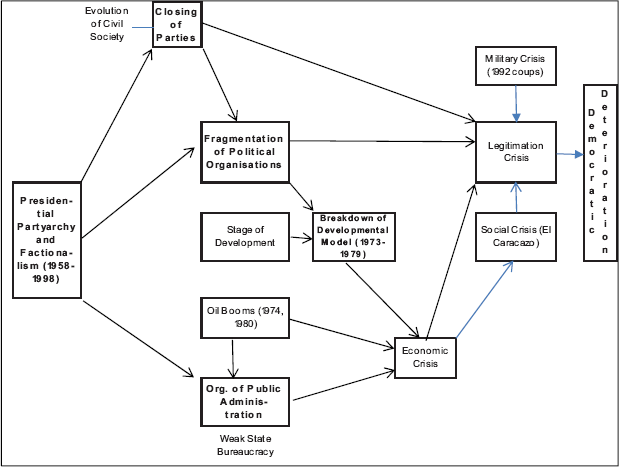
Simplified Causal Model of Democratic Deterioration in Venezuela
As we can see in figure 1 (which summarizes the relationships between alternative case-focused explanations of the Venezuelan crises that led to democratic deterioration), presidential partyarchy and factionalism is the major factor behind democratic deterioration – at least in the sense that it antecedes the other explanatory factors. Yet, as I will argue below, this model lacks a criterion explaining the timing of the process. This article elaborates on the idea that the economic presidentialism (the highly autonomous executive control of a state-controlled economy) set in place during President Pérez's first term (1974–1979) was the causal factor that triggered the chain of contextual variables leading to democratic deterioration. I will demonstrate in the last part of this article how this mechanism unfolded. Before that, however, I will reveal how I arrived at figure 1, by considering each of the alternative case-focused explanations in more depth. These explanations provide the input needed to establish the temporal organization of the various causes of the breakdown of puntofijismo – the democratic system of governance established by the Pact of Puntofijo in 1958.
Testing Alternative Case-Focused Theories of Democratic Deterioration
To test alternative case-focused theories of democratic deterioration in Venezuela, I use sequence elaboration (Mahoney, Kimball, and Koivu 2008). This method enables me to apply an alternative test (distinct to that conducted by Coppedge) to the qualitative part of the explanation and to answer the following questions: How can we tell which argument is correct from two competing explanations that view the choices made at two different junctures as equally critical? How can we determine whether an initial causal factor or an intervening, posterior factor is more important than the other? By examining multiple variables in this way, sequence elaboration enables us to identify which factors are contextual and which relate more directly to democratic deterioration. As is generally the case when seeking to identify causal links, the principle of precedence (i.e., whether variables are antecedent or subsequent) is of paramount importance. Just like other methods, such as process-tracing (George and Bennett 2005), sequence elaboration aims to establish links between possible causes and outcomes in small populations of cases. This method also deals with post hoc fallacy (i.e., the risk that the sole precedence of a factor is sufficient to establish causality), because sequence elaboration provides a framework for evaluating the relative importance of various causes by enabling researchers to consider the position of causes in a sequence. I carry out this identification process by comparing the key events and processes previously analyzed in some of the most paradigmatic works on the demise of Venezuela's democratic regime.
In addition, sequence elaboration offers criteria for distinguishing the type of causes that make up the sequence as a whole rather than an estimation of probabilistic causal effects for larger populations of cases. This is accomplished by identifying a cause as one of the following: (1) necessary but not sufficient, (2) sufficient but not necessary, (3) necessary and sufficient, (4) an insufficient but necessary condition (INUS -part of an unnecessary but sufficient condition), and (5) a sufficient but unnecessary condition (SUIN – part of an insufficient but necessary condition). In brief, this approach is based on the application of Lazarsfeld's elaboration model to a set of causes – which I undertake with the help of Boolean algebra in the present article.
Of course, the goal of conducting such testing is not to disprove any of the explanations but rather to identify one that best accounts for the general process of democratic deterioration. Big events like democratic breakdowns usually have multiple causes. Explaining them is often not necessarily a matter of disproving alternative hypotheses in favor of one's own, but rather a matter of trying to figure out which are most critical and which are more contextual and to shape the background so that the triggering factor will emerge. I therefore contend that although presidential partyarchy was the main cause of the demise of liberal democracy in Venezuela, the economic presidentialism established during President Pérez's first term (1974–1979) is the main factor explaining why, when, and how it happened.
I begin with a general causal model that will later be used to identify more specific factors within each of the simpler models. The initial causal link, as presented in the literature, was a series of crises that acted to diminish the credibility of democratic institutions. This created room for radical movements and outsiders to enter the political arena (who in turn made it their mission to dismantle the existing democratic institutions). In this case democratic deterioration (
Oil Booms (OB) and the Institutional Logic of a Petrostate
According to Karl (1997: 58), Venezuela can be considered a petrostate because it “depends on revenues generated by a depletable commodity” which “produces extraordinary rents” that are “funneled through weak institutions,” which effectively guarantees “that the public sector will lack the authority and corporate cohesiveness necessary to exercise effective capacity.” Also, the country's incumbents and policymakers increased public spending during oil boom periods, creating patterns that were difficult to change – a practice which increased external and internal budget deficits and ultimately weakened state capacity.
This theory highlights the role of oil booms in shaping the Venezuelan state and affirms that oil booms did indeed have a detrimental effect on public-spending decisions, thus helping to explain both the severity of the Venezuelan fiscal crisis and its timing. Although I draw upon this model when discussing the timing of the democratic deterioration, it cannot (and is obviously not intended to) account for the dynamics of the political actors within the political arena. For example, specific decisions on the allocation of state resources cannot be explained by the general principle of “more revenue, more spending, more debt”; rather, they are expounded by the interelite dynamics established at the time of the oil booms.
The Breakdown of the Developmental Model (BDM)
Jonathan DiJohn (2009: 258) argues (in contrast to the paradox of plenty thesis) that natural resources have not systematically determined state incentives over long periods and that Venezuela's pattern of poor industrial growth bears closer resemblance to other non-oil-producing Latin American countries than is acknowledged by rentier state theorists. The core of his argument is that an acceleration (or slowdown) in growth is a result of compatibility (or a lack thereof) between development strategies and political settlements. In the early, “easy” stage of import substitution industrialization (ISI) substitution is for nondurable consumer goods, which requires small-scale and low-value-added industrialization strategies, as well as small-scale technology. The more advanced stages of ISI and big-push industrialization (“a synchronized expansion of industrial sectors, coordinated by the state” (DiJohn 2009: 179)) involve the production of consumer durables, intermediate goods, and capital goods – which implies more advanced technology and the development of larger firms that respond to the centrality of scale economies in intermediate technology sectors.
Venezuela's collapse of growth, which started in the 1970s, was therefore the result of the country being a consolidated state with fragmented political organizations at a time when the development strategy for the country (big-push, natural resource–based industrialization) called for centralized organizations. Although this theory can explain the steady decline of growth and industrial development in Venezuela, when Di-John compares Venezuela with Malaysia, he seems to find himself drawn to the role of “centralized political organizations” in sustained growth. Therefore, we are led to conclude that it is mainly conflict within the party system (fragmentation of political organizations) that accounts for the Venezuelan economic crisis.
These two models illustrate that the collapse of the economy during the 1980s was so severe that even a relatively functional democracy like that of Venezuela had difficulty surviving. Events such as El Caracazo and the 1992 coups would also have been part of the drawn-out process of democratic failure. Moreover, the fiscal crisis prompted by the oil booms and the breakdown of the developmental model occurred prior to the demise of the liberal system in the late 1990s. However, they were mediated by the organization of public administration.
The Organization of Public Administration (OPA)
As parties and the executive took over the state, public administration became a means by which power could be stabilized through clientelism and patronage. During the years of consolidation of the party system after 1958, public spending was “shifted from the centralized public administration (CPA) to the decentralized public administration (DPA) which was almost exclusively controlled by the executive” and comprised about 400 entities (Crisp and Levine 1998: 36). These organizations included public enterprises, autonomous institutes, credit institutions, and regional development corporations, inter alia, while their governing boards included interest group representatives, particularly from business (Venezuelan Federation of Chambers of Commerce [Fedecámaras]) and labor unions (Confederation of Workers of Venezuela [CTV]). Government spending on such entities was a way of responding to the demands of the private sector and of providing finance capital for private-sector initiatives and production (Levine and Crisp 1995: 232–233). The DPA, however, did not translate spending by the executive branch into a de-concentration of power; nor did DPA organizations come under electoral control. A side effect of this method of organization was that it was exclusionary – excluding actors from the political arena and the policymaking agenda – and thus resulted in power being concentrated in unelected bodies or a weak bureaucracy (Levine and Crisp 1995: 236).
A weak bureaucracy is a key factor to understanding why the political crisis could not be reversed, as opposed to being a direct cause of democratic deterioration itself. It is a fundamental intervenient factor that better explains the permanence of the system than the crisis itself, with the latter arising more as a result of external pressures from other sources. Rather, the most important mechanism behind the economic crisis (

where “s” denotes “sufficient condition”; “n,” “necessary condition”; and Λ, the logical operator “and.” Our causal story does not end here, however, for we still need to account for the dynamics of the political system per se.
The Closing of the Party System (CP)
The political system's loss of legitimacy was pinned to the “low priority given to citizens’ rights by political institutions and their leadership” (Gómez 1998: 172). From the late 1970s onwards, the party system became rigid as a result of party elitism and democratic centralism (Martz 1995: 32, 35). The dominant parties (AD and COPEI) and interest groups (mainly FEDECAMARAS and CTV) were able to control the policymaking agenda, thereby excluding emerging civil society groups from political participation. “In short, party elites were no longer in touch with the public” (Martz 1998: 73). Three important factors established the gap between state officials and society. First, electoral law made officials less responsible to the electorate. Second, because parties were present in every arena of social life, from trade unions to student associations, they permanently cut off the influence of parallel organizations in the policymaking process. Third, voters saw their options increasingly reduced as the two dominant parties (the center-left AD and center-right COPEI) became more similar ideologically, shifting preelection coalitions in legislative alliances from issue to issue after the election (Crisp and Levine 1998: 35).
This factor saw the system come under severe public criticism and become subject to pressures and tensions from outside the political structure. New groups demanding participation found themselves frustrated, while patronage became a source of discontent for common citizens unable to find an alternative despite their complaints. Yet this factor can be better addressed by exploring the dynamics within and between elite parties.
Presidential Partyarchy (PP)
Another important feature of the Venezuelan political system was presidential partyarchy (Coppedge 1994) – an arrangement in which factional struggles within parties over nomination campaigns took a prominent role. Although this system enhanced democratic stability and insulated technocratic policymakers, it also undermined democracy by closing citizens’ channels of participation. Freedom to organize was restricted by the parties, which in turn hindered the activities of the media, interest groups, and civil society institutions more generally. With this in mind, the riots and looting that occurred during El Caracazo in February 1989 could be understood as an alternative, violent response to the shock program of President Pérez in a context where other channels for expressing grievances were blocked (Coppedge 1994: 160). In the long term partyarchy fosters disillusionment with parties and democracy, and presidentialism is insufficiently flexible to correct this frustration.
As illustrated in the simplified causal model (see figure 1), this analysis incorporates the diagnosis of the closing of the party system while also providing important clues for understanding the fragmentation of political organizations (DiJohn 2009). It also offers elements useful for understanding the political settlements fostered by the oil booms (Karl 1997). Nevertheless, Coppedge's complete model of within-party behavior does not link the internal (or within-party) dynamics of the political system with the external dynamics. For example, the model is unable to explain the 1992 coups as a result of the presidential-congressional stalemate. Likewise, even if we accept that El Caracazo was an alternative response to the closing of the party system and the channels of representation, it cannot be understood without taking into account the neoliberal reforms that were implemented during the reformation process of the late 1980s and 1990s. Both examples represent anomalies to the trajectory of presidential partyarchy. In brief, presidential partyarchy explains the normal functioning of the Venezuelan political system and the closing of political parties; it cannot, however, explain the anomalies in the system or their timing, which are at the institutional root of the deterioration of democracy in Venezuela.
I have now presented all the elements necessary to demonstrate that the main explanatory factor of democratic deterioration (
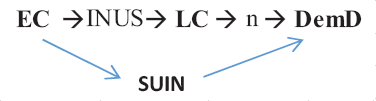
where
On the one hand, as previously concluded, the economic crisis (

The legitimation crisis (

The sequence elaboration used here leads to the conclusion that presidential partyarchy is at the root of the process of democratic deterioration. However, as unmasked by the analytic decomposition, the following questions remain: What explains the timing of the process of democratic deterioration if there was previously a relatively long period of presidential partyarchy? What triggered the entropy of the system? In the next section I build on elite conflict theory to address these issues, constructing a more encompassing and robust argument by including the main contributions of each model.
Introducing Elite Conflict Theory
As I will show, elite conflict theory enables me to elaborate on the previously exposed arguments and, with the support of additional data and references, to answer the queries arising from the analytic test. According to elite conflict theory, first of all, “chains of contingent change [begin] with elites, not classes or individuals” (Lachmann 2000: 9). Methodologically, elite conflict theory suggests a three-step analysis. The first step involves identifying “moments when relations among elites and between elites and the state change” (Lachmann 2009: 57). The second step consists of evaluating “the consequences of such episodes, specifying which elites gain or lose control over resources and the capacity to set policies” (Lachmann 2009: 57). The third step involves evaluating “each change in the relative power and autonomy of the state and rival elites for its effect on that state's capacity to meet particular geopolitical challenges of the moment” (Lachmann 2009: 57). In contrast to rational choice theory, in elite conflict theory “opportunities for structural change do not end after a single decisive episode of state-elite conflict and learning. Rather, elites, conflicts, and sequences of structural change are multiple” (Lachmann 2009: 57).
Explaining the origins and timing of the Venezuelan crisis requires us to go beyond the pattern of presidential partyarchy and to consider an anomaly of the pattern created by interelite dynamics. In Venezuela such an anomaly was the result of the interactions between business and party elites and the consequences thereof on the organization of the state. Pérez's first administration (1974–1979) was key to establishing the organization of public administration, which subsequently made reform very difficult. During this period, the Pérez government witnessed the breakdown of the developmental model at its higher stages (DiJohn 2009), coinciding with both the first oil boom, which occurred in 1974 (Karl 1997) and the first deviant case of factionalism (Coppedge 1994), thereby effectively “locking in” the distinct organization of public administration (Crisp 1998a).
Therefore, the key to explaining the origins of Venezuela's democratic deterioration is to be found in this period – during which a new set of interelite relationships was established, through which the state was configured in such a way that future modification was rendered very difficult. We can refer to this new configuration as economic presidentialism – that is, the executive's highly autonomous control over the state-controlled economy. This arrangement was an anomaly of the system and resulted from the contingent encounter of the normal dynamics of presidential partyarchy, changing external and internal economic conditions, and an ambitious political actor. This mechanism was at the root of what later locked in the state organization through corporatist forms of participation (Levine and Crisp 1995; Crisp 1996; Crisp 1998a; Crisp and Levine 1998). The crisis of the ISI model was somehow masked by the oil booms of the 1970s and 1980s. Consequently, there was never an opportunity to catch up with the program of foreign borrowing – a result not only of the fiscal crisis but also of the fact that Venezuelan industrialization had been in a state of steady decline ever since the 1970s (DiJohn 2009). In the 1980s, when the ISI model crashed and the oil booms led to pressure to borrow, economic presidentialism made any readjustment during the crisis nearly impossible. This combination proved disastrous for democracy in Venezuela. I now trace those relationships, from Pérez's first term up to the period just prior to his second term, when neoliberal reforms and El Caracazo came to prominence.
Carlos Andrés Pérez: The Anomaly of Presidential Partyarchy, 1974–1979
Pérez's 1973 election coincided with the ISI model breaking down and an unprecedented oil boom. The interaction between those two factors, his grandiose political style, and his confrontation with the ruling party elite set in motion a chain of events whose immediate consequences help to explain the legitimation crisis that later emerged. Pérez's first period in office has widely been recognized as a distinctive one within the Venezuelan democratic experience. To begin with, no other president had known such a positive political climate: an AD-dominated Congress, the support of the armed forces, the Left's return to institutional politics following its subversion, the Right's acceptance of the prosperity and safety offered by the system, the student body's return to a state of calm, and an unprecedented budget of VEF 45 billion (Velásquez 1993: 366). Furthermore, his vision for public administration signalled a rupture with previous governments and the end of broad-coalition governments in Venezuelan democracy (Aguiar 2009: 197–198).
On 29 April 1974, only a couple of months following his inauguration, Congress granted Pérez special powers allowing him to rule by decree. His first decree was the creation of a blue ribbon commission, which was tasked with exploring ways to accelerate the reversion of the oil concessions, which were due to expire in 1983. His second decree established the Commission for the Integral Reform of the Public Administration (CRIAP) (Gómez and López-Maya 1990: 79; Velásquez 1993: 368–370). The government's Great Venezuela program (also called the Fifth Plan of the Nation) was characterized by overt intervention in the economy through direct investment and credits. This generated a massive expansion of the system of state-owned enterprises, which was intended to reorient ISI toward the international market (Ochoa 1997: 129).
As a result of Pérez's reorientation of the state, several significant changes took place. First, factional conflicts entwined two dimensions – one consisting of political elites, particularly within the AD (as predicted by the presidential partyarchy model) and one consisting of political elites and big business (not predicted by the presidential partyarchy model). Following the end of the dictatorship in 1958, there was a tendency for representatives of large industrial groups to be included in government, particularly in ministries. Under Pérez, the difference was that the conflict within the AD also resulted in a conflict between economic groups (Duno 1975: 106). In fact, Pérez considered the traditional economic elites to represent an older stage of capitalism – a stage to be topped by the new multinational-led capitalism. He believed that a more advanced stage of ISI, characterized by multimillion-dollar investments, was required (Duno 1975: 74; Martín 1975: 113).
The new interelite arrangements started when, during the presidential campaign, Pérez lost the support of the leading technical cadres within the party and the economic groups who had backed the previous Leoni AD government – the so-called Grupo Guayana. This was certainly a result of factionalism within partyarchy. Pérez sought and won the support of an emerging group of entrepreneurs, a relationship which changed the orientation of state–business relations by directly affecting the state's structure and policy orientation (an element not considered in the presidential partyarchy model). This group came to be publicly known as the Apostles. Up to this point, the business elites were satisfied with having loyal people in key positions. Incorporating the Grupo Occidente changed things since it (i) implied that the emerging economic group had become embedded within the state, as businesses were carried by those who were simultaneously private entrepreneurs and representatives of the executive branch and (ii) prompted the establishment of some sort of “shadow cabinet” independent of the official state representatives (Martín 1975: 162–163). The emerging entrepreneurs/politicians had the same financial resources as traditional groups, but they also had the authority to make the state act in a manner favorable to their interests. Favoritism of the traditional and largest economic groups was thus somehow challenged, and new links to high officials became more prominent than ever. For Pérez, this represented a way to democratize capital by forming an emergent bourgeoisie, which was in contrast to the previous oligarchical structure of ownership (Karl 1997: 148). To the ruling party represented by Betancourt and the old guard of the AD, it signified a diminishment of their influence.
The conflict became apparent in a number of crucial areas. For example, there was an extension of the functions of the Ministry of Planning (Cordiplan, formerly the Central Office of Coordination and Planning), while those of the Treasury were reduced to being merely adjunctive to those of the former. Additionally, the Law of Planning formalized the extreme centralization of the state bureaucracy and weakened the cabinet, with the exception of key positions all held by members of the Apostles.
In summary, Pérez broke the balance between presidentialism and partyarchy in favor of the former and in ways that fundamentally shaped the structure of the state. This new type of political control over the economy was the result of a relationship between the president, the state bureaucracy, and the economy and was exercised through four dimensions.
Centralization of Planning
Despite having held the faculties of constitutional planning since at least 1947, the central state was not regarded as the planning entity for the entire economy until the 1960s, following the creation of the Cordiplan (Brewer-Carías 1983: 7–8). Planning had been the sole responsibility of the executive since the start of the democratic period in 1958, with the president required only to present to Congress the “general guidelines of the economic and social development plan of the nation” (Brewer-Carías 1983: 22). But until 1976, plans were not judicially mandatory for natural persons, the public sector, or the legislative chambers. However, they were made mandatory by presidential decree on 9 March 1976 and ratified by the Ministerial Council. Congress, the regional authorities, and even sectorial offices were left completely out of the planning process. Although their exclusion reflected a clear trend that had been in place since 1958, due the bureaucratic organization of the state, it had now become institutionalized (Brewer-Carías 1983: 29–33). The planning process became entirely the responsibility of the executive.
Expansion of the Decentralized Public Administration
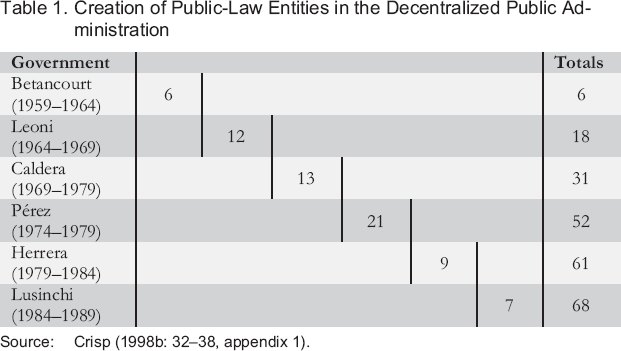
In explaining how autarkic development could be reconciled with democracy in Venezuela, Crisp (1998b) refers to the DPA as a privileged space in which economic groups’ access to the policymaking process and oil rents could be assured. The DPA was structured in a way that openly favored executive power, because the decentralized entities had their own budgets and even the capacity to acquire debt without any oversight. Twenty-one of these entities were created during the Pérez presidency alone. Out of some 2,800 members of consultative bodies, national-level public officials accounted for about 90 percent, with 95 percent of these coming from the executive branch (Crisp 1998a: 32). This meant that the governing boards of the DPA were isolated in the executive, “where all officials except one are appointed rather than elected” (Crisp 1998b: 11). Moreover, public expenditure was radically modified under the Pérez administration. For instance, in 1960 the central government accounted for 70 percent of expenditure; the DPA 30, percent. However, by 1980 (the year following the end of Pérez's first presidential term), these figures were 33 percent and 67 percent, respectively (Kornblith and Maingon 1985: 50, quoted by Crisp 1998b: 13). This indicated that the structure of public expenditure was moving to a place where the president held overwhelming control of the budget, out of reach of Congress (Gil 1992: 296).
The Height of Subsidy-Based Economic Policy
During the Pérez administration, there was an unprecedented rise in subsidies. Given the characteristics of the planning process previously described, these subsidies were determined almost entirely by the executive. Figure 2 illustrates how subsidies (as a percentage of public expenditure) have varied along with fluctuations in public expenditure (as a percentage of GDP): as public expenditure rose or declined, so too did the subsidies, but only for the periods 1950–1973 and 1991–1998. This means that during Pérez's first government and until the first year of his second term, subsidies soared as a proportion of total public expenditure. The peak in 1989 can be explained, in all likelihood, by an attempt to regain popularity following the events of El Caracazo.
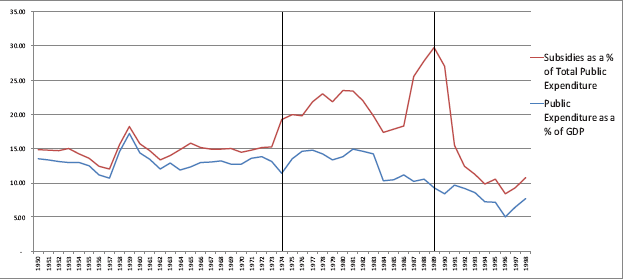
The Rise and Decline of Subsidy-Based Economic Policy in Venezuela, 1974–1998
The second diagram below (see figure 3) shows the particular priorities of each government by year. From 1973 to 1975, for example, subsidies to trade rose as a proportion of total subsidies. After this period, we see a trend where subsidies to the manufacturing industry rose steadily alongside total subsidies up to 1991. What we see from 1992 to 1998 is not a sudden rise in subsidies to transportation but rather the virtual disappearance of subsidies to any other branch of the economy – which is consistent with the information provided in table 1. This was perhaps a result of both the new orientation of the state and the economic crisis.
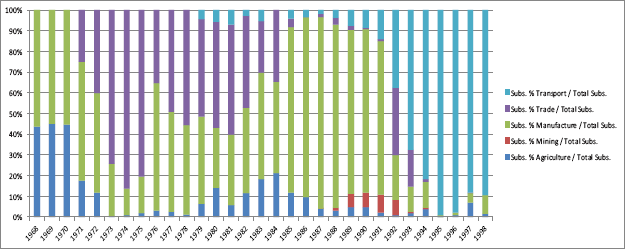
Distribution of Subsidies by Area of the Economy, 1968–1998
Creation of Public-Law Entities in the Decentralized Public Administration
Source: Crisp (1998b: 32–38, appendix 1).
In any case, however, it indicated a reduction of the subsidy-based economic policy just prior to the elections that marked the demise of partyarchy – first in the almost inertial government of Caldera and then in the game-changing election of 1998. The executive therefore not only allocated resources to the private sector with virtually no system of checks and balances in place, it also prioritized private-sector resource allocation over public expenditure during this period.
Control of the System of State-Owned Enterprises
Pérez announced a reform of the state in December 1974. In brief, this reform aimed to increase the power of the executive and the private sector and circumvent political parties. This was to be achieved primarily through centralizing the state enterprise system, expanding public-private commissions (considered by President Pérez to be an elite consensus-building mechanism (Karl 1997: 143–145)), and implementing tax reform, which never actually took hold. Pérez was determined to challenge partyarchy and to promote his new vision of the economy. By April 1975, during and after a debate in the Chamber of Deputies about the role of these new business elites, tensions escalated between parties, the executive branch, and within the AD over the issue of state enterprise oversight. The AD insisted on ministerial oversight, while Pérez insisted on presidential oversight. These tensions generated sufficiently strong opposition for the reform to be killed off. But Pérez circumvented the opposition by creating the Ministry for the Promotion, Organization, and Supervision of Basic Industries (shortly afterwards becoming the Ministry of the Secretariat of the President and coming under exclusive presidential control). The ministry was headed by Carmelo Lauría (a member of the Apostles) and was designed to oversee industrial projects in mining, steel, energy, petrochemicals, and metallurgy (Karl 1997: 150). Pérez's government nationalized the iron ore industry on 1 January 1975 and the oil industry a year later. This meant that the executive had direct control over all of the Venezuelan state's most important sources of income.
Moreover, Pérez's close associate and head of CRIAP, Pedro Tinoco, argued that political parties were an obstacle to the overseeing of public enterprises. His solution was a more centralized and presidentialist model of managing the system of state-owned enterprises (DiJohn 2009: 104). Even though the CRIAP project was rejected by Congress, in practice, its main technocratic ideas were adopted in the basic state-owned industries. For example, with the exception of the oil industry, basic industries were placed under the control of the Venezuelan Corporation of Guayana (CVG, a holding of mining and power enterprises) and the Endowment of Investments of Venezuela (FIV, the owner of the shares) (Ochoa 1997: 132). They were thus all subject to presidential oversight.
From Herrera (1979–1984) to Lusinchi (1984–1989)
The subsequent governments of Herrera (COPEI) and Lusinchi (AD) had at least two things in common: they both inherited Pérez's reconfiguration of the state and both deepened the crisis. In spite of its massive fiscal income from oil revenues, the Herrera government inherited a total debt of at least VEF 49 billion – about USD 11.4 billion (Aguiar 2009: 215). The fate of his administration was sealed by the so-called Black Friday of 18 February 1983, when Venezuela experienced a shock depreciation of its currency and the exchange rate was devalued by 20 percent (both for the first time). Although the Herrera government distanced itself from Pérez in that it was oriented toward lower-class voters and had a tense relationship with business (Aguiar 2009: 224), it left the state structure and interelite dynamics untouched.
President Lusinchi took office in 1984. On 10 February of that year, the government announced an adjustment plan that was approved a posteriori by the International Monetary Fund. The plan comprised a multiple exchange-rate system, low interest rates for the agricultural sector, increases in the prices of gasoline and other petroleum-derived products, a 10 percent reduction in current expenses, and other austerity measures. However, the plan was discarded following poor results between 1984 and 1985 and substituted with a new economic program based on public expenditure, which came into effect for the period 1986–1987. In 1986 the government devalued the bolívar again (falling from VEF 7.5 = USD 1 to VEF 14.5 = USD 1), expansionary measures increased the fiscal deficit, and inflation soared to 92.8 percent.
The Lusinchi administration was also particularly sectarian, and in 1986 Lusinchi appointed 17 of the 24 sectional general secretaries of his AD party as governors – the total opposite of the position taken by the Pérez administration. For our purposes here, however, there were no substantial changes between these two governments and the previous Pérez government. They can both be considered a continuation of the state structure and the interelite dynamics institutionalized by the Pérez administration. During the late 1980s and the 1990s, attempts were made to reform the Venezuelan state. There was a partial decentralization and various free-market and electoral reforms were implemented. But the state, for the most part, remained untouched, and the legitimation crisis only intensified during Pérez's second government.
Conclusion
The sequence elaboration test carried out in this paper confirms Coppedge's finding that the specifics of the crisis leading to Venezuela's democratic deterioration are primarily explained by the dynamics of partyarchy (Mahoney, Kimball, and Koivu 2008). Thus partyarchy can be seen as the contextual structural factor leading to democratic deterioration. Partyarchy favored the closing of parties as long as politics became dominated by factional struggles within parties, setting aside other more inclusionary practices. Meanwhile, factionalism fostered the fragmentation of political organizations, which was a key factor in the breakdown of the developmental model. Additionally, the elitism of partyarchy shaped how public administration was organized in such a way that it reinforced and promulgated patronage and exclusion. This is presented in a synthesized formula:

This formula demonstrates that presidential partyarchy (
These four dimensions tell the story of a critical “presidentialization” of the economy that, although not always or entirely opposed to the party elite (Sierra 1993: 67), granted the executive branch important leeway to make decisions on allocations with virtually no system of checks and balances in place. This mechanism, if not an explanation of every dimension of the Venezuelan crisis, does have a place at the very foundation of the crisis and proved to be a catalyst for the persistent legitimation crisis. The mechanism connects presidentialism and factionalism, the fiscal crisis, and patronage and corporatism within the public administration. Through this theoretical integration, it becomes apparent that the simultaneity of an anomaly of presidential partyarchy, changing external and internal economic conditions, and an ambitious political actor established an institutional path that was very difficult to change later and one in which corporatist practices stood out. Democratic deterioration was thus the result not of a sudden crisis but rather of a prolonged state of presidential arbitrariness incubated within the Venezuelan state in the context of industrial decline.