




Abstract
Acid-dyes, typically used in textile productions, could infer poisoning harmful effects on the environment as well as on human health, if not properly treated during their disposal. Henceforth, there is an absolute necessity to achieve new efficient low-cost techniques to remove these dyes from industrial chemical waste. Here, the leaves of oil palm, which are abundant in tropical countries, were used as precursor in the development of carbon nanospheres (adsorbent) to remove hazardous acid Orange-7 (AO-7) dye (C16H11N2NaO4S). The removal efficacy of spherical-shaped nanocarbons was investigated as a function of contact period, by varying their dose (0.5, 1, 1.5, 2 and 2.5 mg), pH (acidic, native and basic), and initial AO-7 concentration (10, 15, 20, 25 and 30 μM). Amazingly, the oil palm leaves–based carbon nanospheres removed acid-dye up to an efficiency of about 99%. Pseudo second-order kinetics governs the adsorption mechanism and the Redlich–Peterson isotherm model fits well to the adsorption results, with regression co-efficient close to unity. This study suggests the importance of natural biowaste-based carbon nanoparticles in sustainable recycling, within the worldwide demanded circular economy.
Introduction
Carbon materials are crucial for a widespread of technological applications, such as electrodes for batteries,1,2 super capacitors, 3 catalysis and fuel cells,4–6 gas storage 7 and water cleaning.8,9 These carbon materials include structures as carbon fullerenes,10,11 carbon nanofibers, 12 carbon nanotubes10,13 and carbon nanospheres.14,15
Interestingly, the coupling of pentagonal, hexagonal and heptagonal carbon rings responsible in forming carbon nanotubes and nanofibers can also arrange to form spherical-shaped nanocarbons (NCs). Graphite sheets, when arranged spherically, generate several open surface edges due to unclosed shells, resulting in dangling bonds, which further form active spherical-shaped NCs. 16 Thus, in recent years, these new spherical-shaped NCs have gained increasing interest in a variety of amazing applications like skin wound remedy and cell imaging, 17 antibacterial applications, 18 electro-optics, 19 electro chemical sensors, 20 supercapacitors, 21 adsorption, 22 catalysis 23 and batteries. 24 Adsorption is an economically feasible technology to remove contaminants from water or wastewater. Some of the adsorbents reported are zeolites, 25 bagasse flyash, 26 bentonite, 27 chitosan, 28 clay, 29 agricultural wastes like rice husk, 30 neem leaves, 31 sunflower stalk 32 and other carbon-based nanomaterials. 33
Carbon-based materials because of their abundant pore structure, enormous surface area, controlled morphology, high mechanical strength and thermal stability find its major application in adsorption processes. These materials mainly consist of carbon along with graphene, activated carbon, carbon nanotubes, carbon nanospheres or spherical-shaped NCs and manymore. 34
A wide range of precursors which are cost-effective, environmental friendly, easily and abundantly available are used to synthesize spherical-shaped NCs. Among them, biowaste materials like sepia ink, 35 groundnut shell, 36 glucose and glucosamine, 37 coconut fibre, leaves and sticks, 38 garlic peel, 39 mimosa pudica, 40 onion peel, 41 sago bark 42 and arecanut 43 were used in nanocarbon synthesis.
In South East Asian countries, the under-used byproduct of palm oil industry are the oil palm leaves (OPLs), which are found in huge quantity. OPLs are composed of 27.35% of lignin, 44.53% of α-cellulose, 47.7% of holocellulose and 20.60% of extractives. 44 Due to the fact that the carbon-based OPLs have reasonable surface area and pore depth, they make promising adsorbents when used as a precursor in the synthesis of porous spherical-shaped NCs.
The objective of this study is to determine the effectiveness of OPL-based spherical-shaped NCs in removing acid Orange-7 (AO-7) dye through an adsorption process. AO-7 is most commonly used in dyeing wool, textile, leather and ink-jet printing industries. 45 Removal of AO-7 dye is of extreme importance as it can pollute the environment, harm the aquatic organisms and weaken the human health, through their oncogenic and mutagenic effects.46,47 Batch experiments were conducted to evaluate the effects of the spherical-shaped NC quantity, pH, contact time and initial AO-7 concentration on dye removal process. The kinetics and isotherms of adsorption were also explored.
Materials and methods
Materials
Commercially available AO-7 dye with the chemical structure shown in Figure 1, molecular weight 350.32 g/mol and chemical formula C16H11N2NaO4, was purchased from Vasa Scientific, Bangalore, India. Removal of dye from aqueous solution was achieved by using OPLs-based spherical-shaped NCs as adsorbents. Hydrochloric acid and sodium hydroxide solutions of 1 M were used to change the pH of initial solution. All experiments were performed by using deionized water. Spherical-shaped NCs, obtained from OPLs, were synthesized at the Centre for Nano-Materials and Displays laboratory, India, through a pyrolysis process promoted by the presence of cellulose, hemicellulose and lignin into the processed oil palm fronds. Chemical structure of AO-7.
OPLs collected from Malaysia were dried at 60°C using hot air oven to remove moisture content if any. Dried OPLs were ground into fine powder using grinder. Fine powder of OPLs was further sieved through 62 μm mesh using vibratory sieve shaker, Aimil. Sieved materials were used as precursors to synthesize porous NCs via pyrolysis in tube furnace, Nopo Nanotechnologies, TZ4L Temperature controller, India. NCs were synthesized at the temperature of 1000°C with a heating rate of 10°C/min under inert conditions by passing nitrogen at a rate of 150 mL/cm3. Pyrolysed materials were then rinsed with l M HCl followed by distilled water and dried at around 80°C.
Batch adsorption study
Initially, 100 mL of AO-7 dye stock solution of 500 μM concentration was prepared. Further, working solution was made by pipetting a known volume of stock solution into a graduated flask of 100 mL by topping it up with distilled water to the desired concentration. Batch experiments were carried out by keeping a conical flask with 10 mL of AO-7 dye solution and controlled dose (2 mg) of porous spherical-shaped NCs in a magnetic stirrer at 1000 r/min as a function of contact time. Added adsorbent and treated dye solution were separated by centrifuging (microprocessor-based centrifuge) for about 10 min at 3000 r/min. Further, concentration of treated dye solution was determined using UV-vis spectrophotometer (SHIMADZU UV-3100) with a maximum absorbance wavenumber of 484 nm. The effect of major operational variables such as contact time, spherical-shaped NCs quantity, initial AO-7 dye concentration and finally pH were studied. Experimental conditions maintained to optimize each of the above-mentioned parameters are described in detail below. Dye removal efficacy of spherical-shaped NCs was determined by using equation (1)

Results and discussion
Characterization of spherical-shaped NCs
Detailed investigation of the carbon nanospheres crystal structure and morphology has been performed. Here, we briefly summarize their main characteristics. The carbon nanospheres were synthesized, as mentioned before, by using a catalyst-free pyrolysis (at 1000°C) method. The obtained carbon nanoparticles were highly porous with an average surface area of ∼126 m2/g, estimated from BET (Brunauer–Emmett–Teller) measurements, exhibiting high adsorption ability due to their large porous nature.
Spherical-shaped nanocarbons features.


Nano characterization of OPL sample representing (a) XRD data and inset shows the Raman spectra, (b) FTIR data of the OPL 1000 sample and inset shows the FTIR of the raw OPL, (c) SEM data of the OPL and inset shows the TEM data of the OPL and (d) BET surface area data. FTIR: Fourier transform infrared spectroscopy; OPL: oil palm leaves.
Impact of contact time on AO-7 removal by using spherical-shaped NCs
Spherical-shaped NCs synthesized from the pyrolysis of the OPLs at 1000°C were used for the effective decolorization of 10 μM AO-7 dye solution (native pH of 6.9) by adding 2 mg of spherical-shaped NCs taken in the conical flask. The batch measures were performed from 10 to 70 min, in order to analyse the effect of the contact time on the AO-7 removal by carbon nanostructures.
Figure 3 reports the efficiency of OPL-based NCs in removing AO-7. Interestingly, it can be observed that there was a rapid uptake of the AO-7 dye by the carbon pores, around 86%, within the first 10 min of contact time. As time progressed, the active adsorbent sites of NCs were almost completely occupied by AO-7 molecules. Around 99.51% of AO-7 was removed within contact time of about 20 min and the removal action remained constant up to 70 min. Quick adsorption of dye molecules to C nanostructures could be ascribed to the presence of large number of active sites in the adsorbent during initial stages, which gets kinetically occupied once it comes in contact with dye molecules.
50
This uptake process is favourized by the fact that C nanostructures are hydrophobic and ionic acid molecules are chemically aggressive. The UV-vis spectral graphs from which the data of Figure 3 are extracted and are shown in Figure S1 of Supplemental Information. AO-7 removal efficiency of OPL-based spherical-shaped NCs as a function of contact time. OPL: oil palm leaves.
Effect of spherical-shaped NCs dose on AO-7 removal
The amount of NCs required to effectively remove AO-7 dye from aqueous solution is known as adsorbent dose. The influence of spherical-shaped NCs (adsorbent) dose on AO-7 dye removal was conducted by varying NCs dose as 0.5, 1, 1.5, 2 and 2.5 mg in 10 mL of dye solution of 10 μM concentration and at native pH of 6.9, as a function of contact time. Figure 4 shows that when the adsorbent dose was increased up to 2 mg, there is a steady rise in the percentage removal of AO-7, after which there is only a negligible improvement in the dye removal (UV-vis spectra are presented in Figure S2 of Supplemental Information). The reasons for these behaviours could be due to huge accessibility of dynamic adsorbent sites in addition to large surface area of NCs. High AO-7 adsorption was observed with rising NCs dose. Similar findings have been reported in Ref.
51
since both 2 mg and 2.5 mg of NCs adsorbent dose were successful in removing almost 99% of AO-7 dye, in order to make the treatment process economical. Two mg was considered as optimum NC dose for further experiments. Effect of NCs (OPLs derived) dose on AO-7 dye removal. OPL: oil palm leaves.
Impact on removal of AO-7 when dye concentration was varied
Batch measurements were performed to investigate the impact of initial dye concentration (10, 15, 20, 25 and 30 μM) on AO-7 removal by adding 2 mg of spherical-shaped NCs into 10 mL of dye solution with native pH (6.9). The data are presented in Figure 5. The AO-7 removal efficiency of NCs decreased from ∼99% to ∼33% as the AO-7 initial concentration increased from 10 to 30 μM. At lower AO-7 concentrations there were sufficient number of active adsorbent sites available for dye molecules uptake, whereas at high AO-7 initial concentration the adsorbent sites quickly got saturated resulting in poor dye removal.
52
The UV-vis spectra for the data presented in Figure 5 are presented in Figure S3 of Supplemental Information. Impact on removal of AO-7 when dye concentration was varied.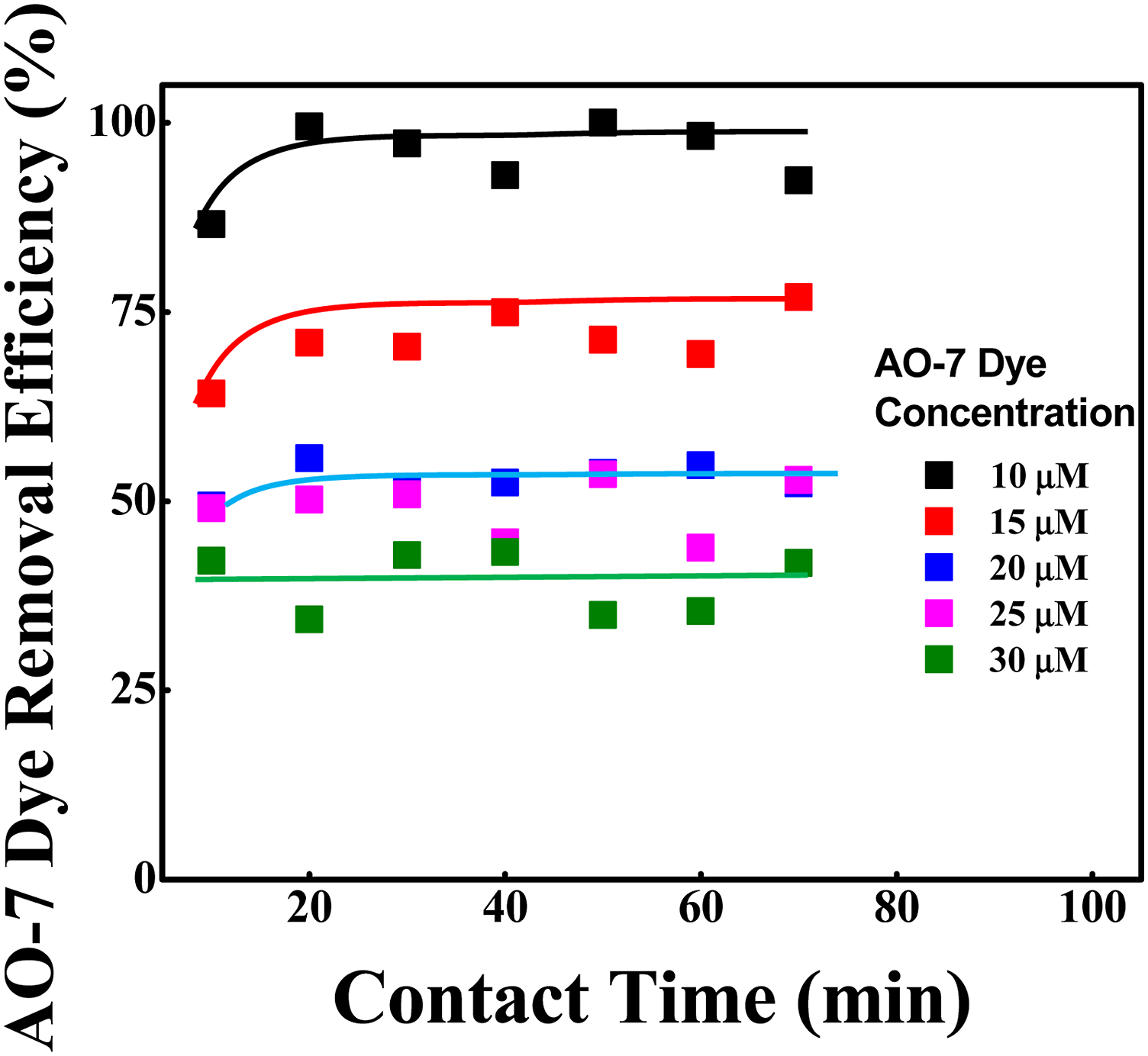
Effect of pH on AO-7 removal
In order to understand the impact of pH on AO-7 removal, batch tests were conducted by varying pH (around 3.07, 4.61 in acidic range; ∼6.90 as native and about 11.49, 13.87 in basic range) as a function of contact time. The solution pH was balanced with sodium hydroxide and hydrochloric acid of 1 M and the same was determined with a Hanna pH metre (HI2210 pH metre). The effect on removal of AO-7 when pH was varied is reported in Figure 6, and it is clear that the maximum removal of AO-7 was around 98 and 91% at acidic pH of 3.07 and 4.61, respectively; ∼99% in native pH and about 83 and 58% at basic pH of 11.49 and 13.87, respectively. The corresponding UV-vis spectra are presented in Figure S4 of Supplemental Information. The AO-7 dye removal decreases in alkaline pH compared to acidic pH due to the presence of greater number of OH− ions. These OH− ions induce electrostatic repulsion between spherical-shaped NC surface and AO-7 molecules, resulting in a minormolecule dyes uptake, in alkaline condition.
46
Besides, in acidic condition, due to the presence of more H+ ions, the electrostatic attraction between AO-7 and NCs surface provides a great platform for high AO-7 adsorption. Similar observations have been reported in Ref.
53
. Behaviour of AO-7 removal efficiency on varying the pH.
FTIR analysis
FTIR spectra of NCs (adsorbent), before and after AO-7 adsorption, were obtained from 4000 to 500 cm−1, shown in Figure 7. The appearance of sharp peaks at 3745.78 cm−1 and 3647.55 cm−1 after AO-7 adsorption represents O-H stretching vibrations. It could be due to possible hydrogen bonding of dye molecules onto NCs surface. FTIR spectra of NCs before and after adsorption. FTIR: Fourier transform infrared spectroscopy.
Adsorption isotherm
The interaction of adsorbate (AO-7) and adsorbent (NCs) during the adsorption process is evaluated using Langmuir, Temkin, Freundlich and Redlich–Peterson isotherm models in the current study. The Langmuir model assumes that adsorption is homogeneous as adsorbate adheres to the adsorbent surface in a single layer.
54
Freundlich adsorption model assumes multilayer adsorption since heterogeneous adsorbent surface is found with diverse energies of adsorption.
55
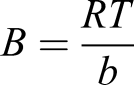
Temkin model considers that the effect of adsorption is due to indirect interaction between adsorbate and adsorbent assuming sharp diminution in heat of adsorption with upsurge in surface coverage.
56
The combination of Langmuir and Freundlich isotherms gives Redlich–Peterson isotherm. This empirical isotherm model involves three parameters and it incorporates features from both the Langmuir and Freundlich equations, resulting in a mixed adsorption mechanism that differs from perfect monolayer adsorption. Because of its versatility, this isotherm model has a linear dependence on concentration in the numerator and an exponential function in the denominator, which together represents adsorption equilibrium over a wide range of adsorbate concentrations. It can be used in both homogeneous and heterogeneous systems.
57
Mathematical equations (2) and (4)–equations (2) and (6)equations (2) and (4)–(6)equations (2) and below represent Langmuir, Freundlich, Temkin and Redlich–Peterson models, respectively AO-7 adsorption isotherms for Langmuir (a), Freundlich (b), Temkin (c) and Redlich–Peterson (d) models. Isotherm coefficients and constants for adsorption of AO-7.






Kinetics of AO-7 adsorption
Batch experimental data of AO-7 were analysed by fitting them to linear pseudo first- and second-order kinetic models. Regression coefficients of these models were considered to examine the best fit model for AO-7 adsorption onto NCs derived from OPLs. Equations (6) and (7) define the rate equations of pseudo first- and second-order kinetic models, respectively
63
Pseudo first-order and pseudo second-order kinetics for AO-7 adsorption. Rate parameters of AO-7 adsorption by spherical-shaped NCs.



The present investigation suggests the importance of biowaste-based approach for effective removal of pollutant AO-7 dye from aqueous solution. Further work on usage of these spherical-shaped NCs for industrial purposes in real-time applications is in progress.
Conclusions
Present study explores the removal efficacy of AO-7 dye from aqueous solution, using the spherical-shaped NCs obtained by the pyrolysis of OPLs. The optimal AO-7 removal efficiency of ∼99% from aqueous solution was obtained for 2 mg of NCs, 10 μM of AO-7 initial concentration and acid pH of ∼3. In basic pH, dye removal efficiency of NCs drops to ∼58%. Redlich–Peterson isotherm model fits best to the adsorption data and kinetics followed pseudo second-order. The maximum dye adsorption capacity of spherical-shaped NCs was found to be 185.18 mg/g. According to these findings, OPLs-based NCs are cost-effective, efficient and promising adsorbents for removing AO-7 dye from pollutant aqueous mixture.
Supplemental Material
sj-pdf-1-nax-10.1177_18479804211055031 – Supplemental Material for Acid Orange-7 uptake on spherical-shaped nanocarbons
Supplemental Material, sj-pdf-1-nax-10.1177_18479804211055031 for Acid Orange-7 uptake on spherical-shaped nanocarbons by Bhavya Krishnappa, Jyothi Mannekote Shivanna, Maya Naik, Paola De Padova and Gurumurthy Hegde in Nanomaterials and Nanotechnology
Footnotes
Acknowledgements
We acknowledge DST-Nanomission, Govt of India for providing the grant to conduct this work with the file number, SR/NM/NT-1026/2017.
Declaration of conflicting interests
The author(s) declared no potential conflicts of interest with respect to the research, authorship, and/or publication of this article.
Funding
The author(s) received no financial support for the research, authorship, and/or publication of this article.

Supplemental Material
Supplemental material for this article is available online.
References
Supplementary Material
Please find the following supplemental material available below.
For Open Access articles published under a Creative Commons License, all supplemental material carries the same license as the article it is associated with.
For non-Open Access articles published, all supplemental material carries a non-exclusive license, and permission requests for re-use of supplemental material or any part of supplemental material shall be sent directly to the copyright owner as specified in the copyright notice associated with the article.
