




Abstract
Recently, large-scale projects have become complex, facing frequent disruptions due to geopolitical instability, environmental challenges, and resource limitations, threatening supply chain resilience. Traditional supply chain methods are insufficient for managing these dynamic risks, highlighting the need for innovative strategies. In this context, knowledge management (KM) has played a key role in effective decision-making and operational efficiency, supported by the rapid progress of artificial intelligence, especially Generative AI (GenAI), which enhances organizations’ ability to anticipate, respond to, and recover from supply chain disruptions. This study aims to explore the role of GenAI in improving KM processes to strengthen supply chain resilience (SCR) in large-scale projects. It addresses the gap in integrating GenAI, KM, and SCR in large initiatives. The research uses a qualitative approach, including semi-structured interviews with 23 “elite workers,” Focusing on the China-Pakistan Economic Corridor (CPEC) and document reviews, which were analyzed using CAQDAS ATLAS.ti. The study also employs quantitative analysis to examine challenges and disruptions in CPEC supply chains. According to the dynamic capability view, it proposes a framework that describes how trust and organizational culture moderate the use of GenAI tools to develop approaches and KM processes for enhancing SCR in large-scale initiatives. The research advances theoretical understanding by integrating GenAI into the KM domain and contributes to SCR literature by defining the dynamic capabilities in megaprojects. It is among the earliest studies exploring the impact of GenAI initiatives in mega projects with a focus on supply chain resilience. Practically, it provides actionable insights for policymakers and practitioners to implement the proposed framework, fostering sustainable, resilient supply chains in dynamic environments and ensuring long-term success.
Keywords
Introduction
In today’s volatile landscape, where supply chains face unprecedented disruptions, the capacity for resilience has emerged as a crucial competitive advantage. Supply chain resilience (SCR) is vital for handling disruptions, for which technology can play a pivotal role. 1 Advanced technological solutions enable the creation, sharing, utilization, and management of knowledge effectively, improving supply chain management, risk assessment, and contingency planning to handle supply chain disruptions. 2 Among these technologies, Generative Artificial Intelligence (GenAI) emerges as a transformative force to improve a project’s decision-making, predicting potential risks through advanced data analytics and machine learning. 3 GenAI tools can also facilitate real-time monitoring and resource allocation, ultimately streamlining the operations and driving the project’s success and resilience. 4 As organizations increasingly rely on GenAI, it is crucial to understand how these tools intersect with knowledge management practices, which serve as the backbone of effective decision-making. GenAI can automate the collection, organization, and analysis of vast amounts of data, enhancing knowledge management and enabling organizations to generate actionable insights. Knowledge management is the systematic approach to creating, sharing, and effectively applying knowledge to enhance decision-making and the overall performance of an organization. 5 KM is particularly vital in the megaprojects involving complex operations and diverse stakeholders, which require effective information sharing to ensure success and adaptability.
In this context, the China-Pakistan Economic Corridor (CPEC) provides a relevant case for exploring GenAI-enhanced KM in SCR. CPEC, launched in 2015, is a major part of the Belt and Road Initiative (BRI). The project aims to enhance the connectivity and strengthen economic cooperation between China and Pakistan by stimulating trade and infrastructure. CPEC is connecting Gwadar Port in Pakistan to China’s Xinjiang region. CPEC supply chains streamline logistics and facilitate the efficient movement of goods across the region. Moreover, KM has been crucial for its success, enabling the sharing of expertise and best practices to address challenges and improve outcomes throughout the large-scale project. 6
Building on the dynamic capability view (DCV), 7 this research study emphasizes the importance of GenAI in enhancing a business’s ability to sense, seize, and reconfigure resources for effective knowledge creation, sharing, and application, thereby maintaining a resilient supply chain. While past research has explored the socio-economic impact, 8 challenges, and opportunities, 9 supply chain performance, 6 and technological adoption 10 in the context of mega projects, there is a dearth of knowledge on the linkage of GenAI impacting the resilience of supply chains. 11 Previous research has mainly focused on the underlying risks and risk management strategies in building resilient supply chains, while overlooking the role of technology-led initiatives. Despite the growing interest in the application of GenAI tools to assist knowledge creation, sharing, and utilization, which are crucial for the operations of supply chains, 12 there is a gap in the systematic integration of GenAI and KM to enhance the proactive strategies to gain a competitive advantage, especially in the context of large-scale megaprojects involving complex, multi-stakeholder environments. The study paves the underlying gap by exploring the research question: What are the challenges in the supply chain of large-scale projects, and how does GenAI mitigate them while integrating with KM processes and developing resilience in the supply chains? Thus, the key objective of this research work is to explore how Gen AI tools can be utilized to deal with the underlying challenges, offering a novel framework that is moderated by trust and organizational culture, ultimately facilitating knowledge management capabilities to enhance resilience, within the context of CPEC supply chains. CPEC is a suitable case for this study due to its scale, strategic significance, and the diverse supply chain challenges it faces.
The study employs a qualitative research design by conducting interviews with “elite workers” who influence decision-making processes and using document analysis as a data collection method to gather rich data. Additionally, Atlas.ti has been used to analyze the frequency, mean, median, variance, and standard deviation of the underlying challenges. This analytical approach helps prioritize the most common challenges by assessing their impact on the supply chains of large initiatives operating in budget-constrained environments in developing countries. The findings show that GenAI tools can improve knowledge sharing and support knowledge creation, which enhances decision-making, facilitates stakeholder collaboration, and reduces risks related to uncertainties in the supply chain, thereby improving the SCR. Based on data analysis, a framework is developed to illustrate how GenAI-based systems promote effective knowledge creation and sharing to strengthen SCR. This is achieved while addressing operational, social, organizational, and coordination challenges, as well as resource constraints, all moderated by trust and organizational culture as supporting factors. The study contributes to the literature on the dynamic capabilities perspective and the role of technology in fostering resilience within complex supply chains in mega projects. It proposes a model outlining the sensing, seizing, and reconfiguring capabilities relevant to megaprojects. This model not only enhances existing knowledge but also offers a nuanced understanding of how organizations build trust in technology and transform their culture to foster resilience in supply chains. For policymakers, the study emphasizes leveraging GenAI to improve the SCR of megaprojects, especially in developing economies. The subsequent sections include the study background, methodology, results and discussion, and conclusions.
Literature review
Supply chain resilience and megaprojects
Supply chain resilience (SCR) is the ability to recover from and respond to disruptions with a focus on performance. Lategan 13 defines resilience as the “intrinsic ability to handle the negative consequences of disruptive events.” Previous research has shown that if the SCR is enhanced, it ultimately impacts the overall performance of the organization. 14 The dynamic capabilities theory posits that organizations must develop the ability to integrate, build, and reconfigure internal and external competencies to adapt to rapidly changing environments, particularly in complex megaprojects. Iftikhar 15 explained how this uncertain situation can derail the success of the megaprojects if not managed timely manner. However, internal and external disruptions can also significantly impact the performance of megaprojects, which can be handled by equipping the organization with strong capabilities. Therefore, instead of reactive strategies, proactive strategies are essential to anticipate potential disruptions early to mitigate their impact.
CPEC is a prime example of an ambitious, expansive, and multifaceted project with diverse implications. 16 The infrastructure projects include highway constructions, railways, energy plants, and ports to improve transportation and energy in a developing country like Pakistan. CPEC is a significant contributor to Pakistan’s economy through an estimated investment of over $62 billion. Past research suggests that future studies should explore dynamic opportunities within the BRI framework, as the benefits of resilient supply chains may outweigh the associated challenges. 17 In the context of megaprojects, SCR is crucial because of numerous complexities, for instance, unstable geopolitical scenarios, environmental concerns, and infrastructure vulnerabilities, which are further intensified by the diverse demands of stakeholders across the region. Previous research revealed that organizations should prioritize these factors to attain a competitive advantage. 18
CPEC introduces a diverse source of risk, paving the way to focus on the adaptation of supply chains to different opportunities and challenges. 19 Key areas of focus include improved information sharing, joint risk mitigation strategies, and greater flexibility in responding to disruptions. To address these challenges, a multifaceted approach is required, implementing robust, proactive risk management strategies. The dynamic capabilities view highlights how firms can develop and leverage collaborative capabilities to sense, seize, and reconfigure resources in response to disruptions, further strengthening their SCR. 20 One of the solutions lies in the integration of GenAI. 11 However, successful implementation of GenAI demands a comprehensive strategy involving organizational readiness, human factors, along technological advancement. This aligns with the dynamic capabilities view, where firms adapt and modify their resources to navigate dynamic environments.
GenAI, knowledge management & SCR
The dynamic global world driven by rapid technological advancement highlights the importance of large-scale projects. Large-scale projects serve as catalysts for economic growth, infrastructure development, and societal advancement, particularly in developing economies. These large-scale projects also drive technological advancement by applying new technologies in the engineering and construction. 15 Considering CPEC, where collaboration and coordination are paramount, knowledge sharing serves as a vital mechanism for building robust and resilient supply chains capable of navigating the inherent complexities and uncertainties of this ambitious undertaking.
Generative AI is the category of AI that learns underlying patterns and structures of the training data to generate new ones. 21 Past research has explored how GenAI can create realistic synthetic datasets for the training of other AI models in the transportation system. Moreover, it can also model, predict the patterns, and create realistic simulations in traffic, enabling adjustment to the traffic management systems to enhance the efficiency and for better planning and risk assessment, respectively. 21 It refers to the application of techniques for monitoring, managing, and improving performance, which ultimately leads to improved transparency and improved stakeholder engagement. GenAI-based initiatives can enhance the creation, sharing, utilization, and management of knowledge within the supply chain 18 . In megaprojects, knowledge sharing emerges as a critical driver of SCR. Sharing information about potential risks, vulnerabilities, and mitigation strategies allows stakeholders to proactively address challenges and minimize disruptions. Moreover, when new knowledge is created about the innovative mitigation strategies through research work, pilot projects, and post-incident analyses, it helps to effectively deal with future disruptions. 22 Moreover, by sharing lessons learned, best practices, and success stories, stakeholders can foster a culture of continuous improvement, strengthening the resilience of the entire supply chain over time. 23
Knowledge created through the use of GenAI can be applied in various contexts and scenarios to enhance task performance and decision-making.
12
The technologies driven by GenAI can also enhance the resilience in supply chains as automation and digitalization can optimally use the resources and reduce waste while enhancing transparency and traceability, ultimately enhancing resilience.11,24 GenAI has a significant transformative role in KM through task automation, knowledge discovery enhancement, and the development of personalized learning experiences. Past research explored some challenges in supply chains related to data quality, technological issues, and other organizational barriers; these can be dealt with the employing GenAI. Whereas, Yandrapalli
25
highlighted the efficient and innovative role of GenAI in enhancing risk management. Building on the Dynamic Capability View, this framework illustrates how Generative AI enables organizations to sense emerging risks and challenges, then supports effective knowledge management processes. These processes, in turn, help develop supply chain resilience by fostering the ability to adapt and reconfigure in response to disruptions.
12
The conceptual framework below depicts these relationships within the context of large-scale projects (Figure 1). Conceptual framework (source: Authors).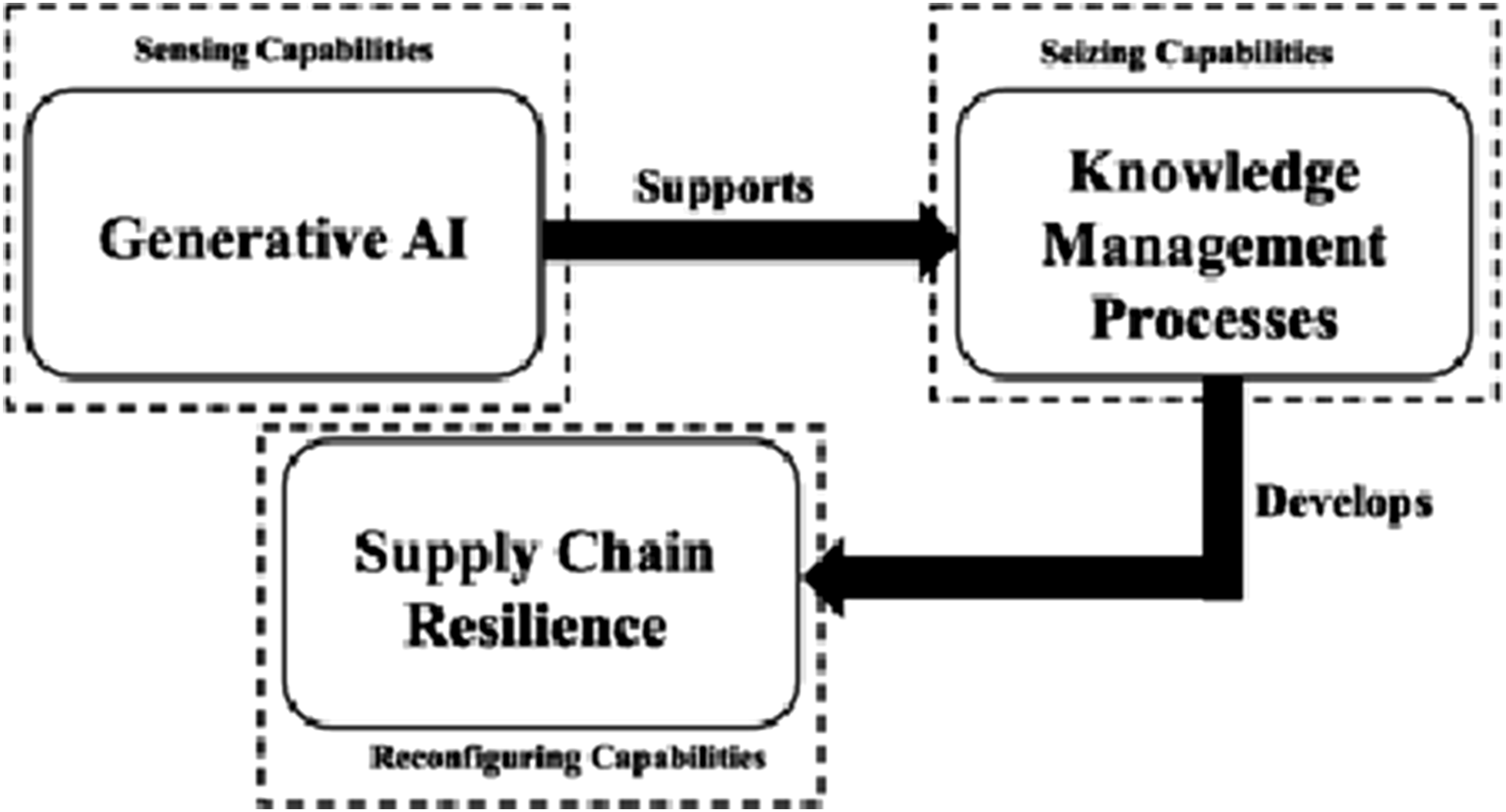
Methodology
The study adopts a qualitative research design and gathers detailed and rich information on this underexplored dimension of SCR in the large-scale initiative by focusing on the CPEC. 26 The strategic geopolitical importance and dire need for infrastructure development in Pakistan make CPEC a unique case to study. Pakistan faces numerous challenges related to energy and infrastructure, which have hindered economic development. 27 By developing these sectors through CPEC, the country can improve efficiency, reduce operational costs, and enhance trade connectivity.
This exploratory study has employed a purposive sampling technique to ensure a diverse representation of participants from CPEC projects. Following this, a snowball sampling technique has been utilized, encouraging participants to suggest additional contacts. Participants include “elite” experts - key stakeholders holding key positions include project managers, local government officials, community leaders, and industry experts, who understand local dynamics and influence decision-making. 28 . The “elite” representative from these projects ensures that we capture diverse perspectives without overwhelming the discussion with too many voices. They were selected based on their senior roles, that is, years of experience, decision-making authority, and specialized expertise in the projects. Their strategic position enables them to provide insights that are essential for understanding the intricacies of CPEC projects, i.e., infrastructure, energy, transport projects, and special economic zones, because of their economic impact, as these regions are pivotal to enhancing trade. The research study focuses on qualitative, in-depth insights over quantity, allowing for rich, detailed data capturing diverse perspectives. Moreover, the point of saturation was achieved, where additional interviews can yield diminishing returns on new information. After these interviews, sufficient themes and insights emerged to back the research’s objectives. 29 Data collection includes twenty-three semi-structured interviews with key stakeholders, ensuring the confidentiality and voluntary participation of respondents to gather insights. Additionally, document review, such as annual CPEC reports and government policies, was analysed to build a solid contextual background. 30 The interviews are tape-recorded and transcribed for accuracy, allowing for comprehensive analysis. The average interview lasted for 50-60 min. The interviews were conducted in English. After initial interviews, the interview guide was further reviewed and modified based on feedback from participants and analysis of the data provided by participants. The details of the participants and the secondary data details are provided in the supplemental material, Appendix 1(Tables 1 and 2).
This study utilizes a structured data analysis process, developing codes from the data and grouping them into themes. To identify themes, constructs, and patterns to recognize the participants’ perspectives, a computer-assisted qualitative data analysis software (CAQDAS), i.e., ATLAS.ti, has been employed. 31 The qualitative data has been analyzed through “Computer-Assisted NCT analysis,” which is a non-linear process, comprising noticing things that answer the research objective, searching for interesting elements in the data to represent the patterns, collecting similar items under codes, thinking and developing relationships and creating categories. 32 At the analysis level, certain coding differences were discussed among the researchers and resolved mutually. An initial and focused coding process was utilized to generate relevant codes. Initial coding involves coding everything, i.e., line-by-line data analysis, while focused coding involves selecting the codes that are linked with the research question/objective. Different themes were created by grouping similar codes to answer the research problem uniquely. The relationship among the codes helps to develop a framework for this research study. The exact quotations from the interview transcriptions have been utilized for a deeper understanding of the phenomenon. This is the coding process and analysis of primary data. The secondary data analysis was also done utilizing ATLAS.ti, supporting the primary data. The secondary data mentioned in Table 2 was uploaded to ATLAS.ti, which was later analyzed using the same coding process, complementing the primary data analysis. The networking process of the codes is illustrated in the supplemental material, Appendix 1 (Figure S1). The details of themes, categories, codes, and sample quotations are also provided in the supplemental material, Appendix 1 (Table 3).
To ensure validity and reliability, the study employs triangulation by utilizing multiple data collection methods, semi-structured interviews, and document reviews to cross-validate results. 33 Participant checking is conducted, allowing participants to verify the accuracy of the findings. ATLAS.ti supports consistency in coding and data analysis, enhancing the reliability of interpretations. 34 In this study, the frequencies, means, medians, and standard deviations of the challenges were identified using ATLAS.ti. The frequency represents the total number of coded segments to a particular challenge across all interviews, rather than just the occurrence of specific keywords. While cumulative frequency, calculated as the running total of these mentions as each challenge is added, helps to visualize the relative weight and accumulation of challenges throughout the dataset, it highlights which issues are most significant by highlighting their prevalence and impact. By focusing on these key areas, the organization can effectively allocate resources and develop targeted strategies for improvement.
Results
This section presents the research findings derived from participant interviews, focusing on the critical elements that contribute to resilient supply chains. The findings are organized into distinct themes: Challenges and barriers in attaining supply chain resilience, and actionable steps to enhance resilience through AI and KM integration.
Challenges & barriers in attaining SCR
The results suggest that CPEC supply chains present significant challenges in this dynamic environment to attain SCR. The challenges are as follows:
Social barriers
Social barriers present significant challenges in engaging local communities and stakeholders. The local community resists the project due to concerns about its potential economic impact, including job displacement and negative environmental effects. Awareness about the project is crucial to limit risks. It is important to engage the local communities and stakeholders, Interviewee 1 stated; “We’ve involved them in initiatives like recycling coal ash for construction materials. This doesn’t just help with waste management but also creates jobs and builds trust with the community, reducing resistance to the project.”
There is still a gap in the implementation, especially in the project, operational in the Port Qasim region of Pakistan, that identifies the absence of a knowledge-sharing mechanism as a key reason for the low level of stakeholder engagement. “First collaboration with locals is needed. Maybe with the help of technology. Then we can say that the local community should be engaged as well. Like given jobs, and awareness. This helps build trust and reduces potential resistance.”
The barriers reduce the adaptability to the changes, making the project vulnerable to risks, ultimately limiting its resilience.
Resource constraints
The projects in remote locations face resource limitations that can disrupt the supply chains, such as poor transport links like limited road access, making delivery of essential materials difficult, a shortage of skilled workers, and limited access to innovative technologies, as Participant 3 noted, “For example, we struggled to install advanced monitoring systems for real-time emissions tracking because of limited access to infrastructure and technical expertise in the area. This delayed our ability to report and manage environmental compliance effectively.”
Moreover, some projects have limited staff, ultimately hampering the knowledge sharing, as the flow of information may be restricted. While other projects lack the tools to collect and analyze data effectively, hindering compliance and tracking of progress, Interviewee 5 stated, “A key position remained unfilled because the vacancy was not posted on the portal, forcing one team member to take on multiple roles. This increased workload went unnoticed and impacted the procurement process, affecting the overall project schedule,” ultimately constraining the collective available knowledge for decision-making.
Another significant barrier to effective CPEC projects is the lack of technical literacy due to limited training according to the needs. This gap limits operational efficiency and increases risks. “For example, the energy project in Thar (Sindh region of Pakistan) faces significant challenges due to a shortage of skilled heavy machinery operators. Unfilled positions have delayed critical operations and increased security risks, as workers lack familiarity with the local dynamics.”
Another hindrance in attaining supply chain resilience is the difference in infrastructure of the geographical location of the projects and the technical expertise of the human resources, as one participant stated: “One challenge is the varying levels of technological literacy among team members. Providing training sessions to ensure everyone can effectively use these tools is crucial for maximizing their benefits and the smooth running of functions as well.”
Operational challenges
Operational challenges, such as the access, availability, and quality of data, further complicate operations in the supply chains. Insufficient access to accurate and timely data can hinder decision-making, affect forecasting, and limit visibility across the supply chain. Without reliable data, organizations may struggle to optimize their operations, track performance, and ensure compliance with regulations, as an interviewee emphasized: “One major issue we face is gathering accurate, real-time metrics on supplier performance. This makes it hard for us to make informed decisions. We also struggle with inventory data; like once a critical turbine is delayed, the project management team is unaware, and construction schedules are seriously disrupted, leading to increased costs and extended timelines”.
This aspect can hinder transparency and accountability in reporting, and it is difficult to assess the risks of increasing the vulnerability to disruptions, limiting knowledge creation. Another participant stated; “For instance, in our energy management efforts, the operations team can identify inefficiencies in energy usage and relay this information to the relevant personnel. However, we lack a robust GENAI system that can automatically generate reports or suggest improvements based on real-time data analysis.”
CPEC, being a fixed agreement and a government-to-government linkage as a project in Lahore, indicated strict adherence to the guidelines, leaving little room for flexibility. The project faced penalties during the COVID-19 pandemic for not completing a project stage as previously agreed upon.
Navigating the varying regulatory frameworks across different regions is another significant challenge. Different provinces of Pakistan and their own set of regulations and compliance requirements. It is difficult to ensure adherence to local regulations, which can lead to delays and increased costs. In the same way, adhering to both local regulations and federal regulations complicates the project’s timelines and resource allocation. Another participant mentioned strict CPEC guidelines and regulatory compliance as a hurdle in achieving resilience in the project.
Organizational challenges
Moreover, the organizational culture in the public sector emphasizes hierarchical organizational structure, resulting in a delayed decision-making process due to the red tape, siloed operations, and bureaucratic inefficiencies. These findings are also backed by a secondary data review (CPEC Review of Implementation Challenges and Near-Term Revival Prospect). “The discord between the two continues to impede the smooth implementation of CPEC projects. Unlike China, where it is the Communist Party that steers the decision-making and implementation, Pakistan is a four-province federation with a complex decision-making process, leading to a lack of coherence between the federal and provincial authorities, ultimately obstructing operational efficiency”.
In the same way, the governance system of the projects is also challenging, resulting in fragmented authority and bureaucratic red tape, as per the CPEC Annual Report by the Centre of Research & Security Studies, “Several structural inefficiencies within the governance system in general have hindered the project's implementation.”
The projects run by third-party leadership, specifically in the Port Qasim region, also hinder adaptability in the dynamic conditions, limiting control over the stakeholders. The construction phase of the project also faced major delays due to coordination issues between the parent and local subcontractors, leading to cost overruns and, later on, operational inefficiencies.
Lack of support from leadership can be regarded as the biggest obstacle to overcoming delays due to not properly assessing the geopolitical risks. Another participant also mentioned the leadership role in leading to miscommunication and delays, by relying on external vendors and the presence of insufficient encouragement for knowledge sharing, limiting innovation and informal communication for the creation of new knowledge, which is needed for enhancing resilience in the supply chains. Knowledge hoarding by public officials is one of the bureaucratic hurdles in the CPEC project, which has been highlighted as severely influencing the development of resilience, as it limits collaboration in the project. Moreover, knowledge hoarding is also exacerbating delays, creating trust issues among the stakeholders.
The results indicate a lack of effective communication and coordination within the teams of CPEC projects, which complicates supply chain operations. A participant mentioned, “The organization struggles with a culture of limited collaboration and communication.”
A clear communication platform among stakeholders can help inculcate collaboration. Another participant, while discussing the supply chain risks, marked coordination as a critical barrier in achieving resilience. For instance, the extension of the Gwadar port was quite tough in engaging the stakeholders, as the Pakistani government, Chinese contractors, and local communities were involved. The fear of social displacement and inefficient coordination and knowledge sharing among the stakeholders led to project execution delays due to different priorities of the authorities.
GenAI-utilization, knowledge management processes
The following section indicates significant overlap between GenAI and KM processes.
Chatbots
The results highlight the present scenario of the usage of GenAI tools to a limited level. Although the employees are actively utilizing it in their personal and informal capacities, the tools have not been actively integrated into the major organizational processes. The results focus on the importance of stakeholder engagement through generative AI tools, like chatbots, assisting real-time communication channels. Moreover, it can help tailor the awareness campaigns to ensure diverse perspectives. GenAI can analyze and synthesize data on the demographics and interests of the local community. Moreover, feedback from the local community and stakeholders is beneficial for the evaluation process.
The results showed the need for tailored strategies considering the local socio-economic conditions and dynamics of the location of the projects. For instance, projects in areas with a high risk, mainly in Baluchistan, may require different measures than those in more stable regions, mainly in Punjab and Sindh. This anticipatory framework can be used to spot potential risks in the project, as it can create accurate reports and facilitate informed decision-making through knowledge creation and sharing by seizing capabilities. Some of the projects mentioned the utilization of GenAI tools in the documentation process and lessons learned, assisting in knowledge sharing among team members by designing customized training.
Most of the projects have mentioned the need for customized training supported by GenAI to enhance project acceptance. The participants stated that the integration of GenAI into the development of training modules can create and share, and personalize new knowledge, by strengthening seizing capabilities and attaining innovation in the future.
Moreover, GenAI can be used for data-driven insights for the leadership, enhancing decision-making by analyzing the team dynamics. In the same way, GenAI-generated surveys can be circulated among the project’s community to analyze the common themes regarding the community’s concerns. GenAI can also create informational videos and brochures to explain the long-term benefits of the projects in multiple languages and formats, encompassing comprehensive information. Participant 21 shared an example explaining the importance of the GenAI tool in creating and sharing knowledge, “Recently, we experienced a significant power shutdown that lasted for several hours. This disruption affected our operations and left many stakeholders frustrated, as they were not informed about the situation on time. We then discussed the potential of implementing a GenAI tool specifically designed for communication. This tool could send automated messages to stakeholders during emergencies, ensuring they receive timely updates. For example, it could generate alerts about power outages, expected restoration times, and any changes to project timelines.”
Predictive analytics
AI is also being utilized for some predictive analysis, enhancing safety, and reducing accidents. The participant stated that they need GenAI tools to sense capabilities in addition to help create new data, generate detailed scenario reports, and provide personalized insights. As one participant stated: “Gen AI could help us spot potential risks... allowing us to develop predictive strategies.” The predictive strategy is the demand to prepare and respond to the uncertainties. Another interviewee remarked, “For example, how can we predict some of the security risks in some of the regions? So, we can use different strategies by using GenAI, and it can provide, based on the previous incidents. ……. Probably we can get help from the GenAI specifically at a moment in the policymaking decision.”
Participant, 19, gave an example of an incident and the need for GenAI utilization for predictive insight by coordinating with law enforcement agencies, mentioning, “We can say that, yes, security issues could be a very significant factor, and probably that is one of the reasons why we could not motivate or inspire the investor to invest in Pakistan. And recently, we have seen what is happening in Pakistan. It will probably be very hard to convince investors to come and invest in Pakistan. So, when you are having all these kinds of challenges, when you have these security risks at the back and that will create another risk as well. So, we need to utilize GenAI to generate a predictive report for these risks.”
The participants discussed that GenAI can be utilized in data analysis, countering the potential risks associated, making the organization proactive, which is also operational in a few projects to a limited level. These GenAI tools can help strengthen the sensing capabilities by enhancing the decision-making proactively through the quality and availability of data. One interviewee discussed how it predicted extreme temperatures, posing risks to construction timelines, and helped in making contingency plans. He noted, “Second, proactive planning played a significant role. Before we began, we conducted thorough risk assessments utilizing GenAI, which helped us anticipate potential disruptions, like adverse weather conditions. This allowed us to create contingency plans and ensure we had the necessary resources available.”
While the use of GenAI tools for generating risk assessment insights is still developing, some GenAI tools are being implemented for social coordination. The use of GenAI tools such as the “net zero cloud,” mentioned by one participant, generates reports and makes decisions, stating, “It reads the data and generates the reports... that need more focus and are non-compliant with the requirements.”
Net Zero Cloud leverages GenAI and automates the report generation regarding the carbon footprints through predictive analysis of past data and reporting frameworks. Moreover, the assessment tool leverages AI to visualize the important subject streamlined through stakeholders’ input to enhance the strategic decision-making process. In most projects, GenAI tools are primarily leveraged only for sustainability compliance in climate and environmental monitoring within the CPEC projects. The participants discussed that resource consumption can be predicted through GenAI, as Participant 15 shared an example where they faced a disruption and mentioned how GenAI can mitigate such kind of disruptions in the future; “There was a sudden supply chain disruption that delayed the delivery of essential construction materials. So, if GenAI were there at that time, it could be utilized to analyse quickly inventory levels and project timelines, allowing project managers to identify alternative suppliers quickly.”
Moreover, the participants discussed how GenAI can help in inventory management by reviewing historical consumption data and can generate a report for the predictive future demand. “AI is used to identify issues, but its implementation is not fully optimized. For example, we use an integrated system called ITMIS for inventory management, which leverages GenAI to analyse inventory levels and predict shortages.”
ITMIS (Integrated Train Management and Information System) is used by the transport projects in CPEC to monitor and control transport operations, ensure scheduling, and provide real-time updates for efficient management of the disruptions. But it has limited GenAI features as it streamlines transportation operations through data management, fleet monitoring, and route optimization.
Centralized platforms
Some of the projects are actively utilizing GenAI tools to enhance transparency to reconfigure capabilities, and maintain collaboration among stakeholders. For instance, one interviewee stated: “For example, when a team member needed clarification on the latest waste management regulations, they quickly accessed the chatbot. Within minutes, they received accurate information and were able to share it with the entire team during a brainstorming session. This immediate access to knowledge not only saved time but also ensured that everyone was on the same page regarding compliance”.
But some projects emphasize developing a centralized platform, as it can help in real-time collaboration. This real-time communication capability and a centralized platform help break down silos and foster a culture of collaboration, which is crucial for effective SCR. Moreover, GenAI-driven centralized tools can help in dealing with the issue of ineffective knowledge sharing.
Supporting Factors
While many positive aspects of GenAI use are noted, its implementation is not yet fully optimized, highlighting a gap in technology adoption that needs to be addressed for developing resilience. This gap can be attributed to a lack of portals that facilitate open communication and collaboration among stakeholders. Additionally, social barriers in the public sector often hinder the sharing and creation of knowledge. In the context of generative AI (GenAI) utilization within supply chain management, trust and organizational culture emerge as pivotal supporting factors, as sensing capabilities that can significantly enhance its adoption and effectiveness. Respondents highlighted that while numerous challenges limit the integration of GenAI, fostering a culture of trust is essential for overcoming these barriers. Trust in GenAI facilitates stakeholders’ willingness to embrace new technologies, to view these tools not just as novel innovations but as vital assets that can enhance decision-making and operational efficiency. As participant 22 stated; “These GenAI tools can really minimize the human factor and error, or bias.”
When organizations cultivate an environment that encourages experimentation and acknowledges the value of technological advancements, employees are more likely to engage with GenAI proactively. This cultural shift can mitigate resistance to change, as stakeholders perceive GenAI as a partner in their operational processes rather than a threat to their roles or responsibilities. As participant 20 noted; “GenAI creates a culture of openness and teamwork, which is super beneficial for any project.”
The interplay between trust and organizational culture can moderate the relationship between existing challenges and the effective utilization of GenAI. For instance, when stakeholders trust the technology and the processes surrounding it, they are more inclined to share knowledge and insights, ultimately addressing issues, fostering a more resilient and adaptive environment.
Discussion
Megaprojects are essential to the economic and social development of developing countries like Pakistan. In environments marked by volatility, political instability, and resource constraints, resilient supply chains enable organizations to anticipate disruptions, adapt to changing conditions, and maintain operational continuity. 9 GenAI tools can be used to enhance SCR by providing advanced analytics and predictive capabilities, enabling organizations to identify potential risks, assist in developing contingency plans, and optimize resource allocation, ultimately strengthening their operational efficiency in dynamic environments. The interview results highlight several key challenges CPEC projects face, categorized into social barriers, resource constraints, operational hurdles, regulatory complexities, and how GenAI facilitates a better knowledge management process to mitigate them. According to the dynamic capability view, an organization’s ability to integrate, build, and reconfigure internal and external competencies is crucial for addressing rapidly changing environments. 7 In the present scenario, this framework is particularly relevant to supply chain resilience (SCR), as CPEC projects must continuously adapt to evolving challenges to mitigate challenges. This aligns with the dynamic capability perspective, by enhancing their sensing, seizing, and reconfiguring capabilities, CPEC projects can improve resilience and responsiveness to emerging challenges. These barriers highlight the need for organizations to develop dynamic capabilities that facilitate change management and foster a culture of innovation. 35
This high frequency of the challenge, “lack of knowledge sharing,” indicates a significant barrier to collaboration and innovation. Although the project’s members are using GenAI tools in their capacities yet it is not integrated into the organizational processes, so the knowledgeable insights remain restricted. Cultivating an organizational culture that encourages knowledge sharing can lead to improved problem-solving and more efficient operations. Chatbots and tailored awareness campaigns can play a vital role in knowledge sharing among the local community, enhancing the project’s overall acceptance in the social setup. Tailored strategies based on the local community input can enhance the adaptability to a dynamic environment, ultimately enhancing the resilience. 36 To engage the local community and other stakeholders, GenAI can monitor the online discussion forums to understand to local needs to foster trust and support, with the help of knowledge sharing, aligning the projects with the local community’s needs. The records can also be retained for future analysis. By leveraging this information, organizations can tailor their strategies to better align with community expectations while reducing resistance from the local community.
Resource constraints, especially in remote project locations, are a significant barrier to resilience. 37 According to the results, the CPEC projects’ ability to reflect compliance and track progress on goals can be impeded due to a shortage of skilled workers, limited access to tools and technologies for data collection and analysis, and poor transport links. This gap in technical literacy underscores the necessity for comprehensive training programs tailored to the specific needs of the workforce, ensuring that team members can effectively utilize the tools and technologies at their disposal. CPEC projects should trust scalable technologies that can be adapted to various project environments to address this issue. 38 Knowledge can be utilized by the GenAI predictive tools to optimize resource allocation of a megaproject. Moreover, GenAI can assist in creating new knowledge by analyzing data on resource consumption and identifying areas for improvement, enhancing operational efficiency, and developing resilience against vulnerabilities. Furthermore, cost reduction can also be achieved within the budget constraint environment of Pakistan for the long-term viability of the projects. 39 GenAI can identify alternative suppliers and adjust logistic plans (new knowledge creation) to address the disruptions by analyzing real-time data on inventory levels and supplier performance, which will minimize downtime and maintain project momentum. As per the dynamic capability view, the operational flexibility of the organization is crucial in adapting strategies through predictive analytics, which can guide resource allocation and allow organizations to proactively respond to potential disruptions.
In CPEC, the availability and quality of data are critical for SCR to mitigate the operational challenges. The challenges in gathering reliable information from suppliers can hinder transparency and accountability. 40 As per the results, organizations must prioritize investing in robust data management systems to improve data collection and analysis processes, enabling timely adjustments. Knowledge can be utilized by transforming raw data into actionable insights, enabling organizations to generate and apply new knowledge through accurate reports and insights by GenAI, for informed decision-making. 41 This aspect allows the organization to adapt to the changing conditions of the megaproject’s environment, facilitating transparency and accountability in its supply chain practices. As per the dynamic capability perspective, developing capabilities to harness and analyze data reflects the ability to integrate new knowledge. Centralised GenAI platforms can help in breaking down silos by enhancing transparency and accountability through knowledge sharing. 42 Enhancing communication channels improves responsiveness, a core aspect of dynamic capabilities. Although knowledge sharing was present in some projects, but lack of a collaborative organizational culture obstructs the operations and ultimately the performance. In the same way, these centralised collaborative hubs can be used to generate insights for future operations.
Different regulatory frameworks across different regions complicate supply chains in megaprojects. The organizations must adapt to the changing situation in the legal environment. According to the results, comprehensive training and resources can be utilized to keep the stakeholders informed about local regulations. In developing countries like Pakistan, the complexity of navigating both local and federal regulations is heightened by a lack of cohesive governance structures, which can lead to significant delays and increased project costs. 43 The results also suggest fostering collaboration with local governments and regulatory bodies. GenAI-driven tools automate the monitoring and application of regulatory information. These tools can assist in transforming raw data into actionable compliance, mitigating the scale and coordination issues. Adapting to regulatory changes through agile practices illustrates the ability to sense and seize opportunities in a dynamic environment. Adhering to compliance amid varying regulatory frameworks through resource management utilizing GenAI tools can enhance agility, operational efficiency, and mitigate risks, ultimately developing resilience. 38
The findings highlight the importance of engaging top management (leadership) to ensure the long-term strategic goals in megaprojects are not snubbed over the attainment of short-term economic goals. 44 GenAI helps in knowledge creation by narrating more complex phenomena. For example, through success stories, scenario analysis, stakeholder perspectives, lessons learned, and impact assessment, while analyzing historical and real-time data, GenAI can generate insights that help leaders visualize potential outcomes and assess risks associated with various initiatives. Integrating leadership insights into strategic planning and enhancing communication channels demonstrates the capacity to reconfigure practices and improve responsiveness in an uncertain environment. These are crucial elements as they can influence the decision-making process by providing data-driven insights for knowledge creation. Moreover, third-party leadership shows the lowest frequency, suggesting that reliance on this challenge is not a predominant concern, but it may still warrant attention in certain contexts.
Scenario analysis can help in the anticipation of potential future disruptions and probable solutions, whereas impact assessment can help in the evaluation of the supply chain-related decisions on the communities. 45 Moreover, security risks in Pakistan significantly hinder foreign investment, particularly for CPEC projects, creating uncertainties that deter potential investors. By leveraging GenAI tools for predictive analysis, organizations can identify and mitigate these risks, enhancing operational resilience and instilling greater confidence among investors. 16 This proactive approach is crucial for fostering a more stable investment environment and promoting economic growth.
GenAI can support local community engagement, seizing the resources through generating tailored awareness campaigns based on the emotions and sentiments of the local population. Currently, the GenAI tools CPEC projects are resulting in isolated KM initiatives. For instance, GenAI tools are only concentrated on specific tasks such as data analysis and environmental monitoring, lacking in real-time collaboration. For instance, projects utilized tools like Net Zero Cloud for carbon footprint reporting and ITMIS for inventory management and route tracking. Social resistance, resource constraints, and bureaucratic hurdles hinder the adoption of GenAI-driven solutions. Ultimately, fostering a culture of adaptability and continuous learning will be crucial for CPEC projects aiming to thrive in a rapidly evolving landscape. Trust in GenAI and a supportive organizational culture emerge as crucial factors moderating the relationship between existing challenges and the effective utilization of GenAI tools.
46
Collectively, these supporting factors can moderate the link between challenges and GenAI tools, collectively acting as sensing capabilities. The strategies developed from the GenAI tools and KM initiatives are categorized as seizing capabilities, and the attributes of SCR are reconfiguring capabilities, ultimately allowing the organizations to navigate the complexities of the megaproject context. The proposed approach suggests that GenAI tools enhance knowledge creation, support knowledge sharing, and can effectively allow the projects to seize emerging opportunities and threats and develop effective contingency plans in a dynamic environment through different strategies. The quantitative data (Supplemental Material, Appendix 2) highlights several critical areas that require immediate focus, particularly around leadership support, knowledge sharing, and communication. Prioritizing strategies to foster leadership engagement and enhance communication will be essential for overcoming these obstacles. Based on the discussion, Figure 2 presents the proposed framework developed because of the research study, which shows the utilization of GenAI to deal with the challenges through supporting factors assisting the KM initiatives to attain SCR. Framework explaining the proposed linkage of GenAI utilization, dealing with the challenges through the moderating factors assisting KM Capabilities & SCR - A dynamic capability view (Source: Authors).
Conclusion
This research study highlights the critical role of GenAI tools in facilitating the KM processes to enhance SCR within the context of megaprojects. The qualitative findings mainly discuss how GenAI-driven approaches can significantly impact the internal and external aspects of supply chains, facilitating collaboration among stakeholders, improving decision-making, and mitigating risks associated with the uncertain environment in the project. By integrating proactive engagement practices, CPEC can navigate the complexities more effectively, ensuring long-term resilience and success in the supply chains. Leveraging GenAI tools in the knowledge management process not only addresses immediate disruptions but also prepares the project for future growth and investment. Moreover, the study also discusses how leadership plays an important role in introducing or hindering resilience in the project. The internal culture of the organization and trust in the technology play a crucial role in assisting the organization in adopting proactive, resilient strategies.
Theoretical implications
This study advances the theoretical understanding of dynamic capabilities by addressing how organizations within large-scale projects like CPEC adapt their resources through GenAI tools. This study highlights the qualitative integration of GenAI and KM processes as critical components in the development of SCR in megaprojects, to provide a holistic view of the complex dynamics, considering the subjective experience and meaning of the phenomenon. The study emphasized adaptive capabilities in mitigating risks and enhancing overall resilience amid complex challenges. Going beyond the traditional risk management approaches, the study considers the multifaceted nature of the CPEC supply chains and their long-term value creation.
The study advances the understanding of the dynamic capability view (DCV) by examining how organizations in megaprojects adapt their sensing, seizing, and reconfiguring capabilities and attain competitive advantage through GenAI tools, utilizing the resources effectively amid resource-constrained environments. The study advances the understanding of the inclusion of GenAI within various contexts, shaping the organizational behaviour in the megaproject. 47 The study aims to develop frameworks that focus on the role of GenAI in addressing the underlying challenges moderated by trust and organizational culture. The sensing capabilities and strategies supported by GenAI ultimately enhance knowledge creation, support knowledge sharing, and ultimately develop the reconfiguring capabilities of SCR. This contributes to the growing body of literature on GenAI, both from the perspective of KM and SCR. The research work is among the earliest on how GenAI-supported knowledge management processes can lead to SCR. These contributions enrich the existing literature on dynamic capabilities and knowledge management, offering a nuanced perspective on their application in the context of large-scale projects.
Practical implications
The findings provide practical insights for policymakers and businesses to manage supply chain risks and enhance resilience by providing recommendations to leverage GenAI and knowledge management processes to enhance decision-making. The study identifies the specific GenAI tools that support tailored strategies, customized training, data management, and real-time collaboration, which can further offer proactive strategies for organizations seeking to improve their performance and build more resilient supply chains. The study recommends that policymakers build trust in the GenAI utilization and a conducive organizational culture with sector-specific strategies. Moreover, megaprojects can utilize the framework for different operations, such as predictive analytics for inventory management and resource allocation.
The findings pose broad applicability beyond the CPEC context. Other megaprojects can benefit from the developed framework, which identifies the challenges that are not unique to CPEC but resonate across various megaprojects globally. For example, projects facing political instability or resource limitations can utilize the proposed framework, enabling them to better anticipate and respond to disruptions. Additionally, the emphasis on trust and organizational culture as moderating factors for GenAI adoption underscores the need for collaboration and knowledge sharing in any complex project environment. This research enriches the existing literature on dynamic capabilities and knowledge management, rendering its application across diverse contexts in large-scale initiatives.
Limitations and future directions
Although the research study has provided valuable insights, it has several limitations. As the study is qualitative and analyzes the CPEC scenario, this may limit the generalizability of the results across different scenarios, as it does not assess the broader implications for other megaprojects operating in diverse regions. Moreover, although the sample size is rich in qualitative data, but can ignore diverse perspectives among the stakeholders in the CPEC, as potential biases in the responses can influence the findings.
Future research can explore the phenomenon using quantitative approaches, which can validate the results and analyze the broader implications of GenAI tools and KM processes. Future studies could also study the adoption of emerging technologies beyond GenAI in enhancing transparency. As the lack of leadership support and knowledge sharing were the most frequent challenges, future studies can also analyze the specific leadership role in the adoption of GenAI tools and KM processes in developing a SCR framework. Future researchers can also apply KM models (SECI/GRAI) to analyse the intricacies of knowledge sharing to facilitate collaboration by mitigating risks, providing a structured supply chain risk management framework.
Supplemental Material
Supplemental Material - Exploring the role of generative AI to enhance knowledge management capabilities for improved supply chain resilience in large-scale initiatives
Supplemental Material for Exploring the role of generative AI to enhance knowledge management capabilities for improved supply chain resilience in large-scale initiatives by Quba Ahmed, Muhammad Saleem Sumbal, Carman K. M. Lee in International Journal of Engineering Business Management
Footnotes
Acknowledgments
The authors would like to acknowledge the support provided by the Research Office of the Hong Kong Polytechnic University, Hong Kong, under program code RKSS.

Funding
The authors disclosed receipt of the following financial support for the research, authorship, and/or publication of this article: Funding for this research has been provided by the Research Office of the Hong Kong Polytechnic University, Hong Kong, under program code RKSS.
Declaration of conflicting interests
The authors declared no potential conflicts of interest with respect to the research, authorship, and/or publication of this article.
Data Availability Statement
Data will be made available on request
Supplemental Material
Supplemental material for this article is available online.
References
Supplementary Material
Please find the following supplemental material available below.
For Open Access articles published under a Creative Commons License, all supplemental material carries the same license as the article it is associated with.
For non-Open Access articles published, all supplemental material carries a non-exclusive license, and permission requests for re-use of supplemental material or any part of supplemental material shall be sent directly to the copyright owner as specified in the copyright notice associated with the article.
