



Abstract
Digital platforms play a vital role in shaping today’s labour market, enabling temporary hires and freelance employment in the gig economy. This on-demand, digital economy spans various professions and remote work opportunities. Technological advancements have significantly evolved gig work since the industrial age, improving work-life balance and psychological well-being. Using the Scopus database, a literature analysis on the gig economy was conducted with 1624 documents narrowed to 549 documents based on subject area, document type, publication stage, keywords, and language and examining social, economic and technological factors. This study highlights the evolving nature of non-traditional, online-platform- driven employment through which author’s explored the gig economy, its challenges, ethical issues, and career development and workers experiences. The analysis used R Studio Software to visualize keyword themes using a strategic thematic map, which signifies the structure and development of themes within the gig economy. This study used Origin Pro for author analysis which found GRAHAM as the top author. VOS Viewer for bibliographic coupling which identified USA and UK as top collaborating countries and also highlight the eight clusters of keyword analysis. For sustainable growth, further research should explore the platform economy, gig employment, and worker well-being, assessing technological innovations to create adaptable job opportunities. This will help the gig economy to accommodate market dynamics and ensure diverse and stable employment across various sectors.
Keywords
Introduction
The gig economy involves the exchange of labour for money between companies and individuals through the use of digital platforms that actively facilitate matching between providers and customers, which may be short-term or on a payment basis by tasks. 1 It is also known as an on-demand, digital, or online platform economy. It encompasses broad range of occupations, including all digital and remote work opportunities spanning various sectors. In general, it can be defined as where employers and employees meet on online platforms to accomplish specific tasks. 2 It is conveyed that since the industrial age, gig work has existed, and the technological advancements have taken it to the next level. The phenomenon is known as the gig economy; a name that draws metaphors from the music industry, where artists perform gigs. Short-term contracts and freelance jobs were considered a part of the gig economy. 3 It provides work engagement, work-life balance, and mental health, which are important aspects for employees to have a stress-free life. A gig economy has a significantly positive impact on these aspects. As the present and the coming millennials desire to have a great balance between work and personal life and adaptable work schedule irrespective of place, time and the type of work dwelling with the technology than the before traditional hours that lead by the before generations. 4 This provides the opportunity to build career paths with innovative ideas. By keeping their “business” small and utilizing intermediary platforms as built-in infrastructure, individuals can lower the risks associated with entrepreneurship. 5 Modern trends in the economy have been studied by many scholars across the globe, and the ‘gig economy’ has become a focal point in a recent independent evaluation of contemporary employment practices. 6 It is expanding vastly due to changes in work culture, as people are giving more priority to flexible and independent work styles with technological advances. 7 Globalization, and economic uncertainty have led to people’s expectations of new employment opportunities and an increase in income sources, resulting in the rearrangement of workplace relations. 8 It has led to the establishment or construction of new ways of working in the digital world, resulting in the emergence of numerous new job classifications that are replacing the traditional forms of employment. 9
Gig worker & platform economy
Gig worker, an individual who performs temporary, freelance, or on-demand roles, often through digital platforms or apps. 10 It provides more earning opportunities and maintains work–life balance. 11 A worker who is not an employee of a company but rather provides services on a contractual basis responsible for their own taxes and benefits. People recruited on an as-needed basis are known as independent contractors, and they are not entitled to the same rights and benefits as core employees. 12 Young and enthusiastic workers enter into this flexible employment economy in order to structure their own time and career opportunities, where they can set to be entrepreneurs or come with their own start-up. As, Entrepreneurship has become a buzzword in this era and being placed on guaranteeing the success of entrepreneurial initiates for both in terms of financial rewards and non-monetary benefits. 13 The entrepreneurial generation is nowhere the existence of a long-term relationship between company and employment. 14 The freelance work environment motivates and satisfies every gig worker as it creates a sense of pleasure and job satisfaction, resulting in high and efficient productivity. Employees can enjoy by setting their own schedules, good pay, and select the type of tasks they prefer. 15
Platform Economy, a business model where services are organized and delivered via web-based platforms or applications connecting gig workers with clients or end-users. 16 Labour platform engagement is part of the remarkable expansion within the broader gig economy.17,18 These platforms frequently regulate the number of workers eligible for payment and the manner in which they are compensated, owing to the structure of the freelance market. People will probably have great experiences like financial well-being, occupational health, work-life balance and alternative work arrangements that this type of work may offer. 5 Having such a so-called gig economy, gig workers or digital labour platforms are profitable, as they help recruit workers anywhere in the world in a quicker and more easily accessible way. Labour platforms use client feedback ratings to evaluate the reliability and value of individual workers. Numerous workers on platforms are overseen by algorithms that integrate customer feedback and additional metrics created and executed by companies that do not hold official employment status with the company. 19 In this manner, clients can access a skilled workforce worldwide at a reduced expense. Gig work is also known as micro-entrepreneurship, and gig workers are everyday entrepreneurs.20–23
Gig-economic trends
The rise of gig employment has often been more positively welcomed by nations and organizations with lower and moderate income where concerns such as labour regulations and rights for workers are tied to promote financial growth. 24 This has got a great scope and importance in the post-pandemic world as the WFH came into picture with at most priority during the pandemic. 25 Nations with lower incomes like Malaysia, Nigeria and the Philippines encourage gig economy by providing more flexibility in terms of both employment and remuneration. This pattern reduces the risk of economic fluctuations among workers. 14 On the other hand, gig workers receive lower payments and no proper hikes in the income, risk of termination and discontinuity of the work, low professionalism, and no retirement benefits. 26 American workers are now occupied in diverse roles as gigs rather than in traditional jobs. The fastest growth of the gig economy occurred in the United States, and the transition from traditional, long-term work to it had a significant impact on the labour force and economy of the United States. The United States treats individuals who work independently as employees. 14 The common interests, objectives, standards, and flexibility towards this field are clear to gigglers that make them enter the gig environment. Gigs were allotted and handled digitally, using algorithmic-based management techniques. 8 Workers are hired promptly, and hiring depends upon the work i.e. assigned, but not on the basis of experience, skill, or the requirement of training or technology. Wages are designed based on the task or contract assigned to the worker. 14
Scope of the study
The present study focuses on bibliometric analysis techniques which are categorized as: (1) Performance analysis examines the total publications which have been published annually to highlight the growth of the research, the insights of the authors research contribution towards gig economy, the most influential or leading contributors (journal) and cited publications spotlighting the most significant research areas/topics shaping the field. (2) Science mapping visualizes the relationships between key concepts, emerging research themes, Countries and research clusters. This method also investigates how different keywords are interconnected by highlighting the development of possible future research areas. These bibliometric analysis methods not only help in analyzing the current state of research but also identify future directions and gaps in the study of gig economy dynamics.
Research questions
➢ How do performance analysis techniques help assess the annual growth, author contributions, leading journals, and highly cited works in the field of Gig economy? ➢ How do science mapping techniques reveal collaborations and relationships among key concepts and themes in gig economy research, including technological impacts and worker well-being? ➢ How can performance analysis and science mapping suggest future research areas by examining growth, contributions, and emerging themes in the field of transformative dynamics of the Gig economy?
Methodology
Step 01: Search query
A detailed review of gig economy literature was undertaken, coupled with bibliometric analysis. In this step, the extraction of documents began with the selection of the Scopus database. Using the search query “TITLE-ABS-KEY (gig AND economy)”, 1624 documents were extracted from the Scopus database. Step 02: Subject area
The subject area of Social Sciences contributes to existing research on the gig economy, a growing field of enquiry that has attracted attention from a variety of disciplines within and beyond the social sciences.
27
Research in the Business, management, and accounting area provides insights into the organizational aspects of the gig economy, focusing on how businesses manage and leverage gigglers, as well as the financial implications of gig-based business models. Subject area economics, econometrics, and finance provide a quantitative approach for studying the economic effects on market places for labor, distribution of earnings, and overall economic growth. Researches analyze gig work trends, its impact on wages, job quality and macroeconomic stability across various sectors. With better financial support and access to credit, they can compete with larger firms, potentially qualifying for antitrust exemptions and promoting fair competition.
28
The number of documents by eliminating other subject areas are 1355. Step 03: Document type
We chose reviews and articles about the gig economy for study. The articles provided clear information on what research or study was done, why it was done, how it was done, the obtained results, and its significance, offering insights and guidance for future studies.
29
Researchers benefit from review papers, as they provide a current, meticulously organized summary of work within certain field. They add new insights to existing knowledge and make a meaningful contribution to the ongoing research discussion.
30
Excluding other document types, the number of documents was limited to 984. Step 04: Publication stage
The number of documents was further limited to 905, as the study focused only on published articles, journals, and review papers, excluding unpublished or in-press papers. This ensures that information is obtained from reputable and peer-reviewed sources. Step 05: Keywords
The study was narrowed down by selecting 12 specific keywords related to the research from 905 documents to 574. This ensures that the chosen keywords are solely concentrated on the most pertinent and impactful topics, refining of documents to those that closely matching the scope of our present research. This strategic choice allows for a clearer and more focused analysis of key words and advancements in the field transforming the gig economy. Step 06: Selection of language
This study exclusively focused on documents written in English, excluding all other languages. This further limit the documents to 549 from 574. This limitation ensures the clarity and consistency of the analysis while acknowledging English as a widely used language in research and communication. Step 07: Final number of documents
After rigorous screening, the final number of documents for analysis was 549. The final query used to retrieve documents after the limitation process refers to the specific search terms or parameters used to find relevant literature that meets the study’s needs. This ensured that the final dataset was comprehensive and relevant to the focus of this study. The retrieved documents were analyzed using R Studio Software, VOS Viewer and Origin Pro for effective results.
The elaborated search query was refined by applying specific criteria for selection and omission as illustrated in Figure 1. After applying these limitations, the query was constructed to ensure that only the most relevant, related and high-quality studies aligned with the research scope on the gig economy and its trends extracting 549 documents for the study. Inclusion and exclusion criteria. Source: Author.
TITLE-ABS-KEY (gig AND economy) AND (LIMIT-TO (SUBJAREA, “SOCI”) OR LIMIT-TO (SUBJAREA, “BUSI”) OR LIMIT-TO (SUBJAREA, “ECON”)) AND (LIMIT-TO (DOCTYPE, “ar”) OR LIMIT-TO (DOCTYPE, “re”)) AND (LIMIT-TO (PUBSTAGE, “final”)) AND (LIMIT-TO (EXACTKEYWORD, “Gig Economy”) OR LIMIT-TO (EXACTKEYWORD, “Employment”) OR LIMIT-TO (EXACTKEYWORD, “Platform Economy”) OR LIMIT-TO (EXACTKEYWORD, “Platform Work”) OR LIMIT-TO (EXACTKEYWORD, “Digital Platforms”) OR LIMIT-TO (EXACTKEYWORD, “Future Of Work”) OR LIMIT-TO (EXACTKEYWORD, “Gig Workers”) OR LIMIT-TO (EXACTKEYWORD, “Self-employment”) OR LIMIT-TO (EXACTKEYWORD, “Digital Labour”) OR LIMIT-TO (EXACTKEYWORD , “Platform Labour”) OR LIMIT-TO (EXACTKEYWORD, “Job Satisfaction”) OR LIMIT-TO ( EXACTKEYWORD, “Freelancers”)) AND (LIMIT-TO (LANGUAGE, “English”)).
Key data from retrieved documents
For our study, we retrieved 549 documents from the Scopus database from 320 sources spanning from 2016 to 2024. Each year, a growth rate of approximately 40.29% was observed. Our dataset encompasses contributions from 1175 authors, with 141 individual authors, and 23.13% of the authors collaborated internationally. On average, each document involves 2.52 co-authors. In total, 1657 keywords were used by the authors. There were 29,110 references in the documents. The average age of documents in our analysis stands at 2.93 years, with 26.37 citations on average per document. Figure 2 depicts the key information. Key data. Source: R studio.
Discussion
This study utilizes performance analysis and science mapping to examine the research landscape of the gig economy, as illustrated in Figure 3. As outlined, performance analysis focuses on assessing the growth of publications, the impact of influential studies and the productivity of significant contributors in this field. Science mapping, on the other hand, is used to visualize emerging trends, core research themes, and global collaboration patterns. By mapping the intellectual structure of the field, it reveals the interconnectedness of research topics and international research networks, offering a richer perspective on the advancements regarding the gig economy. Bibliometric analysis techniques. Source: Author.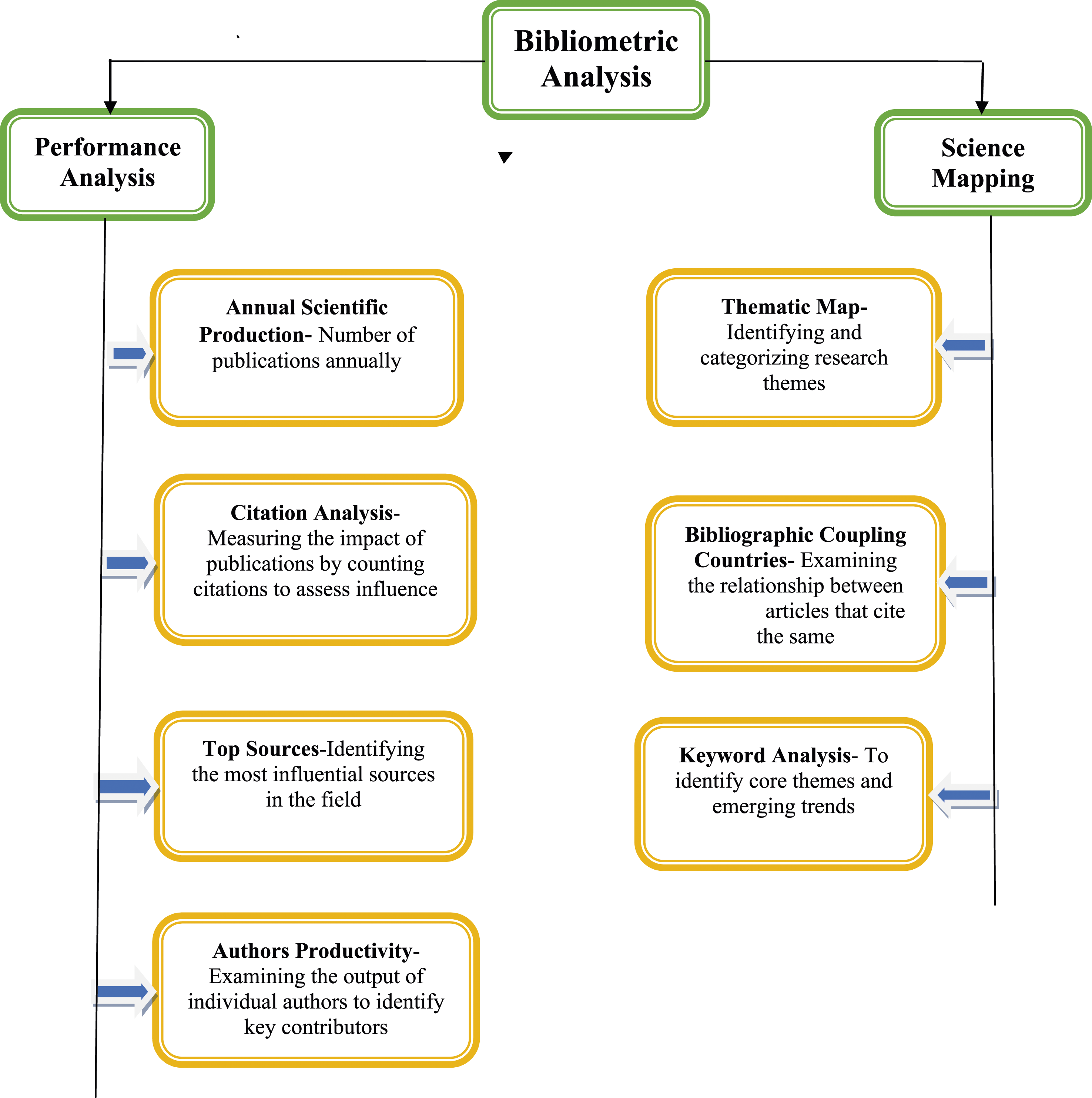
Performance analysis
This section focuses on yearly scientific output, citation patterns, leading sources and researchers’ productivity/contributions shedding light on the scope and influence of research within the discipline.
Annual scientific production
Figure 4 shows the progression of research on the gig economy over time. In 2016, research was relatively limited, with only two published documents. However, there was a notable increase in research activities in subsequent years. In 2017, the number of documents rose to 21, indicating a growing interest in this research topic. This continued with 29 documents published in the year 2018, reflecting a significant expansion of scholarly work in this area.
31
Scientific production annually. Source: Origin pro.
This further continued with 72 documents published in the year 2019, as well in the year 2020 demonstrating sustained interest and understanding the phenomenon. In 2021, there was a remarkable increase in research output with 103 documents published, indicating a heightened focus on exploring various aspects in this field, including its impact on labour markets, socio-economic dynamics, income distribution and technology infrastructure. 32 In the year 2022, it remained high at 94 documents. 2023 witnessed another drastic increase in research with 126 documents published, reflecting ongoing interest and collaboration among researchers in understanding the complexities of the gig economy. By 2024, there was a drop in research with 30 published documents. This decline may be due various attributes such as income, perceived risk, skills, and working time 33 and research priorities among researchers.
Overall, this research shows how interest in the gig economy has grown and evolved over time.
Citation review
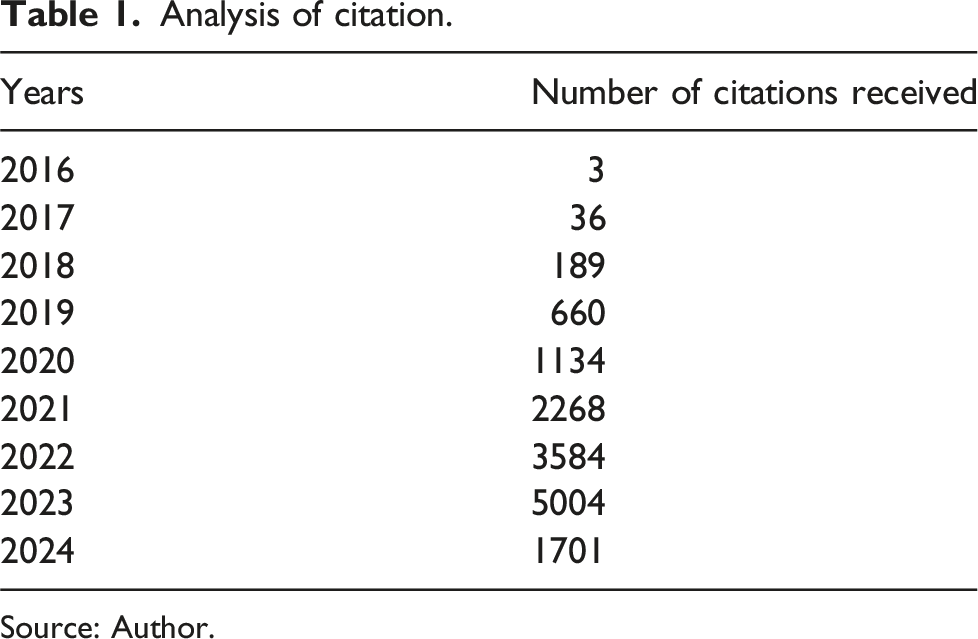
Figure 5 presents a citation overview of the 549 documents. These documents have been increasingly cited over the years, indicating growing interest in this field. In 2016, the year marks the beginning of attention towards the study of the gig economy with three citations indicating the interest in the area such as the ascent of the digital platforms facilitating gig work, shifts in labor market, growing of alternative work arrangements and income sources.
18
In 2017, citations increased to 36, this suggests a growing trend and importance given to the topic of gig economy as a research area. Researchers are looking into and understanding the gig economy in various dimensions and implications, such as social connections and, conditions for labor across different platforms on which workers rely on for their basic needs and Inequalities in terms of gender, race, class, and education of individuals affecting businesses and society.
34
In 2018, interest grew even more with citations almost five times higher than the previous year with 189 citations, since the research has focused on self-employment.
35
The trend continued in 2019 with citations raised to 660 focusing gig employment as a substitute to the traditional employment, working conditions of the gig workers, policy changes, impact of technology and gig work.36,37 In the year 2020, citations increased further to 1134, indicating the importance of various stack holders, industry’s expansion beyond services to manufacturing and recognition among researchers of the need for future study on data security, wage protection and branding of freelancers for growth and career options.
15
In 2021, the citations doubled to 2268, which reflects the growing impact of research focusing on various aspects of society, such as gig workers reputation, labour rights, and labour associations involved in advocating freelance and uncertain workers.38,39 This number continued to rise drastically in 2022, reaching 3584 citations. This sustained momentum shows that this research is gaining importance focusing on the labor market dynamics on worker pay and influential in academic and to the scholars.
40
The trend was sustained further in the following year 2023, with citations numbering 5004, as the study started addressing issues and providing valuable insights into changing the nature of the work like replacing the traditional working hours, technological advancements, work-life balance, freedom to choose the kind of work and industry.
41
In the year 2024, the citations declined to 1701, this decrease trend might be cause on the various factors like risk of the job, skills, income, timings, the financial crises and the economic decline during the covid-19 and the preferred platform33,42 the study had been stabilizing or the researches were gaining attention with other areas. Overall, the study demonstrated and focused on understanding the modern labor market and employment patterns. The information is showed in the tabular format in Table 1. Citation analysis. Source: Origin pro. Analysis of citation. Source: Author.
Trend analysis
The X-axis in Figure 6 shows the years spanning from 2016 to 2023. For the analysis, these years are denoted by numbers from 1 to 8 (1 for 2016, 2 for 2017, 3 for 2018, and so on up to eight for 2023). Annual citations received are plotted on the y-axis. Trendline analysis. Source: Author.
Trend analysis using three statistical equations revealed that the second-order polynomial equation best fitted the predicted and actual data, with a correlation coefficient of 0.9981. The second-best fit is with the power law, with a correlation coefficient of 0.9868. Citations increasing through polynomial or power law indicate that more research is being undertaken by researchers on this topic. Therefore, a large number of documents in this research area may be published.
Sources
The findings from the Figure 7 indicate a robust contribution across various sources; New Technology, Work and Employment contributed to 20 articles. The Journal Proceedings of the ACM on Human–Computer Interaction has 20 articles. Meanwhile, Work, Employment, and Society offers 15 articles, followed by New Media and Society with 10 articles. Work, organisation, labour, and globalization presented nine articles, and the International Journal of Human Resource Management contributed eight articles. The following are the insights from sources: Top journals. Source: Origin pro.
New technology, work and employment
The research work from the authors looks into diverse aspects of gig economy and platform-based employment43,44 exploring themes such as gender inequality evidenced by the gender pay, 45 autonomy and algorithmic management through qualitative methodology.46,47 The authors also highlight the impact of solidatory and collective action by focusing on the gaps, 48 alongside time-work disciplines, 49 gig worker motivation and job quality perceptions through the worker-centric approach. 50 The authors aim to provide comprehensive insights of gig economy, pay, inequality, time zones and working time 49 into the complexities of contemporary labour markets shaped by digital platforms.
Proceedings of the ACM on human-computer interaction
The research contributions from the authors explore various aspects in this field, such as freelance work and online platforms, as well as the challenges including professional identity ambiguity, self-management, self-doubt, and limited resources and opportunities such as self-directed socialization in which freelancers find and create their own support systems, resources, and mentorship support presented by this form of employment. 51 Some of the concepts that had been discussed by the authors through this publication are the use of mediation of algorithms, the concept of deconstructive identity and focusing on knowledge gaps, contributions of the computing community to sharing economy52–55 to understand and support freelancing and gig jobs. The methods that are insisted in published articles Viz. systematic literature reviews, 52 Qualitative study, 56 case study, 57 Bayesian analysis, 58 mixed-methods approaches. 55 The authors considered various platforms such as Fiver, Upwork and delivery services which look into how these platforms influence work practices and career development.51,57 They also provided valuable insights of three cross-cutting career development opportunities such as exploring and transitioning new areas of career fields, entrepreneurial training and transferring reputation and skills that evolve nature of employment and career trajectories 56 with the freelancers and the gig platforms. Papers from this source are linked to previous studies and research gaps. In 2019, five published papers focused on the study of freelancing, 53 where the papers were interlinked to the research gaps found in previous studies.
Work, employment and society
The articles from the source
Journal of new media and society
The author works in areas such as algorithmic management, 64 digital discrimination, 65 and fraud within gig work arrangements, 66 the gamification of work, 67 the commercialization of intimacy and platforms 68 is disclosed through this journal. Moreover, it examines the experiences of Chinese taxi drivers in the context of ride-hailing apps and the on-demand labor market. 69 Overall, the research strives to provide a complete understanding of unfair treatment, evaluation of gig workers, and potential benefits such as expanded perks, employment growth, and standardized work.
Work organization labour and globalization
The research work of the authors through which nine papers had been published from the source explored ethical challenges in studying gig economy platforms 70 and the topics such as flexibility and freedom in gig work, 71 future considerations such as job security, labor laws, and technological innovation. 72 The author Doorn had addressed conflicts over wages like distance-based compensation, (estimated) time-based compensation and industrial relations including workers’ rights, protections and benefits. 73
International journal of human resource management
Articles published by
Sources information.

Source: Author.
Authors productivity
Alfred J. Lokta developed Lokta’s Law in 1926 to explain how authors in scientific domains are distributed in terms of their production, especially with regard to the number of articles they publish. It suggests that the number of papers published by an author increases, the number of authors with that many publications decreases exponentially. In other words, it states that a small number of authors (often referred to as “core authors”) 81 produce the majority of the publications, while a larger number of authors produce fewer publications.
Lotka’s Law is significant in understanding patterns of scientific productivity and can have implications for various aspects of academic research, such as funding allocation, career advancement, and collaboration dynamics.
82
The curve represents productivity concentration among the authors. A steeper curve indicated a higher concentration, whereas a flatter curve indicated a more even distribution. Author’s productivity through Lotka’s Law mirrors to the Pareto Principle, also referred as the “80-20” rule. It says that 20% of the effort or input leads to 80% of the results or output, a concept used for making decisions to achieve effective results. Based on Lokta’s law, it is observed from Figure 8 that the most writers (about 88.59 %) have published only single article. Approximately 8.09% of the authors contributed two articles. Furthermore, approximately 1.79% have authored three articles and only 0.94% have published four articles. This highlights a trend in which fewer authors produce more articles, with the majority contributing only one publication. Table 3 displays the results. Author productivity analyzed using Lotka’s Law. Source: R studio. No. of authors representing no. of articles. Source: Author.

Authors output over time
Figure 9 analysis depicts that Graham M stands as the top author with publications 13 with a high impact factor. Where the author’s h-index of 10, g-index of 13, m-index of 1.25, and 1991 citations reflect his commendable research work within the field of the gig economy and the livelihoods of gig workers. The author Lehdonvirta V, despite having a smaller number of publications compared to the author Graham M, showed better metrics Viz. h & g-index stands at 8, m-index 1 and 1887 citation whose work focused on the Digital labour and their reputation. The next top authors are Frenken K and Wood AJ with the publication year 2020 and 2018. The author’s work is noteworthy, with six publications focusing on the areas of employment and their work conditions, labour rights, and geographic areas of Asia and Africa, in which the h-index and g-index both stand at 6, whereas the m-index is 0.85. The citation count was 1185, indicating the impact of his work on the research. The authors Anwar Ma and Heeks R have fewer publications and lower impact factors which is indicates a smaller influence within their respective fields focusing on job quality, precarious employment, descent work, and digital platforms. Table 4 provides an overview of research metric of authors, including publication counts, impact factors and total citations. Key highlights from authors’ output are as follows: Productivity analysis of authors. Source: R studio. Authors information. Source: Author.

Digital labor platforms
Online workforce platforms offer new job opportunities to make money. 83 There has been a swift expansion of online or digital platforms in recent times that has revolutionized a new trend named the ‘phantomization of the labor and society’. 84 These platforms perform functions similar to traditional corporations, but they use different tools, like terms and conditions, data, reviews, and algorithms, to manage and control their operations. These platforms act as digital marketplaces, connecting these independent businesses with clients who pay directly or through ads. Thus, platform companies avoid the traditional employment rules. 85 New jobs on digital labor platforms offer income, but raise concerns about their quality whether they fulfil decent work standards. 83 In the gig economy, digital labour is disembodied from job security and benefits. According to interviews and surveys, Southeast Asian and Sub-Saharan African platform labourers are commodified with less emphasis on workers’ rights and safety. Commodification strips these workers of safety nets, making them more exposed to instability and exploitation. 62
Wages/working conditions/government support
Digital labor is further characterized by multifaceted dimensions like regional, ethnic and gendered inequalities. 83 Job-quality outcomes are characterized by four main factors. Among them, one is the several kinds of insecurities related to the workplace. 86 Second, workplace discrimination serves as another indicator of job quality. Thirdly, the degree of work load is regarded as a crucial measure for the quality of work. 87 Fourthly, cognitive and physiological well-being are negatively impacted by the uncertainties at workplace.88,89 Globalization makes it difficult for workers to negotiate better compensation and conditions. 11 Governments must now take all necessary measures to guarantee that platforms comply with local labor laws and be held responsible for any violations. 90 Four concerns that digital workers in South-eastern Asia and Sub-Saharan Africa brought to light include upgrading, bargaining leverage, economic inclusion, and intermediary value chains. 11 In India and South Africa, workers encounter difficulties regarding compensation, contractual agreements, managerial practices, and advocacy. This research involves ranking and comparing platforms to foster decency work and prevent exploitative practices. 91 Fair labour standards yielded positive outcomes on gig work in Indonesia such as wages above minimum, compliance with laws, safety measures, and efforts to reduce harassment. 92 South Africa was chosen as the first location for field-testing of the framework and its related methodology. 93 In today’s economic landscape, digitalization is a prominent trend that is changing the ways in which we create, trade and interact with one another. Wider consequences for society, such as worker welfare and mitigation of insecure job environments, result from the growth of the gig ecosystem. Governments are responding with clearer regulatory frameworks and specialized legislation. 94
Labor market and employment
A greater number of locally created platforms have emerged as a consequence of the mass of tech entrepreneurs, organizing the labor of a continually expanding workforce sector. 83 Policymakers, workers, and job seekers all have major social and economic concerns about under-and unemployed people. The sharing economy, which allows people to work on a transient task-driven contracts in a wide range of industries, is an illustration of how traditional employment patterns are changing. 42 To the detriment of more secure types of employment, the rise of the digitally interlinked economy has intensified current patterns of freelance work and decentralized employment. 36 It is clear that the gig economy is transforming traditional employment arrangements owing to digital advancements and changing worker and business preferences. 42
Gig worker and online platforms
Gig work has been the focus of both policy and research interest because it is perceived as a growing component of the future of work. 93 Gig work generally falls into one of two categories. Physical gig work involves performing tasks that require physical presence in a specific location like driving cabs, delivering food or housekeeping. These tasks are usually arranged and supervised through platforms like Uber, Deliveroo, Rappi and Gojek. In contrast, digital gig work encompasses tasks that can be done remotely and are focused on digital activities such as data input, web-designing and translation. These are coordinated through platforms such as Amazon Mechanical Turk, Freelancer and Upwork. 95 Many gig workers struggle financially despite long working hours, are not entitled to benefits such as insurance or pensions, and lack effective ways to voice concerns to platforms. 92 Workers have more freedom, autonomy, task variety, and complexity in algorithmic management. These control systems may lead to meager wages, cause social seclusion, irregular schedules, excessive workload, sleep deprivation and fatigue. 62 Instead of seeing online platforms simply as digital marketplaces, the perspective in this analysis treats platforms can be seen as corporations, with their users resembling a workforce. 85 Online platforms often classify people who offer services or products “micro-entrepreneurs” and treat them as hobbyists, partners, or independent contractors. This approach allows platforms to avoid treating them as employees. There are no precise figures on the numbers of workers in the gig economy. 93 These platforms act as digital marketplaces, connecting these independent businesses with clients who pay directly or through ads. Thus, platform companies avoid the traditional employment rules. 85 Platform economy has already noted that depression, anxiety, exhaustion, and isolation are frequent experiences among gig workers. 25 The rapid expansion of fair work projects is indicative of the importance and significance of the work done, as well as the evolving context and economic dynamics of platform work. 83
Focused research areas of authors.

Source: Author created.
Science mapping
This section focuses on thematic representations, cross-country bibliographic connections and keyword analysis. These methods help visualize research themes, collaborations and emerging trends in the field.
Thematic map
A strategic thematic map was created to visualize clusters of keywords in a research field which are organized into four quadrants based on centrality and density. 96
Centrality is a metric that quantifies the degree to which a network interacts with other networks and indicates the significance of a particular theme in the evolving field of study. Density indicates the network strength and cohesiveness of a network indicating how well the theme is developed. 97 The total number of keyword occurrences determines the cluster’s size, which, in turn, correlates with the number of papers associated with those keywords. A larger cluster size indicates a higher frequency of keywords and suggests a significant volume of research activity. 98 Each quadrant is discussed as follows:
Motor theme and basic theme
The upper right corner in Figure 10 shows the main theme which is the first quadrant “Motor Theme”. These developed themes which are characterized by high centrality and density are fundamental to the structure of the research field. The lower right shows the Basic Theme which is the fourth quadrant “Transversal and General Basic Theme”: These are having high centrality and low density, which are central to the field, but not as deeply developed, serving as foundational or bridging elements between different research areas. These two quadrants share three common keywords in the centre of axis Viz. Working conditions, employment, and labour market. Important Notes on the Motor and Basic themes as follows: Thematic analysis. Source: R studio.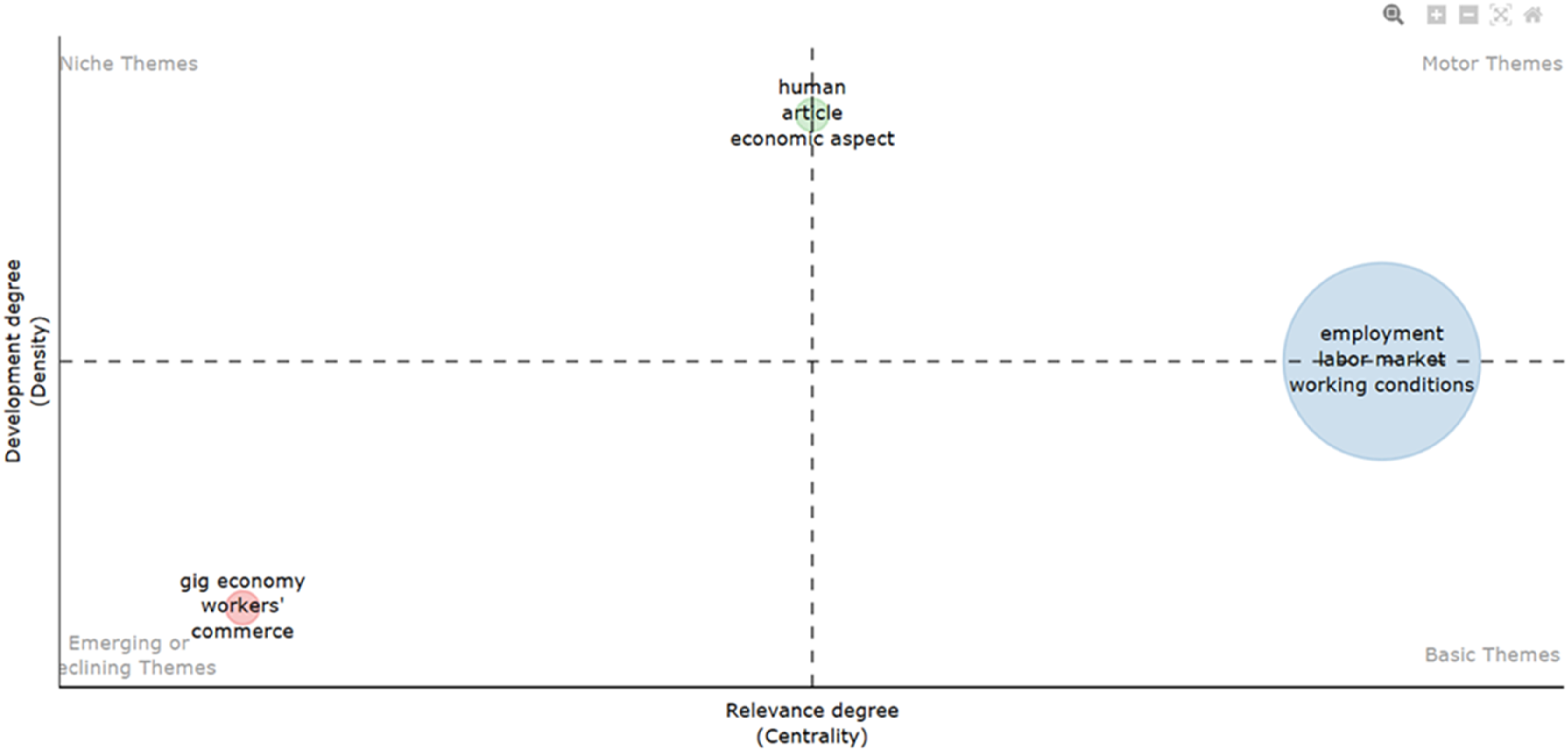
Over the past decade, extensive research has mostly seen on employment and temporary job arrangements.3,11,26,62 Numerous studies have addressed the impact of gig work as a new career option. 3 The labour market is evolving and short-term contracts are replacing full-time jobs. 99 In order to fulfill service or demand with variable working hours, the online gig market comprises temporary jobs and contract employment based on commitment or requests made through a digital platform. 100 Gig employment usually involves developing software or websites for small enterprises. This can boost job satisfaction by giving workers more control over the entire process, from beginning to end occasionally. 33
Gig economy is tied to a shift towards ‘precarious work’, which is uncertain, unexpected, and risky for workers. 101 Employees may face discrimination due to their religion, ethnicity, or disability, or they may be divided into distinct market categories based on their gender.102,103 This means, laborers can participate in “skill arbitrage”, selling their services to the highest bidder globally without regard to the buyer’s location. Theoretically, this increases the amount that workers are paid for their labour, weakens their negotiating position, and allows them to move outside of their regional labour markets. 11
Niche theme and motor theme
The upper left in Figure 10 is a niche theme which is the second quadrant. These are well-developed and highly specialized themes with low centrality but high density. These studies often focus on specific topics. This quadrant shares three common keywords with the motor theme Viz. Human, Article, and Economic Aspects. The following are essential insights on niche themes and motor themes:
Many management scholars have expressed this viewpoint, and the gig economy’s flexible, short-term jobs challenge traditional organizational theory which values a stable human force for competitive advantage. This precarity can lead to job insecurity, fewer benefits, and increased stress for workers, affecting their satisfaction and wellbeing. 19 The gig economy, a rapidly expanding sector of employment have taken an interest from multiple disciplines both within and outside traditional fields. 27 It involves a capital-labor relationship facilitated by digital platforms that connect employees and employers. Through these platforms, workers complete small tasks or gigs to meet consumer demand. These platforms act as intermediaries and “shadow employers” facilitating work while bypassing traditional employment structures. 14 In terms of economic aspects, it is characterized by income fluctuations, job precarity, and lack of job security adding positive notes it provides various job and entrepreneurial opportunities. 104 Growing digital work platforms and their impact on traditional employment fuel gig economy research, as evidenced in top journals articles. 11
The human aspect of the gig economy revolves around balancing flexibility with basic needs like security, social recognition, and fairness. While workers value autonomy, they often lack stable income, and benefits pushing them to seek human interactions for social recognition. 46 This process, known as anthropotropism, shows how gig workers turn to human connections for social recognition and fulfilment of traditional norms, with longer-tenured or higher-earning workers receiving more recognition, reflecting the influence of social hierarchy in the gig economy. 105 Additionally, from research perspective, this has been a rich topic for academic research articles, exploring various dimensions from labour rights to regulatory challenges. The growing body of literature offers deeper understanding of how gig work is transforming various industries and the work force. 37 The gig economy’s economic aspect is shaping labor markets through flexible work models like freelancing and part-time jobs. It opens up new avenues for income generation beyond traditional employment structures. 106
Emerging or disappearing or decline
The lower left in Figure 10 shows the emerging, disappearing, or declining themes which is the third quadrant “peripheral Theme”. This is characterised by low density and centrality, indicating themes that might be emerging or fading. The keywords in this theme are “Gig economy, workers, and commerce.
Even with the unpredictability and difficulties gig workers have at work, gig platforms identify themselves as online intermediary e-commerce companies offering online services. 36 Enhancing service quality is the goal of a gig platform to increase revenue while maintaining its status as an e-Commerce platform. This enables it to avoid categorizing gig workers as employees and evade the associated financial and legal obligations of employment. 94
The gig economy has profoundly transformed the dynamic between workers and commerce, offering a new model of employment that prioritizes flexibility and independence. 85 With access to a world-wide talent pool, companies are allowed to scale operations quickly and efficiently. This shift has empowered many to pursue multiple income streams, turning commerce into a decentralized network of freelance opportunities and part-time engagements. While digital platforms have streamlined gig work, they have also sparked discussions about worker rights and corporate responsibility. 107 As this type of employment continues to grow, the challenge lies in finding a balance where workers and commerce can thrive, ensuring fair wages, protection, and proper recognition for gig workers in this evolving system.
Bibliographic coupling countries
The presence of similar reference lists indicates bibliographic coupling. Two articles were bibliographically related if they shared a common citation. Both articles had a reference number that indicated a strong bibliographic match. Here, countries bibliographic matching analysis were examined using VOS Viewer. 108 In other words, it is referred to as when works from a third country are cited in publications from two different countries. 109
A network visualization map is used to represent these relationships as shown in Figure 11. Each country is depicted as a circle, and the lines between them illustrate the strength of their publishing relationships, based on common references across articles. Different colours in the map indicate the clusters. Each cluster represents a group of countries with similar bibliographic patterns which is represented in the Table 6. The distance between circles indicates the strength of their connection, where closer circles indicate a stronger relationship and distant circles suggest a weaker link. Bibliographic coupling countries. Source: Vos viewer. Representation of cluster and items. Source: Author.
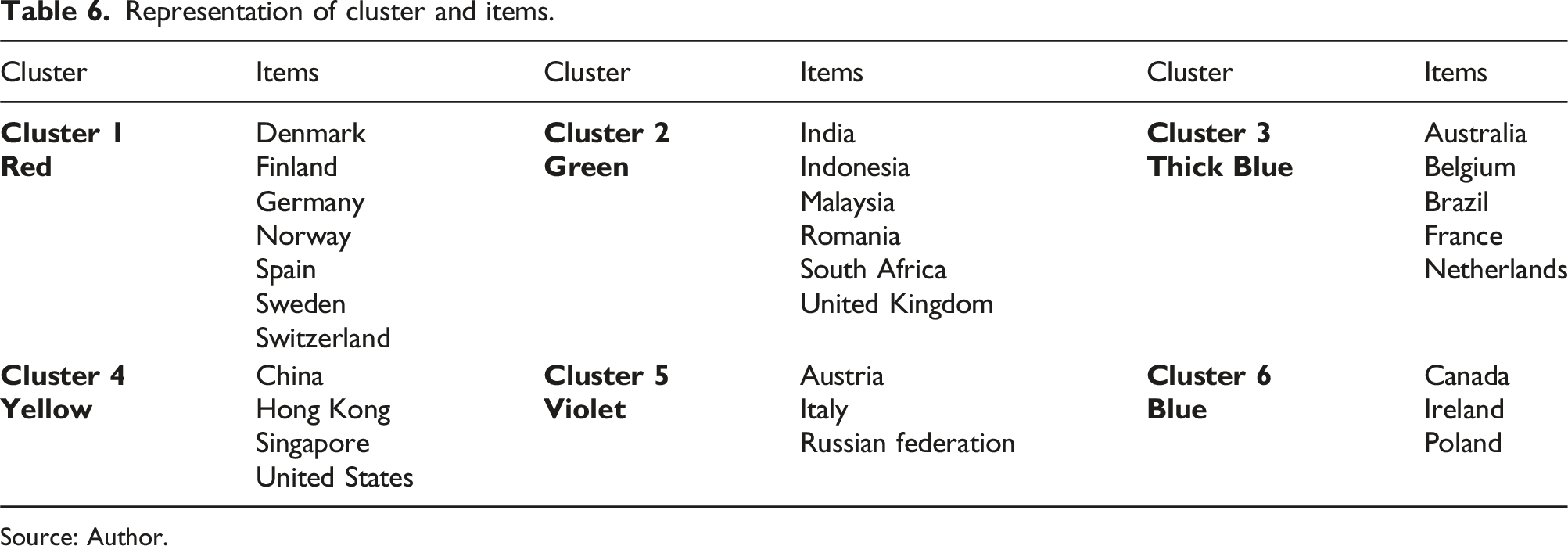
From the analysis, the United Kingdom (UK) emerges as one of the countries with the greatest overall link strength value of 13,959 and the number of documents is 105 with 27 links. This suggests that the UK has robust publishing relationships with other countries. It reflects a country’s collaboration and shared research interests with other countries. The country United States of America (USA) ranks second top country in the analysis, indicating a significant output in the research. The USA has a total link strength of 10,692 with 142 documents and 27 links, which is a major contributor to global research, producing a large number of studies and articles.
Top collaborated countries.

Source: Author.
Keyword analysis
A specific method of bibliometric study that comes from the field of information science and library is keyword analysis. It functions as a quantitative tool for examining publications and offers statistical insights that can enhance systematic literature reviews. By assessing the frequency and distribution of the keywords, this method helps identify trends, common topics, and research patterns within a field. This provides a clear understanding of the focus areas and emerging topics within a research field. 110 A keyword co-occurrence network is a tool that shows how often keywords appear together in different articles. Since keywords are chosen by authors to capture the essence of the papers, this network provides insights into how authors understand and categorize their work within the wider context of their field of study. By analyzing which keywords tend to co-occur, one can gain insights into the core concepts and emerging trends in a specific domain. 111
The keyword analysis for this study helps to examine the core concepts and emerging trends within the gig economy. This method enables the assessment of keyword frequency and co-occurrence in relevant publications, yielding valuable insights into the predominant research areas and evolving themes in the field. Additionally, keyword co-occurrence networks visually depict the relationships between key topics, deepening our understanding of how researchers categorize and position their work within the broader framework of the gig economy.
In this analysis, node size reflects the frequency of a specific keyword. A larger node indicates a higher occurrence suggesting its significance within the research. Links between nodes show keyword co-occurrence across different publications, and thicker links represent stronger relationship, reflecting the frequency with which those keywords appear together in the literature. This visual illustration allows for an enlightened view of the connections and relevance of key concepts within the gig economy depicted in Figure 12.
112
Analysis of keywords. Source: Vos viewer.
Focusing on the top 6 keywords, it is drawn that the keyword “gig economy” stands out with the highest number of occurrences totaling 454, and has a total link strength of 1171, indicating its central role in the analysis as well as research. “Employment” follows with 61 occurrences and a connection strength of 281, showcasing its significance by suggesting that employment is a notable topic in this field. Similarly, “labor market” appears 33 times with a total link value of 181, pointing to its relevance in exploring the broader concepts of the gig economy. “Sharing economy” and “Platform economy”, with 54 and 53 occurrences having link strengths about 168 and 162 reflect the importance of digital platforms which are important research focus areas. The keyword “working conditions” has 25 occurrences with link strength 150, remains an ongoing discussion about work quality in the gig economy.
The thorough analysis of keyword frequency and co-occurrence paves the way for a deeper insight into clustering of topics within gig economy research. The keywords have been identified from each cluster based on suitability of the scope of the present study. Important observations from the keyword analysis are as follows:
Digital labor and employment
The rise of crowdsourcing and crowd-work platforms like Upwork has created new paradigms for human resource management, impacting traditional labor practices and transportation economics. 62 Tasks completed using online platforms are referred to as “crowd work”, that connect a vast number of businesses, organizations, and individuals via the Internet, enabling clients and workers to collaborate globally. The global scope of crowd work provides flexibility, but it also leads to variability in task types, duration, and pay. 104 Understanding these dynamics is crucial for addressing the emerging challenges in this evolving labor landscape. This shift, driven by digitalization113,114 has seen an increase in freelance and gig-based work, especially in the United States and India, 11 where platform-based labor markets are rapidly growing. These changes raise concerns about rights of the workers, job security, and broader implications for the economic system, as automated platforms often prioritise efficiency over labour protection.114,115 The increase in automation of activities has seen substantial changes in the labor market over the past few years, with a notable polarization in both the US and Europe.116,117 Algorithmic control and automation have reshaped global capitalism and commerce, particularly in the context of platform capitalism and digital labor markets. 62
In Australia, the emergence of internet platforms has reshaped the digital labor landscape, particularly in the food market and app-based platforms, where freelancers value autonomy and flexibility. 118 This shift from traditional workplaces to a more fragmented online environment poses challenges for labor relations and labor process.119,120 Freelancers often face issues like job security and lack of benefits, raising concerns about worker protections. 121 To address these challenges, there is a need for updated labor relations frameworks that ensure fair treatment and stability for platform workers.
Gig workers and platform economy
The rising prominence of the gig economy as a digital platform, the digital economy has transformed traditional labor, given many workers flexibility and independence but also posed challenges to job quality and precariousness.25,62 This shift offers entrepreneurship opportunities, which also leads to job quality concerns and precarious work conditions.14,122 This precarity can lead to job insecurity, fewer benefits, and increased stress for workers, affecting their satisfaction and wellbeing. 19 These challenges underscore the need for collective bargaining to improve worker protection and ensure fair treatment and improved working conditions.123,124 To tackle these challenges, a balanced strategy that maintains the advantages of flexibility while minimizing the dangers of job instability and employment precariousness is needed.
In nations like China, where market reforms in the 1980s marked the beginning of the gig economy. The launch of digital labor platforms has yielded substantial advantages on employment, the communities, and the national economy. 125 Chinese labour relations were transformed from having a focus on individualized approaches to a more collectivist one. 126 In China, where social media 36 is a central communication tool, collective action among digital platform workers is becoming more prominent, as they leverage these platforms to organize and push for better labor policies. 69 Indonesia has new dynamics in labour policy and collective action. 92 Gamification, used by many platforms to enhance worker engagement, 127 can blur the lines between work and play, potentially undermining traditional labor rights and contributing to poor working conditions. 128 Similarly, in Indonesia, the growth of digital labor platforms has sparked debates about worker rights and the need for robust labor protection. 92 Contrary to some media claims, a gig economy is not a new economic framework. It is an integral part of neoliberal capitalism, emphasizing flexibility, deregulation, and individual responsibility. 125 To address these issues, policymakers must consider the unique impact of digital platforms on labour conditions and develop appropriate protections.
Digital platforms like Airbnb and Uber are central to the sharing economy, 129 providing user-friendly interfaces that connect people to a range of services, from short-term rentals to ride-hailing. The sharing economy leverages technology to optimize resource use and reduce barriers to entry for users and providers. 130 These platforms rely heavily on user interfaces designed to be intuitive and seamless, thus promoting easy access and high engagement. 131 However, while these digital platforms offer flexibility and convenience, they also raise concerns about regulatory compliance, worker rights, and the impact on traditional industries. 132 The growing influence of platforms like Airbnb and Uber requires careful examination of their broader social and economic effects.
Gig workers and working conditions
Gig workers, frequently classified as independent contractors encounter challenges regarding income distribution and job security. 104 The employment status of the gig workers also impacts their psychology, as uncertainty over income and working conditions can increase stress and anxiety. 62 In the UK, the gig economy is particularly active, fueled by dense population and a strong presence of service industries employing highly skilled gig workers. 133 These factors underscore the need to reevaluate gig workers’ employment status and create policies that offer them greater security and support.
Job satisfaction among workers is influenced by their motivation and economic aspects such as compensation and benefits. Motivation by intrinsic elements like purpose and fulfilment increases job happiness. 134 Gig workers desire recognition and pride in their work is one of their biggest motivations. The need to network and build relationships is essential for the gig workers. Not motivation, but financial situation is a prerequisite for job. 135 Extrinsic factors like salary, job security and working conditions also play a key role in motivation. 136 A satisfied and motivated workforce requires addressing both intrinsic and extrinsic motivators.
In countries like south Africa and Malaysia, the Covid-19 pandemic has had a profound impact on the gig laborers and freelance economy leading to more inequalities.90,137 And posing significant risks to their well-being.11,138 As the pandemic led to widespread unemployment, gig workers faced heightened job insecurity and lack of social protection. The crises underscored the need for improved social protection measures to ensure descent work 93 and safety net for gig workers137,139 who often fall outside traditional employment structures. 140 Addressing these issues requires comprehensive regulations that prioritize the social security and well-being of gig workers in future crises.
Findings
Performance analysis
➢ The surge in annual publication output indicates the gig economy’s field’s dynamic progression and expansion. ➢ Citation analysis reveals heightened scholarly attention on employment patterns and the reconfiguration of today’s modern labor market in the context of the gig economy. It also reflects the growing attention to topics such as digital platforms, inequalities, working conditions and policy adaptations. ➢ The journal “New Technology, Work and Employment”, which has emerged as a leading outlet focused on the topics such as worker motivation and job quality. ➢ The author analysis identifies Graham M as a highly influential author, emphasizing the socio-political impact of the gig economy, particularly from the regions Africa and South East Asia. ➢ The performance analysis reflects its academic significance and its global implications research works on gig economy and its own outcomes.
Science mapping analysis
➢ The bibliographic analysis shows that UK and USA are the leading contributors to gig economy research, indicating a strong collaboration in this field. ➢ An analysis on keyword clusters reveals that various dimensions and multiple facets of the gig economy such as employment, gig workers, working conditions and digital platforms emphasizing the diverse clusters and trends that characterize this area of research, shedding light on its complexities and the transforming landscape of gig work. ➢ The thematic analysis underscores that socio-economic impacts, digital platform’s role in reshaping work structures and employment policies have to be indeed focused for further research on gig workers and gig economy trends. ➢ The science mapping analysis identifies emerging research areas those have been pave the way for targeted research initiatives that can further explore the evolving dynamics in the gig sector and its broader societal implications at large.
Future research
Gig workers and platform economy
Existing studies have focused on flexible schedules and work settings, and the impact of digitalization, specific competence and interest, social influence, and economic motivation are found to be the influencing factors that draw people to participate in gig work. Even though gig work come with the uncertainties in terms of job stability and income, the freedom it provides is incredibly enticing. 141 Mixed-method research focuses especially on the IT and business consulting industries. It looks at push motivations- what attracts individuals to gig work–and pull motivations-what keeps them engaged. It also identifies the main characteristics that distinguish freelancers in the gig economy from other workers and understand how these motivations align with previous research on entrepreneurial motivation. 135 Key themes such as gig workers conditions, various recruiting methods70,80 the impact of gig work and the role of technology, aims to analyse and explore how work is organized, managed and performed in gig jobs that rely on digital platforms and technology. 72 It further explores various aspects such as job quality, 76 collective arrangements, personal growth and algorithmic governance. 36 Cross-regional surveys and Semi-structured interviews revealed that algorithmic control, enabled by platform rating systems, shapes job quality. It provides worker autonomy, task variety, and flexibility. Further, the studies reveal that, it is the central to online labour platforms offering high levels of adaptability and independence. 62 Partial Least Squares Structural Equation Modelling (PLS-SEM) identified the factors influencing intentions among generations to participate in the gig work. The variables such as perceived threat, present earnings, competencies, adaptable work arrangements and channels affect distinct eras. The study found that Generation Z shows a growing interest in engaging with the gig economy than before generations.4,33 The technological advancements and its impact on gig economy enables to create job opportunities within the gig economy, create new platforms and services 31 that connect workers and projects. These advancements have also affected the workforce by altering the skills and tools required for gig work. Further, it offers insightful information how the gig economy evolves and adapts to technological changes and inform strategies for both workers and businesses.36,142
Future research suggestion
➢ To capture the unique experiences and challenges of various gig economy sectors better, future research should adopt a sector-specific approach. This involves in-depth studies across different industries, such as corporations, transportation, businesses, and services. A comparative analysis can reveal commonalities and differences in working conditions, job security, and income distribution among various sectors. ➢ Qualitative studies should be conducted to uncover other potentially influencing elements, such as family circumstances, word-of-mouth, and the impact of health emergencies. Exploring the differences in demographic and geographic factors would be an added advantage to this research. Collecting a large sample across generations enables generalizable findings. ➢ More research is needed to investigate algorithmic control in the gig economy, focusing on its impact on worker control, exploitation, and skill development. Adopting a labor process lens can provide insights into how algorithms shape working conditions and worker experiences, guiding labour rights policies. Investigating algorithmic competency sheds light on the evolving dynamics between platform users and operators in a sharing economy.
36
➢ Research efforts should aim to explore how IT application owners can improve the gig economy ecosystem by considering more holistic factors, such as bidding systems, to improve the efficiency and effectiveness of platform-based gig work. ➢ Future studies on how technology affects the gig sector will offer valuable insights into how various technological advancements shape job opportunities, the workforce, and changes in industry dynamics due to technology-driven gig platforms and services. ➢ Future research on platform interfaces should address ethical issues such as power imbalances, informed consent, and platform surveillance. Research on power imbalance involves examining how the control that platforms have over their data and users can affect the research process and results. ➢ Effective informed consent mechanisms for platform-based studies should also be investigated. Participants had to understand and agree to the data usage conditions through a strong informed consent process. ➢ Further research should examine how recruitment strategies affect the transparency of platform working conditions. The impact of recruitment approaches on participant anonymity and transparency in research on platform working conditions could reveal effective confidentiality strategies. ➢ Future research should explore how recruitment strategies affect participants’ understanding of platform working conditions. Identifying the best practices can ensure transparency and accuracy, thereby improving the ethical standards and reliability of platform-based research.
Wages and working conditions
Studies indicate that gig work or gig labour is not expected to completely replace traditional employment. Gig employment can boost the economy by better connecting individuals with occupations and interests, and by unleashing the potential of workers who are dissatisfied and frustrated with their traditional jobs. More innovation and creativity can result from this change in helping these workers realize their potential. Traditional jobs will always be necessary, but the gig economy may strengthen and complement the labor system by giving many individuals flexibility and opportunity. 14 The studies focus on gig platforms 85 impact over workers safety and working conditions and how gig platforms respond to pandemic risks faced by the workers. It also exposes problems with worker exploitation and ambiguity of rights in countries such as South Africa and India, demonstrating how platforms avoid regulation and weaken worker opposition. This made it possible to rethink the role of platforms during such times and led to the establishment of better standards for worker protection. 143 The author research through the in-depth interviews on the countries like South Africa, Kenya and Nigeria focused on the gig economy’s impact on African labor development. The four key dimensions of freedom, flexibility, precarity, and vulnerability, via which remote work on platforms is done influences the well-being of African workers. These interconnected elements illuminate the working conditions and wellbeing of African gig workers. 25 The authors explored how HRM is implemented in the gig economy through technology. They examined various HRM activities that digital platform organisations use, such as attracting, recruiting, and selecting workers, as well as job quality management and worker motivation and control. These studies demonstrate how technology influences the management of gig workers. Since working conditions vary across platforms, 74 HRM strategies, policies and union responses must be customized to fit each situation. Traditional HR roles, such as employee hiring, training, and improvement, may diminish in the gig economy. However, HRM remains essential, as gig work relies on human workers. 144
Future research suggestion
➢ Future studies could explore the enduring economic consequences of gig employment on job security, income levels, welfare and job contentment among gig workers, as well as the efficacy of regulatory measures. Studies could also examine skill development, income distribution, and the development of social safety nets to support gig workers’ financial security. ➢ Further studies can be done using multi-regional approach to understand the gig economy in various countries and regions. By comparing economic development, labor laws and cultural attitudes towards gig work, researchers can identify regional differences and universal patterns. This will offer a thorough comprehension off the worldwide influence, obstacles, and possibilities within the gig economy. ➢ Future studies might examine how gig platforms handle the hazards associated with pandemics and how well they perform in protecting gig workers. Better safeguards might come from knowing how platforms handle resistance and laws all across the world. ➢ The impact of the gig economy on specific demographic groups with regional specificity investigates how these groups experience the four key dimensions of freedom, flexibility, precarity, and vulnerability, which can reveal the unique challenges and opportunities they face. Additionally, examining the role of government policies and social safety nets helps in mitigating the drawbacks of gig labour and by enhances its benefits that which leads to create more supportive labor environments.
121
➢ Research in the future could examine HRM practices of the gig industry and technologies long term efficacy. Addressing HRM policies on worker satisfaction, productivity, and retention across different platforms broader HRM practices in the gig economy. Additionally, exploring how shrinking HR functions, such as training and development, affect the skill growth and career progression of gig workers would be an added advantage. ➢ HRM’s role in gig employment should be studied. It should examine gig workers’ algorithm management experiences, how platforms affect worker control and motivation, and HRM and algorithmic management studies. Research should also examine HRM concerns for gig workers. New approaches to these topics will help us to comprehend this field.
144
➢ Researchers could also further examine the new HRM models that use innovative and advanced technologies to ensure fair labour practises and worker well-being in the gig environment.
Labor platform and employment
These studies have explored the evolution and consequences of the gig economy. It looks into how gig employment affects the workplace environment, 50 labour policies and regulations, from flexibility and job growth to job security, social and ethical issues. Research also addresses how gig platforms are changing the labor markets and the need to adapt employment laws 145 to gig work. Online platforms use terms and conditions, data, and algorithms to decentralize workplace governance without traditional employment contracts. 85 Additionally, it tackles the challenges of discrimination experienced by gig workers due to their gender and ethnicity. 42 The authors concentrated on the primary labour practices utilized by digital platforms, such as remote work, payment per task, on-demand work, and triangular relationships between contractors and subcontractors. These practices mirror earlier organizational methods. The turnaround in macroeconomic, political, economic and technological trends facilitated the establishment of the Standard Employment Relationship (SER) which then became a standard benchmark for employment practice. 121 The importance of the fair work framework that which was developed based on five descent work principles: fair pay, conditions, contracts, management and representation, high lightening its transparency, ease of use and positive impact on working conditions on gig platforms. 93 The researchers’ systematic analysis of Indonesia’s gig economy found that while there are some positives, such as fair pay and actions taken to address work-related risks focusing on transportation-related gig work, there are also some significant drawbacks, such as workers being paid below the minimum wage and lacking adequate social protection. 92
Future research suggestions
➢ To move beyond the current situation and foresee future developments and challenges, future research should focus on enduring patterns and approaches for overcoming obstacles in the gig economy. Researchers can address the prolonged impacts of gig work on individuals’ welfare, employment assurance, and career advancement, affording a thorough understanding of the sustainability and implications of gig work in the broader context of the labour platform. ➢ Future studies may explore into the long-term implications of key labor practices such as remote work, piece-rate and on-call work employed by digital platforms. Furthermore, exploring alternative organizational models that balance flexibility and security for workers in the digital economy would be valuable. ➢ Future research could explore the effectiveness of implementing a fair work framework on different gig platforms and sectors. Assessing the viewpoints and experiences of the gigs regarding these principles and their impact on overall job fulfillment and well-being is valuable. ➢ The result of cultural context, societal norms, and values on the gig economy and analysis of policy effectiveness across different cultural settings provide a better grasp of how culture shapes on-demand economy. As an outcome, policies and practices become more culturally aware and productive. ➢ Future research could examine the long-term impacts of fair pay initiatives, gig workers’ employment status, and improved worker representation. Further, researchers could assess the experiences of gig workers in other sectors and regions to get broader understanding and knowledge of gig work. ➢ The future of social security can be suggested in two possible directions: one is to detach social security benefits from traditional employment and consider it as a universal system for all income earners, regardless of their type of job. Second, is to create a separate social security system specifically for platform workers such as those gig economy jobs. This would either create a distinct system for them. These aims to improve social security for gig workers and non-traditional employees. ➢ We could enhance our understanding of gig work precariousness and policy recommendations by studying how many workers enter gig work voluntarily and involuntarily. More volunteer workers may lead to better benefits and protection, whereas more involuntary workers may lead to improved job opportunities and support.
Limitations and conclusion
Limitations
The paper provides an in-depth analysis of gig sector, digital labor, gig employment platforms, and the safety and working conditions of gig workers. It underlines the significance of these aspects, the appeal of gig work, and the challenges faced by gig workers. There’s a potential to expand the research by focusing on sector-specific gig employment, the distinct needs and risks in various fields, and the effectiveness of existing laws and policies in safeguarding gig workers. This approach will offer a nuanced understanding of the gig economy and contribute to the development of robust protections for gig workers. Another constraint of the study is the exclusive use of data from the Scopus database, which may have led to the omission of relevant documents. Therefore, by extracting data from other databases, such as Web of Science, Research Gate, and J Store, researchers can obtain more papers and find other research gaps. This study used VOS Viewer, R Studio and Origin Pro as bibliometric tools to conduct various analyses. Future research could broaden the scope by incorporating other advanced bibliometric tools such as Bib Excel, Gephi and Litmaps which offer improved visualization and comprehensive review of the literature. Additionally, researchers can explore a variety of science mapping analysis software, such as CiteSpace, CiteNetExplore, Sci2tool, and SciMat to better depict relationships among different units of analysis more effectively, thereby enhancing the understanding of the research landscape.
Conclusion
This paper deals with the systematic review and bibliometric analysis of the gig economy driven by digital platforms, offering flexible employment and entrepreneurial opportunities globally. However, it also addresses challenges such as changing work preferences, income insecurity, and workers’ rights. This study retrieved 549 documents from Scopus, focusing on the social sciences, business, and economics to explore gig economy. By selecting reputable published articles in English, the research ensured detailed and accessible insights into past studies and methodologies to move forward in the review. This research illustrates a substantial expansion from 2016 to 2024, suggesting continue attention to both its advantages and drawbacks.
The growing trend from the analysis of citation spots the evolving employment patterns and modern labour market dynamics. Thematic mapping and keyword analysis illuminate the emerging trends, patterns, and core areas in the research field. These tools serve as valuable tools for understanding the research field and guiding future scholarly research. Significant collaboration among various countries sheds light on robust publishing relationships and extensive network connections. In reviewing the authors, the key trends within the gig economy are reflected, such as the transformative influence of E-labour platforms on traditional employment paradigms, wages and gig workers working conditions, government intervention on workers’ welfare, and regulatory landscapes. Furthermore, it looks at the shifting dynamics of the labour market, driven by the digital advancements and shifting of work preferences among workers.
This study provides an exhaustive overview of the gig economy by portraying its pros and cons with the necessity of implementing protective measures and equitable labour practices to safeguard gig workers’ rights and well-being. Collaborative efforts are essential to shape a resilient and inclusive future for gig workers, despite economic changes. The study encourages further research to secure a fair and sustainable future for gig workers in the global economy.
Footnotes
Declaration of conflicting interests
The authors declared no potential conflicts of interest with respect to the research, authorship, and/or publication of this article.
Funding
The authors received no financial support for the research, authorship, and/or publication of this article.
