



Abstract
This study aims to investigate the key features necessary for the development of a mobile application for human resource management (HRM). It addresses the shortage of empirical studies on digital HRM in the Middle East and emphasizes the increasing importance of HRM mobile applications in the region. The research utilizes qualitative research methods, including the Delphi method, in-depth interviews, literature review, historical analysis, and critical discussion.
Keywords
Introduction
Rapid advancements in internet technology necessitate more organized and convenient data and resource management for businesses in a digital setting, targeting autonomously working devices that impact millions of people globally. 1 As communication technology continues to expand and become more widespread, mobile apps have entered every sphere of life, causing significant shifts, particularly in business. 2 Human resource management has undergone a radical shift due to the implementation of technology in its business processes. 3 Previous studies of digital HRM have shown the impact and adaptation of technology in HR functions 4 and predicted its future direction. 5 In addition, studies revealed the need to focus on the need for more organized and accessible data and resource management for businesses in a digital setting, particularly targeting the impact of autonomously working devices. 6
Nonetheless, there is a great need for interdisciplinary discussion on digital transformation. 7 Digital transformation is defined as a shift in the way companies use digital technologies to create new digital business models that help companies create and leverage more value.8,9 This work is expected to make a valuable and important contribution to the literature at both the theoretical and practical levels. At a theoretical level, the results of this study provide empirical information for the development of mobile applications for HRM. By concentrating on the creation of mobile HRM applications, this study also advances the broader field of digital HRM. On a practical level, this study can help a Gulf Cooperation Council (GCC) policymaker assess the efficiency of his HRM technology and enhance his management and corporate governance procedures. The findings of this study could have an impact on how personnel management procedures are carried out and could also be used as a benchmark for future GCC management and performance.
The study highlights the transformation of human resource management (HRM) into digital HRM due to the implementation of technology in its business processes. The study aims to identify the main features required for creating an HRM mobile application by inviting HRM experts and mobile app developers to participate in a Delphi method. The study contributes to the larger area of digital HRM and will have implications for improving the practices of HRM and advancing the management and performance of the GCC region. The research gap identified in this study is the lack of multidisciplinary discussion on digital transformation in the context of developing a new digital business model that creates and appropriates more value for the firm. 10 Specifically, this study will address the gap in the literature regarding the required features for designing an HRM mobile application.
Therefore, the objective of this study is to discover the main features required for creating an HRM mobile application that meets the needs of HRM experts and mobile app developers in the digital business environment. The study aims to explore and evaluate the need for a mobile application in the field of digital HRM. A mobile app can offer several advantages and address specific challenges faced by organizations in managing human resources effectively and to address the research gap in the literature regarding the required features in designing an HRM mobile application. 11 This study will contribute to the larger area of digital HRM by highlighting the transformation of HRM into digital HRM due to the implementation of technology in its business processes. The study will have implications for improving the practices of HRM and advancing the management and performance of the GCC region. The main research question of this study is: What are the main features required for creating an HRM mobile application that meets the needs of HRM experts and mobile app developers in the digital business environment? Therefore, the objective of this study is to discover the main features required for creating an HRM mobile application that meets the needs of HRM experts and mobile app developers in the digital business environment.
A qualitative research strategy is employed, analyzing data from 43 HR experts and mobile app development team members from international and local businesses in the UAE and the Kingdom of Bahrain. NVivo software is used for data analysis, encompassing over 120 transcriptions, notes, and academic papers.
The study identifies and explores the logical and practical features required for an HRM mobile app. It uncovers challenges related to the Delphi survey experiences, such as managing heterogeneous information and ensuring compatibility with iOS and Android platforms
This study provides several contributions and suggestions that can be categorized as follows: Managerial Contributions: This research provides experience-based information on developing mobile applications for HRM that can support organizations in developing effective HRM technology. The identified features will help the company design HRM mobile applications that meet the needs of its HRM professionals and mobile app developers in a digital business environment. This research will also help a GCC policymaker evaluate the efficiency of HRM technology, which could enhance management and corporate governance procedures. Theoretical contribution: This study relates to the larger topic of digital HRM and focuses on how HRM is transformed into digital HRM through the integration of technology into business operations. The study fills in knowledge gaps about the attributes that should be included in mobile HRM application design. Future studies in the area of digital HRM may be able to build on the findings of this study. Economic contribution: For companies utilizing mobile HRM software, the study will have financial ramifications.
The skills that have been identified assist firms in increasing the efficacy and efficiency of their HRM procedures, resulting in reduced costs and more productivity. Furthermore, by fostering better management and corporate governance practices, this research can support economic expansion in the GCC. Social and managerial contribution: This research has the potential to impact society by improving organizational HRM practices and creating an effective social communication platform. The identified features will help organizations design HRM mobile applications that meet the needs of their employees, leading to improved employee satisfaction and engagement. Additionally, the study will contribute to the social development of the GCC region by promoting the adoption of effective HRM technologies.
Therefore, this study offers insights and consequences that can help businesses, decision-makers, researchers, and society at large. As a result of the attributes that have been discovered, businesses may be able to create HRM mobile applications that are more effective and efficient, which will enhance management and corporate governance procedures, promote economic growth, and advance social development.
This study’s structure is made up of numerous key components. An overview of the pertinent literature and theory that the study is based on is given in the section under “literature review.” A literature review examines the body of knowledge in depth and finds any gaps that need to be filled by the study. The study design, sample plan, data collection procedures, and data analysis methodologies are all described in the research methodology. The study’s conclusions are presented in the “Analysis and Results” section, along with statistical analyses, graphs, and tables that back them up. The Discussions and Implications section addresses the implications for upcoming research and practice while interpreting the findings in the context of the research topics and theoretical frameworks. The final part, “Conclusions,” highlights the key discoveries and contributions.
Literature review
Digital transformation refers to the ability to acquire and analyze big data for decision-making. 12 To better understand the multiple facets of digital transformation, we should analyze the junction of various disciplines rather than focusing on a single field. This can make it easier for us to comprehend the strategic goals of the transition. For instance, it incorporates the numerous functional domains of HRM, information systems, and operations management. 13 Modern organizations can save time and space in the workplace by removing piles of paper containing employee files and applications. HR management applications can track information such as salary, employee leave, travel expenses, and incentives. 14 Companies are rushing to develop electronic applications due to the significant growth in the smartphone and electronic application markets. Studies have shown that the application market is expected to grow from 484.81 billion USD in 2022 to 792.51 billion USD by 2029 at a compound annual growth rate of 7.3%.5,15 Building an app can provide endless growth opportunities for enterprises, as most consumer activity is now done through apps. The main benefits of creating an online application for businesses16,17 are as follows:
Electronic applications allow customers to access basic information and frequently asked questions without contacting a support or service center. Some even allow IVR or chatbots instead of wasting time and money in human support centers, thus reducing service costs. Mobile apps are designed for smaller screen sizes, making scanning by eye and use easier. Companies put a lot of effort into developing and improving their brand and enhancing customer loyalty towards it. Online applications can create a great advantage in setting up loyalty programs and showcasing the professionalism of the business, putting it at their customers’ fingertips consistently and wherever they go. This way, your business will be in your customer’s pocket in a literal sense, not a metaphor. Mobile apps are a platform that users interact with directly without any intermediaries. Thus, enterprises can learn a lot about customers once they have downloaded and are using their apps, such as their geographical location, preferences, and the times when they are most active. Enterprises can also quickly obtain actionable insights from users via analytics tools such as Google Analytics, by running an in-app survey, or by analyzing user reviews in app stores, to get a chance to explore areas for improvement in the quality of products, services, etc. Hence, developing an HR management app or any other online application provides various benefits for businesses, including saving time, space, and money while enhancing customer loyalty and obtaining valuable insights that can help improve their products and services.
The implementation of human resource management (HRM) techniques throughout an organization is crucial due to the strong link between strategic HRM and business performance.18,19 Consequently, there has been an increasing focus on adopting innovative HRM methods and technologies in businesses. 20 These tools and techniques aim to cultivate a positive work culture, enhance business productivity, and foster a healthy work environment. The successful implementation of the latest HRM technology is undoubtedly a key factor in achieving business success and competitiveness in today’s world.21,22
The development of digital technology is expected to have a significant impact on businesses’ cost structures. Furthermore, these advancements enable organizations to work more efficiently and with fewer errors. 23 For example, the implementation of artificial intelligence and blockchain has the potential to improve service delivery and reduce supply chain costs.24,25 Despite the extensive discussions surrounding the rise of digital technologies, there remains a lack of comprehensive conversations on how these technologies can facilitate organizational transformation. We are still in the process of understanding how businesses can leverage these innovations to develop new business models.26,27
Nevertheless, although there is only early evidence of its efficacy, mobile therapies for physical activity and sedentary behaviors are being used in the MENA region. In order to assess long-term efficacy, intervention participation, and implementation outcomes—all of which can help shape the creation of culturally and socially relevant treatments for MENA countries—policy makers and researchers ought to make significant investments in high-quality studies.28,29
To address the existing literature gap, this study aims to explore the contextualization and connection between the implementation of HRM techniques, particularly digital technologies, and their impact on organizations’ operations. By investigating how businesses can effectively utilize these breakthroughs, this research contributes to the understanding of how HRM practices can drive organizational transformation and innovation.
Native apps
Native applications are designed and developed to be used on a specific operating system. An application developed for the iPhone system will not work on the Android platform, and the same applies in reverse. If an application is intended for iOS users, it must be developed using Swift or Objective-C, while creating an application for Android users requires Java or Kotlin. Additionally, there are custom programming languages for each system separately, which are used to create native applications that are optimized for the specific operating system they are intended for.
Web apps
Web applications are not traditional standalone applications but rather websites designed to resemble applications and adapt to the screen sizes of mobile devices. They are typically developed using HTML5, CSS3, and JavaScript and run in mobile browsers by accessing their URL. 30 Unlike native applications, web applications do not need to be downloaded and installed on a device. Instead, they can be accessed directly from a web browser, making them platform-independent and accessible from any device with an internet connection and a browser. However, web applications may have limitations in terms of functionality and performance compared to native applications due to their reliance on web technologies and internet connectivity.
Hybrid apps
Hybrid apps are applications that can be used on both the Android and iOS platforms. They utilize specific technologies and frameworks that combine the features of the two systems, such as React Native technology and the Flutter filter. However, the performance quality of hybrid apps is often lower than that of the original app since native apps are optimized for the specific platform they are designed for.
Previous studies have identified the main functions of human resource management systems, as clarified in Figure 1. These functions include work analysis, which involves identifying the activities and tasks that make up a job, describing the job, determining its responsibilities, designing the job appropriately, and defining the specifications of the person who occupies it.
21
Human resource planning is concerned with determining the organization’s need for types and numbers of workers, which requires determining the demand for workers, what is available, and comparing them to determine the net deficit and increase in the organization’s workforce. Selection and appointment involve searching for workers in the labor market and filtering them through job applications, tests, personal interviews, and other methods to ensure that the right individual is placed in the right position. Designing the wage structure involves determining the value and relative importance of each job, its wages, and its wage grades. This function also involves managing the wage system properly to ensure adequate compensation for the different values and importance of other positions. Designing incentive systems involves granting a fair return for outstanding performance so that workers can be motivated for their individual or collective performance. Individual and collective incentives may appear, and there are also incentives based on the organization’s overall performance. Designing employee benefits and services systems involves granting workers benefits such as pensions and insurance for sickness, disability, and unemployment. Organizations are also interested in providing workers with financial, social, sports, and legal services, which may extend to housing, transportation, and others. Performance evaluation is another important function, and almost all organizations are concerned with evaluating their employees’ performance through specific methods. Training activities are also practiced to raise employees’ efficiency, knowledge, skills, and attitudes toward certain activities. The company must determine subordinates’ training needs, use appropriate methods and techniques, and evaluate the effectiveness of training. Career path planning involves planning the various career movements of the organization’s employees, particularly concerning transfer, promotion, and training. It requires identifying the individual’s strengths and weaknesses. The main functions of a human resources management system.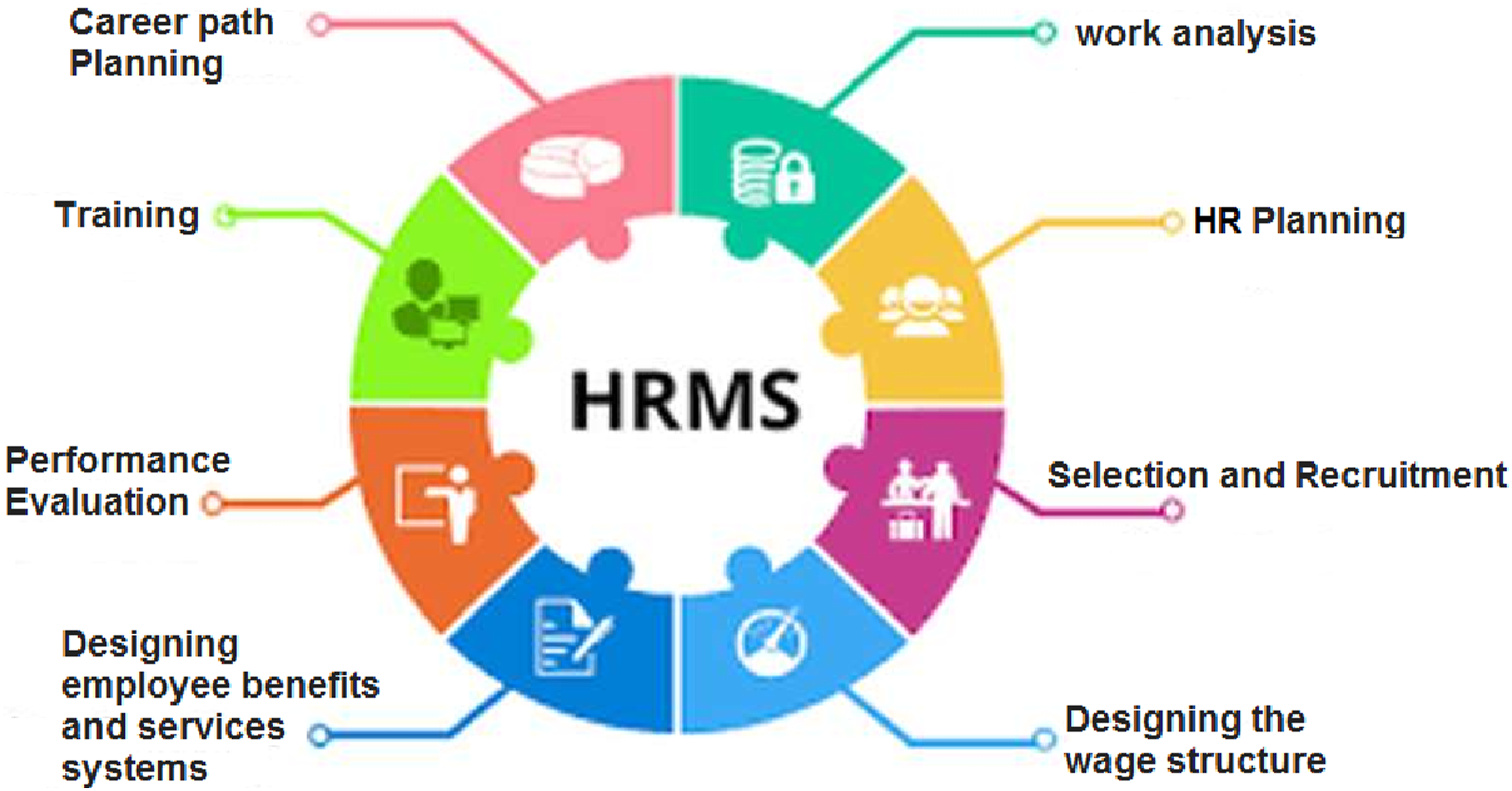
The increased adoption of mobile devices has led to breakthroughs in mobile communications, including 5G technology, mobile applications, data and video, voice, storage capacity, and personalization. Information systems (IS) and information technology (IT) are essential for the function and efficiency of organizations and aim to establish data frameworks to meet business needs and support all business functions.31,32 Moreover, artificial intelligence technology plays a role in selecting and allocating human resources by applying them to significant technological domains to advance mental and mechanical development.33,34
Numerous studies have examined how mobile applications are used in HRM and how they affect how well organizations perform. 35 looked at how a mobile HR application affected work satisfaction and employee engagement. According to the study, greater levels of employee engagement and job satisfaction were positively correlated with the use of the mobile application. The study also discovered that the mobile app facilitated improved employee-HR department communication and streamlined HR procedures. 36 conducted another study to examine the factors influencing employees’ adoption of mobile HR applications. The study revealed a number of criteria that influence adoption, including perceived utility, usability, and compatibility with users’ job-related duties. The survey also discovered that staff members were more likely to use a mobile application if they thought it was practical and simple to use. 37 discovered a favorable correlation between greater levels of worker productivity and job satisfaction and the use of mobile applications. It was also discovered that the mobile application contributed to the organization’s cost reductions by lowering the time and resources needed for HR activities. 38 looked at how a mobile HR application affected employee growth and learning. According to the study, higher levels of staff learning and development were positively correlated with using the mobile application. The survey also discovered that staff had easier access to training and development materials thanks to the mobile application, which resulted in better skills and knowledge.
Overall, these studies indicate that mobile applications may promote employee engagement and job satisfaction, enhance HR procedures, and support organizational performance and learning. The acceptance and effective usage of mobile HR applications, however, depends on a number of variables, including user-friendliness, perceived usefulness, and compatibility with employees’ job duties. Future studies could delve deeper into these issues and look at how mobile HR applications affect businesses over the long term.
The current study surveyed the existing literature on digital HRM by specifically focusing on the development of mobile HRM applications that meet the needs of HRM professionals and mobile app developers in the digital business environment.39,40 This research addresses research gaps in the functionality required when designing mobile HRM applications and contributes to the broader area of digital HRM. The findings of the study underscore the importance of introducing new human resource management methods and technologies to improve work culture, increase productivity, and promote healthy and positive work environments, which is consistent with previous studies. 41 The review also lends credence to the idea that modern HRM technology may boost business success and competitiveness in the global marketplace. 42
Additionally, in accordance with the trend of employing digital tools and approaches for HRM, this study focuses on the creation of mobile HRM applications, which aid in determining how well management and corporate governance procedures are handled by HRM technology. Overall, by providing empirical data on creating mobile HRM applications, this study adds to the growing body of knowledge on digital HRM.
Research methodology
This study utilized a combination of qualitative methods including the Delphi technique, in-depth interviews, literature review, and critical discussion. This mixed methods approach provides a comprehensive and robust investigation of the research question on identifying core components for developing a mobile HR application.
The Delphi technique was crucial for gathering anonymous expert opinions and driving consensus on key priorities, overcoming limitations of traditional focus groups like groupthink or dominant voices. The in-depth interviews provided additional nuanced insights into experts’ perspectives and experiences that the Delphi alone could not capture. Using multiple qualitative data gathering techniques thus allowed for richer, multi-faceted analysis.
Expert opinions are gathered and distilled using the structured and iterative Delphi technique in order to come to a consensus on a particular topic. It entails distributing surveys or questionnaires to a group of specialists on several occasions in an effort to reach a consensus. A more thorough description of the Delphi method can be found here, along with information on the expert panel’s selection criteria, the number of rounds that were held, and how consensus was reached.
In terms of the selection of expert panels: Selection of panel experts is usually based on their experience, knowledge, and proficiency with the subject matter being studied. Those with subject area expertise, academics, industry professionals, researchers, and practitioners were among them. The particular requirements and goals of this investigation determined the selection criteria. As for expert panel size: it is depending on the topic’s intricacy and the experts’ availability, the panel’s size may vary. To guarantee a range of viewpoints, it is often advised to assemble a diverse panel of 10 to 20 experts.
In this regard, certain selection criteria were employed to include a diverse group of participants with relevant expertise, experience, and perspectives in HR management and mobile app development such as: (1) Expertise in HR Management: Participants should have a strong background and expertise in human resource management. This includes HR managers, HR directors, HR consultants, or professionals with significant experience in HR roles (2) Participants should possess knowledge and experience in mobile application development, particularly in the context of HRM (3) Participants should have practical experience in the HR field, preferably in organizations from the Middle East, particularly the UAE and the Kingdom of Bahrain (4) Participants should have a deep understanding of the technical aspects of mobile app development, including compatibility with different platforms (iOS and Android) and experience in managing heterogeneous information.
Number of Rounds: The Delphi technique usually consists of a number of rounds of surveys or questionnaires, each of which builds and refines the answers from the one before it. The amount of consensus reached, the resources at hand, and the study objectives all influence how many rounds are undertaken. Four rounds of the Delphi research were used in this investigation to get agreement from the 43 participants.
Furthermore, reviewing existing literature helped contextualize and synthesize previous findings, while critical discussion enabled scrutinizing and consolidating the conclusions drawn from the primary research. The qualitative data analysis software NVivo added rigor by enabling systematic coding and theming of the expert commentaries.
Overall, utilizing this mix of complementary qualitative methods provided both breadth and depth to understand the complex issue of mobile HR application development. Using only one approach would have limited the completeness of the investigation. The combination of techniques enhanced the validity and reliability of the results by allowing triangulation across different sources of evidence.43,44
The Delphi method was specifically suitable for effectively gathering anonymous input from 43 diverse HR and mobile app development experts from companies in Bahrain and UAE. The goal was to drive consensus on key competencies, where the Delphi technique’s structured iterative process excelled. The subsequent interviews, literature review, and critical analysis then supplemented those findings to give a comprehensive view of essential components for mobile HR applications that can inform both scholars and practitioners.
Hence, the study utilized NVivo software for data analysis, encompassing over 120 transcriptions, notes, and academic papers. While NVivo provided a robust platform for organizing and managing the data, the data analysis process involved a qualitative research strategy, incorporating methods such as the Delphi method, in-depth interviews, literature review, historical analysis, and critical discussion. These methods allowed for a comprehensive exploration of the logical and practical features required for an HRM mobile app.
Research sample demographics.


Flowchart of FDM implementation for the HRM Mobile App Features. Adapted from Sulaiman et al. (2020).
The qualitative research strategy was based on Delphi methods, in-depth interviews, literature reviews, historical analysis, and critical discussion and was suitable to achieve the research objectives. The method begins with the formation of a small and homogeneous team capable of combining and summarizing opinions, recognizing differences, and directing ideas for the future. The team then identifies the topic to be studied, investigates its future, prepares initial questions directed to the experts, and selects the experts who can contribute their ideas and perceptions. The experts’ information and ideas are collected according to their perspectives, and these ideas and data are organized and arranged while excluding abnormal opinions. The experts are then asked to re-answer the previous questions in light of their colleagues’ answers, and sometimes the team is assigned to develop new questions to investigate a new trend. The questions continue to be asked repeatedly until the subject to be explored is more mature, harmonious and agreed upon among the experts. Figure 3 shows participants’ work experience years in HR and technology Participants’ work experience years in HR and technology.
Traditional Delphi strategies typically involve a small number of experts. The more professionals involved in the selection process, the more reliable the results. New web paradigms are now enabling the participation of many experts. 45 Due to its accuracy, ability to generalize across different environments and complexity, more and more researchers are turning to NVivo as a qualitative computing software package to aid in data analysis. 46 NVivo also allows researchers to access a wealth of information more accurately and manage large amounts of data in one place. Coding is completed in NVivo by associating each section or element with a hub. Significant labels are usually added to chunks of data during the encoding process. NVivo allows users to create hubs and store related texts in those hubs.47–50
Analysis and Results
The Delphi method was introduced in the study by contacting experts who demonstrated a justified interest in participating. A total of 43 experts confirmed their interest and provided their consent to participate. The participants were thoroughly informed about the purpose of the study, and additional explanations regarding the Delphi method and a list of knowledge economy concepts were provided to them via email. Some participants also received a paper copy of the list. They were then requested to express their views on the concepts through four main dimensions: the degree of importance of the idea, the validity of concept classification, the appropriateness of the concept to the business environment, and inclusion.
The 43 expert participants were carefully selected from various enterprises in the UAE and Bahrain, ensuring that all of them were HR experts actively engaged in diverse business environments. The objective of the study was to identify priority concepts based on the degree of agreement among the experts, while excluding ideas that received a degree of agreement of less than 80%.
Throughout this process, a total of 43 feedback responses for concepts and comments pertaining to the questions asked were collected. Notably, there was a high level of participation, with an average of 100% engagement from the participants.
In this study, four rounds were conducted:
Round 1: The experts who participated in the discussion were asked for their thoughts on the email-delivered list of questions. The feedback was received gradually and collected in a single file. This file includes the results of the first round of responses in accordance with the Delphi method. The concepts were modified based on the experts’ observations and responses in the first round. The degree of compatibility was calculated by repeating the responses for each idea, and a list was created. The results of the first round were used to create a new set of questions that were distributed to the participants to begin the second round.
Round 2: In the second round, the assessment results of the expert answers to the specific question were analyzed, and all feedback was sent to the experts to obtain ratings of alternatives using a five-point Likert scale. The distances between the averages for each question were computed using fuzzy numbers, as shown in the computing formula towards the average value43,51:
The results of the second Delphi round for the list of knowledge economy concepts and a list of HR mobile app features were presented to the 43 experts in the business fields. Based on the degree of agreement with those concepts, the removal of concepts with a lower degree of agreement, and the accuracy of classifying these concepts based on opinions, 43 responses for concepts were collected with an average of 89.4% to generate the list of HR mobile app features and concepts to move to the third round, according to the Delphi method.
Round 3: In this round, the value of “d (threshold value)” was predicted and specified. If the experts reach a consensus, the value of d must be ≤0.2. If the value of d is >0.2, the procedure must be repeated. The fuzzy analysis was accumulated using the following equation43,51:
After sending the report that included the results of the second round responses to the experts, in accordance with the Delphi method, from September 20, 2022, to October 15, 2022, the contents were modified based on the experts’ observations and responses in the second round. The degree of compatibility was also calculated by repeating the responses for each concept. After completing this, a list of HR mobile app features was created based on the results of the third round of arbitration, according to the second Delphi sample, to inform them about the start of the third round. The third round was closed for the HR mobile app features, aiming to transform the feedback and exclude the concepts that received a lower degree of agreement, according to the experts’ opinions in the fields.
Round 4: Final Agreement (Gain Percentage Group Consensus). For each alternative, the fuzzy evaluation 𝐴
Consensus group results.

HR mobile app features ranking.
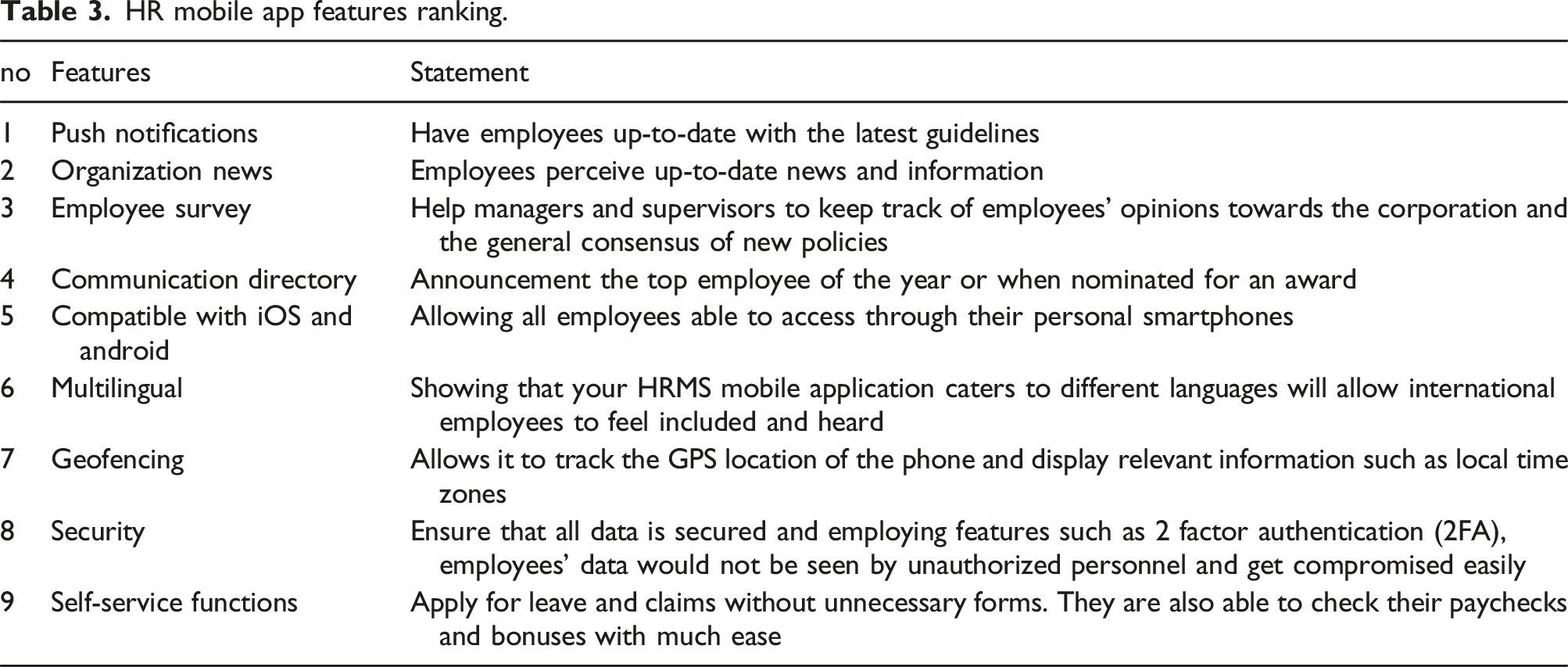
The study identified a number of challenges and best practices in digital HRM and mobile application development that could impact future mobile HR application development. This is particularly revolutionary as it provides actionable insights that companies can use to improve their HRM practices and expand their digital capabilities. Additionally, the study suggests strategies for companies to reduce the cost of developing mobile HR applications. This is a new approach that has not been explored in previous studies. It is particularly innovative as it offers practical solutions to common challenges companies face when developing mobile applications. Overall, the results and insights of this study are groundbreaking, as they provide a comprehensive and practical approach to developing mobile HR applications that help organizations improve their HRM practices and expand their digital capabilities.
Discussion and implications
The purpose of this research was to explore the key features required to create a human resources mobile application. To achieve this, a qualitative research strategy was adopted, encompassing various methods such as Delphi methods, in-depth interviews, literature reviews, historical analysis, and critical discussion. The analysis involved 43 HR professionals from international and local companies in the United Arab Emirates and the Kingdom of Bahrain, as well as mobile app development team members. The data collected, including over 120 transcripts, notes, and scholarly articles, was analyzed using NVivo software.53–55
Description of NVivo and its Application in the Study:
Large volumes of qualitative data can be managed, organized, and analyzed by researchers with the aid of the software NVivo. It offers a framework for organizing, classifying, and exploring text, audio, video, and image data in an organized manner. The data from literature reviews, in-depth interviews, Delphi survey responses, historical analysis, and critical conversations were all analyzed in this study using NVivo. NVivo was selected for this study for several reasons:
1. Comprehensive Data study: NVivo has many capabilities and functionalities that are especially made for the study of qualitative data. It offers tools for thorough data investigation, supports a variety of data formats, and permits methodical coding and classification. 2. Efficient and Well-Ordered Workflow: NVivo offers a well-organized and structured environment that simplifies the data analysis process. It makes it simple for academics to organize and browse through massive amounts of data, which promotes more effective analysis. 3. Cooperation and Teamwork: NVivo makes it possible for several researchers to work together on a project, promoting team-based analysis, data sharing, and consistent coding. 4. Sturdy Interpretation Tools: NVivo has tools for analyzing data, doing searches, and examining connections, all of which help with the interpretation of results and the creation of new ideas.
Although NVivo is a well-liked tool for qualitative data analysis, researchers can also use other software. Among the noteworthy substitutes are: 1. ATLAS.ti: Like NVivo, ATLAS.ti is a qualitative data analysis program with capabilities for categorization, coding, and analysis. It supports a variety of data formats. 2. MAXQDA: This software also analyzes qualitative data and offers tools for coding, organizing, and assessing text, audio, video, and image data. 3. Dedoose: Dedoose is an online platform for qualitative data analysis that facilitates group coding and analysis. 4. QDA Miner: Coding, classification, and visualization are among the functions this software suite for qualitative data analysis offers.
The data was imported and arranged by the researchers using NVivo into a single repository. For the purpose of representing various themes, concepts, or research issues, distinct nodes or categories had to be created. With the use of the program, the researchers were able to code the data by designating particular text or audiovisual portions to pertinent nodes. Finding patterns, relationships, and developing themes in the data was made easier by this technique.
The results of this study validate the logical and practical functionality of HRM mobile apps. Throughout the research process, several challenges in the Delphi research experience were identified, including managing heterogeneous information and ensuring compatibility with iOS and Android platforms. The contribution of this study extends to both theoretical and practical realms. The empirical information gathered about the key features required for HRM mobile app development contributes to the HRM theory. Additionally, the investigation into the logical and practical capabilities of HRM mobile apps broadens the understanding of HRM theory as a whole.In particular, the advantages and disadvantages of the various software options for digital HRM: Native apps, Web apps, and Hybrid apps can be summarized as follows:
Advantages of Native Apps:
1. Enhanced Performance
2. Improved User Experience.
3. Offline Capability.
4. Access to Device Features
Disadvantages of Native Apps:
1. Platform Limitations
2. App Store Approval Process
3. Limited Cross-Platform Support
Advantages of Web Apps:
1. Cross-Platform Compatibility
2. Easy Deployment and Updates
3. Cost-Effective Development.
4. Seamless Collaboration.
Disadvantages of Web Apps:
1. Limited Access to Device Features.
2. Performance Limitations
3. User Experience Variability
4. Offline Functionality Challenges
Advantages of Hybrid Apps:
1. Cross-Platform Development
2. Access to Native Features
3. Faster Deployment
4. Cost-Effective Development
Disadvantages of Hybrid Apps:
1. Performance Trade-offs
2. Limited Native Experience
3. Dependency on Third-Party Frameworks.
4. Customization Challenges
A comparative framework for evaluating the software options.

Table 4 revealled that the Hybrid appas are the best to be adapted compared to native apps and Web apps.
From a practical perspective, this research holds significance for Gulf policymakers in assessing the effectiveness of digital HRM for improving management practices and corporate governance. The findings of this study have implications for enhancing HRM mobile app practices and serve as a guide for improving the management and performance of digital HRM practices in the Gulf region. Furthermore, the research contributes to the accumulation of international literature on digital HRM in developing countries, particularly in the GCC. The implications of this research extend to organizations, HRM managers, strategists, and budget managers, providing valuable insights into the logical and practical functionality of HRM mobile apps and the challenges encountered during the Delphi research process.
Moreover, the research results have important implications for the economy and society by enhancing business practices and overall societal well-being. Developing an effective HRM mobile application improves work culture, increases productivity, and fosters a healthy and positive work environment, aligning with previous studies. 56 This, in turn, makes the economy more competitive and productive, as engaged and motivated employees are more likely to contribute to the success and growth of businesses. Additionally, the focus on digital HRM practices in this research contributes to the development of a skilled and innovative workforce in the Gulf region, leading to sustainable economic growth and development.28,57–60
In summary, this study contributes to the theoretical and knowledge base of HRM by providing empirical information on the key features required for mobile HRM applications. The comprehensive approach employed, including the use of Delphi methods, extensive interviews, literature review, historical analysis, and critical discussion, enhances the validity and reliability of the research findings. The implications of this research go beyond organizations and encompass HRM managers, strategists, and budget managers. It assists in the development and implementation of effective digital HRM practices, evaluates the effectiveness of digital HRM, and improves management and corporate governance practices in the Gulf region. 61 Furthermore, the study sheds light on the necessary characteristics for a successful HRM mobile application and the challenges associated with its creation, aiding companies and organizations in the development and implementation of customized digital HRM practices.
Conclusions
The objective of this study was to identify the essential components for developing a mobile application for human resources management. The use of qualitative research and the Delphi method involving diverse experts provided an in-depth investigation of current and emerging best practices in mobile app development.
The findings reveal several core features and functionalities that should be prioritized when designing a HR mobile app, including simplicity of user interface, integration with existing HRIS systems, and built-in analytic capabilities. By outlining these evidence-based components, the study provides practical guidance for organizations seeking to develop and implement mobile-enabled HR platforms.
However, the research is limited in assessing the actual impacts of mobile HR apps on downstream outcomes like employee engagement and productivity. While the expert insights suggest such apps enable greater accessibility and efficiency, more work is needed to empirically demonstrate how these translate to improved individual and organizational performance. Follow-up studies could examine app usage effects on relevant HR metrics.
There may be questions regarding the representativeness and generalizability of the study’s findings to a larger population due to the small sample size of 43 experts from the Gulf Cooperation Council (GCC) countries. In addition, regional variables, cultural quirks, and particular industrial traits common to the GCC nations may have an impact on the outcomes. Consequently, care should be taken when extrapolating the results to organizations outside of the GCC or to environments with distinct cultural norms.
Additionally, since this study focused only on app development components, future research should investigate factors that influence adoption and sustained utilization of mobile HR tools by employees in real-world contexts. Issues like change management, training, and incentivization may play key roles in ensuring these apps deliver on their promised benefits once launched.
Practical Implementation of the findings of this study include:
1. Prioritizing Features: When developing HRM mobile apps, the results of the study can be used to determine which features should come first. Development teams can focus on implementing key functionalities that correspond with the identified themes and patterns by determining the rational and practical features needed for an efficient HRM app.
2. User-Centric Design: The design of the user interface (UI) and user experience (UX) of mobile HRM apps can be informed by the study’s findings. The needs and preferences of both HR professionals and employees can help developers build intuitive and user-friendly interfaces that make the app easier to use and navigate.
3. Customization and Flexibility: The results of the study might draw attention to how crucial it is for HRM mobile apps to be both flexible and customized. Development teams can include features that let businesses customize the app to fit their unique workflows, policies, and HR procedures. Adoption rates and user satisfaction may both increase with this flexibility
In summary, this work contributes prioritized recommendations for mobile HR app development grounded in evidence. But more research is required to theorize and test how optimized design translates to organizational outcomes and to generalize across different settings. This indicates promising directions for both practitioners and academics to continue advancing knowledge on digital transformation of HR practices.
It’s crucial to remember that these real-world applications should be customized to the unique needs and organizational context. To get insights into best practices and learn from real-world experiences, organizations can get inspiration from successful case studies or examples of businesses that have successfully deployed HRM mobile applications, like Google’s HR mobile app or IBM’s HR Assist app.
The findings of this study can shed light and open avenues for future research particularly research conducted in culturally diverse settings, such as those outside of the Middle East, could shed light on the ways in which cultural elements affect the creation, uptake, and efficiency of HRM mobile applications. Through comparative analysis, culturally sensitive HRM mobile solutions can be developed by examining variations in user preferences, HR practices, and technological acceptance.
Furthermore, with its emphasis on the Middle East, this study expands on earlier findings by examining the particular requirements and preferences of HRM mobile applications in this area. The results of this study can provide important insights into how to customize HRM systems to particular regional needs by taking into account the organizational and cultural characteristics that are particular to the Middle East.
Also, this study expands on earlier research on application development techniques by examining various mobile application types (native apps, web apps, and hybrid apps) for digital HRM. This study compares the benefits and drawbacks of each kind to offer organizations useful information in choosing the best development technique for their unique requirements and restrictions.
Future studies can also examine how developing technologies affect the creation of mobile HRM apps. To improve features like automated employee onboarding, personalized learning, or predictive analytics for talent management, for instance, HRM apps could benefit from exploring the integration of artificial intelligence (AI), machine learning, or natural language processing.
Further research is necessary to fully comprehend user experience (UX) and user engagement in mobile HRM applications. One way to improve user engagement, adoption, and long-term usage of HRM apps is to investigate aspects like gamification, social features, personalization, and notification strategies. 62
Finally, future research can concentrate on creating metrics and frameworks for measuring performance in relation to HRM mobile apps. The effect of HRM applications on important performance metrics, like worker productivity, can be investigated in future studies
Footnotes
Declaration of conflicting interests
The author(s) declared no potential conflicts of interest with respect to the research, authorship, and/or publication of this article.
Funding
The author(s) received no financial support for the research, authorship, and/or publication of this article.
