



Abstract
As society places greater emphasis on information privacy and data protection, organizations are increasingly adopting Privacy Enhancing Technologies (PETs) to safeguard the personal information of their stakeholders. This trend is fueled by growing consumer awareness and the introduction of government regulations aimed at protecting personal data. By implementing PETs, organizations can ensure compliance with privacy regulations and establish trust with their customers. This study aims to deepen the understanding of the determinants of Privacy Enhancing Technology (PET) adoption in small and medium-sized enterprises (SMEs) and its impact on their performance. It focuses on the technology-organization-environment (TOE) model, managerial readiness, firm size, industry sector, and intent to adopt PETs as potential drivers of PET adoption. By using a large-scale survey of 202 Canadian SMEs, the study evaluates the mediating role of intent in the relationship between the TOE model, managerial readiness, and market performance. The results of this study contribute to the growing body of research on PET adoption in SMEs and provide insights for organizations and managers to effectively adopt PETs. The results of this study indicate that technological, environmental, organizational, and managerial readiness have a positive effect on the intention to adopt PETs. Additionally, the intention to adopt PETs was found to have a positive relationship with firm performance. The findings also reveal that the intention to adopt PETs fully mediates the relationship between the four dimensions of readiness and firm performance. These findings highlight the important role that readiness and intention play in the adoption of PETs and its impact on firm performance. This study also found that firm size moderates the relationship between technological and organizational readiness with intention to adopt PETs, as well as the relationship between environmental and managerial readiness with intention to adopt PETs. The study identified the top five factors affecting PET adoption as cybersecurity awareness, perceived cost of adoption, ease of use, perceived benefits, and IT infrastructure. The findings suggest that technological readiness is the most influential of the four dimensions, followed by organizational, environmental, and managerial factors. This study presents crucial considerations for SMEs to evaluate when deciding on the use of PET technologies, as it pertains to practitioners.
Keywords
Introduction
Protecting personal information has become an essential and sensitive subject forovernments and companies in today’s information-sensitive age.1,2 People tend to be more concerned than ever because of the advantages of being anonymous online in the wake of age-marking data leak incidents and in the middle of periodic data breaches. 3 This is a direct outcome of increased consumer knowledge of their rights and the effect of an increase in the number of data breach cases. 4 Between 2005 and 2022, hundreds of millions of private data records were disclosed in the United States, according to. 5 Equifax, a multinational information solutions firm, has revealed that in 2017, outsiders gained access to the personal information of 182,000 of its customers. 6 Across the world, governments have implemented data protection policies and regulations to protect consumers’ personal data, such as the European General Data Protection Regulation (GDPR) and the United States Federal Trade Commission’s Fair Information Practice Principles (FIPPs). Organizations must comply with these requirements and develop effective internal privacy management strategies to handle privacy challenges.
Moreover, as people attempt to protect their personal data from online criminal attacks, they progressively strive for online anonymity, for example, to be capable of surfing the web anonymously by totally or somewhat hiding their identity. 7
Since internet giants such as Facebook, Google, and Amazon have reached and established worldwide domination, concerns about online anonymity have grown popular and received considerable political, economic, academic, social, and media traction. 8 This is due to the necessity that users’ identities should be revealed, and their online activities and behaviours should be recorded in order for such organizations to exist and prosper.9,10 In this way, online anonymity has evolved into an intellectual battle to actively oppose internet players’ intrusive, surveilling data collection tactics.9,11
On these grounds, it is no big surprise that the market for privacy enhancing technologies (PET), or a broad and heterogeneous family of information and communication technologies (ICTs) aimed at diminishing, eliminating, or preventing unauthorized collection and processing of users’ personal data, has flourished. 12 These technologies include virtual private networks (VPNs), end-to-end secure communications, proxy servers, and anonymization networks like The Onion Router.13,14
Despite the fact that mass penetration of PETs is intimately linked to a thorough knowledge of usage behavior, as 15 recently highlighted, literature to create such understanding is still relatively scarce. Even though most accessible technologies are still exceptionally difficult for conventional internet users to master, 16 others that are more straightforward to utilize are getting well-known, and their penetration is expanding on both the demand and supply sides (e.g., 17 Like some other recent technology adoptions inside enterprises, PET implementation causes modifications in employees’ work operations and company culture. According to the research, implementing new technologies decrease communication load, alters job duties, and results in the loss of craft skills. 18
We argue that there is an obvious and pressing need to concentrate on the impacts of PETs since the number of enterprises that will progressively execute this technology in the future will almost certainly expand as data protection rules and regulations are enforced in numerous nations.
Organizations utilize PETs to help with the consistency of data protection legislation 19 by working on clients’ protection control and eliminating superfluous individual identifiers from the correspondence cycle. 20 Consumer perceptions of increased access and control over their personal information improve as PETs are implemented. 21 While some businesses may choose to adopt PETs as a new technology, others can either update current technologies to incorporate PET capabilities. The research helps small and medium enterprises (SMEs), and PET providers perceive different critical adoption factors, prompting the effective usage of PET.
In the professional and academic environment, especially among SMEs with insufficient resources, PET adoption, usage, and performance have emerged as a critical study agenda. Since SMEs are typically owned and managed by a single or a small group of individuals, tactical and strategic decisions, particularly those regarding adopting new technology, are frequently dependent on the distinctive input a small decision-making group provides. Consequently, the adoption of PET in the context of SMEs may be significantly influenced by the personal attributes of decision-makers.
Evidence from experiments shows that large businesses are more likely than little businesses to adopt digital technologies. 22 One clarification may be that SMEs frequently undervalue the worth of information technology (IT) since they only utilize it for simple administrative duties rather than for complicated commercial processes. 23 Due to their lower adoption rates, SMEs may be at risk while competing with larger businesses, which might lead to a competitive disadvantage. 24 It is critical to comprehend why SMEs adopt PET and to address the lack of attention given to SMEs, given that SMEs adopt PET at a lower rate than huge corporations.
This study endeavors to answer the following research questions (I) What are the critical factors impacting the adoption of PET in SMEs?; (ii) What is the relationship between PET and firm performance (FP)?; (iii) What are the fundamental factors that need extraordinary managerial consideration regarding further developing privacy-enhancing technology (PET) and firm execution?; (iv) What is the significance of variables that predict PET adoption?
The study helps SMEs and PET providers identify numerous essential adoption criteria, ultimately leading to the effective implementation of PET. This study proposes the following contributions: 1. Provide a comprehensive model that integrates the technology-organization-environment (TOE) framework with FP 2. Provide empirical facts and raise awareness about PET adoption among SMEs, PET developers, and policymakers 3. Assist decision-makers in obtaining a more profound knowledge of how firm size and industry sector influence the relationship between technological readiness, organizational, environmental, managerial readiness, and PET adoption, which may be leveraged for business gain.
The purpose of this study is to examine the role of the size of the firm and industry sector in the intention to adopt PET. This paper also explores the various technological, environmental, organizational, and managerial factors that affect adopting PET. The factors identified as technological factors in this study are perceived benefits, perceived cost of adoption, and perceived ease of use (PEOU). Perceived environmental pressure, perceived supporting services (PSS), and perceived industry structure & standards are included as environmental factors. This study identified organizational factors: IT infrastructure readiness, TMS, and cybersecurity awareness. Manager innovativeness and manager attitude are included as managerial factors. This study uses the diffusion of innovations (DOI) and technology acceptance model (TAM) to assess the intention to use PET. We use the TOE framework 25 to synthesize factors impacting organizations' adoption of PET to address the study questions. We employ the TOE framework, an adaptable, comprehensive, and reliable framework used to describe how various technologies are adopted in different businesses. The TOE framework is backed up by substantial empirical data from prior information systems (IS) research, 26 and it essentially includes every aspect of an organization, both internally (i.e., technological features) and externally (i.e., environment pressures).
Although there have been studies on PET adoption, it notes that limited research exists similar to this study. An exhaustive literature review has led to the identification of the following gaps to be tackled in this research: • a lack of research on the relationship between the intent to adopt PETs and FP among SMEs. • a lack of research on how factors that impact intent to PETs can be described using the TOE framework. • a lack of research on the relation between the intent to PET adoption and environmentally specific structural features of businesses such as firm size, industry, etc.
With the implementation of data protection policies and regulations in many countries, we argued that there is a clear and urgent need to examine the consequences of PETs. Other organizations that want to use PETs in the future can employ the insights gained from this study as a model.
The rest of the paper is organized as follows. Section 2 reviews the literature on PETs and the impacts of technology adoption on SMEs. Section 3 shows each of the relationships and conceptual constructs of this study. Section 4 communicates our viewpoint by concentrating on research methodology, including its justification, participation determination, data collection, and data analysis methods. Section 5 presents the findings. Section 6 discusses the outcomes and verbalizes the research contribution. Section 7 presents the implications and offers the limitations and future research in section 8.
Literature review
The term PET refers to a broad scope of technologies and applications that are planned to improve the protection and information security of both individual (for example, see 13 and corporate users (i.e., 19 in web-based exercises and correspondences.
Numerous technologies can be gathered under the PET name. On the end-user side, specifically, these range from end-to-end secure messaging instruments, anti-tracking programs, and VPNs to anti-tracking software and anonymization networks. 27 Even though privacy concerns could be confused with security concerns, conversely, they are two distinct ideas that react to two distinctive requirements. Privacy concerns connect with the users’ dread that their personal information and data can be revealed to unauthorized parties. 28 In contrast, security concerns are connected with a person’s impression of how significant and satisfactory existing technical and lawful defensive measures guarantee uprightness, reliability of individual information, and confidentiality. 29 Privacy protection doesn’t ensure security protection, and vice versa. For example, the two-factor authentication utilized in home banking services secures transactions while keeping the user’s identity accessible to the bank service supplier. The chance for Facebook users to restrict others from tagging them in pictures may protect users’ privacy; however, it has not impacted the security of users’ social profiles. Indeed, research has revealed that users are regularly ready to forfeit a section of their privacy in return for a more elevated level of safety.15,30,31 as of late, referenced how astounding it is that empirical research on what spurs users to adopt PETs is still immature, thinking about their general service quality and cost-adequacy, which significantly relies upon the level of diffusion they can accomplish. Users’ perceptions of the anonymizer’s ability to grant anonymity, 15 users’ sentiments of trust toward the technology,15,32 users’ awareness of or worries about their online privacy, users’ perceptions of being well informed about how PETs work, and users’ perceived risks. 33 used TAM to identify factors measuring privacy concerns and causes of such concerns, like trust and risk beliefs.
According to academics, the decision to use PETs can be motivated by both subjective and societal factors, although these factors have only rarely been taken into consideration in studies up to this point. As potential predictors of users’ intention to utilize PETs, they employed TAM in conjunction with users’ personality characteristics, such as conscientiousness, agreeableness, neuroticism, extroversion, and openness to experience. 34
In addition, 33 referred to the 35 internet users’ information privacy concerns model, which, unlike TAM, incorporates variables assessing privacy concerns, as well as causes of such concerns, such as trust and perceived risks. By contrast, Namara et al. 31 provided some insight into certain non-utilitarian factors that users may have considered before choosing to utilize PETs.
Although TAM is unquestionably the most broadly utilized framework to evaluate the intention.
Adopting certain technologies or users’ actual adoption is restricted to a small range of variables, primarily perceived usefulness (PU) and PEOU. It does not contain any variable associated with the user-technology interaction, which can impact the decision of whether or not a technological aid is used. As a result, TAM needs to be adjusted and changed to match the unique technological and application-based circumstances that might restrict or promote technology adoption. 36
Several recent articles in the literature examined strategies to protect privacy in various settings, including fog computing, 37 cloud computing, 38 and more broadly, in any sort of computing. 39 Others are concentrated on privacy issues related to specialized fields, such as cybersecurity technologies, 40 smart cities, 41 recommendation services, 42 and e-health applications. 43 The topic of privacy-preserving approaches for customized services was only briefly discussed in a few survey papers.26,44 The tension between personalization and privacy was spotlighted by Hermann in 2022, 45 who looked at primary categories for privacy-preserving personalized web systems. 46 conducted a comprehensive review of privacy risks while examining three distinct personalization strategies: behavioral profile-based personalization, location-based personalization, and social-based personalization.
Along with reviewing privacy-enhancing alternatives for personalized information systems, the authors also suggested several future study areas. 47 examined privacy metrics, mainly for the data-perturbation category. They demonstrated how privacy preserving methods typically affected the data utility and came to the conclusion that further research is needed to address the challenge of quantifying user privacy. Emotional contemplations, for example, the powerful urge to protect online privacy or feeling of dread toward reconnaissance and data tracking, were shown to be more probable than practical-technical contemplations to explain consumers’ PET adoption over time. Acquisti et al. 48 outlined the history of the development of the economic theory of privacy from its inception and advocated for restricting privacy in the name of an efficient market toward the counterarguments that continued to enhance privacy (i.e., restrictions on access to private information). Other researchers have looked at how privacy affects the adoption of technology (for instance, 49 or how the adoption of new technologies enhances privacy (Attié and Meyer-Waarden, 2022) or economic variables impacting privacy. 50
PETs offer greater security levels while being primarily created to gain anonymity. Online privacy and security are highlighted by vendors of technology that offer anonymity. 51 This study evaluates persuasive technology adoption theories (DOI, TAM) and tests some hypotheses consistent with this theoretical construct. Our study admits a significant lack of studies concentrated on understanding what drives users to adopt or refuse PETs, owing to the insufficiency of the theoretical tools utilized. The paper also emphasizes a dearth of data on consumers' security concerns as a driver of PET adoption.
Theoretical background and hypotheses formulation
Diffusion of innovations (DOI) 52 and the TOE framework 53 stand out as the main theories that offer a lens to study the adoption of new technologies. Firm culture and decision makers’ characteristics are highlighted as driving forces for both models’ innovation. The TOE framework also considers the impacts of environmental variables such as industry, rivals, and government regulation in the process of a company adopting and implementing new technologies.
TAM has been used extensively to examine software and IT adoption. 54 In accordance with TAM, the actual use of a system (that is, the user’s behavioral response) is dictated by the user’s motive (emotional response) in terms of whether or not they can use the system. The purpose of the behavior, in turn, is affected by the user’s perceptual (experimental) reaction.
The users’ cognitive response is influenced by external factors, including system interface, features, and capabilities. TAM was implemented tocurb the success of users of many technologies across multiple domains, including e-commerce, 55 telemedicine, 56 and the adoption of information security technologies. 57 According to TAM, the most critical factors describing technology use are PU and PEOU. TAM as a psychological component has been used in studies ranging from recognizing the adoption of specific privacy technologies, like consumer adoption of anonymous passwords, 32 data anonymization technologies, 33 and even VPN adoption. 58
This study explores the impacts of multiple factors within the TAM framework that may drive users to adopt and/or abandon PETs. The conceptual model underlying this study emphasizes the role of technology-related factors as well as internal organization characteristics in shaping a firm’s decision and adoption behavior regarding PETs drawing on the theories mentioned earlier (see Figure 1). Specifically, a firm technological readiness characteristic such as perceived benefits, perceived cost of adoption, and PEOU are considered. Environmental readiness is considered through perceived environmental pressure, PSS, and perceived industry structure & standards. Conceptual framework.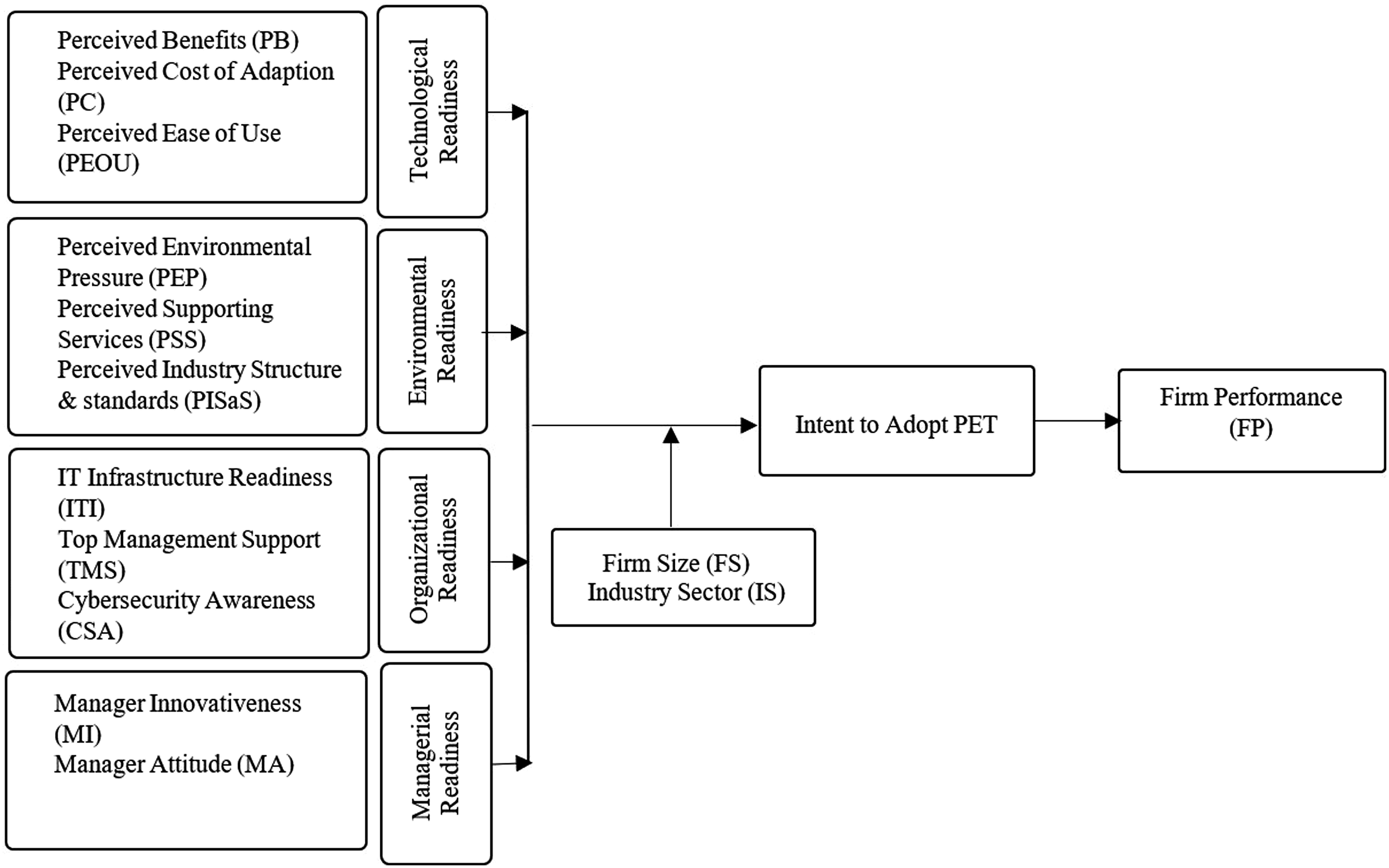
Our model suggests that PET adoption can be influenced by IT infrastructure readiness, TMS, and cybersecurity awareness in organizational readiness. PET adoption may be influenced by manager innovativeness and managers’ attitude. As shown in Figure 1, the proposed model also considers various firm characteristics (firm size, industry) to explain the adoption of PETs. Next, we develop our hypotheses.
Technological readiness
Technological readiness focuses on technology-related characteristics that can positively or negatively affect the decision to adopt new technologies59–61 found that compatibility, relative advantage, and complexity are some of the three enduring factors affecting new technology adoption. 62 further affirmed five factors influencing new technology adoption: relative advantages, compatibility, complexity, observability and trialability. Many researchers reported the impacts of technological readiness on adopting new and innovative technologies. For example, technology complexity, perceived advantage, adoption costs, and compatibility are reported as leading factors impacting the adoption of radio-frequency identification (RFID) technologies. 63
In addition, factors such as perceived benefits, technological compatibility, perceived costs, and complexity play a role in determining the adoption of cloud computing. 64 Similarly, perceived cost and ease of use influence PET adoption. 65 Therefore, this study proposes the following hypothesis:
There is a positive relationship between technological readiness and intent to PET adoption.
Perceived benefits
The amount organizations perceive innovation as beneficial to their business is referred to as perceived benefits. 66 Adopting new technologies can significantly impact technology’s accessibility, usefulness, and perceived financial rewards. 67 The perceived advantages of blockchain-based technologies positively impact their adoption among asset management businesses. 68 In understanding sustainable consumer behaviour, 69 used perceived benefit (contextual factor) and environmental concern (personal factor) as predictors. To put it another way, a pragmatic motivation for consumer behaviour balances benefits and costs. Therefore, the study proposes the following hypothesis:
There is a positive relationship between perceived benefits and intent to adopt PET.
Perceived cost of adoption
Like any other investment, costs play a significant role when organizations decide to adopt PET. Installing a PET platform generally requires extensive software, hardware, and systems integration investments. Organizations may receive the costs associated with such a project to be very large due to the diverse and widespread nature of costs. As such, the cost is also a decisive factor in adoption decisions. The cost of human resources and skill training may potentially stymie the technology’s implementation. 70 Therefore, the study proposes the following hypothesis:
There is a positive relationship between the perceived cost of adoption and the intent to adopt PET.
Perceived ease of use
PEOU refers to “the degree to which a person believes that using a particular system would be free from effort”. 71 PEOU has been defined as a crucial behavioural belief that is a fundamental determinant in determining user adoption of technology. 72 PEOU’s impact on consumer technology adoption has received extensive theoretical and empirical support. 73 In e-commerce and m-commerce, PEOU has been identified as a reliable determinant of consumers’ intention to use. 74 The greater ease of using a particular technology, the stronger the behavioural intention to use and adopt that technology. Ease of use improvements leads to productivity benefits by allowing consumers of a specific technology to achieve the same targets with less effort. We argue that this also applies to rational PET, as easy-to-use PET needs less mental strain to protect user privacy. Therefore, the study proposes the following hypothesis:
There is a positive relationship between PEOU and intent to adopt PET.
Environmental readiness
Environmental variables are external aspects organizations may encounter while interacting with their surroundings. 75 Firms are generally more sensitive to the dynamic external ecosystem in the environmental context. As a result, according to the TOE model, external factors such as competitive pressure, external assistance, and government regulations may impact SMEs’ adoption of new technologies. 76 According to, 77 the more pressure companies have to compete, the higher the chance to adopt new technologies. According to, 78 environmental pressures from the media, rivals, and consumers substantially impacted Egyptian SMEs’ adoption of sustainable manufacturing practices. Some researchers argued that rivals’ expanding utilization of big data analytics would push managers to collect business intelligence and analytics effectively to maintain the firm’s competitive position within the market. 79 Therefore, the study proposes the following hypothesis:
There is a positive relationship between environmental readiness and intent to adopt PET.
Perceived industry structure and standards
The Perceived industry structure and standards (PISaS) include two closely related concepts, industry structure and industry standards. Some industries may have an adverse industrial structure that discourages the adoption of new technologies. For example, organizations in the Bahraini grocery sector, for example, are highly competitive, according to, 80 due to competing positions and the involvement of smaller players with considerable power and control. It is also critical to have industry-level standards to support adopting new technologies. For example, industry standards for trade partners to exchange business documents significantly impacted the adoption of document management portals and database technologies such as Transoral and RosettaNet. 81 As a result, PISaS may impact SMEs’ intention to adopt PETs; hence, this study proposes the following hypothesis:
There is a positive relationship between perceived industry structure, standards, and intent to adopt PET.
Perceived supporting services
PSS refers to the provision of facilities promoting new technologies adoption. PSS involves IT and logistics infrastructures and the provision of suitable technological infrastructures, qualified human resources for developing and maintaining technologies, software/hardware suppliers, and even a regulatory environment. 81 For example, large multinational IT companies, including Compaq and Microsoft, helped adopt e-commerce technologies in indigenous communities. 81 Therefore, the study proposes the following hypothesis:
There is a positive relationship between PSS and intent to adopt PET.
Perceived environmental pressure
Environmental pressure refers to the impact of the internal and external environment, which forces SMEs to adopt new technologies. Given the proliferation of innovation and the spread of entrepreneurship, environmental factors are considered significant and often pressure organizations to adopt certain technological innovations. 81 Customers, suppliers, government demands, changes in external environments, and market pressure all pressure companies. 82 There is an uneven distribution of dependencies between SMEs and their robust and influential business partners, which creates a sense of pressure from these partners and triggers PET adoption decisions within the SME community. For instance,83,84 acknowledge the impact of external pressure from large trading partners on small organizations to adopt E-Commerce technologies 85 also noted that government policy is the driving force behind SMEs adopting e-commerce technologies. Therefore, the study proposes the following hypothesis:
There is a positive relationship between perceived environmental pressure and intent to adopt PET adoption.
Organizational readiness
In general, for research at the organizational level, some specific properties and characteristics affect IT adoption and have been identified from preliminary studies, such as organizational readiness, employee technical expertise, TMS, organizational structure, and innovativeness. In the conceptual model of 86 IS infrastructure/capabilities, TMS, and financial readiness were chosen for organizational readiness 87 used the perceived availability of financial resources, TMS, and perceived employee IT capability as organizational characteristics to build the model better to understand mobile marketing adoption intention by South African SMEs. Therefore, the study proposes the following hypothesis:
There is a positive relationship between organizational readiness and intent to adopt PET.
Top management support
TMS is crucial when a company decides to adopt new technology. Lack of leadership support lowers the likelihood of adopting new blockchain technology. 88 According to 69a company implements blockchain technology when its leadership offers the necessary resources.89,90 showed that organizational adoption of distributed ledger technologies is less probable without TMS. Top-level management support plays a vital role in cloud computing adoption, especially in resource allocation, service integration, and guiding process reengineering. 91
Senior managers play a vital role in PET adoption, requiring the integration of many resources and the reengineering of many processes. Therefore, it is expected that this factor will significantly impact the adoption of PET. Therefore, the following hypothesis is proposed.
There is a positive relationship between TMS and intent to adopt PET.
IT infrastructure readiness
IT infrastructure readiness and capabilities consist of tangible (physical assets) and intangible (human resources, skills, and experience) resources that a firm has to implement IT innovations. A well-developed IT infrastructure (hardware, software, and expertise) provides the technical foundation for a firm to start new technology adoption. 92 Numerous studies, such as customer relationship management (CRM)93,94 have shown how IT infrastructure is central to many business operations. Moreover, recent research has suggested that the higher the IT capabilities an organization has, the more likely it will adopt new technologies. 95 Thus, the firm’s IT infrastructure and capabilities are believed to improve the probability of PET adoption, and the following hypothesis can be proposed:
There is a positive relationship between IT infrastructure readiness and intent to adopt PET.
Cybersecurity awareness
Data, information on server-based devices, and websites are essential information assets in a company. An unintentional (accidental) error or a deliberate cyber-attack might damage these assets. Cyber events or attacks may be expensive for a company since they can bring about legal and regulatory costs and additional losses to their reputations, business operations, and customer base. 96 Companies with a higher level of cybersecurity awareness will be more aware of their vulnerabilities to cyber risks and attacks (both accidental and intentional). By adopting suitable cybersecurity policies and procedures, establishing effective threat detection, and guaranteeing a correct and adequate response capability, such businesses may be anticipated to be more proactive in their management of cyber threats. Firms with a higher level of cybersecurity awareness are thus better positioned to prevent or reduce the cost of a cyber incident.
Furthermore, data privacy and cybersecurity-related issues, including cyber risk disclosures, are becoming increasingly regulated. Companies with a greater level of cybersecurity awareness ought to be aware of cyber-related challenges in regard to regulatory requirements (such as the need for cyber revelations or notice of data breaches).
Firms are trying to tackle escalating cybersecurity threats in response to demands from diverse stakeholders. These activities include bringing in directors with IT skills, employing chief information security officers (CISO), acquiring or designing new systems with greater security, and obtaining insurance. Developing “cybersecurity awareness” can help mitigate the dangers posed by cyber security risks and regulatory demands, potentially increasing the value of a company. The following hypothesis is proposed:
There is a positive relationship between cybersecurity awareness and intent to adopt PET.
Managerial readiness
The managerial context is one of the most significant factors in SMEs’ ICT adoption. Itencompasses the innovative ability of the owner/manager and the ICT skills and knowledge of the owner/manager. Some researchers have shown that SME owners/managers are important decision-makers whose decisions now and in the future affect the organization’s activities. 97 The decision to adopt new technologies - is strongly influenced by the innovation capacity of the owners/managers from the project stage to implementation. The more innovative owners and managers are more likely to adopt technologies98,99 found that the innovative approach of the owner/manager is a critical factor adoption of Social Customer Relationship Management (SCRM) technologies. Therefore, the study proposes the following hypotheses:
There is a positive relationship between managerial readiness and intent to adopt PET. Different study models have incorporated the managers’ innovativeness construct as a direct antecedent of the intention to use or maintain Internet-related technologies.
100
Additionally, managers’ innovativeness has been utilized as an antecedent of the PU of the technology.
101
As part of the technology readiness index (TRI The unified theory of acceptance and use of technology (UTAUT)
103
was employed by Peralta and Rubalcaba (2021), who reported that managers’ innovativeness moderates the correlation between the intention to use social networking sites and the UTAUT components among Spanish pupils. Organizations require innovative business executives who comprehend the advantages of implementing new technologies. According to,
104
owner innovation is the most important factor influencing an owner’s decision to use an information system. A similar finding was found by,
105
who concluded that the innovativeness of the owner/manager had a significant relationship to the SME’s choice to adopt an IS. Thus, it is proposed the following hypothesis:
There is a positive relationship between managerial innovativeness and intent to adopt PET. Numerous studies have effectively predicted many types of behavioral intentions using the theory of planned behavior.101,106 The attitude, subjective norm, and perceived behavioral control may influence the intention to adopt technologies. The degree to which a person has a favorable or unfavorable assessment of the behavior in question is referred to as attitude toward the behavior.
107
discovered that the attitude construct positively and substantially predicts intention using hierarchical regression analysis. These findings aligned with those reported by,
108
who contrasted two theories to explain factors impacting e-commerce adoption. Naturally, company owners will be reluctant to adopt a technology if they have a vague knowledge of its potential or do not recognize its benefits. Similarly, the owner’s attitude toward new technology directly influences decisions to adopt innovations.109,110 As a result, the following hypothesis is proposed:
There is a positive relationship between managerial attitude and intent to adopt PET.
Privacy enhancing technology and firm performance
Increasing FP is the primary outcome of every strategic initiative undertaken by a company. Previous studies have shown that the adoption and use of new technologies (e.g., electronic data interchange (EDI), IoT, iPhone operating system (IOS), and RFID may positively impact the firm’s performance. For example, 111 discovered that implementing inter-organizational systems helps organizations improve operational performance, including flexibility, cost-cutting, and production lead time. According to, 112 successful cloud computing adoption significantly impacts organizational performance for cloud-supported operations. Therefore, the study proposes the following hypothesis:
The adoption of PET positively influences FP.
Mediation role of privacy enhancing technology
The intent to adopt PET can be affected by other factors, such as the usefulness of the technology. 58 Similarly, the lack of obvious tangible benefits could thwart adoption. Before a positive decision to adopt PETs is made, there is frequently a perception of positive business-related outcomes and an economic justification for investments in PETs. 113 That is, the context (setting and purpose of using the technology), the requirements (the level of privacy that the technology must ensure that the user is ready to use this technology), belief (user’s perception of the level of privacy given by a particular technology in a particular context) and the relative value of privacy in an economic (rational) model to understand the introduction of PETs (in this case how much the user cares about privacy and how willing they are to exchange privacy for other properties). Hence, there could be a positive connection between technological, organizational, environmental, and managerial readiness, intent to PET adoption, and FP. PET adoption could serve as a partial mediator in the interaction between numerous antecedents and FP.
Intent to PET adoption mediates the relationship between (a) technological readiness, (b) environmental readiness, (c) organizational readiness, (d) managerial readiness, and FP.
Moderating roles of firm size and industry sector
Moderators are variables that can influence the direction of the relationship between independent and dependent variables. 114 For example, demographic characteristics as moderators may influence links between independent and dependent variables. Previous studies have examined moderating the relationship between independent characteristics and technology adoption. 115 This study investigates demographic characteristics, namely firm size and industry sector, as moderating factors to define the relationship between technological, environmental, organizational, and managerial readiness, intent to PET adoption, and FP.
Firm size as a moderator
“Firm size” has been studied by many researchers in the field of innovation and is regarded as a key indicator of organizational complexity. 116 Previous studies suggest that successful technology adoptions are highly dependent on the Critical Success Factor (CSF) (e.g., firm size). 117 Although some researchers found a negative link between the size of the firm and the adoption of technology (e.g., cloud computing), 118 the positive connection is supported by most studies in various contexts such as e-commerce, 119 mobile reservation systems, 120 e-marketing, 121 and ICTs adoption. 122 In smaller businesses, cross-functional availabilitys expected to promote innovation, where such companies can easily adapt to changes in the emerging market consumer environment through their flexible cooperation. 123 On the other hand, it was argued that the firm’s size moderately impacts knowledge attainment (Seo and Kim, 2020). Hence, it can be hypothesized that the company size may be used as acontrol variable for PET adoption as follow:
Firm size moderates the relationship between (a) technological readiness, (b) environmental readiness, (c) organizational readiness, (d) managerial readiness, and intent to adopt PET.
Industry sector as a moderator
According to116,124 various industries adopt new technologies at varying rates. For example, according to, 125 the adoption of cloud computing varies by sector, owing to varying degrees of security and IT capabilities. Regulated businesses such as banking and insurance are more reluctant to adopt new technologies. Moreover, due to the limited IT capabilities, retail, media, manufacturing, pharmaceuticals, and other non-IT and supply-chain-centred firms are less likely to adopt new IT technologies. It was shown that SME involvement in adopting and using e-business tools and applications varies widely from sector to sector, thus “reflecting the heterogeneity of this type of enterprise.” 126 Therefore, this study proposes the following hypothesis:
Industry sector moderates the relationship between (a) technological readiness, (b) environmental readiness, (c) organizational readiness, (d) managerial readiness, and intent to adopt PET.
Methodology
The present study underwent a thorough evaluation of its research survey instrument, also known as Face Validity, by three academics who were experts in both survey techniques and the research topic. To ensure the validity and reliability of the instrument, a pilot study was conducted with five Canadian SMEs. The results of the pilot study were used to refine the survey instrument by taking into account the participants' feedback on its layout, wording accuracy, and relevance. As a result of this process, the final form of the survey instrument was improved and made more comprehensible to the participants. The procedure followed in evaluating the survey instrument is in line with the established best practices in survey research. 127
In this study, statistical analysis was employed to analyze the data collected through the survey. The data was processed using the Statistical Package for the Social Sciences (SPSS) software. Correlation and regression analysis were used to determine the frequency of the survey data. Regression analysis was conducted to evaluate the impact of the independent variables on the dependent variable and to assess the strength of their relationship. Meanwhile, the correlation analysis was utilized to identify the direction of the relationship between the dependent and independent variables. Additionally, multiple regression analysis was performed to investigate the moderating effect of firm size and industry sector on the adoption of PET technologies and the TOE framework. The results of these statistical analyses provide valuable insights into the relationships between various factors that influence the adoption of PET technologies by SMEs.
Data collection procedure and sample data
The data for this study were collected from employees working at SMEs in Canada. This comprises general managers, department heads, and technology operational employees involved in technology-related activities and may influence the decision to adopt a technology.
Descriptive statistics of survey data (n = 202).

Variable measurement
For evaluating the research hypotheses, a variety of measuring scales was used. Most questions were measured on a seven-point Likert scale that ranged from “1 = strongly disagree” to “7 = strongly agree”. A few questions were measured on a Nominal or Ordinal scale.
Perceived benefits, perceived cost of adoption, and PEOU are the three constructs of technological readiness (TR). The perceived benefits concept was assessed using three measurements previously described by.92,128–130 The perceived cost of adoption construct was measured using three items from131,132 Four measurement items of the PEOU constructs were adopted from133,134
Perceived environmental pressure, PSS, and PISaS are the three components of the environmental readiness component of this study. Perceived environmental pressure was measured using seven items adapted from,135–137 while PSS were measured using three items adapted from138,139
Constructs measurement.

Results
Reliability, validity, and exploratory factor analysis
Reliability, validity, and exploratory factor analysis.
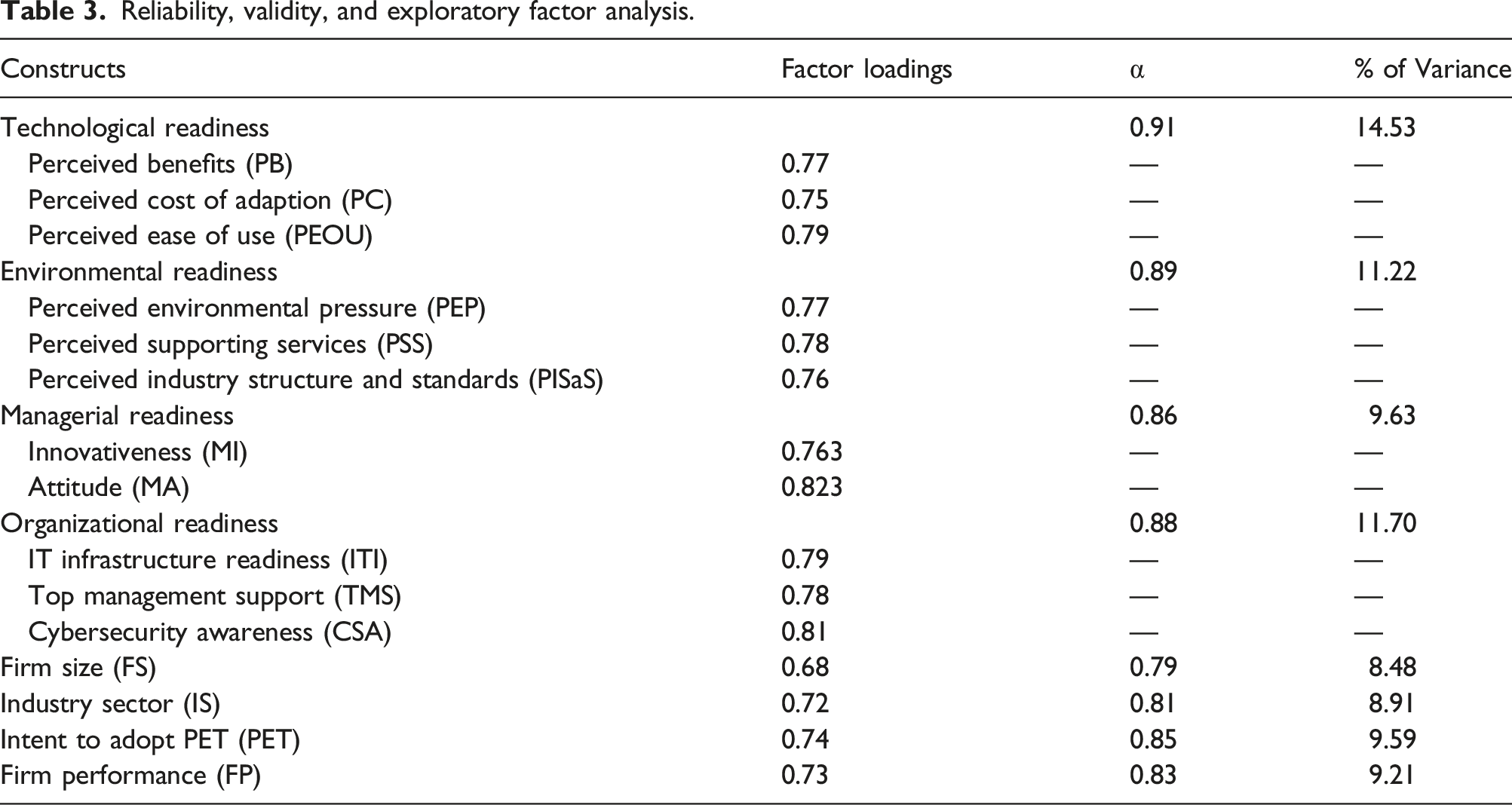
Exploratory factor analysis, which yielded 15 variables, was used to assess the existence of convergent and discriminant validity. All loadings exceeded the cut-off threshold of 0.40, ranging from 0.68 to 0.82. The total variance explained collectively by all factors is 83.27%.
Harmans’ single-factor test was used to confirm that common method bias did not affect the result of this study. According to the findings, one factor only explains 39.68% of the variance. As a result, common method bias does not appear to pose a risk to the correlations between research variables.
Hypothesis testing
Mean, standard deviation, and correlation between variables.

SD indicates Standard Deviation.
aCorrelations are significant at the 0.01 level.
bCorrelations are significant at the 0.05 level.
Regression analysis, moderation effects.

aCorrelations are significant at the 0.01 level.
bCorrelations are significant at the 0.05 level.
Furthermore, Table 4 reveals a significant positive link between intent to PET adoption and FP (β = 0.37, t = 3.98, p˂0.01), hence, H5 is supported.
The Baron and Kenny approach was used to investigate the mediation effect in this study (1986). The first condition is concerned with the predictors' direct influence on the criterion variable.
Table 4 shows that there are significant relationships between PB and FP (r = 0.39, p < 01), PC and FP (r = 0.35, p < 01), PEOU and FP (r = 0.47, p < 01), PEP and FP (r = 0.26, p < 01), PSS and FP (r = 0.35, p < 01), PIS and FP (r = 0.33, p < 01), MI and FP (r = 0.25, p < 05), MA and FP (r = 0.41, p < 01), ITI and FP (r = 0.37, p < 01), TMS and FP (r = 0.23, p < 05), CSA and FP (r = 0.29, p < 01). As a result, the first condition has been fulfilled.
The second condition is concerned with the relationship between predictors and mediators. The findings demonstrate that there are significant positive relationships between PB and PET (r = 0.67, p < 01), PC and PET (r = 0.54, p < 01), PEOU and PET (r = 0.69, p < 01), PEP and PET (r = 0.48, p < 01), PSS and PET (r = 0.41, p < 01), PIS and PET (r = 0.34, p < 01), MI and PET (r = 0.30, p < 01), MA and PET (r = 0.33, p < 01), ITI and PET (r = 0.32, p < 01), TMS and PET (r = 0.52, p < 01), CSA and PET (r = 0.51, p < 01), indicating that the second criterion is also fulfilled.
The third condition is concerned with the mediator’s relationship with the criterion variable. The third condition is satisfied since the relationship between PET and FP is positive and significant (r = 0.64, p ˂0.01).
The fourth condition describes the indirect link between predictors and criterion variables after inserting the mediation effect. Table 5 demonstrates that the association between technological readiness and FP is significant after accounting for the influence of intent on PET adoption as a mediator (β = 0.25, t = 2.97, p˂ 0.05 to β = 0.35, t = 3.81, p˂ 0.05). It demonstrates that intent to PET adoption fully mediates the link between technological readiness and FP, confirming H6a.
According to Table 5, the link between environmental readiness and FP remains significant after including the mediation effect (β = 0.17, t = 1.83, p = ˂ 0.05 to β = 0.28, t = 3.37, p˂ 0.01). Similarly, with the mediator, the indirect effect of organizational readiness on FP is significant (β = 0.21, t = 2.27, p˂0.05 to β = 0.33, t = 3.76, p˂0.01).
Likewise, the indirect effect of managerial readiness on firm market performance with the mediator is significant (β = 0.19, t = 2.09, p˂ 0.05 to β = 0.24, t = 2.98, p˂0.05).
As a result, the findings suggest that intent to PET adoption mediates the association between environmental, organizational readiness, FP, and managerial and FP. As a result, H6b, H6c, and H6d are partially supported.
The moderating effect will be the subject of the next series of analyses. In the first condition, predictors (technological, environmental, organizational, and managerial readiness) were individually included in the analysis, while in the second condition, the influence of firm size and industry sector were entered independently. The interaction terms were included in the analysis as the final stage. Table 5 shows how to assess the impact of firm size. After accounting for interaction effects, the link between technological readiness on intent to PET adoption is significant (β = 0.40, t = 5.79, p ˂ 0.01), indicating that H7a is supported.
Furthermore, after accounting for the interaction effect, the association between environmental readiness and intent to PET adoption is significant (β = 0.41, t = 5.92, p ˂0.01), and H7b is supported. Furthermore, the association between organizational readiness and intent to PET adoption is significant (β = 0.35, t = 5.37, p ˂ 0.01); thus, H7c is supported. Finally, the link between managerial readiness on intent to PET adoption is significant (β = 0.30, t = 4.78, p ˂ 0.01), thus supporting H7d.
Regression analysis predicting intent to adopt PET.

aCorrelations are significant at the 0.01 level.
bCorrelations are significant at the 0.05 level.
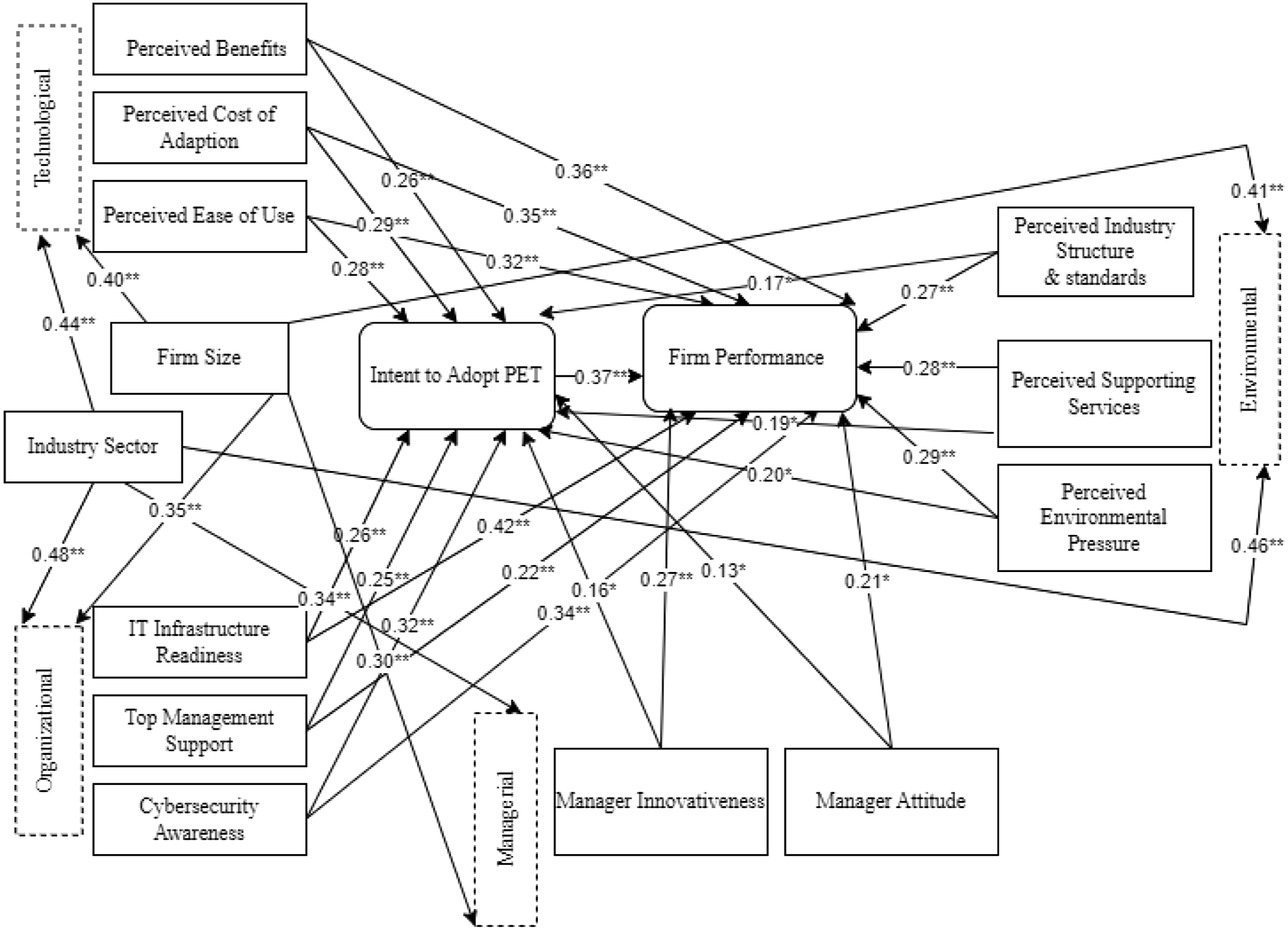
Results of the hypothesis testing.
Discussion
The present study contributes to the existing literature by building a comprehensive model that integrates the TOE framework and FP. Through empirical evidence and analysis, this research sheds light on the adoption of PETs among SMEs, developers, and policymakers. The model was tested using data collected from Canadian SMEs. The results provide valuable insights for decision-makers to better understand the impact of firm size and industry sector on the relationship between technological and organizational readiness, environmental factors, and PET adoption. Additionally, the study highlights key factors that influence the adoption of PETs and improves our understanding of the mediating effect of PET adoption on FP. Finally, the findings indicate the presence of moderating variables and support the moderating impact of firm size and industry sector.
This research addresses the primary issues surrounding the adoption of PETs in SMEs. Through this research, the study makes practical contributions to the field by re-conceptualizing the developments in PETs, specifically with regard to the four key aspects of technological readiness, environmental readiness, organizational readiness, and managerial readiness. The results of this study provide a deeper understanding of each aspect, revealing that companies that have integrated PETs into their business strategies experience faster growth compared to those who do not.
This initiative aims to enhance privacy technologies, leading to increased revenue, optimized profits, improved productivity, and enhanced customer satisfaction. The results of this study offer valuable insights for practitioners and decision-makers in the field, providing a roadmap for the integration of PETs into SMEs and advancing the development of privacy-enhancing technologies (PETs).
In conclusion, the study suggests that companies should prioritize the adoption of PETs for the purpose of improving success, efficiency, and compliance in today’s modern business environment. PETs offer several unparalleled benefits and should be considered as a long-term investment. This research highlights the importance of PET adoption and the need for companies to integrate privacy technologies into their business strategies. By doing so, companies can realize the full potential of PETs and remain competitive in the ever-evolving technological landscape.
While prior research has explored PET adoption in large enterprises, 145 there has been a lack of empirical studies focused specifically on SMEs. Given the differences in resources and size between SMEs and large enterprises, this study aims to identify the most significant TOE determinants for PET adoption in SMEs.
The study applies two established theories, the DOI theory and the TAM, to analyze the impact of antecedent variables such as technological, organizational, environmental, and managerial readiness on the intent to adopt PETs and examines the effects of PET adoption on the performance of SMEs.
The results of this study contribute to the development of a unique model for evaluating the influence of TOE factors on PET adoption in SMEs. By examining the impact of PET adoption on SME performance, this research provides insights for SMEs and decision-makers on the potential benefits of PET adoption and the key factors that influence the adoption of PETs.
The research confirms the findings of previous research on technology adoption, which suggests that the ease of use of technology is a key factor in an individual’s decision to accept an innovation. Cost concerns are also a central issue in the adoption of private cloud computing, as the deployment model can be expensive for enterprises. 145 Financial factors, particularly cost, are moderated by the organization’s size, with larger organizations able to more easily afford cloud computing than smaller organizations. 146 The cost of private cloud computing is particularly high, as the enterprise must purchase all necessary servers and pay for staff to manage the cloud. The study also found that perceived benefits play a role in the intention to adopt PET.
In addition, the study further investigated the moderating effect of demographic variables on the intention to adopt PET using hierarchical regression analysis. The results showed that all independent variables, including technological, environmental, organizational, and managerial readiness, positively and significantly impacted the intention to adopt PET. The low adoption rate of PET highlights the importance of firm size and company sector as critical demographic variables that moderate the impact of the independent factors on the intention to adopt PET. This suggests that the intent to adopt PET may vary depending on the size of the firm and the industry it operates in.
There was evidence that the business’s demographic factors, specifically firm size and industry sector, have a significant impact on an organization’s intention to adopt PET. This outcome aligns with previous research by, 147 who found that organization size is one of the key determinants of IT adoption. According to, 148 small-sized businesses are adopting cloud computing as it enables them to quickly expand their IT capacity without incurring the costs of new equipment, software, or employee training. These findings suggest that demographic factors play a crucial role in determining an organization’s intention to adopt PET.
According to, 149 firm size is a critical factor in the adoption of IT. However, large-sized businesses that have already established IT infrastructure are adopting PET to better manage any potential risks or disruptions caused by the technology, while avoiding significant financial consequences. Due to their greater flexibility and capacity to take on new challenges, large firms are often more willing to adopt cloud computing, despite the risks associated with information protection and privacy, such as data isolation in the cloud and the long-term viability of the cloud computing provider. 150 This suggests that firm size can have a significant impact on the adoption of PET and cloud computing.
The results confirmed that industry sector plays a role in the intention to adopt PET. The study focused on five primary industries - IT, services (healthcare, consultancy, retail, and telecom), manufacturing, finance, and wholesale - as these organizations exhibit high adoption rates of PET. The adoption of PET varies across industries due to their differing security requirements and specific features sought after. Typically, the IT and service sectors, which handle a large amount of information, exhibit a higher adoption rate of PET compared to the manufacturing sector. This highlights the importance of considering industry sector in the adoption of PET.
The practical implications of this study on the determinants and outcomes of PET adoption among SMEs are significant for PET vendors, SME managers, and policymakers. The findings indicate that technological readiness is the most critical factor in PET adoption. Given the crucial role of SMEs in the development of the country, governments should encourage and support the adoption of PET to enhance their performance. To facilitate the adoption of PET, top management should provide proper financial and technical support, recruit employees with the necessary skills and provide training to current employees, identify qualified PET vendors, and ensure adequate resources. The top executives should make PET adoption a strategic company priority, support the adoption efforts throughout the company, and advocate its optimal utilization. Adherence to privacy standards can help secure TMS and commitment to integrate PETs.
The study highlights that a lack of financial resources, analytical capabilities, and experienced personnel might obstruct the adoption of PET among SMEs. To address these challenges, PET vendors should offer reassurance to SMEs that technical assistance is readily available to help improve their ability to use the tools and address issues such as complexity and a lack of expertise. To overcome the shortage of trained personnel in PET, vendors could offer online training programs as a short-term solution. Moreover, vendors could provide appropriate technical support and offer cost-effective PET solutions that cater to the specific needs of SMEs by providing customizable pricing options based on the required tools and services and number of users.
Implications
This study has important theoretical and practical implications, arising from the validation of the proposed model and the identification of significant findings. The following sections outline these implications in detail.
Theoretical implications
This research contributes knowledge by synthesizing theories to form a conceptual framework that can be used by other researchers exploring PET.
This literature review provides a comprehensive overview of the adoption of PET and identifies key elements that influence the intention to adopt. Based on established theoretical frameworks, the study focuses on the examination of four key variables: technological, organizational, environmental, and managerial characteristics and their impact on the intention to adopt PET. The findings of this literature review will serve as a valuable resource for academics seeking to deepen their understanding of the subject and provide a foundation for further research in this field.
This study represents a pioneering effort in the examination of the impact of firm size and industry sector on the adoption of PET. By incorporating these two control factors, this literature review offers unique insights into their role as mediators in the adoption process. This study is the first to consider firm size and industry sector in the context of adopting PET and makes a significant contribution to the existing literature. The findings of this literature review will be valuable for researchers and practitioners seeking to understand the factors that influence the adoption of PET.
This research presents a comprehensive model that integrates the TAM with relevant constructs from the TOE framework and Managerial Readiness, while considering the effect of two control variables. The model was empirically validated to assess the relationships between these constructs and the intention to adopt PET and its impact on FP. This study provides a significant theoretical contribution by demonstrating the effect of context-oriented elements on the adoption and use of PET. The findings of this study have implications for researchers, practitioners, and organizations seeking to understand and enhance the adoption and utilization of PET.
Organizational implications
This study offers substantial implications for organizations and managers regarding the adoption of PET. The observational examination of the information provides a comprehensive understanding of the factors that influence the effective adoption of such technologies. The results of the empirical analysis serve to reinforce the significance of these factors. This study sheds light on the critical role these variables play in the successful implementation of PET.
The increasing threat of cyberattacks necessitates that organizations remain vigilant and proactive in their use of PET. This study develops a comprehensive framework to examine the variables that influence the intention to adopt PET and FP. The findings of the study provide valuable insights for businesses on the management of the key factors that facilitate the adoption of PET, thereby contributing to the improvement of FP.
This research sheds light on the relationship between technology, organizational, environmental, and managerial readiness and FP, as mediated by the intention to adopt PET. The results of the study demonstrate that these factors have a substantial impact on FP. By conducting an empirical examination of the impact of technology, organizational, environmental, and managerial readiness (TOE) on FP, this study provides a valuable contribution to the understanding of the relationship between these variables. The findings of this study will assist future researchers in further exploring the interplay between TOE and FP in the context of PET adoption.
This study adds to the existing literature on disruptive technologies and highlights the potential for PET to improve organizational performance. This research highlights the crucial role that organizations must play in ensuring the effective adoption and utilization of PET to enhance their performance. The results of the study emphasize the importance of effective management of key variables in ensuring the successful adoption and implementation of PET. Additionally, organizations should prioritize the development of a supportive organizational culture and secure the commitment of senior management to mitigate the risks associated with privacy attacks, which have the potential to negatively impact the organization’s performance.
TMS can play a crucial role in enabling businesses to implement effective plans and policies for promoting the adoption of PETs. Ensuring compliance with relevant industry standards, governmental regulations, and legal requirements can help organizations better protect against privacy breaches.
This study provides preliminary evidence of the benefits derived from adopting PETs. The research model presented in this study guides managers in identifying the critical variables to be analyzed in the context of PET adoption. The findings of this research encourage managers to consider firm-level characteristics, such as firm size and industry sector, in order to maximize the potential benefits of adopting new IT technologies, such as PETs.
The findings of this research also hold important implications for providers of PET services. It highlights the key variables that should be considered in the design and delivery of PET-based applications and services to customers, such as addressing privacy, security, and reliability concerns. The study suggests that the adoption of PET should take into account the size and industry sector of the organization. In contrast to large businesses, small and medium-sized enterprises may find PET services more appealing as they allow them to utilize mission-critical software without incurring significant investment in IT infrastructure.
This research finds that organizations in the IT and service industries tend to gain greater benefits from PET services compared to those in non-service industries. Given the potential returns from investing in PET, providers of PET services should take into account the business and industry-specific factors that influence the successful implementation of PET in an industry characterized by high levels of customer interaction and competition.
The results of this study indicate that PET has a positive impact on FP. Therefore, providers of PET services should prioritize FP when designing their solutions. This study recommends that PET providers focus on the benefits, costs, and risk factors associated with promoting PET services. Improved organizational performance can result in increased market share, greater financial returns, and satisfied customers. By aligning the implementation of PET with the needs of the organization, managers have the potential to enhance both their financial and organizational performance.
Finally, the results of this study provide insights into the relationship between technology readiness, organizational readiness, environmental readiness, management readiness, and the adoption of PET. This research underscores the importance of organizations focusing on effective PET management strategies and PET regulations that are suitable for their businesses, in order to prepare for potential privacy violations and to reap the positive business outcomes associated with improved business performance.
Future directions and research limitations
This study employed a cross-sectional design, which raises the potential for common method bias. To mitigate the effects of this bias, the study employed both statistical and procedural remedies. The use of psychological separation served as a procedural remedy, while Harman’s single-factor test was used for statistical validation. Results from the Harman’s single-factor test indicated that the influence of common method bias was effectively controlled in this study. However, future research should consider a longitudinal approach and address the temporal gap between questions. Additionally, to gain a deeper understanding of the influence of various resources on each component, it is recommended that future studies examine FP and its various characteristics, such as financial resources.
This research has limitations that should be considered for future studies. One of these limitations is the country bias as the study was conducted solely in Canada. Another limitation is that not all industry groups in Canada were covered, indicating a need for further research to examine the impact of PET technology in various industries, sectors, and economies. Additionally, it is suggested that future studies consider cross-cultural comparisons to determine the generalizability of the findings.
Moreover, the study only explores the moderating effects of firm size and sector, ignoring the influence of other factors. Future research should examine the role of additional characteristics, such as age, gender, and experience, to determine if they have any interaction effects with the variables studied. These suggestions aim to provide a comprehensive understanding of the impact of PET technology in the future.
The scope of this study is limited to four specific context factors that contribute to the adoption of PET technology: technology context, organizational context, environmental context, and managerial context. Future research could consider additional contexts, such as the government context, which plays a significant role in public policy and influences the adoption of PET.
Furthermore, this study is based on the TOE framework and the TAM in relation to PET adoption. Future research may explore the integration of TAM and its extensions with other models, such as the DOI theory, to identify additional constructs and gain a deeper understanding of PET adoption. These considerations aim to provide a comprehensive examination of the factors influencing PET adoption in future studies.
Footnotes
Declaration of conflicting interests
The author(s) declared no potential conflicts of interest with respect to the research, authorship, and/or publication of this article.
Funding
The author(s) received no financial support for the research, authorship, and/or publication of this article.
