



Abstract
The aims of this study are two folds: First to examine the impact of renewable energy technologies on sustainability development in the Middle East and North Africa (MENA). Second to test the awareness and cultural acceptance of societies in MENA region of the need to preserve the environment and reduce pollution by paving the way for finding alternatives to energy and developing emerging energy, which in turn will contribute to sustainable development and preserve the environment from pollution due to energy produced through fossil sources. The method of the current study relied on both primary data and secondary data. Hence, a questionnaire survey was developed to collect the required data. While, secondary data sources are obtained through the Web site finance.yahoo.com. The data processing techniques were carried out using Stata 16 software and using the Multiple Linear Regression method. The sample of the study consisted of 653 people from different MENA countries, i.e. Egypt, Jordan, Algeria, Bahrain, Iraq, Kuwait, UAE, and Saudi Arabia. The results revealed two types of data, quantitative data and qualitative data. Quantitative data is excluded from the secondary data analysis that renewable energy technologies have a positive effect on sustainability development in the MENA region. Qualitative data; as the survey includes some open ended questions to give an avenue to respondents to provide further feedback regarding their experience and perception of renewable energy. The results revealed a high degree of cultural perception of Renewable Energy Technologies of the communities in the MENA. Also, people are aware and ready to afford the cost and efforts to generate clean energy that promote sustainability. This study recommends that governments should invest in renewable energy and highlights the urgent need for clean energy to emerge in the MENA region.
JEL classifications Q43. Q32. O13
Introduction
Renewable energy is still a marginal issue in public opinion in Middle Eastern and North African countries. The reason for this may be due to the dominance of the petroleum sector (oil and gas) on the local energy market and the ignorance of the importance of this modern industry. Preserving the environment has become the responsibility of the whole world and consequently drives national activities to protect the natural environment throughout ecological disasters since the revolution industry1,2. The energy sector contributes to industrial and economic accomplishments and a prerequisite for providing basic human needs.
Renewable energy plays an essential role in achieving sustainable development; although research on it was launched by chance in the 1930s of the last century, it still raises discussion and study, especially after the energy crisis during the 1970s, which was reflected on the economic and social life in the world. The industrialized countries sought alternatives to achieve economic independence and security, and countries such as China, Denmark, Iceland and Germany were succeeded in this regard 3 . The emergence and export of oil in the Arab region become the decisive historical revolution in breaking the region’s isolation. Suddenly, socio-economic transformations took place. Within a few decades, something like a value revolution took place, which resulted in a crack in the value system, and many crafts were destroyed, in favor of the spread of a new production pattern, which brought with it a consumer culture that begs for ease, relaxation and dependence, as societies that emerged with the discovery of oil
This is what the components of the natural environment, such as climate, geographical location and natural resources, have had on social life, as a population density was formed in regions without others, which contributed to affecting the production pattern and the social organization of these formations, thus creating cultural and heritage diversities, some of which were susceptible to change in, while others withstood reluctantly the rigors of time. It is well known that the Arab Gulf society, in general, is a tribal society that relies on traditional production patterns such as agriculture, grazing, pearl diving and fishing before the discovery of oil. Still, after that, it was accompanied by many changes at various levels.
The vast impacts that modern and advanced technologies and means have had effectively contributed to the growth of modern cities with all their facilities, beauty and speed of spread, and what they have created from a view of the urban heritage as representing a period that is difficult to match with the new urban reality. For instance, to achieve the seventh sustainable development goal of the United Nations by providing (clean and affordable energy), the Kingdom of Bahrain has worked to benefit from the available sustainable renewable energy, and the Electricity and Water Authority has begun to promote the use of renewable energy through the project of installing solar energy systems in homes, and by implementing a “solar energy” plant project. With a production capacity of (100 MW), it is a joint project between the Government of Bahrain and the United Nations Development Program to meet the increasing demand for energy and keep pace with the sustainable economic growth in the country.
The initiative of the United Nations Secretary-General on sustainable development (E4ALL) for all aims to achieve true development, as the initiative set three goals that are expected to be achieved by 2030, related to universal access to modern energy services, doubling the media rate to improve energy efficiency, and then doubling the share of emerging energy in the global energy mix. Developing countries have pledged their commitment to providing universal access to energy, switching to emerging energy and reducing the consumption of fossil fuels. Thus, in 2005, 15 countries adopted policies supporting renewable energy, it became 95 countries later. It is clear to the United Nations that the international community unanimously won a development goal related to renewable energy during September 2015, which requires access to affordable, reliable and sustainable modern energy services for all, despite the difficulties of achieving this international goal.
Figure 1 gives a schematic portrayal of the proposed conceptual framework for technology sustainability appraisal. The point of the system is to exhibit the linkages between the key components that are proposed as significant for further developed technology sustainability appraisal rehearses. These are technology development, sustainable development, and dynamic systems approach. Pairing these elements renders the understanding of sustainable technology development, technology assessment, and sustainability assessment. On the other hand, integrating the three elements provides the foundation for SATSA4,5. A conceptual framework for technology sustainability appraisal. Source: Musango & Brent (2011, P. 85).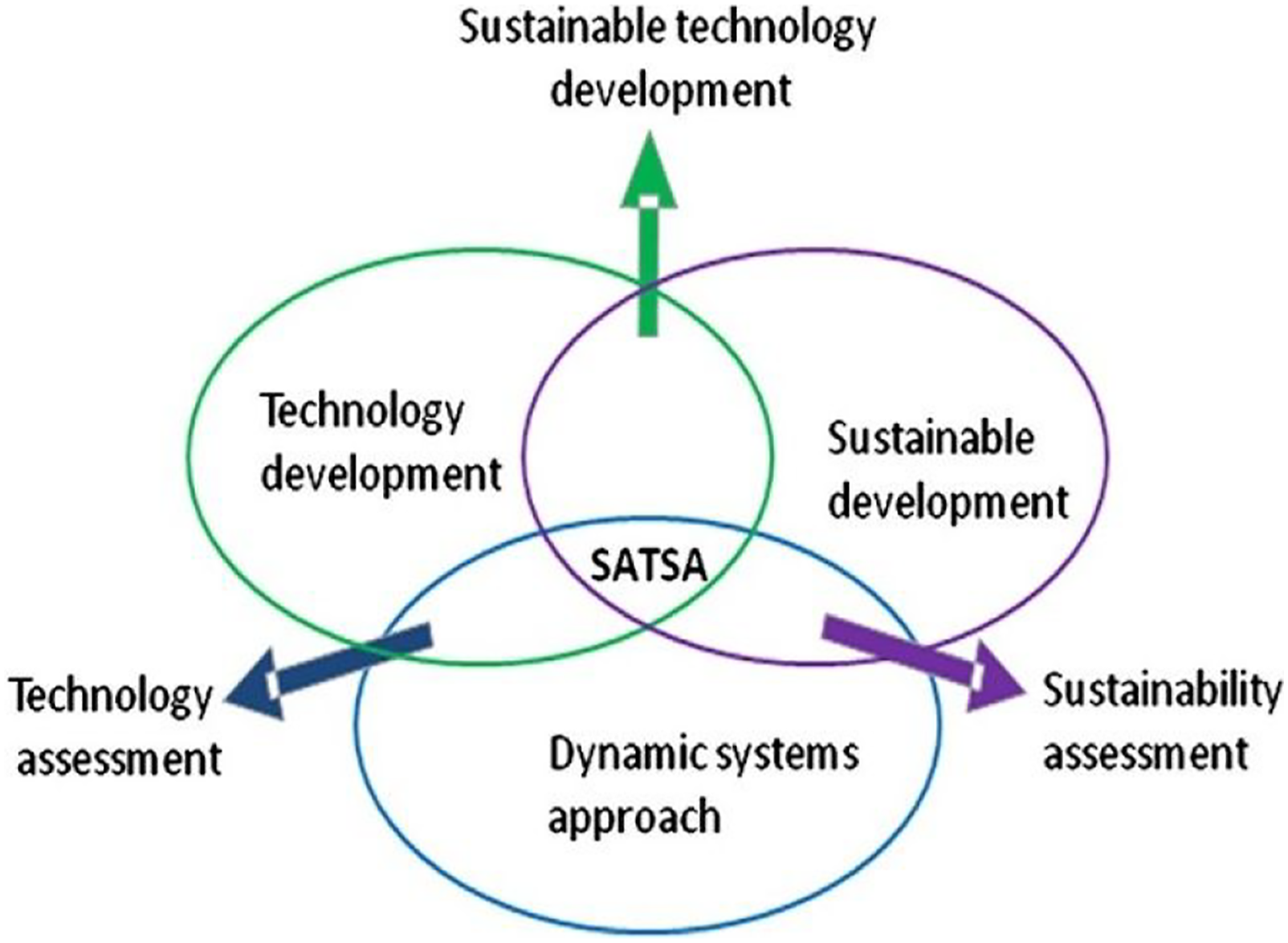
The mechanisms of change that should be understood in light of its different stages mean that each economic production system is in a state of stability when the possible systems are more efficient. In fact, the strength of Marx’s sociological theory lies mainly in the fact that it is the first organized case in explaining social construction and social change. It has also contributed to the interpretation of the dialectical relationship between the basic structure and the superstructure if the functionalists see that the equilibrium model, which analyzes the social environment based on its functional role to maintain the current state, and accordingly the deviation represents the problem of the system, and on the contrary, we find that the Marxist theory emphasizes the importance of social change where he sees conflict as a prerequisite for change in society 6 .
Khan et al., 7 indicate that the number of people receiving electricity worldwide increased by more than 1.7 billion between 1990 and 2020. The demand for cheap energy is expected to grow with the continuing increase in the world’s population. The global economy’s dependence on fossil fuels, and the associated increase in greenhouse gas emissions, is fundamentally changing our climate system with implications for all continents. Efforts to encourage clean energy have resulted in more than 25% of global energy being generated from renewable energy sources as of 2021. However, one in every five people still lacks access to electricity, and electricity demand continues to rise. Therefore, the need for renewable energy production is growing dramatically all over the world.
In this respect, 20 Arab countries have set strategic goals related to renewable energy and 12 Arab countries have set goals in energy efficiency. In contrast, some Arab countries have adopted specific encouraging incentive systems to develop and disseminate the use of emerging energy and energy efficiency technologies
8
. Most Arab countries have started issuing a set of laws and legislations related to emerging energy and energy efficiency. However, the involvement of Arab countries is still below the required level, especially as they are active producers of fossil energy worldwide. Figure 2 shows the level reached by the Arab countries in producing solar energy as a type of alternative energy. the level reached by the Arab countries in producing solar energy as a type of alternative energy. Source: Khan et al., (2022)
The US EIA reports indicate that during the period from 2008 to 2019, the volume of investments in renewable energy was doubled regionally, with the exception of hydraulic energy, bringing the level of its supply to 3 TW-hours, and it is noticeable that the size of this increase exceeded the rise level of traditional energy sources. The reports also state that, although the volume of supplies resulting from wind energy has become in the second level after energy from hydraulic sources, the fastest and largest increase is for solar energy, starting with its production by photovoltaic cells, and then the production of concentrated solar energy. The latter was built in Algeria, Egypt, Iran, Morocco and the United Arab Emirates, where the world’s largest facility of this type is located. The report expects an increase in the construction of concentrated solar energy facilities in the future in the countries of the region.
The importance of this study lies on the fact that sustainable development is needed for all MENA countries9,10. Though energy can add to economic and social development, it can also promote environmental degradation on a global scale. MENA region tops the list of countries in the world in oil and gas reserves 11 , and it constitutes half of the OPEC oil-exporting countries. This study aims to test the awareness and cultural acceptance of societies in the Middle East and North Africa of the need to preserve the environment and reduce pollution by paving the way for finding alternatives to energy and developing emerging energy, which in turn will contribute to sustainable development and preserve the environment from pollution due to energy produced through fossil sources. In addition, this study will emphasize the respondent’s awareness about the cost of renewable energy substitutions and to what degree they are ready and support the clean energy projects. Moreover, this study measure people’s readiness to afford the cost and efforts to generate clean energy.
Therefore, we generate the following questions: • What is the cultural Perception of Renewable Energy Technologies of the communities in the MENA? • How are people aware and ready to afford the cost and efforts to generate clean energy that promote sustainability?
It is hoped that this study will make a valuable and important contribution to the literature at both the theoretical and practical levels. At the theoretical level, the results of this research will provide empirically based information on the impact of renewable energy technologies on sustainability development in the MENA region. This study also contributes to the larger area of renewable energy management by highlighting the effect of renewable energy technologies on sustainability development in the Middle East and North Africa. At a practical level, this research may also contribute to MENA region policy makers’ evaluation of the effectiveness of the renewable energy technologies, as well as contributing to the improvement of management and corporate governance practices. After all, the results revealed from this study may have implications for improvements in practices of renewable energy management and may be used as a guide towards advancing the management and performance of the MENA region in this respect.
The rest of this paper is organized as follows: the literature review is presented in section (2), section (3) introduces the methodology. Discussion and results of statistical analysis are found in section (4), while conclusions and recommendation are set out in section (5).
Literature review
The energy industry is the fundamental factor for developing the economy and the improvement of quality of life, in combination with environmental protection 12 . In spite of the fact that defining sustainable development isn’t inconsequential, it could be considered as monetary advancement that offers a personal satisfaction for all inside the conveying limit of nature, focusing on how human exercises are obliged by financial, social and ecological cutoff points 33 . It might likewise be depicted as absolute maintainability, specified to fulfill human necessities, through socially acknowledged mechanical frameworks and fitting strategies and political instruments13,14. Based on business factors got from a new audit of distributions exploring openings for work related with the dispersion of environmentally friendly power innovation. Hanley & Nevin 15 tracked down acknowledgment to increment when respondents possessed adequate data and partook in the dynamic cycle. All things considered, not all types of environmentally friendly power are similarly acknowledged. For instance, 16 found that singular buyers communicated a more noteworthy inclination for sunlight based energy, trailed by wind power and biomass.
One part of this terrorizing may come from the idea that we’ve lived with petroleum product energy so long that change is unthinkable. In any case, “so long” truly is not that long with regards to mankind’s set of experiences. It is just since the Industrial Revolution that petroleum products have overwhelmed our way of life. And, after it’s all said and done, we had hemp as biomass and oil, hydropower as dams, wind power as windmills and sun oriented energy as sunlight based cooking. Before the Industrial Revolution worked with relocation from rustic work environments to metropolitan assembling regions, we relied upon decentralized living and getting by. Decentralization and the utilization of sustainable power is the same old thing. To be sure, how much energy we devour can be related with the jolt of innovation? In any case, this doesn’t really mean our energy utilization needs to increment ceaselessly 17 .
In recent times, the spread of airborne diseases has increased, and of course, the world is now facing the Corona pandemic, which is the airborne virus that affects the whole world. Infections that appear to be medical but are more than social. They are behavioral in their causes and effects, and they have severe social impacts that may lead to more dangerous repercussions. In a study entitled Tackling zoonosis in a crowded world: Lessons to be learned from the COVID-19 pandemic? Which made it clear that it is among many lessons for humanity. One is to transform our bonds with nature, especially wildlife, given the potential origin of COVID-19 from the illegal wildlife trade. Figure 3 shows the quantity invested in renewable energy capability in the top 20 markets up to the end of the first half of 2019. the renewable energy capacity in the top 20 countries in 2019. Source: Bloomberg NEF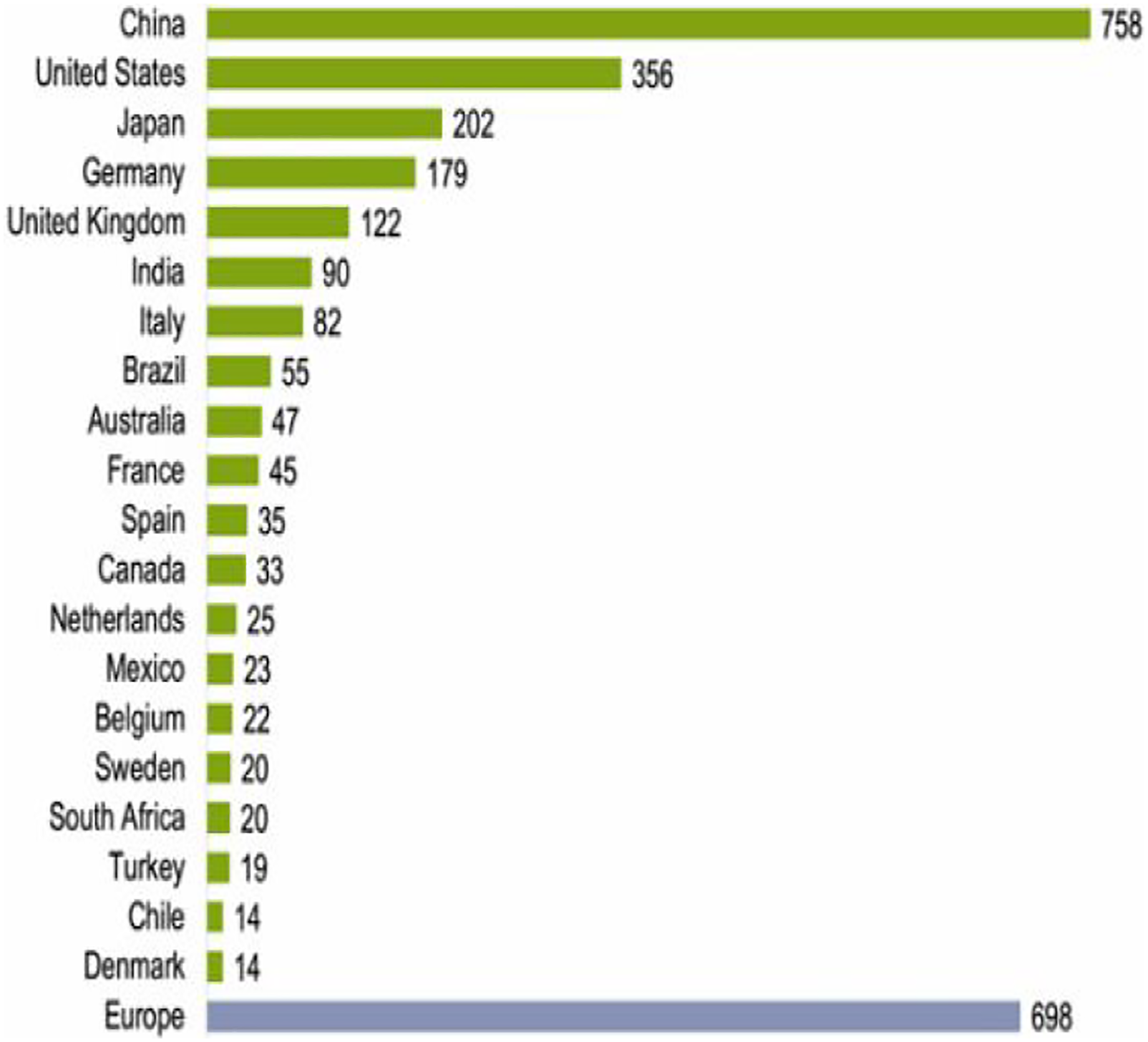
Furthermore, Barry et al., 18 introduced eight case studies that were conducted in Rwanda, Tanzania and Malawi that used of the various technologies, and the data confirm the importance of the final set of 13 factors that should be used for the selection of renewable technologies and they are; Ease of maintenance and support over the life cycle of the technology, Ease of transfer of knowledge and skills to relevant people in Africa, Site selection factors SS1 Local champion to continue after implementation, Adoption by community, Suitable sites ready for pilot studies, Access to suitable sites can be secured Economic/financial factors, Economic development, Availability of finance A Achievability by performing organization, Business management, Financial capacity, Technological capacity, Newly identified factors Government support, Environmental benefits. Sen & Bhattacharyya 19 investigated the best hybrid technology combination for electricity generation from a mix of renewable energy resources to satisfy the electrical needs in a reliable manner of an off grid remote village, Palari in the state of Chhattisgarh, India. Raza et al., 20 present exploratory study based on RETs and new development policy implementations for the rural areas of Pakistan and the analysis shows the relationship among fossil fuel energy, clean energy, and population in rural areas, energy potential, national policies, and international policies to recover the off grid areas in Pakistan. Also, the outcome shows that households in urban areas have more consumption of electricity than rural areas while maximum income comes from the agriculture sector. Tabrizian [21]. Examined the factors that result in market failure and by taking into account the specific characteristics of the renewables industry, especially in developing countries, governments can enable their national infant market to be a competitor in the worldwide marketplace. To study the reason for the slow diffusion of RETs in developing countries, we need to examine the facts through the lens of the innovation system. The innovation ecosystem takes into account the socioeconomic factors that shape the capability for innovation in each specific country.
In addition, these days, Industry 4.0 goes past computerization influencing a wide range of energy frameworks, including wind energy. In light of the Global Wind Energy Council (GWEC’s) report in 2019, wind energy has expanded its prominence over the most recent 20 years, notwithstanding various triumphs and disappointments, giving clean energy at a cutthroat expense around the world. The pattern towards ecological supportability, be that as it may, speeds up the change of customary assembling. Ongoing examinations e.g. Chang et al., Chang et al., 22 show that three fundamental elements influence feasible assembling improvement, for example, (1) government regulations, (2) client assumption, and (3) cost reserve funds. As a fundamental piece of economical assembling, the wind power industry has filled quickly in ongoing many years, generally as a result of significant innovative enhancements. The market for wind power has seen quick development in effectiveness and dependability, adding to a fundamental part of Industry 4.0 since it is an urgent energy source.
Renew energy in the middle east and north Africa (MENA)
Despite increasing political emphasis across the Middle East on the need to change to bring down carbon, productive, and ecologically dependable energy frameworks and economies, lawful developments needed to drive such advances have not been given nitty gritty examination and thought 23 . The MENA locale comprises of 22 nations and is perceived as a homogenous area, yet in spite of the contrasts between nations, they actually face some normal difficulties. These incorporate a youthful populace with a high joblessness rate, powerless exploration abilities, expanded interest for power, and restricted interests in energy. Studies have demonstrated that energy trade is the main type of revenue in MENA nations. For example, Abdouli & Hammami 24 investigated the connection between non-RE and monetary
Development in 17 MENA nations from 1990 to 2012. Likewise, Abdeldayem & Aldulaimi
25
explored the causal connection between RE utilization, exchange and financial development in the GCC nations from 1980 to 2012. Nematollahi
26
fostered a coordinated appraisal model is used to investigate the energy innovation prerequisites for meeting a tough worldwide environment strategy that accomplishes adjustment of ozone harming substance fixations in the air. Figure 4 shows some of the most promising markets for renewables, and solar in MENA reign. renewable energy capacity investment in MENA in 2018. Source: UN Environment, Frankfurt School-UNEP Centre, BloombergNEF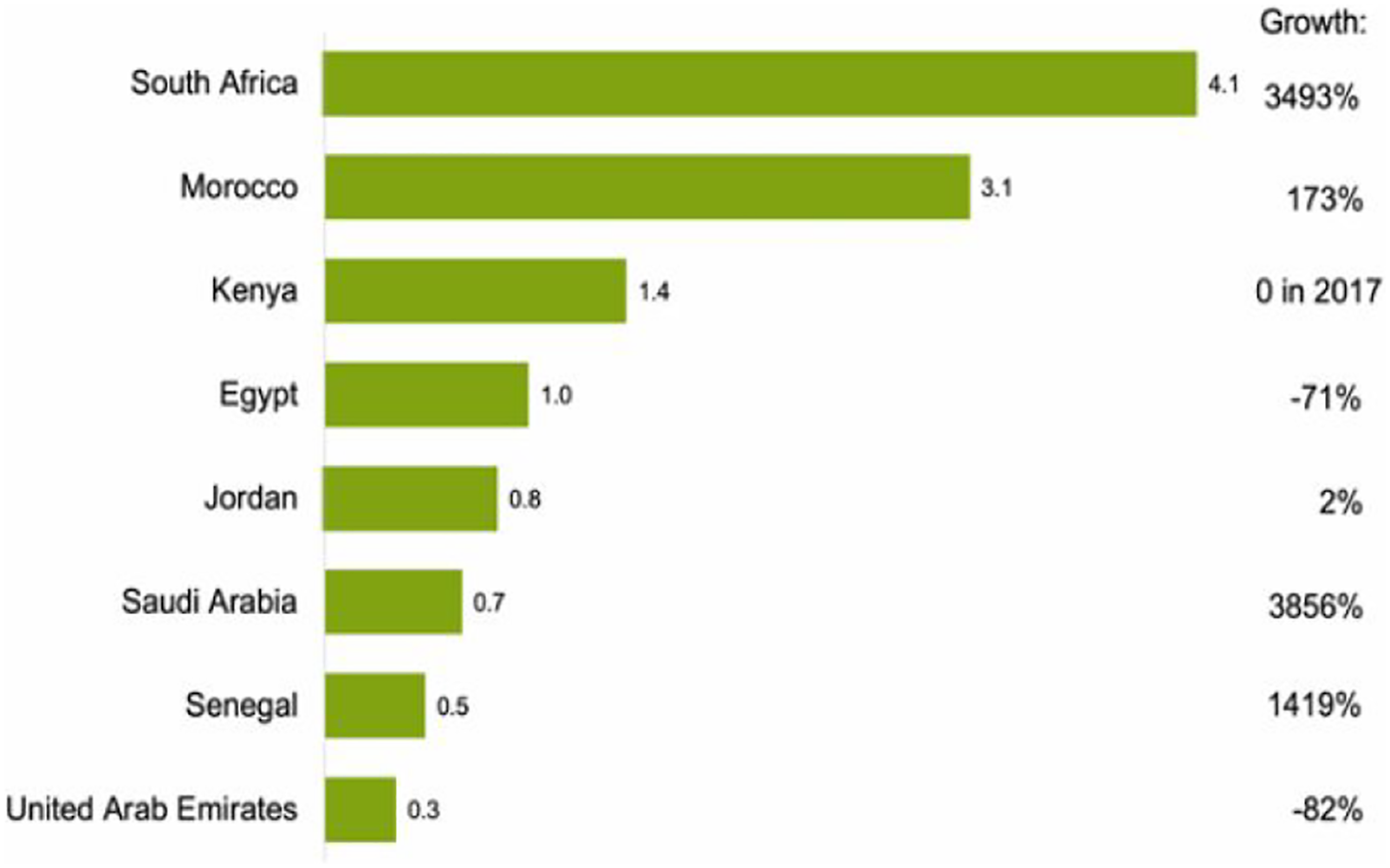
The increase in energy consumption still does not stop, and economic processes and industrialization cannot occur without energy. The energy derived from coal has witnessed a remarkable development, as it moved from 1850 million tons in 1981–3955 million tons in 2011, and China comes at the forefront of coal consuming countries with a percentage of %, followed by America 14%, then Australia and India 6%. According to the World Bank report 2019, the average waste is 2.6 kg per person in the MENA area. Figure 5 shows the interrelationships between energy systems and sustainable development subsystem The relationship between energy systems and sustainable development subsystems. Source: Source: Musango & Brent (2011, P. 87).
Methodology
The methodology of the study relied on both primary data and secondary data. Hence, a questionnaire survey was developed to collect the required data. While, secondary data sources are obtained through the Web site finance.yahoo.com. The data processing techniques were carried out using Stata 16 software and using the Multiple Linear Regression method. The sample of the study consisted of 653 people from different MENA countries, i.e. Egypt, Jordan, Algeria, Bahrain, Iraq, Kuwait, UAE, and Saudi Arabia.
Sample collection method
The methods used in collecting sample data in this study include:
a. Literature study where researchers obtain literature sources from previous journals to obtain relevant theories and information related to the topics discussed.
b. A documentation technique where researchers collect data on renewable energy technologies and sustainability development in the MENA region, for the 2020–2021 period on Yahoo Finance, through its official Web site (finance.yahoo.com).
The methodology of the current study relied also on the descriptive approach and quantile regression to achieve the objectives of the research. As a result, a questionnaire was developed to collect the required data. This way heled us reach people in different countries via electronic survey using google forms and send it by email to respondents. We use the networking relationship of my university with other academic institutions in the specified countries to deliver the questions. We assume that these people who work in the educational sector are more aware of global issues such as climate change and renewable energy. The questionnaire consisted of variance items to obtain information about cultural awareness in terms of renewable energy. Items were chosen after reviewing several literature studies [27], [28]. The study focused on obtaining the opinions of interested people from the Middle East and North Africa (MENA). The sample that answered the questions consisted of 653 people from different countries, namely Egypt, Jordan, Algeria, Bahrain, Iraq, Kuwait, UAE and Saudi Arabia.
The study aimed to enrich the information and use open-ended questions. Content analysis was used to determine the level of awareness and collect feedback that made a clear image of respondent opinion. We collect unique themes within the text that people emphasize [29]. The content analysis provided us an avenue to understand the cultural reality regarding people’s acceptance of renewable energy technologies in a private but scientific mode.
The survey questions consisted of 3 demographic questions in addition to 10 questions, which covered various issues that can be seen from a different section, for example, an open-ended and multiple choice 1. “Do you acknowledge that climate change is a catastrophe and needs a solution?” 2. “Would you voluntarily contribute to the recycling project that aims to produce green energy? Yes or no and why?” 3. “Would you contribute to generating solar energy in your house and use it alternatively?” 4. “Would you encourage generating wind energy or Tidal energy and use it alternatively?” 5. “Are you willing to make the financial contribution to prevent or remedy environmental damage?” 6. “What kind of renewable energy sources/technologies do you know?” 7. “In your opinion, who should take the first step towards renewable energy production?” 8. “How important is green energy for you?” 9. “Do you agree that there are many barriers that prevent the local production of green energy from wind, solar .etc.”. 10. “Would you like to have wind turbines in your backyard or solar panels on your roof?”
Data analysis method
In this study, the data analysis techniques were carried out using the Stata 16 program. In this method several tests were carried out such as multiple linear regression analysis, classical assumption test, and hypothesis testing. In this study, an analysis was conducted to determine the effect of renewable energy technologies on sustainability development.
Therefore, in order to further analyze the research questions a quantile regression essentially transforms a conditional distribution function into a conditional quantile function by splitting it into segments. In OLS, modelling a conditional distribution function of a random sample (y1,……yn) with a parametric function m (xi,β) where xi represents the independent variables, β the corresponding estimates and m the conditional mean, can cause the following minimization problem

Obtains the conditional expectation function E [Y | xi] can proceed in quantile regression. The central feature thereby becomes ρτ, which serves as a check function.

In quantile regression, one minimizes now the following function.

Hence, in contrast to ordinary least square, the minimization is performed for each subset defined by ρτ, where the coefficient of the τth – quantile is obtained with the parametric function ξ(xi,β).
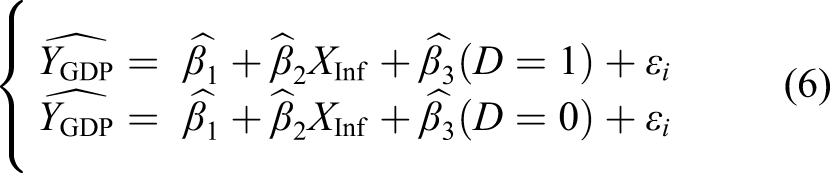
To find out the optimal inflation threshold, the author applies two methods; firstly, the optimal inflation threshold is found by dummy method, then used the OLS method below.


The models are written when D is equal to 1 and D is equal to zero.
Hypothesis test
Simultaneous test (F Test)
Simultaneous test (F test) was carried out to test whether there was an effect of the independent variables (independent) simultaneously on the dependent variable29,30. The testing criteria used in this study are if F count > F table or probability < significant value (Sig 0.05) then the alternative hypothesis (H1) is accepted. Meanwhile, if F count < F table or probability > significant value (Sig 0.05) then the alternative hypothesis (H1) is rejected. If H1 is accepted, it means that simultaneously the independent variable has a significant effect on the dependent variable. On the other hand, if H1 is rejected, it means that simultaneously the independent variable has no significant effect on the dependent variable.
Partial test (T Test)
Partial test (t test) is used to test whether each independent variable which in this study is the renewable energy technologies (X1) has a positive and significant effect on the dependent variable, namely the sustainability development (Y) partially. Often, the partial test is used to find out how far the independent variable can explain the variation of the dependent variable. The partial test criteria used in this study are if H1 (alternative hypothesis) is rejected if t count >0.05, which means that the independent variable has no effect on the dependent variable. Meanwhile, if H1 (alternative hypothesis) is accepted if t count <0.05, which means that the independent variable has an effect on the dependent variable.
Discussion and findings
The current study’s analysis revealed two types of data i.e. primary data and secondary data. The primary data, which is excluded from the survey questions and qualitative data that the survey question has open-end and gives respondent s to provide additional feedback regarding their experience and perception of renewable energy. The first three questions dealt with the demographic characteristics of the sample.
The first demographic question was about the age group. As shown in Figure 6, we chose the participants from diverse age groups. The majority of the respondents are adults and over 40 years old. The second question was about nationality because the study nature is dedicated to having different countries. Figure 6 shows the respondents come from 7 countries, namely, Egypt, Jordan, Iraq, Bahrain, Saudi, UAE and Kuwait. The majority of respondents are male (68.6), as shown in Figure 6. the results of the demographic question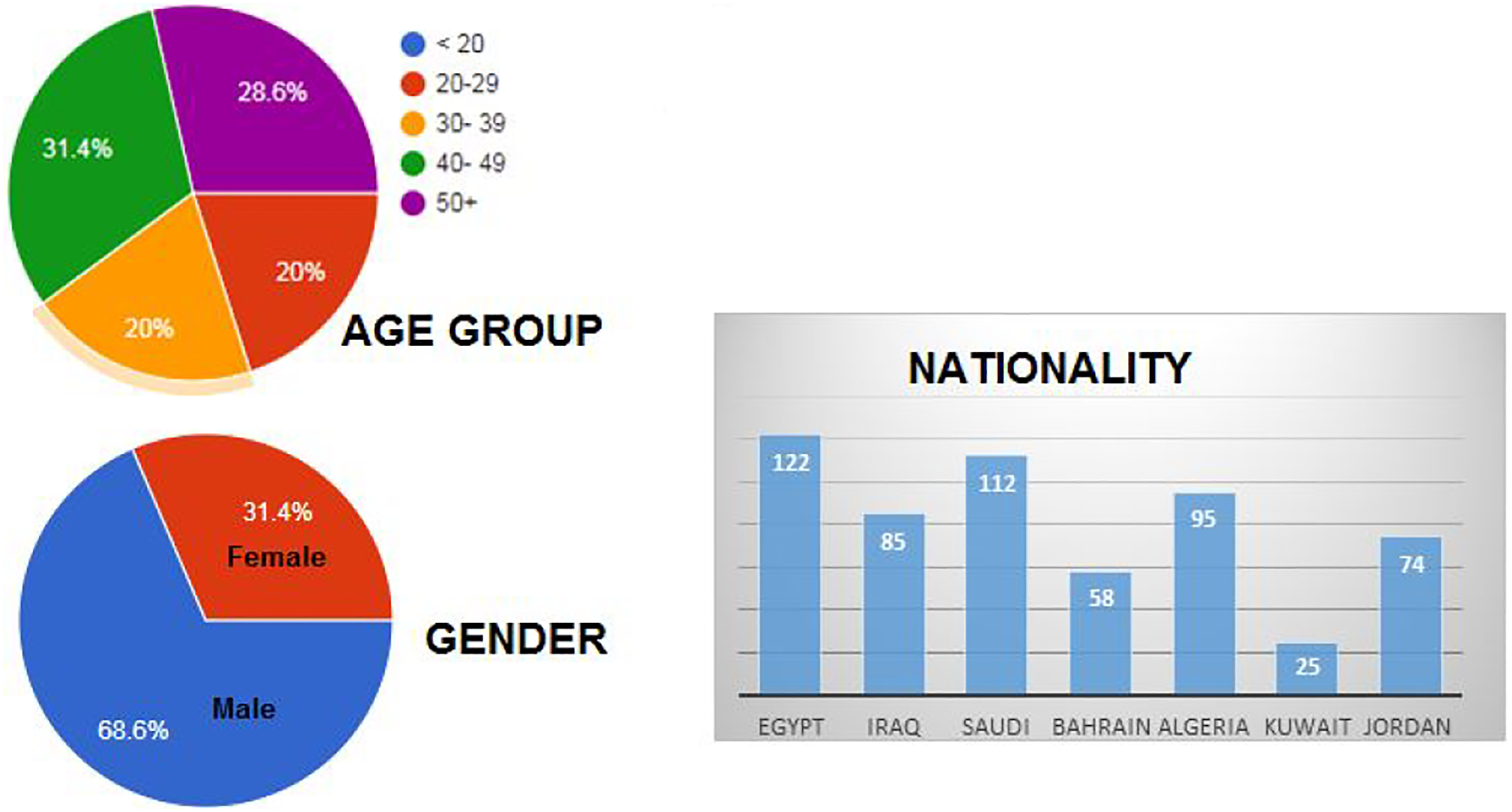
The first question deals with the respondents’ opinion to acknowledge that climate change is a catastrophe and needs a solution? Approximately 90%, as shown in Figure 7, are undoubtedly aware of this issue and think it needs an urgent solution. We also draw some qualitative conclusions based on the quantitative analysis, as the percentage will indicate some problems and truth for the survey. Moreover, Figure 7 shows most respondents are willing to voluntarily contribute to the recycling project that aims to produce green energy. Surprisingly, the majority prefers to contribute to generating solar energy in their house and use it alternatively. This is the first tip to encourage and set up solar energy bases
30
. the results of the demographic question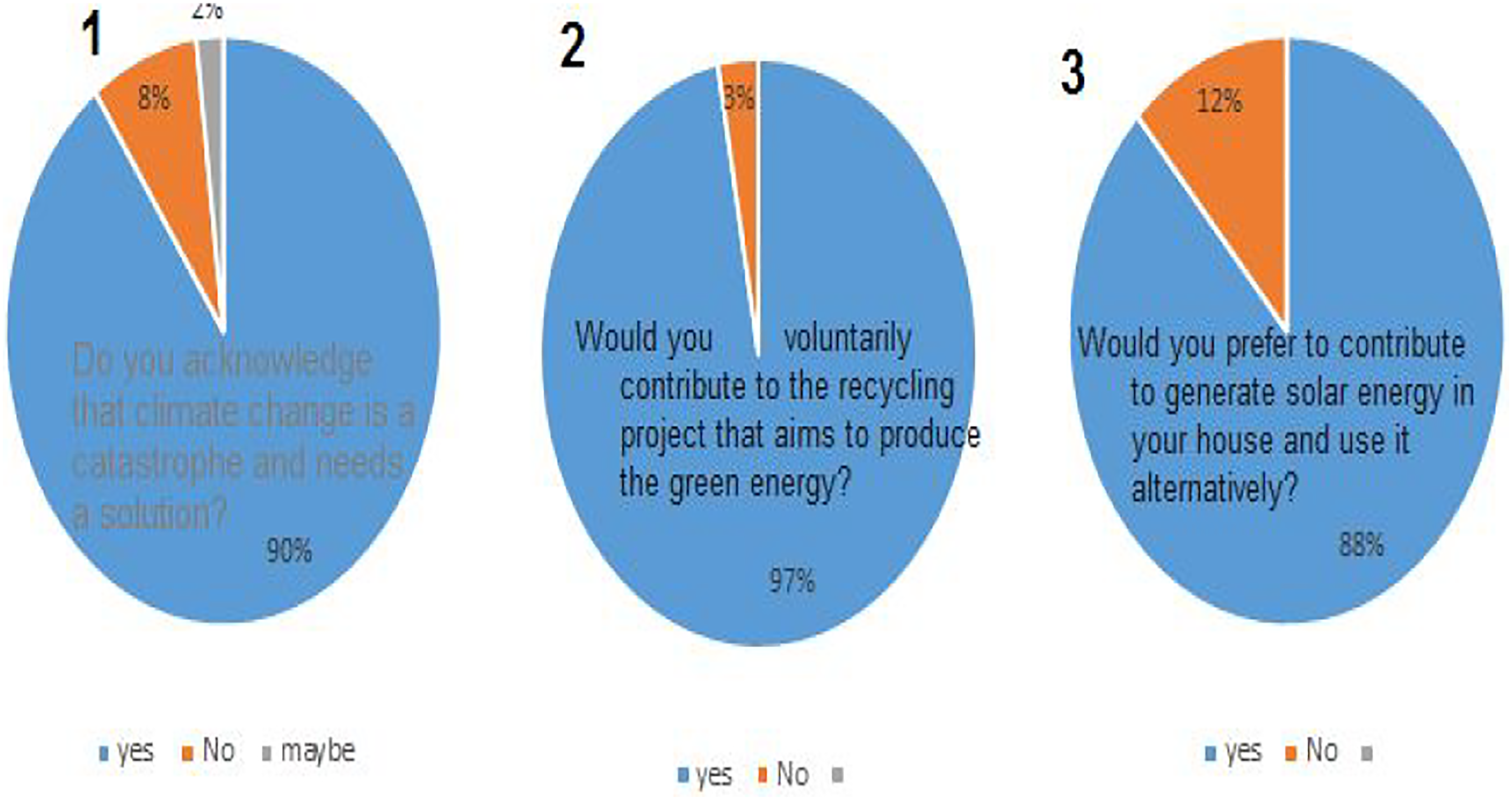
Respondents are also aware of the other sources of generating energy; therefore, they respond positively 100%, as shown in Figure 8 regarding the encouragement of generating wind energy or Tidal energy. This source is redundant in this region and provides clean and economical energy
11
. In terms of respondents willing to make the financial contribution to prevent or remedy environmental damage. Yildiz
31
found private individuals contribute significantly to renewable energy finance in Germany and the legal framework led to the significant development in the field of financial investment. Similarly, in UK as investigated by
32
. Therefore, these findings give hope for the potential success of this kind of project. Another question was investigating the respondent’s background about what type of renewable energy sources/technologies they usually know? The majority are aware of solar energy, as shown in Figure 8. the results of the demographic question
The open-ended question asking the respondent to state their opinion about who should take the first step towards renewable energy production sparked a massive wave of reactions. Respondents put high stress on the government (57%) to develop this kind of project, as shown in Figure 9. Some participants suggested that banks must take the initiative to finance these projects and government banks in particular due to the high cost of these projects (approximately 50,000–70,000 USD). Wang et al.,
37
recommend the government take the initiative to invest in this sector due to the cost of such a project and the inability of the citizen to bear such financial burdens. Figure 9 shown that participants consider the importance of green energy for them. Would you like to have wind turbines in your backyard or solar panels on your roof? Results of the study.
The response to this question was surprising despite it being fiction because there is a complication embedding this idea to have devices and turbines working and making some noise in the house. But the awareness of clean energy beats the other disappointing ideas. Some participants are experts in their subjects and they reported that electric generators that convert wind energy into clean and emissions-free energy, and although there are most large wind farms to supply some towns and communities with energy, there are also smaller wind turbines used for homes and homeowners, where these small turbines can be installed on any part of their property to cover some or even all of our monthly energy needs. The vast majority support this idea 96% as shown in Figure 9.
Nonetheless, the question that received various reactions is: Do you agree that many barriers prevent the local production of green energy from Wind, solar.etc. These kinds of open-ended questions bring qualitative data that reflect a rich of feedback from participants to show the cultural perspective regarding renewable energy. We understand that renewable energy efforts has barriers disabling clean energy to make a huge jump to join the international standards. Respondents reported that the major problem is not knowing how to generate energy from other sources. Also, the immature plans and well developed program of transmission is the further setback. The lack of convictions rooted in the depth of the culture of society, as well as the awareness of those in charge of decision-making about the feasibility and validity of moving towards renewable energy. There are also reasons that governments have not developed their legal system to show the details of the installation of individual generating stations and the mechanism of controlling and controlling them to ensure the rights of individuals and also to ensure the mechanism of its continuity if it becomes the main source of energy. The legal aspect lead to discuss the investment part which is it vital in achieving project as the renewable energy. The question what is the benefit of investing in this sector. The guarantees of investment and the return on investment. Participants also, draw attention to the level of awareness still not mature and have suspicious regarding the mechanism of this project’s nature. The economic, technical and logistics aspects are not highlighted well to prepare people to be mindful of the role and duties of individuals and the size of support comes from government or other parties. Some the reported about the individual and governmental will and linked them to the political issues are making many issues are complicated to be clear and understood. However, we did not understand the expression of shame that installing a power plant in the house could cause, as very few participants referred to the social or cultural reason, which is the shame of putting such projects in homes34,35,36.
Hypothesis test
Partial hypothesis test (t Test)
Multiple regression analysis of the Cultural Perception of Renewable Energy Technologies versus Sustainability in the MENA Region.

Simultaneous hypothesis testing (F Test)
The F test was conducted to determine the effect of the independent variables simultaneously, by comparing the F table. Based on Table 1 the results of the data regression, the F statistic value is 285.52 with a probability value of 0.000 > 0.05.
Because the probability is much smaller than 0.05, it can be concluded that there is a simultaneous influence of renewable energy technologies on sustainability development of 56.94%. The calculated F table is greater than the F table so that the H1 hypothesis is accepted
Conclusion
This study aimed to assess the awareness and cultural acceptance of societies in the Middle East and North Africa of the need to preserve the environment and reduce pollution by paving the way for finding alternatives to energy and developing emerging energy, which in turn will contribute to sustainable development and preserve the environment from pollution due to energy produced through fossil sources. In addition, this study will emphasize the respondent’s awareness about the cost of renewable energy substitutions and to what degree they are ready and support the clean energy projects. Moreover, this study measure people readiness to afford the cost and efforts to generate clean energy.
The results revealed a high degree of cultural Perception of Renewable Energy Technologies of the communities in the MENA. Also, people are significantly aware and ready to afford the cost and efforts to generate the clean energy that promote sustainability.
The study concludes that a culture must follow the industry, and that the cultural aspect of the industry is no less important than the technical aspect, and that we should work hard to develop the intellectual and social aspect of this industry so that we do not repeat the same mistakes we made in the past, and that our journey with this technology is more beneficial and less harmful. The United States enacted the first Energy Conservation Policy Act of 1975 to facilitate access to clean energy in which environmental challenges, climatic and economic changes through providing job opportunities as well as health benefits that benefit people, especially since 1 million people die due to air pollution in indoor and outdoor due to burning fossil fuels.
Information on recent investments during the period from 2009 to 2012, which clearly confirm the increased interest in this sector and deal with it seriously. Total investments amounted to about 474 million dollars in 2009, rising to 1.454 billion dollars in 2010, and the increase in investments continued continuously and without interruption, to record about 2.062 billion dollars in 2011 and 2.870 billion dollars in 2012. As an example of projects that are actually being implemented, especially in Arab countries, the report mentions that the Egyptian solar energy plan, which was approved in July 2012, set a goal to produce a total of 3100 MW of solar energy by 2027. Iraq announced a target to produce 400 MW of wind and solar energy by 2015. Both Kuwait and the Sultanate of Oman announced targets to achieve 10% of electricity production from renewable energy by 2030 for Kuwait and by 2025 for the Sultanate of Oman.
Policymakers can likewise start and backing arrangements that improve interest in new advances, particularly harmless to the ecosystem ones. The district further requirements considerable changes to accomplish an eco-accommodating climate. There is a requirement for every one of the nations to set obligatory RE focuses on that are achievable. Though some MENA countries have set these targets, only a few are on track to achieving it 2 .
Energy is the source of environmental problems and is a significant driver of economic and social development, and it is a mechanism to meet the necessary needs of human beings. These three needs are the triangle of sustainable development (economy, society and the environment). Among the social issues related to renewable energies are the solar heater and the processes of recycling agricultural waste and converting it into organic fertilizer, which contribute to solving the problems of unemployment and poverty while preserving material and financial resources from loss.
This study recommend to transform the energy revolution into a reality, the urgent need in the energy sector in the Middle East is manifested in crystallizing government policies centered around creating a market framework that encourages the development of renewable energy technologies, decentralized energy systems, and energy efficiency programs 10 .
Moreover, desired policy actions may include setting legally binding targets for the use of renewable energy, securing fixed and definite returns for investors, ensure priority benefit from the network of renewable resources, establishing strict efficiency standards for various energy-consuming appliances, buildings and vehicles and finally, undertaking to phase out financial aid for traditional energy sources25,26
Limitations and Scope for Future Research
The first limitation is the use of secondary data to obtain a broad overview on the effect of renewable energy technologies on sustainability development in the MENA region. An inherent disadvantage of secondary data in general is that it is not designed specifically to meet the study’s needs; secondary data should apply to the population of interest, the time period must be consistent with the researcher’s needs and secondary data must appear in the correct units of measurement. Therefore, despite a great deal of attention being paid to overcome these disadvantages, a caveat should be given in generalizing the results of the secondary data analysis.
A further limitation is that the study considered the views of only a sample of 653 people from different MENA countries, i.e. Egypt, Jordan, Algeria, Bahrain, Iraq, Kuwait, UAE, and Saudi Arabia. (i.e. in the online questionnaire survey). The original intention was surveying 1000 or more respondents from different MENA countries. However, due to severe access problems as well as the time scale to which the researchers was working, this proved not to be possible. It was only due to the intervention and effort by others that eventual access was realized.
In spite of the above limitations, this study has shown that several future research and implications could be undertaken such as: 1. Before identifying directions for future research as indicated by this study, it is crucial to address the urgent need to establish an advanced database for the renewable energy management in the MENA region, which would be useful for both researchers and policy makers. Such data should be maintained via databases to enable researchers to more adequately assess renewable energy’s performance. Hence, the availability of data would encourage future research and this would also allow the governments to see how things went and facilitate the tasks of decision-makers. 2. A useful starting point for future research would be to incorporate the perceptions and experiences of other participants of the impact of renewable energy technologies on sustainability development in the MENA region. This could be undertaken by distributing the questionnaire utilized in this study to a much larger sample of specialists. A greater understanding could then be obtained of these accumulated experiences. Face to face interviews might also be undertaken with officials holding strategic posts in many of the MENA countries. This should lead to a broader understanding of the impact of renewable energy technologies on sustainability development in the MENA region. A study of this nature should perhaps be undertaken in collaboration with the Global Wind Energy Council (GWEC), as this would have the benefit of making the study official as well as making access much easier.
Three- A comparative research that covers the impact of renewable energy technologies on sustainability development in different developing countries is needed. In particular, in the Middle East region and North Africa, as this part of the world seems to be much neglected in terms of research. These countries have also embarked on the road of renewable energy dilemma and a study, which compares this, would be extremely useful and would shed important light on the impact of renewable energy technologies on sustainability development.
Footnotes
Declaration of conflicting interests
The author(s) declared no potential conflicts of interest with respect to the research, authorship, and/or publication of this article.
Funding
The author(s) received no financial support for the research, authorship, and/or publication of this article.
