



Abstract
Complexity is considered one of the hallmarks of megaproject failure; however, no common definition of complexity in the megaproject context exists in contemporary literature; particularly in developing countries. The present study explores the definitions, characteristics, and strategy to respond to the complexity of megaprojects in developing countries. An exploration of normative theories and a systematic literature review were performed to investigate the concept of complexity. This study proposes the definition of complexity as a “challenge” for entities—including project managers—in megaproject management. This definition extends to encompass both positive and negative challenges, offering a more balanced perspective on the causes of failure in addition to the sources of opportunities for innovation. We determine the aspects of megaproject complexity associated with structural and social factors of interrelatedness, nonlinearities, and emergence. This study proposes a formal definition, clarifying the characteristics of complexity and synthesizing strategy themes that respond to megaproject complexity. This resulting study provides insights for both megaproject researchers and professionals.
Keywords
Introduction
Megaprojects are large-scale, extraordinary ventures. Originating from the Greek word “megas,” the prefix “mega” implies big, wide, tall, and essential. 1 A megaproject requires more knowledge, skills, and resources 2 ; has higher investment costs; needs additional involvement from the project teams and stakeholders; requires newer technology; and has a more extensive scope than an ordinary project. All of these factors imply that megaprojects demand a high degree of attention. 1,3
Social development, economic growth, technological innovation, and urbanization have underpinned the accelerated emergence of megaprojects. 4 This is true not only for developed countries such as the United States (US), 5 South Korea, 6 the United Kingdom, 7,8 and the Netherlands 9,10 but also for developing countries such as China, 11,12 Pakistan, 13 and Indonesia. 14
A megaproject’s success is determined by timelines, budget suitability, and quality fulfillment, also known as “the iron triangle.” 1,15,16 Megaprojects are assessed on long-term qualities, such as team and stakeholder satisfaction, sustainability of business and economic benefits, and community welfare 1,17 ; however, most megaprojects that failed to achieve the targets that were originally defined. 1
Managing a megaproject is more challenging than managing an ordinary project. 9,16 Characteristic complexity is considered the main reason for megaprojects’ ultimate failure. 17,18 Megaprojects’ complexity increases the number of entities involved as well as the costs and further broadens the scope of work. 17 Nevertheless, encountering complexity in any project is inevitable, regardless of size, 19 just exponentially more so in the case of megaprojects. 18 Therefore, understanding the concept of complexity is vital to avoid failures and accomplish a project’s targets. 20 From this perspective, the strategic management of complexity is essential to successful megaproject execution.
Research has confirmed that it is more difficult to manage complexity in developing countries, as these nations often lack economic, political, and social stability, 15,21 –23 have unstable regulatory frameworks, 24 unique cultural backgrounds, 25 –27 and low-skilled labor 28 owing to limited educational culture awareness, 29 which impacts the lack of education and professional training programs. 30 However, very few megaproject studies in developing countries have been conducted, 31 including complexity studies.
The limited number of studies on megaprojects in developing countries offer initial evidence of their high complexity. 32,33 Ongoing research investigates the concepts, types, and management approaches applicable to megaprojects. A phenomenological (“lived experience”) approach is often adopted to describe best practices in addressing complexities from the perspective of professionals, such as those introduced in the study of the Bus Rapid Transit System megaproject construction project in Tanzania 34 and the IR-150 aircraft industry program in Iran. 35 Various approaches have been used, including a social science approach, 36 stakeholder management, 37 and institutional approach, 38 which are further discussed in the Results and Discussion section.
Past studies yield no consensus on the concept of megaproject “complexity” in developing countries. This gives rise to the following: (1) no commonly recognized definition of complexity or (2) an identifiable characteristic classification of complexity exists in the literature. From a practical perspective, the limited theoretical rigor of the concept of complexity might result in the development of an inadequate management approach being put into practice. As such, it is important to develop a formal understanding of the concept and a categorization of complexity for subsequent studies. In this context, the present study aims to explore and clarify megaproject complexities in a developing country context; this has been delineated in three research questions (RQs): (1) What is the definition of megaproject complexity in developing countries? (2) What are the characteristics of megaproject complexity in developing countries? (3) What are the strategic management themes that respond to complexity in developing countries?
An exploration of the complexity concept and typology from the perspective of system and complexity theories and a review of the existing literature were performed. The present study’s findings provide a fresh perspective on the evolving concept of megaproject complexity, particularly in reference to developing countries. This provides researchers and project professionals with a systematic overview, further clarity on the concept of complexity, and an understanding of strategic management approaches.
Megaproject characteristics
A megaproject is characterized by the involvement of numerous entities, 39,40 multiple actors, 24 multiple firms, 41,42 and often several countries featuring a diversity of cultures. 4,43 In terms of infrastructure, size is often associated with the scale of a project’s output in the form of vast deliverables. 39,40 Compared to a regular project, a megaproject’s vast scale is significantly affected by the involvement of multiple project teams and stakeholders. 44,45
Stakeholders, such as the government, project owners, lawyers, consultants, contractors, and banks, often classify megaprojects as projects that cost more than 1 billion US dollars ($US). 1,4 Megaprojects are run on budgets ranging between 0.01% and 0.02% of a country’s gross domestic product (GDP). 31 Therefore, the cost of 0.01% of GDP is considered to be a rational criterion that a country can apply as a threshold. 31,46 The details of megaproject characteristics, as noted in the literature, are presented in Figure 1.

Megaproject characteristics.
In terms of outcomes assessment, a project is rated successful if it meets time, cost, and quality specifications, which are collectively termed “iron triangle” constraints. 19 Broader assessments of projects’ long-term success are based on a range of dimensions, including stakeholder and project team satisfaction, along with business target achievement. 47,48
The criteria for success for both regular projects and megaprojects are consistent; however, a megaproject’s success is more associated with long-term “value,” such as long-term economic benefits, sustainable infrastructure, national prosperity, and public recognition (becoming the pride of a country/region). 17
Megaprojects as complex systems
The study by Suh, 49 “Complexity: theory and application,” describes two domains to understanding (and defining) the complexity concept, namely, the “functional domain” and the “physical domain.” From the functional domain, complexity is defined as “a measure of uncertainty in understanding what it is we want to know or in achieving functional requirement.” 49 Based on the “uncertainty” concept, a complex system consists of four types of complexity (i.e., real, imaginary, combinatorial, and periodic complexity).
From the physical domain, complexity is related to physical elements and their internal and external interaction. 49 The interaction of these elements is sometimes linear, sometimes nonlinear, and sometimes unpredictable (uncertainty or emergence). This domain is from general system theory, which was further developed in organizational complex systems, in line with Complex Adaptive Systems (CAS) from the complexity theory. From this concept, “uncertainty” has become the passage of complexity, termed as “emergence.”
Based on both physical and functional domains, this paper posits the physical domain stream as a framework to clarify the definition, characteristics, and management of megaproject complexity in developing countries. The theoretical concepts that form the basis of a framework for exploring the megaproject complexity are presented as follows.
A system is defined as a group of items that interact or depend on each other to form a unified whole. 50 In its application, a system is defined as an arrangement of elements consisting of humans, devices, and products, both hard and soft, and interrelated processes (facilities, equipment, materials, and procedures), wherein the interaction of these elements aims to meet operational needs and maintain the sustainability of the product or organizational life cycle. 51 To investigate the links and interaction of system components, systems theory has emerged and has developed in various branches of science.
The systems theory that is quite influential in the realm of organizations is the open-system concept derived from the general system theory developed by the biologist, Bertalanffy. 52,53 This concept asserts that components interact with other components in the system and are also influenced by factors outside the system. 54 This is the basis for the concept of complex systems wherein it is difficult to predict a pattern, as such systems are interrelated to many other components (from other systems), being nonlinear, and involve the potential for dynamic change. This, in turn, gives rise to dynamic systems theory, 52 which has been widely adopted for the study of numerous nonlinear behaviors within complex systems. 55
The application of systems theory in the study of complex systems in organizations is in line with the development of contemporary complexity theory based on CAS. Complexity is defined as an attribute of a system consisting of several interacting components. 56 This concept is in accordance with the systems theory perspective; a complex system with many interrelated elements representing different subsets of a unit as a whole in which these elements are sometimes unclear and unreliable. 57
CAS comprises three important properties for describing complex systems, namely, interdependence, nonlinearity, and emergence. 58 Similar to systems theory, CAS asserts that the higher the interdependence among constituent factors (e.g., parts, activities, and organizations), the higher the likelihood of emerging contradictions. This situation is often exacerbated when such relationships are “nonlinear,” 59 meaning that small changes in one element can result in large shifts (sometimes, with unexpected consequences) in other elements.
This explanation implies that it is difficult to track or describe the properties of each part of a complex system 60 ; there are several possible conflicting alternative solutions that make system behavior difficult to navigate. 59 However, identifying such contradictions can create opportunities to optimize suitable solutions. 61
Complex systems exhibit conditions wherein unexpected elements develop a high level of interdependence with other elements in the emergence of the system. 62 Complex systems require the cultivation of an ability to remain agile and flexible. 63 Such CASs are often associated with features of feedback learning, 64,65 adaptability, 63 and self-organization. 66
Referring to the paradigm of megaprojects, as largely temporary organizations, such projects include a series of activities designed to achieve shared goals that involve human interaction within a complex system. 45,67,68 The complex systems of megaprojects exhibit three characteristics, namely, interrelatedness, nonlinearity, and emergence. The characteristics of megaprojects are always comprised of a multitude of interrelated factors, including both activities and entities. 4,42,43 The relationship between these factors is potentially nonlinear, wherein a small change in one element can have a substantial impact or unplanned consequences elsewhere, presenting a condition that is unsynchronized, unaligned, uncertain, high risk, and prone to conflict. 45 The multi-year life cycles, new technology, and large number of teams and stakeholders of megaprojects heighten the potential for sudden and unpredictable changes to arise, 43 which is referred to as emergence. This kind of situation requires the management to focus on planning and control (order) as well as to imbibe the ability to remain adaptive and flexible 63 with learning and innovation based on feedback from both inside and outside of the system, 65,66 which is also termed self-organizing.
Methodology
The systematic literature review of past studies and the qualitative data analysis approach were applied in this study. The details mechanism is explained as follows.
Damayanti et al. 69 offered a review of international journal articles between 1978 to 2017 regarding the complexity of megaprojects in developing countries, in the fields of engineering, business and management, decision science and technology, building construction, art and humanities, tourism, habitat and geo-forum domains, according to the availability of various scientific article databases. In this study, 24 journal articles were reviewed using a descriptive qualitative approach to examine megaproject complexity types in developing countries and management approaches that are identified and studied in the field, as well as areas of research that need further study. The study reported several results, such as study trends, a classification of complexity types, and approaches to the management of complexity management that were used in past research.
Damayanti et al.’s 69 study was preliminary in nature, hence it was not a comprehensive treatment. However, the study by Damayanti et al. 69 provided a glimpse of the study of megaproject complexity in developing countries until 2017. Some limitations that could potentially be improved include: (1) The time range of scientific articles reviewed has the potential to be extended until 2020 for a wider area of exploration. This is needed, due to megaproject studies covering various perspectives, not only in engineering and management fields, but also aspects of law, the environment, and others. (2). The analysis can be deepened by applying a framework grounded in theoretical concepts. This is needed to clarify the definition of concept of complexity in the context of megaprojects so that its management can be well-formulated, and to provide a more structured direction for future research in developing countries.
For this study, three research questions were presented in the introduction. To answer these questions, this study was conducted as an extension of Damayanti et al.’s 69 work, which addressed three mechanisms of (1) formulating the conceptual framework, (2) conducting a systematic literature review, and (3) analyzing the data. The research framework is visualized in Figure 2.

Research framework.
The first stage of this research is formulating the conceptual framework. The perspective of “megaprojects as complex systems,” combining both system and complexity theories is utilized as the conceptual framework for clarifying the megaproject complexity. This concept was explained in Section 3. The second and third research mechanisms, namely, conducting a systematic literature review and analyzing the data, are further explained as follows.
Systematic literature review
In this study, a systematic literature review (SLR) method was used to identify various concepts of megaproject complexity in literature, its characteristics, and strategic management approaches from previous research specific to developing countries. SLR-based literature reviews are believed to improve overall study quality, 70 wherein the potential bias was minimized by including all published research. 71 The following six stages of SLR were adapted by this study, based on the approaches of Bakhshi et al. 72 and Denicol et al. 73
Stage 1: Keywords search in databases
Three search terms were used: complexity, megaprojects, and developing countries. Megaprojects are variably termed large projects, big projects, huge projects, major projects, giant projects, and mega-events. Developing countries were also called developing nations. Therefore, those words were used as keywords to explore the scientific literature.
To search effectively, Boolean logic—AND, OR and the main search string (“__”)—were used. The keywords used in this study were as follows: complexity AND (megaproject OR “large project” OR “major project” OR “big project” OR “huge project” OR “giant project” OR “mega event”) AND (“developing countries” OR “developing nations”).
Some articles may not have used the terms “developing country” or “developing nation” but explicitly mentioned the name of a particular developing country where the megaproject was studied. To anticipate this, keyword searches for articles were also conducted by directly searching for country names included in the list of developing nations (127 countries), based on the World Economic Situation and Prospects of the United Nations. 74
After finding research terms, keyword searches were carried out with a research database that included Scopus, Science Direct, IEEE, Springer Link, and the academic search engine Google Scholar.
Stage 2: The range of years and fields of articles analyzed
In addition to adding to articles in contexts listed as developing countries, the search year range was also expanded, in order to reach the literature more comprehensively. Using the “advanced search” service from each of the predefined databases, scientific publications examining the complexity of developing country megaprojects from 1990 were first identified and were available and affordable to the authors until 2020. These results are consistent with Damayanti et al.’s 69 study; hence, the range of years selected for article searches was 1990 to 2020.
The fields of study chosen, in addition to those of engineering and management, included law and policy, politics, environment, and social sciences. By using the “advanced search” facility in the search engine in each database, the available subjects to be explored included: Engineering, Business and Management, Decision Science and Technology, Economics, Building Construction, Art and Humanities, Tourism, Habitat, Finance, Environmental Science, Policy, Social Science, Social Politics, Geo-forum, and Multidisciplinary.
Based on the keywords chosen in stage 1 in the available field of study, each article was reviewed by title, abstract, and content. Criteria for article selection was that it should be available as a full-length paper written in English. Based on these criteria, the articles obtained are reduced from 1689 to 1202.
Stage 3: The type of articles selected and sorted
Articles were further reviewed based on the requirement that it should be published in a peer-reviewed journal. Thus, articles sourced from conference publications, scientific reports, book chapters, and white papers were excluded at this stage, until they were reduced to 688 articles.
Stage 4: Check for duplicate articles
In this stage, abstracts were downloaded with Mendeley software, which was used to store and manage existing articles. Duplicate articles were deleted. After this stage, the number of articles was reduced to 475.
Stage 5: Article content review
The purpose of this study is to clarify the definition of complexity and its characteristics from the perspective of megaprojects, as well as complexity management strategies for megaprojects. To achieve these objectives, chosen articles must address at least one of these themes. Articles were reviewed for general content by reading abstracts and keywords. Following this analysis, 104 articles fit the limitations of the analysis criteria (complexity concept, characteristics, and management strategy) and were classified into the following three categories: ‒ Category A was those studies that examine the mathematical and technical model concepts in megaprojects (e.g., mathematical calculations of concrete dam structures; financing models; and several articles with little implication for megaproject complexity management) (n = 22). Articles in this group were excluded from this study. ‒ Category B were the studies that examined complexity in megaprojects but did not explicitly delineate the definition of complexity (n = 59). ‒ Category C were studies that defined complexity and analyzes the complexity of the megaproject (n = 23).
Based on stage 5 classification, only studies from groups B and C were further engaged in the analysis, for a total of 82 articles that were reviewed in detail.
Stage 6: The articles reviewed
The selected articles (n = 82) were downloaded and their contents thoroughly read and considered. The articles were extracted in a Microsoft Excel sheet, recording general and specific information relevant to answering research questions.
The fields for general information include the name and year of the study, the journal, the country where the megaproject was located, and the megaproject types (infrastructure or non-infrastructure). Specific information included the concept of the definition of complexity that was used, the characteristics of complexity discussed, and the complexity management approach that was analyzed, along with the research method applied. Details of the Excel sheet article extraction are shown in Appendix 1.
Data analysis
The articles were analyzed using descriptive approaches and in-depth qualitative analysis, described as follows:
Descriptive approach
Descriptive analysis was needed to obtain an overview of the trends in the discussion of complexity in megaprojects in developing countries in terms of publication year, the published journal distribution, and the country. This has the potential to provide information for researchers to explore more in-depth from these descriptive findings and can serve as orientation guidelines for future researchers.
Using Microsoft Excel, the descriptive analysis was accomplished by calculating the number and percentage of SLR articles based on year, journal source, and country, and visualizing them in the form of a line and pie chart.
Qualitative approach
Qualitative analysis was carried out to clarify definitions, complexity characteristics, and management strategies in the context of developing countries. Qualitative analysis applied a coding technique for qualitative research developed by Saldaña,
75
as follows: 1. Coding and categorizing for the definition of megaproject complexity. The concept of the definition of complexity, both explicitly specifically stated or implied in general explanations of megaproject complexities were explored from the documented articles. Articles that explicitly defined the concept or meaning of complexity in accordance with the theoretical framework were coded “1.” The articles that defined complexity with the term “interrelated” were coded “1a,” the term “nonlinearity” was code “1b,” the terms “dynamic,” “uncertainty,” and “emergence” were coded “1c.” Likewise, articles that defined more than one, or a combination, of these terms were given a combination code for those terms. Articles that defined other terms or did not specifically define complexity but provided a general description of the complexity of the megaproject were coded “2.” The results of this coding were used as a basis for grouping and categorization to further determine the concept of a congruent definition of complexity. 2. Coding and categorizing the characteristics of megaproject complexity. Besides coding to define complexity, articles were also coded for the complexity characteristics discussed. The code was still based on the conceptual framework of interrelatedness, nonlinearity, and emergence. Referring to the concept of project complexity of Maylor et al.,
20,76
interrelatedness reflects on the size and relationship of items (structural) and entities (human/social) in the project. Nonlinearity relates to the unsynchronized conditions of a project, as both items and entities have the potential to cause conflict, and the emergence is associated with unpredictable changes and uncertainties that occur in the project. Articles that discuss the characteristic of interrelatedness of structural items were coded “1ax,” the interrelated aspects for the social (human) entities were coded “1ay,” and so forth. Details of the code and the process of article categorization are presented in Appendix 2. After categorization, the articles were synthesized to formulate the megaproject complexity characteristics in developing countries. 3. Coding and categorizing for the megaproject complexity theme strategy. The code of complexity management theme strategy is based on the complexity aspect code. The mechanism and techniques were similar, applying various codes to identify each article and render the patterns and consistency of themes and concepts more easily found. This study provides code “N” for research on strategy themes at the country level, code “O” at the organizational level, and code “P” at the project level. For example, an article discusses the characteristic aspects of complexity related to “interrelated” (code “1a”) in the “structural” aspect (code “1ax”) with a focus on strategy studies at the “(mega)project level”, so the code for this article is “1axP.” Similarly, the mechanism for coding other articles. The coding results were further reviewed, categorized, and formulated to obtain the complexity’s strategy management formulation themes in developing countries.
Validation and verification
The SLR results formulation and analysis were done by the first author. Validation and verification of the definition, characteristics, and complexity management strategy themes of the SLR results were conducted through the following two mechanisms: (1) regular weekly discussions with team authors and (2) discussions with megaproject professionals. Each of these mechanisms is described as follows: 1. Weekly discussion with team authors. This activity was conducted regularly between the first author with the second and third author over a 2-month period. Discussions were carried out face-to-face and each discussion lasted for approximately 1 h. The discussion results were noted and used to improve the formulation of the SLR results. 2. Discussions with megaproject professionals. To verify the results of the literature review, separate interviews were conducted with three megaproject professionals. The three professionals occupy positions as top managers of infrastructure construction megaprojects in developing countries. Each interview was conducted face-to-face for approximately 1.5 h, using a structured interview protocol. The results of the interviews were recorded and used as material for evaluation and cross-checking the research findings.
Results and discussion
Descriptive result
Research examining complexity related to megaprojects in developing countries began to show an increasing trend in 2013. The highest increase started in 2014 and thereafter (see Figure 3).
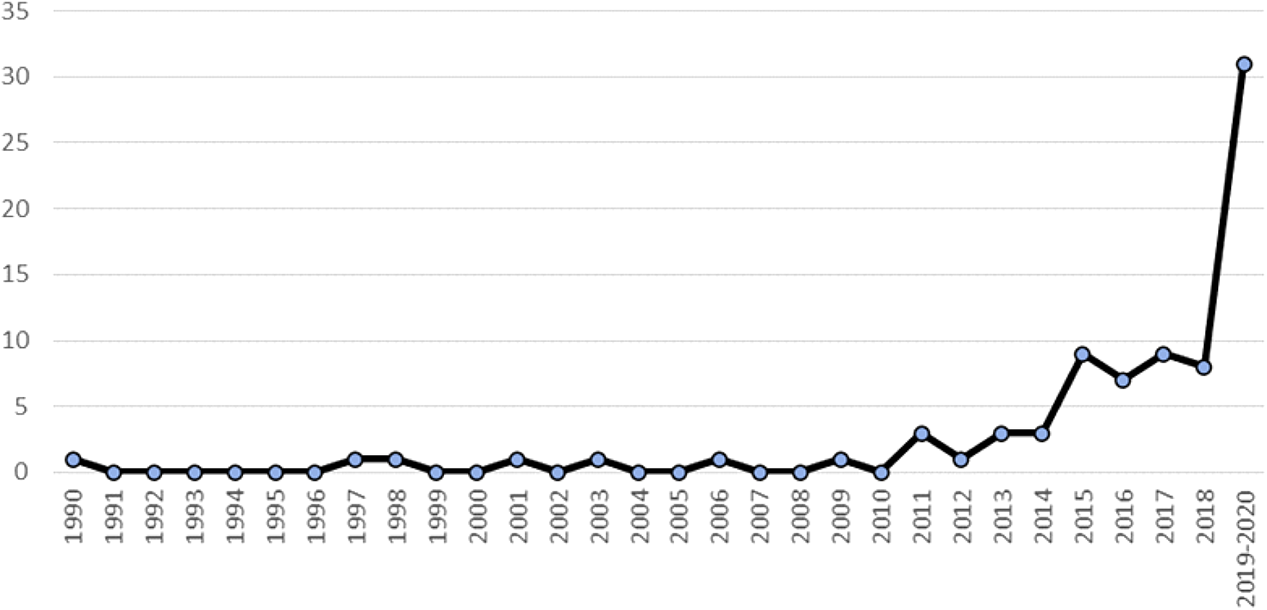
Research trend.
This trend is aligned with the ongoing megaproject development supported by private sector participation in large infrastructure construction, primarily in developing countries, such as Asia and Africa, which began to increase in 2012. 77
Most of the studies were published in the International Journal of Project Management (37%), the Journal of Construction Engineering and Management (14%) and the Project Management Journal (9%). The publication distribution is visualized in Figure 4. These results are useful for future researchers seeking analysis on the complexity of megaprojects in developing countries.
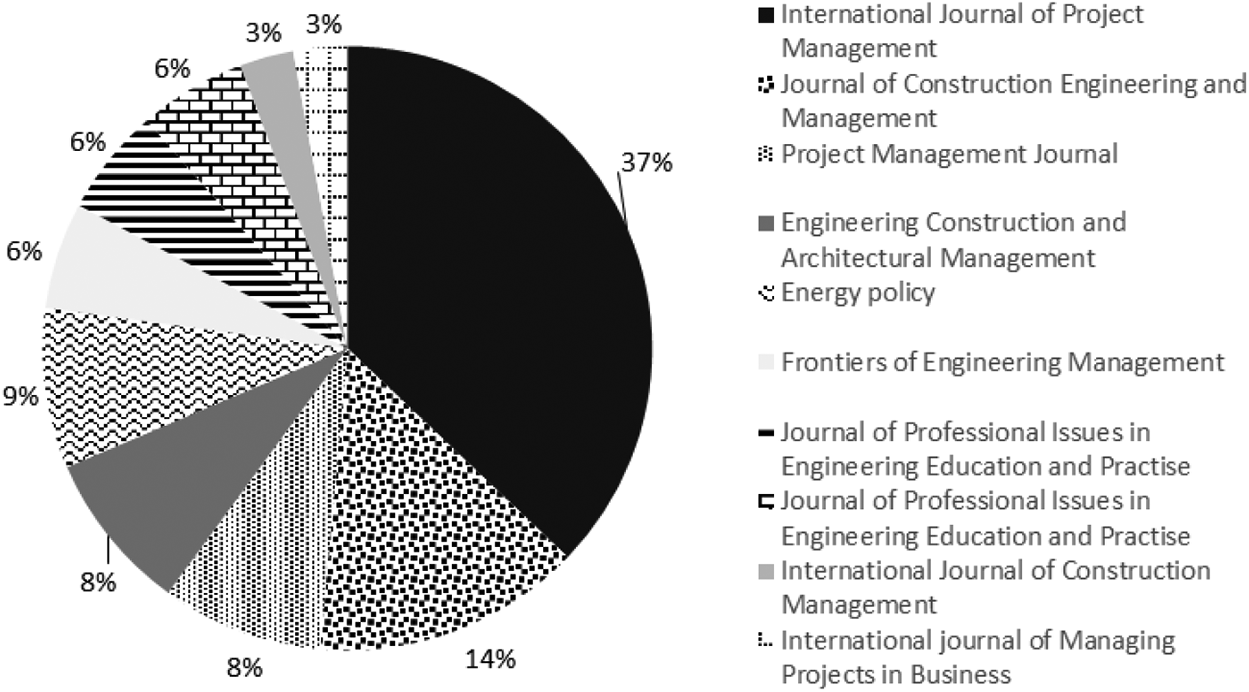
Publication in journals.
Studies in this field might increase along with the increasing technological mastery and economic and population growth in developing countries. The SLR results demonstrate China as the country with the most megaproject studies (35%), followed by South Africa (11%) and Brazil (7%). This is understandable, as China has been aggressively building large infrastructure projects, including roads, toll roads, railroads, and high-speed rail, and now features the most extensive transportation system in the world. 78 Additionally, megaprojects often cross national borders, 79 so there are many studies that describe megaproject studies across more than one developing country (15%). Studies on the complexity of megaprojects in East Asian developing countries such as Thailand, Myanmar, and Malaysia account for less than 5% of all studies (see Figure 5). This is could be an opportunity for future researchers to examine megaproject complexity in several developing countries.

Megaproject studies per country.
The SLR revealed that most identified studies (78%) examined construction infrastructure megaprojects. The others examined non-infrastructure megaprojects, such as sports events (11%), tourism events (9%), and the aircraft industry (2%). Interestingly, for the non-infrastructure case were also identified megaproject related to a peace and reconciliation mission for conflict areas in Afghanistan that involved a multi-country team under the coordination of the United Nations Security Council. 80
Much of the extant literature employed qualitative analysis (65%), using case study and descriptive narrative approaches. Only 19% of the studies used quantitative methods, such as correlation analysis, 81 confirmatory factor analysis, 82 analysis of variance, 83 and structural equation modeling. 84 Two studies used a mixed-methods approach (i.e., a combination of qualitative and quantitative). 85,86 The current finding is consistent with the conclusions of Hu et al., 31 who asserted that most megaproject research (54%) was performed by applying qualitative methods.
Qualitative analysis
This section presents the results of the analysis of the definition of complexity (RQ1), the characteristics (RQ2) and its strategic management theme (RQ3) based on the SLR extraction.
RQ1: What is the definition of megaproject complexity in developing countries?
According to the mechanism in the Methodology section, the literature dataset of 82 articles was clustered into two categories in defining complexity in megaprojects: (1) definition of complexity that is in line with the theoretical perspective; (2) definition of complexity from a practical perspective. The grouping, coding, and categorization are shown in Table 1.
The categorization of complexity definition.

Studies belonging to the first subset explicitly explored both the concept and definition of megaproject complexity. Many megaproject studies 11,97 borrowed the concept of complexity from the more mature field of project management. The first concept often used to define complexity is the interrelatedness of parts, activities, and entities. 149,150
Lu et al. 97 applied this definition regarding the complexity of construction megaprojects in Shanghai, China. The concepts of interconnectedness and interactivity form the basis of a study by Brahm and Tarziján 33 that defined megaproject complexity in the context of Chile’s mining infrastructure. Hu et al. 151 described complexity using the term “interconnection” in reference to the Shanghai World Expo construction project in China, coupled with the definition of overall project complexity as purported by Xia and Chan. 152 Zeng et al. 12 used the perspective of linkages in social behavior of the megaproject entity to describe the complexity of large infrastructure projects in China.
Some studies have used the term “nonlinear” or referred to “unsynchronized characteristics,” implying complicated or conflicting conditions. For instance, unsynchronized technology is used to implement megaprojects in developing countries that often lack supporting infrastructure. 32 In another case, Chen et al. 89 described the complexity associated with several technological innovations in the case of the Hong Kong-Zhuhai-Macau bridge in China, which was nonlinear, and due to a lack of integration between inventors (many teams and industries), one innovation change had a major impact on others. The nonlinearity of legal and regulatory factors in developing countries has also been highlighted by researchers; for instance, regulatory and bureaucratic issues that overlapped and conflicted, 92 complicated multi-organizational structures, 24 and unsynchronized procurement management due to legal differences between regions. 33
Apart from technological and legal aspects, nonlinearity issues were also associated with social aspects, such as numerous stakeholders from different cultural backgrounds with different political motives, which are potential triggers for conflict. For example, the unsynchronized behavior of local communities in relocation issues 12,94 and stakeholders’ conflicting political backgrounds as well as corruption motives, 24,153 often creates a protracted problem in megaprojects
The terms “dynamic,” “change,” and “uncertainty” were also identified as concepts used by researchers in developing countries to define complexity related to technological novelty that created implementation uncertainty in remote locations of developing countries, 154 political and economic instability, and the ambiguous and unpredictable conditions in conflict-prone areas. 80 Some researchers also described combinations of complexity; for example, the complexity concept associated with the characteristics of interrelatedness and dynamic circumstances 97 and interrelatedness in nonlinear circumstances 93 (refer to Table 1).
The second subset of studies explained the complexity concept based on past researchers’ analytical frameworks, and some did not explicitly define the concept. Most of these studies analyzed megaprojects based on a perspective of practicality, using a descriptive narrative method. These researchers described complexity based on the characteristics of a problem that caused a megaproject to become more complex. In these cases, the terms “difficulty,” “obstacle,” and “problem” tend to appear to describe the complexity of the megaproject.
Various perspectives are used to describe the characteristics of complexity in the circumstances studied. For example, some studies investigated the issue of complexity from a financial and economic viewpoint 81,100,104 and related the complexity of infrastructure megaprojects to the availability of long-term financing and business. Other studies have observed complexity from a technical perspective, associating it with the technical difficulty of planning and controlling megaprojects due to their vast scope and size. 86,101
Other studies highlighted megaproject complexity from a partnership perspective. Some studies 36,82,102 have posited that megaproject complexity could originate from issues with ambiguous legal systems and partnership agreements, limited shareholder commitments, and a lack of transparency in the tender process. Cultural aspects were also referenced in explaining megaproject complexity involving multiple nations, 83,141,142 wherein cultural and linguistic differences seemed to complicate the management and coordination of activities. Other studies highlighted the difficulties of a cultural gap between the project team and the local community, 100,105,148 which could potentially lead to crises and social rejection. 85 Although the second study group did not explicitly define complexity, the perspectives on complexity remain diverse, and thus, researchers provided descriptions or shared lessons learned to overcome these challenges.
Proposed complexity definition
Integrating principles from framework theory and findings from categorizing previous studies, this study developed a congruent definition of complexity in megaprojects as follows: ‒ Complexity relates to decision-making based on linkages between elements of an overall system. Such linkages are mostly nonlinear and imprecise (uncertain, ambiguous, and incomplete)
155
and they also change in an unpredictable manner. This is typical, as megaprojects are characterized by many activities, new and uncertain elements, and entities (e.g., technology, regulation, and environment; teams and stakeholders). These conditions lead to barriers or difficulties for project managers and other stakeholders to fully comprehend and manage megaprojects. ‒ From a theoretical perspective, a complex system with characteristics of interrelatedness, nonlinearity, and emergence is the ideal condition for optimizing various solutions.
61
Thus, in the context of megaproject systems, it is essential to manage these factors to achieve positive results and successful megaprojects.
Based on the above notions, the complexity of megaprojects can be defined as “challenges encountered by megaproject decision-makers, including the project manager, when addressing and managing various facets of megaprojects that are not always readily comprehensible.” This definition is associated with “perceived complexity” 20,156 resulting from the megaproject as a temporary organization, which involves elements of the human entity, including decision-making in response to complexity. Based on the human information processing theory approach, human decision-making is formed by objective reality as well as memory, value, experience, and attention. 157 As an organization, the perceived complexity approach accommodates intangible aspects of reality that occur in (mega) projects, such as problems of values, attitudes, morals, and behavior. 158
In the context of megaprojects, a challenge is interpreted as a necessary effort undertaken by project stakeholders to overcome certain unique conditions. 159 Systems theory acknowledges that complexity in a system as an area wherein the most critical optimization problems might be productively solved. While previous studies did not explicitly associate challenges with complexity, the term is still generally described in the megaproject context, 160 particularly in reference to developing countries. 92
RQ2: What are the characteristics of complexity in developing countries?
According to the methodological stages, the theoretical framework of interrelatedness, nonlinearity, and emergence was applied to clarify both the structural and the social dimensions of the complexity of megaprojects. Referring to project complexity by Maylor et al., 20,76 structural dimensions associated with complexity derive from the size and the relationship(s) between components (e.g., activities, costs, regulations, technology, organizations), while social dimensions derive from the complexity of the human element (team, stakeholders, shareholders), involving both the sociocultural and political considerations.
The process of coding and categorizing articles for the formulation of complexity’s characteristics is based on the mechanism presented in the Methodology section (detailed is shown in Appendix 2). The result of this process is that megaproject complexity is formulated from interrelatedness, nonlinearity, and emergence from the perspective of both structural and social terms. Below is an explanation of these characteristics in the context of megaprojects in developing countries. 1. Interrelatedness: Complexity related to the size and interrelationship(s) between project items/entities. The concept of interrelatedness in terms of the megaproject complexity is interpreted by the size and relationship of structural and social factors. For interrelated factors in the structural field, three characteristics that make megaprojects in developing countries complex have been identified: Multiple concerns (objectives, activities, technology, disciplinary requirements, regulatory procedures, etc.) are interrelated, with a tight work schedule, but are not well-integrated. This challenge is not primarily faced in developing countries. The complexity stemming from integration constraints has also become a problem in developed countries’ megaprojects, for example, infrastructure construction for the 2012 London Olympics
161
and construction of various large projects in the US
162
and Canada.
5
However, this integration challenge tends to be more complex due to the unique conditions in developing countries, such as limited worker experience and expertise,
125
lack of supporting industries,
101
inconsistent regulations and unstable political conditions,
28,95
and lack of megaproject management capabilities of construction organizations.
112
Unreadiness of governments’ regulatory systems and organizations in developing countries to undertake megaprojects: Some developing countries are engaging megaprojects with new systems (for example, Private Project Partnerships) that differ from traditional project implementation.
104
The main problem is that state governance (laws and regulations)
38
and the governance of construction organizations
24
have many levels. In an ordinary project, a tiered governance system (including laws and regulations), from local to national areas is not an issue due to a few interrelated factors; however, it becomes extremely complex when performed in the context of a megaproject.
109
There are also cases of megaprojects in newly independent developing countries with unstable government systems,
128
which result in a weak institutional capacity for megaproject management, particularly for systems including multi-country partners. Lack of knowledge and resource capacity of construction organizations or megaproject organizers in handling megaprojects in developing countries: This aspect was the cause of complexity in developing country megaprojects, which is the most studied by researchers for structural considerations. The problems investigated range from local organizations with workforce skills that do not meet work standards, insufficient mastery of technology, unsupported information technology systems, lack of innovation ability, and lack of contract management skills of developing country organizations. These cases are reflected in, among others, megaprojects in Ethiopia,
118
Ghana,
128
Saudi Arabia,
136
and Sri Lanka.
86
Regarding the interrelatedness of social dimensions, the elements that cause developing country megaproject complexity are categorized into two considerations: The number of interrelated entities include teams, stakeholders, and shareholders with different backgrounds (e.g., multiple cultures and multiple countries). A large number of entities (more than ordinary projects) with varied backgrounds is indeed one of the characteristics of megaprojects’, both in developing and developed countries. Megaprojects often cross borders between regions of a country with different cultural and organizational backgrounds.
79,163
The sociocultural and political context of interrelated stakeholders in a megaproject is the main concern of researchers in both developing and developed countries.
4,164
Several researchers have noted that in developing country megaproject organizations, these social conditions have become more complex due to a lack of experience in multinational cooperation systems involving many teams and stakeholders from multiple countries.
112,125,142
Relationship challenges between entities (weak cooperation and a lack of coordination and communication): This problem is related to point a. Several researchers in developing countries highlighted this challenge, including Ahmad et al.
92
in the case of a dam megaproject in Bangladesh, describing the issue of protracted coordination of local government entities that resulted in delaying some scheduled activities. Other cases occurred in Durban,
96
Ecuador,
112
Nigeria,
143
and Kenya.
85
2. Nonlinearity: Complexity related to the lack of synchronization between project items/entities. The concept of nonlinearity in megaprojects is reflected in multiple problems of misalignment. The simplest unsynchronized factors can potentially result in big impact, given the complicated conditions of high linkages and multiple factors. Three conditions of nonlinearity in structural aspects that are of concern to researchers in developing countries are:
Unsynchronized technical circumstances (e.g., the scope area, contracts, technology, innovation, labor/experts): For instance, geographical and geological conditions in developing countries are often more challenging to handle, as some megaproject technologies that must be applied are not in line with infrastructure conditions or resource availability in remote locations. 32,144 This is made increasingly complex with a lack of local experts in overcoming these technical conditions. 36,119
Unsynchronized cost aspects: The high level of investment required for megaproject financing is not aligned with the usual financial capacity of developing countries and construction organizations. Unstable economies in developing countries are a source of complexity for national megaproject financing, during construction 34,127,128 as well as for long-term maintenance sustainability. 100 Apart from state finances, researchers have highlighted the finances of construction organizations as being prone to bankruptcy. 119,125,153
Unsynchronized bureaucracy (e.g., multi-governance and multi-regulation): Unsynchronized aspects of law, regulation, and policy in developing countries, among others, are related to complex bureaucracies owing to multiple conflicting procedures or regulations. 92,102,165 Technological innovations are critical to megaprojects; however, a lack of regulatory synchronization between regions in developing countries hinders the integration of such innovations. 89 This aspect of complexity also impacts many gaps in the violation of occupational health and safety in megaproject areas. 13 Unsynchronized and indecisive regulations also impact the culture of rampant corruption in developing countries’ bureaucracies, which is further discussed in terms of the social perspective.
Nonlinear conditions from the social perspective are conceptualized into three sources of complexity, which are: Unsynchronized stakeholders (differences in economic and cultural motives) that lead to conflict: Unsynchronized multi-stakeholders and multi-regulatory bodies create many loopholes for megaproject entities to engage in corrupt practices.
12,34,100,153
Cultures of corruption in developing countries are an obstacle in joint venture projects with multinational partners and are considered to present risky investment climates.
94,144,166
Differences in economic motives, cultural perspectives, and politics of stakeholders are also a source of complexity. For example, refusal to acquire land by community members because of price mismatches,
96,132
pessimistic perceptions of the public,
108,148
conflicts of interest with environmental associations,
103
and local organizational associations,
129
as well as differences in the sociocultural grounding of local communities.
120,136
A megaproject entity fallacy exists in interpreting/estimating/assessing megaproject processes, objectives, and targets (optimism bias). Entities (teams and stakeholders) tend to be overly optimistic about megaproject targets, which sometimes unwittingly exceed the capabilities of the country or project organization. This challenge arises in megaprojects in developing countries and developed countries alike
73
and has an impact on project estimation errors (low funding, short target completion timeline, and high quality demands) and planning errors in decision-making during implementation.
99,112,117,119
In developing countries, this condition often occurs as a result of the pressure of the stakeholders’ political motives.
135
Unsynchronized support, commitment, and participation of the government and stakeholders: These challenges stem from weaknesses of a country’s legal and regulatory systems and a lack of state and organizational ability to formulate megaproject contracts.
127
This challenge is inseparable from the relatively unstable political and economic conditions in developing countries.
34,131
2. Emergence: The megaproject item’s/entities’ condition of continuous change and uncertainty. Change and uncertainty reflect the concept of emergence in relation to complexity. In the structural dimension, the three dominant aspects examined by researchers as a source of complexity for megaprojects in developing countries include:
Instability of economic conditions, regulatory laws, and politics: This condition is indeed a characteristic of developing countries 74 that exerts an impact on the implementation of megaprojects. 28 Economic, political, and legal instability can result in sudden changes and uncertainty in infrastructure megaprojects, for example, in Kenya, 98,139 India, 32 and Brazil. 110 This uncertainty is related to the determination of property and land prices for megaprojects, 94 among other considerations. Several megaprojects in non-infrastructure sector also face this problem; for instance, challenges of organizing international sporting events in South Africa, Brazil, and India. 21
The natural environment in inland locations of developing countries is still natural and pristine, and thus difficult to predict. Examples of this challenge were presented by several researchers, such as the instability of geological conditions in Ethiopia for the construction of a rail infrastructure megaproject, 33 environmental risks in Bangladesh infrastructure megaprojects, 94 and in Chinese megaprojects. 11
Changes and uncertainties in technical matters (i.e., technology, process, design, scope of work, and the schedule): Challenges related to this aspect also occur in developed countries, such as megaprojects in the Netherlands, 167 the United Kingdom, 8 and the US. 7 However, this condition has the potential to become more challenging in the context of developing countries related to other aspects, such as inexperience, lack of experts, economic, social, and political instability. 87,124 Another issue expressed was that organizations in developing countries are less adaptive and flexible to changes that occur in megaprojects. 23,35,36
The researchers highlight two main matters in the social dimension of emergence that make developing country megaprojects complex: Lack of stakeholder transparency in both their motives and roles: Researchers highlighted this matter, particularly in terms of political background/opposition parties. For example, the water infrastructure megaproject in Brazil,
110
the international airport in Ecuador,
113
and hydropower in central Africa.
139
In some of these studies, the instability of sociopolitical conditions (political and security uncertainty) made the process and progress unclear, resulting in low megaproject performance.
165,168
This condition also reportedly threatened the security (terrorism) of megaprojects teams.
80,135
Instability of support and commitment of government and partners (stakeholders): This challenge is associated with legal aspects
137
and the economies of developing countries, which are instable, and among the other challenges, there is no clear contract regulation, especially for the financial risk management system.
118
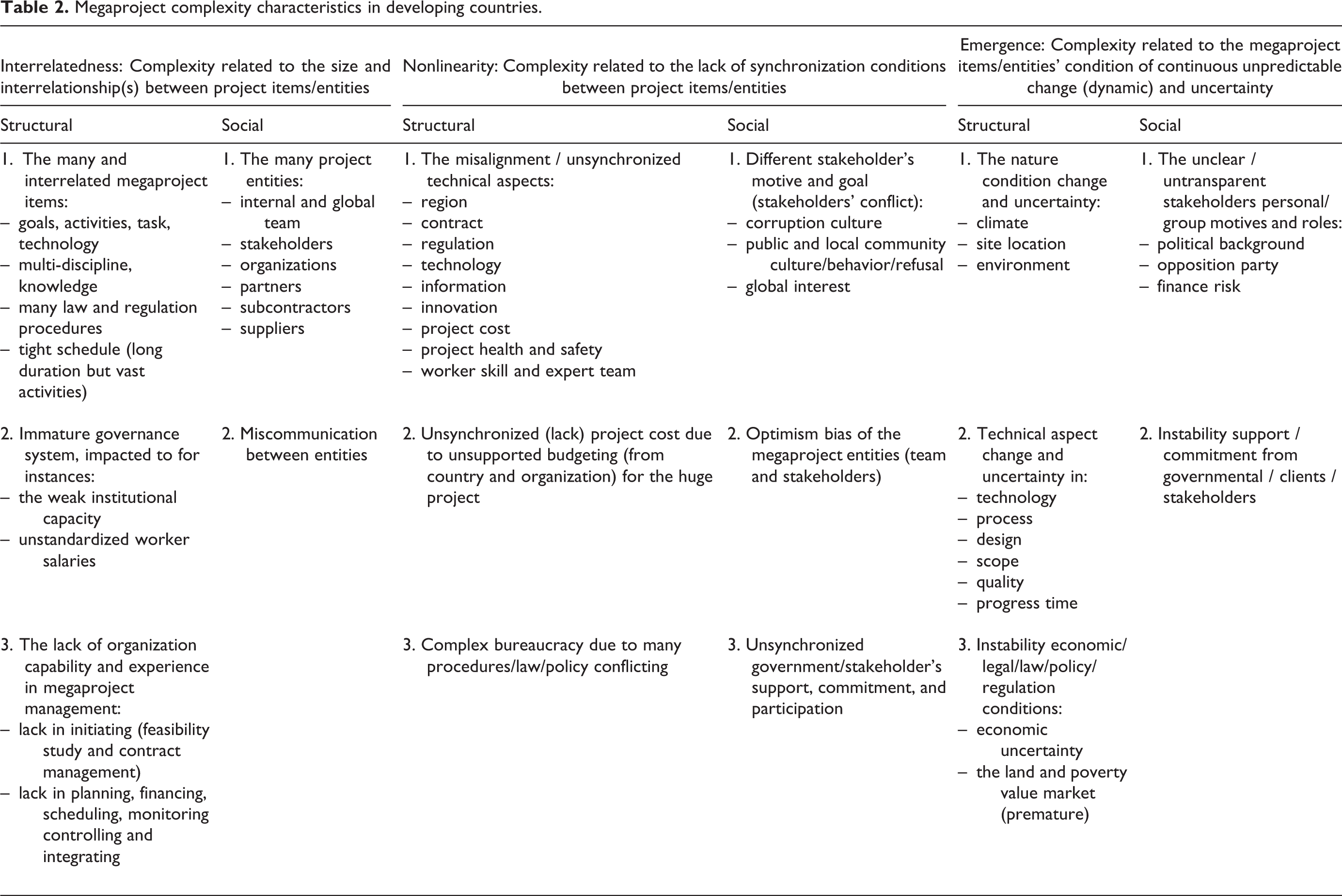
A summary of these complexity characteristics is presented in Table 2.
Megaproject complexity characteristics in developing countries.
RQ3: What management themes for strategies to respond to complexity in developing countries?
After clarifying the complexity characteristics of megaprojects in developing countries, the last objective is to explore the lessons learned and strategic management approaches formulated by previous researchers to respond to these identified challenges.
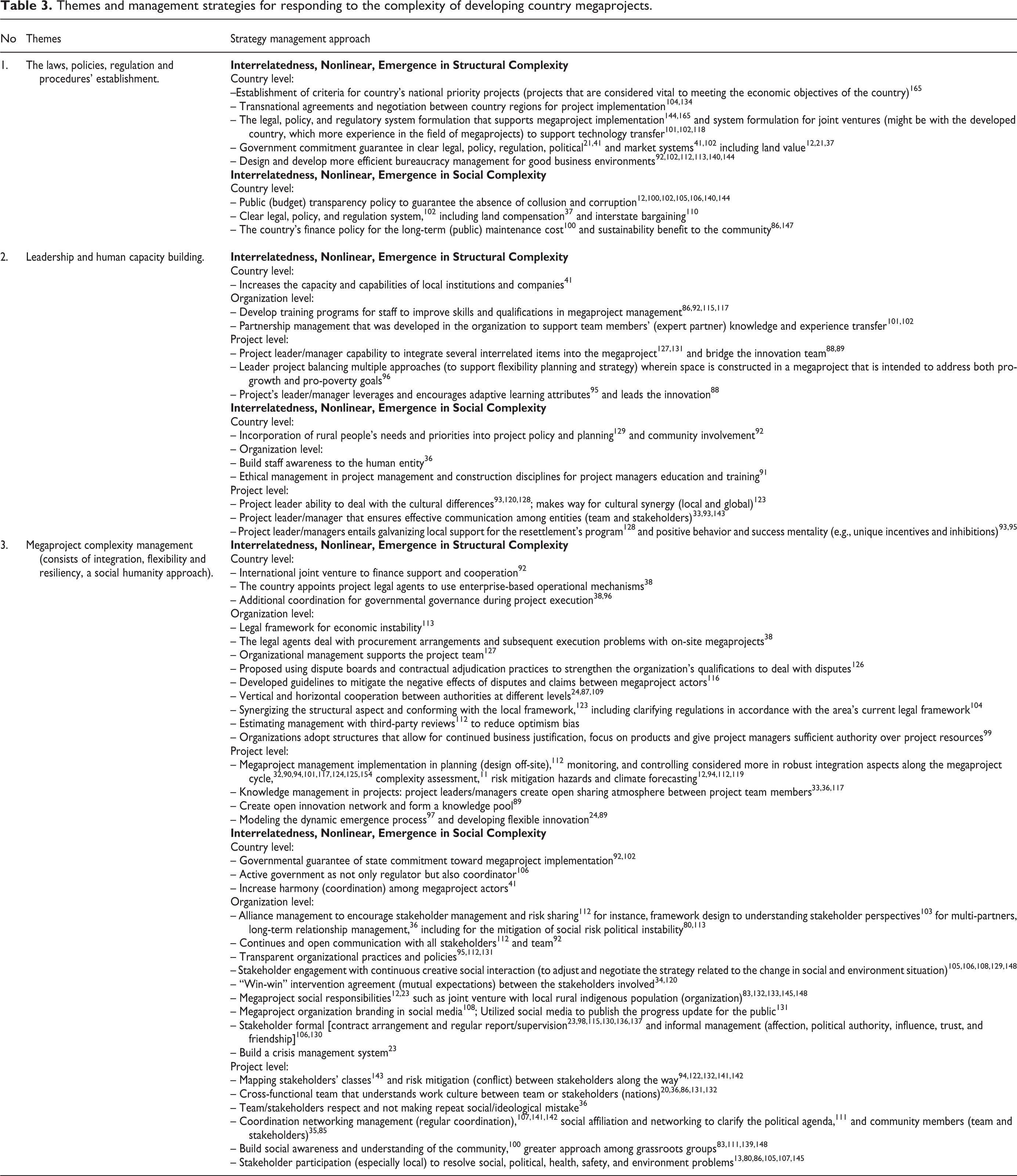
The qualitative coding and structuring the articles is based on the mechanism presented in the Methodology section. The final categorization result from coding process is shown in Table 3.
Themes and management strategies for responding to the complexity of developing country megaprojects.
This study revealed that past researchers responded to complexity in megaprojects from multiple solution perspectives. Through the authors’ team discussion, this study classified these perspectives into three considerations: management strategies at the country level, the organizational level, and at the project (megaproject) level. In addition to categorizing the management level, the types of strategies formulated by previous researchers are also grouped.
To accommodate the megaproject complexity associated with interrelatedness, nonlinearities, and emergences in the structural and social factors, the themes/concepts of strategic management studies are grouped into three: (1) The laws, policies, regulation and procedures’ establishment, (2) Leadership and human capacity building, and (3) Megaproject complexity management (consists of integration management with flexibility and a social humanity approach).
These themes—the study of law, regulations, policies, and bureaucracy; leadership and human resource development in megaprojects; and megaproject complexity management that considers integration management, flexibility, and social human approaches—are described as successful tactics for responding to the complexity of the structural and social fields. These three management study areas offer detailed strategies that could be classified at country, organization, or project level. However, these areas of management studies have used mostly descriptive qualitative and phenomenological (lived experience) approaches, which lack theoretical grounding; therefore, to date, a unified management strategy has yet to be formulated in the context of megaprojects. The details of strategic/management themes to accommodate the complexity of megaprojects in developing countries are resumed in Table 3.
Research findings and future research
The results of this study indicate that a megaproject can be viewed as a complex organizational system. By utilizing both systems theory and complexity theory (CAS) as a framework for exploring previous research, several interesting research findings were identified to be explored and deepened in further research; these are explained as follows: 1. This study has clarified that the characteristics of complex systems (systems theory) and CAS (complexity theory) are reflected in the complexity of megaproject systems. This study formally asserts that the definition of complexity is a challenge for megaproject entities to manage various structural and social elements that are interrelated, potentially contradictory, and under uncertain and dynamic conditions. The definition of complexity was extended to include both positive and negative challenges, offering a more balanced perspective on the causes of failure but also as a source of innovation opportunities. This concept is adopted from the project risk term, which is defined as “an uncertain event or condition that, if it occurs, has a positive or a negative effect on a project objective.”
19
From normative rational theory, risk in project could be positive (opportunities) or negative (threats).
169,170,171,172,173
Positive challenges are associated with “opportunities” that could be gained from complexity aspects, and negative challenges are related with the “loss” from complexity condition. For instance, due to limited experience, several megaproject teams or stakeholders in developing countries often under uncertain conditions for structural aspect in the technology are to be applied.
34,94
Thus, team members and stakeholders require consultant foreign experts from developed countries who are experienced to support the technology implementation,
125
which in turn, potentially adds to overall project costs (negative). However, this foreign expert involvement should be used as an opportunity for technology transfer (positive).
125
If complexity is seen as a challenge,
174
this condition could be anticipated with a planned contract system for construction organization to include the knowledge transfer as a point of a clause in the partnership agreement contract. From this study result, the majority of the past research still focused on problems, difficulties, and obstacles and had not yet focused on issues that balance the positive opportunities of megaprojects. Thus, to strengthen the concept of complexity as a challenge, with numerous interrelated, nonlinear, and emergent structural and social aspects, studies focused on positive opportunities of complexity in megaprojects need to be carried out. Such studies could lead to management approaches and strategies that leverage positive opportunities. 2. The concept of complexity from the perspective of megaprojects has been clarified in three characteristics: interrelatedness, nonlinearity, and emergence, in terms of both structural and social elements. These characteristics are details into 16 identified challenges of developing countries’ megaprojects. The characteristics of complexity identified from past studies did not consider the stages of megaprojects. In addition, most of the previous studies discussed these characteristics partially through qualitative analysis. Based on this analysis, opportunities for further research are apparent; for instance, studies to examine the relationship(s) between the characteristics of complexity in a more comprehensive manner that considers the megaproject stages (initiation, planning, implementation, monitoring evaluating, and commissioning), with quantitative or mixed-methods, to obtain more in-depth analyses. 3. This study succeeded in formulating three themes for the study of megaproject complexity management strategies at the country, organization, and project levels. The dominance of the qualitative approach in megaproject studies in developing nations suggests that the field is still in its infancy and the body of existing knowledge has yet to reach maturity. This indicates that there is no definite, measurable theory for analyzing megaprojects’ complexity in developing countries; therefore, this study could help a new era of research to emerge. For future research, studies in these areas that take a theoretically-based approach, strengthened by empirical analysis, are required. Several theoretical frames applied in the study of megaproject management in developed countries have the potential to advance the study of the complexity of megaprojects in developing countries, including leadership theory, legal and organizational theory, flexibility and resilience management, and complex dynamic systems theory. The leadership theory has the potential to be appropriate in managing the megaproject complexity, among other aspects such as competency leadership, complexity leadership, and agile leadership.
175
Legal and organizational study for megaproject in developing countries, such as joint venture and partnership contracts,
101,165
also must be strengthened. Further, this study also confirms that in addition to the size of related factors in activities and entities, aspects of change and uncertainty take place in developing country megaprojects. Therefore, besides the flexibility management approach, management resilience in megaproject is also important. Resilience relates to the adaptive ability or recovery from failure
176
; therefore, it is considered to be useful for coping with the emergent complexity. The concept of resilience is relatively new in project management
177
and megaprojects
178
and is rarely studied by researchers, especially in developing countries. Resilience from the perspectives of manufacturing
176
and enterprise systems management
179
can potentially be an approach in megaprojects. Finally, in supporting megaproject management, an understanding of integration and dynamics systems is required, coupled with the identification of characteristics in developing country megaprojects. This concept does not yet exist in the realm of complexity management in developing country megaprojects. Due to megaprojects being considered a temporary organization, for future research, an integrated design and operation management approach as part of enterprise systems
180
could be utilized to study the dynamic system of megaprojects.
The results of this study have been validated and verified according to the mechanism described in the Methodology section. The detailed interview and discussion results with the megaproject practicians are not part of this current study dataset and will be examined and reported in a subsequent study.
Conclusion
The present study clarifies the complexity of megaprojects in developing countries by formulating a definition of complexity, exploring characteristics of complexity, and formulating management themes and strategies to respond to complexity. The study mechanism with the concept’s development based on systems and complexity theories and a qualitative SLR were constructed practically referring to the results of previous validated studies.
This study also identified several research gaps that present opportunities for the future study of megaproject management researchers, particularly in the context of developing countries. In addition, the results of this study have the potential to provide insights for megaproject professionals, principally in terms of strategies for managing megaprojects in developing countries.
Footnotes
The code and category of complexity characteristics aspects.

| Interrelated (code: 1a) | Nonlinearity (code:1b) | Emergence (code:1c) | |||||||||
|---|---|---|---|---|---|---|---|---|---|---|---|
| Structural (x) | Category (code:1ax) | Social (y) | Category (code:1ay) | Structural (x) | Category (code:1bx) | Social (y) | Category (code:1by) | Structural (x) | Category (code:1cx) | Social (y) | Category (code:1cy) |
| Sub-categorize and Article References | Sub-categorize and Article References | Sub-categorize and Article References | Sub-categorize and Article References | Sub-categorize and Article References | Sub-categorize and Article References | ||||||
| Multi-interaction items in the megaproject 11, 33, 87, 88, 91, 97 ; multidisciplinary tasks to be performed in parallel 86, 154 ; multiple legal procedures, policy, and regulation 92, 134 ; multiple goals and objectives 11 ; long life cycle project duration but with tight schedule 154 | Many interrelated megaproject items | Multiple internal and external teams from different countries (differing languages, religions and work cultures) 11, 33, 36, 80, 91, 93, 123, 125, 134, 141, 142, 181 | Multiple project entities (teams and stakeholders) with multiple backgrounds | Procurement management unsynchronized 33 ; mismatched contract 98, 114, 127, 136 ; unique character situation 140 ; mismatch of worker skill and expert team 36, 97 ; misalignment between the technology 32, 33, 94, 95, 97, 144 | Misalignment / lack of synchronization of technical aspects | Stakeholders’ different motives and goals (stakeholders’ conflicts) 34, 111, 122, 123, 132, 137, 143, 153, 181, 182 ; (environment organization) 103 ; public/local social community 106, 108, 129, 144, 145 | Different stakeholders’ motives and goals (stakeholders’ conflict) | Economic uncertainty 12, 21, 94, 98, 100, 105, 110, 117, 139, 148, 165 ; change and uncertainty of the law/legal, policy, and regulation system 86, 98, 102, 104, 136, 140, 144 ; instability land and poverty value 94 ; premature market/management 38, 98, 101, 102 | Instability economic/ legal/law/policy/regulation conditions | Change and unclear stakeholders’ personal/group motives (transparency) regarding megaproject target(s) 83, 102, 143 (particularly in terms of political background and opposition party) 97, 110, 113, 114, 117, 139, 165 | Unclear / untransparent stakeholders personal / group motives (social/politic/cultural/security and roles) |
| The lack of organizational capability for task, information, technology, legal, finance, innovation integration 11, 35, 86, 89, 97, 101, 112, 115, 118, 125, 128, 136 ; poor megaproject management in planning and scheduling 35, 86 ; coordination and monitoring 86, 117, 119, 124, 127, 131 ; and low technical skill and experience of labor 11, 28, 35, 94, 115, 125, 127 | Lack of organization capability and experience in megaproject management | Multiple stakeholders involved in megaproject organization 11, 36, 80, 87, 88, 91, 95, 97, 103, 105, 114, 134, 135, 143, 153 including suppliers and subcontractors (local and global) 33, 103, 106, 130 | Many innovations, but innovations are unsynchronized 89, 115 ; low consideration of occupational health and safety, due to the complex activities but low local construction experiences 12, 13, 94, 135 | Refusal of the local community (e.g., related to land acquisition and resettlement) 12, 34, 37, 83, 94, 105, 129, 132, 133, 136, 153, 165 ; local culture/behavior community/partner uniqueness 36, 100, 120, 129, 136 and conflicts 83, 103, 132, 133, 148 ; stakeholder/entities corruption culture 12, 34, 94, 100, 102, 105, 135, 144, 149, 153 | Technology and process changes and uncertainty due to the novel application 32, 33, 95, 97, 154 ; structural/technical changes (design) 34, 87, 94 ; scope, quality specification requirement, progress elaboration 98, 107, 117, 124 ; low flexibility of organization to respond the dynamic cycle in megaproject stages 23, 35, 36, 89 | Change and uncertainty of technical aspects | Uncertain social circumstances (cultural and political/risk) 35, 80, 110, 123, 138 –140, 144, 148, 181 and security 145 /terrorist attack 135, 140, 165 unclear stakeholders/partner roles due to the poor /lack (finance) risk management 118, 136 | ||||
| Multi-level immature governance system 24, 38, 96, 104, 109 ; multiple claims and disputes from megaproject entities 116, 124, 126 ; unstandardized (low) worker salaries and compensation 92 ; weak institutional capacity impacted to the absence of regulatory multi-partnership project 136 | Immature governance system | Relationship issues in terms of communication and coordination between entities 80, 86, 89, 92, 96, 102, 103, 112, 143 | Relationship issues between entities | Unsupported country budgeting due to low financial income country/stakeholder 34, 92, 127, 128 and for long-term maintenance 100 ; unsupported (low) financial contractor budget (bankruptcy) 119, 125, 128, 153 | Unsynchronized project cost /finance | Optimism bias of the megaproject entities (team and stakeholders) 87, 99, 112, 117, 119, 135 | Optimism bias of the megaproject entities (team and stakeholders) | Unexpected disturbances from the climate/natural environment (e.g., due to the rural condition)
11, 33, 94, 127
; accident
135
|
Uncertainty of nature’s condition change | Instability support/commitment (governmental) 92, 94, 102, 113, 137, 153 | Instability support/commitment from governmental/clients/stakeholders |
| complex bureaucracy due to conflicting procedures or regulations 92, 102, 112, 144, 165 | Complex bureaucracy (many conflicting procedures /laws / policies) | Lack of government/stakeholder support commitment and participation
34, 106, 127, 131
|
Unsynchronized government/ stakeholders’ support, commitment, and participation | ||||||||
Declaration of conflicting interests
The authors declare no potential conflicts of interest with respect to the research, authorship, and/or publication of this article.
Funding
The author(s) disclose receipt of the following financial support for the research, authorship, and/or publication of this article: This work was supported by a Directorate of Research and Community Service, Directorate General of Research and Technology Strengthening and Development. The Ministry of Research, Technology and Higher Education of the Republic of Indonesia. Doctoral Dissertation Research Grant [2901/UN1.DITLIT/DIT-LIT/LT/2019].
