



Abstract
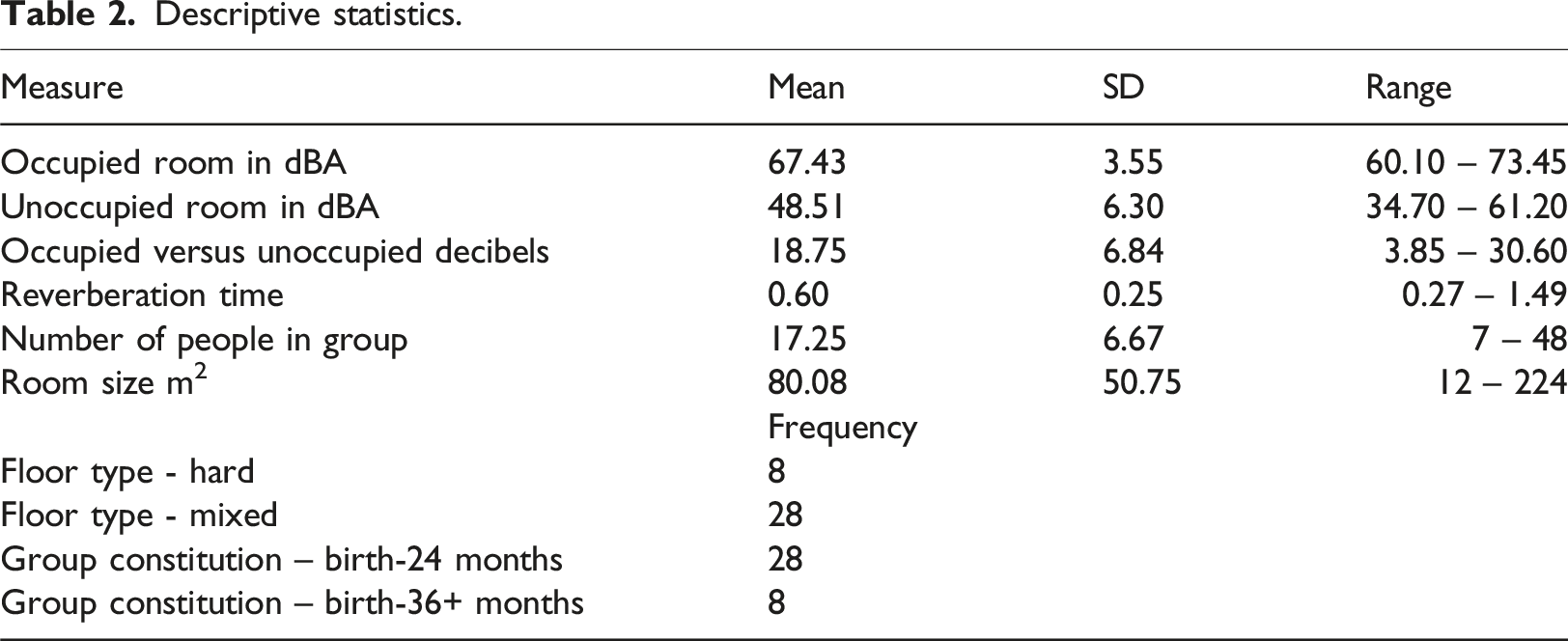
Exposure to excessive noise in childhood has been negatively associated with children’s language development, wellbeing and learning. This study describes the noise levels in infant-toddler early childhood (ECEC) classrooms and identifies social and physical room features associated with individual differences. Noise surveys of unoccupied and occupied decibel levels and reverberation times were undertaken in 37 infant-toddler rooms. The average occupied noise was 67.43 dB (dBA; SD = 3.55dBA) which was around 20dBA noisier than the unoccupied room. The average reverberation time was 0.6 seconds (SD = 0.25s). Individual differences in dBA were associated with room size and the age composition of the group. Two case studies of classrooms exhibiting different noise levels illustrate how social and physical features combine to exacerbate or suppress noise. With no established noise guidelines for ECEC services, this study establishes an evidence base that can inform policy and practice efforts to improve acoustic environments of ECEC services.
Introduction
As active environments, early childhood education and care (ECEC) classrooms are noisy. While defined by Erickson and Newman (2017, p. 451) as “any unwanted or unattended sound,” noise is a natural by-product of activity in ECEC rooms where it is generated by the talk and vocalisations of children and adults. Play and activity also cause percussive noise as materials and furniture are moved. Much of this noise is to be expected, but concerns have been raised about how the acoustic environment of ECEC rooms may impact children and educators. Excessive noise has been linked to adverse child language and wellbeing outcomes (Erickson & Newman, 2017; Evans et al., 2001; McMillan & Saffran, 2016; Werner et al., 2015) and to adverse educator physical and mental health and voice disorders (Jonsdottir et al., 2015; Sjödin et al., 2012b; Sodersten et al., 2002). Growing evidence on the adverse effects of excessive noise has led some to argue that noise levels in ECEC settings comprise a quality feature which deserves increased attention in policy and professional practice (Linting et al., 2013; Manlove et al., 2001; Werner et al., 2015).
Several studies have reported the noise levels of school and preschool-aged settings (e.g., Bitar et al., 2018; Brachtl & Trimmel, 2023; Kaļužnaja & Lakiša, 2016; Sjödin et al., 2012a), but infant-toddler ECEC contexts are largely unexplored. This research gap is significant given that in Australia, approximately 50% of children aged birth to two attend ECEC services (Australian Bureau of Statistics, 2018). Very young children may be particularly sensitive to noise levels for several reasons. Firstly, the infant-toddler period is a critical period for language development, and this development is strongly impacted by infants’ and toddlers’ experience with language interactions (Degotardi, 2021). Clear speech sounds are particularly important for the language development of very young children, who are still developing their ability to regulate their attention to sound (Polka et al., 2008). Infants and toddlers are also more susceptible than older children to otitis media (middle ear infections), which impedes their hearing and, accordingly, their ability to differentiate speech sounds (Cai & McPherson, 2017), which has implications for both language and literacy development.
This study describes and explains variation in the noise levels of infant-toddler rooms in Australian ECEC services. Evidence of the noise levels in classrooms and how they relate to the physical and social characteristics of the room is needed to understand the influence of noise on the language, health and wellbeing of young children and educators (Werner et al., 2015). The study addressed the following questions: 1. How noisy are infant-toddler classrooms and what level of between-classroom variation exists? 2. What environmental factors are associated with noise levels?
Why is the study of noise important?
The presence of excessive noise has the potential to disrupt perception and learning (Manlove et al., 2001). Listening involves the funnelling of wanted and unwanted noise through the ear canal to the eardrum to activate auditory receptors and neural pathways. Noise degrades the speech signal through either energetic or informational masking. With energetic masking, the masker covers the target signal (Erickson & Newman, 2017), whereas with informational masking, the listener fails to separate the target from the masking noise (Wightman & Kistler, 2005). Evidence suggests speech-based background noise or babble, has a stronger impact on speech perception by children than steady state background noises (Klatte et al., 2010). Speech-based noise affects the same frequencies, and fluctuates in the same way as speech, so is an effective masker of speech content. Young children therefore require the talk directed to them to be considerably louder than background noise. Due to their developing language abilities, infants find it difficult to separate the meaningful sounds from the extraneous noise, resulting in a masking of speech sounds and information (Leibold et al., 2016).
Speech processing in noisy environments can fatigue a child’s working memory as they attempt to extract the target from noise (Pichora-Fuller et al., 1995). High noise levels can also affect global development and overall health by reducing learning efficiency (George & Youssef, 2012). In noisy environments educators also tend to raise their voice (Manlove et al., 2001), which not only leads to their own vocal fatigue, but also reduces the intelligibility of the spoken message for young children (Rostolland, 1985). These findings all suggest that the presence of excessive noise reduces intelligibility and consequently, impedes opportunities for interaction-based learning.
What constitutes noise?
Children’s environments include various types of noise. Within the room, noise is generated by speech, vocalisations and the movement of people and physical materials. Background noise can be generated by broadcasted sound as well as by fixtures such as air-conditioning units, fans and lights. Sound can also penetrate from outside the room, often in the form of traffic, aircraft, machinery, or people-produced noises (Erickson & Newman, 2017).
Average noise estimates of frequently heard sounds in dBA (American Speech and Hearing Association, 2019).
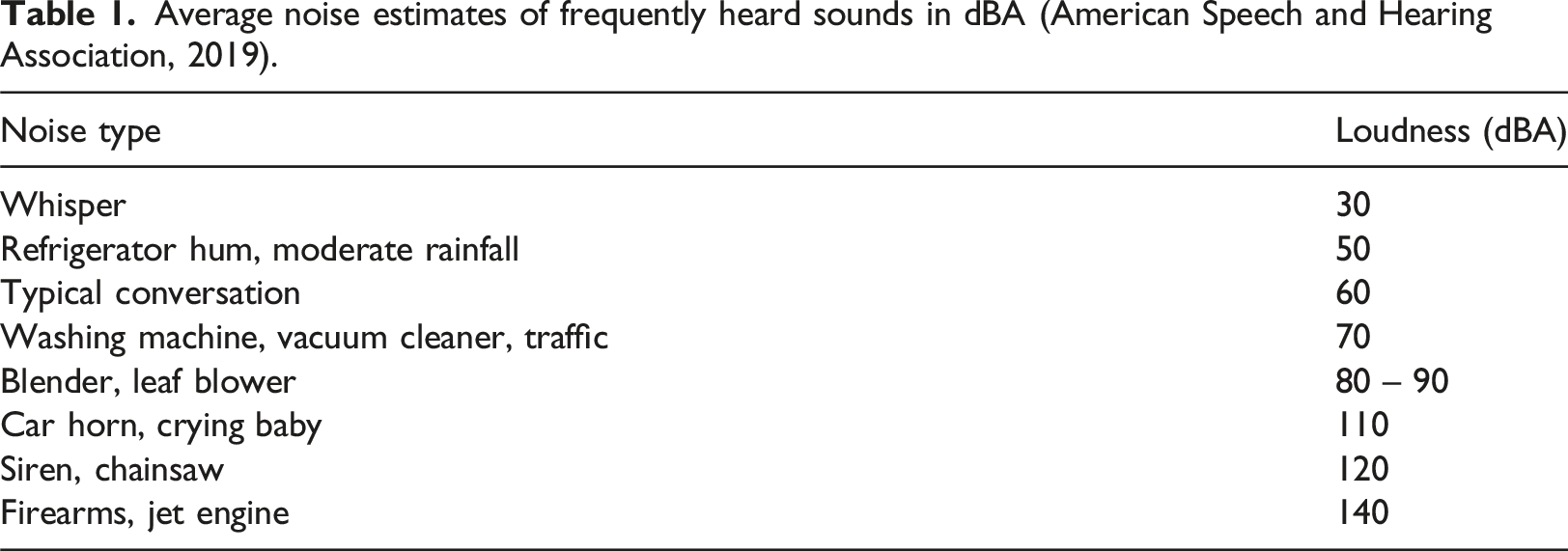
The dBA in unoccupied rooms captures the inherent noise in the classroom, typically in the form of the background noise generated by fixtures or noise that is intruding from outside (Manlove et al., 2001). Occupied noise includes the people and their activities within the room. Therefore, by subtracting the unoccupied dBA level from the occupied dBA level, the loudness of the noise created by those in the classroom can be determined.
The second noise measurement of interest is reverberation, defined as the degree to which sound echoes in a room. Reverberation is caused when soundwaves reflect off surfaces in the classroom, which causes sound to persist. The reverberation time can be calculated based on early decay time T20, which is mean time taken to reduce reflected sound by 20dBA. Long reverberation times are problematic as reflected sound fills the pauses between words (Neuman & Hochberg, 1983). Softer consonants in words (for instance /c/ in race or /g/ in giant) are more at-risk of being masked by noise, resulting in an inaccurate signal (Phatak et al., 2008). It is not desirable to completely remove reverberation as the resultant room would sound ‘dead’ and lacking in ambience which results in poor sound distribution (D'Antonio, 2013). However, large reverberation times make a room appear louder and noisier and make speech appear muffled.
How noisy is “noisy”?
In Australia, there are currently no noise guidelines for ECEC services. Guidelines for primary and secondary school classrooms specify that for a small classroom (>283 m3), the unoccupied background noise should be below 45dBA and reverberation time below 0.5 seconds (AS/NZ, 2016). For larger rooms, a reverberation time below 0.7 seconds is recommended. However, these guidelines do not provide recommendations for different aged children. Caution is therefore needed before applying school-based specifications to ECEC classrooms, due to the different activities and interactions in ECEC contexts. Noise guidelines in schools assume that one teacher will be addressing a whole group of relatively stationary students. In ECEC, educators tend to interact closely with individual or small groups of children, so this may moderate any adverse effects that noise has on the children’s or educators’ outcomes (Winroth et al., 2023). On the other hand, the predominant implementation of play-based learning in ECEC services is likely to produce more vocal and percussive noise than a typical primary or secondary classroom.
Several studies have demonstrated that ECEC services are noisier than school guidelines would recommend. Classrooms for preschool age children have reported occupied average decibels of between 60dBA and 75dBA (Bitar et al., 2018; Brachtl & Trimmel, 2023; Kaļužnaja & Lakiša, 2016; Sjödin et al., 2012a). In Australia, Grebennikov & Wiggins (2006) recorded day-long noise in 25 preschools and reported an average decibel of 80.48dBA. Half of the participating centres recorded a six-hour average over 83.65dBA, with the highest recorded level being 86.1dBA. The only known published study of noise in rooms for children aged largely under three reported a much lower average of 56.54dBA (Linting et al., 2013).
Fewer ECEC studies have assessed reverberation times. Winroth et al. (2023) reported an average reverberation rate of 0.4 seconds in a sample of 57 Swedish preschool classrooms. Frank and Golden (1999, cited in Manlove et al. (2001) reported reverberation times in infant-toddler rooms ranging from 0.2 to 0.5 seconds. Between-classroom variation is also apparent, with 29 Swedish ECEC centres catering for groups of 1 – 6-year-olds reporting reverberation times of between 0.4 seconds and 0.7 seconds (Gerhardsson & Nilsson, 2013).
Explaining noise variation
A multitude of factors explain noise variation, the first being noise caused by the room inhabitants themselves. The number of children in a group may explain variation as more people in the room will naturally produce more vocal and activity-based noise (Picard, 2004; Shield & Dockrell, 2004). The age of children may also be a factor. Noise levels produced by 4- and 5-year-old children have been reported to be higher than those produced by 3-year-olds (Gokdogan & Gokdogan, 2016). Infant-toddler rooms have registered markedly lower dBA (Linting et al., 2013) and reverberation times (0.2–0.5 seconds) (Frank et al., 2001; cited in Manlove et al., 2001) than most studies reporting noise levels in preschool classrooms (e.g., Bitar et al., 2018; Grebennikov & Wiggins, 2006).
Noise levels can also be caused by the physical structures of the room. The size of the room is one factor, with larger rooms not only often accommodating more children, but also creating more space for reverberation (Winroth et al., 2023). Hard surfaces, in the form of large windows and hard flooring, furnishings, wall and ceiling surfaces reflect noise back into the room, thus exacerbating the noise and creating higher reverberation times (Winroth et al., 2023).
The current study
Despite what is known about the negative effects of excess noise, little is currently known about the noise levels experienced by infants and toddlers in ECEC rooms. This study reports findings from a survey of the dBA and reverberation levels measured in infant-toddler rooms in Sydney, Australia. By reporting noise averages and variation of noise experienced in these settings, and exploring factors associated with between-centre differences, findings can inform practitioners and policy makers about how to establish acoustic environments that will optimise infant-toddler learning and development.
Method
Participants
Participating ECEC services were recruited as part of a larger longitudinal investigation of the relationships between the infant-toddler language environment experienced by very young children attending 37 ECEC services, and their subsequent language development. Services who enrolled children aged birth to two were invited to participate in this study, which took several observational measures of the ECEC language environment, including acoustic measures. Ethical approval was obtained from the Macquarie University Human Ethics Committee, and informed consent to participate was obtained from families, services, and where required, the approved provider. All researchers who visited the service were respectful of, and responsive to, the wishes and reactions of the children and educators and ceased data generation when any adverse effects of their presence were detected.
Services differed in how they grouped infants and toddlers. Two services provided a room for infants up to 18 months of age. More commonly, rooms catered for children birth to 24-month (n = 26). Seven services had rooms catering for children birth to 36 months, and one service catered for children of mixed ages from birth to age five. Most services provided a single room for the group plus an outside space. In a few cases children could move between two or more internal rooms. In these instances, educators were asked to nominate the room that was used most by the children and the noise measurements were generated in this room. One nominated room was very small (<10 m2) and comprised only part of several room spaces used by the infants. It was therefore excluded from analyses.
Data generation
Measures of noise
The measures of dBA were gathered through an iPad app called Soundlog, produced by the National Acoustics Laboratory as a readily available and reliable tool for measuring noise levels in occupational environments. Commencing prior to the children arriving, two iPads were placed in different sections of the room and the app was left to record data for at least 6 hours, after which the researcher collected the iPads in the afternoon. The reverberation time (T20) was determined using a B&K Sound Level Meter (SLM). Reverberation measurements were triggered with a loud clap with a trigger level set to 80dBA. Four noise measures were derived:
Unoccupied room dBA was generated for a period of 5 minutes before the children had arrived.
Occupied room dBA was calculated from the average dBA across the full data generation period (6+ hours). Because loudness can vary greatly in different parts of the room, the average dBA was taken from both iPads and a mean score was calculated.
Descriptive statistics.
Reverberation time was measured in unoccupied space at two or three different locations in the room and the average was taken. Locations were chosen where children spent large periods of time.
Social and physical room data
A description of the social and physical features of the room was taken at the time of visit by the researcher. Notes were written about the general location of the service and any obvious nearby sources of noise (e.g., a main road, flight path or construction zone) as well as about the internal features of the room including the type of flooring, wall and ceiling surface, the extent of glazing, and type of furniture and decorative features. Obvious physical sources of internal noise, including fans, air-conditioners and broadcast music, were also noted. As the room features varied widely between ECEC rooms, it was not possible to quantify or categorise all social and physical features for the purpose of quantitative analysis. The following measures, however, were derived from the researcher observation records and the educator’s report.
Total number of people in the group was determined from the room educator’s report of the maximum number of children and educators who would be in the room at any one time during the day.
Group constitution was determined by educator report. Due to small numbers of groups in birth to 18month and family group settings, two categories were formed: birth to 24 months and birth to 36+ months.
Room size was determined by researcher measurements and calculated in square meters.
Floor type was categorised as hard floor (linoleum, tile, wood) or mixed (carpet/rugs and hard floor). Note that there were no rooms that were totally carpeted.
Data analysis plan
Analysis was completed in two stages. First, quantitative analyses examined associations between the outcome variables of noise level in dBA, reverberation time and the difference in dBA between occupied and unoccupied noise and the physical and social room variables (unoccupied noise, group constitution, flooring type, the total number of people in the group and the size of the room). Categorical predictors (group constitution and floor type) were dummy coded with reference categories birth to 24 months old and mixed floor types respectively, and Pearson correlations were then calculated between all variables.
The positive correlations between occupied dBA and group constitution and room size, suggested a possible confounding effect of room size on the relationship between group constitution and occupied dBA. Similarly, the negative correlation between floor type and occupied dBA, as well as between floor type and room size, suggested a further confounding effect of floor type on the relationship between room size and occupied dBA. Although occupied versus unoccupied dBA had a significant bivariate correlation with occupied dBA, it did not overlap with any other predictors, meaning it is not a confound and was therefore not included in the model.
Given the small sample size, it was not advisable to run a model with three predictors. A backward elimination with a criterion set at probability of F to remove greater than or equal to .20 was therefore carried out, predicting occupied dBA from group constitution, room size and floor type. That is, the least significant predictors were to be removed, with a criterion of predictors with a p value of .20 or above for removal. Only floor type met this criterion, with a p value of .23, and was therefore eliminated from the model. The final model contained both group constitution and room size.
The second stage of analysis was qualitative. As many room features could not be adequately quantified or categorised, we undertook a case study analysis of two ECEC rooms, one with relatively high and the other with relatively low dBA and reverberation levels. Descriptive details of these two rooms were derived from the researcher notes plus through observation of the videos recorded for the larger study. These descriptions are presented and analysed using acoustic standards to identify features which may be exacerbating or suppressing noise (AS/NZ, 2016).
Results
Bivariate analyses
Bivariate pearson correlations, r (p value).
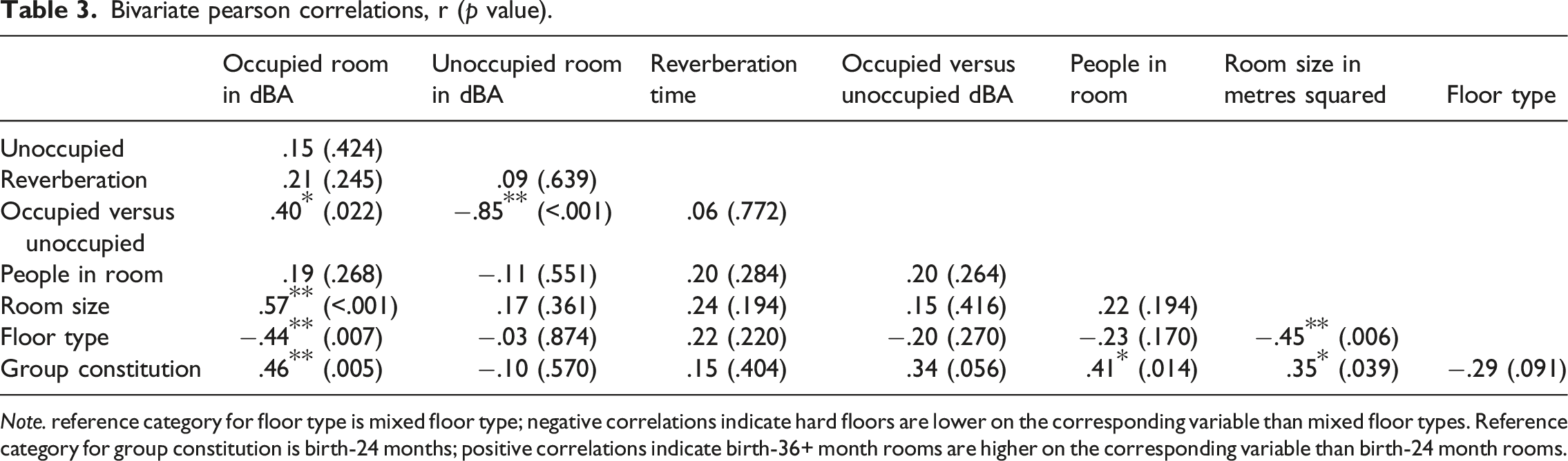
Note. reference category for floor type is mixed floor type; negative correlations indicate hard floors are lower on the corresponding variable than mixed floor types. Reference category for group constitution is birth-24 months; positive correlations indicate birth-36+ month rooms are higher on the corresponding variable than birth-24 month rooms.
Noise level by group constitution, room size and floor type
Linear regression predicting noise level in decibels from group constitution and room size.

Note. reference category for group constitution is birth-24 months.
Case studies
As identified in the Introduction, a wide range of human and physical factors interact to create the acoustics of the space. In this final section, we present two case studies and analyse these qualitatively to identify features which may be collectively contributing to the room acoustics.
Case study room 1
Room 1 is a rectangular room in a purpose built ECEC service located in a medium-density suburb surrounded by a mix of commercial and low and high-rise residential buildings. The wall to the outside play area is almost entirely glass, and other walls comprise fibre-cement panels, hardwood doors and internal windows into adjoining sleep and nappy-change rooms. The floor is floating wood and four mats, one circular and three rectangular, approximately 3 m in diameter, are placed in activity areas located at the room’s edge. Chairs and tables are mostly on the hard floor, and furnishings are largely wooden, including shelves and storage containers, tables, and wood and metal chairs.
Room 1 caters for 18 children aged birth to 36 months. The room’s unoccupied noise level is 48.9 dBA and the occupied average 73.45 dBA, which means that its occupants are a significant source of noise. Its reverberation time was 0.84 seconds, placing it in the highest 10% of participating services for both occupied dBA and reverberation.
The room is a relatively large room with an area of approximately 140 m2, with 3–5 m high walls and a sloping fibre-cement ceiling. It is furnished in an open style, with few potential noise barriers or absorbers in the forms of shelving / screens, soft furnishings, wall hangings. Adjoining one rectangular mat is a small 2-person couch, positioned against the wall. Another mat is bordered with wooden shelves, creating a semi-enclosed activity area. A home corner space is in a room corner, with one bare wall and small-size home-corner furniture located against the other. The home corner table is placed on the circular mat and a thin fabric cloth hangs from the ceiling above the table. Play materials in this space, and in other spaces are largely wooden or metal, and these generate percussive noise as children interact with the materials, move them around the space and drop them onto the hard-surface tables, shelves and walls. The 18 active children and four educators are a major source of noise in this room, with noise generated from both the normal talk of the occupants, plus the percussive noise of toys and moving furniture. However, with the large room comprising relatively bare walls, hard surface floors and ceilings, there are few surfaces available to absorb the noise, which causes a high reverberation time. As this noise echoes back into the classroom, it contributes to the overall noise level in the room.
Case study room 2
Room 2 is in a relatively new service located in a large two-storey building in a commercial complex away from major roads and is surrounded by low-rise commercial buildings and native bushland. The room comprises an irregular-shaped carpeted area and a smaller rectangular protruding section floored with linoleum. The external wall in the lino area largely is made of 3 large window panels which reach approximately 3m up to the ceiling. The other walls have built in cabinetry, including an adult kitchen bench and sink, and a low adult storage cupboard. The larger carpeted activity area has walls made largely of fibre cement, with wooden doors into adjoining rooms. Some walls are bare, and others have coverings, including an adult whiteboard, a pin board, some photographs and pictures, and hanging fabric. The ceiling is made of composite fibreglass ceiling tiles and large fabric pompoms and decorative fabric fans hang from the ceiling. In another space, a mosquito net hangs down and drapes over a large hollow cube which is used as a small ‘cubby’.
Room 2 has an area of approximately 57 m2 and caters for 10 birth- to two-year-old children. The room’s unoccupied decibel level is 46.5dBA and average occupied is 60.1dBA. The difference of under 15dBA between the unoccupied and occupied decibel level demonstrates that, compared to Room 1, a smaller amount of the noise level is caused by the room occupants. With a reverberation level of 0.33 seconds, Room 2 is in the lowest 10% of participating centres for occupied dBA and reverberation.
The entire room has two child-sized tables; a wooden one is on the lino floor and a laminated one is on the carpeted area. Both have surrounding wooden or moulded plastic chairs. All table and chair legs are finished with moulded plastic caps that muffle loud, scratching noises caused by moving furniture. A two-seater cloth sofa and an adult size lounge chair are on the carpeted area and a child-sized soft sofa is positioned against one wall. Two low mirrored screens protrude from the wall to break up the play space. Play materials are stored on low shelves against the walls and are mostly in wicker storage baskets. Other play materials are in low wicker-handled baskets placed on the floor around the room. The children largely sit on the floor or stand at the table to play with the materials. In comparison with room 1, room 2 is smaller and contains fewer children and educators, so there is less noise made by the occupants. However, physical features of the room, such as the carpeted areas, fewer hard furnishings and noise buffering storage units also serve to reduce noise. Soft furnishings, wall coverings and the softer, composite fibreglass ceiling tiles would absorb noise and reduce reverberation times, which all contribute to the occupied noise levels being lower in this room.
Discussion
This study presented on the dBA and reverberation levels measured in 36 infant-toddler rooms located in Sydney, Australia. We found an unoccupied dBA of 48.51, which is relatively consistent with the Australian guidelines for noise levels in primary and secondary school classrooms. Our day-long dBA measurements revealed and average of 67.43 dBA which is slightly higher than noise levels reported in previous infant-toddler settings (Frank, Golden and Manlove, cited in Manlove et al., 2001; Linting et al., 2013). Our analysis of between classroom differences shed some light on the room features that are associated with elevated noise levels. Our infant-toddler rooms ranged from 60.10 dBA to 73.45 dBA, with larger classrooms and groups including children aged two and over being noisier than smaller rooms catering only for children under the age of two. Previous research has suggested that noise levels tend to increase with the age of the child (Gokdogan & Gokdogan, 2016), so the increased physical activity and interaction levels of older children, when compared with infants, is likely to generate more noise. While there are no guidelines about the recommended acceptable levels of noise in the centres, the recommended noise levels in classrooms is <55dBA. That the noise levels in many of our rooms exceeded this by 10dBA may be of some concern, given that every increase of 10dBA translates to a perceived doubling of the noise level in the room.
Interestingly, while previous research has found that the group size in a classroom is positively related to dBA levels (Picard, 2004; Shield & Dockrell, 2004), we found no such effect on the occupied dBA or the difference between the unoccupied and occupied dBA. However, rooms catering for children aged birth to three or over tended to be larger than those for under twos, and a marginally significant correlation between the group’s age constitution and the difference between occupied and unoccupied dBA suggests that the size of the group does somewhat contribute to the noise levels in the room.
Noise levels can also be exacerbated by reverberation times. The average reverberation time in our infant-toddler classrooms was 0.6 seconds, which is higher than Frank and Golden’s (1999, cited in Manlove et al. (2001) report of 0.2–0.5 seconds. With limited detail of Frank and colleagues’ method available, it is impossible to speculate as to why the average readings in our study exceeded those reported in Manlove et al. (2001). Our quantitative analysis did not identify any social or physical room feature that uniquely predicted reverberation levels. This is perhaps not surprising given the multitude of physical room features that can contribute towards reverberation time. Nevertheless, there was a large variability in the current survey with reverberation times between 0.27 to 1.49 seconds across the centres. Reverberation time of a room is dependent on the surfaces of the room combined with the size and volume of the room. A shiny, reflective surface will cause the sound waves to bounce and reflect. Therefore, a small room with many hard surfaces and high ceilings can show high reverberation time as well as a large room with a low ceiling. Variation in reverberation time is also generated by the room configuration, because of the varying reflective surfaces. In our research, the shape of the rooms varied greatly, with some being rectangular, but many being L-shaped, curved and irregular shaped layouts. Our two case studies demonstrated how various physical features of room can collectively contribute to reverberation times and overall noise.
Implications for practice and policy
Given the relatively high levels of noise in occupied rooms and reverberation time, it is valuable to consider some simple solutions to improve the noise levels in the centres. Carpeting is one easy solution to reduce noise, but most rooms in our study were largely hard floors, probably reflecting efforts to maintain the cleanliness of the room and reduce risks of allergies. Similarly, in Australia, where inside areas tend to flow into outside play areas, large glass doors and windows are common, yet are highly sound reflective so contribute to reverberation times and noise. While most services are not in a position to modify the physical structures of the room, furnishings can be modified to reduce percussive noise. Rugs can be placed under tables and plastic moulds fixed onto furniture legs. Equipment placement and storage can also be modified. For example, case study Room 2 used wicker storage baskets that were on, or positioned low to the floor so that noise from play materials was buffered. Similarly, low couches and cushioned areas produce less noise than hard furniture. Soft furnishings, wall coverings and acoustic tiles also absorb noise and reduce reverberation times. Studies have shown that acoustic tiles on the classroom ceiling reduce reverberation times and improve teachers’ voice and students’ speech perception (Peng et al., 2020; Pirilä et al., 2020).
In terms of implications for policy, our finding that most rooms had relatively high noise and reverberation levels suggests a need to develop acoustic guidelines for the use in ECEC services. At a time when Australian government ECEC policy reform is prompting the building of many new services, these guidelines can inform architects, builders and designers about the importance of including noise-reducing design features into their builds. Noise guidelines can also inform service owners and operators on how to moderate the impact of noise and reverberation in existing buildings. This advice would also extend to services with large groups sizes, or with age-groupings that span infancy to older ages where activity-generated noise levels may be high.
Limitations and future directions
The present study provides a useful benchmark from which to compare more detailed analyses of noise measures in both inside and outside play areas and across different daily activities. Such comparisons would lead to the identification of sources of excess noise which can then be moderated with physical or social adjustments. However, there are some limitations to our approach that suggest useful avenues for future research. Firstly, our noise measurements were only taken inside the room. In many services children moved fluidly between indoor and outdoor spaces. With some children outside, it is possible that this would reduce the overall mean of dBA across the full day recording. Services vary widely in terms of the amount of time children spend in enclosed rooms or outside; a statistic that may also vary across seasons. As we did not measure outside noise, our study is not able to provide a full picture of the noise levels experienced by children across their whole day at the service. Second, the normal range of activities that take place across a regular day are likely to produce different levels of noise. Future research is therefore needed to augment these initial data with a more comprehensive mapping of noise across different areas, activities and seasons in infant-toddler ECEC spaces.
Finally, while studies have suggested that there is an impact of noise on the language development and wellbeing of young children (Erickson & Newman, 2017; Evans et al., 2001; McMillan & Saffran, 2016; Werner et al., 2015), little is known about how this impact may be enacted in infant-toddler ECEC contexts. Close, face-to-face, individual or small group interactions may moderate the effect of excessive noise on young children (Winroth et al., 2023). On the other hand, certain children, such as those with persistent ear infections, those with sensory processing, language or other learning difficulties, or those learning more than one language may be particularly developmentally sensitive to excessive noise (Klatte et al., 2013). If, as proposed, noise levels constitute an element of environmental quality in ECEC programs, our preliminary findings call for future longitudinal research to determine how noise may vary across contexts and seasons, how noise is directly experienced by different children in the group, and whether previously-reported associations with children’s developmental outcomes in the home and ECEC services can be replicated in Australia.
Footnotes
Acknowledgements
We wish to express our sincere thanks to the services, educators and children who participated in this study.
Declaration of conflicting interests
The author(s) declared no potential conflicts of interest with respect to the research, authorship, and/or publication of this article.
Funding
The author(s) disclosed receipt of the following financial support for the research, authorship, and/or publication of this article: This research was funded by the Australian Research Council Discovery Scheme, DP180102114.
Ethical statement

Data availability statement
The data for this study has been approved to be available on request to the corresponding author.