




Abstract
Mentoring is a leadership capacity development strategy for experienced early childhood teachers (ECTs). Being a well-trained mentor, who is supported to undertake the role can contribute to re-energising experienced ECTs and enhance the early childhood sector workforce. However, little is known about the benefits of outsourcing mentoring as most research refers to in-house mentoring. This paper reports on the mentors’ experience of a two-phase on-line mentoring program in Australia supporting new early childhood teachers. The study design was framed by the theory of Community of Practice involving academic mentors, experienced teacher mentors and novice teachers as mentees. Mentors’ reflections indicated that knowledge and skills accumulated during this program shifted their understanding of mentoring and contributed towards creating short and long-term service-level changes. This paper offers a provocation for new possibilities in mentoring in the early childhood sector.
Introduction
In Australia and internationally, policy reforms in improving quality in early childhood education (ECE) are underpinned by a large body of research demonstrating links between initial preparation and continuing professional learning of early childhood teachers (ECTs) (Lave & Wenger, 1991), and the quality of early childhood education and care (ECEC) programs (Goodwin et al., 2021; Jackson, 2020). Complexities of working in the early childhood sector are characterised by numerous emotional, intellectual, relational and physical demands (Cumming & Wong, 2018). These include sector wide staff shortages, lower wages and conditions ECTs receive in comparison to school teachers (Front Project, 2019; Irvine et al., 2013; Jones et al., 2019) and high levels of stress and burnout associated with ever-increasing regulation and reporting requirements (Nolan & Molla, 2019).
ECE research has consistently demonstrated the value of mentoring in supporting ECTs (Front Project, 2019; Waniganayake et al., 2023). Governments of countries such as England and Singapore are focussing on mentoring as an effective strategy for improving the quality of the workforce. (Wong, 2015). Newly graduated ECTs are also often expected to “hit the ground running” in taking on leadership roles without appropriate induction or support and can be left feeling isolated (ACECQA, 2021, p. 32). The Mentoring for Neophyte Early Childhood Teachers’ project presented a timely opportunity to undertake much needed work in supporting neophyte ECTs in ECEC settings in the state of New South Wales (NSW) in Australia. The purpose of this project was to design, deliver and evaluate an effective program to support one of the four priorities identified in the NSW Early Childhood Education Workforce Strategy 2018–2022 of embedding “sustainable practices that contribute to workforce stability and reduce the impact of staff turnover” (NSW DoE, 2018, p. 12).
Mentoring as a workforce strategy
An accumulating body of research indicates that mentoring in ECE is a key leadership strategy (Hadley et al., 2015; McKinlay et al., 2018; Waniganayake et al., 2023). ECTs can be more effective when they are supported by colleagues in a community of practice (CoP), with research establishing a positive association between effective induction and mentoring programs and the retention, success, and wellbeing of neophyte teachers (Fenech et al., 2021; McKinlay et al., 2018; Thorpe et al., 2020). During the early years of employment, van Ginkel et al. (2018) argues that successful mentoring relationships are essential for neophytes to develop teaching competencies, and teaching identity. However, experienced ECTs often enter a mentoring relationship without adequate confidence, lacking appropriate knowledge and skills to implement effective mentoring practices (Klages et al., 2019; Langdon et al., 2016; McLeod et al., 2018; Morrissey & Nolan, 2015). The ECE Peer Mentoring program from Finland, where experienced and skilled mentors were critical to the success, demonstrated the importance of mentor training (Kupila et al., 2017).
Studies have shown that the impact of mentoring programs depends on the quality of the mentoring and contextual support available to participants (Hobson et al., 2020; Klages et al., 2019; Orland-Barak, 2023). A review of literature indicates an emerging body of Australian research regarding the value of mentoring programs that are systematic and sustained (Fabry et al., 2022; Gibson et al., 2019; Johnston et al., 2020; Nolan & Molla, 2018, 2019; Nolan et al., 2021; Thorpe et al., 2020). Some of these programs target ECTs in leadership positions (Fabry et al., 2022; Irvine & Price, 2014) or differentiate support for career stages (Hadley et al., 2015; Johnston et al., 2020).
Findings from ECE research also align with growing interests in more distributed forms of leadership in developing agency, skills and leadership capacities of mentors (Boyle et al., 2023; Cross et al., 2022; Jones et al., 2019; Quinones et al., 2019; Tveitnes & Hvalby, 2023), particularly given many teachers may not easily identify as leaders and may be hesitant about embracing leadership opportunities (Cross et al., 2022). A large-scale review in the UK by Hobson et al. (2020) highlighted the positive impacts of mentoring training, education and development in enhancing the knowledge, skills and understanding of mentors, mentees, and their organisations more generally, while enhancing organisational learning cultures and staff retention. They highlighted that mentor training needs to be continuous, combined with opportunities to practice mentoring, and include opportunities for networking.
In Australia, specialist qualifications or education in mentoring is not a prerequisite to performing ECE leadership or mentoring roles (Braybrook, 2019). Instead, mentoring responsibilities are usually based on teachers’ personal or professional motivations or experience (Kupila et al., 2017). As a result, experienced ECTs often enter mentoring relationships lacking confidence in their capacities and preparation to implement effective mentoring practices (Morrissey & Nolan, 2015). Some experienced teachers in mentoring roles reported that their knowledge and skills in mentoring were “largely self-taught” through their own experiences (Langdon et al., 2016, p. 156). In countries such as Australia (Morrissey & Nolan, 2015), Britain (Rogers et al., 2020) and the United States (Artman-Meeker et al., 2015), reviews of ECE mentoring programs demonstrate that specialised training on leadership development including mentoring are scarce. Where training for mentors was available, there was little or no evidence indicating sustained shifts in beliefs and practices (Artman-Meeker et al., 2015; McLeod et al., 2018; Whatman, 2016). These studies denote mentoring as a specialist skill contextualised within a specified profession and confirm there is a significant gap in preparation for being and becoming an effective mentor.
Effective mentoring
ECE mentoring has moved away from traditional dyadic and hierarchical relationships. Contemporary approaches are reciprocal, collaborative as well as critical, in generating transformative practices (Ewing, 2021; Larsen et al., 2023; Manderstedt et al., 2023; Wang et al., 2024). Kennedy and Stevenson (2023) reflect, mentoring is less about providing answers, and more about providing spaces for collective thought and reflection. Here, the relational aspects of mentoring are crucial, including the commitment and empathy of the mentor and mentee, as well as mentors being flexible, non-judgmental and approachable (Ewing, 2021; Manderstedt et al., 2023).
Nolan and Molla (2018) highlight the transformative potential of personalised formal mentoring. This approach demonstrates collaboration with mentors and greater agency for mentees to work towards improving practice in what Larsen et al. (2023, p. 7) call “future-focused mentoring.” This type of mentoring moves away from a traditional hierarchical approach towards a collaborative co-designed process. This implies mutual professional benefit, as mentors not only support ECTs to examine their teaching, but also see the process as a mechanism for their own professional learning (Kupila et al., 2017; Larsen et al., 2023; Wexler, 2020).
Studies focusing on mentor and mentee attitudes in mentoring programs reinforce the importance of mentor training in clarifying mentor and mentee roles and goal setting (Hobson et al., 2020; Quinones et al., 2019). Feedback from participants in a Finnish study (Kupila et al., 2017) for example, demonstrated that mentors and mentees can have different understandings of the level of support provided by mentors, with mentors assessing the level of their own support more highly than the mentees did. Trainee mentors learned the complexity of mentoring and that the mutuality of the relationship with mentor and mentee was critical to the process. In Norway, mentoring is regarded as a joint responsibility between all members of a professional community, involving a formal one-year qualification and participation in mentoring networks (Tveitnes & Hvalby, 2023). In their study of a mentoring program van Ginkel et al. (2018) found that participants had contrasting perceptions. Mentees held an “instrumental” view by being more directive and prioritising immediate classroom performance and control, whereas mentors reflected a “development” conception emphasising autonomy, being less prescriptive in mentoring interactions, and to understand and value different perspectives. Similarly, research by Klages et al. (2019) in Norway found that effective training and preparation can influence how relationships between mentors and mentees are established and developed. As well as, shifting mentors’ disposition from ‘preservation’ towards ‘transformation’, and from being individually-focused to being more broadly organisationally-focused.
Several researchers (Hobson, 2016; Jackson, 2020; Klages et al., 2019; Larsen et al., 2023; Manderstedt et al., 2023) suggest that mentoring can be more effective when the mentor is external to the organisation of the mentee. However, neophyte ECTs being mentored by an ECE leader in the same setting is a common arrangement. Hobson’s (2016) research, for example, shows the benefits of an “off-line” model of mentoring, where relationships are non-hierarchical, non-evaluative and separated from line-management or supervision. He highlights the importance of providing a safe “third space” for mentoring to enable mentees to become more autonomous and agentic, often not afforded by line management. Similarly, the Early Learning and Care Council of Australia (ELACCA) suggests external mentoring that is resourced appropriately through time and resources can provide better support for ECTs who are often ‘thrown in the deep end’ as mentors (ELACCA, 2021, p. 5).
There is growing research indicating the effectiveness of a COP model (Lave & Wenger, 1991) focusing on situational learning across diverse ECEC contexts aligns well with the professionalisation agenda in ECE in Australia of building a strong, sustainable ECE workforce through inter-professional collaboration (De Gioia et al., 2023). Working with universities within a COP holds potential for supporting the training and ongoing support for experienced teachers taking the role of mentors (Quinones et al., 2019; Tveitnes & Hvalby, 2023). Jackson (2020) highlighted ECTs need more opportunities to become mentors and leaders to motivate them to stay and inspire neophytes in the sector. The trust and mutuality generated through deepening professional understanding is central to Lave and Wenger’s (1991) model of mutual engagement, where inter-professional collaboration has the potential to reinforce commitment to the sector and improve emotional support and wellbeing.
Method
Our study on Mentoring for Neophyte Early Childhood Teachers supported new ECTs to better understand their role and responsibilities in building strong connections with their peers and leaders. Waniganayake et al. (2023) and Wong et al. (2013) highlight the need for understanding the different ‘contexts’ mentees come from and that the mentor-mentee relationship requires flexibility, fluidity and bidirectionality as both mentors and mentees learn from the evolving relationship. This collegial and mutually reciprocal relationship between mentors and the mentees is paramount to effective mentoring (Turner & Blackburn, 2016). Research findings such as these influenced the design of the study involving experienced ECTs (mentors) and neophyte ECTs (mentees). Strategically, the Australian Professional Standard for Teachers (APST) implemented by the Australian Institute for Teachers and School Leaders (AITSL), was embedded in the project to add value and attract participants to the study. This article presents findings from the mentors’ perspective on teacher leadership capacity building and re-energising the commitment to continuous learning in the ECE sector.
Procedure
Prior to inviting ECTs to participate in the study ethical approval was obtained from the X Human Research Ethics Committee (Ref. No. 52020922924020) and the New South Wales State Education Department’s Research Applications Process (Ref No. 2020442). We developed a 4-phase design to implement and evaluate the mentoring provided to neophyte ECTs employed in NSW ECE centres with a preschool program. In Phase 1 of the study, we worked as the Academic Mentors with university qualified ECTs with at least five years’ experience in ECE to become trained mentors (n = 58). In Phase 2, recently graduated ECTs with less than five years of experience in the sector participated (n = 145) and assigned a trained mentor. Findings regarding the mentees’ responses are presented in another paper (Andrews et al., 2024). Phase 3 (Evaluation 1) captured mentors’ reflections on their satisfaction and learning soon after the program ended. Phase 4 (Evaluation 2) ascertained the effectiveness of the mentoring program being sustained over time and was completed 12 months after the program ended.
The study comprised two purpose-built professional learning and development (PLD) courses delivered online over 21 weeks in 2021: Course 1: Mentor Professional Development (Phase 1, 6 weeks) and Course 2: Mentee Professional Development (Phase 2, 15 weeks). The mentors, who completed the 6-week course, supported the mentees during the 15-week course. Prior to beginning Course 1 (Phase 1) mentors completed a pre-course questionnaire (Survey 1) about their current perceptions on mentoring. During Course 1 tasks included: readings, reflecting on videos on mentoring, and writing a 500-word critical reflection at the completion of the course. Mentors then moved into Course 2 where they were matched with their mentees. All mentors documented SMART (Specific-Measurable-Achievable-Relevant-Time-based) goals, aligned with the APST (AITSL, 2018) for the Proficient and Highly Accomplished teacher career stages relevant to their career trajectories. In Phase 3 Mentors completed a post course questionnaire (Survey 2) and a reflective statement about the course resources and their knowledge of mentoring. Participants also completed a follow-up questionnaire in Phase 4 (Survey 3) on their experiences in mentoring. The quantitative data was analysed using t-tests and other descriptive statistics. The qualitative responses in the surveys were thematically analysed to determine what was valued in the mentoring course and why. There was some attrition from the study, with two Mentors withdrawing in week two, due to unforeseen personal circumstances, including being impacted by flooding.
Participants
In Phase 1, the mentors were recruited by promoting the course through the NSW Department of Education (DoE) and early childhood networks social media pages. Onboarding mentors involved collecting consent forms and proof of qualification to ensure only experienced ECTs were selected. The 60 mentors invited to participate were arranged into three groups to ensure access to an academic mentor was equitable. Each group of mentors (20) comprised a mix of those working in high quality ECEC settings located in remote, regional and metropolitan areas across NSW. The blend of diverse backgrounds in quality and geography within groups enhanced learning through networking. Participant diversity was enhanced further through the mix of cultural backgrounds, including First Nations Australians and those with European, Asian, and Middle Eastern heritages. Professionally, these mentors were directors, managers or owners in long day care, preschool or other ECE settings. Their varied roles involved working with or without children and included leadership responsibilities for mentoring colleagues. The majority worked full-time and their level of experience in the sector ranged between 5 to over 26 years. Most held a bachelor level qualification and about 20% had postgraduate qualifications. Nearly three quarters reported having a mentor who had guided their development in some way.
Findings
This paper presents data analysed from Phase 1 (Survey 1) and Phase 2 (Survey 2 and reflective statements). We present the findings in relation to mentors’ perceptions on: 1) how their leadership capabilities were enhanced; 2) the Community of Practice approach; 3) the course resources; and 4) time constraints.
Leadership capacity building
We began with developing a base line of the participants knowledge on mentoring. From Survey 1, when asked what skills they bring to the mentoring relationship, mentors most often reported teaching skills based on working with children three to five years of age (98%), followed by collaboration skills and team-work skills (95%). When asked what qualities they bring to the mentoring relationship, mentors most often reported respect (95%), honesty (93%) and compassion (93%).
At the beginning of the project the mentors identified four areas of strengths they considered important in a mentoring relationship. These were listening, empathising, supporting and connecting. Likewise, the three key areas for further development the mentors noted were challenging, empowering and questioning (see Figure 1). Their reflections after completing the training indicated growth and development of these three key areas. Areas of strengths and key areas for development identified by mentors.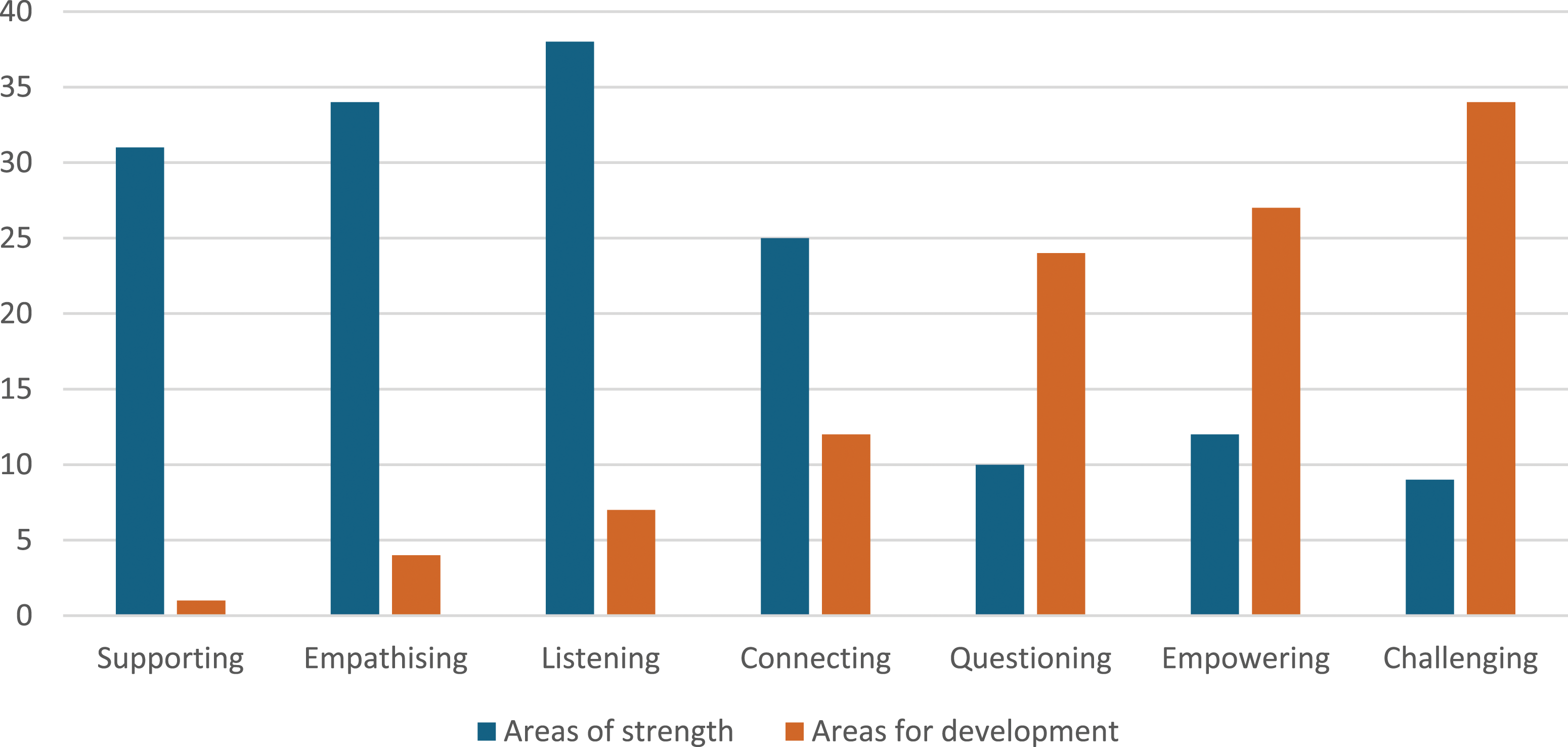
Many mentors explained shifts in their knowledge, thinking and understanding about mentoring in their reflective statement. Mentors increased their knowledge about mentoring, through better understandings of what mentoring is (and what it is not) and that mentoring is mutually rewarding. Mentors became aware of the importance of planning and being purposeful, for example: It was helpful for me to take notes during each of my Zoom sessions with my Mentees so that I could specifically tailor my follow-up questions to each Mentee. I discovered that each of my two Mentees required different levels of guidance and support from me at differing stages throughout the process. By planning before each Zoom, I found that I was more prepared, and my Mentees felt unique and respected as individuals throughout the process (Final reflection).
It was evident that mentors strengthened their skills and capabilities in supporting the mentees, and the importance of reciprocity in the relationship. I have facilitated adult professional development and been a mentor/coach to colleagues throughout my career, but I believe I have gained a new perspective on what it means to be a mentor and the importance of that reciprocal sharing of knowledge and understandings (Final reflection).
Mentors noted improved knowledge and skills to support colleagues. For example: Participation in the course has allowed me to focus on purposely refining my ability to use specific techniques and skills of a mentor, such as listening, empathising, connecting, questioning, supporting, empowering and challenging and engaging in high levels of emotional intelligence to stretch and support thinking (Final reflection).
As this course was entirely run as an online program, it was not surprising to see that mentors also commented about their growth in digital technology skills, as well as their strengths and weaknesses. Technology was an area of weakness for me, but I feel I developed new skills and abilities that I can now use in my professional life (Final reflection).
Their growth and development were perceived by some mentors as an act of courage, as the processes of mentoring required stepping out of their comfort zone and enabling others (i.e., mentees) to do likewise. For example: I also was working towards my personal goal of building on my skills by challenging the ideas and perspectives of my mentees. I had to become brave with this and felt I was able to work towards this and sit with the uncomfortableness. I had to commit to my goal otherwise I or my mentees would not grow (Final reflection).
Key to this mentoring role was acknowledging the importance of setting clear boundaries and role clarity of what mentoring is. For instance: This course redefined what I thought mentoring was. I always thought that mentoring happened informally and with someone that you have a connection with. I can now see that this isn’t the case. I felt that through the 6-week training I was equipped with new information in my toolkit to support me in this journey (Final reflection). I was consciously discussing the issue with the mentee and getting each of them to suggest research strategies to try or make plans to solve the problems. I could really feel myself taking a step back in the process to let each of them step forward. In this way I was more of a facilitator (Final reflection).
Application of the knowledge and skills they had acquired through the program to their own practices was an unexpected outcome of the project. There were numerous examples of the mentors who were either centre directors or educational leaders, noting the application or transfer of this knowledge and skills into their workplace was immediate, for example: I have begun to change the way I relate to my colleagues at work. I am no longer the “all knowing’ educational leader, but rather someone who works alongside my colleagues. I have realised that actively listening to my colleagues is such an important part of my mentoring role…. It is actually such a relief to now view my mentoring role in a different way. My changed approach to mentoring has naturally led to increased levels of motivation and initiative among my co-workers (Final reflection).
Community of practice approach
Mentors acknowledged that the project provided them with networking opportunities and assisted in developing a CoP (Lave & Wenger, 1991), valuing the importance of this approach beyond the project. Stating for example: As I reflect on the past months, engagement with my academic mentor, peer mentors, my mentees and other mentees has led me to value the importance of Community of Practice more than anything else (Final reflection).
Cross-pollination of knowledge, skills and an appreciation of each other’s attributes, emerged as a result of mentors and mentees being connected with those outside their workplaces, and across metropolitan and regional/rural services. This process also highlighted the difference between mentoring within your own workplace and with those outside, with no personal connections to begin with. For example: Participating in this course and being assigned three mentees from very different backgrounds, professionally and personally, was an enlightening experience. I have predominantly worked with preschool or early years of school colleagues, so I felt pleased to meet and work with three professionals who work within 0–6 years settings (Final reflection). We discussed mentoring support during our community of practice…we agreed access to external mentoring or governance support from the sector is needed to help isolated and standalone services more than larger service types to sustain positive mental health outcomes (Final reflection).
In keeping with their new understanding of the mutuality of mentoring relationships, the mentors also recognised the value of networking as these connections provided a layer of support with mentees. For example: As a community of practice, we grew, shared ideas, thoughts, readings, experiences, we supported each other in our challenges and continue to connect at the request of the mentees, post program. This request from my mentees, certainly came as a pleasant surprise to me, as it reinforced that what we shared throughout the program was genuine (Final reflection).
Course resources
Mentors overwhelmingly rated the readings and videos as relevant, informative, insightful, and interesting. For instance, they noted: Using the strategies from the readings in the first part of this course ‘Observe, Reflect and Apply’ listed in Chu and ‘the three key stages of mentoring and coaching’ in Gasper helped. This will be an ongoing goal for me (Final reflection). Buy-ins in this course …. The readings…. Defining mentoring and have used this within my workplace almost immediately. Our language has changed to include mentoring and mentoring skills as a real component within our roles (Final reflection).
Both Zoom welcome sessions for the mentors in Course 1 and Mentees in Course 2, included the use of a graphic artist to capture the learning. Feedback provided immediately after each of these sessions was highly positive. In the final reflection, one mentor also re-emphasised this tool by stating, I made use of the mentoring graph[ic] to keep me on task. Absolutely love the way it was presented in a caricature graph, and I must say was one of the most useful tools for me (Final reflection).
The use of Zoom provided opportunity to facilitate connection, networking and sharing of experiences without negatively impacting the learning experience compared to a typical classroom setting. Zoom was used as a communication tool for a variety of purposes. Its centrality as a tool to connect with people geographically located across NSW in metro and regional locations was appreciated. One mentor noted the importance of creating “a safe space” with “no hierarchy”. Others commented about establishing trusting relationships, which strengthened over time and enabled ongoing contact, especially during the lockdown. This time is over Zoom with a group of ECTs who all work in various places. Building trusting relationships to share goals and honest reflection could be challenging. I did a combination of group meetings and individual meetings to build the relationships with my mentees. I could sense the huge differences in our conversation during the first few meetings and the last few meetings. We are more connected and more willing to share towards the end of the mentoring course (Final reflection).
At the completion of Course 2 all mentees presented their learnings through a 10-minute viva voce to their fellow mentees and mentor. The viva voce enabled the Mentees to showcase their plans in action and was a huge success from the perspective of everyone involved. Two of the unexpected outcomes comprised of mentors noting that the viva voce presentations enabled them to consider aspects such as, challenges experienced by neophyte teachers, their talents, and commitments as the beginning of their employment and service quality across the sector. The comments by the mentors validated these sentiments, The crescendo of the course was the ‘viva voce’ and this to me was a wonderful way to celebrate everyone’s learning and experiences. I also was surprised (in good ways) by what I heard and seeing the goals in action and the individual journey everyone was on (Final reflection). The one thing I reflected on after hearing the viva voce …we have some really talented, committed, and enabling ECT’s who have both intention and heart in the right place (Final reflection).
Time constraints
The mentors who participated in this project were generous, thoughtful and committed to their role in mentoring neophyte ECTs. Whilst overall, positive about their participation in this project, many mentors commented on the complexity of the sector, as well as time constraints impacting mentoring in this project due to mentees needing additional supports. For example: I believe I put in many more hours than those discussed in the Course Outline. This was driven by the issues of my mentees, initially necessitating individual meetings rather than COP (Post survey).
Many mentors noted the challenge of balancing their own workloads with the requirements of the course. Those who were supported by their employees were able to complete tasks, attend Zoom sessions during work hours, but many did these tasks in their own time in the evening or on the weekend. This was not sustainable and led to mentors and mentees not continuing in Course 2. For example: Failing to cater for the current workload and demands already being experienced by participants. The course really needed to have employer buy-in (Final reflection).
Several also considered broader aspects related to the ECT’s career stages/objectives. One mentor with some 30 years’ experience in the sector commented: This course has reinforced many ECT leadership and mentoring qualities that are required not only for my personal professional success and job satisfaction but also the importance of those interrelationships between other professionals. From having met and worked with my three mentees, I am reawakened to the ongoing challenges that our profession has (Final reflection).
Even with these constraints there were key aspects of the project that supported them being mentors, which also led to many of them being re-energised and committed to continuous professional learning in the sector.
Discussion and conclusion
External mentoring programs have been considered critical in addressing equitable access to professional learning opportunities for all teachers (Whatman, 2016). Ours was an external mentoring program where well-trained mentors were matched with mentees outside of their workplace. Mentors reported high satisfaction and motivation levels on being involved in the project. An external mentor without the responsibilities of an employer or assessor has been reported beneficial as this professional distance allows for a trusting and respectful relationship (Nolan, 2017). With the potential for sector-wide reach, external mentoring programs that are systematically coordinated also allow purposeful mentor-mentee pairing to best meet individual needs of teachers.
Previous research suggests there is a strong association between external mentoring programs and changes in practices (Bressman et al., 2018; Daly & Milton, 2017; Kupila & Karila, 2018; Nolan, 2017) and this approach allows honest reflection in a safe space enhancing possibilities for reconstructing professional beliefs and attitudes. The CoP methodology in our project enabled participants to systematically engage in open dialogue with two to five teachers comprising mentors and neophytes, with guidance from academic mentors, and everyone involved maintained confidentiality. Mentors in our project also affirmed that the six-week training course completed prior to working with their mentees had strengthened their mentoring knowledge and skills in being an effective mentor, with most recognising shifts in their previous understanding. These findings contribute to affirming the high potential of external mentoring programs in encouraging transformative thinking and consequently leading to practice reform.
Another key consideration in developing mentoring programs is the diversity of the ECE sector. Service size and type, governance structures, geographical location, as well as staff qualifications and experience in the sector were factors that influenced our project design. Important aspects such as cultural values about leadership, exacerbates complexities of mentoring (Wong et al., 2019). Deeper analysis of such aspects was beyond the scope of our project but warrants future research.
Time constrained our mentors in implementing the program. Increasingly, Australian research indicates concerns of ECTs being overworked and undervalued (Irvine et al., 2013; Productivity Commission, 2023). Thorpe et al. (2024, p. 331) further elaborate on this noting time pressures in the sector relate to the “failure of management to fit work demands within the bounds of paid time.” In White’s (2023) analysis of the national workforce strategy (ACECQA, 2021) she raises concerns of the invisibility of ECE leaders as a distinct group in the strategy. The research is clear on the role leadership plays in the retention of ECE educators (Thorpe et al., 2020) but investment in leaders within ECEC settings in Australia is still sadly lacking. A key limitation of our program was the lack of backfill funding and this resulted in attrition issues from mentors (who chose not to move into Course 2) and mentees who left Course 2. Mentors noted prioritisation of work (job demands) resulted in meeting with their mentees out of work hours unpaid. Investment is urgently needed from Governments and employers to support experienced ECTs to engage in mentoring programs to ensure provision of high quality ECEC settings.
Footnotes
Declaration of conflicting interests
The author(s) declared no potential conflicts of interest with respect to the research, authorship, and/or publication of this article.
Funding
The author(s) disclosed receipt of the following financial support for the research, authorship, and/or publication of this article: This study was supported by the New South Wales State Department of Education, Australia under the Grant: Sector Development Program [SDP 2019/004].
