



Abstract
Higher educator qualifications and training are associated with more positive child outcomes. For in-service educators, professional learning (PL) is promotive of high-quality pedagogical practices. Yet rarely is PL efficacy evaluated. This paper elucidates the principles underpinning a PL program for in-service preschool educators that generated educator-level practice change and child-level self-regulation and executive function improvement. Grounded in contemporary research on characteristics for effective PL, expected mechanisms of change are articulated in relation to the design and implementation of PL programs. Mechanisms included: presenting credible information from high-quality evidence and sources; managing educators’ cognitive load; modelling new learning within the specific educational context; and encouraging self-monitoring. This paper details how the PL program leverages these mechanisms, in alignment with recognised characteristics for effective PL. Through this mapping, this paper provides an example of the potential of PL to foster a positive shift in educator practices.
Keywords
Introduction
Accumulating evidence demonstrates that professional learning (PL) can improve teaching and learning (Fletcher-Wood & Zuccollo, 2020; Kennedy, 2016). However, its impact varies widely, raising questions of: what differentiates more effective PL from less effective PL and, more specifically, how can this be garnered to support educators in early childhood education and care? The preschool workforce, catering for children from birth to age 5 years, is unique in having a diverse range of formal qualifications. In Australia, 1-year diploma- and 2-year certificate-trained educators comprise >85% of the workforce (Department of Education ECEC Census, 2022), alongside 4-year degree-qualified teachers (with either a birth-5 early childhood focus, or birth-8 focus that enables teaching in preschool or early primary school). This educational diversity is complicated by high staff attrition and mobility (Fenech et al., 2022), which has led to ongoing workforce shortages that are being addressed via temporary appointment of non-degree trained educators above otherwise permitted thresholds (Department of Education, Skills and Employment, ECEC Census, 2022). Recent observations from UNICEF (2020) seem particularly apropos in the current moment – that “a strong pre-primary subsector is only as strong as its district, or local-level implementation” (p.7).
The national Early Years Learning Framework (EYLF) helps to define and operationalise the work and expectations of early childhood educators in Australia. Its most recent iteration, the EYLF V2.0, provides aspired outcomes for children on entry to school, as well as aiming to ensure quality and consistency in early childhood education programs and practice across diverse settings (ACARA, 2007; AGDE, 2022). The EYLF V2.0 also added content not present in its initial 2009 version. An inclusion of particular interest to the authors is executive functions (EF), given, as the document explains, they are linked to children’s wellbeing and learning. The implication of this inclusion is that educators must be engaged in developing children’s EF. However, can it be assumed that educators possess the necessary knowledge and understanding to effectively support the development of these skills in their classrooms? Evidence suggests that few educators are equipped with sufficient knowledge of children’s cognitive development and evidence-based practices that follow to ensure children are given sufficient opportunity to develop their cognitive capacity to the fullest (Gamino et al., 2022; Timmons et al., 2023). Despite compelling evidence of the importance of early EF, in Australia PL programs to support educators to foster these abilities remain scarce (Muir et al., 2023). Those that are situated within early childhood education contexts have tended to focus on specific aspects of EF and, to date, have shown limited transfer of skills to non-trained real-world contexts and behaviours (Nesbitt et al., 2015; Sala & Gobet, 2019). One reason might be that programs to foster EF-promotive practices have tended to focus more highly on theory of EF development and evidence-based practices that arise therefrom, yet not the evidence-based considerations that stimulate effective and sustainable practice change.
Given these converging situations of a workforce crisis that is not sufficiently prepared for new instructional demands, there is a compelling need for PL programs that equip educators with knowledge, understanding, and strategies to foster EF (and related abilities, such as self-regulation) in early childhood classrooms. This focus on early childhood education and educators becomes even more salient when considering the near-universal attendance from age 3 and likely chains of causation from educator training to the quality of planning and practice to children’s developmental progress and outcomes (Manning et al., 2017). Importantly, there is need for these PL programs to embed what is known from the EF literature within what is known about effective PL design and delivery.
This paper reviews the latest evidence for effective PL and demonstrates its application in the SOWATT program (an acronym: Self-regulation, Organisation, Working memory, Attention, Thinking flexibly and Thinking about thinking). The SOWATT program targets educator practices to improve young children’s EF and self-regulation in the preschool years. Its intention is to address two areas of need within early childhood education and care: support early childhood educators to foster children’s EF and, relatedly (and more perceptibly), their self-regulation; and unite what is known about characteristics of effective PL with principles of effective early EF and self-regulation programs. We take SOWATT as our exemplar given recent evidence of its efficacy for generating educator- and child-level change related to EF and self-regulation (Muir et al., 2023). What follows is a brief overview of the importance of developing EF and self-regulation in the preschool context, and then a discussion of SOWATT’s underpinning design principles to exemplify how a PL approach could be leveraged to generate impacts on young children’s outcomes.
The importance of intentionally developing EF and self-regulation in the preschool years
Early childhood is a pivotal period in a child’s development, recognised for its significance in shaping crucial social, emotional, and cognitive skills that lay the foundation for future learning and life (Center for the Developing Child, 2014). Notably, research has highlighted the importance of a child’s early EF and self-regulation as key predictors–indeed, in some cases indicators of school readiness (Blair & Raver, 2015) and success in later life (Robson et al., 2020). Both of these abilities have been demonstrated to support learning through, for example, supporting a child to maintain focus amid distractions (Fitzpatrick et al., 2014), and initiating and sustaining behaviours conducive to learning (e.g., start and persist with challenging tasks, even if this is less attractive to the learner; (McDermott et al., 2014). Moreover, EF and self-regulation contribute to broader outcomes as well, such as developing and maintaining relationships, and well-being (Howard & Williams, 2018). Conversely, suboptimal acquisition of these skills during the preschool years is associated with later mental and physical health issues (Snyder et al., 2015; White et al., 2017). Rather than EF and self-regulation trajectories being fixed early, longitudinal studies show that positive changes in these abilities are associated with improved outcomes in health and wealth (Moffitt et al., 2011) and interventions can narrow school readiness gaps, particularly with economically disadvantaged samples (Conway et al., 2018).
What constitutes high-quality professional learning?
Aiming to leverage the affordances of near-population-level access to children in preschool settings, various EF and self-regulation programs have targeted child-level change in these abilities using approaches that rely–in whole or in part–on educator PL to stimulate practice change. Yet these approaches have proven highly inconsistent in their efficacy (Muir et al., 2023). One possible reason is that although those programs adopt best-evidence content to advise of conditions and practices that are promotive of EF and self-regulation, they often omit necessary best-evidence on the conditions that stimulate and sustain educator practice change (Muir et al., 2023).
This omission is understandable; a significant challenge when attempting to identify the elements of effective PL is the diversity in topic (e.g., ranging from introducing a new technology to training in a new health and safety program to pedagogy-focused programs), structure, sequence, timing, duration, facilitator and connection to the current realities of educators (Sims et al., 2021). It is this variation that has complicated efforts to study and assesses the characteristics of more effective PL. There is further conceptual challenge in the use of terminology, with PL and professional development used interchangeably, while others draw distinctions. Given overlap between these constructs, for the purposes of this paper we refer to PL, defined as facilitated in-service training experiences that are intended to support educators’ practice and improvements in student learning (Sims et al., 2021). In this, educators are expected to be active participants to embed new learning into everyday practices. Moreover, recognition of PL as a process, rather than a product, avoids the “drive by” approach (Rosa & Toncelli, 2022) associated with pre-packed strategies, fads, and the receipt of PL credits for recertification.
A growing number of reviews (e.g., Desimone, 2009; Kennedy, 2016), including two meta-analyses (Cordingley et al., 2015; Dunst et al., 2015), have attempted to identify the characteristics of high-quality (effective) PL. Dunst (2015) reviewed two well-established models of PL from Guskey (2014) and Desimone (2009, 2011), and identified seven conditions that are important for PL to be effective: (1) PL specialists’ explicit explanation and illustration of specific content knowledge and practice to be learned; (2) active and authentic job-embedded opportunities for practitioners to learn to use the practices and to engage in evaluation of their experiences; (3) explicit inclusion of different means for engaging practitioners in reflection upon their understanding and mastery of practices; (4) coaching, mentoring or performance feedback by a PL specialist during training; (5) ongoing follow-up supports by PL specialists, to reinforce in-service learning; (6) PL of a sufficient duration and intensity to provide multiple opportunities to become proficient in the use of a practice; and (7) PL that includes all these steps is likely to be more effective than PL including fewer features. The adoption of these conditions is referred to as ‘the consensus view’ (Sims & Fletcher-Wood, 2021) and is currently influencing policy in Great Britain and the United States.
Recent research by Sims and colleagues (2021), however, challenges the consensus view by re-examining the studies that contributed to the meta-analyses using ancestry searching (i.e., reviewing the underpinning evidence of each study and re-analysing using only those that had evaluated impacts on children’s learning). They argue that this reduced literature base does not support the consensus view, contrasting conclusions from the broader literature that is plagued by inappropriate inclusion criteria and a flawed inference method. Sims and colleagues (2021) further argue that the regular occurrence of specific features found in PL “does not in itself, warrant any inference about the effect of that feature of the intervention” (p.11). Rather, it is only when they converge with an improvement in children’s learning that there is stronger evidence for them being a genuine characteristic of effective PL. As an alternative to the consensus view, they propose a focus on the mechanisms that make PL effective. These mechanisms of change can be defined as “entities and activities organised in such a way that they are responsible for the phenomenon” (Illari & Williamson, 2012, p. 14).
The discussion that follows examines these mechanisms as they were applied in the design and delivery of the SOWATT program. The mechanisms are grouped according to the four roles they seek to support as identified by Collin and Smith (2021): (i) motivating staff; (ii) building knowledge; (iii) developing teaching techniques; and (iv) embedding practice. Sims et al. (2021) posit that the likelihood of PL being effective is increased provided at least one of the identified mechanisms is included from each of these roles. It should be noted that, although the roles imply sequential and independent implementation, in reality it is a dynamic, iterative process composed of transactive experiences and interactions among individuals in complex systems (Fleet & Patterson, 2001). Similarly, it was found that mechanisms identified under each of the four roles were not exclusive to a particular role and could be used effectively, indeed they were required, across roles for example, feedback.
Application of the ‘four roles of PL’ and supporting mechanisms in SOWATT
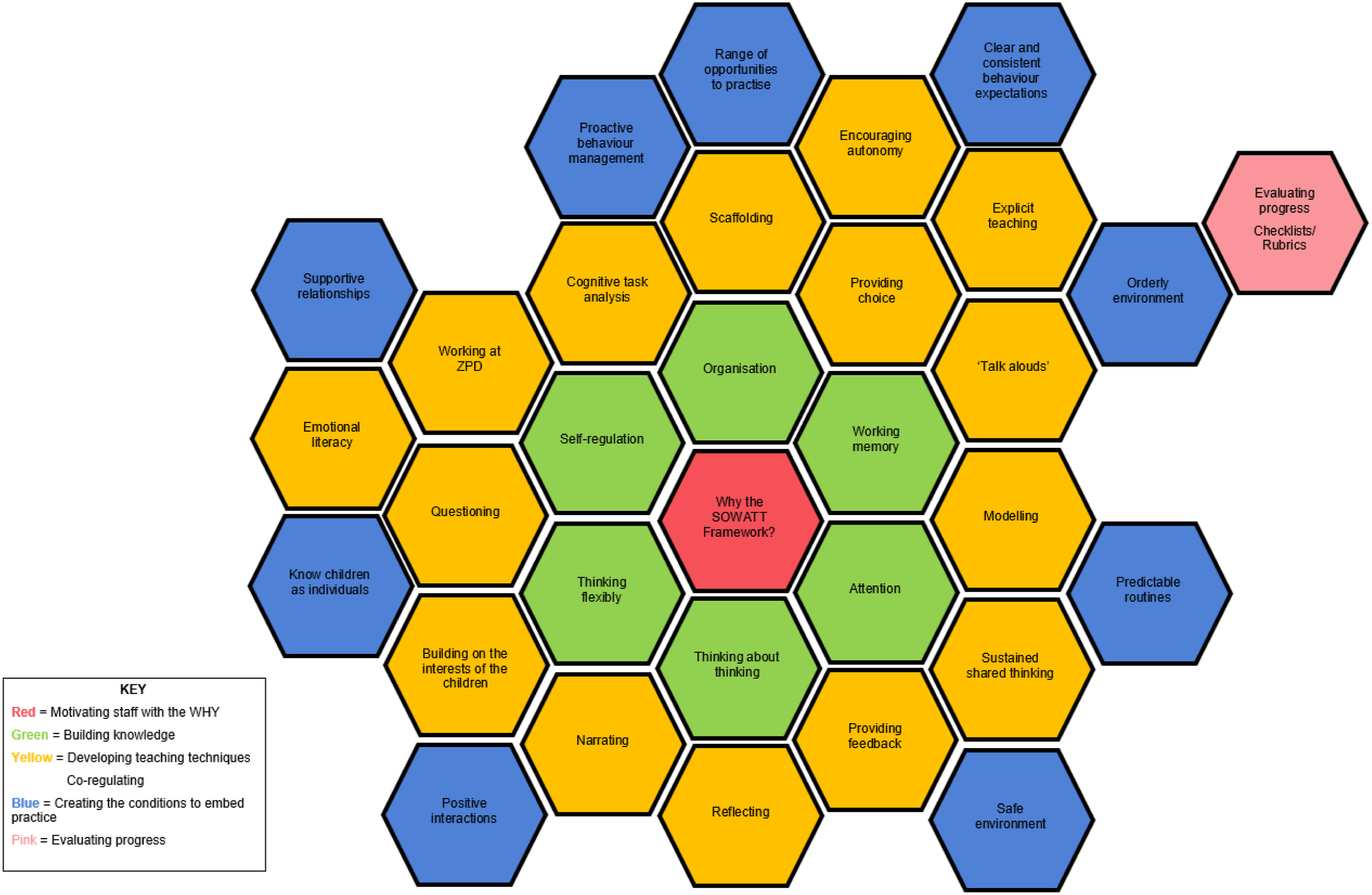
The SOWATT program (see Figure 1 for content overview) adopts an approach to educator development, that aims to support them to intentionally embed practices and experiences throughout the day that ‘foster’ holistically, rather than ‘train’ specific aspects of EF and self-regulation. Findings from a quasi-experimental evaluation of the SOWATT program with 106 4–5-year-old children suggest its viability to build educator capacity and improve child EF and self-regulation (Muir et al., 2024). Given the centrality of PL to SOWATT, extensive consideration was given to the structure and implementation process to maximise educator-level practice change and, thereby, child-level effect. The mechanisms of change that underpin the design and implementation of SOWATT were informed in particular by Sims and colleagues’ (2021) meta-analysis regarding characteristics of effective PL (see Table 1). EF and self-regulation content was also mapped to Collin and Smith’s (2021) framework (see Figure 2). Overview of SOWATT content. Aligning program content to mechanisms.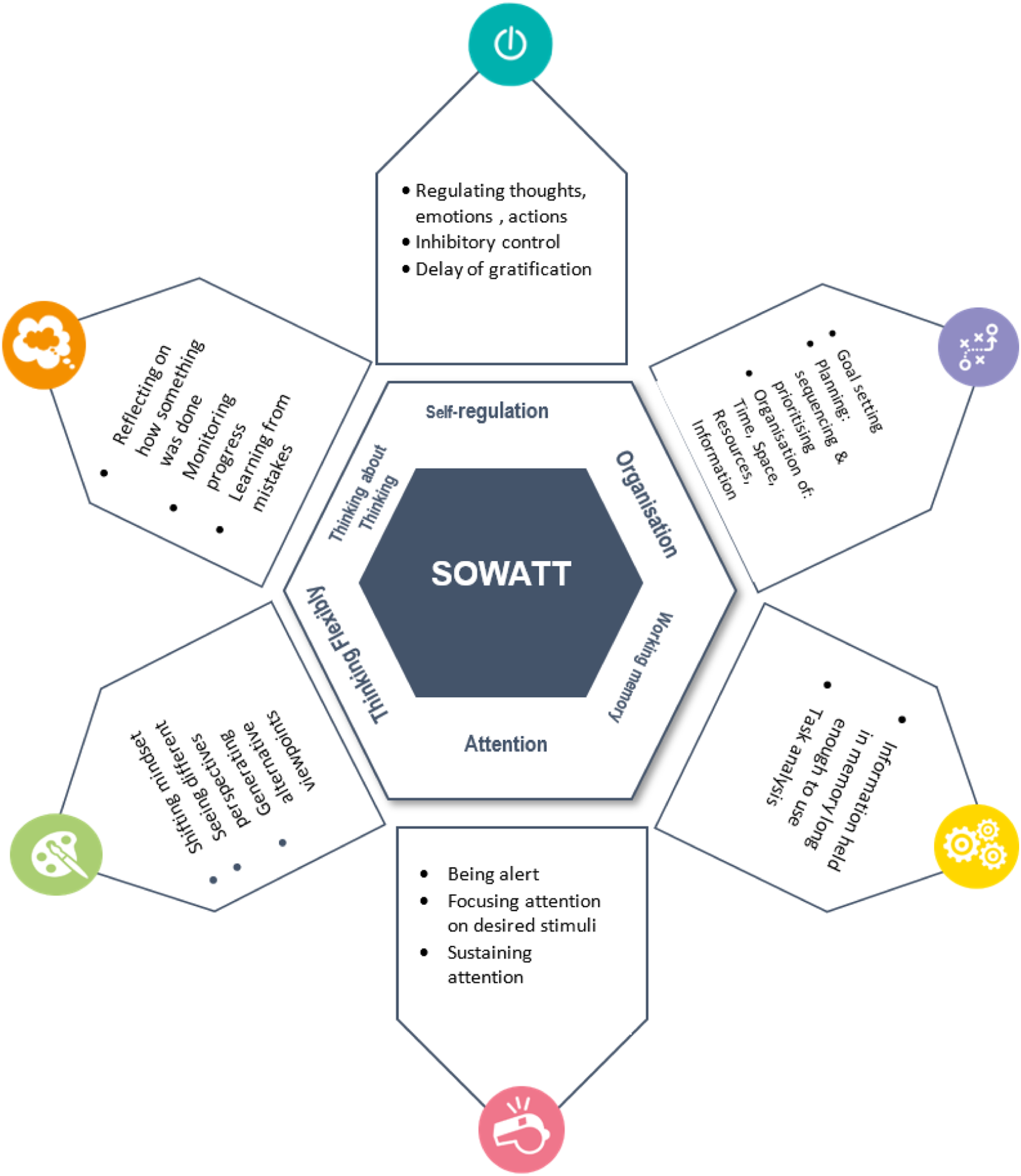
Motivating staff
According to the four roles of PL, motivating staff pertains to setting and agreeing on goals; presenting information from a credible source; and providing affirmation and reinforcement after progress. Goal setting that is conscious, specific and achievable–i.e., stretching current knowledge and practice–is associated with an increased likelihood of change in behaviour (Sims et al., 2021). Guskey (2021) concurs that, before delving into PL content with participants, it is important to start with a clear end goal in mind. This entails identifying specific enhancements in learning outcomes–for educators and children–that should result from the PL. Articulating goals also renders criteria for measuring effectiveness more explicit and specific. Nevertheless, as noted by Guskey (2021, p. 56), this is frequently overlooked in favour of presenters who are capable of “entertaining and motivating their staff at a reasonable price.” Yet staff motivation transcends entertainment and change is unlikely to be achieved through a unilateral ‘top-down’ approach to instigating change (Guskey, 2021).
The aims or goals for the SOWATT program were made clear to all stakeholders, both in the initial contact with centre leadership and at the outset of the training with educators. This involved sharing the ‘why’ (why should we expressly target EF and self-regulation), given that the educators were being asked to divert precious time away from other activities (e.g., to attend the PL, to enact SOWATT practices over others). In this instantiation of the program, there was ready buy-in. For one, the educators were already grappling with ‘managing’ behaviour in order to maintain a positive climate conducive to teaching and learning. Support in achieving this, in the form of PL for staff was thus appealing from both a management and educator perspective. Goals were additionally situated against regulatory requirements (EYLF) and how EF and self-regulation underpin its aspired outcomes, creating a regulatory imperative. The age of the children (3–5-year) was further highlighted as being optimal for developing these skills, thus creating a sense of urgency and priority. Given one of the program goals was to equip and empower educators with knowledge and understanding of how to develop EF and self-regulation in their classrooms on an ongoing basis, this too was attractive given the sector’s preference for “efficient solutions, supported by scientific evidence” (Milotay, 2016, p. 119).
These goals were all supported by an extensive body of credible, peer reviewed research accumulated over years, disciplines (psychology, education and neuroscience) and contexts (e.g., inter/national). This decreased the likelihood of the PL being perceived as faddist, rather than fundamental. Linking research, policy and practice in meaningful ways that recognise the current realities of the sector–as was the case in the SOWATT program–are suggested as motivational forces (Milotay, 2016). This was considered both in the design of the program, but also in realities of implementation. For instance, while in the original design the initial PL session was intended to span across 1.5 days, educator withdrawal from ECEC classrooms is particularly problematic due to impact on budgets (i.e., backfill) and staffing ratios. The adopted compromise was to hold a full day face-to-face training and an additional online session after the preschool day, to revisit content for those who had been in attendance and upskill those who had been unable to attend.
Following the initial training, educators were tasked with applying their new knowledge in their classrooms over the subsequent months. As part of this they were encouraged to identify areas of particular need within their classrooms as a starting point and to set goals. To support the educators to achieve their identified goals, opportunities to promote and affirm progress were threaded throughout the program through: weekly centre visits across the first 8-week after the refresher online PL session; an open channel of electronic communication with centre staff to ask and answer questions; and, touch-base interviews with educators midway through and at the end of the program.
Although not directly addressed in Sim et al.’s (2021) framework, the importance of relationship building is also expectedly influential in motivating staff. Interpersonal relationships between the PL leader and participants, for instance, have been identified as important to delivery and uptake of PL (Sheridan et al., 2009). Indeed, early childhood educators’ responsiveness to coaching is often related to the “fit” between coach and coachee (Brown, 2010). To account for why this might be, educators have reported that building trusting relationships with external experts granted them ‘psychological safety to engage deeply’ and move outside of their comfort zone to implement new practices (e.g., Rosa & Toncelli, 2022).
Building knowledge
This second role of PL involves presenting new knowledge in ways that support understanding. In the design of PL, Sims and colleagues (2021) warn of the dangers of cognitive overload and the need to consider this during the planning stage, by focusing on the most relevant content, intentionally sequencing, spacing, varying delivery of the content, and providing multiple examples. Knowledge is also built and retained through revisiting previous topics later in the program and/or through tasks that require educators to draw on past learning.
The concepts of EF and self-regulation are complex. Even at an academic level there are continued debates concerning their definitions, relationship, and the best way to enhance them in the classroom. In spite of this, there is clear evidence of their importance and their susceptibility to change through intervention. In an attempt to reduce these complexities to a manageable and workable target, the acronym SOWATT was used to identify six key elements that educators can use as a lens to examine their classroom practices and extend these to include an intentional EF and self-regulation focus. This lens provides a structure for sharing why each element is important, identifying each element as it manifests in the preschool classroom and how it may be intentionally developed–without getting bogged down in their delineation, when evidence shows their reciprocal influence anyway (Blair, 2017; Blair & Raver, 2015).
Presenting and building knowledge in a workshop format allowed educators to take an active role in the training by sharing observations and experiences from their practice that related to the key content. It further allowed for collaborative examination of typical preschool experiences, such as construction and creative play, through the SOWATT lens. Ubiquity of the activities under examination allowed educators to focus on the new knowledge–i.e., how the activities could support EF and self-regulation development, and educators’ role in achieving this–rather than on creating activities for the specific purpose of the PL. To support and supplement these activities, the program included information on ‘sustained shared thinking’ (Siraj-Blatchford, 2009, 2015). This form of interaction, typically between an adult and one or more children, involves a sustained period of joint activity and thinking about a task or play. Essential is ongoing ‘serve and return’ dialogue, during which the adult’s contributions serve to extend and/or protract the child’s thinking. A focus on language as a means to extend children’s thinking allowed for the invocation and use of EF and self-regulation throughout the day, rather than at isolated times. It also created a focus on the process of learning, rather than solely the end product. The mechanism of revisiting prior learning was developed through the coaching provided during the ‘embedding phase’. Follow-up visits to the intervention centres in subsequent weeks included revisiting and clarifying definitions of SOWATT elements, such as Thinking about thinking.
Developing teaching techniques
Effective PL is likely to provide educators with the techniques or strategies they require to improve their practice. The five mechanisms identified by Sims et al. (2021) to support educators achieve this are: instructing on how to perform a technique; rehearsing the technique; modelling the technique; providing feedback; and arranging practical social support.
There are a number of strategies that educators can use to co-regulate children and extend their cognition and self-regulation. Many were familiar to the educators, already forming part of their practice, albeit sometimes more incidentally than intentionally. Two specific practices were included for being particularly beneficial in the development of EF and self-regulation yet are often under-practiced in Australian early childhood education and care: sustained shared thinking and analysing a task from a cognitive perspective. In a busy preschool classroom, sustained shared thinking is not necessarily a default mode of communication and must, therefore, be planned and practised. Support provided for the educators to enact this was twofold: (1) examples of types of open-ended questions relating to each SOWATT element was given to the educators and (2) was modelled by the interventionist when visiting the centres.
Summary of Mechanisms as used in the SOWATT program.
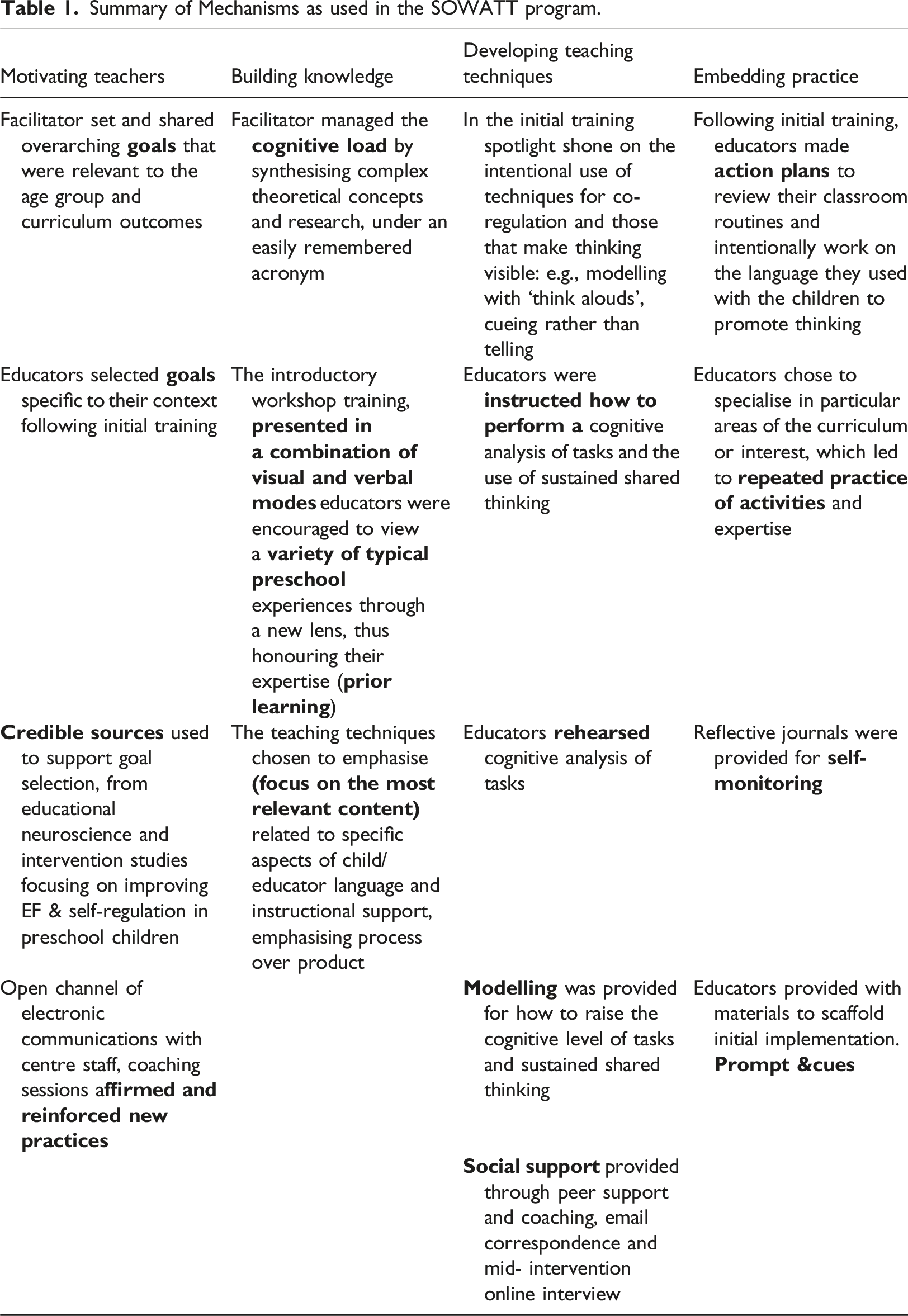
Social support, particularly peer support, is recognised as a positive mechanism to hone new skills (Sims et al., 2021). It is most effective when peers share a common language, culture and knowledge of the problems they face on a day-to-day basis. In SOWATT, each intervention class had three staff members with various levels of education involved in the implementation. This team-based approach to the PL and program facilitated collaboration and peer support within centres. In addition, online interviews, with multiple participants from across the intervention sites were conducted. This provided opportunities for centres to exchange their unique experiences with the program in their context. These discussions expanded their respective pedagogical repertoires by gaining insights into how similar skills were being subtly adapted for different contexts in a supportive, professional and sociable environment.
In the implementation of SOWATT, feedback was a mechanism used during both the ‘developing teaching techniques’ and ‘embedding practice’ phase. This ensured feedback was specific, timely and tailored (Hattie & Timperley, 2007). The extent of feedback that could be provided to educators during the latter phase was, however, constrained by inconsistency in whether, when and for how long staff could step away from classroom duties. The verbal feedback provided during visits to classrooms tended to be framed with a positive emphasis, designed to bolster motivation and engagement over teaching performance.
Embedding practice
With educators motivated to build new knowledge and familiar with the taught techniques, there is a need to support them to effectively embed contextualised practice to ensure continued improvement in teaching, to build efficacy, and to not revert to previous, less efficacious habits. Sims et al. (2021) identify four mechanisms that may be deployed to support this: prompting action planning; prompting context-specific repetition; encouraging self-monitoring; and providing prompts and cues. Although facilitator follow-up is widely supported in literature, it is also recognised as one of the most neglected aspects of professional learning (Gusky, 2021).
At the end of the initial training, educators were encouraged to identify steps–an action plan–they could take in the subsequent days to implement the PL program. This helped to identify and prioritise needs, with educators opting to first review their classroom routines and activities, and their conscious verbal interactions with children (i.e., how they could extend children’s thinking before, during and after activities). Planning to embed practice became the responsibility of the teams at each centre. This shared responsibility allowed educators to divide this responsibility according to their personal passions and preferences. Specialising in this way, although not mandated in the SOWATT program, proved successful in providing context-specific repetition, which also lead to growing expertise and high motivation. This is an example of educators drawing on their personal agency and being proactive, which aligns with prior research that educator efficacy is an important factor in educator effectiveness, their behaviours and ultimately in child outcomes (Bray-Clark & Bates, 2003).
Educators were provided with reflective journals for the purpose of self-monitoring. It was anticipated that these would be used to record specifics of their SOWATT implementation process and their reflections. While educators did not use these in the intended systematic, detailed manner, opting instead for sporadic emailed accounts of activities they had implemented, critical reflections were nevertheless evident in conversations in the semi-structured interviews. This highlights the need for (and potential positive outcomes of) flexibility on the part of the PL facilitator in their approach–so long as these changes do not contravene anticipated mechanisms of change or central program principles and content. It was evident that in the intervention centres, the teams of educators responsible for each class became not only each other’s support but also their monitoring system.
The mechanism of providing prompts and cues to educators was addressed by providing each educator with resources they could reference as required on their return to their centre. This included a summary of the theory underpinning SOWATT, and an activity ‘Menu’ that highlighted how specific classroom practices could be selected to target EF development. Although coaching was not identified by Sims and colleagues (2021) as a mechanism to embed new knowledge and practices, there is substantial research to support its use (Elek & Page, 2019). It was for this reason that the interventionist made weekly visits to the intervention centres over an 8-week period. This served to ensure there were no misunderstandings or misapplication of initial knowledge and was also viewed as an opportunity to build educator efficacy and self-confidence to provide repetition of skills within playful contexts.
Implications and conclusions
Whilst there is a general consensus that PL has the potential to improve educator practice, attendance alone does not guarantee greater educator effectiveness or improved child outcomes (OECD, 2012). Yet few evaluations are conducted into PL effectiveness, particularly evaluation designs that can yield robust insights into efficacy (OECD, 2012). Instead, PL more routinely looks to present evidence and its translation to practice, assuming effects confer based on this prior evidence. This is concerning given that policy makers are investing substantial sums of money to support PL for early childhood educators, but often without requisite evidence of its impacts for educators and/or children. It is therefore imperative for PL to be designed, implemented and evaluated to ensure this investment is well targeted to the needs of the profession and is highly likely to effect sustained change in those areas. Educators’ diverse qualifications, responsibilities and expectations within the early years sector makes it all the more challenging to ensure PL meets the needs and starting points of all educators. More than an articulation of the design of a single effective program, the PL mechanisms articulated here are replicable, evidence-supported and extendable to various other domains. Indeed, even within the area of EF and self-regulation, evidence shows that efficacy can be generated by various approaches (Muir et al., 2023). We thus offer this as an example for future programs, for PL evaluation, and for future instantiations and refinements to SOWATT. Although this paper focuses specifically on PL for improving preschool children’s EF and self-regulation, research would do well to apply similar considerations and/or mechanisms to different PL experiences across content areas, given the expectation that models of effective PL may not be constrained to its particular topic.
Footnotes
Declaration of conflicting interests
The author(s) declared no potential conflicts of interest with respect to the research, authorship, and/or publication of this article.
Funding
The author(s) received no financial support for the research, authorship, and/or publication of this article.
