



Abstract
This paper describes a case study using quantitative and qualitative approaches to investigate student engagement and retention within an online early childhood teacher education program at a regional Australian university. Two key interventions, the identification and support of disengaged students and the Embedded Tutors Program are described and examined. Initial findings on these retention initiatives, developed to support Early Childhood Education undergraduates studying in the online environment, are presented. Additionally, discussion of the findings through the theory of practice architectures highlights the practices and institutional arrangements that create the conditions to support student retention. This study is significant in planning for Early Childhood Education workforce quality and supply. It may offer guidance to institutions for their retention practices with early childhood teacher undergraduates studying in the online environment.
Keywords
Introduction
Student attrition within Australian early childhood teacher education programs at the university level is a growing concern. The personal and institutional investment in higher education and the impact upon early childhood sector sustainability are central to those concerns for the profession, policymakers and, most importantly, children and families. Of particular interest is the impact of student retention and course completion on the early childhood education (ECE) workforce quality and supply issues, where ‘accessing a consistent supply of high quality, job-ready educators remains a challenge across all service types' (ACECQA, 2021, p. 27).
The paper begins with an overview of ECE workforce challenges and the relationship to student retention in initial teacher education (ITE) programs in ECE. The literature review that follows discusses research on student retention in undergraduate education programs, particularly within the online learning environment. Efforts to improve student retention and assessment success are then described with a focus on two interventions: the identification and support of disengaged students and the Embedded Tutors Program. The paper goes on to discuss potential challenges to retention in ECE ITE. We present cohort data, including student demographics of students attending in their first year of university and evidence of the impact of the interventions on student retention and student assessment outcomes. Interventions are additionally analysed using the theory of practice architectures to investigate the institutional arrangements that enable improved student retention rates. The paper concludes with a proposal for the next stage of the study.
Early childhood education, workforce challenges and undergraduate retention
Early childhood education describes the earliest stage of the education continuum for the years before school (Birth to five/six years). High-quality ECE programs influence children's academic, emotional, and social outcomes and life trajectories. Additionally, ECE increases intergenerational social mobility and labour market participation for carers and parents of children. Therefore, ECE plays a role in developing civil and economically productive societies (ACECQA 2021; McCoy et al., 2017). Primary contributions to ECE quality are thoughtful and well-planned educational programs, healthy, safe environments, authentic and empathetic relationships, and sound governance and leadership (ACECQA, 2021). The quality of these contributions is dependent upon a skilled and knowledgeable ECE workforce. Many challenges to the availability and sustainability of a skilled and knowledgeable workforce exist (Alchin et al., 2019; Irvine et al., 2016; McKinlay et al., 2018) and are described below. Whilst ECE is embedded in the legislative and policy landscape of international jurisdictions, actions to ensure workforce sustainability have stalled.
Early childhood education workforce challenges worldwide encompass undergraduate retention, vocational and tertiary qualifications integrity, access to training and post-graduate professional development, ongoing social effects of COVID-19, the lack of qualified educators in rural and regional areas, and early childhood teacher attrition. Whilst workforce strategies worldwide note the importance of qualifications and the training of early childhood teachers (Thorpe et al., 2020), initiatives are slated for upcoming years, and there is a lack of detail on policy levers to ameliorate the declining numbers of early childhood teacher graduates. Successful completion of qualifications depends upon the engagement and retention of students in early childhood teacher training courses in institutions worldwide (Australian Productivity Commission, 2011).
‘Engagement' is defined as how involved students are in their learning and how connected they are to their institutions (Axelson & Flick, 2010). ‘Student retention' and ‘attrition' are described as ‘two sides of the same coin'. Student retention “is an institutional outcome which aims to ensure continued enrolment of a student” (Loh et al., 2021, p. 86). Undergraduate attrition is the term used for the proportion of students who leave after the first year of study at a university. First-year attrition of students from disadvantaged backgrounds is consistently higher than more advantaged peers (Tomaszewski et al., 2020). Attrition (or failing to progress) is costly for both the institution and the student (Adams et al., 2010) and efforts to reduce attrition and, therefore, increase overall retention are a key focus for universities.
A review of the literature on student retention in undergraduate education programs
Our review of the literature initially focused on undergraduate student attrition and retention in early child teacher education courses. The original intention to examine student attrition and retention in online early childhood teacher education courses yielded a small number of publications. We therefore expanded our search to locate research and reporting on student retention and institutional approaches to engaging and retaining students in the first years of undergraduate education in the last 15 years-reflecting the emergence of online learning in higher education institutions. Databases searched were Taylor and Francis Online, A + Education, EBSCOhost(Education), Education Research Complete, ERIC and ProQuest Education Database. Search terms included retention, student retention and early childhood studies, online early childhood qualifications, early childhood teaching qualification, student teacher (early childhood), studying early childhood education, early childhood qualification pathways, ECE qualifications, early childhood teacher efficacy, and student characteristics. Sixty-eight papers were retrieved, and 37 papers were included. Studies were located in Australia (64%), United States (17%), New Zealand (5.5%), Canada (5.5%) and Spain (2.5%).
A mix of qualitative (n = 21), quantitative studies (n = 9), mixed methods (n = 4), literature review (n = 1) and books (n = 2) found the impact of course design along with tutor and lecturer support on retention to be the most prevalent research in this field. Furthermore, we found a focus on student characteristics and the challenges of balancing work, study, and personal commitments and workplace learning to increase confidence. A sense of belonging to a learning community was an overarching theme in many studies, regardless of the mode of study. The key themes regarding the influences upon student attrition and retention are explored below.
Course design and presentation of unit materials
Online and multi-modal initial teacher education programs in Australia gained greater traction in 2010 when jurisdictional legislation imposed qualifications requirements for ECE, and there was an increase in dispersed cohorts of students (Boyd & Garvis, 2021In Boyd & Garvis, 2021; du Plessis et al., 2008). As qualification programs developed, it became clear that the online environment required a new range of institutional arrangements. Those arrangements included digital technologies, orientation to the online environment, the instructional design that enhanced learning at a distance and social interaction. Strategies were refined to ensure the integrity of the student experience and qualifications and retention of students (du Plessis et al., 2008). Fenech et al. (2009), in an Australian investigation of Master of Teaching students, identified three categories of support for student success—guidance on time management, strategies to make learning experiences accessible and ameliorating approaches to learning barriers faced by individual students.
Another Australian study comparing the student experience of varying modes of course delivery (Blackley & Sheffield, 2015) highlighted the need for multiple approaches to the presentation of content that included workshops, content chunking, collaboration opportunities and personalised feedback. It was, however, the duration of courses that was found to improve retention in a qualitative Australian study of students at various stages of their studies (Kirk, 2022). As a result of the small cohort study (n = 20), Kirk (2022) recommended shortening the duration of courses without compromising course quality and providing externally sourced mentors as a pathway to increased retention.
Tutor and lecturer support
Programs that include ‘social presence' in online learning are critical to engagement in multi-modal environments. Social presence in multi-modal learning describes lecturer engagement, student interaction, online e-learning and intensive ‘face-to-face' tutorials (Garner & Rouse, 2016). Studies integrating student evaluations of their online learning experiences reveal social and affective needs and the strategies used to reduce isolation and attrition. In a study of 268 students enrolled in a combined early childhood primary degree, the use of social media to build social capital was found to increase digital competence and professional identity (Gil-Fernández & Calderón-Garrido, 2022). In this study, further challenges were experienced by learners who lacked access to technology or familiarity with online learning. Conversely, digital competence led to a greater sense of personal satisfaction and belonging. Another study of 26 ECE online courses in Canada investigating the value of synchronous support by tutors (Heald, 2018) found that a lack of confidence in technology hampered engagement and student success in completing assessments.
Student characteristics and the challenges of balancing work, study, and personal commitments
The abovementioned lack of ability and competence in the online environment were among the top five reasons students withdrew from a non-ECE online degree. Other reasons for withdrawal included work-related factors, personal/health reasons, learner technology problems, learner contexts and poor study and time management skills (Greenland & Moore, 2014). Similarly, in an Australian study of engineering, nursing, and psychology undergraduates, Loh et al. (2021) identified academic motivators and blockers at multiple ecological levels to understand student persistence and retention. Motivators included students' enjoyment of learning, individual agency over the use of time and study programs, and the desire to complete a degree. Conversely, blockers were identified as heavy academic workload, difficult internship placements and lack of real-life application of course content. The persistence of students, measured by higher academic locus of control and metacognitive self-regulation skills, was also found to be a factor in student retention in the online environment in a United Kingdom study of discriminating factors between 'completers and dropouts' (Youngju et al., 2013).
Workplace learning experiences
Regardless of the mode of study, positive workplace learning experiences influence academic confidence and student retention. Workplace learning within the ECT ITE context describes professional experience within an ECE setting and comprises teaching days on-site placement. Several studies of student experiences in online and face-to-face environments found that favourable workplace learning placements made students feel more positive about the course and indicated greater confidence in their role as emerging early childhood professionals (Farrell et al., 2000; Kirk, 2022). Kirk (2022), in a qualitative study of 20 students, found that well-placed practicum experiences combined with a mentoring program favourably influenced retention. In a US study of undergraduates enrolled in workplace learning subjects, students reported feeling energised and relaxed. However, some practicum students reported feelings of frustration in their practicum classrooms when they did not receive supportive mentoring and guidance. Feeling energised and relaxed positively correlated with student teacher ability and willingness to stay in the profession (Van Schagen Johnson et al., 2017). Similarly, Farrell et al. (2000), in a study of course experiences for first and fourth years students, found that students in their final year, compared to first-year students, were more optimistic about the course and indicated greater confidence in their role as emerging early childhood professionals. Most students feel that the practical element of the course is the most important (Farrell et al., 2000; Gao et al., 2023).
Belonging
A common theme within the research is the importance of belonging to a community of learners. Kirk (2022) identified that a sense of belonging and course-specific activities that promoted a feeling of community were integral to student retention and assessment success. In a university that operates exclusively online, the establishment of strong social networks and building social capital within the student cohort fulfils the function of meeting affective and social needs (Gil-Fernández & Calderón-Garrido, 2022). Gil-Fernandez and Calderon-Garrido assert that the participating university showed achievements that are superior to those of in-person universities, especially in terms of obtaining emotional benefits, professional identity, or a sense of belonging and personal satisfaction. Du Plessis et al. (2008) also found student teachers chose to study via online learning as this mode allows flexibility, less isolation, and social learning opportunities. According to du Plessis et al. (2008), social learning opportunities include the establishment of teacher and student relationships, and student relationships via online technologies.
Our review of the literature highlights the low number of empirical research studies on the retention and efficacy of students in the online environment, an area of increasing importance in a widely dispersed workforce and ECE landscape where reduced access to face-to-face engagement in teacher education may limit the number of ECTs graduating. In 2018, Nuttall identified the need for research on how a range of variables in Australian early childhood ITE, such as preservice teacher dispositions, preservice course content, the organisation of practicum placements, specific pedagogical approaches within ITE, and the impact of the varied contexts in which graduates begin their independent teaching careers help to retain and develop highly skilled graduates (Nuttall, 2018). Further research on student retention in ITE, therefore, offers an opportunity to contribute to the conversation on ECE workforce sustainability and graduate success since the abovementioned student attrition directly impacts the ECT pipeline (ACECQA, 2021). The quality and streamlined delivery of ECE is jeopardised by workforce challenges and workforce shortages (ACECQA, 2023).
The following research question, stimulated by our findings in the literature, formed the intent for a broad study: What are the student attrition rates, constraints and enablers for student retention in early childhood teaching degrees—particularly those degrees that are taught in the online learning environment within higher education institutions? This paper addresses a contributing question: How do targeted interventions support student retention in initial early childhood teacher education courses?
Ethical considerations
Ethics approval was received from Charles Sturt University Human Research Ethics Committee (Approval numbers: H21170 and H22085).
Theoretical framework
Intervention data were analysed for quantifiable impact on retention and assessment success and additionally through the theoretical lens of practice architectures. The theory of practice architectures posits that practices are made up of sayings, doings and relatings that hang together to form a distinct practice with a particular intention (Kemmis et al., 2014). In this study, the intention is identified as student retention and assessment success in ECT education programs. The practices of engagement and retention are therefore shaped, enabled and constrained by the cultural–discursive, material–economic, and social–political conditions in and brought to the site of the practice. The theory of practice architectures is constructive in understanding retention practices and assessment success and for illuminating the arrangements that make those practices possible. In the context of this study, the theory will contribute to an understanding of the language and culture, material resources and the unique social–political arrangements that enable and constrain student engagement and retention in undergraduate ECT education programs.
Participants
This study monitored the engagement and retention of 1186 students enrolled in the first four compulsory units offered in the Bachelor of Education (Birth to 5 years) in 2022 at a regional Australian university. Each of the four units was offered online across three semesters that are 12 or 14 weeks in length. The current attrition rate for the Bachelor of Education (Birth to 5) is approximately 20%, with first-year students at the highest risk of withdrawal (18.8%) (Tertiary Education Quality and Standards Agency, 2023).
Students enrolled in at least one of the four compulsory units within the Bachelor of Education (Birth to 5) were included in this study. The four units introduce students to the subject matter on children's rights, children's oral language development and emerging literacy, wellness and wellbeing, and mathematics, science, and technology for young children. Learning outcomes for the units include critical reflection and analysis, the transmission of knowledge, creative development of learning materials, and intentional teaching. These are foundational skills and knowledge for the ECE field and for educators working with young children (Molla & Nolan, 2020).
These units attract large numbers of enrolments and are the first subjects students undertake in their ECT degree. All students enrol via an expedited Diploma of Early Childhood Education pathway combined with an entry level academic skills unit. The student cohort within the units (and the Birth to 5 degree) is diverse in knowledge, skills, and disposition. In addition to the large numbers of students, the cohort has a high percentage of females (99%), almost one-third (28%) are from a low Socio-Economic Status (SES) background, and 71% of students are the ‘first-in-family' to study at university. Students are culturally and linguistically diverse. All students study online, and most study part-time. Anecdotal accounts and interactions with students online also reveal that they hold multiple roles as full-time educators, carers, and parents of young children. Students may also work within centres subject to regulatory waivers. Temporary waivers (granted for up to 12 months) and Service waivers (ongoing) enable services that are non-compliant with the National Regulations or an element of the National Quality Standard to continue to operate. In this context, there is additional pressure on students employed in services with staffing waivers to complete units within a time limit to acquire qualifications (NSW Department of Education, 2021).
As an entry point for the degree, these units have a discipline focus and help students establish effective study patterns. The subject material supports student understanding of university conventions and assessment expectations.
Methods
The retention model
A research-informed retention model has been developed to support commencing student engagement and assessment success as described previously (Linden et al., 2023) to align with best practice transition pedagogy (Kift, 2009). First year Unit
In this study, subjects are described as Units, and the Semester 1 is the period of study for each Unit.
Coordinators were provided with professional development opportunities, including support to create quality early assessment items. Early in the Semester, student engagement with the unit material in the online platform was monitored using learning analytics (assessment submission and Learning Management System (LMS) access), and disengaged students were provided with targeted support. Unit-specific Embedded Tutor appointments were available to provide one-on-one assessment feedback for major written assessments. This work has been shown to reduce the number of students who are enrolled yet do not submit any assessment items and receive a zero-fail grade (ghost students) and increase the number of students who receive a passing grade (Linden et al., 2023).
Identification and support of disengaged students
In week two of the Semester, a personalised email was sent to all students who had not accessed the LMS for any of the four key first year units since the first day of Semester. The email advised students that the Semester had commenced and provided instructions on how to get started (links to log in to the LMS and email the Unit Coordinator), to contact university support services or to unenroll.
Student engagement was monitored in weeks 3 and 4 of each Semester across the first four compulsory units, including LMS activity and submission of early assessment items. These units were selected to ensure that all commencing students in the degree were monitored, and this accounted for various enrolment patterns. Three units had a low-stakes early assessment item. The day after each assessment item was due, Unit Coordinators were sent an online form with the class list. Students who had not submitted the assessment were ticked, and Unit Coordinators were asked to un-tick any students who received an extension and were given the option to write a note that would be provided to the Outreach Team. The form contained live enrolment and submission data to account for the fluidity of student movement and behaviour early in the Semester. Disengaged students were identified in the fourth unit due to no access to the LMS for the previous ten days. The Outreach Team employs current university students who have undergone extensive training to provide support to disengaged students via phone, zoom and SMS. The Outreach Team provide on-the-spot advice as well as linking students to other support options across the University.
The Outreach Team received details of the missed assessment item, the last date of LMS access, and unit or student-level notes from the Unit Coordinator to help to guide conversations. The Outreach Team contacted disengaged students via a pre-call SMS, followed by a phone call within two days of the assessment due date. If there was no response, a second SMS and then an email were sent the following day. The conversations were friendly yet realistic, and students were offered advice on how to access support services and make an online booking with an Embedded Tutor. Students were also able to alter their enrolment over the phone.
Embedded Tutors
Embedded Tutor support was available in two of the four units. A total of 897 students were enrolled in the two units with Embedded Tutor support. One-on-one draft assessment feedback from a tutor with subject expertise was available to all students in a 2–3 week period prior to the due date of written assessments. The assessments held a value between 15% and 50% of the overall unit grade. Tutor bookings were made using an online scheduling tool (Calendly LL, Atlanta, Georgia) embedded within the LMS site, and the tutor sessions were facilitated online using Zoom. Students were requested to email the draft assessment prior to the appointment. Tutors spent 10 minutes prior to each tutor session preparing. Either 20-minute or 50-minute sessions were offered; time allocation was dependent on the unit and assessment.
Information about the Embedded Tutors Program was promoted in unit outlines and LMS announcements made by the Unit Coordinator to socialise and normalise the use of the program. In addition, targeted student outreach was introduced for students who were identified as at risk of failing. These students were contacted by the Outreach Team, who informed the students of the purpose and availability of Tutors. The Outreach Team were able to book a Tutor session for the students or provide them with the link to the booking page. Student feedback on their experience with an Embedded Tutor was collected via an online survey following participation in a tutor session.
Data collection and analysis
Following participation in a tutor session, students were emailed a link to an online survey (Survey Monkey) composed of ten questions regarding the students' experience with an Embedded Tutor. Consent to participate in the study was obtained (n = 22). Students were asked three open-ended questions: What did you like most about the Embedded Tutor Program? What aspects of the Embedded Tutor Program could be improved? and Is there anything else you would like to tell us about your experience with an embedded tutor? Responses were de-identified prior to qualitative analysis. Tutors completed a form within the LMS following each tutor session in which they indicated the student's unique identification number, the assessment item number and the students' level of confidence regarding their assessment before and after the tutor session.
Subject cumulative marks (out of 100) were downloaded from the LMS (Blackboard) grading platform (Grade Centre). A Pearson's Chi-squared test was used to determine the statistical significance between the proportion of pass and fail grades in students identified as disengaged in Week Two, Week Three or both weeks of the Semester, as well as the difference between grade distribution of students who met with the tutor to students who did not meet with the tutor. A paired student t-test was used to assess the difference in cumulative marks between students who met with a tutor versus those who did not from each equity group. All analyses were performed using GraphPad Prism version 10.0.2 (GraphPad Software). Statistical significance was set at p < .05.
Findings and discussion
Identification and support of disengaged students
Three levels of disengaged students were identified and supported, and there was a significant difference in the proportion of passing grades between each of these three groups (p < .05). The first group of 131 students did not access the LMS in the first two weeks of the Semester and then became active. Understandably, this group had the best outcomes, with 58 students withdrawing from the unit with no financial imposition. Of the students who remained enrolled, 79% received a unit passing grade, and 21% failed their units (Figure 1). (a) Percentage of students who received passing grades and (b) Percentage of students who received failing grades. Group 1 students did not access the LMS in the first two weeks of the Semester. Group 2 students were disengaged in weeks 3 and 4 of the Semester. Group 3 students were identified as disengaged in both campaigns. *p < .05.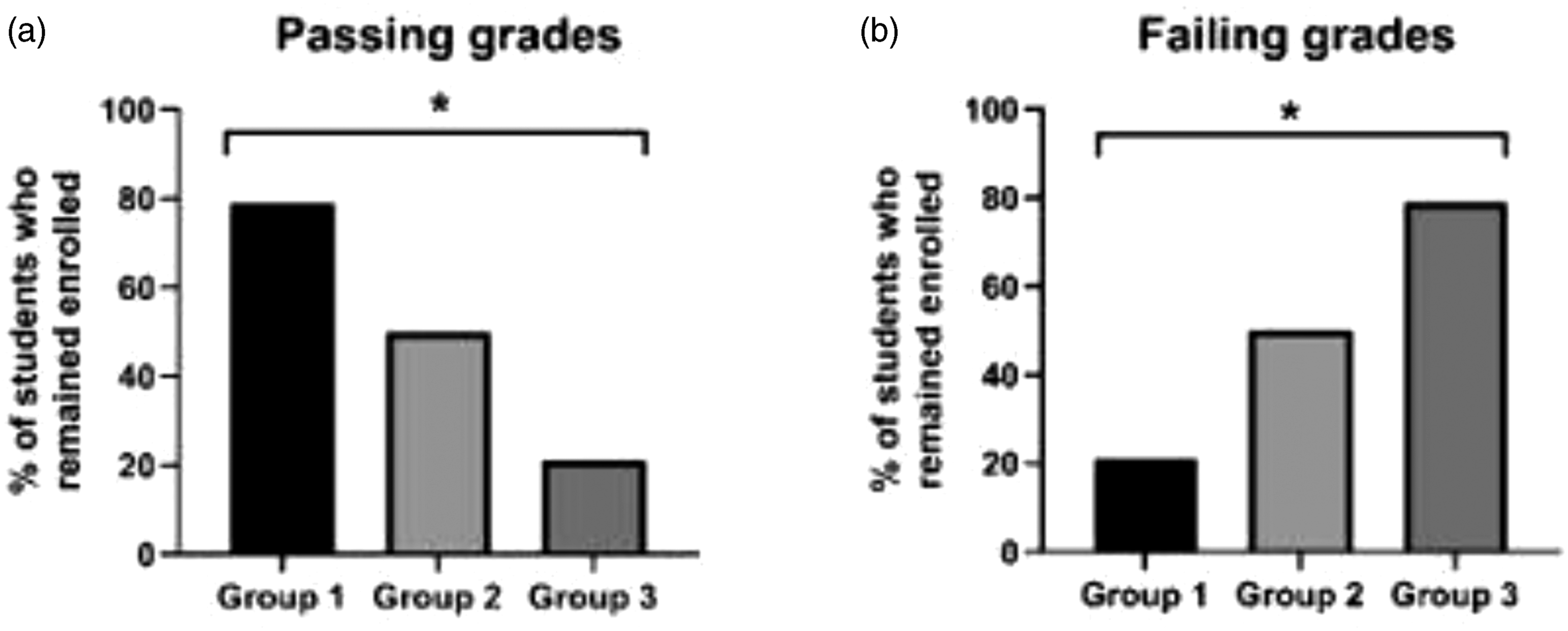
Unit grades are presented using the grade classification system as follows: High Distinction (HD; 85-100%), Distinction (DI; 75-84%), Credit (CR; 65-74%), Pass (PS; 50-64%), Fail (FL; 1-49%) and Zero-Fail (ZF; 0%). Students who receive a ZF grade have not submitted any assessments for that unit.
The literature clearly notes that early response systems are required to identify and support disengaged students (Kift, 2009; van der Meer et al., 2018). Sending an email to students who have not accessed the LMS in the first two weeks of the Semester is an effective, low-cost support for online students. We have previously shown that the day the email is sent, approximately 20% of students access the LMS (Linden et al., 2023). The second group of 90 students, active in the LMS in Week Two, were subsequently identified as disengaged due to missed assessment or low LMS activity in weeks 3 and 4. The most common outcome was to unenroll (n = 52 students) following contact from the Outreach Team, and of those students who remained enrolled, only 50% passed their units (Figure 1). The third group of 134 students showed little or no engagement at any stage in the first four weeks of the Semester and had the poorest outcomes (Figure 1), with only 20% of students who remained enrolled receiving a passing grade. A total of 82 students were unenrolled following contact from the Outreach Team. It is important that conversations with the Outreach Team are realistic as for some students, the best outcome is to withdraw from study and avoid a failing grade and where appropriate, students were referred to contact the University or Course Director for further enrolment advice.
Embedded tutors
As a result of the Embedded Tutors Program, the grade distribution of the 157 students who attended at least one tutor session was shifted to the right (Figure 2). Students who met with a tutor had significantly fewer ZF, FL and PS grades and significantly more CR, DI, and HD grades (p < .05). A total of 34 students were flagged due to a previous failed attempt at the unit prior to submission of the first assessment and referred to the Outreach Team who contacted students to book a tutor appointment for assessment support. Following the submission of a written assessment, a total of 99 students were identified for assessment support over three semesters. Grade analysis. The grade distribution of students who met with a tutor in comparison with students who never met with a tutor shows a shift to the right. p < .05.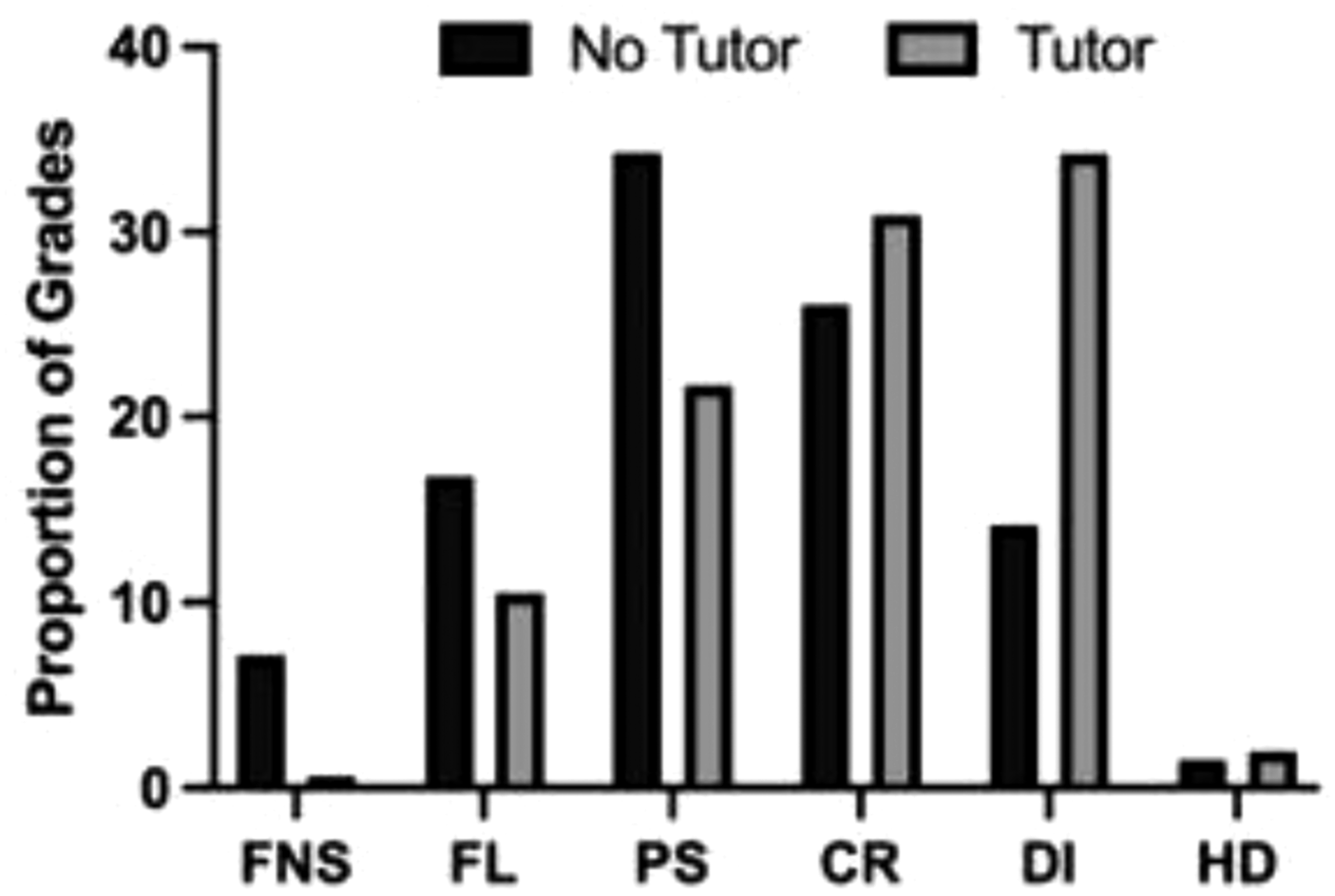
Students who met with a tutor were more likely to remain enrolled. Of the students who met with a tutor in 2022, only 3.8% had withdrawn from study in the first Semester of 2023. Research shows that students who fail a unit are more likely to withdraw from courses (Ajjawi et al., 2019) and previously, we have shown that students who fail a unit in their commencing year are more likely to withdraw from study (Linden, 2022). Therefore, supporting assessment success in first-year foundational units has the greatest potential to impact student retention in future years of study.
Students from Regional, Rural, and Remote (RRR) locations (n = 44) and low SES backgrounds (n = 75), as well as students who are first in family to study at university (n = 80) and First Nations identified students (n = 3) showed an increase in overall cumulative marks following meeting with an Embedded Tutor (Figure 3, p < .05). In addition, students with one or more equity factors showed a larger increase in overall cumulative marks than students who are not a member of any of these equity groups. On average, the students who were not a member of any equity group had an increased cumulative mark of 9% following meeting with a tutor. Comparatively, students who were a member of one equity group, on average, had a cumulative mark 14% higher. Equity factors. Percentage increase in overall cumulative marks by equity group following a meeting with an embedded tutor. *p < .05.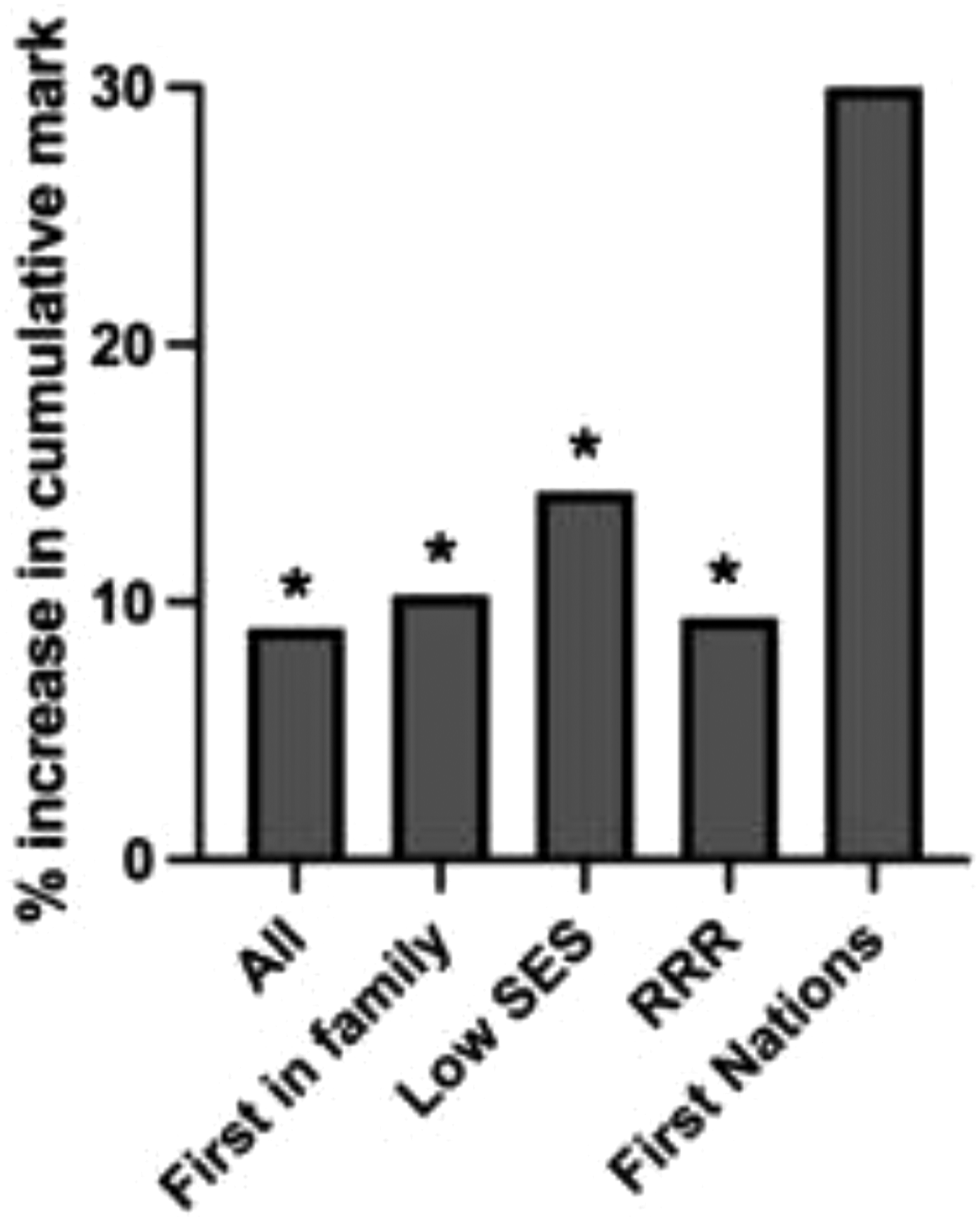
Student and unit coordinator feedback
In student responses to the open-ended question “What did you like most about the Embedded Tutors Program?” students commented that the support provided direction/guidance (n = 3), and one student commented that the tutor was “supportive, efficient, knowledgeable”. Students liked that the support was one-on-one (n = 2) and facilitated a meaningful interaction (n = 2). Several students indicated their appreciation of the support through comments such as “Being at university for the first time, I really valued this experience.” To the open-ended question “What aspects of the Embedded Tutors Program could be improved?” a major theme was the demand for more support – for longer session times, more tutor sessions available and support available in other units. When asked, “Anything else you would like to tell us about your experience with an embedded tutor?” student comments included “[Embedded Tutor] was super helpful, and I will definitely be using for future assessments” and “The tutor I had was engaging and enthusiastic. Content knowledge was excellent.”
Unit Coordinators reported that the additional assistance enhanced the online teaching environment. The initial support for disengaged students created a supportive environment for students to commence engagement. The Embedded Tutors Program created a “coaching style atmosphere where students could collaborate with tutors to improve assessments and grow more confident in the university environment.”
Enabling and constraining student retention and assessment success
A further examination of data through the theoretical lens of practice architectures adds richness to the study. The theory attends to the practices of the individual within the social space of the site. According to the theory, the practices are made up of the sayings, the doings and the relatings. Furthermore, the site arrangements prefigure, enable, and constrain practices. According to Kemmis et al. (2014), site arrangements are the cultural-discursive, realised in the semantic space through language and culture, material-economic, realised in the medium of activity and work through the provision of resources such as time and space and the social-political arrangements: realised within the relationships through power and solidarity.
By using the theory of practice architectures (Kemmis et al., 2014), the institutional arrangements that enable and constrain the practices of retention for ECT education students in the online environment are illuminated. The practices of student engagement and retention are visible in the abovementioned sayings, doings and relatings of the Retention Team, the Embedded Tutors, and the Unit Coordinators and within the broader support through academic skills and outreach teams. Those practices are made possible by the institutional cultural-discursive, material-economic, and social-political arrangements and the practice landscape shaped by regulation and law. The practices and arrangements are identified within Figure 4 and are explored below. Examination of practices and arrangements.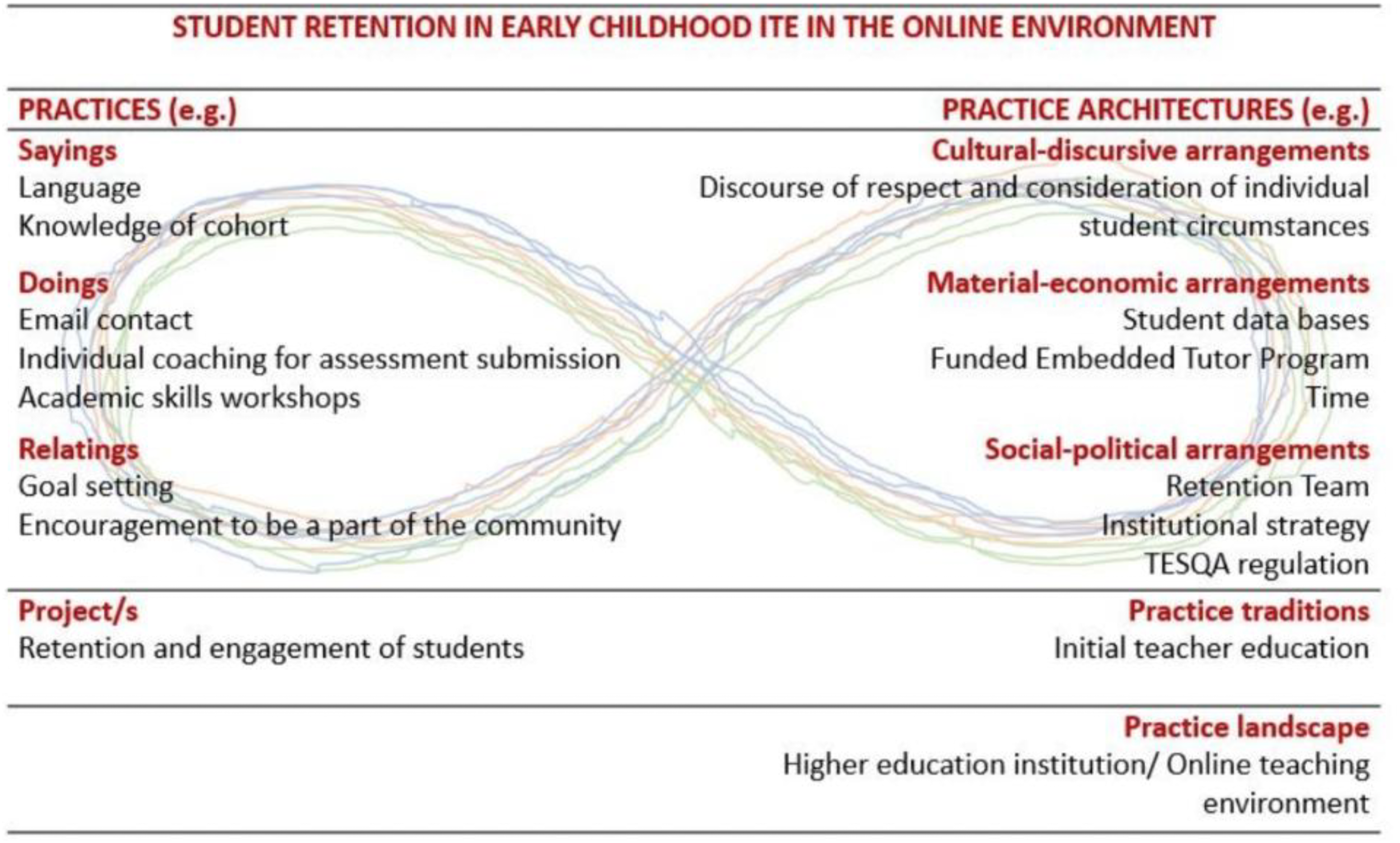
The practices of student retention and making those practices possible
The sayings are evident in the cognitive understandings related to communication with students and the systems that are established to facilitate that communication. These practices are made possible by the cultural-discursive arrangements where a common language describes and promotes engagement and retention to ensure the integrity of support and a shared vision for the Retention Team, Embedded Tutors, Unit Coordinators, and the university. The culture is supportive and challenging. Supporting students to meet and overcome challenges increases the sense of belonging and fosters student engagement (van Gijn-Grosvenor & Huisman, 2020). Engagement increases student assessment success and, subsequently, retention.
The doings, evident in the skills and capabilities of the Retention Team members, the Embedded Tutors Program, and the academic staff, comprise the interventions of student contact, individualised tutoring support for assessment success and academic skills workshops to improve student efficacy. These practices are made possible by the material-economic arrangements comprising existing student databases, comprehensive knowledge of student cohorts (Linden, 2022), and funding for the Embedded Tutors Program and the Retention Team itself. These practices and arrangements are compliant with TESQA guidance that a provider must demonstrate ‘fit for purpose learning and support environments' (TESQA, 2023). Additionally, the affordance of time and timing is evident in the provision of Embedded Tutor support when students are undertaking assessments—in a time of need.
The relationships, evident in the relationships and systems of support, include the cultivation of a sense of belonging to a community, the narrative around goal setting and specific consideration of ‘equity' groups and the additional action that will support retention (Linden, 2022). For students who are members of equity groups, progress rates are lower (Li & Carroll, 2020), and support needs are diverse. The presence of the Retention Team and the Embedded Tutors program as a social-political arrangement demonstrates the institution's commitment to equity and provision of support for students whose retention requires targeted, respectful action (Gijn-Grosvenor & Huisman, 2020). Additionally, the social arrangement of feelings of support, meaningful interaction, and positive relationships promotes engagement and retention. This arrangement of connection and community is crucial to student retention and assessment success (Kirk, 2022).
Conclusion
Failing students and subsequent attrition within university courses is costly for both the institution and the individual student. Students who fail a unit are more likely to withdraw from their studies and will not complete their qualifications. In the context of this study, the perpetuating effect of student withdrawal becomes evident in the non-completion of courses and early childhood teacher scarcity, and this has a compounding effect on early childhood education workforce shortages and quality. This paper has described two interventions and additional institutional arrangements that have favourably influenced student retention rates in ECE ITE. The findings resonate with existing research on tutor and lecturer support to reduce student attrition and, therefore, increase student retention. Additional arrangements comprise culture and language, material resources and relationships to engage and sustain students in their study practices. These findings offer guidance on student retention to other institutions and lead to possibilities for further research on approaches to course design, student support, student belonging and frameworks for the delivery of online ECE ITE to improve student retention.
Footnotes
Declaration of conflicting interests
The author(s) declared no potential conflicts of interest with respect to the research, authorship, and/or publication of this article.
Funding
The author(s) received no financial support for the research, authorship, and/or publication of this article.
