



Abstract
Since the launch of the Eastern Partnership (EaP) in 2009, the scope and content of democratic reforms has varied significantly across the six partner countries despite the EU’s increased interest in and commitment to differentiated bilateral relations. The quality of democracy in Ukraine continuously declined between 2010 and 2014, but has significantly improved since then. Armenia has long been considered a semi-autocratic state, but since its Velvet Revolution in 2018 the new government has embarked on promising democratic reforms. Moldova, a country once considered the front-runner of the EaP, has experienced democratic backsliding since 2014, while democratic reform progress in Georgia has slowed considerably. The autocratic regimes in Azerbaijan and Belarus have further consolidated their power, without showing signs of democratic change. The article outlines some of the key issues and developments pertaining to democratic reforms in each country and assesses the factors that explain the uneven progress in this area across the six EaP countries.
Introduction
Since the launch of the Eastern Partnership (EaP) in 2009, the scope and content of democratic reforms has varied significantly across the six partner countries despite the EU’s increased interest in and commitment to differentiated bilateral relations. The quality of democracy in Ukraine continuously declined between 2010 and 2014, but has significantly improved since. Armenia has long been considered a semi-autocratic state, but since its Velvet Revolution in 2018 the new government has embarked on promising democratic reforms. At the same time, Moldova, a country once considered the front-runner of the EaP, has experienced democratic backsliding since 2014, while democratic reform progress in Georgia has slowed considerably in recent years. And the autocratic regimes in Azerbaijan and Belarus have further consolidated their power, without showing any meaningful signs of an improved political climate or human rights commitments.
This article addresses the question of why the pace of democratic reform in the EaP region 1 has shown such significant variation over the past decade. A specific focus is placed on the influence of the EU as it has pushed for the diffusion of democratic norms in its near neighbourhood.
The article reflects on some of the most important developments affecting democratic reform progress in the six EaP countries. It is by no means an exhaustive analysis, but rather an attempt to outline some of the key issues and reforms which have been on the agenda of the EaP over the past decade.
Democracy and human rights promotion through the EaP
Between 2009 and 2019, the European Commission disbursed some €1.13 billion in financial assistance to EaP countries. Public sector policy and administrative management, as well as legal and judicial development projects are the sectors which have received the most EU funds. Disbursements for decentralisation and support for subnational government, human rights, democratic participation and civil society, elections, and anti-corruption organisations and institutions have been moderate in comparison (see Figure 1).
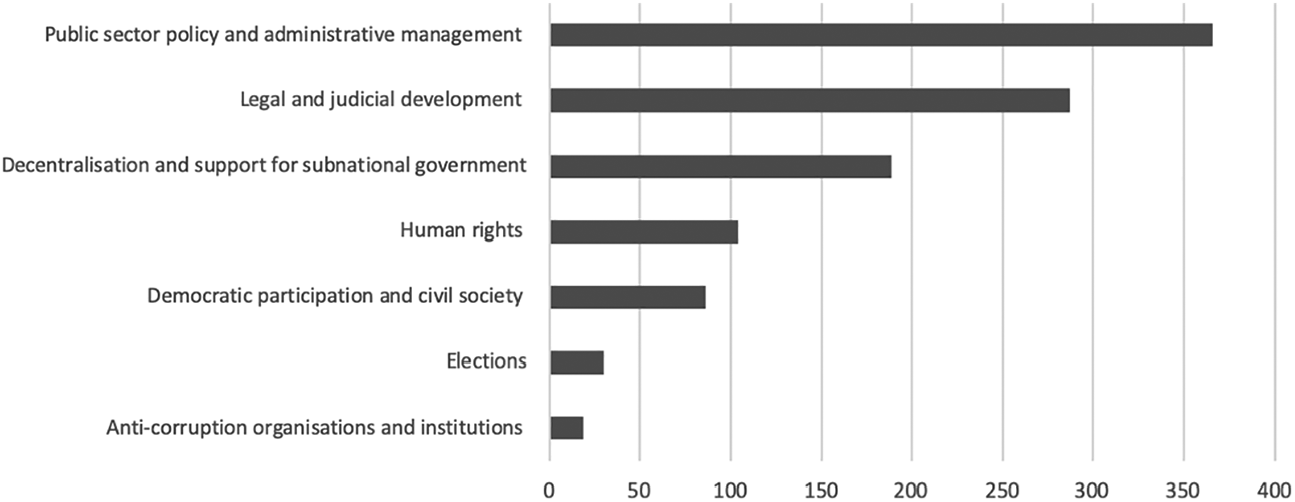
European Commission financial assistance to EaP countries, 2009–19 (in € millions).
Mapping democratic reform progress in the EaP countries
Democratic reform progress in the EaP countries has not been steady. Only Georgia has shown a continuous improvement in the quality of democracy since 2010. The quality of democracy in Ukraine declined significantly until 2014 but has been improving since. The quality of democracy has declined in Moldova (since 2014) and Armenia (since 2014). The repressive regime in Azerbaijan has strengthened its grip over the population, while some positive changes in the political climate in Belarus have been observed (see Figure 2).
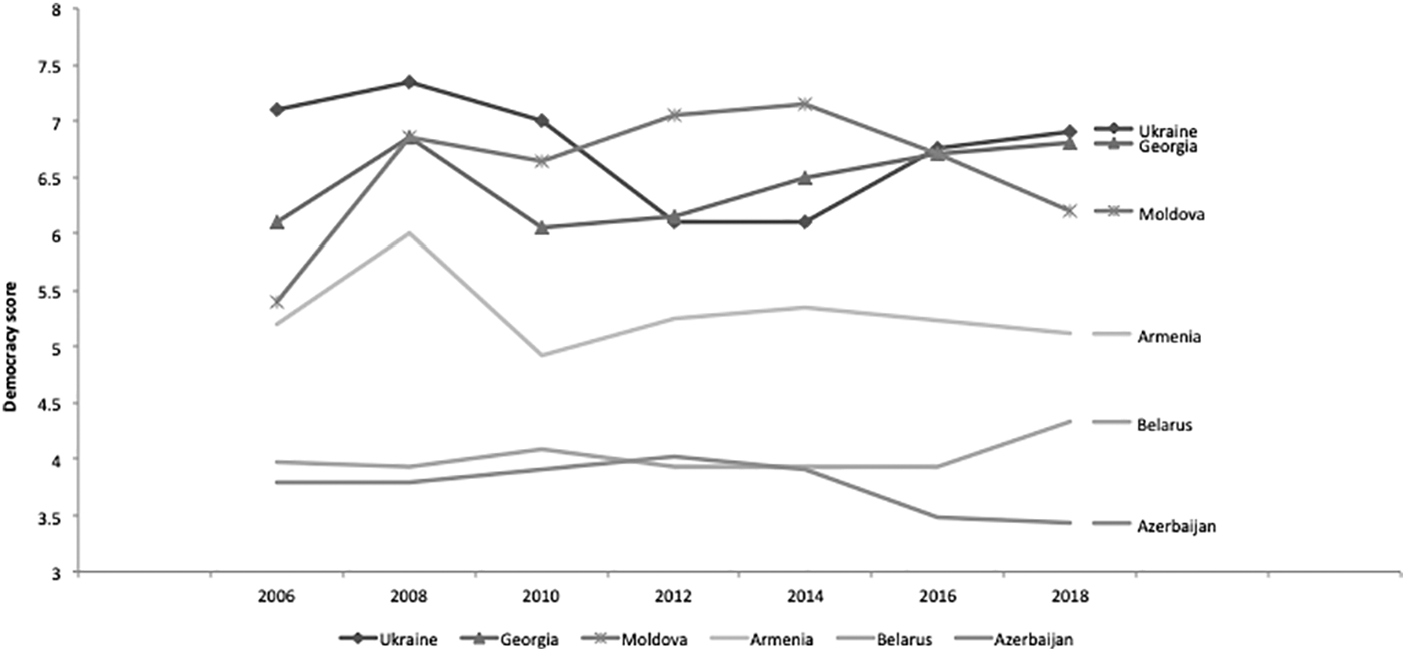
Democracy scores for EaP countries, 2006–18.
Ukraine
Since 2016 Ukraine has performed better than Georgia and Moldova in creating a deep and sustainable democracy. The government under former President Petro Poroshenko consolidated Ukraine’s democracy, devolved authority and resources to local governments, and opened up the media (Motyl and Soltys 2019). However, the sustainability of the reforms is uncertain. Public administration reform, for example, has ‘so far failed to translate into tangible results’ (Zarembo and Litra 2019, 38). Anti-corruption reform also remains a significant challenge. Other areas of concern have been Ukraine’s policy regarding the protection of the human rights of internally displaced persons and the safety of journalists and media outlets. The newly elected Ukrainian President Volodymr Zelenskiy has promised to introduce concrete steps to fight the corruption and nepotism of the Ukrainian oligarchs.
Moldova
The quality of democracy in Moldova had been improving between 2010 and 2014 and, from 2012, the EU referred to Moldova as the ‘success story’ of the EaP. However, after the November 2014 parliamentary elections, Moldova faced a serious economic and political crisis, which revealed deep structural problems and corruption affecting the judiciary and law enforcement institutions. Attempts were made to improve the functioning of the justice system but the justice sector remains deeply politicised. The fight against corruption has ‘remained largely selective and declarative’ (Groza 2019, 51), prompting the European Parliament in 2018 to state that Moldova had become a ‘state captured by oligarchic interests’ (European Parliament 2018). Other areas of stalled and reversed reforms include the electoral system and the public administration (Eastern Partnership Civil Society Forum 2017, 46). The human rights situation also declined further in 2017. There have been reports of torture in detention, denial of a fair trial and restrictions on the freedom of the media.
Georgia
In contrast to Ukraine and Moldova, democratic reform progress in Georgia has been steady since 2010, and the country’s political and media landscapes are pluralistic and vibrant. However, despite these positive developments, the independence of the judiciary remains a serious challenge, while the ‘risks of corruption, nepotism and conflicts of interest in the justice system have increased’ (Eastern Partnership Civil Society Forum 2017, 62). A reform in 2017 did not result in the increased accountability or independence of judges. In addition, the Georgian government also failed to take adequate measures against high-level corruption. Existing regulations were not enforced and cases of corruption not properly investigated. Corruption risks in the judiciary are of particular concern (Transparency International 2018).
Armenia
Before the Velvet Revolution in 2018, which brought about democratic change in Armenia, the country’s democracy score was significantly lower than those of Ukraine, Georgia and Moldova. The Republican Party of Armenia (Hayastani Hanrapetakan Kusaktsutyun) had dominated Armenian politics for decades. Under President Serzh Sargsyan, the government tightened its grip over the country. While elections were generally viewed as fair and free, they were not competitive and were marred by allegations of vote buying. Human rights violations remained an important issue, police used excessive force to disperse protesters, and corruption was systematic and endemic. The post-revolutionary government of Prime Minister Nikol Pashinyan has made human rights and the fight against corruption its main goals. The country’s scores for government accountability and transparency have already improved in 2019 (Economist Intelligence Unit 2019).
Belarus and Azerbaijan
The EaP also includes these two autocratic regimes, which have shown very few (if any) signs of democratic reform throughout the past 10 years. Since 2014, the Azerbaijani regime has significantly narrowed the freedom of manoeuvre of non-governmental organisations, human rights defenders and journalists, and the number of political prisoners has increased (Eastern Partnership Civil Society Forum 2017, 74). Torture and other ill-treatment are widely reported and independent media outlets have been blocked. In 2018, Azerbaijan was classified as a consolidated authoritarian regime (Freedom House 2018). While developments in Belarus appear to look more promising at first sight, the regime has not implemented any democratic reforms since 2009. The executive, led by long-term President Alexander Lukashenko, still exercises complete control over the parliament and the judiciary, independent media is suppressed, and political and civic freedoms are significantly restricted. The increase in the country’s democracy score is predominantly the result of the regime’s decision in 2015 to release a number of political prisoners. However, the human rights situation in Belarus has deteriorated since 2017 (Bosse and Vieira 2018).
Explaining the variation in democratic reform progress across the EaP countries
The impact of EU-specific conditions
EU-specific factors that may have had an impact on democratic reform progress in the EaP region include the presence of a comprehensive bilateral agreement with the EU that includes ‘hard’ conditionality, EU financial assistance, and the level of linkage between the country and the EU.
The EU has concluded various types of cooperation agreements with the states in the EaP region, ranging from basic Partnership and Cooperation Agreements (PCAs) to sophisticated and very comprehensive Association Agreements (AAs), including provisions for a Deep and Comprehensive Free Trade Area (DCFTA) (Table 1). It can be assumed that the more comprehensive the agreement and the ‘harder’ the democracy-related conditions, the more likely the agreement is to have a positive impact on democratic reform progress.
International agreements with the EU.
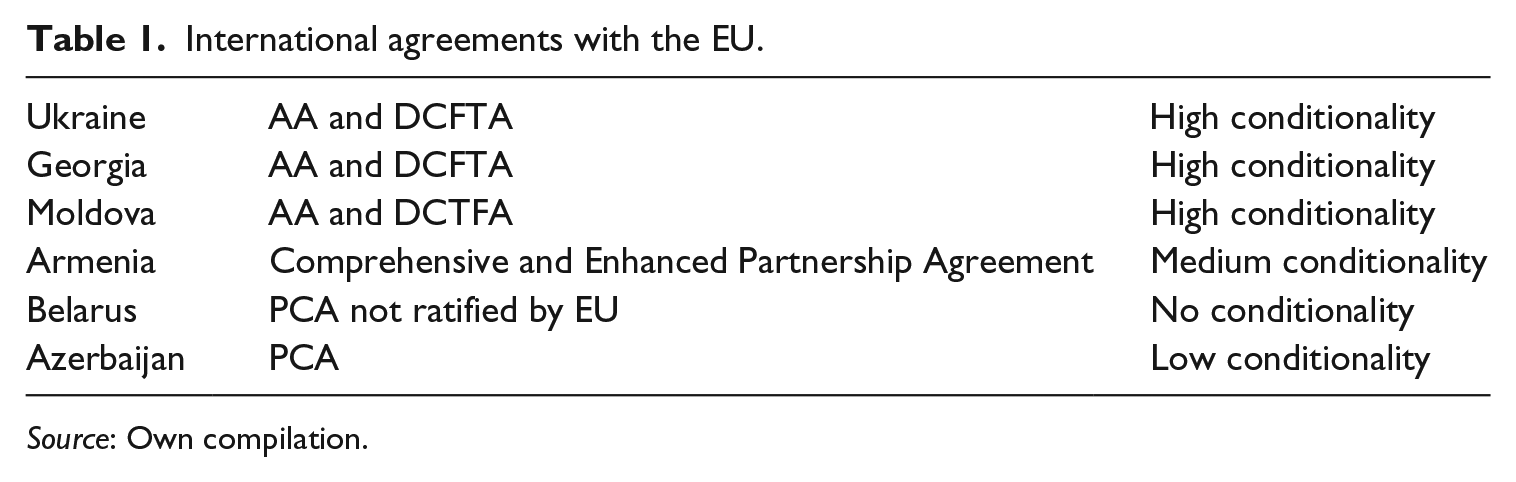
Source: Own compilation.
The negotiations for new AA/DCFTAs started in 2008 (Ukraine) and 2010 (Moldova and Georgia), and concluded in 2014. Considering the EU’s original goal of making the start of the negotiations on the new bilateral agreements conditional on democratic reforms, one would have expected to see a significant increase in reform progress before the start of the negotiations. However, the quality of democracy in both Moldova and Georgia decreased between 2008 and 2010. Some reform progress was visible in Moldova between 2010 and 2014 and in Georgia from 2012 onwards, while the quality of democracy in Ukraine decreased between 2008 and 2014. EU conditionality on democratic reform progress prior to and during the negotiations for the AA/DCFTA agreements therefore had limited effect.
Regarding the issue of financial assistance, although the EU does not offer the EaP countries the prospect of membership (often viewed as the most potent reward for domestic reform), it allocates a significant amount of funding to the Eastern partners. It can be assumed that the greater the amount of EU financial assistance given to an EaP country, the more likely it is to have a positive impact on democratic reform progress.
The EU and its member states provided the most financial assistance between 2007 and 2018 to Ukraine, followed by Georgia, Moldova, Armenia, Belarus and Azerbaijan. The level of financial assistance given directly corresponds to the six countries’ democracy scores in 2018 (see Figure 3).
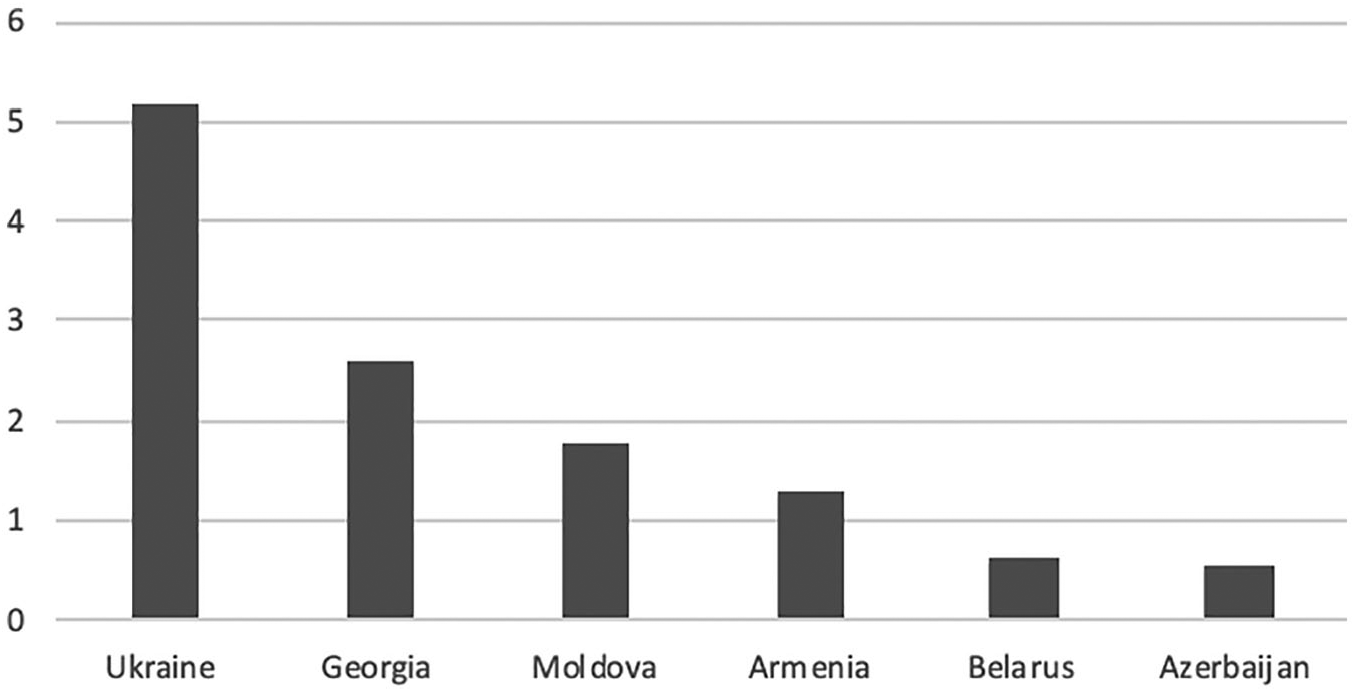
EU and EU member state financial assistance to the EaP countries, 2007–18 (in € billions).
The level of linkage with the EU encompasses the international links between businesses, civil society, citizens and governments in the EaP countries and EU countries. Democratisation theories often predict a strong correlation between the level of linkage to a democratic country or region and the country’s quality of democracy. It can be hypothesised that the greater the linkages between an EaP country and the EU, the more likely it is that the EaP country will demonstrate democratic reform progress.
Figure 4 shows the level of linkage between each of the six EaP countries and the EU between 2011 and 2017. Georgia, Moldova and Ukraine, the countries with higher democracy scores, also have a closer links with the EU. Armenia, Azerbaijan and Belarus show lower levels of linkage. Armenia, however, has continuously scored better than Belarus and Azerbaijan in democracy ranking despite similarly low levels of linkage with the EU. A lower level of linkage has not impacted negatively on Ukraine’s democratic reform progress since 2014, but at the same time, close links with the EU have not prevented Moldova from democratic backsliding since 2014. The linkage hypothesis can thus be generally confirmed, but it does not apply to all EaP countries.
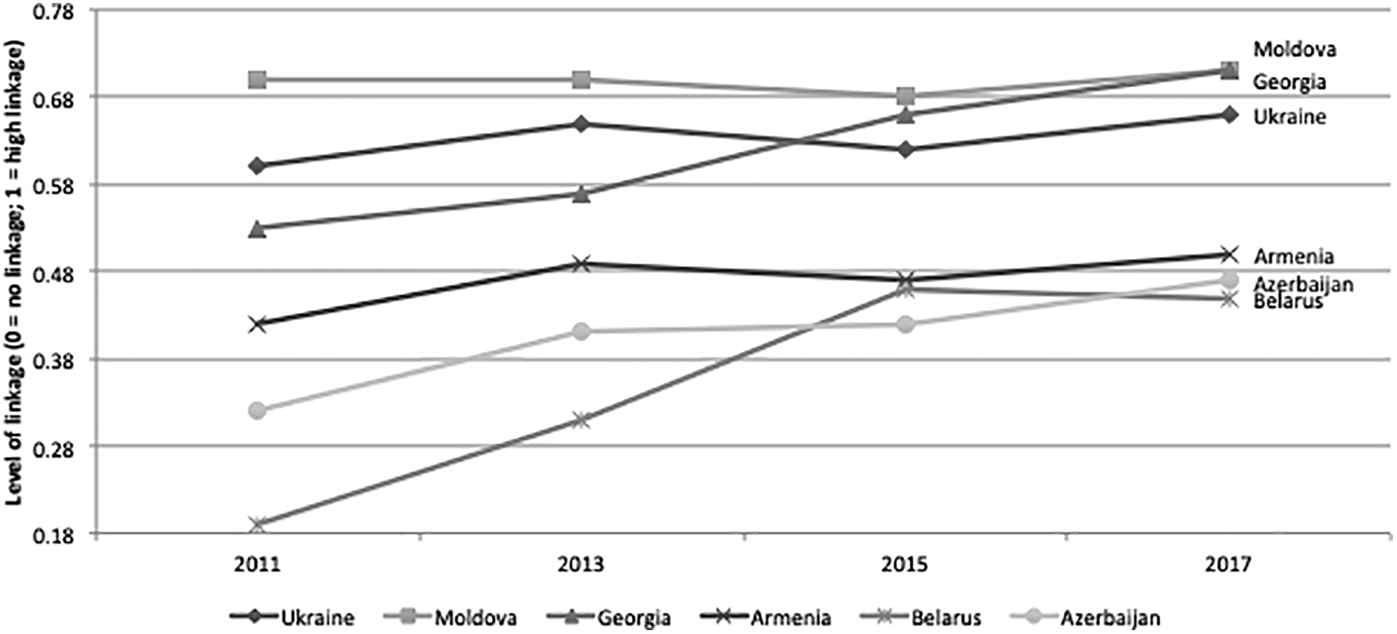
Linkages between EaP countries and the EU.
The impact of domestic factors
Domestic factors that may have had an impact on democratic reform progress in the EaP region include a pre-history of democratisation, the level of corruption and the values held by civil society.
Path-dependent explanations of democratisation suggest a positive relationship between past levels of democratisation in a country and democratic reform progress. Thus we can assume that the higher the quality of democracy in an EaP country in the late 1990s, the more likely the country is to make reform progress in the following decades.
In the late 1990s, four of the six EaP countries were considered more democratic than autocratic (Ukraine, Moldova, Armenia and Georgia). Belarus and Azerbaijan fell into the category of autocracies (see Figure 5). Path-dependency has thus played an important role in the EaP countries’ subsequent democratic development. The autocratic regimes in Belarus and Azerbaijan have further consolidated their power over the past 10 years, while the other 4 countries have continued to democratise.
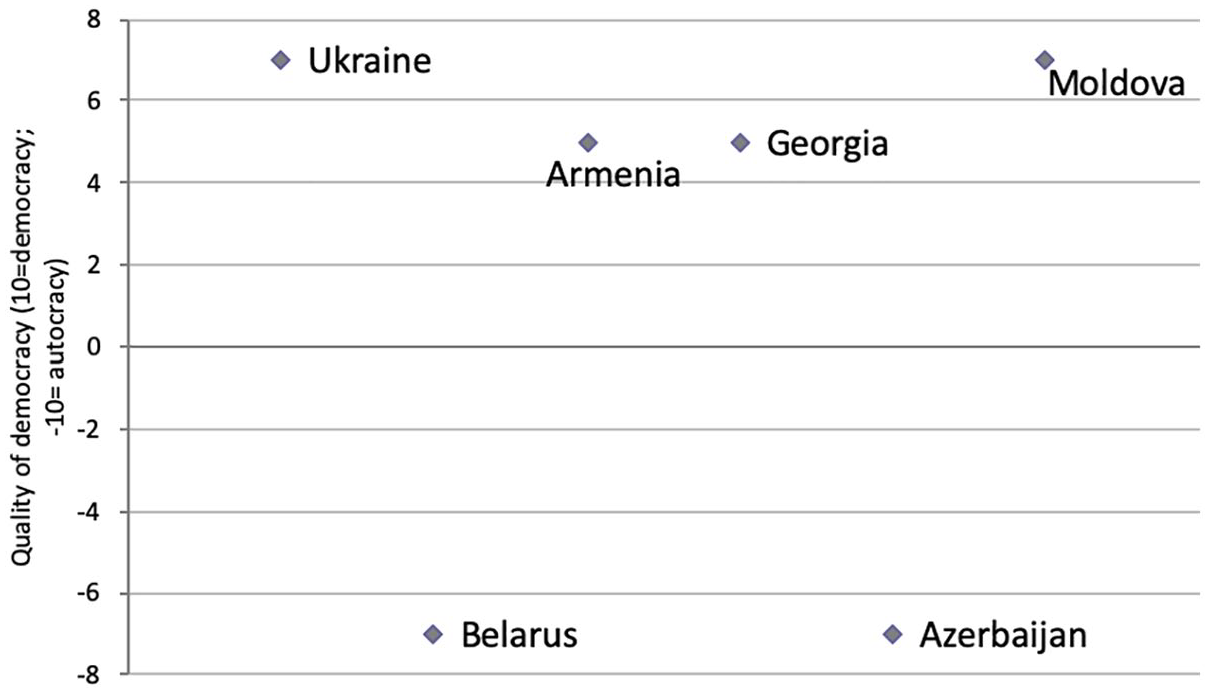
EaP democracy scores in 1998.
Corruption remains one of the main challenges to democratic reform (e.g. Kubbe and Engelbert 2018). It can be hypothesised that higher levels of corruption negatively impact progress towards democratic reform.
Data from Transparency International’s Index (2019) on corruption perceptions in the EaP countries suggest that in Georgia corruption is perceived as slightly less prevalent than in the other countries, but even it still ranks among those countries categorised as ‘corrupt’ (see Figure 6). There is no clear relationship between the level of corruption and democratic reform progress. However, there is little doubt that the high level of corruption in all EaP countries poses a common challenge to reforms across the EaP region.
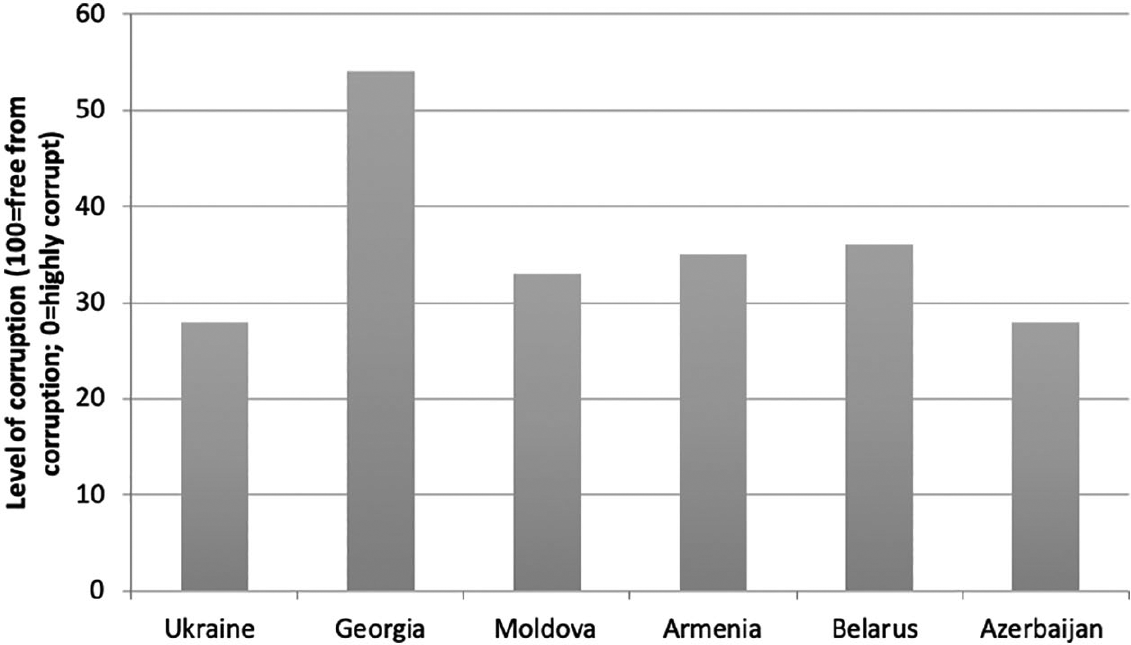
Corruption perceptions index for EaP countries (average scores 2006–18).
Although governments are the principal decision-makers in reform processes, an active and pro-European civil society plays a vital role in exerting pressure on governments to implement democratic reforms. It can be assumed that if the population has a positive attitude towards the EU then this is likely to enhance democratic reform progress.
Over the past years, public attitudes towards the EU have fluctuated within and among the EaP countries (see Figure 7). Public opinion of the EU in Belarus and Azerbaijan has by and large been less positive than in the other four countries. Attitudes towards the EU have also been more positive since 2014, probably as a direct result of (and in reaction to) Russia’s annexation of Crimea and military intervention in eastern Ukraine. Positive public attitudes vis-à-vis the EU in Ukraine and especially in Armenia coincided with their government’s renewed commitments to democratic reforms. At the same time, positive public attitudes towards the EU are no guarantee of reform progress, as is evident from the democratic backsliding in Azerbaijan and Moldova.
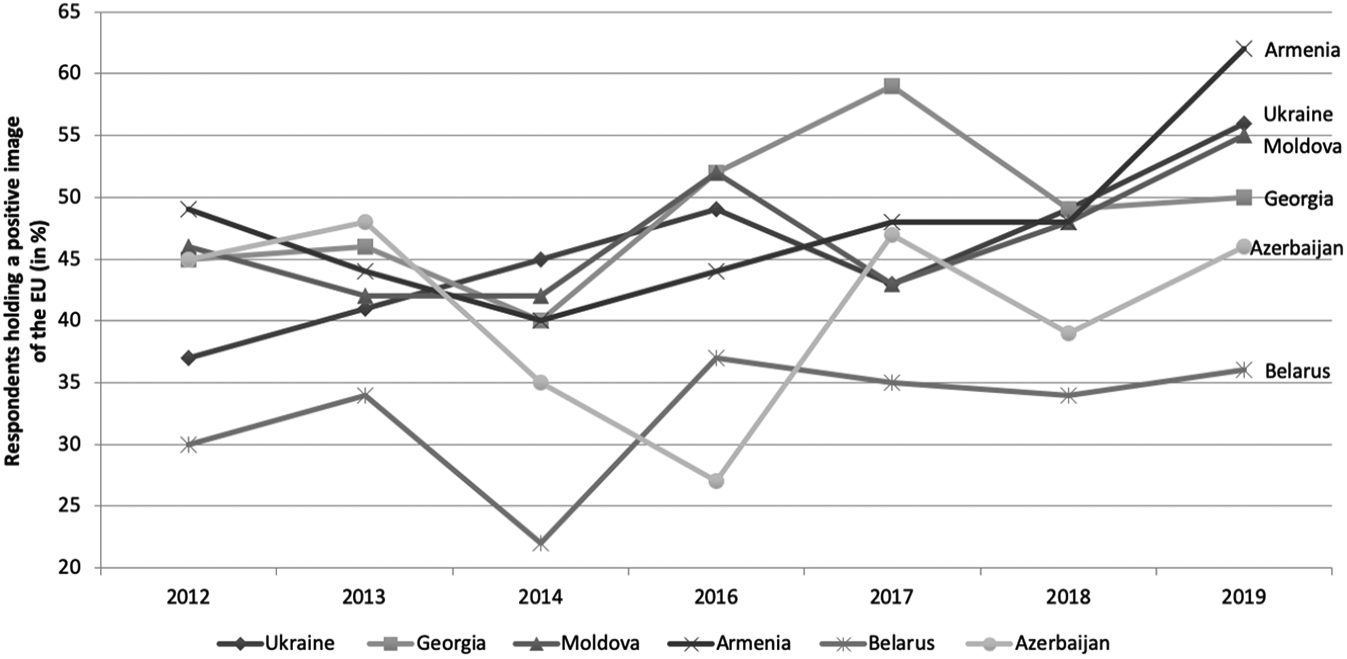
EaP countries’ populations’ attitudes towards the EU.
Dependence on other external actors
Countries can experience different levels of linkage with, or dependence on external actors. It can be assumed that a high level of dependence on a non-democratic external actor will negatively impact an EaP country’s democratic reform progress.
Two EaP countries (Ukraine and Moldova) have significantly decreased their trade dependence on Russia in the past decade (see Table 2). Georgia’s imports from Russia have also decreased, but exports have increased. Belarus and Armenia remain highly dependent on trade with Russia, with Armenian trade volumes doubling between 2006 and 2017. Belarus and Armenia are also heavily dependent on energy imports from Russia, as are Ukraine, Azerbaijan, Moldova and Georgia (see Figure 8). In terms of security dependence, all EaP countries have experienced considerable pressure from the Russian Federation because of Russian military interventions and presence on their sovereign territory (in eastern Ukraine, South Ossetia and Abkhazia, and Transnistria), Russian security guarantees (Nagorno-Karabakh) or integrated security structures (Belarus) (see Table 3). Paradoxically, Russian pressure has also had positive effects on democratic reforms in several of the EaP countries. Reform progress accelerated in Ukraine after 2014, the 2018 Velvet Revolution in Armenia brought down the government that had pulled out of signing the AA and DCFTA with the EU, and even Belarusian President Lukashenko made some concessions to the EU (the release of political prisoners) to ‘balance’ Russian pressure. Dependence on the Russian Federation has thus posed formidable challenges for democratic progress in the EaP countries, but it has simultaneously strengthened democratic reform efforts aimed at reducing this dependence.
Level of trade dependence on the Russian Federation.
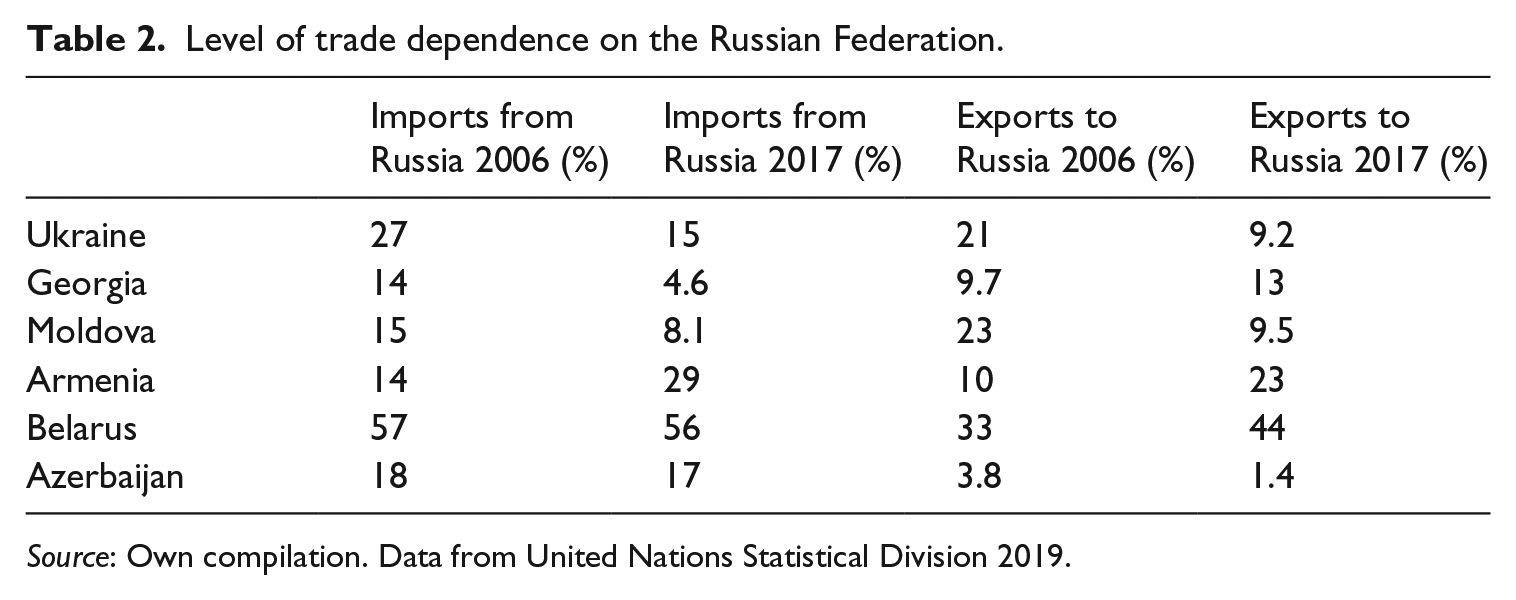
Source: Own compilation. Data from United Nations Statistical Division 2019.
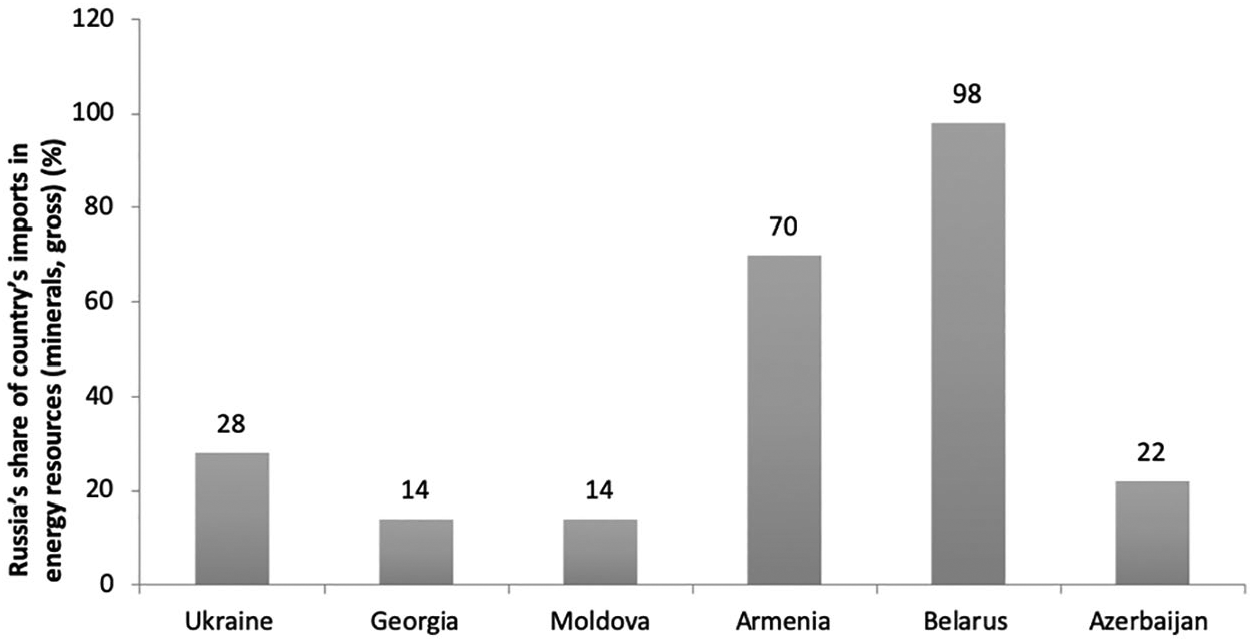
Level of energy dependence on the Russian Federation (2017).
Level of security dependence on Russian Federation.
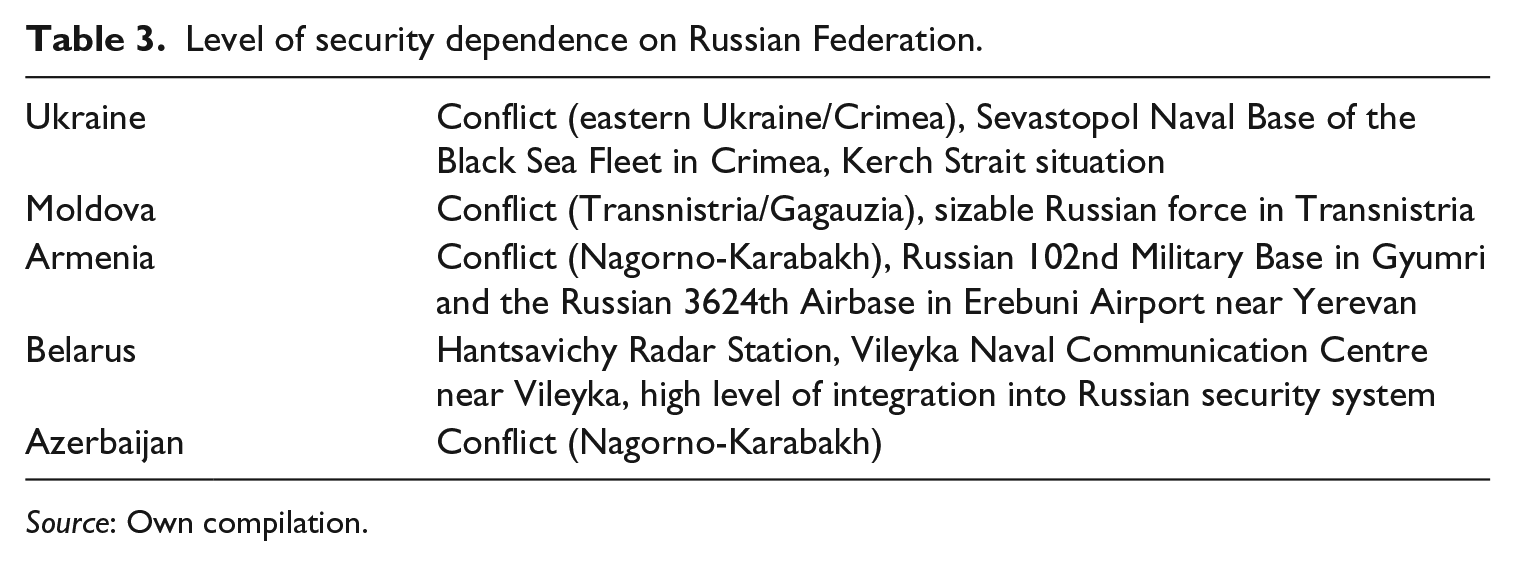
Source: Own compilation.
Conclusion
This article has aimed to explain why, over the past 10 years, some EaP countries have made more steady progress in the implementation of democratic reforms than others.
The article found that EU-specific, domestic and external factors variably affected democratic reform progress. EU conditionality on democratic reform progress prior to and during the negotiations for the AAs/DCFTA agreements showed mixed results. EU financial assistance, however, was found to be an important factor in reform progress. The level of linkage with the EU is also relevant, although a lower level of linkage has not negatively affected Ukraine’s democratic reform progress since 2014, while a high level of linkage with the EU has not prevented Moldova from democratic backsliding since 2014. With regards to domestic factors, an EaP country’s ‘legacy of democracy’ since the end of the Cold War was identified as a decisive factor in democratic reform progress, while the high levels of corruption in all EaP countries still pose formidable challenges to sustainable democratic reforms. Public attitudes towards the EU have fluctuated within and among the EaP countries over the past 10 years and do not relate directly to democratic reform progress. Finally, the extent of an EaP country’s trade, energy and security dependence on the Russian Federation has a negative effect on democratic reform progress. Yet paradoxically, such dependence has simultaneously reinforced and strengthened democratic reform efforts aimed at reducing its impact.
The EU’s commitment to democracy promotion in the EaP countries remains an important factor in their reform progress. However, the EU’s involvement alone is not a sufficient condition for reform. Domestic factors, and high levels of corruption in particular, alongside dependence on the Russian Federation are equally important factors. The EU should continue to support democratic reforms through the EaP and place a greater emphasis on combatting corruption, fostering democratic participation and safeguarding human rights. The 2008 Russo-Georgian war and Russia’s military intervention in Ukraine in 2014 point to the serious geopolitical constraints which all EaP countries are facing. At the same time, Russian pressure has led to greater reform efforts in several EaP countries, which the EU must recognise and foster.
Footnotes
Notes
Author biography