




Abstract
Aim:
Foodborne illnesses have a significant global burden and can be life-threatening, with higher risk in vulnerable groups such as children. SafeConsume is an EU-funded, transdisciplinary project aiming to improve consumers’ food safety behaviour. Developing educational resources on food safety for use in schools has potential to improve teaching of our young consumers. The aim of this study was to explore school educators’ attitudes, behaviours and knowledge towards food hygiene, safety and education.
Methods:
Focus groups and interviews in England, France, Portugal and Hungary explored educator knowledge, skills, intentions and beliefs around educating young people (11–18 years) about food safety. Data were analysed using NVivo and emerging themes were applied to the Theoretical Domains Framework.
Results:
A total of 48 educators participated. Knowledge, confidence and skills to teach food safety to young people varied depending on background and training. Educators reported they had a role to teach food safety to young people, were positive about delivering education and optimistic they could improve students’ food safety behaviour. Barriers to teaching included lack of national curriculum coverage, limited time and money, and lack of facilities. Educators reported that social influences (family, celebrity chefs, public health campaigns and social media) were important opportunities to improve young peoples’ awareness of food safety and consequences of foodborne illness.
Conclusion:
Educator food safety expertise varied; training could help to optimise educator knowledge, confidence and skills. Ministries of Health and Education need encouragement to get food safety incorporated further into school curricula across Europe, so schools will be motivated to prioritise these topics.
Introduction
Foodborne illnesses are a global burden and WHO Director General advised that ‘food safety is a hidden, and often overlooked, problem’. WHO 1 defines food hygiene as ‘the conditions and measures necessary to ensure the safety of food from production to consumption’ and food safety to include ‘safe food handling’. Every year almost one in 10 people globally develop foodborne illnesses and 420,000 people die. 2 WHO 2 estimates that there are 23 million foodborne illnesses and 5000 deaths in Europe annually. Correct food handling and hygiene practice could prevent most foodborne illness. 2 Although anyone can get a foodborne illness, children are at a higher risk of developing infection and having serious consequences along with pregnant women, older adults and immunocompromised individuals.
SafeConsume is an EU-funded, transdisciplinary project involving 32 partners from 14 countries which aims to reduce foodborne illnesses. e-Bug, operated by Public Health England (PHE), lead on the SafeConsume educational work package. e-Bug with their European partners develop educational resources for children and young people to improve hygiene behaviours. 3 Educating children and young people on food hygiene and microbiological food safety is an opportunity to create food safety-conscious consumers for the future, therefore reducing the future burden of foodborne illness. This study is an outcome of the SafeConsume EU project.
Several studies have explored children and young peoples’ knowledge and behaviours towards food hygiene and safety in the UK, Europe and USA,4–9 but studies exploring educator views are limited. In a small study, UK teachers reported that the most effective method to teach food hygiene and to reinforce food safety messages was with demonstrations of good practice and practical activities involving young people preparing food. 10 Swedish educators believed food safety was an important part of the school, home and consumer studies (HCS). 11 Almost all countries have in their school curricular topics covering food hygiene and safety for students 11–18 years old. 12
The aim of this study was to explore educators’ needs in relation to teaching about food hygiene and food safety across four European countries to inform the development of educational resources to address any gaps in knowledge, skills, attitudes and beliefs. Findings from complementary research completed with young people and curriculum overview were reported by Syeda et al. 12
Methods
Research design
Qualitative interviews and focus groups with educators were conducted during November 2017 – June 2018 in four European countries: England, France, Hungary and Portugal. These four European countries were part of the SafeConsume EU project educational work package noted in the introduction. Standardised protocols for the research were developed, reviewed and agreed by the project team.
Study setting
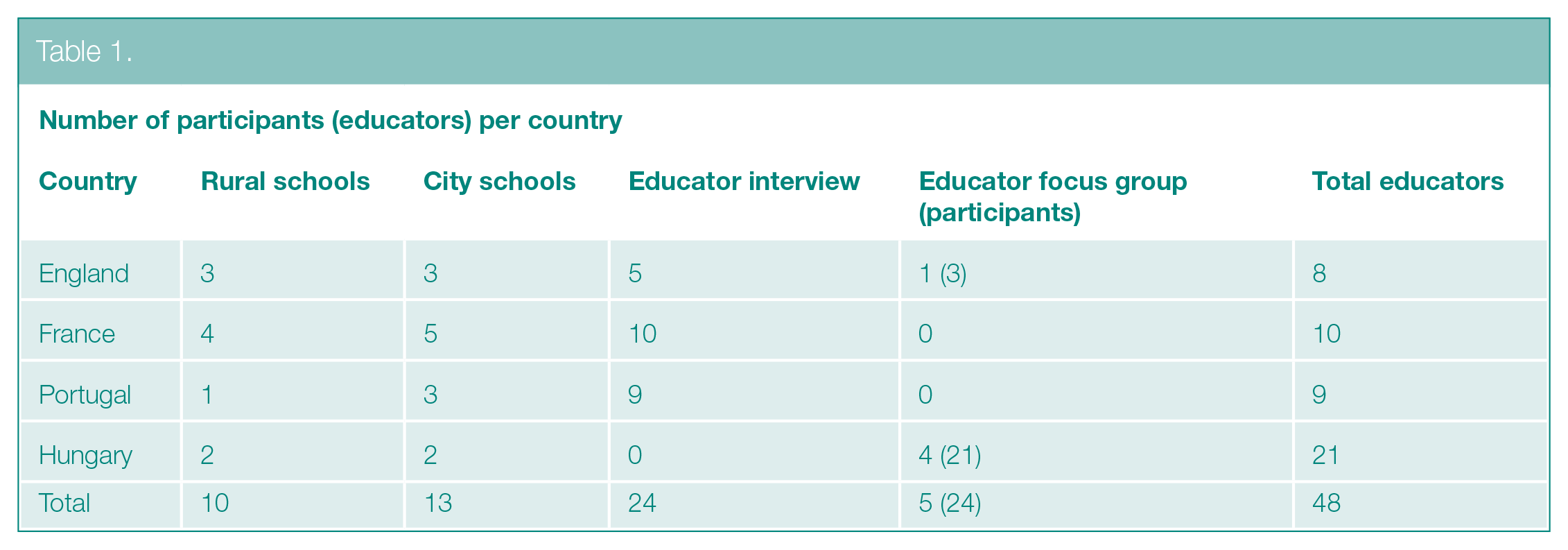
Secondary or high schools that teach students aged 11–18 years were recruited; between four and nine schools were recruited per country (see Table 1). Recruitment aimed to represent schools with a mixture of high and low socioeconomic status; for example, a mixture of schools located in affluent and deprived areas (as defined by the specific country). Furthermore, recruitment also aimed to represent a mixture of geographical locations (rural and city) in each country. Rural located schools are generally smaller with a lower population density and located in towns, villages and fringe areas, whereas city schools are generally larger with a higher population density and located in larger cities. The research areas did not have any known foodborne illness outbreaks or product recalls during the study that could have affected the findings.
Number of participants (educators) per country
Participants
A minimum of eight educators in each country employed at a school that taught 11- to 18-year olds food, technology or science-related subjects. Educators were considered appropriate for the study if they were qualified and teaching food, technology or science-related subjects.
Recruitment
Each country stratified schools in two geographic locations into high and low socioeconomic groups, randomised the strata, and invited each school to participate by letter, email and telephone. If schools declined to participate, the next school in the randomised list was approached. Invitation continued until data saturation was reached. Educators were given an incentive in each country except for Portugal; £20 vouchers in England; USB sticks in France; small gift packs in Hungary.
Topic Guides and Behavioural Theory
Comprehensive topic guides were developed by the project team using the Theoretical Domains Framework (TDF) 13 to guide questions to explore knowledge, skills, beliefs and attitudes around food hygiene and food safety, motivation and opportunities. Questions also discussed what resources educators currently use or would like to use for teaching about food hygiene and food safety.
The TDF describes 14 factors from theories of behaviour change that fall under the categories of capability, opportunity and motivation as outlined in the Behaviour Change Wheel described by Michie et al. 13 The TDF was used as it can help explain the behaviours required for successful education of food hygiene and food safety. The TDF can also help draw conclusions on the need for future appropriate interventions, for example, developing educational resources, establishing practical experience or delivering training. The conclusions drawn from our qualitative study will help inform future interventions (not included in this study).
Researchers in England and France piloted the topic guide with a food technology and science educator, respectively, and minor modifications were made following educator comments. All researchers within their respective country commented on the topic guide to ensure relevance in their country; therefore, the topic guides were standardised across the four countries and translated into their respective language.
Data Collection
Semi-structured interviews and focus groups with educators were conducted and facilitated in a private classroom at the schools by researchers in each country; all researchers were trained in qualitative research methods (C.B., R.S. and C.H. in England; P.T.L. and V.L.H. in France; T.I. and A.K. in Hungary and M.T. and J.F. in Portugal). The interviewer(s) did not know any of the educators prior to the data collection and all facilitators except one were female. Educators were provided with a detailed information sheet, were aware of the aims of the study and the interviewing researcher’s organisation. Second researchers were often present to observe. Interviews and focus groups lasted between 37 and 76 min and many had to be 40–50 min to adhere to the duration of a lesson. All researchers made reflective notes following each data collection to iteratively feedback on topic guide development. All data were recorded, encrypted, anonymised and transcribed verbatim and checked for accuracy; transcripts were not returned to the educators. Interviews and focus groups were conducted until data saturation was reached.
Data Analysis
Qualitative data was initially analysed individually by each country, using an agreed common six-stage thematic analysis 14 (Figure 1).
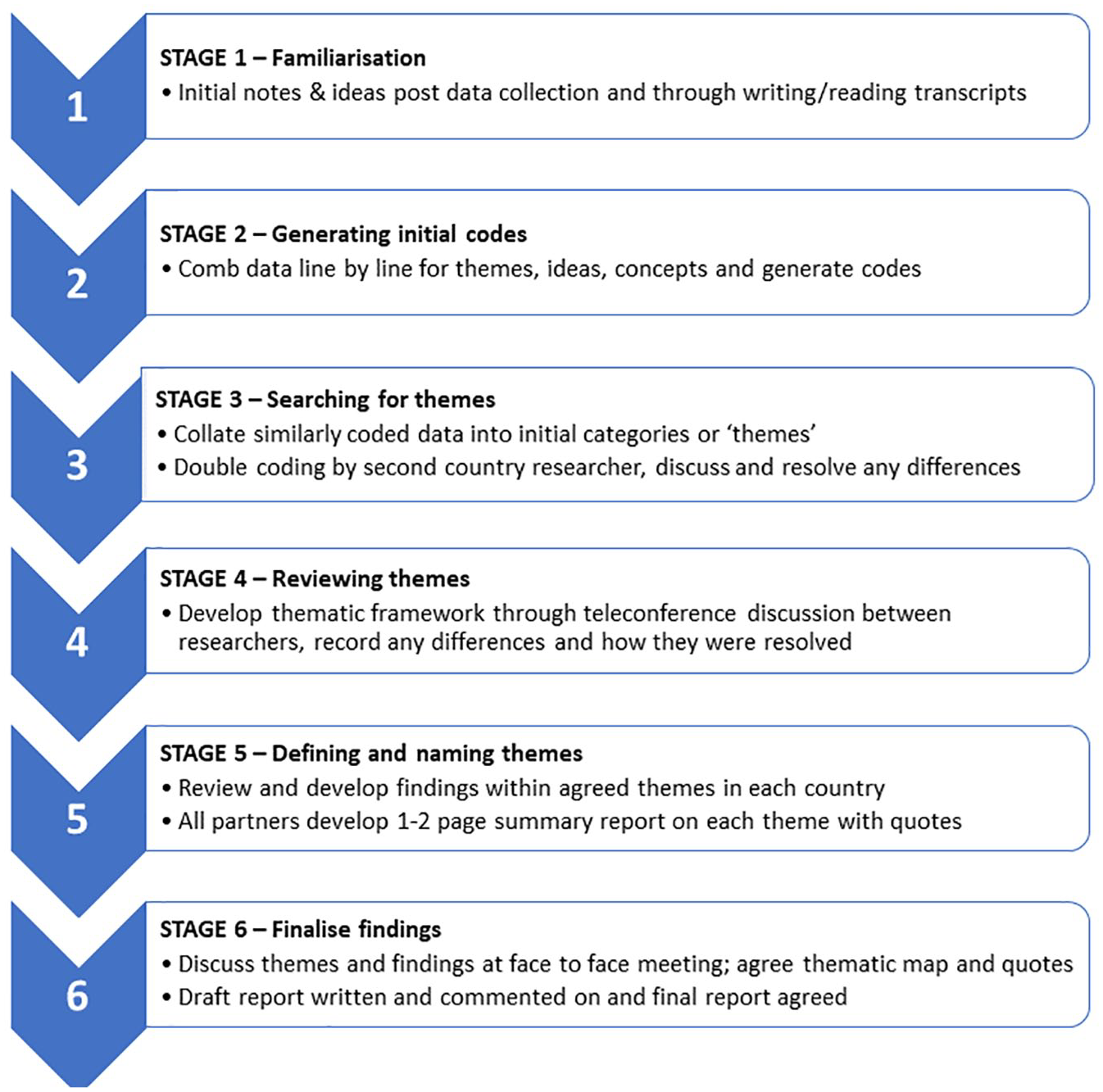
Six-staged thematic analysis
NVivo software version 11 (QSR International Pty Ltd. Version 11, 2015) was used as a tool to organise and code the data for thematic analysis. Initial thematic analysis was an inductive, iterative process running in parallel to data collection. One researcher from each country analysed all the country-specific data and a second researcher double coded 20% of their country data, agreeing the main emerging themes together. Main themes were then discussed between all countries and an agreed consensus for a coding framework was reached through discussions at two face-to-face meetings and monthly teleconferences. Once the main codes were agreed, an additional data analysis stage was conducted, and the findings were applied to the TDF. Data for each country was summarised in a matrix Excel document with each theoretical domain and relevant corresponding quotes from each country translated into English. Results were again discussed leading to implications, including the needs and design of educator interventions. Each country provided a written report for educator findings based on the TDF with supporting quotes and educator needs to facilitate student education.
Results
A total of 48 educators participated in 24 interviews and 5 focus groups from 10 rural and 13 city schools from the 4 countries (Table 1). Key themes are described within each domain of the TDF and in Table 2 with reflective quotes, other less prevalent themes are summarised but not included in Table 2.
Summary of main findings aligned to the TDF
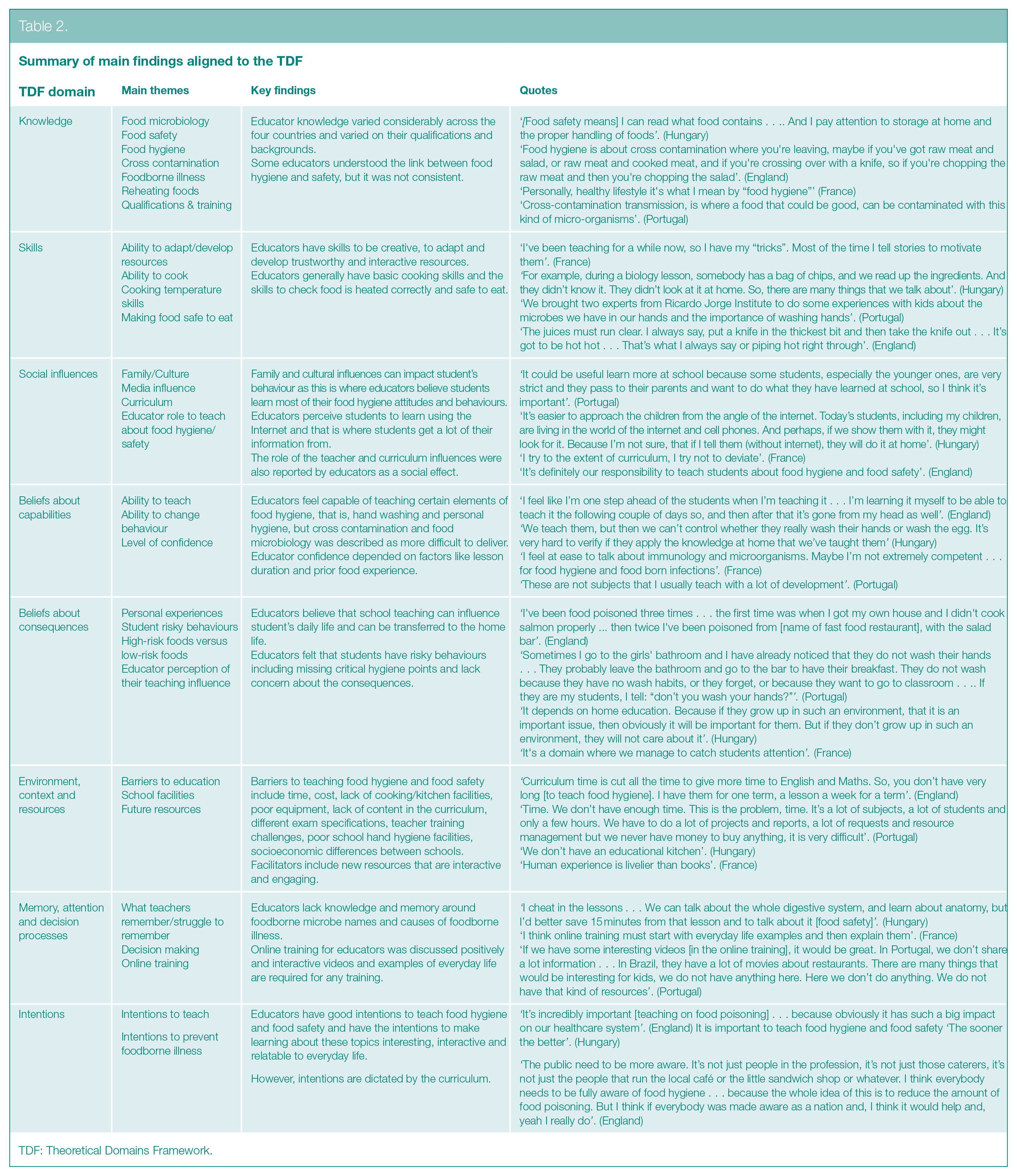
TDF: Theoretical Domains Framework.
Key Domains
Knowledge
Educator knowledge varied considerably across the four countries. Overall, most educators (except those in Portugal) had good knowledge on the risks and consequences of cross contamination, reheating foods and foodborne illness. Educators’ understanding of ‘food safety’ varied, some educators discussed knowledge of ‘farm to fork’ and preventing foodborne infections and some educators discussed chemical hazards in food rather than microbiological hazards.
Few educators knew the types of foodborne microbes including Salmonella enterica, Listeria monocytogenes and Escherichia coli. Knowledge and perception of food hygiene varied: in England educators understood food hygiene to be about personal hygiene, that is, washing hands, yet in France and Portugal educators discussed food hygiene in terms of cooking precautions and cleaning the cooking environment. Some educators understood the link between food hygiene and food safety and the two were interrelated, but this was not consistent. Educator knowledge was dependent on their educational and teaching background: in general, most educators did not have any specialisation or qualifications in food subjects. In Portugal, most educators had a biology degree and in France a science degree. Educators in other countries had other backgrounds, including working in industry.
Skills
Educators reported they have skills to be creative, to adapt and develop trustworthy and interactive resources including playing cards, posters, activities and PowerPoints. Some educators had taught scientific experiments in class including culture of yeast, culture from a door handle, microscope observations of yoghurt and experiments. Many educators reported skills to use online resources in class including videos, games, YouTube and so on. Educators in Hungary reported a lack of confidence to use smart technology, including projectors. A few educators in France reported feeling skilled to deliver lessons on microbes in general but not foodborne microbes. In Portugal, for this subject area, educator skills are outsourced when experts come in and talk about microbes.
Educators in all countries reported they have the skills in their personal life to check food has been cooked correctly and is safe to eat and share these skills with their students. They reported checking for doneness of meat through no pink bits and juices running clear. Skills in using cooking implements such as temperature probes to educate young people about food hygiene varied across countries. In England, educators would explain to older students how temperature probes were used, but in Portugal, educators did not use temperature probes; in France, educators do not deliver practical lessons, so probes are not used.
Social influences
Educators reported that the family has the biggest influence on students’ initial behaviour as they grow up and take on parents’ habits, attitudes and behaviours towards food hygiene learning. In all countries, educators reported that friends can also influence food hygiene behaviour and in France school nurses also play a role during health education classes.
Most educators reported that celebrity chefs on TV could have an impact on changing students’ existing food hygiene behaviour. Real-life media stories about foodborne illness or friends/family having foodborne illness, public health campaigns and advertisements were considered by educators, to have the biggest capacity to change students’ future behaviour. Social media such as Facebook and YouTube are popular methods of communication for students when searching for information on these topics. Educators perceive online recipes as the preferred media for students to learn about cooking, over physical recipe books.
Educators reported that they could have a certain influence on student behaviour through providing advice. Cultural differences in cooking and food hygiene were highlighted by educators, and they reported that making students aware of these differences would contribute to understanding around hygiene and food safety. Educators across countries reported that student knowledge about food hygiene and food safety was basic.
Beliefs about capabilities
Educators reported being capable of teaching the basics of food hygiene such as hand washing and personal hygiene; and food safety such as safe use of equipment and re-heating. However, cross contamination, food microbiology and foodborne illnesses were described as more difficult to explain to students. Educators reported that poor food hygiene may be difficult to improve in school as student behaviour is mostly influenced from habits they learn at home and from the media.
Level of educator confidence was influenced by lesson duration and prior experience of working with food. Many educators in France described themselves as ‘at ease’ to teach about microorganisms but less confident to teach about practical food hygiene; in France they do not have practical cooking lessons or school kitchens. In contrast, educators in England, where practical lessons are more common, did not feel capable of teaching about foodborne microbes especially if their educational background was not science related. Educator confidence was reported to increase if they used a food safety resource from a trusted source. Educators mostly lacked specific training in food hygiene and safety.
Beliefs about consequences
Educators believed that school teaching could influence students’ daily life by transferring behaviours to the home setting, by sharing hygiene rules; however, key messages need to be consistent in both settings to embed appropriate behaviour.
Consequences of foodborne illness, high-risk foods and insufficient food hygiene were a serious concern for educators and most reported memorable personal experiences that they shared with students.
Environment, context and resources
Environmental barriers to teaching food hygiene and safety common across all countries included time to cover the topics within the curriculum, cost, lack of facilities, equipment, lack of content in the curriculum, different examination specifications, poor school hygiene facilities and socioeconomic differences between schools. Facilitators, common across all countries, included the development of new interactive and engaging resources such as online games, board games, card games, podcasts, videos, role play; hand hygiene and food labelling posters; short practical experiments with yeast or microscope observation; hot news topics; and PowerPoints.
Memory, attention and decision processes
Educators, particularly those lacking a science background, across countries reported some difficulty remembering foodborne microbe names, the causes of foodborne illness and difficulty keeping up to date with changes in food legislation, including Food Safety Acts. Educators requested face-to-face or online training that needed to be interactive, with videos, engaging, flexible, and easy to access, and should be pedagogic but also incorporate scientific aspects. Educators reported choosing resources within the curriculum framework, from trusted sources and with accompanying training, and preferred practical lessons which were memorable for students.
Intentions
Educators reported intentions to teach students about food hygiene to prevent foodborne illness from a young age using interesting, interactive resources relatable to everyday life. Educator intentions to teach food-related topics were dictated by the curriculum content, though educators reported they could incorporate hygiene and safety into many subject areas, that is, biology, Personal Social Health Economic (PSHE), technology, citizenship and chemistry.
Other themes
Educators across all countries reported that they had a role in teaching food hygiene and food safety especially to young students, instilling key hygiene messages and building on the knowledge each academic year. Educators were generally optimistic that their teaching could change the behaviour of students outside the school environment and make a positive contribution to reduce future foodborne illness rates and improve hygiene in food establishments by educating our future chefs.
Educators reported positively reinforcing student food hygiene by encouraging good practice and good behaviour, giving reminders and having set routines for good hygiene during cooking lessons. Educators described providing negative reinforcement using examples through the media or case studies on how microorganisms can grow when washing and drying utensils or crockery has not been completed to a satisfactory standard. Educators reported regulating food hygiene behaviour in students through employing rules in school such as asking students to wash their hands before starting a practical lesson, and classroom hand hygiene reminders and warnings about the importance of personal, hand and food hygiene. Regulations from the national and school curriculum ultimately decide what is taught on food hygiene and food safety.
Reported negative emotions to food hygiene and safety education included frustration and negativity towards barriers to teaching; being worried about doing scientific experiments; concerns about foodborne illness and food safety for their friends and family; and complaints about large classes. Positive emotions included students’ interest in health topics, that is, healthy eating and food safety and trust in their government’s food safety organisation.
Discussion
Principal findings
The attitudes of educators are positive towards educating young people on food hygiene and food safety, yet there are several barriers that prevent this education from being routine in European schools including varied educator subject knowledge, lack of time to teach outside of the curriculum, lack of resources and lack of kitchen and hand hygiene facilities.
Teachers reported that social influences (culture, family, celebrities, public health campaigns, social media) can contribute to student decision making about food hygiene and food safety.
Strengths and limitations
This multicentre study across four European countries provides a wide range of educator views that are transferable across other European countries. Both interviews and focus groups were used to explore individual and group views on this subject and the open interview schedule allowed researchers to probe and explore attitudes and beliefs in detail.
Although several researchers participated in data collection and analysis, common methodology including 20% double coding and a coding framework were agreed by the project team. The inductive analysis was followed by mapping themes into the TDF to help inform future behavioural interventions.
Comparison with existing literature
Previous work with educators in Australian secondary schools reported similar environmental barriers to food education including a lack of educational resources, facilities, human resources and content in the school curriculum. 15
Our study reports that educators feel they have a role to play in educating young people on food hygiene and food safety topics, and this is echoed in findings in Sweden.11,15,16 Educators in Sweden believed that food safety is an important part of HCS. 11 Home economic teachers in Australia reported that high schools are well positioned to improve adolescents’ food safety knowledge 15 and this is reflected in recent research that food, health and education professionals in Australia are highly supportive of senior secondary school food literacy education. 16 Further research with parents in the USA reinforced views that food safety education needed to be taught and reinforced in school and at home. 17
The present research indicates that educators would benefit from the development of new educational resources for use in schools (for students and teachers), food hygiene and online training to improve educator knowledge, confidence and skills. New educational resources could include interactive demonstrations; Egan et al. 10 reported that UK secondary school educators rated interactive demonstrations of good practice and practical activities involving young people preparing food as the most effective teaching method in a nationwide survey. Most teachers in an Australian study reported that they needed more training and resources to increase their confidence in teaching the food literacy curriculum, 18 which is also reflected in a USA study that found by strengthening the knowledge level of secondary educators, they were better prepared to teach food safety, 19 and early research in England and Wales found that teachers need more materials concerning food production. 20 One of the important factors needed to teach food safety in teachers in Slovenia, besides the curriculum, was sufficient knowledge and a positive attitude towards food safety. 8 Primary and secondary school educators in Romania reported that food hygiene and related risks was one of the most important topics that they, as educators, wished to learn in the context of nutrition and health and food safety. 21
Our study is underpinned by theoretical behaviour, which we have not found in similar studies, and indicates key theoretical domains for educators to help inform appropriate interventions to change educator and student behaviour.
Food safety resources for high school and community colleges in the USA including a case study on foodborne illness outbreaks, a video on laboratory investigation of foodborne illness, interactive web activities and supporting materials for teachers and classroom display positively impacted educator familiarity with general microbiology, food safety strategies, regulatory requirements and terminology; 22 therefore, future EU resources should consider these types of materials.
Implications for resource development
When developing educational resources, barriers such as time, cost, lack of facilities and poor school hygiene facilities need to be considered; a combination of short activities and lesson plans including practical cooking lessons, watching videos, role play, games and apps will facilitate implementation. Food hygiene and food safety messages at home and at school need to be consistent, therefore resource developers should seek endorsement from influencers in food and social media like celebrity chefs to ensure the whole family are learning the same key messages.
Implications for schools, teachers and Ministries of Education and Health
Dissemination of our findings should be circulated to Ministries of Health and Education across Europe to provide evidence for the need to include food hygiene and food safety topics into the curriculum. Embedding these topics in the curriculum will allow teachers to prioritise delivering these important topics and help reduce the burden of foodborne illness on public health.
Schools should deliver key food hygiene and food safety messages through the curriculum, daily routines and whole school initiatives to tackle foodborne illness. Appropriate hand hygiene facilities are required in schools so that students and educators can follow appropriate hygiene rules prior to eating or preparing food. Posters and reminders throughout the school and activities to do at home will not only reinforce appropriate hand and food hygiene messages to students but also spread these messages to educators and visitors at the school and home environment.
A teacher training intervention that is accessible across Europe to food, science and technology teachers would be a useful addition to their continuous professional development to increase their knowledge, confidence and skills to deliver these important health topics.
Supplemental Material
sj-docx-1-rsh-10.1177_1757913920972739 – Supplemental material for Teaching young consumers in Europe: a multicentre qualitative needs assessment with educators on food hygiene and food safety
Supplemental material, sj-docx-1-rsh-10.1177_1757913920972739 for Teaching young consumers in Europe: a multicentre qualitative needs assessment with educators on food hygiene and food safety by C Eley, PT Lundgren, G Kasza, M Truninger, C Brown, VL Hugues, T Izso, P Teixeira, R Syeda, N Ferré, A Kunszabo, C Nunes, C Hayes, K Merakou and CAM McNulty in Perspectives in Public Health
Footnotes
Acknowledgements
We would like to thank partners involved in the SafeConsume project for their support and comments on the project; Danish Council for Better Hygiene, University of Copenhagen, University Hospital Nice, National School of Public Health Greece, National Food Chain Safety Office Hungary, University of Lisbon, Ministry of Education Portugal, The Catholic University of Portugal, University of Barcelona, University of Veterinary Medicine of Budapest, French National Institute for Agricultural Research, and Institute of Science, technologies and environment of the University of Porto. Further thanks to Julie Brooke (PHE) for her administration support. Many thanks to the educators who took part in this research.
Author Contributions
England Lead: C.E. managed the project following data collection; supported England data analysis reporting; led interpretation of the overall qualitative data from all four countries; wrote and led the needs assessment report; drafted all versions of the manuscript and critically revised it; gave final approval of the version to be published; and has agreed to be accountable for all aspects of the work. France Lead: P.T.L. was the lead researcher for France; recruited schools, conducted data collection and supervised data analysis for France; commented on the needs assessment report and critically revised the manuscript; gave final approval of the version to be published; and has agreed to be accountable for all aspects of the work. Hungary Lead: G.K. was the lead for Hungary and the research that was conducted including recruitment, data collection and analysis; critically revised the manuscript; gave final approval of the version to be published; and has agreed to be accountable for all aspects of the work. Portugal Lead: M.T. was the lead researcher for Portugal, recruited schools, conducted data collection and data analysis for Portugal; commented on the needs assessment report and critically revised the manuscript; gave final approval of the version to be published; and has agreed to be accountable for all aspects of the work. England second author: C.B. managed the project during data collection, recruited schools, conducted data collection in England, gave final approval of the version to be published; and has agreed to be accountable for all aspects of the work. France second author: V.L.H. was the research assistant for France; recruited schools, conducted data collection and double coding for France; critically revised the manuscript; gave final approval of the version to be published; and has agreed to be accountable for all aspects of the work. Hungary second author: T.I. was a researcher for Hungary; recruited schools, conducted data collection and analysis for Hungary; commented on the needs assessment report; critically revised the manuscript; gave final approval of the version to be published; and has agreed to be accountable for all aspects of the work. Portugal second author: P.T. helped recruit schools in Portugal, attended needs assessment teleconferences and face-to-face meetings; critically commented on the needs assessment report; critically revised the manuscript; gave final approval of the version to be published; and has agreed to be accountable for all aspects of the work. England third author: R.S. was the research assistant for England; recruited schools, conducted data collection and data analysis for England; commented on the needs assessment report and critically revised the manuscript; gave final approval of the version to be published; and has agreed to be accountable for all aspects of the work. France third author: N.F. was a researcher for France; conducted coding for France; critically revised the manuscript; gave final approval of the version to be published; and has agreed to be accountable for all aspects of the work. Hungary third author: A.K. was a researcher for Hungary; recruited schools, conducted data collection and analysis for Hungary; critically revised the manuscript; gave final approval of the version to be published; and has agreed to be accountable for all aspects of the work. Portugal third author: C.N. was a researcher for Portugal; conducted data analysis; contributed substantially to organise the data collected, anonymised all the data; and contributed to the needs assessment report with data analysis; critically revised the manuscript; gave final approval of the version to be published; and has agreed to be accountable for all aspects of the work. England fourth author: C.H. was the supporting research assistant for England; recruited schools, conducted data collection and double coding for England; commented on the needs assessment report and critically revised the manuscript; gave final approval of the version to be published; and has agreed to be accountable for all aspects of the work. Greece first author: K.M. has provided input from a Greece perspective; contributed to the curriculum review of food hygiene and safety in Greece; commented on the needs assessment report and critically revised the manuscript; gave final approval of the version to be published; and has agreed to be accountable for all aspects of the work. Anchor author: C.A.M.M. had the initial idea to undertake the study; had substantial contributions to the design of the work (helped develop the protocol, commented on the interview schedule), reviewed the analysis and interpretation of the qualitative data; helped write the manuscript and critically revised it; gave final approval of the version to be published; and has agreed to be accountable for all aspects of the work.
Conflict of Interest
The author(s) declared no potential conflicts of interest with respect to the research, authorship and/or publication of this article.
Ethical Approval
In England, Public Health England approval was granted by the Research Ethics and Governance Group. In France, ethical approval was not required (according to Article R1121-1-1 of French Public Health Code) and data protection authority’s approval was obtained from the Centre Hospitalier Universitaire de Nice. In Hungary, law-compliance of the research and ethical issues was ensured by the Legal Department with the official approval of the National Food Chain Safety Office President. In Portugal, approval was granted by the Comissão Nacional de Protecção de Dados. Educators provided written informed consent for participation in the research, audio recording and the publishing of anonymised quotes. Data were collected in line with the Data Protection Act 1998 and Caldicott 1999 regulations on handling and distributing sensitive participant information.
Funding
The author(s) disclosed receipt of the following financial support for the research, authorship and/or publication of this article: The project has received funding from the European Union’s Horizon 2020 research and innovation programme under Grant Agreement No. 727580.

Supplemental Material
Supplemental material for this article is available online.
References
Supplementary Material
Please find the following supplemental material available below.
For Open Access articles published under a Creative Commons License, all supplemental material carries the same license as the article it is associated with.
For non-Open Access articles published, all supplemental material carries a non-exclusive license, and permission requests for re-use of supplemental material or any part of supplemental material shall be sent directly to the copyright owner as specified in the copyright notice associated with the article.
