




Abstract
Higher education institutions (HEIs) face competition globally. Many HEI’s were unable to respond to the changing dynamics amidst decreasing public funds, bureaucratic constraints, and the recent COVID-19 pandemic (Ivetic and Ilic, 2020; Philbin, 2015). This challenging environment contributed to low morale and high staff turnover. Survival in this new era requires leadership approaches that are responsive to the dynamic, fast-paced realities of today’s higher education environment. Agile leadership is a flexible, proactive, and technologically driven management approach that reduces bureaucracies. This explanatory sequential mixed-methods study explored leadership style practices within a Jamaican HEI and the implications for its success. The research addressed three concerns: faculty perceptions of current leadership approach; how the leadership approach supports and advances the organization’s goals; and how the application of the agile leadership model can strengthen the effectiveness of its leaders. The findings indicate weaknesses in leadership capacity stemming from lack of training and reliance on cultural practices. Participants’ perceptions of their understandings of the different leadership approaches differed greatly from the overall leadership practices that were identified and their perceived leadership practices. Recommendations include the need for training for members in positions of leadership and for the adoption of an agile leadership approach.
Introduction
The success of any academic institution is dependent on its leadership (Miller, 2018) as “leadership shapes context, and context shapes leadership” (p. 146). Leadership is the means through which someone or a group with authority influences the actions of others. In this study, the working definition of leadership is one that encompasses various facets (goals, roles, position, and processes) for the purpose of exerting influence over a group in a specific context to realize a vision or to attain a set of objectives (Grinder and Leicht, 2020). One key ingredient to successful leadership is buy-in from others who will support a cause. Therefore, leadership requires followers (Mauri, 2017). Higher education institutions’ (HEIs) survival in the information age requires that leaders become “change actors” who are flexible, adaptive, and are able to respond quickly to the changing needs of students, staff, and all other stakeholders (Leal Filho et al., 2020). Academic leadership plays a central role in the advancement of higher educational institutions (Bikmoradi et al., 2010). Additionally, the growth and development of HEIs hinge on the strength of their administrative and academic leadership (Charles and Mkulu, 2020). Furthermore, globalization, the advent of technology, and the evolving nature of today’s educational environment create new challenges and opportunities for academic and administrative leadership.
Twenty-first (21st) century leaders in HEIs live in a “perfect storm” (Slagle et al., 2021). The evolving nature of the present environment and constant changes to the variables such as tuition fees, access and participation (global in nature), cultural diversity, and international recruitment of staff and students are some of the new realities. These changing needs pose challenges and opportunities for the predominantly engaged traditional “legacy” leadership approaches, thus warranting a more responsive approach to leadership. “Legacy” leadership is defined in this study as traditional approaches (transactional and autocratic/command-and-control/top-down) that are resistant to change and are consistent with the colonial forms of leadership used in many developing countries (Awasthi and Delhi, 2020). “Legacy” leadership styles are vertical in their approach and utilize organizational designs or hierarchical structures aimed at achieving stability by centralizing decision-making through a command-and-control process (Krieg et al., 2022; Nazim, 2016). Thus, the “legacy”/ traditional approaches in the modern work environment can be frustrating and sometimes even impossible to apply based on the context (Juricek, 2014). The evolving nature of today’s networked society makes the hierarchical structure associated with the legacy leadership approach redundant (Awasthi and Delhi, 2020; Zhu and Caliskan, 2021).
By nature, bureaucracy slows down processes and cripples’ operations resulting in low staff morale and high staff turnover. Iventic and Ilic (2020) and Philbin (2015) report that many HEIs are not able to respond to the changing dynamics brought about by bureaucratic constraints which have their origins in the culture and social context of a country. “The hierarchical structure, exploitation, and dehumanization inherent in the institution [slavery] have had a lasting effect on the Jamaican society, including its workplaces” (Walters-Jones, 2023: para 3). Walters-Jones further posits that modern day workplace practices reflect traces of slavery, evident in long working hours, low wages, and less than desirable working conditions, in what she describes as working environments with power imbalances. Thus, HEIs are no exception (Akanji et al., 2020). There is a high level of bureaucracy associated with the institution of focus in this study. This leadership practice is a by-product of the command-and-control model. However, researchers suggest that the command-and-control model has outlived its usefulness and is a hindrance to change (Awasthi and Delhi, 2020).
In this modern digital age where management requirements are rapidly evolving, agile leadership is an alternative approach to traditional “legacy” leadership approaches, which have outlived their usefulness and do not fit in the new paradigm. The sustainability and viability of HEIs in this global, borderless, information-rich environment will be dependent on their ability to be flexible, to adapt and adjust to the changing needs of the learner. In this study, agile leadership will be defined as a lean approach to leadership that is dynamic, reflective, innovative, and reduces bureaucracies, facilitating faster decision-making and improved efficiencies and effectiveness.
The agile framework gives organizations the ability to respond quickly to changes in the environment (Žužek et al., 2020). The recent COVID-19 pandemic is an example of a severe environmental condition that can occur. The magnitude of the incident can result in large-scale disruption that requires effective “out-of-the-box” thinking and engagement of measures that will reduce the impact on the organization.
Academic leadership in today’s complex and fast-changing world requires an adaptive management approach that can respond quickly to the ever-changing needs of stakeholders (Alavi and Aghakhani, 2023). The increased uncertainty and disruption during the COVID-19 pandemic have changed how HEIs operate. According to Edmondson (2021), the changes emanating from the post-COVID era have created a new paradigm shift for universities, the ensuing “chaos” will “separate the agile from the fragile” (p. 2). The agile leadership approach is adaptive in nature and offers a framework that facilitates responsiveness which could result in innovative solutions. Underlying this approach is the capacity to be responsive in uncertain situations and to be able to respond appropriately when opportunities are birthed from these circumstances.
The agile leadership approach has been used in various sectors to strengthen management practices, resulting in improved productivity and efficiencies, and has great potential for HEIs. To remain relevant, HEIs in the Caribbean will need to adopt an approach to leadership “that is neither top-down nor bottom-up, but one that is encompassing, synergistic, innovative, and practical” (Miller, 2012: 9). Furthermore, to strive in this evolving and competitive environment, HEIs must develop new competencies and apply out-of-the-box strategies through creative thinking, which can result in innovative solutions (Awasthi and Delhi, 2020).
Higher educational institutions are expected to solve complex problems; hence, they need to adapt their approach to leadership. Survival in the present environment depends on how quickly universities can adapt to fast-evolving needs as 21st century HEIs must become “dynamic, open, agile, and networked” (Awasthi and Delhi, 2020: 1).
This mixed-method study will investigate how the adoption of an agile leadership framework could strengthen the leadership approach within the institution under review. The rest of this research work will be presented as follows: literature review, research methodology, data analysis and findings, discussion, recommendation, and conclusion.
Research context
The institution of focus in this study is led by an appointed governing Council and an academic board and comprises 18 schools with programmes offered at the undergraduate and graduate levels. A dean heads each college/faculty and reports to the deputy president and academic board. Additionally, there are numerous administrative and auxiliary departments and units which support the programs. The institution presently operates in a competitive environment. Data by the Statistical Institute of Jamaica gathered in 2009–2015 showed that the institution is competing with 19 public tertiary institutions (three in Kingston) and 16 private tertiary institutions (three in Kingston). As a tertiary institution, the need to be responsive to national and global issues is important; thus, the strategic goals should indicate sensitivity to those realities. In Jamaica, the National Education Strategic Plan and Vision 2030 are the key indicators of national issues to which local HEIs should be sensitive.
The National Education Strategic Plan and Vision 2030: Jamaica’s national plan has among its strategic objectives the need to “optimize the effectiveness and efficiency of staff in all aspects of the service to ensure continuous improvement in performance” (Objective 6), and the need to “provide teaching and learning systems that are of international standards.” Indicators of Objective 6 include having “adequate and high-quality tertiary education” and the need to attract and retain quality educators and allowing for decentralized systems for quality leadership, management, and resourcing (pp. 45–46). The Institution’s 2021–25 Strategic Plan comprises six goals: improving service delivery, improving graduate quality, increasing student enrollment, improving relevance and impact, enhancing financial viability, and improving execution capability (University of Technology, Jamaica, 2021). In this post-pandemic period, institutions grapple with the notion of a new norm that involves greater technology-infused experiences and enhanced technology-supported processes. With less than 1 year remaining in the life cycle of the institution’s current strategic plan, it will be important to gauge whether the current approaches to leadership will successfully enable the achievement of these goals.
Problem statement
The traditional leadership approach utilized by many tertiary institutions worldwide and also in most Jamaican universities is inflexible, non-responsive to the realities of a changing world, highly bureaucratic, and deeply steeped in our colonial history (Alvares and Faruqi, 2014). This approach to leadership is extremely unattractive to the 21st century employee who desires respect, scope for growth, autonomy, and an environment that is responsive to change. The approach can be described as crippling to the development and success of HEIs as they create bottlenecks, slow/low project turnover rates, low productivity, and increasing inefficiency in critical operation areas. This reality can negatively impact the product quality of an institution. Furthermore, in HEIs, there is a growing need for approaches to leadership that are agile, flexible, proactive, engaging in sound leadership practices, and responsive to change.
Purpose of the study
This study explored academic and administrative leaders’ perceptions of the current leadership approach utilized by the institution and the potential of agile leadership as an alternative. Additionally, the study explored how the agile leadership approach could influence the leadership culture at the institution and strengthen its efforts to achieve the institution’s strategic goals, aligning them with the Vision 2030 educational goals to improve operations, efficiency, and productivity.
Research questions
The study was guided by the following questions: 1. What are leaders’ perceptions of the current leadership approach used at a HEI in Jamaica? 2. To what extent does the leadership approach utilized by a HEI in Jamaica support and advance the objectives of the National Education Strategic Plan and the Vision 2030? 3. In what ways can the engagement of an agile leadership approach strengthen the effectiveness of leaders to improve operation, efficiency, and productivity at a HEI in Jamaica?
Significance of the study
This study has both theoretical and practical significance. Theoretically, this study has potential for adding to the limited knowledge regarding the types of leadership approaches practised by some Jamaican HEIs. It suggests that Jamaican HEIs could engage more transformational leadership approaches to improve their operations, effectiveness, efficiency, and productivity. The study provides a base for further exploration on the potential impact that agile leadership approaches can have on HEIs approach to leadership. Practically, this study could be a catalyst that could encourage academic and administrative leaders at the institution to consider the possibility of engaging agile leadership practices even on a phased basis to assess its potential influence on operations, efficiency, and productivity.
Literature review
In this section, we reviewed the literature on traditional leadership approaches used in HEIs and industry and the potential implications of more transformational leadership approaches in advancing stakeholders’ experiences. The review is presented thematically, focusing on traditional/legacy leadership approaches and their influence on HEIs and agile leadership principles and their application in the industry and educational context.
The traditional leadership approach
Research indicated that traditional leadership approaches focus on organizational culture and leadership styles (Avant, 2011). Avant, in referring to previous work by other authors, stated that a leadership style refers to the characteristic behavioral approach adopted by leaders, impacting employees’ attitudes, perceptions of the organization, and job satisfaction. The traditional leadership approach uses conventional leadership styles that revolve around transactional and autocratic/directive leadership (Avant, 2011). This approach often relies on established hierarchical structures and favors a top-down decision-making model.
This top-down autocratic view of leadership was highlighted by Black (2015) as the most prevalent approach to leadership in HEIs, noting its inherent negative aspects. Black (2015) further argued that as HEIs evolved to a more “student experienced” model, integrating academia and service functions, the inadequacy of the traditional leadership approach to these institutions became more apparent. Furthermore, the traditional approach to leadership in HEI where senior academics adopt a “first-among-equals’ role is misaligned with the increasing demands for efficient and effective use of resources (Black, 2015).
In understanding leadership styles used in organizations, Avant (2011) references McGregor’s work from the 1960s. McGregor’s belief is that leadership practices should be rooted in an understanding of human nature (McGregor, 1960). McGregor’s proposed two theories to demonstrate how leaders’ beliefs about their workers influence their actions. McGregor suggested in one theory that the autocratic leadership style was typically engaged when leaders felt their workers were lazy. Thus, they demonstrated an autocratic leadership style by announcing their decisions and inviting questions from the workers regarding expectations. In support, Igbaekemen and Odivwri’s (2015) stated autocratic leaders dictate the activities, methods, and policies to employees, expecting strict compliance from them. McGregor’s theory was also supported by (Luftman, 2004), who posited that autocratic leadership reflects leaders who are acutely aware of their authority and possess minimal trust or confidence in their subordinates. These types of leaders typically seek adherence from their subordinates according to their directives (Al Khajeh, 2018).
Bureaucratic leadership styles promote leaders who are strongly committed to their processes and procedures but not to their people, resulting in leaders who appear to be aloof. Bureaucratic leadership is one in which subordinates are required to follow a prescribed set of policies and procedures (Sanjaya et al., 2024).
This style of leadership does not lead to the development or motivation of employees. However, Sougui et al. (2015) in their study suggests that transformational leadership provides a conduit for change. According to Sougui et al., transformational leadership is a catalyst for improved satisfaction, improved engagement, and innovation which can result in higher outcomes. Another study conducted by Ojukuku et al. (2012) that examined the benefits of transformational and transactional leadership found that transactional leadership has a positive impact on employee motivation and engagement resulting in improved output.
Relationship between leadership styles and organizational performance
Al Khajeh (2018) suggested that autocratic, democratic, and transformational leadership styles have a positive relationship with organizational performance. According to Al Khajeh (2018), bureaucratic and transactional leadership styles have a negative impact on organizational performance as they do not induce the employees to perform better and stimulate high turnover intention. Whereas these styles may be appropriate for short-term or small projects, they are not beneficial where prospects are concerned as they do not lead to employee development and do not bring out the expected performances of employees. This contradicts Iqbal et al., as bureaucratic styles are seen as good over time. Transactional leadership, on the other hand, is stable as a working environment, but it lacks creativity.
Additionally, Bhargavi and Yaseen’s (2016) critiqued transformational, transactional, and autocratic leadership and shared that transformational leadership was most effective in enhancing organizational performance. Transactional leadership was more suited to contexts where the environment is stable however it was not considered as effective as transformational leadership. Autocratic leadership was critiqued for its potential to reduce employee motivation and creativity thus hindering organization performance.
Furthermore, Iqbal et al. (2015) assessed the impact of autocratic, bureaucratic, and participative leadership styles on organization performance. The study revealed that autocratic leaders exhibited lower levels of creativity and promoted a one-sided conversation that severely affected the motivation and satisfaction levels of employees. The autocratic leadership style can also lead to organizational conflicts, which negatively affect overall performance. Generally, the democratic style was useful, while the participative leadership style has its greatest impact over a long time and has a positive effect on employees (Iqbal et al., 2015).
The literature supports that transformational leadership approaches are more favorable to organizational performance than autocratic and bureaucratic approaches.
Leadership in HEIs in the Caribbean
During COVID-19, many HEIs had to pivot their leadership approach to adapt to the “new norm.” Marshall and Broome (2020: 30) revealed how Barbados and Canada changed their mode of leadership to adapt to the crisis. In this article, courageous leadership was cited as the most significant feature of great leaders (Marshall and Broome, 2020). The COVID-19 pandemic, like many other crises, highlighted the weaknesses in the HEIs systems and revealed the need for a new approach to leadership that could adapt and respond to unexpected changes.
A study done by Gurr and Drysdale (2020) emphasized the need for leaders to take strategic risks and push the status quo without endangering the lives of their students. Academic leaders are required to pilot their constituents to yield the best outcome for the organization and its stakeholders especially when responding to a global crisis such as the recent COVID-19 pandemic and in times of uncertainty (Gurr and Drysdale, 2020). The “Leadership in Uncertain Times Domain and Capabilities Framework,” Figure 1, provides some important parameters that leaders of HEIs should consider. The application of this framework can provide guidelines for leaders in HEIs who are faced with the evolving nature of the digital space. The “new normal” created by the pandemic requires a more deliberate infusion of technological solutions in the education domain. Leadership in uncertain times domains and capabilities framework. Source: Gurr and Drysdale (2020).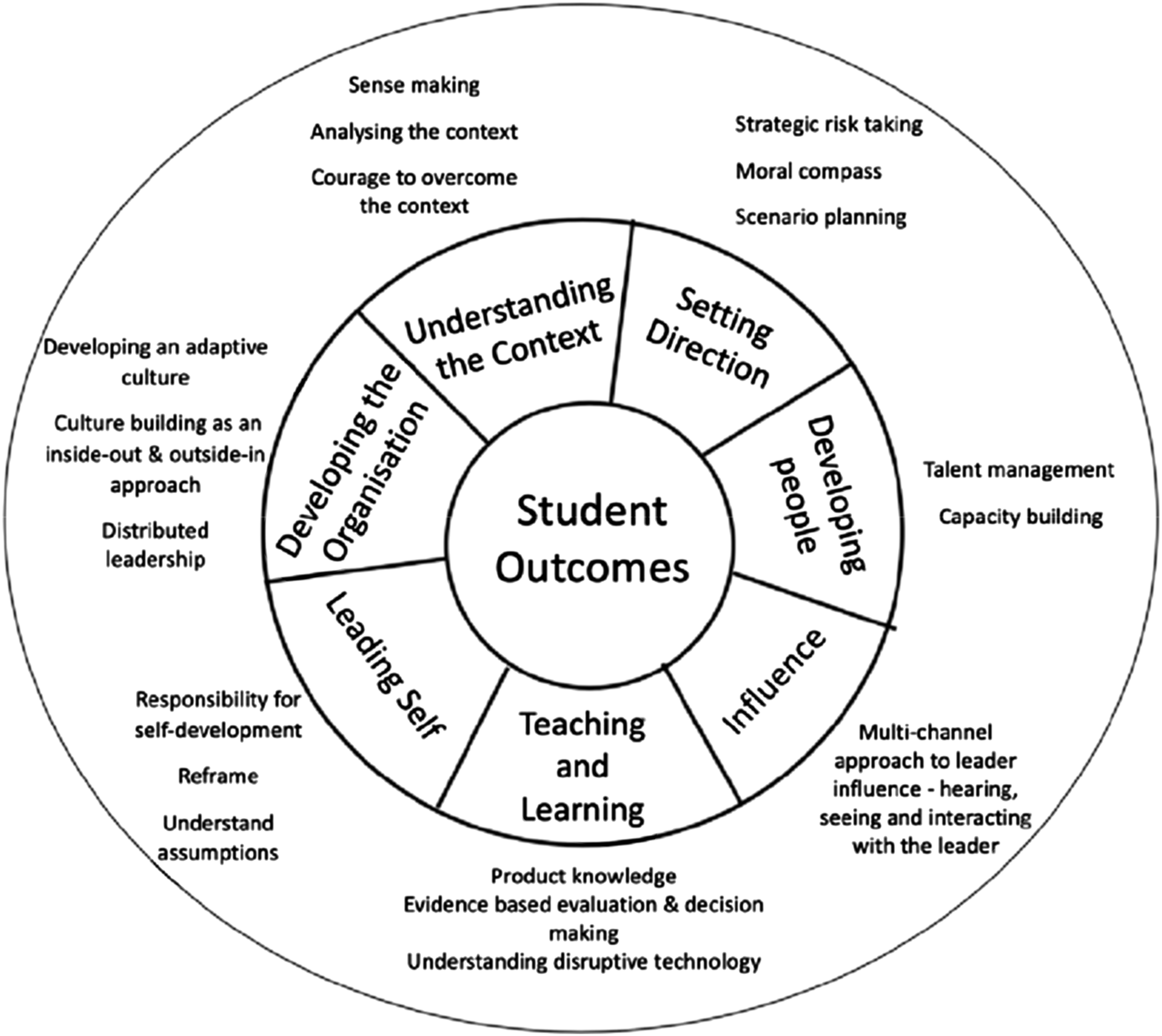
Marshall and Broome (2020) listed the strategies used by Barbados and Canada HEIs to include provision of clear direction which enabled members to have a clear vision and to know their objectives; effective communication of the vision to ensure stakeholders had a smooth resumption of their institutions, collaborative work through the engagement of teams to address problems that arose from the new mode of operation and the engagement of adaptive leadership arising from their responses to the changes brought on by the COVID-19 pandemic.
According to Marshall and Broome (2020: 35), messiness was the conduit for the transformation. The COVID-19 crisis brought into focus the need for flexible and adaptive leadership approaches. The resilience of HEIs can be measured in their ability to manage effectively in times of uncertainty. This is evident in the adaptive leadership approach used by HEI in Barbados and Canada.
The agile leadership approach: What is agile leadership?
According to Greineder and Lecht (2020), agile leadership is a multi-faceted concept that encapsulates: mindset, leadership styles, and practices in addition to the characteristics and competencies of leaders tailored to facilitate swift organizational approaches to dynamic environmental conditions. Though particularly apt for organizations with flat hierarchical structures, agile leadership embodies a strategic framework aimed at fostering adaptability in organizations generally. The agile leadership approach empowers teams to utilize their expertise and mandate to self-organize and lead themselves in achieving the desired goals (Akkaya et al., 2022; Gren and Lindman, 2020).
In today’s ever-changing environment, it is difficult to predict future events; therefore, embracing agility within the organization can provide support for leaders in the present volatile environments (Attar and Abdul-Kareem, 2020). Adopting a leadership culture within that model and promoting a holistic approach to leadership within the organization is key to effective leadership in the 21st century (Attar and Abdul-Kareem, 2020).
By design, the agile leadership approach aims to reduce bureaucracies and provide an enabling environment that allows employees to contribute the best of their talent and capabilities (Denning, 2016). The agile model replaces the traditional management top-down and command style with an outside-in approach. The building blocks of this outside-in leadership approach are self-awareness and understanding how organizational strengths and weaknesses affect stakeholders internally and externally (Denning, 2016; McPherson, 2016). Furthermore, the agile leadership model utilizes an iterative methodology that is open, dynamic, and networked and entails continuous engagement and analysis of processes and effecting adjustments aimed at improving outcomes (Awasthi and Delhi, 2020; Ivetic and Ilic, 2020).
As a leadership model, agile leadership is an essential component of any organization that is desirous of maintaining an agile business change (Agile Business Consortium, n.d). Agile leadership gives keen attention to maintaining set values and principles that focus on individuals and interactions, customer collaboration, responsiveness to change, and working solutions. Agile leadership advocates for a culture and mindset shift that allows for greater flexibility, a more adaptive approach to work, an emphasis on continuous improvement with team collaboration and customer-centric strategies (Anderson, 2024). Anderson further posited that agile leadership is iterative and incremental in its approach, with importance given to team empowerment and autonomy through self-organization. At the core of this leadership approach is a redirection to being customer focused with a goal to understand them and adapt as necessary to meet the needs of the customer.
The core pillars of agile leadership
According to the Agile Business Consortium, the agile leadership model is guided by nine principles centered on communication, commitment, and collaboration. These principles emphasize that leaders should lead by example, recognizing that their actions speak louder than words. Continuous feedback enhances organizational effectiveness, and fulfilling work hinges on providing employees with clear focus and meaning. Emotional intelligence plays a critical role in boosting creativity and innovation, making motivation essential. Leaders must embody self-awareness, responsibility, and servant leadership, acknowledging that leadership can emerge from any level within the organization. An agile environment fosters empowerment, engagement, and humility, promoting collaboration over individualism, which builds trust and positive relationships. Ultimately, the model values openness, creativity, feedback, and recognition, contrasting sharply with traditional leadership approaches that centralize decision-making.
The application of Agile leadership model in industry
The agile leadership model has been used in many industries to create competitive advantage. The ability to lead is a key character trait that is required for creating a competitive advantage (Prasongko and Adianto, 2019). Adopting an agile leadership model is one way to develop this capability. This leadership framework creates leaders who always learn from experience, identify opportunities, and are innovative, adaptive, self-reflective, reliable, and open-minded (Bushuyeva et al., 2019; Prasongko and Adianto, 2019).
The agile leadership model has also been adopted in several domains with an aim to improve efficiencies and productivity in areas such as healthcare, higher education, and project management in manufacturing and industries. Additionally, the model has been adopted in the healthcare domain to improve health services, customer care, and efficiencies in organization processes, resulting in sustained “evidence-based” solutions (Boustani et al., 2018; Şahin and Alp, 2020). Researchers suggest that agile leadership in healthcare can decrease staff turnover and foster career development and success (Akkaya et al., 2022).
Application of the agile leadership model in education
Agile leadership can transform educational environments into an ever-growing space. According to Breakspear (2017), the agile model is a dynamic leadership approach that facilitates learning, and leaders seeking to improve their performance continuously. In an agile leadership, environment leaders view leadership as a “collective journey” rather than an instance (Breakspear, 2017); hence, they embrace a mindset of constant development.
Prasongko and Adianto (2019) stated that agile leadership approach has been used in several industries to create competitive advantage; however, there is a paucity of research that explores how this model can be applied within the educational domain. The 21st century education landscape is a dynamic one that requires leadership flexible enough to adjust its strategy to meet the present need. Taylor (2017) states the present educational leadership approach is dependent on specific methods of teaching and learning strategies which makes them limited in their operation.
In his exploration of agile leadership in education, Taylor (2017) investigated the relationship between curriculum reform and agile leadership factors in higher education. The study investigated the relationship between agile leadership factors: technological adaptation; decision-making; teamwork; empowerment; and faculty collaboration. Taylor examined how these factors influenced curriculum reform in a knowledge intensive world where developing 21st century students requires a curriculum that can adapt to the fast-changing needs of industry. The researcher suggested that the application of agile processes to curriculum review could strengthen higher educational institutions’ products and give them a competitive advantage. The study was done in higher educational institutions within the Washington DC, Maryland, and Virginia area. The findings indicated that there was a very strong relationship between agile leadership and curriculum reform (Taylor, 2017).
The new educational paradigm of the 21st century presents significant challenges for educational leadership and requires a dynamic approach that supports the ever-changing needs. Therefore, it is imperative that higher educational institutions make the transition from the traditional hierarchical command-and-control structures to a more inclusive, flexible, and collaborative leadership structure (Zhu and Caliskan, 2021).
The leadership structure of HEIs by nature are hierarchical and rigid in their approach and are not designed to facilitate the participation of the individuals who are most affected by the decisions (Khalid et al., 2023). The evolving educational landscape is complex, volatile, and filled with uncertainty. Competing effectively in the dynamic 21st education domain will be dependent on HEIs ability to promptly modify and readjust their process to meet the ever-changing educational and global demands (Prejean et al., 2019; Ratajczak, 2023). Khalid argues that agile leadership is one solution that can be adopted within the education domain to support and sustain them in these ever-changing times. To this end, the author posits that exemplary good leadership is the key to developing an agile organization (Khalid et al., 2023).
Literature-based comparison of traditional and agile leadership models
A comparison of the traditional and agile leadership styles.
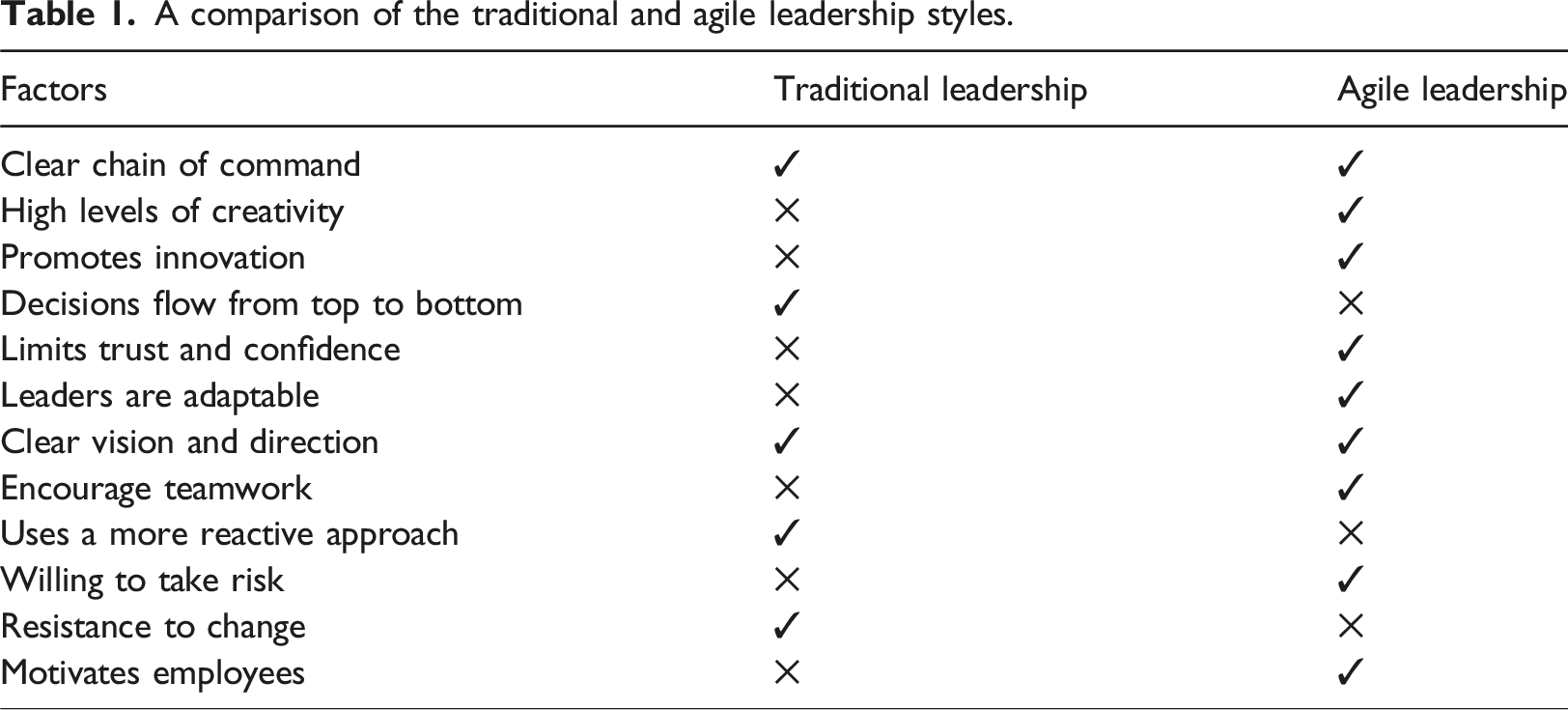
While both agile and traditional leadership styles have a clear chain of command in their organizational structure, the agile leadership approach is a more transformational style that fosters an environment where innovation and creative risk-taking are encouraged and valued in the organization. Traditional leadership models may have a more risk-aversive approach where innovation, driven from a top-down structure, may be stifled at the lower levels. The agile leadership model focuses on setting a clear and flexible vision that can adapt to change. In this model leaders inspire their teams to align their work with the organization’s goals while remaining open to shifts in strategy.
Summary
The literature review reveals that the application of the agile leadership within HEIs could significantly improve the effectiveness and performance of these institutions in the developing countries context. The agile leadership model has been applied in various domains resulting in improved effectiveness, productivity, and innovative solutions. The adoption of the agile leadership model by HEIs could yield significant benefits. There are a few studies that examine agile leadership within the context of leadership and some of its processes. However, there is a paucity of studies that examine how the application of the agile leadership model application could enhance and improve leadership within HEIs. This study seeks to address a part of that gap.
Methodology
Research design
An explanatory sequential mixed-methods approach was employed in this research. The study sought to identify the leadership model/s utilized by the institution, and their ability to achieve the university’s strategic goals. The study examined the need for a shift from the existing leadership approach/es utilized by the higher education institution to a more agile approach with an aim to improve efficiency, effectiveness, and productivity. The study further explored how an agile approach could influence the leadership culture at the institution and the extent to which agile leadership could strengthen the institutions’ efforts to achieve the vision 2030 educational goals.
With a pragmatic worldview, mixed-methods studies provide a rich context from which depth and breadth (Anderson, 2016) can be secured to support the research. The explanatory sequential mixed-method was ideal for this study as it facilitated the collection of quantitative data that gave an overall picture of the phenomenon before engaging in qualitative data collection that provides a deeper understanding of the research problem (Creswell and Plano Clark, 2017; Subedi, 2016; Younas et al., 2024). It provided an avenue for an in-depth exploration of a bounded system in the domain of interest and facilitated extensive data collection (Creswell, 2008). One of the strengths of using the iterative explanatory sequential mixed-method design is that it enabled the integration of the qualitative and quantitative findings and facilitated further analysis, refinement, extension, and explanation of the big picture (Creswell and Plano Clark, 2017; Subedi, 2016; Younas et al., 2024).
Population and sampling
The population is an estimated 1400, of which approximately 300 are considered academic and administrative leaders. Identifying the research population is very important since the overall aim and objective is to answer the research questions; hence, this should inform the research design (Saunders and Townsend, 2018). Deriving the sample size and selecting the ideal sampling technique (GHR and Aithal, 2022) are crucial parts of any investigation. Convenience sampling methods including snowballing and purposeful techniques were used to engage participants. The convenience sampling method was selected for the quantitative data collection since the research population for this study was within the university and readily accessible and less costly. Convenient sampling is less time consuming and allows the researcher to get responses or complete interviews from a population that is easily accessible (Golzar et al., 2022).
Purposeful sampling technique was employed for qualitative data collection. This method is usually used in environments that consist of participants who are very knowledgeable of the information that is related to the research context. Participants who fit the research criteria were invited to participate in the study. These participants were selected based on their role within the organization and their ability to contribute meaningfully to the study. Using purposeful sampling methods requires accurate data collection (Stratton, 2024).
Participants were selected from academic and administrative leaders including the president, vice presidents (VPs), deans of the faculties, heads of schools (HOS), programme directors (PDs), programme leaders (PLs), senior directors, and managers. The research sampled 151 participants in a survey and experienced a 24.5% (37 respondents) response rate, from which 14 participants were recruited and engaged in interviews and a focus group discussion.
Data collection and analysis
Data were collected using surveys, interviews, and focus group discussions.
Questionnaire
The questionnaire consisted of 31 multiple choice and Likert scale items. The questionnaire was divided into six sections to include: demographics, awareness of the leadership approach engaged at the institution and its effectiveness, perceptions of the leadership approaches in use, and exploring the agile leadership approach. A pilot test was done to ensure the questions were yielding the correct results. This was done to ensure reliability. During the first phase of the data collection process, the survey instruments were emailed to all persons in positions of leadership in the institution. Participants were invited via the instrument to volunteer to participate in the interview and focus group discussions. Quantitative data were analyzed using descriptive statistics, including tables. Items on the Likert scale were reported as percentages.
Interviews
The interview protocol was developed to gain deeper understanding of the leaders’ knowledge of the institutions’ strategic plan and its alignment with national development goals. Interview participants were recruited during the collection of survey data. They were engaged as soon as they indicated an interest and so the process occurred during the same phase as the survey. The data were uploaded into a central Excel spreadsheet. Thematic analysis was done to identify major themes.
Focus group
Focus groups provide an environment for group discussion that is organized to investigate a “selected set of issues” (Lane et al., 2001). The protocol for the focus group discussion was developed after the survey and interviews were concluded. The discussion protocol was designed to illuminate gray areas identified during the initial analysis of the quantitative and qualitative data. Six participants were selected using convenient sampling and included persons who completed the survey but did not engage in the individual interviews.
The focus group was conducted adhering to the principles of (Krueger and Casey, 2015), which stated that a structured approach to focus group involves clear communication of objectives and a well-designed script of open-ended questions led by a moderator. Thematic coding was used to analyze this data set. Member checking interview transcripts and triangulation of data served to ensure the trustworthiness of the data.
Ethical clearance
All participants gave consent before being engaged in the study. The research goals and requirements were shared prior to their engagement. The information collected was stored in an encrypted format accessible only to the researchers. No identifiable information was collected from participants, although by virtue of numbers in some positions, it may be possible to know if some leaders participated or not in the study. The research team received ethical clearance through the Ethics Committee of the institution and presented preliminary findings to the senior management of the university.
Findings
This study adopted a sequential explanatory mixed-methods design. There were 37 participants in the quantitative phase, 14 of whom were interviewed. Interviewees were recruited during the collection of quantitative data. For convenience, participants were interviewed as soon as they volunteered as many cited challenges with their schedules. There were 25 females and 12 males. Of the respondents, 54.5% were administrative staff, and 45.5% were academic. Respondents represented a wide cross-section of academic and administrative staff ranging from senior academic leadership to administrative supervisors. Respondents’ years of experience in the varying positions of leadership ranged from minus one to 10 years or more. Phase 2 of the study involved the collection of data using a focus group discussion. There were six participants who indicated interest during the phase one of the data collection process.
Leadership styles identified by participants.
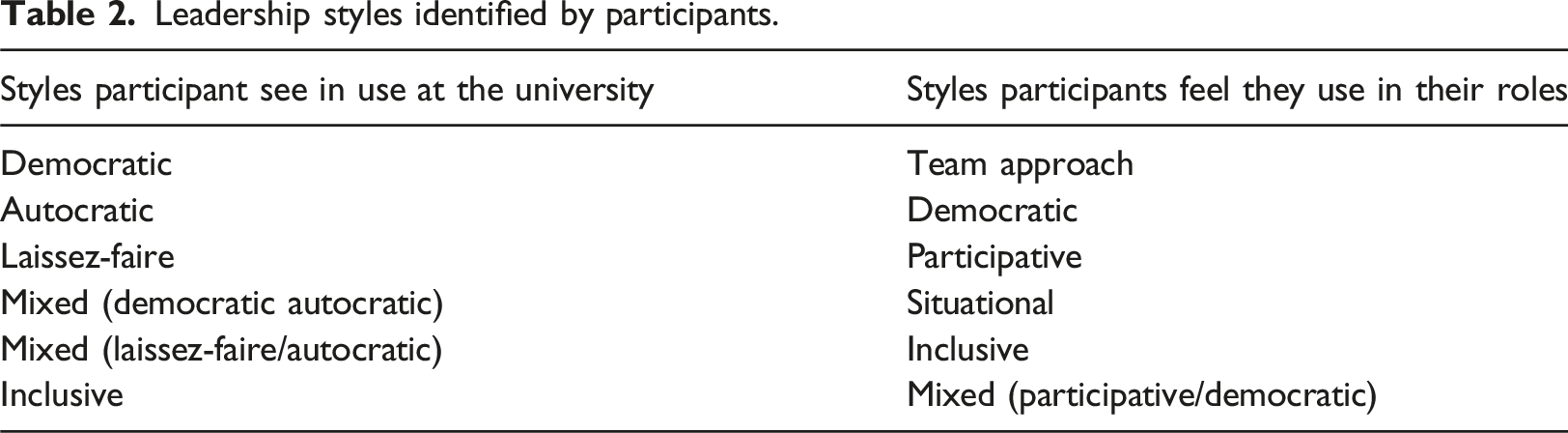
Table 2 outlines how participants described the approach to leadership at the University; they suggested that it was authoritative, reactive, laissez-faire, indecisive, and lacking accountability. According to participants, a key by-product of these variations of the traditional model is that they create “quiet quitters,” that is, employees who stay on the job but do not engage with the tasks assigned. One participant shared “The leadership model I observed is more reactive than anything else. A reactive leadership style does not allow for proper planning nor engagement of staff.” Another shared “...Decisions take too long to be made…Easy to pass the buck. Difficulty in holding persons accountable...Too many things fall between the cracks.” These responses were common across respondents who described the leadership approaches as conduits for creating work environments that were lacking interpersonal relationship, political will, and accountability. Participants interviewed highlighted some strengths of the traditional approaches engaged. One participant shared that the structured nature of the approach creates a context where one can anticipate the next move, and know who will take the decision. The idea of having a clear objective was also cited.
Perceptions of the effectiveness of the leadership styles engaged
Perceptions of the effectiveness of the leadership styles engaged.
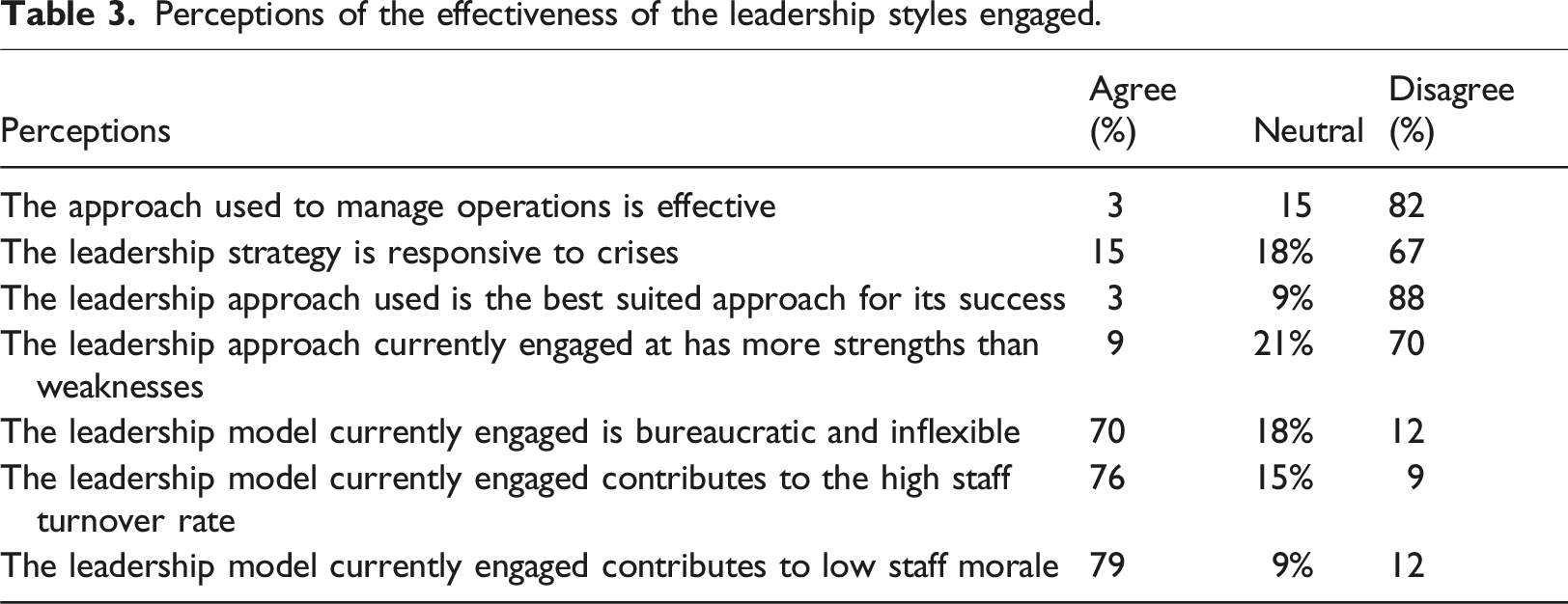
In total, 82% of the participants felt the approach used by the University is ineffective and 88% said it is not the best suited model for the institution’s success. Additionally, 70% of participants were of the view that the leadership approaches engaged by the institution have more weaknesses than strengths, and 67% said it was not responsive to in times of crisis. The indicators that sought to ascertain a description of the models revealed that the approaches used are bureaucratic and inflexible (70%) and contribute to low staff morale (79%) and high staff turnover rates (76%). Similarly, from the interview data, participants reported that the leadership styles engaged are reactive and ineffective, lacking accountability, foresight, and communication. Participants shared, however, that inclusiveness, clear objectives, and firmness were strengths of the models engaged.
From the focus group discussion, the need for collaborative/ inclusive leadership was identified by participants who stated that “leaders should get people involved in the decision-making process not force the decision on persons.” Participants suggested that the leadership was reactive rather than proactive, for example, “they operate like firemen; unstructured; not forward thinking; unresponsive; and indecisive.” Additionally, participants suggested that the leadership is “authoritative” and “not open” and there was a “lack of accountability.”
From the survey, 75% of participants expressed awareness of the university’s strategic plans and 46% of the National Education Strategic Plan and Vision 2030 (Jamaica’s parallels). A little over half of the participants took a neutral position on whether the university’s strategic plan was responsive to the national education strategic plan. Only 9% of participants agreed that there was alignment between the plans, and 39% were of the view that the University’s plan did not align with the national goals. The results from the interview in relation to alignment were somewhat different. Eighty-six percent (86%) of interviewees were aware of the university’s strategic plan, and most participants (72%) understood their role within the strategic plan.
The participants from the interview, however, were not as clear on the parallel and Vision 2030: 13 participants responded to the question of which only four were knowledgeable about Vision 2030, seven had limited/cursory knowledge, and two were unfamiliar with the plans and goals. One participant, when responding to the question of their knowledge of the national plan and Vision 2030 shared, was “only aware of the STEM within our schools.” Participants’ lack of knowledge of the parallel and vision 2030 and its connection with the institutions’ strategic plans was evident and therefore the researchers were not able to determine the extent to which the plans advanced the national development goals and the Vision 2030 goals of Jamaica.
On the matter of the institutions’ strategic plan, focus group participants shared several concerns: the misunderstanding of roles of each leader in the process; the absence of risk assessment; lack of resources to support the plan; and lack of effective communication of the institution’s vision. Participant 2 shared “there is no buy-in to the vision (name of institution) may only meet its strategic plan to an average extent.” The participant further stated “while we could achieve much more, we may only achieve the average objectives because there is no buy-in.” This was supported by Participant 3. Participant 3 further shared that as “information trickles down to the staff” it causes “people to become disengaged and disinterested.” Participant 4 stated that at the department level, the operation plan has not been mapped to the institutions’ strategic plan.
Participant 1 shared that the absence of a complete and approved budget challenges the success of the strategic plan. If it is to feed into the national developmental plans, then the institution needs to operate with an approved budget and this has not been the reality for years. One academic staff leader shared that the success of the strategic plan as written relies 80%–90% on academic staff output. Academic staff are required to “enhance our teaching, research, patents, and publications, some of which, we do not have a budget to support.” The participant also noted the absence of a contingency plan to respond to future crises similar to COVID-19 and this is the kind of thing that should be reflected in a strategic plan.
Given the traditional nature of the leadership approach used by the institution and the perceived disconnect between leaders’ knowledge and awareness of the strategic plans and the national plans and goals it can be inferred that as is, the characteristics may hinder the advancement of the national plans.
Approximately 67% of participants surveyed were aware of the agile leadership approach. They held varying perceptions of agile leadership. Based on a 3-point Likert scale (agree-disagree), 73% of participants said they understood the approach, and 64% felt the approach was a more suitable option for the institution and would offer a distinct advantage over the traditional command style approach currently being used (76%). Participants’ knowledge of agile leadership was explored in the interview. Seven reported limited or cursory knowledge, four shared having a fair understanding, and the others did not know anything about the leadership approach. Nevertheless, their perception of an appropriate leadership approach was more in line with agile leadership.
Participants’ detailed descriptions of the many weaknesses of the existing leadership approach point to a desire on their part for a more flexible, inclusive, and motivating approach. The following are the responses of three interview participants were from the senior directors and academic leaders within the organization from both academic and administrative staff to the question of weaknesses inherent in the approaches that are currently being used by leaders: (a) “Lack of Engagement. Unable to identify strengths. Bureaucracy. Unresponsive. Cannot harness the talents and skill sets that reside in the university. Inability to engage the community. {Institution} only responds if they think they have a solution.” (b) “Frustrated Staff. Demotivated staff. Decisions are made (that may not be the best option). Lack of inclusiveness.” (c) “Inflexibility affects the customer.”
Given the affordances of the agile leadership approach are opposite to what is reflected above the findings suggest that the agile approach could improve current weaknesses in the traditional leadership approach being used.
Participants’ responses to the importance of each agile leadership principle.
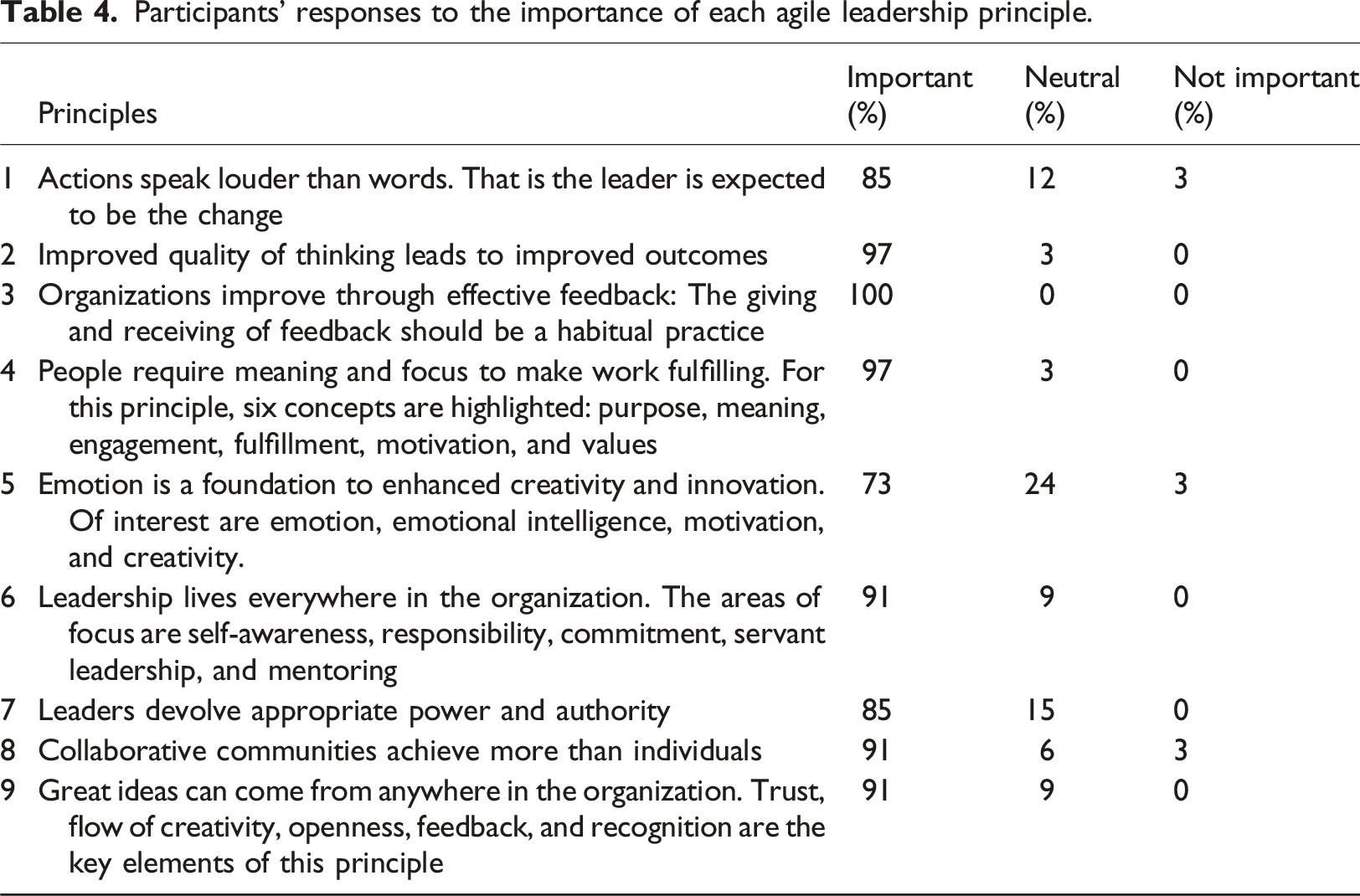
Participants generally scored each principle as important, with principles 1, 5, and 7 receiving the highest level of neutrality (12%, 24%, and 15%) (see Table 4). All participants rated principle 3, “Organizations improve through effective feedback: the giving and receiving of feedback should be a habitual practice,” as important. Participants were of the view that feedback is an important element that helps an organization improve. Principles 2 and 4, improving quality of thinking and providing employees with meaning and focus, scored 97% each, and principles 6, 8, and 9, 91%. Principles 1 and 7 received an 85% importance rating (see Table 4). One respondent scored principles 1, 3, 5, and 8 as not important. These findings are displayed in Table 4.
In seeking to determine whether leaders saw value in the agile leadership approach, focus group participants were asked to share some important considerations for the institutions’ leadership. They were candid in their responses in highlighting that leaders need to listen, identify employees’ strengths and encourage creativity and innovation. One participant said leaders need to “communicate effectively with all stakeholders to help in creating a shared governance and sense of direction of the institution.” Another participant shared that “Often leaders are slow in communicating issues and getting collaboration in solving problems.” Participants further suggested that the “lack of communication leads to lack of buy-in resulting in chaos because of the lack of trust.” Of importance also was the need for them to have a clear vision and direction as HEIs need to have a clear path outlining all goals. Leaders need to lead from the front and show stakeholders that while everyone may not get what they want, the leader understands and is in touch with their realities.
The focus group discussion also looked at participants’ knowledge of transformational leadership approaches. Participants suggested that transformative leadership was “very effective, participative, and democratic.” They also said transformational leadership was a more “collaborative and team approach where team members are involved and it facilitates feedback.” Participants also suggested that this approach will lead to “buy-in and trustworthiness” as team members would enjoy greater autonomy and the opportunity to be creative. Participant 2 in describing the transformational leader highlighted their capacity to inspire and motivate in a context where communication is open and transparent. This environment was felt to build trust among stakeholders and result in persons aiming “for excellence because they are empowered by this type of leadership.” The participant shared that agile leadership is a type of transformational leadership and would be of value in advancing the institution.
Summary
The findings from the study indicate differences between perceived leadership styles used at the institution and styles individual leaders use to manage their functions. The majority of participants were conflicted in their interpretation on the leadership model being engaged and the leadership model they practice. Participants’ responses indicate that they are favorable to engaging agile leadership principles as an alternative to the present approaches currently employed by the institution. The findings of the focus group were consistent with quantitative and qualitative findings. These findings provide a foundation for intervention for fostering a more collaborative leadership model that could be adopted by the institution. Additionally, it provides recommendations that could advance the engagement of an agile leadership approach at the institution. This could significantly reduce some of the present leadership challenges faced by the institution and facilitate the alignment of the institutions’ strategic goals with the National Education Strategic Plans and Vision 2030 goals.
Discussion, recommendation, and conclusion
The discussion section of the paper will be presented according to the major research questions.
The research found that the HEI under study engages in a traditional top-down / command style approach to leadership. Participants described the style as autocratic, democratic, inclusive, laissez-faire, and combinations thereof. Participants felt that the leadership style is bureaucratic, not very flexible, and leads to low staff morale and high staff turnover rates. This is consistent with the findings of Juricek (2014); Ivetic and Ilic (2020) and Philbin (2015). The participants were also of the view that the approaches used are ineffective, having more weaknesses than strengths, unresponsive to crisis, and not suited for success. Results from the analysis of the quantitative data suggested that 85 % of the participants believed that the leadership approach practiced by the organization falls within the traditional model. Over 82% of the participants believed that the leadership approach utilized by the institution was not effective and was not best suited for the success of the organization. This was later supported by the results from the qualitative data analysis. Most participants suggested that the leadership style practiced was authoritative and did not facilitate input from employees. Triangulation of the results indicates that the institution grapples with numerous challenges that are directly and indirectly linked to the traditional leadership approaches. This is consistent with studies conducted by Al Khajeh (2018); Bhargavi and Yaseen’s (2016); Black (2015); Igbaekemen and Odivwri’s (2015); Iqbal et al. (2015) and Luftman (2004), which found that traditional approaches are heavily bureaucratic and negatively impact employee productivity and the overall operations of organizations.
An interesting observation in the study was that participants viewed the leadership style practiced in the institution as generally traditional and bureaucratic; however, they saw themselves as transformational and, therefore, different in the approaches they engaged. This suggests a disconnect with the reality of the situation as participants do not identify as part of the problem.
The study found that the top-down/command style of leadership does not allow for the institution’s strategic goals to be adequately communicated to stakeholders, given the number of respondents who were unaware or only somewhat knowledgeable of the strategic goals and their implications at the operational level. The connection with the parallel was even more uncertain for some leaders. Therefore, the disconnect between leaders’ understanding of the tertiary institutions’ goals and that of the parallel was noted.
A comparative look at years of service versus leadership experience shows that most of the participants had 2–4 years’ experience in leadership, despite having the longest years of service at the institution. In other words, the leaders had less than 5 years of experience in their positions even with over 16 years of service. This suggests that leadership experience is limited, and this could be related to the cyclical assignment of responsibility roles within which members have an opportunity to lead.
In trying to understand this dynamic, the researchers noted that strategic plans are discussed every 5 years, and so depending on when leaders are appointed, the strategic plan may or may not have been discussed at faculty and department levels prior, and hence the lack of connection with the institution’s plan. Its disconnect with the National Education Strategic Plan may be due to the rotational nature of some academic positions as well as the high rate of staff turnover. This validates the findings regarding the slow or lack of communication regarding issues and would imply that potentially, there is a lack of proactive planning and strategic direction.
Given the competitive climate within which the institution currently operates and the National Education Strategic Plan: Objective 6 which is to optimize the effectiveness and efficiency of staff in all aspects of the service to ensure continuous improvement in performance” and the need to “provide teaching and learning systems that are of international standards,” consideration has to be given to how the leadership approach engaged is responding. The study shows that the bureaucratic nature of the leadership approach engaged at the institution does not allow for its strategic goals to be clearly aligned to the National Education Strategic Plan and Vision 2030 in a way that it can support and advance these goals. The framework proposed by Gurr and Drysdale (2020) advocates for “setting direction, developing people, developing the organization, and improving teaching and learning” to be key areas of focus for leadership in HEIs. It undergirds the need for a more responsive leadership approach, one which will not hinder the institutions’ responsiveness to internal and national targets.
The study found that most participants in the study were knowledgeable of agile leadership. In relation to the principle of agile leadership, participants: • proffered that a culture change that embraces accountability can result in improved efficiency and productivity. Agile leadership offers accountability. • shared the need to implement a standardized model of leadership across the organization. • suggested that leadership is expected to be the change that is required to advance the agile leadership approach. It is not clear if they understand that individually, they would be required to be a part of advancing this change. • were of the view that the vision must be communicated clearly so that buy-in can occur. • rated the nine agile principles from 73% to 100% in terms of importance. • believed agile leadership fosters open and transparent communication and builds trust among stakeholders. • believed agile leadership can result in change or bring about change that can inspire others and result in stakeholders reaching their full potential. • gave Principle 5 a score of 73%: This principle states emotion is a foundation to enhanced creativity and innovation. Of interest are emotion, emotional intelligence, motivation, and creativity. Despite 73% of participants scoring the principle as important, its value in comparison to the other eight principles suggests that emotion does factor as high as the others and can be linked to the notion that traditional methods of leadership do not view emotion as a marker for leadership success. It also highlights why staff report low morale in the current environment (Juricek (2014); Ivetic and Ilic (2020); Philbin (2015).
The study affirms that agile leadership gives stakeholders autonomy and makes them think that their involvement plays an integral part in the process, this builds trust. The agile leadership approach reduces bureaucracies and can provide an enabling environment that allows employees to contribute the best of their talent and capabilities (Denning, 2016), thus enhancing the effectiveness and productivity of the institution. Furthermore, the approach can provide greater opportunities for the institution which is grappling with the more restrictive and inflexible bureaucratic approaches given it has the potential to transform and strengthen leadership capacity in HEIs.
The adoption of the agile leadership model within the institution would provide an avenue for participative leadership that is inclusive and transformational. This would result in creative thinking that can result in innovative solutions. This view is supported in the literature by Prasongko and Adianto (2019); and Bushuyeva et al. (2019) who suggest that agile leadership provides an environment that facilitates continuous learning, self-reflection, innovation, and open-mindedness. The implementation of agile leadership could change the present trajectory and improve staff inter-relationships resulting in improved staff morale.
To respond to the research question on how agile leadership can strengthen the effectiveness of leaders to improve operation, efficiency, and productivity, attention has to be drawn to the flexibility of the approach. It allows for a consultative and participative relationship in the workplace that boosts staff morale and contributes to a psychologically safe work environment. This further empowers leaders and staff alike as they feel a part of the experience and are more likely to be motivated and willing to engage. It creates openness and would allow for a more cohesive team environment, which should impact efficiency and productivity positively.
Recommendations
The results of the study suggest that the institution adopts the agile leadership approach starting from the helm which is consistent with the principles of the approach. Additionally, there is a paucity of formal training for leaders within the institution. Therefore, one recommendation is for all leaders to receive formal leadership training to ensure consistency and clarity on the way forward and thereafter within their first term in office. Additionally, the researchers recommend the implementation of an inclusive and collaborative structure that facilitates giving and receiving of feedback. This recommendation is also against the backdrop of Connolly and Farrier’s (2021) study where they found that lack of leadership training and the adoption of traditional leadership approaches have negatively impacted leaders in higher educational institutions.
The researchers also recommend that future studies be done to assess the impact of the change on the institution in terms of advancement of the strategic plan; improving effectiveness, efficiency, and productivity; improving staff morale; reducing staff attrition rates; and improvement in leadership training for persons in responsibility positions. Since agile leadership focuses on self-reflection, innovation, is proactive and responsive to change, and provides continuous improvement in team collaboration and developing people, it is recommended that its key principles be engaged to improve efforts in academic and administrative leadership in the HEI. Special attention could be paid to the matter of consideration for employees’ emotional state as this was the area where leaders in the study scored lowest in their ranking of the importance of agile principles.
Conclusion
This study explored the potential of an agile approach to leadership as a counter to traditional leadership approaches practiced within a tertiary-level institution. It engaged sequential explanatory mixed-methods to collect and analyze data. Based on the findings of the study, adopting an agile leadership model can improve the overall performance and effectiveness of the institution studied and has potential for other HEIs. The agile leadership approach has the potential to support leaders in their strategic planning and day-to-day operations. The adoption of the approach can result in innovative solutions to various challenges currently faced. Agile leadership can lead to improvements for the institution in but not limited to the following areas: staff morale, productivity, communication, and implementation of their strategic goals and helping to advance the achievement of the National Education Strategic Plans and Vision 2030 goals.
Future studies can look at incrementally measuring improvements in productivity, effectiveness, and efficiency, within various departments over a specified period. This could provide valuable insights for the leadership of the institution regarding how the adoption of the agile leadership model can support the institution in achieving its strategic goals and by extension advance the National Education Strategic Plans and Vision 2030 and beyond goals.
Footnotes
Declaration of conflicting interests
The author(s) declared no potential conflicts of interest with respect to the research, authorship, and/or publication of this article.
Funding
The author(s) received no financial support for the research, authorship, and/or publication of this article.

Data availability statement
Data sharing not applicable to this article as no datasets were generated or analyzed during the current study.