



Abstract
Leadership plays a critical role in navigating institutional change in higher education, particularly in the context of global disruptions, policy shifts, and increasing demands for equity. While substantial scholarship has focused on senior executive leadership, the roles of deans and middle-level leaders in implementing and mediating institutional change remain comparatively underexplored. This scoping review synthesizes evidence from 24 empirical studies published between 2014 and 2024 across 22 countries. Guided by the frameworks of Arksey and O’Malley and Levac et al., studies were identified through systematic searches in ERIC, Education Research Complete, and Academic Search Complete, and analysed using thematic synthesis. Institutional change initiatives most commonly involved crisis response, curriculum reform, policy restructuring, and digital transformation, with qualitative approaches predominating (n = 21). This review proposes a novel four-domain model of leadership strategies encompassing affective, strategic, structural, and ethical domains. Across the studies, deans and middle-level leaders emerged as pivotal actors who enacted distributed leadership, fostered stakeholder engagement, and mediated faculty resistance during reform implementation. Persistent challenges included faculty resistance, limited resources, and policy ambiguity. Faculty resistance and resource constraints were the most consistent barriers to sustainable reform, underscoring the importance of adaptive, collaborative, and ethically grounded leadership. This review advances a conceptual framework to inform leadership development and policy design in higher education.
Keywords
Leadership is a pivotal determinant of success in higher education, particularly in shaping institutional governance, cultivating innovation, and fostering resilience. In today’s dynamic and complex global landscape of tertiary education, leadership extends beyond routine administrative oversight to include promoting a culture of accountability, enhancing transparency, and steering strategic development aligned with institutional missions and stakeholder expectations (Adole, 2024). Educational leaders at various levels must be equipped to navigate bureaucratic inefficiencies, financial constraints, and rapidly evolving learning environments, all while promoting inclusive practices and advancing equitable outcomes (Maduforo et al., 2024). As institutions contend with competing pressures and shifting educational priorities, effective leadership has become essential for sustaining relevance, responsiveness, and impact in the 21st century (Maduforo et al., 2024; Mynbayeva et al., 2024). However, despite extensive scholarship on senior executive leadership, the roles of deans and middle-level leaders, who operate at the interface of institutional strategy and implementation, remain comparatively underexamined.
Institutional change in higher education has been conceptualized as structured or emergent transformations in governance arrangements, policy mandates, curriculum design, organizational structures, technological systems, and institutional culture that reshape how institutions operate and respond to societal and regulatory pressures (Alzahmi et al., 2025). Such change processes are rarely linear; rather, they unfold through negotiation, interpretation, and coordination across multiple organizational levels. Theoretical perspectives such as distributed leadership and sensemaking theory provide important lenses for understanding these dynamics. Distributed leadership emphasizes the shared and relational nature of leadership practice across formal and informal actors, rather than concentrating authority exclusively at the executive level (Kezar and Holcombe, 2017). Sensemaking theory emphasizes how individuals, especially leaders, interpret uncertainty, construct shared meaning, and guide collective action in ways that shape organizational responses during periods of disruption and reform (Maitlis and Christianson, 2014; Weick, 1995; Weick et al., 2005). Together, these frameworks underscore the importance of examining leadership beyond senior executives and within middle strata of academic institutions. Unlike senior executives who focus on strategic direction, middle-level leaders translate institutional priorities into operational practice while mediating faculty engagement and resistance. However, these perspectives have rarely been integrated to examine how middle-level leaders enact and interpret institutional change across diverse global contexts.
This need became especially pronounced during the COVID-19 pandemic, which catalysed abrupt and widespread disruptions across higher education systems worldwide. Campuses were closed, academic calendars interrupted, and institutions were compelled to transition rapidly to emergency remote teaching (Tilak & Kumar, 2022). While digital technologies offered temporary continuity, they also revealed persistent inequalities in infrastructure, access, and institutional readiness, particularly in the Global South (Matsieli and Mutula, 2024). In these challenging circumstances, educational leaders played a central role in maintaining academic continuity, sustaining morale, and guiding the transition to online and hybrid learning modalities. Their efforts were often grounded in practical, context-sensitive decision-making shaped by institutional cultures and lived realities (García-Morales et al., 2021).
Beyond the pandemic, higher education institutions globally continue to navigate financial pressures, policy reforms, digital transformation, and equity-driven mandates that reshape governance and operational practices (Matsieli and Mutula, 2024; Nguyen et al., 2023). The rapid shift to remote learning exposed structural vulnerabilities, funding dependencies, and accountability challenges, prompting institutions to re-evaluate strategic priorities, revenue models, and quality assurance mechanisms (Nguyen et al., 2023). At the same time, digital transformation has evolved beyond emergency response toward a more comprehensive reconfiguration of institutional strategies, organizational processes, and service delivery systems aimed at advancing inclusive and equitable access to quality education (Matsieli and Mutula, 2024). Collectively, these forces generate rapidly evolving higher education environments that require alignment between institutional vision, governance structures, and operational implementation.
Importantly, leadership in higher education is not limited to senior executives. Middle-level leadership in higher education typically includes roles such as deans, associate deans, department chairs, and program directors who occupy positions between central administration and academic staff. These leaders translate institutional strategy into departmental action, allocate resources, coordinate curriculum reform, and mediate faculty and student concerns (Boyko and Jones, 2010; Mason and De la Harpe, 2020). Their proximity to academic units positions them as key actors in the distributed enactment of change and in the sensemaking processes that determine how reforms are interpreted and implemented locally.
Despite their strategic and operational importance, middle-level leaders in higher education remain comparatively underexamined in empirical scholarship, which has tended to privilege senior executive roles and system-level policy analysis (Boyko and Jones, 2010; Knight and Trowler, 2001). Existing scholarship on educational leadership has largely concentrated on presidential, vice-chancellor, and governing board roles, leaving comparatively less synthesis of how middle-level leaders navigate and operationalize institutional change (Boyko and Jones, 2010; Mason and De la Harpe, 2020). Although prior studies have acknowledged structural and governance challenges within academic management, there remains limited cross-contextual integration of evidence on how deans and middle-level leaders respond to diverse forms of reform globally.
Alongside structural challenges, educational leadership is often fraught with ethical tensions and power dynamics (Duignan, 2007). Leaders are regularly faced with dilemmas that test their commitment to fairness, inclusion, and accountability (Arar and Saiti, 2022). These may involve enforcing unpopular reforms, navigating hierarchical governance structures, or balancing stakeholder interests amid resource constraints. As institutions change, questions of whose voices are amplified or marginalized and how decisions are negotiated become central to understanding the relational and political dimensions of leadership (McMullin and Raggo, 2020). A values-driven, ethically grounded approach is thus essential – not only for legitimacy and trust but also for fostering resilient and inclusive institutional cultures.
This review draws on both theoretical and empirical contributions to examine the interrelationships among leadership, governance, and organizational behaviour in higher education. Leadership is broadly defined as the capacity to influence and inspire others toward shared goals (Northouse, 2025), while governance refers to the rules, structures, and processes through which institutions are directed and held accountable (Pfeffer and Salancik, 2023). Organizational behaviour encompasses the study of individual, group, and systemic dynamics within educational settings (Robbins and Judge, 2024). Models such as transformational leadership, servant leadership, and collaborative governance provide valuable lenses through which to understand how educational change is initiated, negotiated, and sustained (Bass and Riggio, 2006; Greenleaf, 2002; Kezar and Holcombe, 2017).
Despite growing interest in leadership as a lever for institutional transformation, significant knowledge gaps persist in understanding how educational leaders across contexts respond to various pressures and reforms. Specifically, there is limited systematic synthesis of how middle-level leaders interpret, mediate, and implement institutional change within complex governance and policy environments. This scoping review addresses this critical gap by synthesizing global empirical evidence on how middle-level leaders interpret, mediate, and implement institutional change across diverse higher education contexts. Through a systematic analysis of leadership practices and organizational contexts, this review aims to generate cross-contextual insights that inform future research, policy development, and institutional practice, with particular attention to the roles of middle-level leaders and the ethical dilemmas that shape leadership behaviour in times of transformation. To systematically examine these dimensions of leadership across diverse higher education contexts, this scoping review employed a rigorous and transparent methodological framework, as outlined below.
Methods
This scoping review was conducted using the methodological framework developed by Arksey and O’Malley (2005) and enhanced by Levac et al. (2010). The framework outlines five essential steps: (1) identifying the research question, (2) identifying relevant studies, (3) study selection, (4) charting the data, and (5) collating, summarizing, and reporting the results. This rigorous approach ensured methodological transparency and reproducibility.
Stage 1: Identifying the research question
The review was guided by a set of clearly articulated research questions intended to explore leadership responses to institutional change in global higher education contexts. The research questions were as follows: 1. What types of institutional changes have been documented in higher education contexts globally? 2. What leadership strategies have been employed to navigate institutional change? 3. What are the key challenges during these processes? 4. What recommendations for leadership practice and future research emerge from the literature?
These questions were refined through iterative discussions within the research team to ensure a broad yet focused scope that captures the complexity of leadership during change in diverse higher education settings.
Stage 2: Identifying relevant studies
A comprehensive and systematic search for empirical studies was conducted across three academic databases: ERIC (Education Resources Information Centre), Education Research Complete, and Academic Search Complete. The search strategy was collaboratively developed to capture the intersection of educational leadership and institutional change. It included a broad range of controlled vocabulary terms and keywords, such as: (“educational leadership” OR “educational administration” OR “school leadership” OR “leadership strategies” OR “instructional leadership” OR “change management” OR “school administration” OR “educational administration” OR “educational management” OR “school principals” OR principals OR “transformational leadership” OR “leadership development” OR leadership OR “school leaders” OR “administrator role”) AND (“curriculum change” OR “curriculum reform” OR “curriculum development” OR “curriculum overhaul” OR “educational reform” OR “curriculum innovation” OR “curriculum redesign” OR “educational change” OR “curriculum management” OR “change strategies” OR “curriculum leadership” OR “curriculum implementation” OR “curriculum inclusion”) AND (“COVID-19” OR “pandemic” OR “crisis management” OR “online learning” OR “remote teaching” OR “digital learning” OR “technological advancements” OR “policy reform” OR “educational policy” OR “21st-century skills” OR “blended learning”)
Searches were limited to peer-reviewed journal articles, published in English between 2014 and 2024, to ensure the inclusion of relevant and recent literature. To enhance sensitivity and coverage, the reference lists of all included studies were also screened using backward reference chaining. All duplicate records were removed prior to screening.
Stage 3: Study selection
All search results were imported into Covidence, a systematic review management platform. Title and abstract screening, followed by full-text review, was conducted independently by two reviewers to ensure impartial and consistent application of the inclusion criteria. Disagreements at both screening stages were resolved by a third independent reviewer, who made the final decision in cases of conflict.
To be included, studies had to: (a) be empirical in nature (qualitative, quantitative, or mixed methods); (b) focus on leadership within higher education; and (c) explore or report leadership responses to institutional change processes. Exclusion criteria included studies focused on K–12 education, conceptual or theoretical articles without primary data, editorials, book reviews, and grey literature. The exclusion of grey literature and conceptual papers was intentional and aligned with the review’s aim to synthesize empirically grounded evidence on leadership practices and outcomes, thereby ensuring analytical consistency and methodological comparability across included studies.
Stage 4: Charting the data
Data from the included studies were extracted using a standardised charting template, developed collaboratively by the research team and piloted on a sample of studies for consistency. The first author conducted the initial data extraction, while the second and third authors independently reviewed and verified the extracted data to ensure accuracy and completeness. Any discrepancies in data extraction were resolved through discussion among the authors, with consensus reached collaboratively.
Key data items included: author(s), publication year, country or region, study design and methodology, sample size and characteristics, leadership roles, type of institutional change (e.g., curriculum reform, policy shifts, technological transition, crisis management), leadership strategies adopted, challenges encountered, key outcomes, lessons learnt, and recommendations. The full data extraction spreadsheet is available as a supplementary Excel file to facilitate transparency, auditability, and reuse.
Stage 5: Collating, summarizing, and reporting the results
Extracted data were synthesised using narrative thematic analysis, guided by the research questions and the structure of the data extraction template. The synthesis employed a combined deductive and inductive approach. Deductively, initial coding was informed by the research questions, particularly those related to types of institutional change, leadership strategies, and challenges. Inductively, additional themes and subthemes were allowed to emerge from repeated patterns observed across the included studies.
Through iterative comparison and team discussions, codes were refined and grouped into higher-order categories. Consensus on the final thematic structure, including the four leadership domains (affective, strategic, structural, and ethical), was reached through collaborative review among the authors, ensuring analytical rigour and coherence.
Descriptive numerical summaries were provided for variables such as study locations, types of change, and leadership roles. Notably, 21 of the 24 included studies employed qualitative designs. This predominance reflects a broader methodological trend within higher education leadership research, where qualitative approaches are frequently used to capture the relational, contextual, and sensemaking dimensions of leadership during institutional change. While this qualitative dominance limits statistical generalizability, it provides rich, in-depth insights aligned with the exploratory aims of a scoping review.
The findings are presented in structured sections aligned with the major themes identified: (1) types of institutional change, (2) leadership strategies for navigating change, (3) challenges faced by educational leaders, (4) key outcomes and lessons learnt, and (5) implications for policy, practice, and future research.
As illustrated in Figure 1, the PRISMA flow diagram outlines the study selection process: studies identified from databases and registers (n = 2147), references removed before screening (n = 189), studies screened (n = 1958), studies excluded (n = 1626), studies sought for retrieval (n = 332), studies assessed for eligibility (n = 332), studies excluded after full-text assessment (n = 308), and studies included in the final review (n = 24). A PRISMA flow diagram.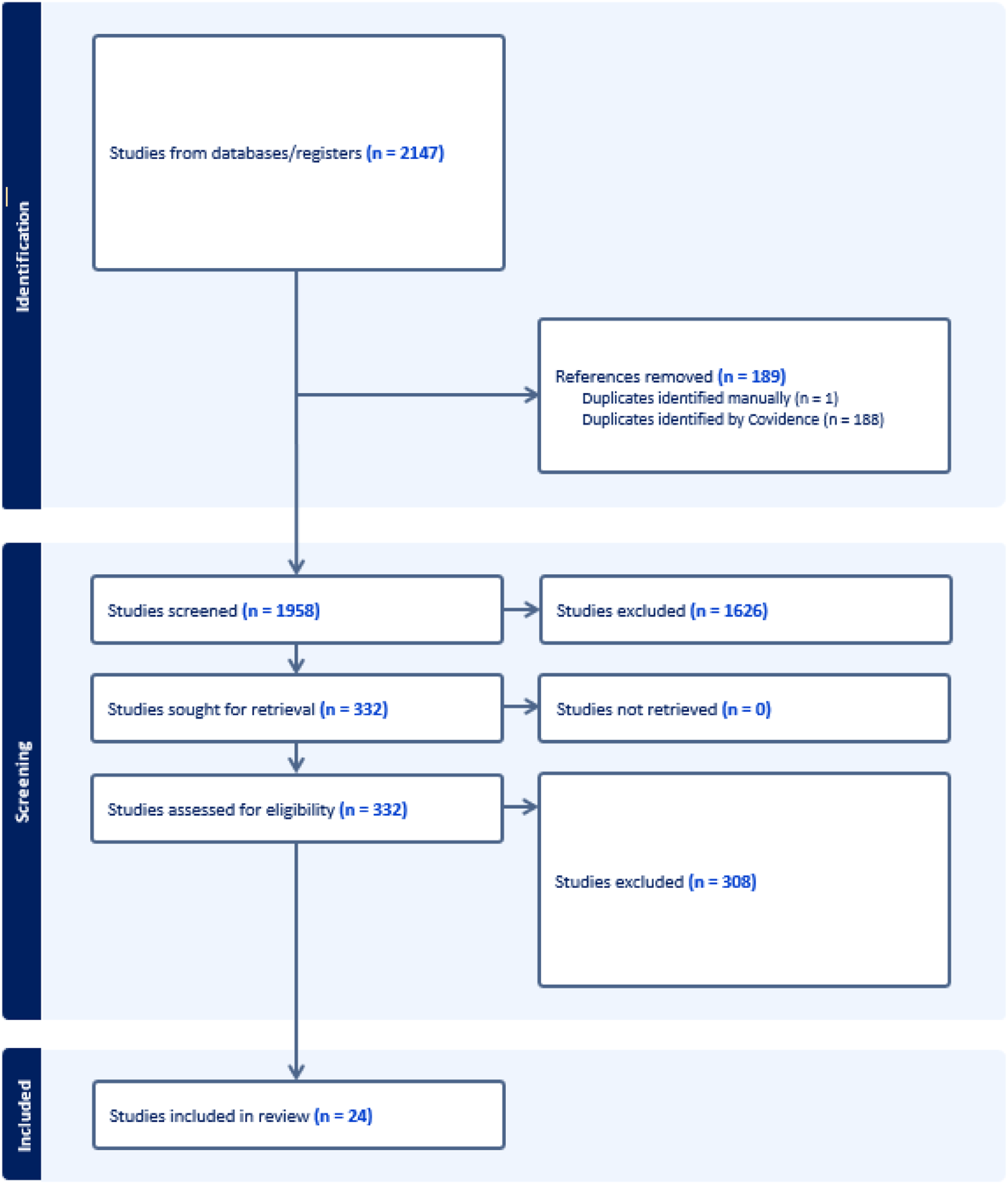
The following section details the empirical findings, beginning with an overview of the included studies and progressing through the thematic categories identified in the analysis.
Results
Overview of included studies
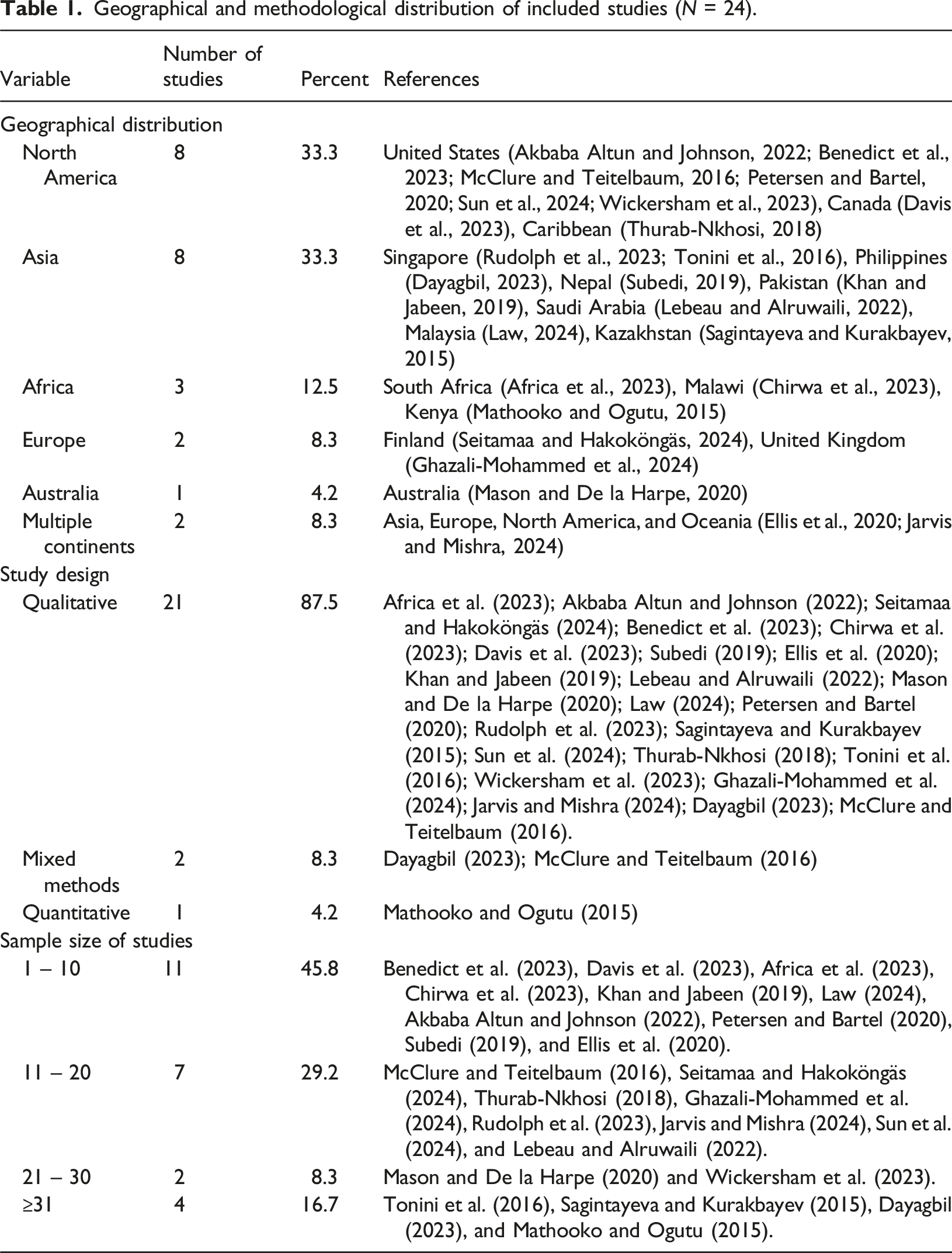
This review included 24 empirical studies conducted across 22 countries and regions, with two studies spanning multiple continents (Ellis et al., 2020; Jarvis and Mishra, 2024). North America and Asia were the most represented regions (n = 8 each), together accounting for two-thirds of the included studies. Africa contributed three studies, while Europe, Australia, and multi-continental studies accounted for the remainder. This geographical spread highlights the global relevance of leadership responses to institutional change, while also revealing uneven regional representation.
Geographical and methodological distribution of included studies (N = 24).
The publication trend shows a steady rise in scholarly interest over the last decade, with a marked increase from 2020 onward, peaking in 2023 and 2024. This surge corresponds with the COVID-19 pandemic and its aftermath, which intensified attention to leadership adaptability, crisis management, and institutional resilience. Figure 2 illustrates the annual distribution of the included studies, highlighting the growth of empirical research during and following this period of disruption. Number of studies by year of publication.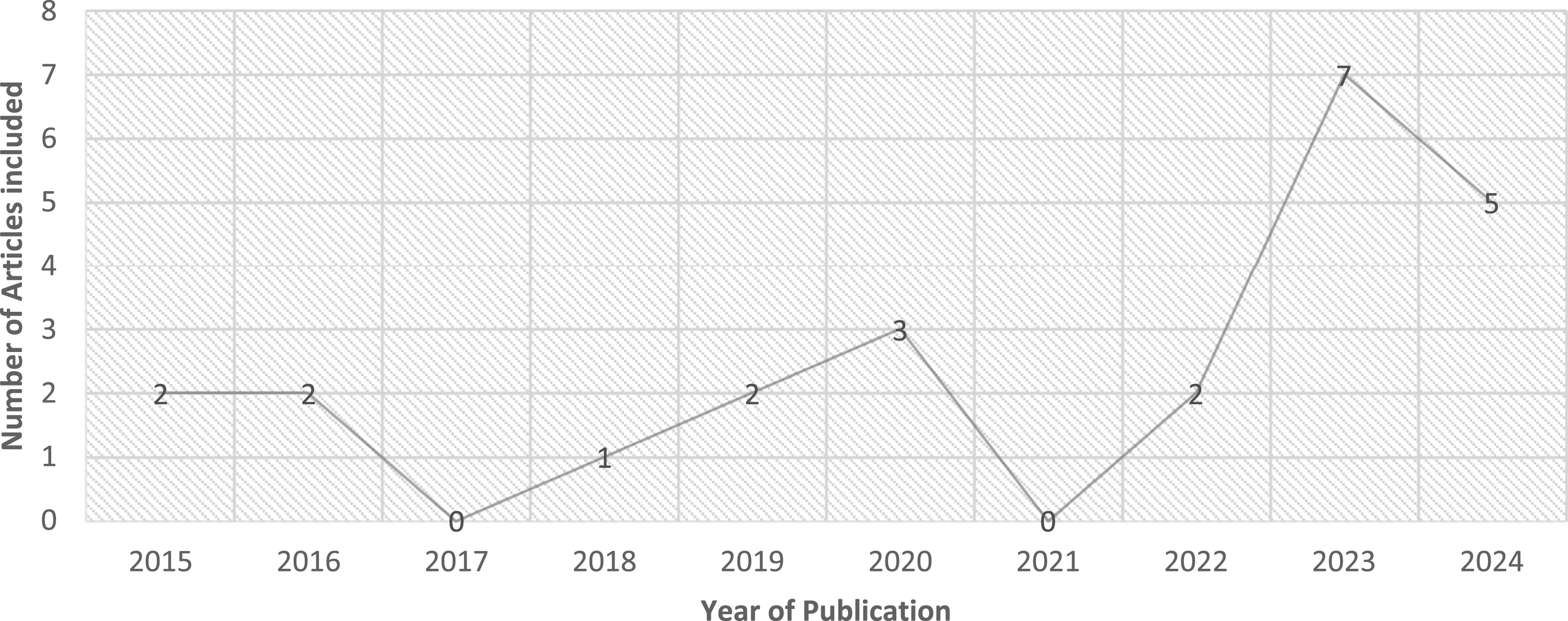
Summary of research questions and study objectives
The included studies explored a wide range of leadership challenges and strategic responses to institutional change in higher education institutions. Across contexts, the studies collectively addressed how leaders interpreted, implemented, and sustained change under conditions of reform, disruption, and uncertainty. Several studies focused specifically on curriculum reform and educational leadership. Benedict et al. (2023) examined how education deans in the United States led inclusive teacher education reforms, emphasizing faculty engagement and cross-department collaboration. Chirwa et al. (2023) studied teacher educators in Malawi to understand their implementation of a revised teacher education curriculum, highlighting training needs and reform challenges. Similarly, Khan and Jabeen (2019) explored regulatory leadership perspectives on Pakistan’s tenure track system, while Sagintayeva and Kurakbayev (2015) assessed how university leaders in Kazakhstan navigated the shift toward institutional autonomy. Subedi (2019) contributed to this theme by exploring entrepreneurial leadership in Nepali universities in response to evolving educational demands.
Many studies directly addressed leadership responses to the COVID-19 pandemic, often foregrounding sensemaking, emotional labour, and rapid decision-making under crisis conditions. Davis et al. (2023) analysed how Kwantlen Polytechnic University in British Columbia aligned its pandemic response with institutional values. Africa et al. (2023) used an autoethnographic lens to examine how academic middle managers in South Africa sustained academic programs during the crisis. Ellis et al. (2020) examined whether pandemic responses in Initial Teacher Education programs across multiple continents constituted innovation. Ghazali-Mohammed et al. (2024) focused on academic leaders at the University of Edinburgh and their reflections on institutional learning and adaptability. Jarvis and Mishra (2024) explored leadership across secondary and higher education institutions in the UK and India, while Sun et al. (2024) assessed how university leaders and faculty in rural U.S. contexts adapted teaching practices to support students’ psychosocial and academic needs. Dayagbil (2023) studied crisis management strategies in Philippine public universities, focussing on anticipation, coping, and adaptation practices.
A third cluster of studies examined leadership in digital learning and online education contexts. Law (2024) explored how curriculum leaders in Malaysian universities managed the shift to online learning amid Education 4.0. Akbaba Altun and Johnson (2022) captured online education directors’ perspectives in the United States on enhancing the quality of virtual instruction. Petersen and Bartel (2020) highlighted tensions between institutional culture and innovation during the rollout of a fully online degree program at a U.S. university. Similarly, Rudolph et al. (2023) presented stakeholder perspectives, including students, faculty, and academic leaders, on digital pedagogy and online learning quality in Singapore’s higher education sector.
Finally, several studies addressed strategic leadership, governance, and institutional transformation. Lebeau and Alruwaili (2022) examined governance challenges in Saudi Arabian universities, where local social norms intersected with centralized state policies. Mason and De la Harpe (2020) analysed the evolving roles and leadership capacities of Associate Deans in Australian universities. Wickersham et al. (2023) documented how community college leaders in the United States reimagined mathematics education reform during the pandemic. Tonini et al. (2016) detailed hybrid leadership models at Singapore’s Nanyang Technological University developed in response to globalization pressures, while Mathooko and Ogutu (2015) examined strategic choices among Kenyan public university leaders operating in competitive environments. Together, these studies illustrate the diversity of institutional contexts and leadership challenges that informed the subsequent thematic synthesis of change types, leadership strategies, and challenges.
Navigating institutional change: Types of change, leadership strategies, and common challenges
Higher education institutions across diverse global contexts have undergone significant transformations in response to internal reforms, external crises like COVID-19, technological advancements, and policy pressures. The studies reviewed in this synthesis highlight a range of change types, leadership responses, and institutional challenges. While each institutional context was distinct, patterns emerged regarding the intensity, scope, and drivers of change, suggesting that certain types of transformation consistently required particular leadership responses.
Types of institutional change
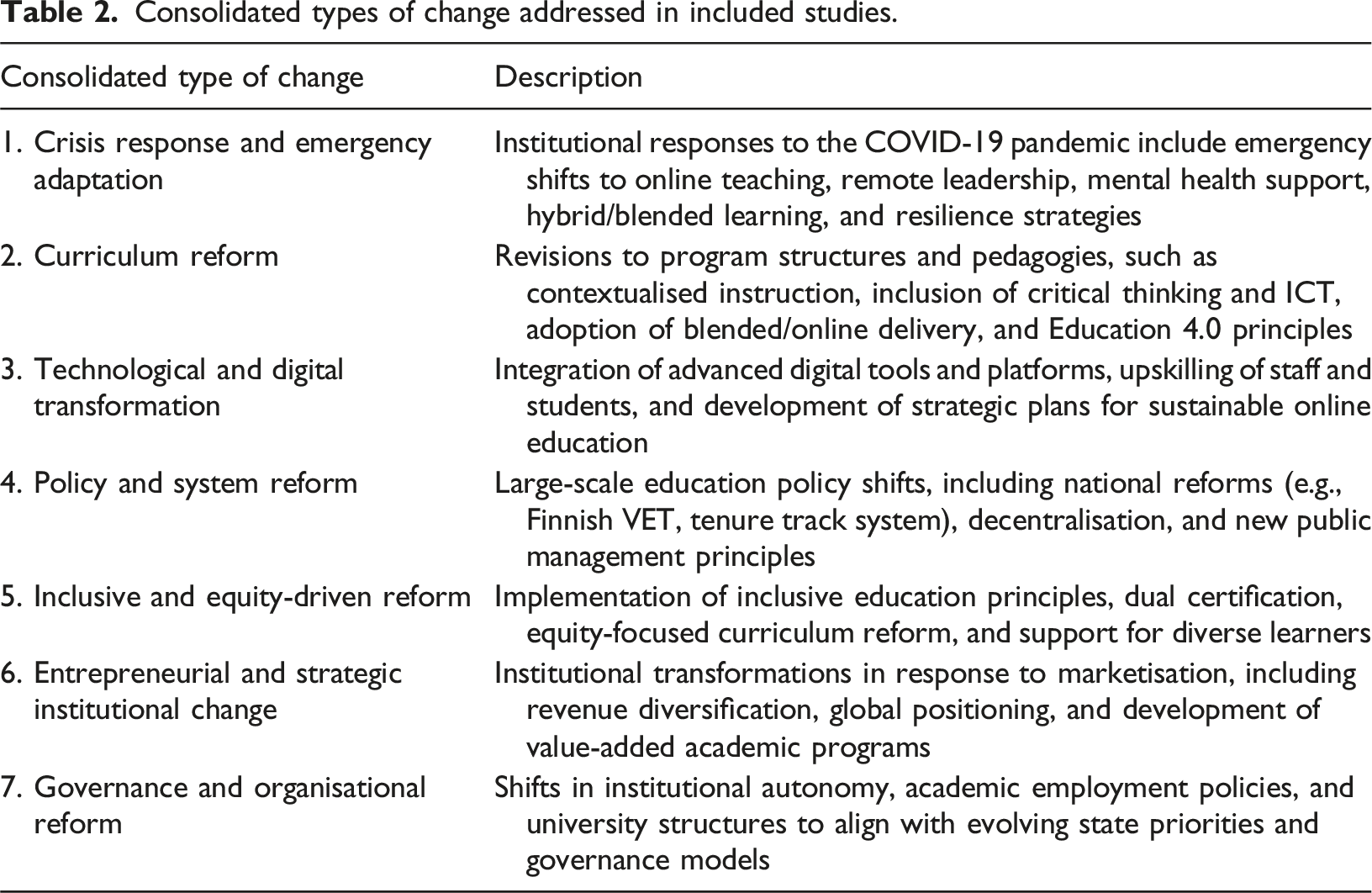
Institutions across diverse contexts navigated a broad range of overlapping change processes. Prominent among these was crisis-driven transformation, especially during COVID-19, which prompted rapid shifts to remote learning, restructured academic delivery, and introduced contingency planning (Africa et al., 2023; Davis et al., 2023; Ellis et al., 2020). Crisis-related change was typically rapid, externally triggered, and high in uncertainty, placing immediate pressure on institutional leadership structures.
Policy reforms were another frequent focus, ranging from national-level restructuring efforts, such as tenure system reforms in Pakistan (Khan and Jabeen, 2019) and governance changes in Saudi Arabia (Lebeau and Alruwaili, 2022), to institutional autonomy reforms in Kazakhstan (Sagintayeva and Kurakbayev, 2015). These reforms were often slower-moving but structurally significant, requiring alignment between regulatory mandates and institutional practices.
Digital and technological transformations were explored in studies on blended learning, Education 4.0, and the integration of digital platforms (Law, 2024; Petersen and Bartel, 2020). These changes often intersected with curriculum reform and professional development efforts. Unlike crisis-driven change, digital transformation tended to involve phased implementation and long-term capacity building.
Equity-driven initiatives, such as inclusive curriculum designs and dual certification reforms, were also prevalent. These aimed to address systemic exclusion and promote diversity in learning environments (Benedict et al., 2023; Seitamaa and Hakoköngäs, 2024). Such reforms frequently intersected with ethical considerations, institutional culture, and questions of legitimacy, particularly in contexts marked by historical or structural inequities.
Finally, entrepreneurial and governance-oriented reforms emerged in regions like Nepal and Kenya, where leaders responded to market-driven pressures through institutional repositioning and strategic partnerships (Mathooko and Ogutu, 2015; Subedi, 2019). These changes were closely linked to financial sustainability and competitive positioning within national and global higher education landscapes.
Consolidated types of change addressed in included studies.
In response to these diverse change processes, educational leaders employed a variety of strategies, ranging from adaptive crisis responses to visionary institutional planning, which are examined in the next section.
Leadership strategies for navigating change
Educational leaders employed a range of strategies that were context-specific yet thematically consistent across the studies. When examined in relation to the types of institutional change identified in Table 2, distinct patterns emerge regarding which leadership domains were most frequently mobilized under particular reform conditions.
Adaptive leadership emerged as a central approach, particularly during crises. For example, Africa et al. (2023) illustrated how academic middle managers provided emotional support and flexible decision-making to sustain staff morale and academic continuity during the COVID-19 pandemic. Leaders acted pragmatically and compassionately, recalibrating institutional practices while attending to staff and student well-being (Africa et al., 2023; Sun et al., 2024). In crisis-driven transformations, affective and strategic domains were most prominent, as leaders simultaneously managed operational continuity and emotional stability.
Distributed and collaborative leadership was frequently employed to foster collective ownership of reforms. By empowering teams and encouraging cross-unit cooperation, leaders facilitated smoother implementation of initiatives, especially in curriculum and pandemic-response contexts (Benedict et al., 2023; Ghazali-Mohammed et al., 2024; Jarvis and Mishra, 2024). These structural strategies were particularly evident in curriculum reform and digital transformation efforts, where reform required coordination across academic units and sustained faculty engagement. For instance, Benedict et al. (2023) demonstrated how deans facilitated inclusive curriculum reform by engaging faculty across departments, thereby reducing resistance and strengthening implementation.
Stakeholder engagement was a critical strategy to align institutional reforms with the needs and expectations of faculty, students, and external partners. Leaders built support through participatory decision-making, especially in equity and curriculum-related reforms (Chirwa et al., 2023; Subedi, 2019). Such engagement often intersected with the ethical domain, as leaders sought to legitimize reforms through inclusive dialogue and transparent negotiation.
Communication played a pivotal role in managing change. Transparent and timely updates helped leaders navigate uncertainty, build trust, and reduce resistance, especially in highly regulated systems or emotionally charged environments (Ellis et al., 2020; Ghazali-Mohammed et al., 2024). Clear communication functioned as a cross-domain strategy, bridging affective reassurance with strategic alignment.
Capacity-building and professional development were widely adopted to equip faculty with skills needed for online education and curriculum redesign. Structured workshops, peer mentoring, and leadership academies helped institutionalize change (Law, 2024; Petersen and Bartel, 2020). These structural investments were critical in sustaining digital and technological reforms beyond initial implementation phases.
In digital transformation contexts, quality-driven and innovative leadership emphasized technological preparedness, pedagogical alignment, and continuous improvement (Akbaba Altun and Johnson, 2022; Rudolph et al., 2023). Strategic and structural domains were most visible in these settings, reflecting the need for coordinated planning and infrastructure development.
Visionary and entrepreneurial leadership was evident in contexts where institutions faced financial pressures or needed strategic repositioning. Leaders introduced interdisciplinary curricula, diversified funding, and cultivated external partnerships (Subedi, 2019; Wickersham et al., 2023). These strategies aligned closely with strategic and structural domains, particularly in market-driven reform environments.
Key leadership strategies for navigating institutional change in higher education.
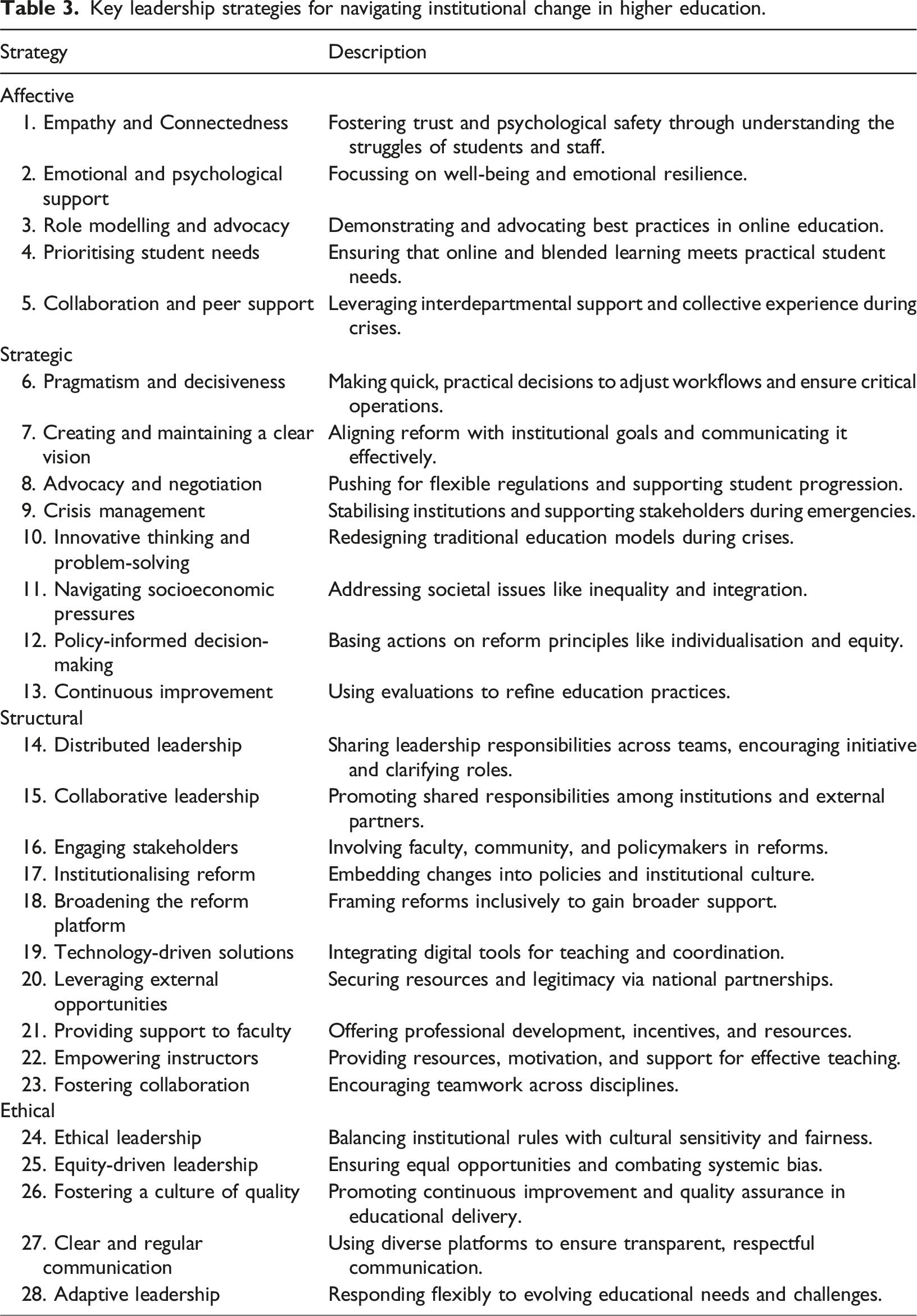
The affective domain captures emotionally grounded leadership strategies that emphasize empathy, psychological safety, and relational support. This includes fostering trust among stakeholders, offering emotional and psychological support, modelling best practices in online education, prioritizing students’ practical and emotional needs, and promoting interdepartmental collaboration. These strategies were especially critical during the COVID-19 pandemic, when leaders needed to sustain morale and cohesion amid uncertainty and disruption (Africa et al., 2023; Sun et al., 2024). Across crisis contexts, affective leadership functioned as a stabilizing mechanism that enabled institutions to maintain continuity while navigating rapid change.
The strategic domain encompasses approaches centred on visionary planning, agility, and decision-making under pressure. Leaders employed pragmatic and decisive actions to adjust institutional workflows, developed and communicated clear reform visions, advocated for flexible regulatory changes, and implemented emergency response mechanisms. They also addressed socioeconomic pressures and used policy-informed strategies to navigate reform mandates while emphasizing continuous improvement. These strategies enabled institutions to maintain operations and align short-term decisions with long-term institutional goals, particularly in low-resource or politically complex settings (Dayagbil, 2023; Law, 2024). Strategic leadership was particularly salient in policy and governance reforms, where leaders balanced compliance with institutional autonomy. For example, Dayagbil (2023) highlighted how institutional leaders in the Philippines implemented rapid crisis management strategies, including anticipatory planning and adaptive instructional redesign, to maintain learning continuity.
The structural domain refers to strategies that reinforce the operational and organizational foundations necessary for reform implementation. These include adopting distributed and collaborative leadership models, engaging stakeholders, institutionalizing reforms into policy frameworks, and broadening reform platforms to ensure inclusivity. Leaders also invested in technology-driven solutions, leveraged external partnerships, provided targeted support to faculty, empowered instructors, and encouraged cross-disciplinary collaboration. These strategies enabled institutions to build internal capacity and ensure that change efforts were sustainable and embedded in institutional culture (Petersen and Bartel, 2020; Subedi, 2019). Structural leadership was most visible in curriculum, digital, and entrepreneurial reforms, where sustainable change required embedding new practices into institutional systems. For instance, Akbaba Altun and Johnson (2022) showed how leaders strengthened online education quality through structured faculty training and technology integration initiatives.
Finally, the ethical domain highlights leadership strategies rooted in fairness, transparency, and social justice. These approaches include demonstrating ethical leadership, championing equity-driven reform, fostering a culture of quality and inclusion, ensuring regular and transparent communication, and maintaining adaptive responsiveness. Ethical leadership played a crucial role in legitimizing institutional reforms, navigating power asymmetries, and responding to structural inequities, particularly in settings where reforms intersected with issues of race, class, or cultural marginalization (Benedict et al., 2023; Seitamaa and Hakoköngäs, 2024). Notably, the ethical domain emerged as particularly prominent in inclusive and equity-driven reforms, where leaders confronted systemic inequities and legitimacy concerns. In several studies, middle-level leaders, especially deans and department heads, played critical roles in mediating tensions between institutional mandates and faculty or community expectations, operationalizing ethical commitments in day-to-day decision-making. This positioning underscores the relational and moral dimensions of middle-level leadership as a distinctive contribution of this synthesis. Similarly, Benedict et al. (2023) illustrated how leaders advanced equity-driven reforms by embedding inclusive practices into teacher education programs, addressing systemic inequities.
Together, these domains illuminate the multifaceted nature of educational leadership during institutional change. Rather than operating independently, the domains interacted dynamically, with leaders drawing on affective, strategic, structural, and ethical resources in varying combinations depending on reform type and contextual constraints. By categorizing the strategies thematically, the review offers a more nuanced understanding of how affective, strategic, structural, and ethical considerations intersect to inform resilient, inclusive, and context-sensitive leadership in higher education.
While these strategies facilitated various aspects of institutional transformation, leaders also encountered numerous challenges that often hindered reform implementation. These are discussed in the next section.
Challenges faced by educational leaders
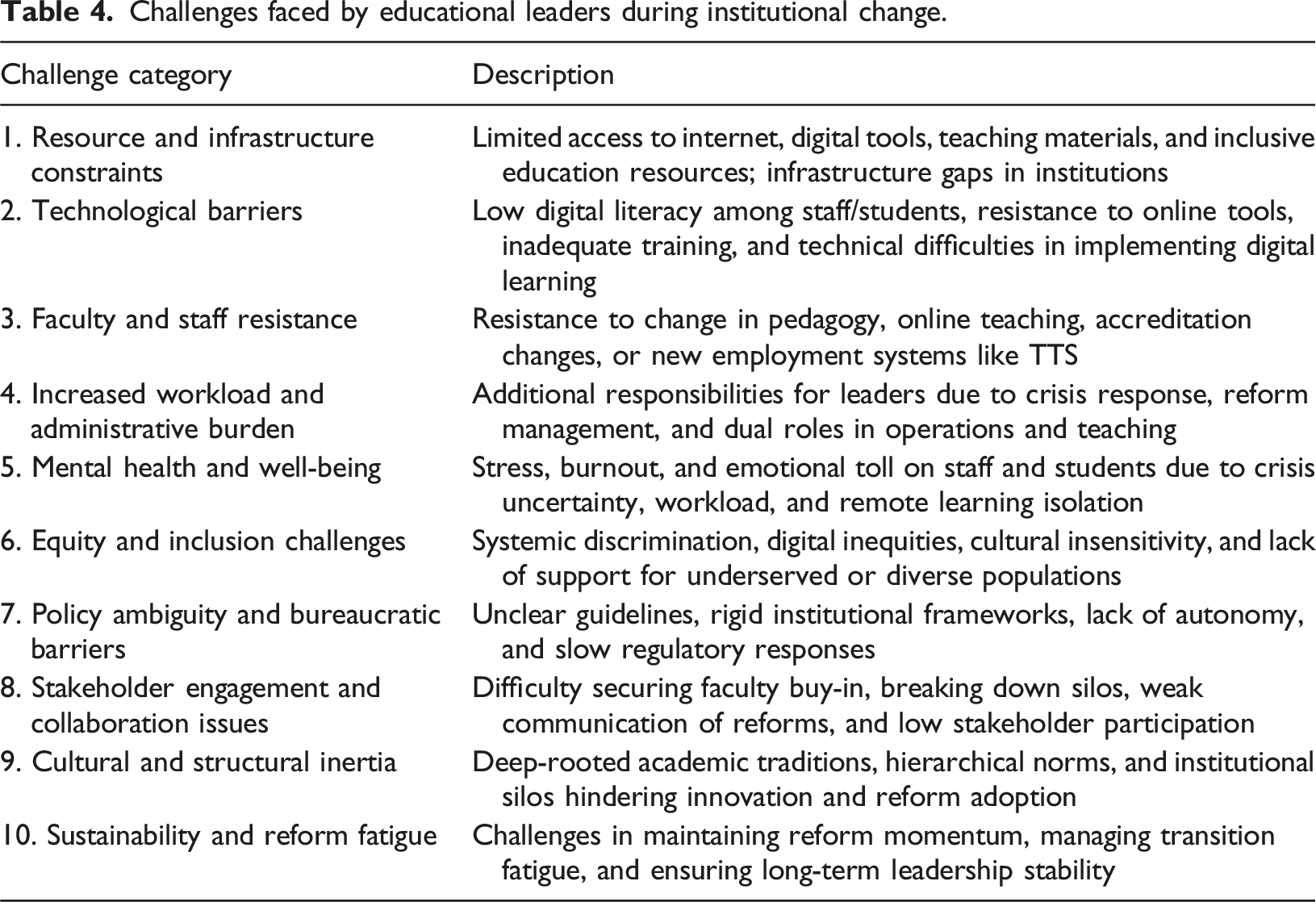
Despite innovative approaches, leaders encountered persistent challenges. Faculty resistance to reform was a common obstacle, particularly when changes affected pedagogical autonomy, accreditation, or professional identity (Benedict et al., 2023; Law, 2024). Resistance was most pronounced in curriculum reform and digital transformation contexts, where changes directly reshaped teaching practices and academic norms.
Resource limitations – ranging from funding gaps to lack of digital infrastructure – were especially pronounced in low-resource settings, constraining efforts to implement reforms or scale digital learning (Chirwa et al., 2023; Mathooko and Ogutu, 2015). These constraints frequently activated strategic and structural leadership responses, as leaders were required to prioritize interventions, negotiate external support, and reallocate limited resources.
Policy ambiguity and bureaucratic inertia were also major impediments. In highly centralized systems, leaders struggled to interpret vague mandates or implement reforms without autonomy or institutional support (Lebeau and Alruwaili, 2022; Seitamaa and Hakoköngäs, 2024). Such conditions heightened the need for ethical leadership, as leaders navigated tensions between compliance, fairness, and contextual responsiveness.
Mental health pressures and emotional labour were highlighted during crisis responses, where leaders were tasked not only with operational management but also with sustaining morale under stress (Africa et al., 2023; Sun et al., 2024). These challenges were closely associated with the affective domain, underscoring the importance of empathy, psychological safety, and relational leadership during periods of disruption.
Challenges related to equity and inclusion emerged across contexts, particularly in reaching marginalized populations and navigating structural discrimination within policy implementation (Jarvis and Mishra, 2024; Seitamaa and Hakoköngäs, 2024). Equity-related challenges were most frequently addressed through ethical and structural leadership strategies, as leaders sought to institutionalize inclusive practices while responding to cultural and systemic barriers.
Challenges faced by educational leaders during institutional change.
Despite these obstacles, the review also identified several overarching lessons and best practices that can inform more resilient and responsive leadership approaches in higher education.
Key lessons for leading institutional change in higher education
The synthesis of global leadership responses to institutional change in higher education reveals several overarching lessons crucial for informing future leadership practice and policy. One of the most consistent findings is the centrality of empathy and compassion in times of crisis. Leaders who prioritised psychological safety and well-being, particularly during the COVID-19 pandemic, enabled institutions to remain functional and resilient amid unprecedented disruptions (Africa et al., 2023; Sun et al., 2024). Across the included studies, such affective leadership practices supported continuity by stabilising relationships, sustaining morale, and reducing uncertainty during periods of rapid change (Ghazali-Mohammed et al., 2024; Jarvis and Mishra, 2024).
A second key insight is the value of distributed and collaborative leadership. Case studies consistently emphasised that empowering faculty, staff, and decentralised leadership units to take initiative facilitated more agile and context-sensitive responses (Africa et al., 2023; Seitamaa and Hakoköngäs, 2024; Wickersham et al., 2023). These structural leadership approaches were particularly effective in curriculum reform and digital transformation contexts, where shared ownership enhanced implementation and reduced resistance. For example, during rapid transitions to online or hybrid teaching, involving educators in planning and decision-making processes increased buy-in and encouraged pedagogical experimentation (Akbaba Altun and Johnson, 2022; Law, 2024).
A third lesson concerns the importance of effective and transparent communication. Institutions that sustained clear, honest, and multi-directional communication through emails, virtual meetings, and digital platforms were better able to align expectations, mitigate uncertainty, and maintain trust (Africa et al., 2023; Ghazali-Mohammed et al., 2024; Sun et al., 2024). Communication functioned as a cross-domain strategy, linking affective reassurance with strategic clarity, particularly in highly regulated or culturally resistant environments (Lebeau and Alruwaili, 2022; Thurab-Nkhosi, 2018).
Another key theme is leadership adaptability and contextual sensitivity. Leaders who adjusted their approaches in response to local histories, organisational cultures, and emergent challenges were more successful in sustaining reforms (Seitamaa and Hakoköngäs, 2024; Tonini et al., 2016). This adaptability reflects strategic leadership that balances long-term vision with situational responsiveness. For example, Finnish vocational leaders employed equity-driven, individualised approaches to multiculturalism, while South African leaders navigated pandemic-related disruptions through a combination of empathy and decisiveness (Africa et al., 2023).
Closely related is the lesson that proactive planning and institutional capacity-building are critical for long-term resilience. Studies from the Philippines and Malawi revealed that the absence of structured contingency planning and limited staff preparedness hindered effective responses to change (Chirwa et al., 2023; Dayagbil, 2023). In contrast, institutions that invested in digital infrastructure, professional development, and continuity planning demonstrated greater adaptability and innovation (Ellis et al., 2020; Rudolph et al., 2023). These findings underscore the importance of structural investments in sustaining reform beyond crisis periods.
Equally important is the institutionalisation of reforms. Embedding changes into formal policies, strategic plans, and performance frameworks was identified as essential for ensuring reform sustainability beyond the tenure of individual leaders (Benedict et al., 2023; Mason and De la Harpe, 2020). Middle-level leaders played a critical role in this process by translating institutional priorities into departmental practices, mediating faculty concerns, and reinforcing ethical and strategic alignment at the operational level (Akbaba Altun and Johnson, 2022; Petersen and Bartel, 2020).
Finally, the synthesis illustrates how disruption can serve as a catalyst for reimagining higher education. Although many leadership responses were initially reactive, they evolved into opportunities for long-term transformation, particularly in relation to digital pedagogy, equity, and entrepreneurial innovation (Davis et al., 2023; Ellis et al., 2020; Subedi, 2019). Leaders who combined affective, strategic, structural, and ethical approaches were better positioned to guide institutions toward inclusive, resilient, and future-oriented directions, highlighting the integrative value of the four-domain framework advanced in this review (Khan and Jabeen, 2019; Tonini et al., 2016).
Discussion
This scoping review highlights the multifaceted roles of educational leaders in navigating complex and overlapping institutional changes in higher education. Drawing from 24 empirical studies conducted across diverse global contexts, the findings demonstrate how leaders have adapted their strategies in response to crises, policy shifts, curriculum reforms, technological transformation, and equity-focused mandates.
A recurring theme across the studies is the centrality of adaptive and distributed leadership, particularly during systemic disruptions such as the COVID-19 pandemic. In South Africa, Africa et al. (2023) documented how department chairs used empathy, peer support, and pragmatic decision-making to stabilise academic operations. Similarly, Dayagbil (2023) and Law (2024) described how leaders in the Philippines and Malaysia implemented crisis management strategies, including instructional redesign and digital transition, drawing on frameworks such as Kotter’s 8-Step Model. These findings align with existing scholarship on adaptive and distributed leadership and further suggest that leadership responses were shaped by the type, intensity, and duration of institutional change.
Beyond crisis response, digital transformation and online learning reform emerged as prominent areas of institutional change. Leaders in the United States, Singapore, and Turkey adopted strategies focused on quality assurance, faculty development, and infrastructural improvement to embed digital learning into institutional culture (Akbaba Altun and Johnson, 2022; Rudolph et al., 2023). These examples highlight the need for visionary leadership that aligns technological innovation with pedagogical values and institutional priorities and underscore the importance of institutionalising digital reforms beyond emergency contexts.
In policy and governance reform contexts, leaders frequently confronted tensions between national directives and institutional autonomy. Evidence from Finland, Kazakhstan, and Saudi Arabia suggests that centralized governance structures and bureaucratic cultures often constrained leadership flexibility (Lebeau and Alruwaili, 2022; Sagintayeva and Kurakbayev, 2015; Seitamaa and Hakoköngäs, 2024). These findings reinforce the need to consider governance context when interpreting leadership effectiveness.
Equity and inclusion were also prominent across several cases. Benedict et al. (2023) and Ellis et al. (2020) illustrated how inclusive reforms relied heavily on stakeholder engagement, interdepartmental collaboration, and relational trust. These patterns indicate that equity-oriented change is not only structural but also relational and ethical in nature.
Common challenges such as faculty resistance, resource scarcity, and organisational inertia were reported across both high- and low-resource settings (Chirwa et al., 2023; Thurab-Nkhosi, 2018). These challenges shaped the leadership domains that became most salient in different reform contexts.
Importantly, the role of deans and middle-level leaders emerged as both pivotal and under-acknowledged. While these leaders operationalise strategic change and mediate between senior leadership and academic units, their agency is often constrained by hierarchical structures (Mason and De la Harpe, 2020). This synthesis positions middle-level leaders as critical sensemaking and implementation actors within institutional change processes.
Theoretical implications
This review advances leadership theory in higher education by proposing a four-domain framework comprising affective, strategic, structural, and ethical leadership. While existing theories such as transformational, distributed, and adaptive leadership remain relevant, the findings suggest that leadership during institutional change is best understood as an interaction among multiple domains rather than a single dominant style.
The ethical domain emerged as a particularly important and under-theorised dimension. Across equity-driven and governance-related reforms, ethical leadership functioned as a legitimising force that enabled leaders to navigate power asymmetries, contested priorities, and sociocultural constraints.
Additionally, the findings challenge executive-centric leadership models by demonstrating that institutional resilience depends on leadership enacted across administrative levels. Deans and middle-level leaders played a decisive role in translating strategy into operational practice, thereby extending leadership theory toward a more distributed and implementation-focused understanding.
Practical implications
The findings have clear practical implications for higher education administrators, policymakers, and leadership development programs. For institutional leaders, particularly senior administrators, the review underscores the importance of actively supporting deans and middle-level leaders as central agents of implementation. Effective change requires alignment across affective, strategic, structural, and ethical domains, including legitimising relational leadership practices while providing adequate authority and resources.
For policymakers and regulatory bodies, the review highlights the need for reform designs that balance accountability with contextual flexibility. Policy mandates that are overly centralized or ambiguous can intensify resistance and constrain leadership agency. Clear guidance, realistic timelines, and scope for institutional adaptation can support ethical and sustainable reform implementation.
For professional development programs, leadership training should extend beyond senior executives to include deans, associate deans, department chairs, and programme directors. Training should integrate ethical reasoning, sensemaking, stakeholder engagement, distributed leadership, and crisis preparedness, including scenario-based preparation for managing faculty resistance and resource-constrained decision-making.
Recommendations
Based on the analysis of 24 empirical studies, this scoping review offers a set of actionable recommendations to support leadership practice and guide policy development in higher education institutions undergoing complex and evolving forms of change.
At the policy level, national and institutional authorities should institutionalize distributed and inclusive leadership models that formally empower deans and middle-level leaders, alongside faculty, staff, and students, in governance and reform processes. Shared governance structures enhance reform ownership, foster innovation, and improve institutional responsiveness during crises (Africa et al., 2023; Seitamaa and Hakoköngäs, 2024). This may include formal recognition of middle-level leadership roles within governance statutes and structured inclusion of deans in strategic planning bodies, as well as cross-functional reform committees with clearly defined decision-making authority. Reform agendas should also prioritize equity-driven and context-sensitive approaches. Policies must explicitly address inclusion, digital equity, and systemic discrimination to ensure that leadership strategies resonate with diverse institutional contexts (Chirwa et al., 2023; Khan and Jabeen, 2019). To avoid symbolic compliance, equity mandates should be accompanied by measurable indicators and accountability mechanisms that monitor implementation progress. Furthermore, governments and regulatory bodies should invest in structured, long-term leadership development programs that build competencies at both senior and middle levels. Emphasis should be placed on relational, ethical, and collaborative skills essential for managing institutional change (Ghazali-Mohammed et al., 2024; Jarvis and Mishra, 2024). Leadership programs that integrate scenario-based learning and structured reflection on ethical dilemmas may be particularly effective. Finally, policy reforms should allow for institutional discretion in adapting mandates to local realities. Flexible implementation timelines and iterative feedback mechanisms between institutions and regulators can enhance reform legitimacy and reduce resistance (Lebeau and Alruwaili, 2022).
At the institutional practice level, leaders should strengthen strategic capacity-building and contingency planning. Proactive investment in faculty development, digital infrastructure, and structured scenario planning can enhance institutional agility and preparedness for both anticipated and unforeseen disruptions (Dayagbil, 2023; Ellis et al., 2020). Rather than extensive simulations, institutions may prioritise cross-training academic leaders and maintaining modest contingency resources to support rapid response. To ensure sustainability beyond individual leadership tenures, reforms must be embedded into governance structures, performance frameworks, and institutional norms. Revising policies, incentive systems, and accountability mechanisms can anchor innovation and mitigate reform fatigue (Benedict et al., 2023; McClure and Teitelbaum, 2016). Embedding reform priorities into strategic planning cycles and routine review processes can further reinforce continuity. Transparent and multidirectional communication remains essential. Leaders should establish consistent mechanisms for dialogue with faculty, students, and external stakeholders, including digital platforms and consultative forums, to reduce resistance and strengthen alignment (Petersen and Bartel, 2020; Rudolph et al., 2023). Regular feedback processes can help sustain trust and shared ownership of reform initiatives. Finally, faculty and staff empowerment should be prioritized. Targeted mentorship, professional development opportunities, and recognition systems can equip educators to adapt effectively to pedagogical, technological, and curricular reforms (Law, 2024; Tonini et al., 2016). Modest incentives and recognition of reform leadership contributions may be sufficient to sustain engagement without increasing workload burden.
Collectively, these recommendations emphasise feasible and scalable actions that support the operationalisation of affective, strategic, structural, and ethical leadership across institutional levels.
Future research directions
This scoping review identifies several priorities for future research. First, future studies should quantitatively examine the effectiveness of affective leadership strategies in mitigating faculty resistance during curriculum and digital reforms. Second, longitudinal research is needed to assess whether leadership practices adopted during crises become institutionalised over time.
Third, comparative studies should investigate whether ethical leadership moderates the relationship between policy ambiguity and reform legitimacy across governance contexts. Finally, greater empirical attention is needed on the lived experiences and decision-making constraints of deans and middle-level leaders. Mixed-methods and longitudinal designs would be particularly valuable in advancing this agenda.
Limitations of the study
While this scoping review provides valuable insights into leadership practices and institutional change across global higher education contexts, several limitations must be acknowledged. First, the review was limited to peer-reviewed journal articles published in English between 2014 and 2024. This language and publication restriction may have excluded relevant studies published in other languages or grey literature, such as policy reports, dissertations, and institutional case studies, particularly from non-English-speaking or underrepresented regions.
Second, although the search strategy was systematically developed and implemented across six major academic databases, the selection of databases may have inadvertently limited disciplinary diversity. For example, leadership scholarship published in niche regional or education-specific journals not indexed in the selected databases may have been missed.
Third, while the review included studies from a range of countries, there was a geographic skew toward higher-income contexts, such as the United States and the United Kingdom. This imbalance limits the generalisability of findings to low- and middle-income countries, where leadership dynamics may be shaped by different sociopolitical, economic, and cultural factors.
Finally, the review relied on narrative thematic synthesis, which, while effective for identifying cross-cutting themes, may not fully capture the depth and contextual complexity of individual case studies. Variations in study design, sample sizes, and conceptual framing across the included studies also posed challenges for standardised comparison.
These limitations highlight the need for continued, contextually grounded, and methodologically diverse research that expands the evidence base on leadership and institutional change in higher education, particularly in underrepresented regions and leadership strata. Recognizing these limitations, the conclusion distills the core contributions of the review and highlights key directions for advancing leadership research, policy, and practice in global higher education contexts.
Conclusion
This scoping review mapped and synthesised empirical evidence on leadership strategies and institutional change in higher education across global contexts. The findings reveal that educational leaders have played crucial roles in navigating diverse and complex forms of change, including crisis responses, curriculum and pedagogical reforms, digital transformation, policy reform, and governance restructuring. While approaches varied across regional contexts, successful leadership consistently reflected adaptability, collaboration, empathy, and strategic communication.
Despite varying institutional and national settings, several shared challenges emerged, including resistance to change, technological limitations, resource constraints, and the challenge of balancing top-down mandates with stakeholder engagement. Leadership strategies that combined distributed decision-making with value-driven, inclusive approaches were particularly effective in integrating short-term crisis response with long-term planning and reform sustainability.
This review underscores the significance of contextually grounded and flexible leadership in navigating volatility and driving transformation in higher education. Its central contribution is the articulation of a four-domain leadership framework that clarifies how affective, strategic, structural, and ethical dimensions interact to support institutional resilience. As the global educational landscape continues to evolve, future research and practice must prioritise leadership capacity-building at both senior and middle levels, facilitate cross-regional learning, and institutionalise lessons learnt from recent disruptions. In particular, the findings demonstrate that deans and middle-level leaders are critical actors in translating institutional strategy into sustained practice.
In an era marked by uncertainty, inequality, and accelerating change, rethinking leadership in higher education is not only timely but essential to advancing more just, resilient, and globally responsive institutions. The four-domain framework proposed in this review offers a structured lens for future empirical testing and practical application, positioning middle-level leaders as central agents in shaping the future of global higher education.
Footnotes
Acknowledgements
The authors gratefully acknowledge the institutional sponsorship and partnership of the Queensland University of Technology (QUT), Australia; Beijing Normal University (BNU), China; and the University of Calgary (UCalgary), Canada, through the 9th Annual QUT-BNU-UCalgary Doctoral Forum. Their collective support and collaboration were instrumental in fostering international scholarly exchange and advancing this research initiative. In addition, the authors wish to thank Dr Bartlomiej Lenart, Associate Librarian, Department of LCR Learning, University of Calgary, for his expert consultation and invaluable support in developing the article search strategy.

Ethical considerations
This study is a scoping review of previously published literature and did not involve the collection of primary data from human participants. As such, ethical approval and informed consent were not required.
Author contributions
ANM, EEPS, SY, JD, and MJ collaboratively conceptualized the study. ANM conducted the database searches. ANM, EEPS, and SY carried out article screening and selection. Data extraction was performed by ANM and verified by EEPS and SY. ANM drafted and revised the manuscript. All authors read and approved the final version of the manuscript.
Funding
The authors disclosed receipt of the following financial support for the research, authorship, and/or publication of this article: This research was supported through institutional partnership funding provided by the Queensland University of Technology (Australia), Beijing Normal University (China), and the University of Calgary (Canada), as part of the 9th Annual QUT-BNU-UCalgary Doctoral Forum. No additional external funding was received for this study.
Declaration of conflicting interests
The authors declare that there are no conflicts of interest related to the research, authorship, or publication of this article.
Data Availability Statement
The data supporting the findings of this scoping review are derived from publicly available sources, which are all cited in the manuscript and reference list. No new or primary data were generated during this study.