




Abstract
Teacher education and training vary across the world, yet research from diverse cultures supports the development of reflective teachers. Claiming that the complex dynamics of the 21st-century classroom can be managed best by reflective teachers. Through the reflective process, teachers are empowered as change agents to modify learning environments to benefit their students. Teachers hold the power to influence student learning. Therefore, it is important to understand the training processes that serve to produce reflective practitioners. In conducting rigorous cross-cultural comparative research, identifying common evaluative indicators underpinned by a theoretical framework is critical. Hence, the principles of the pre-service emerging reflective teacher training (PERTT) model were explored quantitatively and explained qualitatively to specifically focus on teachers’ perceptions of their experiences of the psychosocial interpersonal process outcomes of the teacher-training environment (i.e. reflective practices, instructional scaffolding, guidance and support, modelled behaviours and reinforcement) provided during their teacher training. Such an exploration is critical because the philosophical underpinnings of the PERTT model have not been interrogated outside of Barbados. The findings demonstrate that there is merit to key theoretical principles of the PERTT model based on the lived experiences of the teachers in Antigua and Barbuda, England, and Canada during their teacher training.
Keywords
Introduction
Teacher education and training programmes vary worldwide. Nevertheless, across diverse cultures, much research indicates the importance of reflection for practising educators and strongly supports the development of reflective teachers. In recognizing teachers’ power to influence student learning, it is critical to understand the nature of teacher-training environments that contribute to the development of reflective practitioners. Honing teachers’ reflective skill sets empowers them as change agents to modify learning environments, thereby enhancing their students’ learning experiences. Hence, to advance the teaching profession for the 21st century, it is imperative to explore the underlying processes involved in developing the reflective teacher – processes that may contribute to teachers’ ability to access ‘power within’ and excel.
Education policy should be guided by theoretical frameworks and empirical findings. Such data-driven policies are especially important for the Eastern Caribbean where the current teacher education landscape is at a relatively early stage of development. We can gain insight by studying countries (such as England and Canada), where different methods of teacher training have been advanced. Through interrogating the experiences of teachers from extra-regional contexts existing educational policy geared towards the advancement of reflective teachers in the Caribbean can be critiqued and strengthened. Therefore, the focus of this research is to explore the utility of an existing theoretical framework–the Pre-service Emerging Reflective Teacher Training model (PERTT; Jules and Maynard, 2015) across three countries. By examining the ways that the training processes from which the reflective teacher emerges were experienced among teacher trainees from the countries under investigation (i.e. Antigua and Barbuda, England, Canada).
According to the PERTT model, the core psychological constituents of self-awareness, self-efficacy, and self-regulation (Jules and Maynard, 2015) are developed by psychosocial interpersonal process outcomes within the teacher-training environment: reflective practices, instructional scaffolding, guidance and support, modelled behaviours and reinforcement. Although these interactions occur within a psychosocial system that may accentuate the power differential between teacher educators and teacher-trainees, each trainee is empowered to freely share and interrogate their biases and experiences in a non-punitive way.
The PERTT model is based on the work of Bandura (1989); Dewey (1933); Rogers (1957); Schön (1991); Vygotsky (1930) and prevailing deficits in the education sector concerning teacher training in the English-speaking Caribbean. Although many of the concepts included in the PERTT model are grounded in theory (Jules and Maynard, 2015) its application has only occurred within the Barbadian context (Maynard and Jules, 2017). No comparative research has been conducted to assess the utility of the outcome processes of reflective teacher training across different cultures. Such exploration would serve to determine the extra-regional utility of the PERTT model. We argue that the application of the PERTT model is one way in which such advancements can be informed. What is novel about the PERTT model is that it presents established principles within the context of a pre-service teacher training environment.
The PERTT model was developed given the call for more reflective teachers in the Caribbean; a need which is critical for the development of the region (The University of the West Indies [UWI] – Joint Board Teacher Education [JBTE], 2016). In this study, the teacher training landscape of Antigua and Barbuda is presented as an example of the reality of teachers in the Eastern Caribbean, while the teacher-training frameworks used in England and Canada are described and used as extra-regional points of comparison.
We present an overview of each jurisdiction’s main teacher-training models, providing a general background of their realities. Emphasis is placed on routes into the teaching profession; some of the ways that reflective practice is fostered or recommended; overall programmatic duration; and, how time is divided between classroom teacher education delivery and teacher-training in school-based practicum. Hence, providing a snapshot from which to understand the lived training experiences of teachers from the countries under investigation.
The cross-national comparative nature of this research led to the selection of countries that have different teacher-training requirements to that of the Eastern Caribbean, along with some commonalities. England and Canada are developed countries; in contrast, Antigua and Barbuda is a developing nation (Mamingi and Martin, 2018). England was selected based on its historical ties with the English-speaking Caribbean, and Canada was formerly a part of the British Empire; all being members of the British Commonwealth.
It must be noted that the philosophy underlying teacher training in each country in the study is not explicitly centred on reflective practice. Edward (2015) posits that reflective practice has been evident in teacher training institutions in the English-Speaking Caribbean since the early 1990s. The CARICOM Standards for the Teaching Profession (2019), which Antigua and Barbuda adhere to, are infused with reflective practice, reflective inquiry and self-reflection. Similarly, in England by 1991, the vast majority (over 70%) of all initial teacher education courses were ‘...underpinned by a philosophy of reflective practice’ (Griffiths, 2000: 539). In many Canadian university teacher training programmes’ reflective practice is a mandatory competency (Richardson, 1990) and a major theme in Initial Teacher Education (ITE) (Collin and Karsenti, 2011; Gambhir et al., 2008). Hirschkorn, Kristmanson, and Sears (2013) argue that it is almost impossible to find an ITE training program without some component of reflection included. Hence, there is much evidence that reflection is considered to play a critical role in quality teacher training.
Reflective practice has been an important part of the international teaching reform movement aimed at improving the quality of education for all (Collin et al., 2013). In England, according to Evans (2011), reflection is described as not being ‘part of the teaching standards’, but rather that it occurs more so as part of ‘professionalism that is enacted’. Indeed, reflection has been found to be pervasive in teacher education curriculum (Avis et al. 2012). Nevertheless, many argue that critical reflection is missing from teacher education (Stephens et al., 2004) or impeded (Khan, 2015), especially in postgraduate Initial Teacher Training (ITT; McNamara et al., 2017). Meierdirk (2016) goes further to suggest that ‘...the knowledge base that is needed for fruitful reflection is missing from school based training’ in England (p. 11).
Teacher training in Antigua and Barbuda
In the Caribbean, from the mid-twentieth century onward, untrained teachers were employed to meet demands for post-primary education (Jules and Maynard, 2015). In comparison to other jurisdictions, the Eastern Caribbean is moving towards pre-service training and ongoing teacher empowerment through professional development. Teacher training policies for Antigua and Barbuda reflect those of the Eastern Caribbean as they are jointly created at the Ministerial level with representatives from Eastern Caribbean member states (UWI-JBTE, 2016).
In the Eastern Caribbean, untrained teachers currently working in schools can access in-service training – the most pervasive model of teacher training in this region. Traditionally, entering the teaching service in Antigua and Barbuda was not tied to pre-service training. School leavers began teaching, without any formal teacher training and were appointed to a teaching position in a school. Subsequently, after a few years of classroom teaching, the teachers pursue studies in a 2-year associate degree in Education at the Antigua State College (ASC; Antigua and Barbuda Ministry of Education, Science and Technology, n.d.).
Initial teacher training in the Eastern Caribbean region is packaged as associate degree programmes, that provides practical teaching experience, including a 10-week extended classroom practicum in the final semester, accompanied by seminars for reflection on one’s classroom practice. The practicum and seminars afford teachers the opportunity to create meaningful connections between their coursework and their teaching environment.
In-service teacher training, in the Eastern Caribbean sub-region, involves the training of untrained teachers working in the school; in a day-release or evening-classes format. Accessing in-service training at the level of an associate degree allows non-graduate teachers to acquire and upgrade their skills and competencies whilst remaining in paid employment. The associate degree qualification matriculates into the second year of study in the 3-year bachelor’s in education degree programme at The UWI Cave Hill campus (The UWI - JBTE, 2016).
Teacher training in England
Teacher training in England has been described as complex and consisting of ‘a plethora of routes and providers’. (Holman and French, 2021: 3). The achievement of Qualified Teacher Status (QTS) is the standard specified for all teachers to practice. The Teachers’ Standards include explicit reference to, ‘the use of research-based knowledge and research-related activities such as critical reflection and collaborative enquiry’ (BERA – RSA, 2014: 15). The Teachers’ Standards address reflection under Standard four entitled ‘Plan and teach well-structured lessons,’ stating that teachers are to, ‘reflect systematically on the effectiveness of lessons and approaches to teaching’. (DfE, 2013: 11). Teachers at the end of their training are required to have demonstrated an understanding of and have incorporated the standards in their professional practice (Carter, 2015). The focus therefore is more on the ‘technical role’ of reflective practice, rather than reflection used to ‘promote novel thinking’ (Meierdirk, 2016).
There are many differences in Initial Teacher Training (ITT) based on the context in which it takes place. For example, training routes for ITT leading to QTS can occur through partnerships led by higher education institutions that offer undergraduate and postgraduate courses. Postgraduate training leads to the qualification of the Postgraduate Certificate in Education (PGCE). Another is school-centred initial teacher training (SCITT) that is validated by universities and offers training towards the PGCE. Employment-based initial teacher training (EBITT, i.e. ‘on-the-job’ training) allows trainees to work as unqualified teachers, in a school setting while completing their training programme. There is also the School Direct route, which involves schools recruiting prospective teachers and organising their training (Beauchamp et al., 2015).
To highlight the importance of reflective practice in teacher training the PGCE will be used as an example. Most PGCE programmes contain up to 60 Master's-level credits (DfE, 2020). The PGCE includes courses that require two reflective assignments, one based on a curriculum subject, and the other on a whole school or education system issues topic. These reflective pieces allow students to critique their experiences in teaching in light of the current literature and relevant theories and research in teaching and learning (Franks, 2013). With respect to practicum requirements, the minimum time allocated to placement in schools is 120 days (24 weeks) to facilitate the coverage of the core elements of teacher training (Foster, 2019; NARIC UK, 2012).
The PGCE includes several assessment features; the assessment of practical teaching and documented coursework (i.e. extended essays, portfolios of shorter writings, oral presentations of posters or slides). Reflective exercises in teacher-training programmes generally involve a critical review of trainees’ daily experiences in the classroom and school curriculum and form a component of the student-teachers’ coursework (Franks, 2013).
Teacher training in Canada
In Canada, an individual must meet at least two requirements to be a teacher – that being, a bachelor’s degree in education (from an accredited school), a provincial teacher’s certificate, or a bachelor of education in French (for those who intend to teach in French Schools). However, there are variations to these requirements based on the province in which one intends to work. After completing an undergraduate programme, students can apply to a teacher-training programme, which typically lasts for one year. The programme provides students with hands-on teaching experience and opportunities to network with various school districts. After graduation, a student will receive a bachelor of education. Once gaining their teaching license, new teachers are required to maintain their license by engaging in continuing education (The Canadian Higher Education Database, 2012).
Generally, in Canada, initial teacher education and training programmes are viewed as the first stage of a teacher’s ongoing professional development process, where teaching knowledge and practices are introduced. Therefore, Canadian initial teacher education programmes, ‘provide an introduction to critical knowledge bases, skills, and practices that assist prospective teachers to develop a fundamental understanding of high-quality student and teacher learning and performance’ (Gambhir et al., 2008: 7). In addition, many provinces also have induction programmes that follow a candidate’s initial preparatory education into the teaching profession. An important characteristic of induction programmes is that they include mentoring from a more experienced teacher who can share information about teaching. The idea is that the teacher mentor will be best equipped to assist novice teachers in transitioning into the classroom, as well as providing support for the following stage of their professional development (Gambhir et al., 2008).
The overarching goal of Canadian initial teacher education programmes is the production of ‘competent professionals’ (Crocker and Dibbon, 2008: 26), who have developed the requisite skill sets to manage the classroom, are respectful of students’ diversity and are reflective practitioners who can critically evaluate the strengths and weaknesses of their teaching practice (Crocker and Dibbon, 2008). Many programmes include mentored coursework, class discussions and school placements. Practicum placements vary in duration and structure, ranging from eight to 22 weeks and selected days within a week, to blocks of weeks in a school’s semester. Practicum placements provide a safe environment for novice teachers to practice, take risks and explore their learning, while supported by experienced teachers providing professional feedback (Chennat, 2014).
The pre-service emerging reflective teacher training model
There are many models of teacher training, which span pre-service, in-service and continuing professional teacher development, across the three countries presented. Teacher training has evolved based on the human resource needs of the countries in which they are housed. In order to compare the experiences of teachers in varied training programmes in Antigua and Barbuda, England, and Canada, the PERTT model was used as the central organizing framework to develop indicators of comparison.
The PERTT model is a relatively new conceptualisation of teacher training that is underpinned by policy recommendations and psychological theory (Jules and Maynard, 2015). This model provides a theoretical account of the psychosocial pathways contributing to the development of the emerging reflective teacher and emphasizes the value of guided reflective practices and instruction from more knowledgeable teachers, the critical role of peer interactions, the value of cultivating self-awareness, self-efficacy and self-regulation in prospective teachers, and the importance of pre-service teacher training which serves as the foundation for the development of emerging reflective teachers. Hence, the PERTT model posits critical factors for the development of reflective practice and provides a guiding framework for the training environment of prospective teachers.
The PERTT model houses two large systems and three subsystems (See Figure 1). At the core of the psychosocial system is the emerging reflective teacher who learns about the profession of teaching through the interactions of the teacher-training subsystems. The structural system is the first and includes human and physical resources, obtained from a country’s educational sector, which furnish support to the teacher training environment (i.e. teacher-training institutions and schools). The purpose of the structural system is to make sure that the trainee teachers develop within an authentic environment by providing the second system (i.e. the psychosocial system) with resources geared towards teacher trainees’ development. The psychosocial system enables interactions at the intrapersonal and interpersonal levels among the teacher educators, trainees and their trainee peers. This system further embodies three subsystems: trainee-to-teacher educator, trainee-to-peer and trainee-to-self. These subsystems provide psychosocial interpersonal process outcomes of reflective practices, instructional scaffolding, guidance and support, modelled behaviours and reinforcement from teacher educators and peers. The Pre-service Emerging Reflective Teacher Training Model: PERTT Model. Reprinted from “Swimming against the tide: Theorizing pre-service training for the emerging reflective teacher” by M. A. Jules and D-M. B. Maynard (2015). Journal of Eastern Caribbean Studies: Interrogating Teacher Education. Reprinted with permission from authors.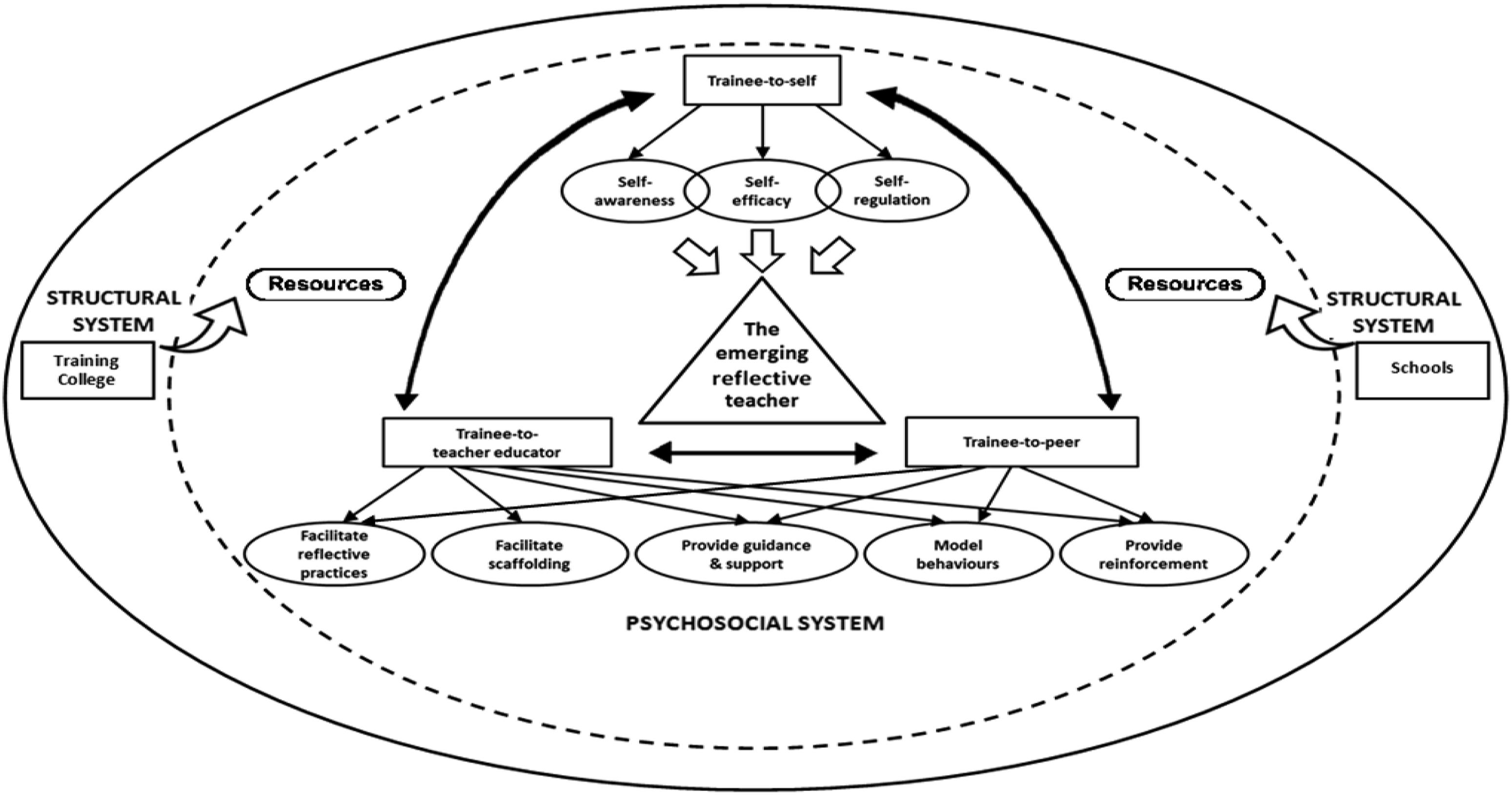
Reflective practices include perceptive observation, reasoning and analysis. As posited by Dewey (1933), reflection fosters the development of teachers who are empowered to constructively critique established teaching methodologies as well as their practice. Such reflection assists in increasing one’s self-awareness (Rogers, 1994). The teacher educator assesses the zone of proximal development (Vygotsky, 1930; 1978) of the trainee teacher and the degree of autonomy leveraged is dependent on this and is essential to the process of instructional scaffolding. This is a process that involves the teacher educator incrementally building on the trainee teachers’ experiences and knowledge as they learn new skills.
In addition to teacher educators providing guidance and support throughout the training programme, acts to cultivate what Rogers (1957) refers to as core conditions of genuineness, unconditional positive regard and empathy; all of which are essential for meaningful growth and behaviour change. Modelling, a central construct of Bandura’s social cognitive theory (1997) posits that the trainee teacher learns by observing models (individuals observed by others and convey through their actions information to the observer) in their immediate environment and by extension through vicarious reinforcement. Bandura (1997) found that individuals who were viewed as important and held in high esteem were most often those persons that served as effective models. Primary models would therefore be teacher-educators who demonstrate desired behaviours that can be informative and have a motivating influence and which in turn can act as reinforcement for the trainees.
The psychosocial system is permeable, as denoted by the perforated boundary, such that it allows for easy access of resources from the structural system, ensuring that the psychosocial interpersonal process outcomes of the PERTT model (see Figure 1) are facilitated. For example, faculty from departments of education of universities and colleges (the structural system) are hired to develop curriculum and moderate examinations with teacher educators (psychosocial system) on the training programmes.
The trainee-to-teacher educator subsystem produces five interpersonal outcomes, informed by core theoretical principles of Dewey (1933), Bandura (1989), Vygotsky (1930; 1978) and Rogers (1957). Further explanation of the theoretical underpinnings of the PERTT model can be found in, ‘Swimming Against the Tide: Theorising Pre-service Training for the Emerging Reflective Teacher’ (Jules and Maynard, 2015).
Study purpose and research objectives
The focus here is on the psycho-social interpersonal outcomes of the PERTT model; that being, reflective practices, instructional scaffolding, guidance and support, modelled behaviours and reinforcement from teacher educators and peers. We interrogate the degree to which these processes were experienced by teachers, from the three countries, to identify points of similarity. Hence, the study sought to address the following research objectives: (1) to determine whether there was a significant difference in the perceived occurrence of the psychosocial interpersonal outcomes of the PERTT model across teachers from Antigua and Barbuda, England, and Canada and (2) to explain the findings using the written accounts of the teachers’ experiences in their teacher-training programmes across the three countries?
Method
Research design
In this study a partially mixed, explanatory concurrent research design was utilised to explore teachers’ perceptions of, and how they experienced the psychosocial interpersonal process outcomes of reflective practices, instructional scaffolding, guidance and support, modelled behaviours and reinforcement during their teacher training. We employed a mixed-methods approach of quantitative and qualitative techniques, in which the quantitative and qualitative data were collected simultaneously (due to ease of access) but the quantitative analysis was supplemented with a qualitative analysis to explain the quantitative findings (i.e. QUAN + qual; Leech and Onwuegbuzie, 2009). Hence, the qualitative data analysis was used to obtain a richer understanding of the statistical findings. Given the high administrative demands and time constraints that teachers face, and the inherent challenges of collecting data from three countries, it was deemed appropriate to collect data concurrently.
Participants
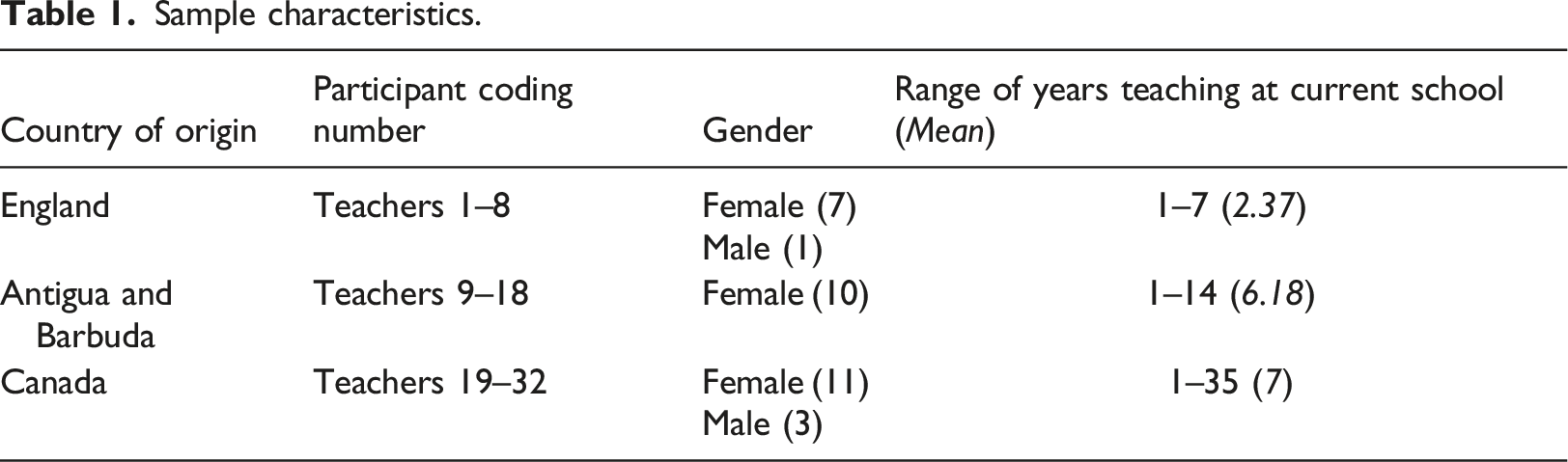
Sample characteristics.
Measures
A semi-structured questionnaire that consisted of closed-ended and open-ended questions facilitated the concurrent collection of quantitative and qualitative data. Tenets of the PERTT model were used to develop the data-collection instrument.
The questionnaire consisted of two sections–the first, included general demographic questions about the teachers (i.e. age, gender, years of experience teaching at current school). The second section included questions based on the PERTT model, designed to capture the teachers’ experiences of the psychosocial interpersonal process outcomes of teacher training. A four-point Likert scale response format (i.e. 0- Never, 1-Seldom, 2-Sometimes and 3-Often) was used to answer five closed-ended questions (that were analysed quantitatively). The scale was included to objectively capture the perceptions of the teachers. This prevented the researchers from having to infer (from the responses) the degree to which the psychosocial interpersonal process outcomes were evident in the respondents’ teacher-training programme. Utilising a Likert scale also allowed for the statistical comparison of teachers’ responses across the three countries.
In addition, five corresponding open-ended questions were included that allowed for free responses. The open questions allowed participants to qualitatively explain their experiences in their initial teacher training programmes. The following are examples of the kinds of items used for some of the constructs investigated: How were reflective activities used in your teacher training programme? In what ways did you receive guidance and support from instructors during your training in order to develop teaching competencies? and, how did your instructors model teaching methods during your teacher training programme? To these questions, participants were required to provide examples from their experiences of teacher training.
Procedures
Questionnaires were administered via two modalities. The teachers in Antigua and Barbuda completed a paper and pencil version of the questionnaire. In England and Canada, the questionnaires were administered to the teachers via an online electronic survey platform (i.e. SurveyMonkey©). University teacher-education faculty in all three countries distributed the questionnaire; in the case of the electronic version, the hyperlink was emailed to teachers.
Ethical considerations
Ethical approval for the study was obtained from the University of the West Indies Institutional Review Board. The research protocol was reviewed by the research ethics committee and deemed as low risk prior to data collection. All participants provided informed consent and voluntarily completed the survey anonymously.
Through the use of the research information sheet, participants were informed of the purpose of the research. Participants in England and Canada were required to indicate their consent to participate by clicking a link at the end of the informed consent form before they completed the questionnaire, whereas participants in Antigua and Barbuda signed a paper consent form. The informed consent also assured participants of anonymity and informed them of their rights to voluntarily withdraw from participating in the study at any point in time for the duration of the data collection process.
Data analysis
As is customary with the chosen research design of the study, the quantitative and qualitative data were analysed separately before being compared and inferences discussed (Leech and Onwuegbuzie, 2009). Frequencies, means and non-parametric analyses were first used to address the first research objective, while thematic analyses were conducted to probe the second research objective. Thematic analysis was employed to analyse the qualitative data obtained. The responses to the open-ended questions were reviewed to identify the key themes in the teachers’ experiences of their initial teacher training. The researchers individually read all the questionnaire responses from teachers and wrote memos on the emerging findings. The team then met to collectively discuss the memos. The themes that were consistent across the responses, as well as experiences that appeared more salient for teachers from each of the countries, were noted. Selected excerpts of the qualitative narratives were used to convey repeating ideas within and across participants from the three countries. The quantitative and qualitative findings were triangulated to generate a more distinct understanding of the experiences of teachers. Similarities observed in the quantitative data across the three groups of teachers were revisited and explored in more detail in the qualitative data.
Quantitative findings
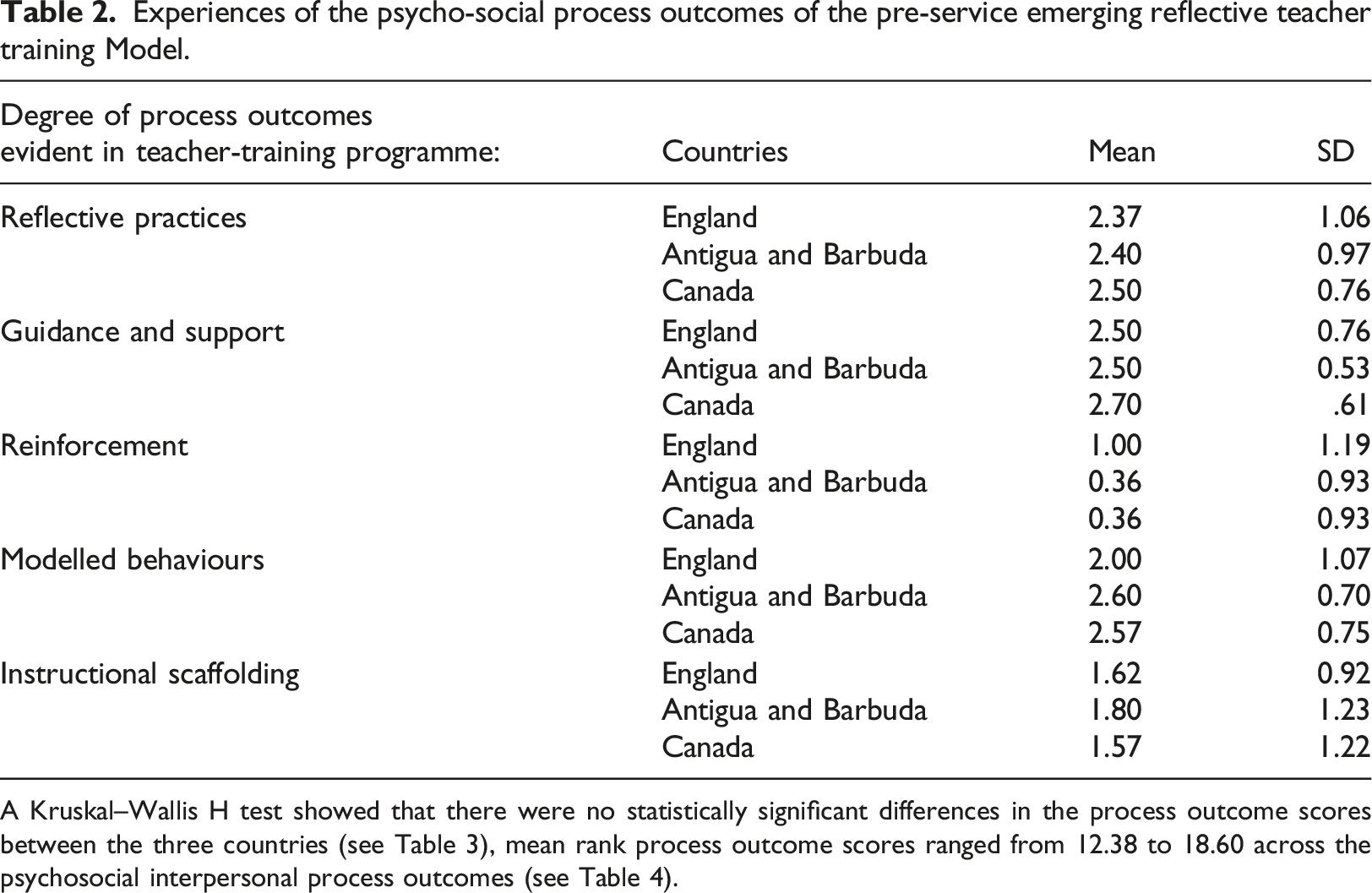
Experiences of the psycho-social process outcomes of the pre-service emerging reflective teacher training Model.
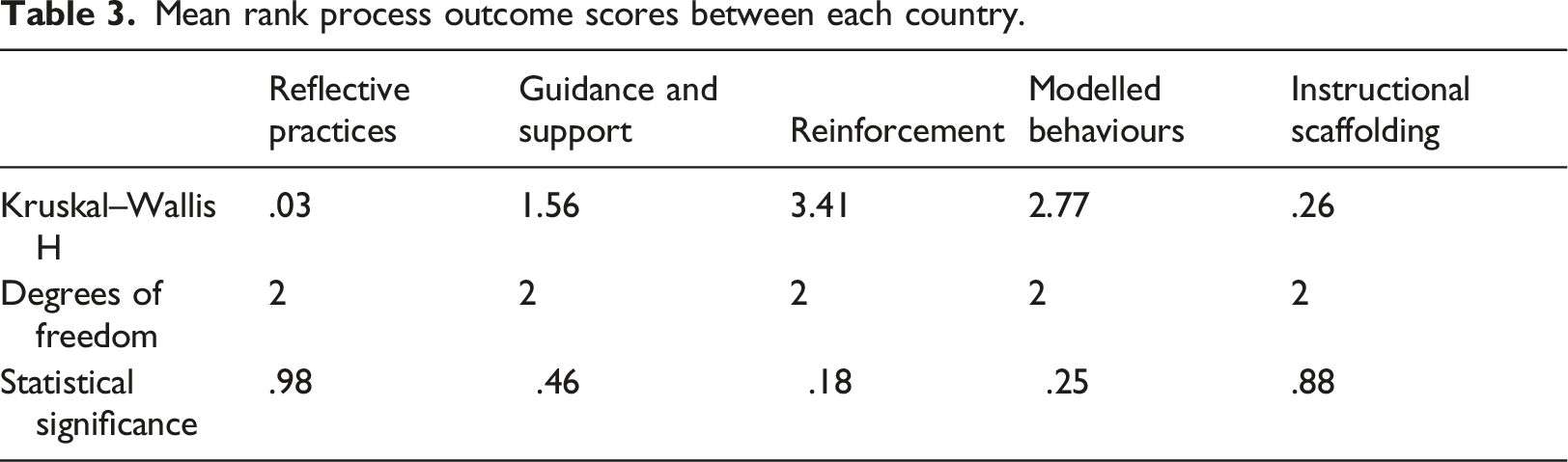
Mean rank process outcome scores between each country.
Mean ranks of each country for each psychosocial interpersonal process outcome.
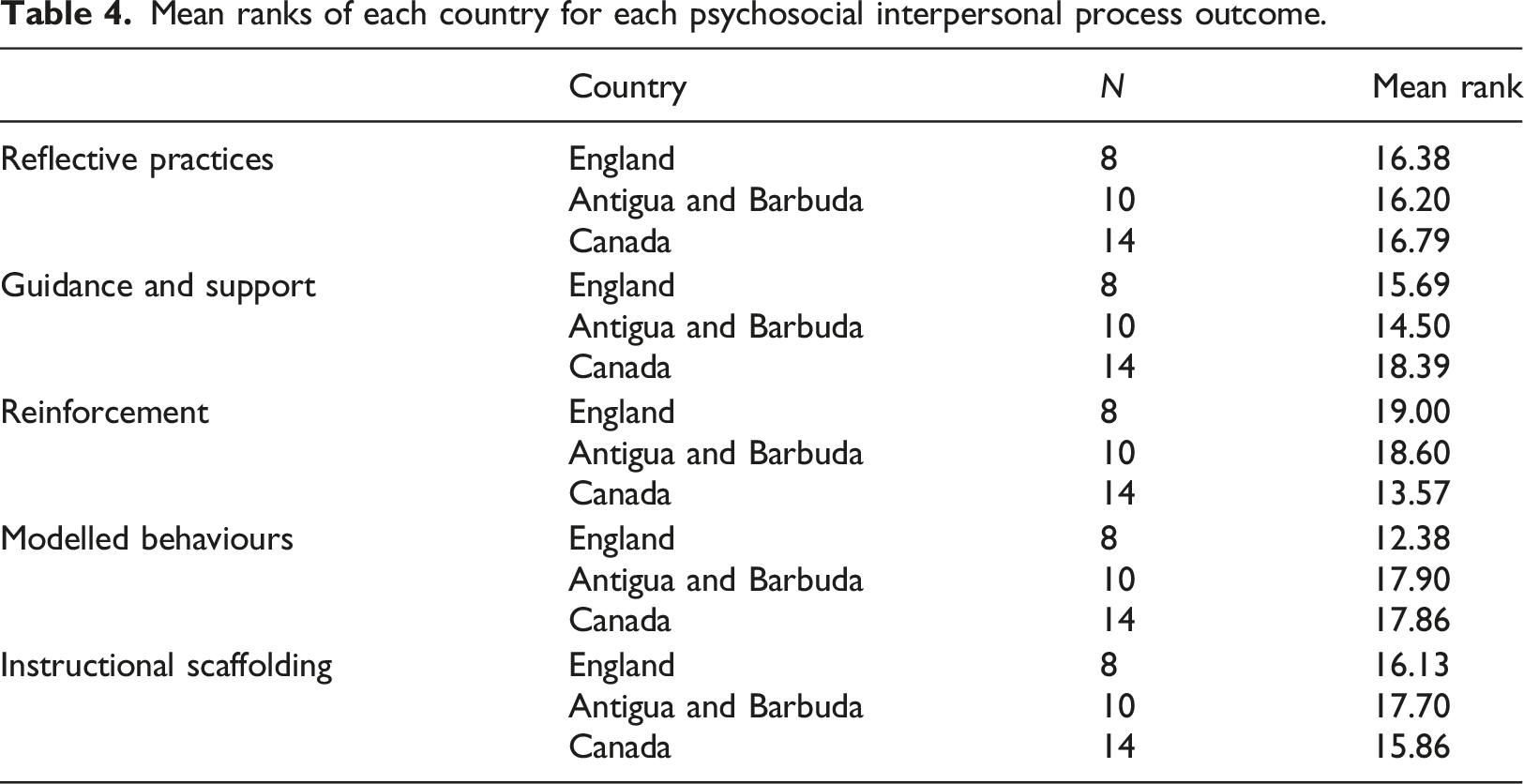
In light of the quantitative findings, the written accounts of the teachers’ experiences in their teacher-training programmes across the three countries will be used to explain the points of similarity. The ways in which teachers describe their experience of their teacher training will assist in explaining the quantitative findings.
Qualitative findings
Most participants revealed evidence of all five of the process outcomes of the PERTT model in their recollection of their initial teacher training programmes. However, there was notably less consistently shared, across all countries in the study, with regards to the practices of reinforcement within their programmes. Such inconsistency cannot be used to make any inferences about teacher training in those countries from which data were not obtained. Therefore, the decision was taken to report qualitative data representing all three of the countries in this paper. Outlined below are the key themes that emerged under each psychosocial interpersonal process outcome, the participants are coded with their teacher number and country initials (i.e. A&B for Antigua and Barbuda, C for Canada, and E for England).
The use of reflective practices in teacher training programmes
The major theme emerging from the participants’ recollections of reflective practices across all three countries were that they tended to predominantly have been exposed to reflection using writing activities in their teacher training programmes.
Reflection using written activities
Reflective practices in all three countries were centred mostly on writing activities. Frequent journaling was the most reported activity. Teachers in Canada and England reported that they ‘...would often write journals’. (Teacher #27C) and a ‘reflective journal was produced every week to reflect on teaching practices’ (Teacher #6E), respectively. A respondent in Antigua and Barbuda shared that ‘Self-reflection through the use of journals was encouraged after every exercise and activity’. (Teacher #10A&B). Greater detail was given by participants as to the types of reflective activities that were encouraged by teacher educators. Activities such as journaling, the creation of portfolios, reflection on teacher education practice and in-class discussions emerged as the reflective practices evident in their teacher-training environment. These written components were important elements of the trainees’ final projects/portfolios as one teacher noted, ‘The final portfolio was a total reflective piece of the entire coursework done during the two years of teacher training’. (Teacher #11A&B). ‘Often, while completing portfolios, significant time was required for reflection about teaching activities’. (Teacher #16A&B).
The provision of guidance and support in teacher training programmes
The main theme that emerged from the participants’ experiences of guidance and support during teacher training was that it occurred via meetings with instructors.
Guidance and support via meetings with instructors
The respondents shared that guidance and support were demonstrated by regular weekly structured meetings with the course lecturer or tutor. Teacher educators also provided guidance and support through mentorship, modelling and sharing of their own experiences throughout the training programme. For example, in England participants frequently mentioned, ‘...regular meetings and observations’ (Teacher #3E), ‘weekly mentor meetings’ (Teacher #5E), and ‘...regular contact with tutor and mentor; at least once a week without fail’ (Teacher #6E), as being common experiences for teachers in training. The participants shared that the instructors were always available for ad hoc meetings with trainee teachers. A teacher in Antigua and Barbuda noted that the instructors were ‘exceptional in this regard [as] they made themselves available to clarify any issues or concerns and their feedback was always constructive…’ (Teacher #14A&B). Furthermore, ‘tutors were available for assignment aid or further explanation…’ (Teacher #13A&B), and ‘Instructors were available to provide guidance and support during the practical components’ (Teacher #10A&B). Many of the respondents in Canada stressed the infallibility of their instructors as many were ‘...willing to give guidance and support almost 24–7 [round the clock]’ (Teacher #24C). They also shared that the instructors often engaged in ‘...after class discussions, [about] what was good and/or offer suggestions (Teacher #29C) as to how to improve the class’.
The demonstration of modelling behaviour in teacher training programmes
The theme that emerged as it relates to modelling in teacher training programmes was the use of vicarious activities.
The use of vicarious activities
Teacher and peer observations were a primary vehicle for modelling behaviours as they were key components of the teacher training programmes. It was in this way that trainees would be able to expand their repertoire of classroom activities, as they learn from others. For example, teachers in England noted that instructors encouraged trainees to, ‘observe other teachers’ (Teacher #5E) as well as engage in ‘peer observations’ (Teacher #6E). In Canada, it was reported that the instructors also modelled ‘...different activities, hands-on labs, [and] role plays’ (Teacher #29C). In Antigua and Barbuda teachers noted that instructors ‘...were oftentimes prepared for classes and displayed professionalism’ (Teacher #9A&B). ‘All instructors ensured that what was. . . expected from the trainees was exhibited in the training process’ (Teacher #11A&B) ‘…displayed high levels of deportment and most importantly they were always prepared with exceptional work ethics’ (Teacher #17A&B). They also shared that the instructors demonstrated the approaches that they wanted teachers to use in the class. For example, ‘...they tended to use constructivist methods when teaching which is what they wanted us to do…’ (Teacher #13A&B) and ‘...their method of instruction was usually student-centred’ (Teacher #14A&B). Hence, the instructors were purposefully demonstrating and modelling the behaviours that they wanted their trainee teachers to develop. Furthermore, participants reported that ‘Classroom management, assessment and . . . courses were filled with demonstrations and the application of strategies as the facilitators functioned normally’ (Teacher #16A&B). Modelling occurred ‘Simply through the variety of strategies used along with their classroom management skills’ (Teacher #18A&B). In addition, participants shared that the instructor also demonstrated personality characteristics that promote good teaching and learning, for example, ‘Teachers were enthusiastic about what they were teaching’ (Teacher #15A&B).
Modelling was reported as being an integral method employed throughout the training programme. The respondents in across all three countries readily referred to the numerous ways in which it occurred and served to demonstrate holistically what being a good teacher is, and how that is portrayed in the classroom.
The use of instructional scaffolding in teacher training programmes
A single theme emerged with instructional scaffolding being identified as a structured and assignment-related activity in the teacher training programmes.
Scaffolding via structured and assignment-related activities
Scaffolding was evident across all three countries and was mostly tied to assignments. In Canada respondents noted ‘…this [scaffolding] was very professor-dependent. . . mainly done for larger-weighted projects, papers and assignments…’ (Teacher #24C), ‘...usually the assignments were [more] tedious than difficult, but assignments would usually start small and end big’ (Teacher #25C). One participant in England noted that before submitting assignments trainees were expected to create, ‘. . .drafts and [go] through some [of them] with the teacher [educator]’ (Teacher #4E). This could be perceived as a form of instructional scaffolding even though it appears to be student driven. In Antigua and Barbuda, a teacher reported that ‘...each module taught was more difficult than the last. Lecturers ensured that we [the trainees] had the prerequisites before moving to the next level’ (Teacher #9A&B). Others shared that ‘...the instructor would break down a lesson in many sessions and gradually implement materials and activities until the students would have met the objectives’ (Teacher #12A&B), and that ‘...most classes utilised various assessment tools. . . skills taught, were tested and mastered through providing consistently more challenging tasks’ (Teacher #13A&B). In general, ‘...through assessment and research, the difficulty scale progressed as the course moved along’ (Teacher #16A&B).
The mixed methods analysis
Based on the quantitative data, the teachers across all three countries generally perceived the occurrence of the five psychosocial interpersonal process outcomes in their teacher training programmes and there were no marked differences in the process outcome scores. The qualitative data confirmed the findings from the quantitative data, in that there were no marked differences among the responses of the participants from the three countries. Looking closer at the qualitative data to explain these findings, suggests that the core of teacher training for these teachers had centred on Reflection (specifically with regards to using reflective written activities); Guidance and support (via meetings with instructors); Modelling (through the use of vicarious activities); and Instructional scaffolding (integrated as a structured and assignment-related activity).
Discussion
Taken as a whole, across the three countries, all of the psychosocial interpersonal process outcomes outlined by the PERTT model were experienced. The findings from the qualitative and quantitative phases address the research objectives in the following ways: (1) There were no statistically significant differences found among the experiences of teachers in their teacher-training programmes in Antigua and Barbuda, England, and Canada, as it pertains to the occurrence of the psychosocial interpersonal process outcomes of reflective practices, instructional scaffolding, guidance and support, modelled behaviours and reinforcement. (2). Although no significant differences emerged from the quantitative data analysis, it was evident that there were four major points of similarity among the psychosocial interpersonal process outcomes that were qualitatively elaborated upon by the respondents from all three countries.
The participants described a wide range of exercises, activities and ways in which the four interpersonal process outcomes of reflection, guidance and support, modelling and instructional scaffolding were addressed in the teacher training programmes. Participants across the three countries described reflective practices that were active, predominantly writing activities. Guidance and support occurred via meetings with teacher-educators and were structured in nature. Modelling occurred through vicarious activities and was mainly teacher-educator managed. Instructional scaffolding was assignment related.
These findings support the prevailing view that reflection is indeed pervasive in teacher education curriculum across the jurisdictions in this study (Avis et al. 2012; Collin and Karsenti, 2011; Edward, 2015; Gambhir et al., 2008; Griffiths, 2000; Hirschkorn et al., 2013; Richardson, 1990). Furthermore, the findings provide some insight to the ways in which the interpersonal process outcomes occur via various teacher education classroom practices and activities. Evidently, the focus throughout all of the countries’ programmes appears to be on reflection, primarily occurring in the form of written activities such as journals and portfolios. Moreover, the use of vicarious activities provides opportunities for modeling and creates more experiences for the trainees to reflect on. The teacher educators through providing structured assignments are able to scaffold instruction for the trainees’ learning experience and provide guidance and support through meetings with the trainees.
Reflective teacher empowerment
Teacher-trainees were not passive bystanders in their training programmes as they actively engaged in self-reflective processes throughout. The psychosocial process outcomes assisted in the empowerment of teacher-trainees serving to build a foundation that can foster their development as change agents within the context of the classroom. There was a gradual shift in power such that trainees were initially directed by the teacher-educator and over time moved to become more self-directed. This highlights the critical role of the teacher-educator in creating a nurturing, non-punitive training environment. That is one where teacher-trainees can make, and learn, from their mistakes. Therefore, it is through these training experiences that teachers will acquire a broad repertoire of tools, further build their confidence, find their voice and ultimately serve as stalwarts of the profession.
Research implications, limitations and recommendations
The most successful education systems in the world are arguably built on the psychosocial interpersonal processes that have been established and tested for their feasibility in multiple contexts. Therefore, the core programmatic elements of current teacher training models are supported by the practices of other extra-regional educational contexts. Although, the process outcome of reinforcement was not qualitatively addressed by teachers in some of the countries. We employed a mixed-methods research design that addressed a small convenient sample from each country. Hence, the findings should not be generalised beyond the context of this study. Future research should be conducted with a larger sample to provide a richer collection of narratives to build on the themes from this research. The four themes that emerged can be used to develop a quantitative measure to survey a larger cross-section of teachers across many countries. Allowing for the collection of quantitative data upon which further inferential statistical analyses can be conducted. Expanding data collection and analysis in this way can assist in the interrogation of the theoretical pathways of the PERTT model. Research should also consider the cultural nuances of other countries concerning pre-service teacher training. Furthermore, the PERTT model could provide a framework for the evaluation of pre-service teacher training programmes.
Conclusion
The findings of this study demonstrate that there is merit to the theoretical principles of the PERTT model based on the lived experiences of the teachers trained in Antigua and Barbuda, England, and Canada. Such that, quantitative responses supported the occurrence of these processes, and the qualitative narratives of the teachers acted to elucidate how those psychosocial interpersonal process outcomes occurred. Through interrogating key tenets of the model based on the perspectives of trained teachers, we hope to have broadened the utility of the theoretical framework.
Footnotes
Declaration of conflicting interests
The author(s) declared no potential conflicts of interest with respect to the research, authorship, and/or publication of this article.
Funding
The author(s) received no financial support for the research, authorship, and/or publication of this article.
