




Abstract
The role of technology in special education is of great significance, yet few studies have targeted pre-service special education teachers as users of educational technology. The aim was to explore such teachers’ technology perceptions: (a) purposes of and reasons for applying technologies in education; (b) factors they see affecting the use of technology in education; and (c) how these perceptions evolved between 2017 (N = 111) and 2022 (N = 86). The perceptions of students in two cohorts were investigated with quantitative and qualitative methods. Quantitative results indicated that students’ perceptions of applying technologies for various educational purposes became more positive in the 2022 cohort. All students saw multiple factors affecting the use of technology in education. Qualitative results showed students’ multiple considerations regarding both educational purposes and advancing factors. The results suggest that teacher training should provide knowledge, examples and authentic learning experiences with different technologies for the purposes of special education.
Keywords
Introduction
There is currently a prominent emphasis on using information and communication technology in schools. Information and communication technology (ICT) is defined as both a target for learning and a tool for working and learning, particularly in the development of 21st century skills such as collaboration, problem-solving, creativity and critical thinking (FNBE, 2014). Starting from early childhood education, it is the responsibility of teachers to provide opportunities for children to familiarise themselves with ICT and guide them in practicing, exploring and creating content using it safely, both independently and in collaboration with other children (FNBE, 2016; FNBE, 2022). The goal of introducing children to technologies from an early age is to enhance educational equity, providing them with equal skills for further education and preparing them for a digitised society (FNBE, 2022). This also extends to children with various special educational needs (FNBE, 2014).
The expectations surrounding technology place demands on teachers’ readiness to use educational technology in pedagogically meaningful ways (e.g., Tanhua-Piiroinen et al., 2016). Consequently, these challenges and expectations also have implications for teacher training. New teachers must be equipped with the ability to navigate rapidly evolving educational technology. According to Tondeur et al. (2019), teacher educators play a crucial role in preparing new teachers to use technology. Numerous studies have explored how pre-service teachers perceive their ability to use educational technology, examining their knowledge (see Mishra & Koehler, 2006; Valtonen et al., 2022), attitudes and self-efficacy (Teo & Tan, 2012). In addition to personal characteristics, other factors also influence teachers’ use of technology, such as the availability of technologies and support facilities and the opinions of others (Ertmer, 2005; Venkatesh et al., 2003). However, there has been a dearth of research that specifically focuses on special education and pre-service teachers (see e.g., Vellonen & Mäkelä, 2014). Nonetheless, the role of technology in special education has great significance. It is also important to consider that the needs of children and youth in special education may vary from minor learning difficulties to a need for significant support (e.g., children with a type of neurodiversity) which may have an effect on how to apply technologies with them.
This study aims to explore the role of educational technology within the context of special education and among pre-service teachers. It investigates how pre-service special education teachers (including those specialising in early childhood special education) perceive its role from two perspectives. First, it examines the purposes of and reasons for implementing technologies in education. Second, it explores the factors identified by pre-service teachers as influencing the use of educational technology. By focusing on the integration of educational technology by pre-service special education teachers, this study aims to address the research gap in this specific area.
Background
Purposes of Educational Technology
The development of educational technology has a rich history, with numerous tools and gadgets having been designed to cater for diverse learning needs and purposes. The evolution of technology for education has aligned with changing educational theories, reflecting how the understanding of teaching and learning has varied over time (Koschmann, 2012). In the early phase of its development, educational technology focused on basic drills and exercises, influenced by behaviouristic learning theories. As learning theories progressed to constructivist approaches, emphasising collaborative and self-regulative aspects, new technologies were designed to support these principles, activities such as pupils’ active inquiry, collaboration and shared knowledge building (Papert, 1980; Scardamalia & Bereiter, 1994). Additionally, the field of educational technology has encompassed everyday technologies not specifically intended for learning (see Weller, 2020). These technologies, such as Web 2.0, virtual reality and artificial intelligence (AI), have been recognised for their potential in addressing pedagogical needs.
Technology and Special Education
The field of special education has incorporated several technologies designed for specific pedagogical purposes and content areas. Kärnä-Lin et al. (2007) defined a framework by introducing four types of technologies in special education, namely, assistive technologies, communication devices, learning software and educational robotics. Since then, the development of new technologies, including mobile technologies and artificial intelligence, has rapidly progressed.
Assistive technology (AT) plays a vital role in special education, encompassing devices and tools that assist individuals with disabilities in participating in schoolwork and classroom activities. AT includes a wide range of technologies, from canes and eyeglasses to modern digital devices such as text-to-speech readers, computer-screen enlargers and specialised calculators for students with learning disabilities (Fernández-Batanero et al., 2022). Augmentative and alternative communication (AAC) is a related field that focuses on technologies supporting individuals with complex communication needs and facilitating language development and social interaction skills (Light et al., 2019). AAC technologies also aid learners in understanding the structure of daily activities. Mobile technologies and social software have provided new ways to integrate these technologies into everyday use (McNaughton & Light, 2013).
Computer-assisted instruction (CAI) software has been widely utilised for different content areas, offering simple practice exercises to enhance skills such as reading for pupils with reading difficulties (Lyytinen et al., 2009). These technologies provide fast feedback and extensive practice opportunities without constant teacher support, allowing students to focus on areas that require additional rehearsal (Coleman-Martin et al., 2005). CAI applications have evolved into more adaptive and personalised systems with the incorporation of learning analytics and AI. By leveraging user data and modelling expert performances, these systems can provide students with personalised learning paths tailored to their specific needs (see Hopcan et al., 2022).
Special education has also embraced technologies that foster active and creative learning practices. Do-it-yourself (DIY) technologies, such as Makey Makey and e-textiles, serve the diverse needs, strengths and interests of all learners (Mäkelä & Vellonen, 2018; Vellonen & Mäkelä, 2022), also children with need for interprofessional and significant support. E-textiles enable creativity across various content areas by utilising, for example, fabric-based switches, circuits, batteries and LED lights (Vellonen & Mäkelä, 2022). In addition, educational robotics encompasses a range of robot technologies used for teaching and learning, including robotics kits, construction kits and social robots (Tlili et al., 2020; Virnes, 2014). Programmable construction kits enable learners to build artefacts for different content areas, promoting creativity. Socially assistive robots have shown promise in supporting pupils in special education by helping them manage learning tasks and social relationships, as well as in assisting teachers (Papakostas et al., 2021).
Integration of Educational Technology
The integration of technology in education, including special education, still faces challenges, despite many technologies being available to support different learning demands and needs. Ertmer (1999) proposed first- and second-order barriers to the integration of educational technology. First-order barriers refer to external factors that are outside teachers’ control, such as resource availability, time constraints and support and training opportunities. Second-order barriers, on the other hand, are intrinsic to teachers and relate to their beliefs about teaching and learning (Ertmer, 2005). Aligned with the barriers described by Ertmer (1999, 2005), there are other commonly used models for understanding and studying the integration of educational technology, such as the technology acceptance model (TAM) by Davis (1993), the theory of planned behaviour (TPB) by Ajzen (1991), the unified theory of acceptance and use of technology (UTAUT) by Venkatesh et al. (2003) and Technological Pedagogical Content Knowledge (TPACK) by Mishra and Koehler (2006).
The TAM model focuses on perceived usefulness and perceived ease of use of the technology. The TPB (Ajzen, 1991) consists of three factors that influence the use of technology. These factors include attitudes towards using the technology, subjective norms that is, how important others perceive the use of technology and perceived behavioural control that is, the availability of facilities and self-efficacy to use the technology. The UTAUT model, combines areas from TAM and TPB models (Venkatesh et al., 2003) and areas such facilitating conditions that is, users’ beliefs about organisational support and social influences that is, social norms related to technology use. These factors can be moderated by gender, age, previous experiences and voluntary versus mandatory technology use. The TPACK framework is focused more on the context of education (Mishra & Koehler, 2006) addressing the knowledge required to use technology in pedagogically meaningful ways. TPACK is based on three fundamental areas of knowledge, namely, technological knowledge (i.e., knowledge of tools and technologies), pedagogical knowledge (i.e., knowledge of teaching and learning strategies) and content knowledge (i.e., knowledge of subject areas). The integration of these areas results in TPACK, which represents an understanding of how to effectively use technology to enhance teaching and learning (Koehler et al., 2013).
The aim of this study is to explore how pre-service special education teachers (including students specialising in early childhood special education) perceive the role of educational technology, and thus increase knowledge of an area less studied. The research focuses on two main questions: (1) How do pre-service special education teachers perceive the purposes of applying technologies and factors advancing the use of technology in education, and are there differences between pre- and post-Covid measures? (2) What kind of larger components can be identified from the individual purposes using technology and factors affecting technology integration, and are there differences between pre- and post-Covid measures?
Methods
Participants
The participants in this study were university students, from one university, in special education teacher preparation programs who participated in advanced courses in special education during the time of the data collection periods. The students in these programs include students both with and without previous degree and work experience. The first cohort of students participated in the course and data collection pre-Covid (2017; N = 111; Nfemale = 105, 94.6%), and the second cohort did so post-Covid (2022; N = 86; Nfemale = 79, 91.9%). The proportion of female participants reflects adequately the gender distribution in Finnish pre-service teacher educations (see Keski-Petäjä & Witting, 2018). The participants included pre-service special education teachers (Npre-Covid = 88; Npost-Covid = 54) and pre-service early childhood special education teachers (Npre-Covid = 23; Npost-Covid = 32) at one university in Finland. From the participants, 86.5 % of the pre-Covid cohort, and 91.9 % of the post-Covid cohort, had previous teaching experience.
Procedures
The national ethical principles of research with human participants (Kohonen et al., 2019) were carefully followed in this study. The first author introduced the questionnaire to the students as a course assignment and asked them in general, how would they feel if they were also asked for a consent to participate in a study. The first author also served as the teacher for the course. The students were provided with both written and oral information about the study, and they were also encouraged to ask for further information. As the questionnaire was part of the students’ regular tasks during an advanced course, voluntary participation in the study was especially highlighted for the students and they were confirmed that either providing or declining consent does not affect their studies. Collecting data consensually by using students’ existing tasks lowers participants’ workload as it reduces or eliminates the requirement for additional data collection methods. All the students were asked for consent and nearly all of them provided consent for the study. Filling in the questionnaire took approximately 20–30 minutes from the respondents. The data were pseudonymised when the research data were formed by removing the students’ names, and the participants’ confidentiality was strictly protected throughout the study. The study followed the EU General Data Protection Regulation (Regulation, 2016/679) and the national Data Protection Act (1050/2018).
Measures
The research data were collected via an electronic questionnaire. The first set of data for this paper was collected in 2017 (i.e., the pre-Covid cohort) and the second set in 2022 (i.e., the post-Covid cohort). The questionnaire that was used was based on the instrument developed for measuring the different purposes of using technology in education and the factors affecting the integration of educational technology. The questionnaire has been used in an earlier study (see Vellonen & Mäkelä, 2014). In the questionnaire, the students were firstly asked as follows: “In your opinion, to what kind of teaching purposes do technologies suit?” The students were asked to rate the given items based on their opinion on how well technologies suit the suggested teaching purposes. Second, the students were asked as follows: “In your opinion, what kind of factors advance the use of technologies in early childhood education/preschool/school?” The students were asked to rate the given items based on their opinion on how much the suggested factors advance using technologies. Regarding both questions, the students were provided with information that technologies include, for example, computers, tablets, smartphones, game consoles and applications, games and social media.
The first area, Teaching purposes, consisted of 21 items targeting the use of technology for supporting cognitive and motor skills, reading and writing skills, communication skills and skills related to studying various subjects. The items are presented in Table 1, translated from Finnish into English. The items were created on the basis of common areas that need to be addressed in special education, and they were reviewed by a professor of special education. The second area, Advancing factors, included 20 items targeting different areas affecting the integration of technology aligning with the TAM, TPAB and UTAUT frameworks. The items are presented in Table 2, only two items have been shortened for the table: Suitability of devices/applications stands for suitability of devices/applications for a desired purpose and Applicability of devices/applications stands for applicability of devices/applications for different purposes. All the items regarding advancing factors were reviewed by an expert from the field of computer science, especially educational technologies.
Regarding the two themes, the respondents rated the given items on a Likert scale that varied depending on the question, with ‘very well’ and ‘very much’ at one end of the scale and ‘not at all’ at the other end. Respondents could answer the first question with ‘can’t say’ if they had no opinion on the particular matter. In addition, the students were asked with an open-ended question to complement their answers by giving reasons for their Likert scale responses. The students were also asked if they would like to suggest other teaching purposes and advancing factors in their open-ended answers.
Data Analysis
In order to answer the first research question, descriptive statistics, mean values (M) and standard deviation (SD) were used in order to see how the respondents assess the different purposes of using technology and different factors affecting ICT integration. In order to study the differences between pre- and post-Covid measures for the research questions one and two, a quasi-experimental post-test-only design with non-equivalent groups (Shadish et al., 2002) were used, i.e., results from two different cohorts of pre-service special education teachers were compared. Comparison was conducted with Mann-Whitney U-test because the items were categorical in nature, and a non-parametric test suits best for this purpose. For statistically significant differences of items, the McGraw and Wong (1992) common language (CL) effect size was calculated to estimate the probability that one individual in a cohort would have a higher score in the items than an individual in the other cohort. In order to respond to the second research question, principal component analysis (PCA) was used. PCA with oblique rotation was run for both the separate teaching purposes of educational technology (Teaching purposes) and for the separate factors advancing ICT integration (Advancing factors). PCA was used because the aim was to explain the maximum amount of the total variance (e.g., Field, 2018). To evaluate the quality of PCA, Kaiser–Meyer–Olkin (KMO), Bartlett’s test of sphericity, eigenvalues and scree-plots, as well as the total amount of variance explained, were used. KMO between 0.8 and 0.9 was considered adequate to indicate distinct, reliable components and a sufficient sample size. Significant (p < .01) Bartlett’s test indicated that the correlations differed significantly from zero between variables. The individual component structure was evaluated with eigenvalues (>1) and the scree plot. Additionally, the internal consistency was investigated with Cronbach’s alpha (α) for confirming the component reliability. Based on Nunnally and Bernstein (1994), α level >0.7 was used for interpreting adequate measurement reliability based on internal consistency of the measure. Thus, the PCA and alpha were used in-tandem to confirm the component structure. PCA and α results were also used to calculate composite scores (i.e., mean sum variables) to gain a more comprehensive understanding how respondents assessed new components. Finally
In order to deepen the quantitative responses to the first research question regarding pre-service special education teachers’ perceptions of the purposes of applying technologies and factors advancing the use of technology in education, the open-ended questions were included in the study. The length of the students’ open-ended answers varied from one to 16 sentences. The answers were analysed via qualitative content analysis to describe the students’ perceptions in a concise form (e.g., Schreier, 2014). The data were analysed in collaboration by two researchers and in three steps to validate the analysis (e.g., Lincoln & Guba, 1985). First, the answers were thoroughly read several times to get to know the data. Second, the answers were analysed to mark down and thematise the new or more precise teaching purposes and advancing factors that the students suggested in relation to the items presented in the Likert scale questions. Similarly, the reasons the students provided for their Likert scale answers were analysed to mark down and thematise their explanations for the most and least preferred teaching purposes and factors advancing using technology. Third, the data were gone through once more to ensure that all the relevant aspects regarding the reasons and suggestions the students provided were included. The original open-ended answers were in Finnish and thus, the citations presented as examples to illustrate the results have been translated into English.
Results
Item-Level Results of Teaching Purposes Between the Pre-Covid (2017) and Post-Covid (2022) Data.
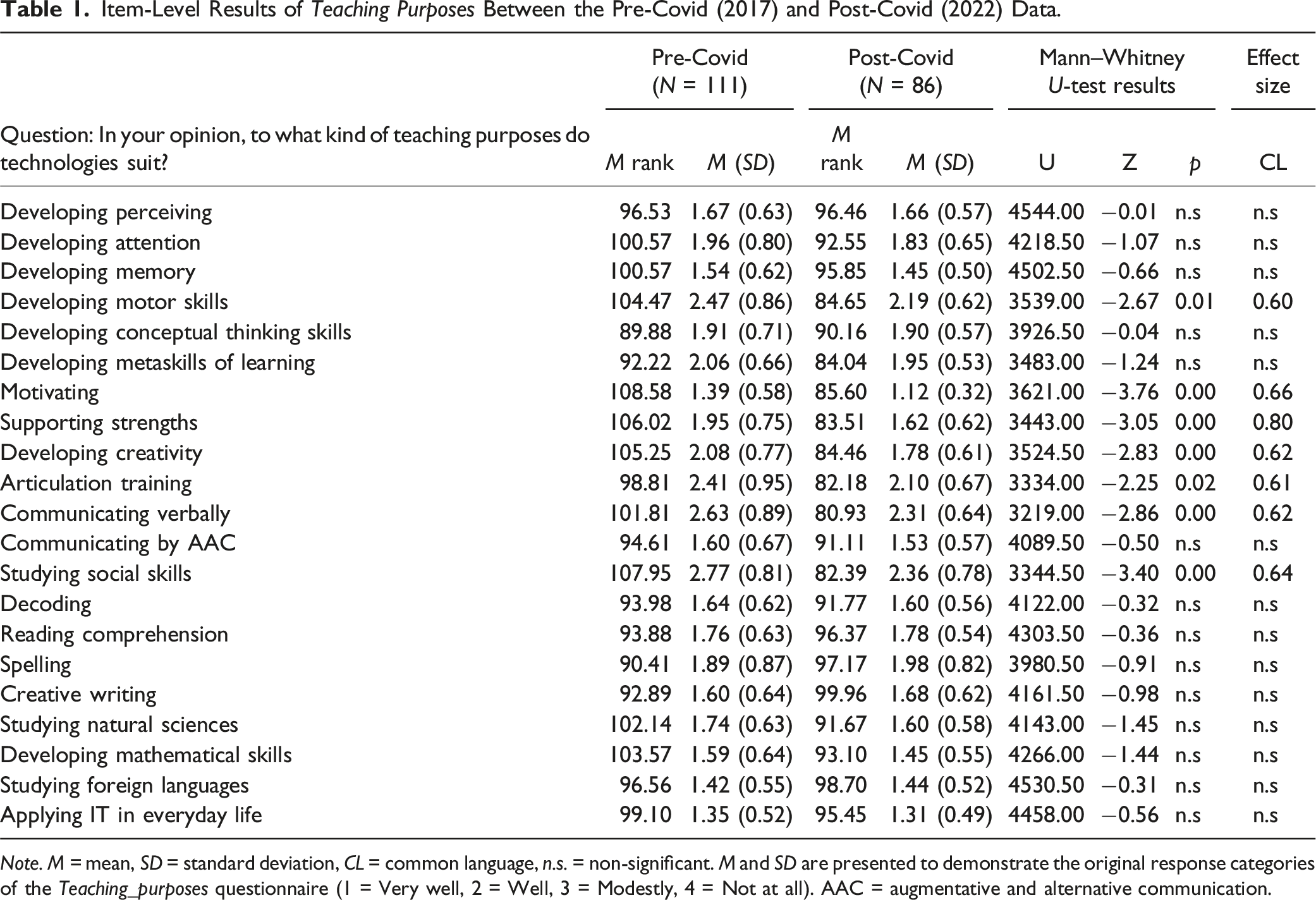
Note. M = mean, SD = standard deviation, CL = common language, n.s. = non-significant. M and SD are presented to demonstrate the original response categories of the Teaching_purposes questionnaire (1 = Very well, 2 = Well, 3 = Modestly, 4 = Not at all). AAC = augmentative and alternative communication.
Item-Level Results of Advancing Technology Integration Between the Pre-Covid (2017) and Post-Covid (2022) Data.
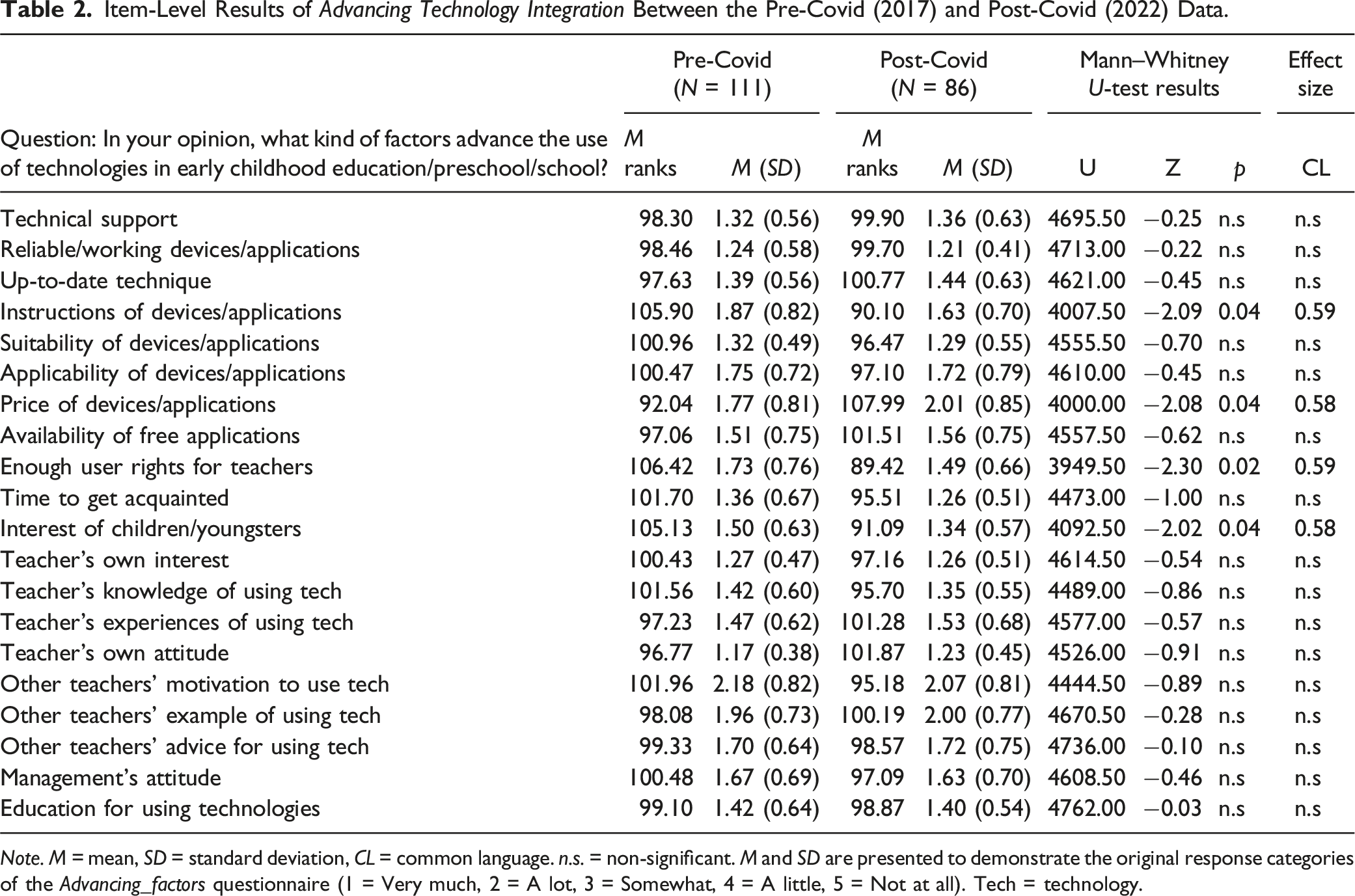
Note. M = mean, SD = standard deviation, CL = common language. n.s. = non-significant. M and SD are presented to demonstrate the original response categories of the Advancing_factors questionnaire (1 = Very much, 2 = A lot, 3 = Somewhat, 4 = A little, 5 = Not at all). Tech = technology.
Regarding the difference between the pre- and post-Covid measures in the Teaching purposes, the statistically significant differences were found in the Developing motor skills, Motivating, Supporting strengths, Developing creativity, Communicating verbally, Communicating by AAC and Studying social skills items (Table 1). The item Articulation training was statistically significantly different at the p < .05 level. In all of these, the post-Covid cohort considered the use of technology to be more reasonable than did the pre-Covid cohort. The CL effect sizes varied from 0.60 to 0.80. CL can also be interpreted as percentages; for example, a student from the post-Covid cohort had an 80% probability (CL = 0.80) to consider that technology is well suited for Supporting strengths.
Table 2 presents the item-level results of the Advancing factors. Pre-service special education teachers in the post-Covid cohort considered that applying technology was advanced statistically significantly by Instructions of devices/applications (p < .05, CL = 0.59), Enough user rights for teachers (p < .05, CL = 0.59) and Interest of children/youngsters (p < .05, CL = 0.58). However, the pre-Covid cohort of pre-service special education teachers considered that Price of devices/applications was more important related to technology than did the post-Covid cohort students (p < .05, CL = 0.58).
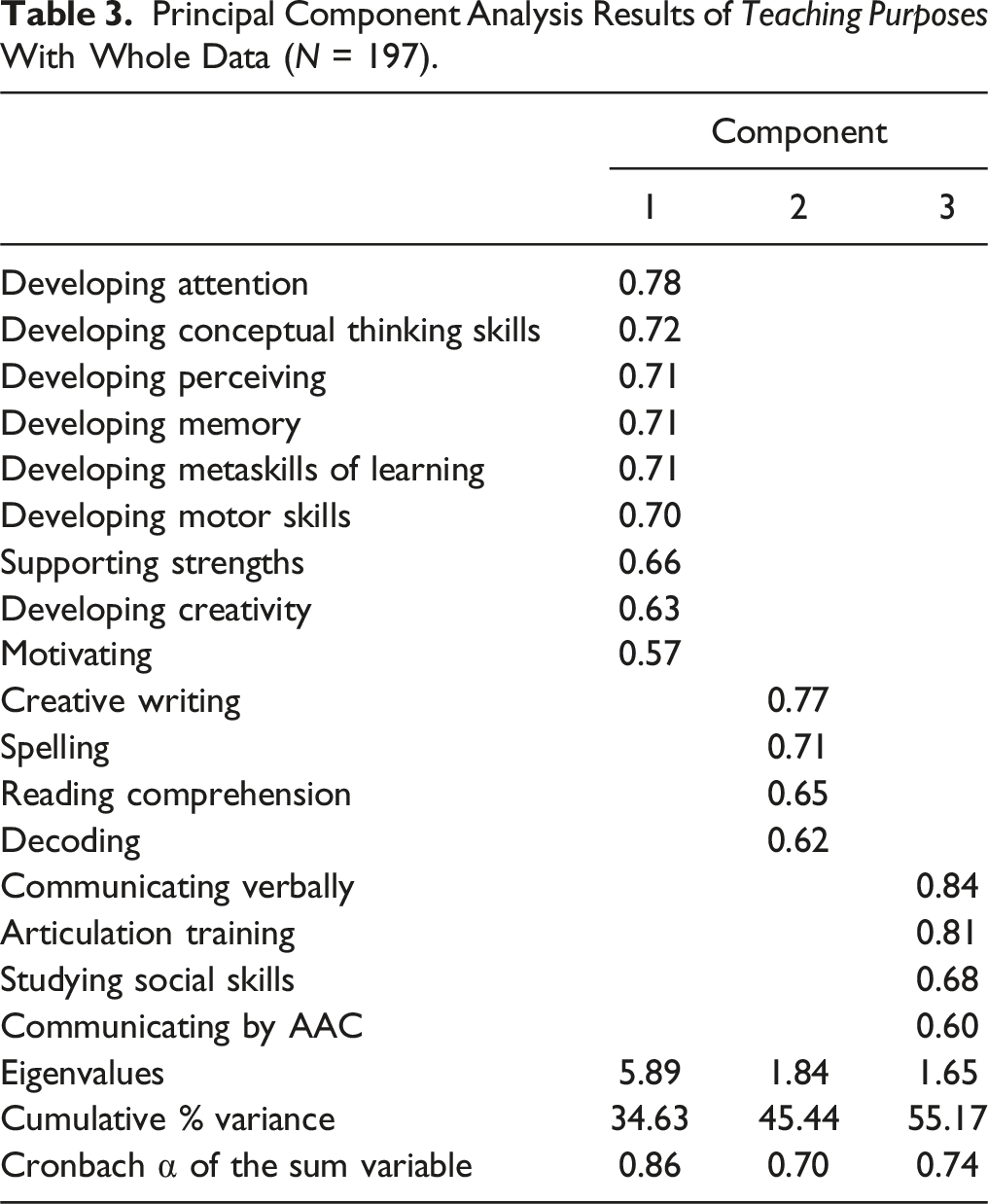
Principal Component Analysis Results of Teaching Purposes With Whole Data (N = 197).
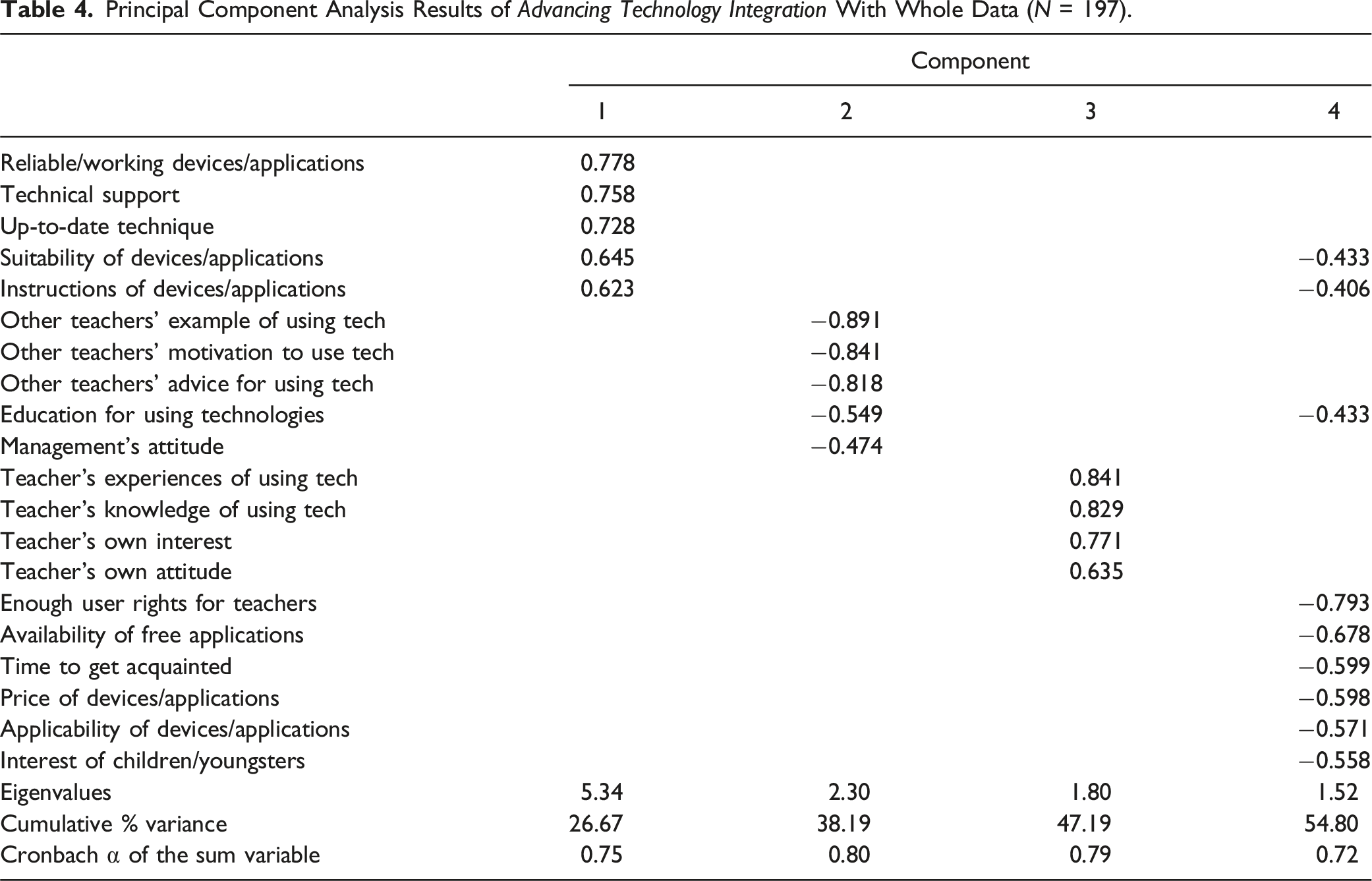
Principal Component Analysis Results of Advancing Technology Integration With Whole Data (N = 197).
The first and biggest component for Teaching purposes was Cognitive and motor skills (α = .86), including nine items. Six items focused on using technology for developing different areas such as perceiving, attention, memory and motor skills (movement skills) that are central basic skills in cognitive functions (as defined by Kuikka et al., 2002). Also, motivating was of the nine items, and also considered as part of the cognitive functions. In addition, items regarding thinking (developing conceptual thinking skills and developing meta skills of learning) and an item regarding scientific and artistic creativity (developing creativity) belonged to this component and are based on the previous types of cognition (as defined by Kuikka et al., 2002). Along with developing various areas, this component also contained the role of technology as supporting pupils’ strengths. The second component was Reading and writing skills (α = .70), including four items. Within this component the role of educational technology was directly for reading and writing, such as spelling, decoding, reading comprehension and creative writing. The third component, Communication skills (α = .70), included three items. This component was directly targeted for using technology for supporting children’s communication and also for learning social skills. Communication included either verbal communication or AAC methods, and an item regarding studying social skills was in turn connected to communication.
In Advancing technology integration (Table 4), the results showed four larger entities for supporting the integration of technology. First, Resources (α = .75), included five items. These items focused especially on availability of suitable, up-to-date technologies. Also, the role of support and instructions was part of this component. The second component, Subjective norms (α = .80) (component name according to Ajzen, 1991) mainly targeted on colleagues, how the use of educational technology reflected on their work. Also, the role of the management was part of this component along with in-service technology training. The third component, Personal interest (α = .79), focused on teachers’ personal characters. Items targeted teacher’s own attitude, interest, abilities and experiences of using educational technology. The final component, Outside issues (α = .72), included versatile items regarding the use of technology. Items targeted areas such as user rights and the availability and applicability of technology and children/youngsters’ interest towards technologies.
Independent Sample t-tests (Bootstrap) of Teaching Purposes and Advancing Factors Between Pre-Covid (2017) and Post-Covid (2022) Data.
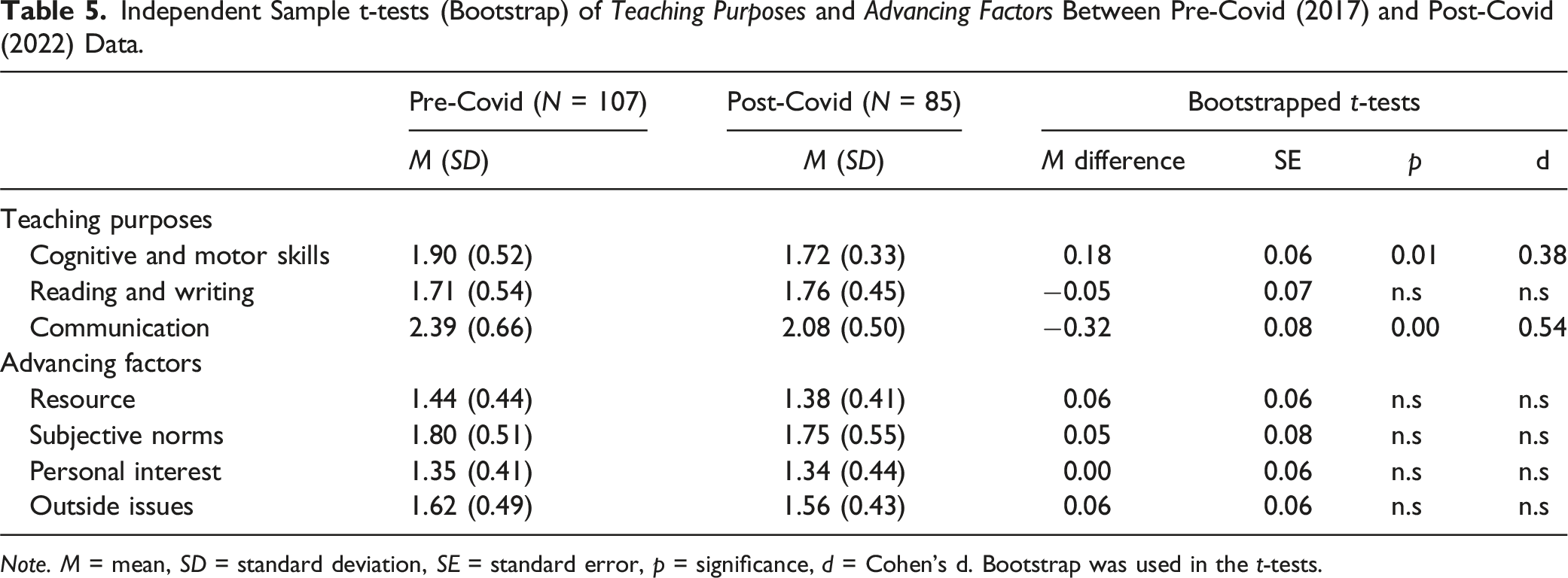
Note. M = mean, SD = standard deviation, SE = standard error, p = significance, d = Cohen’s d. Bootstrap was used in the t-tests.
Regarding teaching purposes, the students in the pre-Covid cohort perceived that technologies were best suited in learning reading and writing. Although there was only a minor difference between the pre- and post-Covid cohorts, it was interesting that former cohort saw technologies to be better suited to learning reading and writing than did the post-Covid cohort. The latter cohort’s result may be due to some students’ concern, explained in their open-ended answers, that handwriting would not develop if writing were practiced only via, for example, tablet computers, and thus, traditional methods might work better. On the other hand, some highlighted that using technologies provides an opportunity to gain much drilling practice, and for a youngster with dyslexia, using technology is essential, especially in writing longer texts.
Students’ Perceptions of the Teaching Purposes
The pre-service special education teachers were asked to provide reasons for their quantitative section responses regarding the suitability of technologies for various teaching purposes and to suggest possible new purposes, to deepen the responses to the first research question. Responses from an open-ended question indicated that students highlighted the role of technology because it is an important everyday skill in modern society and suits multiple purposes, as one student explained: “Modern society is based on using technology, and every human being has the right to get strong know-how on a level in which the individual is able to handle technology”. These everyday activities of modern society included areas targeted to cope in digitalised society, such as producing text, using different communication channels, as well as handling various activities in electronic environments and also content related to social studies and modern society (e.g., using money, using library services, engaging in services and municipal events, reading news). Practising to use technology included also learning to look for information and evaluate it critically (skills of the 21st century) and studying writing and word processing with 10-finger system. The importance of practicing using technology in depth, such as coding, was also mentioned. Finally, not as a teaching purpose as such but it was seen as a benefit of technology that it is useful in documentation for both children and professionals, such as transferring information about the child’s day to their home or parents being in contact with the day care center or school.
Another large topic regarded social skills and technology. The item regarding studying social skills raised more variety in perspectives than any other topic in the students’ open-ended answers. Most of the students who considered social skills saw having face-to-face contact to be a better way to study these skills than using technology. One student commented: “Social skills can also be studied via technology, if supported, but I think these skills should mainly be practiced with other people, without technology in between. You learn to apply these skills in real interaction situations.” However, another student stated the following, thus considering that there may be critical thoughts but for some people, technology might be the only chance to access social world: “People often think that technology somehow limits, for example, sociality, although in reality, it is the electronic world that may be the only platform on which the individual may/can experience, for example, normality and equality, and even positive speciality.” Although the students mostly saw it as better to study social skills without technology, they vastly recognised that applying technology is well suited for supporting communication if a child does not communicate verbally. In addition, respondents also considered using technologies to support children’s competence, autonomy and participation and sense of belonging to a group.
The students also suggested more specific goals for using technology such as supporting working memory and eye–hand coordination and fine motor functions. On the other hand, many students bundled items together, mentioning in particular cognitive skills which is connected to many of the suggested items, such as developing perceiving, attention and memory. Some students sort of expanded the items from quantitative section by adding something to it. For example, related to the item of developing creativity, one student stated: “I suppose technology could be used in supporting curiosity, the development of critical reading skills and developing innovation skills and creativity.” Some students considered not as a teaching purpose as such but as a benefit that technology use enables the utilisation of multi-channel learning and various senses.
Only a few students explained that they had no knowledge or experience or that they could not come up with a practical example of a particular suggested purpose, which was why they were quite cautious in their responses regarding that purpose. However, instead of responding with ‘I don’t know’, they responded with, for example, ‘A little’. Most of the students considered their responses to the suggested purposes on a more general level, whereas others provided examples of devices or applications that they had heard to be or found themselves to be useful.
Students’ Perceptions of the Advancing Factors
The final part of the results focuses on deepening the results for the first research question, the perceptions of pre-service special education teachers on the advancing factors of using technologies in education. The pre-service special education teachers’ open-ended answers highlight the important role of other people in technology integration. Responses indicate the need for certain teachers who are responsible for ICT and would, for example, teach others, look into new software and update the tablet computers, or teachers’ social media groups as providing tips on using technologies. Many students also mentioned colleagues and administrators’ attitude and motivation as important factors in advancing the use of technologies. However, some students added that one’s use of technology should not be dependent on whether another teacher is using technology or not. Another student mentioned that “in school/day care center, a good procedure is to have a tutor teaching ICT”. One student had experienced how a mentor teacher’s example in teaching practice of using specific software had increased their enthusiasm for using such software. Especially, when it comes to co-teaching, teachers should be on the same page when implementing teaching. Also, in addition to colleagues and administration, parents’ attitude toward the use technology were mentioned as a factor affecting technology integration.
Another major theme dealt with teachers’ attitude and abilities to use technology and training and support gained for using it. Most students mentioned that teacher’s own attitude is a crucial factor in how and how much technology is used in education. Also, the challenge of keeping up with the development of technology (e.g., up-to-date devices and education and the resources to obtain them) was among the most often mentioned areas. The role of teacher education was highlighted. Responses suggested that it matters how long it has been since the teacher education and what kind of devices and applications one has learnt to use during that. One student stated: “New graduates can bring new ideas with them and excite the permanent staff”. The experiences gained during teaching practice periods were also mentioned as influencing the student’s own perception of the necessity of technologies. Regarding the in-service trainings, respondents highlighted the importance of short training sessions. Students suggested trainings such as teachers’ collective pedagogical cafes as a good way to get to know applications together and to lower the threshold for supporting teacher abilities to use new applications. Finally, some students considered issues regarding data protection and thus, the importance of strengthening teachers’ knowledge and confidence in how to operate safely on the internet and in using multiple technologies.
Along with teacher abilities and support, the role of resources was vastly considered. Many students considered the meaning of available technologies, such as obtaining enough devices or applications. For example, a student said that “according to my experience, there isn’t necessarily as much money to be spent on [technologies] in smaller districts as in larger districts”, which may lead to very versatile and even unfair situations regarding children/youngsters’ possibilities to access technologies. In the following section, a summary of the results will be provided and discussed in relation to previous literature.
Discussion
In this study, pre-service special education teachers’ perceptions of applying technology in education were explored from two perspectives: first, concerning the purposes and reasons for applying technologies in education, and second, concerning the factors they saw to be affecting the use of technology in education. The first-mentioned may also have an effect on how engaged the future special education teachers will be in using technologies in their teaching. Also, the possible changes in pre-service special education teachers’ perceptions were studied by using two measurement points, 2017 and 2022. From the perspective of fast-developing technology and the COVID-19 period, with its lockdowns and distance education, it was justified to assume that changes may have occurred.
The results from the quantitative part of the study indicated that pre-service special education teachers perceived the role of technology to be most suitable for motivating students, applying IT in everyday life and learning foreign languages. On the other hand, two of the three most inappropriate purposes were related to social skills and verbal communication. These results suggested that the use of technology aligns with the principles of CAI (Coleman-Martin et al., 2005), such as the use of drills and game-like applications as an inspiring and fun way to study. Still, the results also showed that technology may not be suitable for social activities. Compared to the ideas of Koschmann (2012) on the possibility of technology to support collaborative learning activities, these results did not back up this view; rather, verbal communication and social activities were seen to be conducted face-to-face. The results from the quantitative part were rather well supported with the results from the qualitative data. Based on the qualitative data, the students considered a wide range of different purposes of using technologies, ranging from different exercises and ways to develop general skills and competences such as writing to more specific purposes related to special education themes, such as eye-hand-coordination and tools enabling the participation of children. On the other hand, technology use in a more general level such as for collaboration and inquiry (see Koschmann, 2012) had a minor role in their responses. The results supported the findings from the quantitative part (i.e., the role of technology in the development of social skills). The students perceived technology to be a meaningful means to enable children and youngsters with special needs to participate in face-to-face situations, aligning with the use of AAC technologies (see Light et al., 2019). On the other hand, purely technology-mediated communication was perceived to be less suitable.
For the factors advancing technology integration, the teachers’ personal characteristics were highlighted, and their attitudes to and interest in the use of technology aligned with the second-order barriers described by Ertmer (2005). Also, resources were important, as was having time to learn how to use technology and tools that worked well. Still, the role of colleagues was a minor one. However, based on the qualitative data, the students’ perceptions of the integration of technologies also emphasised the role of the school community. Drawing on the TPB (Ajzen, 1991), the significance of important others, colleagues and administrators, as well as their positive attitude, emerged as a factor influencing technology integration. The students considered the significance of school community in a sense that it should provide training and collegial support, aligning with the themes of the UTAUT model (Venkatesh et al., 2003). In addition to the traditional community, social media communities were also highlighted for providing supportive opportunities for the integration of technology (see also Mäkelä & Vellonen, 2018). The pre-service special education teachers raised concerns about security as a new element, compared to previous models targeting technology integration. Factors affecting the use of technology included issues such as collecting and utilising data on students’ online activities as well as data ownership. This new perspective, an integral part of a digitalised society, highlighted students’ awareness of the potential risks associated with leveraging technologies.
There were some differences between the pre- and post-Covid cohorts in terms of how they perceived applying technologies for different learning purposes. The post-Covid cohort considered technology use to be more reasonable than did the pre-Covid cohort in developing motor skills, motivating, supporting strengths, supporting creativity, communicating verbally and by AAC, studying social skills and articulation training. Regarding studying social skills, communicating verbally and developing motor skills by utilising technology, students’ views seem to have changed in a more favourable direction over the COVID-19 years. There were differences between the pre- and post-Covid cohorts in this study, and with this development, it is in line with a prior study in which the data were collected in 2013. In that study (Vellonen & Mäkelä, 2014), only 28% of pre-service special education teachers felt that technology was suitable or very suitable for improving social skills, and they also saw less value in ICT for improving motor and verbal skills. Altogether, the changes were rather small when considering the fast development of technology, the new possibilities that arose between 2017 and 2022 (see McNaughton & Light, 2013) and the emphasis that technology use has gained during the COVID-19 pandemic.
Altogether, these results indicate that pre-service special education teachers still need knowledge and examples of how to apply technologies for special education purposes. For example, in the study by Mäkelä and Vellonen (2018), the setups the educators created with Makey Makey showed that they were able to appropriate the DIY technology for a wide variety of pupils’ needs and for many learning purposes, including motor and social skills, which other educators had rated among the least suitable purposes for ICT use in an earlier study (Vellonen & Mäkelä, 2014), as well as in the current study. In special education, learning materials and methods need to be continuously adapted to suit the interests, strengths and needs of versatile learners. The learners also include children and youth who may have need for interprofessional and significant support (e.g., children with autism spectrum disorders). Pre-service teachers need knowledge to combine the vast possibilities of various technologies with the different needs of children for targeting the content areas required by aligning with the principles of the TPACK (Mishra & Koehler, 2006). In addition, pre-service special education teachers need to be taught that all the children should have an access in using technologies according to national curricula starting from early childhood education and that there are technologies that are adaptable to the multiple needs and strengths of all learners.
One aspect to consider from the results may be how the students perceived technology while responding to the items. In the questionnaire’s Likert scale questions, technologies were defined to include, for example, computers, tablets, smartphones, game consoles and software, games and social media. However, if students were not already familiar with, for example, robotics, DIY technologies or AAC technology, or they had not used social media, they may not have considered in their responses the possibilities these technologies provide for educational purposes. Actually, some students wrote in their open-ended answers that because they had no knowledge or experience, or they could not come up with a practical example for a suggested purpose, they were quite cautious in their response regarding that purpose. Many other elements may also explain differences in the students’ perceptions, for example, previous learning experiences and phase of the professional development (see Hughes et al., 2020). The differences in the knowledge and self-efficacy of pre-service teachers need to be acknowledged to provide them with support they need (Valtonen et al., 2018). Overall, the results of this study indicate the important role of teacher education. As Tondeur et al. (2019) indicated, teacher training serves as a gatekeeper for future teachers’ readiness to use technology, which is in line with what some of the students considered in their open-ended answers. The students might benefit from gaining knowledge about aspects of applying technologies in education, such as the TPACK (Mishra & Koehler, 2006), which specifically addresses teachers’ knowledge required for using technology in pedagogically meaningful ways. However, the results also suggest that special education teacher training needs to be provided with more examples and authentic learning experiences with different technologies for the vast purposes of special education. The students might benefit of working with, for example, applications for improving skills in mathematics and reading and writing, AAC applications, DIY technologies and robotics. This might also help them to consider and understand the additional value of technologies to support teaching and learning.
Limitations of the Study and Possibilities for Future Research
First, before this study, the quantitative instrument used had not undergone thorough investigation. Still, based on the results, the instrument demonstrated reliability and suitability for the aims of this study. This was particularly evident as the psychometric properties were assessed using multiple methods, all of which further supported the instrument’s reliability and validity. Second, different kinds of respondents provided the data, namely, pre-service special education teachers and pre-service early childhood special education teachers, and because of this, they may have perceived the given items from somewhat different viewpoints. However, it was a historical sample, and the combining element was that all respondents were students who had been studying to become special education teachers. These contexts were also considered in the questions, as the students were requested to respond from the perspective of early childhood education, preschool and/or school. In addition, all the respondents had an opportunity to explain their perceptions in their open-ended answers. Third, as in all questionnaires, a limitation to consider is how the respondents understood the items. However, the open-ended answers opened up the students’ considerations and thus were important in understanding their views. The results showed that for the purposes of using technology, the responses from the qualitative and quantitative data sets confirmed each other. Again, within the advancing factors, there were minor differences when considering the role of colleagues and the school community in supporting technology integration. Still, the results from the quantitative part were rather positive (i.e., the differences were small). More research is therefore needed, and it would be worthwhile to study in particular how to apply technologies in special education and provide training for pre-service special education teachers as well as exploring their perceptions of the benefits of training.
Conclusions
Overall, the results indicate that pre-service special education teachers need more knowledge and examples of the added value that technology can provide for special education. The findings offer insights into pre-service teachers’ understanding of the nature of special education and technology. Technology is perceived as a support for face-to-face classes and interactions, rather than a replacement for authentic encounters between children and teachers. The results also show that models explaining technology integration are applicable to the special education context. Interestingly, the findings highlight additional factors affecting integration, such as security issues, which are crucial in today’s digitalised society and necessitate updates to existing frameworks on technology integration. In conclusion, pre-service special education teachers recognise the potential of educational technology at some level. Still, there is a need for reflection about the role of technology within special education, about the benefits it can provide. Future special education teachers need abilities to integrate technology in pedagogically sound ways, in order to meet the diverse needs of the children and youth and to enhance their learning experiences.
Footnotes
Acknowledgments
The authors warmly thank the pre-service special education teachers for participating in this study. The authors would also like to thank the research assistant for organising the qualitative data.
Declaration of Conflicting Interests
The authors declared no potential conflicts of interest with respect to the research, authorship, and/or publication of this article.
Funding
The authors received no financial support for the research, authorship, and/or publication of this article.
