




Abstract
A physics-based, low-order ignition model is used to assess the ignition performance of a kerosene-fueled gas-turbine combustor under high-altitude relight conditions. The ignition model used in this study is based on the motion of virtual flame particles and their extinction according to a Karlovitz number criterion, and a stochastic procedure is used to account for the effects of spray polydispersity on the flame’s extinction behavior. The effects of large droplets arising from poor fuel atomization at sub-idle conditions are then investigated in the context of the model parameters and the combustor’s ignition behavior. For that, a Reynolds-averaged Navier-Stokes simulation of the cold flow in the combustor was performed and used as an input for the ignition model. Ignition was possible with a Sauter mean diameter (SMD) of 50 μm, and was enhanced by increasing the spark volume. Although doubling the spark volume at larger SMDs (75 and 100 μm) resulted in the suppression of short-mode failure events, ignition was not achieved due to a reduction of the effective flammable volume in the combustor. Overall, a lower ignition probability is obtained when using the stochastic procedure for the spray, which is to be expected due to the additional detrimental effects associated with poor spray atomisation and high polydispersity.
1. Introduction
Ignition is an important aspect in the operation of aviation gas turbine combustors. Ensuring safe re-ignition after a flame-out at high altitude – a so-called “high-altitude relight” – is one of the most stringent requirements in the design of combustors used in aviation propulsion systems. In aeronautical engines, the fuel is typically injected in the form of a liquid spray. Compared to gaseous flames, the presence of liquid droplets increases the complexity of the ignition process which is strongly affected by the size and location of the droplets as well as the volatility of the liquid,1,2 among all the other factors. The sub-atmospheric conditions associated to high-altitude relight, characterized by low pressure and low temperature, make the ignition process even more challenging. Such conditions, often associated with lower air flow velocities through the injector passages (in case airblast-type atomizers are used), have a negative effect on atomization, resulting in larger droplets and lumps of liquid that may penetrate towards the combustor liners. Large droplet sizes and low temperatures make the evaporation process very slow, limiting the availability of fuel vapor. 3 Therefore, much more energy is expected from the spark to ensure sufficient evaporation to have locally an ignitable fuel-air mixture, as well as to produce a flame kernel of relatively large size and increase the local temperature of the flow, leading to the kernel’s successful establishment and subsequent propagation. 4 Thermal runaway is an additional peculiarity of the high-altitude ignition scenario. Immediately after the flame blow out, because of thermal inertia, the combustor’s walls may still be hot. This effect can create more favorable conditions for ignition close to combustor liner, including evaporation of liquid droplets deposited on the wall. All these effects make the high-altitude conditions the most difficult scenario for ignition. As a consequence, the high-altitude ignition needs to be considered from early on in the design process of the combustor and may affect the entire operation envelope of the engine.
Numerical simulations have become an indispensable tool to assist in the design of gas turbine combustors as they allow for an assessment and comparison of different design choices to reduce the number of expensive rig tests. 5 The forced ignition of a gas turbine combustor is an inherently transient process where evaporation, mixing as well as chemistry play a major role. Therefore, numerical methods able to accurately predict the flow, the flame transients, and mixture formation should be used. In this context the use of methods able to capture at least the large scales of turbulent motion is indispensable. Large-eddy simulation (LES) with advanced turbulent combustion modeling is, therefore, a good candidate for the prediction of ignition. The ability of combustion LES to capture the ignition process with reasonable accuracy has been demonstrated in various scientific publications.6–8 With the increase of computational power in recent years, high-fidelity LES has become feasible for industrial applications. Still, the ignition of turbulent flows exhibits a stochastic nature, which needs to be characterized in statistical terms. 9 Consequently, several ignition events have to be simulated to assess the ignition behavior for each ignition location and each operating condition. Despite its high computational costs, LES still allows for an evaluation of a small series of ignition events.7,10 Nevertheless, gas turbine designers may be interested in a large number of combustor designs in practice, as well as different operating conditions, fuels, and ignition locations. Such wide parametric studies can only be achieved using computationally inexpensive, reduced-order models which are based on the phenomena controlling the ignition transient of a flame and, at the same time, maintain key elements of stochasticity that typically characterize mixing and flame propagation. Examples of such modeling approach to gas-turbine relevant applications are the reactor-based model by Sforzo and Seitzman 11 which evaluated the early-phase ignition of a kernel ejected from a sunken fire igniter, an approach further developed by Tang et al. 12 to include flamelet-like mapping. Alternatively, the approach proposed by Eyssartier et al. 13 applied a series of ignition/propagation criteria to instantaneous LES flow-fields in order to assess the stochastic nature of ignition. Moreover, it is useful if such models provide designers with parameters for the evaluation of the combustion capability of the engine, such as ignition time scales and probability of ignition.
With these ideas in mind, the low-order ignition model called SPINTHIR was developed to evaluate ignition of a full combustor. 14 Its development is based on experimental findings related to the advection of the kernel. Following the principles detailed by Lefebvre and Ballal 15 concerning the phases of ignition as well as experimental evidence,16,17 the model identifies the long-term ignition failure, where a kernel is successfully established but further flame stabilization is not possible as the kernel is advected away from the anchoring point or into regions where it is starved of fuel. The model relies on a pre-evaluated averaged cold flow field to predict ignition probabilities from a cold-start condition. For that, it tracks virtual “flame particles”, modeled so as to mimic the possible paths of a flame kernel during an ignition transient. This is based on the assumption that advection by the mean flow and turbulent transport are key drivers of this phase of the ignition process. This assumption, combined with additional rules for the production and destruction of the particles based on mixture and flame properties, replicates the motion of a flame front.
The conditions for extinction of the flame particles is central to the algorithm and key to its accuracy. The particles’ extiction criterion is based on an empirical correlation for the Karlovitz number, obtained experimentally by Abdel-Gayed and Bradley 18 and implemented in the code as a critical value. 14 This approach has been a product of extensive validation on non-premixed flames,14,19 premixed flames, 20 and more recently on kerosene spray flames. 21 Due to its the main assumptions related to flame transport, it is applied with good results to spray and gaseous non-premixed conditions and high turbulence. Furthermore, the critical value for extinction was verified to be approximately 1.5 in experiments with gaseous premixed flames in isotropic turbulence, 18 and has been used in the code for non-premixed and spray flames14,19,22 and premixed flames. 20 There is, however, little or no evidence that such value applies to spray conditions.
In fact, as a result of the contribution of droplets to stretch due to strain and curvature at the droplet-scale, 23 it has been expected 24 and recently verified21,25–27 that the global Karlovitz number of spray flames at which extinction is observed differs significantly from those of premixed flames. 18 In recent experiments with spherically propagating flames, 1 local flame extinction in polydisperse kerosene sprays was observed to be led mainly by large droplets approaching the reaction zone. It is worth noting that these experiments were carried out at flow conditions not necessarily close to those of stable spray flames commonly seen in the literature, thus exhibiting three distinct spray-flame propagation modes. Local extinction in such spray flames has been commonly attributed either to heat-sink effects occurring in the evaporative cooling of the fuel droplet, or due to the large rich region surrounding the droplet as a result of evaporation.1,28–30 This phenomenon was observed by de Oliveira and Mastorakos 1 mainly in the inter-droplet and gaseous-like flame propagation modes, while, in contrast, continued propagation was attributed to the presence of large droplets in the vicinity of the reaction zone in the droplet-mode propagation regime. 1 As first approach to incorporate such complex combination of droplet-induced effects as fluctuations of flame speed, increased flame wrinkling at the droplet scale, and the change in the local flammability of the mixture due to the random position of the droplets in the spray, de Oliveira et al. 21 have used a stochastic approach to evaluate the effect of local equivalence ratio fluctuations caused by the spray’s polydisperse character was evaluated. In their work, measurements of ignition probability in kerosene spray flames 31 were used to directly evaluate the Karlovitz values at which kerosene spray flames extinguish or ignite.
The present work demonstrates the application of recent experimental findings in a canonical geometry 21 to the practical case of an aeroengine re-igniting at high-altitude conditions. Attention is given to flow conditions where atomization of the liquid fuel within the combustor is far from normal operation conditions, that is, characterised by high Sauter mean diameter and increased polydispersity. The objectives are as follows: (i) investigate the range of Karlovitz number within the combustor for different spray conditions and, in turn, its impact on ignition probability; (ii) compare the use of the recently proposed fuel fluctuation model in SPINTHIR and assess its impact on the model’s resulting ignition probability; (iii) apply the model to a real aeroengine combustor and explore the effects of spray polydispersity and spark characteristics on ignition behavior.
2. Methods
Low-order ignition model
The low-order ignition model SPINTHIR (“Stochastic Particle INTegrator for HIgh-altitude Relight”), originally developed by Neophytou et al.,
14
predicts the ignition probability of a combustor based on the time-averaged non-reacting flow field from simulations or experiments, tracking the motion of virtual “flame particles”. The time-averaged field variables that are required as inputs to the model are the mean gas velocity
The fluid domain is discretized by a coarse grid of cube-shaped cells of size
A flame particle is defined based on the characteristics of the two-phase flow field. The particle’s motion follows a random walk given by a simplified Langevin model,


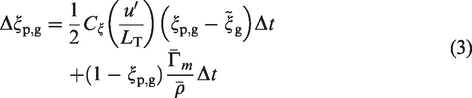
The Langevin equation describes the Lagrangian motion of fluid particles and, as such, on average, it reproduces the mean field of mixture fraction obtained by RANS. Also, the Langevin equation allows us to introduce local and instantaneous fluctuations in the temporal history of the particles, which are governed by the statistical moments of the mixture fraction, in an Eulerian sense.
Further, local flame extinction by means of turbulent strain is mimicked and introduced into the particle’s behavior through an extinction criterion based on the Karlovitz number, which is defined as the ratio of chemical to Kolmogorov time scales. The Karlovitz number of a flame particle is evaluated from the empirical correlation by Abdel-Gayed and Bradley:
18

Here the turbulent velocity fluctuation is evaluated as
In the evaluation of

The gas-phase equivalence ratio

The liquid-phase equivalence ratio

In order to determine




In order to monitor individual ignition attempts, it is convenient to define an ignition progress factor, Π, as the number of burned cells divided by the number of cells in the combustor. Since hot cells cannot switch back to the cold state, Π increases monotonically. An ignition event is considered to be successful if the ignition progress factor passes a critical threshold, i.e. the model’s criterion for ignition success is
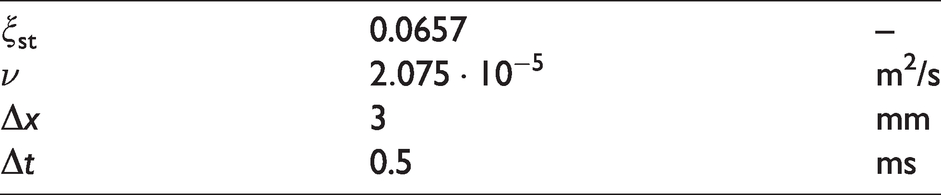
Constant parameters used in SPINTHIR in the present work are summarized in Table 1. The stoichiometric mixture fraction
Constant parameters used in the simulation with SPINTHIR.
Constant parameters used in the simulation with SPINTHIR.
In the ignition simulation performed with SPINTHIR the spark location placed at the top of the combustor near the injector location. The effect of the spark size on ignition capability of the combustor was investigated by performing calculations with spark diameters of
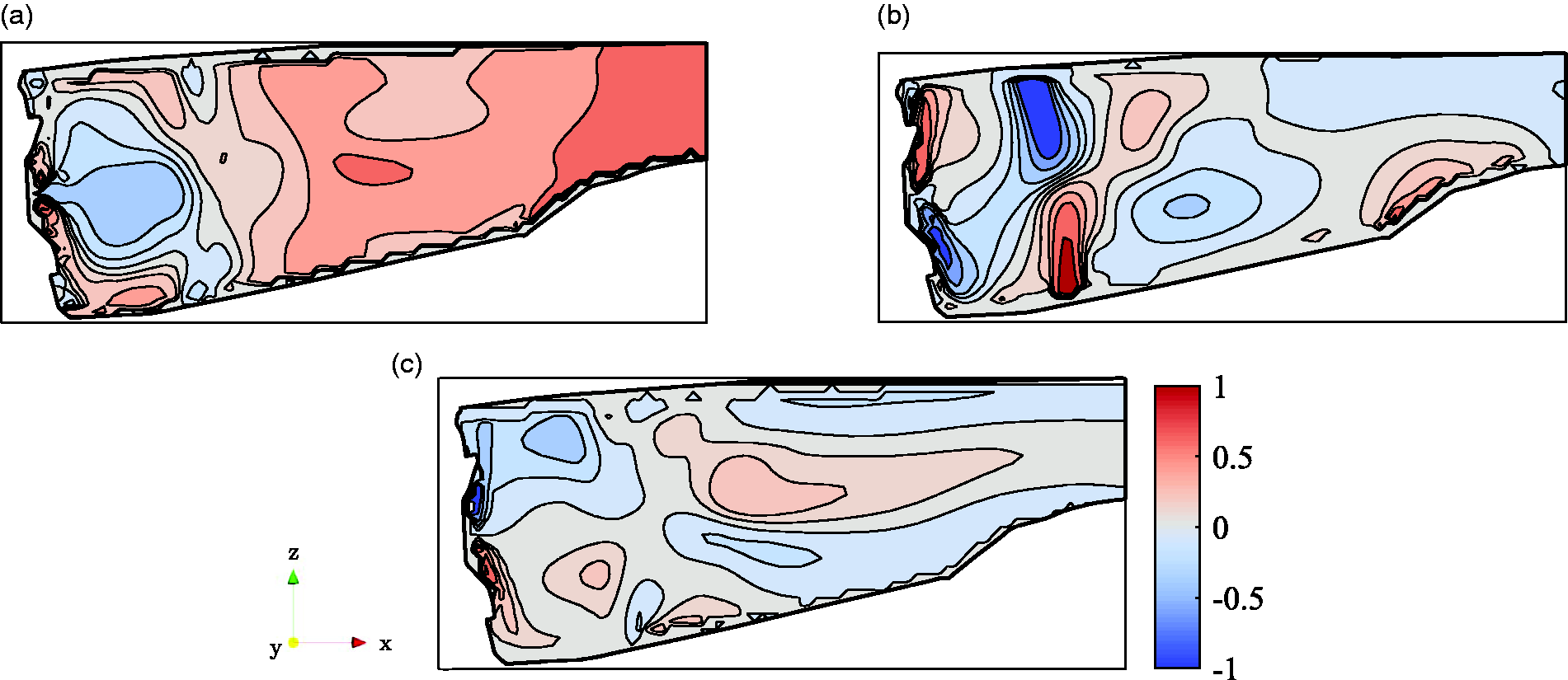
Combustor cross-section gas velocity fields used in SPINTHIR, obtained by interpolating the RANS solution data to a regular grid, shown at the cross-section y = 0. (a) ux/umax, (b) uz/umax and (c) uy/umax.
Two different versions of the ignition model are tested. In the first version, which corresponds to the model originally published by Neophytou et al.
14
(referred to in this paper as original SPINTHIR model), the liquid equivalence ratio is evaluated without considering stochastic fluctuations; hence
SPINTHIR was tested by simulating the ignition at conditions resembling those of high-altitude relight of a realistic Rolls-Royce rich-quench-lean (RQL) combustor. The time-averaged cold flow field, necessary as input for SPINTHIR computations, was obtained from a computational fluid dynamics (CFD) simulation using the Rolls-Royce proprietary finite volume code PRECISE-UNS, described by Anand et al. 35 The geometry and the numerical mesh of the combustor consist of a single sector with diffuser and annuli regions included. In the simulation, an Eulerian-Langrangian approach was employed, which combines an Eulerian description of the gas-phase with a Lagrangian simulation of the fuel droplet motion. The Reynolds-averaged Navier-Stokes (RANS) framework with k-ε turbulence model 36 was used for the gaseous flow. Typical RANS equations for cold flow were solved, together with a scalar equation representing the mixture fraction of fuel released by droplet evaporation. The Lagrangian tracking of fuel droplets (dispersed liquid phase) was performed using material-point approximation, two-way coupled with the gaseous phase. The modeling of the dispersed liquid phase included the standard sphere drag correlation, 37 stochastic dispersion, and the Abramzon-Sirignano evaporation model. 38 Further details on the Eulerian-Lagrangian approach implemented in PRECISE-UNS, numerics and solution strategy can be found in Anand et al. 35 The liner cooling system was included in the simulations by using both direct modeling (e.g. slot cooling for the tiles) and distributed source/sink terms at the corresponding walls (liners with film cooling). The flow split between the cooling streams were provided by Rolls-Royce and computed with low-order network tools.
The CFD simulation was carried out by imposing periodic conditions on the lateral boundaries of the combustor’s sector. Velocity profiles obtained from simulations of the compressor were imposed at the inlet, whereas an outlet condition was used at the combustor’s exit. The operating condition was representative of sub-idle operation of the engine, corresponding to a static pressure
The discretization schemes were of second order in space for all flow variables but the turbulence model variables, for which an upwind scheme was employed. A hexa-dominant unstructured mesh of approximately 20 M cells was used. The computational mesh, provided by the Combustion Aerothermal Methods group at Rolls-Royce plc., was built according to best-practices developed by the company over more than ten years of experience in simulations of aero-engine combustors. Best practices are the results of extensive studies on configurations similar to the one investigated in this work to ensure mesh independence and accurate representation of the flow through the injector, including swirl and spray opening angle, and in the diffuser area as well as mixing in the region downstream of the dilution holes. Accuracy in the simulation of the flow field and mixing was achieved through refinements in the injector and in high shear regions.
3. Results and discussion
First, the Reynolds-averaged, non-reacting flow field is discussed. Figure 2 shows the fuel distribution in the combustor at the condition studied (with injected SMD equals
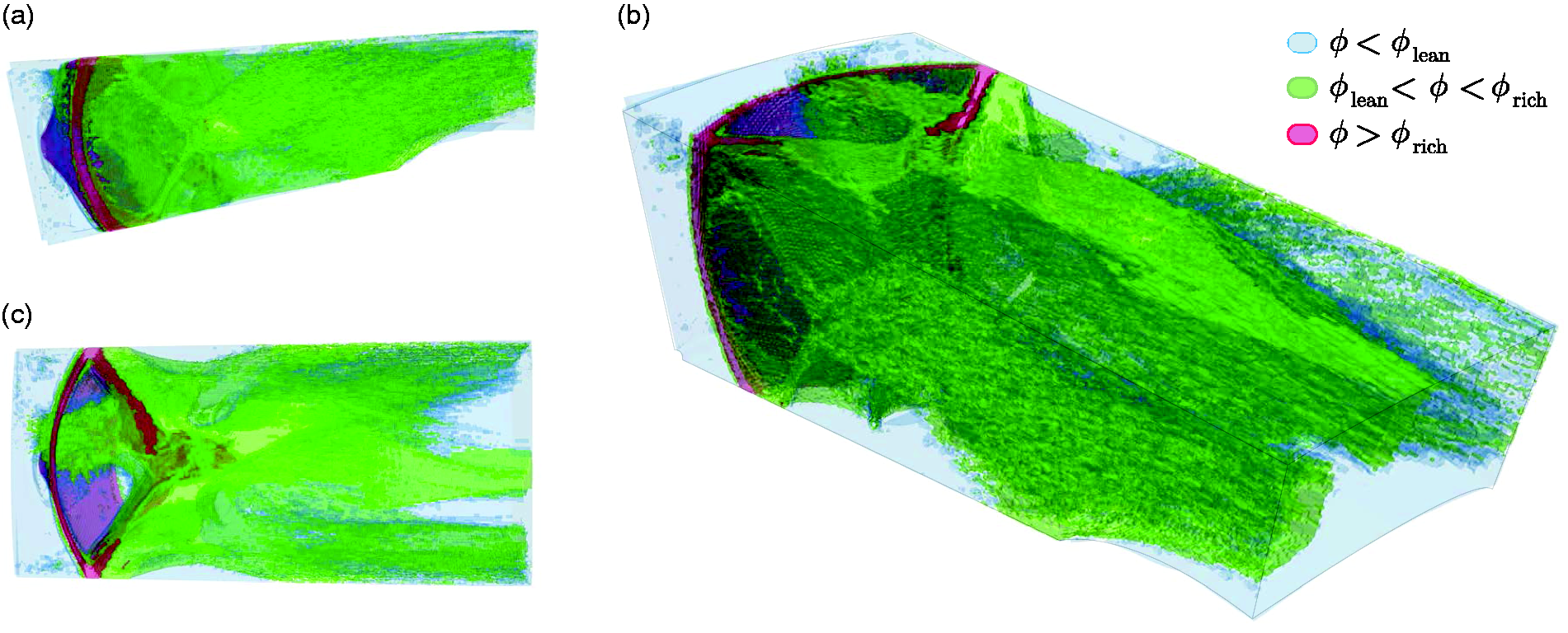
Fuel distribution in a sector of a developmental rich-quench-lean combustor. Flammable regions are depicted in green. (a) Side, (b) top and (c) isometric.
In the next step, ignition simulations with SPINTHIR are explored. Figure 3 shows flow variables relevant to the ignition model in the combustor middle plane: the fields of (a) the (total) equivalence ratio, (b) Sauter mean diameter (SMD), and (c) turbulent kinetic energy. A high concentration of fuel can be seen in (a) in the vicinity of point 1, which is caused by the merging of the two adjacent injection cones in the annular combustor with the injection cone of the current sector. This region is also characterized by high turbulent kinetic energy levels, which is mainly induced by the high velocity of the dilution jets (c). Overall, the SMD remained very uniform within the combustor (b), except in the region closest to the injector and at points downstream of it, where some slight segregation of the droplets based on their momentum may also occur due to the flow. One should note that, as the images depict an axial cut of the combustor, the full spray cone might not be fully represented. In terms of SMD, for example, regions of very small fuel volume fraction as those occurring inside the cone, will be characterised by low SMD values.
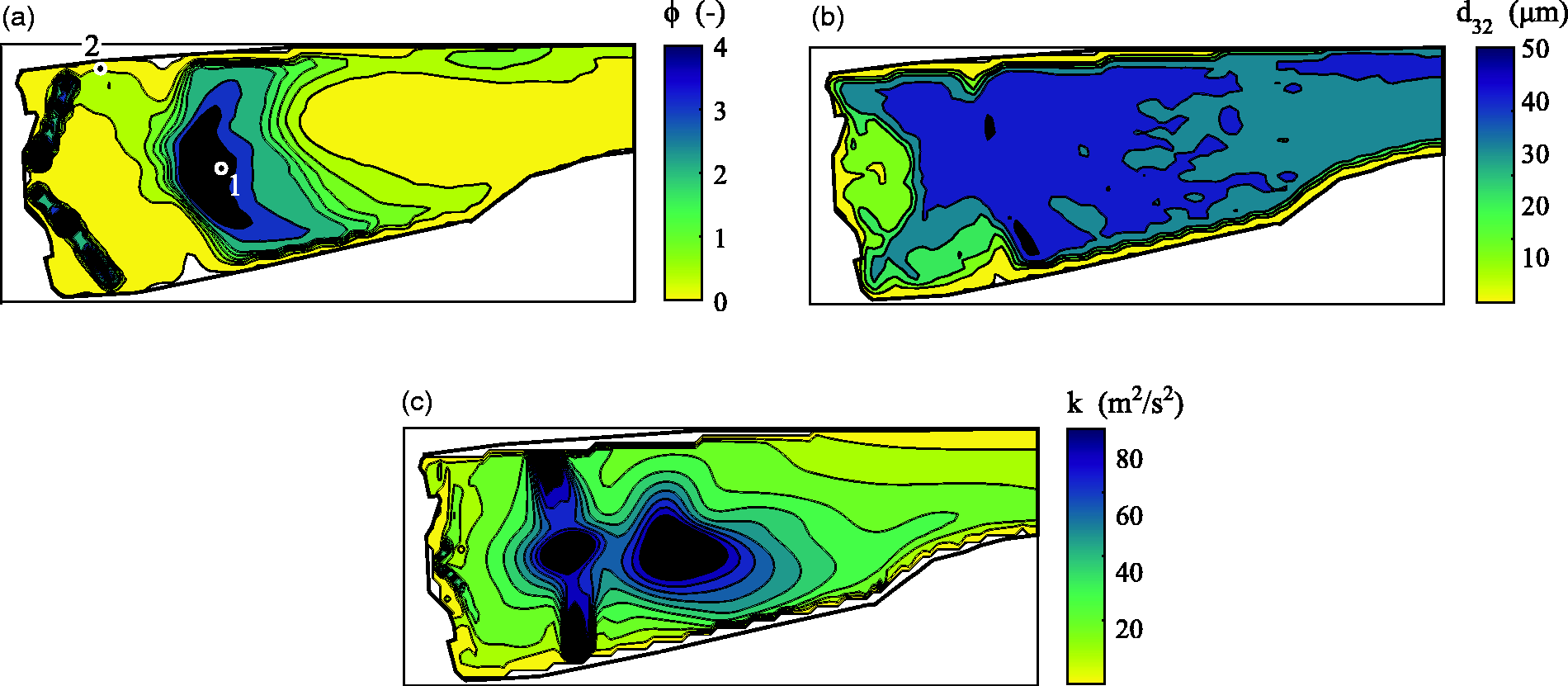
Combustor cross-section fields used in SPINTHIR obtained by interpolating the RANS solution data to a regular grid: (a) equivalence ratio, (b) Sauter mean diameter, and (c) turbulent kinetic energy. Numbers 1 and 2, indicated in (a) refer to the center of the combustor and the spark location, respectively.
As a step towards understanding the non-linear effect of atomization on the combustor’s ignition performance, a parametric study considering three distinct Sauter mean diameters was carried out. For this investigation the modified model with stochastic spray modeling was used. Further, the cold flow field obtained from RANS was used, as shown previously in Figures 1 and 2, while the d32 field was scaled by 50% and 100%, that is, representing an injected SMD of 75 and 100 μm, respectively. The representative Rosin-Rammler volume fraction curves are illustrated in Figure 4 for reference, with their resulting effect on the cell’s PDF of
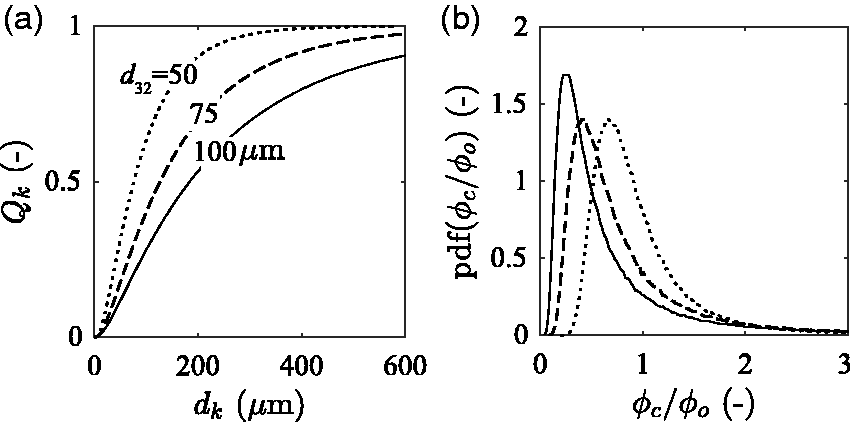
(a) Rosin-Rammler volume fraction distributions and (b) typical resulting PDFs of liquid equivalence ratio for the particles considering the model in equation (10) and three conditions corresponding to injected SMDs of 50, 75, and 100 μm.
A comparison between the three investigated cases (SMDs of 50, 75, and 100 μm) is shown in Figure 5 in terms of
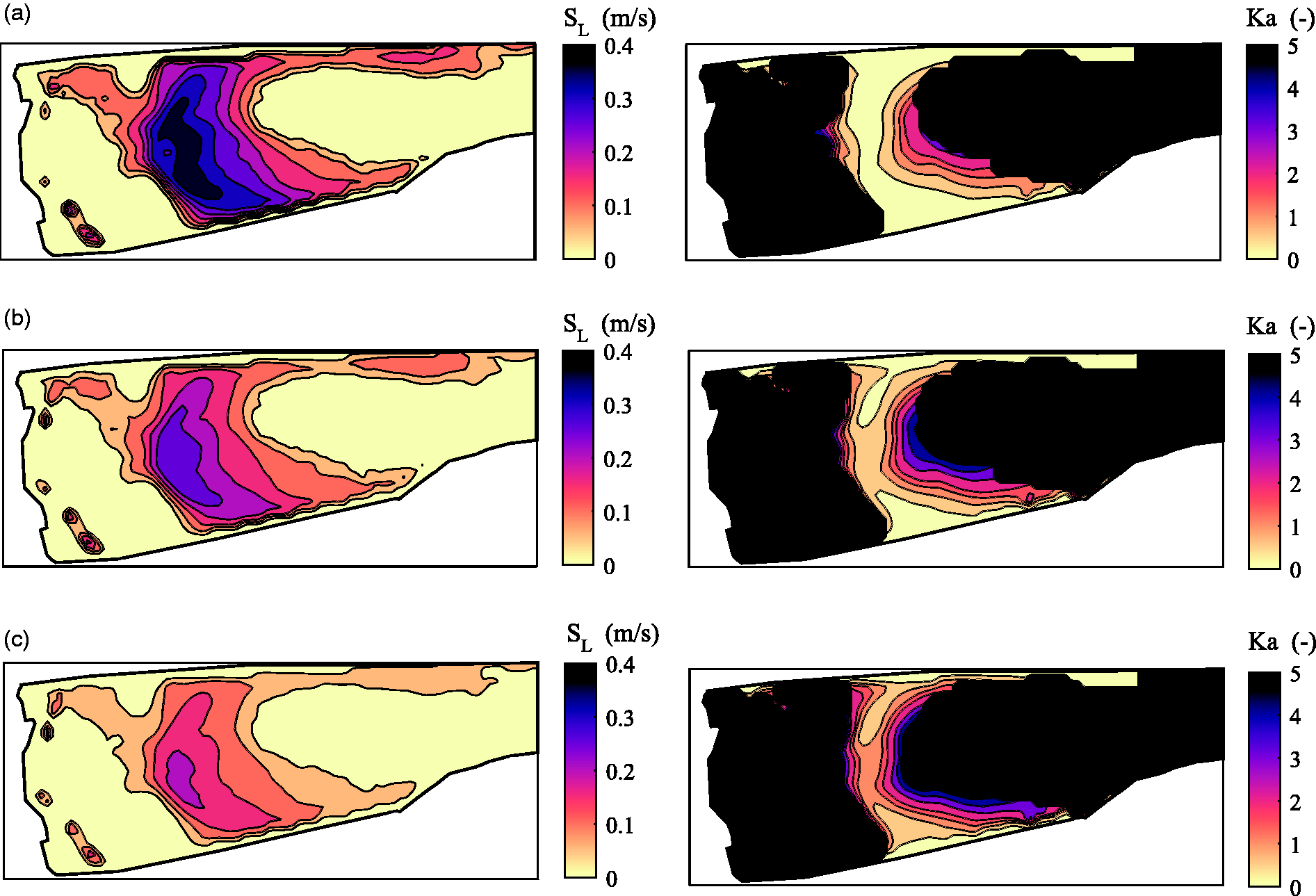
Combustor cross-section fields of flame speed and Karlovitz number calculated from mean flow variables, ignoring the variance of the liquid equivalence ratio. Both fields are given for injector SMDs of (a) 50 μm, (b) 75 μm, and (c) 100 μm.
Note that the flame particles’ gaseous mixture fraction,
Figure 6 shows the probability density functions of equivalence ratio, flame speed, and Karlovitz number stochastically computed in SPINTHIR considering the fuel fluctuation model and the velocity fluctuations seen by the flame particles. Point data is given for two locations within the combustor: at the (a) combustor center and at the (b) spark location (points 1 and 2 in Figure 3(a)). The PDF at the spark location is relevant for the initial survival and subsequent growth of the kernel, whereas the PDF in the center region of the combustor eventually determines if a substantial fraction of the combustor volume can be reached by the flame, i.e. if the critical value of Π attained to achieve successful ignition. It can be seen that the effect of increasing the injected SMD is more detrimental at the combustor center location (Figure 6(a)); a higher reduction in probability of values Ka < Ka
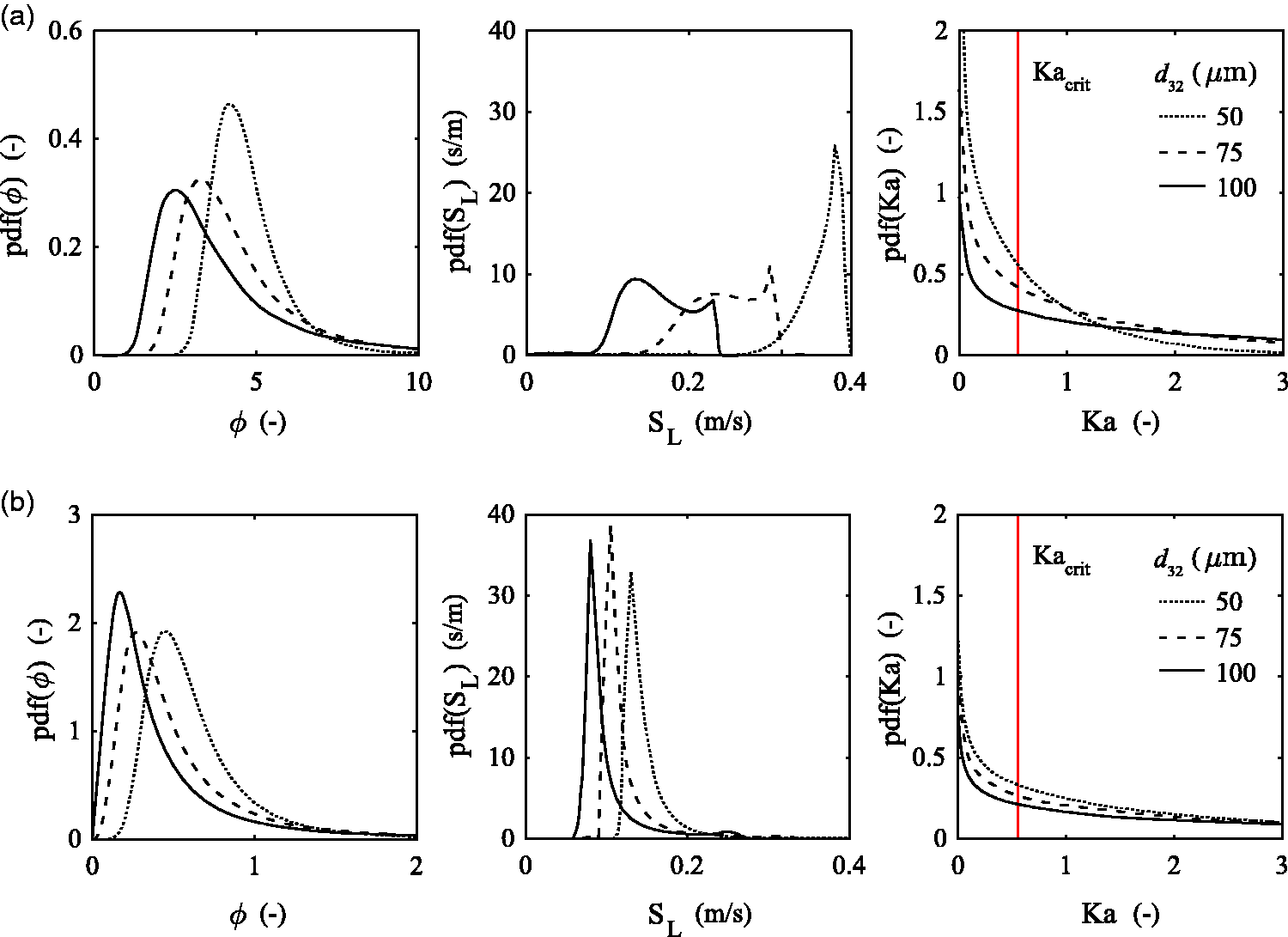
Probability density functions of equivalence ratio, flame speed, and Karlovitz number for injection SMDs of 50, 75, and 100 μm at two distinct locations: (a) combustor center, (b) spark location (Points 1 and 2, Figure 3).
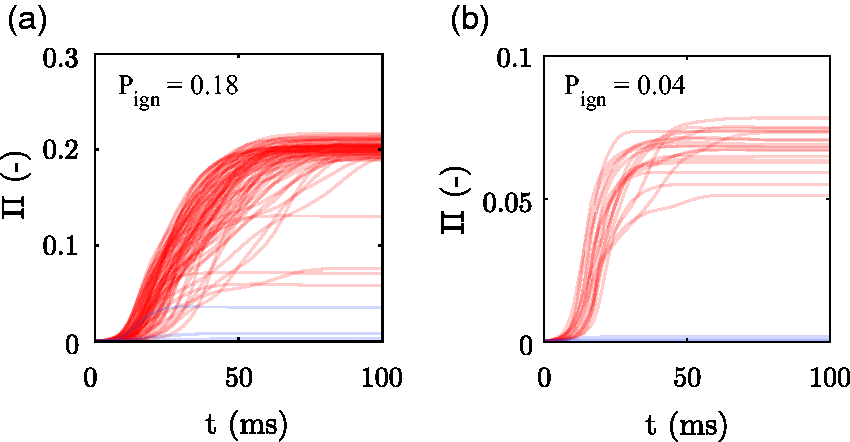
Ignition progress factor in terms of time after the spark for the (a) original and (b) modified SPINTHIR model – d32 = 50 μm,
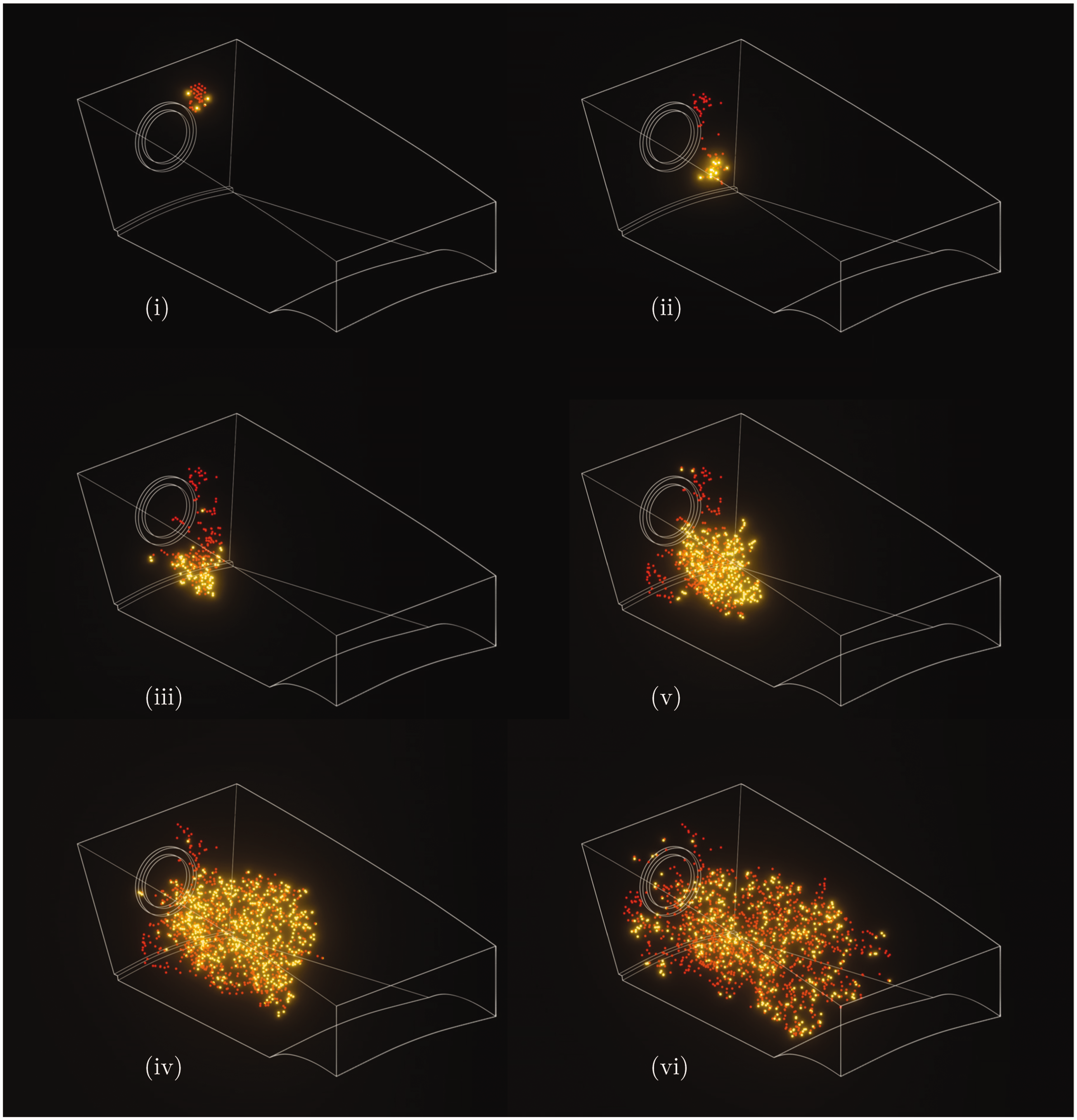
Example of an ignition sequence in SPINTHIR, with yellow and red particles representing the burning and extinguished virtual flame particles in the domain, respectively – d32 = 50 μm,
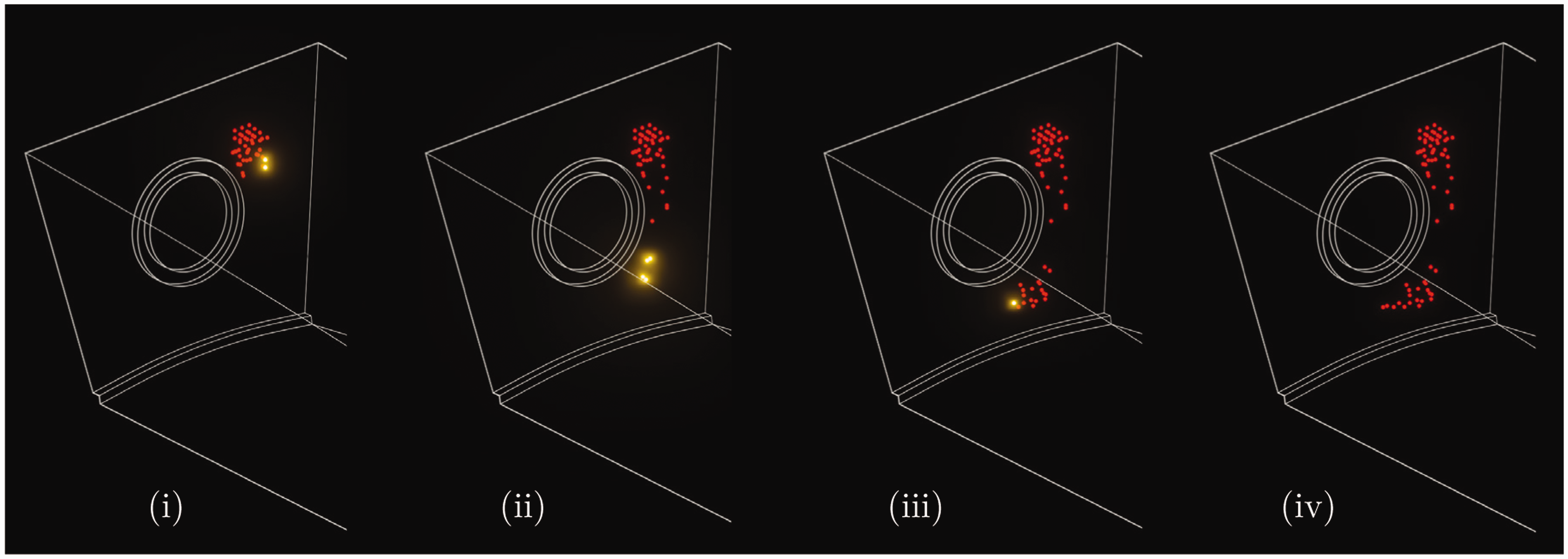
Example of a failed ignition sequence in SPINTHIR – d32 = 50 μm,
The original and the modified SPINTHIR models are further compared in terms of the predicted ignition probability (Figure 7) for the case of injected SMD of 50 μm. While the original model predicted a
Finally, the overall ignition behavior of the engine is given in Figure 11 for various conditions with different spark diameters and injected SMDs, while using only the modified version of SPINTHIR. Additionally, the probability of initiating a flame in the combustor, denoted as
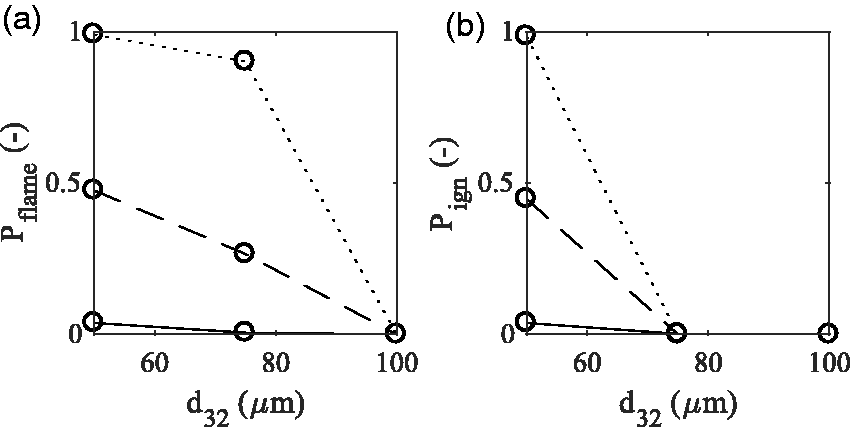
Resulting (a) probability of generating a flame in the combustor and (b) probability of ignition for conditions in Figure 11.
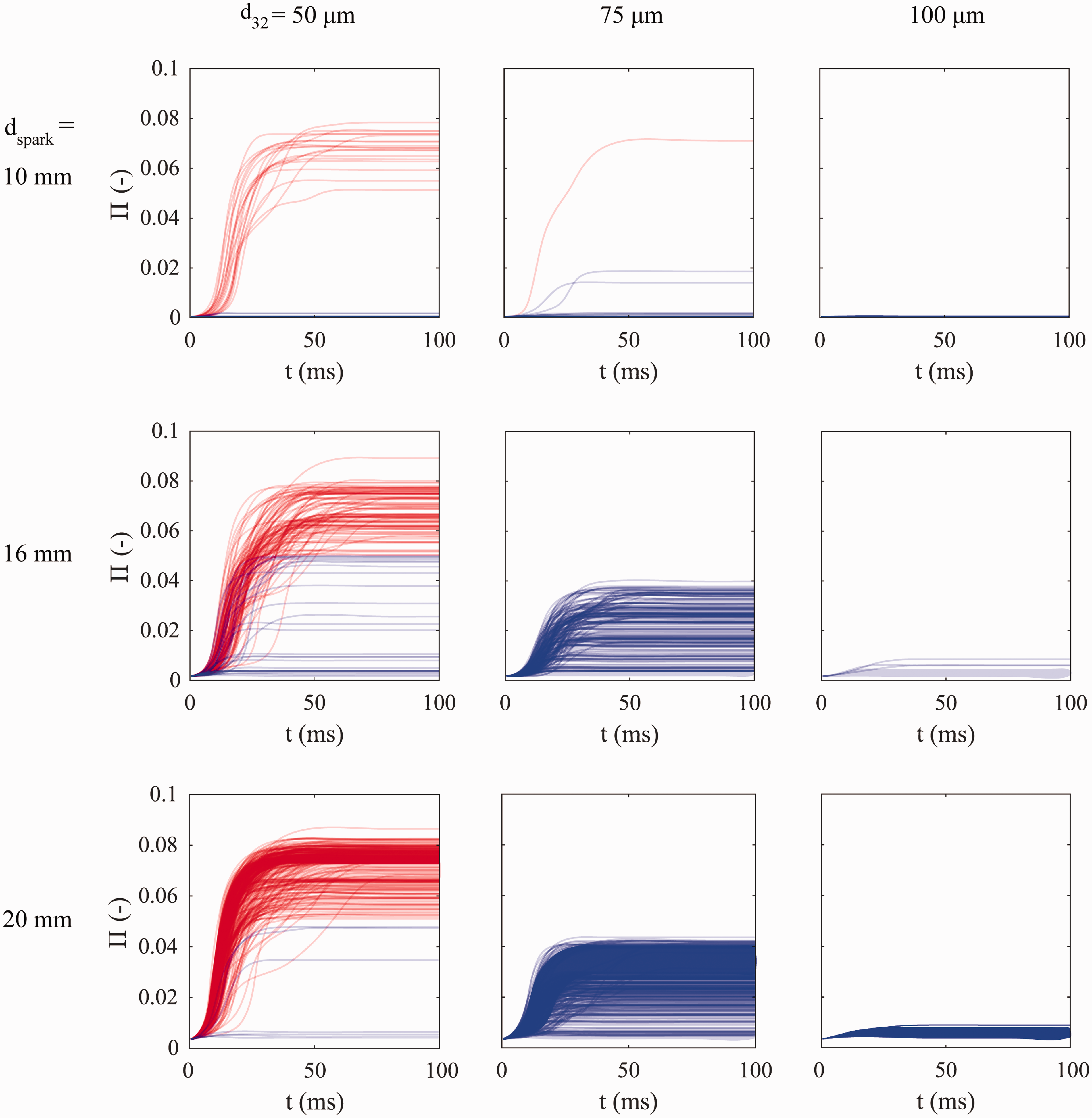
Ignition progress factor in terms of time after the spark for conditions with d32 = 50, 75, 100 μm,
4. Conclusion
The effect of the spray's polydisperse character was investigated in the context of the low-order ignition model SPINTHIR applied to a sector of a Rolls-Royce developmental RQL gas-turbine combustor at relight conditions. RANS simulations of the combustor at non-reacting conditions were carried out, and the data was used as an input for the ignition model SPINTHIR to predict the combustor’s ignition behavior. In order to achieve low computational cost, the Reynolds-averaged flow field is constant – this is a key assumption of the present modelling approach.
To incorporate droplet-induced effects on flame extinction in SPINTHIR, which is achieved through the Karlovitz number-based extinction criterion, an additional model was used to evaluate the spray polydispersity taking an stochastic approach, where the local equivalence ratio at each of the model’s cells is evaluated based on the cold-flow spray characteristics. To illustrate the difference between the original and the newly proposed modified SPINTHIR models, probability density functions (PDF) of equivalence ratio, flame speed, and Karlovitz number were evaluated at the spark location and at the center of the combustor. Overall, using a stochastic formulation, the presence of large droplets manifests in the occurrence of very high Karlovitz number values, which have a detrimental effect on the ignition performance of the combustor. This non-linear effect does not appear when only Reynolds-averaged spray properties are considered otherwise in the original model. In fact, the stochastically obtained values of flame speed and Karlovitz number differed significantly from their values obtained from mean flow variables. This also illustrates, for example, why in the proposed model the propagation of flame particles can be verified in regions of extremely high Ka values, or even in regions with a mean equivalence ratio below the lean flammable limit. Moreover, successful ignition events were characterized by the propagation of flame particles to a rich and high-turbulence region just downstream of the spray cone, followed by ignition of the whole combustor, while ignition failure events were marked by quenching of flame particles immediately after the spark or, simply, their advenction downstream the combustor.
Overall, using the modified SPINTHIR model, i.e. accounting for the fuel fluctuations due to the spray, resulted in lower values of ignition probability for the combustor studied when compared to results where a single, time-averaged cell equivalence ratio value was considered. For the lowest injection SMD case considered (50 μm), increasing the spark diameter in the model from 10 to 20 mm resulted in suppression of events where quenching of the flame particles in the model was observed immediately following the spark, thus leading to higher ignition probability values. The same trend was not observed for higher injection SMDs (75–100 μm). Although for these cases, increasing the spark size resulted in an initially larger volume occupied by the flame particles, their subsequent growth and propagation was not significant to achieve ignition. This effect was likely observed due to an overall reduction of the flammable area of the combustor due to the fuel fluctuation model. Further work is needed on the ignition model to better predict ignition at conditions of poor fuel atomization, for example, considering other approaches as a dependency between individual ignition attempts, building up of vapor fuel in the combustor, as well as temperature increase of the combustor with failed attempts.
Footnotes
Acknowledgements
The authors thank the Combustion Aerothermal Methods group at Rolls-Royce plc. for providing the geometry and the numerical mesh of the combustor used in this study.
Declaration of Conflicting Interests
The author(s) declared no potential conflicts of interest with respect to the research, authorship, and/or publication of this article.
Funding
The author(s) disclosed receipt of the following financial support for the research, authorship, and/or publication of this article: P.M. de Oliveira gratefully acknowledges the financial support of the Brazilian Space Agency and Brazil’s National Council for Scientific and Technological Development. The authors also acknowledge the funding granted by the European Commission Clean Sky 2 project PROTEUS (785349).

Appendix 1. Rosin-Rammler distribution parameters
The purpose of this Appendix is to show how the parameters of the modified Rosin-Rammler distribution, X and q, are related to d10 and d32, which are readily available from the CFD simulation.
First, consider the regular Rosin-Rammler distribution where with the following cumulative volume density function,
with X > 0, q > 0. Then the volume distribution is
We note the definition of the gamma function:
Integrating fQ by substituting
Since the number distribution is defined as
The relations diagram for d10 and d32 in terms of Rosin-Rammler distribution parameters X and q is shown in Figure 12.
Second, for the modified Rosin-Rammler volume distribution (equation (8)) the relationship between X and q, and d10 and d32 is determined numerically.