




Abstract
Background:
To better understand the development of therapy for asthma, grasp the core paradigm associated with the transformation of cognition of asthma treatment and asthma, explore potential and effective therapies for asthma, discover new biomarkers and mechanisms related to asthma treatment, find novel targets for anti-asthma drugs, and predict the future trends of asthma therapy, we used a bibliometric analysis to research articles related to the therapies for asthma published from 1983 to 2022.
Methods:
A comprehensive search was conducted to analyze the articles associated with therapy for asthma with the help of the Web of Science Core Collection (WOSCC) database from January 1, 1983 to August 14, 2022. The CiteSpace 6.1.R2 software and VOS viewer 6.1.8 software were utilized to analyze the overall structure of the network, network clusters, links between clusters, key nodes, and pathways.
Results:
A total of 3902 publications related to therapies on asthma were published in 3211 academic journals by a total of 14,655 authors in 3476 organizations from 87 countries or regions from 1983 to 2022. The United States published the most articles (n = 1143), followed by England (n = 574) and China (n = 405). However, the centrality of China was 0.4, higher than the United States (centrality = 0.16) and Singapore (centrality = 0.11). Akdis Cezmi published the most papers. Journal of Allergy and Clinical Immunology published the most studies on therapies for asthma. Asthma was the most frequent keyword (n = 594). The betweenness centrality value of keywords that were greater than 0.1 included airway inflammation (centrality = 0.22), double blind (centrality = 0.18), asthma (centrality = 0.17), inflammation (centrality = 0.12), and inhaled corticosteroid (centrality = 0.11).
Conclusions:
The results from this biometric review provide insight into the development of therapy for asthma, the paradigm of recognition of this field, the approach of discovering new targets, exploration and combination of new mechanisms, and the frontier trend of this field in future.
Introduction
Asthma is a common respiratory disorder characterized by the chronic inflammation of the airways in which various types of immune cells of the innate and adaptive immune systems gather (such as mast cells, eosinophils, activated T helper lymphocytes, B cells, and neutrophils) with epithelial cells and airway smooth muscle (ASM) cells resulting in bronchial hyper-reactivity (BHR), respiratory airway narrowing and remodeling, and mucus overproduction.
A combination of control therapies based on relieving the inflammatory responses and symptom-alleviation based on regulating the remodeling responses forms the basis of the management guidelines of asthma. The pathophysiology of asthma has underpinned the therapy for asthma. The guidelines for treating asthma are based on the results from randomized, tightly controlled trials. However, asthma as a condition that is observed to exacerbate and subsequently alleviates demands the alteration of treatment to keep the patient’s condition under reasonable control. Multiple clinical questions raised following the management of asthma draw the focus on the understanding of the mechanisms of current therapy for asthma and exploration of the new targets that are amenable to both biological interventions and small molecules.
The underlying mechanisms of asthma are still ambiguous. In some low- and middle-income countries, asthma occurs with non-allergic mechanisms, while in developed countries, asthma is much more common underlying allergic mechanisms.1,2 It is also unclear whether asthma is a single disease, or if it is actually a series of multiple conditions, which all cause the same effect. 3 Asthma has always been responsible for the health care costs and remarkable global morbidity; however, little improvement of therapy for asthma has been observed in the past 10 years after substantial progress was made against the key outcomes, such as hospital admissions with asthma and mortality in the 1990s and the early 2000s. 3 New therapeutic techniques are not being adopted and new drug discovery has developed more slowly than in other specialties. Furthermore, the poor recognition of the mechanisms of asthma results in the underdiagnosis and overdiagnosis of asthma in children and adults.4–6 The trends of prevalence estimated by the global burden of disease (GBD) study have varied remarkably. In addition, GBD back-extrapolated a decline in the global prevalence and mortality trends for an earlier period in the mid-1990s to the early 2010s. 7 The global prevalence and mortality trends were observed to swing up and down from the early 2010s to the early 2020s. The national age-standardized asthma death rates for asthma declined to a greater extent than did the age-standardized asthma admission rates, reflecting a global pattern in which the asthma mortality rates appropriately halved in most countries. The global prevalence and mortality trends may be associated with the recognition of the mechanisms of asthma and therapy and the declining trend may produce a view related to a new paradigm to renovate the recognition of asthma or the mechanisms of therapy for asthma and reform the approaches of researching asthma or discovering new targets closely associated with the improvement of a curative ratio and prognosis of asthma patients. Meanwhile, the increasing trend may indicate some obstructions of recognition of the therapeutic mechanisms for asthma.
Inhaled corticosteroids and short- and long-acting β2-adrenoceptor agonists (SABAs and LABAs) are still the mainstay of therapy for asthma as advocated by disease-management guidelines. The accurate therapeutic schedules are closely associated with the recognition of marked heterogeneity in context of symptoms, severity, and disease management.
To better understand the development of therapy for asthma, utilize the current technique to formulate therapeutic strategies, grasp the core paradigm associated with the transformation of cognitive of asthma treatment, explore potential and effective therapy for asthma, discover new biomarkers and mechanisms related to the treatment of asthma, and predict the future trends of asthma therapy, we harness this biometric review and summarize the mechanisms of therapy for asthma.
The Web of Science has 4063 records between 1983 and 2022 based on a topic search of the term ‘asthma therapy and mechanisms’ in the titles, abstracts, or indexing terms. Scientometrics as a branch of informatics can analyze the patterns in the literature of science to better understand the emerging trends and the knowledge structure of a research field. Science mapping tools can take the scientific literature publications as an input and generate interactive visual representations of exploration and complicated structures for statistical analysis. The overwhelming majority of science mapping tools are available. 8 Science mapping tools, such as Ingenuity Pathway Analysis and Cytoscape, resemble their counterparts in biomedicine research.9,10 The idea of co-citation analyses promotes the generation of multiple science mapping techniques. The structure of intellectual knowledge in terms of the networks of co-cited references represents the varieties of forms of presentation processed by science mapping tools, such as VOSviewer, DIVA, HistCite, LoetLeydesdorff’s software, Network WorkBench, and CiteSpace.11–20 In this review, we use CiteSpaceand VOSviewer to delineate the structure and development of the mechanisms of therapy for asthma. CiteSpace is specifically designed to facilitate the detection of abrupt changes and emerging trends in scientific literature. Therefore, CiteSpace provides an effective and dynamic view to recognize the varieties of primary areas in the process of development and explore multiple possibilities of potential therapy for asthma.
Methods
CiteSpace and VOS viewer
CiteSpace is used to generate and analyze the networks of co-cited references based on bibliographic records retrieved from the Web of Science. The functionality of the VOS viewer is especially useful for the construction of maps of authors or journals based on the co-citation data or map construction of keywords based on the co-occurrence data. The initial topic search for ‘asthma therapy and mechanisms’ resulted in 4063 records published between 1983 and 2022. After filtering out duplicated records and less representative record types, such as corrections, editorial materials, letters, meeting abstracts, news items, notes, and proceeding papers, the data set was reduced to 3902 original research articles and review articles. The 3902 records do not include relevant publications, if the term ‘asthma therapy and mechanisms’ does not explicitly appear in the titles, abstracts, or item terms (Figure 1).

Flow chart of the screening process.
Data acquisition and processing
All the publications were obtained from the Web of Science Core Collection (WOSCC). Here is the search strategy: ALL = (asthma therapy) AND ALL = (mechanisms) (ALL is the abbreviation of ‘all fields’), indexes = WOSCC, namely, Science Citation Index Expanded (SCIE), Social Sciences Citation Index (SSCI), Arts and Humanities Citation Index (A&HCI), Conference Proceedings Citation Index Science (CPCI-S), Book Citation Index—Science (BKCI-S), Emerging Sources Citation Index (ESCI), Conference Proceedings Citation Index Social Science & Humanities (CPCI-SSHI), Book Citation Index—Social Sciences & Humanities (BKCI-SSH), timespan = 1983–2022; slice length = 2 years, the correlation strength was cosine, and the threshold for each time slice selected top N = 24. The CiteSpace and VOS viewer were utilized to analyze the overall structure of the network, the network clusters, the links between clusters, the key nodes or pivot points, and the pathways. Some indicators were measured to assess the influence and importance of publications or key words, such as betweenness centrality (a concept in identifying the importance of nodes in the graph, in CiteSpace if the value > 0.1, the node will be regarded as the key node) and sigma values according to the calculation based on the centrality and emergence burst indicating the importance in alterations of structure and citation. In CiteSpace, nodes in modes of tree ring history with different colors represent the period 1983–2022, while in the label view of VOS viewer, or in the cluster view of CiteSpace, colors indicate the cluster to which an item was assigned by the clustering technique that we used. And in the density view of VOS viewer, the color of a point in a map depends on the number of items in the neighborhood of the point and on the importance of the neighboring items.
Results
Annual numbers of publications
A total of 3902 publications were extracted by searching the WOSCC. The annual number of articles is shown in Figure 2. The general trend of alteration is steady growth. Notably, between the years 2000 and 2009, the annual number of publications related to asthma therapy fluctuated and roughly remained unchanged. In the following years, the annual number had been on an upward trend approximately all the time except for 2016 (n = 173), 2018 (n = 219), and 2021 (n = 316) with a slight tendency for decrease. The lowest number of publications was in 1983 and 1986 (n = 1), while the highest number of publications was observed in the year 2020 (n = 324). It can be concluded that therapies for asthma have received increasing attention. Each increasing trend may represent an alteration of paradigm of the recognition or the new application of asthma therapy or mechanisms exploration. We will demonstrate each trend in detail in the subsequent section.

The annual number of relevant publications from 1983 to 2022.
Distribution of countries and organizations
A total of 3902 articles were from 87 different countries/regions and 3476 organizations. As shown in Figure 3 by CiteSpace, the United States published the most articles (n = 1137), followed by England (n = 568) and China (n = 400). As shown in Table 1, the centrality of three countries was more than 0.1, which were the United States (centrality = 0.4), Germany (centrality = 0.16), and England (centrality = 0.11). These three key nodes serve as the bridge in the studies of the mechanisms on asthmatic therapy. The articles from these three countries may create the novel paradigm to recognize the application of treatment of asthma, or reveal the new pathogenesis, targets, and regulatory networks of asthma from perspective of crosslinks with inflammatory mechanisms, or the specific utilization of inflammatory modulation to benefit asthmatic patients. As shown in Figure 4 by VOS viewer, the size of the label is determined by the weight of the item that represented the links between different institutions here. The higher the weight of an item, the larger the label and the circle of the item. The color of an item is determined by the cluster to which the item belongs. The lines between items represent links. By default, at most 1000 lines are displayed, representing the 1000 strongest links between the items. The distance between two organizations in the visualization approximately indicates the relatedness of the organizations in terms of the co-authorship links. In general, the closer two organizations are located to each other, the stronger their relatedness is. As shown in Table 2, Kings College in London is the most productive institution, but its centrality is relatively low (n = 125, centrality = 0.06). By contrast, Imperial College of Science, Technology and Medicine university (n = 122, centrality = 0.12) had a high centrality.

Map of countries/regions that published articles regarding therapy for asthma from 1983 to 2022.
The collection table formed by the top 10 countries/regions with the most citation count and the highest bursts, and centrality.

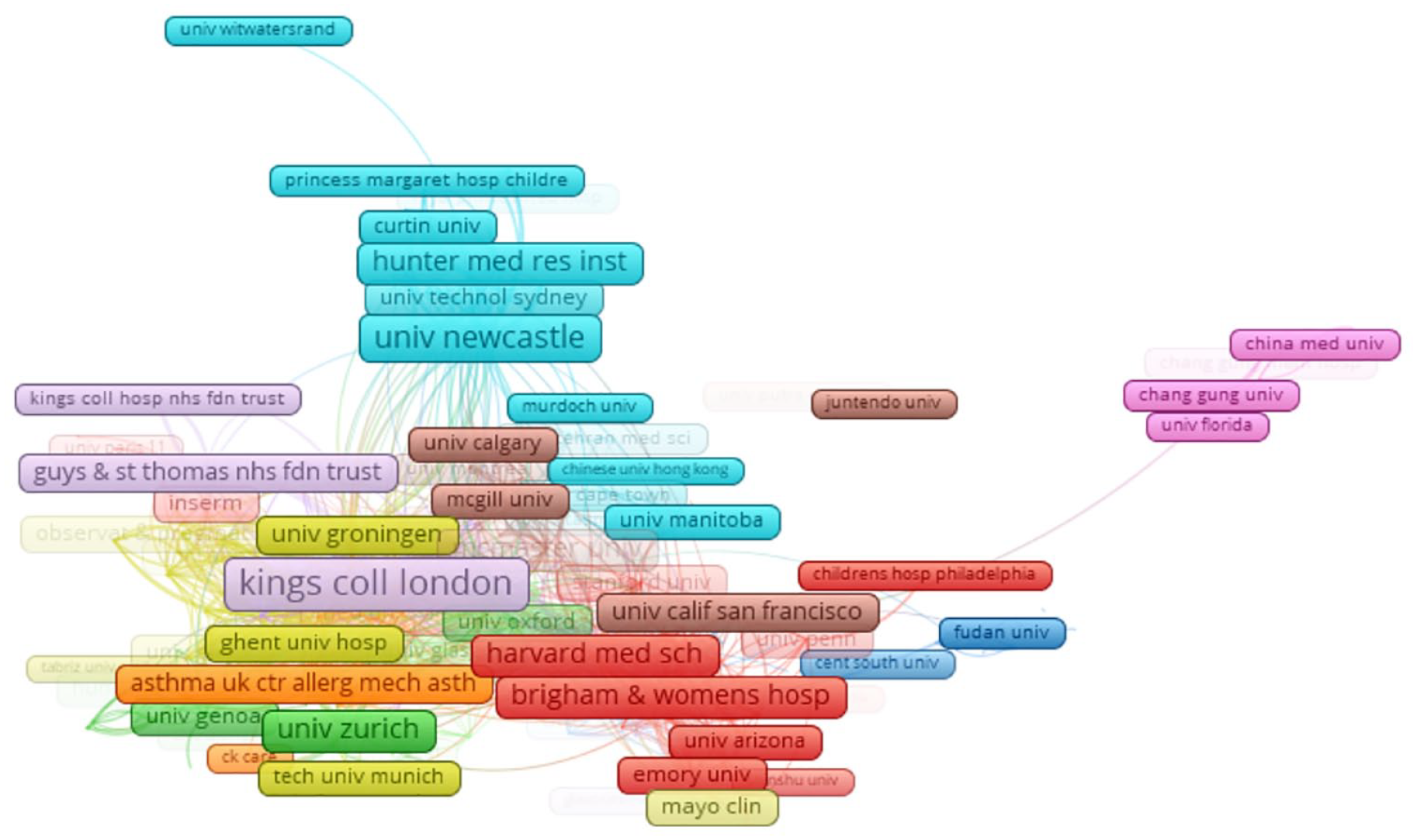
Map of organizations that published articles regarding therapy for asthma from 1983 to 2022.
The collection table formed by the top 10 organizations with the most citation count and the highest bursts, and centrality.

Authors and co-cited authors
As illustrated by VOS viewer in Figure 5, a total of 14,655 authors were involved in research of mechanisms of therapy on asthma; among them, 211 authors published at least five articles. Akdis Cezmi A published the most articles related to mechanisms of therapy on asthma (n = 33), followed by Adcock Ian (n = 30) and Hansbro Philip (n = 29) (Figure 5). Hansbro Philip (n = 117), Foster Paul (n = 66), and Knight Darryl (n = 61) had the highest link strength and the authorship among their researches is steady and close. Another steady link among a series of researches centers on Akdis Cezmi A. (n = 53) (Figure 5; Table 3). The most cited references demonstrated by co-citation analysis were authored by Barnes Peter J (n = 650) and Bousquet Jean (n = 416), followed by Busse William W (n = 362) and Wenzel SE (n = 360) (Figure 6; Table 4). In Figure 6, the co-citation analysis of authors was conducted by CiteSpace. The top 25 authors with the strongest citation bursts were listed in Figure 7.

The authorship of authors.
The top 5 authors with the most documents.

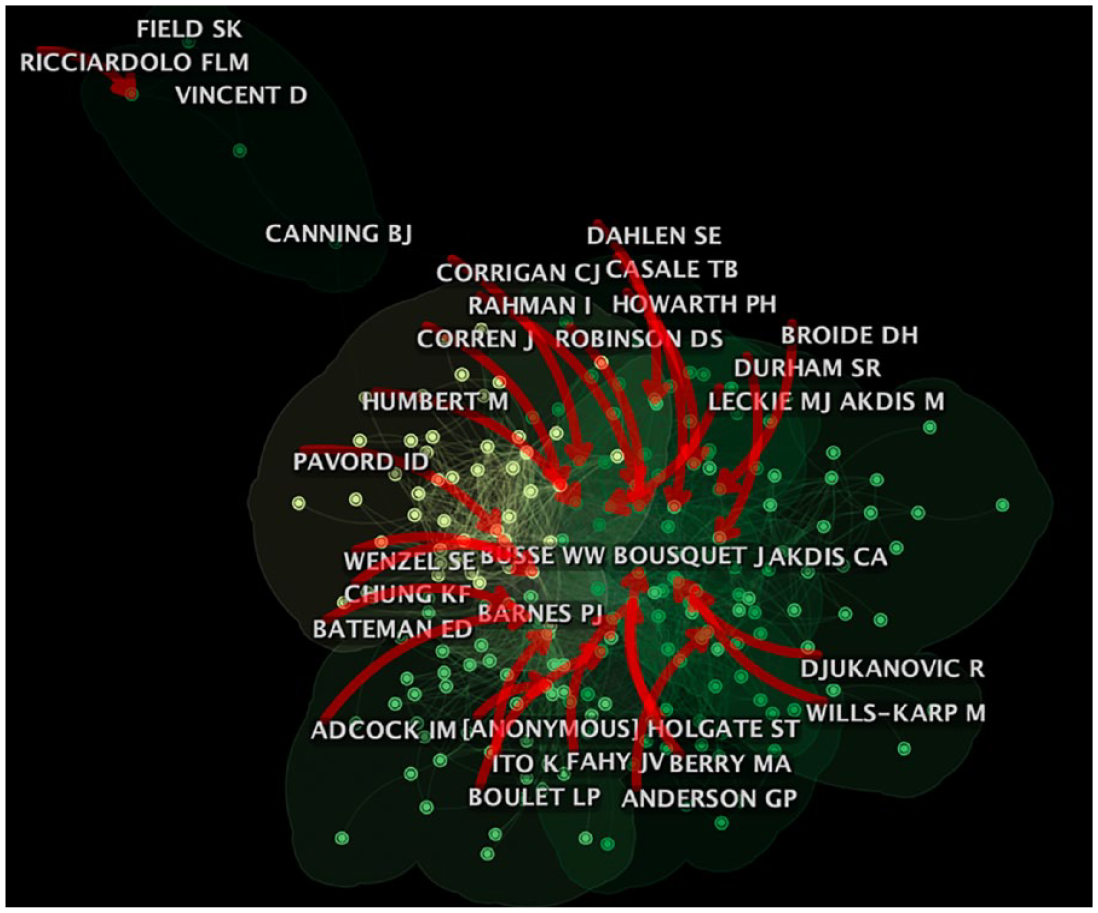
The map of co-citation of authors.
The collection table formed by the top 5 authors with the most citation counts and the highest centrality and sigma value.


The top 25 cited authors with the strongest citation bursts.
Journals and co-cited journals
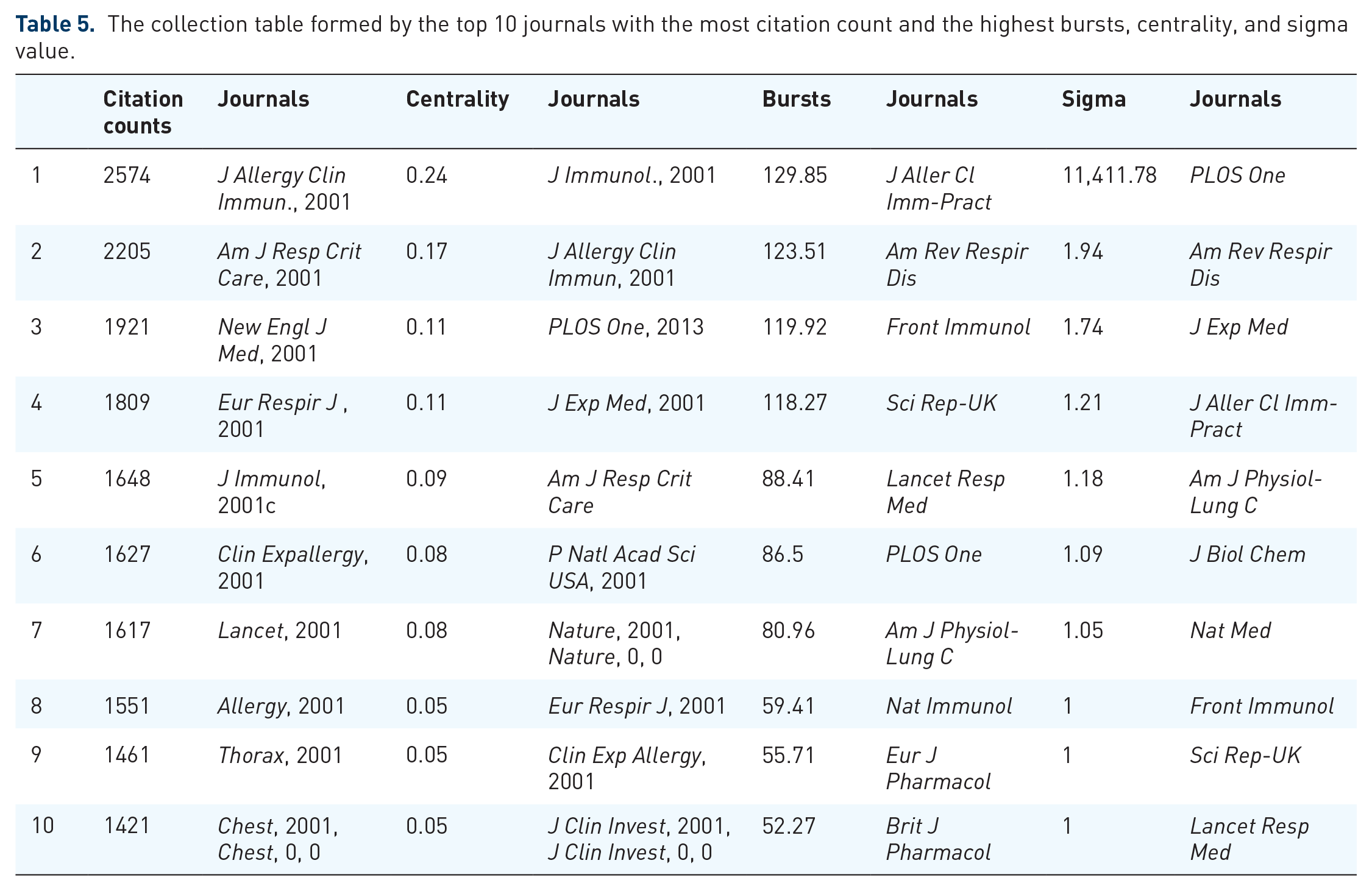
A total of 3211 academic journals published articles associated with mechanisms on treatment of asthma from 1983 to 2022. As demonstrated in Figure 8, the citing journals are on the left, the cited journals are on the right, and the colored path represents the citation relationship. The round circles represent that there are a great number of articles and authors in each particular research field. The ratios between the authors and articles can be recognized by the ratios between the width and height of the circles. And the lines are emphasized for those connections that are more significant than others. For example, the connection between publications from journals related to ‘medicine, medical, clinical’ and to ‘molecular, biology, genetics’ or to ‘health, nursing, medicine’ can be closer from the perspective of co-citation relationship. The co-cited analysis of journals that published articles regarding therapy on asthma has been illustrated in Figure 9. The top 10 journals with the most citation count, and the highest bursts, centrality, and sigma value have been shown in Table 5.
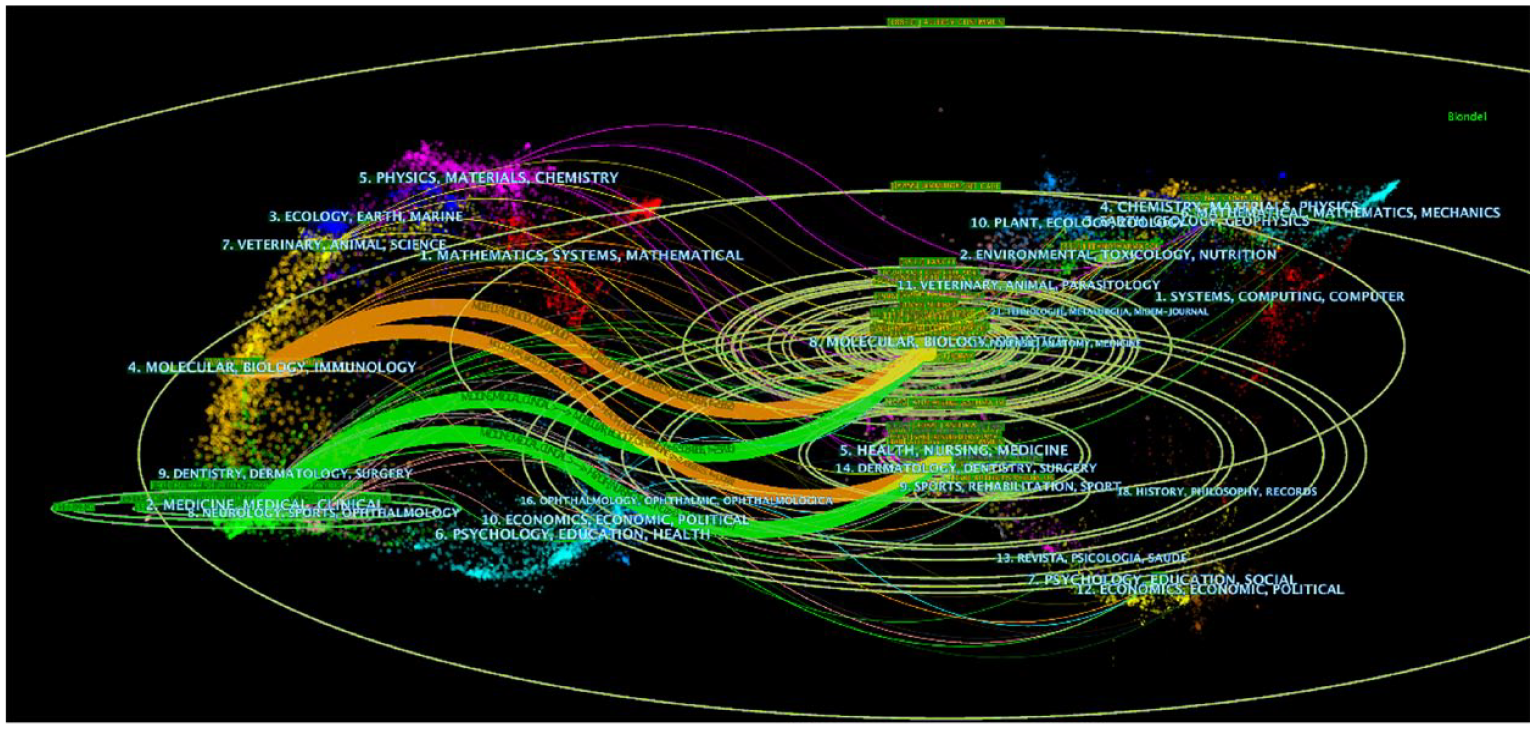
The dual map overlay of journals related to therapy on asthma.

The map of journal co-citation.
The collection table formed by the top 10 journals with the most citation count and the highest bursts, centrality, and sigma value.
Co-citied references analysis
Of the 151,288 cited references, 447 were cited at least 20 times; 447 publications with 41,336 links were divided into five clusters in Figure 10. The total link strength is 123,494. As demonstrated in Figure 11, cluster 2 (formoterol), and cluster 3 (histone acetyltransferase) started earlier. While cluster 0 (severe asthma) is still going which may be the hotspots in future (Figure 8). We listed the top 10 references with the strongest citation bursts (Figure 11). The other four clusters are respective persistent airflow limitation (cluster 1), allergen immunotherapy (cluster 4), inflammation (cluster 5), and T regulatory cells (cluster 6) (Figure 12). The strongest burst (strength = 34,52) occurred in a paper entitled ‘International ERS/ATS guidelines on definition, evaluation and treatment of severe asthma’, published in European Respiratory Journal by Chung et al. 21 in 2014, with citation burst from 2015 to 2020. The article focused on the generalization and summarization of the International ERS/ATS guidelines on definition, evaluation and treatment of severe asthma (Figure 13). Table 6 showed the top 10 cited references with the most count and centrality. Among them, the most co-cited reference is the article with the strongest burst. The reference with the highest centrality was published in the Journal of Clinical Investigation by Flood Page et al. 22 , entitled ‘Anti-IL-5 treatment reduces deposition of ECM proteins in the bronchial subepithelial basement membrane of mild atopic asthmatics’.

Co-cited references analyzed by VOS viewer.
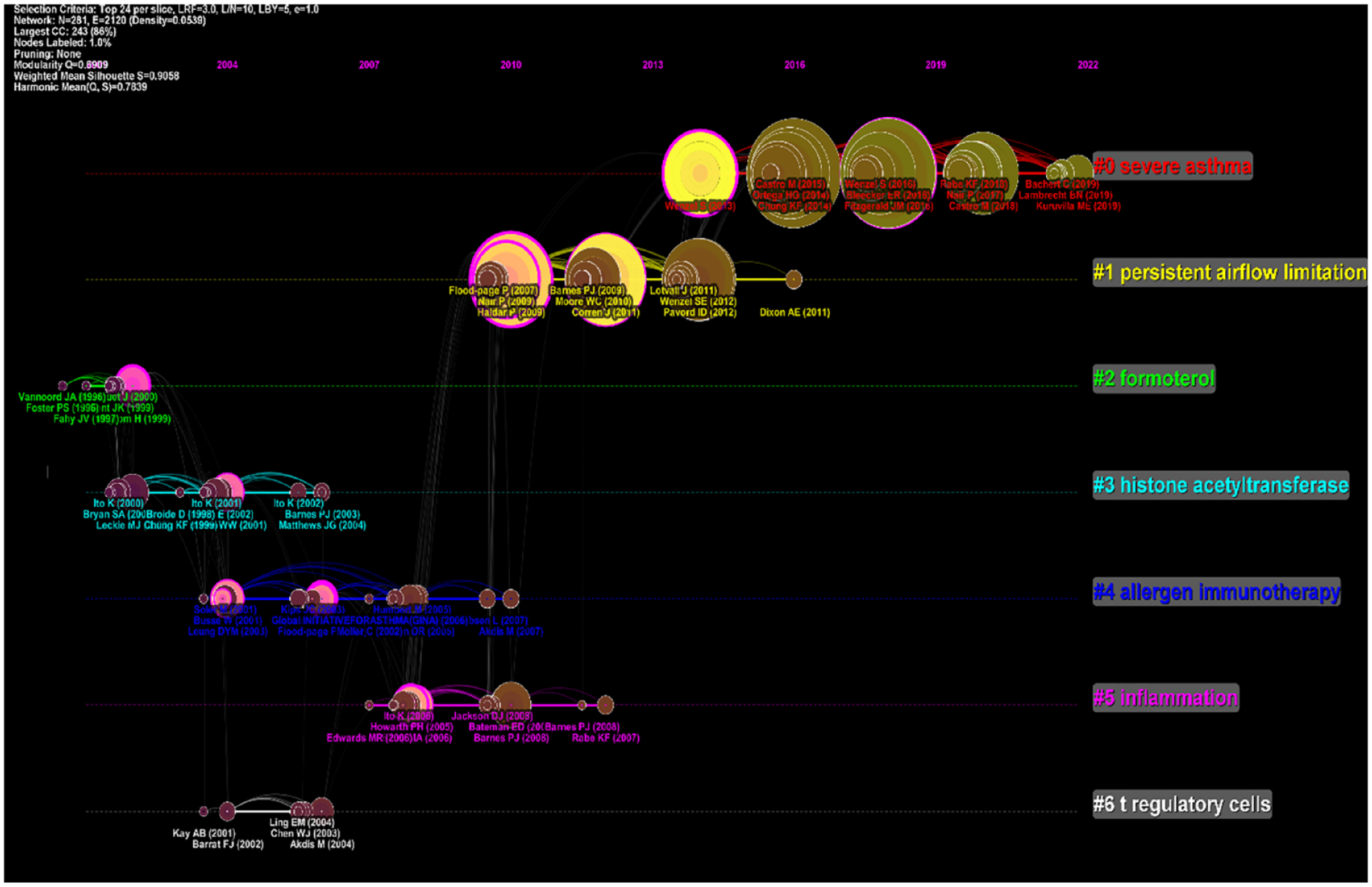
Timeline view of co-cited references associated with therapy on asthma.

Clusters of relevant research shown in co-cited references.

Top 25 references with the strongest citation bursts.
The collection of the top 10 cited references with the most count and centrality.

Keyword analysis of trending research topic
A total of 14,957 keywords were extracted. The map of keywords analysis comprises 82 nodes and 629 links (Figure 14). As illustrated in Table 7, asthma was the most frequent keyword (n = 594), followed by mechanism (n = 446) and expression (n = 397). The betweenness centrality value of keywords which were greater than 0.1 included airway inflammation (n = 0.22), double blind (n = 0.18), asthma (n = 0.17), inflammation (n = 0.12), and inhaled corticosteroid (n = 0.11) (Table 7). The largest cluster (0) has 25 members and a silhouette value of 0.706. It is labeled as severe asthma by logarithmic likelihood ratio (LLR) or by latent semantic indexing (LSI). The most relevant citer to the cluster is ‘Mk-8237: a house dust mite vaccine for treating allergic rhinitis, asthma and atopic dermatitis,’ authored by Ferrando et al. in journal Expert Opinion on Biological Therapy. The most relevant citer to the second and third largest clusters are, respectively, ‘Update on glucocorticoid action and resistance’ (cluster 1) and ‘Asthma: mechanisms of disease persistence and progression’ (cluster 2) (Table 8). The top 25 keywords with the strongest citation bursts were shown in Figure 15. The so-called ‘burst words’ represent words that are cited frequently over a period of time. 41 The burst keywords can show the frontier topics and key areas of research. Necrosis factor alpha was the keyword with the strongest citation burst (strength = 22.3). As shown in Figure 15, we can see that severe asthma, monoclonal antibody, exacerbation and atopic dermatitis are still ongoing (Figure 15). The keywords ‘severe asthma’ and ‘monoclonal antibody’ increased from the year 2017; the keywords ‘exacerbation’ and ‘atopic dermatitis’ increased from the year 2019.

The timeline view of keyword occurrences related to the therapy for asthma.
The collection table formed by the top 10 keywords with the most count and the highest centrality.

Summary of the four clusters of keywords analysis.
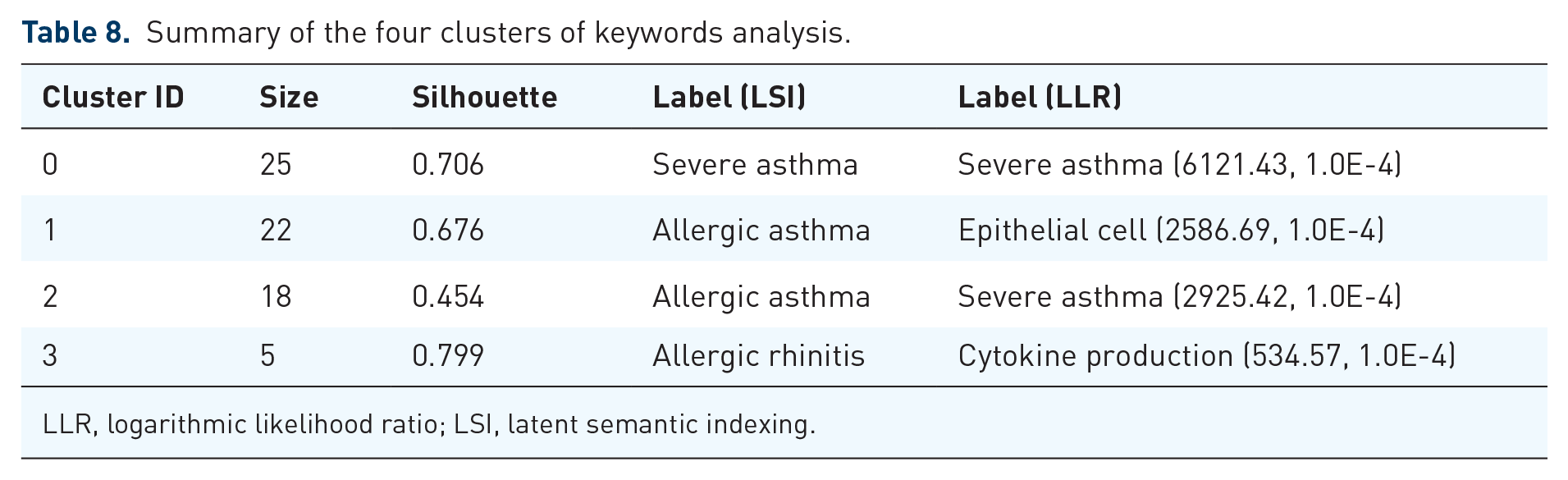
LLR, logarithmic likelihood ratio; LSI, latent semantic indexing.

Top 25 keywords with the strongest citation bursts.
A total of 82 items were achieved by a cluster analysis, including sublingual immunotherapy, expression, airway inflammation, and gastroesophageal reflux. The sublingual immunotherapy includes severe asthma, lung function, monoclonal antibody, quality of life, double blind, asthma, mechanism, and efficacy. The keywords in this cluster reveal the different perspectives associated with the research of sublingual immunotherapy, such as the dynamics, approaches, applications, effects, and so on. The expression contains smooth muscle cells, epithelial cell, gene expression, necrosis factor alpha, obstructive pulmonary disease, and inflammation. With the deepened recognition of genetic and epigenetic background related to the pathogenesis of asthma, and the target protein modulating the generation and development of asthma, the relevant novel therapeutic strategies based on these known mechanisms mainly aimed at relieving pulmonary obstructive symptoms (the reasonable explanation of the principal objects, including epithelial cells and smooth muscle cells). The cluster of airway inflammation as observed in a murine model comprises T cell, regulatory T cell, dendritic cell, innate lymphoid cell, immunoglobulin E (IgE), allergic asthma, and so on. This cluster elaborately demonstrates the landscape of the exploration of another type of anti-asthmatic drugs focused on anti-asthmatic inflammation. Gastroesophageal reflux points out the significant matter when treating asthma due to the highly frequent coexistence with asthma and provides the potential approach to improve the outcomes of asthma. 42
Discussion
General information
This biometric review aims to rigorously summarize the development of asthma therapy and systematically command the thread of the structure of relevant therapeutic mechanisms. Through the visual bibliometric analysis by the VOS viewer and CiteSpace software, we can better understand the progression of the paradigm related to research on asthmatic mechanisms and recognition of asthma in context of phenotypes or endotypes associated with the diagnosis, biomarkers, and targets beneficial to establishment of therapeutic schedules, mechanistic pathways from the perspective of the integration of pathogenesis and cellular death, and eventually the essence of asthma (the disease or the effect). Multiple publications can reflect the overall development trend and provide evidence to predict the mainstream or hot fields concerned with the therapy for asthma and relevant mechanisms in the future. The relevant articles have been elevated from 1983 to 2022. The trend keeps moving upward steadily, indicating that the demand for an effective therapy for asthma always exists. It can be proved in the combined analysis of co-cited references and annual growth trend that from 2009 to 2013, the first drastically growing trend of therapy on asthma, the cited references were mainly about immunotherapy for the exacerbations of asthma, and from 2016 to 2020, the second drastically growing trend, most cited references belonged to the cluster 0 (severe asthma), and cluster 1 (persistent airflow limitation). From the timeline view of co-cited references, we can summarize the development of the research associated with therapy on asthma by identifying the most representative article of each cluster in chronological order and summarizing the main idea of the top 10 references with the strongest citation bursts and the most count and betweenness centrality.
In countries and organizations analysis, the number of publications and betweenness centrality are two vital indicators, in which high centrality (⩾ 0.10) nodes imply the ‘bridge’ effects of those countries/regions in the global cooperation network. According to Table 2 and Figure 4, of the top 10 institutions that published the most research items, six were in England, one in Canada, one in America, one in the Netherlands, and one in Switzerland. However, the centrality of China (n = 0.4) was more than the United States (n = 0.16) and Singapore (n = 0.11), indicating that China might maintain the dominant position in research related to therapy on asthma. Moreover, China, the United States and Singapore had high centrality, which means they played key roles in the global cooperation of research associated with therapy on asthma. From the perspective of the authorship of countries and organizations, we can find regional partnership of the research on asthma, which may help us roughly find the regional features of asthma and regional consensus of asthmatic characteristics on the basis of certifying the stable cooperation among countries and organizations and learning more about the outcomes of their collaborations. It can also be seen that there are clear separations among the fields of organizations from Ireland, Scotland, China, Norway, Turkey, and three continents were comprised of different countries. We found that both countries and organizations who published a particular number of publications generally have their perspective fixed partners.
Among the top 10 authors and co-cited authors (Tables 3 and 4 and Figures 5–7), Akdis Cezmi A published the greatest number of papers related to therapy on asthma. Barnes Peter J is the top co-cited author, indicating his outstanding contribution to research on this field. The direction of his group is to explore the molecular mechanisms of asthmatic therapy, discover the potential asthma target with the development of inflammatory mechanisms on asthma, and improve the diagnosis and prognosis of asthmatic patients. Among both top 10 authors and co-cited authors, Adcock Ian and Johnston Sebastianare also working on this area, which explains the high total link strength of them.
In the journal analysis, Journal of Allergy and Clinical Immunology published the most studies on treatment of asthma, and it was the journal with the second highest centrality (n = 0.17). The journal named Immunology published the fifth most studies, and it was also the journal with the highest centrality (n = 0.24). Both journals played the essential roles in disseminating research on treatment of asthma. The other three journals of the top 5 journals with the most publications in this field are American Journal Respiratory Critical Care Medicine, New England Journal of Medicine, and European Respiratory Journal. The other journals in which value of centrality are more than 0.1 included PLOS One and Journal of Experimental Medicine. An author and journal co-citation analysis can be widely used for identifying the subject disciplines of authors and journals, and meanwhile, reveal the explicit relationship between authors or journals and their subject research fields. The common research fields can help us recognize the general trend and situation of asthma to better predict the future. With the demonstration of Figures 5–7 and 9 and Tables 3–5, we have found a similar trend and focus of asthmatic therapy as illustrated by a co-citation analysis of the references. Therefore, we would discuss the alteration of focus on asthmatic therapy, the development of recognition of relevant mechanisms with the integration of a co-citation analysis of references and the analysis of keywords, and hence, conclude the potential direction of advancement of this field and the popular topics in future.
The hotspots and trending
It is clear that in the late 1990s and early 2000s, the research of therapy for asthma is surrounded by novel bronchodilators, such as LABA (as illustrated by articles in cluster 2). The research studies of this period are closely related to the drugs, which can effectively improve the cure rate of asthma patients and alleviate the symptoms of asthma in the randomized, double-blind, placebo-controlled study (the proof can be found in Figure 12 that the size of the node ‘double blind mechanism’ representing the frequency of key word is remarkably obvious). The outcome-driven treatment and exploration becomes the paradigm that the indicators associated with asthma alleviation compared with placebo measure the effectiveness of specific drugs treating asthmatics. This paradigm can be discovered in the Journal of Clinical Investigation authored by Patrick Flood-Page. 22 The article has also been found to be the publication with the strongest betweenness centrality value, which means that the article becomes the foundation to recognize the mechanisms of asthmatic therapy. In addition, the reason for a high betweenness centrality value may also be associated with the anti-interleukin (IL)-5 treatment discussed by this research. Anti-IL-5 treatment has been proved to reduce the markers of airway remodeling derived from eosinophils, which guided the approach of controlling the symptoms of asthmatic patients and meanwhile indicated the mechanism of activation of eosinophils. Accompanied with the research authored by Henry Milgrom (the third strongest betweenness centrality value), asthmatic therapy stepped into the new phase of finding new targets under the discrimination by endotype. 26 The recognition of multiple targets enriched the therapeutic strategies for asthma and the alteration of these novel targets in asthma revealed the heterogeneity, which can dynamically have an access to the essence of the pathogenesis of asthma. The immunotherapy associated with anti-inflammation appeared successively and promoted the identification of novel causal pathways with corresponding biomarkers, which also drove the classification in terms of the endotype. For example, the research authored by Howarth PH identified tumor necrosis factor alpha (TNFα) as a novel therapeutic target in subjects with severe asthma and led the boom of the development of TNFα antagonists, which in turn made it feasible to investigate the role of this cytokine in refractory asthma as demonstrated in the research authored by Berry MA.32–34,36 The regulatory network of inflammation in asthma has been constructed more rigorously and accurately. The typical research conducted by Berry MA provided a new insight of asthma therapy that vitamin D3 could enhance subsequent responsiveness to dexamethasone for the induction of IL-10. Regulatory T-cells (Tregs) inhibit cytokine secretion by allergen-specific Th2 cells in the IL-10-dependent manner. 34 Therefore, another paradigm has been recognized to develop asthmatic therapy methods wherein the airway inflammation can be balanced with the modulation of Treg or relieve the asthmatic inflammation with drugs or other interventions.
Along with the enhancement of the comprehension of the corresponding biomarkers and regulatory network related to anti-asthmatic inflammation, the specific immunotherapy targeting the particular endotype of the uncontrolled and exacerbated asthma considerably improves the persistent airflow limitation (as demonstrated by publications in cluster 1).24,28,33 Among the publications with the strongest sigma value, three articles in cluster 1 play a critical role in that they represent the high citation bursts and betweenness centrality values. In the present scenario, the attention has been focused on the reduction of substantial morbidity and mortality that resulted from the exacerbations of asthma and the relief of considerable use of health care resources. Multiple monoclonal antibodies targeting the central signaling molecules of regulatory networks of asthmatic inflammation have been proved to be efficient and safe in severe asthma. For example, dupilumab as the fully human anti-IL-4 receptor α monoclonal antibody can block both IL-4 and IL-13 signaling, and can be efficient in patients with persistent, moderate-to-severe asthma, and elevated eosinophil levels.29,31 Benralizumab, a monoclonal antibody against IL-5 receptor α, can deplete eosinophils by antibody-dependent cell-mediated cytotoxicity for patients with severe, uncontrolled asthma with eosinophilia. 25
With the broadened awareness of the importance of quantitative and systems pharmacology, the treatments according to the holistic response of phenotype-dependent pathways to drug perturbation have remarkably improved the effectiveness of asthma therapy. The precision phenotyping is closely related to the research of gene expression, including genome-wide association studies and epigenetics. Furthermore, remodeling phenotypes, such as ASM cells and airway epithelium cells acquired the focus again due to the development of new regulations associated with epigenetics. For example, micro RNA (miRNA) can switch the phenotype of ASM cells into a quiescent cell. In addition, the classification by varieties of phenotypes and endotypes can increase the therapeutic accuracy in terms of the heterogeneity of asthma. With the advancement of multiple targeted interventions for asthma, for example, a small molecule antagonist of CXC chemokine receptor 2 (SCH527123) has been proved to be efficient in reducing the sputum neutrophil numbers with suggestions toward improvement in the clinical outcomes, such as mild exacerbations and Asthma Control Questionnaire (ACQ) scores, 44 or the effects of a potent and selective chemoattractant homologous receptor expressed on Th2 cells (CRTH2) (PGD2 is released from mast cells and attracts Th2 cells and eosinophils via this receptor) antagonist, OC000459, were confirmed to improve the quality of life, decrease night-time asthma symptoms, and sputum eosinophil count, 35 the new targets or regulatory signaling pathways become difficult to explore. Meanwhile, with the improvement in the accuracy of targeted interventions, a combination of diverse targeted modulations may become the principal research topic in future. Hence, the new therapeutic mechanisms for asthma may generate from the unknown regulatory means or novel combinations of known modulatory networks. The direction may be achieved with the integration of asthma and mechanisms related to cellular self-preservation, mainly including the regulated cell death (RCD) or new clinical interventions and applications of asthma therapy, such as acupuncture.
The analysis of keywords can be the supplement for co-citation analysis of references in context of the history, landscape, and the trend of asthmatic therapy development. With the enriched knowledge of airway gene expression, the novel findings of the underlying pathophysiological processes and casual relationships of asthma with epigenetic mechanisms, and the original identifications of causal pathways with known or unknown biomarkers, the phenotypes and endotypes of asthma have become increasingly elaborate to help the diagnosis and therapy more accurately and specifically.46,47 New therapy targets can be found to develop anti-asthmatic drugs. For example, the novel therapeutic strategies of non-coding RNA and transcriptional gene silencing application based on the epigenetic mechanisms can provide a theoretical basis for anti-asthmatic drugs. The typical therapy for asthma, sublingual immunotherapy, has always been researched and evaluated in context of clinical efficacy, determinants of efficacy, local and systemic immunological responses, mechanisms, strategies of application on severe asthma or exacerbation, management to avoid adverse reactions, and development with the new target exploration. 48 The mechanism of asthmatic inflammation is always the main research content contributing to the regulatory networks, new drugs research and development, integration with the novel forms of RCD, and so on. The reason for this trend is that asthmatic inflammation is closely related to the cellular death of multiple cells involved in asthma, for example, upon the activation of the complement cascade through the classical, alternative, or lectin pathways, thus generating opsonins, such as C3b and C5b, anaphylatoxins C3a and C5a, chemotaxin, and inflammatory mediators, the cellular death of human amniotic epithelial cells (hAECs) and ASM cells occur. Meanwhile, when cellular death occurs, the airway inflammation can be accelerated. 49 Therefore, the research of the novel forms of RCD can not only explain the dynamic of generation of asthmatic inflammation, but also recognize the role of RCD in the pathogenesis of asthma. Both of them can provide novel targets for asthmatic therapy. The relationship of asthma or therapy for asthma and other anaphylaxis or allergic disease, such as atopic dermatitis has always been the topic and direction for research. Therefore, from the perspective of therapy, the intervention of multi-targets and the modulation of multi-pathways will be the principal for the research of therapy mechanism.
In a word, the principal interventions of asthma treatment are based on the modulation of immune-inflammatory pathways, remodeling phenotypes, genetic and epigenetic backgrounds, and efficacy at the targeted site of the drug formulation. With the evidence of analysis of co-cited references and keywords, we have determined that the deepened recognition of classification of asthma, exploration of new targets, therapeutic strategies of multi-targets and multi-pathways regulation can certify the indispensable role of the research associated with the original forms of RCD and the new clinical interventions and applications, such as acupuncture. The biomarkers related to the new forms of RCD and directly involved in asthma pathogenesis may guide the novel endotype-driven decisions and may explain the mechanism of therapy for asthma. The outcome-driven treatments, such as acupuncture promotes the alteration of the biomarkers associated with the complex network of molecules, which has already been identified and provides new insights related to the novel mechanisms of asthma pathogenesis or connections between previous molecular networks and asthma.
In the recent years, apoptosis, ferroptosis, pyroptosis, necroptosis, lysosome-dependent cell death (LCD), autophagy-dependent cell death, and other forms of RCD have been proved to have different degrees of relationship with asthma. Autophagy, as an evolutionarily and highly conserved process in virtually all eukaryotic cells, involves the sequestration and degradation of intracellular pathogens and compromised organelles and has been proved to have a significant connection with asthma. Genetic variants in the autophagy gene Atg5 are associated with the promotion of airway remodeling and the loss of lung function in asthma.50,51 The double-membrane autophagosome formation in fibroblasts can be found in severe asthmatic patients by electron microscopic examination, which can provide direct evidence of autophagy in severe asthma pathogenesis. 52 In addition, both the relationship between autophagic protein expression and asthma severity in an OVA-specific mouse model of severe allergic asthma and the alterations in autophagy response to a variety of therapeutic agents, including autophagy inhibitors, glucocorticoids, montelukast, anti-IgE, and anti-IL-5 antibodies enrich the mechanism of asthma and specific therapeutic schedules. A new paradigm has been formed with the enhanced combination. In the process of researching the mechanisms of RCD, multiple biomarkers representing the generation and advancement of RCD may also be involved in the pathogenesis of asthma when we found the volatility value of these biomarkers in asthma. The biomarker-driven exploration promotes the formulation of relevant therapeutic agents and drugs, and enriches the mechanism of asthma and relevant therapy. The relationship of asthma and necroptosis (a programmed form of necrosis showing morphological features similar to necrosis), 53 ferroptosis (an iron- and lipotoxicity-dependent form of RCD), parthanatos [a poly adenosine di-phosphate (ADP)-ribose polymerase 1 (PARP1)-dependent RCD that is activated by oxidative stress-induced DNA damage and chromatinolysis without the formation of an apoptotic body and small-size DNA fragments as apoptosis has], 54 entotic cell death (a form of cell cannibalism in which one cell engulfs and kills another cell), netotic cell death (a form of RCD driven by NET, extracellular net-like DNA-protein structures released by cells in response to infection or injury), 55 LCD (a type of RCD mediated by hydrolytic enzymes that are released into the cytosol after lysosomal membrane permeabilization), 56 alkaliptosis (a novel type of RCD driven by intracellular alkalinization), 57 oxeiptosis (a novel oxygen radical-induced caspase-independent RCD driven by the activation of the KEAP1–PGAM5–AIFM1 pathway), 58 and other novel forms of RCD can also be recognized and explored with the awareness of the forementioned paradigm to broaden the horizons for viewing the mechanisms of therapy for asthma.
The new clinical interventions and applications, which can successfully alleviate the symptoms and regulate the biomarkers associated with asthma can provide new targets beneficial for research and development of novel anti-asthma drugs or original perspectives to discover new signal pathways affecting the pathogenesis of asthma. For example, an inhaled transgelin-2 agonist, TSG12 is proved to reduce the airway hyperresponsiveness and effectively relieve asthma after the focused research of acupuncture. 59 The assured and favorable outcome resulted of specific novel intervention in asthma may drive the research of a series of known or unknown biomarkers quantitative abnormity that may have different levels of correlation with asthma, discover the new modulators or signal pathway of asthma, and certify the new targets associated with relieving inflammatory responses and symptom-alleviation based on regulating remodeling responses to research novel drugs.
The two limitations of this review should be pointed out. First, we only analyzed the studies indexed in the WOSCC database. Second, the Matthew effect, which might influence the results of bibliometric analysis, was not considered. 60
Conclusion
In summary, this study provided useful data for potential collaborations among researchers and institutions, summarized the development of the therapy for asthma, the mechanisms of asthma, and the mechanisms of therapy for asthma, and predicted the hot topics, trends, and paradigms in the research on the mechanisms of therapy for asthma. In addition, future studies will be needed to find new biomarkers and mechanisms related to asthma treatment, discover the new targets for anti-asthma drugs, develop novel paradigms related to research, and recognition of asthmatic therapy.
