




Abstract
Leaf low adhesion mechanisms are complex and the interplay between the influencing parameters is not well understood. In this paper new approaches have been utilised to assess the role of leaf layer moisture versus humidity on low adhesion. Using controlled testing in a climate chamber as well as laboratory and field testing, leaf layer moisture relationships were explored. Moisture was found to be the most important characteristic when compared with environmental changes (such as humidity) and the relationship between moisture and traction is qualified.
Introduction
The weather impacts the contact between the rail and wheel. Since the 1970's, research has tried to understand the interaction between temperature, humidity and the adhesion coefficient. 1 Adhesion incidents occur at a higher rate during early morning and the evening2,3 demonstrating that changing conditions affect the contact. Research has shown that higher humidity and lower temperature lead to lower adhesion in clean4,5 and leaf contaminated conditions.6,7 However, the understanding of how the environment affects leaf contaminated rails is extremely limited, and has mainly focused on scaled testing, where there is a high level of control over the environment, but the contact and contamination conditions may not fully reflect the phenomena found in the field.
Better understanding of leaf layer low adhesion is extremely important for safety and reliability of railways. Leaf layers can significantly reduce the traction levels below the safe 0.1 coefficient of traction (CoT) required for safe train operation. 8 Recent serious incidents in Salisbury 9 and Talerddig 10 highlight the safety implications of limited understanding and control of leaf contamination at the rail-wheel interface. There are large costs associated with attempting to control leaf low adhesion, estimated to be £355 million per year in the UK. 11
Leaf layers degrade the contact on the railhead,12–14 and wet layers further reduce the adhesion conditions. Wet leaf layers in field testing had a CoT of 0.04 (compared to 0.06–0.11 for dry leaf layers) 15 and there is an instantaneous drop in CoT when water is added to leaf layers created with twin disk testing. 16 Wetter leaves also supported lower traction across a range of slips in scaled testing. 17 However, the critical moisture level in leaf layers that will guarantee unsafe adhesion has not been investigated. At the two extremes, flooded and dry leaf layers, adhesion is higher than wet leaf layers 18 and as leaf layers dry a drop in adhesion is seen before a rapid increase.7,16,19 This is similar to the ‘wet-rail’ effect where a low adhesion paste is formed at specific oxide-water mixes20,21 due to moisture on the railhead.
Moisture is key to some of the posited low adhesion mechanisms for leaf layers. The adhered leaf film mechanism has two states 22 with the dry conditions friction reduction coming from the solid lubrication of leaves mixing with the oxides from a friction reducing layer. In wet conditions the leaf film absorbs moisture and softens shearing more easily, this inverse relationship between moisture and shear strength has been measured in laboratory testing. 23 A gel22,24 or structure 17 based mechanism requires water to be expelled to reduce friction and therefore the level of moisture in the layer would be critical to adhesion levels.
Despite being identified as a cause of transience in adhesion levels 25 in the 1970s, and the clear distinction between wet and dry layers measured there has been little focus on leaf layer moisture since the early 2000s. 26 Adhesion in leaf layers is affected by moisture levels, and these in turn are controlled by the weather and environment. Until now there has been no work to these factors together. Layer moisture have been measured in the field, 23 but this was not linked to the environmental conditions (humidity etc.). There has been some limited testing of moisture on clean railheads in changing weather, 27 with a link found between humidity and rail ‘wetness’, but rails were not found to be wet every time there was high humidity. Analysis of Wheel-Slide Protection (WSP) activity and lineside moisture sensors on a small sample of autumn days could not determine a critical level of moisture for low adhesion. It did find that the presence of moisture led to more than double the level of WSP activations. 28 Leaf litter has been monitored in changing humidities and the relationship between humidity and moisture was found to be exponential (Figure 1).
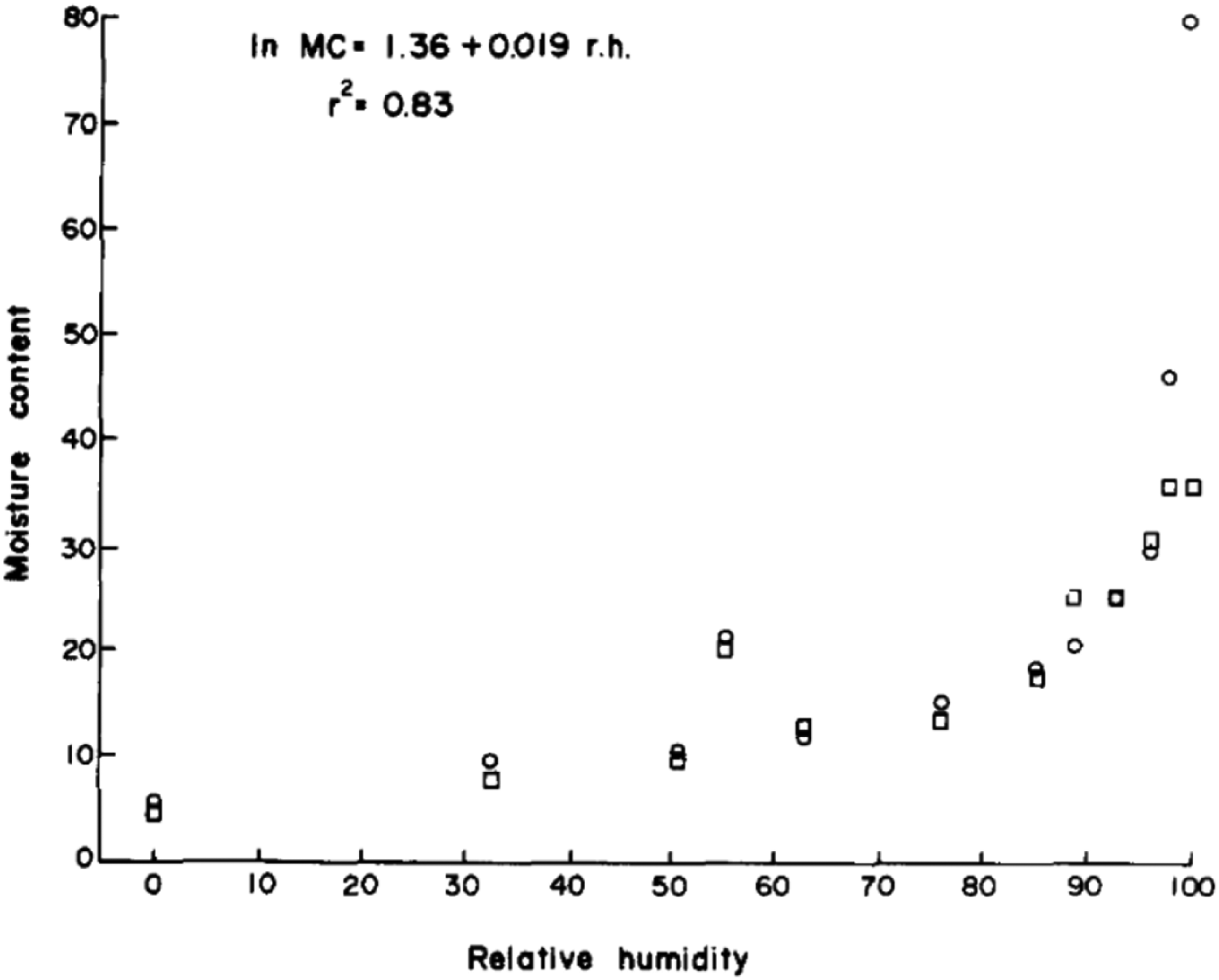
Comparison of moisture content and relative humidity for eucalyptus leaves 29 – climate chamber was held at 25 °C.
Testing has been completed on the effect of relative humidity of the air on leaf layer low adhesion6,7,30 and the finding of lower adhesion during higher humidity matches the variation in adhesion incidents seen across the day.2,3,22 However, none of this testing has measured moisture levels in the layers and so is focused on a secondary factor (i.e., the relative humidity of the air may vary the moisture content of the leaf layer). This may be due to the relative ease of measuring relative humidity compared to measuring layer characteristics.
There has been limited work on quantifying and qualifying the weather, moisture and adhesion relationship for leaf contaminated railheads. Although access to organically occurring leaf layers is challenging for researchers, new methods 31 and equipment make this testing possible. The aim of this work was to highlight the role of moisture in leaf layer low adhesion, and how the environment affects the moisture levels in leaf layers.
Method
This testing utilised a novel method for leaf layer generation, using a linear full scale rig (FSR) at the University of Sheffield to create the layers on rail sections. 31 The sections can then be transported and tested in a range of controlled and uncontrolled environments. This is intended as an intermediate step between the laboratory and field work on leaf layers. Previous scaled laboratory testing has been able to create leaf layers through a variety of methods and then assess the reaction to different conditions but did not measure moisture. Field testing has been conducted on naturally occurring layers but could not guarantee a wide range of environmental conditions or leaf layer availability. This testing also allows for direct comparison with field layer datasets as all of the layers were assessed using the same equipment. 8
Leaf layers were generated on a number of rail sections, and these were then transported for testing. Some of the sections were used in a large climate chamber to establish the effect of temperature and humidity on rail traction if the layer moisture content was constant. Other layers were used for uncontrolled testing where layer moisture was varied and traction tested. The final generated layers were used to track the relationship between layer moisture and the relative humidity of the air. Data from field testing on the Kirklees Light Railway (KLR) where the interaction between the weather, layer moisture and traction was measured is also presented. The interaction between this testing is shown in Figure 2.
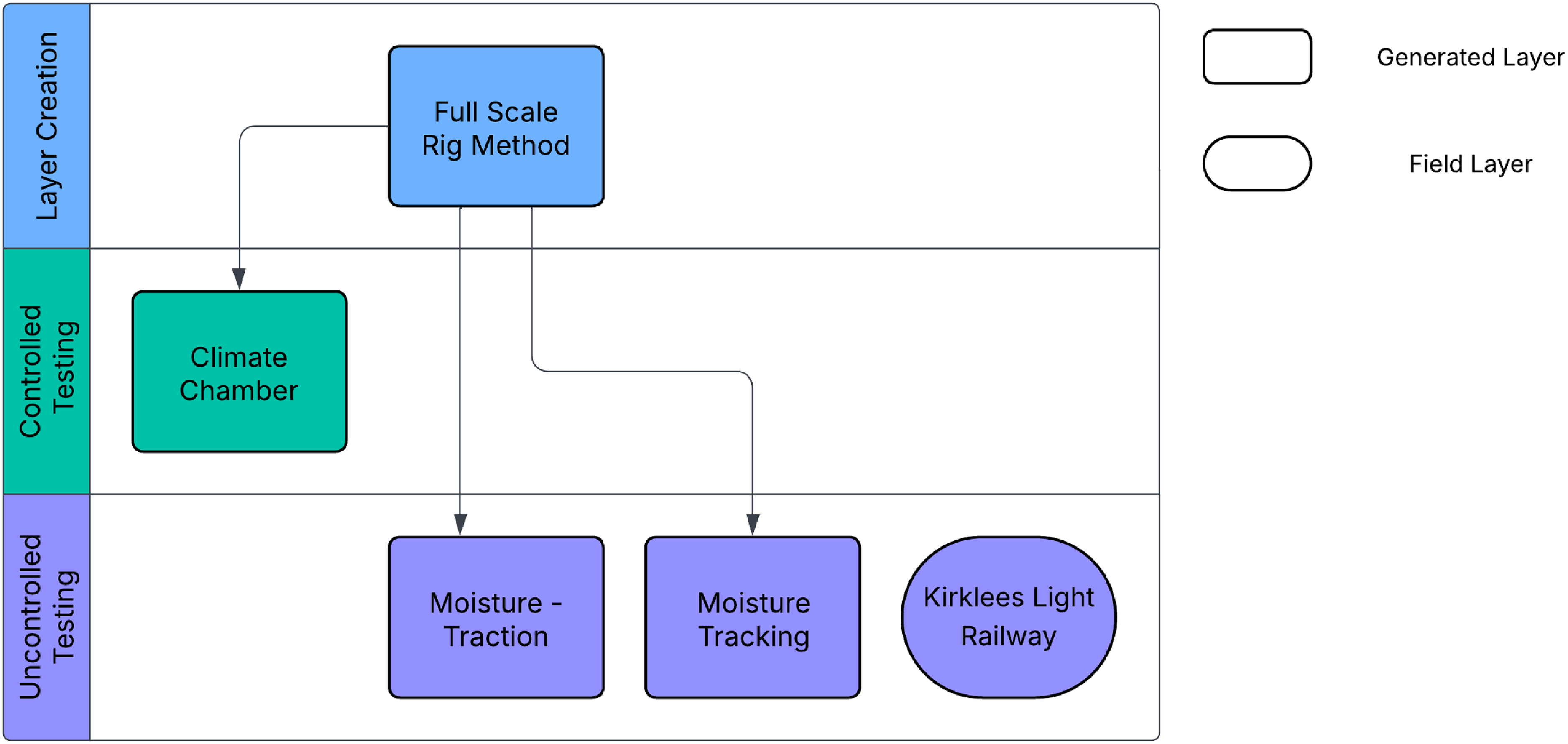
Testing process flowchart.
Layer creation
Leaf layers were created on R260 rail using a method developed for the FSR at the University of Sheffield. 31 Ground leaves and water are applied to the rail and repeated cycles (70 kN normal load 3% slip) were applied to create a low adhesion leaf layer. These layers are chemically consistent with field and other laboratory layers, and the particle size of 1 mm allows for some structural elements of the leaf to remain. Contact patch size and pressure in the FSR are the same as a Diesel Multiple Unit 32 using the full size rail wheel. Further details are described by Jaffé et al.. 31 The contaminated rails had coefficient of traction (CoT) of 0.038 (measured directly by the FSR). A control rail was also prepared using R260 and run through a similar number of cycles with a 0.308 CoT. The ambient conditions in laboratory during the layer creation were 20.1 °C air temperature and 51% relative humidity. The rails were then transferred to the various testing locations.
Tribometers
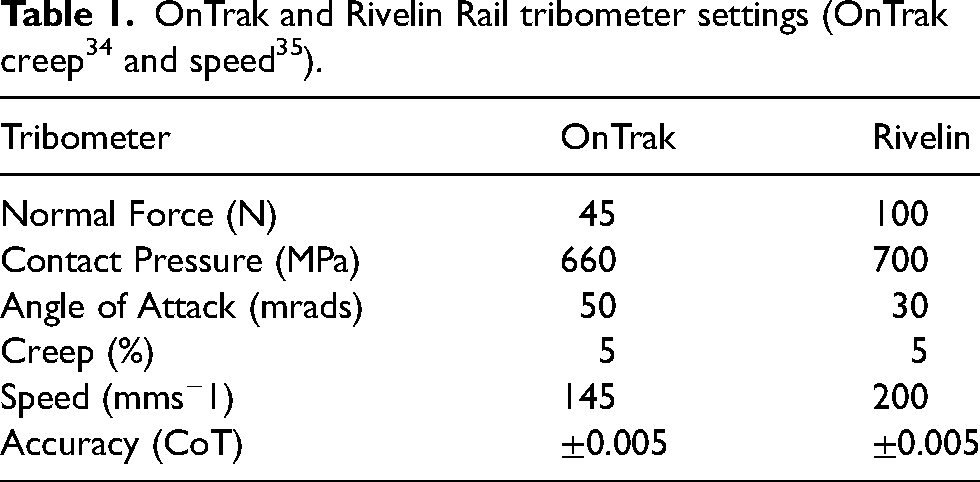
Adhesion was measured throughout this research using driven wheel tribometers. The OnTrak Tribometer was deployed during the controlled climate chamber testing as it was the most appropriate tribometer at the time. The Rivelin Rail tribometer 33 was released during the course of this research and so was used for the other uncontrolled testing on the generated layers, as well as the field testing at KLR on naturally occurring layers. The tribometer settings used are shown in Table 1 and are comparable with other testing that has utilised these devices.
Layer and environmental characteristics
All environmental readings were taken using a logging device (RS PRO RS-172TK Temperature & Humidity Data Logger) placed by the rails which have ±0.5 °C accuracy for temperature and ±3.5% relative humidity accuracy. Rail temperature measurements were taken with a magnetic probe linked to the logger (TME Thermometer KS09K Type) attached to the rail web (accuracy ±1.5 °C). Layer thickness was measured using an eddy current device, FN Evo Coating Thickness Gauge, with a reading accuracy of ±0.5 µm. Moisture testing was completed with a Testo 606-1 moisture metre following industry standards. 8 Readings are limited between 8.8–54.8% with this device with an accuracy of ±0.05%WME. The values outputted are for percentage ‘wood moisture equivalent’ (%WME). This is the percentage moisture content that a block of wood, in close contact and moisture equilibrium with the measured material, would have. If a value is outside of the detection limits of the device, the data point is recorded as a ‘censored’ value at the limit (8.8/54.8%). Where the data is represented visually, any censored data is shown as an arrow pointing into the region where the true (unknown) value would be situated (similar to how runouts are represented in fatigue life graphs).
Climate chamber
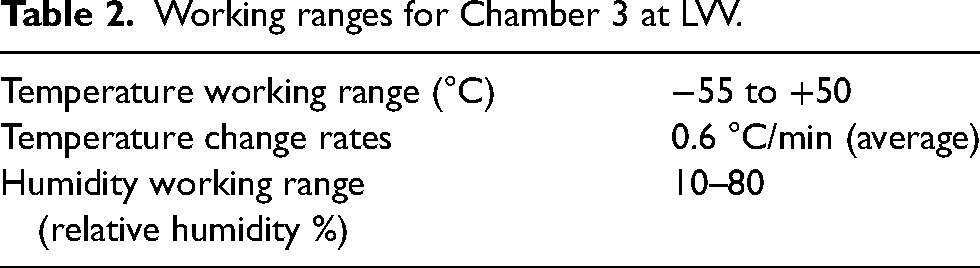
The climatic testing was completed at the Laboratory for Verification and Validation (LVV), located at the University of Sheffield Innovation District. The environmental chamber used was Climatic Chamber 3, built by Weiss Technik, which consists of a 3 × 5 × 5 m room with temperature and humidity control. The details for the nominal working range are shown in Table 2.
Working ranges for Chamber 3 at LVV.
The rails were grouped together on a pallet and positioned 3.5 m away from the temperature and humidity control systems to allow for more stable conditions. Conditions were more stable away from the control system, as moisture would be added to the air to control humidity which would lead to an instantaneous increase in relative humidity as water entered the air before spreading out across the whole chamber. The rails were lifted off the floor to minimise rail temperature lag, as the floor could stay cold even as the conditions changed in the chamber. The range of air temperature and relative humidity points tested is shown in Figure 3.
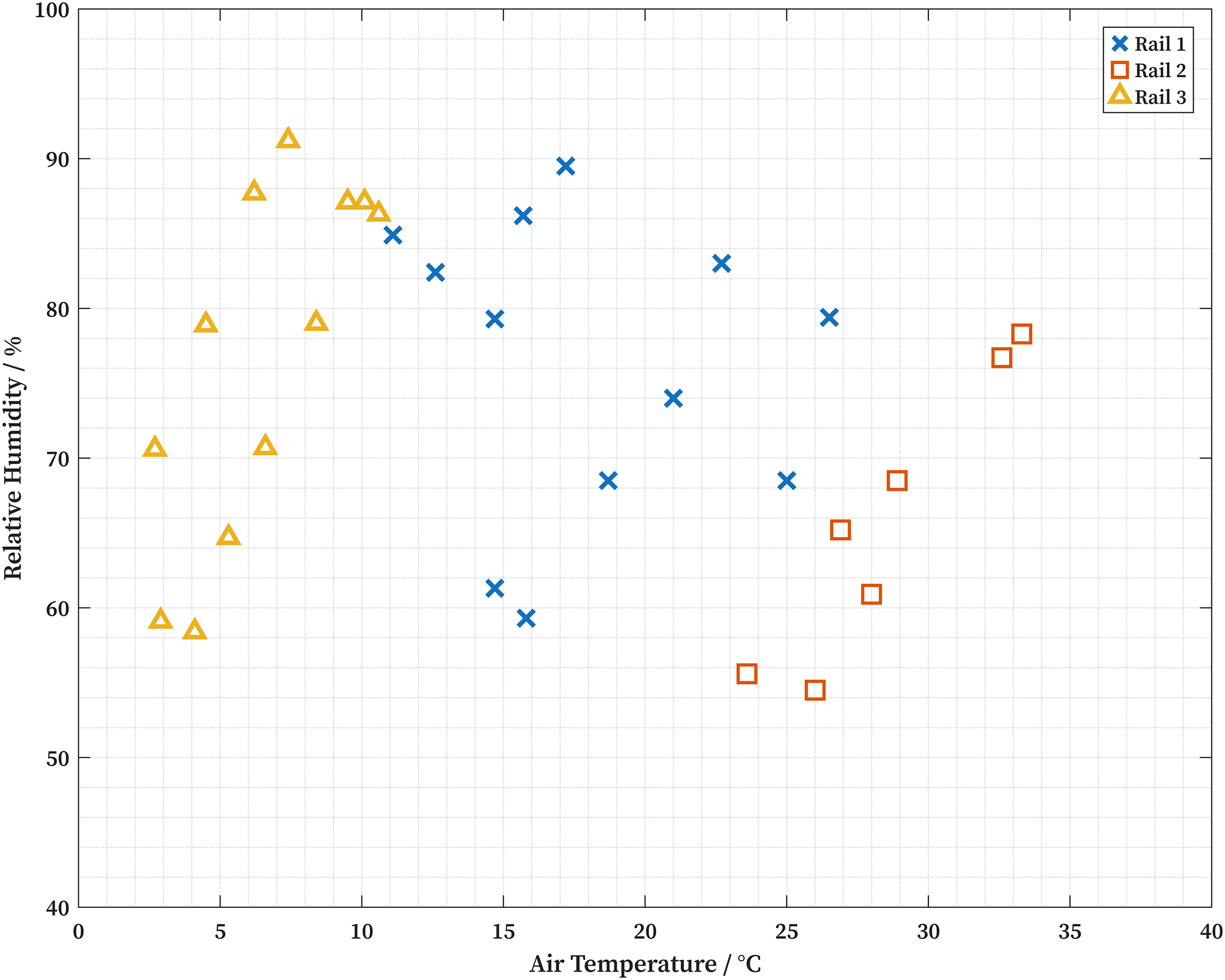
Temperature and humidity at testing points.
The testing protocol was as follows:
Enter the chamber and collect three CoT readings from the reference (clean) rail. At the same time collect layer characteristic readings and environmental readings. Adjust leaf layer moisture (if required). Move the OnTrak to the selected leaf contaminated rail and collect three CoT readings. Leave the chamber and clean the OnTrak test wheel with isopropyl alcohol. Complete conditioning runs for the OnTrak using a clean rail section.
Layer moisture was retained at a high level (30–45%) to isolate the effect of air temperature and humidity on layer traction. This was achieved with a spray bottle of deionised water, stored in the chamber to maintain comparable temperature to the chamber air. The clean rail was not sprayed. Where the chamber humidity could not be controlled (<10 °C), an atomiser was used to increase humidity, releasing 0.5 l of water into the air over 45 min. The chamber was entered for testing approximately every 20 min to allow for significant changes in the environmental conditions.
Climate chamber testing
The ability to create leaf contamination on rail sections opened up the possibility of using a large climate chamber. This provides an intermediate step between scaled testing and field testing, with the benefits that layers are easier to create and manipulate compared to field testing but also have more realistic layer characteristics than scaled testing. In this work, leaf contaminated and clean rails were added to the chamber, and the conditions (temperature and humidity) were varied with layer moisture maintained at a high level.
Results
Figure 4 shows the values for average CoT as measured by the OnTrak tribometer for the leaf contaminated (and control) rail in different environmental conditions. With the moisture kept constant, the traction of leaf contaminated rails was independent of changes in temperature and humidity (R2 = 0.0981/0.011 respectively). Moisture is unlikely to stay constant in the field with changing temperature and humidity as well as changes in the sun and shade on the rail. The clean rail traction increased with air temperature (R2 = 0.425) as expected, the role of humidity was less clear (R2 = 0.215) with some outliers at 60%RH. The graph of changing traction with temperature difference (equation (2)) can be found in Appendix I. Keeping the moisture constant in the leaf layer allowed the test to isolate if temperature and humidity have an effect beyond changing moisture in the layer, and no clear effect was seen. The following testing then focused on moisture in leaf layers.
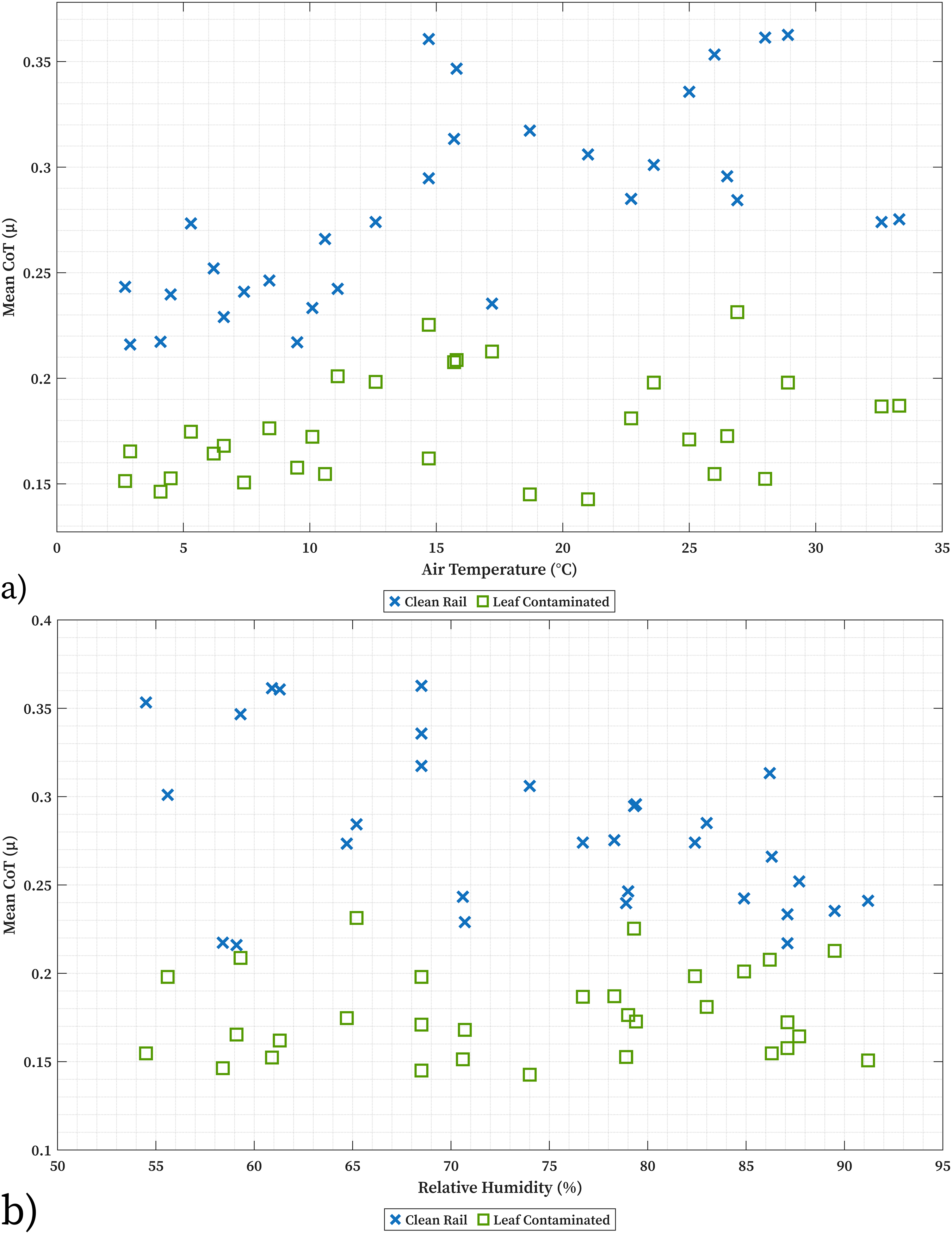
Changes in traction for clean and leaf contaminated rails (with constant moisture) for (a) air temperature and (b) relative humidity.
Moisture testing
It is clear from the climate chamber testing that without changes in moisture in the layer, environmental changes have limited impact on layer traction. To evaluate the link between moisture in leaf layers and changing humidity, leaf layers were created on small rail sections. These sections were then taken to a wooded area to simulate the close tree cover in areas with persistent leaf low adhesion. The moisture of the layers was then tracked in this uncontrolled environment to qualify the relationship between moisture and relative humidity. Other layers were also created and traction tested as moisture was varied with the aim of finding the critical level of moisture that creates low and ultra-low adhesion.
Moisture tracking
Relative humidity and moisture content of the leaf layer were tracked from the early morning (04:30–11:30) using the equipment described in ‘Layer and environmental characteristics’. The moisture change in the created layer from the FSR was proportional to the relative humidity of the air in the wooded area as the day progressed. As humidity reduced over the course of the morning warming, the layer moisture reduced in a linear relationship (R2 = 0.8). The data is shown in Figure 5 overlaid with data from a natural layer tracked as part of field testing 36 on a narrow gauge railway in Wales.
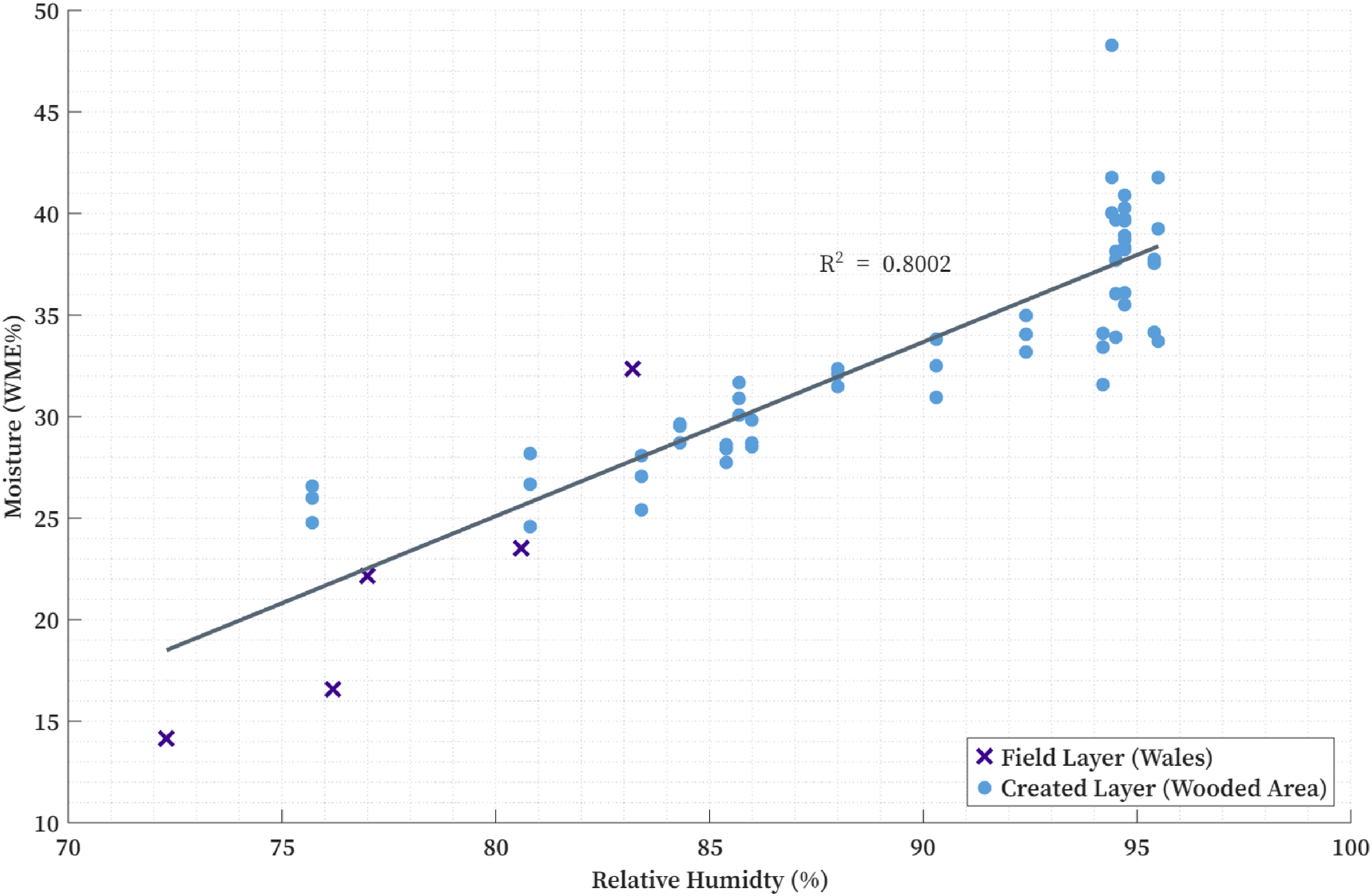
Variation in leaf layer moisture with changes in humidity.
Moisture – traction relationship
The moisture-traction relationship has not been quantified for leaf contaminated layers. Rail sections with generated leaf layers were placed in stable ambient conditions (22 °C air temperature and 50% relative humidity). The moisture levels in the layers were then varied using water. Deionised water at the ambient temperature was misted onto the railhead. Traction was measured at 5 min intervals as the layers dried while the layer characteristics (moisture level and thickness) were tracked. The moisture-traction relationship for the leaf contaminated layers is shown in Figure 6.
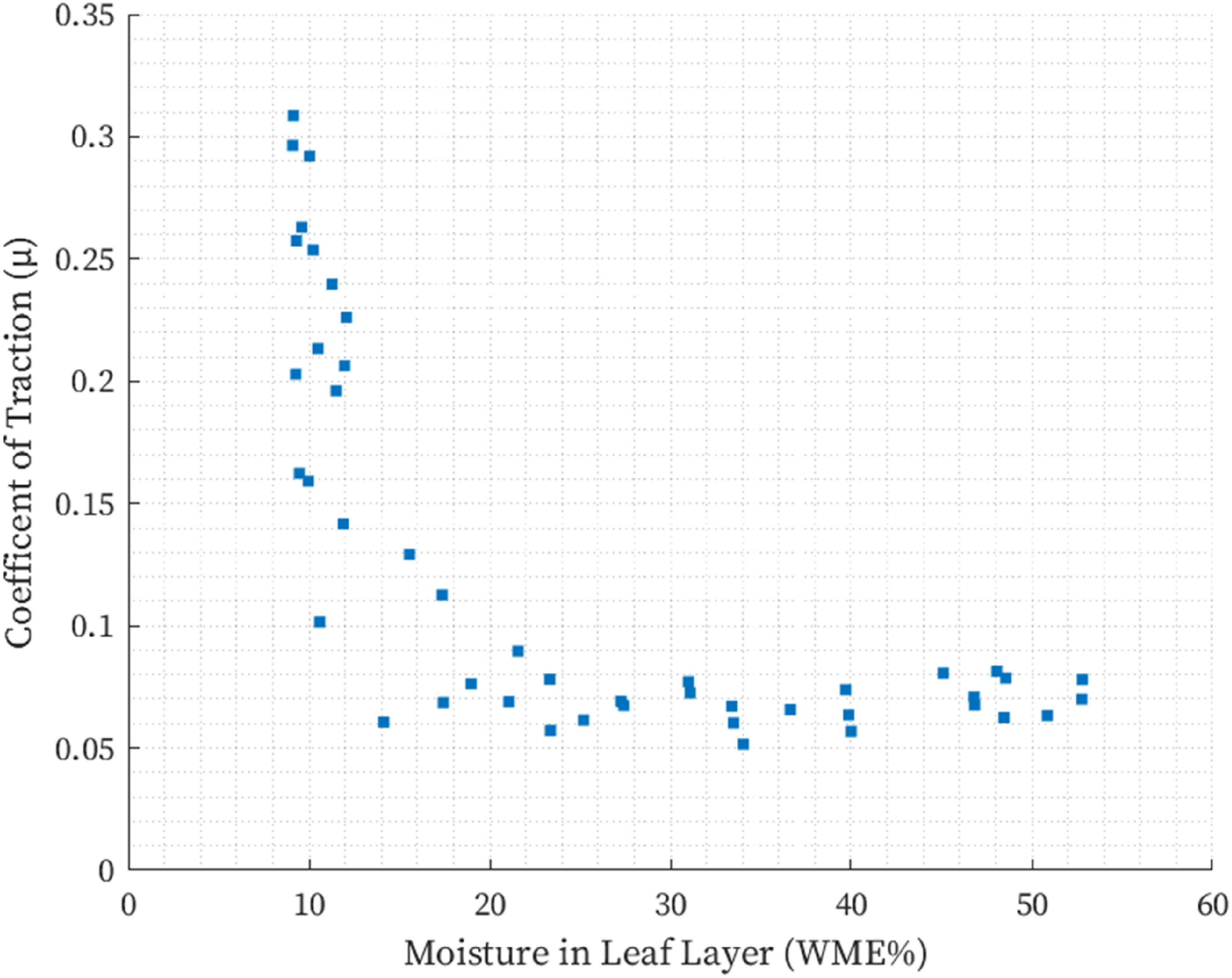
Variation in leaf layer coefficient of traction as moisture changes for a created layer.
The moisture-traction data demonstrates a rapid drop in CoT to ‘unsafe’ levels when moisture was higher than 20%. The traction levels then maintained an extremely degraded level up to the limit of the moisture metre. This curve can be well fitted to an exponential curve (see Appendix II) using equation (1) (R2 = 0.8195).
This was then combined with other data sets where moisture was not controlled, field layers from Wales 36 and KLR as well as created layers for mitigation testing. 37 This combined data set is shown in Figure 7. The data from a variety of sources shows the same trend of rapid decline in adhesion as moisture increases from 10–25%WME.
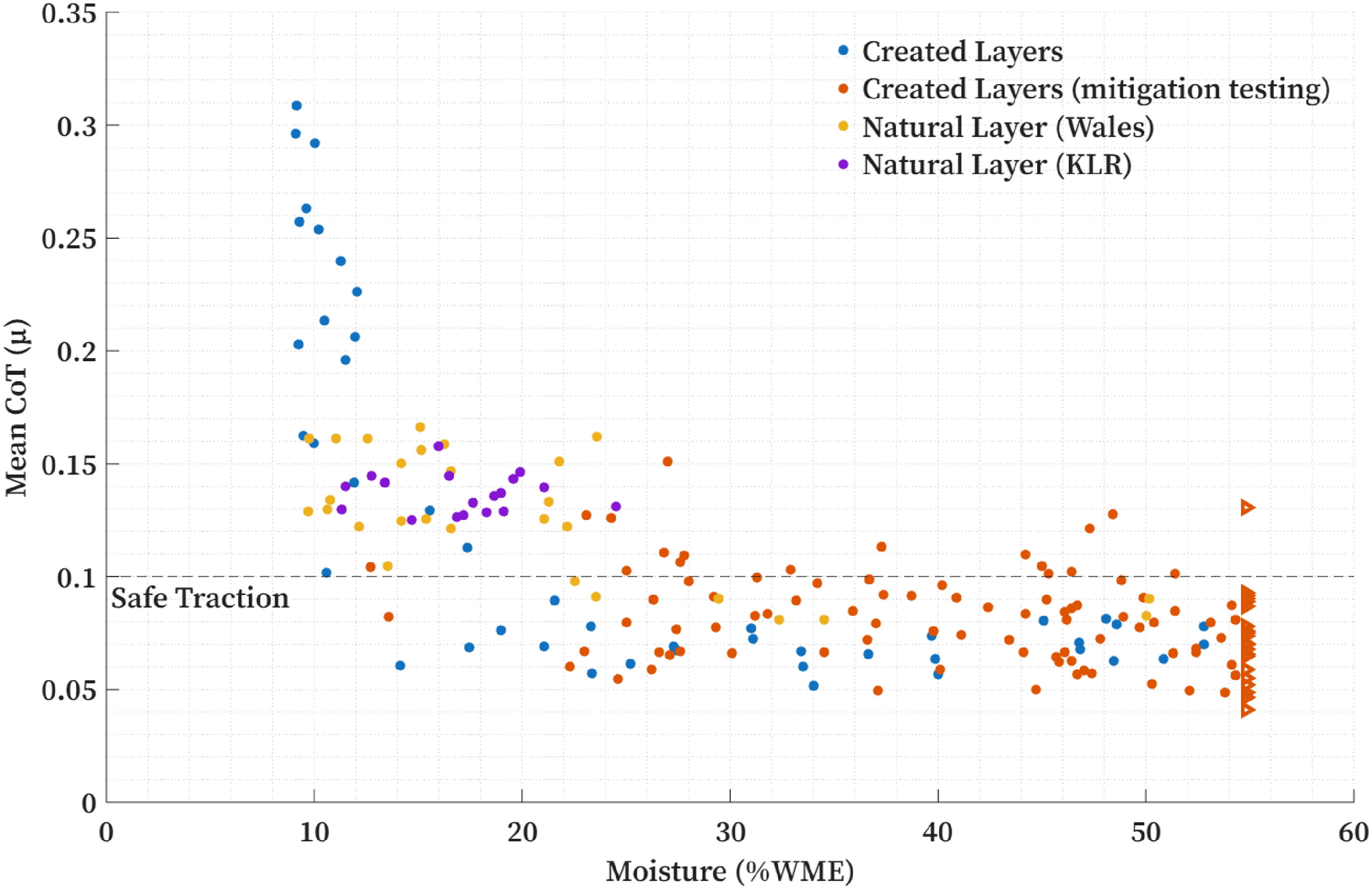
Variation in leaf layer coefficient of traction as moisture changes for a created and naturally occurring layers.
Field testing
Testing was also completed at KLR, a narrow gauge railway in Yorkshire. The railway passes through a large tunnel with a deep cutting either side (Figure 8), and this section has adhesion issues due to leaf fall from October to March. Testing took place on two days in November 2024.
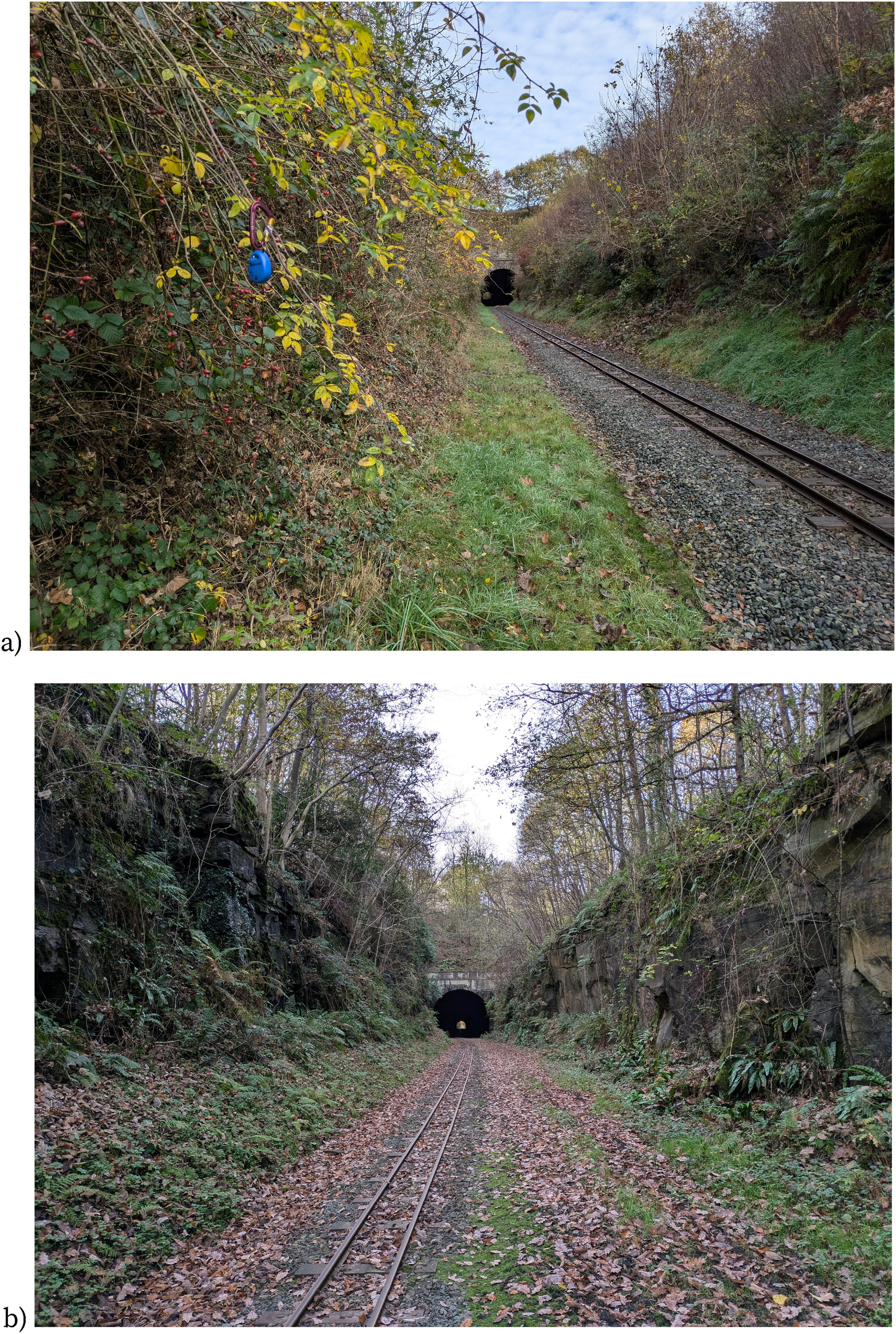
Cuttings at Kirklees Light Railway: (a) Shelly side (b) Skelmanthorpe side.
On the first day of testing in the Shelly side cutting, humidity was rising from 10:30–14:00, due to the position of the cutting and the sun. This is contra to the normal change in the environment due to the diurnal cycle. Over the limited humidity range tested, moisture in the layer fell rather than increasing as humidity increased (Figure 9), which is in contrast to the expected relationship.
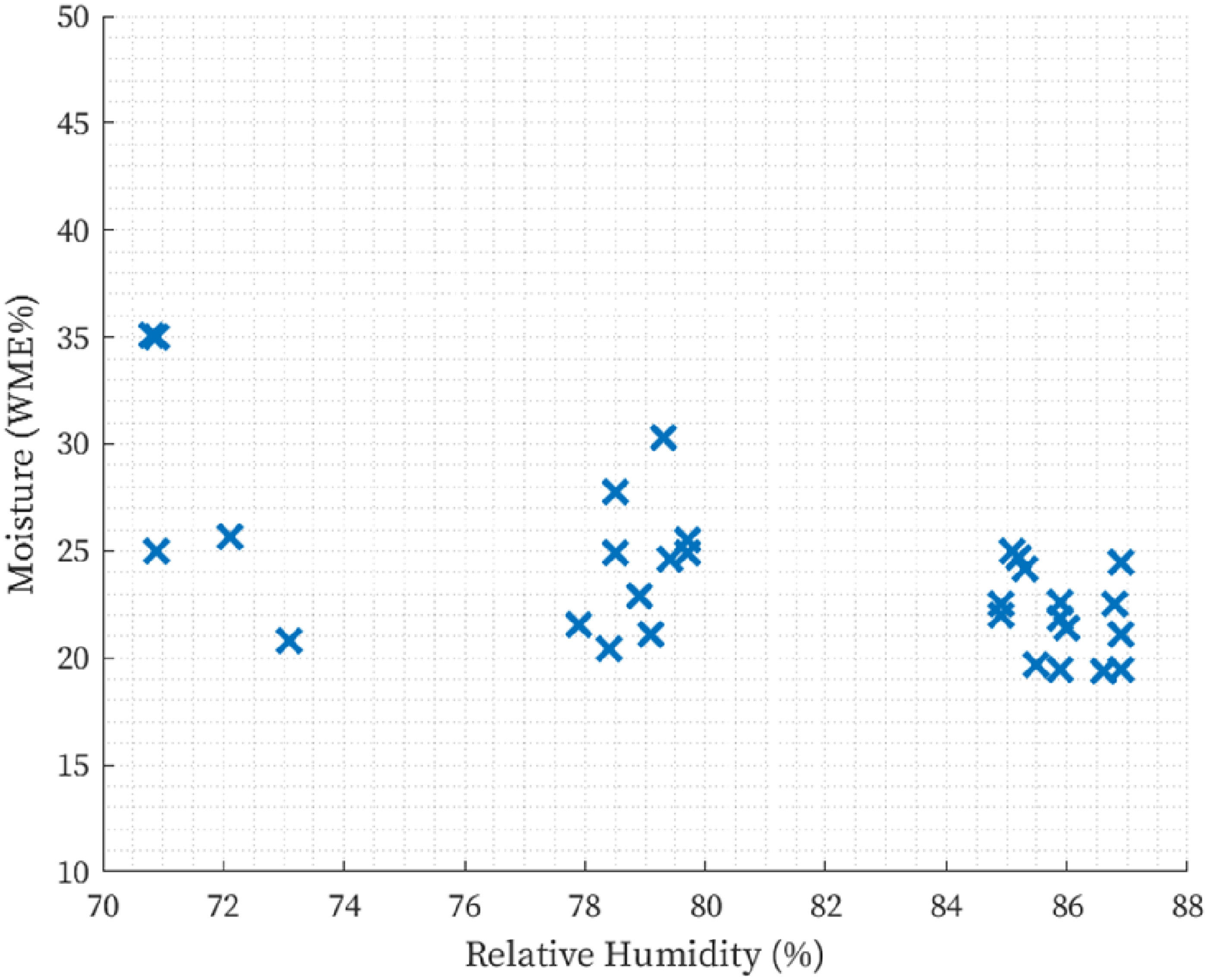
Variation in moisture with changing relative humidity for leaf layer in the Shelly side cutting.
Due to the falling temperature (after peaking earlier in the morning) during the testing, the temperature difference (equation (2)) between rail and air reduced:
The highest moisture in the leaf layers tested was found when the temperature difference was greatest (see Figure 10).
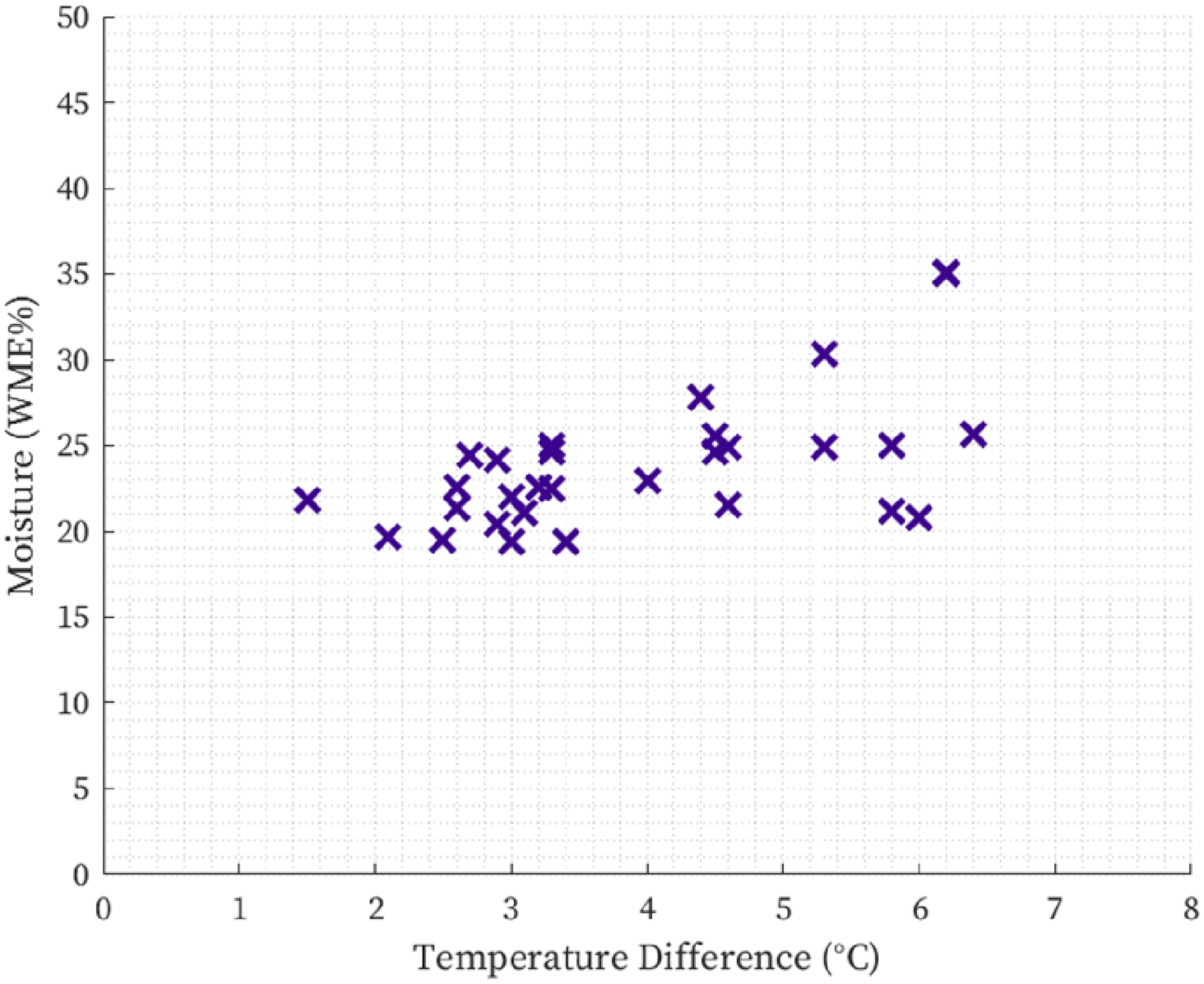
Moisture variation in leaf layers compared with temperature difference between rail and air in the Shelly side cutting.
The largest temperature difference occurred earlier in the day, even though the humidity was lower. The sun warmed the air, but the rails were slower to warm in the cutting and so when the difference was largest more moisture from the air collected on the railhead and was absorbed into the layers.
The testing on the other side of the tunnel also found temperature difference vital to low adhesion. The Skelmanthorpe side cutting had extremely stable conditions (90+% relative humidity and 7 °C air temperature) and a well adhered black leaf layer on the rail. Despite these normally risky conditions for low adhesion, the leaf contaminated rails had a CoT above safe levels (Figure 11). The leaf layers still provided degraded conditions compared to a section of rail at the site that was cleaned and dried. The CoT was much higher than one might expect due to the elevated humidity.
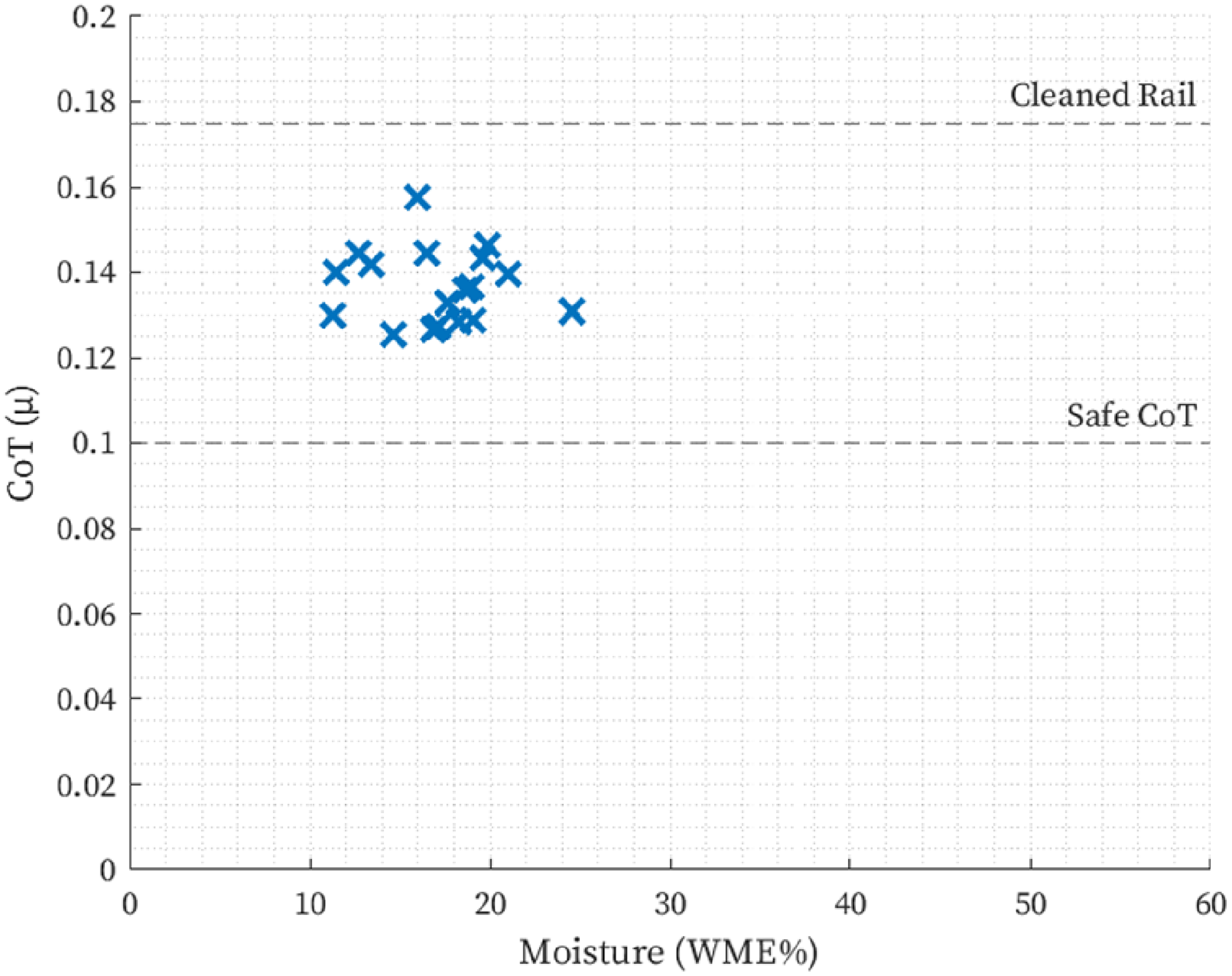
CoT levels for layers in the Skelmanthorpe side cutting against the moisture measured.
The difference between the air and rail temperature at this site was extremely limited (Figure 12) and the range of moisture in the layers lower than the Shelly side testing. All of the layers here were well within the moistures that gave a safe CoT in the controlled testing (see ‘Moisture – traction relationship’). This field testing highlights again that moisture is the most important factor in leaf low adhesion, and that while it is controlled by the environment, it is not simply possible to reverse engineer moisture levels from relative humidity.
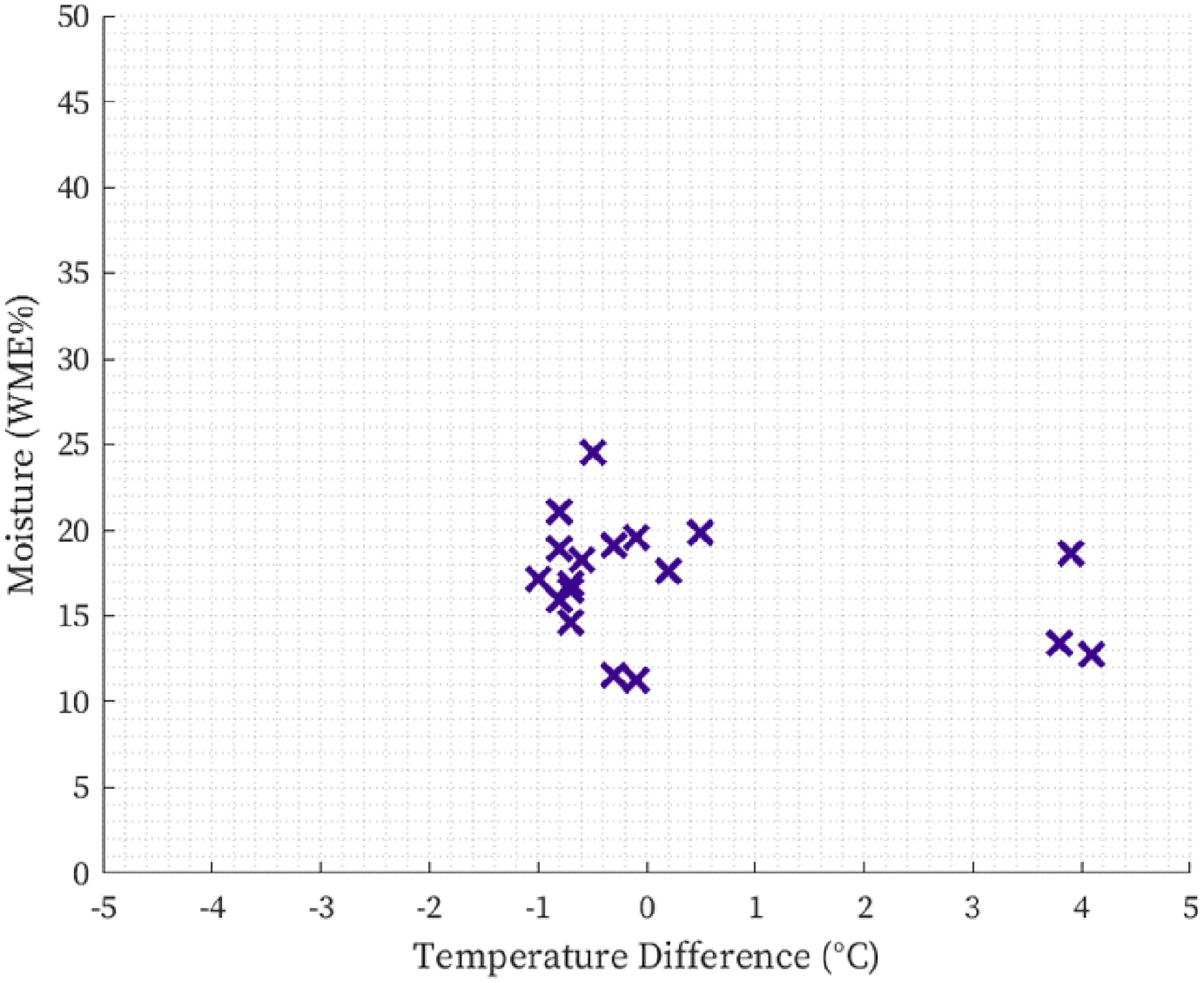
Moisture variation in leaf layers compared with temperature difference between rail and air in the Skelmanthorpe side cutting.
Discussion
Methods
Controlled environmental testing of leaf layers has been extremely limited and only typically completed on scaled rigs6,7 or by varying the ‘humidity’ of the leaves. 17 The novel ability to create realistic leaf layers on a linear FSR 31 meant that the rail sections could be transported into a large climate chamber and multiple tested at the same time. The climate chamber heating mechanism (heat exchanger) meant that layers did dry throughout the testing and so water had to be applied at all but the lowest temperatures to maintain moisture levels. The ad hoc hand application of moisture to the layer to maintain its levels was a limitation of the work, and the there was some variation in the level of moisture maintained (30–45%). The layer moisture was measured using industry standard methods, 8 but automation of layer moisture maintenance would further improve research in this field increasing repeatability. Later testing (see ‘Moisture – traction relationship’) showed that across this range of moisture would put the layer into the low adhesion regime, so there would be little variation in traction level (compared to a wider range e.g., 10–50%). Logging of moisture in leaf layers is a technical problem which would need to be resolved before this would be possible. This method of layer creation and traction testing in the climate chamber has since been employed for testing of leaf layer mitigations. 37 This testing employed a modification that helped to retain moisture levels on the layer for significant periods, but this modification was only tested up to 16 °C and in stable high humidity conditions.
Low traction levels (<0.1) were not measured on the leaf contaminated rails with the Ontrack Tribometer during the climate chamber testing. The CoT values for the leaf contaminated rail were higher than a level expected to cause safety issues, but significantly lower than a dry baseline (0.25 CoT). OnTrak testing with paper tape, used to simulate leaf contamination has been able to measure ultra-low adhesion (0.045) at 5% slip, however this was during a period of rainfall. 38 Testing with leaf layer analogues (bark powder) in the field 39 using the same testing parameters for the OnTrak only achieved values similar to the climate chamber testing. Recent field testing at a known low adhesion site 40 in very wet conditions only managed to achieve values for CoT of 0.126 with the OnTrak tribometer, using the same settings as this experimental work. This may suggest that the OnTrak is not capable of measuring low adhesion on leaf layers at this slip level and normal force. A reduction in slip and increase in normal force (to 90N) have both been shown to reduce the measured CoT on contaminated rails. The device was able to measure the differences between the contaminated and control rails in this testing enough to demonstrate the impact of moisture.
The Rivelin Rail tribometer is able to measure low and ultra-low adhesion levels during the testing. Comparisons with the FSR, and the British Rail Research ‘tribo train’ give confidence that the values are accurate, and that it can distinguish between different railhead conditions 33 as well as measuring low adhesion on well developed wet leaf layers (Figure 13).
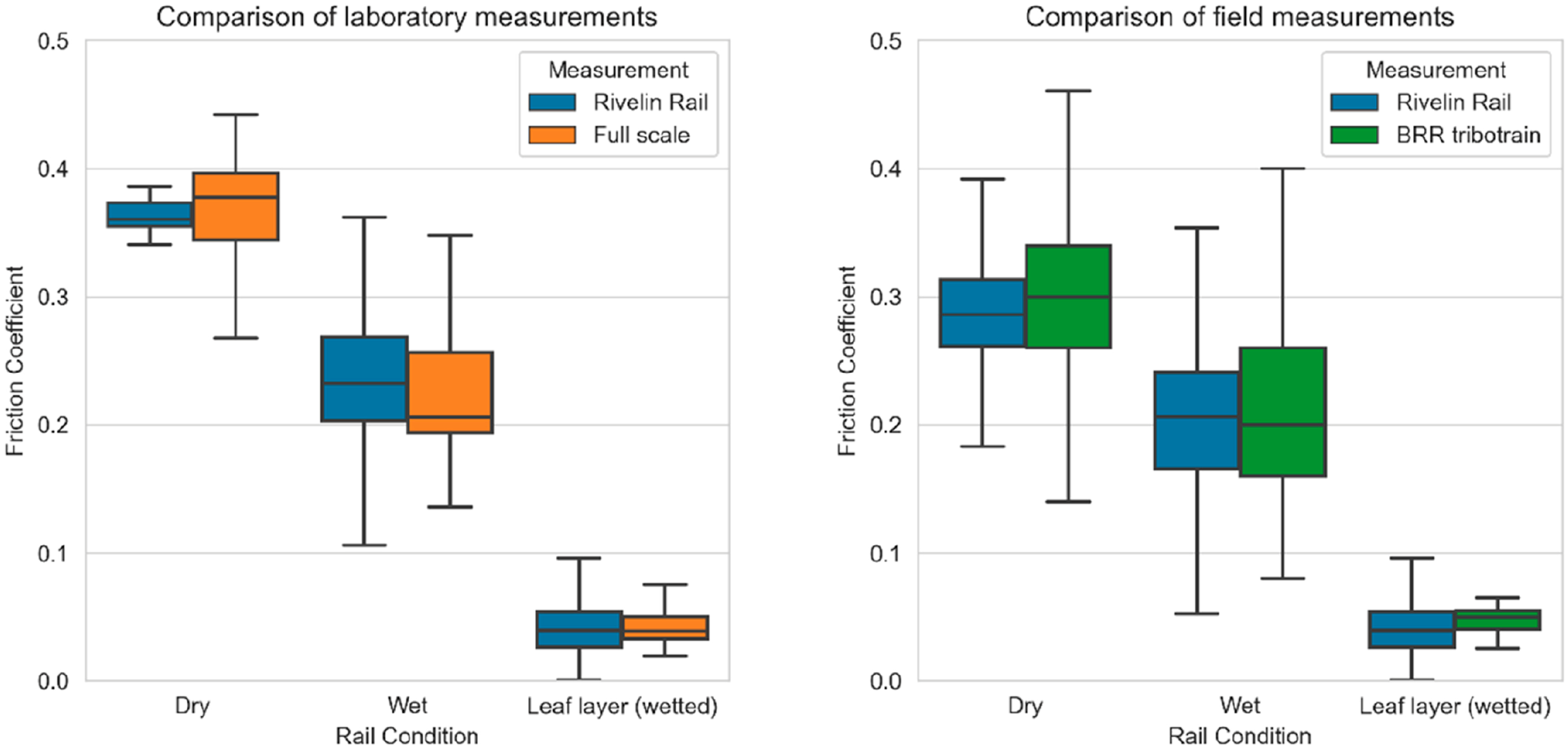
Comparison of Rivelin Rail tribometer with FSR and instrumented train. 33
Climate chamber testing
The relationships between air temperature/humidity and traction on the clean rail were the same as seen in the field4,5 and laboratory 7 with similar level regression strength to the field testing. There were no significant relationships between any of the environmental conditions and CoT for the leaf contaminated rail as moisture was maintained throughout the testing. Keeping moisture stable throughout the environmental changes broke the link between the air conditions and the layer characteristics. This meant that there was no increase in layer moisture when there might be due to environmental changes (such as early morning when the air is heating more rapidly than the rail and so condensation forms).
This highlights the importance of moisture in the adhesion supported by leaf layers. The air being wet or dry, warm or cold had no impact on the layer adhesion levels in this testing. This is not a break from previous research, however it is a change of focus from the easy to measure variables (such as air temperature and relative humidity) to the potentially causal variable. Temperature and humidity do have an impact on leaf layer low adhesion, but only because the variation in the air will dry or moisten leaf layer.
Layer characteristics and environmental changes
The moisture and humidity testing on the created and field layers (Figure 5) found a strong linear relationship between the humidity of the air and the moisture in the rail. As humidity reduced the moisture in the layer did as well, with availability of water in the air leads to a wetter layer. The relationship appears linear across this range of relative humidities (70–100%). Research on leaf litter29,41 found that the relationship between moisture and the litter is exponential (see Figure 1). These tests were conducted in more controlled environments (with a constant air temperature), whereas the rail testing was completed during the normal diurnal cycle of the day, air temperature rising and relative humidity decreasing. The range of humidity was limited by what occurred on the day, and comparing with the leaf litter tests, if the range was similarly reduced, the trend may seem linear. Replicating the leaf litter tests, while using leaf layer material generated on the FSR 31 would give an opportunity to assess the trend for leaf contamination.
Although relative humidity is a significant factor in adhesion of leaf contaminated surfaces,6,7,17 this is only as a proxy for the amount of water on the railhead/in the leaf layer. Past sensor testing has shown that high humidity alone does not correspond with a wetter railhead. 27 The dewpoint sensor used did not register a ‘wet rail’ (a signal above 0 V) during all of the high humidity periods. Similar trends were seen in the field testing (see ‘Field testing’) where higher humidity was less key to moisture than the temperature difference. Future work on forecasting adhesion in leaf layers should focus on the moisture in the layer as the driver of change rather than relative humidity variation on its own.
Moisture – traction relationship
Previous field testing found a linear relationship between moisture and CoT. 36 However, this was likely due to use of a modified pendulum 42 and the known inversely proportional relationship between moisture and shear strength 23 of leaf layers. Testing on the created layer in this paper with a driven wheel tribometer found significant changes in adhesion levels across the range of moisture (Figure 6). Traction dropped rapidly when a layer increased in moisture, reaching unsafe conditions at ∼20%WME. This occurred during stable ambient conditions that are not usually conducive to low adhesion,1,4,43 yet in those conditions the rail was taken into the ultra-low adhesion regime as the layer moistened. This further strengthens the assertion the amount of moisture, not the weather varies adhesion conditions with a leaf layer.
The relationship is seen across a range of layers both generated and natural (Figure 7) where moisture and traction data have been collected. There is variation across the different data sets, due to the layer type, tribometer and location of collection. The layers created for this testing and the mitigation testing 37 both used the same tribometer and CoT was collected in stable environmental conditions. The field layers were measured with a pendulum (in Wales 36 ) and Rivelin Rail tribometer (at the KLR). Despite the disparate locations, layer types and tribometers the relationship between layer moisture and traction is the same (especially in the 10–30%WME region). Higher moisture layers have lower adhesion levels irrespective of if the moisture levels are being artificially varied (water spray) or being changed by the environmental conditions.
The wider data set also points towards a trend seen in wider rail traction testing, that a flooded rail has a higher adhesion than a wetted layer. This is seen on wetted rails7,44,45 and has been investigated in relation to oxides on the railhead in the ‘wet-rail’ phenomenon.20,46–48 Oxide pastes in the ‘wet-rail’ phenomenon have a small window where low adhesion is created, and this occurs when the solid iron fraction is close to 1. Based on the work completed in this paper, leaf layers act more closely to wet clean rail than a rail where the oxide effects dominate, with a wider window that degraded adhesion occurs. Testing on the HAROLD rig 18 found that adhesion was lowest at the middle of a range of wetting rates (artificial replication of rain) for a leaf contaminated rail. If the moisture metre could measure higher WME content in the layer, this work may have been able to replicate this ‘bucket’, with adhesion rising at even higher moisture levels as the rail is flooded. This trend is clearer when the additional data is applied (Figure 7) but is limited by the moisture measurement tools.
It is clear that a small amount of moisture can tip a leaf layer from a safe level of adhesion into a dangerous regime. This is irrespective of the environmental conditions that can vary layer moisture levels. If moisture is increased above ∼25%WME a layer will be in the low/ultra-low adhesion regime.
Field testing
The testing at KLR complicates the understanding of the environment, moisture and traction relationships. The data from the field and created layers up to this point had shown that, for non-rain conditions, relative humidity and layer moisture were positively related. Therefore higher humidity conditions led to higher moisture and so would provide low adhesion conditions. However, this was not the case at KLR. At the site, extremely high humidity (90+%) did not result in a very moist layer or degraded CoT, with a minimal difference in rail and air temperature. In the location where relative humidity was rising (and air temperature dropping), moisture in the layer decreased as the temperature difference between rail and air decreased.
The KLR locations are potentially an outlier, deep cuttings where ‘local’ weather is very stable or reversed more macro trends due to the positioning. At VoR and in the rail testing, these were tree covered areas, but seemingly more classically affected by the diurnal cycle (rising temp and dropping humidity from morning to afternoon). In these locations the relative humidity to layer moisture relationship could be used to predict CoT without having to measure layer moisture, especially if the further research is undertaken. This trend is reflected in the surveys of adhesion incident timing being in concert with when relative humidity is high.3,22 The KLR locations may be edge cases, but cuttings have been highlighted as high risk areas for leaf low adhesion12,39,49,50 due to the trapping of leaves and high humidities. It may be that a separate model of layer characteristics (and CoT) based on the weather is needed for cuttings, if the aim is to establish moisture levels (and therefore risk of low adhesion) without direct measurement.
Moisture and low adhesion mechanism
Moisture, irrespective of environmental conditions, has direct relationship with leaf layer adhesion. Field data had found an inversely proportional linear relationship between layers and moisture 36 which would support the adhered leaf film mechanism hypothesis. However, using a driven wheel tribometer across a wide range of conditions (Figure 7) a seemingly exponential relationship has been shown. This would point away from the adhered film mechanism, which is dominated by the shear properties of the leaf layer and the inverse relationship with moisture. 23 The exponential curve seen in the testing fits with a structure/gel mechanism, which stores and expels water in the contact. Water absorbed would reduce the friction, with only a small change in moisture required to rapidly reduce adhesion. The leaf layer would be able to absorb a certain amount of water based on layer age, thickness and other parameters. Beyond the limit, water would be stay on the surface and flood the rail increasing the adhesion the railhead could support (creating the bucket of adhesion values across the moisture range).
Conclusions
This paper outlines the use of a range of controlled and uncontrolled testing to highlight the importance of moisture in leaf layer low adhesion. The key findings are:
Environmental changes only affect low adhesion by varying the moisture content of leaf layers. In dry open conditions, relative humidity and moisture are proportional. In more complex conditions (such as a cutting) relative humidity alone is not a good proxy for layer moisture. Moisture levels in a layer above 25% will lead to dangerous low and ultra-low adhesion conditions.
The moisture levels in leaf layers are vitally important to the low adhesion mechanism. Environmental conditions will affect this, but further work is required to model and predict adhesion (through moisture) from indirect measures such as the weather (Figure 14).
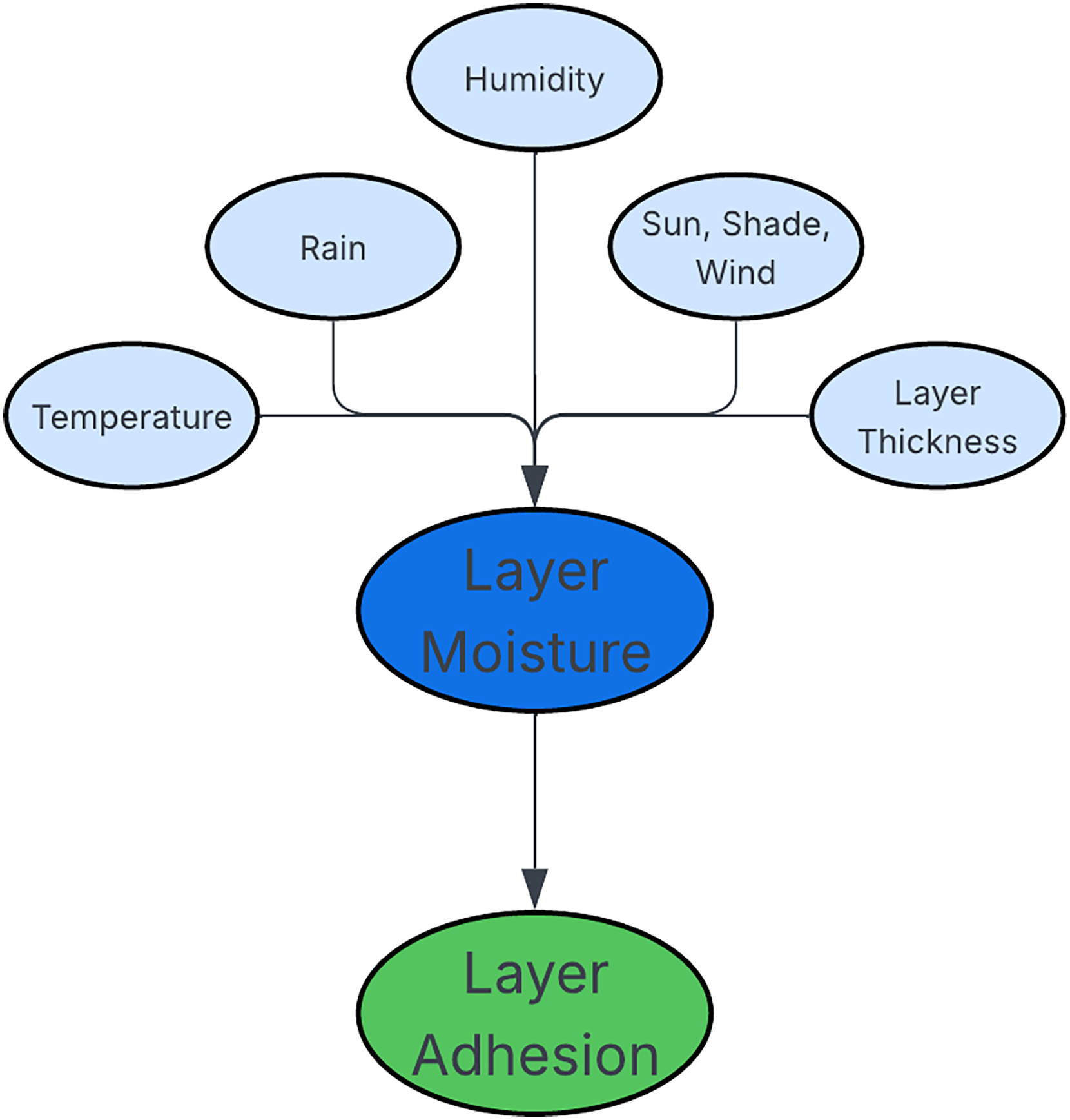
Environment, moisture and adhesion relationship.
Footnotes
Acknowledgments
The authors appreciate the contribution of the Railway Safety and Standard Board (RSSB) towards this research through the COF-UOS-06 project and EPSRC funding via the Programme Grant ‘Friction: The Tribology Enigma’ (EP/R001766/1). This research made use of The Laboratory for Verification and Validation (LVV), which was funded by the EPSRC (grant numbers EP/R006768/1 and EP/N010884/1), the European Regional Development Fund (ERDF) and the University of Sheffield. The authors appreciate the access for track measurements granted by the Vale of Rheidol Railway and Kirklees Light Railway.
Declaration of conflicting interests
The authors declared no potential conflicts of interest with respect to the research, authorship, and/or publication of this article.
Ethical considerations and consent for publication
Not required for this research.
Funding
The authors received no financial support for the research, authorship, and/or publication of this article.
