




Abstract
Given the crucial role of the mass media in influencing public discourse, this study examines the discourses around climate change within the Brazilian press, covering the time period of 2003–2013. Survey evidence has shown that Brazilians’ degree of concern about climate change is higher than almost anywhere else, with nine out of 10 Brazilians considering climate change a serious problem. The primary purpose of this study is to investigate how the press engendered Brazilians’ striking level of climate change concern, with special attention to how the discourse developed over time. To this end, I undertake a corpus-assisted discourse analysis to examine the most dominant linguistic patterns in the discourse, presenting evidence on an unprecedented scale and with considerable depth. The corpus consists of 19,686 newspaper texts (11.4 million words) published by 12 Brazilian broadsheet papers. The results are interpreted in the light of available opinion polls on the public’s perception of climate change as well as Brazil’s national context and environmental governance.
Keywords
Introduction
The mass media is said to play a critical role in influencing public discourse by driving, mirroring and perpetuating concepts, opinions and ideologies (Baker et al., 2013; Boykoff, 2013; Boykoff and Boykoff, 2007; Castells, 2009). As Castells (2009) observes, ‘it is through the mass media that the public learns about the scientific findings relating to issues that may affect people’s lives’ (p. 316). With respect to climate change specifically, Castells adds, media visibility was crucial in moving it ‘from a condition to a public issue to a policy concern’. This is important because the public’s understanding of the problem of climate change is essential to bring about changes in social practices and institutions that feed and amplify it. Climate change is not the consequence of individual behaviour and preferences but a result of historically embedded high-carbon systems which have established and sustained powerful patterns of social life (Urry, 2011: 48–65, 155–168).
This article examines the most dominant linguistic patterns in the discourse around climate change within the Brazilian press, covering the time period of 2003–2013. Brazil is an interesting case to study for various reasons. Unlike other major economies, Brazil’s fossil fuel–based emissions are low by global standards due to high investment in renewable sources within the energy and transport sectors (Azevedo, 2016; International Energy Agency (IEA), 2013). Brazil’s greenhouse gas (GHG) emissions mainly result from land change and use, especially deforestation (Azevedo, 2016; IEA, 2013; Lapola et al., 2013). Brazil is also distinctive in terms of public concern about climate change issues. Survey evidence shows that Brazilians’ degree of concern is higher than almost anywhere else, with nine out of 10 Brazilians considering climate change a serious problem (Brazilian Industry Confederation and Brazilian Institute of public Opinion and Statistics (CNI-IBOPE), 2012; PEW Research Centre, 2009, 2010). Although concern about climate change increased in all societies in early 2000s, Brazil stood out with the most significant rise. In 2002, only 20% of Brazilians listed climate change as a major threat; the figure jumped to 80% in 2013 and it remains as a high priority issue (PEW Research Centre, 2007, 2013, 2015)
Combined with the presence of dedicated environmentalists in key government positions – such as Marina Silva and Carlos Minc as environment ministers between 2003–2008 and 2008–2010, respectively – Brazilians’ striking degree of concern led politicians to include climate change issues in the agenda and take appropriate action to control deforestation (Held et al., 2013; Viola, 2013; Viola and Franchini, 2014). Changes were also driven by the increasing engagement of the private sector, when mining and agribusiness enterprises and supermarket chains joined environmental campaigns for stricter climate policies (Viola, 2013). Brazil moved away from a fairly conservative position, when the country was reluctant to make commitments to cut carbon emissions, especially with respect to controlling deforestation, to become a major player in international debates on climate change (Dayrell and Urry, 2015; Held et al., 2013; Viola, 2013; Viola and Franchini, 2014). In 2009, Brazil announced a voluntary commitment to curb its emissions, irrespective of international actions; it was signed into law in that same year. However, despite such remarkable advances, Brazil’s climate policies have shown little progress in recent years. Deforestation remains an unsolved issue, targets to reduce emissions have not yet been incorporated into the country’s economic planning and instruments to address the problem are not effectively interconnected (Azevedo, 2016; Viola, 2013; Viola and Franchini, 2014).
Studies on the discourse around climate change within the Brazilian media are scarce. A noteworthy contribution was the analysis of 1,755 news stories published between July 2005 and December 2008 by 50 Brazilian broadsheet papers, carried out by the Brazilian News Agency for Children’s Rights (ANDI) (2010). According to this report, the sharp rise in Brazilians’ degree of concern about climate change in mid-2000s was strongly related to the media coverage of the issue. There was an exponential increase in the number of news reports conveying the thesis that climate change is a serious matter for concern from the second half of 2006 onwards.
Although Dayrell and Urry (2015) covered an extended time period of January 2003 to December 2013 and used a large set of empirical data (19,135 texts from 12 major Brazilian newspapers), that analysis was restricted to comparing the frequencies in which organisations, manifestos, agreements, conferences and public figures that advocate or deny climate change occurred in the corpus. Other studies were carried out on a small-scale basis, focusing on specific newspapers and on specific periods of time (Carneiro and Toniolo, 2012; Loose et al., 2014; Painter, 2011: 49–57; Painter and Ashe, 2012; Rodas and Di Giulio, 2017).
A common finding across all those studies was a striking lack of reference to climate change scepticism, irrespective of the number of newspapers, number of texts or time period analysed. The Brazilian mainstream media has overwhelmingly reproduced the scientific consensus around the reality of climate change and reiterated the claim that human activities are central to the problem.
The distinctive contribution of this study is to provide a comprehensive analysis of the ways in which Brazilian newspapers used language to construct such discourse, presenting evidence on an unprecedented scale and with considerable depth. Using the methods and techniques of corpus linguistics, I will analyse a set of 19,686 newspaper texts (11.4 million words). Corpus-assisted discourse analysis has proven especially fruitful for analysing discourse by helping identify repetitions of linguistic strategies that can gradually influence readers over the course of time (e.g. Baker et al., 2013; Mautner, 2007). My ultimate goal is to investigate how newspapers framed climate change issues, with special attention to how the discourse developed over time. The results will be interpreted in the light of available opinion polls on the public’s perception of climate change as well as Brazil’s national context and environmental governance.
The Brazilian corpus on climate change
Before describing the composition of the corpus, it is important to explain some distinctive features of the Brazilian press system. First, Brazilian newspapers are private enterprises and tend to be part of a media conglomerate which encompasses other newspapers and/or media outlets (magazines, radio stations, Internet portals and/or television channels). Second, in Brazil, newspapers are state based; they tend to circulate within the state where they are published rather than throughout the entire nation. This means that circulation figures are directly associated with population distribution across states. Third, all tabloids are a sister paper to a broadsheet. In other words, broadsheets and tabloids do not run independently from each other.
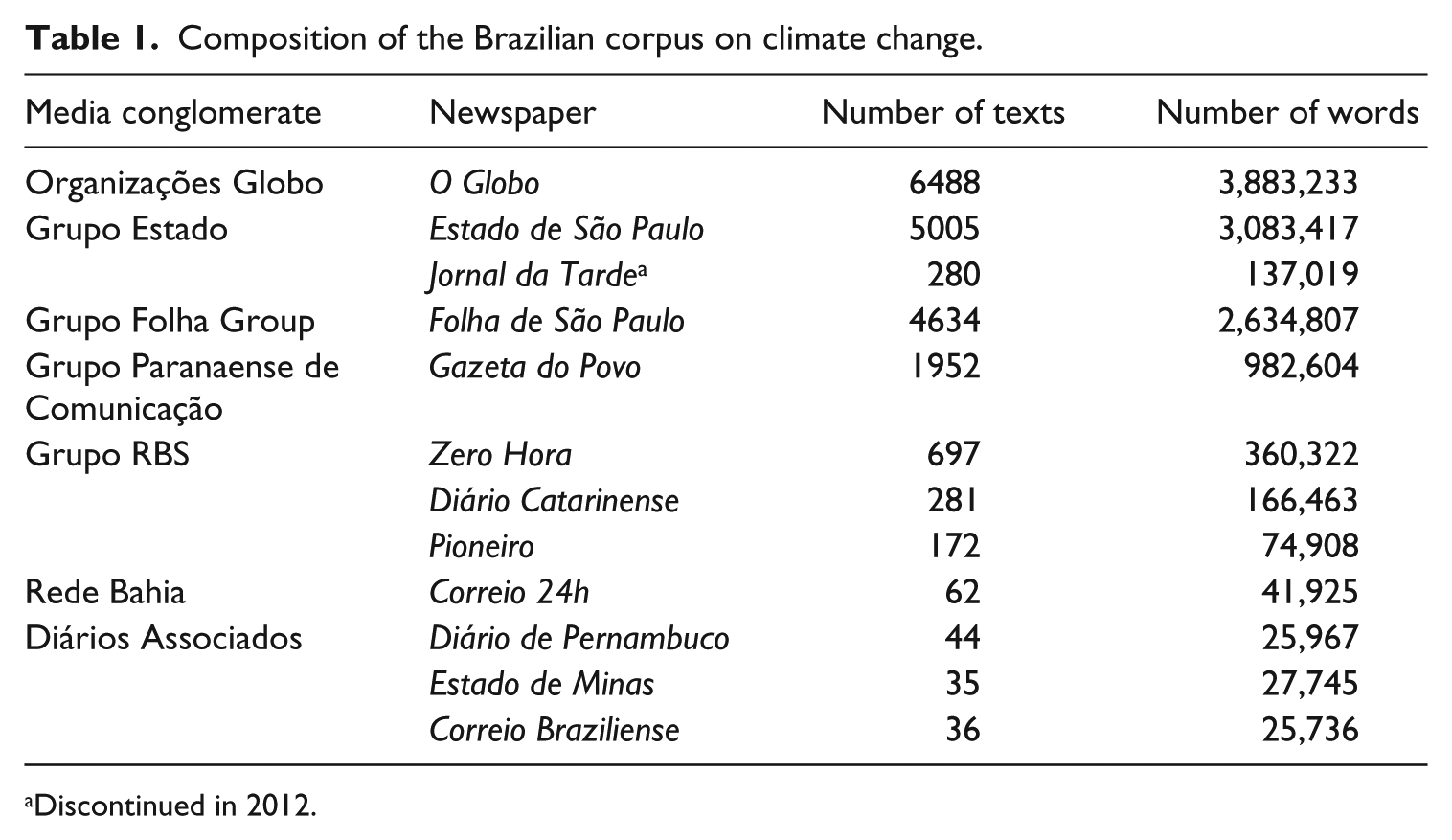
The corpus comprises 19,686 texts (11.4 million words) making reference to climate change, published between 1 January 2003 and 31 December 2013 by the 12 broadsheet papers. Table 1 displays the composition of the corpus in terms of newspapers and the media conglomerate they are part of, number of texts and number of words from each newspaper.
Composition of the Brazilian corpus on climate change.
Discontinued in 2012.
Note that the corpus does not include all Brazil’s daily newspapers and the number of texts from each newspaper varies considerably. This is because the choice of newspapers and number of texts from each was subject to their availability in the news aggregator service (Factiva) where texts were collected from. Thus, there are no newspapers from Brazil’s Northern and Centre-Western regions. However, despite covering nearly three-quarters of the Brazilian territory and accounting for most of Brazil’s GHG emissions resulting from deforestation and farming (Azevedo, 2016; Lapola et al., 2013), the Northern and Centre-Western regions are the least populated, hosting only 15% of Brazil’s total population. 1 Neither were tabloids included. In this case, it is important to clarify that, in Brazil, all tabloids are a sister paper to a broadsheet. One can thus assume that the broadsheet papers examined here also reflect the stance taken by their sister tabloids.
The corpus comprises daily newspapers with wide circulation within the states where they are published. As it stands, it includes nine out of the 10 most read broadsheet papers in the country.
2
The focus was on the printed versions of the newspapers; the only exception was Correio 24h as the printed version was not available. Individual texts were selected on the basis of the set of query words/phrases (see below); they were determined following a recursive method described in Gabrielatos (2007). These query words/phrases were:
mudança(s) climática(s), mudança(s) do clima, aquecimento global, gases-estufa, gases de/do efeito estufa, IPCC, UNFCCC, Conferência do Clima, Convenção do clima, Protocolo de Kyoto/Kioto/Quioto, emissões de carbono, emissões de CO2, emissões globais, temperatura global, redução das emissões, reduzir (as) emissões, and emissões/emissão de dióxido de carbono.
Texts were retrieved in full, irrespective of length or number of query words/phrases and their frequency within each. Thus, the corpus includes a wide variety of genres: news reports, articles, editorials and so on and texts vary in relation to the extent to which climate change is discussed. Such an approach broadens the scope of the analysis as it enables the researcher to examine any reference to climate change, even when it is not the main issue under discussion.
Identical duplicates were discarded but the selection includes duplicates with a certain degree of similarity. This decision is justified because, in Brazil, it is not unusual that conglomerates publish a given article across its various newspapers. As the old and new spelling systems for the Portuguese language co-existed during the period under analysis, spelling was standardised by means of the LINCE tool (Ferreira et al., 2012). I also standardised the spelling of some key words that appeared in various forms in the corpus (such as Kyoto, Kioto, Quioto and COP 15, COP15, COP-15), using SarAnt (Anthony, 2016). Finally, since Portuguese is a highly inflected language, the data were lemmatised, 3 using the TreeTagger (Schmid, 1994).
Methodology
The analysis builds on the corpus techniques of keyword and collocation, calculated using the WordSmith Tools (Scott, 2015). The keyword analysis identifies the most salient words in a corpus; collocation refers to the frequent co-occurrence of words.
Keywords are generated by applying a statistical test of significance to the data to identify those words (lemmas) whose frequency is unusually high or low in relation to that in another corpus. The climate change corpus was compared to a 265-million-word corpus of Brazilian newspapers – a subset of Corpus Brasileiro, 4 a general-language corpus of Brazilian Portuguese. The keyword calculation 5 was refined by applying an effect-size measure – Log-Ratio (Hardie, 2014) – to identify the words where the difference in frequency is greatest. The higher the Log-Ratio, the larger the difference. The analysis focused on the 30 most salient words in the climate change corpus (listed in Appendix 1).
The next step was to examine the collocations 6 of the selected keywords and, additionally, collocates of these collocations. The analysis therefore involved examining collocation networks (Brezina et al., 2015), that is, a multi-layered set of collocations that unveiled recurrent patterns in the discourse. Collocations were interpreted by close reading of their surrounding contexts and, whenever necessary, the wider context. The method therefore approached the data both quantitatively and qualitatively.
Data analysis
In this section, I discuss the most dominant linguistic patterns in the discourse, with special attention to the distribution of keywords and collocations across time. The main focus is on how the discourse developed and evolved in the Brazilian press. Results were plotted into graphs, considering relative frequencies per 100,000 words in relation to the overall number of words within each year. Note that the upper limit of the scale may vary from one graph to another. Keywords and collocates are indicated in italics. If verbs, they are represented in small capital letters to remind the reader that they refer to all word forms.
The problem of climate change
The present analysis corroborates previous findings (see section ‘The Brazilian corpus on climate change’) that the Brazilian press frequently stressed that climate change is a real phenomenon caused by human activities. This is seen for example through the regular appearance of the words mankind and humankind around the phrase global warming (example 1).
[…
The newspapers also established a strict relation between the vast amount of GHGs in the atmosphere and the rise of global temperatures. The phrases greenhouse emissions and carbon emissions were frequently mentioned throughout the period (Graph 1), often surrounded by words such as tonelada (ton), quantidade (quantity) or concentração (concentration). Mentions of methane were infrequent, even though Brazil’s methane emissions doubled between 2004 and 2014 – from 10% to 20% of total emissions (Azevedo, 2016). The peaks in Graph 1 relate to international negotiations to decide on actions to curb emissions. I will come back to this point later and discuss it in detail.
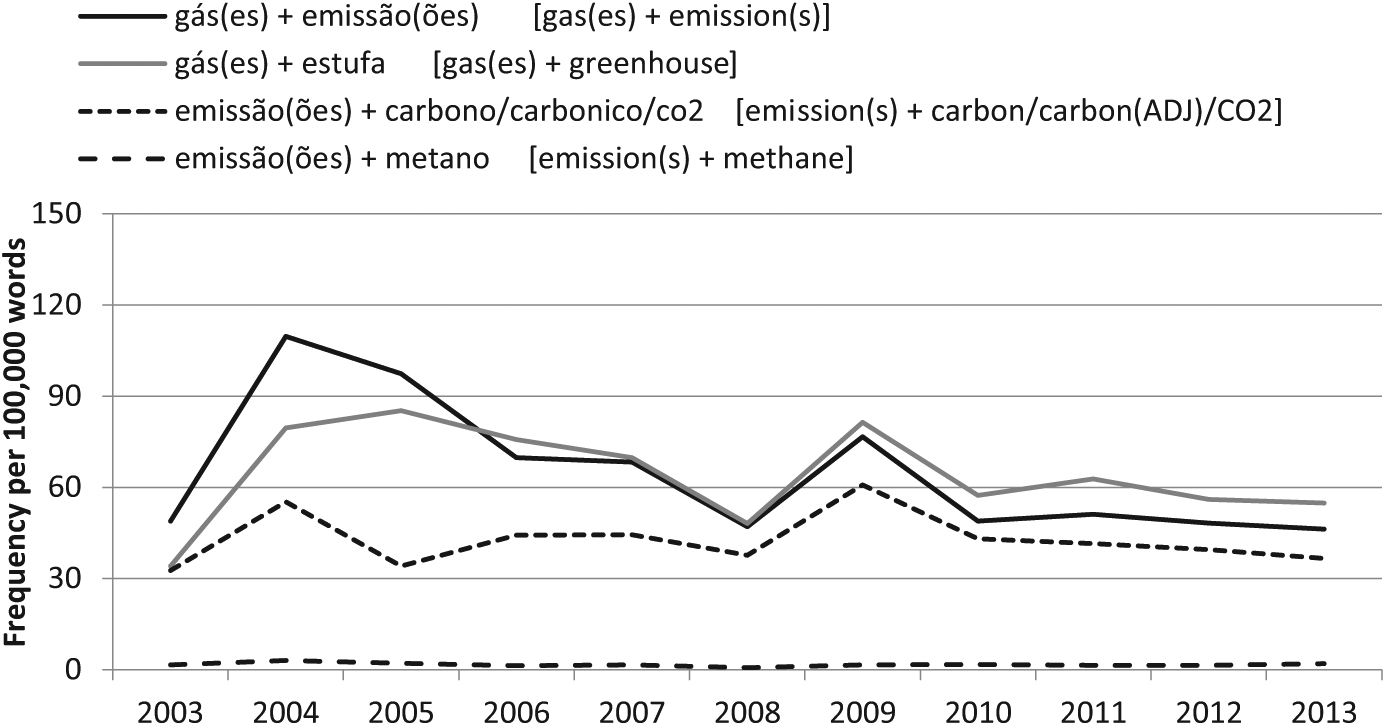
Mentions of collocations referring to GHG emissions.
The gravity of the problem was evident through references to the consequences of climate change, as indicated by the collocations in Graph 2. These were usually surrounded by adjectives such as grave (serious), negativo (negative), devastador (devastating) or catastrófico (catastrophic). Three issues stood out. One issue was the melting of polar icefields. The press highlighted the extension of ice being lost, alerting that global warming can make polar ice caps more prone to melting. This in turn can increase sea levels and change sea currents. Loss of biodiversity was also discussed, especially marine biodiversity due to increased acidification of the oceans. There were also mentions of extreme weather events such as droughts, floods, storms, hurricanes, heatwaves and wild fires due to scorching temperatures.
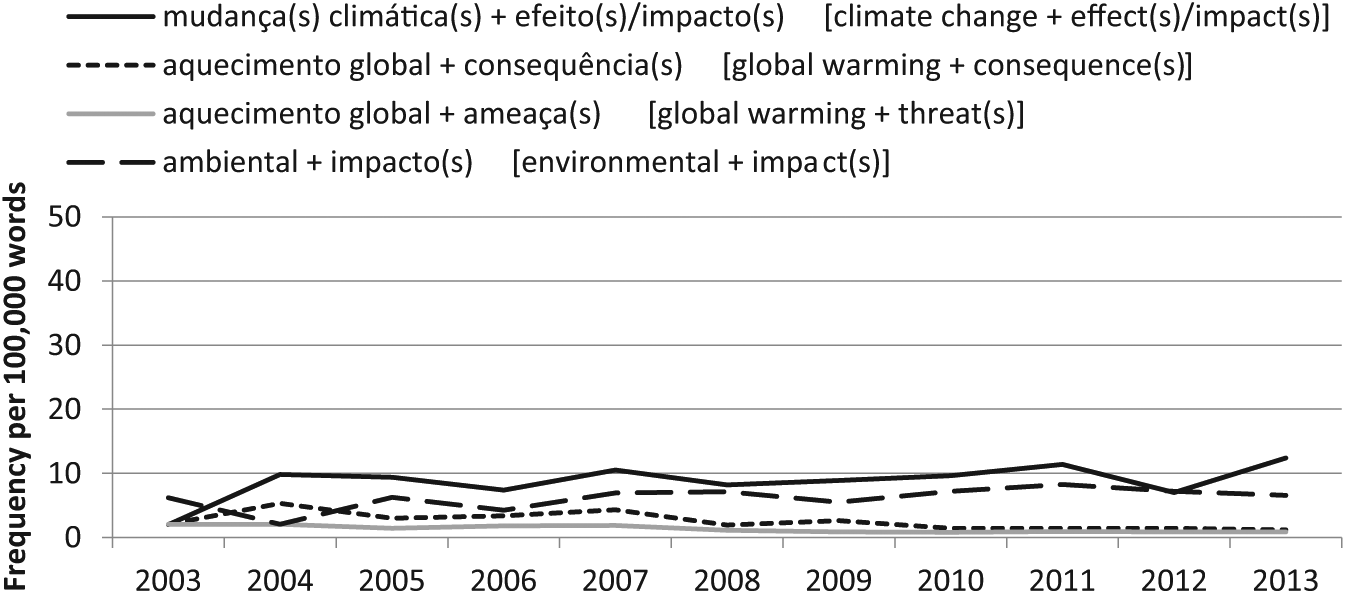
Mentions of collocations referring to the consequences of climate change.
To add credibility to the arguments, the press frequently resorted to the United Nations’ (UN) recognition of the problem by mentioning: (1) the Kyoto Protocol, an international treaty established in 1997, which set targets for developed nations to cut their emissions; 7 (2) the Intergovernmental Panel on Climate Change (IPCC), an international body which brings together thousands of scientists, policy-makers and nongovernmental organisations (NGOs) from across the globe for the assessment of the causes and consequences of climate change; 8 (3) the UN climate conferences and (4) the UN Framework Convention on Climate Change (UNFCCC), an international treaty established in 1994 to encourage actions to stabilise the amount of GHG emissions in the atmosphere. 9 Graph 3 displays their frequency distribution across time.
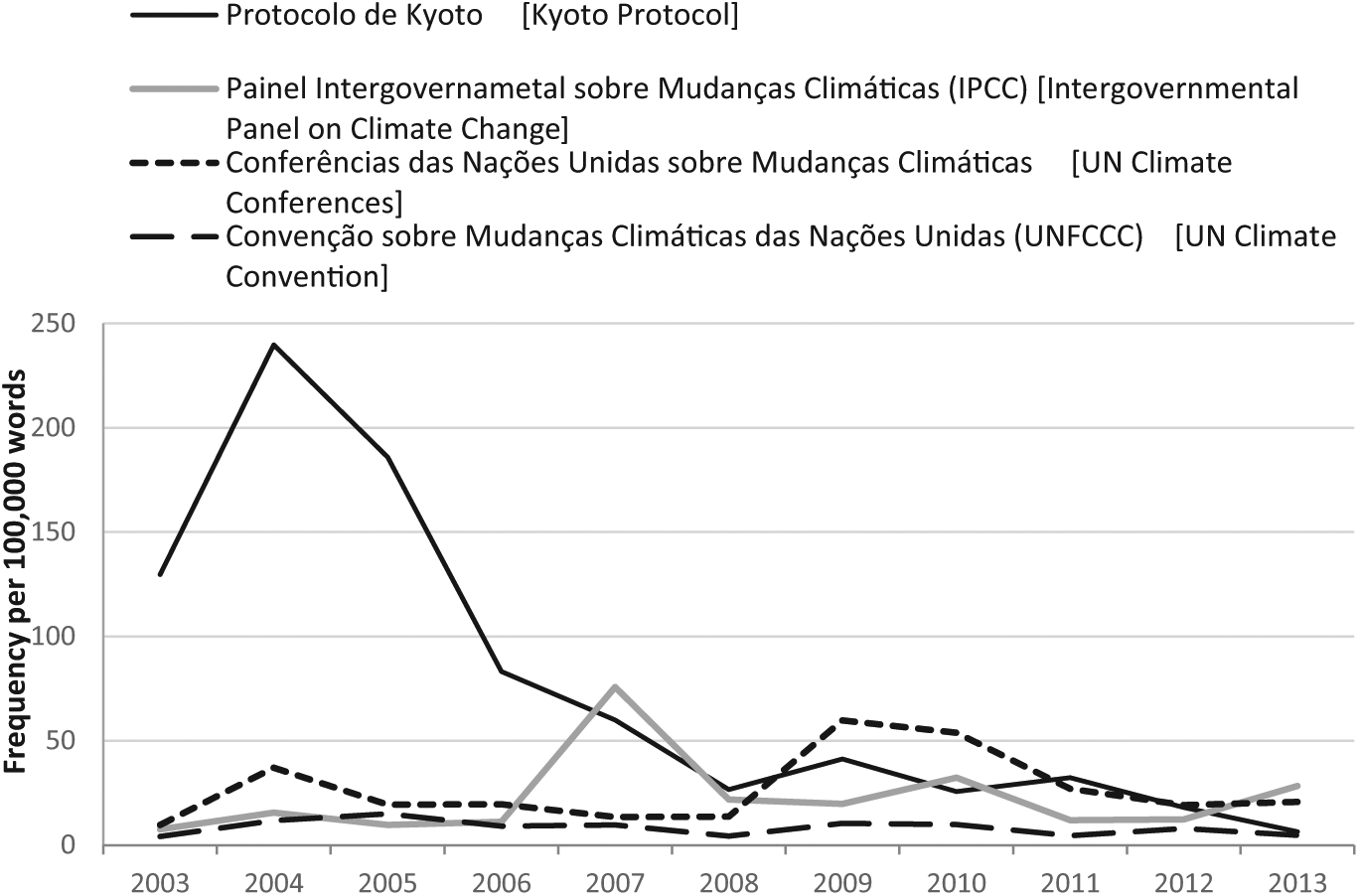
Mentions of UN climate initiatives.
The prominence of the Kyoto Protocol between 2003 and 2005 relates to the debate around its terms and conditions as it entered into force in February 2005. This is interesting because it indicates that the newspapers acknowledged the gravity of the problem before the IPCC released its fourth Assessment Report in 2007 – which provided evidence of the impact of human activities on the planet’s climate, calling for urgent actions. Between 2003 and 2005, the press also highlighted the diplomatic efforts to convince Russia and the United States to ratify the protocol, stating that they are among the world’s top GHG emitters. Russia’s ratification in December 2004 was portrayed as a major achievement. Refusal by the United States to sign the protocol was criticised throughout the entire period (example 2).
[What is the greatest obstacle to the
As the protocol’s first commitment period was set to be between 2008 and 2012, international negotiations took place after 2005 to decide on responsibilities and emission targets. With the launch of the 2007 IPCC Report, the debate heated up. This explains the increased frequency of the UN climate conferences from 2008 onwards, especially that of 2009, regarded as crucial to reach a global agreement to address the problem. As no significant consensus was achieved, controversies remained at the centre of the debate in the following year. The 2010 conference was considered as an opportunity to overcome unresolved disputes (example 3).
[It is time to reflect critically upon the COP-15 – the
Alignment with the IPCC’s discourse was also seen in 2010 in relation to the controversy around the mistaken estimate in the 2007 report that the Himalayan glaciers could disappear by 2035. While reporting on the error, the press stressed that it did not affect the main conclusions of the report. Mentions of the IPCC rose again in 2013 with the launch of the fifth Assessment Report. The UNFCCC was mentioned less frequently than other UN initiatives, but consistently throughout the entire period.
The burning of fossil fuels
Further evidence of the argument that global warming is caused by human activities comes from references to the burning of fossil fuels, as indicated by the collocations of fossil with fuel and with words related to ‘burning’ or ‘use’ and words conveying the idea of ‘replacing’ (Graph 4). Much of the discussion revolved around energy generation and the world’s high consumption of coal, oil and natural gas. Coal attracted the greatest attention, frequently referred to as sujo (dirty) or poluente (polluting).
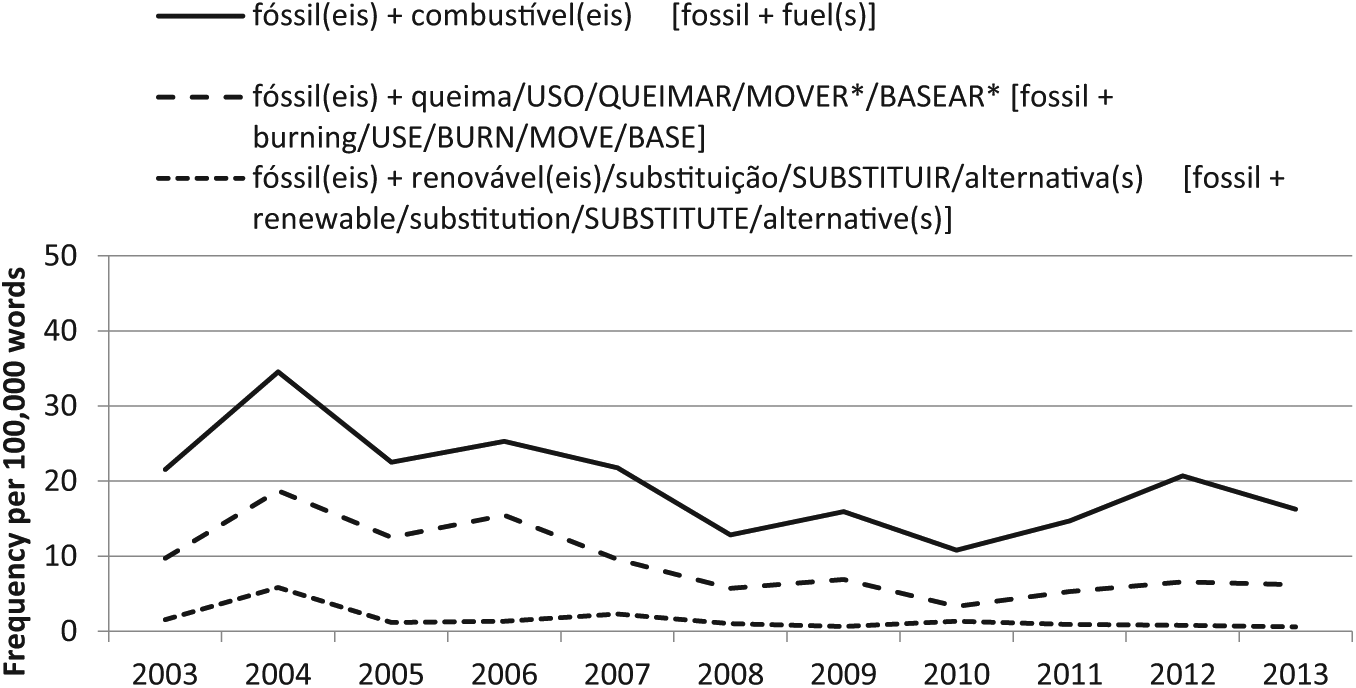
References to fossil fuel as well as to the burning of fossil fuels and the need to replace them with renewable sources.
Mentions of fossil fuels peaked in 2004 (Graph 4) coinciding with negotiations of the Kyoto Protocol. The press urged a shift in the world’s energy mix through the replacement of fossil fuels with clean sources of energy, a claim that remained in the agenda throughout the period. This also explains why mentions of renewable energy (Graph 5) showed similar distribution as those in Graph 4. The slightly increased frequency of fossil fuels and renewable energy in 2012 relates to calls for the abolition of subsidies on the occasion of Rio+20 – a UN conference held in Rio de Janeiro in June 2012 to debate measures to promote sustainable practices.
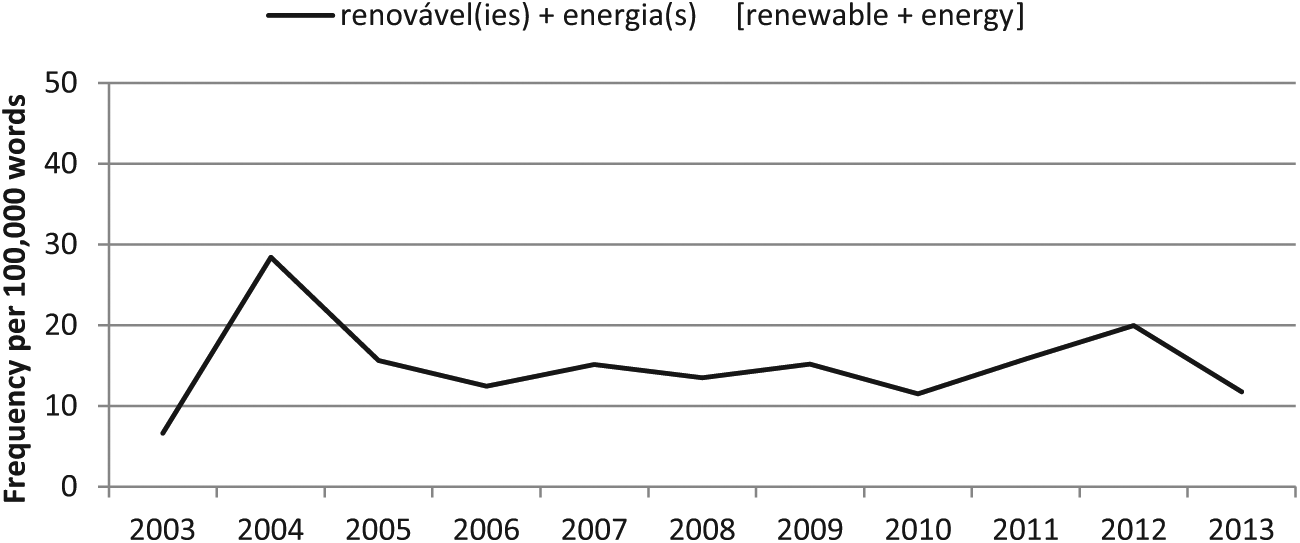
Mentions of renewable energy across time.
The need to take actions to reduce emissions was also made explicit through the frequent collocation of emission(s) with words conveying the idea of ‘reducing’ (Graph 6). There were also mentions of the need to combat climate change or global warming (Graph 7).
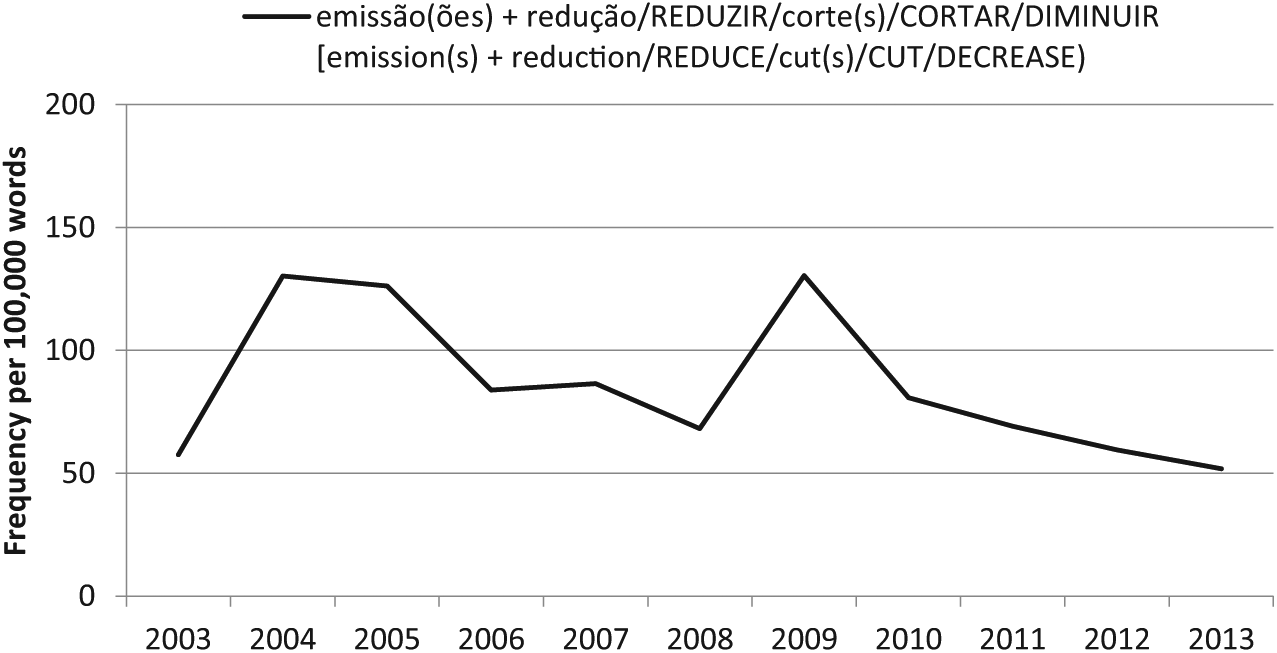
Frequency distribution of collocations conveying the idea that emissions need to be reduced.
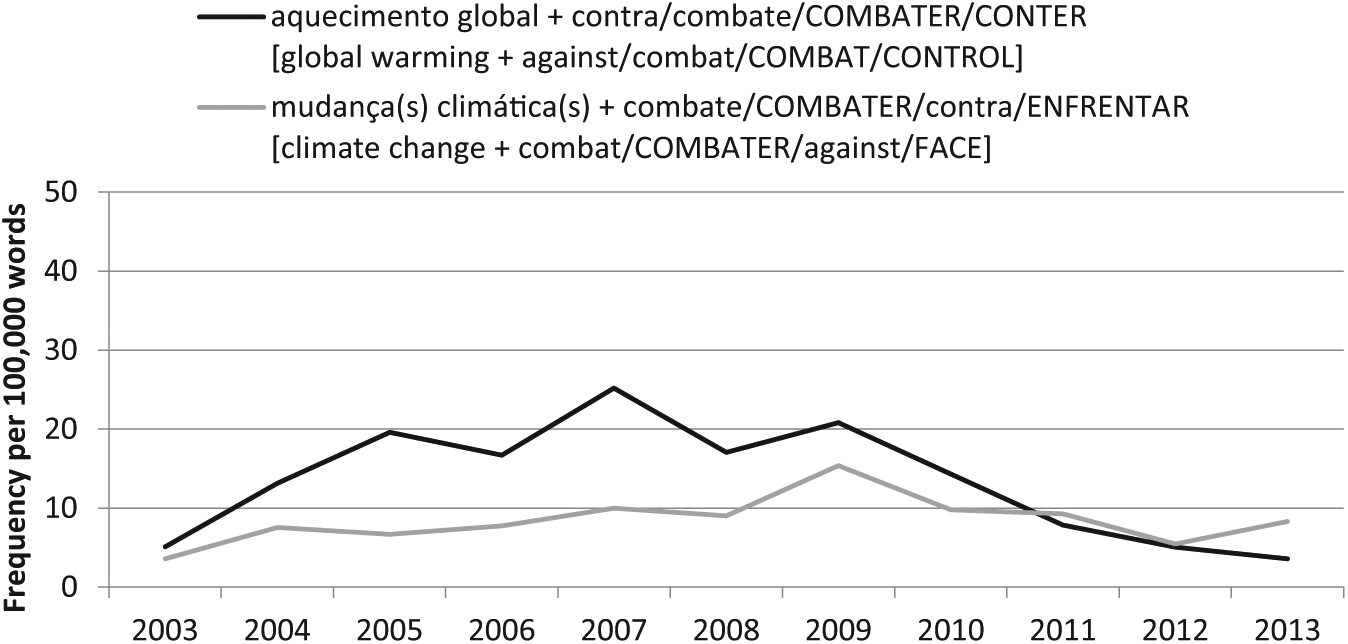
Frequency distribution of collocations of climate change and global warming with words related to ‘combating’.
These collocations were especially prominent around the implementation of the Kyoto protocol (2004–2005) and in the 2009 climate summit (cf. Graph 3). Combating climate change also peaked in 2007 together with the launch of the IPCC Assessment Report.
Brazil’s energy and transport sectors
Brazil’s energy mix was also prominent in the discussion. It was under intense debate after a major energy crisis in early 2000s due to hydropower shortage caused by extreme droughts. While throwing fierce criticisms at the decision to invest in thermal power to meet increased demand (example 4), especially from 2010 onwards, the press coverage placed more emphasis on Brazil’s leading position in the use of renewable sources to produce electricity, often contrasted with the reliance of other major economies on coal and oil.
[… although with a great potential to have a fairly clean and
Relatedly, the press mentioned Brazil’s outstanding capacity to produce biofuel and the high proportion of ethanol blended into petrol – currently around 25%, the highest in the world (IEA, 2013). Graph 8 shows the emphasis on the boom of Brazil’s ethanol industry between 2003 and 2008, when production doubled in response to high demand domestically and record levels in exports (Traylen, 2014).
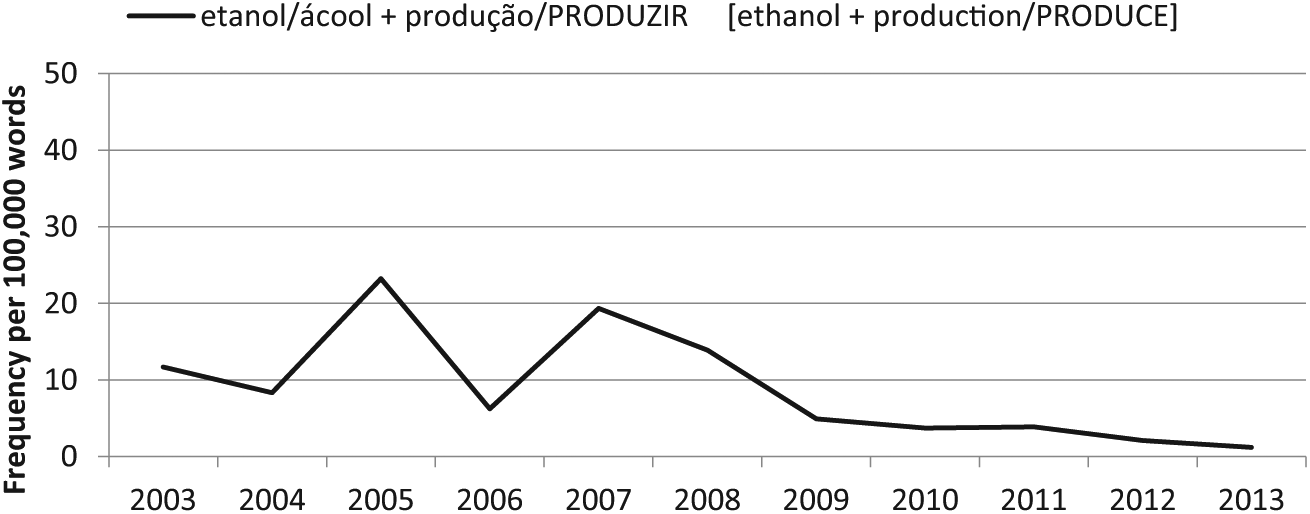
Mentions of ethanol production across time. Note that this study considered both words etanol and álcool since they are used interchangeably in Brazilian Portuguese to refer to ethanol fuel.
The salient mentions of ethanol production before 2008 also relate to trade disputes between Brazil and the United States. Brazil’s ethanol is made from sugarcane whereas the United States produces corn ethanol. The press argued that sugarcane is more efficient as raw material whereas, to be viable, the US production requires subsidies. But the optimism over the potential for Brazilian ethanol in the international market faded fast. The slump in the frequency of the collocations in 2009 relates to the discovery of a major deep-water oil field along the Brazilian coast in 2007 – the Pre-Salt (IEA, 2013). Investments and subsidies were gradually shifted to the oil industry. As a result, ethanol price soared and there was a significant drop in ethanol production and consumption.
Deforestation
Deforestation was another salient topic in the discourse. The word deforestation became increasingly more frequent in the early 2000s (Graph 9), mirroring a steady rise in deforestation rates, which reached record levels in 2005 (Azevedo, 2016; Lapola et al., 2013). With the introduction of strict legislation and effective law enforcement, deforestation rates dropped sharply between 2004 and 2009. 10 This explains the decrease in the frequency of the word after 2009. The issue remained in the agenda as it still is Brazil’s main source of GHG emissions (Azevedo, 2016).
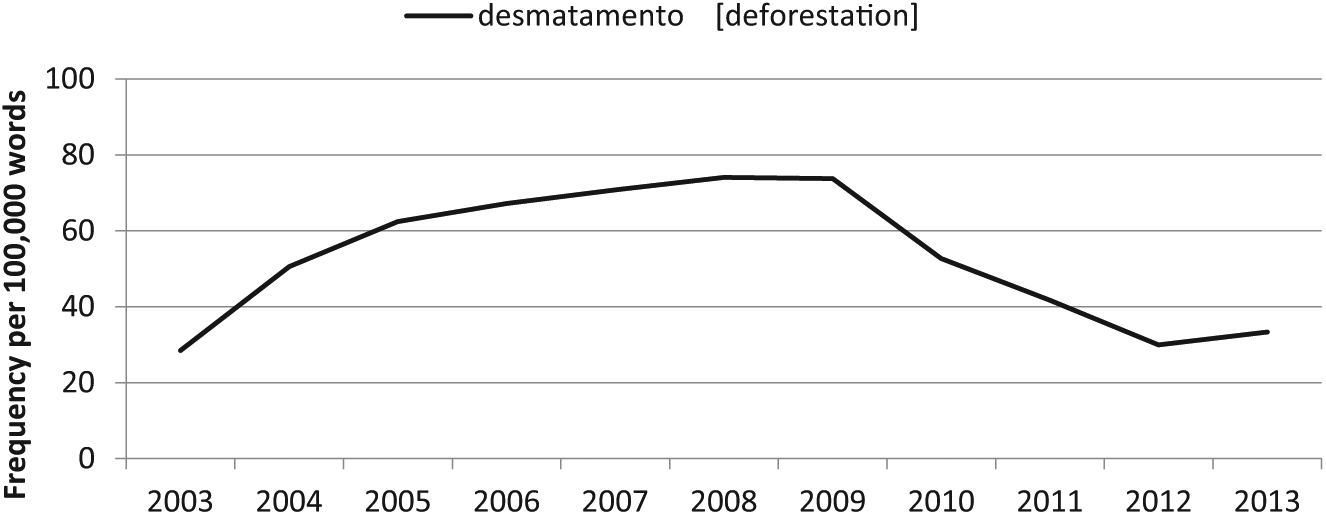
Mentions of the keyword deforestation across time.
The press frequently mentioned that deforestation places Brazil among the world’s top polluters. There were mentions of annual rates, speed and extension of deforestation, in many cases contrasting with figures from previous years (example 5).
[… the deforested area between 2003–2004, which reached 26,130 km2. This is the second largest increase in
Deforestation was often associated with the burning of forests and mainly discussed in relation to the Amazon region (Graph 10). Mentions of deforestation in the Savannah came to light in 2008, and even so very modestly. The infrequent mention of deforestation in the Savannah is an important finding. GHG emissions in the Savannah rose sharply between 1990 and 2014 due to a major boost in agricultural and livestock farming (Azevedo, 2016; Lapola et al., 2013; Martinelli et al., 2010).
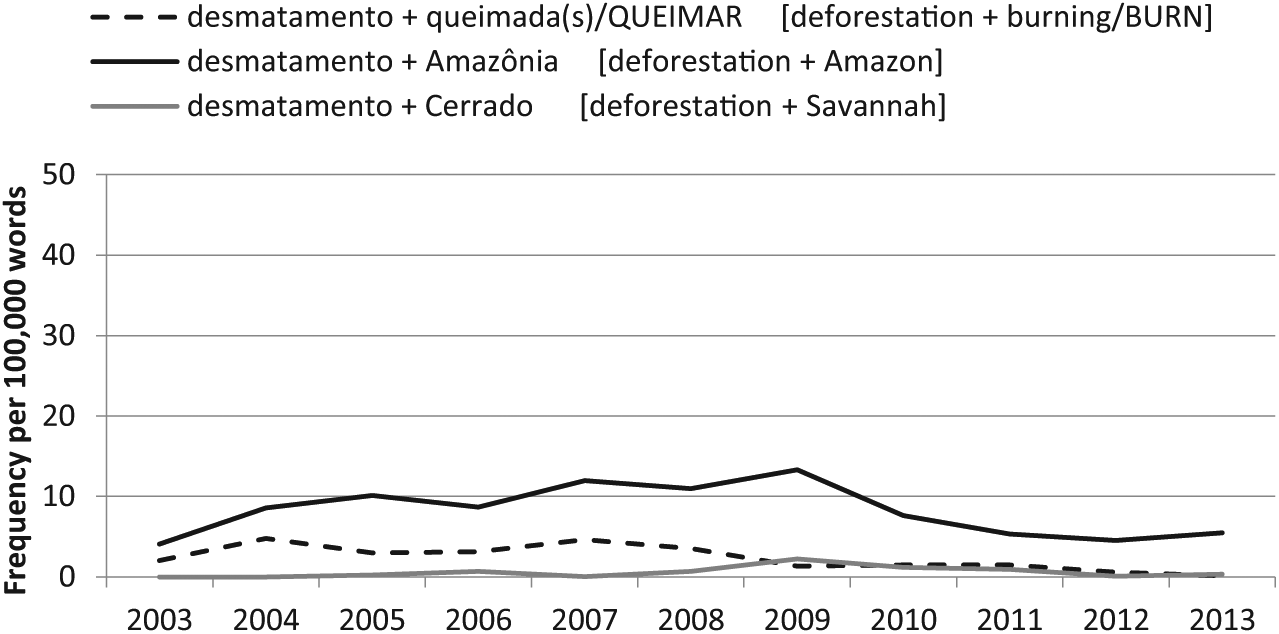
Mentions of collocations related to the burning of forests and deforested areas across time.
Between 2005 and 2009, the press explicitly called for actions to control deforestation (Graph 11). It was viewed as essential to reduce Brazil’s emissions as well as preserve forests and protect biodiversity.
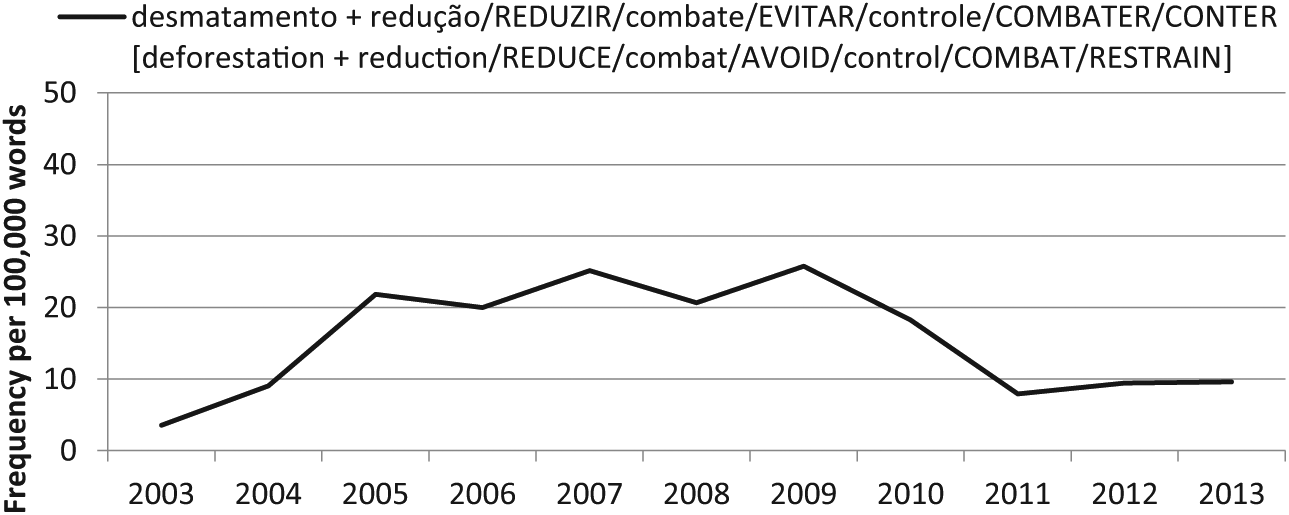
Frequency distribution of collocations indicating the need to ‘control’ deforestation.
There were frequent references to policies to regulate the use and management of forests. Much of the press coverage related to disputes over whether and how to incorporate mechanisms such as the Carbon Credit Market (CCM) 11 and the REDD (reducing emissions from deforestation and degradation) 12 into international agreements. The CCM scheme was especially prominent around the implementation of the Kyoto Protocol (2004–2005) when parties negotiated whether controlling deforestation and preserving forests should generate credits. The REDD mechanism was salient around the 2009 climate summit as the newspapers reproduced Brazil’s active engagement with the debate.
Domestic policies were also in evidence, especially Brazil’s regulatory framework for land use and change – the forest code. As it dated from 1965, environmental campaigners put pressure on the government to revisit it. The press reported widely on the tension between activists and the agribusiness lobby over the revised version under discussion in the upper and lower houses between 2010 and 2012. The final document favoured the latter – it reduced the boundaries of protected areas and granted amnesty for deforesting protected areas before 2008 (Viola, 2013).
Responsibilities
Of note is the newspapers’ emphasis on the tension between developed and developing countries. Graph 12 displays the frequencies of developed, developing and poor countries across time.
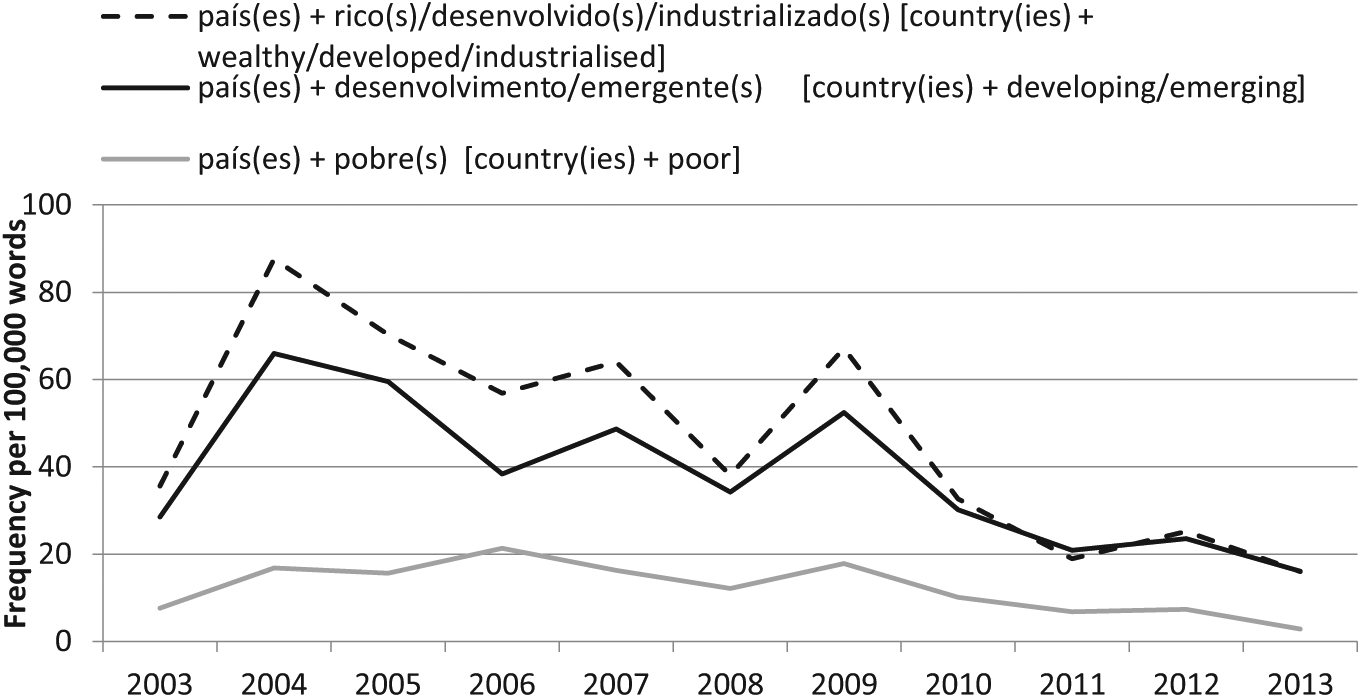
Mentions of developed, developing and poor countries across time.
As shown, mentions of developed and developing nations occurred with similar frequencies throughout the entire period, peaking together in years of key events: the implementation of the Kyoto Protocol (2004–2005), the release of the IPCC report in 2007 and the 2009 UN climate summit (cf. Graph 3). These peaks reflect disputes around emission targets as well as adaptation and mitigation actions. Developed nations argued that targets should be extended to emerging economies whereas the latter did not accept equal responsibility for the problem.
In the early 2000s, the press emphasised the historic responsibility of developed nations – they have released a higher amount of GHG and for a longer period. From around 2004, mentions of the responsibility of developing nations became increasingly more frequent (example 6), especially that of the emerging economies of China, India and Brazil.
[the biggest obstacle to an agreement concerns achieving a fair distribution of responsibility between
The press also argued that developed nations should provide financial and technological resources to help developing countries to devise and implement adaptation and mitigation measures to control deforestation and preserve forests. This applies primarily to poor countries, especially those in Africa, portrayed as the most vulnerable to temperature changes and the least prepared.
Sustainability
My final point relates to the increasing reference to the notion of sustainability from 2008 onwards, as indicated by the distribution of sustainability and sustainable development over time (Graph 13). They peaked in 2012 coinciding with the Rio+20 conference.
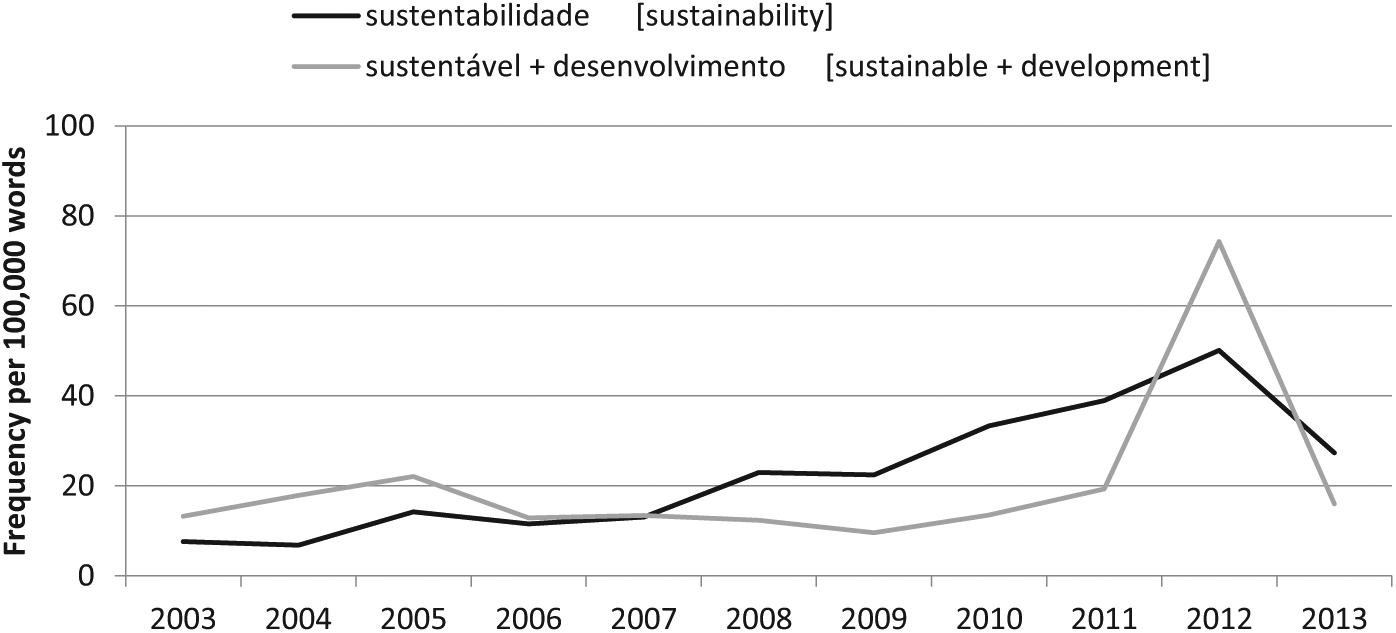
Mentions of sustainability and sustainable development across time.
The press frequently mentioned NGOs engaged in encouraging low-carbon initiatives and sustainable practices related to the use of natural resources and forests as well as within the industry and business sectors. Programmes designed to promote environmental education, within and outside schools, also received attention. Importantly, the media discussion was not solely restricted to environmental aspects; it also reflected upon the social and human impacts of climate change (example 7).
[Unless we do something to reduce emissions in the next couple of years, there will be no way back. We will suffer serious social, economic and environmental consequences …] (Gazeta do Povo, 8 December 2011)
Media discourse, public opinion and climate politics
The present analysis demonstrated how the press engendered Brazilians’ striking level of climate change concern. By framing it as a real phenomenon that poses serious threats to the earth system, the press has played a key role in raising the public awareness of the gravity of the problem. Not only did Brazilians express a high level of concern about climate change, but they also stated that it is an immediate problem that requires urgent actions, even though about a quarter of respondents believe it is principally a problem for future generations to deal with (CNI-IBOPE, 2012).
By covering an extensive period (2003–2013), this analysis has also unveiled important shifts in the discourse. Between 2003 and 2005, emphasis was placed on the international debate around the terms and conditions of the Kyoto Protocol (Graph 3) and the contentious disputes between developed and developing nations to decide on emission targets for individual countries (Graph 12). During this period, Brazil was reluctant to support global financial schemes to control deforestation, fearing it would threaten national sovereignty in the Amazon region (Viola, 2013; Viola and Franchini, 2014). The country aligned itself with other emerging economies (China, India and South Africa) in international negotiations, despite their heavy use of fossil fuels to produce energy. The press argued that developed nations should take responsibility for their historic emissions, a key reason why the Kyoto Protocol set targets for them to curb their emissions. At the same time, the newspapers urged the replacement of fossil fuels with renewable sources while emphasising Brazil’s leading position in the use of renewable sources in the electricity and transport sectors (Graphs 4, 5 and 8).
From 2005 to 2009, the press coverage reflected the environmental approach that dominated Brazil’s climate governance under Lula’s administration (in office from 2003 to 2010). The environmental movement gained space within national politics and Brazil’s climate policies changed fundamentally (Held et al., 2013; Viola, 2013; Viola and Franchini, 2014). Brazil implemented strict forestry policies to control deforestation and preserve forests and reiterated its commitment to renewable sources by investing in the expansion of the country’s hydropower capacity and reviving the ethanol industry. Internationally, the alliance with China and India weakened and Brazil became actively engaged in debates around actions to fight against climate change, especially those concerning mechanisms to help control deforestation and preserve forests in developing countries.
The discourse in the newspapers followed accordingly. Between 2005 and 2009, there were frequent claims that global GHG emissions needed to be reduced (Graph 6) to combat climate change (Graph 7). Emphasis was placed on Brazil’s leading position in the use of renewable sources, especially regarding the generation of electricity from hydropower and the production and use of biofuels (Graphs 5 and 8). Brazil’s high rates of deforestation were also on the spotlight. The press called for urgent actions (Graphs 9–11), thus helping raise Brazilians’ awareness of the problem. In a spontaneous survey in 2012, deforestation emerged as the environmental issue that Brazilians were most concerned about; Brazilians also expressed support for strict measures to tackle the problem (CNI-IBOPE, 2012). However, the press discussion focused mostly on the Amazon region whereas little was said about deforestation in the Savannah (Graph 10). The Brazilian Savannah is also vast and with abundant water resources; it is among the world’s richest savannahs in terms of biodiversity (Martinelli et al., 2010). As mentioned earlier, GHG emissions in the region have soared due to large-scale commodity farming.
The press’ framing of international climate negotiations also changed between 2004 and 2009. While still stressing that developed nations bore more responsibility for increasing global temperatures, the press did not exempt developing nations from their responsibility. The compelling argument was that both developed and developing countries should work together to curb emissions. In addition to reducing their emissions, the former should help the latter to implement mitigation and adaptation measures to handle the adverse effects of climate change. Here again the discourse aligns with public opinion. Although most Brazilians (53%) blame wealthy nations for causing the problem; but when asked about who should take actions to tackle it, around 55% of respondents answered all nations equally and about a third stated that all countries should work together but wealthy countries should do more (CNI-IBOPE, 2012).
From around 2009 onwards, the discourse took a new turn. There was a clear slump in the frequency of collocations related to the need to combat climate change or global warming (Graph 7) as well as those related to controlling emissions (Graph 6) and negotiating emission targets (Graphs 3 and 12). Grundmann and Scott (2014) have reported similar trend for the press coverage in Britain, United States, Germany and France. They argued that it resulted from the combination of lack of agreement in the 2009 climate summit with media attention cycles.
However, in the specific case of Brazil, domestic drivers seem to have played a more important role in setting the media agenda. With the discovery of the Pre-Salt oil reserves in 2007, conservative forces became increasingly influential in the government’s decisions, even more so with the change of government in 2010. Rousseff’s administration (2010–2016) favoured economic growth and the appointed Minister of Environment (Isabella Teixeira) lacked the political influence of her predecessors (Marina Silva and Carlos Minc) to push the green agenda ahead (Viola, 2013; Viola and Franchini, 2014). Brazil responded to the 2008 economic crisis by cutting taxes on oil consumption so as to stimulate car manufacturing and by diverting investments and subsidies to the oil and petrochemical sectors (Viola, 2013; Viola and Franchini, 2014). Ethanol price soared and the number of vehicles running on ethanol dropped from 82% of Brazil’s fleet in 2009 to 24% in 2013 (Azevedo, 2016; Traylen, 2014). In the energy sector, the production of electricity from fossil fuels nearly doubled between 2011 and 2014, when it reached 24% of Brazil’s total electricity production (Azevedo, 2016).
The press coverage reflected this change of approach. There was a sharp slump in references to ethanol production from 2009 onwards (Graph 8) and a significant increase in the frequency of the keyword coal. These relate to mentions of the negative impacts of government’s decisions on the ethanol industry and heavy investments in thermal power. The discussion nevertheless fell short in reflecting upon the significant increase in GHG emissions from Brazil’s transport and energy sectors. Emissions from road transport nearly doubled between 2001 and 2014; those from electricity generation tripled (Azevedo, 2016).
Similarly, there was a considerable drop in the frequency of collocations related to the reduction of deforestation (Graph 11). The newspapers seemed consistent with Rousseff’s approach to the issue: preventing increase in deforestation rates, rather than working towards reducing it further (Viola, 2013). Deforestation remains as Brazil’s main source of GHG emissions, especially due to large-scale farming. Although the link between deforestation and the farming business has weakened with the introduction of strict legislation, nearly two-thirds of Brazil’s GHG emissions from agricultural and livestock farming still result from the conversion of forests into agricultural and pasture lands (Azevedo, 2016; Lapola et al., 2013). Large-scale farming has also deepened inequality in land ownership and escalated rural migration to urban areas, thus amplifying Brazil’s social problems (Azevedo, 2016; Lapola et al., 2013; Martinelli et al., 2010).
Finally, it is important to note the increasing attention paid to the notion of sustainability from 2008 onwards (Graph 13). However, while associating environmental protection with social justice and equality, the press coverage neglected consumption patterns and social habits. Interestingly, this relates closely to Brazilians’ understanding of the notion of sustainability. Survey by the Brazilian Ministry of Environment (MMA) (2012) showed that Brazilians do not fully understand the concepts of sustainable growth and sustainable consumption and still preserve behaviour and practices harmful to the environment.
Final remarks
An important point to be made here is that the analysis concentrated on the combined impact of all newspapers. Although showing clear overall patterns in the newspaper discourse, additional insights could be gained by contrasting individual newspapers to determine whether the trends identified here prevail across all papers. Another limitation to be addressed in future studies relates to similarities and differences across subgenres within the newspapers’ discourse. For example, it would be relevant to examine whether the discourse strategies used in news reporting is consistent with those in opinion articles. Also, it would be important to extend the period of analysis and investigate how the newspapers have framed climate change issues in the light of later events, such as the Paris climate agreement and the re-election of Rousseff in 2014, her impeachment and change of government in 2016.
Overall, this article has demonstrated that the Brazilian press has played a key role in raising public awareness of the problem of climate change as well as in encouraging engagement with the debate, especially in relation to deforestation. However, the study also showed lack of serious discussion about the significant rise in emissions from the energy, transport and farming sectors. The press coverage appeared to reflect, rather than steer, government priorities. This suggests limited and partial reflection on how to transform business and social practices, a real challenge to the country’s actual transition into a low-carbon economy.
Footnotes
Appendix
This appendix lists the 30 keywords (lemmas) selected for analysis, in descending order by Log-Ratio.
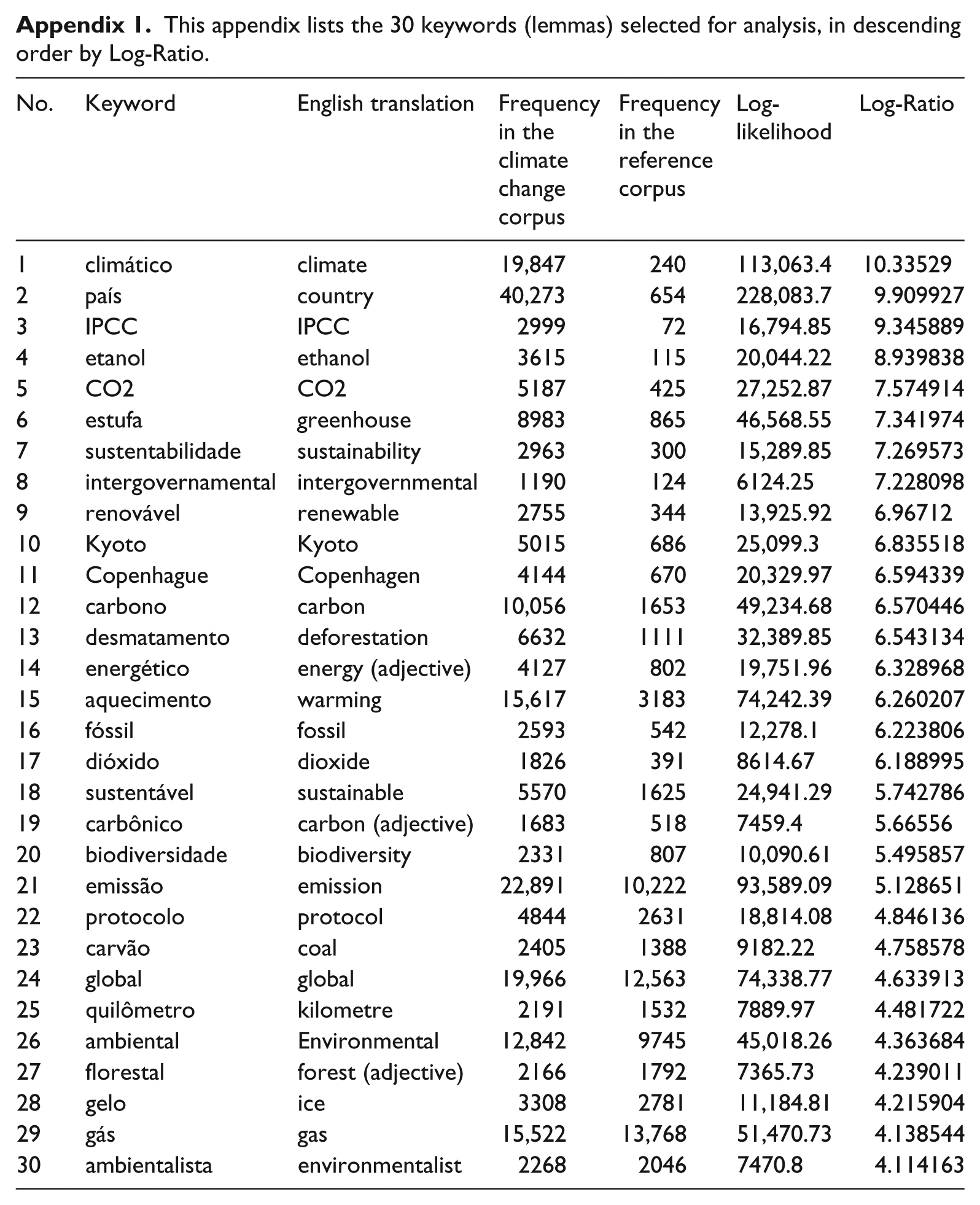
| No. | Keyword | English translation | Frequency in the climate change corpus | Frequency in the reference corpus | Log-likelihood | Log-Ratio |
|---|---|---|---|---|---|---|
| 1 | climático | climate | 19,847 | 240 | 113,063.4 | 10.33529 |
| 2 | país | country | 40,273 | 654 | 228,083.7 | 9.909927 |
| 3 | IPCC | IPCC | 2999 | 72 | 16,794.85 | 9.345889 |
| 4 | etanol | ethanol | 3615 | 115 | 20,044.22 | 8.939838 |
| 5 | CO2 | CO2 | 5187 | 425 | 27,252.87 | 7.574914 |
| 6 | estufa | greenhouse | 8983 | 865 | 46,568.55 | 7.341974 |
| 7 | sustentabilidade | sustainability | 2963 | 300 | 15,289.85 | 7.269573 |
| 8 | intergovernamental | intergovernmental | 1190 | 124 | 6124.25 | 7.228098 |
| 9 | renovável | renewable | 2755 | 344 | 13,925.92 | 6.96712 |
| 10 | Kyoto | Kyoto | 5015 | 686 | 25,099.3 | 6.835518 |
| 11 | Copenhague | Copenhagen | 4144 | 670 | 20,329.97 | 6.594339 |
| 12 | carbono | carbon | 10,056 | 1653 | 49,234.68 | 6.570446 |
| 13 | desmatamento | deforestation | 6632 | 1111 | 32,389.85 | 6.543134 |
| 14 | energético | energy (adjective) | 4127 | 802 | 19,751.96 | 6.328968 |
| 15 | aquecimento | warming | 15,617 | 3183 | 74,242.39 | 6.260207 |
| 16 | fóssil | fossil | 2593 | 542 | 12,278.1 | 6.223806 |
| 17 | dióxido | dioxide | 1826 | 391 | 8614.67 | 6.188995 |
| 18 | sustentável | sustainable | 5570 | 1625 | 24,941.29 | 5.742786 |
| 19 | carbônico | carbon (adjective) | 1683 | 518 | 7459.4 | 5.66556 |
| 20 | biodiversidade | biodiversity | 2331 | 807 | 10,090.61 | 5.495857 |
| 21 | emissão | emission | 22,891 | 10,222 | 93,589.09 | 5.128651 |
| 22 | protocolo | protocol | 4844 | 2631 | 18,814.08 | 4.846136 |
| 23 | carvão | coal | 2405 | 1388 | 9182.22 | 4.758578 |
| 24 | global | global | 19,966 | 12,563 | 74,338.77 | 4.633913 |
| 25 | quilômetro | kilometre | 2191 | 1532 | 7889.97 | 4.481722 |
| 26 | ambiental | Environmental | 12,842 | 9745 | 45,018.26 | 4.363684 |
| 27 | florestal | forest (adjective) | 2166 | 1792 | 7365.73 | 4.239011 |
| 28 | gelo | ice | 3308 | 2781 | 11,184.81 | 4.215904 |
| 29 | gás | gas | 15,522 | 13,768 | 51,470.73 | 4.138544 |
| 30 | ambientalista | environmentalist | 2268 | 2046 | 7470.8 | 4.114163 |
Acknowledgements
This research is dedicated to the late sociologist John Urry, the mind and inspiration behind this project. I specially thank Mike Scott for his careful reading and insightful comments on earlier versions of this article. I am also grateful for the help and assistance from my CASS colleagues, especially Andrew Hardie for lemmatising the corpus, Tony McEnery for his constant support and Vaclav Brezina for his valuable suggestions.
Declaration of conflicting interests
The author(s) declared no potential conflicts of interest with respect to the research, authorship, and/or publication of this article.
Funding
The author(s) disclosed receipt of the following financial support for the research, authorship, and/or publication of this article: This research was funded by the Economic and Social Research Council (ESRC) as part of the Changing Climates project ( ) conducted at the ESRC Centre for Corpus Approaches to Social Science (ES/K002155/1).