



Abstract
Cultural omnivorousness is widely studied as a dimension of the stratification of taste, related to class or status positions. However, taste is also structured by patterns of social mobility, especially educational mobility. Building on Lizardo’s Bourdieu, Distinction, and Aesthetic Consumption article, we expect that cultural omnivorousness systematically depends on patterns of educational mobility. Specifically, we predict that a higher inherited educational capital triggers a taste for less legitimate culture. Using survey data on tastes in music in Germany, we tested the effects of acquired and inherited cultural capital in predicting tastes for less legitimate cultural forms of taste at the level of genres and the effects of educational mobility in predicting cultural omnivorousness. Our results suggest that, first, the effect of parents’ education in predicting taste for less legitimate music genres is larger than the effect of the respondents’ own education. Second, the analysis reveals significant differences in omnivorous taste across segments of educational mobility groups. In general, there are three groups that show the highest omnivorousness: upwardly and downwardly mobile groups between middle and high positions and stayers in the high-level segment, whereas immobile individuals in the lower segment are the most univorous. Contrary to expectations, respondents with upward educational mobility who reach a high level of education accumulate omnivorous attitudes to a high degree. This study shows partial support for the statements of theory and proposes trajectories for future research.
Keywords
Introduction
The field of cultural consumption covers the study of consumers drawing social distinctions based on cultural tastes in everyday life. The homologous distinction, proposed by Bourdieu (
Numerous scholars have studied differences in cultural tastes in the context of social inequality delving into the role of social status, class, education, or parental characteristics in explaining the social origins of omnivorousness (for a review, see Johnston et al., 2019). The current empirical focus in social research tends to cover a separate dimension of mobility as an element of contemporary social stratification (Otte et al., 2021). Studying the intersections of mobility and lifestyles expands the perspectives of omnivore studies by investigating the cultural reflection of various mobility patterns.
In Bourdieu’s (1984) theoretical framework for the study of musical tastes, educational mobility emerges as an important factor (Lizardo, 2019). In particular, Bourdieu postulated that inherited and acquired cultural capital has different effects on building preferences toward more or less legitimate (cultural) products. Empirical research has looked at the differential impact of inherited vs. acquired cultural capital at the genre level of preferences (e.g. Childress et al., 2021), albeit not necessarily with reference to educational mobility, despite Lizardo’s (2019) theoretical exploration of this aspect. As framed by Lizardo (2019: 184), the mobility factor ‘received no theoretical or empirical attention by researchers in the sociology of consumption to date, despite its obvious relevance to key debates,’ although it may serve as an additional explanation for recent trends toward omnivorousness documented in the literature (e.g. Sintas and Álvarez, 2002, 2004; Warde and Gayo-Cal, 2009).
For this reason, a separate empirical study investigating the role of educational mobility and its possible trajectories is pertinent. Drawing on data on taste in music from the German General Social Survey 2014 (GESIS – Leibniz-Institut Für Sozialwissenschaften, 2017, 2018a, 2018b), this study aims to examine (i) the differential effects of acquired and inherited educational cultural capital on preferences for less legitimate cultural taste and, subsequently, (ii) differences in cultural omnivorousness across diverse educational mobility groups. We employed different analytical techniques to estimate the proposed relationships at the genre level of music culture: multiple correspondence analysis (MCA), latent class analysis (LCA) and regression analyses.
Germany was selected as a representative case of a Western European country, where prior studies have consistently documented omnivorous characteristics within high social status groups (e.g. Kunißen et al., 2018; Otte, 2009; Voronin, 2022). At the same time, the German education system is characterized by a low level of marketization (Gruijters et al., 2019), making higher education affordable and accessible and, thereby, reducing the importance of parental economic resources. However, upward educational mobility remains at a relatively low level, depending mostly on the cultural and social capitals of parents (Hillmert and Jacob, 2010; Stephany, 2019; Tramonte and Willms, 2010). The low importance of economic factors and the high significance of cultural capital make Germany a compelling environment for investigating cultural stratification, specifically the relationships between educational mobility and omnivorous taste.
Literature Review and Hypothesis Development
Sociological studies that draw upon both Bourdieu’s (1984) theory of symbolic exclusion, as well as Peterson’s (1992) omnivore–univore thesis, stand on the social origins of cultural taste. Focusing on the different taste patterns, the former delves into the exclusivity of taste repertoire for different social segments as a function of unequally distributed cultural capital and growing up with certain habitus (Bourdieu, 1984). For instance, the cultural hierarchy encompasses highbrow (sophisticated) taste as a standard for high-social-status groups and lowbrow (unpretentious) – for low-social-status groups. The omnivore argument posits a shift from (exclusive) highbrow to (inclusive) omnivore taste patterns among higher segments, while establishing univore trends among lower segments (Johnston et al., 2019; Peterson and Kern, 1996; Prior, 2013).
Both approaches are based on the idea of cultural hierarchy within a society, which assumes that different cultural products are perceived with varying degrees of recognition. Bourdieu, writing about the connection between taste profiles and social stratification, distinguishes three zones of taste that correspond to level of education and class: (1) taste for legitimate products, which increases with the level of education and is highest in fractions of the dominant class with high cultural capital; (2) taste for middlebrow products, which is widespread among the middle class and the intellectual cluster of the dominant class; and (3) taste for popular products, the value of which decreases due to popularization, which is most widespread in the working classes (Bourdieu, 1984: 16). A recent study by Jæger et al. (2023) presents arguments supporting the existence and universal recognition of cultural hierarchy on the example of Denmark. In contemporary research, the degree of cultural legitimacy of a product can vary in time and geographically (Katz-Gerro, 2002). Studies that take for granted the position of cultural products on a legitimacy scale (e.g. high vs low culture) may be potentially biased (Gayo, 2016: 113; Nault et al., 2021: 720) as they do not address the dynamics and cross-cultural differences.
So far, studies of cultural stratification have widely discussed the role of cultural omnivorousness – the inclusivity of taste or the skill to extend one’s taste – as a status signifier (Johnston et al., 2019; Peterson, 2005). Given that cultural products have various degrees of recognition, individuals demonstrate tastes that align with their social positions (Jæger et al., 2023). Symbolic boundaries between cultural products with different social meanings and, subsequently, one’s lifestyle contribute to the legitimization of social inequality (Bourdieu, 1984). Crossing symbolic boundaries in one’s lifestyle and extending one’s volume of taste serves as an indicator of a high social position or high cultural capital in terms of skills and cultural competencies (Peterson and Kern, 1996).
Generally, the relationships between taste or lifestyle and social position are shaped by the habitus – ‘systems of durable, transposable dispositions, structured structures predisposed to function as structuring structures’ (Bourdieu, 1990: 32). Guided by the perceptual schemes formed by habitus, individuals develop a distinct cultural repertoire in a certain field. Notably, one’s habitus is tailored not only by one’s social position but also by social trajectories (Bennett et al., 2009: 27; Bourdieu, 1984). Individuals undergoing mobility carry a psychological imprint of the changes, characterized by conflicting structuring dispositions on different levels – a divided habitus (Friedman, 2016), which holds particular significance for those experiencing upward mobility (Paulson, 2018) This, in turn, may result in higher omnivorousness as a by-product of adapting to a new position in the social structure (Friedman, 2012).
In conceptualizing cultural omnivorousness, Lizardo and Skiles define it as a transposable form of aesthetic disposition whose development is stimulated by early aesthetic education and early socialization experiences. A socialization environment that benefits from high cultural capital allows individuals to learn and ‘apply an implicit aesthetic scheme to a wide variety of objects’ (2012: 272). This aspect plays an important role in explaining the empirical results found so far. Noteworthy, by drawing attention to existing relational mechanisms that can either enhance or suppress omnivorous taste, Lizardo and Skiles (2012) point to the theoretical importance of examining social trajectories following early socialization periods.
According to Bourdieu (1984), the educational system and the trajectories of individuals in this system play one of the most important roles in shaping dispositions toward aesthetic consumption. Thus, research has shown that educational capital is important in explaining omnivorous taste (Purhonen et al., 2010: 280; Warde and Gayo-Cal, 2009:129; Warde et al., 2007: 158). Daenekindt and Roose (2014) pay attention to the trajectories and examine the relationship between educational mobility and omnivorous patterns, which result from the mixing of cultural repertoires from the social positions of origin and destination. This study shows that cultural repertoires of upwardly mobile individuals are guided by their social position of destination and can be expanded during the lifespan, while downwardly mobile individuals are more likely to keep up the cultural repertoire of the environment they were raised in (Daenekindt and Roose, 2014: 92–93). However, the study was limited to a survey in Flanders (Belgium) and did not examine differences in omnivorousness using fine-grained mobility trajectories.
Theoretical grounds for reconsidering the relationship between educational mobility and omnivorousness are described by Lizardo (2019) in his interpretation of Bourdieu’s (1984, 1986) ideas. Following this, the omnivorous patterns found in many empirical studies do not contradict the works of Bourdieu. The reason for this is that Bourdieu’s idea goes beyond the perception of cultural taste and consumption as a function of status driving. Instead, Bourdieu is concerned with the trajectories that individuals follow in the educated strata and the relative weight that should be given to the two components, parental education in relation to the individual’s education, that make up cultural capital and affect aesthetic choices (Lizardo, 2019: 180). More precisely, Bourdieu (1984: 13) argued that ‘at equivalent levels of educational capital, the weight of social origin in the practice and preference-explaining system increases as one moves away from the most legitimate areas of culture.’ Legitimate taste refers to cultural choices ‘to which the highly educated have affinity’ (Warde et al., 2007: 150), as the aestheticization of such cultural items usually requires cultural and intellectual competencies and capabilities.
This mechanism operates through a set of socio-cognitive and cultural competencies as a function of unequally distributed educational background, which contributes to the development of schemes of perception and predetermines the apprehension of cultural products (Lizardo, 2019: 182, 186). Individuals from more educated social backgrounds benefit from the habitus at home and have the opportunity to start using these cognitive schemas relatively early, which in turn leads to their thorough mastery in everyday life (Lizardo, 2019: 187). Such a social background (i.e. educated habitus at home) not only increases the propensity to develop a taste for legitimate culture, but also extends their aesthetic appreciation to the products located far from the legitimation scale.
Based on the presented aspects, we formulate Hypothesis H1:
H1: Taking into account the different components of cultural capital (inherited and acquired level of education), the effect of inherited education (parental education) in predicting aesthetic consumption of less legitimate cultural forms is greater than the effect of acquired education (respondent’s education).
Moving from H1 to the next focus of this article, it is expected that individuals are more or less likely to develop omnivorous tastes – those that are inclusive and extensive – as a result of the differential effects of inherited and acquired educational cultural capital. Specifically, the experience of early socialization in an educated stratum makes them more likely to transfer their perceptual scheme to less legitimate products. This helps develop a higher degree of omnivorousness. As summarized by Lizardo (2019: 189), ‘the relative likelihood of the “educated” to consume non-elite cultural forms is restricted to those respondents who have “inherited” cultural capital directly by virtue of having been raised by high-education parents.’ This means that the most omnivorous are expected to be (1) those who inherit a high educational level (stayers in an educated stratum) followed by (2) those who inherit but do not acquire high educational levels (downward movers). However, the qualitative type of omnivorousness differs between those two groups (Lizardo, 2019: 189–190).
Those who did not benefit from the high educational capital of their parents are expected to display a lower degree of omnivorousness. However, (3) those who do not inherit but acquire high levels of education (upward movers) can express restrained affection for legitimate culture and declare a more extensive taste than (4) those who do not inherit and do not acquire high levels of education (stayers in a low-educated stratum) (Lizardo, 2019: 189). Thus, this study assumes that educational mobility can predict the acquisition of an omnivorous disposition and, consequently, the manifestation of omnivorous taste. Based on these aspects, we formulate the following hypotheses:
H2a: The higher the parental educational background of an individual, the more likely they are to develop omnivorous taste, regardless of their own educational mobility trajectory.
H2b: The more individuals with a high parental educational background experience downward educational mobility, the lower their degree of omnivorous taste.
H2c: The lower the parental educational background of an individual, the less likely they are to develop omnivorous tastes, regardless of their own educational mobility trajectory.
H2d: The more individuals with a low parental educational background experience upward educational mobility, the higher their degree of omnivorous taste.
Expanding the argument, Childress et al. (2021: 246) argue that the configuration of higher-status tastes in contemporary societies combines omnivorousness (inclusivity) at the genre level and univorousness (exclusivity) at the level of objects. To spell out the effects of cultural capital: inclusivity, particularly at the genre level, is promoted by inherited components of the capital, while acquired capital through formal schooling fosters exclusivity, especially at the object level (Childress et al., 2021: 247–248). In this way, higher-status tastes tend to combine characteristics of inclusivity and exclusivity, but at different levels of culture. In this article, we analyze the relationships only at the level of genres.
Data, Operationalization, Methods
Data
This study draws on the data from the cross-sectional German General Social Survey (ALLBUS) 2014 (GESIS – Leibniz-Institut Für Sozialwissenschaften, 2017, 2018a, 2018b). This is a representative survey of adults in Germany conducted in 2014 (n = 3471). We use information about taste in music and educational attainment. In the dataset, educational mobility cannot be defined for 188 cases because data on educational attainment is missing. In one case, all data on taste in music is missing. The final analytical sample includes 3282 observations.
For testing H2a–H2d, we limit the sample to respondents aged 25 and older in order to eliminate the effect of young age as a reason for downward mobility (n = 2990).
Operationalization and Methods
Dependent Variables: Less Legitimate Taste in Music
To test H1, we focus on preferences for music genres measured on a 5-point scale. The original wording of the scale points are as follows: I very much like listening to it; I like listening to it; I neither like nor dislike listening to it; I dislike listening to it; I very much dislike listening to it (GESIS – Leibniz-Institut Für Sozialwissenschaften, 2017). Table A1 (Appendix A) presents the questions from ALLBUS (12 genres) to measure musical taste.
We differentiate legitimate from less legitimate music by applying MCA – a statistical technique widely used by Bourdieu (1984) and other researchers in the field of cultural sociology (e.g. Bennett et al., 2009; Coulangeon, 2013; Roose et al., 2012). MCA is used to investigate the underlying structure in the field of music and display relationships between categories of musical taste for different genres. We use the joint method with the principal component normalization and 10,000 iterations to map individual preferences in a music field, and add indicators of educational cultural capital and one subsidiary indicator of social position as supplementary variables. Two main and the most important principal axes are considered since they account for more than 80% of the variance in Germany. In conducting MCA, we do not expect legitimate and non-legitimate music to be clearly ordered along one axis. However, by mapping auxiliary variables, such as inherited and acquired education, we are able to assess whether educational trajectories are related to taste in music. Following the trend lines provides an insight into which genres may be more or less legitimate than others.
Defining Legitimate and Less Legitimate Taste in Music in Germany
To define more and less legitimate genres in the field of music, we run an MCA of preferences for 12 genres recoded into three scale points, indicating whether respondents liked (+), disliked (−) or neither liked nor disliked (n) listening to certain music genres (Figure 1). In this way, we place preferences within the field space and relate them to two indicators of cultural capital (education, parent’s education) and one auxiliary indicator of social positions (self-assigned social class). The figure shows that the X-axis, representing the first principal component, accounts for the highest share of variance (52.3%). Most dislikes are located to the right of this axis, with several exceptions for local and traditional genres (e.g. traditional folk or German pop). The left-hand side of the figure mainly collected neutral opinions or likes for music genres. This aligns with findings by Bennett et al. (2009: 48) on the space of lifestyles, where the first axis accounted for measures of participation, or, in this case, a lack of negative attitudes to musical tastes or an extended acceptance of diverse music.
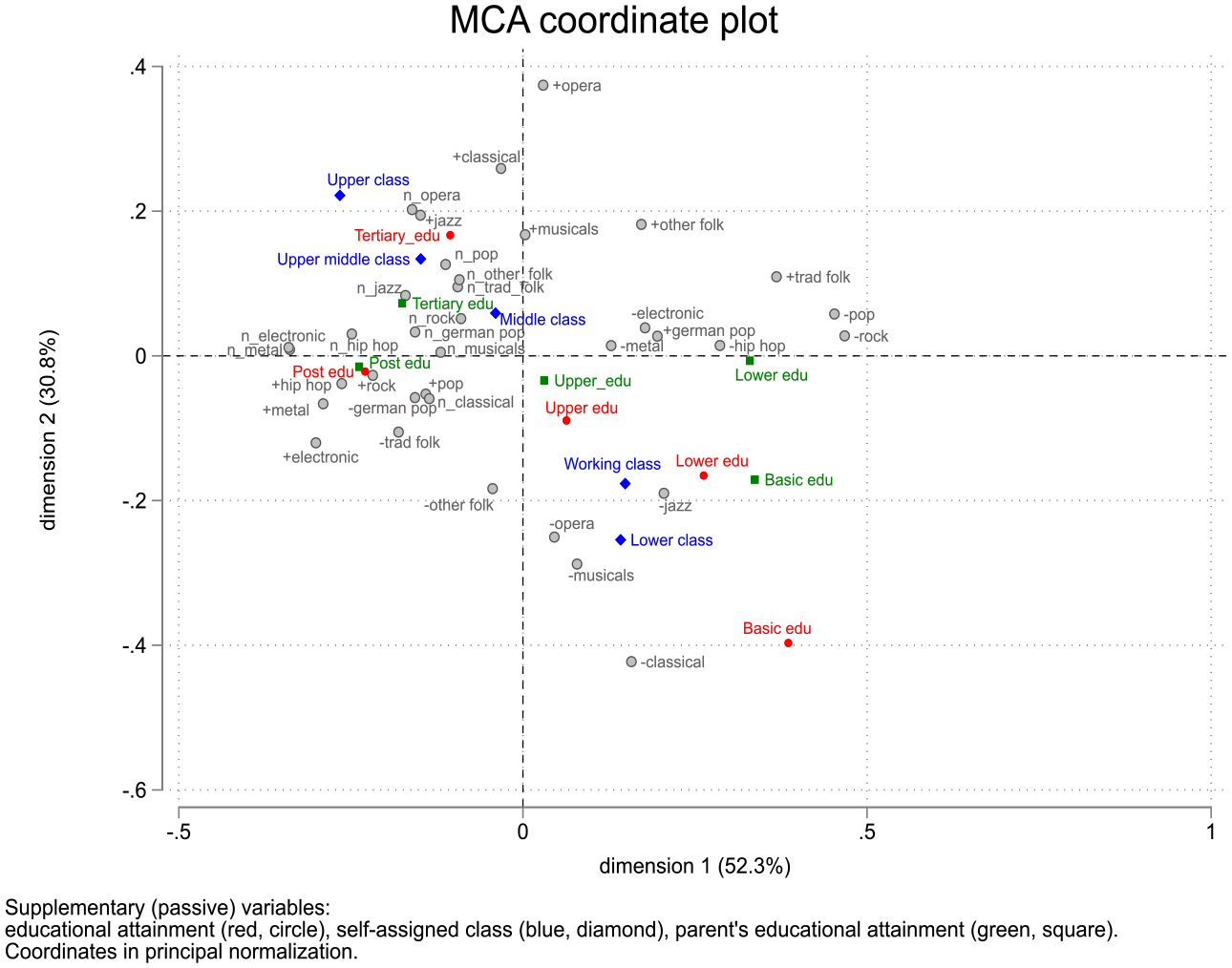
MCA of tastes in music, two dimensions, ALLBUS 2014.
The Y-axis, accounting for 30% of the variance, also separates the likes (top) and dislikes (bottom) of genres but follows a specific logic. Thus, preferences for genres that are considered legitimate or highbrow by previous studies are located at the top (opera, classical music, jazz), while dislikes for the same music genres are placed at the bottom. Levels of education and social class increase on the graph from the lower right-hand corner to the upper left zone, indicating the relevance of both axes for social indicators. However, the structuring of values is more closely related to the Y-axis. In this way, defining which genres can be more or less legitimate, we account for the positions of likes on the Y-axis. Three likes at the top (opera, classical music, jazz) are considered as examples of more legitimate genres, while three likes below the zero line (pop, metal and electronic music) – as cases of less legitimate genres.
Dependent Variables: Cultural Omnivorousness
Moving on to cultural omnivorousness, previous studies suggest different measures, focusing either on the volume or composition of taste in one or more cultural domains, using the count index or the latent class approach (de Vries and Reeves, 2022; Hazır and Warde, 2015). We conceptualize omnivorousness as an ability or skill to accumulate a broad taste and show inclusivity at the genre level of culture.
To overcome inconsistencies and to allow comparability, we decided to operationalize omnivorousness by implementing two measures. First, an omnivorousness score that counts the number of music genres that respondents like or very much like to listen to. It is a widely used index in many studies (e.g. García-Álvarez et al., 2007; Ma, 2021; Purhonen et al., 2010). This approach also worked well in a previous study in Germany, showing similar results to other more complex measures of omnivorousness (Kunißen et al., 2018).
However, the number of genres individuals like accounts for neither boundary crossing nor the distinctiveness of the cluster having shared omnivorous dispositions (a higher relative probability of liking the largest number of genres and crossing symbolic boundaries). Therefore, the second measure refers to membership in the omnivore class, defined by the previous study (Kunißen et al., 2018). Notably, a tendency towards omnivorousness is a characteristic not only of the omnivore class, but also pertains to other classes, but to a lower extent. As long as omnivorousness is treated as an ability or skill to extend one’s tastes gained by different segments to a varying degree rather than a characteristic of one class, the second measure encompasses the posterior probabilities of belonging to the most omnivorous class. Thus, even if the respondent is a member of another class but demonstrates a relatively high probability of being included in the omnivores, this aspect is taken into account using this measure. One significant limitation is that standard errors for individuals’ probabilities are not considered in this type of analysis, implying a potential for biased estimates. To address this concern, bootstrapping with 1000 replications is applied to correct standard errors to avoid overestimating the coefficients.
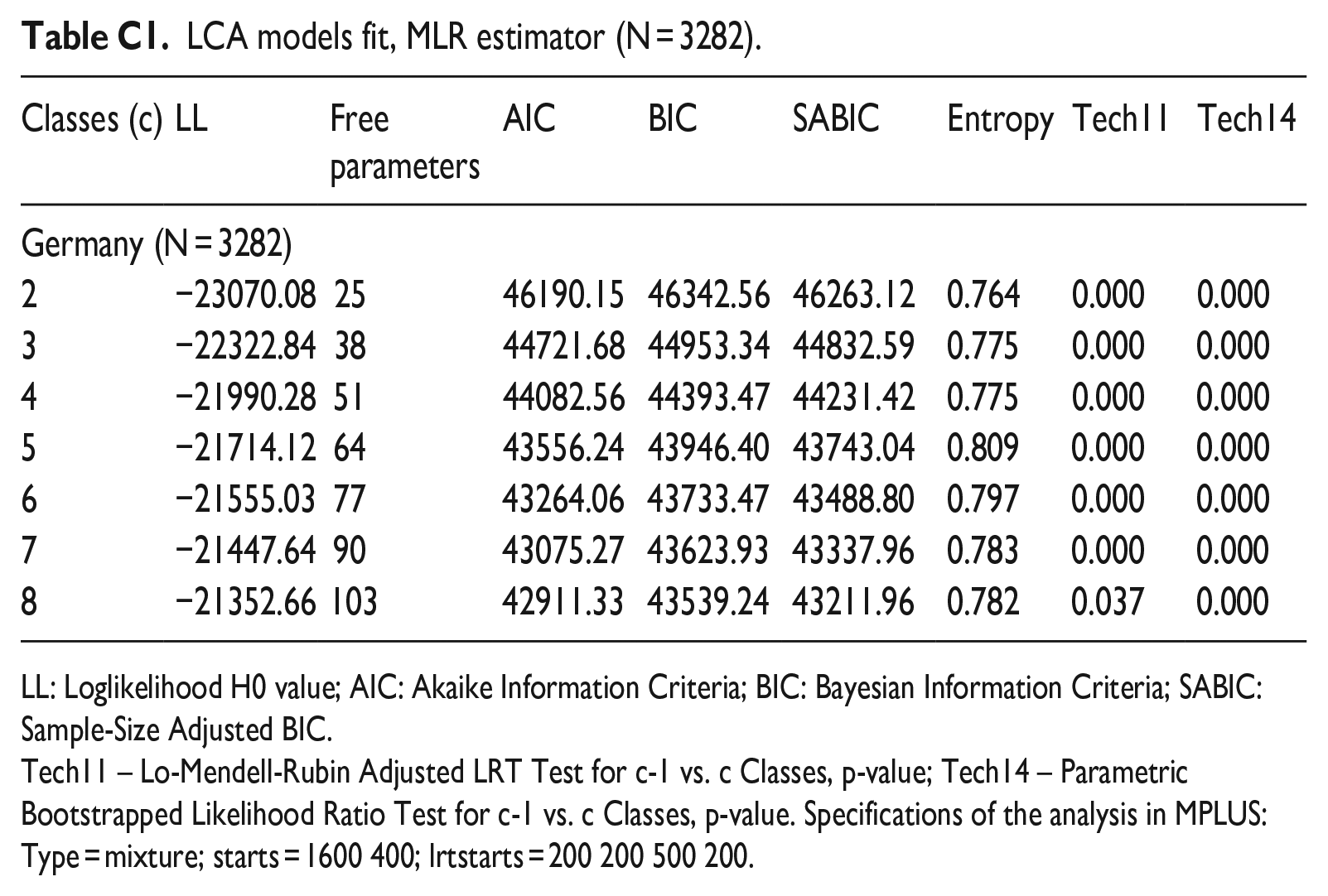
LCA is selected as one of the most widely used approaches in classifying audiences based on their taste patterns (see van Rees et al., 1999; Walker et al., 2022). This study defines the number of latent classes based on the results of previous research as well as model fit statistics such as Akaike Information Criteria (AIC), Bayesian Information Criteria (BIC), Sample-Size Adjusted BIC (SABIC), Lo-Mendell-Rubin Adjusted LRT Test and Parametric Bootstrapped Likelihood Ratio Test. After that, the omnivore class is distinguished based on posterior probabilities of liking diverse music genres.
Defining the Omnivore Latent Class in Germany
This section replicates the LCA analysis by Kunißen et al. (2018) on a slightly adjusted analytical sample. The six-class solution is preferred (see Table C1, Appendix C) as a parsimonious solution showing a consensus between model fit indicators, semantic meaning and distinctiveness of the omnivore class. Although adding one extra class to the six-class and even seven-class solutions still significantly improves the model according to the Lo-Mendell-Rubin Adjusted LRT Test and Parametric Bootstrapped Likelihood Ratio Test, it does not considerably modify the omnivore class. The entropy coefficient of 0.797 signifies a good distinctiveness of the selected solution. To unify the results, we use the same labels for the classes that were proposed in the previous study (Kunißen et al., 2018: 226).
Table 1 shows the posterior estimated probabilities of liking each music genre for the members of the six defined classes. The omnivore class is estimated to be the smallest class (9%), which distinguishes itself from other classes by its members sharing a probability of 50% or higher of liking eight genres out of twelve. A tendency towards omnivorousness is a characteristic not only of the omnivore class. Individuals in other classes can also expand their tastes, albeit to a lesser extent.
Results of LCA analysis: the conditional probabilities (%) of liking certain music genres for the members of six classes, ALLBUS 2014, MLR estimator.
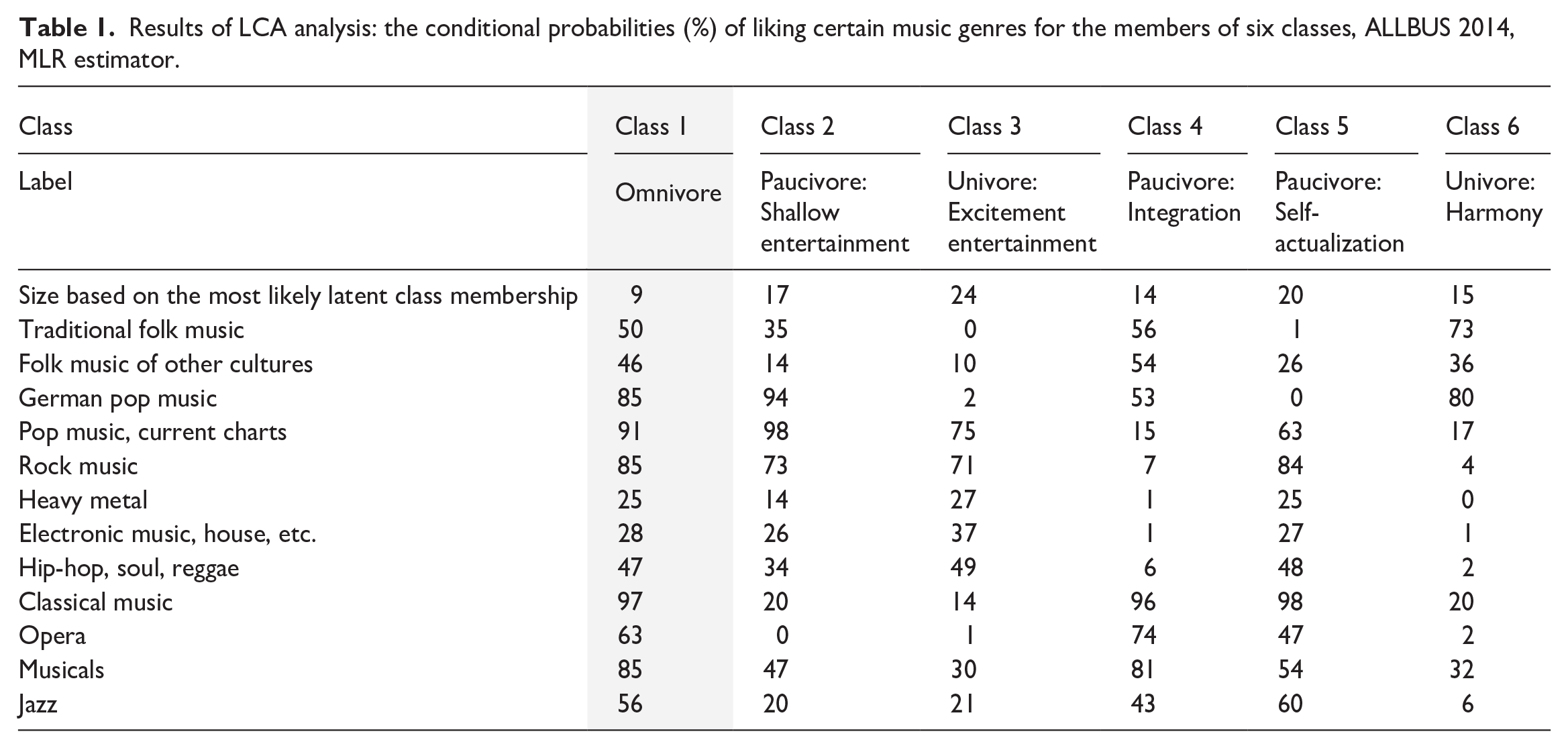
More precisely, individuals assigned to the omnivore class show the highest probability of liking two genres, the second highest probability of liking nine genres and the third highest probability of liking one genre. At the same time, the lowest probability (25%) refers to heavy metal, a common genre in symbolic exclusions of musically tolerant individuals (Bryson, 1996). However, it is estimated that only representatives of the third class have a higher probability of liking heavy metal, which is only 2% higher than the probability of omnivores.
Independent Variables: Education and Educational Mobility
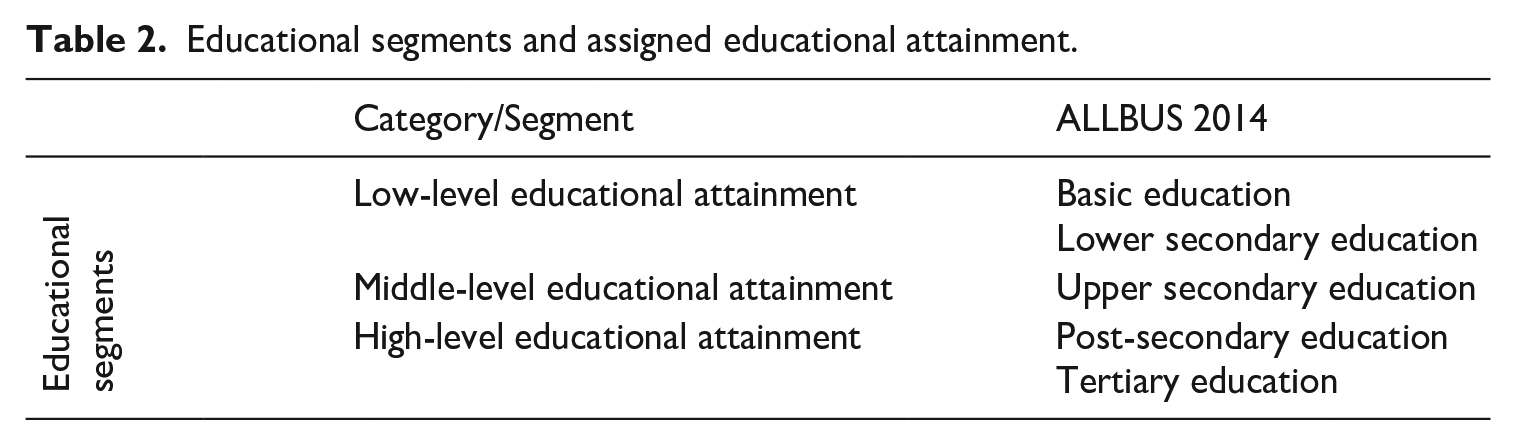
We measure educational mobility as the difference between the highest educational attainment of the respondent and the highest level of education attained by either parent. In order to construct this measure, we need to harmonize educational attainment. Details of the harmonization can be found in Table A2 (Appendix A). In ALLBUS 2014, education is measured on a 5-point scale, with the categories (1) basic education, (2) lower secondary education, (3) upper secondary education, (4) post-secondary education and (5) tertiary education. To construct the educational mobility variable, each educational qualification is allocated into segments (low, middle and high level) according to the logic presented in Table 2. The educational mobility variable is designed to capture mobility and immobility across educational segments. This creates the following nine groups:
Educational segments and assigned educational attainment.
Immobile in:
(1) low-level segment (down-stayers),
(2) middle-level segment (middle-stayers),
(3) high-level segment (upper-stayers),
Downwardly mobile:
(4) from high- to middle-level segment (down-movers: upper → middle),
(5) from high- to low-level segment (down-movers: upper → down),
(6) from middle- to low-level segment (down-movers: middle → down),
Upwardly mobile:
(7) from low- to middle-level segment (up-movers: down → middle),
(8) from low- to high-level segment (up-movers: down → upper),
(9) from middle- to high-level segment (up-movers: middle → upper).
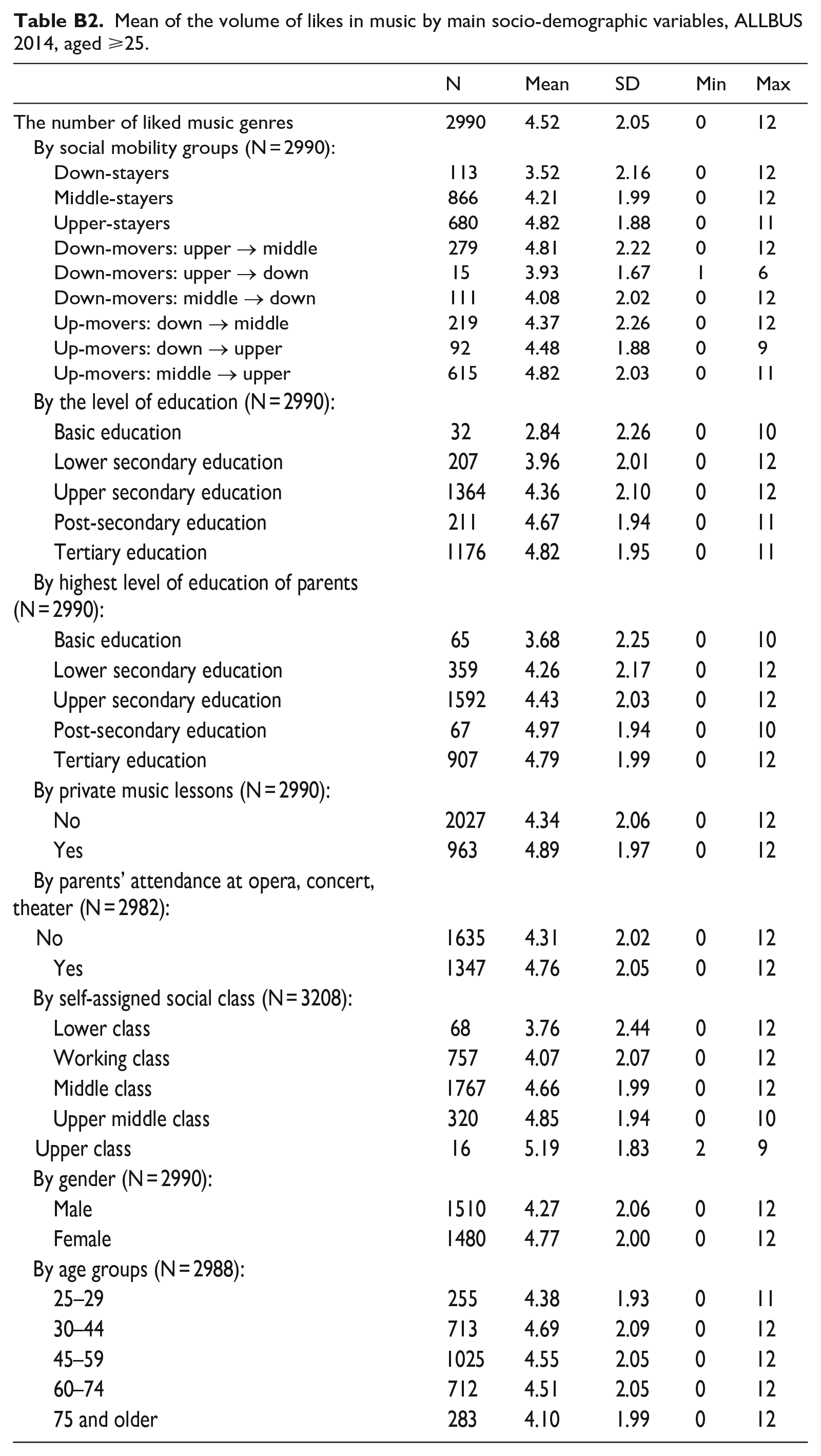
Based on the given classification of educational categories, approximately 46% of the full sample experience educational mobility (Table B1, Appendix B). While 17% of individuals move downward, 29% experience upward mobility. The most common steps refer to the upward move from middle- to high-level positions (19%) and vice versa (11%). Approximately 4% remain in lower positions, 29% in middle positions and 22% in a higher segment. Limiting the sample to respondents aged 25 and over, results in a lower rate of downward mobility (Table B2, Appendix B).
In Germany, there are differences observed in the mean omnivorousness score, computed as a number of liked or very much liked music genres, ranging from 0 to 12 (Figure B1, Appendix B). The average score in the analytical sample of respondents aged 25 and older is 4.52 music genres. Whereas down-stayers had an average score of 3.52 genres, middle-stayers preferred 4.21 genres and up-stayers 4.82 genres. Most mobile groups have a higher mean score than down- and middle-stayers. The highest score is obtained by movers between middle- and high-level segments – 4.81 for downward and 4.82 for upward mobile.
Detailed descriptive statistics are available in Tables B1–B2 and Figure B1 (Appendix B).
Control Variables
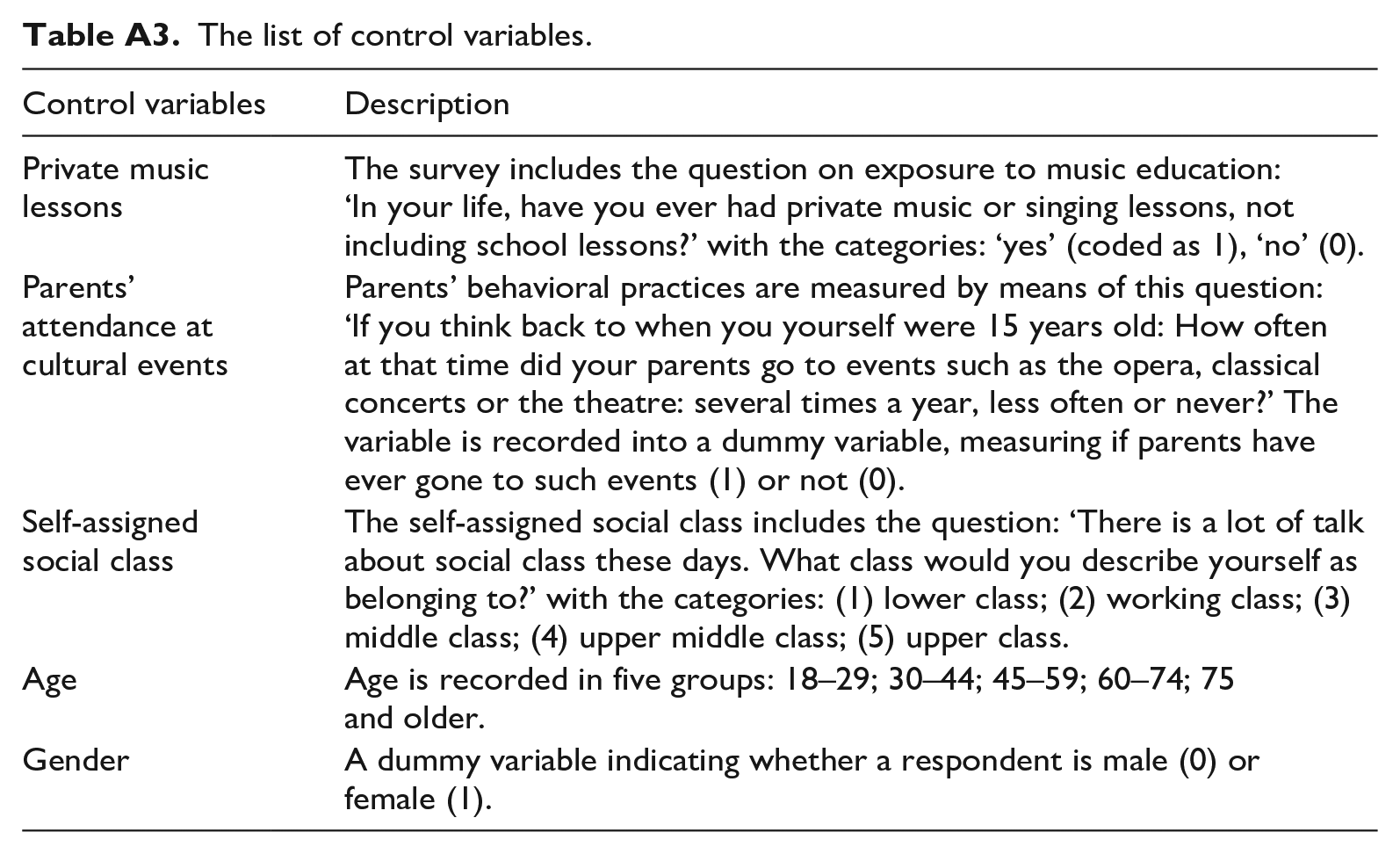
Prior studies have suggested that the tendency towards omnivorousness is also related to other factors, such as other status and class characteristics (Peterson, 1992; Peterson and Simkus, 1992), gender (López-Sintas and Katz-Gerro, 2005; Purhonen et al., 2010), age (Ma, 2021), music education (Elvers et al., 2015), individual values (Voronin, 2022) and, more generally, experiences during one’s formative years (Lizardo and Skiles, 2012). To predict taste, we control for some characteristics of the social division in taste, such as sex/gender, age, private music education, parental attendance at cultural events and self-assigned social class. The list of control variables is presented in Table A3 (Appendix A).
Methods
To test our hypotheses, we (1) use OLS and logit regression models with a set of covariates to estimate the effects of inherited and acquired educational capital on preferences for more and less legitimate genres and (2) apply OLS and fractional regression models to estimate the effects of social mobility on the two measures of omnivorousness.
Results
Predicting Preferences for More and Less Legitimate Music Genres (H1)
In order to test H1, we calculate six linear regression models (one per music genre, using the original 5-point scale variables) to assess the differential importance of acquired and inherited education capital for liking three more and three less legitimate music genres (Figure 2).
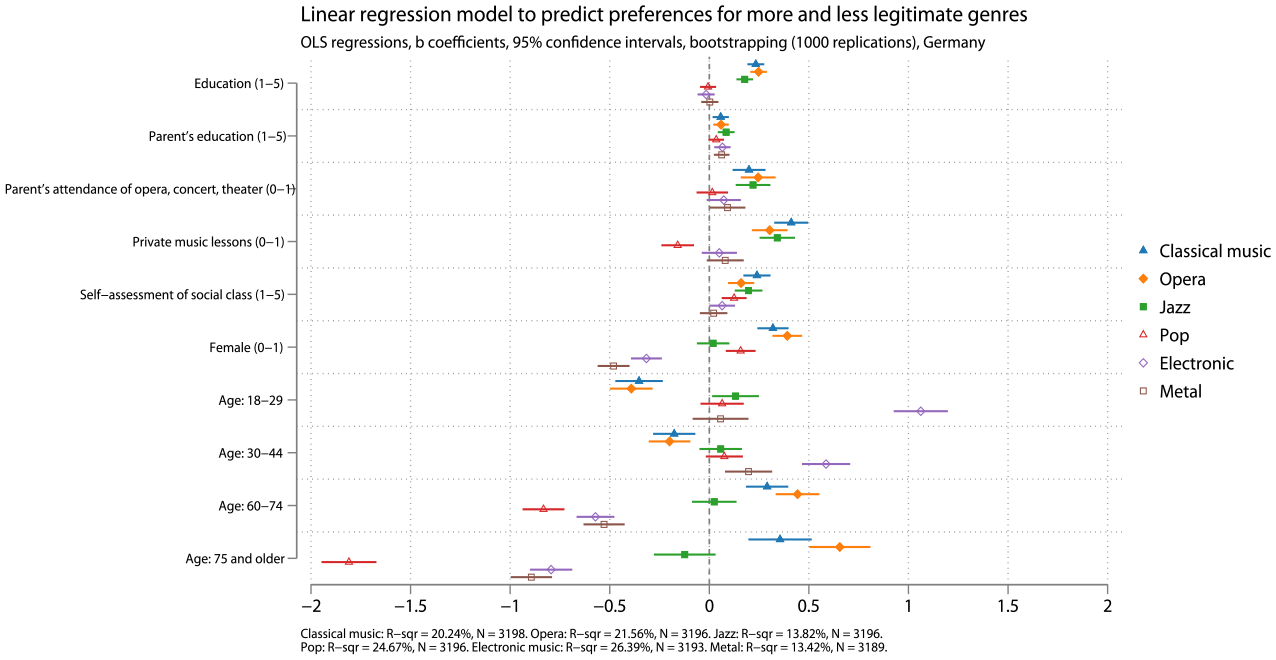
Predicting preferences for liking three more and less legitimate genres, ALLBUS 2014.
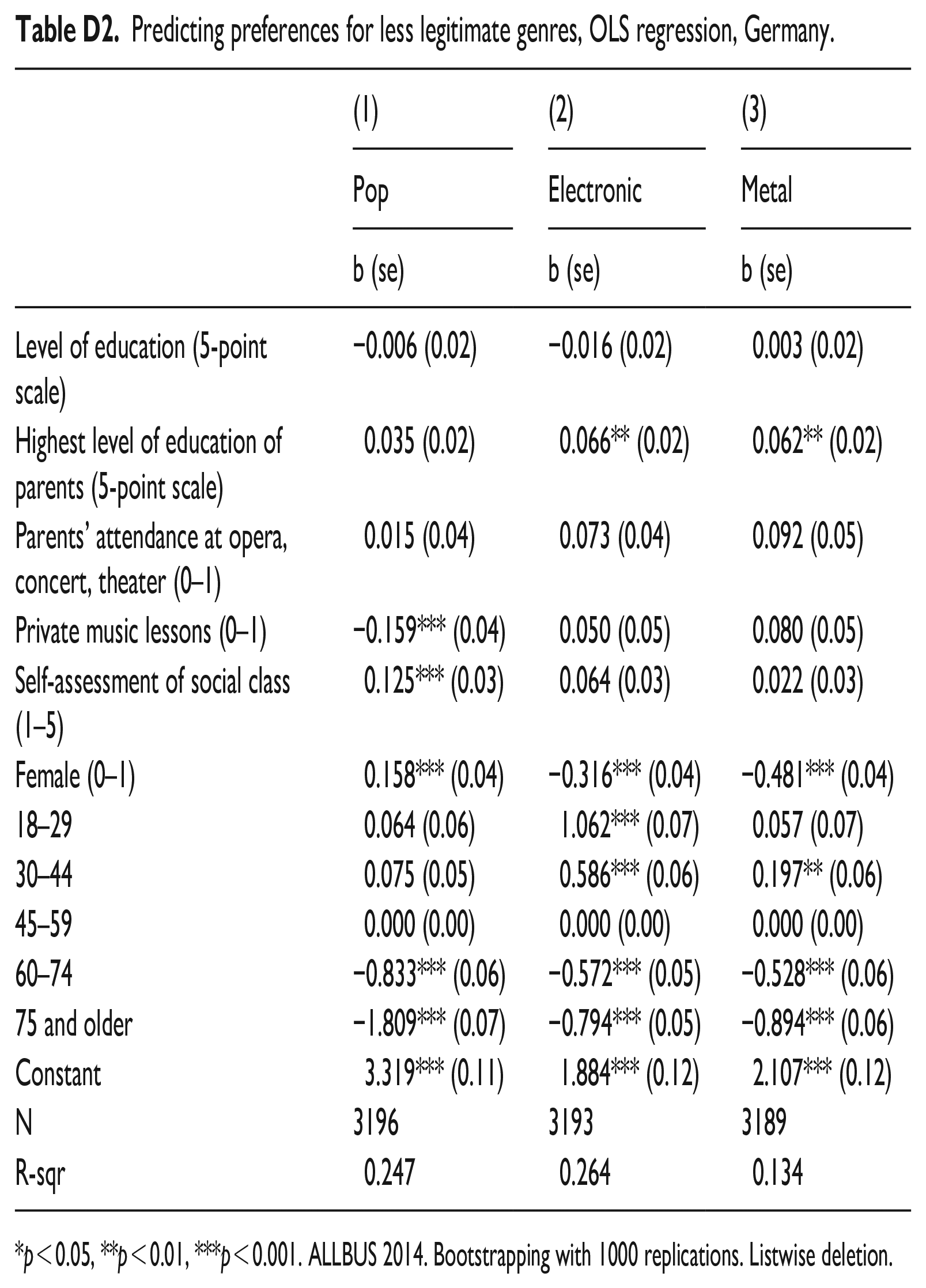
The positive contribution of respondents’ and their parents’ education in predicting preferences for more legitimate music genres is significant. However, according to the Wald tests, the coefficient of the respondents’ education is higher than that of the parent’s education among three legitimate genres. 1 Considering less legitimate genres, only the parents’ education turns out to be a significant positive predictor, providing evidence to support H1. Augmenting the model with control variables enhances its predictive power by accounting for variations in preferences associated with sex, age, private music education, self-identification with a higher social class, and other factors. All predictors together explain a higher percentage of variance for liking classical music (20%) and opera (22%) than for jazz (14%). The model explained only 13% of the variance of preferences for metal, but 25% and 26% for pop and electronic music, respectively.
The coefficients and standard errors are presented in Tables D1 and D2 (Appendix D).
Predicting Cultural Omnivorousness Score by Educational Mobility (H2)
Omnivorousness Score as Dependent Variable
To test H2, we conduct a hierarchical linear regression analysis to evaluate the differential significance of predictors for the cultural omnivorousness score (Table 3). Educational mobility explains 2.9% of the variance in the omnivorousness score (Model A1). Adding a set of control variables significantly increases the amount of explained variance to 6.3% (Model A2). Although the rate is relatively small, the model documents a significant difference in omnivorousness across mobility groups.
Predicting the number of liked genres, ALLBUS 2014.
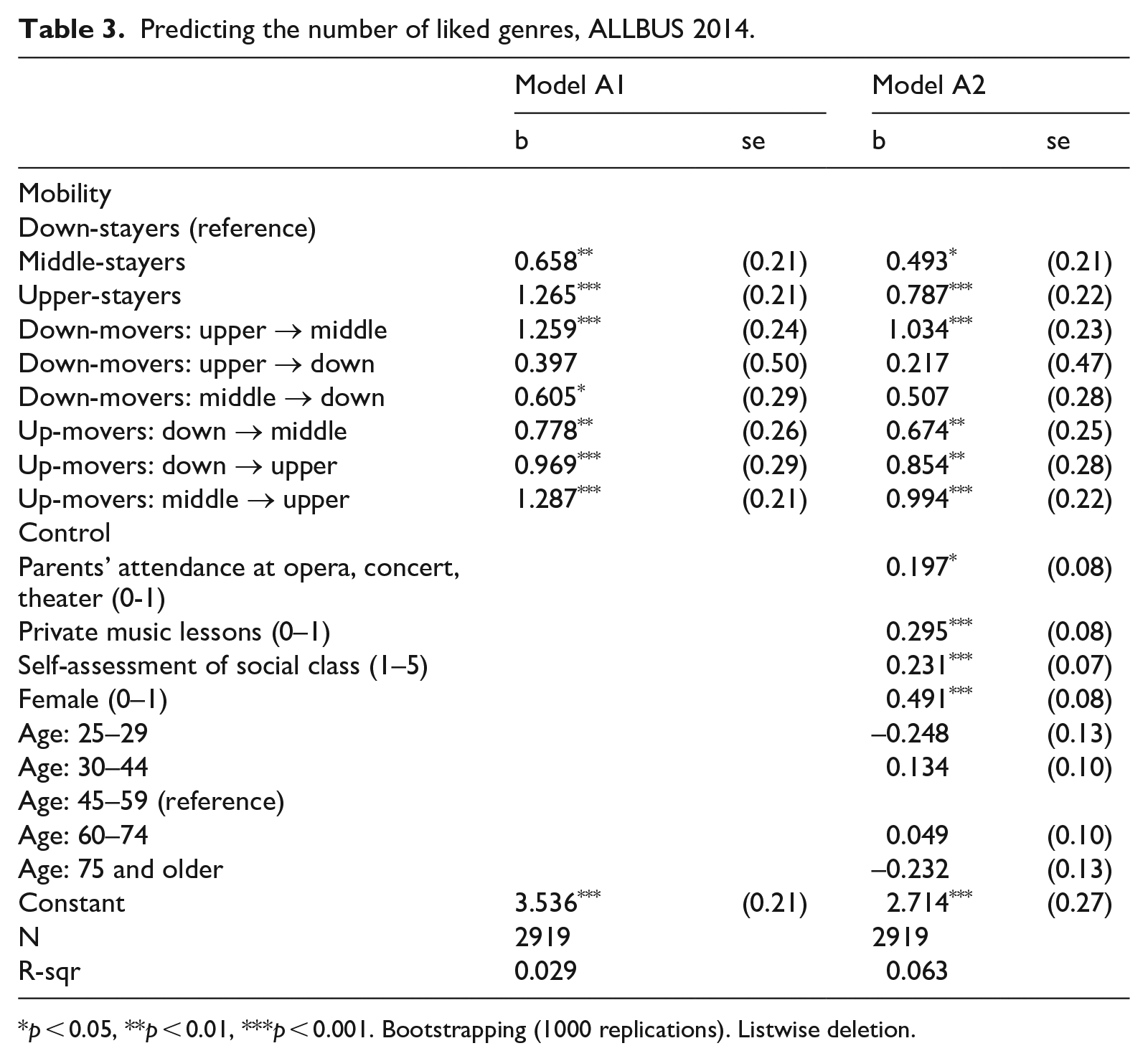
p < 0.05, **p < 0.01, ***p < 0.001. Bootstrapping (1000 replications). Listwise deletion.
Differentiating immobile and mobile groups, a pairwise comparison of predictive margins (Table 4) shows that the greatest omnivorousness is demonstrated by those who are mobile and move between the upper and middle segments, regardless of direction. Upper-stayers also display a higher level of omnivorousness by volume. However, the outcome values for other upwardly mobile groups who left the lower segment and for stayers in a high-level segment do not significantly differ from the score of the most omnivorous group. Downwardly mobile individuals who reach the lower segment have the same level of omnivorousness as middle-stayers or even down-stayers, the most univorous group.
Pairwise comparison of predictive margins (Model A2), ALLBUS 2014.
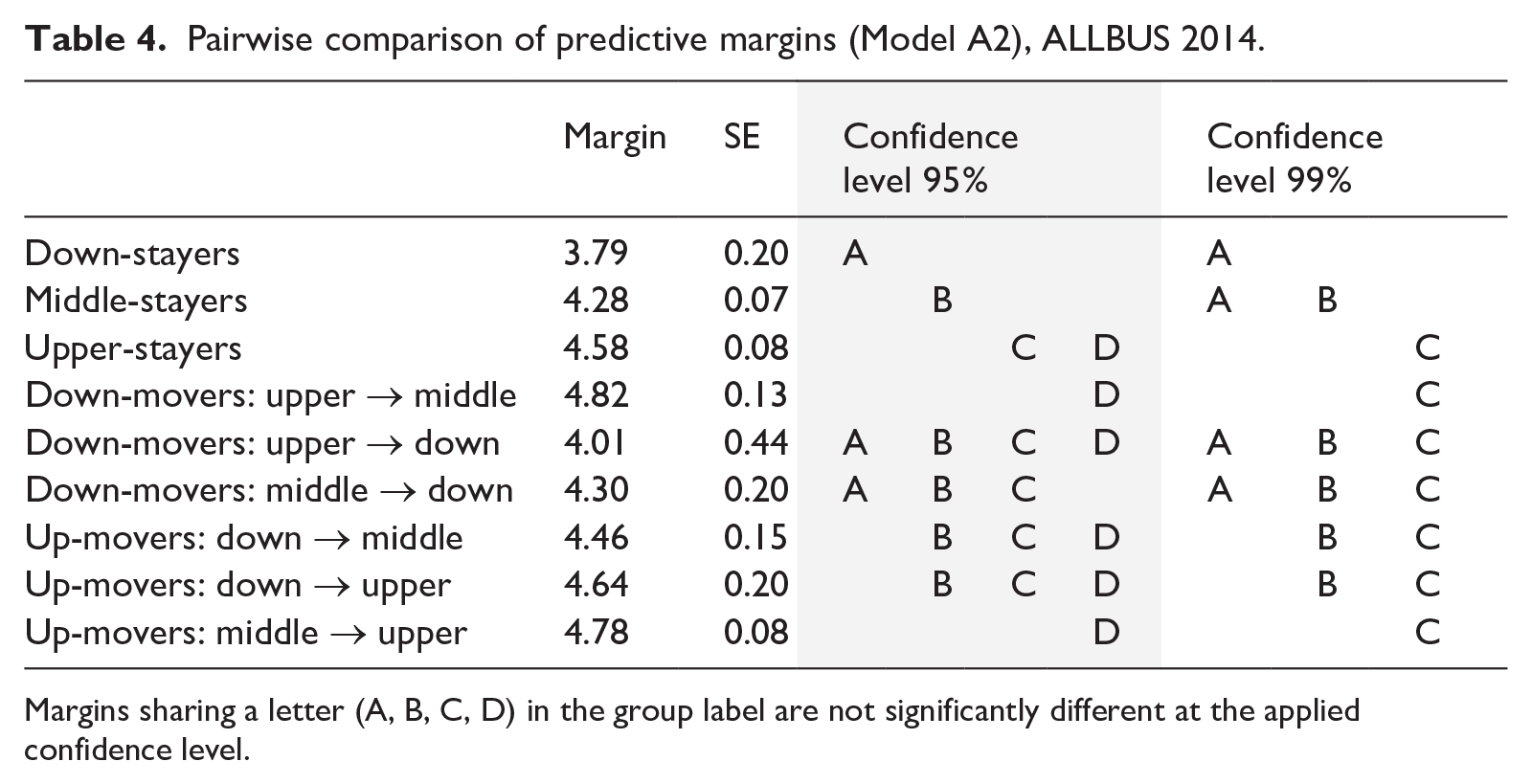
Margins sharing a letter (A, B, C, D) in the group label are not significantly different at the applied confidence level.
These findings offer only partial support for H2a, as some groups with higher parental educational background experiencing downward mobility do not exhibit high omnivorousness, especially compared to other upwardly mobile groups. There is a lack of support for H2b, as certain down-movers do not differ from upper-stayers in omnivorousness. We found evidence to partially support H2c, as a lower level of omnivorousness is observed among groups with the lowest educational background. Nonetheless, as suggested by H2d, upward mobility can compensate for this. The extent of that compensation exceeds expectations, in some cases.
Among control variables, private music lessons, parents’ attendance at opera, concert, and theater and self-assessment of social class emerge as significant positive predictors. Women also show higher omnivorousness scores than men. In terms of age, small differences are observed.
The Probability of Membership in the Omnivore Class as a Dependent Variable
This subsection tests H2a–d using an alternative measure of cultural omnivorousness. The fractional logit regression model predicts the probability of ending up in the omnivore class based on educational mobility and a set of control variables (Table 5). The results show that educational mobility poorly predicts the outcome variable (pseudo R-square less 1%). Adding control variables increased the amount of pseudo-R-square (2.9%), mainly because of differences in probabilities between gender, age and class groups.
Predicting the probability of membership in the omnivore class, ALLBUS 2014.
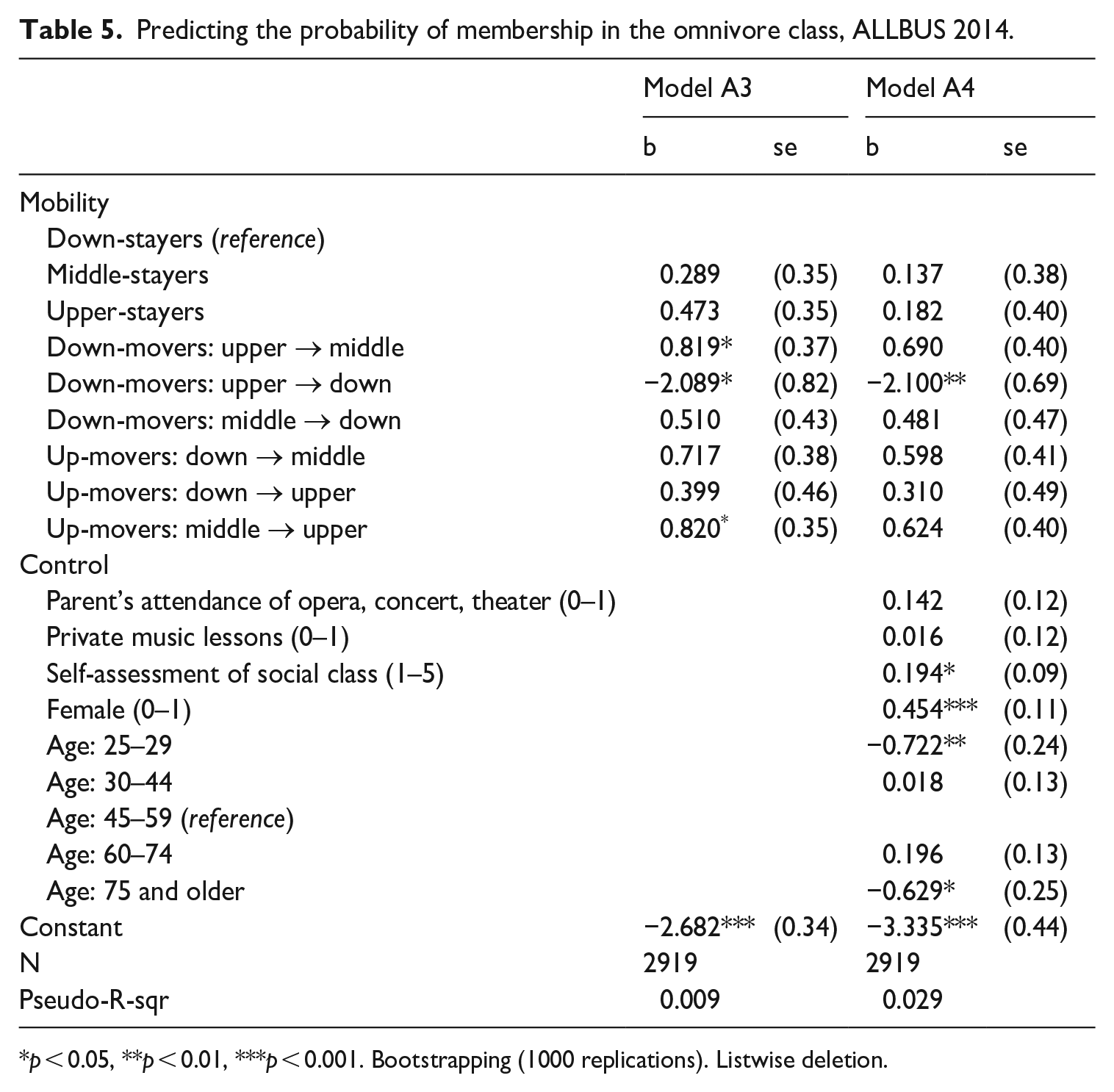
p < 0.05, **p < 0.01, ***p < 0.001. Bootstrapping (1000 replications). Listwise deletion.
A comparison of predictive margins (Table 6) shows support for the previous finding of the highest omnivorousness being among movers between middle and high educational levels. Stayers in the upper segment, in contrast, have a relatively small probability of ending up in the omnivore class, statistically not different from the probabilities of down-stayers with a 95% confidence interval (lack of support for H2a and H2c). Consistent with the previous model, those who are mobile between middle and upper segments in either direction show the highest level of omnivorousness (lack of support for H2b). All upwardly mobile groups have higher predictive margins or do not differ significantly from most of the other groups (support for H2d).
Pairwise comparison of predictive margins (Model A4), ALLBUS 2014.
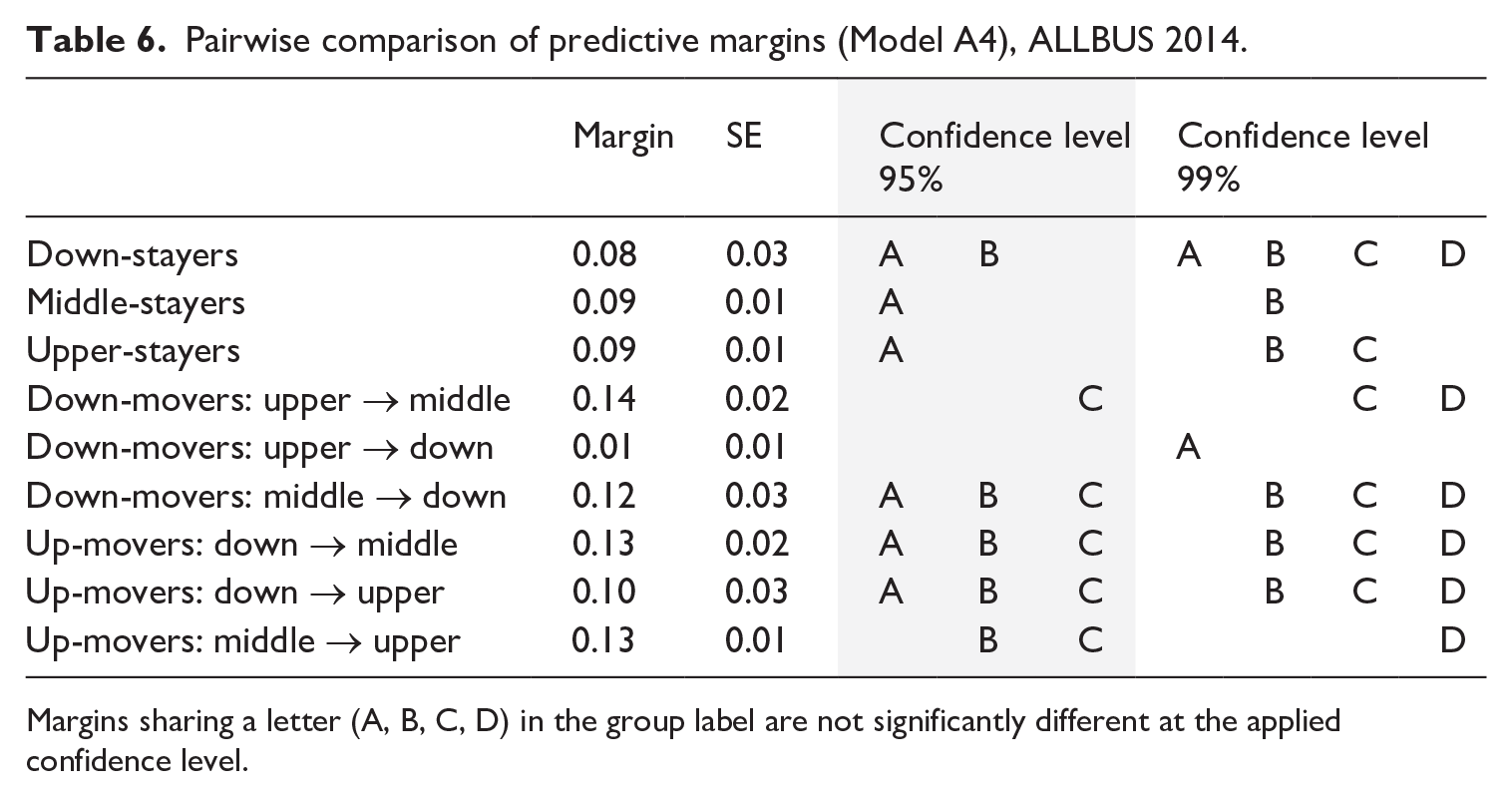
Margins sharing a letter (A, B, C, D) in the group label are not significantly different at the applied confidence level.
Conclusion and Discussion
Social patterning of taste is not only a matter of class composition, educational attainment or their boundaries, but also involves the trajectories of mobility in social structure, especially in terms of educational capital. This study aimed to address the uncertainty arising from inconsistencies between theoretical and empirical contributions and examine the relationships between educational mobility and omnivorousness. In detail, we empirically investigated whether Lizardo’s (2019) interpretation of Bourdieu’s (1984) ideas regarding the impact of parental and acquired education applies to the case of contemporary Germany. To that end, we expanded on previous contributions (Coulangeon, 2015; Daenekindt and Roose, 2014) and investigated (i) the relationships between different components of cultural capital and taste for more and less legitimate cultural products, as well as (ii) the predictive power of educational mobility for cultural omnivorousness.
Is the weight of the parent’s education in predicting aesthetic consumption larger for less legitimate cultural forms compared to the respondent’s education (H1)? This pattern was supported by the German data (support for H1). Predicting preferences for liking more legitimate genres in Germany shows a positive effect of both acquired and inherited cultural capital, but the effect of the former is greater than that of the latter. As for less legitimate genres, only inherited capital plays a significant role.
An interesting finding from the set of control variables is the positive effect of extracurricular music education on preferences for various genres. Theorizing by Lizardo and Skiles (2012) and empirical findings by Elvers et al. (2015) suggest that the general scheme of value attribution and cultural competencies that promote the aestheticization of diverse cultural products can also be an outcome of exposure to music education (which is more widespread among individuals with high inherited cultural capital) rather than a function of being raised in an educated environment. However, our analysis showed that private music education led to higher preferences for legitimate genres, aligning it with nuanced findings by Ho et al. (2021), but the effects on non-legitimate genres were not significant. Further research should directly compare taste at different levels of culture (not only genres but also objects) among individuals with high/low inherited capital but varying exposure to music education. Apart from music education, we cannot neglect the role of other control factors such as age or gender that show themselves to have considerable predictive power.
To what extent are different segments of the educated and non-educated strata more and less likely to develop omnivorous taste, based on their educational mobility trajectories (H2a–H2d)? We identified significant differences across mobile and immobile groups, but their patterns differ and, in part, contradict expectations. First, three groups tend to demonstrate the highest omnivorousness: those upwardly and downwardly mobile between middle- and high-level segments (using two measures of omnivorousness) and stayers in the high-level segment (using the omnivorousness score). Although it was expected that downward movers would be more omnivorous than upward movers (Lizardo, 2019: 189), a different trend cropped up in the data. Upwardly mobile respondents reaching the high-level educational group can accumulate the same or even greater omnivorous dispositions, showing preferences toward a larger set of music genres and higher probabilities of membership in the omnivore class. In contrast, downwardly mobile individuals who end up in the low-level segment are less omnivorous than some upward movers and stayers. As a novel contribution, this result underscores the capacity of upwardly mobile individuals to accumulate omnivorous tastes at the genre level, even if they do not benefit from growing up in the most highly educated stratum.
Adding further details to H2, results from different models share the general importance of educational mobility when it comes to those movements that make a substantial difference in social structure between medium and high levels, showing that the starting point holds significance. Another particularly noteworthy aspect is that when we isolate mobile groups, the difference in omnivorousness between immobile groups becomes more pronounced. Down-stayers, in both cases, exhibit dramatically lower levels of omnivorousness compared to many other groups. Mobile respondents, especially those moving between middle and high positions, may have the opportunity and ability to blend tastes from two social positions, showing a higher propensity to omnivorousness.
According to the mobility effects documented by Daenekindt and Roose (2013: 56), a high degree of omnivorousness at the genre level among upwardly mobile individuals can illustrate conformity to the new social context as they carve their way in the social structure, while a high level of omnivorousness of downwardly mobile individuals from the high to the middle segment can be a sign of loyalty to the aesthetic scheme of their educated habitus. In moving through the social strata, people can both adopt new consumption patterns and preserve the practices they used to have (Daenekindt and Roose, 2014; Friedman, 2012). This shows that both upwardly and downwardly mobile respondents at a certain level can be more omnivorous than non-mobile individuals, albeit for different reasons.
Spelling out the effect of upward mobility, Friedman (2012) examined British comedy taste through a survey and subsequent qualitative interviews, showing that the only social group that exhibits omnivorous characteristics is the upwardly mobile group (2012: 485). However, omnivorousness does not have positive implications, as would be expected due to its being perceived as a part of cultural capital. Instead, the omnivorous audience, experiencing upward mobility, needs to adapt to the new context and try to fit into the general image of the cultural repertoire appropriate to higher-status segments (Friedman, 2012: 480). As a consequence, individuals tend to feel ‘culturally homeless,’ which has negative implications for social integration (Friedman, 2012: 469, 484). In line with this, van Eijck (1999: 326) examines the consumption patterns of the Dutch sample and documents that ‘individuals carry popular culture upwards along the social ladder,’ stimulating a rise of heterogeneous cultural consumption practices in more highly educated segments. To improve our understanding of how this plays out, one potential trajectory for future research is to broaden this finding by investigating which implications this might have on individuals’ life cycles, social adaptation and well-being.
Last but not least, we identified slight variations due to the different measures of omnivorousness. For instance, stayers in the upper segment display a high level of omnivorousness by volume but do not achieve high probabilities of belonging to the true omnivore class. Given that the second measure takes into account the probability of being a member of the class that tends to cross symbolic boundaries to the highest extent, this finding could imply that the expansion of taste for this group primarily occurs on an approximately similar symbolical level. Conversely, the taste of mobile groups moving between middle and high levels is more likely to span various symbolic boundaries. A detailed examination of diverse measures of omnivorousness in relation to mobility may be a valuable subject of future research.
This study is not without its limitations. First of all, the ALLBUS dataset has a relatively small number of mobile respondents moving between the lower and upper segments. It will be useful for future research to test hypotheses on other data with a larger number of mobile respondents. Second, we relied on the MCA to map music genres and categorize them into more and less legitimate, rather than relying on the exogenous validation of cultural legitimacy.
Another limitation concerns the causal directions of relationships. This study treated taste as secondary to social mobility. However, we cannot deny the point of view that taste can act as an instrument for mobility, as people who consume a diverse range of cultural products may be better equipped for social mobility. Longitudinal studies will be required to estimate the causal relationships between the two concepts. In addition, the high omnivorousness of upwardly mobile individuals moving from the middle to the high-level positions may indicate a positive selection factor, meaning that those individuals who climbed up the ladder were better equipped compared to those who remained immobile or experienced downward mobility. As a second point, since we identified slightly different trends compared to the theoretical framework, the research community may benefit from a further geographical expansion of omnivore studies.
Finally, this study relied solely on genre characteristics of music; however, it can be problematic for respondents to identify genres in similar ways, due to their complexity and internal heterogeneity (Brisson and Bianchi, 2022). Along with this, distinctions may be drawn between artists and compositions in the same genre rather than between genres (Nault et al., 2021). As suggested by Childress et al. (2021), omnivorousness (inclusivity) at the genre level is nurtured through inherited educational capital, while univorousness (exclusivity) at the level of objects within genres is promoted through acquired educational capital. Further research is recommended, using complementary dimensions of preferences and consumption and investigating the mobility effects at different levels of culture.
In conclusion, this article’s main contribution refers to the partial support of Lizardo’s (2019) theorizing based on empirical analysis of music taste at the level of genres, and proposes several modifications for consideration. In general, we advocate for a new perspective in the research of cultural omnivorousness that should consider educational mobility patterns. The difference between downwardly and upwardly mobile groups and the different contributions of inherited and acquired capital are obscured in estimating general socio-demographical predictors of taste. As we are living in a highly mobile time, research should keep up with it. By keeping empirical research siloed from this, we risk bypassing a significant meaningful contribution to the explanation of omnivorous taste.
Footnotes
Appendix A. Measures in ALLBUS 2014
The list of control variables.
| Control variables | Description |
|---|---|
| Private music lessons | The survey includes the question on exposure to music education: ‘In your life, have you ever had private music or singing lessons, not including school lessons?’ with the categories: ‘yes’ (coded as 1), ‘no’ (0). |
| Parents’ attendance at cultural events | Parents’ behavioral practices are measured by means of this question: ‘If you think back to when you yourself were 15 years old: How often at that time did your parents go to events such as the opera, classical concerts or the theatre: several times a year, less often or never?’ The variable is recorded into a dummy variable, measuring if parents have ever gone to such events (1) or not (0). |
| Self-assigned social class | The self-assigned social class includes the question: ‘There is a lot of talk about social class these days. What class would you describe yourself as belonging to?’ with the categories: (1) lower class; (2) working class; (3) middle class; (4) upper middle class; (5) upper class. |
| Age | Age is recorded in five groups: 18–29; 30–44; 45–59; 60–74; 75 and older. |
| Gender | A dummy variable indicating whether a respondent is male (0) or female (1). |
Appendix B. Descriptive Statistics
Mean of the volume of likes in music by main socio-demographic variables, ALLBUS 2014, aged ⩾25.
| N | Mean | SD | Min | Max | |
|---|---|---|---|---|---|
| The number of liked music genres | 2990 | 4.52 | 2.05 | 0 | 12 |
| By social mobility groups (N = 2990): | |||||
| Down-stayers | 113 | 3.52 | 2.16 | 0 | 12 |
| Middle-stayers | 866 | 4.21 | 1.99 | 0 | 12 |
| Upper-stayers | 680 | 4.82 | 1.88 | 0 | 11 |
| Down-movers: upper → middle | 279 | 4.81 | 2.22 | 0 | 12 |
| Down-movers: upper → down | 15 | 3.93 | 1.67 | 1 | 6 |
| Down-movers: middle → down | 111 | 4.08 | 2.02 | 0 | 12 |
| Up-movers: down → middle | 219 | 4.37 | 2.26 | 0 | 12 |
| Up-movers: down → upper | 92 | 4.48 | 1.88 | 0 | 9 |
| Up-movers: middle → upper | 615 | 4.82 | 2.03 | 0 | 11 |
| By the level of education (N = 2990): | |||||
| Basic education | 32 | 2.84 | 2.26 | 0 | 10 |
| Lower secondary education | 207 | 3.96 | 2.01 | 0 | 12 |
| Upper secondary education | 1364 | 4.36 | 2.10 | 0 | 12 |
| Post-secondary education | 211 | 4.67 | 1.94 | 0 | 11 |
| Tertiary education | 1176 | 4.82 | 1.95 | 0 | 11 |
| By highest level of education of parents (N = 2990): | |||||
| Basic education | 65 | 3.68 | 2.25 | 0 | 10 |
| Lower secondary education | 359 | 4.26 | 2.17 | 0 | 12 |
| Upper secondary education | 1592 | 4.43 | 2.03 | 0 | 12 |
| Post-secondary education | 67 | 4.97 | 1.94 | 0 | 10 |
| Tertiary education | 907 | 4.79 | 1.99 | 0 | 12 |
| By private music lessons (N = 2990): | |||||
| No | 2027 | 4.34 | 2.06 | 0 | 12 |
| Yes | 963 | 4.89 | 1.97 | 0 | 12 |
| By parents’ attendance at opera, concert, theater (N = 2982): | |||||
| No | 1635 | 4.31 | 2.02 | 0 | 12 |
| Yes | 1347 | 4.76 | 2.05 | 0 | 12 |
| By self-assigned social class (N = 3208): | |||||
| Lower class | 68 | 3.76 | 2.44 | 0 | 12 |
| Working class | 757 | 4.07 | 2.07 | 0 | 12 |
| Middle class | 1767 | 4.66 | 1.99 | 0 | 12 |
| Upper middle class | 320 | 4.85 | 1.94 | 0 | 10 |
| Upper class | 16 | 5.19 | 1.83 | 2 | 9 |
| By gender (N = 2990): | |||||
| Male | 1510 | 4.27 | 2.06 | 0 | 12 |
| Female | 1480 | 4.77 | 2.00 | 0 | 12 |
| By age groups (N = 2988): | |||||
| 25–29 | 255 | 4.38 | 1.93 | 0 | 11 |
| 30–44 | 713 | 4.69 | 2.09 | 0 | 12 |
| 45–59 | 1025 | 4.55 | 2.05 | 0 | 12 |
| 60–74 | 712 | 4.51 | 2.05 | 0 | 12 |
| 75 and older | 283 | 4.10 | 1.99 | 0 | 12 |
Appendix C. Model Fit of LCA Models
LCA models fit, MLR estimator (N = 3282).
| Classes (c) | LL | Free parameters | AIC | BIC | SABIC | Entropy | Tech11 | Tech14 |
|---|---|---|---|---|---|---|---|---|
| Germany (N = 3282) | ||||||||
| 2 | −23070.08 | 25 | 46190.15 | 46342.56 | 46263.12 | 0.764 | 0.000 | 0.000 |
| 3 | −22322.84 | 38 | 44721.68 | 44953.34 | 44832.59 | 0.775 | 0.000 | 0.000 |
| 4 | −21990.28 | 51 | 44082.56 | 44393.47 | 44231.42 | 0.775 | 0.000 | 0.000 |
| 5 | −21714.12 | 64 | 43556.24 | 43946.40 | 43743.04 | 0.809 | 0.000 | 0.000 |
| 6 | −21555.03 | 77 | 43264.06 | 43733.47 | 43488.80 | 0.797 | 0.000 | 0.000 |
| 7 | −21447.64 | 90 | 43075.27 | 43623.93 | 43337.96 | 0.783 | 0.000 | 0.000 |
| 8 | −21352.66 | 103 | 42911.33 | 43539.24 | 43211.96 | 0.782 | 0.037 | 0.000 |
LL: Loglikelihood H0 value; AIC: Akaike Information Criteria; BIC: Bayesian Information Criteria; SABIC: Sample-Size Adjusted BIC.
Tech11 – Lo-Mendell-Rubin Adjusted LRT Test for c-1 vs. c Classes, p-value; Tech14 – Parametric Bootstrapped Likelihood Ratio Test for c-1 vs. c Classes, p-value. Specifications of the analysis in MPLUS: Type = mixture; starts = 1600 400; lrtstarts = 200 200 500 200.
Appendix D. Preferences for More and Less Legitimate Music Genres
Predicting preferences for less legitimate genres, OLS regression, Germany.
| (1) | (2) | (3) | |
|---|---|---|---|
| Pop | Electronic | Metal | |
| b (se) | b (se) | b (se) | |
| Level of education (5-point scale) | −0.006 (0.02) | −0.016 (0.02) | 0.003 (0.02) |
| Highest level of education of parents (5-point scale) | 0.035 (0.02) | 0.066** (0.02) | 0.062** (0.02) |
| Parents’ attendance at opera, concert, theater (0–1) | 0.015 (0.04) | 0.073 (0.04) | 0.092 (0.05) |
| Private music lessons (0–1) | −0.159*** (0.04) | 0.050 (0.05) | 0.080 (0.05) |
| Self-assessment of social class (1–5) | 0.125*** (0.03) | 0.064 (0.03) | 0.022 (0.03) |
| Female (0–1) | 0.158*** (0.04) | −0.316*** (0.04) | −0.481*** (0.04) |
| 18–29 | 0.064 (0.06) | 1.062*** (0.07) | 0.057 (0.07) |
| 30–44 | 0.075 (0.05) | 0.586*** (0.06) | 0.197** (0.06) |
| 45–59 | 0.000 (0.00) | 0.000 (0.00) | 0.000 (0.00) |
| 60–74 | −0.833*** (0.06) | −0.572*** (0.05) | −0.528*** (0.06) |
| 75 and older | −1.809*** (0.07) | −0.794*** (0.05) | −0.894*** (0.06) |
| Constant | 3.319*** (0.11) | 1.884*** (0.12) | 2.107*** (0.12) |
| N | 3196 | 3193 | 3189 |
| R-sqr | 0.247 | 0.264 | 0.134 |
p < 0.05, **p < 0.01, ***p < 0.001. ALLBUS 2014. Bootstrapping with 1000 replications. Listwise deletion.
Acknowledgements
This article was presented at the Academy of Sociology and European Consortium of Sociological Research conferences in 2023. We are thankful for the helpful comments and suggestions provided by the participants. Special thanks go to the editorial board and two anonymous reviewers whose suggestions and critical remarks considerably enhanced the article, particularly in terms of formulating the theoretical and discussion sections.
Data availability statement

Funding
The authors received no financial support for the research, authorship, and/or publication of this article.