




Abstract
The ability to accumulate extensive tastes, which is known as cultural omnivorousness, can play a significant role in social stratification and marking social groups. The omnivore argument posits that higher-status cultural tastes tend to be broad and diverse (omnivore). In contrast, lower-status cultural tastes are limited and exclusive (univore). This study investigates cultural omnivorousness in Ukraine by (1) examining latent classes of audiences and (2) exploring the relationship between cultural omnivorousness and positions in the social structure, considering educational attainment, financial situation, age, gender and type of settlement. Relying on the data from the survey ‘Reading in the context of media consumption and life construction’ conducted in 2020, this study focuses on the breadth/volume of behavioral preferences in literary genres among readers in Ukraine (N = 1302). The latent class analysis presents evidence of the distinctiveness of the omnivore class. Subsequent regression analysis shows a strong positive association between high education and omnivorous taste, whereas the financial situation bears no significant direct effect. Regression coefficients for socio-demographic variables indicate a more omnivorous taste amongst women and residents of big cities. The study concludes by discussing potential limitations and further perspectives for investigating the relationships between cultural omnivorousness and social stratification.
Keywords
Introduction
Studies on the relationship between social inequality and encoded cultural taste tend to encompass the omnivore argument (Ferrant, 2018). The motivation stems from the finding at the end of the 20th century on the propensity of upper classes not to limit their taste to highbrow categories but to engage in other popular cultural repertoires (Peterson, 1992; Peterson and Kern, 1996; Peterson and Simkus, 1992). Known as the ‘omnivore argument’ or ‘omnivore hypothesis’, it is assumed that cultural omnivorousness can reflect and shape social stratification, meaning that people in higher positions in the social structure tend to cross cultural boundaries and become omnivores, whereas individuals in lower positions are more likely to demonstrate exclusive taste (Peterson and Kern, 1996).
Currently, the construct of cultural omnivorousness in relation to social stratification is extensively studied across various countries (Lizardo, 2006; Lukas, 2015; Olivos and Wang, 2022; Purhonen et al., 2010; Rossman and Peterson, 2015). Empirical studies have highlighted supportive (to some degree) evidence for the new social division of taste between omnivorousness and univorousness (Bryson, 1996; García-Álvarez et al., 2007; Sintas and Álvarez, 2002). However, later investigations showed contrasting patterns (Atkinson, 2011; Brisson, 2019; Coulangeon, 2013; Lukas, 2015; Rossman and Peterson, 2015) and challenged the role of omnivorous taste in social stratification (Brisson, 2019; Nault et al., 2021), which brought ambiguity to the omnivore argument and questioned its cross-cultural universality.
Although omnivore studies cover many countries, it is still unknown how distinctive the figure of the omnivore audience is in Ukraine and whether the level of cultural omnivorousness can reflect the social structure. This study aims to fill this gap by providing the first attempt at empirically exploring the relationships of cultural omnivorousness with (1) socio-economic indicators (education, financial situation) and (2) other socio-demographic characteristics (gender, age, settlement). Using data collected in 2020 as part of the survey ‘Reading in the context of media consumption and life construction’ (Volosevych and Shurenkova, 2020a, 2020b), this study concentrates on the literary preferences among readers and measures cultural omnivorousness as a breadth/volume of taste aggregating the number of literary genres in which books have been read during the year. The structure of preferences was investigated via latent class analysis (LCA) in Mplus (Muthén and Muthén, 2012). To estimate social differences in omnivorous taste, descriptive and regression analyses were conducted using Stata software (StataCorp, 2017).
This article begins by discussing the theoretical framework of the omnivore argument combined with previous empirical findings. Subsequently, the data, operationalization and methods are presented. The study proceeds by presenting the latent class, descriptive and regression analyses. Finally, the findings regarding potential limitations and further perspectives are discussed. This research aims to contribute to the studies on cultural omnivorousness by exploring the concept in a new cultural domain (Ukraine) using current empirical data.
Theoretical framework
Overview of previous studies
Cultural tastes and positions in the social structure are closely related. This argument, proposed by Bourdieu in his work on the cultural field in France (Bourdieu, 1984, 1990; Prior, 2013), suggests a homology of taste in which people with better education and higher positions in society tend to prefer highbrow cultural categories (e.g. classical music), while people with lower levels of education and social positions prefer popular ones (lowbrow culture). Thus, taste and lifestyle can play a role in the distinctions that separate social groups from each other through (1) the legitimization of cultural products consumed by people in higher social positions, (2) the subsequent symbolic violence (social power) of the higher classes, (3) the role of class habitus (as a structured set of dispositions related to lifestyle decisions, taste and consumption) in the manifestation and development of taste and (4) the unequal distribution of cultural capital and educational opportunities that accompany highbrow cultural taste (Bourdieu, 1984, 1986, 1990; Weininger, 2005).
Recent studies on the relationships between social structures and cultural taste have shown a challenging trend toward the cultural omnivorousness of highbrow advocates (Peterson, 1992, 2005; Peterson and Kern, 1996; Peterson and Simkus, 1992). Instead of supporting homologous associations between positions in the social structure and certain tastes, scholars demonstrated that the upper class – for example, people with a privileged position in the social structure regarding status and education – are more likely to cross cultural boundaries and partake in diverse cultural repertoires (Peterson and Kern, 1996). In turn, people who occupy lower positions in the social hierarchy are more exclusive in their tastes and manifest univorousness. This finding contributed to the development of the omnivore–univore thesis (omnivore hypothesis, omnivore argument), which proposes a revised view on the relationship between the social structure and extensive cultural taste.
The competition between Bourdieu’s and Peterson’s paradigms on the social role of taste is driven not only by empirical findings but also by misunderstanding regarding the concepts used in Bourdieu’s theory of taste (Coulangeon, 2016: 91). Instead of a dichotomous interpretation of class structure and description of the dominant class taste as exclusive and highbrow, Lizardo and Skiles (2012: 94–99) pointed out the horizontal and vertical boundary-drawing using exclusivity in taste of each class that operates simultaneously in multidimensional social space. Similarly, a simplified interpretation of Bourdieu’s ideas is typical in describing the relationship between education and aesthetic consumption. Thus, Lizardo (2019) emphasized that their own education (archived) and the education of parents (inherited) have different relative weights in the cultural capital of individuals: precisely inherited cultural capital in the forms of parents’ education leads to a higher likelihood of the aestheticization of cultural items without institutional legitimation. It means that omnivorous patterns of taste can be partly explained by the differences in one’s archived and inherited cultural capital. Thus, ideas of cultural homology and omnivorousness could have compatible relations.
Returning to the origins of the omnivore–univore thesis, the rise of cultural omnivorousness is attributed to various factors. Omnivorousness can be considered a sign of (1) structural change (e.g. an increase in the average level of education); (2) value change toward postmaterialism (Peterson and Kern, 1996) and high tolerance (Warde et al., 2007); (3) cultural democratization (Maguire, 2015, 2016), higher consumption, wider access to cultural products and cultural abundance in a globalized world (Johnston et al., 2019) and (4) subsequent generational differences in socialization (Eijck and Knulst, 2005) that induce cohort changes in omnivorousness (Ma, 2021).
The omnivore argument encompasses scholars’ differing views on the functionality of cultural omnivorousness and debates on the social meaning of omnivorous taste (de Vries and Reeves, 2022; Roose et al., 2012). First, cultural omnivorousness can represent a new method of distinction: an ability to accumulate a wide taste that separates people in the social structure and marks out cultural capital (Chen, 2016; Ollivier, 2008; Warde and Gayo-Cal, 2009). The motivation for this shift stems from macro-level changes and a decrease in the salience of the traditional division of taste that comes with social stratification. For example, the upper class uses their resources and abilities to extend the volume and composition of their cultural tastes to pursue distinction, whereas the lower class still tends to limit their cultural repertoire. Alternatively, being an omnivore could represent a new directory of cosmopolitan openness and tolerance (which, through acquired capital and education, is most accessible to the upper classes) that substitutes preferences toward limited ‘sophisticated’ cultural products for the upper classes (Chan, 2019). Given these contrasting views, De Vries and Reeves (2022) distinguished two interpretations of omnivorousness – weak and strong – based on whether there is an interest in drawing and supporting class boundaries with taste patterns.
Regardless of which mechanism prevails, from a theoretical perspective, cultural omnivorousness can be defined as a skill for accumulating ‘transposable aesthetic dispositions that predetermine a propensity to the aestheticization of nonlegitimate potential cultural products’ (Lizardo and Skiles, 2012: 277) that emerged under contemporary macro-level conditions (Lizardo and Skiles, 2012: 269) and can be perceived as a visualization of cultural tolerance (Lizardo and Skiles, 2012: 270). Notably, the aesthetic dispositions of omnivores are characterized by the ability to consider and constitute almost everything in the world as an aesthetic form (Bourdieu, 1984; Lizardo and Skiles, 2012: 267). These skills accumulation happens via ‘early experience in the family environment and enhanced by formal and extracurricular education and occupational experience’ (Lizardo and Skiles, 2012: 277). The unequal distribution of cultural capital and educational opportunities can stimulate differences in omnivorousness of taste across social groups (e.g. based on class and status). Hence, cultural omnivorousness can be a relatively new pattern of cultural taste connected with the person’s corresponding position in the social structure.
However, empirical studies have demonstrated contrasting results. Some previous findings have supported a positive relationship between omnivorousness and certain indicators of position in a social structure, such as social class/status (García-Álvarez et al., 2007; Peterson and Kern, 1996) and level of education (Vander Stichele and Laermans, 2006; Warde et al., 2007). However, these relationships cannot be interpreted in a deterministic way, as similarly proposed by Bourdieu’s theory (Weininger, 2005). Instead, researchers assumed that higher positions shape more opportunities and higher subsequent probabilities to obtain or show omnivorous taste. Simultaneously, there is evidence that a still-operational homology exists between certain tastes and social structures (Atkinson, 2011; Coulangeon, 2013; Domański et al., 2020; Tampubolon, 2008). For example, a recent study published by Nault et al. (2021) indicated that the omnivorous perspective relates to middle-status individuals, whereas people in the highest social positions maintain an exclusive and narrow taste. Furthermore, modern studies have suggested that the figure of omnivorousness can be considered a methodological artifact (Brisson, 2019; Rossman and Peterson, 2015).
In addition, there is a variation in cultural omnivorousness across other socio-demographic characteristics. First, despite the assumption that highbrows of all ages are becoming more omnivorous (Peterson and Kern, 1996), middle-aged people tend to manifest the highest level of omnivorousness compared to other age groups (Warde and Gayo-Cal, 2009). Subsequent research confirmed that the peak of cultural omnivorousness is reached ‘in the mid-to-late stages of adulthood’ (Ma, 2021: 10). Second, women are more likely to show extensive preferences and engage in diverse cultural categories (Ma, 2021; Purhonen et al., 2010; Warde and Gayo-Cal, 2009) compared to men. This stems from the finding that women are generally more likely to engage in artistic extracurricular education and cultural activities (e.g. in reading; Volosevych and Shurenkova, 2020b: 13) that theoretically leads to higher aesthetic dispositions toward pluralism in culture (Lizardo and Skiles, 2012). Age and gender-based differences become prominent when evaluating literary taste (Purhonen et al., 2010). Third, growing up in an urban area leads to a relatively higher likelihood of being omnivores (Purhonen et al., 2010). The settlement shapes the socialization circumstances when big cities accompany higher access to diverse cultures and greater opportunities to reach higher education levels. Furthermore, big cities require higher income and human capital to meet the difficulties due to higher expenses.
Cultural omnivorousness beyond the Western Euro-American context
So far main empirical and theoretical contributions have been attained to the western Euro-American context. However, previous cross-cultural studies have indicated that omnivorousness could function differently in various countries (Lukas, 2015) or manifest conflicting trends, such as a general narrowing of taste in Poland (Grodny et al., 2013). Countries can be identified as being more or less omnivorous (Lizardo, 2006), focusing on macro-level differences. In addition, the role of omnivorousness at the individual level can differ; for example, it can serve either as an identity marker or a status indicator (Lukas, 2015). These findings raised the question of the generalizability of findings outside of Western context.
Several studies have investigated cultural omnivorousness beyond the Western Euro-American context. Rankin and Ergin (2017) showed the existence of an omnivorous class and the tendency for individuals with high education and income level to show omnivorous taste and consumption in Turkey. The analysis indicated that, in turn, omnivorousness was sensitive to the context and manifested in a distinctive form, with the special symbolic boundary between local versus global cultural products (Rankin and Ergin, 2017: 1078ff). The pattern of the cultural omnivorous taste and consumption has been examined in the Latin American context. Recent research by Olivos and Wang (2022) identified the cluster of omnivores in cultural consumption in Chile and addressed the structural factor of status inconsistency between objective and subjective social status. The results documented that the objective dimension showed up as a determinant of omnivorousness with a higher value than subjective social status (Olivos and Wang, 2022: 749). One empirical study examining omnivorousness in Ukraine in 2008–2010 has also identified a latent class of individuals who shared a relatively high likelihood to like a broad range of music genres (Domashchenko, 2017: 49–50). However, the taste for a popular culture dominated in the context of Ukraine (Domashchenko, 2017: 51). These studies documented that omnivorous taste could have unique cultural meanings depending on the context, which visualizes the benefit of examining omnivorousness in new environments.
Ukraine can be considered a special case for studying cultural profiles, offering new insights into the current understanding of omnivorousness. First, in terms of social inequality, Ukraine ranks among the countries with the highest inequality across regions in Europe and with limited upward mobility (The World Bank, 2018a). Together with unequal access to high-quality education (The World Bank, 2018b), these circumstances visualized the presence of conditions that may prevent omnivorous tastes from developing. Second, while omnivorousness was found to be associated with postmaterialistic values (Voronin, 2023), prevailing materialistic and survival orientations in Ukraine (Inglehart, 2018) might contribute to the nonfulfillment of sufficient conditions for developing omnivorous patterns. At the same time, the recent report of the World Values Survey in Ukraine indicated a move toward higher secular-rational and self-expression values (Shurenkova et al., 2020: 77) with a parallel increase in the importance of ensuring the country’s strong defense forces (Shurenkova et al., 2020: 44) that used to be subsumed as a materialistic priority. Compared with all EU countries, Ukraine is ahead in the percentage of respondents who prioritize the country’s strong defense forces among other goals. The reason is attributed to the Russian military invasion of Ukraine in 2014 and the annexation of a part of its territory. Although external circumstances impose insecurity, Ukraine keeps developing in a postmaterialistic direction.
Another distinguishing characteristic of Ukraine is a case of consumer citizenship and consumer patriotism, that is, consumers follow national sentiments in consumption practices (Seliverstova, 2017). During the EuroMaidan revolution in 2013–2014, consumer activism became a form of civil engagement and has emerged as a form of boycott and buycott of Russian goods and pro-Russian businesses in Ukraine (Bulakh, 2017). As framed by Bulakh (2017), ‘by boycotting the aggressor and/or supporting national produce, they [citizens] are turning their shopping carts into symbolic front lines’ (p. 77). Such practices added on emotional and moral meanings to consumers’ decision-making (Bulakh, 2017: 82), which resulted in a decline in Russian cultural products, for example, books, in Ukraine and an increase in Ukrainian-language local markets (Achilli, 2022; Bielkina and Baturevych, 2021). Thus, consumption practices could receive new moral and political barriers or, on the contrary, expand due to additional symbolic attention to local and European products.
Despite the fact that cross-cultural omnivorousness studies trace back to the end of the previous century, the role of cultural omnivorousness in Ukraine remains unknown due to the limited number of relevant datasets and studies. However, given that at the macro level countries are more or less prone to omnivorous taste (e.g. based on globalization; Lizardo, 2006), the study of omnivorousness in Ukraine can expand the horizons of the omnivore–univore thesis and contribute to the examination of cross-cultural differences in taste.
Is there a distinct segment of consumers who show omnivorous taste even in a society that places survival values ahead of self-expression, follows national sentiments in consumption choices and suffers from external aggression (as of 2020) and its consequences? What does it mean to be an omnivore in this context and how can social positions structure cultural consumption? This study, for the first time, explores the figure of the omnivore audience using up-to-date data in Ukraine. Furthermore, it examines the relationships between cultural omnivorousness and indicators of positions in social structure as well as relevant socio-demographic variables – such as age, gender and settlement – that play a distinct role in the omnivore hypothesis.
Data, operationalization and methods
Data
This study relies on representative 1 data from the adult survey ‘Reading in the context of media consumption and life construction’ (N = 2147 observations in the unweighted dataset) collected by Info Sapiens LLC for the government organization Ukrainian Book Institute in August-September 2020 (Ukrainian Book Institute, 2020; Volosevych and Shurenkova, 2020a, 2020b). The data provides an opportunity to estimate cultural omnivorousness in the literature by focusing on the genre of books reportedly read in the previous year. It provides a sufficient variability of genres (19 items) that allows the differences in the breadth of taste to be captured. In addition, the survey includes information on the educational level, financial situation, age, gender and settlement.
The analytical sample comprised only individuals who reported reading any number of books in the previous year higher than 0. Individuals who never read for leisure (‘non-readers’) were excluded. Last, 63 respondents who read books but did not select any genre out of the 19 options were also dropped from the analysis. These answers could create ambiguity because they might indicate a lack of thinking about reading in genre categories or a narrow focus on books that do not belong to any of the proposed styles.
By decreasing the sample, this study examines the omnivore argument among people who are at least in some way involved in the relevant cultural field (literature). This allows diminishing potential confounders that affect engagement in a certain cultural field. The final sample size for this study comprises 1302 respondents. As a disadvantage, some social groups might not be sufficiently saturated for a comparative analysis of the level of omnivorousness. Among 872 cases that were excluded, only 21 percent obtained higher education, 43 percent had an above-average financial status, 51 percent lived in rural or small towns/cities (<100 thousand inhabitants), 45 percent were women and the average age was 39 years. Observations in the analytical sample, in turn, were more educated, younger, more likely to live in big cities, had a better financial situation and included more women: 51 percent had higher education, 59 percent had higher than average financial status, 36 percent lived in rural or small cities/towns (<100 thousand citizens), 59 percent were women and the average age of respondents was 37 years.
Operationalization
Cultural omnivorousness
The current state of research is far from the consensus on the conceptualization and operationalization of cultural omnivorousness (e.g. Hazır and Warde, 2015; Kunißen et al., 2018; Peterson, 2005; Robette and Roueff, 2014). Different studies imply diverse measures (Hazır and Warde, 2015; Peterson, 2005). This study follows two widespread mechanisms: (1) defining the omnivore latent class and (2) computing the measure (score, index) of cultural omnivorousness. The second approach is implemented following the concept of ‘omnivorousness by volume’ used by Purhonen et al. (2010). Thus, the score of cultural omnivorousness is measured by counting the number of book genres the respondent read in the previous year (behavioral preferences in genres). Genres are of frequent interest because they serve as one of the main mechanisms for classifying cultural items in everyday life (e.g. in music Rentfrow and Gosling, 2003). As for the benefits of using genres, this categorization of tastes is used to evaluate and share one’s preferences, and can potentially have some consensus in the domain of literature among members of the same culture.
The questionnaire includes the multiple-choice question ‘What genre books have you read during the year?’ with these categories: classic; modern detectives; love novels; modern novels; fiction, fantasy; thriller, mysticism, horror; scientific and popular science publications; professional/business literature; books on psychology and self-development; biographies, memories; religious books; textbooks and manuals; applied literature; literature for children and teenagers; encyclopedias and dictations; comics and graphic prose; art publications; poetry; other (Volosevych and Shurenkova, 2020b: 82). One separate category, ‘historical books’, was added after coding other mentioned genres by data providers (Volosevych and Shurenkova, 2020a).
The computed index indicates the breadth of taste in the literature focusing on the 19 genres included in the dataset. Thus, attention is paid to the volume of taste rather than its composition. The motivation for this approach stems from its extensive and consistent usage in modern empirical research (e.g. Bryson, 1996; Goldberg, 2011; Kunißen et al., 2018; Ma, 2021; Rossman and Peterson, 2015).
Education and financial situation
The position in the social structure is captured by two indicators: educational attainment and financial situation in the family (financial status). The respondents were asked to indicate their level of education using four categories: (1) incomplete secondary; (2) secondary; (3) vocational (specialized secondary education, for example, by technical schools – ‘technikum’ – or colleges) and (4) higher or incomplete higher (Volosevych and Shurenkova, 2020a, 2020b: 133). Regarding the level of financial situation, respondents identified whether they: (1) need to save on food; (2) [have] enough for food, but for buying clothes and shoes there is a need to save; (3) [have] enough for food and necessary clothes, shoes, but for buying as a nice suit, mobile phone, vacuum cleaner there is a need to save; (4) [have] enough for food, clothes, shoes, other purchases, but to buy things that are expensive there is a need to save or borrow; (5) [have] enough for food, clothes, shoes, expensive shopping, but for buying a car, an apartment there is need to save or borrow and (6) can make any necessary purchase at any time (Volosevych and Shurenkova, 2020b: 135).
Other socio-demographic aspects
The dataset includes information on age (from 15 to 59), gender (male, female) and size of the settlement (villages, cities/towns with population < 50,000, from 51,000 to 100,000, from 101,000 to 500,000, > 500,000) (Volosevych and Shurenkova, 2020a, 2020b). For control purposes in the regression analysis, language used at home and macro-region of residence 2 were used to address the historically perceived socio-cultural divide factors in Ukraine.
Methods
First, this study examined the structure of reader segments using LCA (Nylund-Gibson and Choi, 2018). This method is widespread among omnivore studies and allows a separate pattern of omnivorous taste or consumption to be detected (e.g. Coulangeon, 2013; Katz-Gerro and Jæger, 2013; Kunißen et al., 2018). Generally, this analysis can be considered a precondition for discussing the omnivore argument because it provides insights into the figure of omnivorousness in the social structure. In this study, it is used to classify audiences based on their probability of reading books in the list of genres. To determine the relevant number of classes, three information criteria (AIC, BIC and BIC adjusted), an adjusted Vuong-Lo-Mendell-Rubin likelihood-ratio test and Lo-Mendell-Rubin adjusted LRT test (Asparouhov and Muthén, 2012) were used.
The subsequent analysis presented the mean differences in the cultural omnivorousness scores (with 95% confidence interval) between different educational levels and social positions regarding the financial situation, age, gender and settlement groups. It was followed by linear regression analysis to estimate the separate effects of the variables on the manifestation of cultural omnivorousness. The analysis and data visualization were performed via Stata software (StataCorp, 2017) and Mplus (Muthén and Muthén, 2012).
Results
This section presents the descriptive statistics for the measures of cultural omnivorousness, results of LCA and how the average number of liked literature genres differs between social groups. It is followed by the estimation of regression models with socio-demographic predictors.
Cultural omnivorousness score
The index of cultural omnivorousness ranged from 1 to 14 and indicated the breadth of taste in the literature. The value ‘1’ implies that the respondent reported reading books in one genre in the previous year, while the value ‘14’ indicates reading books in 14 different genres. Among the readers, there was high variability in engagements with different genres (Appendix 1). The most popular genres among readers were classic (32%), modern detectives (27%), books on psychology and self-development (24%), love novels (24%) and modern novels (23%). The lowest preferences belonged to comics and graphic prose (2%), historical books (3%) and art publications (4%). In addition, there were differences in preferences between respondents with different levels of education, financial status, gender, place of residence and age. For example, reading books on psychology and self-development was more typical for people with higher education, while fiction and fantasy books or textbooks and manuals were more prevalent among respondents with incomplete secondary education. The difference in tastes became vivid when evaluating the preferences of men and women. As an illustration, compared to women, men read more genres such as fiction and fantasy; scientific and popular science publications; professional/business literature; or thriller, mysticism and horror. In contrast to men, women showed considerably higher preferences toward love novels; books on psychology and self-development; modern novels; or literature for children and teenagers. For a detailed comparison of differences between social groups, refer to Appendix 1, Tables 4 to 9.
The mean cultural omnivorousness score was 2.72, with a standard deviation of 1.81. The distribution (Figure 1) was heavily right-skewed (Skewness = 1.55, Kurtosis = 6.58), which means a propensity for electivism and a limited number of genres read. It is also attributed to the fact that engagement in diverse genres requires a sufficient number of read books during the year. On the one hand, it is impossible to read books in more than three different genres if a person read only three books during the last year. On the other hand, one book can still be assigned to more than one genre by respondents. Despite the mentioned limitations, the constructed index allows the breadth of preferences in genres to be estimated using a large scale and consciously reported behavioral patterns.
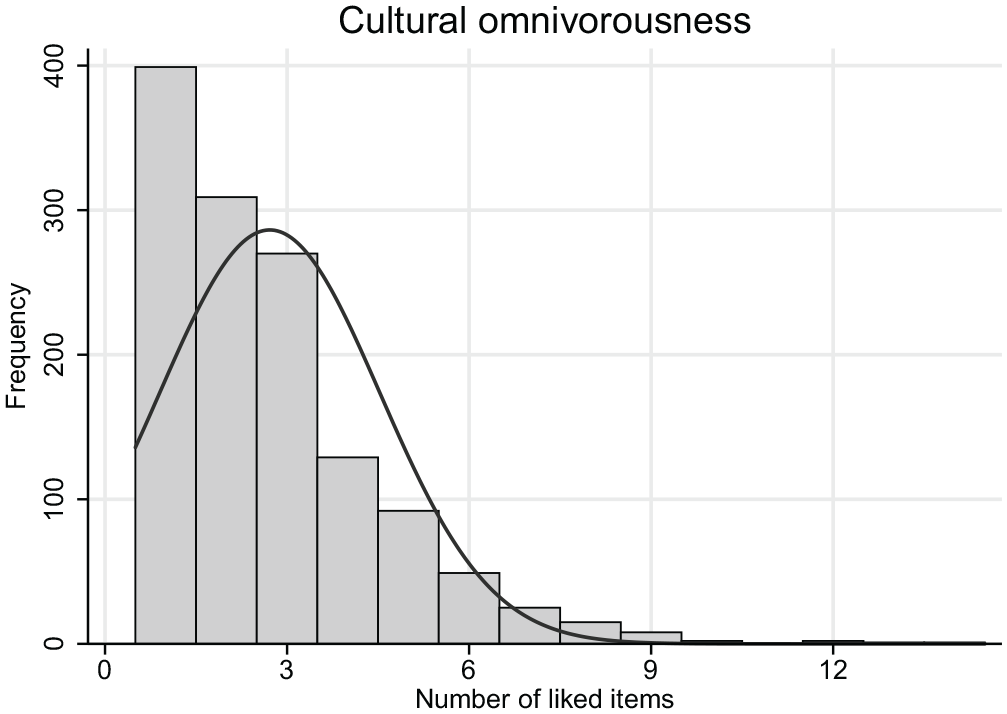
Distribution of cultural omnivorousness in the literature among readers, N = 1302.
The detailed frequencies and descriptive statistics for education, financial situation, age, gender and settlement are available in Appendix 2, Table 10.
Latent class of omnivores
First, four models from two to six classes were estimated. The overview of information criteria (Figure 2) demonstrated that the four-class solution implied the lowest values of the BIC and adjusted BIC information criteria compared to other models with a smaller or larger number of classes. AIC indices started leveling off after reaching four classes. In addition, the Vuong-Lo-Mendell-Rubin likelihood-ratio test pointed out that adding one class improved the model fit up to the four-class solution. 3 The p-value 0.70 for the five-class solution showed that adding one further class would not result in a significant improvement in the model fit over the four-class model. Thus, a four-class solution was considered the optimal model. This decision was also supported by the Lo-Mendell-Rubin adjusted LRT test. 4 As a result of LCA, the probabilities belonging to each of the four classes were generated for each individual in the sample. Respondents were assigned to the class to which they most likely belonged according to the posterior probabilities.
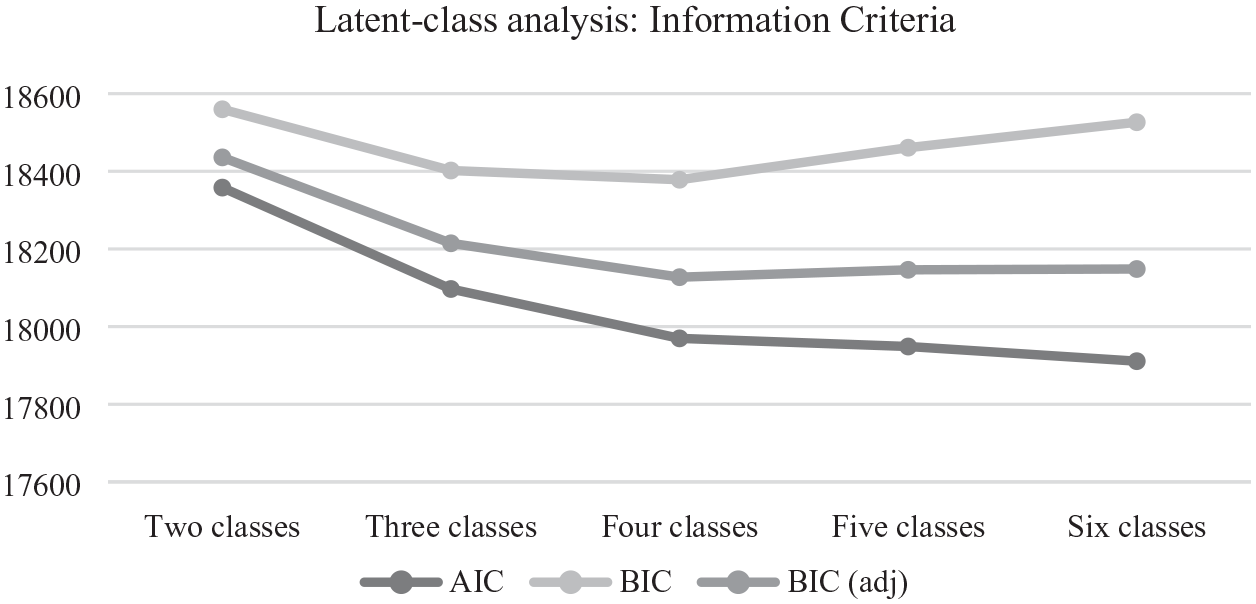
The comparison of information criteria (AIC, BIC, BIC adjusted) for latent-class models (N = 1302).
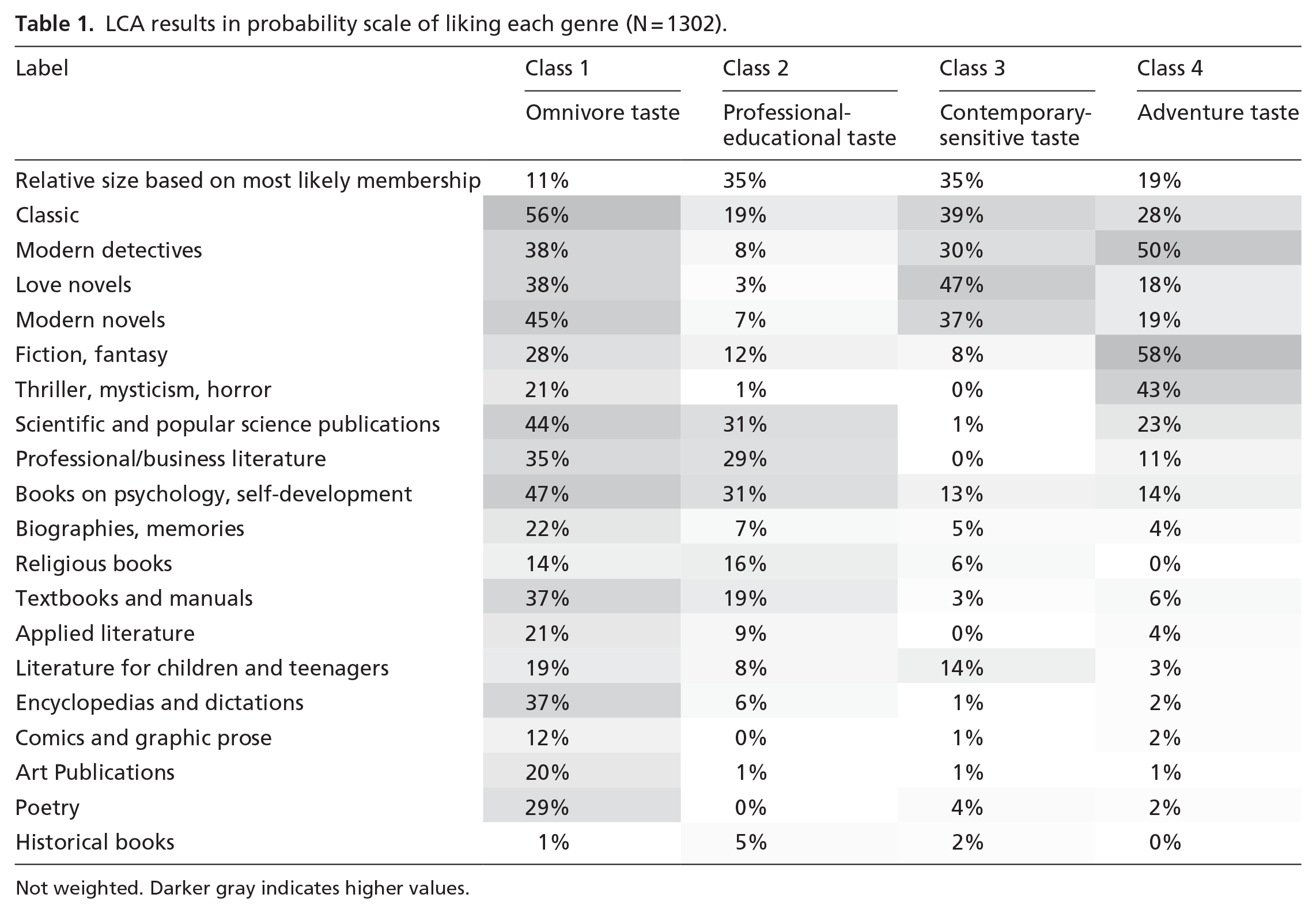
Table 1 presents the probabilities of reading books in a certain genre for each class. The first class had a relative size of 11 percent in the sample and implied the highest probability of liking 14 genres out of the 19 in the list compared to other classes. The taste of this class could be described by the tolerance for a variety of tastes and interest in different genres. The higher probability of liking was related to so-called highbrow styles such as ‘Classic’, ‘Books on psychology and self-development’ or ‘Scientific and popular science publications’ combined with the popular genre ‘Modern novels’. Therefore, the first class is a visualization of omnivorous taste. Other classes were characterized by higher selectivity compared to the first one.
LCA results in probability scale of liking each genre (N = 1302).
Not weighted. Darker gray indicates higher values.
Other classes accounted for 89 percent of the sample’s relative size. The second class (35%) showed a higher probability of liking only professional-educational genres such as ‘Scientific and popular science publications’, ‘Books on psychology and self-development’ and ‘Professional/business literature’. The third class (35%) focused on sensitive and contemporary literature such as ‘Love novels’ and ‘Modern novels’. The fourth class (19%) was more likely to read non-scientific adventure books such as ‘Fiction and fantasy’, ‘Modern detectives’ and ‘Thriller, mysticism, horror’ genres.
The entropy coefficient of 0.613 showed a sufficient degree of distinctiveness that supported the significant manifestation of the omnivore class. These results allow speaking about the hypothesis of omnivorousness in Ukraine and progressing to establishing connections with the social structure.
By assigning respondents to the most likely latent class of four, according to the highest posterior probabilities, the omnivore class is distinguished by certain characteristics (Table 2). It had the highest percentage of people with higher education and above-average financial status compared to other classes. However, the difference between some classes was minimal, for example, the percentage of people with high financial status was approximately the same in the first (omnivore) and fourth (adventure) classes. While the majority in the omnivore class were women and residents of large cities (>100 thousand citizens) with an average age of 36 years old, the adventure class was more prevalent among younger men living in urban areas. Notably, representatives of the omnivore class demonstrated the largest volume of taste, almost two to three times bigger than individuals in other classes.
Characteristics of the latent classes (N = 1302).
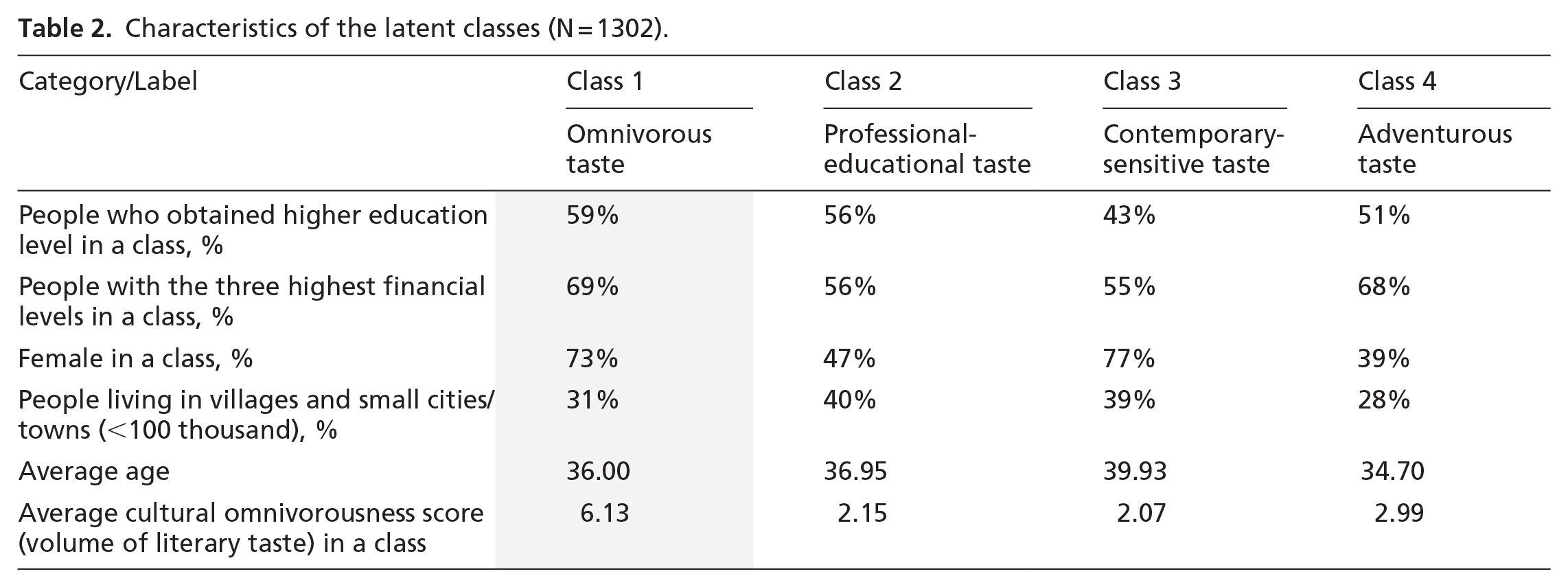
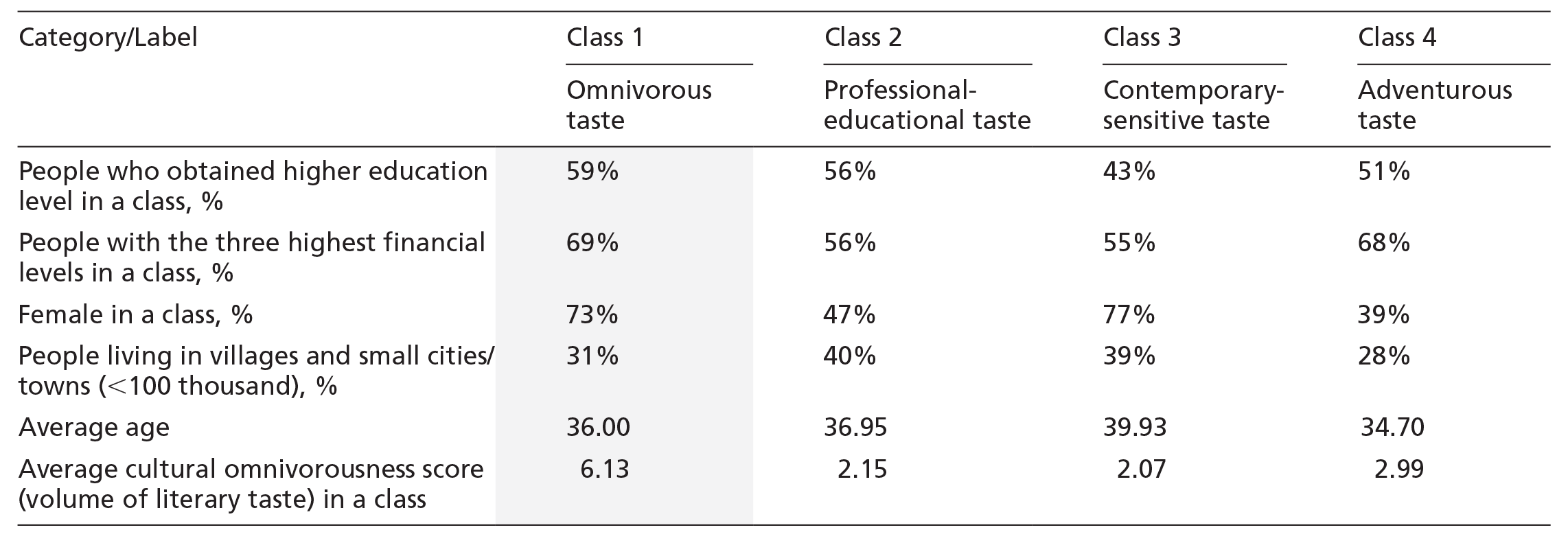
As for other classes, the third class (contemporary-sensitive taste) had the largest share of people with lower education and below-average financial status. The majority of class members were female, and the average age was almost 40 years which was higher than in other classes. The second class (professional-educational taste) had a share of people with higher education close to the omnivorous class. The main differences from the omnivore class were the predominance of men among the representatives of the second class, a smaller percentage of people with above-average financial situations and a larger share of residents of villages and small towns.
Descriptive analysis of cultural omnivorousness score by social groups
Focusing on the role of education (Figure 3), it was found that the level of cultural omnivorousness varies between groups. However, only one significant difference was identified: higher education implied higher cultural omnivorousness than vocational educational attainment. Moreover, no trend was observed toward a monotonic linear increase of omnivorousness with the growth of the educational level. Instead, it can be attributed to engagement with literature and reading for pleasure already requiring a certain level of education. However, at the same time, there was a statistically significant difference in the level of omnivorousness between the two constructed groups of respondents with high versus not high education (t-test = −4.28, p-value < 0.001). The mean score for people with high education equaled 2.93, whereas individuals without high education received 2.50 scale points. Thus, primarily reaching the highest educational level accompanied a substantially higher cultural omnivorousness compared to the aggregate group of lower educational attainments.
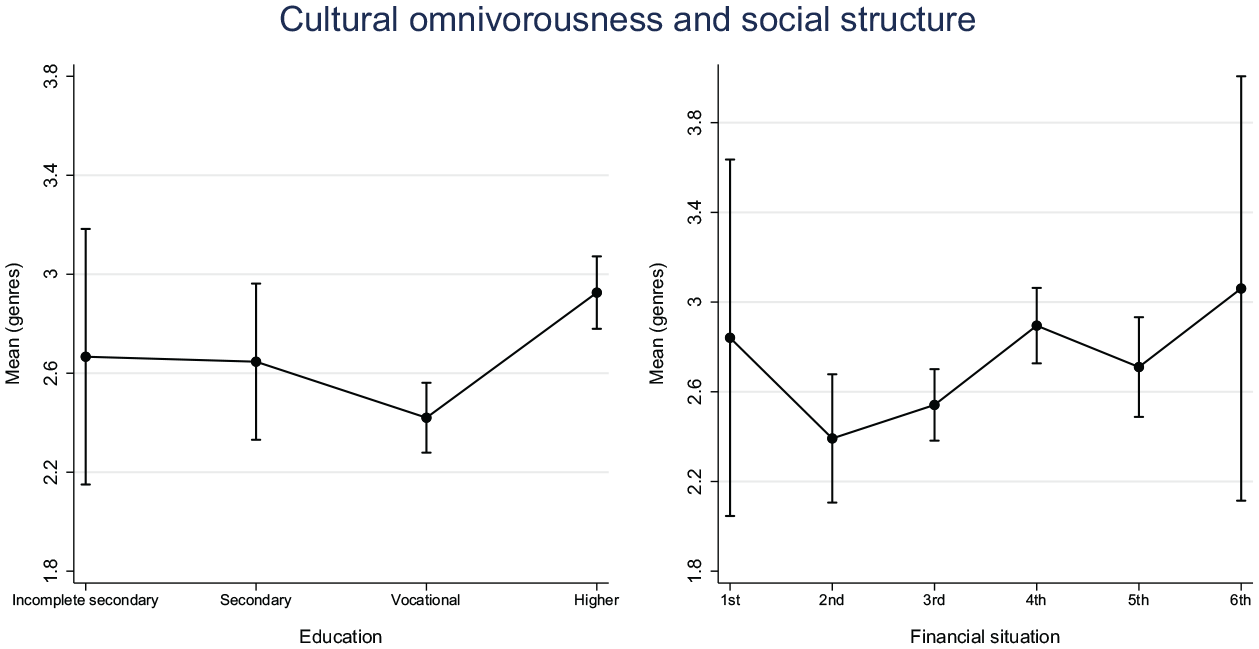
The differences in cultural omnivorousness across educational groups and financial status, N = 1302.
Social positions regarding the financial situation (status) can also make differences in the cultural omnivorousness level. People with a middle-high financial situation (4th group: need to save or borrow only for expensive things) were found to have significantly higher omnivorousness than individuals in the lower groups (2nd and 3rd) whose financial opportunities were limited. Similar to the educational levels, there was no slight increase in omnivorousness with the financial situation’s improvement. A significant difference can be observed by aligning six levels into two social position groups (high vs low). Thus, people in high social positions (4th–6th levels) benefited from the higher omnivorousness, in contrast to respondents who occupied lower positions (1st–3rd level). T-test of differences resulted in a value of −3.05 with p-statistic < 0.001. Consequently, higher social positions regarding financial opportunities, to some degree, implied higher omnivorousness but mainly if comparing middle-high and middle-low levels.
Descriptive statistics by age group (Figure 4) revealed a slight trend toward a decrease of omnivorousness with age. However, all differences between groups were found to be statistically insignificant at 5 percent p-level, so the decrease of omnivorousness with age was not prominent. Simultaneously, consistent with expectations, the gender difference was found to be important: women were more likely to have more extensive taste than men. Similarly, the place of living mattered; people who live in big cities tended to have more extensive tastes than the residents of almost all types of smaller settlements.
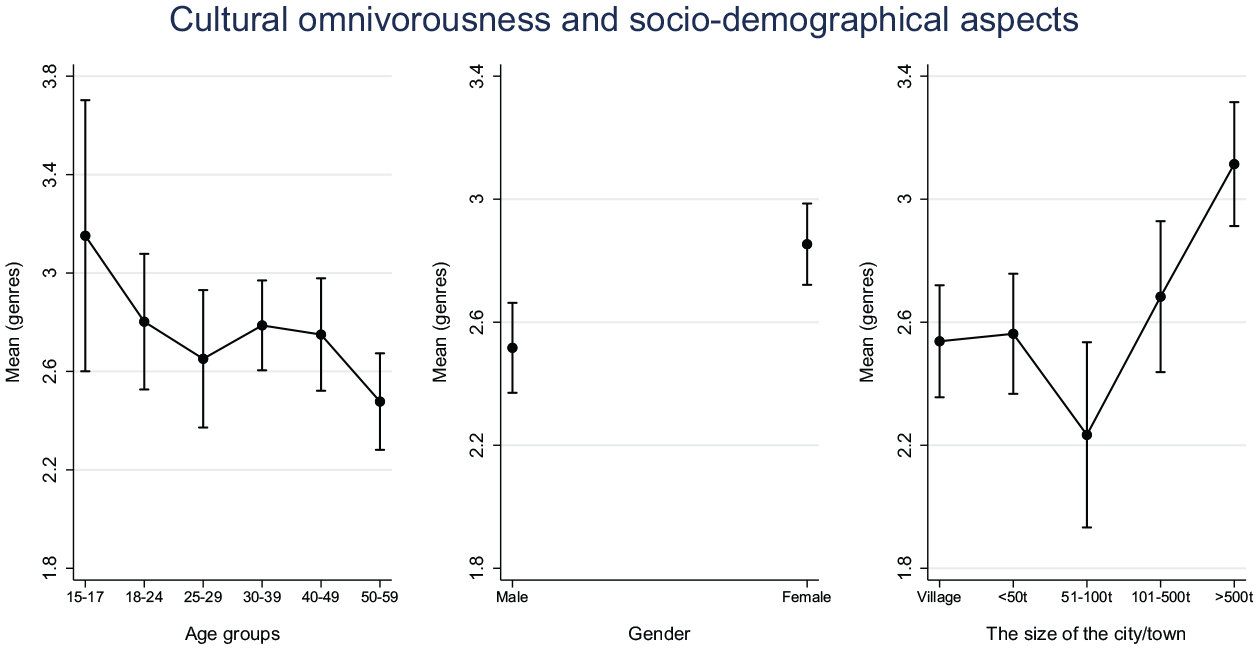
The differences in cultural omnivorousness across age, gender and settlement groups, N = 1302.
To estimate the simultaneous effect of education and financial situation on cultural omnivorousness with separate control for socio-demographic variables, this study presents results from a linear regression analysis.
Regression analysis for cultural omnivorousness score
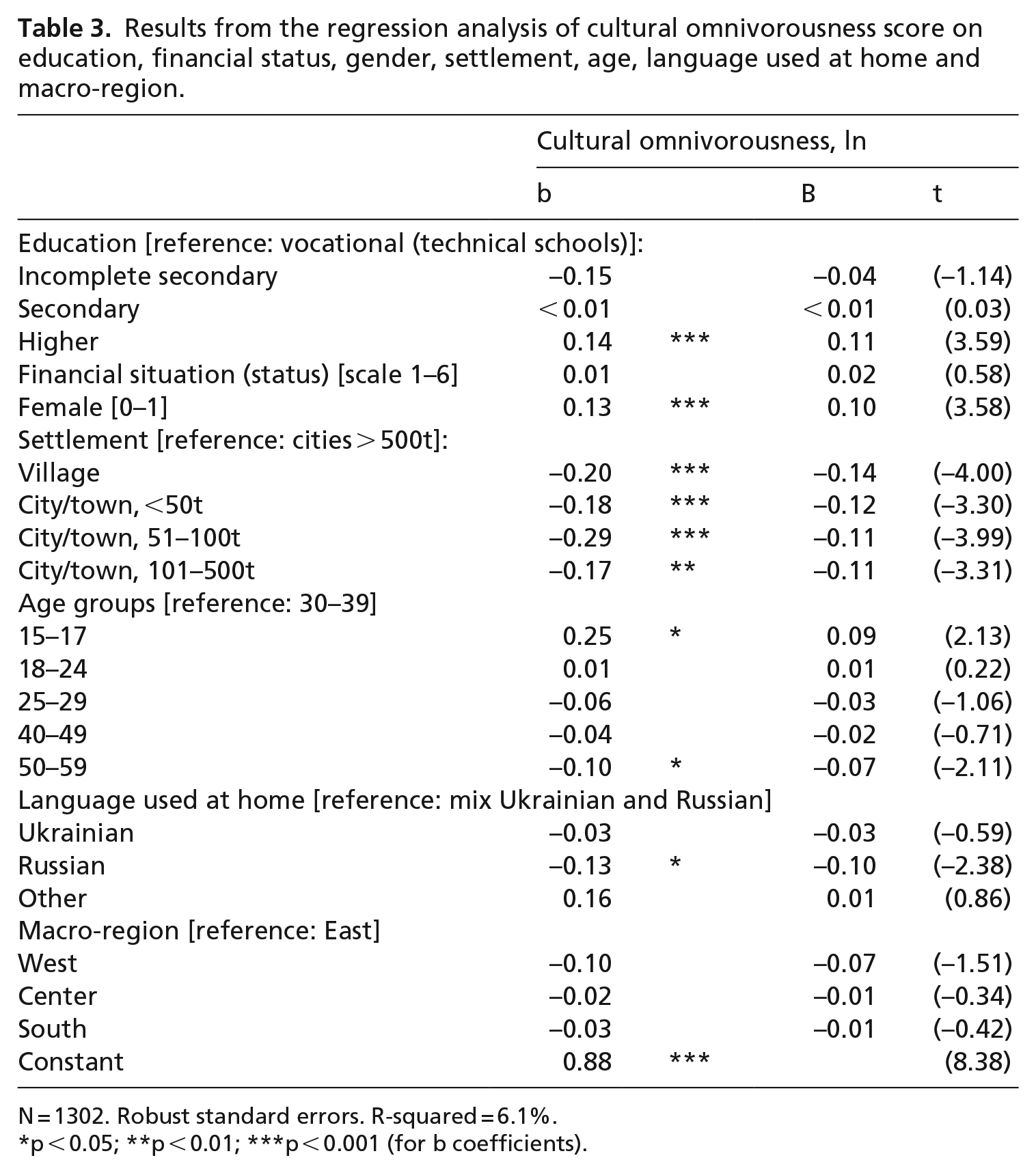
The multivariate regression analysis provides an opportunity to estimate the separate effects of variables on the cultural omnivorousness score by controlling the role of other factors (Table 3). At the preparatory stage, the dependent variable was log-transformed to address high right-skewness. In addition, robust standard errors were preferred to avoid overestimating the effects in the sample.
Results from the regression analysis of cultural omnivorousness score on education, financial status, gender, settlement, age, language used at home and macro-region.
N = 1302. Robust standard errors. R-squared = 6.1%.
p < 0.05; **p < 0.01; ***p < 0.001 (for b coefficients).
The regression model results supported the high importance of higher education in accumulating extensive taste, but the relationship is nonlinear (Figure 5). The greatest omnivorousness was observed among people with higher education (ceteris paribus) – the score for cultural omnivorousness was 15 percent higher for individuals with higher education than individuals with vocational-level education. However, all other educational levels did not differ from each other in the omnivorousness score.
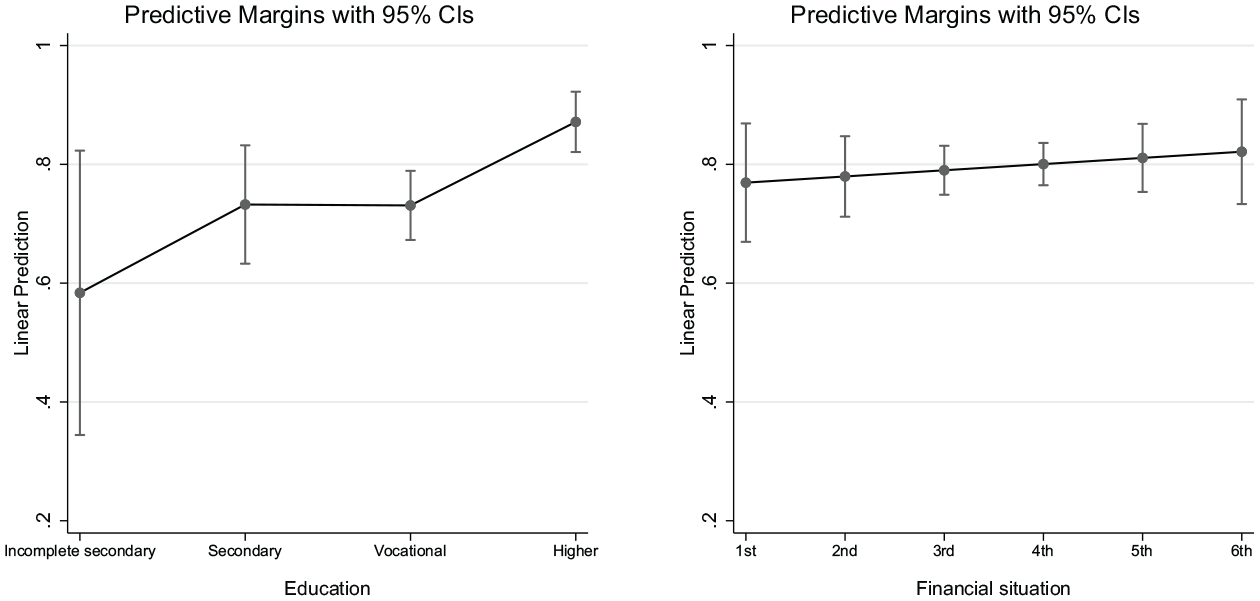
Linear predictions for the cultural omnivorousness, marginal effects of education and financial situation, N = 1302.
Regarding financial status, the factor lost its significance in the regression model. Neither the differences across financial groups nor the linear trend could be identified. One scale-point improvement in the financial situation was only associated with a statistically insignificant 1.05 percent increase in omnivorousness. In turn, the differences in predictive margins (Figure 5) illustrate the higher importance of educational qualifications compared to the financial situation. This finding suggests that omnivorousness in Ukraine separates people based on a considerably higher educational attainment.
In accordance with the theoretical assumption, the omnivorousness score was 13 percent higher for women than men. It follows the findings that women are generally more likely to engage in literary activities in Ukraine (Volosevych and Shurenkova, 2020b: 14). The difference in place of residence also remained stable. People from big cities (> 501 thousand citizens) were more likely to be omnivores than individuals from all other types of settlements. For example, the level of cultural omnivorousness was 25 percent lower in small-middle cities (51–100 thousand citizens) and 18 percent lower in villages in contrast to big cities. Results regarding age demonstrated a slight trend toward smaller omnivorousness with aging. However, groups aged 18–24, 25–29, 30–39 and 40–49 did not significantly differ from each other. Concurrently, the oldest group (50–59) and the youngest (15–17) were found to be less and more omnivorous, respectively, compared to middle-aged (30–39) people.
Moving to the control factors, regional and language discrepancies were not apparent while predicting the omnivorousness score. One exception refers to the readers who speak Russian at home – they were predicted to have less omnivorousness than respondents who used both the Ukrainian and Russian languages.
Conclusion and discussion
Motivated by the lack of empirical investigation of the social division of omnivorous taste, this research empirically explored the role of omnivorous taste in Ukraine. The focus encompassed the relationships between cultural omnivorousness and indicators of positions in the social structure (education, financial situation) and socio-demographic variables (age, gender, settlement). Relying on the data from the adult population survey ‘Reading in the context of media consumption and life construction’ conducted in 2020 (Volosevych and Shurenkova, 2020a, 2020b), this study investigated the latent class of omnivores and the breadth/volume of taste via literary genres of readers by focusing on the number of genres of books read in the previous year.
The findings showed that the figure of cultural omnivorousness in literary taste marks higher educational attainment rather than substantial financial capabilities. This result is consistent with previous findings that showed the high importance of education rather than class/status identification (Warde and Gayo-Cal, 2009). In Ukraine, low upward mobility (The World Bank, 2018a) can increase the distance between cultural and economic capital on compatible social positions as well as increase the importance of inherited cultural capital. Thus, it can be suggested that omnivorous taste might indicate cultural capital as opposed to economic resources. Based on the results, it is impossible to assess how strongly the omnivore hypothesis is incorporated into taste patterns and social inequality in Ukraine.
From a broader perspective, this study supports the distinct identification of the omnivorous pattern in Ukraine. Although the latent omnivore class had the smallest size compared to other classes, it did not lack distinctiveness – members shared high probabilities of reading different genres of books compared to other classes. It adds empirical value to the previous exploratory studies in the music field that have revealed a latent class of omnivores, which most likely includes 12–14 percent of individuals (Domashchenko, 2017). However, the results still suffer from a lack of validation and examination of social meaning. Hence, further studies on the motivations for taste expansion and the investigation of relationships with more comprehensive and detailed measures of social stratification and cultural consumption can extensively explore the figure of omnivores in Ukraine.
In addition, since the development of omnivorous taste is attributed to structural and value change (Peterson and Kern, 1996), survival values that still prevail over self-expression priorities (Inglehart, 2018), unsustainable education system (The World Bank, 2018b) and insecurity due to the external military aggression may be obstacles to the development of omnivorousness for certain groups. More research in this direction to investigate the role of different factors in the stimulation of omnivorous dispositions is needed. Although we observed a strong effect of high education, a relatively small share of readers show omnivorous patterns. Besides, the measurement of the education level in the survey is limited to only four categories, which, in turn, does not allow potential differences to be captured, particularly between diverse types of higher education.
As to what other socio-demographic variables structure cultural omnivorous consumption, certain associations with age, gender and place of the settlement appeared in the analysis. Female propensity toward omnivorousness and a positive effect of urban life (big cities) correspond to the general findings previously proposed by Purhonen et al. (2010). Nonetheless, the age trend contradicts tendencies uncovered in other cultural domains in Western Euro-American context (Ma, 2021; Warde and Gayo-Cal, 2009) because individuals in our sample did not benefit from higher omnivorousness in middle age. In turn, the results show a slight move toward decreased omnivorousness with age, with a limited number of significant differences between age groups. However, an accurate estimation of temporal trajectories would require differentiation between aging, cohort and period effects (Ma, 2021) that could not be included in this study due to the cross-sectional data used.
The notable limitations of this study are as follows: (1) the analysis was performed in only one cultural realm (in contrast to the recommendations from Holt, 1998), (2) only one perspective of cultural omnivorousness measurement was considered named weak omnivorousness (see de Vries and Reeves, 2022) and (3) the role of social origins were not investigated although educational background contributes to the development of omnivorous dispositions (Lizardo, 2019). For example, engagement in reading for pleasure might already draw a boundary and mark cultural capital. The study of cultural consumption in the UK indicated that the fact of participation in the field of books was ‘specifically socially located within urban, educated and cosmopolitan populations’ (Bennett et al., 2009: 110). However, no strong clusters of taste had emerged in the field meaning relatively low stratification in literary consumption. Although previous studies have shown that omnivorousness in various fields tends to have a complementary relationship (Purhonen et al., 2010), research on the omnivore–univore thesis in literary taste can potentially suffer from non-reliable conclusions for other cultural realms. Regarding the measurement, this study only ascertained the volume of taste based on reported behavior and captured neither the composition of taste nor emotional preferences/knowledge factors. In addition, it was assumed that the social distinction occurs between genres rather than within them. Therefore, the transferability of the findings to the general arguments is debatable.
Despite these limitations, this study is the first of its kind to empirically explore the concept of cultural omnivorousness in Ukraine while considering its complexity. Thus, it provides new insights for further investigation of the omnivore argument and cross-cultural comparative studies within and beyond the Western Euro-American context.
Footnotes
Appendix 1
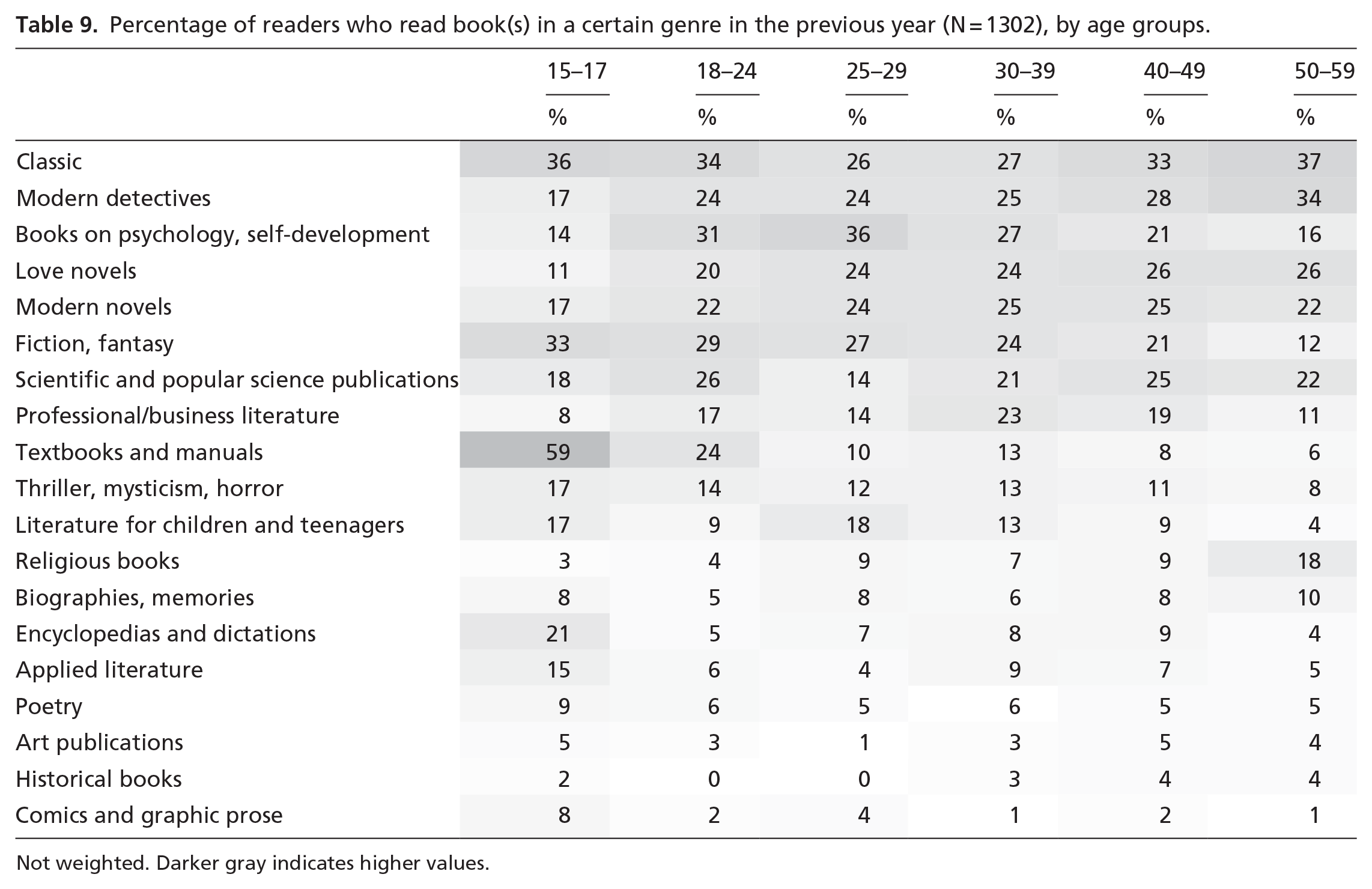
Percentage of readers who read book(s) in a certain genre in the previous year (N = 1302), by age groups.
|
Not weighted. Darker gray indicates higher values.
Appendix 2
Mean number of liked literary genres (cultural omnivorousness) by education, financial situation, gender, age and settlement groups (N = 1302).
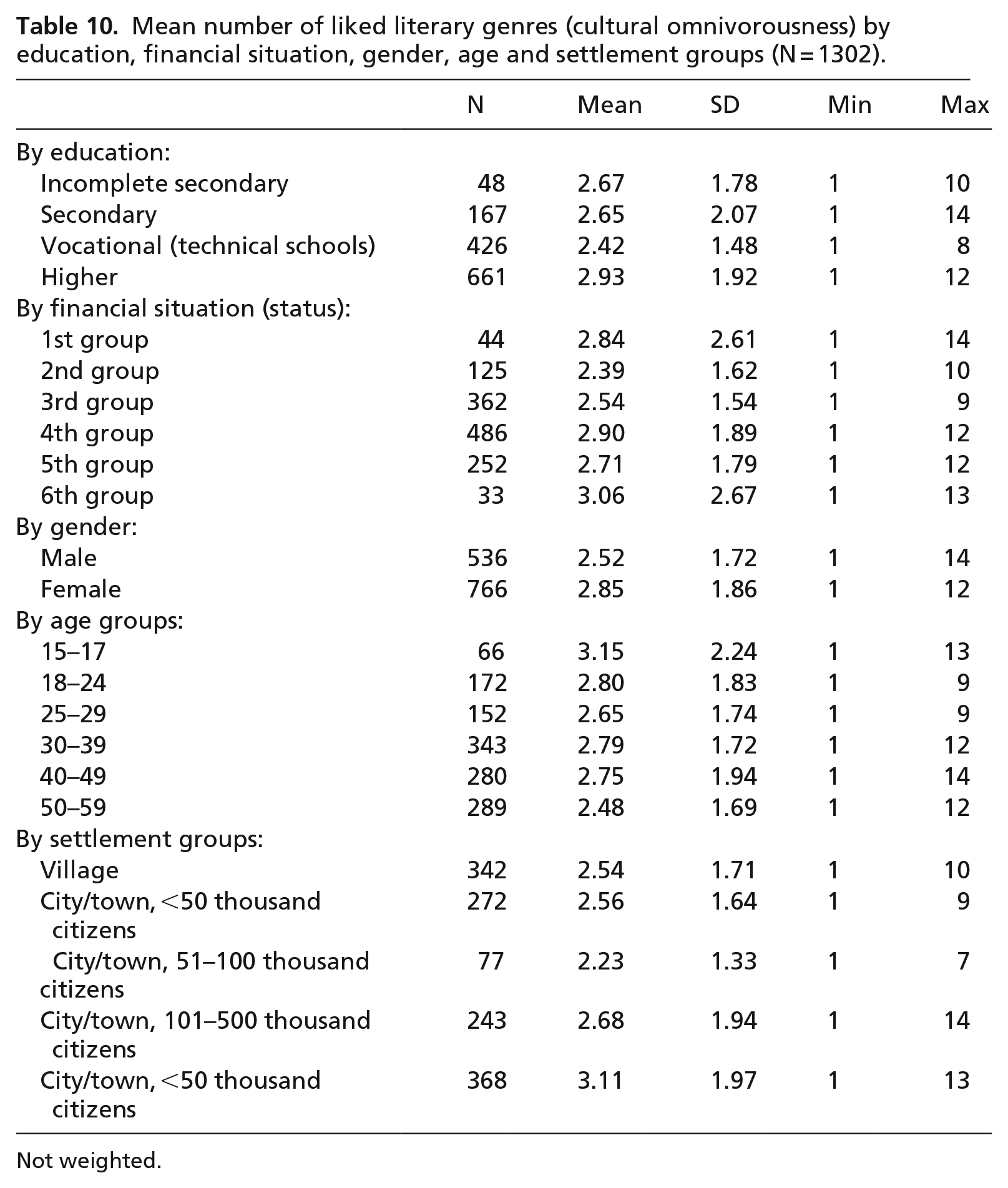
| N | Mean | SD | Min | Max | |
|---|---|---|---|---|---|
| By education: | |||||
| Incomplete secondary | 48 | 2.67 | 1.78 | 1 | 10 |
| Secondary | 167 | 2.65 | 2.07 | 1 | 14 |
| Vocational (technical schools) | 426 | 2.42 | 1.48 | 1 | 8 |
| Higher | 661 | 2.93 | 1.92 | 1 | 12 |
| By financial situation (status): | |||||
| 1st group | 44 | 2.84 | 2.61 | 1 | 14 |
| 2nd group | 125 | 2.39 | 1.62 | 1 | 10 |
| 3rd group | 362 | 2.54 | 1.54 | 1 | 9 |
| 4th group | 486 | 2.90 | 1.89 | 1 | 12 |
| 5th group | 252 | 2.71 | 1.79 | 1 | 12 |
| 6th group | 33 | 3.06 | 2.67 | 1 | 13 |
| By gender: | |||||
| Male | 536 | 2.52 | 1.72 | 1 | 14 |
| Female | 766 | 2.85 | 1.86 | 1 | 12 |
| By age groups: | |||||
| 15–17 | 66 | 3.15 | 2.24 | 1 | 13 |
| 18–24 | 172 | 2.80 | 1.83 | 1 | 9 |
| 25–29 | 152 | 2.65 | 1.74 | 1 | 9 |
| 30–39 | 343 | 2.79 | 1.72 | 1 | 12 |
| 40–49 | 280 | 2.75 | 1.94 | 1 | 14 |
| 50–59 | 289 | 2.48 | 1.69 | 1 | 12 |
| By settlement groups: | |||||
| Village | 342 | 2.54 | 1.71 | 1 | 10 |
| City/town, <50 thousand citizens | 272 | 2.56 | 1.64 | 1 | 9 |
| City/town, 51–100 thousand citizens | 77 | 2.23 | 1.33 | 1 | 7 |
| City/town, 101–500 thousand citizens | 243 | 2.68 | 1.94 | 1 | 14 |
| City/town, <50 thousand citizens | 368 | 3.11 | 1.97 | 1 | 13 |
Not weighted.
Acknowledgements
The author would like to thank the Info Sapiens research agency for providing access to the dataset, reviewers for their important comments, and the whole GESIS – Leibniz Institute for the Social Sciences team for their valuable support.
Availability of data and material

Code availability
Declaration of conflicting interests
The author(s) declared no potential conflicts of interest with respect to the research, authorship and/or publication of this article.
Funding
The author(s) received no financial support for the research, authorship and/or publication of this article.