




Abstract
This article critically examines Thailand’s emerging policy of post-release confinement under the 2022 Recidivism Prevention Act, which authorises the non-prison detention of high-risk ex-offenders. Despite being intended as a rehabilitative alternative, such spaces risk becoming ‘soft carceral’ environments, subtly punitive and symbolically prison-like. Drawing on stakeholder interviews, site observations and design workshops, the study explores three pilot and proposed sites. Findings revealed that spatial design is deeply entangled with levels of control, perceptions of risk and the tension between security and human dignity. Three risk-based categories (red, yellow and green) informed differentiated spatial layouts and degrees of autonomy. The article argues that architecture plays a dual role, as both a tool of state surveillance and a potential medium of reintegration. Without an ethics-driven, participatory design process, post-release facilities may reinforce stigma and exclusion. To genuinely support reintegration, such environments must foster normalcy, trust and a sense of belonging.
Introduction
Over the past decade, criminal justice systems around the world have begun to shift their approach, moving towards alternative forms of confinement aimed at reducing incarceration rates while maintaining public safety. This shift reflects growing concern about the long-term impacts of imprisonment, including institutionalisation, recidivism, stigmatisation and the violation of human rights. Countries such as Norway, Denmark and Japan have experimented with models that emphasise rehabilitation and community integration in an effort to soften the punitive nature of the justice system and promote human dignity (Arbour et al., 2021; Berger, 2016; Olesen and Storgaard, 2016; United Nations, 1990).
In the context of Thailand, the existing legal framework may still be insufficient to address the risks posed by individuals who have committed serious crimes, particularly in cases involving sexual or violent offences. In 2022, the government enacted the Recidivism Prevention Act to introduce the concept of post-release confinement. An alternative form of custody aimed at striking a balance between limiting individual liberty to reduce the risk of reoffending and enhancing public safety (Trathong, 2025).
This new system proposes the establishment of designated facilities specifically intended for rehabilitation, surveillance and social support. According to General Comment No. 35, Paragraph 21, of the United Nations Human Rights Committee, if an individual is detained after completing a criminal sentence for the purpose of public protection, such detention must be justified by the seriousness of the original offence and the likelihood of reoffending. Moreover, it must be used only as a measure of last resort and must differ in nature from standard punitive incarceration (Human Rights Committee, 2014). The legislation itself clearly states that these facilities must not be classified as prisons (Lertpanichpu, 2018; Ministry of Justice, 2023).
Nonetheless, despite shifts in terminology and intent, critical questions remain. Can these spaces truly be considered ‘non-carceral’, or are they simply a softened extension of control? Can architectural design serve as a medium for negotiating the inherent tension between public safety and the dignity of formerly incarcerated individuals?
This article addresses these questions through an in-depth case study of Zone 13 within Klong Prem Central Prison, which has been repurposed as Thailand’s first pilot post-release confinement facility. It also examines two additional proposed sites: a psychiatric rehabilitation unit within the Department of Corrections Hospital and an agricultural training centre in a rural, ‘open prison’ setting at Khao Mai Kaew. The central research question is as follows: What role should architecture play in balancing public safety, the human rights of formerly incarcerated individuals with serious criminal histories and spatial forms of control in the context of post-release confinement in Thailand?
While the concept of post-release confinement may reflect progress in Thailand’s justice policy, it also risks generating new forms of control if not critically examined through a spatial lens. Architecture may function as more than just a physical structure. It can serve as a mechanism for risk governance and a symbolic language that shapes how society perceives justice. Rather than merely enclosing justice, architecture has the potential to mediate it.
This article aims to address three core objectives:
to present the emerging models of post-release confinement in Thailand,
to propose design strategies that balance public safety with the protection of human rights, and
to critically examine the role of post-release confinement facilities in shaping justice through space.
Literature review
Human rights and the ethics of confinement
The ethics of confinement has become a subject of intense debate among scholars in the fields of criminology and human rights, particularly when it comes to detaining individuals who have already served their sentences but are still considered high-risk (Urbaniok et al., 2006). While justice systems in many countries seek to balance public safety with the rehabilitation of offenders (McSherry et al., 2006; Pyszora et al., 2022), scholars increasingly question how individuals can be detained without violating their dignity and fundamental rights. On one hand, the state has a duty to protect its citizens from those who may reoffend; on the other hand, those who have served their time remain entitled to legal protections as human beings (McSherry, 2014).
According to international instruments, such as the Universal Declaration of Human Rights and the International Covenant on Civil and Political Rights (ICCPR), all individuals are entitled to equal rights and dignity, regardless of whether they have previously been incarcerated. The ICCPR specifically affirms that ‘all persons deprived of their liberty shall be treated with humanity and with respect for the inherent dignity of the human person’ (United Nations General Assembly, 1948; United Nations General Assembly, 1966).
In Thailand, the 2022 Royal Decree on the Prevention of Recidivism in Sexual or Violent Offenses clearly states that individuals subject to this measure must be ‘treated as ordinary persons and confined in facilities that are not prisons’ (Ministry of Justice, 2023). However, the implementation of this policy raises a critical question: What does it mean to treat someone as ‘not a criminal’ while subjecting them to ongoing surveillance and spatial restrictions?
This question highlights a broader ethical tension. Continuing to confine individuals without it constituting a legal punishment challenges the principle that sanctions should be proportionate and limited to the offence committed. Imposing spatial restrictions beyond the original sentence, without a transparent process or individualised assessment, risks undermining public confidence in the justice system as a whole (Van Zyl Smit and Snacken, 2009).
From a design perspective, the decision to create a non-prison confinement facility requires careful navigation between ensuring safety and avoiding the psychological effects of imprisonment. Even when the environment is intentionally designed to feel like a ‘home’ to aid in adjustment, elements such as restricted mobility, constant surveillance or isolating spatial layouts can still produce the psychological experience of incarceration. This feeling may be further intensified if the facility is located within or adjacent to an existing prison compound, as in the case of Thailand’s Zone 13 post-release confinement unit within Klong Prem Central Prison (Chutapruttikorn et al., 2025).
Moreover, community perception and support must not be overlooked. Human rights violations do not arise solely from direct state action. They also occur through social stigmatisation, rejection and exclusion. For these new forms of confinement to succeed ethically, their effectiveness cannot rely on design or legal frameworks alone. Community involvement is essential in helping individuals genuinely reintegrate into society by fostering understanding, providing education and participating in the rehabilitation process (Kemshall, 2008).
Any form of confinement that claims to be rehabilitative must be grounded in respect for human dignity. It should allow formerly incarcerated individuals some degree of agency in making decisions about their lives and must operate under transparent systems with mechanisms for regular oversight. Design alone cannot resolve these challenges, but when guided by human rights principles, it can help create ‘spaces of care’ rather than ‘spaces of control’.
The architecture of risk
The concept of ‘architecture of risk’ draws from Ulrich Beck’s (1992) theory of the ‘risk society’ and Michel Foucault’s (1977) theory of power and control through surveillance. It frames architectural design as a tool for managing and mitigating social risk, particularly within spaces that blend care and control, such as rehabilitation centres or confinement facilities.
Beck (1992) argues that modern societies place increasing importance on managing human-made risks, such as climate-related disasters, terrorism or criminal recidivism. The legitimacy of the state, in this context, depends on its ability to address these threats effectively. Spatial design thus becomes a critical medium through which such risks are governed and controlled.
In his book, Discipline and Punish, Michel Foucault (1977) discusses how spatial organisation functions as a means of behavioural control and social order, achieved through surveillance and spatial segmentation. He cites institutions such as prisons, hospitals and schools as examples of power-driven design. When combined with Beck’s framework, these architectures are understood as instruments for not only punishing the past and controlling the present but also for pre-emptively managing future risks.
Moran (2013) describes contemporary prison architecture as occupying a ‘liminal space’ that merges rehabilitation with confinement, particularly in post-release residential centres and open prisons. While these facilities often claim to prioritise humanity and rehabilitation, they remain fundamentally shaped by concerns over public safety. In the Thai context, non-prison confinement emphasises design strategies that aim to uphold human dignity. However, these spaces remain under state supervision and shaped by society’s demand for reassurance. The distinction between designs that ‘look like prisons’ and those that ‘do not’ reveals the underlying tensions between punishment, care and control.
Thus, the architecture of risk plays a dual role, both in facilitating rehabilitation and in managing societal anxieties around reoffending. Design must simultaneously foster public confidence and uphold the dignity of formerly incarcerated individuals.
Architecture and carceral space
The design of confinement facilities is not merely about restricting liberty. It serves as a critical instrument for care, correction and rehabilitation. Studies on ‘carceral space’ have shown that architecture significantly shapes the daily lives and lived experiences of those under control (Moran, 2012). The experiences of individuals in traditional prisons, open prisons, or confinement centres are not fixed or uniform; rather, they vary according to each facility’s purpose, the degree of control and the intensity of surveillance (Spens, 1994; Suber, 2010). Such spaces can diminish human dignity through restriction and depersonalisation (Hancock and Jewkes, 2011), or conversely, they can attempt to heal, educate and support reintegration into society (Jewkes, 2023).
The debate between therapeutic design and control-oriented architecture remains ongoing. Over the past decade, there has been a growing trend towards creating confinement facilities that promote well-being, dignity and a sense of normalcy (Jewkes, 2017). One example is Halden Prison in Norway, which emphasises natural light, personal space, connection to nature and a normalised daily routine. These design elements are intended to not only ‘soften’ the harshness of incarceration but also reduce recidivism and support reintegration into society (Banerjee and Das, 2024; Jewkes, 2018). Nevertheless, even such therapeutic spaces are still governed by strict regulations, such as layouts designed for surveillance, restricted access zones and tightly managed control systems (Hancock and Jewkes, 2011).
A central question remains: Can such designs truly eliminate the essence of ‘the prison’, or are they merely aesthetic reforms that make confinement more socially acceptable?
Engstrom and van Ginneken (2022) point out that even architecture intended for rehabilitation still functions as a tool of control, supervision and governance. The arrangement of rooms, circulation pathways and visual surveillance systems contributes to the internalisation of discipline, observation and behavioural compliance among residents. Moreover, rehabilitative prisons cannot always serve as ideal models for penal reform, as they may generate new forms of psychological stress and emotional pain associated with conditional freedom (Shammas, 2014).
Nevertheless, participatory design approaches may offer a challenge to the traditional concept of the prison. Environments that uphold dignity, foster autonomy and build trust can be created through collaborative design processes involving those who inhabit the space, whether incarcerated individuals and staff or broader stakeholders in rehabilitation, such as former prisoners, family members, therapists and community members (Moran and Jewkes, 2015). Carceral and rehabilitative architecture may reflect true correction only when grounded in a human-centred design process (Jewkes, 2023).
In the context of studying non-prison confinement, architectural design that aligns with these principles must account for ethical boundaries, functional utility and the interplay between freedom, security and care. Ultimately, the architecture of post-release confinement is not merely about buildings and floor plans. It is about how space can reflect, reinforce or resist dominant societal norms. In this sense, architecture becomes a site of negotiation: between punishment and rehabilitation, between societal fear and human potential, and between exclusionary design and inclusive design.
Methods
This study employed a qualitative research approach, emphasising the interpretation of experiences, perspectives and meanings through close engagement and the observation of relevant stakeholders (Wongwiwatthanon, 2007). A variety of methods were employed, beginning with stakeholder analysis, to understand the perspectives of those involved in the project across social, political and power dimensions (Brugha and Varvasovszky, 2000). Stakeholders were categorised into three groups:
policymakers and state officials, such as corrections officers, senior administrators and legislators who shape legal frameworks and operational directives;
practitioners, including social workers, counsellors and post-release care staff responsible for implementing the policy on the ground; and
individuals living within or around the confinement environment, including ex-offenders and community members, who play dual roles as both affected parties and co-creators in the reintegration process.
The researcher conducted in-depth interviews with 18 participants representing all three stakeholder groups. The conversations revealed diverse perspectives, motivations and interests, all of which influenced how post-release confinement is designed, developed and perceived in Thai society. However, access to high-risk offenders residing in Zone 13 of Klong Prem Central Prison was limited. Although the researcher encountered two such individuals, interviews were not permitted due to their psychiatric conditions, which posed a risk of unpredictable behaviour under certain stimuli. To address this limitation, the study included interviews with former inmates convicted of serious offences who had not been subjected to post-release confinement orders.
The researcher conducted field observations at Zone 13 of Klong Prem Central Prison, which currently serves as the only operational post-release confinement facility in Thailand (Figure 1). Additional site visits were carried out at the Department of Corrections Hospital and Khao Mai Kaew Open Prison, two locations recommended by experts as potential sites for adapting to serve high-risk ex-offenders. These visits focused on examining physical characteristics, spatial environments, surveillance systems and activities related to rehabilitation and reintegration. Particular attention was paid to both the formal and informal uses of space in order to better understand the role of architecture as a tool of the state and its influence on user perception.
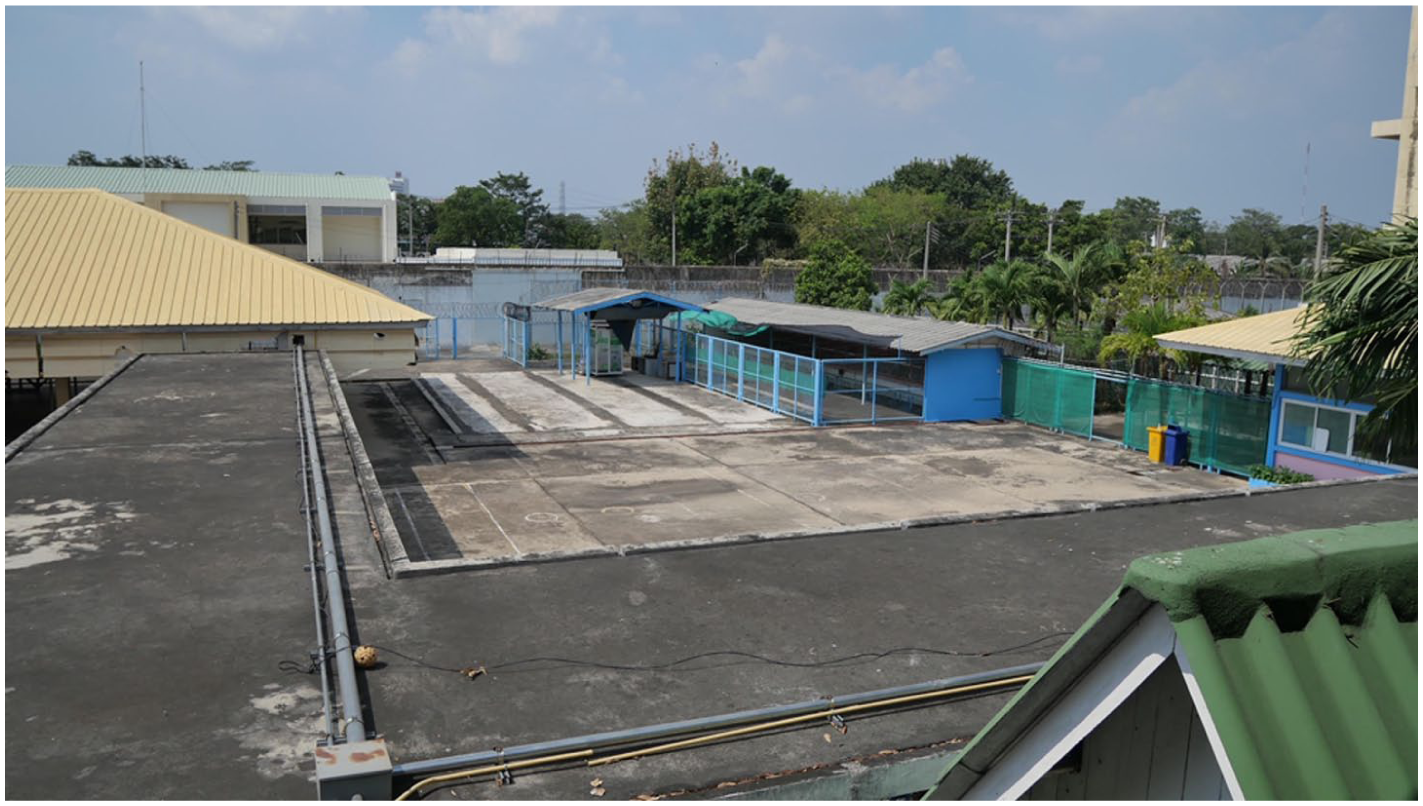
Inside view of zone 13 of Klong Prem central prison.
In addition to interviews and spatial data collection, the research team conducted three participatory workshops:
1. Workshop on Perceptions and Definitions of Post-Release Confinement: Participants were asked to place various confinement settings along a two-dimensional graph. The vertical axis represented the ‘architectural form’ (ranging from prison-like to home-like), while the horizontal axis captured the ‘level of control’ (from full incarceration to full autonomy, as in a home setting). This exercise aimed to investigate how participants conceptualised the notion of ‘non-prison’ (Figure 2).
2. Workshop on Appropriate Functional Uses: This session began with the review, analysis and comparison of international and domestic case studies. Participants then collaborated with experts to identify appropriate spatial functions and activities that could support the rehabilitation of ex-offenders residing in post-release confinement facilities. The case studies were divided into two categories:
Group 1: Prisons designed under a philosophy of human dignity primarily from Scandinavian countries (Astbury, 2021; BBC, 2019; Gray, 2017). These case studies were examined in terms of therapeutic spatial features and activities (Pongphatthachai, 2013), such as private bedrooms, intimate family visitation rooms and on-site minimarts. Emphasis was also placed on designs that promote proximity to nature as a form of psychological healing.
Group 2: Residential rehabilitation centres modelled as halfway houses, such as the Pulau Rayo Transitional Home in Thailand and the halfway houses operated by the Osborne Association in the United States (Tomberg et al., 2020). These models were analysed for their support mechanisms not only for the ex-offenders themselves but also for their families, who play an integral role in the rehabilitation process. Activities that foster community engagement were also key considerations.
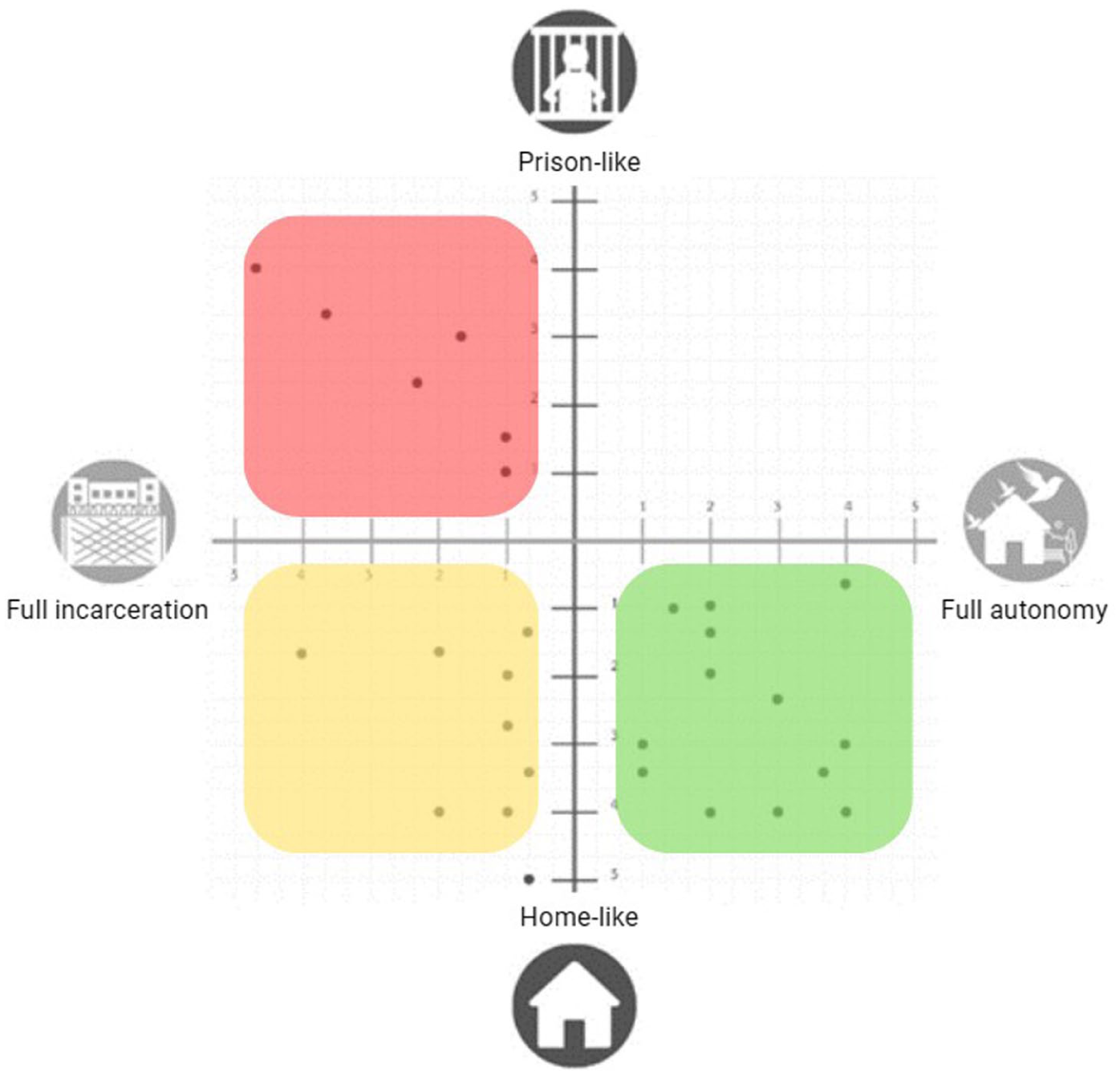
A two-dimensional graph.
The concepts, activities and architectural elements from both groups were presented to experts for evaluation and discussion on their applicability to post-release confinement facilities in the Thai context.
3. Workshop on Participatory Design: This session focused on translating the spatial functions identified in Workshop 2 into preliminary design prototypes. These included elements such as private bedrooms, shared living spaces and intimate visitation rooms. The prototypes were presented as 3D visualisations of individual rooms and were reviewed by experts, who provided feedback and suggested adjustments to enhance functional suitability (Figure 3).
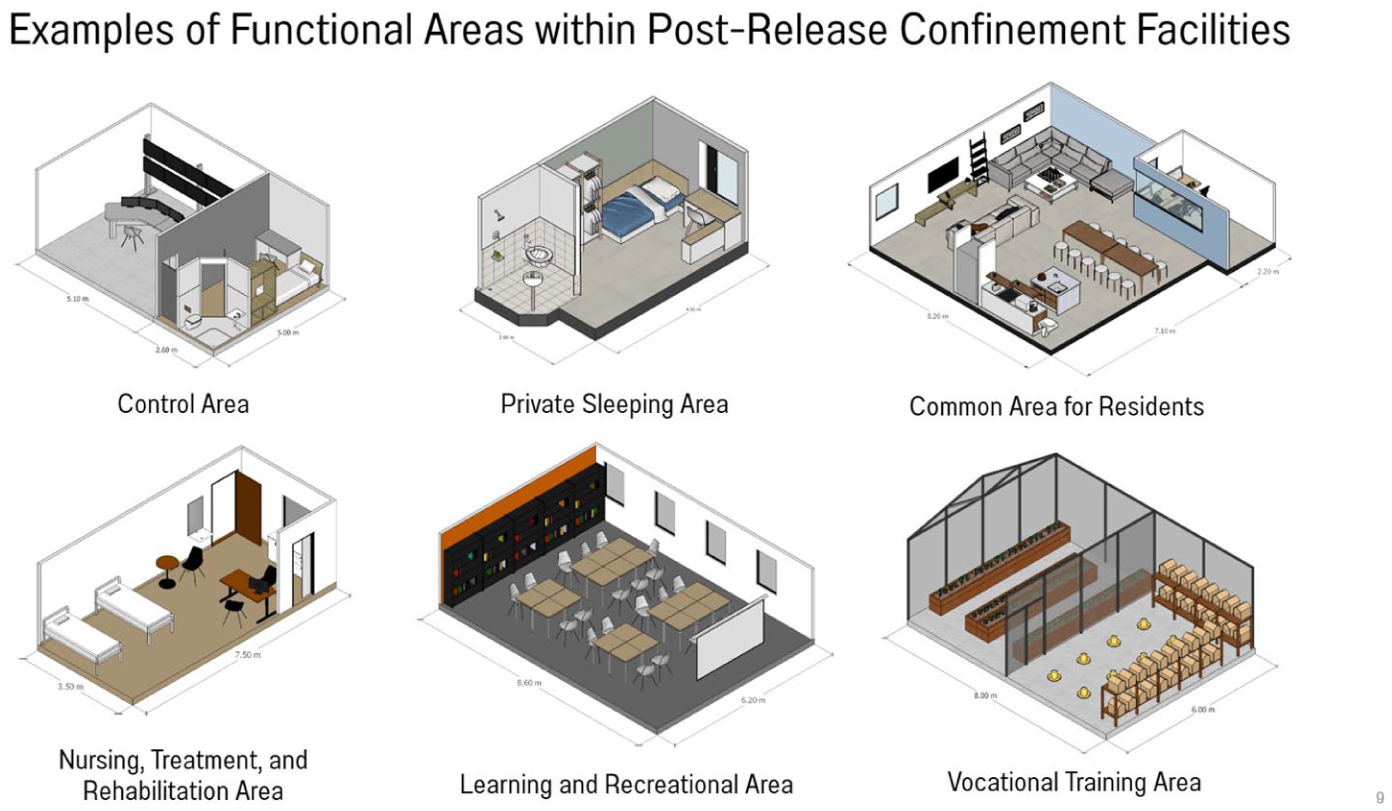
3D visualisations of sample areas.
All three workshops involved over 80 participants from diverse fields, including law, human rights, architecture and social work.
Importantly, this research was conducted under strict ethical guidelines. All members of the research team completed human subjects ethics training. In addition, ethical approval for conducting research with vulnerable populations was secured from the funding agency’s institutional review board. Before engaging with any participants, researchers provided clear explanations and obtained informed consent, ensuring confidentiality and minimising potential psychological harm, particularly when discussing sensitive topics.
Findings: Typologies of post-release confinement in Thailand
User profiles
The spatial design and level of control in post-release confinement facilities should vary based on the assessed risk level of individuals. These risk groups can be categorised as follows:
Red group (high-risk offenders): Individuals with ongoing psychiatric conditions that may pose a danger to society. This group requires individualised rehabilitation and intensive supervision.
Yellow group (medium-risk offenders): Individuals who should undergo rehabilitation through community-based processes in order to reduce public fear and facilitate social acceptance.
Green group (low-risk offenders): Individuals who are ready to reintegrate into society and do not require post-release confinement measures.
The characteristics of both the red and yellow risk groups significantly influence spatial configuration, confinement protocols, the frequency of supervision and the degree of participation in daily life. For high-risk (red) individuals, it is recommended that spaces be clearly delineated, strictly controlled and equipped with regulated entry and exit systems. In contrast, environments for medium-risk (yellow) individuals should be more flexible. These facilities can be located within community settings and should allow for a moderate level of social interaction.
Staff members are expected to fulfil two parallel roles: as both officers and mentors. These roles occupy a delicate space between that of a behavioural supervisor, responsible for monitoring, controlling and evaluating individuals to determine appropriate rehabilitative activities, and that of a peer-like advisor, who shares daily life with residents in an egalitarian manner. The latter role fosters familial-style relationships and promotes a sense of normalcy and community belonging. The officer role, however, tends to emphasise the need to intervene and de-escalate potentially violent situations when necessary.
Both roles offer positive potential in supporting the transition of ex-offenders, but they also carry risks of overregulation and unintended control. As a result, the relationship between ex-offenders and staff or mentors remains fragile, requiring a high degree of emotional intelligence and mutual trust.
External actors, such as family members, relatives, occupational therapists and community members, also play a critical role in building confidence among formerly incarcerated individuals as they prepare to rejoin their families and communities. Their involvement can help reduce psychological stress and foster the development of new meaningful relationships. However, a key challenge remains: cultivating public trust and finding an appropriate balance between ensuring ‘safety’ and enabling genuine ‘reintegration’.
Control in post-release confinement
Given that both red and yellow group ex-offenders still require oversight in non-prison confinement settings, environmental design for control has been proposed at two levels:
High-control, prison-like environments
For red group individuals who have been assessed as high-risk, strict control measures remain necessary. The repurposing of existing prison spaces, such as Zone 13 at Klong Prem Central Prison, currently operating as a post-release confinement unit, has been viewed as a practical solution. These spaces offer clearly defined boundaries and rigid control mechanisms, minimising the likelihood of unpredictable violence resulting from interactions with outsiders (Figure 4).
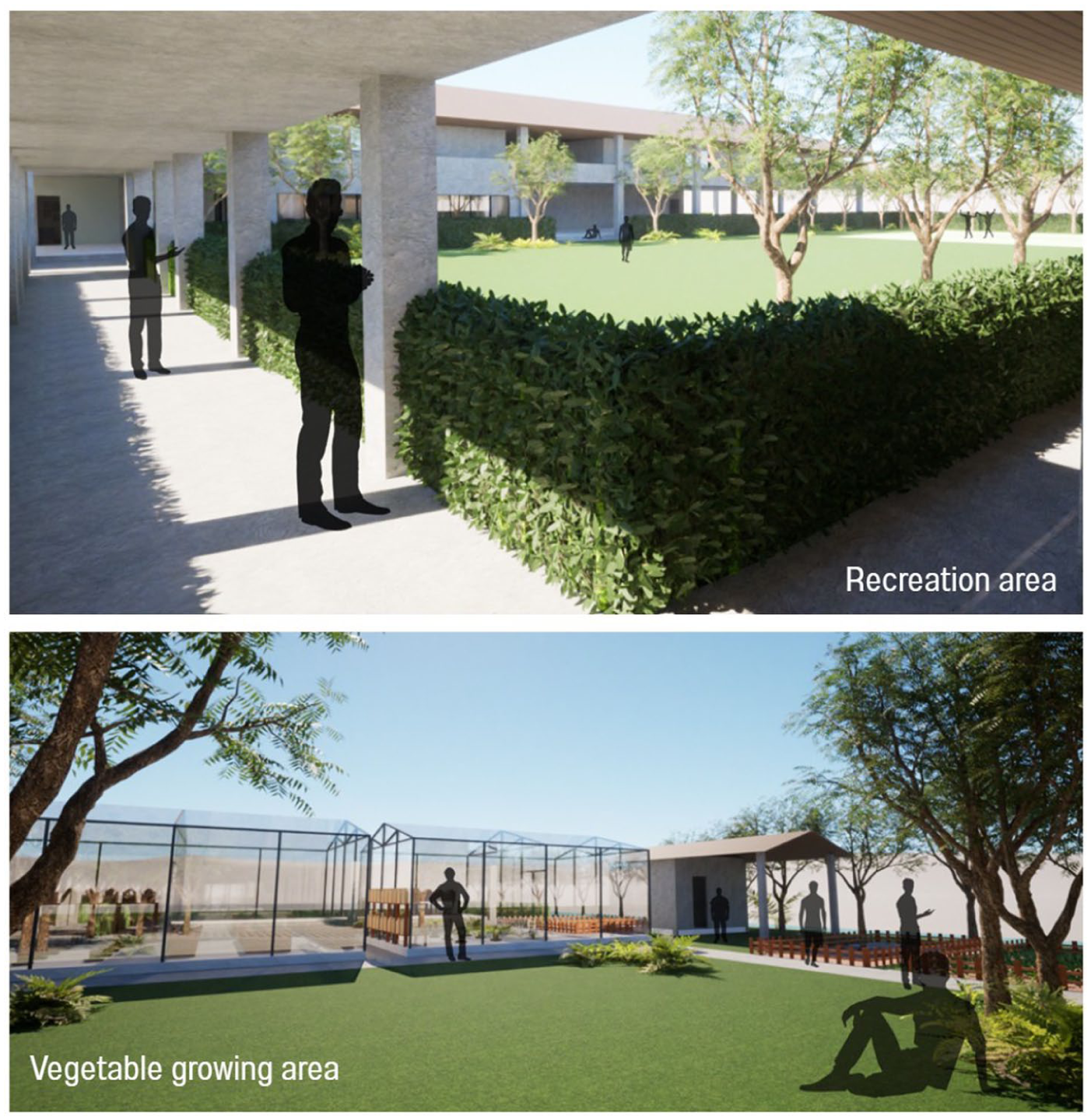
Redesigned image of Zone 13 proposed by the research team.
In terms of supervision, it has been recommended that trained personnel be deployed to manage potential incidents of violence. These staff members must also be capable of shifting into mentorship roles, demonstrating an understanding of the rights and needs of post-release individuals. Most ex-offenders in this group are assessed as having ongoing mental health challenges and a heightened risk of violent behaviour when exposed to certain triggers. As such, continuous psychological evaluation and treatment are required.
Under the 2022 Recidivism Prevention Act for Sexual or Violent Offenses, individuals must undergo risk assessments every 6 months. Continued confinement may not exceed 3 years (Office of the Judiciary, 2022). If the individual is determined to pose a reduced risk to others, the level of control may be downgraded or the person may be released into alternative forms of supervision.
Moderate-control environments
This type of confinement setting is proposed for the yellow group of ex-offenders. It is characterised by an environment that supports a relatively normal daily routine. The facility should be located within a community, whether newly constructed or adapted from an existing structure, and should have clearly defined opening and closing hours, along with a secure access control system. Entry by outsiders must be authorised in advance.
If the facility’s goal is to promote life skills through exposure to communal norms and shared responsibility, it is essential to establish ongoing activities that encourage interaction with the surrounding community.
Staff in these settings should primarily act as mentors, focusing on support and open dialogue rather than strict control. Mentors should receive training in care provision and emotional support and demonstrate an empathetic understanding of the ex-offenders’ backgrounds. In addition, community members play a crucial role in facilitating the safe reintegration of former offenders. To build trust, it is essential to communicate clearly with the public about the facility’s rehabilitative purpose. This helps assure the community that the space will not pose a threat or cause harm but, instead, will serve as an environment that enables individuals to reclaim a meaningful life.
Interior zoning of post-release confinement facilities
The primary objective of these facilities is to rehabilitate individuals who have previously committed offences. The concept of ‘normalcy’ serves as a guiding principle in determining the spatial functions of the facility. This aligns with legal requirements that such confinement must not resemble a prison. The facility is structured into five main zones:
Residential Area: This includes private bedrooms, communal spaces for socialising and cooking, and shared activities. A special containment room is also designated for individuals who are temporarily unable to manage aggressive behaviour.
Recreational Area: The area is designed for shared activities between residents and staff. This zone includes a communal dining space and a kitchen, gender-separated bathrooms, a first-aid room, a sports field, outdoor relaxation spaces and areas for spiritual activities.
Rehabilitation Area: This zone is organised according to rehabilitative purposes. Psychological rehabilitation includes individual and group therapy rooms. Educational and vocational training spaces include classrooms, skill-building workshops, greenhouses or animal husbandry areas and a small convenience store.
Family Visitation Area: This space comprises standard visitation rooms and certified overnight accommodations for family members authorised to stay as part of the rehabilitation process.
Security Area: This includes screening rooms, a Closed-Circuit Television control centre and staff accommodations (Figure 5).
Additional recommendations emphasise the need for clear community living rules within post-release confinement facilities. The physical environment should foster a welcoming atmosphere, such as by being located near natural settings or within local communities. A home-like ambience can help reduce stress, particularly among individuals with mental health conditions, as exposure to nature has been shown to positively support psychological recovery. While the level of control and spatial design in such facilities should differ from that of traditional prisons, strict regulations remain necessary to ensure the safety of nearby communities and society at large.
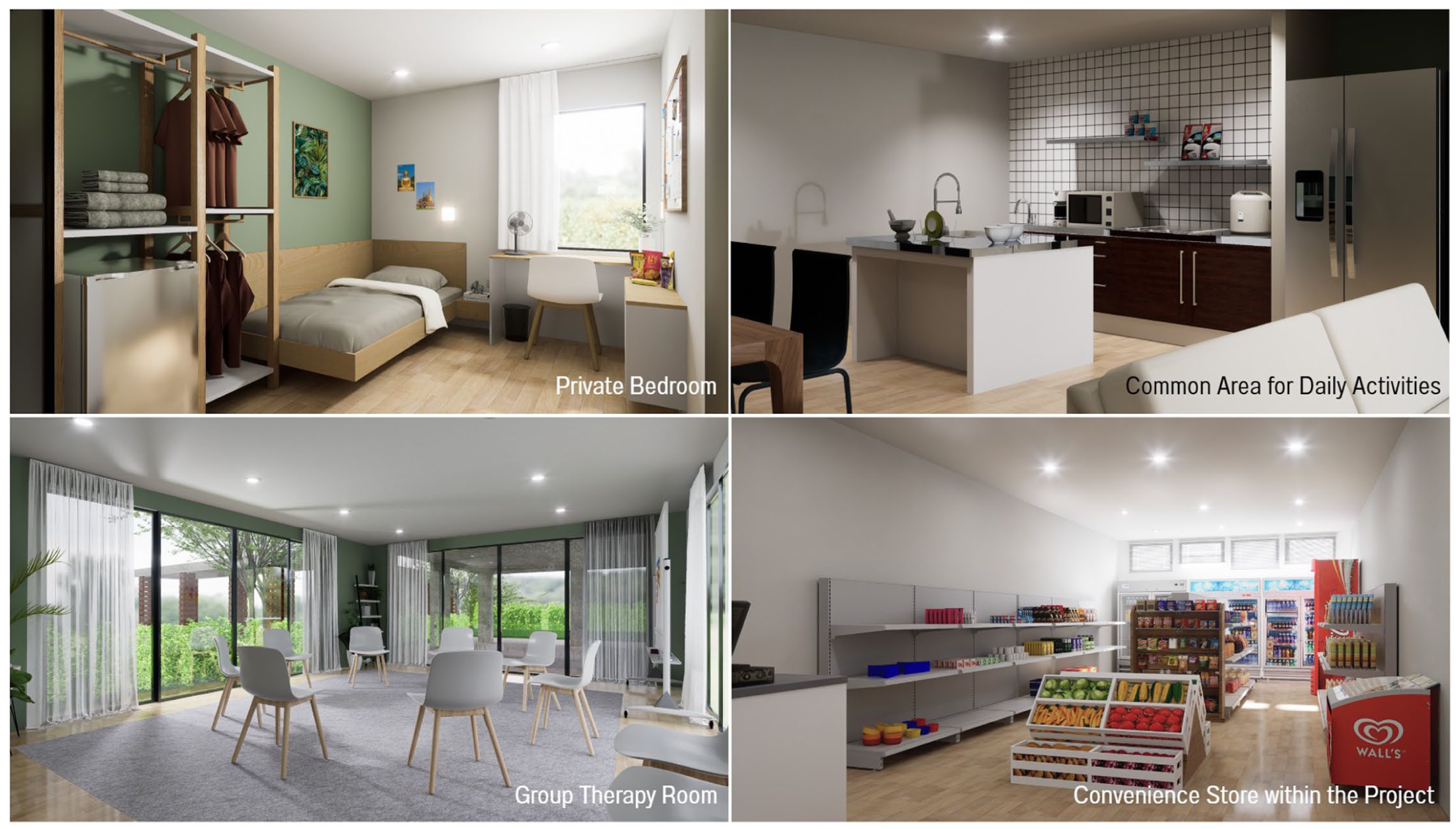
Image of interior rooms in the post-release confinement proposed by the research team.
Discussion
Balancing public safety and human rights
Striking a balance between public safety and the protection of human rights presents one of the most ethically challenging issues in the design of post-release confinement facilities, which are authorised to detain high-risk individuals. The notion of ‘risk-based control’ raises concerns over justice, the proportionality of sanctions and the role of the state. The 2022 Recidivism Prevention Act for Sexual or Violent Offenses permits continued confinement after the completion of a sentence, describing such detention not as a form of punishment but as a lawful measure for rehabilitation and public protection. Within this framework, architecture becomes a mechanism that materialises the logic of risk management. Space plays an active role in enabling and legitimising the state’s rationale for control (Beck, 1992; Foucault, 1977).
Post-release confinement thus represents a hybrid structure – neither a traditional prison nor a space of true freedom. It occupies a legal and architectural middle ground between incarceration and reintegration (Moran, 2013). The facilities examined in this study attempt to strike a balance through designs that prioritise rehabilitation, the restoration of social relationships and proximity to the community. Nevertheless, these environments remain under state control, with formal regulations, security systems and restrictions on liberty. This raises a fundamental question: How can one maintain a balance between protecting society from potential harm and respecting the individual rights of those subjected to such control?
What further complicates the situation is the shift towards preventive confinement, a departure from traditional punishment based on past offences. Post-release detention under this model is determined by assessments of future risk, drawing on psychological evaluations, criminal history or prior behaviours. Although the intention is to prevent harm to society, scholars have raised concerns about the dangers of control mechanisms based on probability and suspicion, rather than actual wrongdoing. Such practices risk infringing upon individual liberties and undermining the fundamental fairness of the justice system (Arrigo et al., 2020; Zedner, 2007; Zedner and Ashworth, 2019).
The design of such post-release confinement facilities must offer an ethical response to society. If non-prison confinement is to be accepted as a humane alternative, its physical design and internal management must genuinely reflect that value. This includes safeguarding privacy, dignity, access to rehabilitative resources and opportunities for meaningful living. Moreover, limitations on liberty should be proportionate and necessary, with clearly defined timeframes for confinement and transparent pathways towards full reintegration into society.
Although this model of post-release confinement reflects an effort to create a safe space for both society and former offenders, it treads a fine line between care and control. To prevent such facilities from becoming a new form of prison, the design process must be rooted in transparent, human rights–based participation. Environmental design is not merely a technical matter; it is a moral one. The participatory approach adopted in this study, beginning with the co-determination of operational frameworks, proposed activities and shared spatial functions, marks a critical step towards balancing public safety and human rights. It is hoped that this inclusive process will continue to deepen throughout future stages of architectural design, construction and implementation.
The meaning of non-prison confinement
Henri Lefebvre and Doreen Massey suggest that architecture is not merely a physical structure but also a language through which power, meaning and social status are communicated (Bower, 2016). Architecture does not simply accommodate activity; it can also convey messages of control, openness or even hope.
An examination of Zone 13 at Klong Prem Central Prison – currently repurposed as a post-release confinement facility – revealed these complexities. Although some physical modifications have been made, such as expanded sleeping quarters and communal areas where residents can engage in activities more freely, the site remains within prison walls. The symbolic image of incarceration cannot be entirely erased. Both residents and staff continue to experience the space as a prison, not only physically, through the presence of corrections officers, but also psychologically, through feelings of surveillance and disconnection from the outside world.
In contrast, expert recommendations gathered during the study proposed alternative settings, such as community-based treatment centres, rural agricultural rehabilitation sites or hospital-affiliated facilities that carry markedly different symbolic meanings. These environments more clearly communicate notions of ‘a fresh start’ or ‘returning to society’, as they are entirely removed from the prison context. Reframing the identity of ex-offenders as patients or supervised residents, rather than former inmates, helps reshape public perception.
Moreover, access to private living space, the involvement of family in the rehabilitation process and the integration of natural surroundings into the design contribute to psychological relief. These features foster a sense of normalcy and belonging, allowing residents to feel more connected to the outside world and reinforcing their identity as members of a wider community.
When a space is thoughtfully designed and situated outside the traditional context of punishment, architecture itself can become a tool for reshaping the public image of former inmates. It can act as a medium that reconnects individuals with their communities, transforming them from marginalised figures into citizens ready to take on new roles.
Nonetheless, a critical challenge remains: the element of control. Comprehensive CCTV systems, constant monitoring and rigid regulations can still evoke the appearance of a prison. These features may unintentionally communicate mistrust to the public. Architecture, therefore, must remain faithfully aligned with the goals of healing, capacity-building and reintegration. Reimagining a ‘place of control’ as a ‘place of opportunity’ lies at the heart of restorative justice in the present context.
Stigma, trust and community reintegration
Although post-release confinement facilities are designed to differ from traditional prisons, in function, atmosphere and rehabilitative intent, the social stigma attached to formerly incarcerated individuals often persists. Creating environments that do not resemble prisons may help reduce community resistance to some extent. However, the more difficult challenge lies in building trust, which is frequently undermined by fear, misunderstanding and deeply rooted social prejudice.
In such circumstances, families, neighbours and community members are not merely observers; they can serve as co-therapists, playing a vital role in restoring emotional stability and rebuilding social connections for formerly incarcerated individuals (Bazemore and Erbe, 2003; Mohamad et al., 2024). Providing spaces that allow for family visits and shared activities, such as communal kitchens, garden areas or overnight rooms for intimate visits, can help reestablish existing relationships and reduce feelings of estrangement on both sides. These interactions also foster new understandings of former offenders among surrounding community members.
Moreover, allowing communities to participate in planning and implementation processes is central to building trust at the societal level (Hirai, 2020; Saparniene et al., 2021). Such participation enables community members to understand the intentions behind the facility, alleviates fears and opens a space for them to propose ideas or models of co-existence that align with the local context. Participatory design, in this sense, is not merely about planning physical structures; it becomes a bridge between the state, former offenders and the broader community.
From an architectural perspective, design can serve as a mediator, shifting public perception from punishment towards acceptance and social reintegration. Creating spaces that are welcoming, open and integrated into everyday life, such as cafés, vocational training centres or green spaces within rehabilitation facilities, can help normalise the idea of community inclusion. Over time, these environments can embed the concepts of acceptance, belonging and returning to society into the daily fabric of community life in an organic and sustainable way.
Footnotes

Funding
The author disclosed receipt of the following financial support for the research, authorship, and/or publication of this article: The author gratefully acknowledges the Office of Justice Affairs for their collaboration in the research project. This article forms part of a broader study on the design of post-release confinement facilities for individuals under surveillance, conducted in accordance with the Measures for the Prevention of Repeat Offenses in Sexual or Violent Crimes Act, B.E. 2565 (2022). The research was supported by the Development of Technology and Innovation for Crisis Management in Controlled/Confinement Facilities programme, funded by the Office of the Science, Research, and Innovation Promotion Commission (TSRI), fiscal year 2023.
Declaration of Conflicting Interests
The author declared no potential conflicts of interest with respect to the research, authorship and/or publication of this article.