




Abstract
Human trafficking and ‘modern slavery’ cover a wide, varied and poorly delineated range of exploitative practices. Yet, conflating different issues risks obscuring important variation. The geographies of trafficking are surprisingly under-researched, particularly quantitatively. Informed by opportunity theories, we examined geospatial and demographic concentrations in trafficking and related exploitation formally identified in the United Kingdom (UK) over the decade 2009–2019. Taking an exploratory approach, we analysed individual-level data for 26,503 people officially identified as suspected or confirmed victims. Our results reveal a highly complex landscape that likely reflects multiple and intersecting contributing factors, including both systemic drivers and more immediate opportunity structures. Alongside considerable variation overall, we found heavy geographic and demographic concentrations – and notable interactions between variables. Our study emphasises the importance of disaggregation for analysis and responses and underlines the complex systems involved. Limitations notwithstanding, this novel analysis shows the value of large-scale, context-sensitive research into the geographies of trafficking.
Keywords
Introduction
Human trafficking (hereafter trafficking) and so-called ‘modern slavery’ are broad umbrella terms, covering a wide and poorly delineated range of exploitative activities: from various sexual offences to organ harvesting to domestic servitude (Chuang, 2014). Given how diffuse and contested this domain is, localised and disaggregated approaches to analysis and intervention are particularly crucial (Weitzer, 2015). While we appreciate that politics, priorities, funding and other factors shape what is (or is not) identified as trafficking 1 (Kempadoo and Shih, 2022; O’Connell Davidson, 2015), we nevertheless see considerable value in nuanced analyses of identified victimisations. Especially from a prevention and harm-reduction perspective, such research offers important insights into how known abuses have concentrated geospatially, demographically and within particular systems and structures. To date, there has been relatively little research into the geographies of trafficking in general, and robust quantitative geospatial analyses are especially rare (Cockbain et al., 2022; Smith, 2018).
Our results reveal both considerable overall diversity and stark concentrations of harm. They show intersections between individual-level demographics (e.g. nationality, age and gender) and trafficking-related experiences (e.g. exploitation types, sub-types and locations). Our results speak to the theoretical utility of opportunity theories in understanding trafficking activity, and also highlight the complex systems involved. They add nuance to long-held conceptualisations of trafficking as a gendered phenomenon, by showing, for example, distinct gendered patterning for different nationalities. They also underline the practical need for more subtly disaggregated approaches to analysis and intervention, nationally and internationally. Prioritising particularly common configurations of exploitation for targeted, ethical prevention might produce outsized effects in terms of overall harm reduction. While much recorded exploitation did occur in the United Kingdom, concentrations of exploitation locations abroad particularly emphasise the limits to responses focused on national policing. Overall, we hope these findings will inform and encourage efforts ethically to address both opportunity and systemic factors producing extreme harms.
Terms and definitions
Trafficking is defined here per international law (United Nations, 2000), which informed the original data collection. From 2015, many laws and responses in the UK were reoriented towards ‘modern slavery’ (Broad and Turnbull, 2019): an even vaguer umbrella category that also encompasses slavery, servitude and forced or compulsory labour. Where avoidable, we tend to refer to trafficking (and related exploitation, if appropriate) rather than ‘modern slavery’ because of serious concerns around the latter term and its associations (Chuang, 2014; O’Connell Davidson, 2017). We use the terms victim and victimisation: in line with systems of classification within the National Referral Mechanism (NRM) and broader conventions of crime-related analysis. That said, we appreciate that some people prefer alternative terms (e.g. survivor and person with lived experience of trafficking).
Context: Messy issues, neglected geographies and the importance of disaggregation
Trafficking is a serious human rights abuse that can cause considerable harms (e.g. Ottisova et al., 2016). It has been the subject of intense political focus and investment, but there are also growing concerns about the ethicality of many mainstream anti-trafficking interventions and lack of evidence for their effectiveness (e.g. Davy, 2016; Global Alliance Against Trafficking in Women, 2007; Kempadoo and Shih, 2022). There is an increasingly clear case for looking beyond traditional criminal-justice-centric responses alone to alternatives such as labour-rights-based responses (e.g. LeBaron, 2020) and public-health-focused approaches (e.g. Such et al., 2021). Meaningful prevention and harm reduction requires, however, a better understanding of how risks and harms of trafficking and related exploitation are distributed.
Although more than a crime issue alone, trafficking involves complex process-oriented criminal violations of basic human rights. It encompasses multiple, interconnected and often spatiotemporally-dispersed actors, activities (some criminalised, others not), places, processes etc., all embedded in broader legal, economic and social structures (Cockbain and Tompson, 2024). Importantly, trafficking is not just an issue of insecure or irregular migration status. As elsewhere in Europe, many of those people formally identified in the UK as trafficking victims have been European Union (EU) nationals – who (pre-Brexit) had freedom of movement and ready access to the regular labour market (Cockbain and Bowers, 2019; Cockbain et al., 2022). As important as hostile migration regimes no doubt are in producing opportunities for exploitation, they alone do not sufficiently account for the patterns observed.
Opportunity theories of crime offer a promising middle-range theoretical framework that can complement macro-level analysis of systemic drivers of harm. Recent years have seen growing interest in applying opportunity theories to study trafficking (e.g. Cockbain, 2018; Cockbain and Bowers, 2019; de Vries, 2022; Mletzko et al., 2018; Savona et al., 2014). With roots in environmental criminology, opportunity theories (broadly defined) position crime as a product of a person-situation interaction, in which individuals’ varied disposition to commit certain offences interacts with the perceived effort, risks, rewards etc. presented by their immediate environment (see, e.g. Wortley, 2012). Opportunity theories encompass both the physical environment in which crime occurs and social opportunity structures: showing how crimes can be facilitated, sustained and spread through social networks, shared activities and resources, group norms etc. (e.g. Cockbain, 2018; Kleemans and De Poot, 2008; Kleemans and Van de Bunt, 1999). Importantly, social opportunity structures are also spatially produced and constrained (e.g. proximity affects decisions about where to socialise), and vice versa (e.g. colonialism’s legacies can leave enduring trade links, linguistic and diaspora ties between otherwise distant locations).
A central tenet of opportunity theories is that crime (in general and its specific variants) is not uniformly distributed, but rather concentrates on space, time, people and targets (Natarajan, 2017). A now substantial literature demonstrates that crimes cluster where immediate opportunities present (Natarajan, 2017). To be useful, analyses need to be maximally specific about the particular crime issue and spatiotemporal context in focus. For this study, that meant thinking beyond ‘trafficking’ as a catch-all to explore disaggregated ways in which victimisation concentrates and focusing on a single-country case study. Trafficking datasets from different countries are rarely directly comparable, limiting the utility and validity of global analyses (see, e.g. Weitzer, 2015).
Traditionally, trafficking-related research and policy both focused enormously on sexual exploitation, often to the exclusion of other forms of exploitation (Cockbain et al., 2018; Weitzer, 2015). There is now much clearer recognition, however, of the diverse contexts and markets in which trafficking occurs (United Nations, 2022). Studies have repeatedly emphasised that disaggregation matters, documenting differences between – and within – different trafficking ‘types’ in terms of victims’ gender, age, region of origin etc. (Cockbain and Bowers, 2019; Cockbain et al., 2022; Efrat, 2016; Rose et al., 2021). The intersectionality of different factors is increasingly recognised too. The initial policy framing of trafficking as primarily a (sexual) threat to women and children is unsustainable since it is increasingly clear that men are also victimised at scale (Cockbain et al., 2018; United Nations, 2022). Despite their limitations, law enforcement and other official datasets are a promising but oft-neglected source for trafficking research and can offer important insights into patterns in (identified) victimisation (Bjelland, 2017; Cockbain et al., 2020) and into skews and blind spots in official responses (Farrell and Pfeffer, 2014). Difficulties accessing such data, however, have been a long-standing barrier to research (Cockbain and Kleemans, 2019).
Compared with the demographics of trafficking victims/survivors, the geographies of trafficking are even more under-researched (Cockbain et al., 2022). That is striking given trafficking’s fundamental spatiality (Blazek et al., 2019; Yea, 2021). The literature skews qualitative: quantitative geospatial analyses are typically limited to crude country-level maps produced by official agencies (Cockbain et al., 2022). Alongside data-access challenges, only limited geospatial data are even collected as standard (Cockbain et al., 2022; Smith, 2018). That has likely contributed to the disconnect between research into migration patterns at large and trafficking more specifically. Where more detailed mapping exercises exist, they are not typically based on actual trafficking victimisation and often overpromise wildly: for example, geospatial studies that map ‘prostitution’ arrests (Helderop et al., 2022) or locations of brick kilns (Boyd et al., 2018) as if they were reliable proxies for trafficking or forced labour events. There are vanishingly few studies using confirmed trafficking data points for quantitative geospatial analysis: notable exceptions include a UK study presenting methodological challenges identified through mapping labour trafficking (Cockbain et al., 2022), and a US study focused on spatial concentrations in sex trafficking in Austin, Texas (Mletzko et al., 2018). Both indicate strong spatial concentrations.
In this article, we seek to understand demographic and spatial patterning in trafficking and related victimisation identified through one of the world’s largest and most detailed trafficking datasets: the UK’s NRM. The NRM was established in April 2009 as the UK’s central system for the identification and support of victims of trafficking. In 2015, it was expanded to cover other forms of ‘modern slavery’. The system has since changed, including ownership shifting to the Home Office in April 2019 and ongoing rollbacks in eligibility and entitlements (see, e.g. Mullan-Feroze et al., 2023). During our data period, the National Crime Agency (NCA) received and registered all referrals of potential victims of trafficking and related exploitation. The NCA processed decisions themselves for virtually everyone from the European Economic Area (EEA) and transferred others’ cases to UK Visas and Immigration (UKVI) for assessment. Decision-making followed a two-stage process: if case handlers ‘suspect but cannot [yet] prove’ victimisation (a positive ‘reasonable grounds’-decision), they then collected further information as needed to decide on the balance of probabilities whether to confer official ‘victim’ status (‘conclusive grounds’-decision). Adults needed to consent to referral. 2 For more about the system, see, for example, Cockbain and Bowers (2019) and Findlay (2022). While the NRM has considerable shortcomings as a source of support and is not a neat reflection of trafficking at large (see Limitations), its data are nevertheless among the best in existence for fine-grained research into concentrations in identified trafficking victimisations.
Aim and research question
Our overarching aim was to explore the geographies of trafficking and related exploitation identified through the UK’s NRM over its first decade. Informed by opportunity theories, we framed our research in deliberately broad and exploratory terms around the question of concentration, asking ‘how does identified trafficking and related victimisation concentrate geospatially and demographically?’.
Methods
Sampling and sample
We secured access from the NCA to anonymised individual-level data for the total population of referrals over the decade from 1 April 2009 to 31 March 2019 (n = 34,785). We set our inclusion criterion as those resulting in at least a positive initial decision, choosing this lower threshold to cover everyone for whom the state decided there were at least ‘reasonable grounds’ to suspect victimisation involving trafficking or, since 2015 only, related exploitation (other ‘modern slavery’). 3 We decided against the higher threshold of positive ‘conclusive grounds’ decisions because of increasingly lengthy waiting times to final outcome and long-standing concerns that non-EEA nationals are systematically less likely to be accorded victim status (Findlay, 2022). Around a quarter of the initial dataset (23.8%, n = 8282) did not meet the inclusion criterion. 4 That left 26,503 cases for analysis: 11,807 (44.5% of the cases included) had been officially designated as victims (positive ‘conclusive grounds’ decision), 8857 (33.4%) were still awaiting final decisions, 5838 (22.0%) had negative ‘conclusive grounds’ decisions and 1 person had sadly died before receiving the outcome.
Analysis
We cleaned the data and recoded variables as necessary for analysis, including to enable consistency where categorisation had changed over time. Because of the free-text format for a key variable (exploitation location), this process also included time-consuming semi-manual recoding of locational data. We then conducted exploratory data analysis (Tukey, 1977), largely descriptive in nature. 5
Ethics
UCL Research Ethics Committee approved the study (reference: 5160/002). We took care to uphold ethical and data protection standards, used already-anonymised data and focused on patterns, not individuals.
Limitations
While the NRM has many strengths for this type of research, important limitations should be understood. The NRM is neither a comprehensive nor impartial reflection of trafficking and related exploitation. Consequently, our results are not generalisable to the broader hidden population of victims/survivors (itself fuzzy-edged). Sources of potential bias could include: limited and variable awareness of the NRM; inconsistent conceptualisation, identification and reporting of trafficking; self-selection (adults only) and skewed decision-making (Cockbain and Bowers, 2019; Cockbain et al., 2020; Findlay, 2022). While the variables analysed had high completion rates, the data may contain inaccuracies: they derive from a combination of self-report, third-party accounts, and case managers’ overall assessment. Our sample contains unique ‘cases’ (referrals) but not necessarily unique individuals (repeat referrals are possible). There is also clustering because people can be trafficked together. Since the data were pre-anonymised and linkages are not systematically recorded, we could not identify or control for repeat referrals or clustering. Our results provide a snapshot of victimisation identified over a decade but not necessarily a contemporaneous picture of harm, due to possible time lags from exploitation ending to its recording (Lightowlers et al., 2024). Relatedly, an unidentifiable proportion of adults will have been referred for exploitation they experienced as children. Limited by the data, we mapped at high levels of spatial abstraction, potentially obscuring micro-geographical variations, and detailed temporal analyses were not possible.
Results
This section covers in turn concentrations in victimisation by nationality, exploitation types, age and gender, exploitation locations and overall profiles. For brevity, we do not repeat ‘confirmed or suspected’ when discussing victims/victimisation, but it should be taken as implicit. The data analysed in this article cover all people referred to the NRM from April 2009 to March 2019 who received a positive ‘reasonable grounds’ decision. The number of such referrals increased substantially during that period (Figure 1): in 2010, there were 36 such referrals per month, while by 2018, there were 559 per month. This means that 51.8% of cases in the data were from 2017 onwards (the final 27 months of data) and our results are more representative of victimisation identified towards the end of the period. The other notable change over time was that the proportion of UK nationals increased from 3.3% (14 of 427) in 2010 to 24.7% (1659 of 6708) in 2018. The increase in cases over time meant it was not possible to conduct detailed analysis for different time periods. Instead, we analysed the 10-year period as a whole.
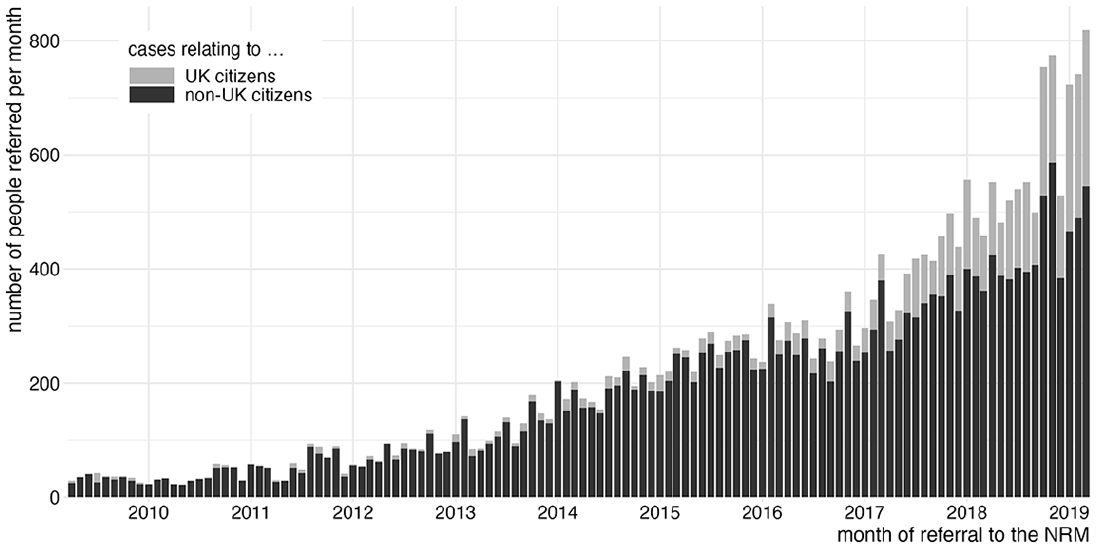
Monthly number of people referred into the UK’s NRM.
Of the 26,503 people who received at least a positive reasonable-grounds decision, 9928 (37.5%) were recorded as cases of sexual exploitation, 7053 (26.6%) of labour exploitation, 5016 (18.9%) of criminal exploitation, 2996 (11.3%) of domestic servitude, 19 (0.1%) of organ harvesting and 1491 (5.6%) as cases for whom the exploitation type was not recorded. Reflecting the source data and international norms, we use these terms throughout but do not mean to imply that domestic work or consensual adult sex work, for example, is not a form of labour. Overlap between types can occur in practice, but each person was recorded against one type only (presumably whatever referrers/case managers considered the primary issue).
Nationalities of people identified as victims
UK nationals made up 16.3% (n = 4309) of people in the dataset. The other 83.7% (n = 22,188) were non-UK nationals from 161 other countries (see Figures 2 and 3). 6 Slightly more than half of non-UK nationals were from 4 countries – Albania (19.9% of total non-UK nationals), Vietnam (13.6%), Nigeria (7.8%) and Romania (6.0%) – and three quarters were from 12 countries (Albania, Vietnam, Nigeria, Romania, China, Poland, Eritrea, Sudan, Slovakia, India, Ethiopia and Pakistan). This heavy concentration remained after controlling for the population size of each country.
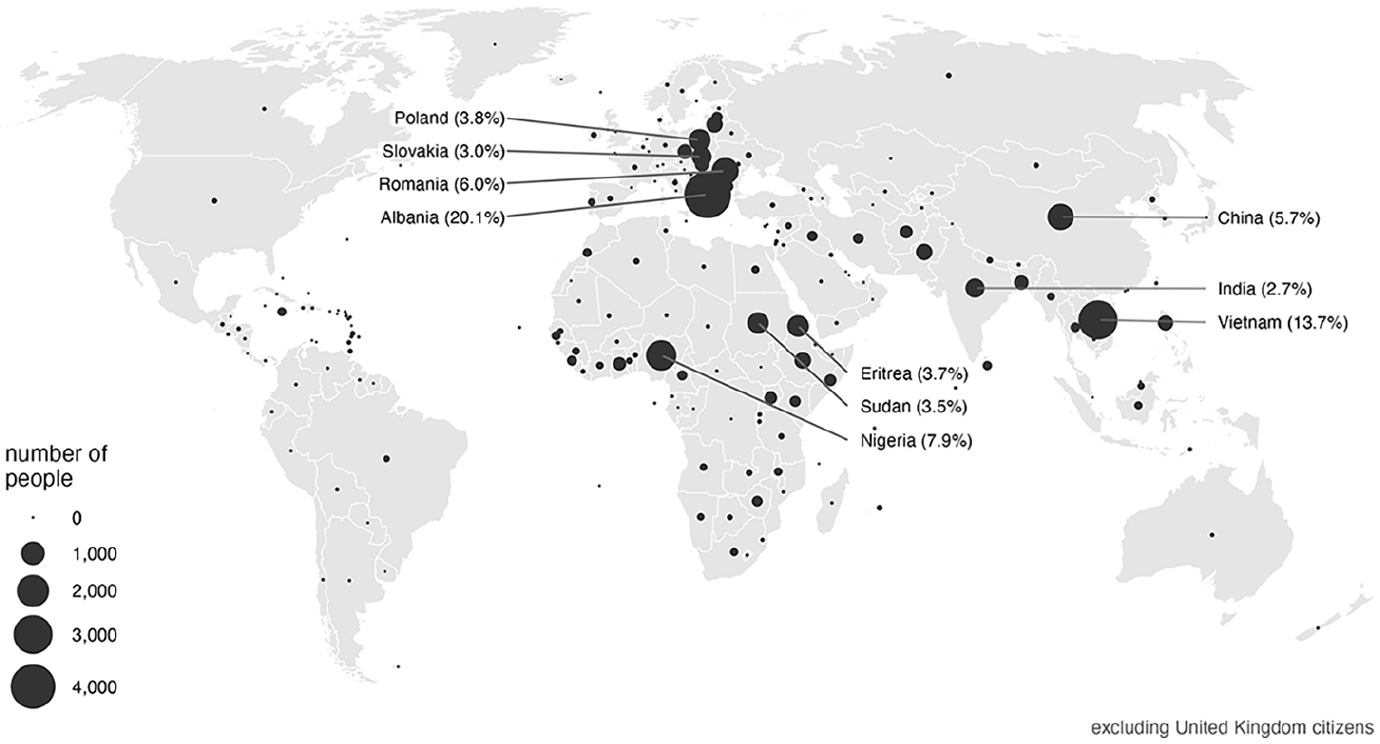
Nationalities of people identified as victims through the NRM.
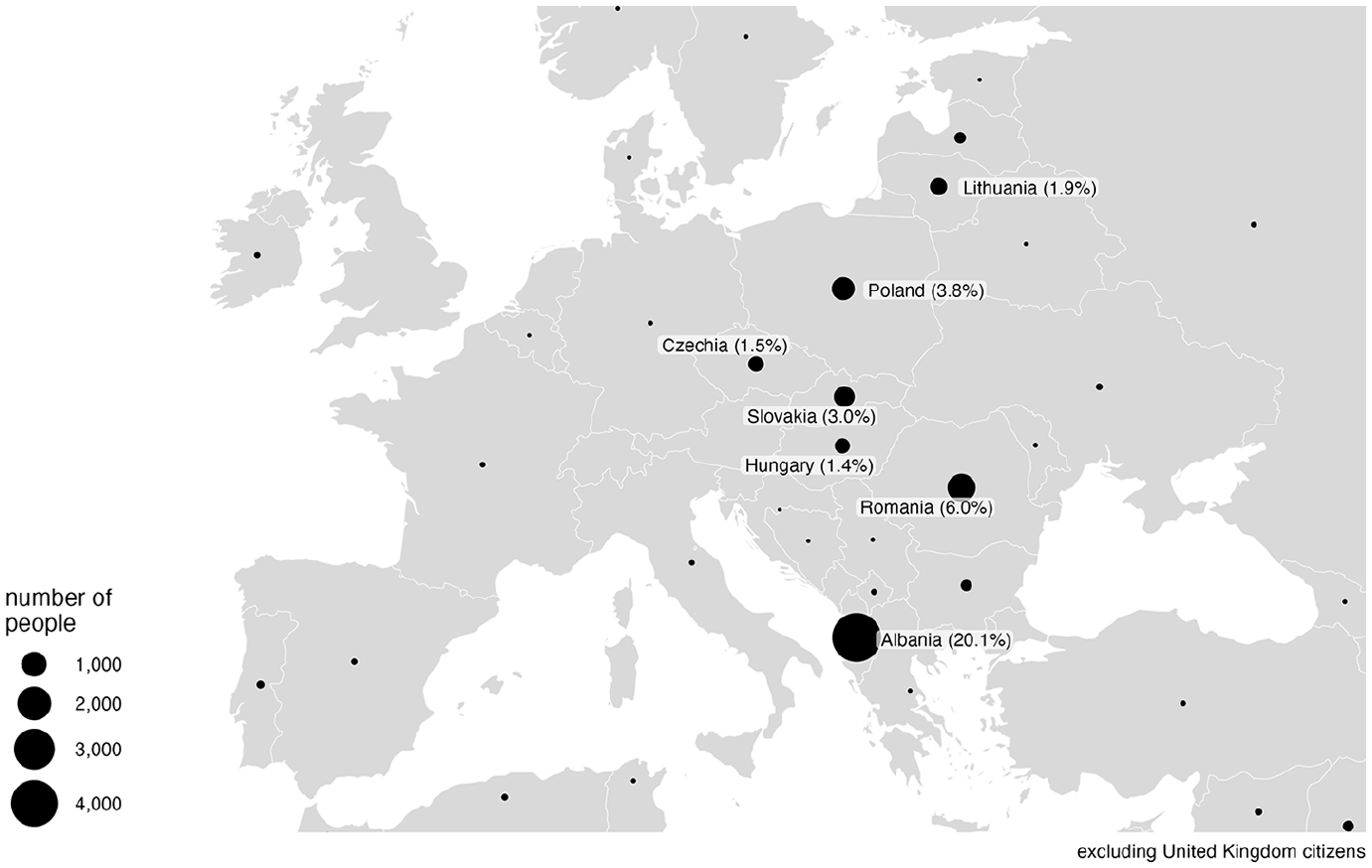
Nationalities of people from European countries identified as victims through the NRM.
Figure 4 shows the number of people from different countries in each of the four top-level exploitation categories present in the NRM data. The type of exploitation recorded varied substantially across nationalities. Almost all cases involving Sudanese nationals (94.7%, n = 715) related to labour exploitation, while for Albanian nationals (73.0%, n = 3089) sexual exploitation dominated. Cases involving some other nationalities related to a wider variety of exploitation types: for Vietnamese nationals, for example, criminal (38.1% of Vietnamese referrals, n = 1018), labour (31.7%, n = 847) and sexual exploitation (23.4%, n = 625) were all common.
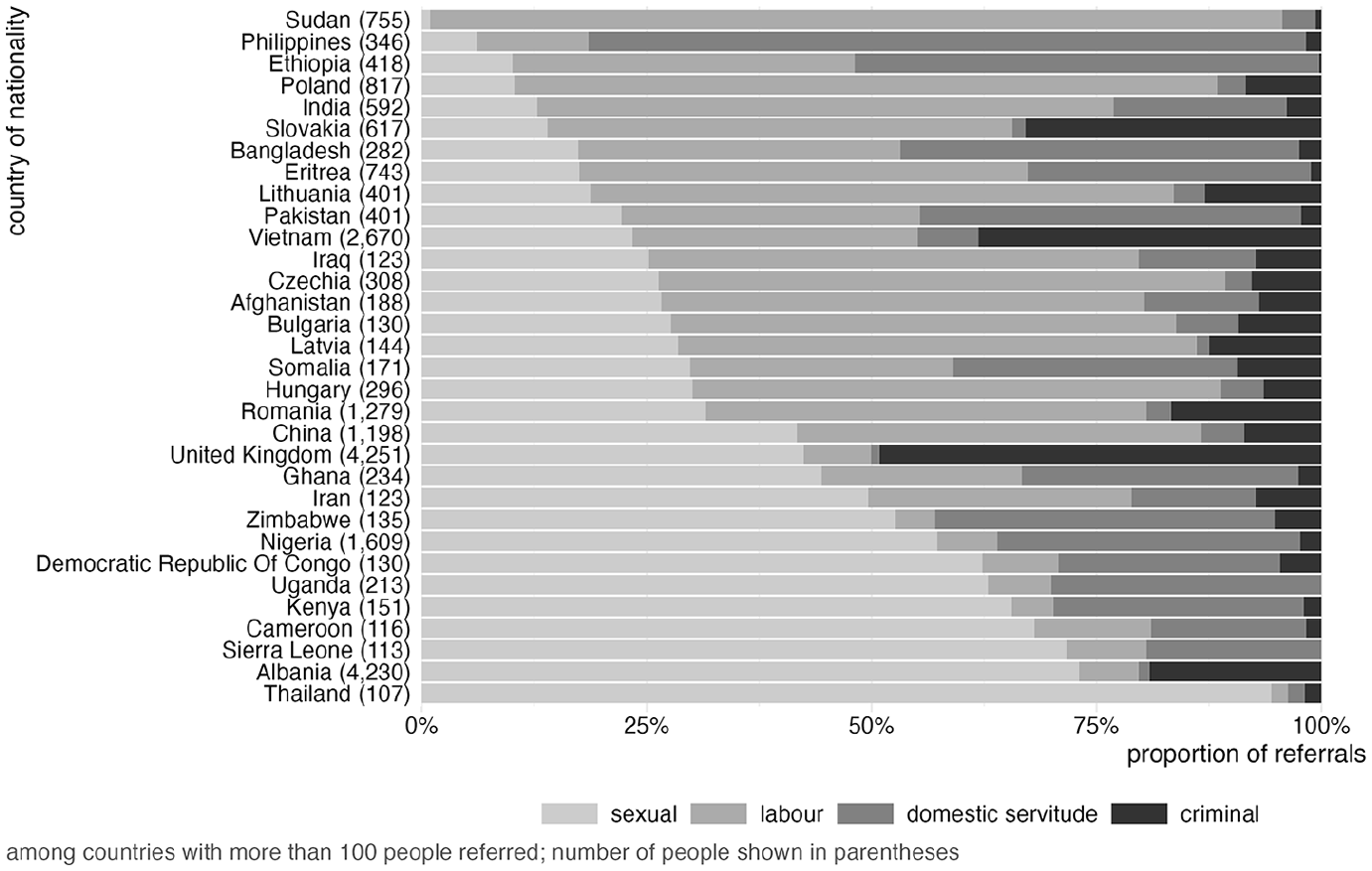
Differences in exploitation types between nationalities.
Concentrations of exploitation within nationalities can also be seen in more detailed categories of exploitation. Figure 5 shows different types of criminal exploitation involving people of selected nationalities. Among the 1018 Vietnamese victims of criminal exploitation in the dataset, 91.0% (n = 926) related to cannabis cultivation. Meanwhile, 95% (n = 192) of the 203 cases of criminal exploitation of Slovakians were related to benefit fraud. Some sub-types of exploitation were dominated by referrals of nationals of a single nationality: for example, 88.4% (n = 1408) of cases of county-lines exploitation 7 involved UK nationals.
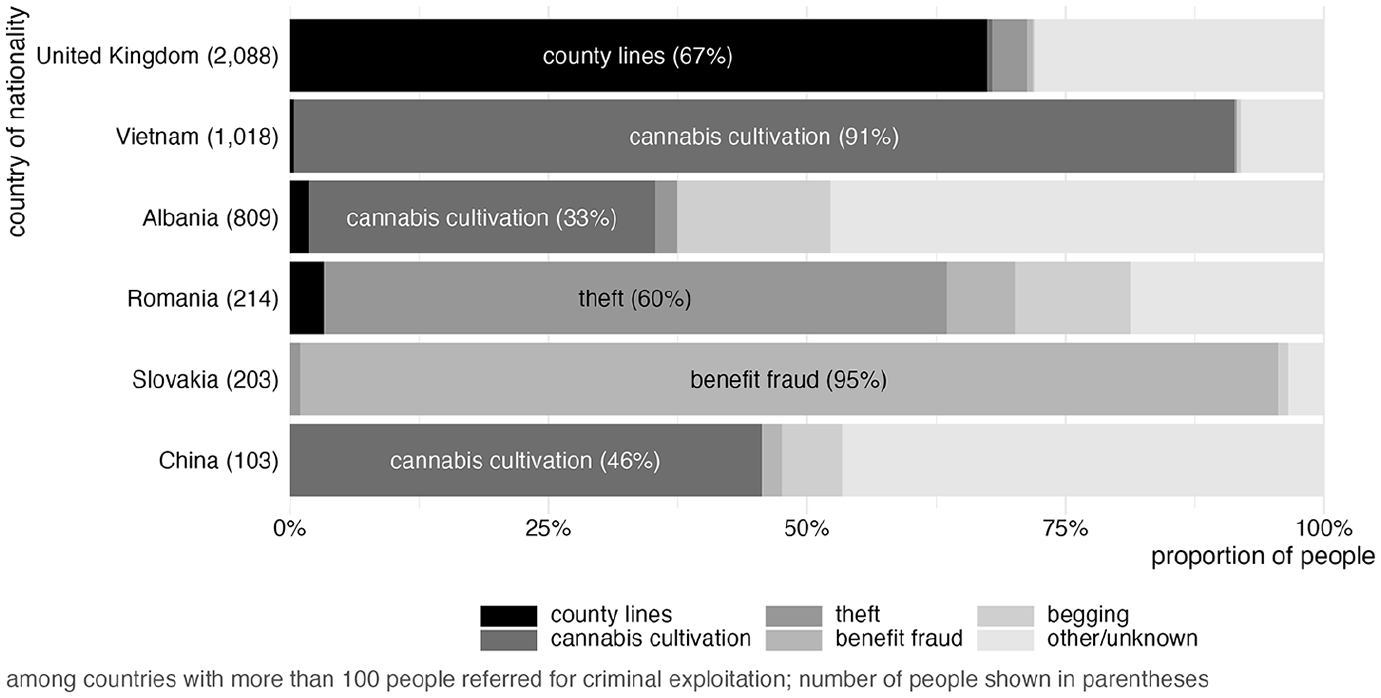
Differences in criminal exploitation types between nationalities.
Figure 6 shows similar differences for labour exploitation: 60% of the 715 Sudanese victims of labour exploitation related to agricultural roles, 27% of the 847 Vietnamese labour exploitation victims were in the service sector (e.g. in nail bars or car washes) and 25% of the 539 Chinese victims of labour exploitation related to the hospitality industry (including catering and hotel cleaning).
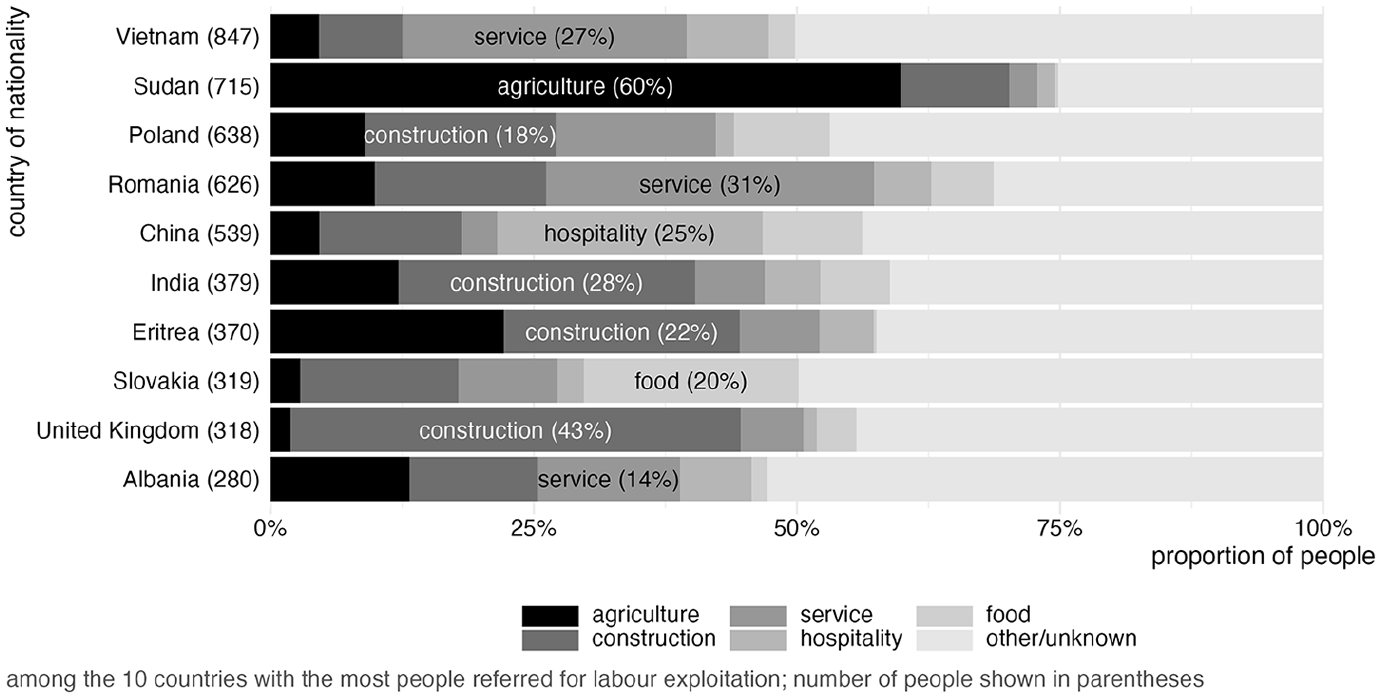
Differences in labour exploitation types between nationalities.
Demographics of people identified as victims
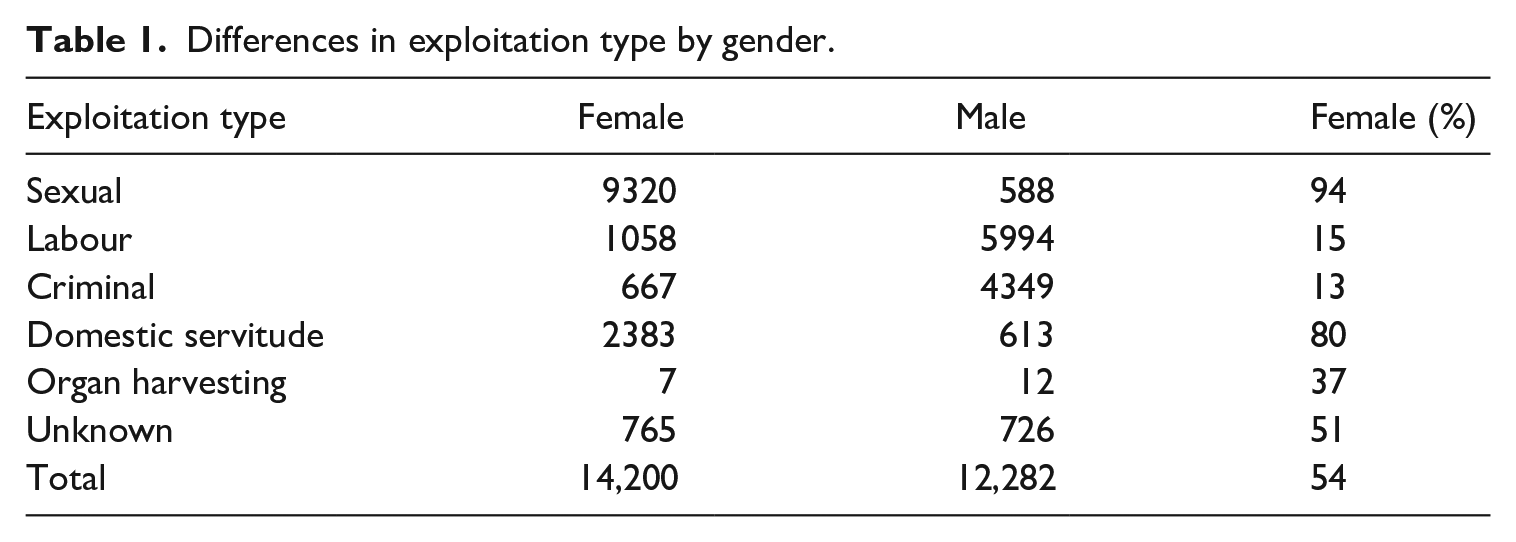
Of the 26,503 people in the dataset, 53.6% were recorded as female, 46.3% as male and 21 people as transgender. 8 Certain nationalities within the sample were overwhelmingly a particular gender: for example, 97% of the 770 Sudanese nationals in the overall dataset were recorded as male, while 91% of the 351 citizens of the Philippines were recorded as female. Exploitation type differed by gender: for women and girls, 65.6% of cases related to sexual exploitation and 16.8% to domestic servitude, while for men and boys, 48.8% of cases related to labour exploitation and 35.4% to criminal exploitation (Table 1). There were, however, also pronounced differences between nationalities (Figure 7).
Differences in exploitation type by gender.
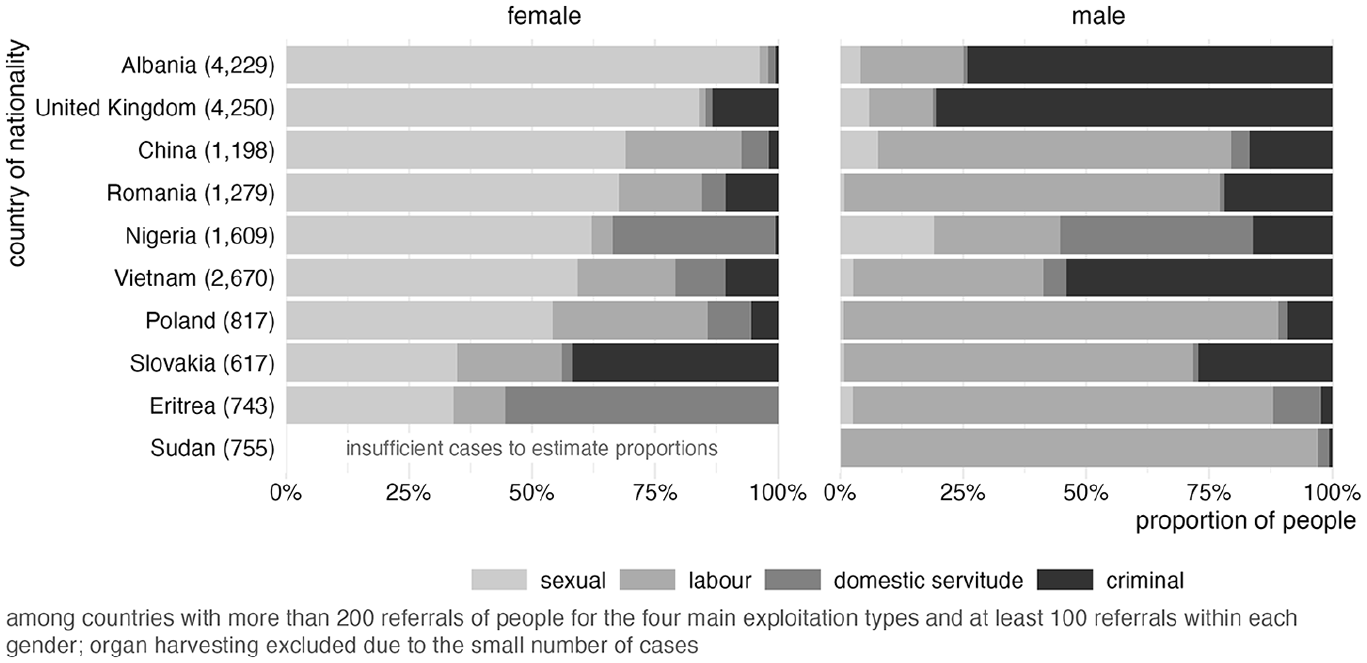
Differences in exploitation type by gender and nationality.
There were notable differences between nationalities in the recorded age at referral to the NRM. For example, the median age of people from Afghanistan was 17 years old, while that of people from the Philippines was 37 years. There were also substantial differences within nationalities by exploitation type (Figure 8). For example, the median age of British victims of criminal exploitation was 16 years (and only 10% of them were 21 or older), while British victims of labour exploitation had a median age of 35 years. Across all exploitation types, 78.7% of UK nationals were under 18 (n = 3393), while 21.3% were 18 or over (n = 916). There were also differences between nationalities within exploitation types: for example, for criminal exploitation, the median age of Albanians was 17 years, while for Chinese nationals, it was 31 years.
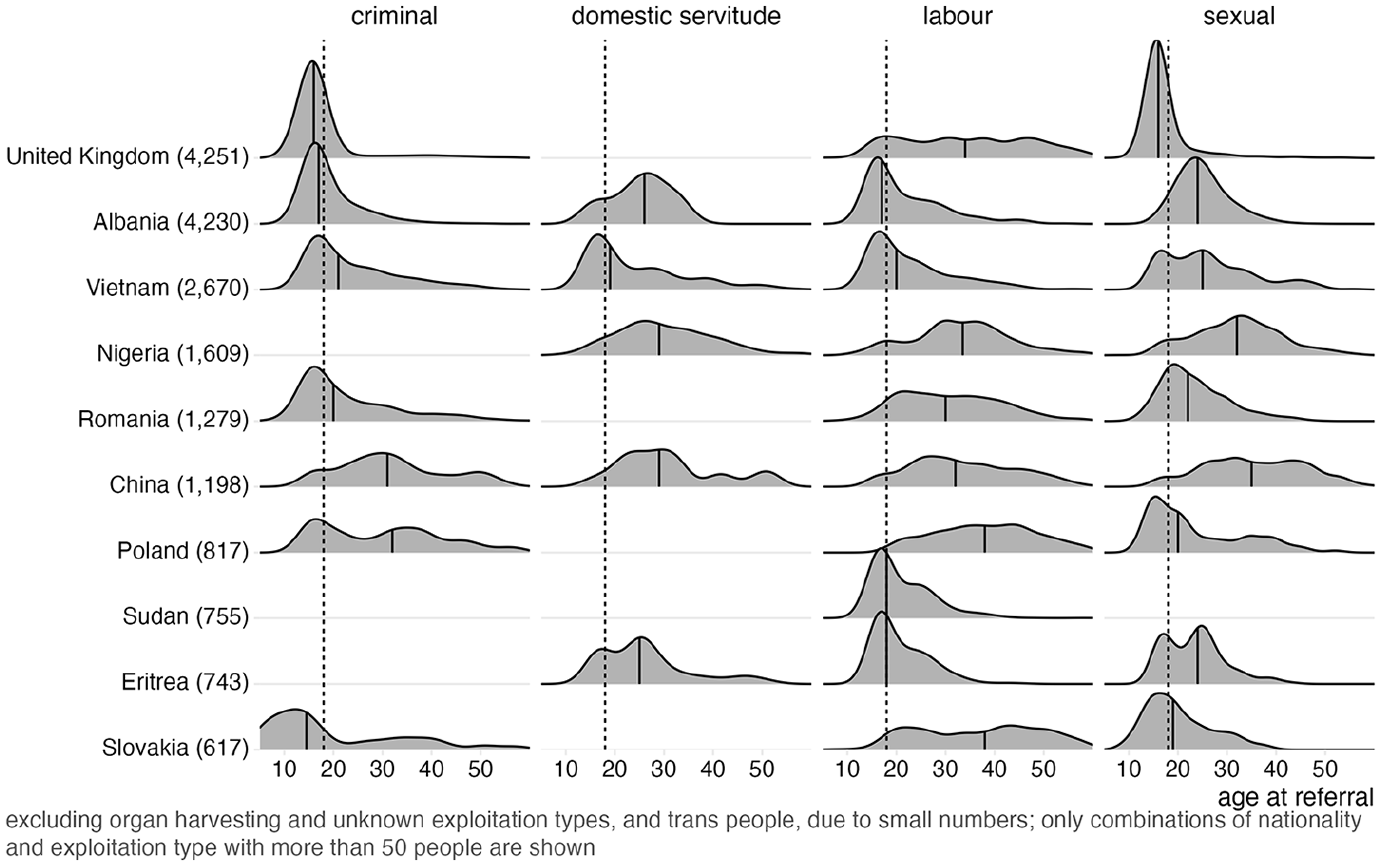
Differences in exploitation type by age and nationality.
Country-level exploitation locations
NRM data include a field giving the location in which the person referred was exploited. This is a free-text field and may be left blank (it was completed in 84.9% of cases). In almost all cases, a single location was given, and in the majority of cases, that location was the name of a country. Where a more detailed location was given (e.g. the name of a city), this was recoded to the name of the relevant country. Where a less-detailed location was given (e.g. ‘West Africa’, or ‘Caribbean’), cases were excluded from the analysis in this section. In 19 cases (0.07% of the total), two exploitation locations were given – these cases were excluded from the analysis of exploitation locations. Overall, 19,649 cases (74.1% of the total) included an exploitation location suitable for analysis. The single exploitation location given in most cases is unlikely to fully capture the complexity of trafficking experiences. People may have been exploited in their home countries, exploited separately in a third country/countries and then exploited again in the UK. Nevertheless, the available data can provide valuable insight into trafficking patterns.
Figure 9 shows (for selected countries) the proportion of people recorded as exploited in their country of nationality, a third country, or the UK. This shows three distinct groups of nationalities. In each of the EU member states at the top of Figure 9, at least 80% of victims were recorded as being exploited in the UK. Conversely, fewer than 20% of nationals of each of the countries at the bottom of Figure 9 were recorded as being exploited in the UK, with exploitation instead taking place either in third countries (for Eritreans, Ethiopians and Sudanese) or in a mixture of the person’s home country or a third country (for Albanians, Iranians and Iraqis). The picture within the group of countries in the middle of Figure 9 appears more heterogeneous, with recorded exploitation distributed across countries of origin, third countries and the UK.
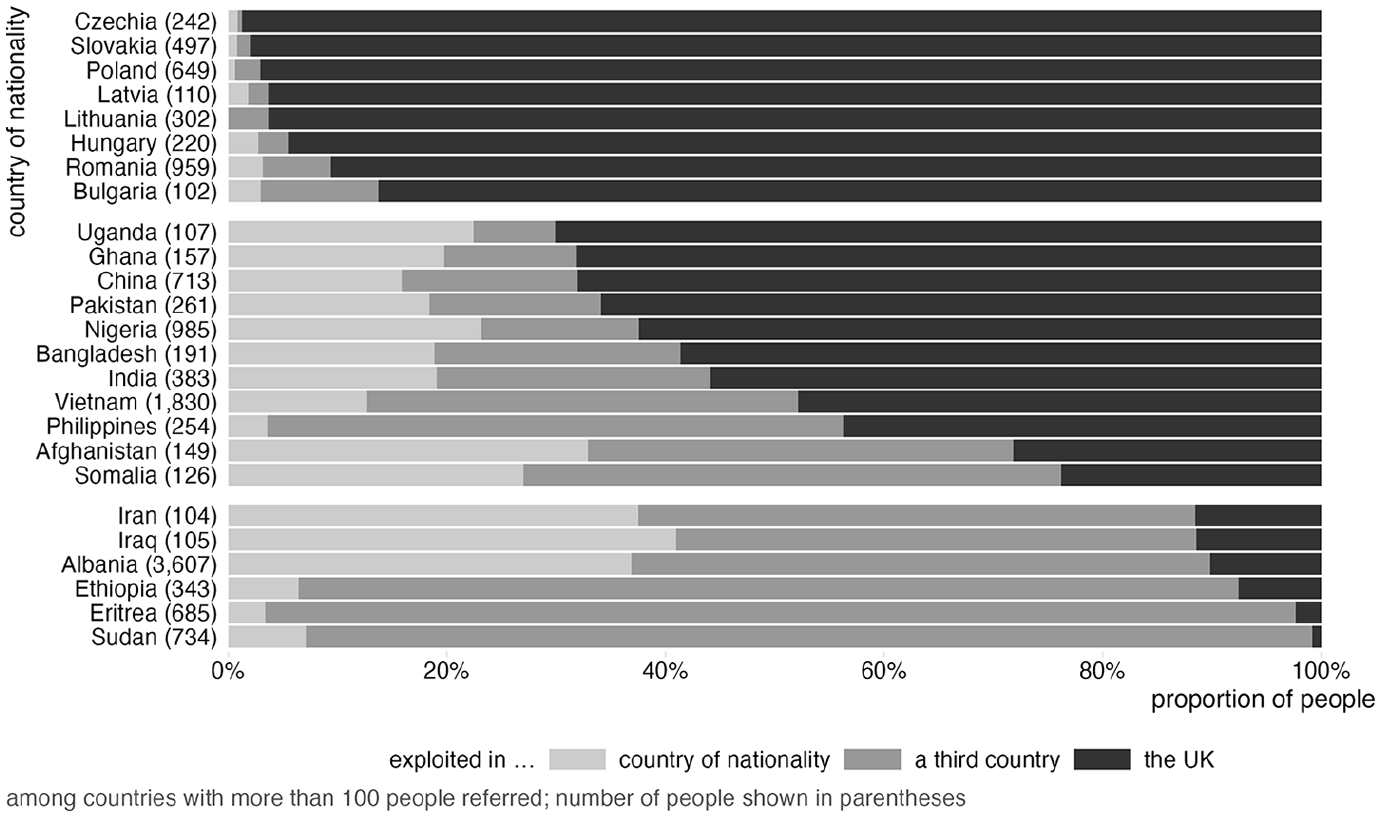
Differences in where people were exploited by nationality and exploitation type.
The most common third countries of exploitation were Libya, Italy, Belgium and France (Figure 10). In most third countries, sexual exploitation predominated, but 86.2% (n = 1083) of non-Libyans recorded as being exploited in Libya were linked to labour exploitation. A majority of third-country nationals recorded as being exploited in Saudi Arabia and the United Arab Emirates were linked to domestic servitude (82% of the 112 non-Saudis exploited in Saudi Arabia and 75% of the 102 non-Emiratis in the United Arab Emirates).
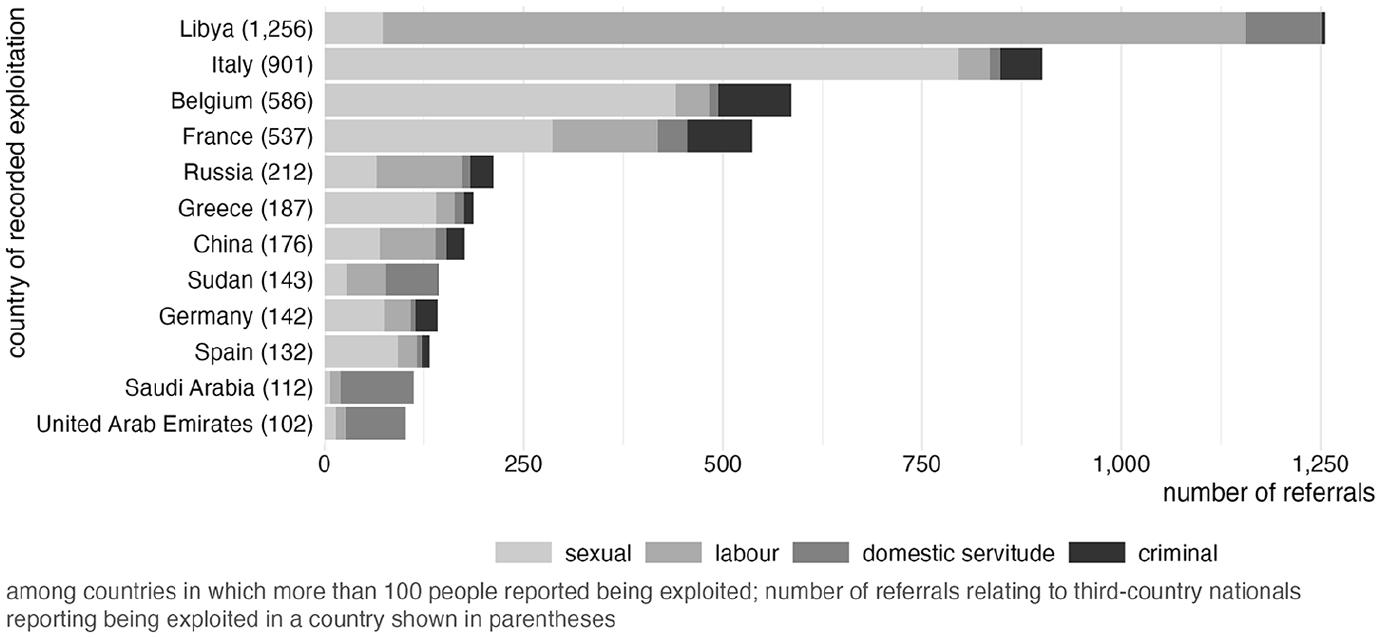
Location of exploitation for people exploited in a third country.
Patterns of exploitation locations can be complex and highly specific to nationals of different countries. For example, Figure 11 shows recorded exploitation locations of Albanians, Eritreans and Nigerians. For Albanians (n = 3663), exploitation concentrated in Albania itself (37.0%, n = 1355), Italy (21.4%, n = 784) and Belgium (14.6%, n = 534). Meanwhile, for Eritreans (n = 727), exploitation concentrated in Libya (57.6%, n = 419), Sudan (15.0%, n = 109) and Saudi Arabia (3.6%, n = 26). A different pattern again can be seen in the exploitation of Nigerian citizens (n = 1012), who were most often recorded as being exploited in the UK (63.2%, n = 640), Nigeria itself (22.9%, n = 232) and Italy (4.4%, n = 45), with comparatively little recorded exploitation elsewhere in Africa.
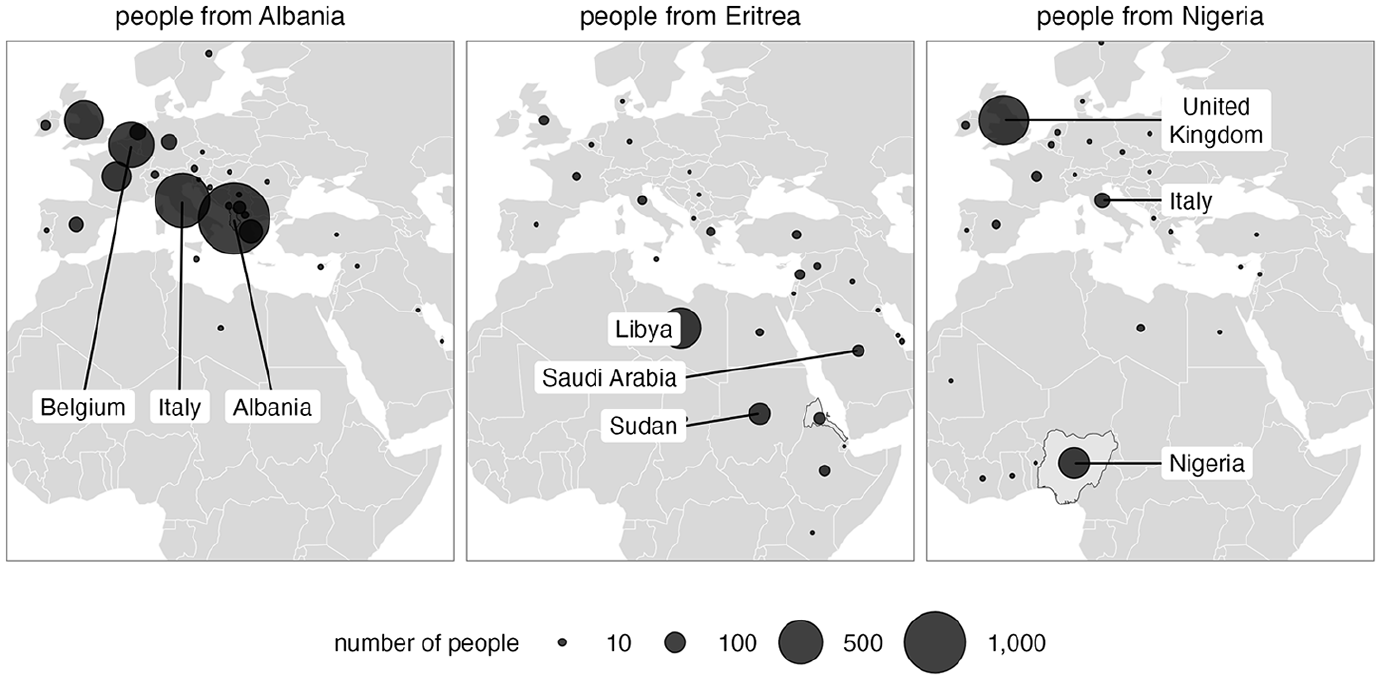
Location of exploitation for people from Albania, Eritrea and Nigeria.
Exploitation locations within the UK
Among the people for whom an exploitation location was recorded, 55.5% (n = 10,908) were exploited in the UK 9 and 44.5% (n = 8741) were exploited elsewhere. For 99.5% of cases with recorded exploitation in the UK (all except 52 such cases), it was possible to identify the police force area within which the exploitation had taken place. 10 Since only one exploitation location was recorded in almost all cases, the analysis here necessarily simplifies the complex geographies of exploitation, since people can be moved around and exploited across multiple jurisdictions in the UK.
There was at least one person recorded as having been exploited in each UK police force area. Figure 12 shows the geographic distribution of cases of each of the four main types of exploitation in police force areas, with the five forces with the highest rates by overall population labelled. Some areas (e.g. West Yorkshire) had consistently high rates for all four exploitation types, but others (e.g. Gloucestershire) had among the highest rates for only one type. Domestic servitude was the most geographically concentrated exploitation type (with more than half of cases in one police force area), followed by sexual exploitation (with more than half of cases in three force areas).
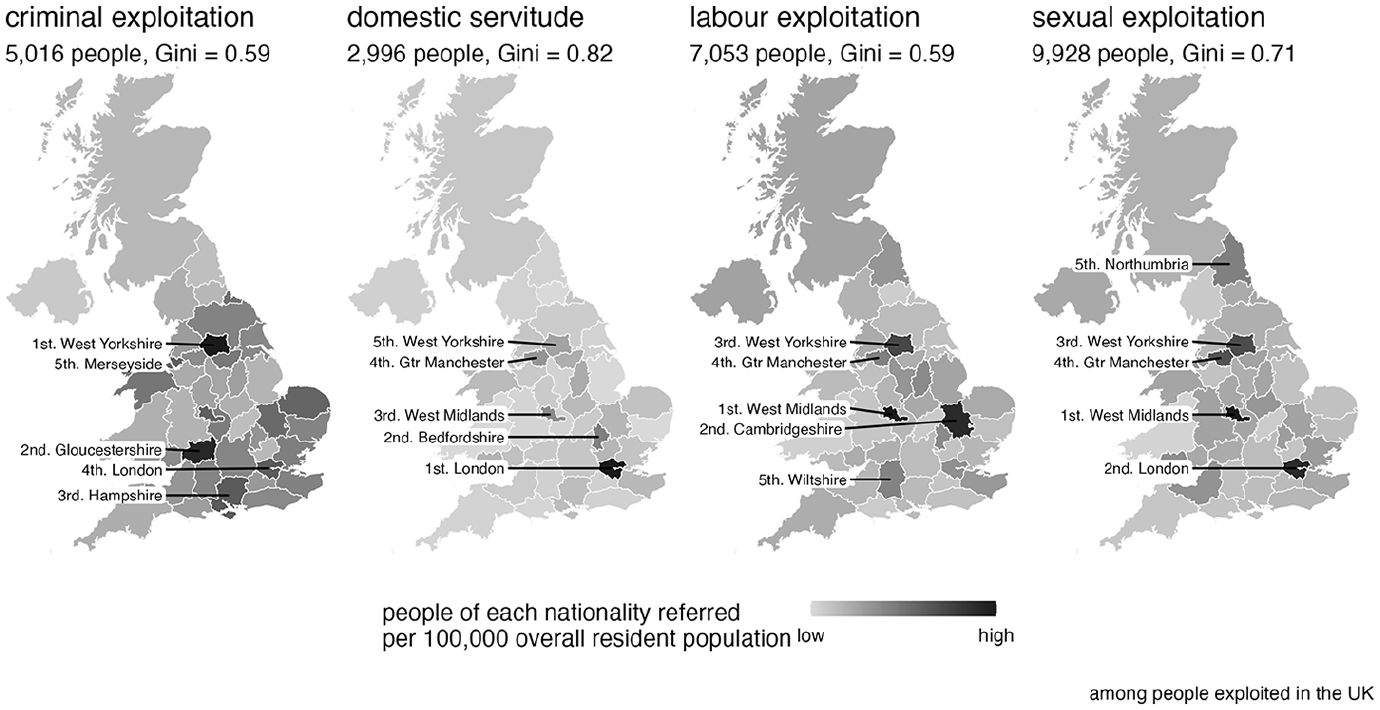
Concentrations of exploitation types by UK police force area.
Exploitation of people from different countries was concentrated in particular parts of the UK. Figure 13 shows exploitation locations for nationals of different countries. There were substantial differences between nationalities. Of those recorded as being exploited in specific UK areas, 70% (n = 428) of Nigerian victims were in London (which is home to 14% of the population of England and Wales), while 38% (n = 231) of Polish victims were in the West Midlands (which is home to 5% of the population of England and Wales). These differences cannot be explained simply by referrals being higher in areas with more residents born in a particular country: according to the 2021 Census, 42% of the Nigerian-born population of England and Wales lived in London (compared with 70% of Nigerian victims in the NRM data), while 4% of the Polish-born population lived in the West Midlands (compared with 38% of recorded Polish victims). 11
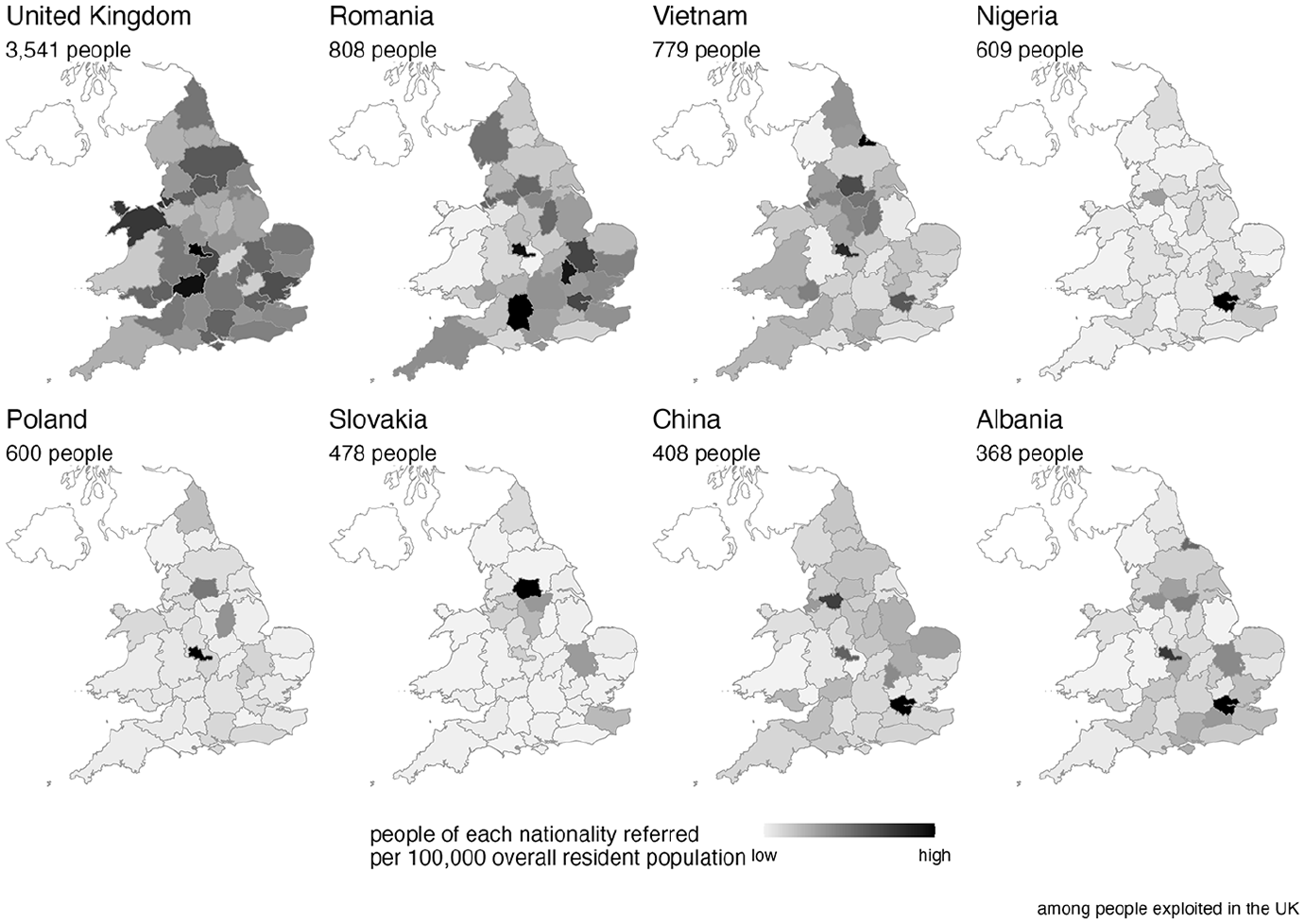
Concentrations of victim nationality by UK police force area.
How identified victimisation concentrated overall
The features of exploitation described above can be used to create profiles of the most common types of exploitation recorded. These profiles illustrate the complexity of exploitation within the NRM. Figure 14 shows the 20 most common combinations of gender, regionalised nationality and country of exploitation found in the data. 12 The most common profile – criminal exploitation of men and boys from the UK in the UK – accounted for 8.7% (n = 1668) of all cases in the dataset, while the top five profiles accounted for 30.6% of all cases (n = 5860).
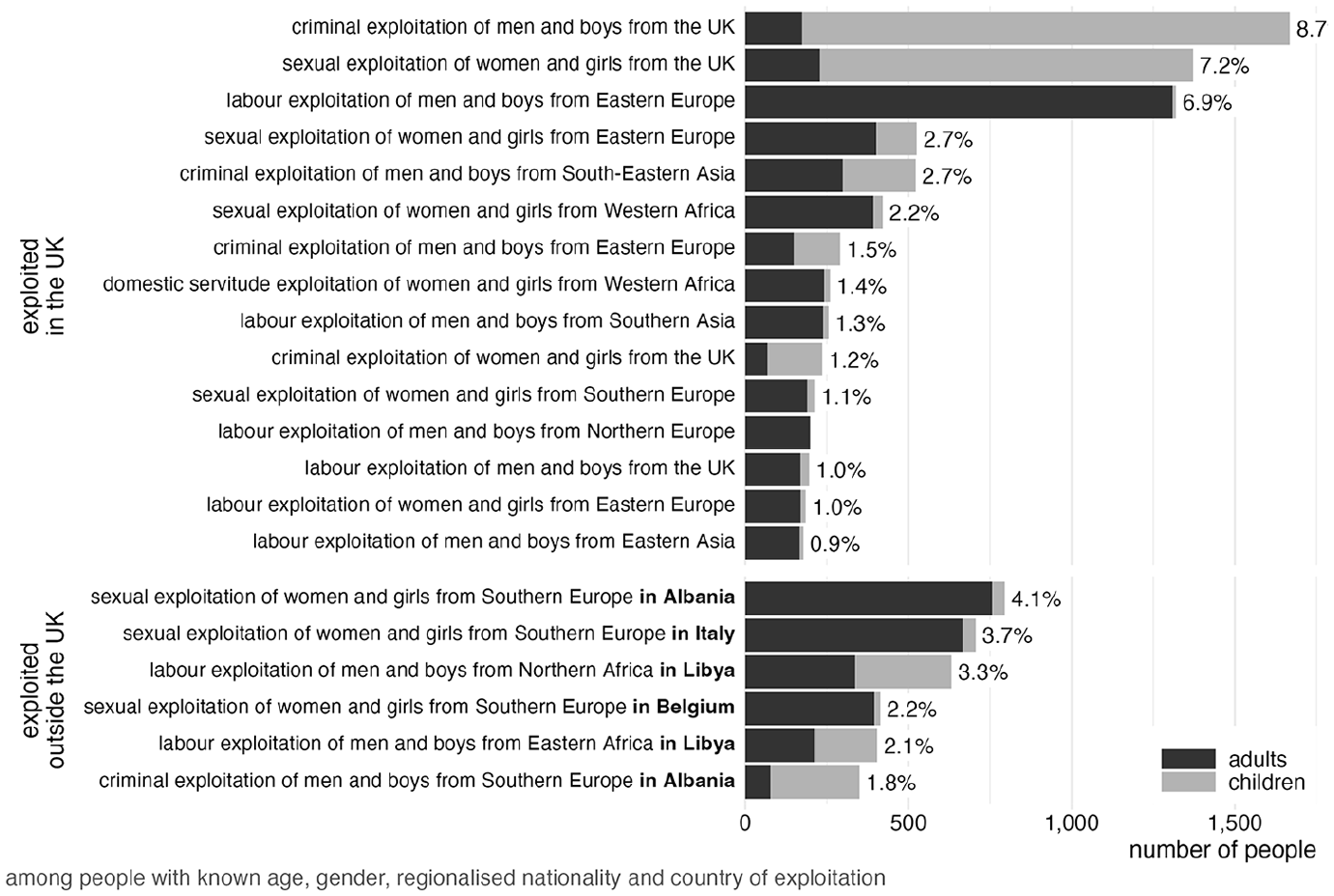
Most common profiles of victimisation identified through the NRM.
Discussion
Our results underline the sheer breadth of exploitation-related activities and locations, even within a case study focused on people officially identified in the UK only. Alongside extensive overall variation, we found evidence of heavy demographic and geospatial concentrations. Our findings support a central principle of opportunity theories: that crimes concentrate on certain people, places and contexts (e.g. Natarajan, 2017). That overarching finding calls in turn for greater attention to how opportunities for trafficking and related exploitation are embedded in the immediate social and physical environment, as well as broader systems and structures. To illustrate, the concentration of exploitation of non-Libyans in Libya likely reflects both pronounced situational opportunities for abuse (including but not limited to those legally constitutive of trafficking) and Libya’s geopolitical importance as a hub on the Central Mediterranean Route for irregular migration from Africa to Europe (Bish et al., 2024a, forthcoming). While we try to provide such examples here, an in-depth exploration of the varied opportunities involved is beyond this study’s scope. It should be recognised too that opportunity factors can vary for different trafficking-related issues and geographical contexts (e.g. Bish et al., 2024b; Cockbain, 2018; Cockbain and Brayley-Morris, 2018).
Stereotypes around who is a trafficking/’modern slavery’ victim may well have influenced NRM referrals. Yet, stereotyping alone cannot explain the extent, distribution and complexity of the patterning observed: there are nuanced differences in who is exploited, where and to what ends. Our findings also stress the importance of disaggregation. Trafficking is routinely described as a gendered crime, but often in very simplistic terms, with a focus on sexual abuse, ‘violated femininity, [and] shattered innocence’ (Bernstein, 2012: 243). That we found clear interactions between nationality, gender, age, exploitation type (and sub-type) and exploitation locations suggests a need for more intersectional perspectives. Aggregate level distinctions between trafficking ‘types’ overall (e.g. Cockbain and Bowers, 2019) can obscure the more complex relationships documented here. Taking nationality as one example, that could then intersect with other factors to explain the identified concentrations: for example, geographical proximity, ease and cost of travel, border regimes, general migration flows etc. (see also Cockbain et al., 2022; Smith, 2018). Thinking in such terms also encourages attention to complex systems perspectives on trafficking, in which the micro-, meso- and macro-levels interact in dynamic and unpredictable ways (McAlpine, 2021).
Various broad socioeconomic, political and security conditions are likely major drivers of the trafficking and exploitation of non-UK nationals documented here. That is most clearly shown in the unsurprising but marked predominance of people from poorer countries (be it newer EU member states or countries in the Global South), unstable and/or conflict-stricken locations (e.g. Sudan, Eritrea and Albania). Such concentrations make sense from an opportunity perspective: empirical research in diverse contexts worldwide underscores how trafficking can arise from people having limited opportunities and rational desires to migrate to improve one’s material circumstances (see, e.g. Cockbain et al., 2022; Esson, 2015; van Meeteren and Wiering, 2019; Yea, 2012). Notably, several of the most common nationalities were countries Britain formerly colonised (e.g. Sudan, Nigeria, India and Pakistan). As noted by others too (Cockbain et al., 2022; Smith, 2018), future research into the geographies of trafficking could usefully explore how identified trafficking flows compare to broader migration flows, although mapping irregular migration at large is also challenging.
That the top five profiles of victimisation accounted for nearly a third of people in our dataset indicates potential for disproportionate harm reduction if focusing on improving responses to particular issues (without ignoring others harms and needs). One obvious example could be the criminal exploitation of British boys and men (8.7% of people overall), mostly in so-called ‘county lines’. Their predominance also underlines both how changes in problem-framing can influence national statistics (discussed shortly) and the need to consider intersections between anti-trafficking and drug policy.
Our unprecedented findings around exploitation locations add nuance to the crude distinction reported in official NRM statistics between exploitation inside versus outside the UK (e.g. Home Office, 2023). We found clear patterning between people of different nationalities in terms of the distribution of exploitation locations in the UK, their countries of origin and third countries (which could have been en route to the UK or during separate travel). For EU nationals, UK locations and the category ‘labour exploitation’ dominated. Pre-Brexit, EU nationals had unrestricted rights to travel and work in the UK (until 31 December 2020). In opportunity terms, that was paradoxically both protective against exploitation (more choice, more rights, less fear of state recriminations if reporting) and meant more opportunities and fewer barriers for those looking to move marginalised people to the UK, put them to work into the regular labour market and take the majority of their earnings (see Cockbain et al., 2022). Post-Brexit, opportunity theories suggest EU nationals are more likely to be trafficked elsewhere within the EU than to the UK.
That 44% of people (where known) had overseas exploitation locations (in their countries of nationality or third countries) has implications for programming interventions to support people who have been trafficked. It shows harms routinely occur outside the country where reported (including in places with weak or no support for people who have been trafficked) and that migration journeys can continue after exploitation occurred. It is unclear from our data what proportion of the nearly 9000 people exploited abroad then came to the UK irregularly. Nevertheless, their sheer number highlights the devastating potential impact of the Illegal Migration Act 2023, which bars access to the NRM (and the asylum system) for people arriving irregularly (Mullan-Feroze et al., 2023). Despite the paucity of regular routes, people are now denied the rights and support the NRM once afforded (however limited they were – see, e.g. Schwarz and Williams-Woods, 2022). Aside from having urgent policy implications for the U K (see also Mullan-Feroze et al., 2023), our findings are relevant to any other countries where people whose trafficking victimisation occurred fully prior to arrival might struggle to secure recognition and support. Given the UK’s increasingly hostile environment around migration, irregular migrants might understandably not report trafficking unless already in contact with the immigration authorities and/or do so as part of a broader asylum claim. Accounting for nearly one in five cases involving non-UK nationals, Albanians were by far the largest group of foreign victims in the NRM, and their cases typically involved exploitation recorded as happening in third countries. Postdating our study period, we note that from 2022 onwards Albanian migration to the UK has been the subject of intense political and media attention (Walsh and Oriishi, 2023). Various Albania-specific policy changes that followed have been sharply criticised, including for downplaying risks to trafficking victims returned to Albania (see, e.g. Neale, 2023).
Trafficking routes have previously proven especially challenging to map (Cockbain et al., 2022). Innovating methodologically, our analysis of countries of exploitation for different nationalities offers novel insights into hotspots at the group level – though our dataset is necessarily limited to people who ended up in the UK. The reasons in each case may be different: for Eritreans, for example, Sudan is a neighbour of Eritrea, Libya is a key node on the irregular route from East Africa to Europe and Saudi Arabia has a history of labour exploitation of African workers (Zewdu, 2018). That there were hotspots for both Nigerians and Albanians in Italy (mostly women exploited sexually) resonates with prior research in Italy (e.g. Adeyinka et al., 2023). Here both structural and opportunity factors likely play a role, for example, the legacy of Italian occupation of Albania, cultural ties and close distance.
In terms of UK-based exploitation locations, the regional differences identified likely reflect – at least partially – differences in local opportunities for exploitation. For example, the second highest rate for labour exploitation was in Cambridgeshire (a county with high demand for seasonal agricultural workers), while the highest rate for domestic servitude was in London (the UK’s richest area). We also found variations for different nationalities, which merit further attention. There might be some relationship here to social opportunities for human trafficking within diaspora communities – as Paoli and Reuter (2008) found for drug trafficking – but our initial findings show diaspora patterning alone does not adequately account for the patterns observed. In mentioning this, we also stress that as with the general population, most diaspora members will have no involvement in trafficking.
Overall, the complex spatial distribution of exploitation locations raises difficult questions about how best to implement anti-trafficking measures in the UK and internationally. Simply blocking people’s movement is not a meaningful or practical solution to trafficking problems (Cockbain and Sidebottom, 2022; Kempadoo and Shih, 2022; Sharma, 2003). Identifying how policies produce risk is important in addressing both structures and opportunities that enable exploitation. There are also practical limits to what UK-based practitioners can do to prevent and disrupt exploitation abroad, further underlining the limits to the dominant criminal-justice-centric paradigm of anti-trafficking.
Although we could not undertake a detailed temporal analysis, our data demonstrated a dramatic increase in people identified through the NRM over the decade. That likely reflects increased awareness, understanding, prioritisation and investment, particularly linked to the Modern Slavery Act 2015 (Broad and Turnbull, 2019; Office for National Statistics, 2020). The increased proportion of UK nationals is likely explained through two pivotal developments. First, intense focus on child criminal exploitation (CCE) as a form of ‘modern slavery’ post-2015 (Heys et al., 2022): a reframing that has been accepted largely uncritically but contains troubling tensions and risks of further criminalising black boys and young men (Koch et al., 2024). Second, intensified attention around child sexual exploitation (CSE) since 2011, tightly bound up with a racialised panic around so-called ‘Muslim grooming gangs’ (Cockbain and Tufail, 2020). Overall, our data represent a 10-year snapshot ending in March 2019 (skewed to the latter end). Newer data would likely show important differences in concentrations of identified victimisation. Immediate opportunities and facilitating systemic conditions have since changed, with key developments including: Brexit; the resultant increased reliance on short-term, tied visas for various sectors; the COVID-19 pandemic; the ongoing cost of living crisis; wars in Ukraine and Sudan and the Conservative Government’s rollbacks in anti-trafficking and asylum protections (see, e.g. Cockbain and Sidebottom, 2022; FLEX, 2022; Mullan-Feroze et al., 2023).
Overall, numerous research gaps remain around the complex geographies of trafficking (and anti-trafficking), the role of social and spatial opportunity structures and their interactions with broader systems and structures. Both context-sensitive quantitative research and in-depth qualitative research are important. Improving the quality and accessibility of secondary datasets could help, but funding primary data collection also matters. The interplay between the extremes labelled trafficking and more routinised but still pernicious ‘lower-level’ exploitation also needs attention. A stronger evidence base on the geographies of trafficking would improve understanding and could enable more nuanced and effective responses, particularly those oriented towards prevention, harm reduction and support (Cockbain et al., 2022). That said, better evidence is no guarantee of better policy and practice. It is therefore vital that researchers are sensitive to risks in how the geospatial analyses they produce can be used and anticipate and mitigate against applications that can harm already marginalised populations.
Footnotes
Acknowledgements
The authors are very grateful to the ESRC for funding, the National Crime Agency (NCA) for supporting the research and facilitating data access and Oli Hutt for his crucial role in much of the initial geocoding of locations. They thank the other contributors to this special issue for their thoughtful and constructive criticism on an earlier draft. They also thank Wim Bernasco, Aiden Sidebottom, Aili Malm, Donia Khanegi, and our advisory group members for helpful discussions. Finally, they thank the anonymous reviewers and the editors.
Data Statement
Because of the data’s sensitivities and the terms of the legal agreement governing its provision, we cannot make it available for onward use.
Declaration of Conflicting Interests
The author(s) declared no potential conflicts of interest with respect to the research, authorship and/or publication of this article.
Funding
The author(s) disclosed receipt of the following financial support for the research, authorship and/or publication of this article: This work was supported by the Economic and Social Research Council (grant no: ES/S008624/1).
