




Abstract
African oceans and the resources within them contribute to coastal livelihoods and the food security of millions of African people; at the same time, these same people are most vulnerable to the adverse effects of climate change, marine pollution, illegal, unreported and unregulated fishing, piracy and armed robbery at sea, expansion of the Blue Economy sector and the overall impact of depleting oceans resources and insecurity. Understanding how they respond to their vulnerabilities could be useful for addressing maritime security threats holistically and redirecting investments, allowing for the sustainable development of the Blue Economy in a way that adheres to the conceptual definition of the concept, encompassing the improvement of economic growth while ensuring social equity and environmental conservation. This agenda-setting transdisciplinary paper combines ideas from criminology, security and development fields to explore the nexus between deprivation in coastal communities in Africa and criminality at sea and how Africa’s Blue Economy can be leveraged to reverse the trend and ensure sustainable development ashore. Grounded in the critical review of the literature and the author’s theoretical and empirical insights into the Blue Economy, ocean governance and maritime security in Africa. The paper enhances our understanding of the interplay between deprivation and criminality at sea, and how sustainable Blue Economy and maritime security can reverse this trend.
Introduction
The sea, washing the equator and the poles, offers its perilous aid and the power and empire that follow it. . . Beware of me, it says, but if you can hold me, I am the key to all the lands.
1
The excerpt above, attributed to Emerson’s writings on ‘wealth’ in the 1800s, captures the paradox of the oceans for the African continent and its people. It has the potential to contribute to the sustainable development of the African people. At the same time, as Emerson warns, failing to look after the vast expanse of oceans and the resources beneath it can undermine the sustainability of livelihoods, pushing millions of Africans into deprivation, and the resultant implication could be insecurity. The African Union (AU) recognises that African seas and oceans hold the key to the sustainable development of the continent, which is why they have dubbed Africa’s Blue Economy (BE) as the ‘new frontier of African renaissance’ (AU, 2015: 1). The significance of this recognition is further exemplified in the Lomé Charter and the African BE Strategy. The Charter represents the first legally binding continental framework that promotes the BE and maritime security agendas. The Strategy is a coherent document for developing Africa’s BE, fostering socio-economic transformation and growth (AU, 2016; AU-IBAR, 2019). Yet, for the 38 coastal and Small Island Developing States (SIDS) on the continent, harnessing the opportunities inherent in the oceans has remained challenging (Okafor-Yarwood et al., 2022).
The BE, encompassing fisheries, offshore hydrocarbon, energy, maritime tourism, transport and shipping sectors, 2 plays a vital role in the economic and food security of coastal states and SIDS on the African continent. The BE sector contributes over US$1 trillion to the gross domestic product (GDP) of coastal states in Africa and provides employment for millions of Africans (Okafor-Yarwood et al., 2020a). In West Africa alone, 56% of the GDP of coastal states is derived from the BE sector (The World Bank, 2019), underscoring its significance to the functioning of these states. The significance of the ocean space to the continent is reflected in the fact that over 90% of Africa’s imports and exports are transported by sea, emphasising its geostrategic importance to global trade (AUDA-NEPAD, 2019). The opportunities inherent in Africa’s BE remain untapped, as sustainable exploration of the seas and oceans are undermined by inadequate knowledge and technological capacity, combined with limited investment (European Parliament, 2019; Okafor-Yarwood et al., 2020b); as such, blue growth seems ‘. . . even more elusive and remains at the subsistence level of our ancestors’ (Okafor-Yarwood et al., 2020a: 2).
Due to insufficient investments, African countries do not fully benefit from their marine resources. As a result, distant water nations and investors mainly exploit the continent’s marine resources, with the benefits accrued taken to their home countries. The lack of industrial facilities, digital technological tools and expertise, and infrastructure impedes Africa’s ability to harness its BE potential. For example, most of the industrial fishing vessels operating on the continent are linked to distant water nations, with an estimated 25% of fish catch on the continent done by foreign vessels (de Graaf and Garibaldi, 2014; Okafor-Yarwood et al., 2022). The opportunities in tourism, blue power generation, offshore oil exploration, fishing and aquaculture, maritime digital technological solutions, shipping and ports infrastructure remain in the hands of foreign investors, under-explored, and no African country is involved in the exploration of the deep seabed (Bell et al., 2023; European Parliament, 2019; Okafor-Yarwood and Onuoha, 2023).
The sustainable exploitation of the ocean resources in Africa is further undermined by illegal, unreported and unregulated (IUU) fishing, pollution and unregulated deep-sea and sand mining, all of which deprive African states and their peoples of much-needed revenues (AU-IBAR, 2016; European Parliament, 2019; Ralby and Soud, 2018). These threats also render marine biodiversity even more fragile, a problem aggravated by the catastrophic impact of climate change (The World Bank, 2016; Willima and Naidoo, 2024). In addition, conflicts over access to depleting fish stocks, piracy and armed robbery at sea undermine coastal livelihoods and food security (Okafor-Yarwood, 2020; Okafor-Yarwood et al., 2024b).
Understanding how coastal communities respond to their vulnerabilities could be useful for addressing maritime security threats on the continent and redirecting investments in the development of the BE to adhere to its conceptual definition, which entails improving economic growth while prioritising social equity and environmental conservation. Researchers have argued that a connection exists between the depletion of fisheries resources and maritime criminality (DeSombre, 2019; Okafor-Yarwood, 2020; Phayal et al., 2024; Rosenberg, 2009; Weldemichael, 2012). While some foundational literature in marine criminology has outlined general theoretical approaches to understanding criminality at sea (CAS; see Mueller and Adler, 1985), we identify a need to explore criminology theory in the context of new maritime security threats emerging in Africa. In line with the 2023 call by the United Nations (UN) Peacebuilding Commission, address root causes as part of maritime security efforts in the Gulf of Guinea and the 2025 statement by the UN Secretary-General, underscoring the global urgency to ‘. . . intensify efforts to address the root causes of maritime insecurity. . .’ as a key priority for long-term maritime security, we argue for a shift in approach (UN, 2025; UN Peacebuilding Commission, 2023). An approach that prioritises addressing the ‘root causes’ of crime through holistic investment in communities and sustainable marine development, as opposed to the symptom-oriented measures and investment in policing, navies and coast guards. This agenda-setting paper therefore shows the causal relationship between deprivation in coastal communities and CAS, drawing on critical perspectives from criminology literature.
The contribution of this paper is twofold: first, it contributes to the discourse on the correlation between deprivation in coastal communities and CAS, drawing on criminology, security and development literature. Second, it advances the discussion on the role of sustainable BE in improving maritime safety and security. The paper is based on a review of academic literature, policy documents, discussions between authors, and several years of experience engaging with maritime law enforcement personnel and coastal communities in West and Central Africa, Western Indian Ocean regions and at the global levels. The paper is formed of four sections. Following the introduction is a critical analysis of the link between deprivation and criminality in coastal communities, followed by discussions on how equitable development of the BE can stem the tides. The final section is the conclusion. 3
From shore to sea: Traversing from deprivation ashore to CAS
Theoretical frameworks for understanding CAS
To date, both policy studies and theoretical approaches to CAS have typically followed a ‘symptomatic’ approach to understanding maritime crime, placing an overemphasis on state-level governance and policing. We instead call for greater attention to a ‘root causes’ approach to understanding CAS, in line with the understanding among criminologists that the prevalence of crime in a society is related to the distribution of economic resources. According to De Courson and Nettle (2021: 6–7), more unequal societies tend to have higher crime and lower social trust, as the optimal action for individuals close to the desperation threshold is to exploit others. They further argued that this narrative remains true even in the presence of severe and probable punishment for such crime, since successful exploitation is the quickest route out of desperation, whereas being punished does not make already desperate circumstances much worse (De Courson and Nettle, 2021: 6). The causal relationship between deprivation and heightened criminality is further anchored in the rational choice theory, which hypothesises that different incentives and pressures influence crime; crime is a calculated decision when the potential benefits outweigh the perceived risks or costs (Becker, 1974). The rational choice theory is particularly resonant in regions where the desperation threshold is low; here, exploitation becomes not just a strategy for survival but the only viable one (De Courson and Nettle, 2021). This notion also aligns with other arguments that the propensity to crime is higher when the inequality gap is wider (Fajnzylber et al., 2002).
The foundation of De Courson and Nettle’s (2021) argument is linked to structural/compositional and psychosocial causes, highlighting that inequality and criminality are linked to diminished trust. The compositional causes hold that individuals commit crimes when their absolute levels of resources are extremely low; they argue that individuals become more desperate as structural inequality rises, which in turn makes crime more likely. In contrast, the psychosocial explanation holds that people in communities with high levels of inequality ultimately have lower levels of trust, irrespective of their personal resource levels, if subjected to some comparison structure (De Courson and Nettle, 2021). Such a vicious cycle cannot be interrupted with current approaches, which in essence argue that insecurity exists solely when a crime is committed. Instead, understanding CAS requires attention to this complex system of deprivation, inequality and mistrust that produces potential criminals in the first place, thereby attempting to address crime at its source.
The relationship between deprivation and criminality is heightened in individuals who are socially disadvantaged and lack social and economic resources, which positions them at an increased risk of committing a crime or becoming involved in criminal activities (Wikström and Treiber, 2016). This form of political deprivation leads to further marginalisation, animosity against the state, and subsequent rejection of the state authority, having lost trust in their ability to provide public goods for them and uphold the rule of law (Okafor-Yarwood et al., 2020b). This can motivate the affected communities to take matters into their own hands, seeing as they cannot trust the state to safeguard their interest – this is particularly impactful in societies with a high perception of police corruption and police deviance from the law (Akinlabi, 2016; Obi, 2009; United Nations Environmental Programme, 2011). As above, this is a substantial shift in how crime is understood in Africa: as opposed to being viewed as isolated incidents or as a form of organised criminal profiteering, an emphasis on deprivation and mistrust sees crime as a desperate response of coastal communities to the structural failings of the state. Viewing crime as a political demonstration or an act of desperation, therefore, places the onus on the state to investigate and tackle the drivers of crime through the implementation of a holistic model of development.
Economic deprivation resulting from unemployment or underemployment can lead to economic hardship, especially when individuals lack adequate education and training. In such situations, individuals may turn to alternative sources of income, which can, unfortunately, include illegal activities (Zungu and Mtshengu, 2023). The strain and resultant desperation to commit crime, as Featherstone and Deflem (2003) and De Courson and Nettle (2021) argue arises due to a lack of trust in the system and fear that no legitimate solution exists. Furthermore, the dependence on volatile industries such as fishing and farming, along with the geographical isolation of these coastal communities, contributes to a fragile economic foundation. This, combined with the weak rule of law and poor coastal welfare, ultimately limits opportunities for those living in these areas (Okafor-Yarwood et al., 2020b). This can act as a push factor for irregular migration, which leaves migrants vulnerable to criminal exploitation and ultimately weakens the well-being of coastal communities (Bish et al., 2024). In addition, the degradation of marine ecosystems, often intensified by climate change and unsustainable resource exploitation, directly affects the livelihoods of those who rely on fisheries, leading to food insecurity and exacerbating social inequalities. Traditional livelihoods like fishing are threatened by this environmental mismanagement and overexploitation by commercial industries, leading to what Rosenberg (2009) described as ‘liquid deserts’ – a marine environment without resources that once sustained its inhabitants. This is further exacerbated by inequity, whereby the expansion of the BE sector, increasing pollution and policies aimed at addressing unsustainable exploitation of oceans’ resources and threats like piracy and armed robbery at sea push individuals further into poverty, depriving them of equitable sources of livelihood (Bell et al., 2021).
Extending De Courson and Nettle’s theoretical framework to analyses of crime in coastal areas and at sea, we argue that CAS cannot be framed in terms of a single factor but must be understood as a complex relationship between diminished trust, social inequality, criminality and financial deprivation (see Figure 1). Adopting this approach has substantial implications for not only academic understandings of CAS but also for approaches to tackle ocean sustainability and economic underdevelopment in Africa. As opposed to addressing the ‘symptoms’ of CAS – for example, by increasing funding for navies and coast guards – the ‘root causes’ approach of this theoretical framework prompts wider measures to address inequality and underdevelopment. Through community-level interventions aimed at improving trust in governance processes and economic policies, the theoretical framework discussed here can help prompt a more holistic model of well-being in coastal communities that reduces CAS at its source.
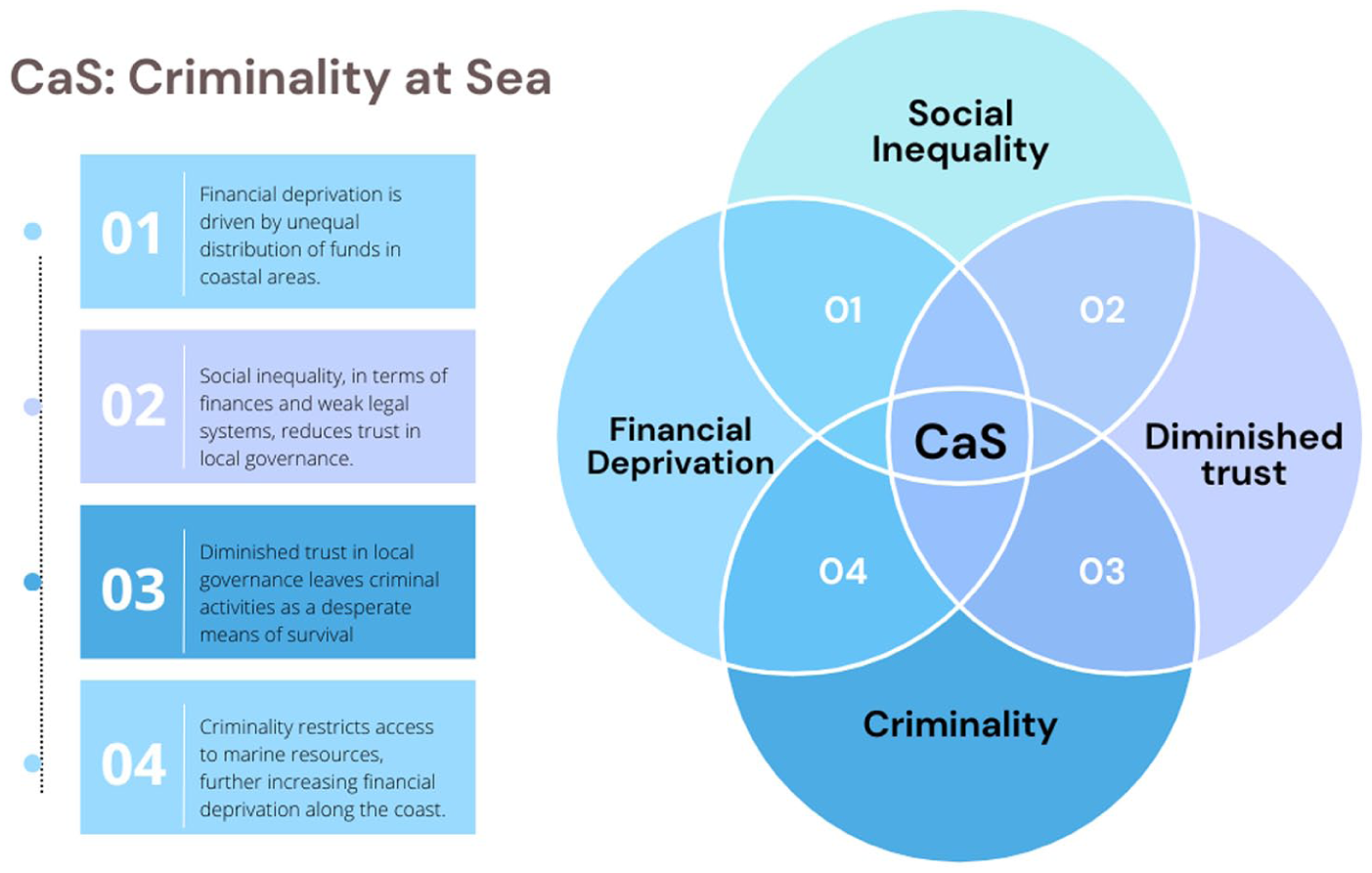
A Venn diagram visualising the interrelationships between the drivers of criminality at sea (generated by the authors).
Numerous examples highlight the correlation between poverty, deprivation and the ensuing lack of faith in the system, ultimately resulting in CAS throughout Africa. However, examples from Nigeria and Somalia in the Gulf of Guinea (GoG) and the Gulf of Aden (GoA) are drawn to accentuate the argument presented thus far.
Gulf of Guinea –Niger Delta example
In Nigeria’s Niger Delta, rich in hydrocarbon resources, oil pollution has degraded the lands, mangroves and water bodies, robbing residents of their source of livelihoods. Oil and gas are the mainstay of the Nigerian economy, providing 90% of its foreign-exchange earnings, and most of this oil is extracted from the Niger Delta (Ibukun, 2024) a region also home to one of the world’s largest mangroves. The people from the region once relied on fisheries and farming for their livelihoods. They once hoped the resources extracted from their lands would be used for socio-economic development. However, the narrative is far from positive. Since oil exploitation started in the region in 1958, over 40% of the mangrove vegetation in the Niger Delta has been oiled (The Bayelsa State Oil & Environmental Commission, 2023: 7), resulting in the destruction of vegetation and breeding grounds for fishery species. An estimated 60% of the fisheries in the GoG breed in the mangroves of the Niger Delta (Okafor-Yarwood, 2018); as such, the degradation of the mangroves has implications beyond the region and extends to other countries in the GoG.
The extent of the pollution is so pervasive that water bodies, land and the air have been polluted, undermining food and economic security and the physiological health of the local population. For instance, although gas flaring is a necessary part of the petroleum-producing process, no country flares as much gas as a percentage of its total gas as Nigeria. Libya, for instance, flares about 21% of its natural gas, while Saudi Arabia, Canada and Algeria flare 20%, 8% and 5%, respectively, conversely; Nigeria flares up to 90% of its associated gases, severely polluting the air in the Niger Delta (The Bayelsa State Oil & Environmental Commission, 2023: 64). The extent of the impact of the environmental destruction on physiological health is such that life expectancy in the Niger Delta is 10 years less than the national average of 51 (Ibukun, 2024). Residents have also spent years in litigation against the multinational oil companies responsible for polluting their lands. They have blamed the Nigerian state for failing to give back to the communities that have given so much to the economy (The Bayelsa State Oil & Environmental Commission, 2023).
The perceived failure of the Nigerian state to ensure the equitable use of the proceeds from the exploitation of the hydrocarbon resources from the Niger Delta for the sustainable development of the people has resulted in animosity against the state as young people turn to militancy (Obi, 2014). They engaged in activities including the destruction of oil pipelines, Petro-piracy, 4 kidnapping of oil workers, killing of law enforcement officials and engaging in illegal oil bunkering to fund their illegitimate campaign against the Nigerian state and the multinational oil companies as a way of expressing their displeasure about the destruction of their environment and perceived injustice against their people (Okafor-Yarwood et al., 2020b). The activities of these militants have since morphed into organised criminal activities, resulting in piracy and armed robbery at sea, oil theft and illegal oil bunkering, and caused a lot of damage to the Nigerian economy, heightened insecurity in the GoG region and drawn international attention (Bell et al., 2021).
At first, the government responded with the use of force by deploying the military, in particular the navy, to the region, though the resulting loss of innocent lives only escalated the problem. The militants continued with their violent campaign against the Nigerian state until 2009, when the government granted Amnesty, akin to buying peace (Okonofua, 2016). The failure of the use of force to succeed in addressing the problem aligns with the argument by De Courson and Nettle (2021) that deprived people are likely to engage in criminal activity once they reach the point of desperation, even in the presence of severe and probable punishment for crime, since successful execution is the quickest route out of desperation, and being punished does not make already desperate states much worse. This also corresponds with the low trust identified by De Courson and Nettle (2021) in environments of high inequality and deprivation. Much of the desperation that fuelled militant activity was born from a lack of trust in the government to alleviate poverty and uphold community well-being; it was this low trust that led to the emergence of militancy and other forms of organised crime as a means of remediating the failure of the state. Although the Amnesty resulted in the reduction of violence in the Niger Delta, militants dropped their weapons in exchange for cash, training programmes and projects, including oil contracts which were awarded to militant leaders, there were some drawbacks.
More young people turned to criminality as the Amnesty programme is deemed more lucrative in the continued absence of opportunities for legitimate employment. Furthermore, the programme was specifically aimed at disbanding ex-militants (Okonofua, 2016), and the majority of the beneficiaries were men, with limited consideration of how women might have contributed to the militancy and, therefore, needed to be rehabilitated. For instance, in the first phase of Amnesty, a mere 0.5%, 133 women out of the 20,192 ex-combatants benefitted from the programme, which is not reflective of the rate of participation of women in militancy and criminality in the region (Okonofua, 2016). In essence, the Amnesty programme served as a means of pacifying areas of conflict without addressing the underlying issues contributing to militancy and criminality, buying peace and simultaneously making efforts to address root causes and improving the socio-economic conditions in the region, building peace. As a result, criminal activities have persisted, with both beneficiaries and non-beneficiaries participating.
Gulf of Aden – Somalia example
The narrative is similar in Somalia, where there is a historical connection between illegal fishing and toxic waste dumping by foreign vessels and piracy and armed robbery at sea by people who once identified as fishers (Okafor-Yarwood and Onuoha, 2023; Weldemichael, 2012). In 1991, Somalia became the first country to be classed as a ‘failed state’ following the coup against dictator Siad Barre and the ensuing civil war (Kimenyi, Mukum Mbaku and Moyo, 2010). In the 2000s, the rise of illegal fishing – primarily by foreign vessels – combined with the lack of a stable government and military presence meant that Somalia’s fish stocks became heavily overexploited, which exacerbated the effects of war on coastal communities and entrenched economic underdevelopment in the country (Glaser et al., 2019). Furthermore, extraterritorial actors played a large part in the degradation of the marine environment, largely through the illegal dumping of toxic waste (Kellerman, 2011; Milton, 2009). Combined with extreme economic precarity, the exploitation of Somali waters by international actors led to a rapid increase in pirate activity in the 21st century. However, contrary to perceptions within the international community, most Somali pirates are not career criminals or profiteers but are instead former fishers who engage in piracy as a form of political protest or in response to intense economic hardship (Karawita, 2019). The social and economic instability resulting from reduced fish catch caused by incessant illegal fishing by foreign industrial vessels, in this instance, has led to frustration and an environment where low-income people gain more returns from illegal activities than legal ones, thus pushing them towards illegal activities that threaten security at sea (see Kang, 2015). As a result, piracy became culturally acceptable among many coastal communities in Somalia, with local communities often serving as key sites for recruitment and supply to those engaging in piracy and criminal activity at sea (Mahmood, 2024; Weldemichael, 2012).
Here, too, we see the explicit connection between deprivation, lack of trust, perceived helplessness and CAS, where even the risk of severe punishment and arrest by the foreign navies did not serve as a deterrence. In a prison report by the UN Office on Drugs and Crime (UNODC, 2015) about piracy and armed robbery at sea in Somalia, respondents refuted the tag of pirates, maintaining that they were fishers who were driven to criminality due to economic hardship. The prisoners interviewed in the report noted that they resorted to these activities to obtain food, alleviate their family’s poverty, or as a desperate means to earn money. Furthermore, their decisions were influenced by resentment and anger towards toxic waste dumping and illegal fishing by foreign vessels off the coast of Somalia, both of which played a part in the rise of piracy in the region. Equally worth mentioning is that despite the presence of international navies and armed guards aboard vessels and the potential risk of getting shot, which the prisoners alluded to, this was not enough to serve as deterrence or cause the prisoners to reconsider engaging in piracy before they were caught (UNODC, 2015).
The contention is not of a direct causal link between poverty and criminality in coastal communities. Instead, the combination of poverty, inequality and a growing scarcity of legitimate opportunities for income may heighten the likelihood of criminal activities in these regions. The isolation of many coastal communities in Africa and elsewhere compounds the situation. As Crawford et al. (1999) and Malomo (2018) suggest, geographic isolation contributes to coastal deprivation, with limited transportation infrastructure often restricting access to essential services such as markets, employment opportunities and education, exacerbating socio-economic marginalisation. De Courson and Nettle’s (2021) study identifies two primary factors that explain this, the first of which is the availability of opportunities for legitimate earnings, where criminal behaviour becomes more attractive when the rewards of lawful activities diminish significantly. The second factor is the distribution of resources within the population, where a broader disparity in economic resources among individuals is associated with a higher crime rate and decreased social trust. In many small towns and isolated coastal settlements, individuals may perceive themselves as alienated from the national economy or employment market, which exacerbates the sense of inequality they experience. The weak economic and social structures that individuals face, therefore, creates a psychosocial desperation in individuals due to the perceived lack of available resources with which they might escape poverty, making this economic isolation a key push factor for CAS (De Courson and Nettle, 2021).
The examples from Nigeria and Somalia corroborate this position. Poverty, coupled with a lack of opportunity for legal livelihoods, the lack of trust in the government and the perception that issues that affect the people are not a priority for the authorities, could together push deprived people to the point of desperation, making them hopeless preys in the hands of criminal networks who might offer them a way out of their deprivation. These issues have been exacerbated in the era of globalisation, where distant water nations increasingly exploit African natural resources to benefit foreign economies, instead of benefitting local communities. Such an exploitative relationship is causing economic growth to be prioritised above social well-being and environmental conservation. Furthermore, the need to ‘protect’ foreign vessels is leading to an elitist approach to maritime security, which involves prioritising piracy over other threats to marine environmental health, which undermines the food and economic security of coastal residents (see Okafor-Yarwood and Onuoha, 2023). 5
From deprivation to sustainability and security
So far, the analysis has sought to show the connection between deprivation in coastal communities and CAS, whereby coastal residents are deprived of opportunities to subsist and have lost trust in their government as issues affecting them are not prioritised. Reversing this trend requires that the aspirations of the BE on the African continent prioritise coastal well-being and ecological conservation. A key challenge to the operationalisation of an African BE is the perception within the private sector that sustainability and economic growth are mutually exclusive, and that sustainable growth brings higher economic costs (Marsh et al., 2020; Zulu et al., 2023). As the African Development Bank Group (2023) notes, the key to overcoming these misconceptions of BE is for African states to reconfigure their strategies for sustainable resource use and management. The emergence of the BE is essential for this transition as it promotes domestic development, as opposed to the current trend of prioritising exports: the operationalisation of the BE could help build equitable African economies that have a holistic outlook towards development and social well-being.
A key first step in constructing an African BE is closing the data gap surrounding marine resources held in the continent’s oceans and coastal waters, as this is critical for fully determining the potential for economic development across Africa’s Ocean spaces. Currently, Africa faces significant data gaps in areas such as human development (Paris 21, 2021), climate change (Kaspar et al., 2022) and fisheries (Blasco et al., 2020). However, steps are being taken to close these gaps by constructing ocean monitoring systems that can monitor available resources and offer insights into best practices for marine management. An example is South Africa’s Oceans and Coastal Information Management System, launched in 2015 and synthesises data on environmental resources, climatic conditions and human activity to enhance ocean management (Krug et al., 2024). Around the continent, similar systems are being developed to monitor fish stocks (Hutchings et al., 2009) and coastal health (Abessolo et al., 2023) and to conduct deep-sea surveys to identify marine resources located in the seabed (International Seabed Authority, 2017). In addition, addressing this data gap represents an opportunity to address the community pillar of the BE in marine environments, which are often data-poor compared with land-based contexts, as communities and resource users represent a key data source (Levine et al., 2015). In addition to stakeholder activities such as participatory mapping or community-based biodiversity modelling, engagement with the lived experiences of resource users through interviews and observation can help contextualise and enrich quantitative data, aiding policymakers in delivering more impactful marine sustainability solutions.
Investment in maritime infrastructure is equally crucial, particularly in expanding the port capacity of coastal states. This expansion is necessary for states to fully capitalise on the global shipping trade and the benefits of the African Continental Free Trade Area (AfCFTA). Presently, the port infrastructure in Africa is considerably underdeveloped. For example, the average dwell time in African ports is more than double that of other continents. 6 In Nigeria, dwell times range from 20 to 28 days, in the Benin Republic from 10 to 15 days, in Ghana from 12 to 14 days and in Togo from 8 to 12 days. In contrast, in Singapore, the dwell time is only 6 hours. International investments can help African countries enhance their port capacities, thereby engaging more effectively in the global shipping trade, which promotes domestic economic growth and job creation. Moreover, these investments in port infrastructure will not solely benefit the maritime sector; they can also facilitate the export of a more diverse range of goods and manufactured products and expand access to maritime routes further inland.
Furthermore, the operationalisation of the holistic BE model is being integrated into African port development, such as in the ‘green ports’ concept, ensuring that future port development does not come at a greater environmental cost (African Development Bank Group, 2022a, 2022b; Lawer et al., 2019). This is particularly important when assessing the future of CAS. Not only will port investments improve regulation and law enforcement, but they may also help ensure that ports and shipping have a reduced impact on local marine environments (Eski, 2011; Taljaard et al., 2024). In the context of the BE, this investment in port infrastructure could enhance the security of maritime spaces for coastal communities, making it easier and safer to access ocean resources and reducing the detrimental impacts of the shipping industry on environmental health.
Investment in shipping and fishing fleets is also crucial for enhancing the BE. Currently, shipping trade in Africa is dominated by foreign vessels: apart from Nigeria – the largest ship-owning country on the continent, owing 291 of the 7.94 million deadweight tonnes vessels in the world (United Nations Conference on Trade and Development, 2023: 34) – foreign-flagged vessels transport 95% of Africa’s cargo trade (Ruppel and Biam, 2016). In addition, most fishing vessels in Africa are foreign-flagged 7 : in the GoG alone, only 33% of vessels fishing in 2023 were flagged to African nations (Global Fishing Watch, 2024). This makes the continent highly vulnerable to IUU fishing, with reports estimating that 48.9% of all global industrial IUU fishing occurs in African waters, resulting in annual economic losses of up to $11.49 billion (Daniels et al., 2022). Expanding fleet sizes is crucial for preventing economic losses through illegal activities and ensuring that profits and resources remain within the continent, rather than being exported overseas.
It is also essential to respond to growing political pressures. Coastal communities and local stakeholders, recognising that they are under-prioritised relative to foreign investors, are increasingly engaging in militant activities and protesting the exploitation of natural resources by foreign entities (Arce and Miller, 2016; Goyes et al., 2024; McVeigh, 2023; Oluwaniyi, 2010). Investment in African shipping and fishing fleets could, therefore, help build a BE that prioritises domestic resource processing and aids the recruitment of unemployed youths. This, in turn, could create greater opportunities for coastal communities to participate in domestic industries and fishing, rather than being outcompeted by foreign entities. Such equitable access to the emerging BE is essential to rebuilding trust between local communities and the government while improving communities’ economic resilience and political empowerment. Furthermore, the ability to proactively engage in policy could reduce the political isolation of coastal communities. As noted in the case studies from Nigeria and Somalia above, closing the political gap not only rebuilds trust in governance systems but also addresses both the structural and psychosocial alienation that are key drivers of crime in coastal areas (De Courson and Nettle, 2021). A secondary effect of these political responses is the increased synergy of maritime and economic policymaking. As Lah (2025) notes, multistakeholder participation is key to breaking ‘policy silos’, where political deliberation emphasises short-term decision-making on single issues. By facilitating the inclusion of community actors in ocean governance processes and maritime industries, African governments can pursue a more sustainable and holistic BE model that is more responsive to local needs, thereby reducing key political drivers of CAS.
Investment in blue energy generation, particularly in expanding Africa’s renewable energy capacity, is a crucial area for consideration. With its diverse climates and biomes, the African continent holds significant potential for renewable energy generation. Emerging data suggest that Africa accounts for 39% of the global renewable energy potential, and by 2040, renewables could satisfy 76% of the continent’s electricity demand (IRENA, 2022; Peters et al., 2024). Africa’s coastlines and oceans offer numerous marine renewable energy (MRE) development opportunities, including tidal, offshore wind and wave power (Belletti and McBride, 2021). Nonetheless, several barriers impede the realisation of this potential, such as financial and technological gaps, as well as a predominant focus on land-based renewable development (Sitoe et al., 2023).
Addressing this oversight is crucial for meeting Africa’s electricity needs and integrating MRE into the broader energy sector. Enhancing governance and transparency to draw private investment in renewables and raising awareness of MRE’s advantages among communities and private stakeholders is necessary (Hafner, Tagliapietra and de Strasser, 2018; Kuamoah, 2020). Promoting investment in MRE, rather than focusing on fossil fuel exports, could broaden participation in Africa’s energy sector. Prioritising local leadership and community-inclusive decision-making will foster socio-cultural acceptance of new renewable technologies (Bishoge et al., 2020). This approach also presents an opportunity for African nations to emerge as global leaders on climate change, especially as citizens increasingly witness environmental degradation and express disillusionment with government actions, particularly in the context of extensive fossil fuel extraction.
Although it is crucial for the energy transition to be locally embedded and nationally led, African states need to look globally as they chart a course towards renewable energy production. Here, Norway offers essential lessons and expertise in MRE development: in addition to its ongoing funding of renewable energy expansion in Africa (Africa Development Bank Group, 2022; Beyond the Grid Fund for Africa, 2022; EEP Africa, 2023), Norway has been highly successful in decarbonising its energy production. As Belletti and McBride (2021) note, the development of MRE in Africa is primarily a policy issue rather than a technological gap. In this regard, African policymakers can learn from Norway’s resolution of the political conflict that surrounds the renewables sector. Both Vasstrøm and Lysgård (2021) and Karlstrøm and Ryghaug (2014) argue that renewables in Norway have been highly politicised and that opposition to renewable development stems largely from the exclusion of the public from the policy process. As a result, both authors argue that stakeholder participation and a justice-based approach to renewable expansion are essential to generating legitimate and effective energy policies. Applied to African nations, it is therefore essential that energy transitions in the BE are specific to individual contexts and cater to local needs, as opposed to relying on generalised global solutions. This could counter the high levels of political isolation felt in coastal communities; by engaging in policymaking processes of renewable expansion, local stakeholders regain the confidence that governments are working for them as opposed to foreign multinational companies (Reed, 2008).
Beyond investment and economic growth, enhancing maritime sustainability correlates with better outcomes for coastal African communities. This includes empowering them in governance and decision-making and safeguarding their access to natural resources. This notion aligns with key criminology literature arguments: communities lacking power and trust in the government tend to engage more in criminal activities as a means of extrajudicial activity intended to fill the gap left by the state (De Courson and Nettle, 2021; Obi, 2009; Russell, 2002). As Cañizares et al. (2023) argue, investing in maritime sustainability can serve as a form of restorative justice that empowers communities through increased procedural and distributive lenses. This contrasts heavily with retributive approaches, such as fishing bans, which penalise foreign exploitation. While intended as corrective measures, such forms of retributive justice may come at the expense of communities by restricting access to local resources; additionally, these approaches often overlook the root structural causes of maritime inequality, leaving communities in a state of economic precarity.
Lessons learned from extraterritorial states are already being implemented in African marine conservation, such as in South Africa, where, in 2016, the Tsitsikamma National Park was rezoned from ‘no-take’ to ‘partial-access’, allowing fishing by local communities following extensive community consultation (Muhl and Sowman, 2020). Against the historical backdrop of Apartheid and environmental dispossession in South Africa, this community-focused strategy presents a promising model, highlighting environmental benefits when coastal communities are included in conservation. The rise of ecotourism in MPAs illustrates this point, promoting economic development and diversification while allowing communities to sustain their livelihoods from maritime areas (Casimiro et al., 2023; Rising Sun, 2023). Furthermore, by protecting sensitive marine areas from foreign exploitation, access to resources is significantly improved for coastal communities. As De Courson and Nettle (2021) note, this locally oriented resource distribution is key to improving both perceived and actual equity within communities, enhancing cooperation and trust as a result. This challenges the view that marine conservation compromises community welfare and national progress; rooted in principles of justice, Marine Protected Areas should be acknowledged as a vital element of the African BE if we get it right.
Collaboration and balanced objectives are crucial for the success of the BE. The initial step involves aligning the goals and expectations of stakeholders through a comprehensive framework for marine sustainability and development. Okafor-Yarwood et al. (2020a) emphasise balancing economic growth, cultural preservation and environmental sustainability for the BE’s implementation in Africa, necessitating a collaborative approach where authorities engage with local communities. Moreover, this multistakeholder collaboration is vital for refocusing security and development issues in Africa, framing them around local experiences rather than external perceptions (Okafor-Yarwood and Onuoha, 2023).
Fostering regional partnerships is essential for advancing African BE and maritime security initiatives. To this end, resolving maritime boundary disputes through joint development or management allows nations to collaborate and capitalise on the opportunities presented by their shared boundaries rather than spending years in litigation (Okafor-Yarwood et al., 2024b). These partnerships are crucial for maritime governance, addressing transboundary issues such as natural resource exploitation, environmental degradation and criminal activities (Anwarul and Wahid Hasan, 2019; Liu and Molina, 2021). Moreover, regional collaborations are pivotal in capacity-building, deploying maritime assets to combat crime and knowledge exchange. Notable successes include the Yaoundé Architecture Regional Information System (YARIS) Platform, which enhances maritime security information sharing in the GoG (Okafor-Yarwood et al., 2024a), and the African Power Pools, which are instrumental in electricity sharing and fostering the growth of renewable energy across Africa (Medinilla et al., 2019).
The importance of improving maritime patrols through investment in marine police, coast guards and navies is equally worth mentioning. The continuing reduction in piracy and armed robbery at sea in the GoG and, more specifically, the delisting of Nigeria as a piracy hot spot by the International Maritime Organization (IMO) in 2022 highlights the important role that investing in technological tools, such as the Falcon Eye project, patrol vessels and other maritime assets can play in improving security at sea, while ensuring that the benefits inherent in the BE can be used for the development of the state. Investments such as the Falcon Eye make Nigeria one of the six countries in the world operating over-the-horizon radar capabilities for Maritime Domain Awareness (MDA) (Nigerian Navy, 2024). Nevertheless, since not all states have the means to invest in their naval forces as Nigeria does, pooling resources for joint maritime patrols is necessary to bolster maritime presence and thwart criminal activities. Such cooperative efforts are crucial for the responsible stewardship of marine resources and for safeguarding coastal communities against exploitative and illicit acts by foreign entities and corporations. It is important to note, as initially discussed, that these efforts largely tackle the ‘symptoms’ of maritime insecurity: as such, it is important that they are coupled with a ‘root causes’ approach that prioritises BE investment to reduce CAS, rather than being employed in isolation.
Conclusion
This transdisciplinary paper has critically engaged criminology, security and development literature to adduce the nexus between deprivation in coastal communities and CAS. Drawing on case studies from Nigeria and Somalia, the article has shown how deprivation in coastal communities is linked to CAS and how investment in a sustainable BE can effectively promote social welfare, disrupting the trend of coastal residents becoming hopeless prey in the hands of criminal actors in times of desperation. It also highlighted the relevance of a collaborative approach to maritime law enforcement in harnessing the opportunities in Africa’s BE.
In circumstances where coastal residents are deprived and lack opportunities for a meaningful source of livelihood, they may engage in acts that undermine the state’s security, even when such acts are driven by desperation for survival. Rising inequality within coastal communities exacerbates the prevalence of such desperation, which, when combined with low trust in the state and political alienation, lies at the heart of the paradox of Africa’s oceans. After decades of colonialism, foreign exploitation and state mismanagement, coastal communities in Africa have grown tired and desperate at the rampant degradation of marine resources that have the potential to sustain them. Such a paradox of bountiful resources contrasted with low prosperity has driven many communities to turn to CAS for economic development, enhance social well-being and protest against their government (Okafor-Yarwood, 2020; Okafor-Yarwood et al., 2024a). Yet, it would appear that the more things change, the more they remain the same, as marine vulnerabilities and inequities continue to be addressed from an elitist and Western level of consciousness that has perpetuated injustices (Okafor-Yarwood, 2022). By implication, policies continue to overlook the impact of these threats on coastal livelihoods, dependent mainly on fishing at the artisanal levels, as efforts to expand the BE sector and simultaneously respond to global pressure to conserve the marine environment are robbing local fishers of their traditional fishing grounds and pushing them further into poverty (Okafor-Yarwood et al., 2022). These challenges are compounded by disputes over maritime boundary delimitation, some of which have been hard-fought and disruptive to coastal states’ willingness to cooperate on maritime safety and security issues, joint management and development of their BE resources (Okafor-Yarwood et al., 2024b). 8
A sustainable BE offers a potential route to sustainable development and security, playing a crucial role in breaking this cycle of criminality and rebuilding trust between governments and coastal communities. Economic disparities can be reduced by creating opportunities for economic growth, employment and equitable distribution of resources and initiatives focusing on maritime sustainability, thereby mitigating the incentives for criminal activities. This, in turn, helps enhance security and stability within coastal regions, fostering a more secure and prosperous future where Africa’s plentiful natural resources can truly benefit Africa’s people. Figure 2 illustrates an exemplary blueprint for the BE in Africa, prioritising economic growth, social equity and ecological conservation. By complementing this approach with enhanced maritime law enforcement, it is possible to effectively address security threats at sea in Africa, particularly those arising from deprivation and inadequate coastal welfare. Specifically, effective maritime enforcement and improved rule of law will safeguard the African ocean’s resources and the environment from criminal actors, and the benefits accrued from resource extraction will be utilised to improve sustainable livelihoods in coastal communities.
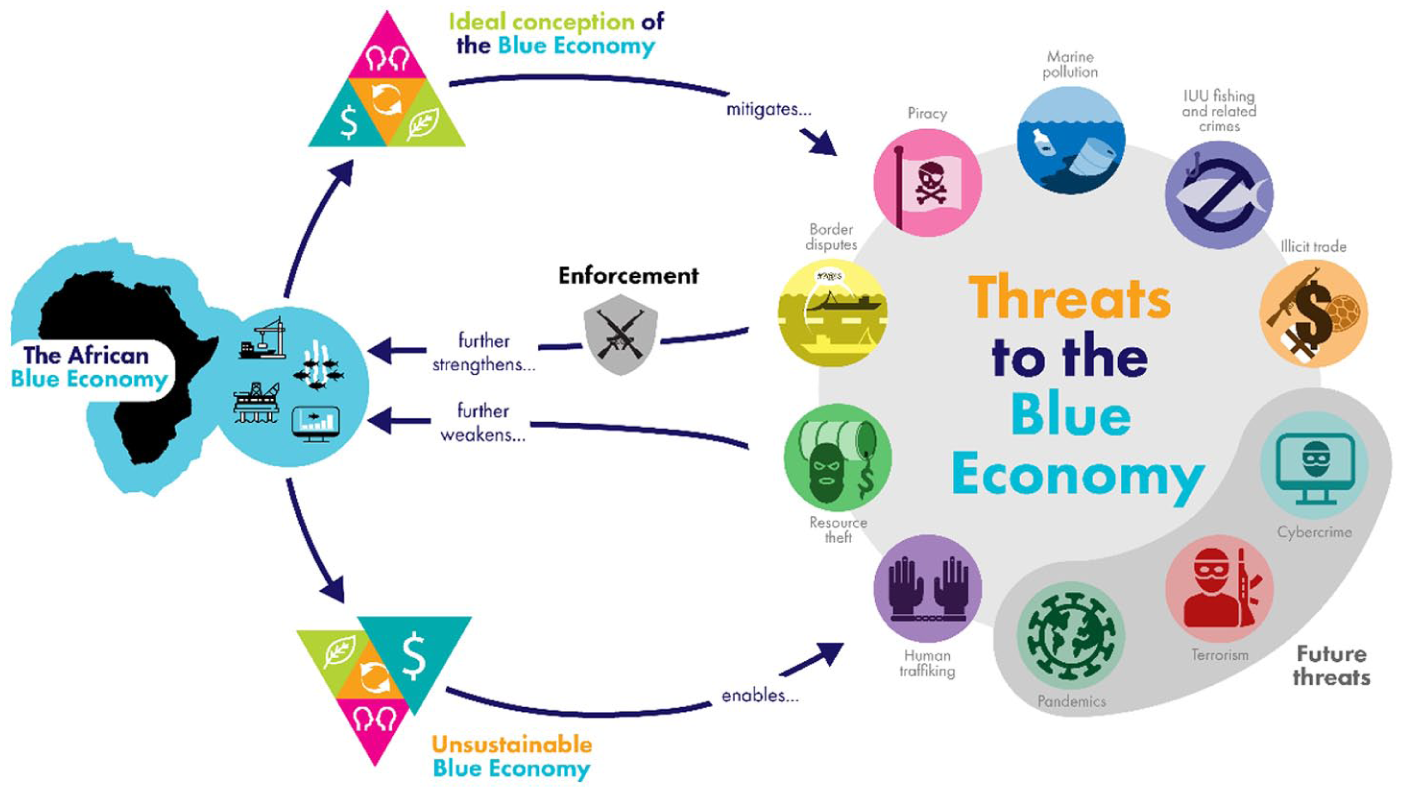
An ideal scenario for addressing threats to maritime security and ensuring sustainable exploitation of the Blue Ec (generated by the authors and adapted from Okafor-Yarwood and Onuoha, 2023).
Finally, for Africa, as captured earlier by Emerson’s quote, the ocean remains a source of promise and peril, offering opportunities for economic growth, social equity and ecological conservation. However, the current approach to its use, lacking equitable and ecologically sound policy, risks extending it as a site of contestation, exclusion and insecurity. Reversing the trend requires a deliberate commitment to inclusive policies that centre local communities, integrate diverse knowledge systems and embrace the root causes approach to maritime security.
Footnotes
Acknowledgements
This research has been greatly enriched by the invaluable support of the communities, practitioners and policymakers who, over the years, have shared critical insights into the complexities of ocean governance and maritime security threats across the African continent and elsewhere. We are grateful to the anonymous reviewers and editors of the journal, whose thoughtful and critical feedback helped us refine our arguments. Special thanks to Miss Louise Anderbjörk for assistance with Figure 1 and Dr Ravi Maharaj for  . We hope this work supports efforts to strengthen ocean governance and address the root causes of maritime insecurity.
Declaration of Conflicting Interests
The authors declared no potential conflicts of interest with respect to the research, authorship and/or publication of this article.
Funding
The authors received no financial support for the research, authorship and/or publication of this article.