




Abstract
The unique contextual attributes of the correctional environment and the frustrations, deprivations and challenges associated with it impact adjustment to incarceration. Offenders who cannot adjust to the correctional environment may experience behavioural and psychological challenges, including institutional misconduct, violence, aggression, withdrawal, anger, hostility, anxiety and depression. It is imperative to identify which variables are possible predictors of correctional adjustment among male incarcerated offenders in a private, maximum-security correctional centre in South Africa. In this quantitative study, 418 male maximum-security offenders were sampled. Questionnaire data were collected, and the results indicated that the combination of some variables (Friends, Avoidance and Problem-solving) predicted Internal Adjustment and (Anger, Friends and Verbal Aggression) predicted External Adjustment of the offenders. The results from this study could aid in the development of future programmes that assist offenders with adjusting to the correctional environment.
Keywords
Introduction
Each year, millions of offenders are incarcerated worldwide for their crimes (Agboola, 2016; Wagner and Rabuy, 2016; Wagner and Sawyer, 2018). Once incarcerated, offenders in South African correctional centres are no longer considered free citizens (Rogers, 2019), and they are housed within strict, rigid and structured non-therapeutic environments (Jordaan, 2014). Many offenders experience incarceration as traumatic (DeVeaux, 2013; Muntingh, 2009a; Picken, 2012; Rogers, 2019; Wright, 1983). They are confronted with the realisation of the loss of freedom, punitive conditions of confinement, adapting to an often new and unfamiliar environment, separation from loved ones, and they experience countless fears relating to personal safety and victimisation (Blevins et al., 2010; Carr, 2013; Casey et al., 2016; Crank, 2010; Delaney, 2019; DeVeaux, 2013; De Viggiani, 2007; Jordaan and Hesselink, 2022). These unique stressors can, in some instances, lead to a deterioration in the mental health of incarcerated offenders (Asberg and Renk, 2012; DeVeaux, 2013; Newhard, 2014; Picken, 2012).
Therefore, incarcerated offenders are expected to adjust to the correctional environment (Crank, 2010; Picken, 2012) as they may experience severe stress due to prevailing personal and/or correctional conditions (Asberg and Renk, 2012; DeVeaux, 2013; Peacock, 2008a; Picken, 2012; Tomar, 2013). While numerous studies highlight how offenders adjust to incarceration, relatively few studies examine the variables that can be used to predict correctional adjustment among male incarcerated offenders (Gonçalves, 2014), particularly in South African correctional centres (Hesselink and Booyens, 2014; Hesselink and Grobler, 2015). As a result, variables predicting correctional adjustment are significant to research from both an administrative and management perspective, including the treatment of offenders while they are incarcerated and for subsequent adjustment to being back in the community (Gonçalves, 2014).
The South African correctional context
In
Peacock and Theron (2007) argued that correctional centres construct a pathological environment requiring offenders to adapt to an unaccustomed set of values, traditions and social relationships. Offenders incarcerated in private, maximum-security correctional centres face unique, strict and punitive circumstances compared to offenders in public correctional centres (Jordaan, 2014; Loots, 2010; Matshaba, 2007; Sekhonyane, 2003). Maximum-security correctional centres further exacerbate particular tensions as thousands of offenders with long-term, and most often violent convictions, are forced to cohabitate in an austere, routine, harsh and almost clinical-type environment (Du Preez and Luyt, 2006; Jordaan, 2014; Matshaba, 2007). Incarcerated offenders are often exposed to severe forms of bullying, sexual victimisation or forced sex, gang activities, offender-on-offender violence, offender-on correctional staff attacks, exploitation, suicide and even murder (De Viggiani, 2007; Gear, 2007a, 2007b, 2008, 2010; Gear and Ngubeni, 2002; Lahm, 2008, 2009; Morash et al., 2010; Perez et al., 2009; Wolff et al., 2007). Studies found that between 25% and 68% of South African offenders reported some form of victimisation by either other offenders or staff during their incarceration (Booyens and Bezuidenhout, 2014; Cronje, 2017; Gear, 2007b, 2010; Peacock, 2008b). There are approximately 5714 to 7474 reported assaults per year (15.7 and 20.5 per day, respectively) (DCS, 2018, 2020; Muntingh, 2009b). However, Gear (2007b) reported that up to 20% of offenders do not want to report cases of victimisation out of fear of further victimisation. Therefore, the unique contextual attributes of the correctional environment and the frustrations, deprivations and challenges associated with it impact adjustment to incarceration (Crank, 2010; DeVeaux, 2013).
Adjustment
When offenders are unable to adjust to the correctional environment, they may experience behavioural and psychological challenges, which can include institutional misconduct, gang involvement, violence, aggression, withdrawal, anger, hostility, suicidal ideation, anxiety and depression (Casey et al., 2016; Cochran and Mears, 2013; Crank, 2010; DeVeaux, 2013; Dye, 2010; Logan, 2015; Picken, 2012; Rocheleau, 2013; Tomar, 2013; Woo et al., 2016).
Male offenders are often inclined to use
Various studies have found that active or expressive
In terms of
Most offenders are fearful of and anxious about being incarcerated before experiencing it (May et al., 2008). Offenders who have
According to Agbakwuru and Ibe-Godfrey (2017),
Therefore, the primary aim of this research study was to determine which variables are possible predictors of correctional adjustment among male incarcerated offenders in a private, maximum-security correctional centre in South Africa.
Method
Research design
This study used a quantitative approach and was non-experimental in nature. The main goal was to determine the relationships between variables, and therefore a correlational design (Stangor, 2015) was used.
Participants and sampling
A non-probability sampling technique, more specifically, convenience sampling (Stangor, 2015), was used, and data were collected voluntarily from male incarcerated offenders housed in a private, maximum-security correctional centre. Participants of all ages, ethnic groups, types of offences, sentence lengths, education levels, psychiatric history, gang affiliation, programme completion or otherwise were included as part of the sample. The sample consisted of 418 participants with male incarcerated offenders ranging in age from 21 to 58 (Mean = 33.73 years; SD = 6.42). Of the male offender participants, 227 (54.3%) indicated that they were first-time offenders, while 191 (45.7%) of the group were incarcerated more than once. Regarding sentence length, the range of the length of the sentences was between 10 and 25 years or more than 25 years (effective life sentence). Due to the nature of the environment and the fact that the correctional centre only houses maximum-security offenders, 97.1% of the sample group are serving 15 or more years in prison. The self-identified ethnicity composition of the male offenders in the study was as follows: 82.8% Black, 13.9% Coloured, 2.6% White, and 1% Asian or ‘Other’.
Measures
For data collection, the participants completed five distinct questionnaires. A self-compiled demographic questionnaire was used to obtain biographical information such as ethnicity, age, offender type classification and sentence length.
The Prison Adjustment Questionnaire (PAQ; Wright, 1983, 1985) was utilised to measure their self-perceptions of adjustment to incarceration. The PAQ comprises 30 items and has three subscales: (1) Internal Adjustment, (2) External Adjustment and (3) Physical Adjustment (Wright, 1983). High scores on the PAQ suggest that offenders struggle with adjusting to incarceration (Wright, 1983, 1985). Cronbach’s alphas varying between .71 and .76 were identified for these three subscales (Rogers, 2019).
The Coping Strategy Indicator (CSI; Amirkhan, 1990) was utilised to gauge the coping strategies of the offenders. The CSI has 33 items and three subscales: (1) Problem-solving, (2) Seeking Social Support and (3) Avoidance. Higher scores on each subscale suggest a higher tendency to utilise the associated coping strategy (Amirkhan, 1994). In South African studies on incarcerated male offenders, Cronbach’s alphas for the subscales were identified as ranging between .62 and .90 (Jordaan, 2014; Jordaan and Hesselink, 2022; Jordaan et al., 2018; Pretorius, 2019; Pretorius et al., 2022; Rogers, 2019).
The Buss and Perry Aggression Questionnaire (BPAQ; Buss and Perry, 1992) was used to measure the aggression levels of the offenders. The BPAQ measures 29 items of aggression, divided into four subscales: (1) Physical Aggression, (2) Verbal Aggression, (3) Anger and (4) Hostility. In South African studies on incarcerated male offenders, Loots (2010), Jordaan (2014), Jordaan et al. (2018), Rogers (2019), Jordaan and Hesselink (2022) and Pretorius et al. (2022) identified Cronbach’s alphas for the subscales as ranging between .62 and .87. Higher scores indicate that the individual shows higher levels of that particular type of aggression. The BPAQ’s overall Cronbach’s alpha has been identified as .89 (Buss and Perry, 1992).
The Multidimensional Scale of Perceived Social Support (MSPSS; Zimet et al., 1988) was used to measure the perceived social support of the offenders. The MSPSS measures an individual’s perceived social support on three aspects: (1) Friends, (2) Family and (3) Significant Other. In offender studies, the MSPSS was found to have good internal reliability, with Cronbach’s alphas ranging between .90 and .93 (Brown and Day, 2008; Rogers, 2019). A higher score on the MSPSS indicates a higher degree of perceived social support (Zimet et al., 1988).
Procedure
Official permission for this study was obtained from the university’s ethics committee with which the authors are affiliated, as well as the DCS, South Africa. All the participants were thoroughly informed of their rights as research participants. Those willing to participate in the study all signed an informed consent form. The participants were assured of their anonymity and confidentiality at all times. The participants were informed of the voluntary nature of the study and that they were under no obligation to participate in the study if they did not want to. The researchers promised no incentives to the participants. They were fully informed and aware that no special benefits or privileges would be received and that their parole outcomes would not be influenced in any way through their choice to participate in the study.
Results
Descriptive analyses
The means, standard deviations, skewness, kurtosis and the internal consistencies of the various subscales of the measuring instruments are illustrated in Table 1 for the total group of participants. Cronbach’s alpha coefficients were calculated as an indication of the internal consistency of the subscales.
Descriptive statistics and reliability coefficients for the PAQ, MSPSS, BPAQ and CSI subscales.
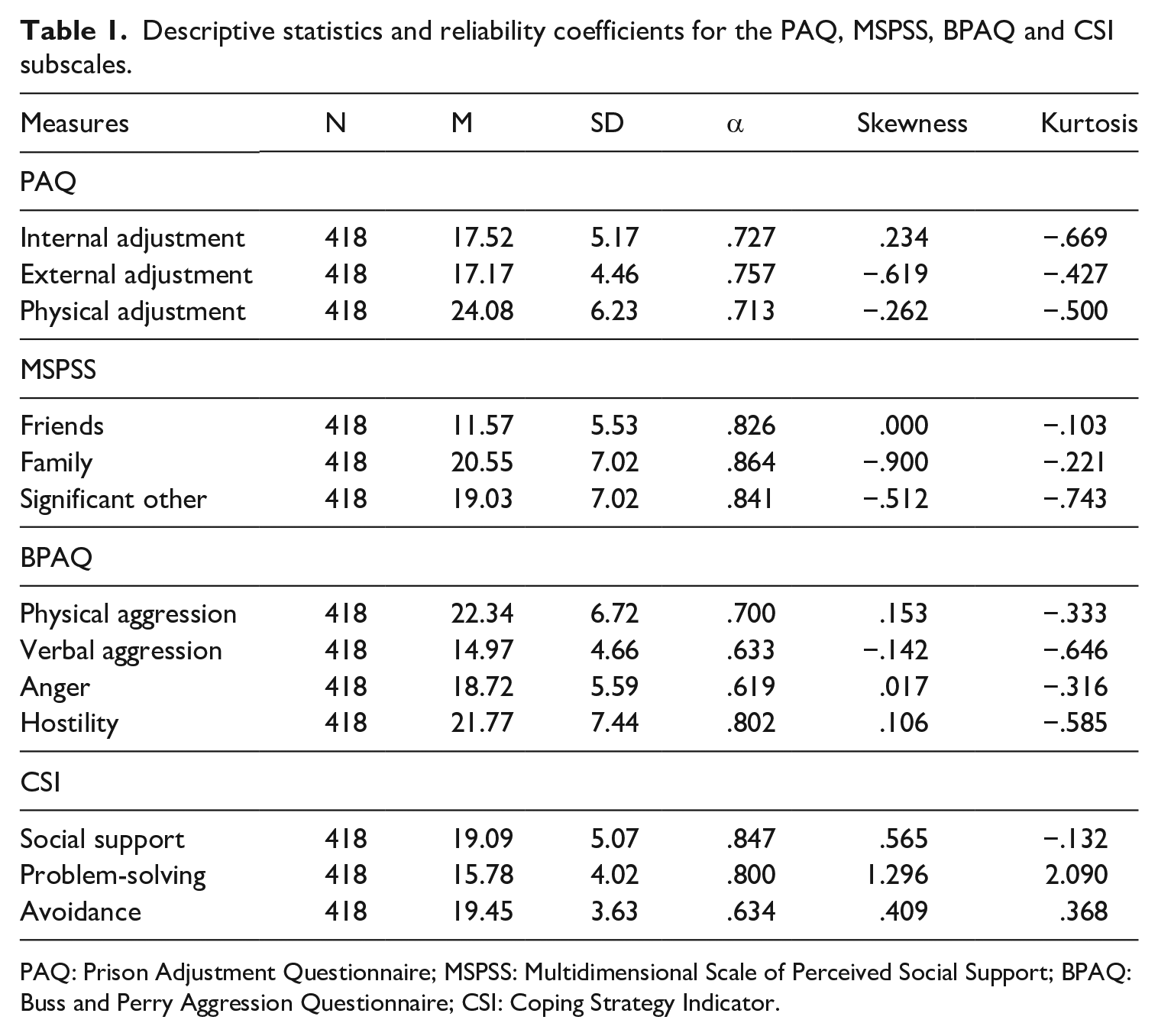
PAQ: Prison Adjustment Questionnaire; MSPSS: Multidimensional Scale of Perceived Social Support; BPAQ: Buss and Perry Aggression Questionnaire; CSI: Coping Strategy Indicator.
It is evident from Table 1 that the Cronbach’s alpha coefficients for the PAQ, MSPSS, BPAQ and CSI subscales range from .619 to .864. Therefore, these scales displayed acceptable levels of internal consistency (Vogt, 2005) and were all included in the subsequent analyses. No distributional issues were detected, the skewness and kurtosis values were within acceptable ranges, and no univariate or multivariate outliers were found.
Before conducting the regression analyses, the Pearson Product Moment correlation coefficients were calculated between the independent (predictor) and dependent (criterion) variables and are illustrated in Table 2. To interpret the practical significance of results, effect sizes (Steyn, 2005) were calculated. For correlations, an effect size of .1 is small, .3 is medium and .5 is large. Only results with medium to large effect sizes will be reported on.
Correlations between the PAQ subscales and Age, offender type, sentence length, CSI subscales, MSPSS subscales and BPAQ subscales (N = 418).
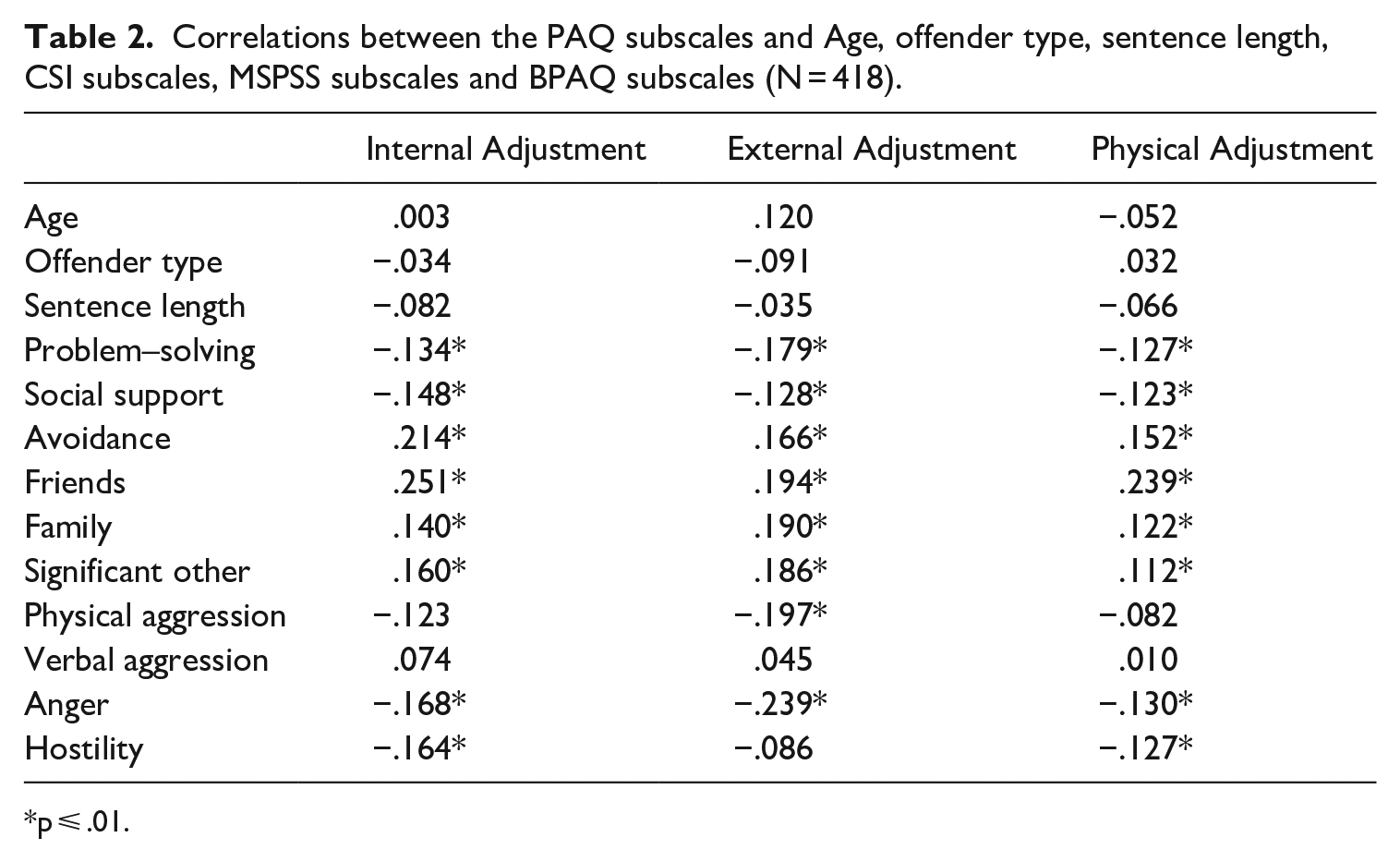
p ⩽ .01.
Table 2 indicates that the strongest correlation coefficients are (1) between the subscale Friends and Internal Adjustment (.251) and (2) between the subscale Friends and Physical Adjustment (.239). These coefficients are statistically significant on the 1% level and gravitate towards a medium effect size.
Regression results
First,
The results of the hierarchical regression analyses indicated that the combination of all 13 predictor variables were successful in predicting a statistically significant percentage of the variance in Internal (16.2%; F13;404 = 5.999; p ⩽ .01), External (17.5%; F13;404 = 6.577; p ⩽ .01) and Physical (11.6%; F13;404 = 4.073; p ⩽ .01) adjustment. However, although some of the individual predictor variables independently statistically predicted a significant percentage of the variance in these three adjustment scales, none of them showed a medium to large effect size.
Since the hierarchical regression analyses did not deliver any practically significant results for any of the individual independent variables,
Stepwise regression analysis with internal adjustment as criterion variable.
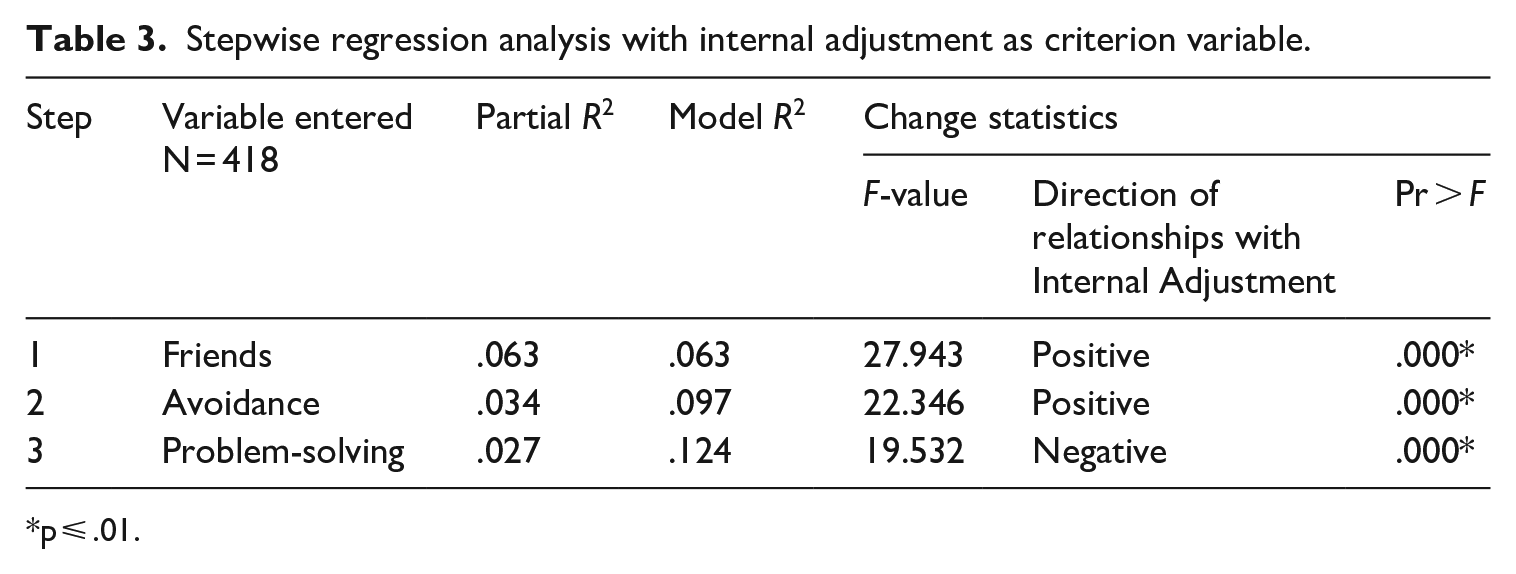
p ⩽ .01.
In Step 1, the independent variable, Friends, was first entered into the regression equation and accounted for 6.3% of the variance of Internal Adjustment (F = 27.943, p ⩽ .01, p² = .07). In Step 2, the independent variable, Avoidance, was added to the regression equation and contributed an additional 3.4% to the variance of Internal Adjustment (F = 22.346, p ⩽ .01). Combined, these two independent variables, Friends and Avoidance, accounted for 9.7% (p ⩽ .01, p² = .10) of the variance in the offenders’ Internal Adjustment. In the last step (Step 3), the independent variable, Problem-solving, was added to the regression equation and contributed an additional 2.7% (F = 19.532, p ⩽ .01) to the variance of Internal Adjustment of the participants. These three independent variables, Friends, Avoidance and Problem-solving explained 12.4% (p ⩽ 0.01, p² = .12) of the variance in the Internal Adjustment of offenders, while the remaining 10 variables (16.2%−12.4% = 3.8%) in combination only explained an additional 3.8% to the variance in Internal Adjustment.
The results of the stepwise regression analysis with External Adjustment as the criterion variable are reported in Table 4.
Stepwise regression analysis with external adjustment as criterion variable.
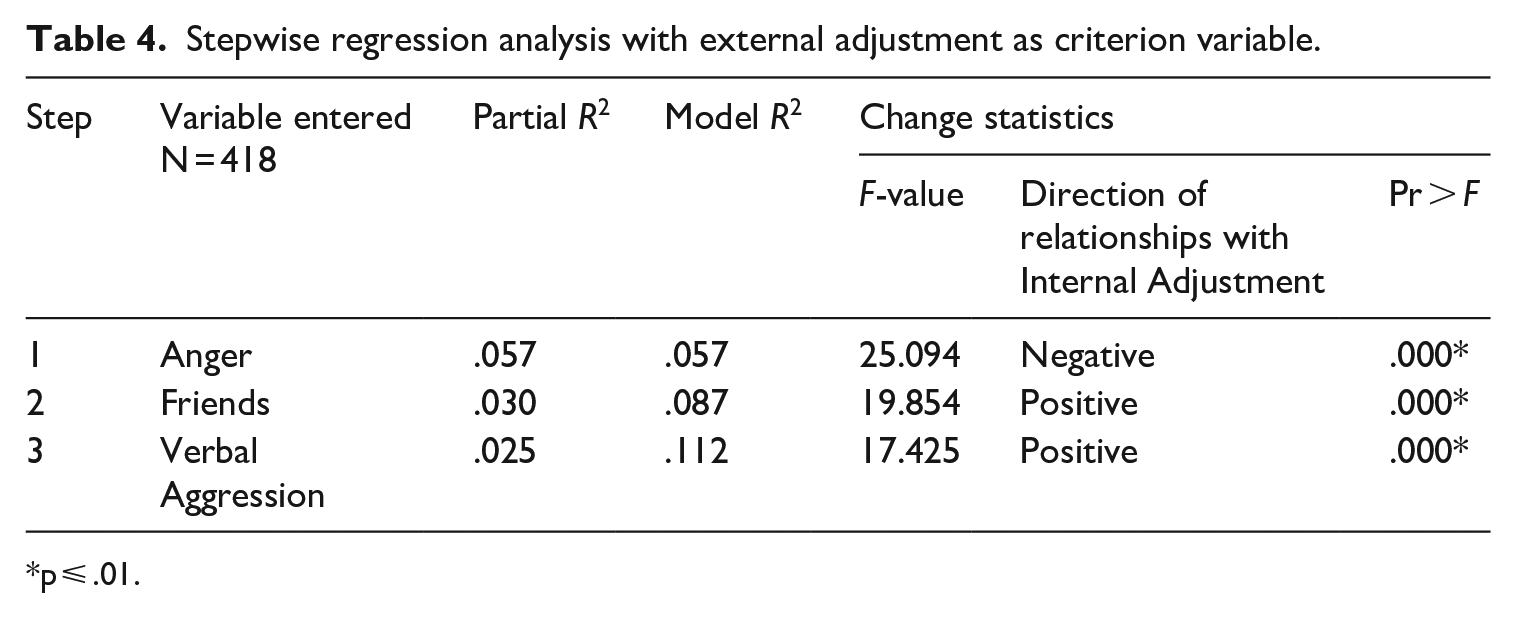
p ⩽ .01.
In Step 1, the independent variable, Anger, was first entered into the regression equation and explained 5.7% of the variance of External Adjustment (F = 25.094, p ⩽ .01, p² = .06). In Step 2 of the regression equation, the independent variable, Friends, was added and contributed an additional 3.0% to the variance of External Adjustment (F = 19.854, p ⩽ .01). Together these two independent variables, Anger and Friends, accounted for 8.7% (p ⩽ .01, p² = .10) of the variance in their External Adjustment. Finally, the independent variable, Verbal Aggression, was added to the regression equation and contributed an additional 2.5% (F = 17.425, p ⩽ .01) to the variance of External Adjustment of the participants. These three independent variables, Anger, Friends and Verbal Aggression, explained 11.2% (p ⩽ .01, p² = .11) of the variance in the External Adjustment of the offenders, while the remaining 10 variables (17.5%−11.2% = 6.3%) in combination only explained an additional 6.3% to the variance in External Adjustment.
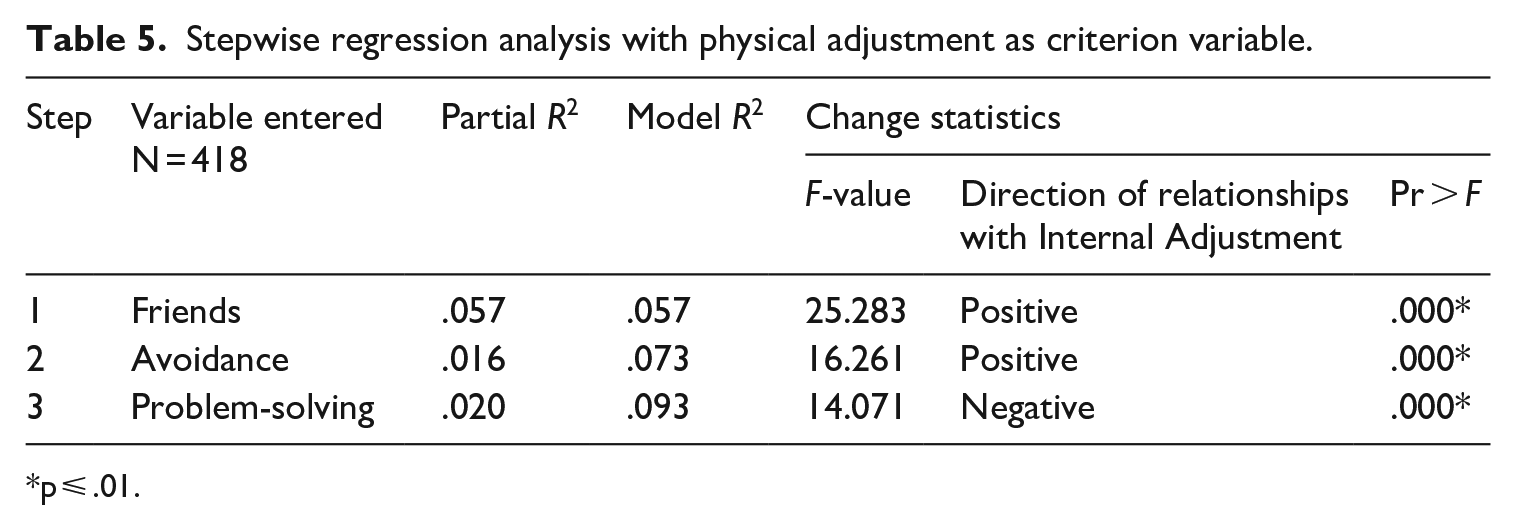
The results of the stepwise regression analysis with Physical Adjustment as the criterion variable are reported in Table 5.
Stepwise regression analysis with physical adjustment as criterion variable.
p ⩽ .01.
In Step 1, the independent variable, Friends, was first entered into the regression equation and explained 5.7% of the variance of Physical Adjustment (F = 25.283, p ⩽ .01, p² = .06). Second, the independent variable, Avoidance, was added to the regression equation and contributed an additional 1.6% to the variance of Physical Adjustment on the 1% level of significance (F = 16.261, p ⩽ .01). Combined, these two independent variables, Friends and Avoidance, explained 7.3% (p ⩽ .01, p² = .07) of the variance in the offenders’ Physical Adjustment. In Step 3, the independent variable, Problem-solving, was added to the regression equation and contributed an additional 2.0% (F = 14.071, p ⩽ .01) to the variance of Physical Adjustment. These three independent variables, Friends, Avoidance and Problem-solving, explained 9.3% (p ⩽ .01, p² = .09) of the variance in the Physical Adjustment of the offenders, while the remaining 10 variables (11.6%−9.3% = 2.3%) in combination only explained an additional 2.3% to the variance in Physical Adjustment.
Discussion
A more distinct understanding of offender adjustment in private, maximum-security correctional centres is required. This research highlights that while variables (coping, aggression, perceived social support, age, offender type classification, sentence length) can statistically significantly predict correctional adjustment, the results are of little practical significance. However, the stepwise regression analyses did reveal that the combination of some variables (Friends, Avoidance and Problem-solving) for Internal Adjustment and (Anger, Friends and Verbal Aggression) for External Adjustment were of medium practical importance.
An interesting finding from this study is the positive statistically significant correlations between Friends (as a form of perceived social support) and Internal Adjustment and Physical Adjustment. These results contradict previous findings that offenders who perceive more support from friends and significant others experience better correctional adjustment (Adams, 1992; Asberg and Renk, 2012; Liu and Chui, 2013; Woo et al., 2016). Thus, social support is not always supportive (Hobbs, 2000), and it depends on how offenders perceive the support they receive, albeit negative (Larson and Lee, 1996; McColl et al., 1995). Thus, although the offender might receive support, it may not be perceived as particularly supportive. Research on a South African sample of incarcerated offenders indicated that offers of ‘friendship’ by other offenders while incarcerated could be used as a way to control and manipulate an offender (Gear and Ngubeni, 2002). In addition, the more offenders are exposed to other offenders with delinquent behaviours, the more of a negative impact it can have on them (Gear and Ngubeni, 2002; Hesselink and Grobler, 2015; Peacock and Theron, 2007). In essence, while offenders may perceive some degree of support from ‘friends’ while incarcerated, research has shown that ‘moves resembling gestures of friendship’ are among the most commonly reported forms of trickery among incarcerated offenders (Gear and Ngubeni, 2002: 18). Victims of such trickery are frequently unaware that an exchange is taking place and debt being created that will have to be repaid (Gear and Ngubeni, 2002). Offenders receiving more support from ‘friends’ who are also incarcerated may be forced or coerced into gang activity as a form of protection and survival and be required to engage in behaviours, such as providing or selling illegal items, which may impact their adjustment (Dissel, 1996; Gear, 2007a, 2007b, 2008; Gear and Ngubeni, 2002). Research has also suggested that offenders who rely solely on outside social support, such as friends and family, experienced poorer adjustment to the correctional environment (Lindquist, 2000). Nevertheless, research has indicated that social support provided to offenders by the correctional centre or significant others lessen criminal involvement while incarcerated and enhances social ties (Cochran and Mears, 2013; Siennick et al., 2013; Woo et al., 2016). Social support while incarcerated is also vital as it assists offenders to satisfy their basic needs and position themselves with a measure of security within the correctional environment (Liu and Chui, 2013).
The results also showed that problem-solving and avoidance as coping strategies could serve as predictors of Internal Adjustment. Research has found that offenders who can use problem-solving as their preferred form of coping tend to experience incarceration more effectively and positively (Biggam and Power, 1999; Hesselink-Louw, 2004; Jordaan, 2014; Lipsey and Cullen, 2007). However, other research has indicated that despite problem-focused coping (i.e. problem-solving) being a healthy and effective form of coping in the real world (Carver, 2011), it is ineffective and particularly frustrating within the correctional context (Chahal et al., 2016; Picken, 2012; Van Herreveld et al., 2007). This is because the offenders’ controllability of problems within the correctional environment is often quite low and since offenders have limited autonomy and freedom while incarcerated (Matshaba, 2007; Sykes, 1958), particularly in a maximum-security correctional centre (Jordaan, 2014; Loots, 2010; Matshaba, 2007; Neser, 1993). Although the correlations between problem-solving and the adjustment scales in this study were not practically significant, the findings did indicate that higher levels of problem-solving were associated with improved levels of adjustment. This finding is in line with international and South African studies (Biggam and Power, 1999; Hesselink-Louw, 2004; Jordaan, 2014; Lipsey and Cullen, 2007; Picken, 2012; Rocheleau, 2011) that indicated that problem-solving may be an adaptive form of coping in the correctional environment, which in turn could lead to better adjustment.
Chahal et al. (2016) found that avoidance coping in the form of denial and externalisation was one of the most common forms of coping among mentally healthy male offenders. This study showed that male offenders are more likely to ignore stressful situations or minimise their seriousness and blame other people for their behaviour while incarcerated (Chahal et al., 2016). Avoidance coping is seen as a type of coping employed when an individual initiates cognitive and behavioural efforts to deny, minimise or ultimately avoid dealing directly with stressful situations (Cronkite and Moos, 1995; Newhard, 2014; Penley et al., 2002). Avoidance coping may be normal and, in some circumstances, useful in the correctional environment, especially regarding the challenging correctional context (Lazarus and Folkman, 1984). However, previous studies have indicated that avoidance coping responses can be closely linked to distress, depression and negative outcomes (Abbott, 2003; Moos and Holahan, 2003). Similarly, this study’s correlations between avoidance and the adjustment scales were not practically significant. However, the findings in this study did indicate that higher levels of avoidance were associated with decreased levels of adjustment. This finding aligns with studies that reported that avoidance coping tends to lead to mental health concerns and negative outcomes such as maladjustment (Abbott, 2003; Moos and Holahan, 2003). Offenders who are less inclined to use avoidance as a coping strategy are more inclined to be vigilant when making decisions that lead to better coping and adjustment (Pretorius et al., 2022).
Anger and verbal aggression served as predictors of External Adjustment. In terms of adjustment and aggression levels, previous studies have affirmed that offenders with higher levels of aggression tend to be more lonely and suicidal than their less aggressive counterparts (Carrizales, 2013) and that these maladaptive psychological factors impacted their correctional adjustment (Picken, 2012). Other researchers, however, argued that more aggressive and violent offenders tend to adjust better to the correctional environment as they tend to control and intimidate other offenders and are targeted less frequently than non-violent offenders (Crank, 2010; HM Prison and Probation Service, 2018). A 2018 analytical summary indicated that offenders who acknowledged bullying others while incarcerated reported perceiving benefits from doing so and from engaging in aggression in general (HM Prison and Probation Service, 2018). More aggressive, angry and violent offenders may experience better correctional adjustment as they may be intimidating to other offenders and be targeted less often (Crank, 2010; HM Prison and Probation Service, 2018). It is also likely that they may be more feared by other offenders; thus other offenders avoid them (Picken, 2012).
Although the impact of incarceration varies from one offender to another and the effects are frequently reversible, adjustment to incarceration is often a challenging process, which involves several post-release consequences (Gonçalves, 2014; Haney, 2003). How the individual offender responds to incarceration is an important predecessor for shaping his behaviour while incarcerated and for succeeding recidivism (Hochstetler and DeLisi, 2005; Hsieh et al., 2018; Nagin et al., 2009). Research found that adverse experiences while incarcerated, such as institutional misconduct (Nagin et al., 2009; Trulson et al., 2010, 2011) and ineffective correctional rehabilitation programmes (Grady et al., 2015), are significant predictors of reoffending upon release (Hsieh et al., 2018). Researching and understanding offender adjustment to maximum-security incarceration will thus aid in developing future programmes that will assist offenders with adjustment to the correctional environment. This will support the expectant rehabilitation and ultimately the re-entry of offenders back into society.
Limitations
A literature search did not deliver results as to any previous, similar studies investigating the predictors of correctional adjustment among male incarcerated offenders in private, maximum-security correctional centres in the South African context. This is a pertinent limitation of the study, especially considering that there was no specific previous literature to draw upon or compare this particular population’s results.
Another limitation of this study is that the data collection site is unique, structured and contextualised. The vast majority of offenders who are detained there and who participated in this study are serving very long sentences, most more than 25 years, for similar, violent-type offences. Due to this, the results of this study are not particularly generalisable to incarcerated offenders in public correctional centres around South Africa and beyond.
Another particular limitation of the study pertains to the use of convenience sampling. With the use of convenience sampling, the sample is not representative of the population, and therefore these results are not generalisable (Stangor, 2015) to other populations of offenders.
Furthermore, all of the data used to formulate the results of this study was gathered using self-report questionnaires. The transparency of self-report assessment methods is viewed as a limitation as participants could determine the purpose of the instruments in some cases. This can be particularly problematic in the correctional context where offenders may be motivated to misrepresent their true selves to outsiders as they have been understood to be deceptive individuals who will portray themselves in a more favourable light (Hare, 1991, 2011; Seager, 2005). Therefore, the possibility exists that the participants in this study could have engaged in reactivity when responding to the questionnaires in an attempt to appear more socially desirable or promote themselves through their responses in the hopes that it will improve their parole prospects or other correctional conditions.
Recommendations for future research
South African researchers must conduct sustained research among incarcerated offender populations and, more specifically, male incarcerated offenders in the two private maximum-security correctional centres in South Africa. The Research Agenda of the Department of Correctional Services (2019–2023) unequivocally states that ‘research in corrections has led to significant discoveries, development of new ways of rehabilitating offenders and improvements in correctional care’ (DCS, 2019: 1). Without continued research, it is difficult to support offenders in their adjustment to these challenging environments, which impacts their rehabilitation within the correctional centre and upon the broader society if and when released.
Research shows an ‘adjustment period’ for the offender, typically lasting up until 1 year after initial incarceration in a new environment. Future researchers can endeavour to research only those incarcerated offenders that have been incarcerated for less than 1 year in public and/or private correctional centres. This will most probably yield more significant results.
The same or similar-type research can expectantly be conducted at public, medium or maximum-security correctional centres in South Africa. This would ensure a more varied sample of offenders of different ages, awaiting trial detainees, offender type classifications and sentence lengths, among others. Therefore, more research may address the question of which variables are the best predictors of correctional adjustment among male incarcerated offenders in correctional centres. Future research may also prove useful in answering this question within the context of public correctional centres in South Africa. The findings of this study could also be used to inform interventions that will enable offenders to learn the necessary coping skills required to adjust to the correctional environment and realise that there are better ways of dealing with the daily challenges in the correctional environment. Importantly, correctional staff members should realise that offender coping strategies can be changed while incarcerated. In this regard, offenders who are disadvantaged in terms of their ability to cope and adjust should be encouraged to participate in available intervention programmes aimed at gaining new skills that will help them adjust and cope both inside and outside of the correctional environment.
Contribution of this study
This study contributed to the larger collection of South African research, which aims to understand correctional populations. In 2019, the DCS explicitly noted in their Research Agenda of the Department of Correctional Services (2019–2023) the absolute importance of correctional research in providing vital information regarding incarcerated offender populations, their trends as well as planning and identifying risk factors for the main purpose of improving correctional centres. Thus, this study contributed to the incredibly limited body of correctional research on offenders incarcerated in private, maximum-security correctional centres in South Africa and beyond. This study also highlighted specific variables as predictors of correctional adjustment among male incarcerated offenders in a private, maximum-security correctional centre. These variables can be further investigated in future research. Finally, this research can assist with the future development and implementation of rehabilitation programmes to assist with the treatment and eventually the potential reintegration of offenders back into the community post-release.
Footnotes
Declaration of Conflicting Interests
The author(s) declared no potential conflicts of interest with respect to the research, authorship, and/or publication of this article.
Funding
The author(s) received no financial support for the research, authorship, and/or publication of this article.
