




Abstract
Correctional environments are regarded as degrading, dangerous, difficult, stigmatizing, stressful, unsafe, and violent. Young adult male incarcerated offenders need to acquire the necessary coping skills to survive in the correctional environment. This research study aimed to determine which variable(s) or set of variables explain a significant percentage of the variance in coping among young adult male incarcerated offenders in a South African private maximum-security correctional center. The research approach in this study was quantitative, and the nature of the research was nonexperimental. A correlational research design was used. The sample consisted of 187 young adult male incarcerated offenders. The hierarchical regression analysis results indicated that vigilance was the only predictor variable that statistically and practically significantly predicted seeking social support and problem-solving. This finding implies that young adult offenders who are more vigilant regarding decision-making are more inclined to solve problems better and use social support to cope better.
Keywords
Background
South Africa is a country filled with violent and aggressive crimes (Fourie, 2018; Thobane and Prinsloo, 2018), with 235 active South African correctional centers accommodating an estimated 162,875 incarcerated offenders (Department of Correctional Services [DCS], 2019a). Internationally and in South Africa, correctional environments are considered degrading, dangerous, difficult, stigmatizing, stressful, unsafe, and violent (Agboola, 2016; Massoglia, 2008; Stephens, 2018; Wolff and Shi, 2009a, 2009b, 2009c). Correctional centers in different countries tend to expose incarcerated offenders to strict rules and regulations, with offenders battling with numerous challenges, such as poor health care and unsafe living conditions (Kerley and Copes, 2009; Listwan et al., 2010; Stephens, 2018) that negatively impact their physical and mental health during incarceration (Crewe et al., 2020; De Vigianni, 2007; Gonzalez and Connell, 2014; Semenza and Grosholz, 2019; Stephens, 2018; Trulson, 2007; Wallace and Wang, 2020). Essential constructive coping skills are thus required to survive within a correctional environment (Mandell, 2006) that is known for various stressors, such as overcrowding, victimization, substance abuse, violence, suicide, and corruption (e.g. De Vigianni, 2007; Liebling, 2008; Peacock, 2008; Perez et al., 2009; Rocheleau, 2015; Sarkin, 2008).
The South African correctional environment
There are currently three categories of correctional centers in South Africa: minimum-security, medium-security, and maximum-security centers (Neser, 1993). Maximum-security correctional centers accommodate incarcerated offenders that are viewed as a danger to society and who pose a great risk to other individuals; their rights regarding privileges, movement, and association are severely restricted (Neser, 1993). Maximum-security correctional centers are always secured and controlled, and incarcerated offenders are under strict and direct supervision to ensure that they have restricted moving and association abilities (Matshaba, 2007). In South Africa, two types of maximum-security correctional centers exist: (1) governmentally operated and (2) private maximum-security correctional centers. Private maximum-security correctional centers are private companies that the government contracts to render and control correctional centers on their behalf (Du Preez and Luyt, 2006; Hesselink-Louw, 2004; Matshaba, 2007; Seiter, 2008). In South Africa, there are two of these private correctional centers (Du Preez and Luyt, 2006; Hesselink-Louw, 2004; Matshaba, 2007), and they are usually operated and managed differently compared to governmentally operated maximum-security centers. In private correctional centers, the staff is better qualified, and management supervision and control are done more effectively (Du Preez and Luyt, 2006). These private centers also guarantee no overcrowding, with incarcerated offenders following strict schedules and programs daily to ensure that various interventions and developmental programs take place (Du Preez and Luyt, 2006; Matshaba, 2007).
Incarceration experience
Young adult offenders are no longer free citizens when incarcerated, and depending on their offenses, they are usually housed within strict, rigid, and structured nontherapeutic correctional environments that tend to impact their mental health negatively (Jordaan, 2014). These young adult offenders also tend to face daunting challenges within South African correctional environments such as overcrowding, boredom, corruption, bullying, sexual victimization, forced sex, gang activity, offender-on-offender violence, offender-on-staff violence, exploitation, suicide, and even murder (Gear, 2007a, 2007b, 2008; Hesselink-Louw, 2004; Muntingh, 2009; Sarkin, 2008; Stephens, 2018; Wright et al., 2017). The strict correctional environment makes the incarceration experience traumatic for many offenders as they are deprived of freedom, information, relationships, privileges, independence, care, and safety (Muntingh, 2009; Rogers, 2019).
Incarcerated offenders tend to view the loss of freedom and autonomy during incarceration as the worst aspect of incarceration (Muntingh, 2009). These offenders remarked that the mere awareness that there is a life outside of the correctional environment and that their family members continued with their daily routines while their lives stood still in the correctional center is undoubtedly a difficult experience (Muntingh, 2009). Therefore, they tend to be concerned about their personal safety as they view correctional environments as unsafe, which causes tremendous strain on incarcerated offenders, especially first-time offenders (Hesselink-Louw, 2004; Muntingh, 2009). Lack of information also leads to stress among incarcerated offenders, and they tend to be bewildered when first arriving at the correctional center (Muntingh, 2009). Numerous offenders also view lack of proper care, especially medical care, as a challenging aspect of incarceration. The lack of proper care gives incarcerated offenders a sense of being ignored or makes them feel they are not being viewed as a person (Muntingh, 2009). Long-term sentences of being incarcerated produce habits of thinking and acting that are dysfunctional; for instance, hyper-vigilance, interpersonal distrust, and being suspicious become habitual for these offenders. These dysfunctional ways of acting and thinking represent a substantial impairment to the incarcerated offenders’ adjustment abilities post-release, and these harms may be irreversible (Wright et al., 2017).
Long-term sentences also predominantly affect how time is experienced by incarcerated offenders (Crewe et al., 2020; O’Donnell, 2014). While time in a correctional environment feels endless, empty, and unreal, and is viewed by offenders as something that needs to be depleted, the long-term incarcerated offender remains aware that time outside of the correctional center’s walls is all too valuable (Crewe et al., 2020; Jamieson and Grounds, 2005). One of the utmost struggles for long-term incarcerated offenders is dealing with the overwhelming nature of the time ahead, which may feel unbearable to anticipate (Cohen and Taylor, 1972; Crewe et al., 2020) because of its unknown nature.
Thus, during the initial stages of incarceration, young adult offenders tend to struggle to plan ahead, be active in constructive activities, and be future-orientated (Crewe et al., 2020). To survive the correctional environment, young adult offenders tend to use violence to cope. They resort to violence to protect themselves (Ricciardelli, 2014) or to demonstrate their toughness and to increase their status within the correctional environment (Bishop and Frazier, 2000; Crewe et al., 2020; Ricciardelli, 2014). Thus, young adult offenders require more constructive coping skills to adjust to the correctional environment and overcome the daily challenges experienced during incarceration (Jordaan, 2014).
Coping in the correctional environment
Coping refers to any action that occurs in response to potentially stressful events, and predicting how an offender copes is imperative in future adaptation (Flouri et al., 2013; Zamble and Porporino, 1990), especially since coping difficulties are one of the causes of recidivism (Palermo, 2015; Zamble and Porporino, 1990). Offenders rarely attempt to develop deliberate, persistent, or systematic approaches to situations, conscious strategies of self-control or other cognitive techniques, or any sort of planning and organization when it comes to their coping abilities. While many of their attempts to cope are directly oriented toward problems, these attempts tend to be unsystematic and mostly scattered, sporadic, and unplanned (Zamble and Porporino, 1990). Maladaptive coping occurs when young adult male incarcerated offenders are unable to deal with the stressors of incarceration (Blevins et al., 2010; Condon et al., 2008; Mandell, 2006; Tasca et al., 2010; Trulson, 2007; Wolff and Shi, 2009c). According to Zamble and Porporino (1990), offenders can usually not successfully cope with the correctional environment. More recent studies supported their findings that offenders tend to struggle to cope with life in correctional centers (Crewe et al., 2020; Mandell, 2006; Reid and Listwan, 2018; Wooldredge, 2020).
Some young adult offenders overcome the stressors within the correctional environment by developing prosocial coping mechanisms, while others use maladaptive coping strategies when responding to stressors (Asberg and Renk, 2014). Mostly, young adult male incarcerated offenders tend to lack adequate coping skills and struggle to utilize positive skills when addressing their personal problems (Chubaty, 2001; Rocheleau, 2011). Their coping strategies typically involve avoidance, aggressive behavior, and a temporary escape from their problems without considering the consequences, which tend to worsen their problem situations (Chubaty, 2001).
When young adult male incarcerated offenders are not able to cope in maximum-security correctional centers, it could lead to depression, anxiety, suicide, panic, withdrawal, grief, trauma, loss of control, hopelessness, suicide ideation, hostility, rage, misconduct, and violence (Asberg and Renk, 2014; Bouffard, 2015; Wright et al., 2017). However, when young adult male incarcerated offenders adopt constructive coping strategies, it will aid in the moderation of stress and improve the probability of the incarcerated offender’s survival in a correctional environment (Agbakwuru and Awujo, 2016).
Coping and aggression
Aggression and violence, which are maladjusted forms of coping, are mainly used by offenders to cope within the correctional environment (Jordaan and Hesselink, 2021; Moore et al., 2018; Reid and Listwan, 2018; Steiner et al., 2014; Zamble and Porporino, 1990). Studies have found that various variables lead to aggressive behavior among young adult male offenders within the correctional environment, such as age, previous violence, previous transgressions, overcrowding, being part of a gang, substance abuse, genetic predisposition, psychiatric disorders, biological factors, prior victimization, lack of coping skills, low self-control, lengthy sentences, their security level, and their upbringing (Grobler and Hesselink, 2015; Jordaan and Hesselink, 2021; Kamaluddin et al., 2016; Ricciardelli, 2014; Rocheleau, 2015; Wooldredge, 2020). Studies have shown that interventions focusing on constructive coping skills (i.e. taking direct action, problem-solving) tend to enable offenders to deal better with their aggression levels (Brookes, 2010; Picken, 2012; Rocheleau, 2011).
Coping and decision-making
When young adult male incarcerated offenders use more constructive coping strategies, they tend to have better decision-making skills (Bouffard and Bergseth, 2008; Carmichael and Piquero, 2004). Young adult male incarcerated offenders’ experience of anger tends to decrease the perceived disadvantages of maladaptive decision-making (Bouffard, 2015), and it might make them more predisposed for cautious deliberations and ineffective coping, and can, therefore, lead to increased aggressive behaviors using numerous psychophysiological mechanisms (Loewenstein and Lerner, 2003; Novaco, 2011). These individuals habitually lean on risky activities without considering the necessary consequences (Schreck et al., 2006). Thus, effective decision-making shapes and directs offenders’ lives and provide them with positive coping styles (Çolakkadıoglu and Güçray, 2007). Incarceration leads to different thinking habits among offenders (Wright et al., 2017), and impulsivity results in their inability to determine the long-term effects of their poor decision-making capabilities and poor interactions with others (Toch, 1997). Toch (1997) suggests that young adult male incarcerated offenders need to be proactive in their decision-making to direct their lives to cope within the correctional environment.
Coping and age
Studies focusing on age found that older offenders tend to regulate their emotions better (Lawton, 2001), place more importance on the emotional facets of their surroundings (Carstensen and Mikels, 2005), and utilize more passive ways in regulating their emotions when faced with a stressful encounter that is experienced as out of their control (Mandell, 2006). Older incarcerated offenders tend to show a decrease in the severity and frequency of disciplinary violations in correctional centers, which indicates that as age increases, coping ability does too (Mandell, 2006). Young adult offenders are more inclined to be volatile and cope by using aggression (Casey et al., 2016; Chahal et al., 2016; McGuire, 2018; Moore et al., 2018; Reid and Listwan, 2018; Steiner et al., 2014).
Coping and type of crime
Differences have been found between nonviolent and violent young adult male incarcerated offenders’ coping abilities (Feelgood et al., 2005). Violent offenders often use maladaptive coping strategies, avoidance-coping, and emotion-focused coping, compared to the coping strategies that nonviolent offenders employ (Feelgood et al., 2005; Marshall et al., 1999; Marshall and Fernandez, 2000; Miner, 2000). Avoidance-coping refers to the disengagement from the stressful event where the aim is to ignore, elude, or extract oneself from the stressor or its emotional response (Baumeister and Bushman, 2018). Emotion-focused coping, on the other hand, refers to a person’s effort to change or minimize negative emotions by suppressing and overcoming the emotional reaction that the stressor causes or by increasing positive emotions (Baker and Berenbaum, 2007; Baumeister and Bushman, 2018). Violent young adult male incarcerated offenders also tend to demonstrate a general predisposition for ineffective coping (Feelgood et al., 2005). Being violent, intimidating, and bullying fellow incarcerated offenders represents young adult male incarcerated offenders’ struggles for legitimization and reputation (Camp and Gaes, 2005; Gover et al., 2000).
Purpose of this study
Zamble and Porporino (1988) stated that poor coping skills among offenders tend to lead to more criminal behavior. Incarcerated offenders attempt to cope with the daily challenges within the correctional environment but tend to utilize maladaptive coping strategies (Muntingh, 2009; Rocheleau, 2011). Previous research has been conducted regarding the coping strategies of young adult male incarcerated offenders, although relatively few studies have been done on the predictors of coping among South African young adult male incarcerated offenders in maximum-security correctional centers (Gullone et al., 2000; Mohino et al., 2004; Reed et al., 2009). This research study aimed to determine which variable(s) or set of variables explain a significant percentage of the variance in coping among young adult male incarcerated offenders in a South African private maximum-security correctional center.
Procedure
Official permission for this study was obtained from the university with which the authors are affiliated, as well as the Department of Correctional Services, South Africa. The researchers conducted the study at a private maximum-security correctional center that houses 2928 maximum-security offenders. The correctional center provided the researchers with a list of all the young adult offenders (aged between 21 and 25) incarcerated in the center. At the time of the study, there were 298 young adult male offenders housed in the correctional center, and all the young adult offenders were approached to participate in the study. Thus, young adult male incarcerated offenders between the ages of 21 and 25 years, from different ethnic groups, with long-term sentences, various types of crimes, and different sentence lengths, were recruited through convenience sampling (Stangor, 2015). The correctional center allowed the researchers to meet with the young adult male offenders in the center’s visitation hall in small groups of 15 at a time. The nature and objectives of the research were explained to the participants, and informed consent was obtained before any offender was allowed to partake in this study. All the participants were thoroughly informed of their rights as research participants. Confidentiality and anonymity of the participants were guaranteed during the research process. Furthermore, voluntary participation was explained to the participants. All the participants were aware that they could withdraw from the study at any given time during the research process and that they would not receive any incentive as motivation to partake in this study. Counseling services, if necessary, were also available to the young adult male incarcerated offenders who participated in this study.
Method
Research design
The research approach in this study was quantitative, and the nature of the research was nonexperimental. The central aim of this study was to determine the relationships between variables, thus a correlational design (Stangor, 2015) was the most effective design to use.
Participants and sampling
A nonprobability sampling technique, more specifically, convenience sampling (Stangor, 2015), was used, and data were collected voluntarily from the participants. Of the 298 young adult offenders, 187 decided to participate in the study. The majority of the participants were African (91.4%), while the rests were mixed race (7.5%) and Caucasian (1.1%). The participants’ ages ranged from 22 to 25 (mean = 24.2 years). The majority of the participants (47.1%) were sentenced for sexual offenses (e.g. rape, groping, sexual abuse of children, torture in a sexual manner, and indecent assault), while 32.1% were sentenced for violent offenses (e.g. murder, manslaughter, and assault) and 20.9% for economic offenses (e.g. fraud, money laundering, forgery, bribery, and corruption). Regarding sentence length, most participants (43.9%) were sentenced to between 11 and 15 years, while 29.4% received a sentence duration of between 16 and 20 years, 18.7% received between 21 and 25 years, 7% received 25 years and longer, and two participants (1.1%) received sentences between 6 and 10 years.
Measures
Four questionnaires were administered to collect the data from the young adult male incarcerated offenders. A biographical questionnaire was administered to collect biographical information, such as age, race, type of crime, and sentence length.
The coping strategy indicator (CSI) (Desmond et al., 2006) was used to measure the offenders’ coping skills. The CSI is a self-administered questionnaire with 33 items consisting of three subscales: problem-solving, avoidance, and seeking social support. The items of the CSI are scaled on a three-point Likert-type scale, with 1 resembling “not at all,” 2 “a little,” and 3 resembling “a lot” (Amirkhan, 1990, 1994). The problem-solving subscale measures individuals’ abilities to manipulate their surroundings. The seeking social support subscale measures how much individuals seek help from others. The avoidance subscale indicates whether individuals are inclined to avoid situations as part of their coping strategies (Amirkhan, 1990, 1994). Higher scores on each subscale suggest a higher probability of using the associated coping strategy (Amirkhan, 1994). In South African studies on maximum-security male offenders, the internal consistency of each subscale ranged between 0.62 and 0.90 (Jordaan, 2014; Jordaan et al., 2018; Jordaan and Hesselink, 2021; Rogers, 2019). Previous studies (Amirkhan et al., 1995; Clark et al., 1995; Soderstrom et al., 2001) found satisfactory levels of convergent, discriminant, and criterion validity for the CSI.
The Buss and Perry aggression questionnaire (BPAQ; Buss and Perry, 1992) was administered to measure the offenders’ aggression levels. The BPAQ is a self-report inventory and consists of 29 items, which is divided into four factors, namely physical aggression, verbal aggression, anger, and hostility. The scale is rated on a five-point Likert-type scale, with 1 indicating that the statement is “extremely uncharacteristic of me” and 5 being “extremely characteristic of me.” Higher scores on each factor suggest higher levels of aggression (Buss and Perry, 1992; Palmer and Thakordas, 2005; Scarpa, 2001). In South African studies on male maximum-security offenders, Loots (2010), Jordaan (2014), Jordaan et al. (2018), Rogers (2019), and Jordaan and Hesselink (2021) found that the internal consistency of each factor on the BPAQ ranged between 0.62 and 0.87. Various studies confirmed that the BPAQ has adequate construct validity (Redondo et al., 2017; Samani, 2013).
The Melbourne decision-making questionnaire (MDMQ) (Mann et al., 1997) was used to measure the young adult male incarcerated offenders’ decision-making abilities. The four subscales of the MDMQ are Buck-passing, procrastination, vigilance, and hyper-vigilance (Certel et al., 2013; Di Fabio and Blustein, 2010; Mann et al., 1998). The MDMQ consists of 22 items where the participants had to evaluate how the statements corresponded with their situations, based on a three-point Likert-type scale, with 1 referring to “not true,” 2 to “sometimes true,” and 3 to “true” (Mann et al., 1998). Buck-passing is the inclination to avoid or escape making decisions by placing the responsibility of decision-making onto others (Mann et al., 1997, 1998). Procrastination refers to the tendency to put off making decisions and the inability to explore options and change behavior (Mann et al., 1997). Vigilance is defined as the careful clarification of goals and evaluating all the alternatives before making any decisions (Mann et al., 1997, 1998). Hyper-vigilance refers to the frantic search for solutions and impulsive decision-making by choosing the first solution that comes to mind (Mann et al., 1997, 1998). High scores on the Vigilance subscale and low scores on the Hyper-vigilance, Procrastination, and Buck-passing subscales indicate effective decision-making skills. The Cronbach’s alpha for each subscale has been identified as 0.73 to 0.83 for Buck-passing, 0.67 to 0.79 for Procrastination, 0.67 to 0.83 for Vigilance, and 0.61 to 0.71 for Hyper-vigilance (Jordaan, 2014; Jordaan et al., 2018; Jordaan and Hesselink, 2021; Mann et al., 1998). Mann et al. (1998) reported that the MDMQ has adequate construct validity.
Data analysis
All analyses were conducted using the Statistical Package for the Social Science (SPSS), with the 1% and 5% levels of significance being used. Descriptive statistics (mean, standard deviation, skewness, and kurtosis) and the Pearson correlation coefficients were calculated to assess the distributional issues and relationships between variables. To investigate the percentage of variance in coping of young adult male incarcerated offenders explained by the different sets of predictors (demographic variables, aggression, and decision-making), as well as the individual predictors, hierarchical multiple regression analyses (Stangor, 2015) were conducted. To interpret the practical significance of results, effect sizes (Steyn, 2005) were calculated. For correlations, an effect size of 0.1 is small, 0.3 is medium, and 0.5 is large. When performing a hierarchical regression analysis, an effect size of 0.02 is small, 0.15 is medium, and 0.35 is large. Only results with medium to large effect sizes were focused on.
Results
Descriptive analyses
The means, standard deviations, skewness, kurtosis, as well as the internal consistencies of the various subscales of the measuring instruments are illustrated in Table 1 for the total group of participants. Cronbach’s alpha coefficient (α) was calculated as an indication of the internal consistency of the subscales.
Descriptive statistics and reliability data for the CSI, BPAQ, and MDMQ for the young adult male incarcerated offenders (N = 187).
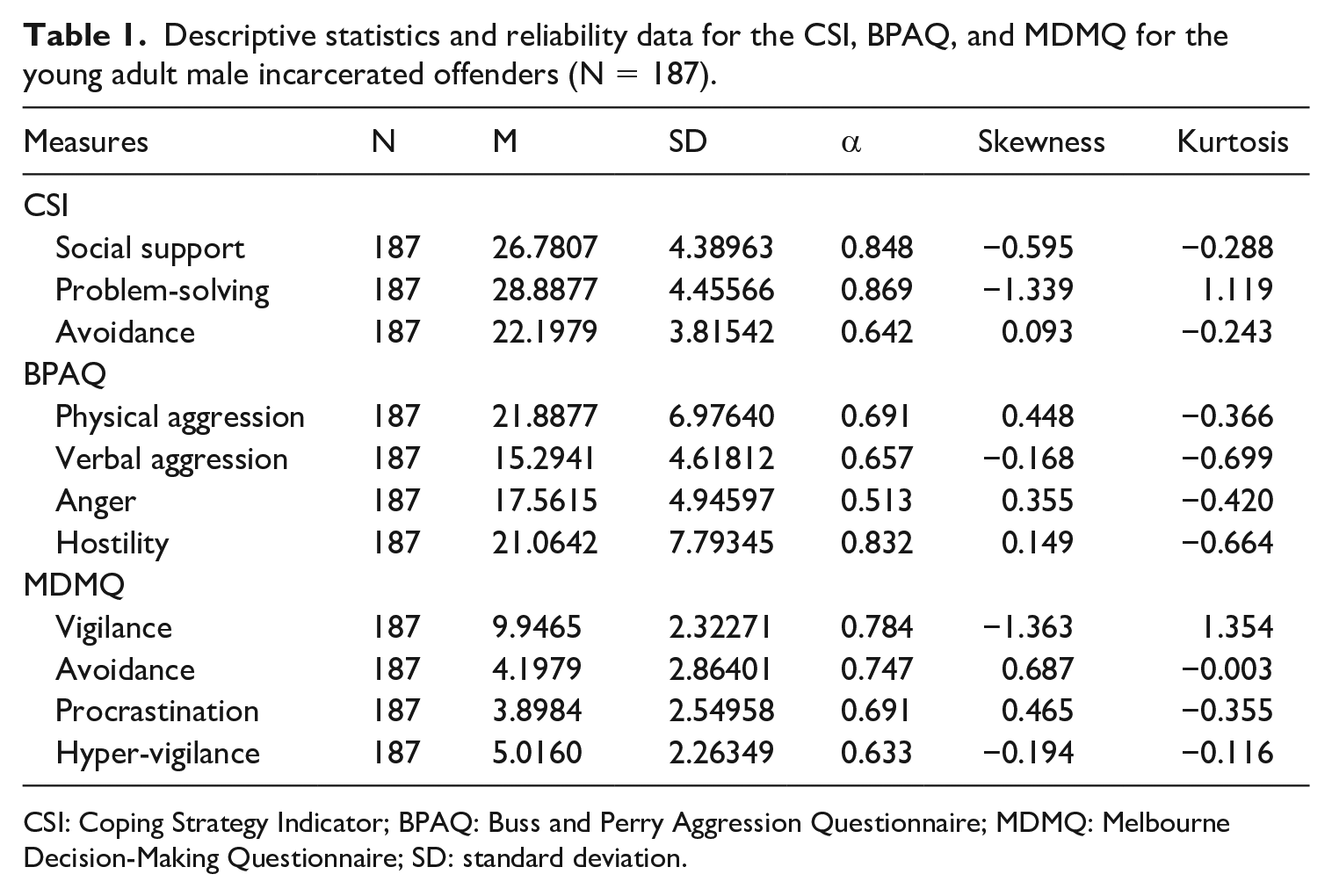
CSI: Coping Strategy Indicator; BPAQ: Buss and Perry Aggression Questionnaire; MDMQ: Melbourne Decision-Making Questionnaire; SD: standard deviation.
It is evident from Table 1 that Cronbach’s alpha coefficients for the CSI, BPAQ, and MDMQ scales range between 0.513 and 0.869. Therefore, the majority of these scales displayed acceptable levels of internal consistency (Vogt, 2005) and were thus included in the subsequent analyses. However, the Anger subscale of the BPAQ had an unacceptable level of internal consistency and was excluded from further statistical analysis. Both the skewness and kurtosis values were within acceptable ranges, and no univariate or multivariate outliers were found. Prior to conducting the regression analyses, the Pearson product moment correlation coefficients were calculated between the variables and are illustrated in Table 2.
Correlations between the CSI subscales and age, type of crime, BPAQ subscales, and MDMQ subscales for young adult male incarcerated offenders (N = 187).
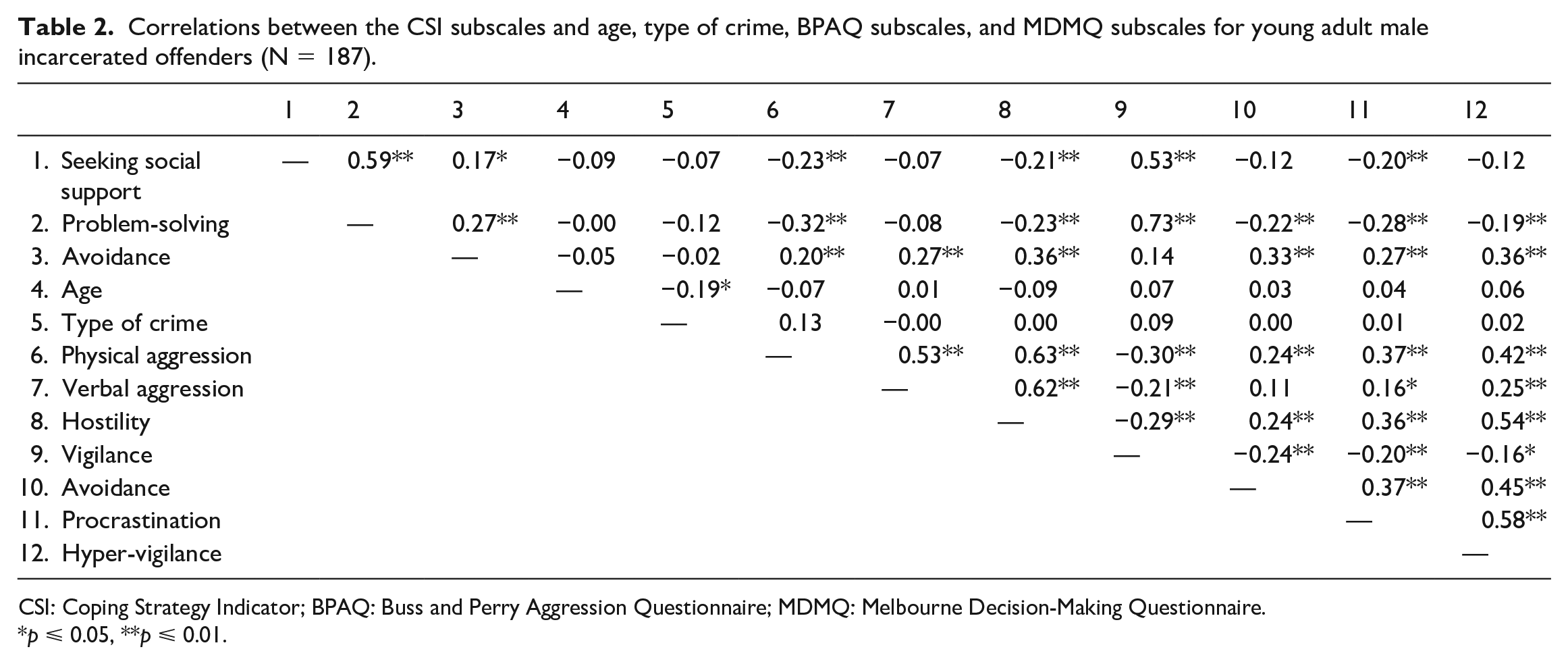
CSI: Coping Strategy Indicator; BPAQ: Buss and Perry Aggression Questionnaire; MDMQ: Melbourne Decision-Making Questionnaire.
p ⩽ 0.05, **p ⩽ 0.01.
Table 2 illustrates that the Seeking Social Support scale displays a statistically significant correlation with Vigilance. This correlation is statistically significant at the 1% level, with only a large corresponding effect size (0.53; CI = 99%). The Seeking Social Support scale is positively correlated with the Vigilance scale, and this finding seems to suggest that when the young adult male incarcerated offenders are more vigilant with regards to decision-making, they have better social support. This finding might also imply that when young adult male offenders have better social support, they seem to be more vigilant during decision-making. This finding is consistent with previous literature that proposes that perceived social support impacts individuals’ decision-making and choice of coping strategy, which can either decrease or increase the impact of social support on their emotional well-being. According to Mann et al. (1998), individuals who receive vigilant decision-making training are more likely to show higher self-esteem when making decisions, and their negative coping styles evidently decrease. An individual utilizing vigilance in decision-making is viewed as knowledgeable regarding which route to follow, thus also resulting in positive self-esteem (Josephs et al., 1992).
Table 2 further indicates that the Problem-Solving scale of the CSI displays a statistically significant negative correlation with Physical Aggression. This correlation is statistically significant at the 1% level, with a medium corresponding effect size (0.32; CI = 99%). This finding suggests that when their physical aggression levels tend to decrease, the young adult male incarcerated offenders have improved problem-solving skills. This finding may also suggest that when young adult male offenders have better problem-solving skills, their physical aggression levels tend to decrease. This confirms Bouffard’s (2015) assertion that aggression among young adult male incarcerated offenders leads to fast, experiential decision-making and risk-seeking behavior, which can be detrimental to their coping abilities. Thus, at extreme levels of anger, young adult male incarcerated offenders may not care about the potential effects and consequences of their offenses and tend to act in an aggressive manner (Bouffard, 2015).
The Problem-Solving scale also displays a statistically significant correlation with Vigilance. This correlation is statistically significant at the 1% level, with a large corresponding effect size (0.73; CI = 99%). The Problem-Solving scale positively correlated with the Vigilance scale, and this finding seems to suggest that when they appear to be extra vigilant when making decisions, the young adult male incarcerated offenders have improved problem-solving skills. This finding might also suggest that when young adult offenders have better problem-solving skills, they tend to be more vigilant during decision-making. Thus, enhanced problem-solving skills among young adult male incarcerated offenders can positively impact their ability to think rationally, control their impulses, solve their problems, and interact with each other in a positive manner (Coylewright, 2004).
Table 2 further illustrates that the Avoidance scale of the CSI positively correlated with Hostility. This correlation is statistically significant at the 1% level with a medium corresponding effect size (0.36; CI = 99%). This finding suggests that when they appear to have reduced levels of hostility, the young adult male incarcerated offenders are less focused on avoiding problems. In general, young adult male incarcerated offenders lack mature coping skills and are viewed as ineffectual individuals who express maladaptive coping mechanisms, such as aggressive behavior, hostility, and denial that usually increase their problems (Soderstrom et al., 2001).
The Avoidance scale of the CSI also demonstrates positive correlations with two scales of the MDMQ, namely Avoidance and Hyper-vigilance. These correlations are statistically significant at the 1% level with medium corresponding effect sizes of 0.33 (CI = 99%) for Avoidance and 0.36 (CI = 99%) for Hyper-vigilance. These findings seem to indicate that when young adult male incarcerated offenders are less predisposed to avoid their problems, they appear less convinced (1) to avoid making decisions and (2) to be hyper-vigilant about making decisions. Individuals who rely more on avoidance-coping when they experience stressful encounters tend to have impaired abilities to adjust and make rational decisions (Jordan et al., 2002; Skinner et al., 2003). Hyper-vigilance is also viewed as a maladaptive coping style, as it does not result in optimal outcomes for the individual (Creyer and Kozup, 2003).
Multiple regression results
Coping was measured by utilizing three different subscales, namely seeking social support, problem-solving, and avoidance. Three hierarchical regression analyses were conducted with one of the coping subscales as the criterion variable. The results of the hierarchical regression analysis with seeking social support as the criterion variable are reported in Table 3.
Contributions of age, type of crime, BPAQ subscales, and MDMQ subscales to R2 with seeking social support as criterion variable.
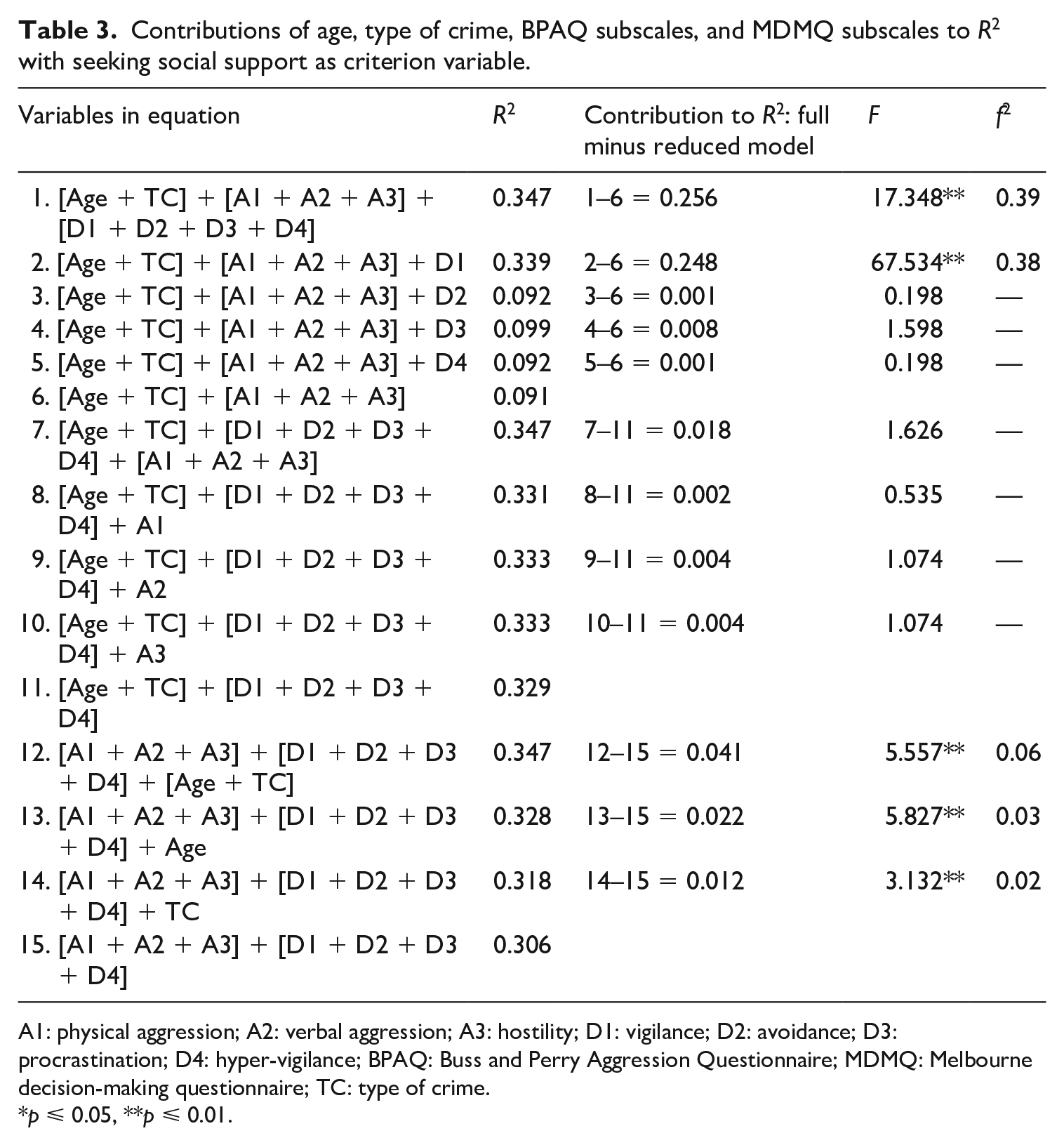
A1: physical aggression; A2: verbal aggression; A3: hostility; D1: vigilance; D2: avoidance; D3: procrastination; D4: hyper-vigilance; BPAQ: Buss and Perry Aggression Questionnaire; MDMQ: Melbourne decision-making questionnaire; TC: type of crime.
p ⩽ 0.05, **p ⩽ 0.01.
It is clear from Table 3 that the combination of the independent variables is responsible for 34.7% (F9;177 = 10.444; p ⩽ 0.01) of the variance in the Seeking Social Support scores of the young adult male incarcerated offenders, which is at the 1% level of significance. The MDMQ scales (vigilance, avoidance, procrastination, and hyper-vigilance), as a set of predictors, are responsible for 25.6% of the variance in the seeking social support scores of the young adult male incarcerated offenders. This finding is statistically significant at the 1% level, and the large corresponding effect size (f2 = 0.39; CI = 99%) suggests that it is of large practical significance. The results from Table 3 further illustrate that only one subscale of the MDMQ (Vigilance) independently made a statistically significant and practically significant contribution to explaining the variance in the young adult male incarcerated offenders’ seeking social support. Vigilance accounted for 24.8% (F6;180 = 67.534; p ⩽ 0.01) of the variance in the participants’ Seeking Social Support. The large corresponding effect size (f2 = 0.38; CI = 99%) indicates that it is of large practical significance. The results of the hierarchical regression analysis with Problem-Solving as the criterion variable are reported in Table 4.
Contributions of age, type of crime, BPAQ subscales, and MDMQ subscales to R2 with problem-solving as a criterion variable.
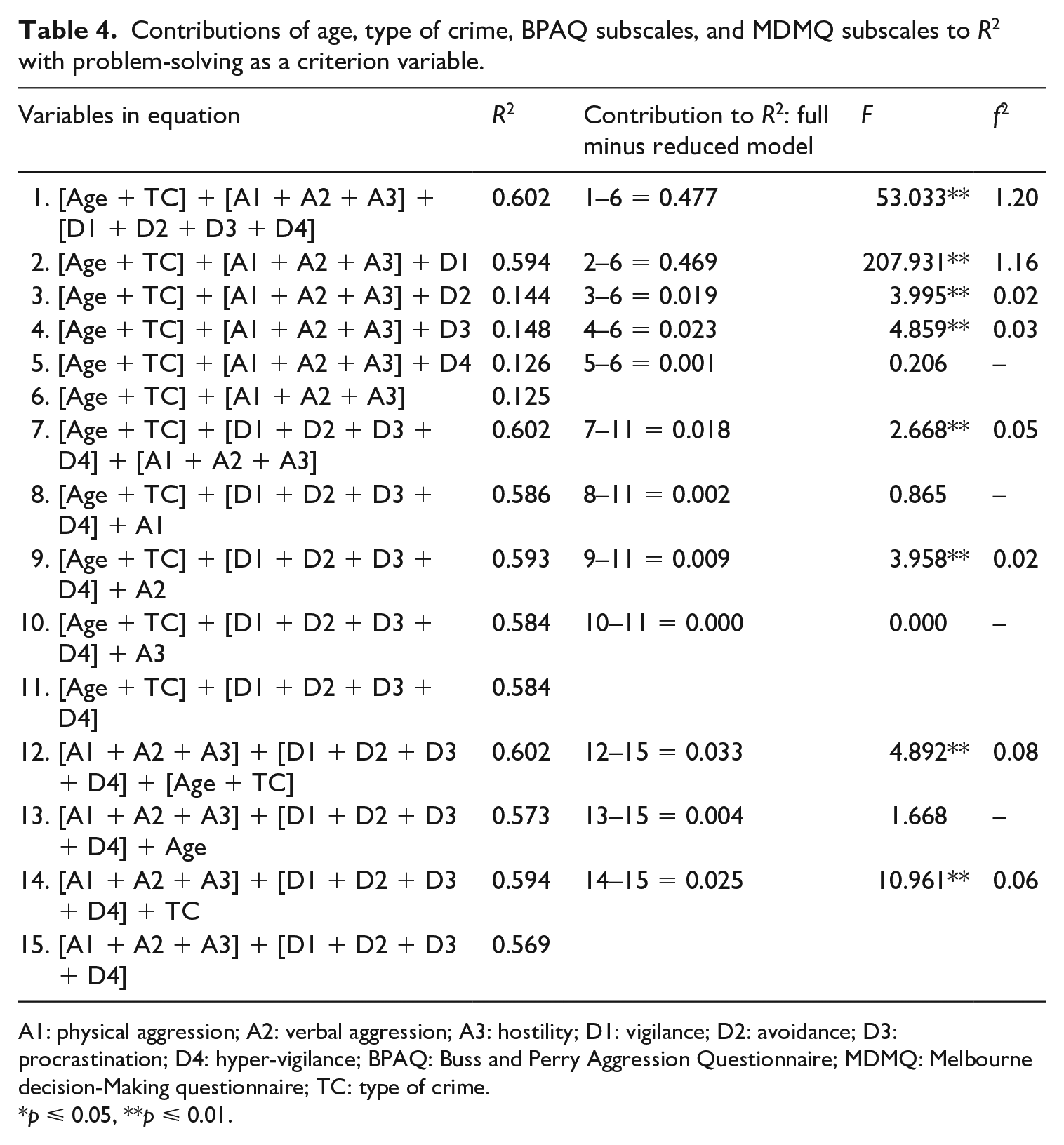
A1: physical aggression; A2: verbal aggression; A3: hostility; D1: vigilance; D2: avoidance; D3: procrastination; D4: hyper-vigilance; BPAQ: Buss and Perry Aggression Questionnaire; MDMQ: Melbourne decision-Making questionnaire; TC: type of crime.
p ⩽ 0.05, **p ⩽ 0.01.
Table 4 illustrates that the combination of the independent variables is responsible for 60.2% (F9;177 = 29.754; p ⩽ 0.01) of the variance in the Problem-Solving scores of the young adult male incarcerated offenders, which is significant at the 1% level. The MDMQ scales (vigilance, avoidance, procrastination, and hyper-vigilance), as a set of predictors, are responsible for 47.7% of the variance in the Problem-Solving scores of the offenders. This finding is statistically significant at the 1% level, and the large corresponding effect size (f2 = 1.20; CI = 99%) indicates that it is of large practical significance. The results from Table 4 further illustrate that only Vigilance independently made a statistically significant and practically significant contribution to explaining the variance in the young adult male incarcerated offenders’ Problem-Solving. This result is statistically significant at the 1% level with a large corresponding effect size (f2 = 1.16; CI = 99%). The results of the hierarchical regression analysis with Avoidance as the criterion variable are discussed in Table 5.
Contributions of age, type of crime, BPAQ subscales, and MDMQ subscales to R2 with avoidance as a criterion variable.
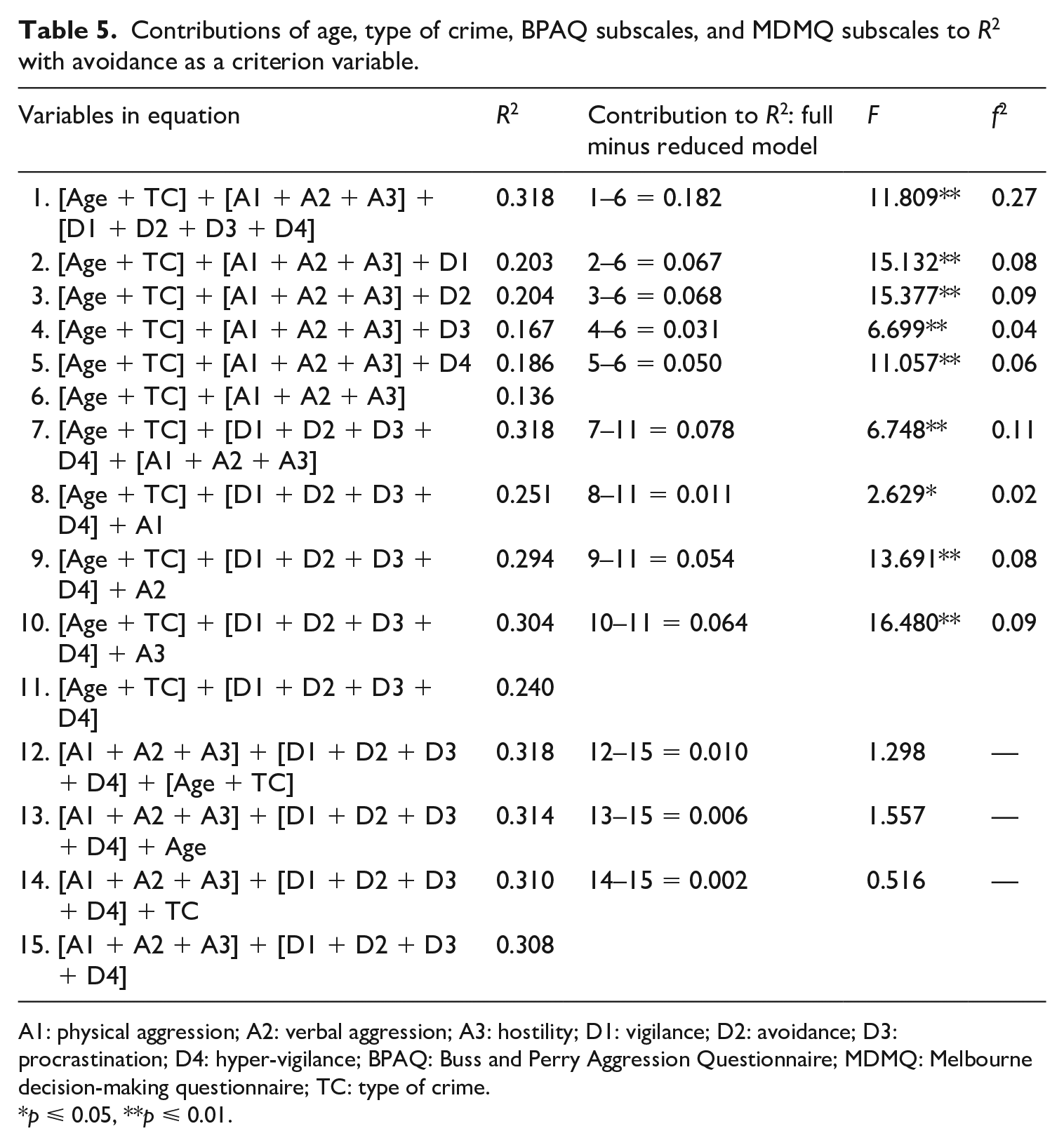
A1: physical aggression; A2: verbal aggression; A3: hostility; D1: vigilance; D2: avoidance; D3: procrastination; D4: hyper-vigilance; BPAQ: Buss and Perry Aggression Questionnaire; MDMQ: Melbourne decision-making questionnaire; TC: type of crime.
p ⩽ 0.05, **p ⩽ 0.01.
Table 5 displays that the combination of the independent variables is responsible for 31.8% (F9;177 = 9.153; p ⩽ 0.01) of the variance in the Avoidance scores of the young adult male incarcerated offenders, which is significant at the 1% level. The MDMQ scales (Vigilance, avoidance, procrastination, and hyper-vigilance), as a set of predictors, are responsible for 18.2% of the variance in the Avoidance scores of the young adult male incarcerated offenders. This finding is statistically significant at the 1% level, and the medium corresponding effect size (f2 = 0.27; CI = 99%) recommends that it is of medium practical significance.
Discussion
Past studies have found that offenders who tend to use problem-solving as their preferred form of coping tend to experience incarceration more effectively and positively (Biggam and Power, 2002; Hesselink-Louw, 2004; Jordaan, 2014). However, it has also been found that offenders might find problem-solving to be ineffective and mainly unsatisfying within the correctional environment (Chahal et al., 2016; Picken, 2012), as they tend to have no control over problems within the correctional environment and because they have limited autonomy and freedom while incarcerated in a maximum-security correctional center (Jordaan, 2014; Loots, 2010; Matshaba, 2007; Neser, 1993). Seeking Social Support as a coping strategy has also been found to significantly contribute to better coping and adjustment within the correctional environment (Rocheleau, 2015). In this study, Vigilance was the only single predictor variable that significantly predicted seeking social support and problem-solving with, respectively, large and medium corresponding effect sizes. These findings imply that young adult offenders that are more vigilant regarding decision-making are more inclined to solve problems better and make use of social support to cope better. Cautious decision-making skills caused by negative emotions, such as anger and fear, may lead to misconduct in correctional centers among young male incarcerated offenders (Bouffard, 2015). Vigilant decision-making enables young adult offenders to cope within the correctional environment (Josephs et al., 1992). Thus, when young adult male incarcerated offenders make better decisions, it can positively impact their problem-solving skills and interaction with other offenders and staff (Loewenstein and Lerner, 2003). Young adult offenders tend to adjust and cope better when they can maintain their autonomy to make better decisions (Monnery, 2016).
Social support plays an important role in addressing aggression among incarcerated offenders, and studies have found that social support significantly predicts correctional adjustment (Woo et al., 2016). Research shows that when incarcerated offenders receive social support from the correctional center or family or friends, they are less inclined to be involved in misconduct, make better decisions, and cope better within the correctional environment (Cochran and Mears, 2013; Siennick et al., 2013; Woo et al., 2016). Social support thus enables offenders to satisfy their basic needs and gain a measure of security within the correctional environment (Liu and Chui, 2013). Therefore, when offenders have a surrogate family within the correctional environment, they adjust and cope better in the correctional environment (Agbakwuru and Awujo, 2016).
This study aimed to determine which variables are the best predictors of coping among young adult male incarcerated offenders. Previous research has shown that improved coping techniques are part of all offenders’ processes of adapting to correctional centers. To survive long-term sentences of incarceration, offenders must find appropriate ways to cope (Cesaroni and Peterson- Badali, 2010; Hulley et al., 2016). This study contributed by indicating that vigilance, as a form of decision-making, leads to more constructive coping methods among offenders, such as problem-solving and utilizing social support. When social support is provided to offenders by friends and family, as well as correctional officers, they are more inclined to cope better and less likely to be aggressive (Cullen, 1994; Liu and Chui, 2013; Woo et al., 2016). Santos and Soares (2018) emphasized that individuals who obtained high scores on problem-solving also obtained high scores on their coping abilities. It is generally perceived that effective problem-solving abilities are positively associated with better psychological and physical health, more effective coping abilities, and better adjustment (Lucas, 2004). Problem-solving skills can help individuals cope with conflicts, assist with decision-making, and help them solve relational difficulties (Del Prette and Del Prette, 2013).
Limitations and recommendations
Generalization of the results is a limitation, as this study only applies to young adult male incarcerated offenders (aged between 22 and 25 years) situated in a South African maximum-security correctional center. The measuring instruments utilized in the research study were based on self-report measures that the young adult male incarcerated offenders could have mastered in such a way that it represented them as better individuals than who they really were. To ensure generalizability, it is recommended that the study be replicated and applied to a broader age range of adult male incarcerated offenders in more than one maximum-security correctional center in South Africa and to focus on larger samples of young adult male incarcerated offenders.
Value of the study
Young adult male incarcerated offenders face difficulties when they are unable to facilitate the appropriate coping skills while in a correctional center. The value of this study is to determine which variables are the best predictors of coping among young adult male incarcerated offenders and can contribute to future research regarding male offenders. Previous research has shown that improved coping techniques are part of all offenders’ processes of adapting to correctional centers. To survive long-term sentences of incarceration, offenders must find appropriate ways to cope (Hulley et al., 2016). This study aimed to contribute to the development of young adult male incarcerated offenders by understanding the appropriate coping skills to survive in a correctional center. In addition, this study can also contribute to future South African research, which can assist with the understanding of offenders held in maximum-security correctional centers.
The DCS (2019b) indicated that research is crucial to aid them in the development and refinement of policies and procedures. The Department of Correctional Services can take note of the findings of this study and ensure that training is provided to young adult incarcerated offenders regarding more constructive coping skills. The correctional centers could utilize psychologists to implement interventions that will enable offenders to learn the necessary coping skills required to survive within a correctional environment. Furthermore, this study could shed light on what coping skills are needed to rehabilitate successfully and reintegrate successfully into the community. This study also confirms the recommendations made in other studies (Fedock, 2017; Jordaan and Hesselink, 2021; Rogers, 2019) that social support plays an important role as a coping strategy among offenders. Correctional centers should strive to implement processes that would nurture social support (i.e. from friends, family, significant others, correctional staff) among young adult offenders. This study also contributed to the extremely limited body of research on offenders housed in private maximum-security correctional centers in South Africa.
Footnotes
Declaration of Conflicting Interests
The author(s) declared no potential conflicts of interest with respect to the research, authorship, and/or publication of this article.
Funding
The author(s) received no financial support for the research, authorship, and/or publication of this article.
