




Abstract
News personalization in one-party dominant countries has been understudied or often analyzed through a Western lens. This study unpacked this phenomenon in one-party dominant country with the theory of leadership cult and soft power and compared news personalization of Xi Jinping in China with that of Donald Trump in the U.S. against the backdrop of the U.S.–China trade conflict. This study also investigated the influence of press ideology, political–geographical scope of news coverage and the trade conflict period on the presence and valence of personalization within each country. Results showed that leadership personalization was less prominent in China than in the U.S. The manifestation of news personalization in the U.S. was affected more by press ideology, while contextual factors, such as news political scope and the conflict period, played bigger roles in China. These findings provide insights into how news personalization is displayed in divergent political and media systems.
Keywords
Donald Trump and Xi Jinping are often characterized as ‘strongman’ leaders and receive more media attention than other political figures (Collinson, 2019). Trump was known to exploit journalistic conventions to boost his media presence (Carlson et al., 2021). Similarly, Xi was found to frequently use the media to elevate his public image (Jaros and Pan, 2018). The concept of mediated political personalization or news personalization, referring to a shift in journalists’ focus from political entities to individual leaders (Van Aelst et al., 2012), can be used to unpack the growing media focus both on Trump and Xi.
Previous studies on news personalization were often conducted in Western democracies, suggesting that the media logic was the major factor contributing to the growing leadership personalization (Van Aelst et al., 2012). Although some scholars have observed a similar trend of personalization in one-party dominant countries (e.g., Cheng et al., 2016; Jaros and Pan, 2018), most studies were framed through a Western lens, without taking these countries’ political environments into consideration. Regarding this, this study suggests that news personalization in such countries can be viewed as a way of establishing leadership cults domestically and exercising soft power in the international arena. It involves presenting political leaders as heroic and idealized figures to legitimize their ruling regimes, and to bolster their popularity at home and abroad (Plamper, 2004).
To recognize systematic features associated with various manifestations of news personalization, this study draws on the ‘most different system design’ of the comparative approach (Wirth and Kolb, 2004: 97–98), by comparing news coverage of leaders from the U.S., a country with a presidential system, and China, a country with a one-party dominant system. This design maximizes the contrast between countries, allowing to investigate how changes in social structure impact the manifestations of news personalization (Pfetsch and Esser, 2004).
Notably, this study examines news personalization in the U.S.–China trade conflict context, which was initiated in early 2018 when the Trump administration imposed a series of tariffs and non-tariff barriers on Chinese imports. Subsequently, China retaliated with corresponding measures (Li et al., 2018). This context is selected for the following reasons. First, in both countries, the president possesses considerable authority in proposing and negotiating foreign deals (e.g., trade policy). Though such agreements require legislative approvals, the president often serves as the notable symbol in foreign policy making (Barnett, 2019). Therefore, the president may be reported more frequently in a trade conflict context than in other circumstances. Additionally, the evolution of the U.S.–China trade conflict itself may hinder or facilitate the leaders’ reportage, as the progress or setbacks in the trade conflict may influence the perception of a leader's effectiveness and leadership abilities, thereby shaping their reportage. This provides a chance to examine the impact of social environments on news personalization.
Against the backdrop of the U.S.–China trade conflict, this study analyzes the news coverage of Trump in U.S. and that of Xi in China, aiming to address two inquiries: (a) how does news personalization of leadership differ between China and the U.S. due to different systematic factors (i.e., projecting leadership cults and soft power versus advancing media logic) and (b) to what extent do press ideology, political–geographical scope of news coverage and the trade conflict period influence the presence and valence of news personalization in each country?
Literature review
Growing trend of news personalization
News personalization refers to a trend by which individual politicians become more prominent in news coverage; while political parties, institutions or countries they represent are gradually less covered (Balmas and Sheafer, 2013). Some studies further put the focus on political leaders, leading to the conceptualization of ‘presidentialization’ (Langer, 2007). Previous research on this phenomenon was commonly approached from two perspectives (Van Aelst et al., 2012). The first, known as ‘individualization’, focused on the heightened news visibility of individual politicians over the political entities they represent (Balmas and Sheafer, 2013; Wattenberg, 1996). The second, called ‘privatization’, centered on political actors’ personality, reflecting a shift in the media's focus from politicians’ public to private lives (Cheng et al., 2016). Some studies further disentangled privatization into politicians’ professional characteristics, ‘soft’ personal traits and private lives (Van Aelst et al., 2012). Langer (2007), for instance, differentiated the private traits (e.g., personal appearance, lifestyle) from political qualities (e.g., integrity, strength) when analyzing the personalization of British prime ministers. Reinemann and Wilke (2007) examined German chancellor candidates’ personality over a few years and identified an increase in the coverage of candidates’ personal appearance (e.g., rhetorical performance, look).
Over the past decades, there has been a rise in news personalization, driven by both political and media factors (Van Aelst et al., 2012). Politically, the growing centralization of power in the leaders’ hands has been a contributing factor to this trend (Balmas et al., 2014). This is partly due to citizens being disenchanted with political parties, leading them to rely less on partisan cues to perceive political events. Instead, they form their opinions more based on individual politicians (Garzia et al., 2020). In response, political entities have placed more weight on individual leaders, further fueling news personalization (Mair et al., 2004: 8–14). Also, in the increasingly polarized political environments, populist leaders often use emotional narratives to showcase their personality and charisma, branding themselves as the sole champion of the public's interests and fostering in-group favoritism and out-group hostility (Ahmed, 2014; Nadler, 2019). Particularly in this dynamic era with growing levels of uncertainty, people might prefer more aggressive and assertive leadership to stabilize lives (Bremmer, 2018). Journalists, therefore, tend to focus more on ‘strongman’ leaders, such as Trump and Xi. Furthermore, from the diplomatic perspective, governments are increasingly utilizing leadership portrayal to project soft power and build trust among other countries’ citizens (Wang, 2019), as news personalization is a vital tool in shaping public opinion about politicians and their affiliations (Nguyet Ha, 2020). This is especially evident during uncertain times, when traditional communication channels, such as diplomatic and trade relations, are not applicable (Bremmer, 2018).
The rise of news personalization is also influenced by media factors, particularly the advancement of electronic media. The visual nature of electronic media, such as television, makes it easier to feature politicians over abstract political entities (Garzia et al., 2020). Furthermore, social media's real-time nature blurs the line between the public and private spheres, allowing politicians to communicate directly with the public. For instance, McGregor (2018) discovered that U.S. politicians actively used social media to showcase their personal traits and to connect with voters. By doing so, politicians are increasingly assuming celebrity-like characteristics, promoting an atmosphere of performative politics (Olsson, 2017).
Different systematic factors of news personalization: The U.S. versus China
Despite these common backgrounds, news personalization may differ across political and media systems. Western democracies, particularly those with a presidential system, have experienced significant news personalization (Langer, 2007; Wattenberg, 1996). The U.S. is a prime example of a presidential system, where the president holds significant executive power and relative independence from the legislature (Patrick, 2006). The development of electoral professionalism in the U.S. further contributes to the proliferation of news personalization (Hernández-Santaolalla, 2020). Consequently, the U.S. is often regarded as a country with highly personalized politics.
Regarding the media system, Hallin and Mancini (2004) categorized the U.S. as the epitome of the liberal model, due to its early development of commercial newspapers, greater independence from political authorities and higher levels of journalistic professionalism. The liberal media system promotes personalized coverage in the U.S. for several reasons. First, the market-driven media environment in the U.S. contributes to a heightened emphasis on political figures, as such reporting that contains news values, such as celebrity, negativity and entertainment, can enhance subscription rates (Harcup and O’neill, 2017). In addition, the U.S. media commonly perceive themselves as the ‘Fourth Estate’ of political power, holding those in positions of authority accountable for their conduct and discourse (Shoemaker and Vos, 2009). Therefore, they tend to scrutinize the public and private behaviors of political figures and report on them in a personalized manner. Their skepticism and critical inquiry toward political authorities may also engender more negative depictions of leadership.
It is worth noting that although political personalization is prevalent in Western democracies, it is not entirely novel. Scholars have argued that politics before the establishment of mass-based representative democracy was even more personalized than it is today, as leaders were viewed as ultimate authority (Karvonen, 2010: 3; Šimunjak, 2017). Weber (1994) conceptualized this type of system as ‘charismatic authority’, characterized by ‘entirely personal devotion to and personal trust in, revelations, heroism, or other qualities of leadership in an individual’ (312). The veneration toward political leaders results in the formation of leadership cult or cult of personality (Plamper, 2004).
In contemporary mediatized political environments, leadership cults refer to the way by which journalists depict leaders positively, even to the point of personal worship (Plamper, 2004). This phenomenon is particularly prevalent in one-party dominant countries, where a single party governs alone for substantial periods of time, despite the possibility of free electoral competitions, relatively open information systems and the right of free political associations (Pempel, 2019: 4). The default power structure and journalistic culture in such countries may also contribute to the cultivation of news personalization. For instance, Šimunjak (2017) discovered that Yugoslav newspapers accorded greater emphasis to their leaders than their British counterparts did.
China is a representative of the one-party dominant system ruled by the Chinese Communist Party (CCP). During Mao Zedong's reign, China experienced a significant surge in the personality cult (Plamper, 2004). After that, China's leaders seldom resorted to personality cults to govern the administration (Luqiu, 2016). However, since Xi Jinping became the leader, particularly after the CCP abolished the presidential term limit (Buckley and Wu, 2018), the centralization of power in leadership further increased, resulting in heightened personalization of Xi (Wang, 2019). Some scholars thus speculated that a latent cult of Xi might be in place (e.g., Aust and Geiges, 2022: 34; Cabestan, 2019). At the same time, Chinese government has been emphasizing the policy of cultivating soft power and ‘telling China's stories well’ (Biswas and Tortajada, 2018). News personalization of leadership takes a critical role in increasing a country's attraction and could further strengthen its soft power (Nye, 2021; Wang, 2019). For example, during Xi's visit to the U.K., China's press extensively reported his personalized practices, such as eating fish and chips and personal life story (Wang, 2019). According to Wang (2019), such reportage can produce a perception among foreign audiences that Xi is similar to Western leaders, enhancing his appeal and bolstering China's soft power. With the growing centralization of power during Xi's tenure, the control by the CCP over media organizations, particularly state media, has been further intensified (Moser, 2019).
China's press plays a key role in cultivating leadership cult and elevating China's soft power. Serving as the mouthpiece of the CCP, China's press usually reports social events in accordance with government-endorsed narratives (Zhao, 2012). Journalists in China are oftentimes mandated to report the leader's personal stories complying with directives from the propaganda department (Song et al., 2017). This is particularly evident under the leadership of Xi. For example, Xi's youth in Shaanxi and Hebei provinces, and his romantic relationship with his wife have been widely reported (Xinhua, 2022; Yin and Flew, 2018). Jaros and Pan (2018) also discovered that news personalization of Xi is more prominent than that of his predecessor, Hu Jintao.
In summary, the highly personalized political system and commercially driven media environments may lead to the growing news personalization in the U.S., while the cultivation of leadership cult and the bolstering of soft power through top-down directions may play a dominant role in China.
Hypotheses: Presence and valence of news personalization within the U.S. and China
Press ideology
Beyond the cross-national divergence, press ideology within a country may influence the manifestations of news personalization (Balmas and Sheafer, 2013). In the U.S., research has shown that liberal press, such as the New York Times, tends to personalize coverage of politicians more than the conservative press, such as the Wall Street Journal (Jeong and Lee, 2021). This could be attributed to the preference of liberal audiences for news stories that have elements of personality and human interest (Aalberg and Beyer, 2015).
In comparison, in China, where there is no clear left/right political spectrum (Wu, 2014), press reporting styles may still vary depending on their target audiences. The market-oriented press and foreign-targeted press may exhibit a more liberal ideology (Hartig, 2018), resulting in increased soft coverage of politicians. In contrast, news outlets that are more closely regulated by political authorities tend to have a conservative bias and may avoid personalized coverage to prevent potential punishments (Phillips, 2016). Accordingly, the following hypothesis is proposed:
Additionally, the press ideology may affect the valence of news personalization. In the U.S., the relative autonomy of news media from political authorities allows journalists to take a critical stance in reporting their president (Althaus, 2003). For example, during the Iraq War, the U.S. press was criticized for having a persistent negativity bias toward the Bush administration (Aday, 2010). This study further contends that the negative portrayal of Trump's personality may be more prevalent in the liberal than in the conservative press, because, as a Republican, Trump's political agenda often conflicted with the leanings of the liberal press (Lischka, 2019).
In comparison, Chinese journalists often portray their president in a positive light to cultivate leadership cult and project soft power. This study further proposes that the positive portrayal of Xi may be more prominent in the conservative press, as they target China's domestic political elites and tend to comply with political directives. The liberal press in China, as a contrast, may tend to employ a mixed valence and balanced reporting style to satisfy their audiences’ demands and expectations. Thus, the following hypothesis is proposed:
Political–geographical scope of news coverage
Another factor that may affect news personalization is the political–geographical scope of news coverage. In today's interconnected world, large-scale conflicts are rarely isolated, but rather have far-reaching regional and global implications (Cottle, 2011). This is particularly evident in the case of the U.S.–China trade conflict, as its impacts have been amplified by economic globalization through supply chains and financial flows (Li et al., 2018). News coverage of such conflicts is often reported under political contexts with different political–geographical levels, such as domestic, inter-state, regional and global (Cottle, 2011). Domestic scope emphasizes the impact of global or inter-state events on domestic politics (Clausen, 2004). Inter-state scope focuses more on the relationship between the involved countries. Regional scope refers to reporting the impacts of events on a specific political–geographical region, which typically consists of a cluster of countries interdependent across a range of domains, such as economic and political transactions and social communications (Katzenstein, 2000). Lastly, global news reporting involves situating and explaining events regarding global interconnections (Cottle, 2011).
This study postulates that as the political–geographical scope of news coverage narrows, news personalization may become more prominent. This is because, with a narrower scope, news coverage is more likely to be framed and angled in a manner that aligns with the emotional and cognitive framework of specific audiences (Clausen, 2004), potentially leading to more coverage of concrete and tangible issues, such as leaders’ personality (Achter, 2010). Conversely, a broader political–geographical scope may lead to more focus on commonly shared elements, leading to increased descriptions of universal principles and policies. For example, Kuang and Wang (2020) found that the portrayal of leadership was less common when covering events on a global scale. Gattermann (2022: 58) discovered that the portrayal of European Union politicians tended to be more personalized when covered in national domestic contexts. Regarding this, the following hypothesis is proposed:
The political–geographical scope of news coverage may also affect how presidents are portrayed. In the U.S., when news is covered from a domestic perspective, journalists often act as a ‘watchdog’ against political authorities and may use counter-frames to challenge official narratives (Entman, 2004: 20), resulting in more negative descriptions of the president's personality. However, when the news coverage is presented from a higher political–geographical scope, such as an inter-state or global context, news media may become more cooperative with officials and shift their focus to external threats or benefits (Zaller, 2003). Negative portrayals of presidents may fall as a result. Additionally, positive portrayals of leadership can enhance a country's soft power internationally (Nye, 2021; Wang, 2019). Regarding this, positive depictions of Trump in international news may be more common than in domestic contexts (Kim and Knuckey, 2021).
In comparison, in China's context, positive portrayals of Xi may be prevalent, regardless of the political–geographical scope of news coverage. Positive valence can be employed to foster public loyalty to the central government and Xi's leadership domestically, as well as to enhance China's image and soft power internationally. Therefore, the hypothesis is proposed:
Trade conflict period
Apart from the structural factors, the prominence of news personalization for leadership may also vary depending on the trade conflict period.
During the period of escalated trade conflict, leadership personalization may be more prominent (Jeong and Lee, 2021). One reason for this is that as tensions between countries upgrade, the public may demand stronger leadership to manage potential risks and provide a sense of stability (Rast III, 2015). Such demands may incentivize journalists to personalize news coverage to assure the public that the situation is under control. Another reason is that news media often function as a society's ‘burglar alarm’ to alert citizens of exterior threats (Zaller, 2003). To make such threats more salient, journalists may simplify the complexity of the trade conflict to a battle between political actors (Gattermann, 2018). Therefore, the hypothesis is proposed:
Moreover, negative portrayals of Trump may be more prominent in U.S. coverage during escalation periods of the trade conflict, as hiking tariffs on Chinese imports could harm the U.S. domestic economy and provoke resentment from American elites and the public (Li et al., 2018). In comparison, Xi may receive more favorable coverage by China's press during times of escalation, as the cult of the leader's personality can trigger nationalist sentiments that can be exploited to mobilize Chinese citizens to defend their country (Singh, 2021). Therefore, the hypothesis is proposed:
Method
A manual content analysis was conducted to examine the news personalization between the U.S. and China. The analysis covered the period from 20 January 2017, the date of President Trump's inauguration, to 15 January 2020, when the two countries signed the Phase One Trade Deal and suspended the tariffs imposed on each other. The choice of date for this ending point was also due to the possibility of confounding effects from more recent disputes between the two countries, such as those related to the COVID-19 pandemic and the 2020 U.S. presidential election (Lin, 2021). The time frame was further divided into the escalation and de-escalation periods to investigate H3a and H3b. According to the tariff rates the two countries imposed on each other, 1 the escalation periods refer to the following three time intervals: from February 2018 to April 2018, from July 2018 to September 2018 and from May 2019 to September 2019, whereas the de-escalation period is from December 2018 to April 2019.
Sampling
Two national newspapers were selected from each country to minimize potential confounding effects of media type: the New York Times (NYT) and Wall Street Journal (WSJ) from the U.S. and People's Daily (PD) and China Daily (CD) from China. The selected newspapers in each country represent opposing but broad mainstream political thoughts. In the U.S., the NYT has a liberal slant; whereas the WSJ has a conservative bias (Gunnels, 2017) and has been used as a representative of conservative newspapers in previous studies (e.g., Jeong and Lee, 2021). In China, the PD serves as the mouthpiece of the CCP; whereas the CD, the English-language newspaper, mainly targets overseas audiences for public diplomacy and displays a relatively liberal and international perspective to meet these audiences’ expectations (Hartig, 2018).
The analysis units were individual news articles retrieved from databases of NexisUni, ProQuest and People's Daily's online service. To analyze leadership personalization in the context of the U.S.–China trade conflict, a Boolean search string ‘Trade AND China AND (America OR “the U.S.” OR U.S.A OR U.S. OR U.S.A’. was used to search for relevant articles. To minimize the impact of news type on the presence of news personalization, analysis was limited to hard news, which prioritizes objective and factual reporting over subjective opinions (Cho et al., 2003). News features were also analyzed, as they contain significant hard news reporting. Moreover, given trade issues encompass multiple aspects of the U.S.–China relationship, this study selected the articles whose primary topic was related to trade issues as well as those with trade issues as a second priority. The topic list was constructed using an iterative inductive and deductive approach. A preliminary topic list was developed based on WTO trade topics 2 and the U.S. investigation report into China, 3 which outlined the primary reasons and areas for the U.S. imposing tariffs on China. Then, 100 randomly sampled news articles 4 were used to verify the validity of the list. If an article's topic explicitly appeared on the list, coders would label it; otherwise, a new topic would be created. Finally, 12 topics were produced.
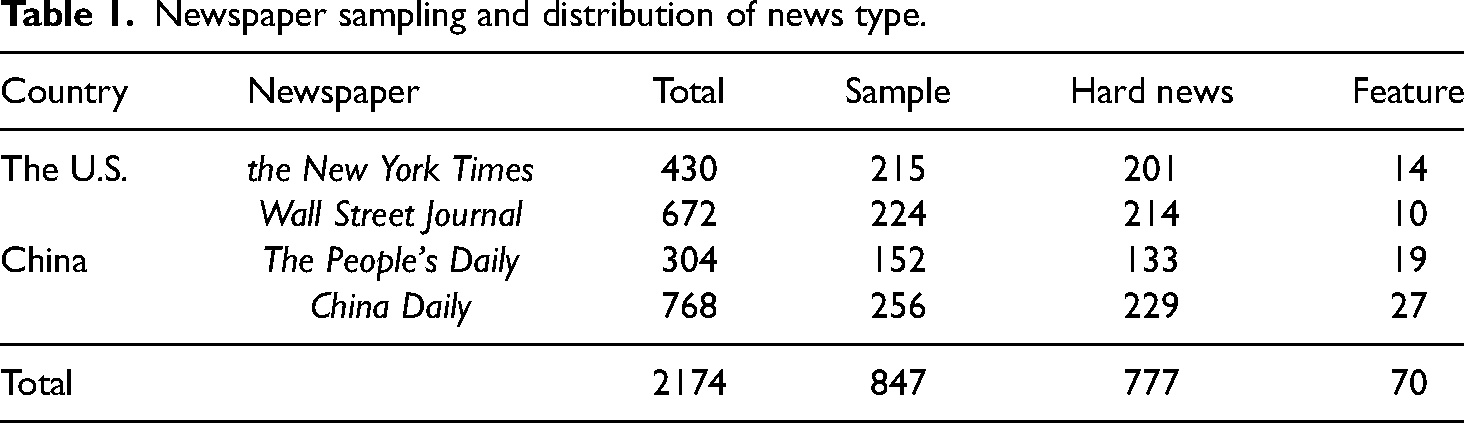
After removing irrelevant news, a total of 2174 articles remained (see Table 1). Since the number of news articles per newspaper was unbalanced and the minority group may be not large enough to demonstrate statistical differences, a disproportionate systematic sampling approach was employed. This method oversampled the minority newspaper to ensure statistical power across groups with different sample sizes (Fox et al., 2009). Specifically, every second article was chosen from PD and the NYT and every third article was selected from CD and the WSJ, resulting in a final sample size of 847.
Newspaper sampling and distribution of news type.
Variable construction and coder-reliability
Two items (see Table 2) were used to measure the presence of personalization (Van Aelst et al., 2012), which were summed up and then recoded into two dichotomous variables for each leader. A score of ‘1’ was assigned if at least one of the items was present and ‘0’ if neither of the items existed. The valence of discourse regarding each leader's personality was assessed using a three-option scale (i.e., positive, negative and mixed). The political–geographical scope of news coverage was coded based on four levels: domestic, inter-state, regional and global, with higher score indicating a broader scope. News sources were included as control and measured by four binary variables, indicating whether the article cited press contents from China, the U.S., a third country, or Trump's tweets (see Appendix for codebook).
Variables, items and coder-reliability.
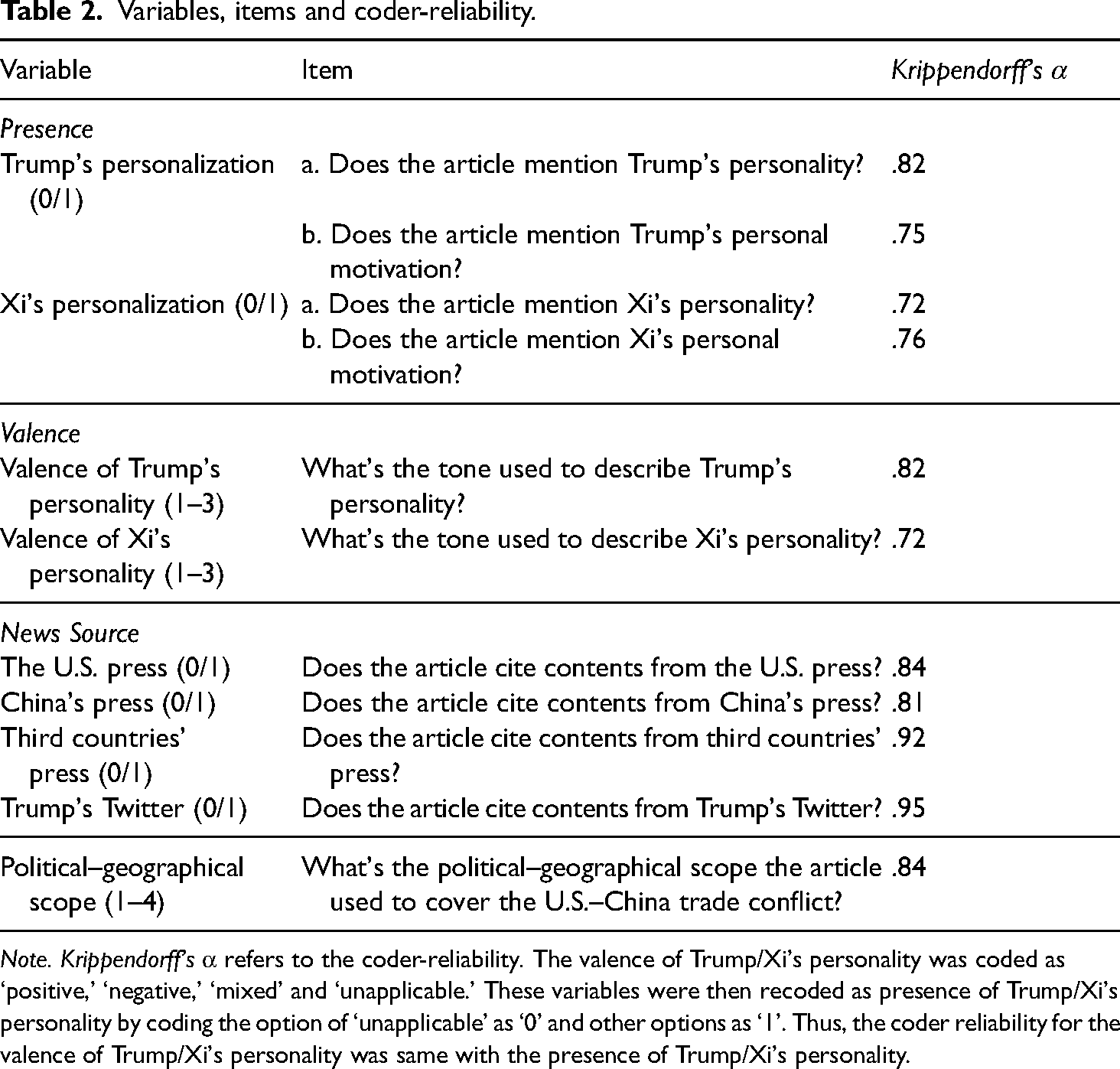
Note. Krippendorff's α refers to the coder-reliability. The valence of Trump/Xi's personality was coded as ‘positive,’ ‘negative,’ ‘mixed’ and ‘unapplicable.’ These variables were then recoded as presence of Trump/Xi's personality by coding the option of ‘unapplicable’ as ‘0’ and other options as ‘1’. Thus, the coder reliability for the valence of Trump/Xi's personality was same with the presence of Trump/Xi's personality.
Ten percent of the final sample was randomly selected for assessing inter-coder reliability. Two coders, including the author, independently coded the articles using Krippendorff's α. All results met or were above the acceptance agreement threshold (Riffe et al., 2019: 129).
Analysis
Chi-square test was used to examine whether there were significant differences between the U.S. and China regarding the presence and valence of news personalization for their leaders. Logistic regression analysis was used to investigate the impact of press ideology, political–geographical scope of news coverage and the trade conflict period on news personalization within each country. Predicted probabilities for news personalization were calculated and displayed in parenthesis to better interpret logit model coefficients.
Findings
Presence of personalization
The results of Chi-square test suggested (see Table 3) that Trump's personalization in the U.S. news was significantly more frequent (n = 117; 26.65%) than that of Xi in Chinese coverage (n = 33; 8.09%), with χ2 = 50.003, p < .001, revealing that although China's leadership cults were argued to be rising because of the concentration of authority and the projection of soft power, news personalization of Xi was still less prominent than his counterpart in the U.S.
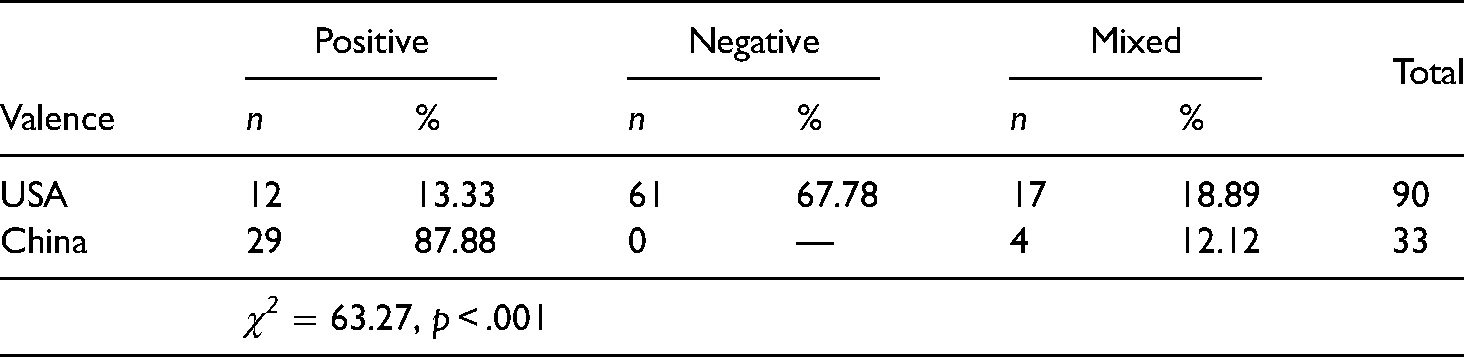
Presence and valence of domestic leader's personalization between the U.S. and China.
Regarding H1a, the results showed (see Table 4) that Trump's personalization was around two times more prominent in the U.S. liberal (29.36%) than in the conservative newspaper (14.46%; p = .004). However, there were no significant differences regarding Xi's personalization between Chinese newspapers with different ideological leanings (p = .57). This indicated that the effect of press ideology on the presence of personalization only applied to the U.S., partially providing support for H1a.
Logit model predicting Trump's and Xi's personalization within the U.S. and China.
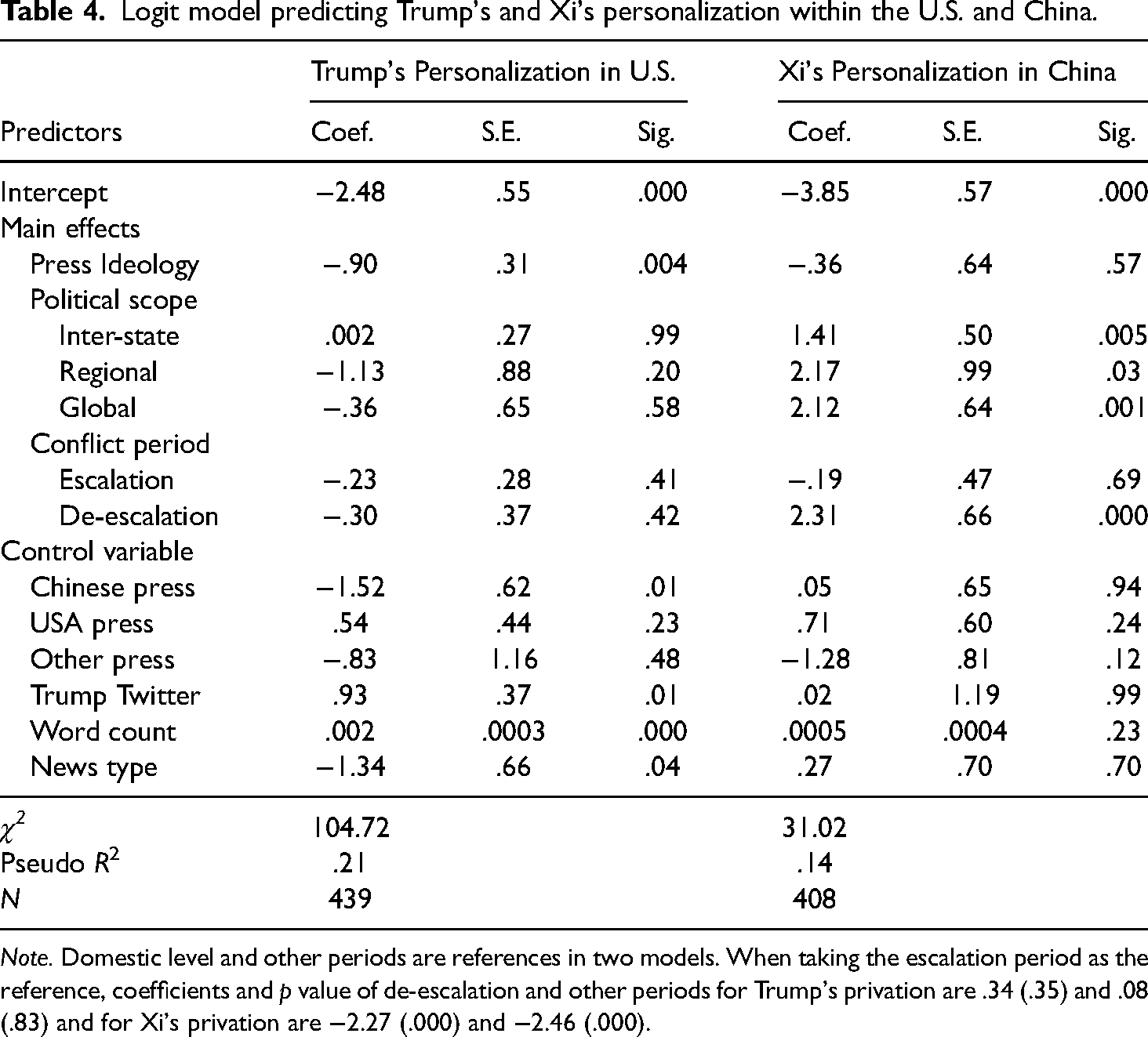
Note. Domestic level and other periods are references in two models. When taking the escalation period as the reference, coefficients and p value of de-escalation and other periods for Trump's privation are .34 (.35) and .08 (.83) and for Xi's privation are −2.27 (.000) and −2.46 (.000).
H2a postulated that leadership personalization becomes more prominent as the political–geographical scope of news coverage narrows. However, the results suggested that there were no significant differences regarding Trump's personalization among the U.S. news with different political–geographical scopes (i.e., domestic: 21.40%; inter-state: 21.45%, p = .99; regional: 8.11%, p = .20; global: 15.90%, p = .58). In Chinese coverage, Xi's personalization was more prominent in news with a regional (20.12%, p = .03), global (19.06%, p = .001) and inter-state scope (10.43%, p = .005) than in domestic news (0.03%). Thus, H2a was not supported.
Regarding H3a, no significant differences existed regarding Trump's personalization between the escalation periods (19.71%; p = .41) and other months (23.65%) nor between de-escalation periods (18.60%; p = .42) and other months in the U.S. news. Put differently, Trump's personality and motivations were reported constantly regardless of the conflict's fluctuations. In comparison, in China's context, Xi's personalization was more prominent during the de-escalation periods (36.92%; p < .001) and months without trade frictions (47.62%; p < .001) than during the trade escalation periods (5.69%). Therefore, H3a was not supported.
Notably, the control variable analysis revealed that when a U.S. news article cited contents from the Chinese press, the prominence of Trump's personalization decreased (5.89%; p = .01) and when American journalists cited Trump's tweets, the prominence of his personalization increased (37.51%; p = .01). This suggested that the news sources cited in the coverage can limit the news context, potentially hindering or boosting the presence of personalization.
Valence of personalization
With respect to the valence of personalization, the results of Chi-square test (see Table 3) indicated a significant difference between the U.S. and China, with χ2 = 63.27, p < .001. Specifically, in the U.S. context, 61 news articles (67.78%) described Trump with negative valence, while 17 (18.89%) and 12 (13.33%) articles portrayed him with mixed and positive tones. In contrast, the Chinese press did not report any negativity about Xi's personality.
Regarding H1b, the results revealed (see Table 5) a significant relationship between the press ideology and the valence of Trump's personality in the U.S. context (χ2 = 30.71, p < .001). Specifically, the NYT reported 55 articles (79.71%) with negative valence of Trump, which was higher than that of the WSJ (n = 10; 47.82%). Additionally, the NYT covered fewer positive (n = 2, 2.90%) and more mixed-valenced stories (n = 12, 19.39%) than the WSJ (positive: n = 6, 28.57%; mixed: n = 5, 23.81%). Conversely, no significant differences existed between CD and PD regarding the valence of Xi's personality (χ2 = .14, p = .71). Most of the Xi's coverage in China was positively valenced, with 19 (86.36%) in CD and 10 (90.91%) in PD. Thus, H1b was partially supported.
Chi-square test regarding personality valence of Trump and Xi within the U.S. and China.
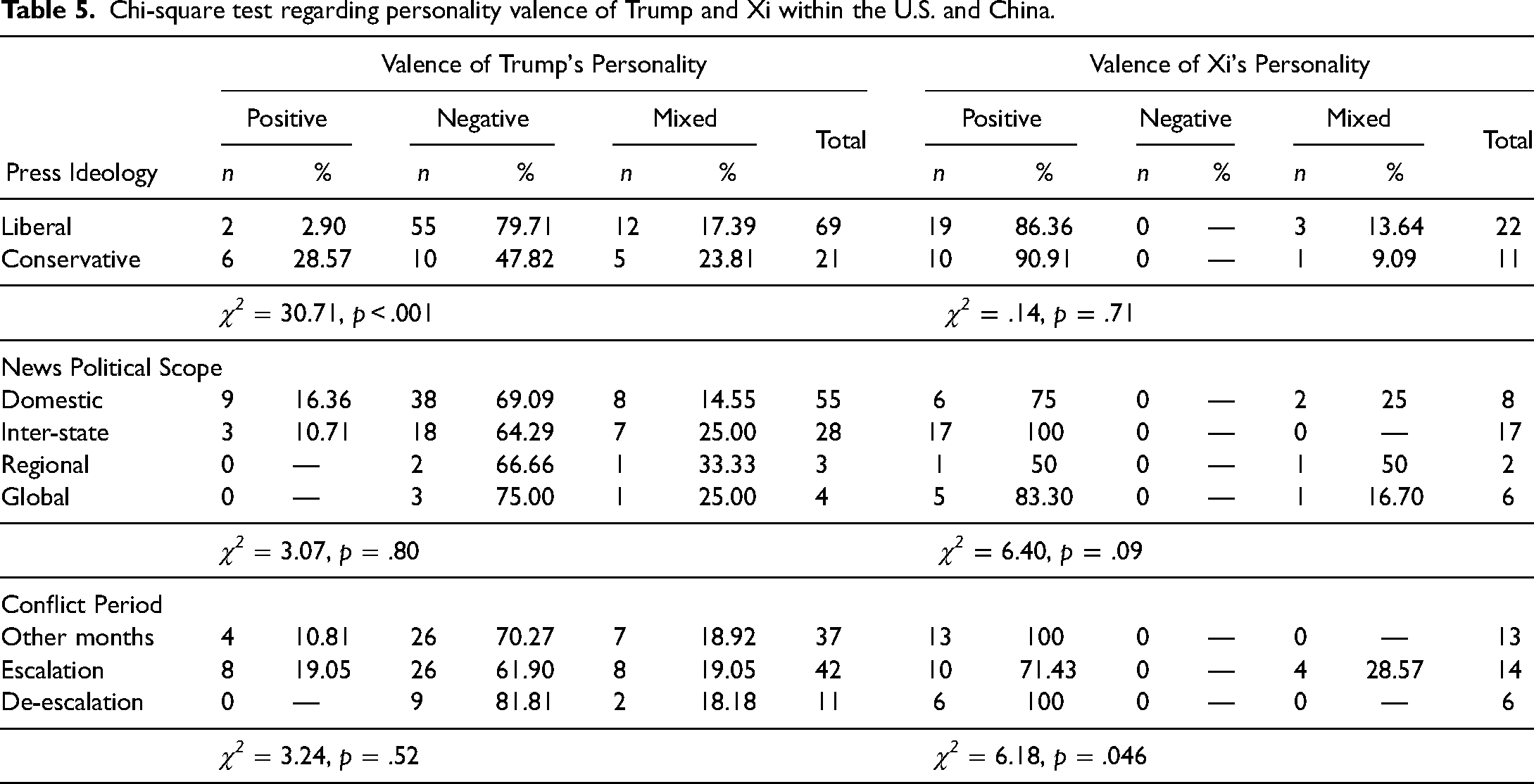
In terms of H2b, the results suggested that the scope of news coverage did not significantly influence how journalists report their leaders’ personality, both for Trump in the U.S. news (χ2 = 3.07, p = .80) and for Xi in Chinese news (χ2 = 6.40, p = .09). Therefore, H2b was partially supported.
Lastly, H3b predicted that the negative valence of Trump's personality and the positive valence of Xi's personality were more prominent during the conflict escalation period than during other periods. However, this study did not discover a significant difference between conflict periods regarding the valence of Trump's personality in the U.S. news (χ2 = 3.24, p = .52). In China's context, a significant difference existed between the conflict periods regarding the valence of Xi's personality (χ2 = 6.18, p = .046). However, the positive valence of Xi was more prominent in other months rather than the periods when both countries hiked tariffes on each other. Therefore, H3b was not supported.
Discussion
This study examined news personalization for leadership respectively in the U.S. and China against the backdrop of the U.S.–China trade conflict. Results indicated that though news personalization can be identified in both countries, it varied regarding its presence and valence within each country.
First, although a growing focus on political figures has been observed in Chinese news following Xi's appointment as the country's leader (Jaros and Pan, 2018; Myers, 2018), news personalization for Xi in China was still less prominent in this study than that for Trump in the U.S. Put differently, the top–down reporting guidance from Chinese political authority to cultivate leadership cults and to construct soft power did not result in a higher prominence of news personalization, compared to that of the U.S. Several factors can explain the fewer occurrences of news personalization in China. First, China's highly collectivist culture prioritizes the group's interests over individual needs (Xiumei and Jinying, 2011), leading to governmental officials being framed as representatives of the public rather than individual figures with distinctive characters. This aligns with Galtung and Ruge's (1965) argument during the Cold War period that communist press might pursue a more ‘structural’ reporting style which focused more on social forces rather than individual actors. Second, in one-party dominant countries, China in specific, political authorities seek to maintain their mystique by creating distance from the public, fictionalizing the leader's personality and conducting political activities behind the scenes (Myers, 2018). As a result, the coverage of the president's personality or private life is tightly regulated by the Chinese propaganda apparatus and disseminated strategically to create a genial and dignified leader image. Third, the latent leadership cults in China may result in an increased sensitivity and caution among journalists when reporting on the president. In some cases, journalists may avoid mentioning the president's name to mitigate the risk of punishment from political authorities (Phillips, 2016).
Additionally, this study investigated the influence of press ideology, political–geographical scope of news coverage and the conflict period on the presence of leadership personalization within each country. In the U.S. context, the liberal-leaning New York Times covered more about Trump's personality than the relatively conservative Wall Street Journal, which is consistent with Jeong and Lee's (2021) finding on the divergence between the U.S. press in covering Kim Jong-Un. This difference may be attributed to the fact that the NYT tends to prioritize investigative journalism and political coverage (Fink and Schudson, 2014) and has a more diverse readership which is interested in personalized news stories (Aalberg and Beyer, 2015). The NYT is also known for its critical attitude toward Trump's presidency (Lischka, 2019). In contrast, the WSJ places greater emphasis on business news and prioritizes factual information and market analysis (Gunnels, 2017). Therefore, the WSJ may report more on the president's speech and behavior related to public policy to provide market forecasts for its audiences. This finding suggested that the variation within a country, rather than between countries, may account for a greater variety of news personalization.
Furthermore, the political scope of news coverage and the trade conflict period had no significant influence on the presence of Trump's personalization. In other words, coverage of Trump's personalization remained consistent regardless of geographical or chronological contexts of news events. One reason for this consistency may stem from the media logic, that is reporting more about political celebrities to increase news value (Strömbäck, 2008). Another reason is that politicians may deliberately and strategically use the media to promote themselves and ‘spin’ an issue to their advantage (Van Aelst and Walgrave, 2016). This is particularly relevant in the case of Trump for his performative media presence and frequent usage of social media to shape public discourses (Carlson et al., 2021).
In contrast, in China's context, there was no significant difference in the presence of Xi's personality between China Daily and People's Daily. Meanwhile, Xi's personality was mentioned more frequently when the trade conflict was covered from higher levels of political scope, such as in global or regional contexts. The reason may be that Xi's personality in Chinese news coverage was more likely to be introduced through news sources of foreign actors. For example, in a piece of news addressing the G20 summit, a foreign scholar hailed Xi's vision as ‘bright and shared future for humanity’; whereas Trump was portrayed as obsessed with his ‘American first’ policy (Mackerras, 2019). Moreover, during the de-escalated negotiation period, Xi's personalization was found to be higher than the conflict escalated times, implying that Xi might be framed more as a ‘problem negotiator’ in the international arena, rather than a ‘fighter’ during the escalated conflict times.
Regarding the valence of two leaders’ personality, Trump's personality was more likely to be covered negatively by the U.S. media. Further analysis revealed that the liberal press, the New York Times, published almost 80 percent of the unfavorable news on Trump in the U.S. For example, Trump has been labeled as ‘contradictory’, ‘juggling’ and ‘fruitless’. The valence used to describe Trump's personality was also independent of the news political scope of and the conflict period. In contrast, more favorable images of Xi were created by Chinese media when the conflict was covered from a inter-state persepective. For example, Xi has been depicted as one who is ‘greatly respected’, 5 ‘diligently working toward solving global issues’ and ‘making a wide range of contributions’. 6 Unlike the U.S., the press ideology had little impact on the valence used to cover Xi in China.
Limitations of this study should be noted. First, although the degree of personalization is higher in the U.S. due to the systematic factors, personal traits of the leader could also function as a potential intervening variable, as seen in the case of Trump (Carlson et al., 2021). For example, Barack Obama's name appeared in around 1 out of 10 news items during his presidency, while Trump appeared in roughly one in four news stories during his first term (Zuckerman, 2020). Future studies could investigate more political actors, particularly strongman politicians in world affairs (e.g., Putin from Russia, Bashar al-Assad from Syria). Meanwhile, this study examined news personalization by investigating its presence and valence, while ignoring politicians’ specific traits and the contexts in which these traits are described. Future studies could employ qualitative methods to delve into these discourses. Additionally, this study focused on news personalization in the U.S.–China trade conflict context. However, news personalization might be less prominent in China than the U.S. due to the background itself. Future research could explore news personalization across various news contexts. Lastly, comparative research faces the limits in generalizing the results beyond the studied countries. Future studies could investigate news personalization in more countries, particularly those with non-democratic systems.
Conclusion
This study addresses the existing theoretical gap regarding news personalization in one-party dominant countries and examines this phenomenon via the theory of leadership cult cultivation and soft power projection. Methodologically, this study analyzes news contents of the U.S.–China trade conflict with a comparative approach, allowing for a nuanced understanding of the cultivation mechanisms behind news personalization and celebrity politics across diverse political systems. Empirically, this study presents concrete evidence for the widespread notion regarding the prevalence of ‘strongman’ and ‘celebrity’ politics worldwide, while also identifying the key factors contributing to the rise of political personalization within each country. The findings indicate that, in the U.S. context, press ideology plays a significant role in shaping the leader's personalization. Conversely, in China, where media control is stringent, leadership narratives are strategically shaped and disseminated, often revolving around the geographical or chronological contexts of news events.
Supplemental Material
sj-docx-1-gaz-10.1177_17480485231206364 - Supplemental material for Personalization of Trump and Xi in the U.S.–China trade conflict news: Comparison between the U.S. and China
Supplemental material, sj-docx-1-gaz-10.1177_17480485231206364 for Personalization of Trump and Xi in the U.S.–China trade conflict news: Comparison between the U.S. and China by Shujun Liu in International Communication Gazette
Footnotes
Declaration of conflicting interests
The authors declared no potential conflicts of interest with respect to the research, authorship, and/or publication of this article.
Funding
The authors received no financial support for the research, authorship, and/or publication of this article.

Supplemental material
Supplemental material for this article is available online.
Notes
References
Supplementary Material
Please find the following supplemental material available below.
For Open Access articles published under a Creative Commons License, all supplemental material carries the same license as the article it is associated with.
For non-Open Access articles published, all supplemental material carries a non-exclusive license, and permission requests for re-use of supplemental material or any part of supplemental material shall be sent directly to the copyright owner as specified in the copyright notice associated with the article.
